BRUCIA, ROBERT CHARLES, Ph.D. Operationalizing Item Difficulty Modeling in a Medical Certification Context. (2020)
Directed by Dr. Richard Luecht. 134 pp.
This research study modeled item difficulty in general pediatric test items using content, cognitive complexity, linguistic, and text-based variables. The research first presents an introduction which addresses the current shortcomings found in item
development and alternative methods such as principled assessment design which aim to address those shortcomings. Next, a review of the literature is presented which addresses traditional item development, item development using cognitive demands, item difficulty modeling, and the Coh-Metrix (Grasser et al., 2004) linguistic tool. The methods section outlines how content, cognitive, linguistic, and text-based variables were defined and coded using both subject matter experts (SMEs) and Coh-Metrix web-based software. The methods section goes on to outline the backward multiple regression analysis which was conducted to determine the proportion of variance in Rasch item difficulty accounted for by the defined variables and a study which can be used to demonstrate the impact of the current findings on examinee ability calibration. The results of the study demonstrate an operationalizable process for determining item difficulty variables. The results also found that Rasch item difficulty was significantly predicted by five item difficulty variables which accounted for .324 variance in Rasch item difficulty. The research concludes with a discussion of the findings, including steps that can be taken in future studies to build upon the current research and results.
OPERATIONALIZING ITEM DIFFICULTY MODELING IN A MEDICAL CERTIFICATION CONTEXT
by
Robert Charles Brucia
A Dissertation Submitted to the Faculty of The Graduate School at The University of North Carolina at Greensboro
in Partial Fulfillment
of the Requirements for the Degree Doctor of Philosophy
Greensboro 2020
Approved by
ii
To my wife, Eva, and three children, Sophia, Benny, and Vincent. My world and motivation.
iii
APPROVAL PAGE
This dissertation written by ROBERT CHARLES BRUCIA has been approved by the following committee of the Faculty of The Graduate School at The University of North Carolina at Greensboro.
Committee Chair ______________________________ Committee Members ______________________________ ______________________________ ______________________________ ______________________________
Date of Acceptance by Committee
iv
ACKNOWLEDGEMENTS
I first would like to thank Dr. Richard Luecht for guiding me through this process with his vast knowledge of both technical and real-world information which allowed me to navigate the inevitable hurdles faced throughout this journey. I would also like to thank the entire faculty of the Educational and Research Methodology department, who helped me learn and grow in the many areas covered throughout this program.
I would also like to thank those serving on my plan of study and dissertation committee: Dr. Robert Furter; Dr. Robert Henson; Dr. Kyung Yong Kim; and Dr. John Willse. Each of the members of my committee have provided valuable advice and recommendations along the way which has made this research a success. A special thank you is necessary for Dr. Robert Furter, who works alongside me at the American Board of Pediatrics, and who has always had an open door and open ear for any questions or ideas that I have had.
I thank Dr. Linda Althouse, Dr. Andrew Dwyer, and Jared Riel, for supporting me in completing this program and with my dissertation research. Additionally, I owe a debt of gratitude to the test development staff at the American Board of Pediatrics, particularly Tracy Lorg, who helped fill in for me during the many times I could not be present when attending class.
Finally, I would like to acknowledge my loving family, who have supported me throughout this process and who have, and will continue to be, the motivation for my past, current, and future successes.
v
TABLE OF CONTENTS
Page
LIST OF TABLES ... vii
LIST OF FIGURES ... viii
CHAPTER I.INTRODUCTION ...1
II.LITERATURE REVIEW ...15
Traditional Item Development ...15
Cognitive Demand in Item Development ...26
Item Difficulty Modeling ...37
Coh-Metrix Linguistic Variables ...53
Conclusions from a Review of the Literature ...55
III.METHODS ...57
Research Questions ...58
Study Items ...60
SME Content and Cognitive Processing Variables (Research Question 1 and 2a) ...66
Coh-Metrix Linguistic Variables (Research Question 1 and 2b) ...74
Multiple Regression Analysis (Research Question 3) ...76
Impact Study (Research Question 4) ...76
Conclusion ...77
IV.RESULTS ...79
Focus Group and Cognitive Interview Webinar Results ...80
Coh-Metrix Linguistic and Text-Based Variables Analysis ...91
Multiple Regression Results ...94
Impact Study Results ...98
V. DISCUSSION ...99
Research Question 1 ...99
Research Question 2 ...101
Research Question 3 ...104
vi
Significance and Future Directions ...106 REFERENCES ...110 APPENDIX A. COH-METRIX VARIABLE DEFINITIONS
(GRASSER ET AL., 2004) ...117 APPENDIX B. SME VARIABLE DEFINITIONS AND CODING
INSTRUCTIONS ...128 APPENDIX C. REGRESSION COEFFICIENTS AND COEFFICIENT
vii
LIST OF TABLES
Page Table 1. Handbook of Test Development (2006) A Revised Taxonomy of
Multiple-Choice Item Writing Guidelines ...2
Table 2. 2019 General Pediatrics Poor Performing Items ...5
Table 3. Ebel (1951) Item Writing Suggestions ...20
Table 4. Variables Underlying the Performance of Young Adults (Kirsch & Mosenthal, 1990) ...42
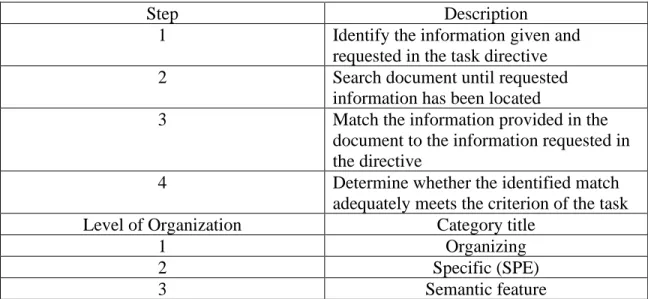
Table 5. Kirsh & Mosenthal (1988) Cognitive Model for Document Literacy ...44
Table 6. Classification of Research Items ...62
Table 7. Agenda for Initial In-Person Subject Matter Expert Meeting ... 67
Table 8. Agenda for Individual SME Webinars ...71
Table 9. Coh-Metrix Variable Indices ...74
Table 10. Focus Group Coded Concepts and Frequencies ...80
Table 11. Reduced Focus Group Concepts and Frequencies ...81
Table 12. Correlation Between Item Difficulty Drivers and Item Difficulty ...87
Table 13. SME Time Spent (Minutes) on Item Variable Coding ...88
Table 14. Rater Agreement Rates ...89
Table 15. Fleiss’ Kappa Rater Agreement ...90
Table 16. PCA Retained Component Eigenvalues and Variance Explained ...93
Table 17. Casewise Diagnostics for Excluded Items ...94
Table 18. ANOVA Results for Unconditional Regression Model ...95
viii
LIST OF FIGURES
Page Figure 1. Haladyna et al. (2013) Summary of Cognitive Demands for Knowledge,
Skills and Abilities ...27
Figure 2. Mislevy & Haertel (2006) Layers of Evidence-Centered Design for Education Assessments ...36
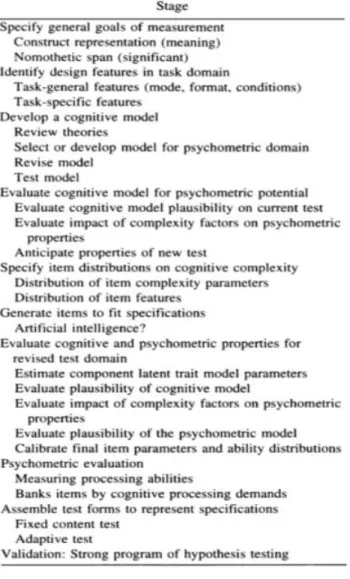
Figure 3. Embretson (1998) Cognitive Design Systems ...47
Figure 4. Flow Chart of Research Milestones...59
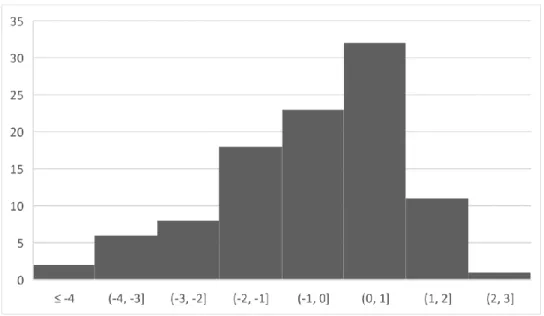
Figure 5. Distribution of Training Set Rasch Difficulties (Set 2) ...65
Figure 6. Distribution of Study Set Rasch Difficulties (Set 3) ...65
Figure 7. Taylor et al. (2015) Grounded Theory Approach ...69
Figure 8. PCA Scree Plot (101 Training Items) ...93
Figure 9. Distribution of Dependent Variable (IRTb) ...97
Figure 10. Normal P-P Plot of Regression Standardized Residuals ...97
Figure 11. Scatterplot of Standardized Residuals and Standardized Predicted Residuals ...98
1
CHAPTER I INTRODUCTION
Traditional item development has remained largely unchanged for decades despite high costs and less than optimal item discard rates due to poor statistical performance. Three notable advantages which may be gained if test developers can discover what drives an item’s statistical performance are: 1) a reduction in cost per item by lowering item discard rates and eliminating the need for costly pilot testing, 2) increased precision when making high-stakes pass or fail decisions by using items with difficulty levels which coincide with the difficulty level found at or around the cut score, and 3)
producing a more robust validity argument by tying variables of the items to the ability elicited from a test taker when answering an item correctly. Despite these advantages, many testing organizations remain a prisoner of the traditional methods of item
development where an “artistic” (Millman and Greene, 1989) approach is taken in which subject matter experts (SMEs) write items focused mainly on assigned content areas. While there are obvious obstacles for organizations in redesigning item development methods, including managing change and creating buy-in from stakeholders, the advantages to adopting a more evidence-based approach to item development should compel test developers to explore item difficulty modeling and ways to incorporate new item development approaches.
2
Traditional item development has been used by a majority of testing organizations for the past several decades. This method of item development is outlined in The
Handbook for Test Development (2015) which provides twelve steps for effective test
development. These steps include creating a test specification, item development, test design and assembly, and scoring test responses. The first step in traditional item development is developing a test specification (sometimes referred as a blueprint or test content outline), which outlines the content areas and the number of items from each area that will appear on a test. The content which is outlined addresses the areas of knowledge and skill that a testing organization would like to assess an examinee on. Once the test specification is developed, SMEs are trained on item writing guidelines and best practices, which have been developed over time. The SMEs are then assigned content areas in which to write items to. The table titled “A Revised Taxonomy of
Multiple-Choice Item Writing Guidelines” is provided in The Handbook for Test Development
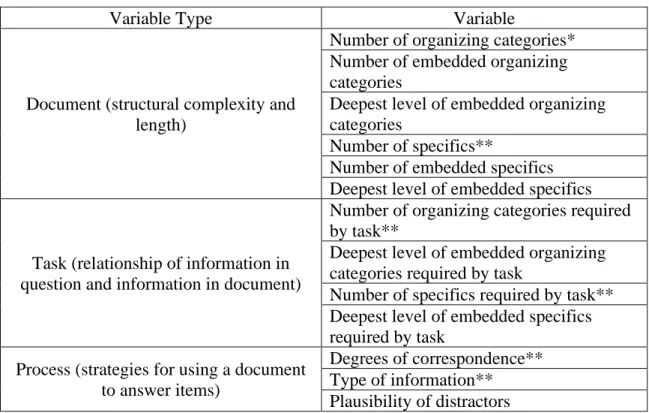
(2015) and consists of 28 guidelines which are split into four categories which include content, formatting concerns, style concerns, and the options. The guidelines which specifically impact item difficulty are outlined in Table 1. While the failure to follow formatting and style guidelines can impact item difficulty, issues in these areas are often corrected with professional editing and thus not included in Table 1.
Table 1. Handbook of Test Development (2006) A Revised Taxonomy of Multiple-Choice Item Writing Guidelines
Category Guideline
Content 1. Every item should reflect specific content and a single
specific mental behavior. 2. Avoid trivial content.
3
3. Use novel material to test higher level learning. 4. Keep the content of each item independent. 5. Avoid overly specific and overly general content.
6. Avoid opinion-based items.
7. Avoid trick items.
8. Keep vocabulary simple and appropriate.
The options 1. Keep options homogenous.
2. Keep the length of options equal.
3. Avoid giving clues to the correct option. 4. Make all distractors plausible.
5. Use typical errors of students to create distractors.
After reviewing the cited guidelines, one can see that SMEs are still afforded a great deal of flexibility in crafting items due to the basic and general nature of the guidelines. Following item writing best practices such as those in Table 1 is seen as a means for reducing construct irrelevant variance, which is when an examinee may answer an item correctly or incorrectly, not due the knowledge or skill in which the item intends to assess, but due to a flaw in the test item itself. It is expected that between the SMEs’ expertise of the content, and following best practice “rules of thumb,” high quality test items will be produced. Although most organizations have SMEs code each item to a cognitive level (recall, application, analysis, etc.), test items developed using this method are typically written with a focus on content, with the cognitive level in many cases assigned after the item is written. It is a common belief among SMEs that items crafted using this approach provide unique, relevant, and realistic real-world scenarios for the test taker. In this less controlled environment, it is not uncommon for SMEs who are assigned the same content area to produce items that are very different in both “look and feel,” and in statistical performance. These handcrafted items are viewed by SMEs as providing “face validity,” or the appearance to the examinee and stakeholders that the test
4
and test items appear to measure what they are meant to. While “face validity” is not recognized or cited in modern validity literature, the concept remains important (to stakeholders, SMEs, and examinees) in high stakes testing where the costs for taking an exam can be substantial. Using this approach to item development, SMEs typically spend one to two hours crafting each item. When SMEs are paid for their work, this time expense proves costly, and even when SMEs are volunteers, this time expense can contribute to burnout. Once items are written using this method and are subsequently approved for use, they often require pilot testing, which is a costly process used to collect psychometric statistics. If the items perform outside of acceptable psychometric difficulty parameters, they must be either deleted, or revised. If an item is revised, it must then be pilot tested again to determine if the revisions had a positive impact on the item’s statistical performance.
Two disadvantages of the traditional item development approach are high costs due to item discard rates and the inability to determine item difficulty without the use of pilot testing. Due to known item discard rates, a common rule used by testing
organizations is to develop three times the number of items needed to develop an examination, which further adds to the cost of this item development method. The 2019 ABP General Pediatrics (GP) certification exam consisted of two 335-item forms and 732 unique items. Of the 732 items, 440 items were newly approved and had not been
previously tested. Of the 440 new items, 159 (36 percent) were flagged for poor statistical performance. A breakdown of the flagging criteria of the 159 poor performing items is provided in Table 2.
5
Table 2. 2019 General Pediatrics Poor Performing Items
Number of New Items Percent of New Items Statistical Flagging Criteria
135 31% Too easy (p-value > .95)
10 2% Too difficult (p-value <
.35)
14 3% Negative discrimination
159 (Total) 36% (Total)
Case et al. (2001) found that using the traditional item development approach allowed for only 55 percent of items to be kept after pilot testing. Their approach included the
traditional activities of: an in-person training on item writing; review, revision, and approval of the items by SMEs; cleanup of the items by a professional editor; and retention of SMEs for a three-year period. The cost of each item approved for live use in the Case et al. (2001) study was $111. While the cost of items produced using the
traditional approach may vary, more recent quotes that have been cited include $1400 per item (the National Registry of Emergency Medical Technicians) and $1500 to $2500 per item (Rudner, 2009). When items are deleted due to poor performance or flaws in the content, the testing organization essentially receives no end-product despite the time and resources which went into creating the item.
The problem of uncertainty regarding an items difficulty prior to pilot testing has been examined for decades, and several past studies have been conducted to determine if SMEs are able to determine item difficulty based only on item content. Tinkelman & Sherman (1947) and Lorge & Kruglov (1954) were the first experts who attempted to predict item difficulty using SMEs as judges of items. Both studies found that while the judges were able to predict relative item difficulty (ordering of items), the judges were
6
not able to accurately predict absolute item difficulty (percent of examinees correctly responding to an item). One can conclude from these studies that while SMEs are able to craft high-quality items from a content perspective, they are unable to craft items which account for item difficulty drivers. Thus, traditional item development relegates testing organizations to a “shotgun” type approach, with the statistical performance of items not being known until pilot testing is complete. Using this “shotgun” approach, it is not uncommon for items produced using traditional item development to come back with a wide range of item difficulties and discriminations. Due to the wide variance in item difficulty using traditional item development, acceptable item p-values often range from .35 (35 percent of examinees answering an item correctly) to .95. Essentially,
organizations are faced with choosing between 1) expensive pilot testing or 2) accepting that the shotgun spread of difficulties may or may not provide sufficient item acceptance rates and precision at the cut score.
Due to the disadvantages of traditional item development and the motivation of test developers to improve assessments, the concept of evidence-based and cognitively focused item development approaches has recently emerged. Many of the new
assessment design approaches fall under the umbrella of principled assessment design (PAD), with evidence-centered design (ECD) outlined by Mislevy et al. (2003) serving as the foundation for this family of assessment and item development. While traditional item development can be viewed as an art (Millman & Greene, 1989) that creates items which are unique entities (Luecht & Burke, 2019), PAD approaches use a scientific-based method for engineering items towards intended interpretations and uses (Nichols et al.,
7
2017). Nichols et al. (2017) describe five foundational elements for PAD item development which are: (1) clearly defined assessment targets; (2) a statement of intended score interpretations and uses; (3) a model of cognition, learning, or performance; (4) aligned measurement models and reporting scales; (5) and the
manipulation of assessment activities to align with assessment targets and intended score interpretations and uses. These elements allow PAD to achieve more coherence than traditional item development, linking the different phases of development rather than treating each phase as a separate entity. PAD focuses on the construct being measured and score inferences, interpretations, and uses throughout the item development phase. Once the construct is clearly defined and intended inferences and score interpretations are clear, PAD focuses the development of items on theories of learning and cognition. This differs from traditional item development which mainly focuses on content.
While one may cite the various advantages of PAD methods across the spectrum of assessment development activities, the entirety of PAD is outside the scope of this paper, and this research primarily focuses on the activities of PAD which apply to item development. Mislevy et al. (2003) categorized item development activities into three parts: the student model, or “What we are measuring;” the evidence model, or “How we are measuring it;” and the task model, or “Where we measure it.” Mislevy et al. (2003) defined the student model as “defining one or more variables related to the knowledge, skills, and abilities one wishes to measure,” the evidence model as “providing detailed instructions on how one should update the student model variables given a performance in the form of the examinees’ work products from tasks,” and the task model as
8
“describing how to structure the kinds of situations one needs to obtain the kinds of evidence needed for the evidence models.” Combined together, these elements should lead test developers and SMEs to produce more cohesive items which are better able to tie the performance on the items to the interpretations and uses of the assessment.
Another PAD method which offers an alternative approach to item development, is assessment engineering (AE), which uses task models and task model grammars (or item templates) to generate test items (Luecht, 2013). AE creates test items using four stages which are (1) construct mapping, (2) task modeling, (3) design and use of item templates, and (4) items (Luecht, 2013). Construct mapping allows the test developer to conceptualize (and visualize) the construct in an ordered fashion where proficiencies are placed along a complexity scale which aligns with the score scale to be used (Ferrara, et al. 2017). Prior to task model creation, the test developer creates descriptions of an examinee’s abilities, proficiencies, knowledge, and skills at different points of the construct and score scale. Next, task models, or specifications of item families, are created which target the different descriptions of proficiency which were defined in the previous step. Within each task model, numerous items can be generated using task model grammars, which are “programmable specifications for generating items in the same family so that they are isomorphic in terms of cognitive complexity” (Ferrara, et al. 2017). This item development approach is much more controlled than the traditional approach, and items sharing the same content specification should not perform statistically different, which is commonly seen with traditionally developed items.
9
As one can see, the role of SMEs in PAD item development is reduced in quantity, but not in importance. SMEs are essential in assisting the test developer in the creation of the task models and task model grammars. While this is much different than their role in traditional item development, this responsibility should be viewed as of equal or greater importance since each task model and task model grammar is used to create large amounts of high-quality test items. Once the task model grammars are created, a SME or an automated item generation (AIG) software can use the grammars to create test items in a tightly controlled environment.
PAD methods such as ECD and AE both allow for the disadvantages of traditional item development, cost and item discard rates, to be addressed. Unlike traditional item development, which can take one to two hours to write each item, task models and templates allow for items to be generated rapidly, especially when AIG software is used. It should however be noted that the upfront time spent on creating the construct map and accurate task models and task model grammars neutralizes part of this perceived advantage. Additionally, item templates mostly eliminate the amount of time spent by SMEs and editorial staff to ensure items follow style and formatting guidelines. Task models and templates also allow for SMEs and test developers to reduce item discard rates, by providing more structured items which assess knowledge, skills, and abilities (KSAs) which are directly linked to the construct of interest and specifically those KSAs that are located on the construct map which are around the ability level that coincides with the exam cut score. While outside the scope of this paper, Furter (2015) demonstrated how PAD task models can be used in setting the standard for a certification
10
exam, which further demonstrates how PAD methods allow for more precise pass or fail decisions.
While PAD methods provide improvements for the noted shortcomings of traditional item development, various issues with these methods still require further research to achieve effective implementation which will allow for the full spectrum of the conceptualized PAD benefits to be realized. A current disadvantage of PAD item
development is that it may not lend itself to content areas or proficiencies which are more difficult to write items to, or at the very least, require a lot of time and resources to create a quality task model grammar which can account for the different variables present in these items (an example may be a clinical pediatric test item). Additionally, the templated items lose the unique scenarios that traditional item development provides. Finally, while PAD eliminates much of the time that SMEs spend on item writing (and any
reimbursement that goes along with that time), and creates more items while simultaneously reducing item discard rates, SMEs are still needed to review items generated by the task model grammars (cost of travel, lodging, etc. for item review meetings would remain the same) and editorial staff are still required to edit the items.
Item difficulty modeling can be seen as a bridge to PAD for testing organizations currently using traditional item development methods. Item difficulty modeling research has been conducted going back to the work completed by Tinkelman & Sherman (1947) and Lorge & Kruglov (1954) where SMEs were used as the source of prediction. The notion of construct representative research and task decomposition was introduced in the late 1970’s in an effort to tie performance on test items to underlying theoretical variables
11
using the linear logistic trait model (LLTM) and the multicomponent latent trait model (MLTM). Pellegrino et al. (1980) and Whitley et al. (1981) demonstrated how the LLTM could account for theoretical “complexity factors” in an item and how the scoring of an item could account for these factors. Whitley (1980) put forth the MLTM which built on the LLTM by introducing latent trait models which account for subtasks and alternative methods for solving an item such as guessing or cluing in the item stem. Embretson (1984) unified the LLTM and MLTM when proposing the general multicomponent latent trait model (GLTM) to understand item tasks with “multiple information outcomes and processing complexity factors” and allowing “complexity factors to have effects on component information outcomes rather than the total item response.”
While the Embretson (1984) research was a step forward in item difficulty
modeling, the results showed that additional complexity factors within items were needed to be defined. These early works served to demonstrate the importance of linking item difficulty to underlying variables which explain test taker’s responses to the items and served as a foundational element for the more recent PAD element of task modeling. Since those early studies, numerous researchers have attempted to model item difficulty by accounting for theoretical variables which explain item responses, and a shift towards using ordinary least squares regression (OLS) and tree-based regression (CART) to explain the amount of variance in item difficulty that can be attributed to the theorized variables has been made (see Kirsch& and Mosenthal, 1991; Sheehan & Mislevy, 1994; Sheehan, 1997; and Gorin & Embretson, 2006). Recent studies have had varying success reporting R-squares (explained variance in item difficulties) ranging from .07 to .90 (see
12
Shaftel et al., 2006; and Enright et al., 2002). Most recently, Qunbar (2019) used text complexity and machine learning to model item difficulty in a medical certification context. The results of this study revealed that a prediction model using text complexity as an independent variable was not able to provide above chance predictions about an item’s difficulty. In summary, while the research into item difficulty has been robust, test developers and researchers are still in search of an operationalizable process to uncover the theoretical variables, tasks, and underlying components of an item which can then be generalized across testing populations. Further, research is still needed to demonstrate not only how item difficulty can be modeled, but also how that information can be used by test developers for future item development. While nearly all of the item difficulty modeling studies thus far have approached the subject in a post-hoc manor (on items which were developed using traditional methods), a gap still remains on how
understanding what drives item difficulty can be implemented at the item writing stage of test development to produce higher quality items and exams.
The purpose of this study was to create a workable and repeatable process that allows test developers to determine the variables within a test item which drive the item’s difficulty so that the variables may be accounted for in future item development with the use of a regression equation where item difficulty is the dependent variable and the difficulty drivers are the independent variables. The variables that will be explored will address both the linguistic features and the content and cognitive aspects of an item. The linguistic variables will be determined using Coh-Metrix (Grasser et al., 2004) software which is an online platform that analyzes text and codes 108 different linguistic variables
13
which range from basic word, sentence, and paragraph counts to more complex features such as lexical diversity and temporal cohesion. The content and cognitive variables will be determined using SMEs and “think aloud” discussions to explore and define variables such as content difficulty and the number of cognitive steps required to arrive at the correct answer. The goals for defining significant difficulty drivers in test items and creating a regression equation which accounts for those difficulty drivers are:
1) To reduce the time spent on future item development by providing templates or instructions which account for difficulty drivers,
2) To reduce or eliminate the need for pilot testing by designating a predicted item difficulty for each item,
3) And to reduce the item discard and revision rate due to newly written items which poorly perform during live or pilot testing.
This study demonstrates how significant item difficulty drivers in items can be defined and a regression equation can be formed which allows for the accurate prediction of Rasch item difficulty. The methods section outlines how the items and their predicted Rasch item difficulties can be used as anchor items in the calibration of examinee ability levels (thetas) to determine the impact of using items with predicted Rasch item
difficulties in an operational setting. Additionally, this research demonstrates a process for determining item difficulty drivers which can be implemented by test developers in different contexts to achieve the previously stated goals and benefits.
Continuing on, the literature review (Chapter II) provides a robust summary of the previous literature on: traditional item development and its shortcomings; accounting for
14
cognitive demands in item development; item difficulty modeling; and determining and accounting for linguistic and text-based variables using Coh-Metrix software (Grasser et al. 2004). Next, the methods section (Chapter III) outlines how the current research was conducted and how the proposed methods were implemented to achieve the desired outcomes. The results section (Chapter IV) provides the results from the implemented research methods. Finally, the discussion (Chapter V) outlines the study significance, limitations, and future considerations, which were determined using the results from the current research.
15
CHAPTER II LITERATURE REVIEW
The following literature review contains four main sections. The first section examines the literature supporting traditional item development in certification and licensure exams which primarily focuses on item content and item writing best practices rather than the cognitive processing that an examinee would demonstrate in order to answer an item correctly. Section two will address the literature which is focused on cognition and the role of cognitive demands in item development. This section will include literature on evidence-centered design methods which encourage test developers to go beyond the content focused approach to item development in order to incorporate an evidence-based and cognitively focused approach. The third section of the literature review provides an in-depth look into previous research studies which have examined item difficulty and the different variables which factor into item performance. The fourth and final section will review the literature on linguistic features in test items and the impact that linguistic features may have on an item’s difficulty.
Traditional Item Development
Traditional item writing practices have been in place for decades, focusing on best practices, item writer training, and a content centered approach, yet minimal changes have been made to the best practices put forth by Mosier et al. (1945) and Ebel (1951).
16
While changes to item writing best practices have been few and far between, content validity and content-related validity evidence, as described in the different
editions of the Standards of Educational and Psychological Testing (here on referred to as the Standards), has transitioned from a major source of validity evidence to one of many supporting pieces of evidence in a validity argument.
Content validity first came about in the 1950’s as one of three areas of test validity (the other two being criterion validity and construct validity). The original version of the Standards (1954, titled Technical Recommendations for Psychological Tests and Diagnostic Techniques), put forth recommendations for the dissemination of information which is encouraged to be distributed in a manual that accompanies the test. Content validity was originally defined in the Standards (1974) as “an aspect of validity that is required when the test user wishes to estimate how individual performances in the universe of situations that the test is intended to represent.” Cronbach (1971) cautioned that content validity should be “restricted to the operational, externally observable side of testing, and not used for judgement on a subject’s internal processes.” A content model of validity was outlined by Guion (1977) with three main stipulations: observed
performances are a representative sample from the content domain; observed
performances are evaluated fairly; and the sample of observed performances is large enough to control for sampling error. Messick (1989) criticized content validity stating that while content validity can be used as support for an instrument representing the domain of relevance, it cannot be tied to the interpretation of test scores. As validity moved to a unified and construct centered approach, the term content validity was
17
removed from use and content-related validity evidence was substituted in its place. Beginning with the 1999 edition of the Standards, the term content validity was
abandoned in favor of the term “content-related evidence.” While this change may seem minor to a layman, it shows the shift from the view of test content being a primary argument for validity to a view of content-related evidence being only one piece of many in a validity argument. In the most recent version of the Standards (2014), evidence based on test content is only one of five major sources of evidence. The most recent Standards (2014) address content-related validity evidence in standard 1.1 which states “when the rationale for test score interpretation for a given use rests in part on the appropriateness of test content, the procedures followed in specifying and generating test content should be described and justified with references to the intended population to be tested and the construct the test is intended to measure or the domain it is intended to represent.” Content-related validity evidence is further addressed (in regards to workplace testing and credentialing) by the Standards (2014) with standard 11.3 which states “When test content is a primary source of validity evidence in support of the interpretation for the use of a test for employment decisions or credentialing, a close link between test content and the job or professional/occupational requirements should be demonstrated.”
The other source of validity evidence in the Standards (2014) are evidence based on response processes (most pertinent to the current research), evidence based on internal structure, evidence based on relations to other variables, and evidence for validity and consequences of testing. While an in-depth review of validity, and how views on validity have morphed throughout the years, is out of the scope of the current literature review, it
18
is important to note the shift from content being a primary factor of a validity argument to one of many pieces of evidence for validity. Likewise, it is important to note the
inclusion of evidence based on response processes in the 1999 and 2014 version of the standards, as this evidence supports the need for examining response processes that may be responsible for item difficulty performance. The Standards (2014) addresses the importance of interpreting a construct based on assumptions tied to cognitive processes of examinees. The Standards (2014) states that “theoretical and empirical analyses of the response processes of test takers can provide evidence concerning the fit between the construct and the detailed nature of the performance or response actually engaged in by test takers.” The Standards (2014) goes on to state that “questioning test takers from various groups making up the intended test-taking population about their performance strategies or responses to particular items can yield evidence that enriches the definition of the construct.” Thus, it can be assumed that that the recommendations on response processes put forth by the Standards (2014) should not be employed only after the item development phase is complete, but throughout all phases of item development.
Mosier et al. (1945) was the first to put forth suggestions for constructing
multiple-choice test items and defined the task of item writing as “phrasing a question in such terms that all prospective examinees understand the task set; those who have the requisite degree of knowledge and will give the intended answer; and all who do not, and will give another answer.” While Mosier et al. (1945) and subsequent literature providing guidance for multiple choice items lacks in direction for directly accounting for the difficulty level of items, there is guidance provided on the linguistic features of items.
19
Two specific areas of guidance provided by Mosier et al. (1945) related to the linguistic features of multiple-choice items are:
1) Can modifying phrases, qualifications, etc. be removed from an item without impacting responses?
2) Are item ideas stated clearly, “with the answer an important part of the statement – not buried at the end of a preposition in a parenthetical clause?”
A final important take away from the Mosier et al. (1945) suggestions is the placement of responsibility of item quality on the item writer which is shown in the concluding statement which states that when an item writer submits an item, if the writer cannot “honestly predict” that an item will discriminate between qualified and unqualified examinees, then the item requires further revisions until that prediction can be made.
Ebel’s chapter of Educational Measurement (1951) built on the original suggestions Mosier et al. (1945) provided and expanded on the Mosier et al. (1945) suggestions to item types other than multiple choice. Ebel begins the chapter with a view that is still agreed with by many in testing which is that item writing is an “art” and “essentially creative.” The longevity of this view is demonstrated with Millman et al. (1989) citing the artistry of item writing nearly 40 years after Ebel’s chapter was first published. The difference between the current research and PAD item development approaches with Ebel’s approach is emphasized when Ebel (1951) states “just as there can be no set of rules for producing a good story or painting, so there can be no set of rules that will guarantee the production of good test items.” The systematic and evidence-based approaches used by PAD methods such as AE directly contradict the notion that a
20
set of rules cannot be used to produce well performing test items. While Ebel’s views differ greatly from the current PAD item development approaches, he does describe (perhaps unintentionally) an important weakness of using his prescribed item
development which is the gap between a test content outline and the lack of guidance that a test content outline provides for the individual items that will be written by an item writer. Ebel (1951) goes onto state that the responsibility of developing an idea into an item that addresses a topic on the test content outline is placed on the item writer. Indeed, the responsibility, and freedom, for SMEs to generate ideas is presented as one of the most important concepts in item writing by Ebel (1951), so much so that Ebel dedicates an entire subsection of the chapter on item writing to “ideas for test items.” Ebel (1951) continues on with the majority of the chapter dedicated to “suggestions for item writing.” The Ebel (1951) general item writing suggestions and multiple-choice specific item writing suggestions are shown in Table 3.
Table 3. Ebel (1951) Item Writing Suggestions
Item writing suggestions - general Express the items clearly
Use words with precise meaning Avoid complex word arrangements
Include of all information needed to correctly respond to the item Avoid unimportant (“nonfunctional”) words
Avoid “unessential specificity” in item stems and response choices Avoid “irrelevant inaccuracies”
Adapt the level of difficulty of the item to the test taker Avoid clueing the correct response
Avoid “stereotyped phraseology” Avoid “irrelevant sources of difficulty.”
Item writing suggestions specific to multiple choice items Use a direct question or incomplete statement
21
Include in an item stem any words that will be repeated in all option choices Avoid negatively worded stem queries
Provide a response that is agreed upon as correct by SMEs Make all response choices appropriate and plausible Avoid “high technical” distractors
Avoid overlap in response options Arrange responses in logical order
If an item addresses knowledge of a definition, include the term to be defined in the stem and the option choices for the correct definition in the response options
Avoid response options which present as true or false statements
A criticism that may be made of the Ebel (1951) suggestions and related to the current research is that the chapter’s earlier emphasis on the artistic and creative individual idea generation used by SMEs make his eighth general suggestion (adapt an item’s difficulty to the test taker) inherently difficult, since unique items with individual ideas are less systematic and thus will have wider ranging performance statistics that are more difficult to predict. This “unpredictability” is further highlighted in next chapter (Conrad, 1951) titled “The Experimental Tryout of Test Materials.” While an in-depth review of this chapter will not be provided in this section, it should be noted that Conrad (1951) provides seven purposes for pilot testing items with the first three addressing the need to determine problematic items, item difficulty, and item discrimination. These reasons for pilot testing contend that even if item writing suggestions such as those put forth by Ebel (1951) are closely followed, an item’s performance statistics still remain largely
unpredictable until pilot testing is complete. As previously stated, and as the subsequent literature to be reviewed shows, different approaches for item difficulty modeling can be used by putting forth rules (which Ebel did not think were possible) in order to guide item development so that item performance may be predicted prior to pilot testing.
22
Haladyna et al. (1989) conducted a comprehensive review of previous item writing literature in order to produce a comprehensive set of rules for SMEs. Haladyna et al. (1989) created a taxonomy consisting of three areas for item writing rules to be classified under. Those three areas were (1) general item writing, which consists of procedural and content concerns, (2) stem construction, and (3) option development, which consists of the correct answer and the item’s distractors. Haladyna et al. (1989) compiled a list of 43 item writing guidelines and used a group of guideline authors to rate each rule for importance and worthiness of inclusion in the list. The authors also
designated if a guideline was “testable” or “value.” Testable components could be tested to determine if the rule had impact on an item’s statistical performance whereas values are those suggestions that cannot be tested but are deemed important by testing
professionals. Haladyna et al. (1989) note that an important aspect and distinction of their research is the expert consensus rating given to each guideline. The authors do however note, that while their list is the most comprehensive source of item writing guidelines (at the time of publication), there remains an “urgent need” for additional research on item writing best practices.
Lane et al. (2015) outlines a comprehensive plan which addresses traditional item development in The Handbook for Test Development (2015). In the “twelve-steps for effective test development,” step 2, content definition, step 3, test specifications, and step 4, item development, all address methods for item development which have been
traditionally used for high stakes certification and licensure item development. Both Clauser et al. (2006) and Fein (2012) describe traditional methods specifically as the
23
methods which apply to certification and licensure testing in fourth edition of
Educational Measurement (2006). The foundation for item development is formed by
first creating a content definition which is used to create a test content outline or test specification. The test content outline, once created, is used by test developers and SMEs to guide the content and number of items which will make up the exam. In the first step, content definition, Lane et al. (2015) states “The validity of inferences for achievement test scores rests primarily and solidly on the adequacy and defensibility of the methods used to define the content domain operationally, delineate clearly the construct to be measured, and successfully implement procedures to systematically and adequately sample the content domain.” In certification and licensure testing, defining the content domain is mainly achieved by the practice or job analysis process. Raymond et al. (2015) state that the purpose of a practice or job analysis is to “identify the job responsibilities of those employed in the profession.” Raymond et al. go onto state that once the job
responsibilities are known, a list of KSAs required for effective performance of the identified job responsibilities can be created, and those KSAs can serve as the basis for a test content outline or specification document. Both Raymond et al. (2015) and Clauser et al. (2006) state that most often, a group of SMEs who fill either the job being defined, or supervise the job being defined, are used in this process. Clauser et al. (2006) caution that “considerable work” remains after the list of KSAs for the job responsibilities is created. These considerations include using surveys to determine the frequency and criticality of each KSA to determine both the content that should be tested on and how many items should address each content area (content weightings). Fein (2012) describes how content
24
weightings are determined. Fein (2012) first states that using survey results, point values are assigned to KSAs based on difficulty, importance, and frequency. The values are then averaged and converted into a proportion which indicates “the proportion of content of the exam that should be covered by each element of content associated with a specific task.” This process bridges the content definition phase to the test specification or test content outline phase. Indeed, the outcome of the content definition phase is the production of a document (test content outline/specification) which is used by test developers for item and test production.
Raymond et al. (2015) provide an alternative approach for creating a test content outline which includes six steps, and those steps are: (1) acquire relevant documentation; (2) obtain input from SMEs, (3) SMEs develop first draft of outline; (4) develop second draft; (5) review topics for job relevance; and (6) assign content weights. Raymond et al. (2015) caution however that “while this general approach works well in practice, one limitation of relying exclusively on SME panels is that the test plan may reflect little more than conventional wisdom and may include KSAs that really are not required for public protection but appear because of tradition.”
Clauser et al. (2006) discuss content outlines and item classification stating that a common strategy is to use a matrix style approach to classify items to both a content area and to either (or both) a cognitive level or a task. Clauser et al. (2006) go on to describe different approaches to classifying items by cognitive level, with the most common being the use of Bloom’s taxonomy (Bloom et al., 1956), which contains six cognitive levels ranging from knowledge (the most basic) to evaluation (the most complex). The authors
25
go onto to state that a “simpler” approach is to only use two cognitive levels, which are “recall of an isolated fact” or “application of knowledge.” Regardless of the cognitive level rating system used, Clauser et al. (2006) encourage the use of “scenario-based” questions to accomplish several goals which include: avoiding exam items which only assess an examinee on “unimportant facts;” creating items with scenarios that a practitioner would be expected to solve in practice; and creating items which “have an appropriate level of factual knowledge while also requiring examinees to analyze factual situations and apply knowledge of facts to solve problems.” Clauser et al. (2006) also discuss the classification of items to an examinee task. This approach ensures that items will not only assess factual knowledge, but also assess an examinee’s ability to execute a task which would be expected once factual knowledge is demonstrated. Clauser et al. (2006) state that the challenge with task classification is to ensure the tasks are both relevant and those that would be expected of a new practitioner. Once a test content outline is developed, item development may begin. Using traditional methods, SMEs are provided content areas, and in a matrix style content outline, tasks or cognitive levels, and tasked with writing items which will assess examinees on the assigned areas. Fein (2012) and Baranowski (2015) cover the methods used in traditional item development (both item writing and item review). Baranowski (2015) begins with the important statement which grounds traditional item development (and was first stated by Cantor, 1987) which is that “item writing is frequently referred to as an art.” Baranowski goes on to pose several questions regarding traditional item development such as “What
26
constitutes a high quality test item?” and “Do we know one when we see one or do we need performance statistics to determine one?”
Cognitive Demand in Item Development
In the book Developing and Validating Test Items, Haladyna et al. (2013) tie the cognitive demand of test items to content-related validity evidence. Haladyna et al. (2013) define content as “knowledge, skills, and abilities” and cognitive demand as “the expected mental complexity involved when a test item is administered to a typical test taker.” The authors go on to note that if cognitive demand can be determined, test items will be able to focus on “exactly” what the construct represents. Haladyna et al. (2013) caution that defining cognitive demand may prove difficult due to variability in test taker process. This variability, which should be expected, makes pinpointing a single cognitive demand for test items difficult. Using “think aloud” methods with test takers would be advantageous to determine item cognitive demands, however this venture could be costly, and a more cost-effective approach that test developers employ is the classification of test items to a cognitive taxonomy. The most notable taxonomy which is used in practice comes from Bloom et al. (1956). Bloom’s taxonomy consists of six levels which are (from lowest cognitive demand requirement to highest): (1) knowledge, (2)
comprehension, (3) application, (4) analysis, (5) synthesis, and (6) evaluation. Haladyna et al. (2013) note that Bloom’s cognitive taxonomy lacks validation and has proven “inadequate,” citing several studies on classification consistency, test taker responses, and critical analysis of the taxonomy. The literature cited shows inherent weaknesses of classifying items to the taxonomy to make the argument that an item tests a single
27
cognitive demand for all test takers. Haladyna et al. (2013) propose a simplified approach for item cognitive demands, basing their proposed taxonomy on knowledge, skills, and abilities. Table 3.5 from Haladyna et al. (2013) is pictured below and provides a summary for the author’s simplified cognitive rating proposal.
Figure 1. Haladyna et al. (2013) Summary of Cognitive Demands for Knowledge, Skills, and Abilities
Gorin (2006) addresses how cognitive models can be used in the item writing process and encourages a shift to a more “scientific” approach. Gorin (2006) cites “increasing pressure to extract meaningful information about student skills and
knowledge from item responses” as a reason for this shift. While the current research will focus on multiple choice items which are written by SMEs, Gorin (2006) posits that incorporating cognitive models into the item writing process has become easier to
achieve with the use of innovative item types and automatic item generation. If cognitive models can be created, item generation can be employed to create items through the use of templates rather than the traditional approach of using SMEs for item writing. Gorin (2006) points out that item generation using cognitive models not only has psychometric
28
benefits, but also has economic benefits for testing organizations. Perhaps the most useful contribution of Gorin (2006) is the implications for practice section which encourages test developers “think outside the box” to “create construct definitions that are
informative for item development” using techniques such as interviews. Gorin (2006) states that “test developers must consider even more rigorous methods of item
examination before operational use that provides explicit evidence regarding the skills, knowledge, and processes measured by the items.” Gorin (2006) addresses several aspects for incorporating cognition in the design of both tests and items. An important contribution of Gorin (2006) are the recommendations provided by the author for the development of tests which address content that has not previously been studied using cognitive approaches and item difficulty modeling. Gorin (2006) emphasizes the benefits of better defining constructs and using cognition as a driver for item development by citing several previous authors who state that “construct definitions including
descriptions of individual cognitive processes and hypothesized relationships among processes can provide a stronger foundation for test development and score interpretation (Embretson, 1994; Mislevy, 1994; Messick, 1995).” While Gorin (2006) addresses several important benefits for defining a construct, including construct mapping (Wilson, 2004), these methods fall outside the scope of the current proposed research in that they require the development of a test, and the items which make up the test, from the ground up. Gorin (2006) does however provide several useful tools for researchers to examine the cognitive aspects found in operational test items. Gorin (2006) encourages the use of the qualitative collection method of “think alouds” which require examinees to verbalize
29
their thought processes when responding to an item. In the initial step for item difficulty modeling, Gorin (2006) proposes hypothesizing “skills, knowledge, and processes” which are required to answer the item correctly. Indeed, Gorin (2006) cites (Bejar, 1991, and Bennett, 1999) when stating “the key to item difficulty modeling is to identify the relevant features that drive item processing and to estimate their impact.” Gorin (2006) does caution that verbal protocols such as “think alouds” may be subject to the examinee having a different interaction with the item while “thinking aloud” that they would while simply taking the test item during an examination setting. Despite this shortcoming, Gorin (2006) notes that the information gained from verbal protocols can lead to the discovery of processing components which were not previously known or hypothesized. Gorin (2006) also notes that the use of verbal protocols may allow test developers to determine examinee response strategies which could then be accounted for in accounting for variance in item difficulty. A final, and important note by Gorin (2006), is that “test developers must consider even more rigorous methods of item examination before operational use that provides explicit evidence regarding the skills, knowledge, and processes measured by the items” and that “item design should proceed from sources of cognitive complexity related to the construct of interest, rather than unrelated surface features.” The methods proposed in chapter 3, such as “think alouds,” can be used to determine those unrelated surface features which may be impacting difficulty without providing information on the knowledge or skill that the item is intended to assess. This aspect also speaks to one of the shortcomings of items written by SMEs using the
30
within items which may impact performance but do not provide information on the construct of interest. Gorin (2006) concludes by emphatically stating that “the future success of cognitive-based test development depends heavily on the ability of test developers and practitioners to learn and adopt the methods based on cognitive psychology.”
Graf et al. (2005) set out to create a set of item models which would generate multiple-choice items that perform psychometrically equivalent to each other. The study used a retroactive approach, with previously created items with ideal statistics, as
“sources” to base item models on. Graft et al. (2005) state that “an important aspect of item model development is to capture students’ approaches to solving problems and to represent common misconceptions among the options.” After the item models, and items were generated, the authors used the item statistics to analyze the cognitive aspects of the items. The authors note that it is difficult in practice to identify which item features impact difficulty and the extent of influence on difficulty that these features have. Graft et al. (2005) report that determining a cognitive framework is “necessarily complicated” and not “feasible” in an operational setting. In the study, the authors presented a “key model, distractor model, and option model.” These features are important in that the authors found that the distractor models accounted for additional variability among the generated items. The authors do however caution that the analysis of distractor model impact was conducted retroactively using item performance statistics, and without those statistics, the differences may not have been recognizable due to the similarity of the distractor models. Heeding that caution, the use of similar item models may not produce
31
the previously cited benefit of cost savings from reduced or eliminated pilot testing. Graft et al. (2005) also caution that the findings with the distractor models concerned a specific item model, and that distractor models could not explain variance in item performance when applied to other developed item models in the study. Graft et al. (2005) conclude their study by citing the need for more effective and efficient methods for creating item models.
Fulkerson et al. (2011) conducted a study on the cognitive processes which SMEs experience when creating items. The authors cited the numerous studies on item writing as it relates to test taker response processes and the lack of research on the SMEs’ cognitive processes when writing test items. The research was unique in that it not only reported on the cognitive aspect of items from the writer’s development process, but also reported several useful strategies to determine those cognitive processes such as “think aloud” methods using story boards. The authors defined a storyboard as “a written description of the narrative, images, animation, and/or video that will be developed for a test scenario.” Fulkerson et al. (2011) cite the three important “phases” which take place during item writing and which were reported by Fulkerson et al. (2009). The three phases include the (1) initial representation phase, (2) the exploration phase, and (3) the solution phase. While the research was conducted from the item writer perspective, the
approaches for determining the cognitive processes can be utilized for studies such as the proposed research which approach items from the reviewer perspective. Fulkerson et al. (2011) used a training session with study participants prior to the first “think-aloud” session to provide information on the research, the scientific evidence that the research
32
was based on, and the upcoming “think aloud” tasks. Following the training session, “think aloud” sessions were held with single individuals and lasted one hour each.
Fulkerson et al. (2011) reported that during the “think aloud” sessions, writers were asked to respond to a writing assignment and verbalize their cognitive information while
writing. To capture data during the “think aloud” sessions, transcripts were converted into statements which were coded as “categories of revised problem-solving cognitive
processes” and “categories of requisite knowledge structures.” The researchers also reported an interrater agreement to demonstrate the reliability of the coders. Fulkerson et al. (2011) provided two tables, one on item writer cognitive process categories, and one on knowledge structure categories, which are useful for future researchers to consider when examining the inner workings of test items. The notable cognitive process and knowledge structure categories reported on by Fulkerson et al. (2011) that can guide the analysis of previously written items along with the definitions provided by Fulkerson et al. (2011) are:
1) Schema activation – application of mental structures drawing on experience 2) Operator – active searching for content and solutions
3) Extraneous – information that is irrelevant to the item
4) General and pedagogical content knowledge – domain specific knowledge and
instructional practices.
Another unique aspect of this research is the comparison of experienced (more than one year of item writing experience) and novice SMEs. These differences may be applicable when determining the cognitive process an entry level examinee undergoes when sitting
33
for a licensure or certification exam. Fulkerson et al. (2011) conclude that novices “spend more of their writing time defining the task and evaluating ways to select and sequence assessment content.” This conclusion may be applicable to how entry level examinees approach a test item, by first determining a task and then selecting and sequencing the content provided in the item to solve that task, but further research is needed to support this possibility.
Recent research conducted by Lenzer et al. (2016) focused on cognitive pretesting of items, and while the research was based on survey items, their methods can be
explored for viability in multiple-choice test items. Lenzer et al. (2016) list the goals of cognitive pretesting as determining item comprehensibility, problems within the items and the causes of those problems, and identifying possible improvements for the items. The authors list four questions which cognitive pretesting can aim to answer about items. The four questions posed by Lenzer et al. (2016) are:
1) How do participants interpret the items and/or terms within the items?
2) How do participants retrieve information and/or events from memory?
3) How do participants arrive at a response?
4) How do participants assign their internally determined responses to an actual item response?
Additionally, Lenzer et al. (2016) provide five methods for obtaining cognitive pretesting data which include (1) “think aloud” techniques, (2) probing techniques, (3)
paraphrasing, (4) confidence ratings, and (5) sorting. The purpose of the “think aloud” technique is to have respondents talk out their thought processes as they respond to an
34
item. The authors suggested asking respondents “While you are answering the following question, can you tell me what you are thinking?” The probing technique is described by the authors as asking follow-up questions based on a response. Four types of probing can be used which include comprehension probing (understanding of the question), category (or response selection) probing (reasoning behind the respondents answer choice), information retrieval probing (what information was retrieved from a respondent’s memory before selecting their response), and general/elaborative probing (explanation of answers or thought processes). Lenzer et al. (2016) describe paraphrasing as asking respondents to restate questions in their own words in order to gain a better understanding on the understanding of the question. Confidence ratings are used by the authors to
determine if respondents are confident in their responses, and more importantly if they are not confident, the reasons for the lack of confidence. Finally, the authors describe the sorting technique as having respondents sort terms of items in either their own
determined categories or a list of categories provided by the authors. Lenzer et al. (2016) recommend cognitive interviews take place in a quiet space, and if possible, the
interviews be voice recorded (or even video recorded to determine any visual cues that the respondents put forth). Further recommendations for cognitive interviews provided by Lenzer et al. (2016) include conducting between five and 30 interviews with durations between 60 and 90 minutes. Analyzing data from cognitive interviews and methods for conducting the analysis are also addressed by Lenzer et al. (2016). Quantitative analysis can be conducted using a coding scheme for the responses with three steps of coding: open coding, which is the coding of responses by topic or categories; axial coding, which
35
is the process of determining group differences from the open coding; and selective coding, which is identifying “subordinate” topics which connect the open coding categories. In the selecting coding process, Lenzer et al. (2016) state that the researcher must “formulate a hypothesis that describes the phenomena that an item captures.” Lenzer et al. (2016) caution readers that there are no universal rules to how cognitive pretesting should be completed, and their work only provides guidance and suggestions for conducting cognitive pretesting. The authors go on to state that the techniques chosen by a researcher when conducting cognitive pretesting should be determined by both the interest of the researcher and the behavior patterns of the respondents.
The work by Mislevy & Haertel (2006) on ECD has served as a basis for many of the modern principled and cognitive focused assessment design approaches being used and explored today. The ECD approach to test design is rooted in creating assessments which are based on evidence which may be used to create a validity argument. ECD, as described by Mislevy & Haertel (2006), is a layered approach, which allows for
assessments to be created using layers which build upon one another to create the final assessment product. The layers are all dependent on each other and each subsequent layer must use the foundational elements from the previous layers in order for the assessment to achieve a robust validity argument. The five layers of ECD are (1) domain analysis, (2) domain modeling, (3) conceptual assessment framework, (4) assessment implementation, and (5) assessment delivery. Table 1 from Mislevy & Haertel (2006) is pictured below, and outlines each assessment layer’s role, key entities, and selected knowledge
36
Figure 2. Mislevy & Haertel (2006) Layers of Evidence-Centered Design for Education Assessments
A notable contribution of ECD and the link between ECD and cognitive processing and item difficulty modeling, is the accounting for both characteristic and variable features of test items. Characteristic variables are the parts of test items which directly address the knowledge or skill in which the item aims to assess. Variable features are defined by Mislevy & Haertel (2006) as those item features which the test developer may manipulate to affect an item’s difficulty. Mislevy & Haertel (2006) directly link ECD to the cognitive demand literature when they state that the “domain modeling layer is important for
37
improving the practice of assessment, especially for the higher-level reasoning and capabilities for situated actions that cognitive psychology call to our attention.” At the domain modeling stage of ECD, the KSAs must be explicitly stated, and characteristic and variable features defined, so that item’s may be formed which account for these layers during the item development or conceptual assessment framework layer.
Item Difficulty Modeling
Going as far back as 1947, educational measurement experts have attempted to predict and explain item difficulty in an attempt to create valid and reliable assessments. Tinkelman & Sherman (1947) and Lorge & Kruglov (1954) were the first experts who attempted to predict item difficulty using SMEs as judges of items. Both studies found that while the judges were able to predict relative item difficulty (ordering of items), the judges were not able to accurately predict absolute item difficulty. While these studies and their methods of prediction were simplistic in design, they provided the basis for an important (and complex) concept that measurement experts are still attempting to explain today. If item difficulty can be accurately predicted, the need for costly pilot testing may be reduced or eliminated entirely. Another benefit from the ability to predict item
difficulty is increased measurement accuracy by focusing items on important points of a score scale. Ferrara, Steedle, & Frantz (2018) provided a robust summary of the different studies and models that have been used to predict item difficulty. A noticeable gap in the current literature is item difficulty studies conducted for complex high-stakes certification exams in scientific fields such as medicine. Qunbar (2019) conducted the first study for modeling item difficulty in a medical certification context with results indicating the need