Literature Review:
Effects of Cognitive Bias Modification -
Interpretation (CBM-I) Interventions on Depressive Symptoms: A
Systematic Review
Major Research Project:
Effects on Depressive Symptoms of a
Web-Based Cognitive Bias Modification-Interpretation (CBM-I)
Program for Emotion Recognition: A Randomised Controlled Trial
Submitted by Victoria Clare Stephens, to the University of Exeter as a thesis for the degree of Doctor of Clinical Psychology, September 2014.
This thesis is available for Library use on the understanding that it is copyright material and that no quotation from the thesis may be published without proper
acknowledgement.
I certify that all material in this thesis which is not my own work has been identified and that no material has previously been submitted and approved for
the award of a degree by this or any other University.
Contents
CONTENTS ... 2
LIST OF TABLES ... 6
LIST OF FIGURES ... 7
LITERATURE REVIEW COVER SHEET ... 8
ABSTRACT ... 9 INTRODUCTION ... 10 DEPRESSION ... 10 CBM-I ... 11 OBJECTIVE ... 13 METHOD ... 13 SEARCH STRATEGY ... 13 ELIGIBILITY CRITERIA ... 14
STUDY SYNTHESIS STRATEGY ... 15
RESULTS ... 15 STUDY CHARACTERISTICS ... 15 STUDY DESIGNS ... 15 PARTICIPANTS ... 25 INTERVENTIONS ... 25 COMPARATORS... 26 OUTCOMES ... 27 DEPRESSIVE MOOD. ... 27
INTERPRETATION BIAS. ... 28
STUDY QUALITY AND ISSUES OF BIAS ... 28
STUDY FINDINGS ... 29
CHANGES IN DEPRESSIVE SYMPTOMS. ... 29
CHANGES IN INTERPRETATION BIAS. ... 32
ASSOCIATION BETWEEN CHANGE IN BIAS AND MOOD. ... 33
REVIEW FINDINGS ... 33
LIMITATIONS ... 34
RECOMMENDATIONS ... 35
CONCLUSION ... 36
REFERENCES ... 37
APPENDIX A: THE BRITISH JOURNAL OF PSYCHIATRY: INSTRUCTIONS FOR AUTHORS ... 42
MAJOR RESEARCH PROJECT COVER SHEET ... 48
ABSTRACT ... 49
INTRODUCTION ... 50
COGNITIVE MODELS OF DEPRESSION ... 50
CBMRESEARCH FOR DEPRESSION ... 51
ANTIDEPRESSANT TREATMENT AND CBM ... 52
CBM FOR EMOTION RECOGNITION ... 53
AIM OF STUDY AND HYPOTHESES ... 55
METHOD ... 57
DESIGN ... 57
MATERIALS ... 59
CBM EMOTION RECOGNITION TASK (ERT). ... 59
MOOD ASSESSMENTS. ... 61
PROCEDURES ... 63
ANALYSES ... 64
SAMPLE SIZE AND POWER CALCULATIONS... 64
LINEAR REGRESSION ANALYSES. ... 65
ERT THRESHOLD MANIPULATION CHECK. ... 66
ACCEPTABILITY QUESTIONNAIRE ANALYSIS. ... 66
RESULTS ... 67 DEMOGRAPHIC CHARACTERISTICS ... 67 ANALYSIS ... 69 FOLLOW-UP ... 69 INTERVENTION ... 69 SCREENING ... 69
RESULTS OF HYPOTHESIS TESTING:EFFECT OF TRAINING ON MOOD ... 71
SECONDARY HYPOTHESIS (D):MANIPULATION CHECK... 74
USE OF THE ERT ... 75
ACCEPTABILITY QUESTIONNAIRE ... 77
CATEGORICAL DATA. ... 77
CONTENT AND THEMATIC ANALYSIS. ... 77
MODERATION OF THE EFFECTS OF TRAINING ON DEPRESSIVE SYMPTOMS .... 78
EFFECTS OF COGNITIVE BIAS CHANGE ON MOOD ... 83
DISCUSSION ... 84
EFFECTS OF ERT ON INTERPRETATION BIAS ... 87
ACCEPTABILITY OF THE ERT ... 88
STUDY LIMITATIONS ... 88 SAMPLE. ... 89 INTERVENTION. ... 90 OUTCOMES. ... 90 STUDY DESIGN... 91 STUDY STRENGTHS ... 91
CLINICAL,RESEARCH, AND THEORETICAL IMPLICATIONS ... 92
CONCLUSION ... 94
REFERENCES ... 95
APPENDIX A: ACCEPTABILITY QUESTIONNAIRE FOR THE ERT ... 102
APPENDIX B: METHODS OF DATA CLEANING ... 103
APPENDIX C. PREDICTORS ENTERED INTO HIERARCHICAL LINEAR REGRESSION MODELS ... 105
APPENDIX D: CORRELATIONS BETWEEN OUTCOME MEASURES ... 109
APPENDIX E: MISSING DATA COMPARISONS... 112
APPENDIX F: ERT ADHERENCE AND THRESHOLDS... 116
APPENDIX G: ETHICS LETTER OF APPROVAL ... 117
ETHICAL APPROVAL SYSTEM... 117
APPENDIX H: STUDY INFORMATION SHEET ... 118
EMOTION RECOGNITION TRAINING SCREENING SURVEY ... 118
STUDY INFORMATION... 118
APPENDIX J: DEBRIEFING INFORMATION ... 121 APPENDIX K: DISSEMINATION STATEMENT ... 123 APPENDIX L: ACKNOWLEDGEMENTS ... 124
List of Tables
Literature Review Page
Table 1. Studies investigating effectiveness of CBM-I interventions in reducing depressive symptoms in people with depression or dysphoria 17 Major Research Project
Table 1. Demographic data of randomised participants 68
Table 2. Outcome measures at baseline and follow-up points 70 Table 3. Linear regression analysis of whether training group vs.control group
predicted mood outcome 73
Table 4. Use of the ERT 76
Table 5. A comparison of characteristics of participants who did and did not
complete the training program 79
Table 6. Acceptability of the task 80
Table 7. Linear regression of moderating effects of baseline measures 81 Table 8. Linear regression of moderating effects of baseline measures: LOCF 82 Table 9. Linear regression analysis of whether early changes in cognitive bias
Appendices Page Table A1. Hierarchical linear regression models indicating how predictors were
entered into each analysis 105
Table A2. Correlations between measures for the training group 109 Table A3. Correlations between measures for the control group 110 Table A4. Comparison of characteristics of participants from whom
questionnaire responses were and were not obtained post-intervention 112
Table A5. Comparison of characteristics of participants from whom
questionnaire responses were and were not obtained, 2 weeks follow-up 113
Table A6. Comparison of characteristics of participants from whom
questionnaire responses were and were not obtained, 2 weeks follow-up 114
Table A7. Adherence to the ERT and thresholds of participants over five
sessions 116
List of Figures
Literature Review Page
Figure 1. PRISMA flowchart of study selection 16
Major Research Project
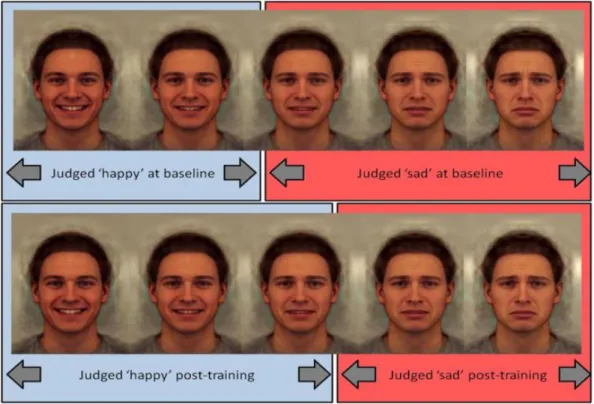
Figure 1. Sample of a face morph sequence 61
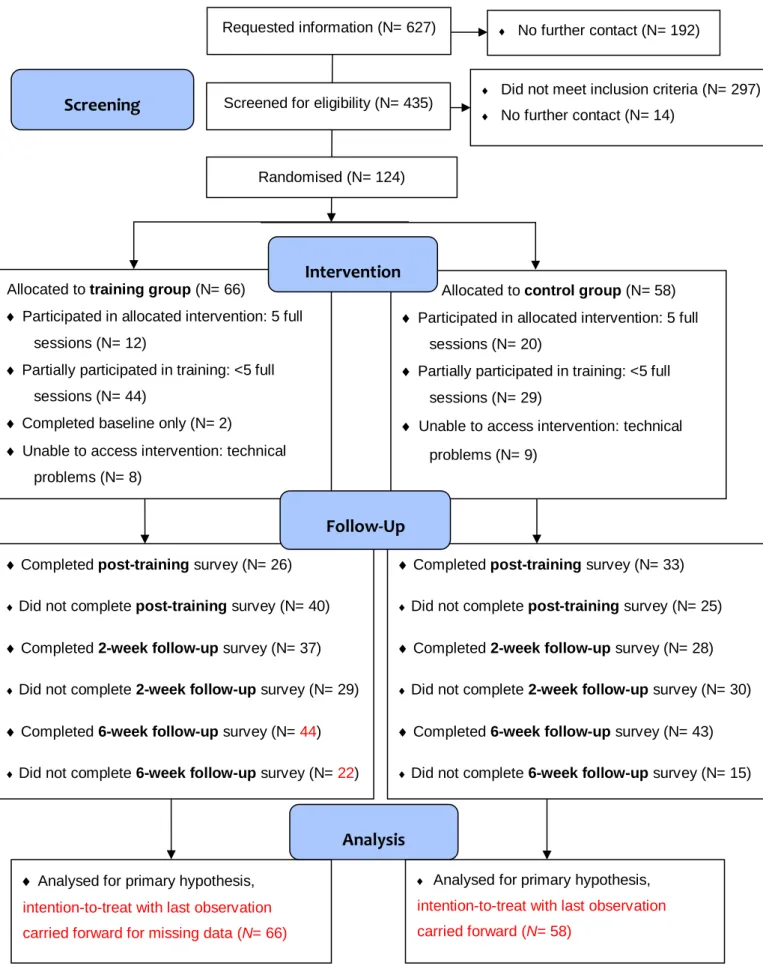
Figure 2. CONSORT Flow Diagram 69
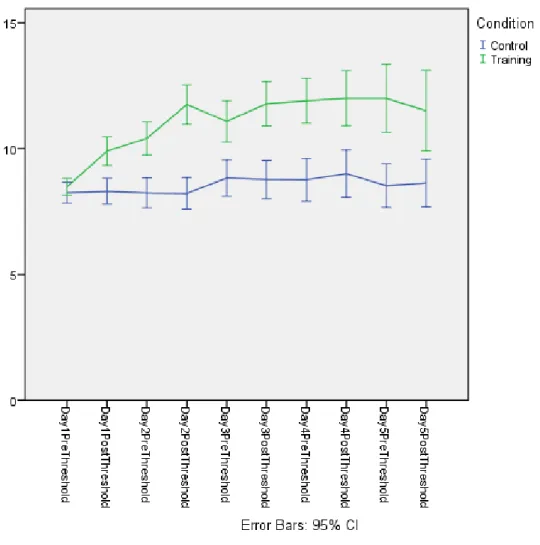
Figure 3. Mean thresholds before and after training sessions on each of the five
LITERATURE REVIEW COVER SHEET
Effects of Cognitive Bias Modification- Interpretation (CBM-I) Interventions on Depressive Symptoms: A Systematic Review
TRAINEE NAME: Victoria Stephens
SUPERVISORS
PRIMARY: Professors Marcus Munafò and Ian Penton-Voak, School of Psychology, University of Bristol.
SECONDARY: Dr Anna Adlam, College of Life and Environmental Science, University of Exeter.
TARGET JOURNAL: British Journal of Psychiatry
WORD COUNT: 3824 + corrections (excluding abstract, tables, titles, references and appendices)
DECLARATION:
“I certify that all material in this literature review which is not my own work has been identified and properly attributed. I have conducted the work in line with the BPS DCP Professional Practice Guidelines.”
SUBMITTED IN PARTIAL FULFILMENT OF REQUIREMENTS FOR THE DOCTORATE DEGREE IN CLINICAL PSYCHOLOGY
Effects of Cognitive Bias Modification- Interpretation (CBM-I) Interventions on Depressive Symptoms: A Systematic Review
Abstract
Depression is a major source of disability and many people do not access treatment. More accessible, cost-effective treatments are required. Cognitive bias modification interventions that target interpretation biases, hypothesised to contribute to the development and maintenance of depression, have been identified as a promising treatment. The current systematic review aimed to examine effects on symptoms of depression, in clinical and analogue samples, of cognitive bias modification interventions that have targeted interpretation biases. Relevant studies were sourced using a systematic search of databases and by contacting researchers involved in cognitive bias modification research. Ten relevant studies were identified, nine of which were classified as
randomised controlled trials. Data relating to participants, interventions, comparator groups, outcome measures, study design, study quality, and findings relating to the interventions’ effects on symptoms of depression and cognitive bias were extracted and synthesised. The overall picture of the effect of the interventions on symptoms of depression and interpretation bias was mixed, suggesting cognitive bias modification interventions that target interpretation biases are not currently at a stage to be recommended as an evidence-based treatment for depression. Limitations of the studies and review were acknowledged. Identification of the most meaningful outcome measures and effective CBM-I paradigm, perhaps a non-verbal design to maximise accessibility, paired with further rigorous studies are recommendations for further research in this field.
Introduction Depression
Depression is a major cause of disability worldwide, accounting for 4.3% of the global burden of disease (World Health Organization, 2013). These burdens include increased risk of mortality, especially by suicide, and disruptions to family stability, leading to family breakdown (Lépine & Riley, 2011). Depression contributes to workplace absenteeism, an economic burden for society
(Karampampa, Borgström, & Jönsson, 2011). Depression is characterised by persistent low mood and loss of interest in activities, accompanied by changes in psychomotor activity, sleep, and appetite, lack of energy, feelings of
worthlessness, concentration difficulties, and suicidal ideation (American Psychiatric Association, 2013). Many cognitive theories of the aetiology, maintenance and risk of relapse of depression emphasise the role of negative cognitive biases, whereby people with depression tend to be drawn to negative stimuli and interpretations.
Negative cognitive bias is central to this review, investigating the effect of cognitive bias modification (CBM) interventions on symptoms of depression. Negative biases have been found to occur at different levels of information-processing including attention, interpretation, and memory (Mathews & MacLeod, 2005). CBM paradigms focusing on these cognitive processes are known as CBM-A, CBM-I, and CBM-M, respectively. Compared to people
without depression, people with depression more selectively attend to and recall negative stimuli, and interpret ambiguous situations more negatively. Beck and colleagues (1979) developed a model of depression, suggesting people with depression view the self, world and future more negatively than others; this
model underpins traditional cognitive therapy, which aims to identify and reduce these negative biases.
Evidence-based treatments for depression include cognitive behavioural therapy (CBT) and antidepressants; both treatments are linked to changes in information-processing biases hypothesised to mediate changes in mood. CBT modifies interpretation biases, through thought-challenging and considering alternative interpretations of situations. A recent neurocognitive model of the mechanism of antidepressants (Harmer, Goodwin, & Cohen, 2009) suggests medication leads to neurochemical changes causing early modification of information-processing biases, detectable shortly after administration, and this mediates later improvements in mood. Antidepressants are less acceptable than psychological therapies to many people (e.g., Chabrol, Teissedre, Armitage, Danel, & Walburg, 2004) and psychological therapies are not
accessible to everyone. Barriers include lack of skilled therapists, limited clinic opening times, and treatment costs (Titov et al., 2010). It is therefore desirable to develop accessible, acceptable, cost-effective treatments to tackle problems caused by depression.
CBM-I
Development of accessible treatments for depression has included successfully adapting CBT to be computerised (cCBT; Andrews, Cuijpers, Craske, McEvoy, & Titov, 2010). CBM has been proposed as a promising treatment. CBM aims to modify or induce cognitive biases through repeated exposure, without extensive instructions, to simple stimuli via computer software. CBM was initially implemented as an experimental task to test
hypotheses that negative cognitive biases contributed causally to mental health problems. For example, anxiety increased in healthy volunteers after a CBM
paradigm reinforced negative interpretation biases (Mathews & Mackintosh, 2000). The success of CBM in modifying cognitive biases in healthy populations highlighted its potential as a mental health intervention. This review considers the potential of CBM to reduce symptoms of depression by a similar mechanism to the models outlined above of the action of CBT and antidepressants.
The majority of CBM studies have targeted negative attentional biases in anxiety. CBM research in depression is in its infancy (Torkan et al., 2014). Nevertheless, two meta-analyses have considered effectiveness of CBM in treating mental health conditions. Hallion and Ruscio (2011) examined effects of CBM-I and CBM-A on anxiety and depression in 45 studies. CBM interventions had a large effect in modifying interpretation biases and a medium effect on attention biases. Regarding depression, they concluded there was no evidence of CBM interventions modifying depression; this was based on a non-significant, small, unreliable effect. Limitations were that only 10 of the 45 studies used a depression measure. Only three investigated an analogue or clinical sample of people with depression, using CBM-A. The other seven measured depression in analogue or clinical samples of people with anxiety, and used a CBM paradigm designed specifically to target biases associated with anxiety, rather than depression. Conclusions of the effectiveness of CBM interventions on depression should be made cautiously in the context of these limitations.
A more recent meta-analysis (Menne-Lothmann et al., 2014) investigated effects of CBM-I on positive interpretations and mood. Different aspects of interpretation bias have been targeted by various CBM-I interventions, using homophones, word-sentence association tasks, ambiguous situations, and emotion recognition. The meta-analysis found CBM-I, which reinforced benign and positive interpretations, decreased negative mood. Bigger effects were
found when CBM-I paradigms encouraged participants to use mental imagery, and also for female participants, or when the number of sessions was greater. These findings do not have a high level of external validity when generalizing to people with symptoms of depression because the meta-analysis combined studies using anxiety and depression paradigms to examine healthy volunteers and analogue and clinical samples of people with anxiety and depression. The current review, in a similar design to that of Menne-Lothmann and colleagues (2014), only examined CBM-I studies, rather than other CBM paradigms.
Objective
The current systematic review aimed to examine effects of CBM-I on depression symptoms. To overcome limitations identified in the previous reviews, only studies that have used CBM-I with analogue or clinical samples with dysphoria or depression were examined. CBM-I, theoretically, has great potential in targeting negative biases that occur in depression to mediate changes in mood. Understanding the effectiveness of CBM-I interventions developed thus far is essential for treatment development and dissemination. The review question was, “What are the effects of CBM-I interventions on symptoms of depression of people with depression or dysphoria?”
Method
Search Strategy
Electronic database searches were carried out in July 2014 using Web of Science, PsycINFO, PubMed, Medline, Psycarticles, and The Cochrane Library to find papers published between 1994 and 2014. The search terms were (depress*, OR dysphori*) AND (cognitive bias modification, OR interpret* bias modification, OR interpret* training, OR bias training OR bias modification).
Additional search strategies included contacting experts in the field of CBM for information about unpublished or other relevant literature, and hand-searching reference lists of key articles.
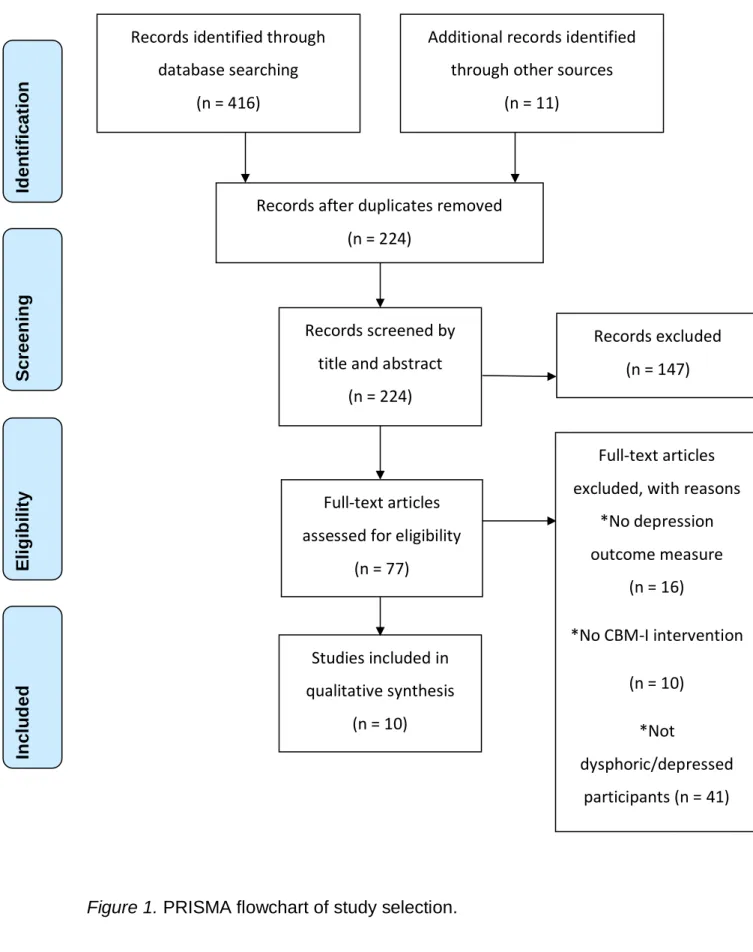
The researcher carried out a systematic approach to identify appropriate studies (Figure 1). Duplicate studies were removed, titles and abstracts examined, then full-text of the remaining studies was screened to ensure fulfilment of the eligibility criteria. Data were extracted based on the PICOS framework, i.e., considering participants, intervention, comparators, outcomes, and study design. Issues of study quality were examined using guidelines outlined in the PRISMA statement (Moher, Liberati, Tetzlaff, & Altman, 2009) to assess risk of bias for each study.
Eligibility Criteria
Studies were eligible if they met the following criteria. Participants had dysphoria or depression, i.e., analogue or clinical samples. Participants of all ages and from all countries were considered. Outcomes included a depression measure, assessing changes in mood. The intervention used a CBM-I design, as defined by Koster, Fox, and MacLeod (2009). Specifically, the intervention aimed to directly modify an interpretation bias, not through following detailed instructions but instead through intensive practice on a simple, repetitive, cognitive task designed to facilitate the desired cognitive change. Eligible publication dates were 1994 to 2014, since the field of CBM research began around 2000 (Fox, Mackintosh, & Holmes, 2014). There were no publication status restrictions.
Study Synthesis Strategy
Studies were considered in terms of similarities and differences of design, participants, comparators, outcomes, and CBM-I interventions. Issues of study bias were also explored. To examine the objective of the review, investigating the effectiveness of CBM-I on depressive symptoms, the study findings relating to depression and interpretation bias outcomes were evaluated.
Results
Study Characteristics
Ten studies were identified for the review (Table 1).
Study Designs
All studies were described as randomised controlled trials (RCTs) except the earliest dated study, a single case-series (Blackwell & Holmes, 2010). RCTs represent the gold-standard in evaluating healthcare interventions, when well-designed, conducted and reported (Schulz, Altman, & Moher, 2010), therefore they have greater external validity than the case-series. Two studies were described as pilot-studies (Lang, Blackwell, Harmer, Davison, & Holmes, 2012; Torkan et al., 2014). Follow-ups, a component of good quality studies, were implemented by all studies. The follow-up findings from the study by Williams and colleagues (2013), however, will not be considered in this review because the outcomes are confounded by a 10 week web-based CBT intervention implemented after the CBM-I intervention.
Records identified through database searching (n = 416) S c re e n in g In c lu d e d E li g ib il it y Id e n tif ic a tio n
Additional records identified through other sources
(n = 11)
Records after duplicates removed (n = 224)
Records screened by title and abstract
(n = 224)
Records excluded (n = 147)
Full-text articles excluded, with reasons
*No depression outcome measure
(n = 16)
*No CBM-I intervention
(n = 10) *Not dysphoric/depressed participants (n = 41) Studies included in qualitative synthesis (n = 10) Full-text articles assessed for eligibility
(n = 77)
Study Number. Authors: Study Centre Study Designs
Participants CBM-I Positive Intervention Paradigms
Comparators Outcomes Findings (p < .05)
1. Blackwell et al., (2014): Oxford, UK. RCT. 1, 3, & 6 month follow-up. MDD (SCID-I). N=150. Average age:35. Multi-paradigm: auditory (6 sessions) & picture-word (6). 4 weeks at home. Half negative, half positive stimuli.
(a) BDI-II & SST
(b) Clinically significant change on BDI-II
(c) Anhedonia (i.e., BDI-II items 4 & 12)
(d) Moderating effect of number of episodes of depression on BDI-II
(e) Moderating effect of vividness of imagining the CBM-I scenarios on BDI-II
(f) Relationship between
(a) No time*condition interaction
(b) No group difference
(c) Greater reduction for positive v. control group at post intervention (not all time-points)
(d) Subgroup with < 5 depressive episodes had a greater reduction on BDI-II in the positive vs control condition, at post-intervention & 1-month follow-up (not other time-points)
(e) Greater reduction on BDI-II with higher vividness scores, within the positive v. control group at all time-points
(f) Change in SST predicted change in BDI-II Table 1
change in bias (SST) and mood (BDI-II).
score (pre-post). Post-intervention SST score correlated with BDI-II score at 3 & 6 month follow-up (not 1 month):
2. Blackwell & Holmes (2010): Oxford, UK. Single case series: A-B design. 2 week follow-up MDD (SCID-I). N=8. Average age:38. Auditory: 7 days at home. Week prior to intervention used as control.
(a) BDI-II, PANAS, SST, VAS (depressive statements)
(a) Improved mood & cognitive bias for 4 out of 7 participants that was maintained at follow-up, 3 found difficulties engaging with the CBM-I intervention, 1 excluded. 3. Lang et al., (2012): Oxford, UK. RCT (pilot). 2 week follow-up MDD (SCID-I). N=28. Average age:29. Multi-paradigm: auditory (3 sessions), picture-word (2), picture- word-fragment appraisal (1), mixed session (1). 1 week at home. Half negative, half positive stimuli.
(a) BDI-II, Ham-D, IES, SST & RIQ, post-intervention
(b) BDI-II, at follow-up
(c) Clinically significant change on BDI-II & Ham-D post-intervention
(d) Clinically significant change
(a) Decreased depressive symptoms & negative cognitive bias for positive group, not control group
(b) Time*condition interaction at trend level: decrease for positive group not control
(c) More positive group participants than control group, at post-intervention
on BDI-II at follow-up
(e) Correlation between change in interpretation bias (RIQ & SST) and depression (BDI-II)
group vs control
(e) BDI-II change positively related with RIQ (at trend level with SST) for positive not control group, at post-intervention. 4. Micco et al., (2014): Boston, USA. RCT. 2 week follow-up BDI-II > 13. N = 45. Average age:18. Word-fragment: scenarios relevant to potential loss, rejection or failure. 4 sessions over 2 weeks in lab. Unambiguou s, emotionally neutral stimuli. (a) TIB
(b) TIB: limited to the subgroup with a baseline negative bias (i.e. a score below 1.0)
(c) DAS
(d) CANTAB: AGN
(e) BDI-II & MDD symptoms (SCID-IV/K-SADS-E).
(a) No time*condition interaction
(b) Time*condition interaction mid-treatment at trend level post-treatment (not at follow-up): increased positive bias for positive vs control group
(c) Greater reduction for positive vs control group at post-intervention & follow-up
(d) No time*condition interaction
5. Newby et al., (2014): Sydney, Australia. Non-randomised controlled trial. 1 week follow-up. BDI-II > 12. N=60. Average age:26. Word-fragment: appraisal of intrusive memories. Single session in lab. 1. CBT: single session. 2. No intervention.
(a) BDI-II, IES, & Appraisals of Intrusive Memories
Questionnaire, at follow-up
(b) PANAS, post-intervention
(c) IMI
(d) Intrusive Memory Diary, completed at home over a week
(e) Correlation: bias & mood
(a) No time*condition interaction
(b) No difference between groups
(c) No difference between CBM group vs control or CBT
(d) No difference between groups
(e) Reduction in negative appraisal (baseline – follow-up) correlated with reduction of distress.
6. Penton-Voak et al., (2012): Bristol, UK. RCT with 2 week follow-up BDI-II > 13. N=80. Average age:21. Morphed faces: 4 sessions in lab. Sham-training.
(a) PANAS (positive, follow-up) & CBM-I face-morph final threshold (post-intervention)
(b) PANAS (negative) & BDI-II, at follow-up.
(a) Increased positive affect & positive bias for positive group vs control
7. Pictet et al., (2011): Oxford, UK. RCT with 24 hour follow-up. BDI-II > 10. N=81. Average age:28. Picture-word: Single session in lab. 1. Half negative, half positive stimuli 2. All negative.
(a) PANAS (positive affect) & Fish Game, post-intervention
(b) Homophone Task, at 24-hours follow-up.
(a) Increased positive affect & behavioural motivation for positive CBM-I group vs comparators
(b) Increased positive bias for positive CBM-I group vs negative group, not positive vs half negative/half positive group.
8. Torkan et al., (2014): Isfahan, Iran. RCT (pilot) with 2 week follow-up. MDD (SCID-I). N=39. Average age:28. Auditory (Persian version): with use of imagery vs non-imagery. 7 days at home.
No treatment.
(a) BDI-II, at post-intervention
(b) SST & RRS, at post-intervention
(c) BDI-II, at follow-up
(d) SST, at follow-up
(e) RRS, at follow-up
(f) Clinically significant change on BDI-II
(g) Relationship: change in
(a) Decrease in depressive symptoms for both CBM-I groups, not control. Greater decrease for imagery group than non-imagery, not between non-imagery & control
(b) Decrease in negative interpretation & ruminative responses in imagery group, not non-imagery CBM-I condition or control
(c) Decrease in depressive symptoms from baseline (not post-intervention) for imagery group, not non-imagery CBM-I condition
bias (SST) & mood (BDI-II) (d) Decrease in negative interpretation bias for imagery CBM-I group, increase in negative interpretation for non-imagery CBM-I group
(e) No time*condition interaction
(f) More participants in imagery CBM-I group than non-imagery group, at post-intervention and follow-up
(g) Change in BDI-II correlated with change in negativity score on SST (pre-post).
9. Williams et al., (2013): Sydney, Australia. RCT. MDD (MINI). N=69. Average age:45. Auditory: 7 days at home. Wait list control.
(a) BDI-II, PHQ-9, K10, AST-D
(b) SST
(c) Clinically significant change on BDI-II
(d) Relationship: change in bias (AST-D) & mood (BDI-II).
(a) Increased symptom reduction & more positive bias for positive group vs control (medium effects)
(b) No interaction of time*condition
(c) More participants, at trend level, for positive group vs control
(d) AST-D change score (pre-post) was a significant mediator of condition (CBM-I vs control) on BDI-II change score, i.e., change in interpretation, at least in part, mediated reduction in depression symptoms following CBM-I 10. Yiend et al., (2013): London, UK. RCT. 4 week follow-up. MDD (MINI). N = 40. Average age:43. Word-fragment: prompt positive future directed cognition to CBM-errors. A single lab session. Unambiguou s, emotionally neutral stimuli. (a) SRT, post-intervention (b) SST, post-intervention
(c) VAS sad/anxious: change after watching short film, intended to induce stress
(d) BDI-II, PANAS, & MDI, at follow-up
(e) ATQ-R, at follow-up.
(a) More positive bias for positive vs control group.
(b) Significant time*condition interaction when means imputed for missing data, n = 3. Increase in positive bias for positive group not control group. Decrease in negative bias, at trend level (at significance when means imputed for missing data), for positive group not control group.
(c) No time*condition interaction.
Note. AST-D = Ambiguous Scenarios Test for Depression; ATQ-R = Automatic Thoughts Questionnaire-Revised; BDI-II = Beck Depression Inventory-II; CANTAB: AGN = CANTAB: Affective Go/No-Go Test; CBM-I = cognitive bias modification for interpretation bias; CBT = cognitive behavioural therapy; DAS = Dysfunctional Attitudes Scale ; IES = Impact of Event Scale; K10 = Kessler Psychological Distress Scale; K-SADS-E = Kiddie-Schedule of Affective Disorders and Schizophrenia-Epidemologic Version;IMI = Intrusive Memory Interview; Ham-D = Hamilton Depression Ratings Scale; KSADS-E = ;MDI = Major Depression Inventory; MINI = Mini International Neuropsychiatric Interview Version 5.0.0; PANAS = Positive and Negative Affect Scale; RCT = randomised controlled trial; MDD = major depressive disorder; PHQ-9 = Patient Health Questionnaire – 9 item Depression Scale; RIQ = Response to Intrusions Questionnaire; RRS = Ruminative Responses Scale; SCID-I = Structured Clinical Interview for DSM-IV; SRT = Similarity Ratings Test; SST = Scrambled Sentence Test; TIB = Test of Interpretation Bias; UK = United Kingdom; USA = United States of America; VAS = visual analogue scale.
Participants
The majority of study participants were Caucasian females, limiting generalizability of findings to the global population. One study recruited
adolescents and young adults (Study 4), another recruited participants aged 18 to 45 (Study 6). All other studies recruited adults from a wider age range. Six studies (1, 2, 3, 8, 9, & 10) recruited only participants with a major depressive disorder. Four studies recruited participants with dysphoria (4, 5, 6, & 7). All studies reported detailed information of inclusion and exclusion criteria, and similarities in baseline data across conditions, showing good levels of validity in the study samples and transparency in reporting.
Interventions
Four different CBM-I paradigms were implemented. All were computerised interventions aimed at reinforcing, through repeated presentation of simple stimuli, a more positive bias for interpreting ambiguous situations.
Heterogeneity of these CBM-I interventions raises the question whether the mechanism by which they work is the same, whether they have similar effects, and whether they are best measured using the same outcomes. Research into CBM-I for depression is relatively new, so investigating multiple paradigms is sensible in the quest to find an effective intervention.
One paradigm, implemented by five studies (1, 2, 3, 8, & 9), involved auditory presentation of initially ambiguous scenarios, which had a positive resolution. Another paradigm, implemented by three studies (1, 3, & 7), involved pictures of ambiguous scenes displayed alongside a positive word. A third paradigm, implemented by four studies (3, 4, 5, & 10), required participants to read short paragraphs, initially ambiguous in content, ending with a word fragment, which participants were asked to amend, creating a forced positive
resolution. The fourth paradigm, implemented by one study (6), involved brief presentations of faces, on a morphed sequence from sad to happy. Participants received feedback to shift interpretations of the ambiguous faces from sad to happy.
Over the ten studies, the number of sessions implemented ranged from one to twelve. Two studies used a multi-paradigm intervention (1 & 3). Five
implemented the intervention in a laboratory setting (4, 5, 6, 7, & 10). The other five implemented interventions in participants’ homes (1, 2, 3, 8, & 9); four studies initially invited participants to a laboratory setting (1, 2, 3, & 8), only one study (9) involved no face-to-face contact.
Comparators
Six studies included a comparator similar in design to the positive CBM-I paradigm implemented (1, 3, 4, 6, 7, & 10). These comparators consisted of control stimuli that were (a) unambiguous and emotionally neutral (4 & 10) (b) half negative and half positive (1, 3, & 7) or (c) all negative (7); as opposed to the positive CBM-I interventions in which the majority of stimuli were ambiguous and positively biased. Presentation of only negative stimuli as a control
condition could be considered ethically questionable, particularly with participants who are depressed. Sham-training was the comparator
implemented by one study (6); control group participants received feedback to reinforce their baseline thresholds.
Other comparators were no-treatment control conditions (5, 8, & 9). When examining differences between a positive CBM-I intervention and a
no-treatment condition many more confounding factors are present than comparing a positive CBM-I intervention with a CBM-I control condition. In the case-series
study (2), the week before participants began the CBM-I program was used as a control period. One study (5) compared a different treatment paradigm: a therapist-delivered CBT session, aiming to target and modify negative interpretation biases.
Outcomes
All ten studies included at least one outcome measuring depressive mood and one measuring interpretation bias, the relevant study outcomes for this review.
Depressive mood.
All studies, except one (7) used the Beck Depression Inventory-II (BDI-II; Beck, Steer, & Brown, 1996), a gold-standard self-report measure of
depression. Use of the same outcome measure facilitates comparisons between studies. The majority of depressive mood outcomes were self-report measures. Two studies implemented clinician-administered assessments of depressive mood (3 & 4). Clinician-administered assessments have been described as more accurate at measuring depressive severity than self-report measures but less able to detect change in mild levels of depression (Cusin, Yang, Yeung & Fava, 2010).
Two other outcomes were implemented, a novel behavioural task using a fishing game to measure motivated behaviour (7), and visual analogue scales (VAS) measuring sadness and anxiety to assess mood changes after
participants watched a short video of a life-threatening incident, simulating a stressful experience (10). These outcomes, arguably, have less robust
psychometric properties but more ecological validity in measuring symptoms of depression than self-report measures, such as the BDI-II and
clinician-administered assessments, such as the Hamilton Depression Rating Scale (Ham-D; Hamilton, 1960).
Interpretation bias.
Six studies (1, 2, 3, 8, 9, & 10) measured interpretation bias using the Scrambled Sentences Test (SST; Wenzlaff, 1993), a predictor of depressive symptoms (Rude et al., 2002). Six other tests of interpretation bias were implemented (see Table 1). A further measure of interpretation bias utilised visual analogues scales (VAS) associated with depressive statements (2), and three self-report measures were utilised. No single standard measure of
interpretation bias has yet emerged. The heterogeneity of measures makes comparing findings difficult.
Study Quality and Issues of Bias
Nine of the reviewed studies claimed to be RCTs (1, 3, 4, 5, 6, 7, 8, 9, &10). One study (5) did not use a true randomisation procedure, alternately allocating participants to different conditions; three studies did not describe randomisation procedures (4, 7 & 8). Four studies (1, 4, 6, & 10) reported that condition
allocation was concealed to reduce bias. Only one study collected a full set of data (7). Two studies moderated the risk of bias caused by attrition, clearly reporting flow of participants and appropriately using intention-to-treat analyses (1 & 9). While all study reports clearly described many issues relating to
methodology, not all clearly identified the study hypotheses and primary outcome; four studies were transparent on this issue (1, 4, 8, & 9). One study (9), however, identified five measures as primary outcomes. When considering all of these issues of quality and bias, the most rigorous study (1) was
Study Findings
The findings presented are based on statistical tests where the probability of obtaining the results by chance was <.05, some findings are reported that were at trend level. Improvement in scores over time could be caused by regression to the mean; findings are therefore only reported if there was evidence of a greater improvement compared to a control group, not just a main effect of time.
Changes in depressive symptoms.
Reductions in depressive mood for groups allocated to the positive CBM-I intervention were found in eight studies. The most rigorously implemented study (1), using a 12-session multi-component CBM-I home intervention, found no evidence to support the a priori hypothesis regarding reduction in BDI-II score. Reductions in anhedonia were found: Cohen’s d = 0.41 between groups post-intervention, a 0.54 difference on a 0 to 6 scale. Subgroup analyses revealed improvements on BDI-II score for participants with less than five depressive episodes; d = 0.73 between groups, a 6.9 difference post-intervention and 6.6 at 1-month follow-up on the BDI-II scale of 0 to 63. BDI-II score also improved for participants who could vividly imagine the CBM-I stimuli.
Three studies, using different positive CBM-I interventions, found evidence to support improvements on all included depression outcomes (3, 9, & 7). One such study (3) piloted a similar multi-paradigm design to the most rigorous study (1) but with less rigour and statistical power, a shorter intervention, and shorter follow-up; findings included significant reductions in depressive symptoms measured by the BDI-II (d = 0.89 within the positive group, a 6.85 difference), Ham-D (d = 1.24, a 4.92 difference on a 0 to 54 scale), and Impact of Event Scale (IES; Horowitz, Wilner & Alvarez, 1979; d = 1.34, a 8.62 difference on a 0
to 40 scale). Furthermore, more participants in the positive CBM-I group were found to have significant levels of clinical change on the BDI-II and Ham-D, compared with participants allocated to a control CBM-I group presented with half positive and half negative stimuli. The second study (9) compared a 7-day auditory CBM-I home intervention with a wait-list group; significant
improvements were found on the BDI-II (a 5.83 difference between groups), Patient Health Questionnaire 9-item depression scale (Kroenke, Spitzer & Williams, 2001; a 1.72 difference on a 0 to 27 scale), and Kessler Psychological Distress Scale (Kessler et al, 2002; a 4.86 difference on a 10 to 50 scale). Medium effect sizes were reported for each improvement. The third study (7) used a single picture-word laboratory-based CBM-I session; significant
increases in positive affect were found, measured by the Positive and Negative Affect Scales (PANAS; Watson, Clark & Tellegen, 1988;d = 0.77 between the positive CBI-I group and mixed CBM-I group, a difference of 7.71 on an
unspecified PANAS scale, and a difference of 14.89 between the positive and negative CBM-I groups). The study also found increased behavioural motivation and persistence, negatively associated with dysphoria; this was measured by the fishing task, which was a toy requiring participants to use a small plastic rod to catch as many small fish as possible in 2.5 min. The positive CBM-I group caught 3.15 more fish than the mixed CBM-I group (d = 0.75) and 5.78 more than the negative group (d = 1.38).
The three studies that implemented a word-fragment CBM-I intervention, as a single-paradigm design, showed limited evidence for reducing depressive symptoms (4, 5, & 10). One study (4) found no greater reduction in depressive symptoms for the intervention group, following a 4-session laboratory-based CBM-I intervention, compared to the control group, measured by the BDI-II, and
a clinician-administered assessment. However, there was a reduction, post-intervention and at follow-up, on the Dysfunctional Attitudes Scale (DAS; Weissman & Beck, 1978), which measured depressive beliefs relating to perfectionism and the need for social approval (d = 0.60 between groups post-intervention, a 17.97 difference on a 40 to 280 scale; d = 1.02 at follow-up, a 30.92 difference). The DAS could be more sensitive to specific changes. This finding could also be a Type I error, since many different outcome measures were used. Two studies (5 & 9) used a similar intervention design but different participant inclusion criteria and different comparison conditions; neither found evidence for the superiority of positive CBM-I in reducing depressive symptoms on any mood measure.
The only study that used the face-morph CBM-I paradigm (6) measured depression symptoms 2 weeks following four laboratory-based sessions; evidence was found for improved positive affect, measured by the PANAS (a 3.29 adjusted mean difference on a 10 to 50 scale), but not for reduced negative affect or BDI-II score.
One study (8) compared a no-treatment group with two 7-day home-based positive CBM-I interventions using an auditory paradigm: one group used field perspective imagery; the other did not use imagery. The imagery group was superior to the non-imagery group, which was in turn superior to the no-treatment group in reducing depressive symptoms. The adjusted mean difference in BDI-II score between imagery and non-imagery group was 8.54 post-intervention (d = 1.11), 13.0 at follow-up (d = 1.75),and 9.85 between imagery and control group post-intervention (d = 1.04).The difference in score on the Ruminative Responses Scale (Nolen-Hoeksema & Morrow, 1991) post-intervention between the imagery and non-imagery group was 15.77 on a 22 to
88 scale (d = 1.0), and 17.0 between the imagery and control group (d = 1.13). Finally, the case-series study (2), using a 7-day home-based auditory CBM-I intervention, showed reductions in depressive symptoms for four of seven participants. Qualitative data indicated responsive participants had more fully engaged with the intervention than non-responders.
Changes in interpretation bias.
Increased positive interpretation bias or decreased negative bias for groups allocated to the positive CBM-I intervention, compared to comparator
conditions, were found in seven studies. No evidence of superiority for the positive CBM-I intervention in affecting cognitive bias was found in three studies, including the most rigorously implemented study (1).
Improved cognitive bias was found on all implemented outcome measures for three studies. This included the study in which the outcome stimuli were identical to the CBM-I training stimuli (6); therefore generalizability of this finding to other ambiguous situations is uncertain. The adjusted mean difference was 2.72 for shift in bias on a scale from 1 to 15 on an emotion recognition task. The short multi-paradigm study (3) showed a 0.13 difference on a 0 to 1.0 scale for SST between groups, d = 0.60, and a 8.23 difference on a 6 to 42 scale for RIQ, d = 1.34. One study (7) found superiority in increasing positive bias for the positive CBM-I group over the negative CBM-I group (a 6.09 difference on a 0 to 100 scale for a homophone task, d = 0.56) but not the mixed CBM-I group.
Mixed findings occurred in some studies. One study (8) found improved cognitive bias for the positive CBM-I group using imagery, post-intervention (a 28.43 difference compared with the imagery group on a 0 to 100 scale for SST, d = 0.77, and 24.99 compared with the control group, d = 0.73)however, at
follow-up, the non-imagery positive CBM-I group showed increased negative bias (a difference of 42.17, d = 2.32). Another study (9) found increased positive bias on the Ambiguous Scenarios Test for Depression (Berna, Lang, Goodwin & Holmes, 2011; a 0.77 difference on an unspecified scale, corresponding to a medium effect size) but no SST difference. The study identified the majority of included measures as primary outcomes but proposed no explanation for why improvements were found on some measures and not others. The case-series study (2) showed improved cognitive bias for four of seven participants.
Association between change in bias and mood.
The relationship between change in bias and mood was examined by five studies (1, 3, 5, 8, & 9); all found a positive association. The importance of this analysis is to investigate the hypothesised mechanism of CBM treatments on mental health symptoms, i.e., change in cognitive bias is hypothesised to mediate changes in mood. These associations are not necessarily causative.
Review Findings
The objective of this review was to examine the effectiveness of CBM-I on depressive symptoms. Theoretical underpinnings of the effect of CBM-I on depression suggest changes in interpretation bias can mediate changes in mood symptoms. Ten studies were systematically selected. All investigated use of a positive CBM-I paradigm with participants experiencing depression or dysphoria. The main findings showed a mixed picture: inconsistent evidence of improvement on a variety of relevant outcomes measuring depressive
symptoms and interpretation bias, compared to various control conditions. Significant differences between groups were generally medium sized effects; the clinical significance of these differences is unclear because minimal
clinically important differences were not routinely reported. The mixed picture of findings falls between the negative and optimistic results of the two
meta-analyses: no evidence that CBM modifies depression (Hallion & Ruscio, 2011); positive or benign CBM-I paradigms are associated with increased positive interpretations and decreased negative mood states (Menne-Lothmann et al., 2014). Inconsistent findings could relate to issues regarding the underlying theory, implemented interventions, or study methodology. CBM-I might not be an effective treatment for depression; not all CBM-I paradigms might be effective in affecting changes in cognitive bias to mediate changes in mood; limitations in study methodology might have prevented significant positive effects from being found.
Study designs showed different levels of quality. The most rigorous study (1), which incorporated a multi-session, multi-paradigm CBM-I intervention, with the biggest sample, and longest follow-up, found no evidence to support
hypotheses of reductions in symptoms of depression and negative bias. Subgroups of responders, moderating factors, and improvements in specific depressive symptoms were identified: participants with less than five episodes of depression, vividly imagining scenarios from a field perspective, and
anhedonia. Existing treatments for depression are not effective for everyone (Hollon, Stewart, & Strunk, 2006) so CBM-I could be a viable intervention even if it is only effective for certain groups.
Limitations
Ten studies with heterogeneous designs were reviewed. This small, varied sample reduces the external validity of the findings. A thorough search for relevant papers was implemented but there is a risk of publication bias concealing further null findings. Many outcome measures were included in
studies, increasing the risk of a Type I error. Studies with small samples were underpowered to detect small significant effects (all reported significant effects were more than Cohen’s d = 0.5). The study with the biggest sample (1; n=150) suggested it was still underpowered to detect small effects; the significant
change for anhedonia was only a small to medium effect size. CBM researchers have suggested that even if CBM-I interventions produce a change in outcome measure corresponding to a small effect size it would be worth further
investigation into CBM-I as a depression treatment because of its low-intensity, cost-effective nature (Blackwell et al., 2014). If a CBM-I intervention were found to lead consistently to improvements corresponding to a small effect size, however, patients and health professionals might be overoptimistic about its potential, which could lead to frustration and further depression.
Recommendations
Identification of the most effective CBM-I paradigm, and the most
meaningful, sensitive measures is important in the development of finding an effective CBM-I treatment for depression. An important goal to pursue is
clinically significant change rather than small effect sizes. Further investigation into what constitutes minimal clinically important differences on outcome measures used in CBM-I research would be beneficial. An additional
consideration is its potential to be an accessible adjunct to other interventions, whether or not it brings about clinically significant change on its own. Studies should ensure rigor in design, implementation, and reporting; the CONSORT checklist (Schulz et al., 2010) is a helpful tool to follow. When designing interventions and comparators, ethical implications should be considered. Analysis of the underlying mechanism of the intervention, using mediation analysis, is important for inclusion in future studies. Some studies included
measures of acceptability, which should be routinely used to ensure any treatment developed is acceptable. Only one study was implemented in a country where English is not the first language, translating the intervention into Persian (8). The verbal nature of three CBM-I paradigms reduces accessibility for many people, worldwide. Only one study tested the face-morph paradigm (6), which could be adapted to be non-verbal. Further investigation of the effectiveness of non-verbal CBM-I tasks is a recommendation for developing more accessible interventions.
Conclusion
This systematic review has examined ten studies that have used CBM-I interventions with people with depression and dysphoria to investigate its effect on depressive symptoms. The findings were mixed, suggesting the intervention is not currently at a stage to be recommended as a treatment possibility for depression. Identification of the most meaningful outcome measures and effective CBM-I paradigm, perhaps a non-verbal design to maximise accessibility, paired with further rigorous studies are recommendations for further research in this field.
References
American Psychiatric Association. (2013). Diagnostic and statistical manual of mental disorders. (5th ed.). Washington, DC: Author.
Andrews, G., Cuijpers, P., Craske, M. G., McEvoy, P., & Titov, N. (2010). Computer therapy for the anxiety and depressive disorders is effective, acceptable and practical health care: A meta-analysis. PLoS ONE, 10(5), 1-6.
Beck, A. T., Rush, A. J., Shaw, B. F., & Emery, G. (1979). Cognitive therapy of depression. New York: Guilford Press.
Beck, A. T., Steer, R. A., & Brown, G. K. (1996). The Beck Depression
Inventory-II (BDI-II). San Antonio, TX: The Psychological Corporation.
Blackwell, S. E., Browning, M., Mathews, A., Pictet, A., Welch, J., Davies, J.,…Holmes, E. A. (2014). Positive imagery-based cognitive bias modification as a web-based treatment tool for depressed adults: A randomised controlled trial. Clinical Psychological Science (in press).
Blackwell, S. E., & Holmes, E. A. (2010). Modifying interpretation and imagination in clinical depression: A single case series using cognitive bias modification. Applied Cognitive Psychology, 24, 338-350.
Chabrol, H., Teissedre, F., Armitage, J., Danel, M., & Walburg, V. (2004) Acceptability of psychotherapy and antidepressants for postnatal
depression among newly delivered mothers. Journal of Reproductive and Infant Psychology, 22(1), 5-12.
First, M. B., Spitzer, R. L., Gibbon, M., & Williams, J. B. W. (1996). Structured clinical interview for DSM-IV Axis 1 disorders: Patient edition (SCID-I/P,
Version 2.0). New York: Biometrics Research Dept, New York State Psychiatric Institute.
Hallion, L. S., & Ruscio, A. M. (2011). A meta-analysis of the effect of cognitive bias modification on anxiety and depression. Psychological Bulletin, 137(6), 940-958.
Harmer, C. J., Goodwin, G. M., & Cowen, P. J. (2009). Why do antidepressants take so long to work? A cognitive neuropsychological model of
antidepressant drug action. The British Journal of Psychiatry, 195, 102-108.
Hollon, S. D., Stewart, M. O., & Strunk, D. (2006). Enduring effects for cognitive behaviour in the treatment of depression and anxiety. Annual Review of Psychology, 57, 285-315.
Karampampa, K., Borgström, F., & Jönsson, B. (2011). Economic burden of depression on society. Medicographia, 33, 163-168.
Koster, E. H. W., Fox, E., & MacLeod, C. (2009). Introduction to the special section on cognitive bias modification in emotional disorders. Journal of Abnormal Psychology, 118(1), 1-4.
Landreville, P., Landry, J., Baillargeon, L., Guerette, A., & Matteau, E. (2001). Older adults' acceptance of psychological and pharmacological treatments for depression. Journal of Gerontology, Series B, Psychological Sciences and Social sciences, 56(5), 285-291.
Lang, T. J., Blackwell, S. E., Harmer, C., Davison, P., & Holmes, E. A. (2012). Cognitive bias modification using mental imagery for depression:
developing a novel computerized intervention to change negative thinking styles. European Journal of Personality, 26, 145-157.
Lépine, J-P., & Riley, M. (2011). The increasing burden of depression. Neuropsychiatric Disease and Treatment, 7, 3-7.
Fox, E., Mackintosh, B., & Holmes, E. (2014). Travellers’ Tales in Cognitive Bias Modification Research: A Commentary on the Special Issue. Cognitive Therapy and Research, 38(2), 239-247.
Mathews A., & Mackintosh, B. (2000). Induced emotional interpretation bias and anxiety. Journal of Abnormal Psychology, 109(4), 602-615.
Mathews, A., & MacLeod, C. (2005). Cognitive vulnerability to emotional disorders. Annual Review of Clinical Psychology, 1, 167-195.
Menne-Lothmann, C., Viechtbauer, W., Hohn, P., Kasanova, Z., Haller, S. P., Drukker, M.,…Lau, J. Y. F. (2014). How to Boost Positive Interpretations? A meta-analysis of the effectiveness of cognitive bias modification for interpretation. PLoS ONE, 9(6), 1-26.
Micco, J. A., Henin, A., & Hirshfeld-Becker, D. R. (2014). Efficacy of
Interpretation Bias Modification in Depressed Adolescents and Young Adults. Cognitive Therapy and Research, 38(2), 89-102.
Moher, D., Liberati, A., Tetzlaff, J., Altman, D.G., (2009). Preferred reporting items for systematic reviews and meta-analyses: The PRISMA statement, PLoS Med. 6(6), e1000097.
Newby, J. M., Lang, T., Werner-Seidler, A., Holmes, E., & Moulds, M. L. (2014). Alleviating distressing intrusive memories in depression: A comparison
between computerised cognitive bias modification and cognitive
behavioural education. Behaviour Research and Therapy, 56(100), 60-67.
Nolen-Hoeksema‚ S.‚ & Morrow‚ J. (1991). A prospective study of depression and posttraumatic stress symptoms after a natural disaster: The 1989 Loma Prieta Earthquake. Journal of Personality and Social Psychology‚ 61‚ 115-121.
Penton-Voak, I. S., Bate, H., Lewis, G., & Munafò, M. R. (2012). Effects of emotion perception training on mood in undergraduate students: Randomised control trial. The British Journal of Psychiatry, 200, 1-3.
Pictet, A., Coughtrey, A. E., Mathews, A., & Holmes, E. A. (2011). Fishing for happiness: The effects of generating positive imagery on mood and behaviour. Behaviour Research and Therapy, 49(12), 885-891.
Schulz, K. F., Altman, D. G., & Moher, D. (2010). CONSORT 2010 Statement: Updated guidelines for reporting parallel group randomised trials. The British Medical Journal, 340, c332.
Sheehan, D. V., Lecrubier, Y., Sheehan, K. H., Amorim, P., Janavs, J., Weiller, E.,…Dunbar, G.C. (1998). The Mini-International Neuropsychiatric
Interview (M.I.N.I.): The development and validation of a structured
diagnostic psychiatric interview for DSM-IV and ICD-10. Journal of Clinical Psychiatry, 59(Suppl 20), 22-33.
Titov, N., Andrews, G., Davies, M., McIntyre, K., Robinson, E., & Solley, K. (2010). Internet Treatment for Depression: A Randomized Controlled Trial Comparing Clinician vs. Technician Assistance. PLoS ONE, 5(6), e10939.
Torkan, H., Blackwell, S. E., Holmes, E., Kalantari, M., Neshat-Doost, H. T., Maroufi, M., & Talebi, H. (2014). Positive Imagery Cognitive Bias
Modification in Treatment-Seeking Patients with Major Depression in Iran: A Pilot Study. Cognitive Therapy and Research, 38(2), 132-145.
Watson, D., Clark, L. A., & Tellegen, A. (1988). Development and validation of brief measures of positive and negative affect: The PANAS scales. Journal of Personality and Social Psychology, 54(6), 1063-1070.
Williams, A. D., Blackwell, S. E., Mackenzie, A., Holmes, E. A., & Andrews, G. (2013). Combining imagination and reason in the treatment of depression: A randomized controlled trial of Internet-based cognitive-bias modification and Internet-CBT for depression. Journal of Consulting and Clinical
Psychology, 81(5), 793-799.
World Health Organization (2013). Mental health action plan: 2013-2020. Geneva, Switzerland: Author.
Yiend, J., Lee, J-S., Tekes, S., Atkins, L., Mathews, A., Vrinten, M.,…Shergill, S. (2014). Modifying interpretation in a clinically depressed sample using 'cognitive bias modification-errors': A double blind randomised controlled trial. Cognitive Therapy and Research, 38(2), 146-159.
Appendix A: The British Journal of Psychiatry: Instructions for Authors The British Journal of Psychiatry (BJPsych) is published monthly by the Royal College of Psychiatrists. The BJPsych publishes original work in all fields of psychiatry. Manuscripts for publication should be submitted online via
http://submit-bjp.rcpsych.org.
All published articles are peer reviewed. Contributions are accepted for publication on the condition that their substance has not been published or submitted for publication elsewhere, and this includes web-based documents. Authors submitting papers to the BJPsych (serially or otherwise) with a common theme or using data derived from the same sample (or a subset thereof) must send details of all relevant previous publications and simultaneous submissions.
Manuscripts accepted for publication are copy-edited to improve readability and to ensure conformity with house style.
The title should be brief and relevant. Subtitles should not be used
unless they are essential. Titles should not announce the results of articles and, except in editorials, they should not be phrased as questions.
The BJPsych supports and expects all authors to follow the World Medical Association's Declaration of Helsinki regarding the ethics of research involving human participants. Assessors for the journal are required to consider the ethics of each submitted work. To facilitate this, every research article submitted to the BJPsych must include a statement that the investigators obtained ethical approval for the study (or an explanation of why ethical approval was not needed), including the name of the ethics committee(s) or review board(s), any allocated reference number of the approval(s) and a statement concerning the participants' informed consent.
A structured abstract of up to 150 words should be given at the beginning of the article, incorporating the following headings: Background; Aims; Method; Results; Conclusions; Declaration of interest. The abstract is a crucial part of the paper and authors are urged to devote some care to ensuring that all the important findings are included within the word limit.
Introductions should normally be no more than one paragraph; longer ones may be allowed for new and unusual subjects. This should be followed by Method, Results and Discussion sections. The Discussion should always include limitations of the paper to ensure balance. Use of subheadings is
encouraged, particularly in Discussion sections. A separate Conclusions section is not required.
The article should normally be between 3000 and 5000 words in length (excluding references, tables and figure legends) and normally would not include more than 25 essential references beyond those describing statistical procedures, psychometric instruments and diagnostic guidelines used in the study. All large tables (exceeding half a journal page) will be published only in the online version of the BJPsych (see Online data supplements, below). Authors are encouraged to present key data within smaller tables for print publication. This applies also to review articles and short reports.
Review articles should be structured in the same way as regular papers, but the length of these may vary considerably, as will the number of references. Systematic reviews are preferred and narrative reviews will be published only under exceptional circumstances. Reviews done for the Cochrane
Collaboration, the National Institute for Health and Clinical Excellence and other groups likely to be published, or already published, elsewhere, should be
submitted with the latest version of the parent review and its status so that an informed decision can be made about the added value of the submitted paper.
Authors are responsible for checking all references for accuracy and relevance in advance of submission. Reference lists not in the correct style will be returned to the author for correction. References should be numbered in the order that they appear in the text and listed at the end of the article using the Vancouver style (see below), in which the names and initials of all authors are given after the appropriate reference number. If there are more than six authors, the first six should be named, followed by 'et al'.
The authors' names are followed by the full title of the article; the journal title abbreviated (in italics) according to the style of Index Medicus; the year of publication; the volume number (in bold type); and the first and last page
numbers. References to book or book chapters should give the titles of the book (and the chapter if selected), names of any authors, name of publisher, names of any editors, and year.
Personal communications need written authorisation (email is acceptable); they should not be included in the reference list. Unpublished doctoral theses may be cited (please state department or faculty, university and degree). No other citation of unpublished work, including unpublished
conference presentations, is permissible.
Tables should be numbered and have an appropriate heading. The tables should be mentioned in the text but must not duplicate information. The heading of the table, together with any footnotes or comments, should be self-explanatory. The desired position of the table in the manuscript should be
indicated. Do not tabulate lists, which should be incorporated into the text, where, if necessary, they may be displayed.
Figures should be clearly numbered and include an explanatory legend. Avoid cluttering figures with explanatory text, which is better incorporated succinctly in the legend. 3-D effects should generally be avoided. Lettering should be parallel to the axes. Units must be clearly indicated and should be presented in the form quantity (unit) (note: `litre' should be spelled out in full unless modified to ml, dl, etc.). All figures should be mentioned in the text and the desired position of the figure in the manuscript should be indicated.
Authors must obtain permission from the original publisher if they intend to use figures from other sources, and due acknowledgement should be made in the legend.
Colour figures may be reproduced if authors are able to cover the costs.
Methods of statistical analysis should be described in language that is comprehensible to the numerate psychiatrist as well as the medical statistician. Particular attention should be paid to clear description of study designs and objectives, and evidence that the statistical procedures used were both
appropriate for the hypotheses tested and correctly interpreted. The statistical analyses should be planned before data are collected and full explanations given for any post hoc analyses carried out. The value of test statistics used (e.g. t, F-ratio) should be given as well as their significance levels so that their derivation can be understood. Standard deviations and errors should not be reported as ± but should be specified and referred to in parentheses.
Trends should not be reported unless they have been supported by appropriate statistical analyses for trends.
The use of percentages to report results from small samples is discouraged, other than where this facilitates comparisons. The number of decimal places to which numbers are given should reflect the accuracy of the determination, and estimates of error should be given for statistics.
A brief and useful introduction to the place of confidence intervals is given by Gardner & Altman (1990, Br J Psychiatry, 156, 472-4). Use of these is encouraged but not mandatory.
Authors are encouraged to include estimates of statistical power where appropriate. To report a difference as being statistically significant is generally insufficient, and comment should be made about the magnitude and direction of change.
The BJPsych requires authors to submit a completed checklist and flowchart in accordance with the appropriate CONSORT guidelines. The registration details of the trial and a flow chart illustrating the progress of participants through the trial (CONSORT diagram) must be included in the submitted manuscript.
Reports of systematic reviews or meta-analyses of evaluations studies, including randomised controlled trials, must follow the PRISMA guidelines; meta-analyses of observational studies must adhere to the MOOSE guidelines.
For further guidance, authors may refer to the Royal College of Psychiatrists' house style guide.
If the study includes original data, at least one author must confirm that he or she had full access to all the data in the study, and takes responsibility for
the integrity of the data and the accuracy of the data analysis. We strongly encourage authors to make their source data publicly available.
Material related to a paper but unsuitable for publication in the printed journal (e.g. large tables) may be published as a data supplement in the online BJPsych at the Editor's discretion. For very large volumes of material, charges may apply.
All abbreviations must be spelt out on first usage and only widely recognised abbreviations will be permitted.
The use of notes separate to the text should generally be avoided, whether they be footnotes or a separate section at the end of a paper. A footnote to the first page may, however, be included to give some general information concerning the paper.
There is no submission or publication fee for papers published in the BJPsych in the usual way. All papers published in the BJPsych become freely available online 12 months after publication. In a new initiative to maximise access to original research, authors now have the option to make their papers freely available from the time of publication, on payment of an open access charge. This charge is currently £2500 (or US$4500) per article plus VAT where applicable. If you wish to take up this option, contact the BJP Editorial Assistant once your paper has been accepted for publication. For such papers, the
requirement for a 12-month delay before release of the manuscript in a public archive is waived, and the final published version may be deposited.
Authors may be asked to provide the raw data at any time up to 5 years after publication of research in the BJPsych.
MAJOR RESEARCH PROJECT COVER SHEET
Effects on Depressive Symptoms of a Web-Based Cognitive Bias Modification-Interpretation (CBM-I) Program for Emotion Recognition: A
Randomised Controlled Trial TRAINEE NAME: Victoria Stephens
SUPERVISORS
PRIMARY: Professors Marcus Munafò and Ian Penton-Voak, School of Psychology, University of Bristol.
SECONDARY: Dr Anna Adlam, College of Life and Environmental Science, University of Exeter.
TARGET JOURNAL: British Journal of Psychiatry
WORD COUNT: 7709 + corrections (excluding abstract, tables, titles, references and appendices)
DECLARATION:
“I certify that all material in this literature review which is not my own work has been identified and properly attributed. I have conducted the work in line with the BPS DCP Professional Practice Guidelines.”
SUBMITTED IN PARTIAL FULFILMENT OF REQUIREMENTS FOR THE DOCTORATE DEGREE IN CLINICAL PSYCHOLOGY