DIFFERENCES IN ENGAGEMENT OF ONLINE DOCTORAL STUDENTS BASED ON GENDER AND RACE
by
James E. Kuczero Liberty University
A Dissertation Presented in Partial Fulfillment Of the Requirements for the Degree
Doctor of Education
Liberty University 2019
DIFFERENCES IN ENGAGEMENT OF ONLINE DOCTORAL STUDENTS BASED ON GENDER AND RACE
by James Kuczero
A Dissertation Presented in Partial Fulfillment Of the Requirements for the Degree
Doctor of Education
Liberty University, Lynchburg, VA 2019
APPROVED BY:
Kurt Michael, Ph.D., Committee Chair
ABSTRACT
Student engagement is considered to be one of the most important indicators for success at all levels of education. Engagement in doctoral students is poorly understood, and the least researched area of engagement. As online programs become increasingly available, it is important to have insight into doctoral engagement and interventions which improve academic success while decreasing attrition. The purpose of the present study was to understand
differences in engagement based on gender and race/ethnicity. Students in the dissertation phase of their doctoral candidacy in an online program based at a private, mid-Atlantic, Christian university were invited to participate anonymously. Self-reported responses to survey questions from the Online Student Engagement scale were analyzed using a Two-Way Analysis of
Variance to measure differences in engagement scores based on participants’ gender and race/ethnicity. Significant differences were found in engagement scores based on gender. No differences in scores were detected based on race/ethnicity, and there was no significant interaction detected between the main factors. Results and implications are discussed, with suggestions made for future research.
Dedication
I dedicate this work to my wife, Marian, for your loving support throughout my doctoral journey and our many years. You have lifted me up, restored my confidence, and reinforced my will through the many rough patches. I greatly appreciate your encouragement and inspiration. May this document serve as a reminder of our faith in, and commitment to, each other. I love you and am forever grateful that you return that love in so many ways.
I dedicate this work to my children, Alexander and Michalina, who have inspired me through our many shared experiences and precious memories, and who continue to do so through all of your loving encouragement. I don’t know the words to describe how much I love you.
I dedicate this work to my family, and especially my parents, Ellen and Bob, and brothers Jerry and Steven, who have given me many gifts beyond measure: a strong work ethic, belief in each other, and the knowledge of the unyielding power of love. I have learned so much from you. This manuscript serves as a testament to our strength as a family and my love for each of you.
Table of Contents ABSTRACT ... 3 Dedication ... 4 Table of Contents ... 5 List of Tables ... 9 List of Figures ... 10 List of Abbreviations ... 11
CHAPTER ONE: INTRODUCTION ... 12
Overview ... 12
Background ... 12
Problem Statement ... 16
Purpose Statement ... 17
Significance of the Study ... 18
Research Questions ... 19
Definitions... 19
CHAPTER TWO: LITERATURE REVIEW ... 20
Overview ... 20
Introduction to Student Engagement ... 20
Engagement in Doctoral Students ... 25
Theoretical Framework of Engagement ... 28
Theory of Engagement ... 28
Engagement and Involvement with Learning Theory ... 29
Engagement and Social Cognitive Theory ... 30
Engagement and Theory of Transactional Distance ... 32
Related Literature... 34
Engagement and Gender ... 34
Gender and Doctoral Students ... 36
Engagement and Race ... 39
Race and Ethnicity in Research ... 42
Gender and Race ... 43
Distance Education and Student Engagement ... 45
Doctoral Students in Distance Programs ... 46
Attrition in Distance Education ... 47
On the Importance of Student Engagement ... 49
Summary ... 50
CHAPTER THREE: METHODS ... 52
Overview ... 52
Research Questions ... 53
Hypotheses ... 53
Participants and Setting... 54
Population and Setting ... 54
Sample... 54
Demographics ... 55
Instrumentation ... 55
Procedures ... 57
Data Analysis ... 60
CHAPTER FOUR: FINDINGS ... 62
Overview ... 62 Research Questions ... 62 Null Hypotheses ... 62 Descriptive Statistics ... 63 Results ... 63 Data Screening ... 63 Assumption Tests ... 65
Results for Null Hypotheses One ... 66
Results for Null Hypothesis Two ... 67
CHAPTER FIVE: CONCLUSIONS ... 69
Overview ... 69
Discussion ... 69
Research Question One ... 69
Research Question Two ... 71
Research Question Three ... 72
Implications... 73
Limitations ... 75
Recommendations for Future Research ... 77
REFERENCES ... 79
APPENDIX A: Online Student Engagement Scale (OSE) ... 100
APPENDIX B: Additional Demographic Information Collected for Data Analysis ... 102
APPENDIX C: Consent Form ... 103
APPENDIX D: Institutional Review Board Approval Letter ... 105
APPENDIX E: Qualtrics Letter of Certification ... 106
APPENDIX F: Solicitation Notice Sent via Email Accounts ... 107
List of Tables
Table 1: Sample Demographics by Gender and Race/Ethnicity ... 55
Table 2: Descriptive Statistics ... 63
Table 3: Kolmogorov-Smirnov Test of Normality for Gender ... 65
Table 4: Kolmogorov-Smirnov Test of Normality for Race/Ethnicity ... 66
Table 5: Levene's Test ... 66
List of Figures
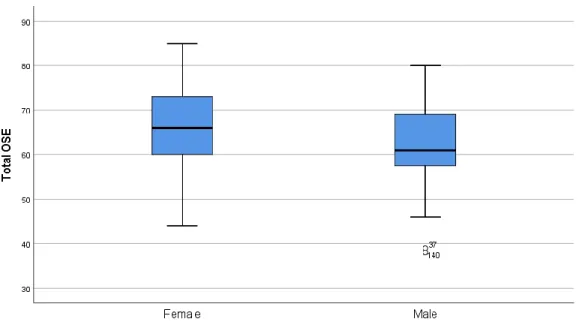
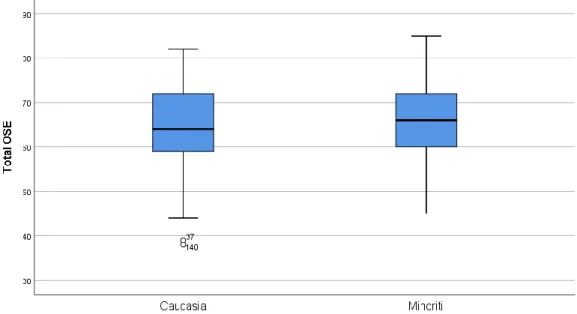
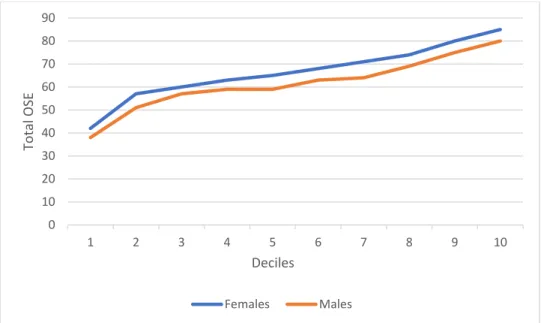
Figure 1: Box and Whisker Plot for Total OSE Based on Gender ... 64 Figure 2: Box and Whisker Plot for Total OSE Based on Race/Ethnicity ... 65 Figure 3. OSE Score Ranges Based on Gender ... 73
List of Abbreviations Asynchronous Learning Environment (ALE)
Institutional Review Board (IRB)
National Survey of Student Engagement (NSSE) Online Student Engagement Scale (OSE)
Statistical Package for the Social Sciences (SPSS) Student Engagement (SE)
CHAPTER ONE: INTRODUCTION Overview
The purpose of this study was to measure levels of engagement among doctoral students in an online program based on gender and race. Chapter One will discuss the background related to student engagement and doctoral candidates in distance education programs based on their gender and race. The theoretical basis for the study will be discussed. The significance of the study, problem statement, and purpose will provide the rationalization for conducting the study and discuss how the study will inform the body of knowledge about engagement and doctoral students in online programs. Lastly, the research questions will outline the specific goals of the research project, along with definitions pertinent to this study.
Background
Research has shown student engagement (SE) to be an important factor in college
students’ success in academics and personal development (Burch, Heller, Burch, Freed, & Steed, 2015; Hu & Kuh, 2002; Kahu, 2013). SE is a multidimensional construct which encapsulates the perspectives of behavior, emotion, and cognition (Fredricks, Blumenfeld, & Paris, 2004; Kahu, 2013), and is considered one of the better means of predicting student achievement (Burch et al., 2015). SE is generally viewed as a positive term when applied to research on educational outcomes (Christenson, Reschly, & Wylie, 2012; Milburn-Shaw & Walker, 2016). Current research in education regards SE as a key element of academic success and persistence towards undergraduate students earning a degree (Kahu, 2013; Kuh, 2009). There has been a
proliferation of online doctoral programs over the past two decades (Martin & Parker, 2014; Meyer, 2014), where the accompanying influx of tuition fees, coupled with lowered instructional delivery costs, help universities control the rising costs of educational programs (Bowen,
Chingos, Lack, & Nygren, 2012). Gender (Lester & Harris, 2015) and race (Guardia & Evans, 2008; Quaye & Harper, 2015) may play a role in levels of engagement among doctoral students.
Asynchronous learning environments (ALE) have existed for decades, going back to correspondence courses via mail in the 1960s (Astin, 1999; Moore, 1997), with no means of real-time interaction (Deschaine & Whale, 2017). Early research into what has become known as student engagement began in the 1940s with Tyler’s (1949) investigation connecting positive student outcomes to time on task and continued in the 1950s in Pace’s studies into quality of effort (Pace & McFee, 1960; Pace, 1990). For the past twenty years, there has been a
proliferation of online programs which situate learning in asynchronous environments, with little real-time interaction between the student, the professor, and classmates (Bowen et al., 2012; Chen, Lambert, & Guidry, 2009; Dixson, 2010; Martin & Parker, 2014; Meyer, 2014). Some students prefer ALE, because they can choose the time when they participate in coursework. (Glenn, 2016). Bandura (2006) noted that “The internet is a tool which requires personal enablement for its effective use” (p. 177). Students in ALE must make choices to guide their journey, with intentionality and forethought, in order to make meaningful decisions about the direction their learning takes.
The term student engagement has become popular in contemporary literature, and the supporting constructs are mostly synonymous with the term involvement with learning (Astin, 1984; Axelson & Flick, 2011; Kahn, 2014). In his theory, Astin (1984) posited that students’ college outcomes are based on their effort, and not all college outcomes are determined by the set of circumstances a student encountered prior to attending college. Student perceptions about various features of the campus also play a role in their choice to engage and persist in
assertion that the three most significant factors related to the involvement with learning theory are the students’ involvement with their academic coursework, their social interaction with the faculty, and having social learning opportunities with peers (Astin, 1999; Koole & Stack, 2016). Higher levels of engagement have been associated with improved academic success, higher attendance, higher retention rates, and improved degree completion rates (Axelson & Flick, 2011; Christenson et al., 2012; Deschaine & Whale, 2017; Finn & Zimmer, 2012; Kuh, Cruce, Shoup, Kinzie, & Gonyea, 2008). Though the construct of engagement has been researched for decades there is still no consensus on either a definition or conceptual framework (Axelson & Flick, 2011; Burch e al., 2015; Dixson, 2015; Finn & Zimmer, 2012; Fredricks et al., 2004; Fredricks & McCloskey, 2012; Kahu, 2013; Kuh, 2009; Milburn-Shaw & Walker, 2016; Zepke, 2015). Some authors suggested separating the construct of SE from that of student
disengagement (Mann, 2001; Wang & Degol, 2014), arguing the two shared only some overlap and should be studied as separate phenomenon with different antecedents and outcomes.
While engagement has been researched a great deal in undergraduate courses (Bowen et al., 2012; Kuh, 2009; McBrien, Jones, & Cheng, 2009), research into engagement among doctoral online students is both lacking and inconclusive (Bagaka’s, Badillo, Bransteter, & Rispinto, 2015; Dixson, 2015; Fredrickson, 2015; Gardner & Barker, 2015; Rockinson-Szapkiw, Wendt, Whighting, & Nisbet, 2016; Strayhorn, 2010), requiring more investigation into the phenomenon. Authors differ in their findings, with a few suggesting there is no reason to believe doctoral students are any different from other students when it comes to the value or impact of engagement (Cantwell, Bourke, Scevak, Holbrook, & Budd, 2017). Problematically, research into online doctoral programs has labored under a variety of interpretations of what comprises an engagement practice, such as only counting discussion board posts, or the number of emails
between student and professor (Dixson, 2010; Kahn, 2014; Peters, Shmerling, & Karren, 2011), but mostly involving behavioral engagement activities (Milburn-Shaw & Walker, 2016).
A review of the literature finds contradictory conclusions about engagement based on gender (Kinzie Tison, Bateman, & Culver, 2011, Peters et al., 2011; Wollast et al., 2018). According to some researchers, males are generally found to be less engaged in schoolwork, have higher dropout rates, and earn lower grades (Lietaert, Roorda, Laevers, Verschueren, & De Fraine, 2015). Conflicting research studies have found both that males benefitted more from social engagement during online coursework (Kamphorst, Hofman, & Terlouw, 2015), and that the loss of competitive spirit due to the lack of interaction in online courses left males less socially engaged (Peters et al., 2011). Some research findings suggest there are aspects of online learning where ALE is preferable (Watts, 2016). The literature suggests this may true for males (Koole & Stack, 2016), but also true for females (Peters et al., 2011). More research is needed to reconcile the discrepancies in these findings about SE based on gender.
Race and ethnicity may also play in SE, as non-White males typically have among the lowest grade point averages in undergraduate programs (Arana & Blanchard, 2017). The literature on the engagement levels of men and women of color in graduate programs is scarce considering the number of students enrolled in college (Harper, Berhanu, Davis, & McGuire, 2015; Patton, Harris, Ranero-Ramirez, Villacampa, & Lui, 2015). Race is an important consideration when researching engagement in online doctoral programs (Harper & Quaye, 2015).
Determining interventions meant to improve SE is important due to the impact on student grades, achievement, and completion rates (Fredricks et al., 2004; Fredricks et al., 2016, Kuh, 2007). Given the pliability of the construct, engagement interventions may be extended into the
realm of doctoral students (Bagaka’s et al., 2015; Dixson, 2010; Cantwell et al., 2017). Taken as a whole, more research is needed in the area of engagement in doctoral studies based on gender and race.
Problem Statement
The construct of student engagement in doctoral programs is still poorly understood (Fredricks & Filsecker, 2016; Rabourn, BrckaLorenz, & Shoup, 2018). Lower levels of SE contribute to lower rates of academic success and retention for online doctoral students in ALE (Deschaine & Whale, 2017; Koole & Stack, 2016). Authors have suggested a need for more research related to engagement interventions, particularly in distance education (Alexander, Lynch, Rabinovich,, & Knutel, 2014; Chang & Hannafin, 2015; Pyhältö & Keskinen, 2012), and benchmarks for long-term success as they relate to doctoral students in general (Cantwell et al., 2017; Gardner & Barker, 2015; Sallee, 2014) and males, specifically (Kinzie, Gonyea, Kuh, Umbach, Blaich, & Korkmaz, 2007; Wang et al., 2011). However, there has been scant research into which practices improve engagement in doctoral level students (Bagaka’s et al., 2015; Deschaine & Whale, 2017; Koole & Stack, 2016; Pyhältö & Keskinen, 2012). Institutions of higher learning need to take a more proactive role by providing interventions for students meant to improve engagement, and devote more resources meant to encourage students to participate (Coates, 2007; Kuh, 2007).
Gender may play a role in student engagement (Kinzie et al., 2007; Tison et al., 2011). Females tend to demonstrate higher levels of engagement when participating in distance learning programs, while males may require interventions intended to promote engagement (Lietaert et al., 2015). Male students are possibly less engaged than females within distance education programs (Peters et al., 2011), resulting in lower retention rates and degrees earned for doctoral
candidates (Deschaine & Whales, 2017). Researchers suggest there is still no consensus on whether males or females respond better to ALE engagement interventions (Cantwell et al., 2017; Tison et al., 2011). A review of the literature reveals little about the long-term results of engagement interventions across diverse populations (Trowler, 2010; Wang & Degol, 2014), particularly for doctoral students (Dixson, 2010; Pyhältö & Keskinen, 2012; Wollast et al., 2018). Little is known about the engagement levels of graduate students based on race (Bird, 2017; Quaye et al., 2015).
The problem is that levels of engagement among doctoral students in online programs are poorly understood, while the roles of gender and race further complicate the problem, since cultural differences, contrasting learning styles, means of socialization, and attempted interventions may impact engagement differently based on the gender and race of doctoral students.
Purpose Statement
The purpose of this causal comparative study was to investigate whether there is a significant difference in means of student engagement scores among online doctoral students based on gender and race/ethnicity, and if there was an interaction between the two main effects. The first independent variable was fixed and had two levels, determined by the gender of the participant, and measured categorically as either male or female (Wollast et al., 2018). The second independent variable was fixed and had two levels, based on the race or ethnicity of the participant, and measured categorically as either Caucasian (non-Hispanic) or Minorities, which encompassed participants who identified as African American or Black, Asian or Pacific
Islander, Hispanic, Native American or Native Alaskan, or Other (Federal Register, 2016; Quaye & Harper, 2015). The continuous dependent variable was differences found in student
engagement mean scores as measured on the 17-item Online Student Engagement Scale (Dixson, 2010). Student engagement is defined as, “participation in educationally effective practices, both inside and outside the classroom, which leads to a range of measurable outcomes” (Harper & Quaye, 2015, p. 2).
Significance of the Study
High levels of student engagement have been shown to be a critical factor in student success and academic achievement (Astin, 1983; Finn & Zimmer, 2012; Fredricks et al., 2004; Meyer, 2014). This study is important because it could add to the body of knowledge concerning SE in doctoral students in online programs by collecting data intended to improve understanding of the construct of engagement as it relates to doctoral students in general (Deschaine & Whale, 2017; Kahu, 2013); bolster understanding of the role gender plays in SE specifically for doctoral students (Koole & Stack, 2016; Lester & Harris, 2015); lead to a better understanding of the role race/ethnicity plays in levels of engagement (Harper et al., 2015; Kao, 2019; Reason, 2015; Taira, 2018); and improve understanding of underlying causes of attrition or persistence in online doctoral programs (Stavredes & Herder, 2014; Spaulding & Rockinson-Szapkiw, 2012).
Regardless of gender or race, high levels of engagement among doctoral students have led to improved leadership, research, critical and analytical thinking, collaboration, and communication skills (Milburn-Shaw & Walker, 2014; Nyquist, 2002; Strayhorn, 2008), and improved well-being later in life, including a sense of belonging, success in work, better salary, stability, and the knowledge needed to solve real-world problems (Gallup, Inc., 2014; Institute of Higher
Educational Policy, 2013; Kattner, 2011; O’Meara, 2008). Significant findings of the proposed study would be of interest to online education program administrators and professors because it would provide information about improving the quality of instruction (Rockinson-Szapkiw et al.,
2016), help identify institutional resources to support engagement (Strayhorn, 2008); promote measures for controlling costs (Bowen et al., 2012), and understand ways to lower doctoral student attrition rates (Gittings, Bergman, Shuck, & Rose, 2018; Meyer, 2014; Stavredes & Herder, 2014). The proposed study may a substantive source of data related to levels of engagement for students enrolled in online doctoral programs based on gender and race.
Research Questions
RQ1: Is there a difference between the student engagement scores of male and female students in online doctoral programs?
RQ2: Is there a difference between the student engagement scores of Caucasian and minority students in online doctoral programs?
RQ3: Is there an interaction among engagement scores of male and female students of various races in online doctoral programs?
Definitions
1. Asynchronous learning – “The process of teaching and learning in a technology- mediated environment that does not require the teacher and the learner to interact at the same time but rather happen in delayed time” (Larbi-Siaw & Owusu-Agyeman, 2017, p. 458).
2. Distance education – “providing opportunities for learning anytime, anywhere” (Stavredes & Herder, 2015, p. 257).
3. Student engagement – “Student engagement is simply characterized as participation in educationally effective practices, both inside and outside the classroom, which leads to a range of measurable outcomes” (Harper & Quaye, 2015, p. 2).
CHAPTER TWO: LITERATURE REVIEW Overview
This chapter begins with an introduction to student engagement, followed by an examination of the educational theories and conceptual framework that support the study and research design. The related literature section delves into research on gender and race, and how these are linked in the literature to inform the purpose and significance of the study. This chapter concludes with a summary of the information found in the literature and demonstrates how the related literature informs and establishes a rationale for the present study intended to provide additional information on student engagement in doctoral students in distance education based on gender and race.
Introduction to Student Engagement
Student engagement (SE) is the physical, mental, and emotional energy a student exerts to achieve success in their education (Astin, 1984; Axelson & Flick, 2011). The tenets of engagement have been studied for over 70 years, with the names, definitions, and suppositions changed and clarified as new theories emerged in the literature (Christenson, Reschly, & Wylie, 2012; Kuh, 2009). Engagement has been examined as a multidimensional construct consisting of between two and four factors (Burch, Heller, Burch, Freed, & Steed, 2015; Finn & Zimmer, 2012; Fredricks, Blumenfeld, & Paris, 2004; Fredricks, Filsecker, & Lawson, 2016) for
cognitive, behavior, affective, and physical engagement. Student achievement, academic success, improved attendance rates and persistence have been linked to increases in engagement (Bair & Hawort, 2005; Kahn, 2014; Tinto, 1999; Trowler, 2010). Highly engaged students tend to become highly engaged adults later in life who report more positive outlooks on their careers and their personal lives (Gallup, Inc., 2014).
The review of the literature finds many questions related to SE, but not as many concrete answers as one might be initially led to believe. Some researchers have concluded that the construct of SE is still unsettled (Burch et al., 2015; Deschaine & Whale, 2017; Finn & Zimmer, 2012) while others have assumed it is mostly a finished product (Dixson, 2015; Reeve & Tseng, 2011). For the purposes of the present study, researchers understanding of the theoretical constructs of engagement are assumed to be accepted but unpolished.
Student engagement is a multidimensional construct related to the behavior, emotion, and cognition of students (Fredricks, Blumenfeld, & Paris, 2004; Kahu, 2013), and is considered to be one of the better means of predicting student achievement. Burch et al. (2015) argued for recognition of a physical component to SE as well, noting that student presence was an obvious prerequisite to engagement. Higher levels of SE have been associated with improved academic success, higher attendance, higher retention rates, and improved degree completion rates (Axelson & Flick, 2011; Christenson et al., 2012; Deschaine & Whale, 2017; Finn & Zimmer, 2012; Kuh, Cruce, Shoup, Kinzie, & Gonyea, 2008). As such, SE is generally viewed in a positive light when researched for educational outcomes (Christenson, Reschly, & Wylie, 2012; Milburn-Shaw & Walker, 2016).
Researchers have examined the construct of engagement for decades without coming to a consensus on either a definition or a single conceptual framework (Axelson & Flick, 2011; Burch et al., 2015; Dixson, 2015; Finn & Zimmer, 2012; Fredricks et al., 2004; Fredricks & McCloskey, 2012; Kahu, 2013; Kuh, 2009; Milburn-Shaw & Walker, 2016; Zepke, 2015). Some authors believe the construct may be defined too narrowly (Henrie, Halverson, & Graham, 2015; Kuh, 2009; Zepke, 2015), while others believe many definitions of engagement used in research are too broad to be useful (Appleton, Christenson, & Furlong, 2008; Dixson, 2015;
Wollast et al., 2018). In arguing for an additional construct of engagement through personal agency, Reeve & Tseng (2011) characterized the construct of engagement as being
“well-understood” (p. 257), before suggesting an additional construct to explore. Agency is worthy of consideration and additional research as a potential link between autonomy and engagement because doctoral students work mostly by themselves.
Authors have also noted an issue in research into engagement, whereby one researcher would operationalize an action as emanating from the cognitive domain, while others observe the action within the behavioral or affective domains (Christenson et al., 2014; Fredricks &
McCloskey, 2012) or through personal agency (Reeve & Tseng, 2011). One criticism of research instruments is the aforementioned lack of continuity between operational definitions, making comparisons difficult (Fredricks & McCloskey, 2012; Fredricks et al., 2016). It is important to determine and utilize optimum research design strategies when planning to measure SE to ensure accurate and useful analytical outcomes (Christenson et al., 2012; Wang, Willett, & Eccles, 2011).
Many researchers have latched onto the behavioral aspect of engagement, as it is readily observed thorough such actions as verbal participation, active note-taking, and joining in
collaborative activities, as well as in students who are bored, inattentive, or unmotivated (Appleton et al., 2008; Milburn-Shaw & Walker, 2016). Of particular interest are proactive behaviors such as being organized, taking good notes, and engaging in discussion boards or live chat sessions (Dixson, 2010; Peters, Shmerling, & Karren, 2011). Researchers have mostly mined the cognitive aspect of engagement through self-report surveys, as it is impossible to observe objectively in the classroom (Dixson, 2010; Fredricks et al., 2004). Strayhorn (2010) argued that little is known about what constructs link academic achievement and SE. The social
aspects of engagement are not as easily observed, particularly in asynchronous learning
environments (ALE) (Bagaka’s, Badillo, Bransteter, & Rispinto, 2015; Dixson, 2010), but social outcomes such as self-understanding, tolerance, and social responsibility should be regarded as at least equal in importance to the cognitive aspects of learning (Astin, 1999).
Engagement in College Students
Student engagement has been found to be one of the key factors for predicting success in college (Dixson, 2010; Kuh et al., 2008). Tinto (1999) determined that SE is probably the single most important factor related to persistence among college students. Thus, there is a strong relationship between engagement, persistence, and academic success (Harper & Quaye, 2015; Strayhorn, 2010; Whillans, Hope, Wylie, Zhao, & Souza, 2018). According to some authors, one reason for difficulties in trying to conceptualize engagement in college students is that too much research has focused on activities outside the college classroom, such as socialization, extracurricular activities, and university services, rather than focusing exclusively on in-class instructional practices (Burch et al., 2015). Other authors suggest the construct of engagement is meaningless without including the broader scope of engagement outside of classroom behaviors (Arana & Blanchard, 2010; Flynn, 2014; Kuh, 2009; Milburn-Shaw & Walker, 2016; Pascarella & Terenzini, 2005) as they are related to the totality of the college experience, and therefore, impact the levels of SE in students. Still other researchers argue that new college students are estranged by the foreign culture of university life, resulting in internal conflicts, alienation, and lack of engagement (Krauss, 2006; Mann, 2001). These authors suggest embedding support mechanisms into the learning environment to support disengaged students. This assertion is supported by Rabourn et al. (2018), who reported, “To the best of our knowledge, none of the
current theories or suggestions for enhancing adult student learning focus broadly on their engagement in effective educational practices” (p. 24).
Learning styles among students may also affect their ability to either engage, or assume the appearance of engagement, in classroom settings (Coates, 2007; Gourlay, 2015; Kao, 2019; Trowler, 2010). Colleges and universities have a responsibility to promote student engagement as a matter of instructional practice (Guardia & Evans, 2008; Kao, 2019; Lundberg, 2014; Quaye & Harper, 2015). Student retention, satisfaction in their studies, and levels of engagement are associated with students’ overall perceptions of institutional support (Gourlay, 2015; Kuh, 2007; Lundberg, 2014). Colleges and universities are invested both in the satisfaction of their students and the schools’ reputations, and administrators should be tasked with promoting higher levels of SE via institutional oversight to improve outcomes on both fronts (Milburn-Shaw & Walker, 2016; Trowler, 2010). Researchers (Kuh, 2009; Strayhorn, 2008) noted that there is valued added to the college experience beyond learning in the classroom, with engagement in
extracurricular activities promoting higher levels of peer interaction and personal satisfaction. Some researchers have held narrower views of the construct of SE while studying engagement in college environments (Deschaine & Whales, 2017; Kahn, 2014). These studies have greater reliability coefficients and validity, owing to the specific definitions used in the studies and more detailed explanations of the constructs supporting the research (Dixson, 2015). Some factors related to SE in college students are the level of academic rigor, experiences related to social learning with professors and peers, and the use of high-impact practices (Harper & Quaye, 2015), including the use of technology (Revere & Kovach, 2011). Kattner (2011) reported that some universities were creating administrative jobs specifically to improve SE outside of the classroom.
The National Survey of Student Engagement (NSSE) is used in many universities, and by many researchers, to measure engagement in college students (Chen et al., 2009; Kuh, 2009). The NSSE takes a very broad view of engagement, including elements of classroom activities, peer interactions, and campus living into account when gauging levels of engagement (Kuh, 2009). Other authors expressed serious doubts as to the claimed validity of the NSSE, noting that most of the items are too broad, leaving the meanings open to interpretation (Kahn, 2014). Many of the items are only casually linked to specific educational goals, and the extent to which some elements are connected in some correlations are weak at best (Dixson, 2010). Another issue with the NSSE is that it is only administered to college freshmen and seniors, leaving out a large part of the picture of engagement in universities completely (Dixson, 2010), including doctoral programs.
Engagement in Doctoral Students
Engagement in adult learners looks quite different from other ages of students, due to the requirements and restrictions that may come from also supporting a family, having economic and time constraints, and possessing different learning styles (Arana & Blanchard, 2017; Dixson, 2010; Gardner & Barker, 2015; Harper & Quaye, 2015; Rabourn et al., 2018; Rockinson-Szapkiw et al., 2016; Zepke, 2015). Rabourn et al. (2018) reported finding adult learners were typically more engaged than more traditional-aged college students. Consistently high levels of engagement are necessary for academic success and persistence at the doctoral level (Bair & Hawort, 2005; Spaulding & Rockinson-Szapkiw, 2012). However, even the most talented professors may not be able to reach the most talented doctoral students without implementing engagement interventions which allow them to interact in meaningful ways (Lawson & Lawson, 2013, Miller, 2012).
While the construct of engagement has been researched a great deal in undergraduate courses (Bowen et al., 2012; Kuh, 2009; McBrien, Jones, & Cheng, 2009), research into SE among doctoral online students is both lacking and inconclusive (Bagaka’s, Badillo, Bransteter, & Rispinto, 2015; Dixson, 2015; Fredricks et al., 2016; Fredrickson, 2015; Gardner & Barker, 2015; Rabourn et al., 2018; Rockinson-Szapkiw, Wendt, Whighting, & Nisbet, 2016; Strayhorn, 2010). Authors differ in their findings, with a few suggesting there is no reason to believe doctoral students are any different from other college students when it comes to the value or impact of engagement, though doctoral candidates surely work at a more elite level (Cantwell, Bourke, Scevak, Holbrook, & Budd, 2017). Lower levels of SE were found to contribute significantly to lower rates of academic success and persistence among online doctoral students (Deschaine & Whale, 2017; Koole & Stack, 2016), reiterating the importance of developing institutionalized systems and practices for promoting and ensuring high levels of SE.
Though studies on engagement have flooded the literature in recent years, research specifically about engagement levels for doctoral students is both limited and poorly understood (Coates, 2007; Dixson, 2015; Kahn, 2014; Kahu, 2013; Lake, Koper, Balayan, & Lynch, 2016). Few instruments have been developed to measure engagement in doctoral students (Sakurai, Vekkaila, & Pyhältö, 2017). Research suggests that success in undergraduate work is not a good indicator of success at the graduate level (Pontius & Harper, 2006). This is a problem because colleges and universities tend to put more effort and resources into engagement practices and initiatives at the undergraduate level, while devoting fewer resources to engage graduate and doctoral students (Gardner & Barker, 2015; Gittings et al., 2018; Lake et al., 2016). This is apparently because many institutions of higher learning assume that, having made it that far, graduate and post-graduate students have already developed the abilities and coping skills
necessary to achieve at higher levels (Gardner & Barker, 2015). However, engaging graduate students likely requires specialized engagement strategies that are different from undergraduate practices (Pontius & Harper, 2006), including interventions meant to improve their emotional engagement (Sakurai et al., 2017).
Doctoral students make up an increasingly larger proportion of university student bodies (Gardner & Barker, 2015; Pontius & Harper, 2006; Rockinson-Szapkiw, Spaulding, & Lunde, 2017), and universities need to do more to connect and engage doctoral students, particularly in online programs. Pyhältö and Keskinen (2012) noted the importance of engaging doctoral students in scholarly communities early in their studies led to better involvement, lower levels of attrition, and reports of higher levels of well-being after graduation. These findings were
supported by Ray and Marken (2014), who reported that doctoral students who were engaged in their studies were also more than twice as like to be engaged in their work after graduation. In another study (Pyhältö, Toom, Stubb, & Lonka, 2012), the well-being of doctoral students was tied to developing better communication skills and involvement with the scholarly community. These studies, with findings based on factors for structure and dialogue, support the theory of transactional distance to be discussed later in this chapter.
Areas of concern for researching doctoral students include the issue whereby such research tends to focus on large groups of participants to ensure some capacity for
generalization, when engagement is possibly more of a personal construct (Bandura, 2006; Cantwell et al., 2017; Kahn et al., 2017; Lake et al., 2016; Rayner, Lord, Parr, & Sharkey, 2015; Virtanen, Taina., & Pyhältö, 2013). Also, studies on SE for doctoral students may focus on engagement with the research, into the mentorship provided by professors, or use interaction among peers as proxies for measuring elusive engagement practices (Bagaka’s et al., 2015;
Gardner & Barker, 2015; Trowler, 2010). Rayner et al. (2015) disagreed, arguing that participation in such activities was at the heart of building, rather than merely measuring, engagement practices in doctoral students.
In order to be engaged, doctoral students in online programs need the same social learning environments as students at other levels of education, and the same access to course offerings and resources as traditional doctoral students (Ali & Kohun, 2007; Gardner & Barker, 2015). Distance learners often have limited time and access to offerings similar to those of traditional doctoral programs, due to occupational, familial, or technological demands (Ali & Kohun, 2007; Bagaka’s et al., 2015; Rockinson-Szapkiw et al., 2017). Bandura (2006) argued for a more personal view of human agency as a means to explore engagement, as people
contribute to the course of their circumstances, and are not just products of the circumstances to which they are exposed. Students offer input into how a lesson flows, or the outcomes of their own work by modifying and enriching learning activities (Reeve & Tseng, 2011). Doctoral students have agency over the course of their work, and engagement should improve as a result of their choices as long as they have some control.
Theoretical Framework of Engagement Theory of Engagement
Much of the literature suggests student engagement is a meta-construct composed of cognitive, psychological/affective, and behavioral components (Appleton, et al., 2008; Christenson et al., 2012). Other researchers have suggested cognitive engagement in the
classroom, outside the classroom, and both emotional and physical engagement are hallmarks of the concept (Burch et al., 2015), or that academic and social engagement are separate constructs (Flynn, 2014). Lundberg (2014) suggested that involvement and engagement were two different
constructs that revealed different outcomes of education. Engagement touches on areas of student life such as feelings of belonging, behavioral participation, motivation, self-efficacy, and school-connectedness (Fredricks et al., 2004; Kuh, 2009).
Though there has been substantial research into the underpinnings supporting the construct of engagement, the theory remains poorly defined (Burch et al., 2015; Dixson, 2010; Kahn, 2014; Milburn-Shaw & Walker 2016). A few authors have attempted to bridge the disparities between engagement models, in order to meta-analyze research (Appleton et al., 2008; Christenson et al., 2012). Different studies use different indicators to measure engagement and analyze data using different strategies, making comparisons between studies difficult (Wang et al., 2011). This lack of agreement still confounds most means of comparison for studies from different researchers (Kahn, 2014; Rockinson-Szapkiw et al., 2016).
Engagement and Involvement with Learning Theory
The term student engagement has become popular in contemporary literature, and the supporting constructs are mostly synonymous with the term involvement with learning (Astin, 1984; Axelson & Flick, 2011; Kahn, 2014). In his theory, Astin (1984) posited that students’ college outcomes are based on their effort, and not all college outcomes are determined by the set of circumstances a student encountered prior to attending college. Astin noted that
involvement was by-and-large indicated by behavior, and the construct was best viewed through the lens of what an individual did more so that what they felt or thought. Individualized learning is more than just the classroom curriculum, and subsumes all aspects of campus life, including extracurricular activities, advising, counseling and independent study. Astin determined that it was important for college professors and administrators to clearly and specified tie involvement to students’ learning, rather than presume such involvement was already occurring. Instead of
putting so much energy into developing the curriculum and teaching to the masses while
assuming students would take advantage of the resources available to them, university personnel should focus on what involves individuals in their learning in the first place. Only when
universities place the emphasis on individuals will students become involved in learning. Thus, student perceptions about various features of the campus also play a role in their choice to
engage and persist in coursework, though not in how much they actually learn (Kuh, 2009). This distinction is important when considering distance education, as students do not interact on-campus in the same way as traditional resident students. Knowing that students can and do engage in their learning outside of brick-and-mortar classrooms is important when assessing the motives for engagement or determining reasons for disengagement.
Research supports the assertion that the three most significant factors related to the involvement with learning theory are the students’ involvement with their academic coursework, their social interaction with the faculty, and social learning opportunities with peers (Astin, 1999; Koole & Stack, 2016; Strayhorn, 2008). The importance of the student/faculty relationship is a theme that arises repeatedly in the literature (Bagaka’s et al., 2015; Dennen, Darabi, & Smith, 2007; Glenn, 2016; Maher, Ford, & Thompson, 2004), but the most important link to
involvement may be the interaction with peers (Ali & Kohun, 2007; Strayhorn, 2008). Research into SE needs to include aspects of how students are involved with their learning, professors, and peers (Dixson, 2010).
Engagement and Social Cognitive Theory
Bandura originally labeled his notion of learned behavior social learning theory but changed the name to reflect the important role cognition plays in learning (Bandura et al., 1963). The theory posits that students learn behaviors through social interaction, and atypical behaviors
could be observed in subjects after they watched the same types of behaviors in others. Tenets of the theory are that learning is social in nature, occurs in any social situation, and is cemented by rewards (Bandura et al., 1963). This is an important aspect of student engagement theory as well, as students learn best through interaction with others (Lawson, 2017). Lower levels of social interaction are linked to lower levels of learning (Finn & Zimmer, 2012). Social learning theory is one of the pillars of the framework for the present study, with an emphasis on teacher-student interaction, peer interactions, and collaboration being keys to academic success and engagement in online learning (Rovai, 2003; Stavredes & Herder, 2014).
The social role of learning extends in college environments in both student-to-peer, and student-to-professor interactions as well (Kuh et al., 2008). Doctoral students in distance education programs need to be socialized to the culture of the online program, and have
opportunities to socialize with peers and mentors, if they are to achieve success (Bagaka’s et al., 2015, Chatham-Carpenter, 2017; Gardner & Barker, 2015; Golde, 2005; Miller, 2012; Sallee, 2014; Wikeley & Muschamp, 2004). Building relationships with faculty and having
opportunities to collaborate with peers are crucial to persistence and, ultimately, attainment of a degree (Gardner, 2010; Harper, Carini, Bridges, & Hayek, 2004; Spaulding &
Rockinson-Szapkiw, 2012; Tinto, 1999). Faculty members need to introduce doctoral students to the culture of doctoral studies and interact with them throughout the journey to keep them engaged (Gardner & Barker, 2015; Vekkaila, Pyhältö, & Lonka, 2013). Instructor presence is as crucial to success in online programs as in traditional programs (Bagaka’s et al., 2015; Dixson, 2010). The review of the literature also reveals the importance of socialization with peers, because students learn better in collaborative efforts (Chang & Hannafin, 2015; Miller, 2012; Tinto, 1999). The issue
of gender expectations can impede the socialization process, as students act in ways that reinforce stereotypes (Harper et al., 2004; Lester & Harris, 2015; Sallee, 2014).
In one study, peer support was found to be significant to the success of doctoral students, but professor interaction was not (Dupont, Meert, Galand, & Nils, 2013). Other studies (Chang & Hannafin, 2015; Miller, 2012; Sallee, 2014) noted that interactions with attentive instructors lead to higher levels of engagement. Though the research is still limited, most studies reviewed indicated a strong teacher-student relationship, and strong social presence of the instructor, had significant impacts on student success (Bowen et al., 2012; Butz & Stupnisky, 2015; Chen et al., 2009; McBrien et al., 2009; Rockinson-Szapkiw et al., 2017; Yamagata-Lynch, 2014).
Bandura (2006) found that personal agency plays a role in learning, as students make choices and produce actions which determine the direction learning takes. This assertion was echoed by Reeve and Tseng (2011) who determined agency guided students’ effort, was determined by their interests, and ultimately to their involvement. Along with learning from others, a person can act with intention to accommodate their own self-interests. Students can act with forethought to anticipate outcomes based on their choices. The ability to construct courses of action and reflect on adjustments also leads students to be more engaged in learning.
Engagement and Theory of Transactional Distance
Moore (1983, 1997, 2013) theorized that learning takes place regardless of the distance between and instructor and learner. These learning opportunities are referred to as transactions – interactions between teacher and pupil that occur regardless of space or time – and they are social in nature (Gorsky & Caspi, 2005; Moore, 2013). The closer a teacher is to a student, the greater their relationship and means of teaching and learning. The greater the distance, the more the structure of the learning environment plays in whether learning is successful or not. The
three main features of transactional distance are structure, dialogue, and autonomy (Moore, 2013). Huang, Chandra, DePaolo, and Simmons (2016) noted that, while the theory of transactional distance is well-established, it lacks empirical supporting evidence.
The distances referenced in the theory are more than just physically spatial – there are also psychological distances which can separate people, even if they are in the same room (Moore, 1997). A student who is reading a book or watching a video may have little interest in doing so with a goal of achieving academic success because they lack social interaction from sharing their knowledge or interests, which make such transactions possible (Fredericks et al., 2004; Wagner, Enders, Pirie, & Thomas, 2016). Asynchronous learning environments (ALE), which include emails, letters, or discussion board posts, can achieve some degree of closing the physical transactional distance via two-way communication (Gray & DiLoreto, 2016). Golde (2005) reported on the importance of meaningful interactions between students and the
educational organization to decrease feelings of isolation from the university department and the larger community surrounding the discipline studied.
Closing the transactional distance should, in theory, increase engagement. According to Fredericks et al. (2004), “. . . engagement lies at the interaction of the individual and the setting” (p. 86). It may be difficult for some students in distance education to engage due to the lack of interactions based on the structure of ALE, resulting is disengagement, apathy, and dropping out. More (1983) noted that autonomous learners need to work without the emotional support of a tutor, and their success depends on “. . . the extent to which he can make decisions for himself about learning needs, objectives, study procedures and evaluation” (p. 158). Huang et al. (2016) determined that the factors of dialogue, structure, and learner autonomy were largely responsible for closing the transactional distance in online learning. Falloon (2011) noted that some learners
experience a negative outcome through the loss of perceived autonomy. Thus, there needs to be a careful balance for doctoral students between providing the academic and emotion support needed to be successful and the demands for such students to work autonomously.
The dissertation phase of doctoral study is a prime area of concern; though individuals may have interactions with their committee, these are usually limited, and they have almost no interaction with peers (Kuh et al., 2008). Since a large measure of behavioral SE has been linked to collaboration and peer interaction, interventions which increase engagement that do not rely on such interactions are necessary to keep doctoral candidates on track. Institutional and curricular structures which lead to closing the transactional distance while increasing
engagement will produce an environment where doctoral candidates can be most successful. Related Literature
Engagement and Gender
The review of research regarding gender and SE in doctoral students in distance learning programs revealed such studies are both scant in number and mixed in results. Authors noted that results may have been mixed due to inconsistencies with the measures used (de Souza, Brewis, & Rumens, 2016; Wollast et al., 2018), particularly when assessing student-faculty relationships and the impact of SE (Sallee, 2014; Tison, Bateman, & Culver, 2011). Females tend to be more engaged because they demonstrate more proactive outcomes which are
important determinants of success (Peters et al., 2011). Female students may be more engaged in ALE than SLE, which allows more time for reflection and introspection, while at the same time reducing the competitiveness which possibly motivates males to be more engaged (Harper et al., 2004; Peters et al., 2011). Over two decades ago, Jacobs (1996) noted that researchers had not paid enough attention to the role gender played in higher education, particularly when
researching males. There have been few efforts to fill the gap in the interim (Harper et al., 2015; Lester & Harris, 2015), particularly for doctoral students (Gardner & Barker, 2015).
Researchers found that differences in persistence placed undergraduate males at a disadvantage when it came to degree completion (Institute of Higher Educational Policy, 2013; Lester & Harris, 2015; Patton et al., 2015; Quaye & Harper, 2015); however, more studies are needed to determine if the same relationship is true for male doctoral students (Rockinson-Szapkiw et al., 2016). Patton et al. (2015) in particular pointed to evidence that showed women were at an advantage when it came to persistence, as they were more likely to enroll and
graduate from baccalaureate programs than men. On the contrary, other researchers found no difference in engagement and persistence based on gender among millennials (Harvey, Parahoo, & Santally, 2017), though these researchers noted that gender roles may be culturally embedded.
Using data culled from the NSSE, researchers (Kinzie, Gonyea, Kuh, Umbach, Blaich, & Korkmaz, 2007) determined that fourth-year male college students were less engaged in their learning, and in collegiate activities in general than and fourth-year college females or first-year males, which may result from trends that begin in high school. These authors also
questioned whether the findings were a result of systemic trends across many universities and noted the need for further inquiry. Mastekaasa (2005) found that differences in gender within Norwegian doctoral programs had little effect when it came to attainment of a Ph.D. but noted that recruitment efforts seemed to favor males. While women in general may seem to hold some advantage in academic success, that advantage is not seen when focusing on the results for women of color compared to other ethnic groups (Patton et al., 2015).
In a study of undergraduate engineering students, males were significantly influenced to persist as a result of engagement interventions during the first year, while persistence was
already apparent in females before the beginning of the first year (Kamphorst et al., 2015). This could be a result of engineering programs and fields being dominated by males, but the gender differences related to engagement were significant (Kamphorst et al., 2015; Sallee, 2014). This appears to support the perception that males need more support than females to engage in academic studies (Lester & Harris, 2015).
Studies found that females benefited more from interaction with faculty (Kamphorst et al., 2015; Main, 2014). Other research produced evidence that gender was not a significant factor in academic success, but there were significant differences based on age (Cantwell et al., 2017; Dupont et al., 2013; Peters et al., 2011). Research into trends in Norwegian universities found that the effect of gender on completion rates was not significant, but there was a noted effort to recruit more males (Mastekaasa, 2005).
Transgendered students and gender fluidity are also confounding factors when investigating gender issues related to SE (de Souza et al., 2016: Marine & Catalano, 2015). There are a limited number of studies on trans experiences and SE at colleges and universities, and no literature was identified that was specific to doctoral programs (Marine & Catalano, 2015). Transgendered students experience residential and distance education programs differently, and their gender identify may not be known, or an issue, in online settings (Miller, 2017). Students will respond and interact with others according to the gender they identify with (de Souza et al., 2016; Marine & Catalano, 2015).
Gender and Doctoral Students
Researchers have found numerous links between gender and engagement of doctoral students. Different authors reported contradictory findings for which gender, if either, was more engaged. Thomas, Drake-Clark, Grasso, and Banta (2014) reported that, “Women continue to be
underrepresented among holders of doctoral degrees” (p. 88). In general, women were found to take longer to complete the dissertation phase of their doctoral program than males (Maisto & Kahn, 2016). Gender may also determine a doctoral student’s success after graduation (Arana & Blanchard, 2018; Bryan & Guccione, 2018; Lin & Chiu, 2016).
Authors have called for further investigation into differences in socialization among doctoral students based on gender, noting the need for more research intended to investigate how students’ post-graduate collegiate experiences differ based on gender (Lin & Chiu, 2016; Main, 2014; Sallee, 2014). Information about the role gender plays in engagement of doctoral students is contradictory, with some studies reporting findings that males were more engaged, while conflicting studies reported the opposite (Harper et al., 2004; Sallee, 2014; Tison et al., 2011). Wollast et al. (2018) argued that previous research which had found no difference based on gender was due to using too broad of an analysis, having found that gender was indeed significant in explaining differences found in certain demographic studies. Through
confirmatory factor analysis, Wang et al. (2011) found evidence to support the idea that any differences found in statistical analysis based on gender probably represented real differences in engagement.
The native culture of a doctoral student may also affect the way they engage socially based on gender (Guardia & Evans, 2008; Harper et al., 2004; Harvey et al., 2017; Lundberg, 2014; Kao, 2019; Mastekaasa, 2005). Some cultures place specific pressures on one gender or the other, which may influence how comfortable a student is when interacting (Lundberg, 2014; Peters et al., 2011).
Studies showed contradictory evidence that the genders of doctoral students and their dissertation advisors was significant in females, but not males (Kamphorst, Hofman, Jansen, &
Terlouw, 2015; Sallee, 2014), and also in males, but not females (Harper et al., 2004). These findings also including indications that some differences were a result of the genders within the student-faculty relationships. In their study of professional mentoring relationships, Welsh and Diehn (2018) reported that women were probably more engaged as protégés with male
supervisors than with females. Main (2014) reported to the contrary, finding females were more likely to be engaged when they had a female mentor. In a meta-analysis of mentoring
relationships, O’Brien, Biga, Kessler, and Allen (2010) noted that males tended to be less engaged in their college mentoring relationships than females but were offered more
opportunities to act as mentors later in their careers. Females tended to be more engaged on an interpersonal level than males, and this trend continued later into their professional relationships with their protégés. Research into professional mentoring relationships found a link between gender and perceived levels of mentoring where females were more likely to report a mentoring relationship with a male than female (Welsh & Diehn, 2018).
The well-being of doctoral students also plays a role in engagement and attrition. In their literature review of doctoral well-being, Schmidt and Hansson (2018) reported that universities needed to adopt a more student-centered approach to meeting the physical and emotional needs of doctoral candidates in order to improve productivity and reduce attrition. Their review found that perceived organizational support improved levels of engagement. Women experienced greater levels of emotional exhaustion, which led to higher rates of attrition. Appel and
Dahlgren (2003) noted that, while all doctoral students experience some level of stress or mental fatigue, women seem to be more susceptible. The review of the literature suggests more research is needed to understand the role gender plays on levels of student engagement for doctoral students.
Engagement and Race
Several authors noted the effect race plays on the engagement levels of minority populations, particularly Black males (IHEP, 2013; Harper et al., 2004; ) and females (Du, Mingming, Jianzhong, & Sao, 2016), Native Americans in general (Akee & Yazzie-Mintz, 2011), Native American college students (Bird, 2017; Cole & Denzine, 2002: Lundberg & Schreiner, 2004), Asian Pacific Islanders (Strayhorn, 2008), Hawaiian students specifically (Kao, 2019; Taira, 2018), and Hispanic/Latinos (Arana & Blanchard, 2018). There is a dearth of information on outcomes for Asian, Native Americans, and Latino males (Bridges, Cambridge, Kuh, & Leegwater, 2005; Harper et al., 2015).
Cultural differences may appear in the form of engagement, or, more precisely, the lack of what appears to be engagement between students and their college professors (Lee, 2015), including not making eye contact, being timid about speaking out in class, and appearing superior to males in the room. Ethnic minority students have more difficulty approaching and interacting with faculty members who are a different race or ethnicity than their own (Guardia & Evans, 2008; Harper et al., 2015; Lundberg & Schreiner, 2004; Quaye et al., 2015; Patton, Harris, Ranero-Ramirez, Villacampa, & Liu 2015). These difficulties are not a result of race, but ethnic cultural differences that should be accounted for and proactively considered by institutions of higher learning when considering online collaboration, campus policies, instructional practices and extracurricular activities (Du et al., 2016; Guardia & Evans, 2008; Harper et al., 2015; Harvey et al., 2017; Kao, 2019; Lundberg, 2014). Harvey et al. (2017) noted that, at least for millennials in online programs, engagement may be a result of culturally embedded expectations for both genders.
Cole & Denzine, (2002) found no significant differences in engagement between Caucasian students and Native Americans, but Lundberg and Schreiner (2004) reported slight differences in levels of engagement favoring Whites over Native Americans. In an historical review of data from the early 20th century, Taira (2018) could not discern levels of engagement because cultural differences made such comparisons impossible. Taira determined that language and cultural difference left the issue of engagement unresolved. Similarly, a study of native Hawaiians (Kao, 2019) found similar cultural and language barriers left these students less engaged in all but 11 of the 47 indicators on the NSSE.
Cultural differences and problems with assimilation were found in Black students as well, with different interpretations of outcomes reported. Quaye et al. (2015) found Black males to be more engaged in some aspects of higher education, while other authors (Patton et al., 2015) found the opposite was true – Black males were less engaged than their female counterparts and Whites in general. These findings were supported by other authors studying SE (Guardia & Evans, 2008; Harper et al., 2015; IHEP, 2013; Lundberg & Schreiner, 2004). Du et al. (2016) reported that culture played a role in the preferences among Black females in online programs for opportunities to collaborate with peers, even though cultural differences created issues within those collaborations.
In their 2005 study, Bridges et al. noted, “Compared with 22 percent of white adults who have earned at least a bachelor’s degree and 37 percent of Asian Americans, only 16 percent of African American adults, 11 percent of Hispanic adults, and 9 percent of American Indian– Alaskan Native adults have earned postsecondary degrees” (p. 30). In the US, those of Asian descent are twice as likely to graduate from college, and four times more likely to earn a doctoral degree, than Hispanics (Noël, 2018).
Hispanic attrition rates are about two and a half times higher than for Blacks, and over three times higher than for Whites (Arana & Blanchard, 2017). Native Americans who attend tribal colleges before attending predominantly White universities are four times as likely to attain a degree as those who go straight into a predominantly White college (Guardia & Evans, 2008). Researchers have sought to explain the discrepancies in graduation and degree attainment rates based on race. The present study will research SE in minority races and ethnicities.
Research into the relationship between race and engagement over the past two decades has tended to focus on comparisons between Black and White student outcomes, primarily at the undergraduate level (Harper et al., 2015; Reason, 2015). On predominantly White campuses, the usual expectation is for minority students to assimilate to the prevailing culture and to separate themselves from their ethnic identities while learning (Harper et al., 2015; Lundberg, 2014; Quaye et al., 2015). Barker (2016) related stories of Black doctoral students of both genders who had White advisors, and the difficulties they had in socializing to the culture of academics based on race, biases, and departmental practices, which the author determined favored Whites.
Many authors (Cole & Denzine, 2002; Guardia & Evans, 2008; Kao, 2019, Reason, 2015, Taira, 2018) reported that ethnic and cultural barriers such as language and social norms related to respect, subservience, servitude to community and manners, and values such as independence, competition, and care for the family were all roadblocks to assimilation and engagement in higher education. However, Arana and Blanchard (2018) determined that ethnic loyalty led Hispanic students at a predominantly Hispanic college to be more engaged by taking advantage of the same campus resources as others of the same ethnicity. Ethnic loyalty can refer to cultural traditions, ethnic identity, and ethnic pride. Cultural differences also impede engagement among Asian and Pacific Islanders, Blacks, Native Americans and Native Alaskans, and among
Hispanic populations, as the cultures value collaboration and cooperation among members, rather than the highly individualistic and competitive atmosphere that exists within most doctoral programs (Akee & Yazzie-Mintz, 2011; Arana & Blanchard, 2018; Cole & Denzine, 2002; Kao, 2019; Lundberg, 2014; Tiara, 2018). Minority students who attend a university where they are the majority, such as Historically Black Colleges and Universities and tribal colleges, tend to have more academic success, engage more fully, and graduate at higher rates than minority students who attend predominantly White universities (Bridges et al., 2005; Harper et al., 2015; Quaye, Griffin & Museus, 2015).
Among engagement issues identified based on race, Asians and Pacific islanders are overrepresented in higher education proportional to their general populations (Chen & Hune, 2011), but still suffer from feelings of isolation and loneliness (Patton et al., 2015). Kao (2019) researched first-generation Asian-Americans in determining they were not as engaged as Whites, even though their culture demanded exceptional work ethic and outcomes. Native American populations in general, and particularly their levels of engagement, have been poorly researched (Akee & Yazzie-Mintz, 2011; Guardia & Evans, 2008; Lundberg, 2014), though Cole and Denzine (2002) reported no significant difference in levels of SE between Whites and Native Americans.
Race and Ethnicity in Research
There is a difference between race and ethnicity (Federal Register, 2016; Lundberg, 2014, Noël, 2018; Reason, 2015; Taira, 2018; Weber, Hiers, & Flesken; 2016). Race may be seen as a social and political construction (Reason, 2015) based on one’s skin color, while ethnicity is based mainly on cultural identity regardless of skin tone (Quaye et al., 2015). In his essay, Brubaker (2014) argued, “Ethnicity is a chronically unsettled and ill-defined field of
inquiry” (p. 807), noting that the concept of ethnicity is too broad to be constrained into a very few categories, and certainly not by location or language. However, in research, both race and ethnicity are used simultaneously as categories (Federal Register, 2016), highlighting the difficulty with differentiating between the two.
The terms Hispanic and Latino are used usually used interchangeably (Arana &
Blanchard, 2018; Federal Register, 2016). The US Department of Labor and Statistics uses the term Hispanic as an ethnic, rather than racial term – a person can be Black or White and still be Hispanic (Noël, 2018). However, the US Office of Budget and Management (Federal Register, 2016) regards Hispanic as a racial, rather than ethnic, designation, blurring the lines between race and ethnicity, and making reporting more difficult. Problematically, many Hispanics do not identify with any of the racial designations offered, reporting only as Hispanic (Arana &
Blanchard, 2018). In accordance with the Federal Register (2016), “The racial and ethnic categories set forth in the standard should not be interpreted as being scientific or
anthropological in nature” (p. 67401). As the conceptualization of ethnicity and race are far removed from the purpose of the present study, and the vast majority of researchers adhere to the standards set forth in the Federal Register, these categorizations have been used to inform both the review of literature and research design for the present study.
Gender and Race
The review of the literature revealed a few studies on the influence of both gender and race on SE. Harper, Berhanu, Davis, and McGuire (2015) reported Black males were less engaged than Black females in undergraduate programs, while Patton et al. (2015) determined the opposite was true. The rate of college enrollment for Black females is higher than for Black males (IHEP, 2013), so Black women have more opportunities for success, but that does not
mean they necessarily take advantage of those opportunities. Black males were also found to invest less time outside of the classroom on academic work (Harper, 2006) than their female equivalents. Both genders of Black students tended to be less engaged while attending predominantly White colleges compared to their compatriots attending historically Black
institutions (Barker, 2016; Quaye et al., 2015). In their study of Black female doctoral students, Williams, Brown Burnett, Carroll, and Harris (2018) found, “perceptions of racism were more readily apparent to our participants than issues of sexism” (p. 271). The Black doctoral students studied were more inclined to view their experiences through a lens of race rather than gender.
The proportion of Latino males who enter college and graduate lags behind both Latina women and other racial and ethnic groups (Perez, 2017). While Latinas graduate at higher rates (Saenz & Ponjuan, 2009), little is known about their levels of engagement (Patton et al., 2015). Latinas must surely be more engaged than Latinos, argued Saenz and Ponjuan (2009), because cultural expectations of female subservience and caring for families mean fewer would be enrolled or graduating if the opposite were true. Latinos are generally less likely to interact with faculty than other ethnicities (Perez, 2017), but the impact of these interactions was found to be more meaningful than for other racial or ethnic groups.
Patton et al. (2015) noted that while greater numbers of Asian, Black and Latina women were enrolled in college programs than their male counterparts, this did not translate into higher levels of SE, and called for more research into interventions meant to increase engagement in all women of color. In researching professors and their protégés, Hu, Thomas, and Lance (2008) found that the gender and race of both the mentor and doctoral student in mentoring relationships made a difference in engagement and, ultimately, the students’ success in completing their studies. A review of the literature suggests more research is necessary to explain current levels