COMPARING RESOURCE-ALLOCATION PRACTICES ON STUDENT
PERFORMANCE BETWEEN CHARTER PUBLIC SCHOOLS AND
TRADITIONAL PUBLIC SCHOOLS
by
Rajah E. Smart
A dissertation submitted to the faculty of the University of Michigan – Flint in
partial fulfillment of the requirements for the degree of
Doctor of Education
University of Michigan – Flint
2019, May
Table of Contents Abstract ... 5 Acknowledgements ... 6 List of Tables ... 8 List of Figures ... 14 Chapter I: Introduction ... 15 Introduction ... 15 Equity. ... 16 Resource allocation. ... 16
Combatting inequity in funding systems ... 17
Policy Changes to Traditional Public School Models ... 18
Marketplace competition. ... 19
Marketplace competition in Michigan. ... 19
Marketplace competition in Detroit ... 21
Problem Statement ... 24
Importance of Study ... 25
Research Questions ... 27
Chapter 2: Literature Review ... 29
Introduction ... 29
High quality. ... 29
High-quality charter public schools in disadvantaged areas. ... 30
Setting the Context. ... 32
History of African Americans Seeking Equity ... 32
Federal Government and Equalization ... 35
American Recovery and Reinvestment Act of 2009 Impact. ... 37
Comparing Title I and non-Title I districts ... 38
Charter Public School Context ... 40
Charter public school design. ... 41
Charter public-school management companies. ... 41
State of Michigan equalization. ... 42
Landmark Michigan cases. ... 43
State of Michigan legislation. ... 45
Proposal A... 45
Funding model and charter public schools in Michigan. ... 46
Population ... 49
Poverty. ... 51
Education attainment. ... 52
Income. ... 52
Funding ... 53
Marketplace Competition Outcomes ... 55
Student performance. ... 56
Resource allocation. ... 59
Cost effectiveness. ... 62
Marketplace Competition Outcomes in Michigan. ... 62
Student Performance in Detroit ... 65
Data. ... 65 Results. ... 67 Summary ... 68 Chapter 3: Methodology ... 70 Research Techniques ... 77 Research Ethics ... 80 Chapter 4: Results ... 82 Introduction ... 82
Charter and Traditional Public School Variables ... 83
Population Descriptive Statistics. ... 84
Subgroup means. ... 84
Student-to-teacher ratio and full-time equivalent. ... 87
Assessment. ... 89
Content areas. ... 90
Revenue and Expenditures ... 95
Full-time equivalent. ... 95
Total revenue. ... 97
Total revenue per student. ... 98
Expenditures. ... 98
Total instructional expenditures. ... 99
Total instructional staff support expenditures. ... 100
Administration. ... 100
Total operations and maintenance ... 101
Research Question One ... 102
2014-2015 student proficiency. ... 102
2015-2016 student proficiency. ... 104
2016-2017 student proficiency. ... 105
Research Question Two ... 107
Research Question Three... 108
Revenue. ... 108
School year 2014-2015 proficiency and revenue. ... 109
School year 2015-2016 proficiency and revenue. ... 113
School year 2016-2017 proficiency and revenue. ... 117
School year 2016-2017 growth and revenue ... 121
Research Question Four ... 123
Expenditures. ... 123
School year 2014-2015 proficiency and expenditures. ... 123
School year 2015-2016 proficiency and expenditures. ... 127
School year 2016-2017 proficiency and expenditures. ... 131
School year 2016-2017 growth and expenditures. ... 135
Research Question Five ... 137
Chapter 5: Discussion ... 140
Introduction ... 140
Summary of Findings ... 142
Implications of the Study ... 145
Limitations ... 147
Future Research ... 148
Conclusion ... 149
References ... 152
Abstract
In response to an education-market demand to provide equitable solutions for underserved populations, the State of Michigan passed legislation that created public school academies (i.e., charter public schools) to leverage marketplace competition that addresses supply and demand among high-quality schools. Detroit, Michigan, has a large number of urban low-performing charter and traditional public schools (Joy & Arellano, 2016). Overall, this study seeks to compare charter and traditional public schools in an urban context by examining
differences in resource allocation to determine which model is producing better outcomes for student growth and proficiency. This exploratory study will use financial reports and state-assessment data from charter and traditional public schools to compare resource-allocation practices, thereby measuring educational-service efficacy through multiple variables, contributing to marketplace solutions that aim to ensure quality education in economically disadvantaged areas.
Acknowledgements
The dissertation process provided context for deep process development, critical analysis, bridging research and practice, and the procedures needed to being research. The process was challenging and expanded thought processes as well as training to approach writing differently. The thought-provoking nature of the process and the deep analysis of several studies relative to the topic provided a new way to view data and analysis in addition to current knowledge and skills. The process did not come without challenges. The challenges were understanding the writing process as it relates to the dissertation process and the overall data collection. The writing process is more repetitious and succinct simultaneously. Also, the data collection for this study was a major challenge. Initial data became unavailable from the clearinghouse for the original purpose of this study.
The support during this process has been extremely beneficial. Thank you to the
dissertation committee for sharing and using expertise to ensure the effectiveness of this overall study. Chair, Dr. Mary Jo Finney, provided concise feedback in the review of the initial and final drafts, made impactful suggestions that guided the research rationale, challenged initial ideas of the initial study, provided moral support during challenging periods and unforeseen issues, and provided an insurmountable amount of technical guidance. Committee members, Dr. Phillip Caldwell, II and Dr. Matt Wyneken provided critical feedback and concepts as subject matter experts, pressed for deeper thought on the topic, provided meaningful feedback as it relates to statistics, figures, equations, and peer-reviewed research that supports the study. Peer reviewed research studies support the ideas within this study.
In addition to the dissertation committee, a special thank you is extended to supporters pivotal during the development of the dissertation: Jennifer L. Smart, Dr. Susan L. Gunn, Terri Assaf Worden.
List of Tables
Table 2.1………p. 50 Population Change in the City of Detroit by Subgroup
Table 2.2 ………...p. 52 Poverty in Detroit
Table 3.1………..p. 71 Charter and Traditional School Configurations in the City of Detroit
Table 3.2………..p. 75 Methodology
Table 3.3………..p. 77 Data Needed for Study
Table 3.4………..p. 80 School Cost-Effectiveness Model
Table 4.1………..p. 85 Comparison of Charter and Traditional Public School Average Enrollment (2014-2017)
Table 4.2………..p. 85 Comparison of Charter and Traditional Public School Average Enrollment by Gender (2014-2017)
Table 4.3………..p. 86 Comparison of Charter and Traditional Public School Average Enrollment by Grade (2014-2017)
Table 4.4………..p. 87 Charter and Traditional Public School Average Enrollment by Economically Disadvantaged (2014-2017)
Table 4.5………..p. 87 Comparison of Charter and Traditional Public School Average Enrollment by Special Education (2014-2017)
Table 4.6……….………..p. 89 Comparison of Charter and Traditional Public Schools Student to Teacher Ratio (2014-2017) Table 4.7……….………..p. 92 Students’ M-STEP EG3 Range for Years 2014-2017
Table 4.8………p. 93 Students’ M-STEP MG3 Range for Years 2014-2017
Table 4.9………..………..p. 94 Students’ M-STEP EG5 Range for Years 2014-2017
Table 4.10………..p. 95 Students’ M-STEP MG5 Range for Years 2014-2017
Table 4.11………..p. 96 Charter and Traditional Public School District Teacher Full-Time Equivalent Units for 2014-2017
Table 4.12………..p. 97 Charter and Traditional Public Schools Average Full-Time Equivalent Units (2014-2017)
Table 4.13………..p. 97 Charter and Traditional Public School General Fund Total Revenue (2014-2017)
Table 4.14………..p. 98 Charter and Traditional Public School Total Revenue Per Student (2014-2017)
Charter and Traditional Public School Total Instruction Expenditures (2014-2017)
Table 4.16………....p. 100 Charter and Traditional Public School Total Instruction Expenditures (2014-2017)
Table 4.17………p. 100 Charter and Traditional Public Schools Total Instructional Staff Support (2014-2017)
Table 4.18………p. 101 Charter and Traditional Public School Total Administration (2014-2017)
Table 4.19………p. 102 Charter and Traditional Public School Total Operations and Maintenance (2014-2017)
Table 4.20………p. 110 Model Summary for 2014-2015 EG3 Proficiency and Revenue
Table 4.21………p. 111 Model Summary for 2014-2015 MG3 Proficiency and Revenue
Table 4.22………p. 112 Model Summary 2014-2015 EG5 Proficiency and Revenue
Table 4.23………p. 113 Model Summary 2014-2015 MG5 Proficiency and Revenue
Table 4.24………p. 114 Model Summaryfor 2015-2016 EG3 Proficiency and Revenue
Table 4.25………p. 115 Model Summary for 2015-2016 MG3 Proficiency and Revenue
Table 4.26………p. 116 Model Summary for 2015-2016 EG5 Proficiency and Revenue
Table 4.27………p. 117 Model Summary for 2015-2016 MG5 Proficiency and Revenue
Table 4.28………p. 118 Model Summary for 2016-2017 EG3 Proficiency and Revenue
Table 4.29………p. 119 Model Summary of 2016-2017 MG3 Proficiency and Revenue
Table 4.30………p. 120 Model Summary of 2016-2017 EG5 Proficiency and Revenue
Table 4.31………p. 121 Model Summaryfor 2016-2017 MG5 Proficiency and Revenue
Table 4.32………p. 122 Model Summary of 2015-2016 EG5 Proficiency and Expenditures
Table 4.33………p. 123 Model summary of 2016-2017 MG5 Growth and Revenue
Table 4.34………p. 124 Model Summary for 2014-2015 EG3 Proficiency and Expenditures
Table 4.35………p. 125 Model Summary for 2014-2015 MG3 Proficiency and Expenditures
Table 4.36………p. 126 Model Summary for 2014-2015 EG5 Proficiency and Expenditures
Table 4.37………p. 127 Model Summary of 2014-2015 MG5 Proficiency and Expenditures
Table 4.38………p. 128 Model summary for 2015-2016 EG3 Proficiency and Expenditures
Table 4.39………p. 129 Model Summary for 2015-2016 MG3 Proficiency and Expenditures
Table 4.40………p. 130 Model Summary for 2015-2016 EG5 Proficiency and Expenditures
Table 4.41………p. 131 Model Summary for 2015-2016 MG5 Proficiency and Expenditures
Table 4.42………p. 132 Model Summary for 2015-2016 EG3 Proficiency and Expenditures
Table 4.43………p. 133 Model Summary for 2015-2016 MG3 Proficiency and Expenditures
Table 4.44………p. 134 Model Summary of 2015-2016 EG5 Proficiency and Expenditures
Table 4.45………p. 135 Model Summary for 2015-2016 MG5 Proficiency and Expenditures
Table 4.46………p. 136 Model Summary of 2016-2017 EG5 Growth and Expenditures
Table 4.47………p. 137 Model Summary of 2016-2017 MG5 Growth and Expenditures
Table 4.48………p. 138 Revenue and Expenditure Analysis of Charter and Traditional Public Schools (2014-2017)
Table 4.49………p. 139 Percentage of Funding Allocated for Each Expenditure Area (2014-2017)
List of Figures
Figure 1………..……….………p. 46 Title I allocations
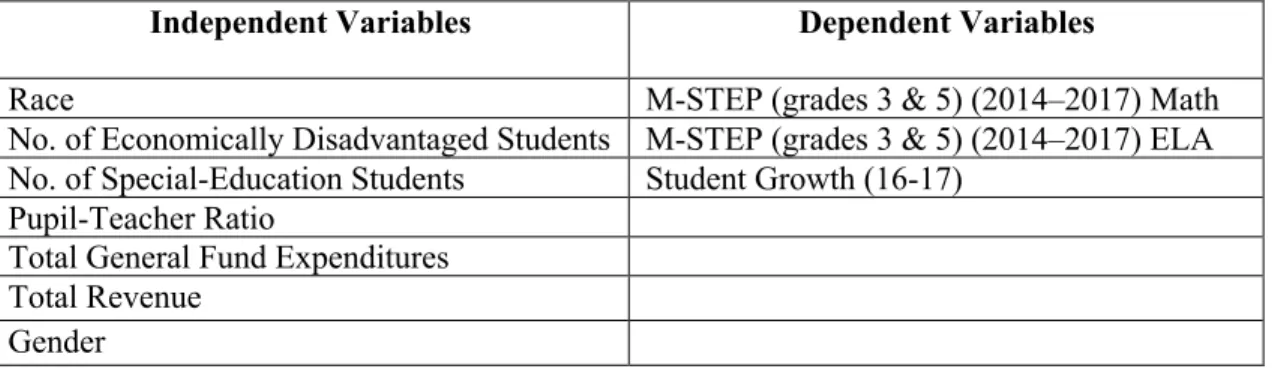
Figure 2 …………..……….………...p. 47 Independent and dependent variables
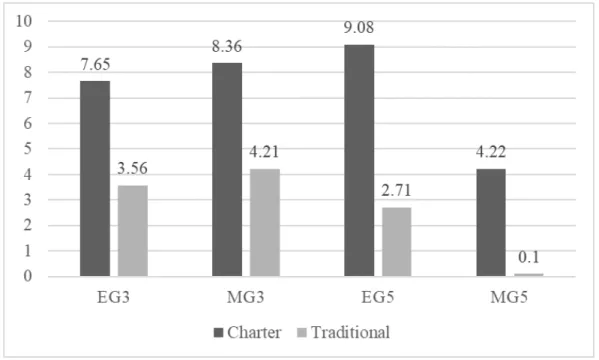
Figure 3………..………..p. 61 Comparison of charter and traditional public schools’ content proficiency (2015-2016)
Figure 4……….………..……….………p. 46 Comparison of charter and traditional public schools’ content proficiency (2016-2017)
Chapter I: Introduction
Introduction
African American student achievement nationwide has been an ongoing issue for the past four decades, with achievement rates continuing to decline (Lacireno-Paquet, Holyoke, Moser, & Henig, 2002; U.S. Department of Education, n.d.; Binelli, 2017). Public schools have been challenged with providing equity to persistently low-achieving students in poor, urban areas like Detroit, Michigan, with its large population of African American students (Binelli, 2017). Challenges in serving these students include inequitable funding systems that negatively impact school districts, as well as resource-allocation practices that can negatively impact student performance (U.S. Department of Education, 2011).
One solution attempted in several districts nationwide to improve and address inequities in funding systems and resource-allocation practices is the introduction of marketplace
competition in the form of charter public schools to compete with traditional public schools (Arsen & Ni, 2012). Charter public schools have been promoted as a solution to improve
disadvantaged students’ achievement and provide an equitable approach to educating students at lower costs compared with traditional public schools (Michigan Legislature, 1993; National Alliance for Public Charter Schools, 2011). Charter public schools serve a substantial amount of African American students nationwide, but also place a financial strain on traditional public schools due to funding connected to student-enrollment volume (Lacireno-Paquet, Holyoke, Moser, & Henig, 2002; National Association for the Advancement of Colored People, 2017). This study examines whether charter public schools’ resource-allocation practices are improving
students’ performance and whether those improvements are with the same or fewer resources compared with traditional public schools in Michigan.
Equity. Equity has been an ongoing issue for Michigan’s historically low-achieving student population for decades, which are African American students, and charter public schools mainly serve the African American student population (Lacireno-Paquet, Holyoke, Moser, & Henig, 2002; U.S. Department of Education, n.d.; Binelli, 2017). Equity, in this context, is defined as fair and equal access to quality and well-resourced education that ensures all children can succeed despite cultural or socio-economic conditions (U.S. Department of Education, 2005). This extends to children from underserved populations and communities that lack robust access to educational opportunities in safe, supportive, well-resourced schools (U.S. Department of Education, n.d.). Underserved populations refer to students who historically show low proficiency rates on state assessments in connection with various factors such as poverty, disabilities, or language barriers (U.S. Department of Education, 2005). Equity supports a minimum standard of access to education for all students (U.S. Department of Education, n.d.). In underserved populations, equity is impacted not only by the amount of federal, state, and local resources allocated, but also by each school district’s resource-allocation practices (Field,
Kuczera, & Pont, 2008).
Resource allocation. Resource allocation in a general educational context refers to how fiscal and non-fiscal resources are divided among instruction, operation, and facilities
management, and how these competing needs are used for educational purposes (Pan, Rudo, Schneider, & Smith-Hansen, 2003). Resource allocation, in the context of school districts, is the process of deciding where funds are distributed to improve student performance (U.S.
challenges not only tied to inequitable funding systems that negatively impact school districts, but also from resource-allocation practices that can impact student performance negatively (U.S. Department of Education, 2011).
Combatting inequity in funding systems. One approach to addressing schools’ practices in using and shaping resources has been to increase funding to counter inequitable funding systems. The federal government expanded access to school funding with the Elementary and Secondary Education Act (ESEA) in 1965, a law that introduced additional funding through what is commonly known as Title I, Part A, funds to assist disadvantaged populations that include special-needs, homeless, migratory, and traditionally underperforming children in an effort to reduce inequities.
Title I, Part A (Title I), in the ESEA (amended) provides additional funding to local education agencies (public schools) that serve high numbers of children from low-income families to help ensure that all children meet state academic standards. Funds are allocated through a formula based primarily on U.S. Census poverty approximations and the cost of education in each state (U.S. Department of Education, n.d.). Poverty approximations are
measured by using percentages of students in free and reduced lunch programs (U.S. Department of Education, 2011). The question is has the policy changes met or exceeded the expectations in equitable resource-allocation practices for better student performance in charter public schools compared with traditional public schools (National Center for Education Statistics, 2013; Nation’s Report Card, 2015). Further amendments of the ESEA includes the No Child Left Behind Act (NCLB, 2002) and the Every Student Succeeds Act (ESSA, 2015).
Policy Changes to Traditional Public School Models
Traditional U.S. public school funding and resource-allocation models have been criticized over the past two decades for lacking flexibility and autonomy for schools to be innovative in resource-allocation practices (National Alliance for Public Charter Schools, 2011; Arsen & Ni, 2012). A level of flexibility currently is afforded to public schools in states with local control districts, which are state education agencies or departments of education that respect local school board officials’ authority to operate their schools independently within the confines of statutes and regulations (Michigan Department of Education, 2017), i.e., the education departments are not involved in the schools’ day-to-day operations.
However, critics of traditional public school funding and resource-allocation practices support removing the district layer and allowing for school-based management (National Charter School Resource Center, 2013). The traditional school district generally manages all funding with little input from schools within the district, which is a major criticism of the traditional public school system. This criticism helped spark the concept of decentralizing districts’ central administration to change resource-allocation practices, promoting more efficient uses of
resources, and adding more flexibility to use these resources (Arsen & Ni, 2012). The concept of more flexibility and autonomy is a key factor in policy changes that seek to equalize school funding for underserved populations (Arsen & Ni, 2012; Dorsey & Plucker, 2016).
Over the past three decades, public school education has experienced various policy changes (e.g., ESEA, NCLB, and ESSA). ESEA reauthorizations have introduced innovative concepts, such as school choice through the NCLB law and its replacement, the ESSA Act (Dorsey & Plucker, 2016). School choice includes homeschooling, private schools, and voucher programs. The more impactful school-choice option included in NCLB and the latest iteration,
ESSA, is the Promoting Informed Parental Choice and Innovative Programs (Part B), which promotes charter public schools (Geske, Davis, & Hingle, 1997; U.S. Department of Education, 2002).
The current U.S. political and economic climate supports school-choice policies that include decentralization of districts and marketplace competition (Dorsey & Plucker, 2016). Supporters of charter public schools believe that school choice is better for underserved
populations, and that charter public schools provide flexibility to improve student achievement (National Alliance for Public Charter Schools, 2017). In the past two decades, marketplace competition through charter public schools has entered the education climate to compete with traditional public schools.
Marketplace competition. Marketplace competition refers to an economic system based on supply and demand to satisfy consumers’ needs (Preston, Goldring, Berends, & Cannata, 2012; Redmond, 2013; Harris, 2017). With the introduction of charter public schools, the theory is that charter public schools would force traditional public schools to be more innovative or otherwise make improvements in the face of competition (Waslander, Pater, & Van der Weide, 2010; Redmond, 2013). The concept asserts that parents can benefit consistently from market participation, with competition viewed as beneficial for parents, forcing schools to improve their practices to compete within the market (Redmond, 2013). The addition of school choice sought to provide a flexible and autonomous model to underserved populations in need of innovative and high-quality approaches to education, with the goal of improving student performance with the same or fewer resources (CATO, 2018).
Marketplace competition in Michigan. The State of Michigan changed its public school education landscape with the introduction of its marketplace-competition policy in 1993. In an
attempt to equalize school funding, provide a model to decentralize funding at the district level, and improve proficiency within historically underserved student populations, the charter public school was introduced (Office of Revenue and Tax Analysis Michigan Department of Treasury, 2002; Michigan Department of Treasury, 2002). The rationale for charter public schools in Michigan is to aid underserved populations in need of different approaches to improve student proficiency (Loeb & Cullen, 2004).
Michigan school districts exert local control, and charter public schools expanded this local control by decentralizing the traditional district approach to maximize flexibility in supporting and seeking opportunities for innovation (U.S. Department of Education, 2005; Michigan Department of Education, 2017). Charter public schools were expected to innovate and introduce new resource-management concepts into the traditional public school system (National Association for the Advancement of Colored People, 2017). Michigan’s charter public schools received greater flexibility at the school level in design and operations (Michigan Department of Treasury, 2002; House Fiscal Agency, 2016). Charter public schools are believed to have a greater ability to pilot various systems of support, use different grade-level configurations to determine whether they are more effective, utilize the same or fewer resources for greater outcomes compared with traditional public schools, and impact student proficiency better than traditional public schools (Loeb & Cullen, 2004; CATO, 2018). With the introduction of this policy in Michigan, charter public schools now serve over 10 percent of the student population; over 90 percent of charter public schools are for-profit, attended mostly by African American students; and a significant number of charter public schools operate in the Detroit metropolitan area (MI School Data, 2018).
City of Detroit (Loeb & Cullen, 2004; Arsen & Ni, 2012; Data Driven Detroit, 2012). The competition was intended to create a better school model that includes improved funding and resource allocation (National Alliance for Public Charter Schools, 2011). Detroit has a history of inequitable funding and an underserved population (Council of Great City Schools, 2008). In the past decade, Detroit has experienced bankruptcy, massive job losses, mismanagement of funds, population decline, and an increased number of children living in poverty, which adversely impacts schools (Council of Great City Schools, 2008). The demographics make the city an appropriate environment in which to examine Michigan’s policy efficacy on student performance because of persistently low achievement among African Americans in Michigan (National
Center for Education Statistics, 1996; U.S. Department of Education, 1996; Kids Count in Michigan Data Book, 2018).
Marketplace competition in Detroit. For context, Detroit is an urban environment with a large population of urban students living in poverty (Kids Count in Michigan Data Book, 2018). Urban students are more likely than other student populations to live with an absence of family structure, low economic security, limited education, and instability associated with less-than-desirable education outcomes (National Center for Education Statistics, 1996; U.S. Department of Education, 1996). The strain on city resources has impacted Detroit Public Schools
Community District (DPSCD), formerly Detroit Public Schools, with the district having experienced multiple state takeovers, dissolution of a publicly elected school board, loss of resources, loss of teachers, and mismanagement of funds (Lake, Jochim, & DeArmond, 2015). Amid these challenges, Detroit schools are serving a large number of children living in poverty (U.S. Department of Education, 2017), and the responsibility falls on these schools to support these students.
Detroit ranked third nationwide in the percentage of students attending charter public schools, at 53 percent (National Alliance for Public Charter Schools, 2011). The city has the largest percentage of students attending charter public schools and the largest number of charter public schools in Michigan (National Association for the Advancement of Colored People, 2017; MI School Data, 2018). This proliferation of charter public schools has been impacting the city’s traditional public school district financially, as decreased enrollment has elicited less funding (Loeb & Cullen, 2004). Charter and traditional public schools must compete for the same financial resources, and a major concern is that the market may produce the same kinds of resource-allocation models that the policy was intended to eliminate (Chang, May, Maloney, Batdorff, Wolf, & Speakman, 2014).
Since implementation of school policy changes that created marketplace competition, student performance has been examined using national, state, and local data, with mixed results reported (Bettinger, 2005; Center for Research on Education Outcomes, 2013; University of Michigan, 2016). The Michigan Department of Education (MDE) and the Michigan Association of Public School Academies (MAPSA) both used the Center for Research on Education
Outcomes (CREDO) (2013) study to support the idea of marketplace competition and the positive impact from charter public schools. The study found significant gains in reading and math among students attending urban charter public schools compared with traditional public schools.
Alternatively, the research team of Adamson, Cook-Harvey and Darling-Hammond (2015), using the CREDO (2013) methodology, examined New Orleans, Louisiana on the heels of Hurricane Katrina, in 2005. The toll of the storm include lost lives, destroyed property, and the displacement of large numbers of people, most of them low-income people of color
(Adamson, Cook-Harvey, & Darling-Hammond, 2015). The introduction of charter public schools was to repair the educational system by creating an educational environment featuring multiple superintendents, boards of education, approaches to school admissions and operations, curriculum, instruction, and student discipline (Adamson, Cook-Harvey, & Darling-Hammond, 2015). The research found that, “New Orleans charter public school reforms have created a set of schools that are highly stratified by race, class, and educational advantage, operating in a
hierarchy that provides very different types of schools and to different types of children”
(Adamson, Cook-Harvey, & Darling-Hammond, 2015, p. 47). Not all students have choice in the system. For those that do not, “both access and educational quality differ substantially, with the most vulnerable students least likely to experience the stability and supportive environments they need” (Adamson, Cook-Harvey, & Darling-Hammond, 2015, p. 22).
The Adamson et al. study (2015) also found that participant demographics were different in comparison to the CREDO (2013) study. CREDO (2013) excluded most traditional public schools because it only matched charter public school students to schools that are direct feeder schools to those particular charters, used only traditional public schools that students left to attend charter public schools, and its methods failed to model both individual student growth and school-level effects directly (Maul & McClelland, 2013; Adamson, Cook-Harvey, & Darling-Hammond, 2015).
Bettinger (2005) examined charter public schools’ impact through a state lens, and the University of Michigan (2016) studied charter public schools’ impact through a local lens. Both studies found no significant differences in outcomes and structure between charter and traditional public schools. The clear fact is that student performance in Detroit has not improved since school policy changes dating back to the last funding structure for schools, or since the Bettinger
(2005) study of charter public schools that provided a comparison with traditional public schools (Bettinger, 2005; Lewis, 2015).
Problem Statement
In Michigan, legislators supported the idea of investing in a new method to support children beyond the traditional public school model believed to be failing (Michigan
Legislature, 1993). Marketplace competition through Michigan’s legislation was meant to be a solution to inequities by improving overall resource-allocation practices to boost student performance (Lacireno-Paquet, Holyoke, Moser, & Henig, 2002; Mendez, 2004; Binelli, 2017). However, marketplace-competition research that has examined Detroit charter and traditional public schools has found either only marginally higher performance or no statistically
significant improvements in student performance at charter and traditional public schools (Center for Public Education, 2017). Yet, Michigan has not improved equity in the distribution of education resources, including uniformity of facilities and environments, equal funding, and equal access to educational opportunities for all students (Loeb & Cullen, 2004; Pan, Rudo, Schneider, & Smith-Hansen, 2003).
African American students’ performance has continued to trend downward for the past two decades, and this downward pattern has been linked to inequities in funding and resource allocation (Pan, Rudo, Schneider, & Smith-Hansen, 2003; U. S. Department of Education, 2017). Equity has been an ongoing issue for Michigan’s historically low-achieving population for decades, and charter public schools serve a vast majority of the African American student population (Lacireno-Paquet, Holyoke, Moser, & Henig, 2002; U.S. Department of Education; Binelli, 2017). More specific to this study, students consistently perform poorly in Detroit since the inception of marketplace competition (Nation’s Report Card, 2015).
Importance of Study
Michigan introduced a policy that supported marketplace competition to provide high-quality options to low-income families, revitalize the traditional public school system, use
flexible resource-allocation practices to yield better results for students, and produce cost savings to state education agencies (Michigan Legislature, 1993). This study shall investigate resource allocation between charter and traditional public schools using Detroit, which comprises a large number of charter and traditional public schools serving disadvantaged students and can serve as a case study for determining the differences in school resource-allocation models to elicit more research (Loeb & Cullen, 2004).
This study examines whether charter public schools’ resource-allocation practices are improving students’ performance and whether any improvements have been accomplished by using the same or fewer resources, compared with traditional public schools. Currently, school districts use divergent practices to examine resource-allocation efficiency and, thus, their measurements may differ significantly across each practice (Gronberg, Jansen, Taylor, & Booker, 2005; Augenblick, Palaich, & Associates Inc., 2016).
Similar to the ways in which the business sector uses return on investment (ROI), education uses performance measures to determine the efficiency of an investment, i.e., ROI. Those performance measures may differ for each school system (Gronberg, Jansen, Taylor, & Booker, 2005; Augenblick, Palaich, & Associates Inc., 2016). Efficiency in ROI is a level of performance that describes a process in which the lowest amount of effort is used to create the greatest output (Investopedia, n.d.; Pan, Rudo, Schneider, & Smith-Hansen, 2003; Lynch, 2016). ROI measures the amount of return on an investment’s cost. Education uses ROI to measure the efficiency or efficacy of resource allocations such as teaching and support staff, educational
programs, an educational process, or an educational service (Pan, Rudo, Schneider, & Smith-Hansen, 2003). Education services are those that provide instructional services, operational services, and facilities management (Gronberg, Jansen, & Taylor, 2012).
Detroit charter and traditional public schools serve a student body that is over 90 percent African Americans and highly economically disadvantaged as defined by Title I funding levels, which include basic, concentration, targeted, and financial-incentive education grants (U.S. Department of Education, 2016). Figure 1 represents the four levels of Title I funding disbursed, based on the percentage of students in free and reduced-price lunch programs.
Figure 1. Title I Allocations, U. S. Department of Education, 2016.
Overall research concerning marketplace competition in Michigan has focused on student performance only versus student performance and effectiveness in resource allocation of education services (Murray, 2011). Furthermore, there exists a limitation in the research literature for Michigan with respect to resource-allocation variation. Thus, examining charter and traditional public schools’ ROI is needed to identify the policy’s efficacy in terms of improving resource-allocation practices, as well as those practices’ outcomes on student performance (Pan, Rudo, Schneider, & Smith-Hansen, 2003; Gronberg, Jansen, Taylor, & Booker, 2005; Murray,
Incentive grant for Higher Poverty (90%)
to Equalize Funds
Target Funds for Higher Poverty (targeted) 15% Poverty (concentration) 2% Poverty (basic)
2011; Gronberg, Jansen, & Taylor, 2012). The measure of efficiency between charter and traditional public schools can determine whether the charter public school model improves resource allocation or whether Michigan policy has created more of the same traditional public school model (Geske, Davis, & Hingle, 1997; Gronberg, Jansen, & Taylor, 2012), thereby adding further strain to the education marketplace. The significance of this study is to contribute to the field a context as to whether the policy that introduced charter public schools is meeting its objectives effectively.
Research Questions
Based on the review of relevant literature, there exists a need for further exploration that examines charter and traditional public schools with respect to their variances in resource-allocation relative to student performance outcomes as determined by their respective ROI (Pan, Rudo, Schneider, & Smith-Hansen, 2003; Gronberg, Jansen, & Taylor, 2012). More specifically, charter and traditional public schools’ resource-allocation practices was analyzed for allocation efficacy as quantified by the education services, including instruction, operations, and facilities management in relationship to student performance.
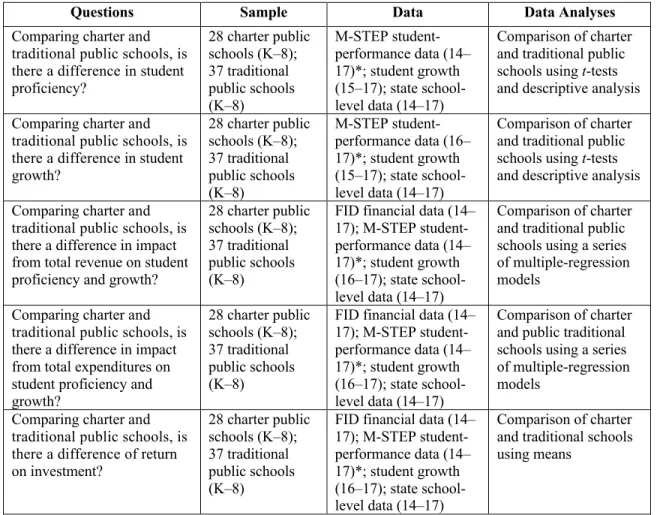
As the largest city in Michigan, with the largest ratio of charter and traditional public schools (Gawlik, Kearney, Addonizio, & LaPlante-Sosnowsky, 2012), Detroit provided this study with a data-rich context from which to investigate, primarily, whether differences exist between charter and traditional public schools regarding their distribution of resources, and secondarily, whether spending practices promote different student performance outcomes. To address these foci, the following questions were considered:
(1) Comparing charter and traditional public schools, is there a difference in student proficiency?
(2) Comparing charter and traditional public schools, is there a difference in student growth?
(3) Comparing charter and traditional public schools, is there a difference in impact from total revenue on student proficiency and growth?
(4) Comparing charter and traditional public schools, is there a difference in impact from total expenditures on student proficiency and growth?
(5) Comparing charter and traditional public schools, is there a difference of return on investment?
Chapter 2: Literature Review
Introduction
The review frames the relevant literature leading to the progression of Marketplace competition adaptation in the State of Michigan. Marketplace or free-market competition is an economic system based on supply and demand to satisfy a large number of consumers’ (in this context, parents and students) wants and needs (Harris, 2017). Marketplace competition in education seeks to equalize education and provide the best opportunities for all children (Dorsey & Plucker, 2016), and this competition is in the form of charter public schools to provide high-quality options to disadvantaged populations of students (Arsen & Ni, 2012). The overarching question is whether marketplace competition is promoting high-quality options and equity in disadvantaged areas.
High quality. Each state is responsible for developing a definition of high-quality charter public schools that can impact underserved populations due to differences in states’ laws and performance measures (U.S. Department of Education, 2005). Based on the Federal Registry (Vol. 76, No. 58), high quality is defined as showing evidence of strong academic student performance for the past three years, or over the life of the school if the school has been in operation for fewer than three years. High quality meets the following criteria: increasing student performance, particularly in disadvantaged areas; closing achievement gaps; achieving results for low-income and educationally disadvantaged groups; and ensuring that no compliance issues exist concerning financial management and student safety. The definition’s intent is for students to gain access to quality education (U.S. Department of Education, 2005; Senators Introduce Update to Charter School Program, 2011).
The federal government budgets annual funds to support the pursuit of high-quality education. Such federal aid includes financing for charter public school facilities, encouraging states to ensure access to suitable facilities, replicating high-quality schools, and providing grant competition for states to support placing schools in high-need areas (U.S. Department of
Education, 2005; Senators Introduce Update to Charter School Program, 2014). A high-quality charter school seeks to prioritize support for special populations, including at-risk students, students with disabilities, and non-native English learners (Senators Introduce Update to Charter School Program, 2014). While the federal government has provided a basic framework, some models have been developed in high-need areas that exceed minimum federal criteria.
High-quality charter public schools in disadvantaged areas.According to Brighouse and Schouten (2014), several characteristics need to be considered when deciding to charter a school for disadvantaged students (i.e., those living with poverty, disabilities, low income, English-language barriers, homelessness, etc.). These characteristics are believed to promote high-commitment charter (HCC) public schools that attract talented teachers with the purpose of enhancing students’ daily lives with adequate and equitable funding. To reiterate, equity is the fair distribution of educational resources (including uniformity of facilities and environment, equal resource inputs, and equal access) for all students (Loeb & Cullen, 2004; Pan, Rudo, Schneider, & Smith-Hansen, 2003). Having an HCC commitment and adequate funding provides the tools for a charter public school to be successful in a disadvantaged area (Brighouse & Schouten, 2014). An HCC supports stakeholders in deciding to open a charter public school for educationally disadvantaged groups (Brighouse & Schouten, 2014; Center for Public Education, 2016).
HCCs embrace a social and educational mission to provide high-quality education to disadvantaged students despite resource issues. The focus is geared toward improving students’ prospects, including college and career readiness, income, and social status (Brighouse & Schouten, 2014). These schools try to eliminate social inequities by improving educational achievement. HCC examples include organizations such as the Knowledge Is Power Program (KIPP), National Heritage Schools, and Schools for Educational Evolution and Development (SEED). These groups help create schools that stress character, citizenship, partnerships with families and communities, rigorous curricula, and strong teachers (Brighouse & Schouten, 2014; KIPP, n.d.; SEED Foundation, n.d.).
HCCs in disadvantaged areas focus on citizenship and are intended to enhance students’ daily lives (Brighouse & Schouten, 2014). Their focus includes providing a safe and nurturing environment in which to create productive citizens, thereby seeking to provide equity for a diverse population of students and a high-quality option for disadvantaged students. However, HCCs only can be effective in improving equity and social justice if policies and staff support the implementation of the HCC model (Brighouse & Schouten, 2014).
An HCC’s purpose is to provide commitment and equitable funding for disadvantaged students to be successful. The model aligns with the high-quality charter-school definition that closes achievement gaps and promotes financial management and student safety (U.S.
Department of Education, 2005). Various states have sought to use the high-quality model or HCCs to improve equity in public school education, including in the State of Michigan, which Michigan legislators supported policies and passed legislation over time to introduce its own model (Loeb & Cullen, 2004). This study compares charter and traditional public schools to investigate whether differences exist between charter and traditional public schools regarding
their distribution of resources, and whether spending practices promote different student performance outcomes.
Setting the Context. African American students comprise the most persistently low-achieving subgroup in Michigan, and this study uses Detroit, which has the largest concentration of low-performing African American students statewide, to study the impact of charter public schools’ resource-allocation practices on student performance. This literature review provides extant research on African Americans’ historical pursuit of equity in education, the federal government’s equalization efforts, charter public schools’ context, marketplace-competition outcomes, and extant studies examining student performance in Detroit.
History of African Americans Seeking Equity
Equity in education maintains that all students should have access to educational opportunities (Loeb & Cullen, 2004; Pan, Rudo, Schneider, & Smith-Hansen, 2003). Specifically, equity entails access to high-quality curricula, teachers, and a fair system of education (Center for Public Education, 2016). In the U.S., African Americans fought for decades after the Civil War to secure civil rights and equity that ultimately would impact
education. During the Reconstruction Era (1863-1877), the nation tried to readjust after slavery’s abolition, but boycotts took place between 1897 and 1925 in four major Northern cities with civil rights laws (Meier & Rudwick, 2006). These cities were Alton, Illinois; East Orange, New Jersey; Springfield, Ohio; and Dayton, Ohio (Meier & Rudwick, 2006; Mueller & Schamel, 1989; Crespino, 2003). The boycotts would be some of the first directed at K–12 education to obtain equity by the African American community. With boycotts came further challenges by African Americans to the system.
African Americans because of the proportion of Caucasian and African blood he possessed. His act of sitting in the Caucasian railcar was a crime. In the South, and specifically related to this case, Louisiana railways required separate railcar seating for white people and people of color. Essentially, people were assigned seating by race. After being arrested, Plessy went before the Honorable John H. Ferguson, a judge on the criminal district court in his New Orleans parish, and was convicted. The case was fought all the way to the Supreme Court. Plessy argued that the railcar policy violated the Thirteenth Amendment(forbidding involuntary service) and the
Fourteenth Amendment (forbidding deprivation of citizens’ privileges) (Jager, n.d.; Wishon, 2004).
On May 18, 1896, the Supreme Court ruled in favor of the defendant, which supported the existing separate-but-equal law, and against Plessy, ruling that “to enforce the absolute equality of the two races before the law…laws…requiring their separation do not necessarily imply the inferiority of either race” (Jager, n.d., p. 1). The impact of separate-but-equal laws would play a role in the history of African Americans as they tried to integrate throughout the South, where segregation already was a firmly established institution (Wishon, 2004).
Plessy v. Ferguson (163 U.S. 537) legitimized Jim Crow laws and helped form the foundation for laws that allowed racial separation, impacting schools, retail stores, hotels, entrances to establishments, public transportation, and other public facilities (Public Broadcasting Station, n.d.). “Jim Crow” was a negative term used to describe an African
American man, based on the theory of white supremacy and a reaction to the Reconstruction Era (Constitutional Rights Foundation, n.d.; Meier & Rudwick, 2006). The name origin of Jim Crow is from the Jump Jim Crow minstrel routine that depicted African American as dim-witted buffoons and became the name of the laws to enforce white supremacy in the South after the
Reconstruction Era (Urosky, n.d.). Minstrel shows depicted the negative stereotypes of African American people to promote the culture as less than the white race (Urosky, n.d.; Kelly, 2012). The Jim Crow laws heightened the deterioration of conditions for African Americans (Kelly, 2012).
Jim Crow laws enforced segregation to the point that no racial equality in education existed. Again, segregation was an institution that primarily was ubiquitous in the South,
whereas the North endured early boycotts over inequities in education, given the poor conditions within some African American school systems that included building quality, teaching materials, and other resources. Several cases laid the foundation for ending school segregation and pushing for equal rights to education.
Between 1936 and 1950, several U.S. court cases challenged inequality, but mostly at the higher-education level. The Missouri ex rel. Gaines v. Canada(1938) case involved Lloyd Gaines, a black graduate student who was denied admission to the University of Missouri School of Law by Silas Woodson Canada because of skin color. As the state did not have a black law school, it offered to pay for him to attend a black school elsewhere or build a school for black students. However, Gaines used the services of the National Association for the Advancement of Colored People (NAACP) Legal Fund to sue the state and won (Cornell Law School, n.d.).
Given the win for Gaines, the NAACP pursued the Sweatt v. Painter (1950) case. Heman Sweatt sued University of Texas President Theophilus Painter for setting up a black law school that was not equal to the white law school. The U.S. Supreme Court agreed, citing blatant inequality (Cornell Law School, n.d.). Another case involving the separate-but-equal mindset was McLaurin v. Oklahoma State Regents (1950). George McLaurin entered the doctoral program at the University of Oklahoma, but was required to sit apart from the rest of the class
and eat at a different time than white students (Cornell Law School, n.d.). McLaurin used the NAACP Legal Defense and Education Fund to argue his case. The U.S. Supreme Court sided with McLaurin, ruling that these practices impeded McLaurin’s ability to learn. Each of these cases focused on education equity or opportunity (U.S. Courts, n.d.; Cornell Law School, n.d.) and laid the groundwork for the landmark ruling Brown v. Board of Education (347 U.S. 483, 1954) in Topeka, Kansas (Blight, 2002).
Brown involved Oliver Brown of Topeka, who sued the city school board because he wanted his daughter to attend the neighboring white school for better educational opportunities. Encouraged by the NAACP in 1951, Brown fought the case further after the state upheld the statutes, and the Supreme Court struck them down, thereby reversing Plessy v. Ferguson and separate-but-equal ideology. Chief Justice Earl Warren said that, as a result of this case, “In the field of public education, the doctrine of separate-but-equal has no place” (Wishon, 2004, p. 78). In 1960, Brown led to federal mandates that state and local governments must open their public schools to all students, aiming for true equity in resources and opportunities for success. Federal Government and Equalization
After Brown, concern over equitable resources remained throughout the decade. President Johnson signed into law the Elementary and Secondary Education Act (ESEA) in 1965 (Klein, 2015), opening the door for federal government involvement in education policy in an effort to provide all students with equal access to education. Such involvement includes laying the foundation for academic standards and providing resources such as Title I-VII funding to assist disadvantaged students, focus on teaching and learning, and stress flexibility in student
ESEA appropriated large amounts of money toward education programs for students with special needs, such as homeless and migratory children. However, ESEA required
reauthorization, i.e., the law must be reauthorized every five years (Irwin, 1992; Washington State School Directors’ Association, n.d.). However, Congress failed to do so every year since 2006-07 (Washington State School Directors’ Association, n.d.). Reauthorization is important as far as guaranteeing that funds (Title I-IV) for school systems are allocated. Specifically, Title I, (Part A) provides additional funding to public schools with high numbers of children from low-income families to help students meet state academic standards (U.S. Department of Education, n.d.).
With the introduction of Title I (Part A) funds received by schools through ESEA came the requirement of reporting school-level per-pupil education expenditures from state and local funds. Title I funding is disbursed based on the percentage of students in free and reduced-price lunch programs. The requirement is referred to as the American Recovery and Reinvestment Act of 2009 in Title I (U.S. Department of Education, 2011; U.S. Department of Education, n.d.). Before ESEA, no common reporting mechanism existed for school districts to examine resource-allocation practices and their impact on education services (U.S. Department of Education, 2011). While the federal government institutes requirements on how funds are reported and implemented, states are responsible for designing how school funds are allocated to districts. Specifically, districts control resource-allocation practices. Despite the increased funding, resource-allocation practices continue to impact underserved populations negatively because increased funding is based on state assessment results (Roza, Miller, and Hill, 2005; Roza, 2009; National Center for Education Statistics, 2013).
American Recovery and Reinvestment Act of 2009 Impact. The American Recovery and Reinvestment Act (ARRA) introduced funding programs such as grants for homeless
students, special education, and innovation (Irwin, 1992). The ARRA stipulated that $5 billion in grants be allocated under section 1125 of the ESEA for incentive or targeted grants to schools, which are extra funds to help improve student performance (U.S. Department of Education, 2011). Of those funds, $3 billion was to be allocated specifically for school-improvement grants to support equity.
The ARRA also added the requirement of school districts to report per-pupil education-related expenditures to the U.S. Department of Education. This reporting requirement would be the first attempt to examine resource allocation practices of funds (Irwin, 1992) . The reporting instituted a mechanism to examine the equity of school-funding spending practices and to inform how school districts allocate funding with the grants (U.S. Department of Education, 2011).
During the 1970 reauthorization of Title I, Congress added a comparability requirement for Title I and non-Title I schools (U.S. Department of Education, 2011). The requirement is a comparison using “number of pupils per certified teacher; the number of pupils per other certified instructional staff, including principals, vice principals, guidance counselors, and librarians; the number of pupils per noncertified instructional staff, including secretaries, teacher aides, other clerical personnel; instructional salaries per pupil; and other instructional costs per pupil, such as textbooks, school library books, audio-visual equipment, and teaching supplies” (U.S. Department of Education, 2011, p. 2). The law required that schools develop a process for reporting and maintaining expenditure data. The data that were generated, as a result of the law, provided a context for comparing equitable resource-allocation practices for Title I and non-Title I schools.
Comparing Title I and non-Title I districts. A study conducted in 2005 found that in four (Austin, Denver, Fort Worth, and Houston) of the five districts studied, schools with the highest concentrations of students from low-income families received considerably less money from the school district’s non-categorical or basic resources (Roza, Miller, & Hill, 2005; U.S. Department of Education, 2011). Dallas was the only city where spending practices aligned with schools in need. Using the comparability requirement, Roza et al. (2005) examined district budgeting practices that systematically favor schools with the fewest educational challenges and vague district fund-allocation practices that funnel Title I funds to schools in the wealthiest
communities. The study provided context into variances in expenditure practices and equity in school districts.
In 2011, the U.S. Department of Education conducted a study to examine the per-pupil expenditure variance of state and local education expenditures within Title I and non-Title I high-poverty schools. The study’s findings resembled those of Roza et al. (2005) in that between 42 percent and 46 percent of Title I schools had per-pupil expenditure levels that were below their districts’ average for non-Title I schools. The result was a similar pattern when comparing higher- and lower-poverty schools within districts (U.S. Department of Education, 2011). The commonality between this study and that of Roza et al. (2005) is that districts are not allocating extra funding for schools based on students’ needs. Thus, with increased funding allocated to underserved populations, students are not performing better (U.S. Department of Education, 2010). The studies highlighted school-funding and resource-allocation concerns in traditional public schools and highlighted the need for better ways to distribute and allocate funding in innovative ways.
In the wake of educational advances in other countries, the Nation at Risk report (1983) was released to indicate a need to restructure U.S. schools due to the literacy rate of Americans compared with other countries (U.S. Department of Education, 1983). The report would be used as a political tool to push for education reform at the local, state, and federal levels despite criticisms from education-community professionals (Gardner, 1984). The report also supported more federal government involvement to improve student performance compared with other nations, and President Reagan used the report to change the U.S. education system (Gardner, 1984). The next ESEA iteration would be No Child Left Behind (NCLB) in 2001, exposing the impact of such beliefs on education. NCLB has continued to be a call to arms for improving the U.S. education system.
NCLB increased the federal government’s role in education through school
accountability, i.e., schools would be held accountable for student performance and progress, especially for students of color, economically disadvantaged students, Non-native English-language learners, and special-education students. School districts would be in danger of losing Title I funding if these groups’ performance did not improve (Klein, 2015). NCLB emphasized the flexibility of school choice, local control, and accountability options for parents, as well as report cards on school performance (U.S. Department of Education, 2003).
NCLB introduced the requirement that teachers be highly qualified, which applied to core academic subjects such as English (secondary), English language arts, reading, math, science, foreign languages, social studies, arts, history, and geography (Birman, Boyle, Le Floch, Elledge, Holtzman, Song, & Yoon, 2009). NCLB was instrumental in revising the educator certification (teacher, school administrator, etc.) system and required educator completion rates by colleges and universities that offered educator programs (U.S. Department of Education, 2003). NCLB
also designed standards for instructional paraprofessionals paid with Title I funds and required ongoing professional development for all teachers (U.S. Department of Education, 2003). The purpose was to improve teacher quality and retain teachers, especially in disadvantaged areas (Birman et al., 2009; Klein, 2015).
Included in NCLB was Title V, i.e., Promoting Informed Parental Choice and Innovative Programs (Part B), which outlined the purpose of charter public schools (Geske, Davis, & Hingle, 1997; U.S. Department of Education, 2002). State education agencies (departments of education) are responsible for making funds available to charter public schools, which then are expected not only to meet all students’ needs, but also to support states’ reform efforts,
implement innovative education reforms based on sound research, and improve overall school, teacher, and student performance (U.S. Department of Education, 2002). NCLB’s Title V (Part A) also included the Charter School Program Grant, which supports the creation, expansion, and replication of high-quality charter schools through funds (U.S. Department of Education, 2002). Charter Public School Context. The original idea for school choice was shaped by Ray Budde, a school principal and part of the University of Massachusetts faculty, as early as 1974 (Kolderie, 2005). Essentially, the concept involved more flexibility to operate and change public schools’ overall structure. His original concept for the alternative school centered on changing the way school boards operate, redefining teachers and school administrators’ roles, involving all stakeholders (parents, teachers, administrators, counselors, etc.) in the curriculum process, and providing ongoing curriculum updates to promote autonomous curriculum units (Little Hoover Commission, 1996; Kolderie, 2005).
Budde’s ideas prompted those in favor of school reform to seek changes. The most influential individual to advocate for Budde’s idea was Albert Shanker, president of the
American Federation of Teachers (Kolderie, 2005). Shanker supported the Nation at Risk report and used the report to support school choice in the 1980s, a period of major education reform during which time, Shanker was prominent (Little Hoover Commission, 1996; Kolderie, 2005). His lobbying for school choice was successful as the charter public school model strengthened through NCLB in 2001.
Charter public school design. Charter public schools are public schools that operate independently of traditional public schools and are designed to meet students’ needs in a specialized way (Center for Public Education, 2017). The first charter public school laws were passed in Minnesota in 1991 and spread to more than 43 states by 2009 (Blazer, 2010). Each state has specific laws that govern their charter public schools (Blazer, 2010). Such differences among states include what entity operates charter public schools and how many charter public schools may operate in a state (U.S. Department of Education, 2003; Shealey, Sparks, & Thomas, 2012; Center for Public Education, 2017). Depending on the state, charter public schools may have flexibility in providing instruction, budgeting, resource allocation, creating varied grade-level configurations that best meet students’ educational needs, providing a cyber-school format, and supporting both blended learning and brick-and-mortar cyber-schools (National Alliance for Public Charter Schools, 2011; Murray, 2011).
Charter public-school management companies. Charter public schools are intended to support populations of students that traditional schools have not served and seek to be a site-based management model independent of traditional public schools’ one-size-fits-all model (National Alliance for Public Charter Schools, 2011; U.S. Department of Education, 2003; Lacireno-Paquet, Holyoke, Moser, & Henig, 2002; Blazer, 2010; Winters, 2012). The site-based management model refers to two options: Charter public schools can be single-site schools or
operated by a management company, also known as an education management organization (EMO), which is for-profit, or a charter management organization (CMO), which is nonprofit. Examples of EMOs include National Heritage Academies, the Leona Group, and the Hanley Group. Examples of CMOs include national organizations such as the Knowledge Is Power Program (KIPP), Aspire, Responsive Education Solutions, and Summit Academy Management (National Alliance for Public Charter Schools, 2011; National Alliance for Public Charter Schools, 2015). Their purpose is to de-centralize schools’ governance and operations by increasing their autonomy and flexibility (National Association of Charter School Authorizers, 2011; Levin, 2012). This flexibility and autonomy include school location, fewer administrative restrictions on how to utilize funds, and less authorization needed to make decisions. The Every Student Succeeds Act (ESSA) reauthorized ESEA in 2015, and it maintains previous laws that govern charter public schools. ESSA allows parents to choose other public schools if schools in their area are poorly performing or unsafe (U.S. Department of Education, 2002).
State of Michigan equalization. Michigan previously passed legislation that attempted to eliminate inequities in school financing in the early 1970s. The Michigan Public Act of 1971, Act 101, mandated that the state legislature maintain and support the state’s education system. Under the State Board of Education’s general supervision, the state-controlled school districts’ boundaries, and schools were financed based on locality (Milliken v. Bradley, n.d.; 1974; Senate Fiscal Agency, 1995). Michigan switched from a modified foundation allowance to a power-equalization funding model in 1973. Power power-equalization allowed districts to set a guaranteed tax base for school funding (Loeb & Cullen, 2004; Joy & Arellano, 2016).
The power-equalization model allowed for state aid to supplement revenue collected under property taxes, or millages, and provided the difference between funding raised locally and
funding raised with the same tax rate applied to the guaranteed base, since property taxes in Michigan accounted for a high fraction of state and local revenue (Senate Fiscal Agency, 1995; Loeb & Cullen, 2004). The result was further inequities in school funding for underserved populations because the pressure on the amount of property tax that residents paid increased (Senate Fiscal Agency, 1995; Loeb & Cullen, 2004).
Landmark Michigan cases. In a landmark decision, Act 101 helped lead to the Supreme Court’s ruling in Milliken v. Bradley (418 U.S. 717, 1974) in which the court ruled that students could not be bused between Detroit and its suburbs to remedy racial imbalances. Milliken was a significant Supreme Court case dealing with attempted desegregation of public schools across district lines among 53 school districts in metropolitan Detroit. The case alleged that the Detroit public school system was segregated racially due to state and city officials’ policies and actions, thereby impacting equity (Justia, n.d.). The case sought to implement a plan to eliminate
segregation in Detroit public schools under Brown v. Board of Education, which held that school systems were not responsible for desegregation across district lines unless it could be shown that they deliberately had engaged in a policy of segregation.
In Milliken, the federal court held that it could not provide a solution for
“single-district school segregation violations where there is no finding that the other committed acts that affected segregation within the other districts” (Justia, n.d.). Because of Milliken, the Detroit school board would not have full control of its schools, as the district remained under a federal judge’s supervision from the late ’70s until 1989, when the district provided a resolution to make educational improvements in deficient and segregated schools (Lindseth, 2004; Milliken v. Bradley, n.d.). Milliken shielded suburban schools from racial integration and reinforced local autonomy
as a better practice for supporting public schools and a quality educational process (McNeal, 2011; Milliken v. Bradley, n.d.).
In 1978, Michigan added an amendment to the state constitution called the Headlee Amendment, which impacted school funding. This amendment requires that mandates receive voter approval if seeking additional school funding, limits certain taxes, applies limits to school revenue collected, and prohibits the state from reducing state funding proportions on any school activities that the state mandates (Cleary & Summer-Coty, 1999). This amendment sparked Durant v. State (563 N.W.2d 646, 1997) where Donald Durant sued the state, alleging a violation of the Headlee Amendment. Specifically, he accused the state of failing to provide sufficient program funding for education. The courts asked the plaintiffs to focus on more specific programs or services, such as special education, transportation, and lunch programs (Cleary & Summer-Coty, 1999). The suit was filed on behalf of seven taxpayer residents and the Fitzgerald School District board.
In 1997, the Michigan Supreme Court issued a verdict on the case that affected 83 plaintiff school districts (Cleary & Summer-Coty, 1999), ruling that Michigan had been funding these programs at proportionally lower levels than what was appropriated in 1978 (Cleary & Summer-Coty, 1999). The court determined that special education and special-education
transportation or busing are required by state law within the Constitution (Article 9, Section 29). Therefore, the state was required to maintain financing of necessary special-education costs, including transportation (Durant v. State, 1997; Cleary & Summer-Coty, 1999). Durant impacted school finances, including settlements paid over 15 years, with funding-percentage requirements currently still maintained by the state (Cleary & Summer-Coty, 1999). Milliken and Durant are prominent cases in the development of Michigan school aid.
State of Michigan legislation. In July 1993, Michigan’s legislature eliminated local school property taxes due to public outcry about increasing rates, which resulted in a reduction of nearly $7 billion in funding for Michigan's public schools beginning in the 1994-95 school year. However, the change created an opportunity to revise school-aid funding (Senate Fiscal Agency, 1995). Subsequent to the elimination of local school property taxes and school-funding
challenges, the State of Michigan again sought policy options to equalize funding by passing Proposal A on March 15, 1994 (Michigan House of Representatives, 1996; Michigan
Department of Treasury, 2002; Joy & Arellano, 2016).
Before Proposal A, Michigan relied on a power-equalization model that allowed districts to set a guaranteed tax base per pupil and to choose local tax rates. The result was further
inequities in school funding and pressure on residents to pay the property tax (Michigan Department of Treasury, 2002). Michigan decided to convert Proposal A into a redistributive policy. Redistributive policies fall into two broad categories: (a) policies that shift power from one group to another; and (b) policies that shift economic resources from one group to another (e.g., voucher programs). Redistributive policies are intended to reduce inequities by altering the traditional education landscape (Seshadri & Yuki, 2004; Murray, 2011; Fowler, 2013). Proposal A was a further attempt to equalize resources and balance student populations across district lines and school systems to eliminate inequities (Michigan Department of Treasury, 2002; Loeb & Cullen, 2004).
Proposal A. Proposal A is viewed as a redistributive policy, as it aims to equalize or redistribute funding for schools to improve equity (Michigan Department of Treasury, 2002). Under the policy, the per-pupil modified foundation allowance, or a funding stream that supplies most funding resources to districts, could follow a student to his or her school of choice