192
PRELIMINARY MODEL FOR COMPUTER BASED
ASSESSMENT ACCEPTANCE IN DEVELOPING COUNTRIES
1HAKAMI, YAHYA ABDUH A,2AB RAZAK CHE BIN HUSSEI & 3KAYODE I. ADENUGA
1Department of Information Systems, Universiti Tecknologi Malaysia, Malaysia. 2Senior Lecturer, Department of Information Systems, Universiti Tecknologi Malaysia, Malaysia.
3Department of Information Systems, Universiti Tecknologi Malaysia, Malaysia. E-mail: 1[email protected], 2[email protected] & 3[email protected]
ABSTRACT
In information systems study, computerized testing has evolved into what it is today as a result of the technological advancements. It has been a preferred form of assessment in some educational establishment since assessment process is considered to be fair, faster and reliable. However, a number of studies have provided evidence supporting a direct relationship between computer anxiety and computer utilization. The computer anxiety research clearly shows that a highly computer apprehensive individual will be at a great disadvantage compared to his/her peers. Quite a lot of technology acceptance studies in the field of education have been carried out, but a majority of them have been on the use of e-learning. Most of these studies used TAM as the base model and extended it with other constructs. Only very few studies used TAM without extending it. In comparison with e-assessment acceptance, just little research work has been done; the majority of the work has been done by Terzis and Economides. However, till date it is quite incomprehensible if the potential advantages of CBAs have been fully implemented due to many factors affecting its acceptance. The researchers investigate this by using a systematic literature review to explore these factors, and establish suitable technology acceptance model that would minimize fear associated with computer usage. This study is expected to help the education decision makers towards implementing a solid CBA system for secondary school students. Therefore this research is a research in progress review paper which is designed to understand the issues relating to CBA acceptance and implementation issues.
Keywords: “E-Assessment" AND Acceptance "Computer Based Assessment” AND Computer Anxiety, And “Computer Based Assessment” AND Computer Literacy
1. INTRODUCTION
Computers are fast becoming a necessary part of
education and they have become necessary
component in teaching and learning environment. Computer use is pictured as very vital to the school curriculum providing students with possibility of accessing information and enhances their learning. It has long been acknowledged that attitudes to computers played a determinant role in determining the intensity to which individuals perceive the computer as a
learning tool [1]. Thus, Information and
Communications Technology centers particularly on the implementation of this current technological advancement in an academic setting and environs, which acts as appliance for bracing the diverse elements of education. One
of such application is learning and e-assessment. E-learning adopts the digital learning approach to offer fast learning by electronic teaching contents through the internet technology. Under the strategy of individualized teaching, it can increase the motivation of learning, making learning anytime and anywhere possible by searching the internet, and can disseminate the knowledge. However, traditional approach of assessment which has operated for years may not be fascinating to use due to issues associated with examination centre magnitude restrictions, shortfall of serenity for examinees, lingering liberation of results, examination misconduct, and financial effect of printing hard copies materials. This necessitates the demand for electronic assessment system[2] sometimes referred to as Assessment. Most often, e-learning and e-assessment are appraised to be
193 one and the same thing, but it is not so. Assessment is employed to measure learning in order to provide feedback (formative assessment) or it can be applied for grading purposes (summative assessment). Whatever the purpose of assessment, it can be said that learning without assessment is unfeasible and vice versa. E-Assessment is defined as the use of ICT for the purpose of conducting assessment in order to assess students’ learning capability [3]. One particular dimension of ICT for examination is the Computer-Based Testing (CBT) which is used interchangeably as Computer-Based Assessment (CBA).CBA is defined as the application of information and communications technology for any evaluation associated task. It enables class instructors to author and schedule surveys, quizzes, tests and exams to be administered through the computer system and responses are electronically recorded and assessed. The intent is to make examination or assessment process fair, faster and reliable. It has been a preferred form of assessment in some educational establishment since Paper based exam are mostly identified with massive leakages, impersonations, demand for gratification by teachers, bribery etc. [4]. All around the world, higher institutions of learning are increasingly adopting CBA to replace the traditional paper and pen testing for academic assessment of students[5, 6] & [7]. The rapid adoption is due to the numerous advantages the schools derived from CBA over the traditional paper and pen testing considering the large population of students. Some of the advantages include: increased delivery, administration and scoring efficiency, improved test security, consistency and reliability, faster response rate to mention a few[7]. In spite of many potentials of CBA, many learners are hesitant to using it. This is due to many factors affecting the acceptance such as Perceived Usefulness, Social Influence, Perceived Playfulness, Perceived Ease Of Use, Facilitating Condition, Emotional feedback, Content, Computer self efficacy, perceived fairness, Goal expectancy, Behavioral Intention which have been empirically investigated. One of such other factors which has not fully received academic attention in information systems research using theoretical model is test anxiety. Test anxiety is regarded as an exceptional instance of fear that arises in evaluation settings. In information systems study, anxiety has been identified as a characteristic variable that influences system use [8]. [9, 10] defined test
anxiety as a set of philosophical, physiological, and behavioral feedback that usher interest about negative consequences or failure in an appraised situation. Test anxiety primarily depends on the magnitude to which students perceive assessments as threatening, and both personal and environmental attributes can influence the emergence [11].A number of studies have provided evidence supporting a direct relationship between computer anxiety and computer utilization [12, 13]. The computer anxiety research clearly shows that a highly computer apprehensive individual will be at a great disadvantage compared to his/her peers. The aim of this study, therefore, are to investigate the factors that influence computer based assessment, investigate the effect of computer anxiety on the prospective test taker and also investigate other factors which reduce apprehension associated with CBA which ultimately leads to behavioural Intention (BI) and actual use of CBA using suitable technology acceptance model. The review paper is a research in progress study which expected to identify these factors and investigate them using smart PLS in future study. The result is expected to guide the education decision maker is Saudi Arabia for the best implementation approach that is suitable, efficient and sustainable.
2.
RESEARCH METHODOLOGYThis study is approached as a systematic literature review using concept derived from [14, 15] and [16] systematic review papers. The researchers followed the concept of preparation, acquisition and investigation to answer the research questions which form the basis for this review. The researchers aim to use systematic approach to review the selected related publications and elucidate on the under listed research questions.
• What are the factors that influence the use of CBA systems?
• What suitable theoretical model can be used to validate the identified factors?
3.
SYSTEMATIC LITERATURE REVIEWThe approach adopted in this review is categorized in phases. The first phase is the identification of research questions or research objectives. Having identified the aim of the review, the researchers embarked on thorough
194 literature search. The finding from the literature is analyzed. The result from the analysis guides the rest of the research process considered in this study and the research concluded. The figure 1.0 below highlights the phases of this systematic review.
3,1 Literature Search Process
The search process was done manually using two search strategies with keywords “e-learning” AND Acceptance or "e-assessment" AND Acceptance "Computer Based Assessment", AND Computer Anxiety, and “Computer Based
Assessment” AND Computer Literacy
concentrating on peer reviewed Journal indexed in Scopus and web of science since 2010 till date. The journals were selected based on their antecedent for including empirical studies that have been used by other authors for their literature review. Theoretical models hypothesized conceptual model study and review papers articles were strictly considered.
Figure 1: Systematic Review Phases
3.2 Inclusion and Exclusion Criteria
The current research aims to look closely at the journal articles about the current state of e-Learning, e-Assessment and Computer Based Assessment published between January 1st 2010 and July 31st 2015 for inclusion. The articles were chosen to be included based on the criteria below.
• Published journals on the context of this study from January 2010 till date were considered for inclusion.
• Systematic literature review papers with clear research objectives and full body texts with abstract were also considered. • Full text publication on learning,
e-assessment and Computer based test. • Papers discussing theories used in
computer based tests were also included.
3.3 Data Sources
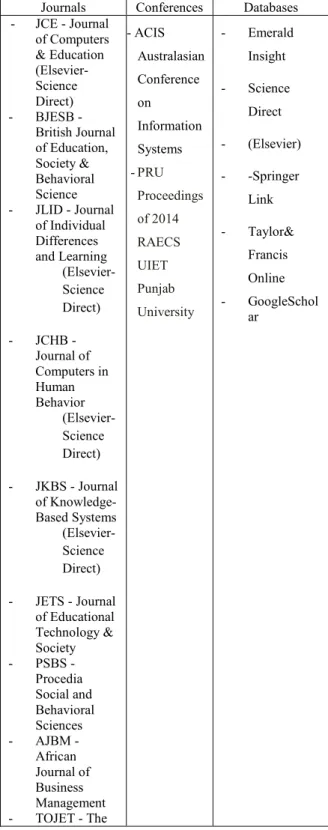
The literature search was done among the literature from the databases, journals, and articles mentioned in Table. 1
Table 1 Data Sources
Journals Conferences Databases
- JCE - Journal of Computers & Education (Elsevier-Science Direct) - BJESB - British Journal of Education, Society & Behavioral Science - JLID - Journal of Individual Differences and Learning (Elsevier-Science Direct) - JCHB - Journal of Computers in Human Behavior (Elsevier-Science Direct) - JKBS - Journal of Knowledge-Based Systems (Elsevier-Science Direct) - JETS - Journal of Educational Technology & Society - PSBS - Procedia Social and Behavioral Sciences - AJBM - African Journal of Business Management - TOJET - The -ACIS Australasian Conference on Information Systems -PRU Proceedings of 2014 RAECS UIET Punjab University - Emerald Insight - Science Direct - (Elsevier) - -Springer Link - Taylor& Francis Online - GoogleSchol ar
195 Turkish Online Journal of Educational Technology - JESA - Journal of Expert Systems with Applications - JID – Journal of Information Development - JEPP - Journal of Evaluation and Program Planning (Elsevier-Science Direct) - IJMEC - I.J.Modern Education and Computer Science - IJLD - International Journal of Learning & Development - JETS2 - Journal of Education and Training Studies - JSTME - Journal of Science, Technology, Mathematics and Education - IJCIT - International Journal of Computer and Information Technology - BMC - BMC Medical Education - IJSTR - International Journal Of Scientific & Technology Research - JEP - Journal of Educational Psychology - MJOLT - MERLOT Journal of Online Learning and Teaching - MJSS - Mediterranean Journal of Social Sciences - JTI - Telematics and Informatics - IJI - International Journal of Instruction 3.4 Data Analysis
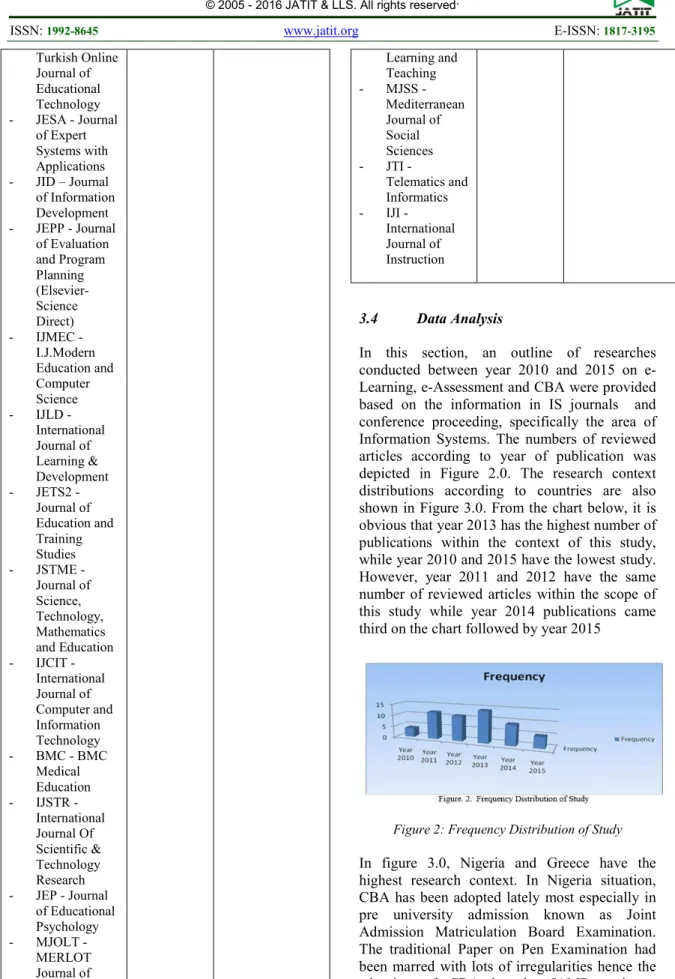
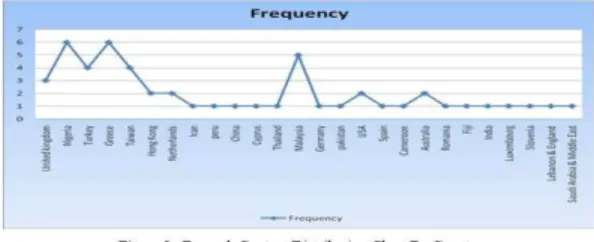
In this section, an outline of researches conducted between year 2010 and 2015 on e-Learning, e-Assessment and CBA were provided based on the information in IS journals and conference proceeding, specifically the area of Information Systems. The numbers of reviewed articles according to year of publication was depicted in Figure 2.0. The research context distributions according to countries are also shown in Figure 3.0. From the chart below, it is obvious that year 2013 has the highest number of publications within the context of this study, while year 2010 and 2015 have the lowest study. However, year 2011 and 2012 have the same number of reviewed articles within the scope of this study while year 2014 publications came third on the chart followed by year 2015
Figure 2: Frequency Distribution of Study In figure 3.0, Nigeria and Greece have the highest research context. In Nigeria situation, CBA has been adopted lately most especially in pre university admission known as Joint Admission Matriculation Board Examination. The traditional Paper on Pen Examination had been marred with lots of irregularities hence the adoption of CBA by the JAMB registrar. According to leadership Newspaper online
196 published in April 2nd, 2015 by KuniTyessi, Experts have said that “pen on paper examination is considered when a huge number of examinees are being examined at the same time within a confined location. When these conditions are not met, as it was with Nigeria pre university entrance examination (JAMB Paper and Pen Test), such tests is likely to be
marred with lots of irregularities and
administrative malfunctioning, especially with the distribution of examination materials to different location across the country”.
On the other hand in Greece situation, educators suggest other advantages inherent in CBA such as assessment security, cost effectiveness and time saving, and remote learning/marking[17]. Malaysia and Taiwan come next on the chart and have also adopted CBA due to its advantages over Pen on Paper Test examination. Malaysia is a country which is so particular about green environment and perhaps that might have been the reason why there is reasonable level of CBA adoption. Minnesota pollution agency opined in 2011 that CBA has been considered to be one of the solutions to green IT adoption campaign since it is a paperless kind of examination which consequently reduces refuse for burning and paper consumption[18, 19]. Also, Taiwan support of e-learning and life long distance education have encouraged CBA adoption compared to other countries which have low CBA adoption. Studies on CBA acceptance in kingdom of Saudi Arabia and other neighboring countries are scarce and one paper in this study actually discussed e-learning adoption in the Middle East and has received little academic attention.
Figure 3: Research Context Distribution
4 RESULT/DISCUSSION
What are the factors that influence the use of CBA systems?
Many authors have tried to investigate factors which have affected the growth of CBA acceptance both in developed and developing countries in general. For instance, [20] in his Quantitative study with extended TAM investigates efficacy of factors such as Computer anxiety , Perceived ease of use, General anxiety, language abilities, abilities on individual adolescents’ student. [21] in their own study, tried to establish the effect of Computer knowledge towards reducing computer anxiety on Nigeria students Pre-University entrance examination.[22] in his thesis examined by extending TAM on factors such as Self Efficacy, Computer Attitude, Anxiety, PEOU, PU, Attitude Towards Use(ATT), Behavioural intention to Use (BI)just to mention but a few.
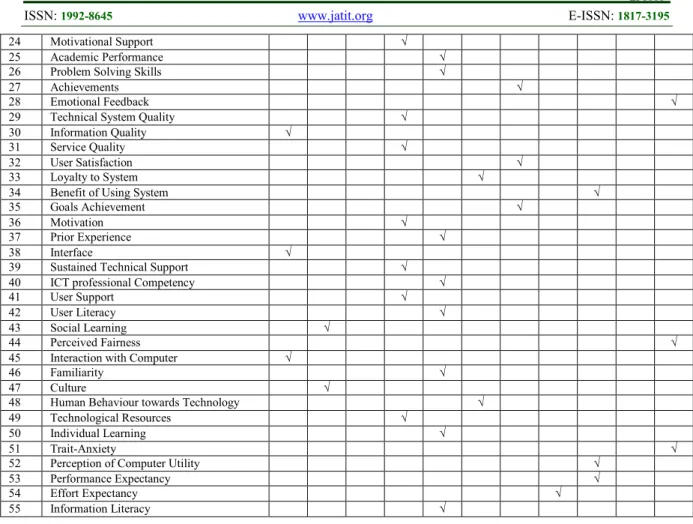
Other factors which have been investigated by [23, 24] include perceive usefulness, perceive usefulness, facilitating condition, social influence, goal expectancy, content, computer self efficacy shown in Table 2.0 and Table 3.0 respectively. However of all these factors, Test anxiety is a big issue assessment in general. In traditional pen-on-paper examination, text anxiety is seen as a special classification of anxiety that occurs in an evaluative scenario. It has two types of variables namely cognitive and emotionality. The cognitive dimension is known as mental activity that spins round the testing situation and encompasses worry negative thoughts coupled with emotional turbulence. The emotionality dimension refers to the physiological component that includes tension and perceived awaken[9, 10] also cited in [25].
4.1 Text Anxiety & Computer Anxiety
Test anxiety completely depends on the extent to which students view evaluation as frightening [11] also cited in [26]. Nevertheless, When such text is conducted through electronic means or via computer systems, it become computer or technological anxiety which is often defined as one of three principal variables of computer attitudes, the other two necessitate computer importance (perceived usefulness and computer enjoyment) [27].Computer anxiety involves an exhibition of trepidation and tension near use of computer [20, 28, 29]. [29]established in his study that computer anxiety is negatively associated to computer use, perceived usefulness, perceived enjoyment, and social pressure. Also, computer anxiety has shown to have positive
197 influence on perceived ease of use[30]. Although anxiety is a common indisputable phenomenon in human being’s life that influence production and efficacy in disparate situations, a considerable level of anxiety is necessary in keeping people on their feet to forge ahead in actualizing the task ahead which often leads to a stable and joyous life[25]. High level of anxiety poses great danger to users physical and emotional capability[25].
One of the prevalent researches in education concerning assessment is test anxiety. Researches described it as a kind of disorder which has a very high magnitude all around the world. One of these disorders is test anxiety or fear associated with evaluation[31]. It is a kind of anxiety which emerges when a test taker is being examined by test manager. Computer anxiety is a opposing psychological and emotional phenomenon often encountered by user when he uses computer[32]. This type of apprehension encompasses so many things such as computer literacy, computer handling, computer user feedback, tension, concern,
joyous, distraction in computer
circumstances[33, 34]. Many reputable researchers conclude that huge computer anxiety influence performance negatively while moderate level enhance performance positively[35]. Compeau and Higgins (1995) cited in [36] defined self efficacy as “a judgment of one’s capability to use a computer”. [37] defined self efficacy as “judgments of how well one can execute courses of action required to deal with prospective situations”. According to Venkatesh and Davis’s findings, “computer self efficacy is the important determinants of perceived ease of use. In online training environment, computer self-efficacy is also an important trainee characteristic for e-learning situations”[38-40] also found that self efficacy has a positive influence on learning achievement of e-learning. Computer anxiety refers to an individual's anxiety aroused in the process of using or facing the computer. Computer anxiety has significant influences on an individuals' intention to use the computer. The cause is mainly that an individual's unfamiliarity with the computer makes him worried that he might appear clumsy in front of others or worried that his ignorance may cause damage to the computer. Hence, it is learned that computer anxiety results from the individual's unfamiliarity with the computer and develops the anxious state
accordingly. Computer anxiety which belongs to situational anxiety can be improved by proper computer training or increasing computer experiences.
The causes of computer anxiety include: (1) individuals fear of causing damage to the computer and apprehension that they may make mistakes, (2) the uneasiness in the mind which result from individuals' feeling ignorant or awkward when they interact with the computer, (3) the fear of computer is reflected from the fear of technology or math, (4) individuals are worried that radiation might affect them and cause their health to deteriorate when they work in front of computer, (5) the fear that individuals have toward new or unfamiliarity things leads to the fear of computer technology, (6) individuals are worried that the computer will make a threat to or limit their development of intelligence, (7) individuals feel troubled that the time to use computer is so insufficient that they fail to take care of relevant matters with the pre-scheduled time and cause the state of psychological uneasiness, (8) some individuals consider themselves inferior to computer in intellectual development and they also often tend to give up the opportunities of independent thinking[30, 41, 42].
5. What suitable proposed theoretical model can be used to validate the identified factors?
The need for having a standardized model for predicting systems use came as a result of increasing failure of system adoption in organizations[43]. Previous researchers have modified and validated some technological acceptance models to ensure continuance use of technological innovation in the area of e-learning and e-assessment. [44]proposed Technology Acceptance Model in his doctoral thesis as a model to predict user acceptance of information systems. TAM posited that two particular beliefs, Perceived Usefulness (U) and Perceived Ease of Use (E) are of primary relevance for computer acceptance behaviors. Over the years, tremendous work has been published in the area of e-learning [45-49] and e-assessment most especially in the developed countries where e-assessment has recorded a huge success [23, 24, 50-52].
Previous researchers, based theories concerning Information Use on Technology Acceptance Model (TAM). [44]established
198 models to examine learner’s acceptance and intention to use computer based assessment
system. Concerning Computer Based
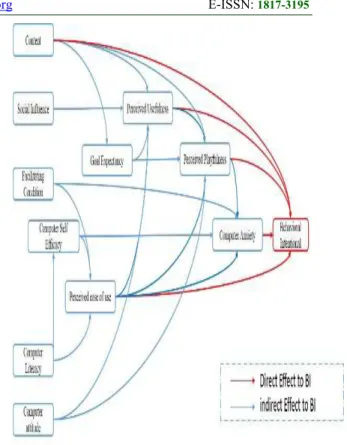
Assessment, Computer Based Assessment Acceptance Model (CBAAM) is a model that incorporates many pertinent variables to explain learner’s acceptance on CBA[23, 24]). In view of the foregoing, the researchers proposed a conceptual computer based assessment model that will ensure minimization of fear associated with computer usage as shown in fgure 4.0. Furthermore, Table-4 below shows the associated constructs in this study with their causal links and detailed explanation of each of the constructs is provided in the subsequent section.
Table .2. Identified Factors from Literatures
S/N Factors Definition C on te nt So cia l In flu en ce C om pu te r Se lf E ffi ca cy Fa cil ita tin g C on dit io n C om pu te r L ite ra cy C om pu te r A ttit ud e G oa l E xp ec ta nc y Pe rc eiv ed E as e o f U se Pe rc eiv ed U se fu ln es s Pe rc eiv ed Pla yf uln es s C om pu te r A nx ie ty 1 Abilities √ 2 Computer Enjoyment √ 3 Computer Anxiety √
4 Perceived Ease of Use √
5 Computer Knowledge √
6 Self-Efficacy √
7 Computer Attitude √
8 Achievement Goals √
9 Competence Beliefs √
10 Availability of technical Support √
11 Attitude toward system √
12 Goal Expectancy √ 13 Content √ 14 Perceived Usefulness √ 15 Social Influence √ 16 Perceived Playfulness √ 17 Facilitating Condition √ 18 Management Support √ 19 Organizational Support √ 20 Individuals’ Experience √ 21 Subjective Norm √
22 Perceived Individual Learning √
199
Table 3.0 Identified Factors with References from Literatures
Factors References co nte nt So cia l in flu en ce C om pu te r S elf E ffi ca cy Fa cil ita tin g C on dit io n C om pu te r lite ra cy C om pu te r A ttit ud e G oa l E xp ec ta nc y Pe rc eiv ed E as e o f u se Pe rc eiv ed U se fu ln es s Pe rc eiv ed Pla yf uln es s C om pu te r A nx ie ty
1 G. Conti-Ramsden, K. Durkin, and A. J.
Walker, 2010 √ √ √ √
2 Olufemi, Ogunmakin Abel et all. ,2014 √ √
3 A. Nurcan, 2010 √ √ √ √ √
4 D. W. Putwain, and R. A. Daniels, 2010 √ √ √
5 A. A. Mirza, and M. Al-Abdulkareem, 2011 √ √ √ √
6 V. Terzis, and A. A. Economides, 2011 √ √ √ √ √ √ √ √
7 Y.-H. Lee, Y.-C. Hsieh, and C.-Y. Ma, 2011 √ √ √ √ √ √ √
8 . Cheng, M. Wang, S. J. H. Yang, Kinshuk,
and J. Peng, 2011 √ √ √
9 Nikolaos Tselios et all. , 2011 √ √ √
10 C. Timmers, and B. Veldkamp, 2011 √
11 Karadeniz, 2011 √ √
12 Karaali et all. , 2011 √ √ √ √ √
13 DordiNejad et al., 2011 √ √
14 Jan & Contreras, 2011 √ √ √
15 Ying-Hsiang Chuo et al., 2011 √ √ √ √ √
16 Oğuz SERİN, 2011 √ √
17 Khlood Al-Siraihi , 2011 √ √ √ √ √ √ √
18 Terzis et al., 2012a √ √ √ √ √ √ √ √
24 Motivational Support √
25 Academic Performance √
26 Problem Solving Skills √
27 Achievements √
28 Emotional Feedback √
29 Technical System Quality √
30 Information Quality √
31 Service Quality √
32 User Satisfaction √
33 Loyalty to System √
34 Benefit of Using System √
35 Goals Achievement √
36 Motivation √
37 Prior Experience √
38 Interface √
39 Sustained Technical Support √
40 ICT professional Competency √
41 User Support √
42 User Literacy √
43 Social Learning √
44 Perceived Fairness √
45 Interaction with Computer √
46 Familiarity √
47 Culture √
48 Human Behaviour towards Technology √
49 Technological Resources √
50 Individual Learning √
51 Trait-Anxiety √
52 Perception of Computer Utility √
53 Performance Expectancy √
54 Effort Expectancy √
200
19 Hassanzadeh et all. , 2012 √ √ √ √ √ √
20 Bhuasiri et all. , 2012 √ √ √ √ √
21 Piaw Chua, 2012 √ √ √ √
22 S. H. Purnomo & Lee, 2012 √ √ √ √ √ √
23 H. R. Chen & Tseng, 2012 √ √ √ √ √
24 Terzis et all. , 2012b √ √ √ √ √ √ √ √
25 Deutsch et all. , 2012b √ √ √
26 Nawaz & Zubair Khan, 2012 √ √
27 Cheng et all. , 2012 √ √ √
28 Alabi, Issa, & Oyekunle, 2012 √ √ √ √ √ √
29 Terzis et al., 2013 a √ √ √ √ √ √ √ √ 30 Terzis et all. , 2013 b √ √ √ √ √ √ √ 31 Colwell, 2013 √ 32 JImoh et al. , 2013 √ √ √ 33 Llamas-Nistal et all. ,2013 √ √ 34 Powell, 2013 √ √ √ √ √ 35 Bediang et al., 2013 √
36 Chua & Don, 2013 √
37 Quimno et all. , 2013 √ √ √
38 C. F. Timmers et all, 2013 √ √
39 Liaw & Huang, 2013 √ √ √ √ √ √
40 Cheung & Vogel, 2013 √ √ √
41 Maricutoiu, 2014 √ √ √ √ √ √
42 Fonolahi et al., 2014 √
43 Olufemi & Oluwatayo, 2014 √ √
44 Arora & Chhabra, 2014 √ √ √
45 Greiff, Kretzschmar et all. , 2014 √ √
46 Abubakar & Adebayo, 2014 √ √
47 Tarhini et all. , 2014 √ √ √ √ √ √
48 Imtiaz & Maarop, 2014 √ √ √ √ √ √ √
49 Mohammadi, 2015c √ √ √ √ √ √
50 Achim & Al Kassim, 2015 √ √
51 Dečman, 2015 √ √ √
52 Cheok & Wong ,2015 √ √ √ √ √ √ √ √
53 Tosuntaş et all. , 2015 √ √ √ √
54 Tarhini et all. ,2015 √ √ √
6. PROPOSED MODEL CONSTRUCTS
DEFINITION
6.1 Perceived Usefulness
Perceived Usefulness is defined as the level to which a user thinks using CBA enhances his/her job is Perceived Usefulness[44]. LMS acceptance models highlighted Perceived Usefulness as a very pertinent variable of behavioral intention to accept e-learning system. Some of the usefulness of CBA includes quick release of result; less prone to marking errors, reduced loss of answer scripts as reportedly seen in the traditional paper and pen examination and last but not the least an unbiased assessment process. Similarly, “Perceived Usefulness” is an important determining factor of “Perceived Playfulness”[53]. It has been
investigated in previous studies to have significant positive relationship with perceived playfulness, computer anxiety and behavioural intention as shown in Table 4.0
6.2 Perceived Ease of Use
Perceived Ease of Use is defined as the extent to which a user thinks using a system is free from any extra effort is “Perceived Ease of Use” (PEOU) (Davis, 1989). Usually test takers will prefer to use a system that is easy to manipulate that the one which requires an extra efforts. Learning management systems acceptance models of the previous studies have shown that the “Perceived Ease of Use” influences positively and directly the “Perceived Playfulness”, Perceived Usefulness and Behavioral Intention to Use)[54]. Previous studies
201 have shown it to have significant positive relationship with perceived playfulness and behavioural intention.
6.3 Social Influence
Social Influence is a construct to investigate the influence of other views on person behaviour and beliefs [55, 56]. This involves people who have direct influence of the students life such as older students, peer influence from class mates and friends from other schools which might affects students behavioural intention to accept CBA usage. Social Influence can be categorized into three dimensions: “Subjective Norm”, “Image” and “Voluntariness” [57]. Social Influence was found as a major determinant of behavioral intention in LMS and CBA contexts and it was shown to have significant relationship with perceived usefulness.
6.4 Facilitation Conditions
Facilitating Conditions is referred to as the system’s available support that facilitates individuals to use a system. In CBA, instructors have been found to play an important role to proper delivery of the CBA system to the students. This also involves the help menu button feature, test instruction which accompany any computer based assessment test and other support facilities that are embedded n CBA systems. Therefore, the researcher hypothesized a positive effect of FC on PEOU. [23, 24, 51, 53]. It was investigated to have significant relationship with perceive ease of use and computer anxiety.
6.5 Goal Expectancy
Goal expectancy has been investigated by Tersiz and Economides to influence CBA acceptance and use. An individual has objective requirements towards using any particular technological innovation. This can lead to the formulation of certain opinion towards a particular system. If the systems meet the users’ requirement, then the goal expectancy is high and yield positive intention to use CBA [23, 24, 51, 53].It was investigated to have significant relationship with perceive playfulness and Perceive usefulness
6.6 Perceived Playfulness
Perceived Playfulness (PP) is a personal significant opinion that emanated from the users experience with the system. Moon and Kim opined “Perceived Playfulness” (PP) as a construct mentioned by three
views such as “concentration”, “curiosity” and “enjoyment”. These views are very important for user’s acceptance of a CBA. Terzis & Economides (2011) had shown that Perceived Playfulness is one of the most important determining factors to use CBA. It is important to ensure that the CBA systems have a good interface that is attractive and quite enjoyable. This will make the students to consider using CBA. It was investigated to have significant relationship with behavioural intention
6.7 Content
Content is a constructs that examines user’s views concerning the CBA’s corresponding course and CBA’s quizzes. This is perception that often associated with the test relating to the course syllabus, free from typographic errors and other technological related errors. Usually CBA users feel more comfortable writing examination whose questions in form of contents are well worded and straightforward that the one that has many errors. It has been investigated that students with higher interest for a particular course will have higher intentions to use the corresponding CBA.[23, 24, 51, 53]. It was investigated in previous studies to have significant relationship with perceived playfulness, perceived usefulness, behavioural intention and goal expectancy.
6.8. Computer Anxiety
“Perceived Playfulness” (PP) as a variable is defined by three views such as “concentration”, “curiosity” and “enjoyment”. The researcher stress that PP has the tendency to reduce “Computer anxiety” since if it is enjoyable and if the test takers have knowledge of it, they will have less fear towards CBA usage [21]. Computer anxiety is a very big factor that influences computer use negatively amongst individuals. This factor has been in existence for ages. Test anxiety found to be a greater factor that determines students’ performances in traditional pen-on-paper examination. It comes in form of fear and apprehension that arose immediately a student realizes that he will be assessed. When such examination changes to electronic form such as computer based assessment, such anxiety increases and changed into what is known as computer anxiety. This is postulated in this study to have significant relationship with behavioural intention
202
6.9 Computer Literacy
Some authors opined in their review papers in the systematic literature review that a test taker with adequate computer training and knowledge has certain level of confidence to write [21, 58, 59]. Following these claims by previous authors, it is obvious that an individual tends to use more a technological innovation which he or she is proficient at. An individual literacy towards computer can come in form of previous computer training, secondary school computer curriculum or self learning adaptation style. This is postulated in this study to have significant relationship with perceive ease of use and computer self efficacy. The researchers hope if computer self efficacy is strengthened with computer literacy factor; there is high tendency that anxiety associated with electronic test is greatly reduced.
6.10 Computer Self efficacy
The extent at which a CBA user thinks he or she has capability to use computers[60]. Computer self efficacy influences test takers during Computer based assessment [23, 24, 51, 53]. A particular test taker with high level of computer self efficacy will find CBA system easier to use. They also have higher intentions to fully adopt CBA systems. Previous studies have shown direct causal relationship of CSE on PEOU and the indirect on Behavioral intention in the context of LMS or CBA acceptance. However, the researchers postulated in this study to have significant relationship with computer anxiety and perceive ease of use.
6.11. Computer Attitude
The significance of developing positive attitudes towards computers has been appraised a precondition for developing computer-dexterity [49, 61, 62]. A number of empirical studies have found significant relationships between attitudes towards computers and usage of them [60, 63, 64]. Several studies have also investigated the relationship between computer attitude and IT use. [65]theory of reasoned action, advocated that an object ushered to an attitude concerning it, and this attitude points to the behavioral intentions regarding the object. Furthermore, these intentions affect actual behaviors toward the object. Attitude is defined as a measure of the intensity to which a person likes or dislikes a particular object”[65]. In other words, it involves the impression a test taker has towards computer itself as an object. Levine
and Donitsa-Schmidt opined that intensified computer use brings about positive computer attitudes, and that there also appears to be a corresponding link between these computer use and computer attitude[66, 67]. A similar positive relationship between experience and acceptance of CBA was highlighted by[68]. However, this does not connote that increased exposure will always have a positive significant effect on attitudes, as this seems to be controlled moderately by the individual element of experience[69]. In view of these, it has been proposed in previous studies that computer attitudes affect users’ behavioral intentions and computer usage[70, 71].
6.12. Behavioural Intention
This was investigated to have significant positive relationship with actual use in many studies on e-learning and e-assessment. In this study, the researchers believed other factors which have tendencies to reduce computer anxiety will ultimately leads behavioral intention to use a CBA.
7. CONCLUSION
This chapter has been conducted as a literature review that provided information on e-learning and assessment for learning, the previous studies conducted in computerized assessment, e-assessment and students perceptions of computerized assessment and technology adoption models. It also discusses the concept of e-Learning and Learning Management System. Also, overview of educational systems in Saudi Arabia was also discussed. Previous Research on in form of systematic review was also provided and discussion of the review and previous adopted Theoretical models on e-learning and e-assessment were also elucidated. However, in this study, the researcher have been able to identify that of all factors which have affected greatly acceptance of CBA in developing countries, computer anxiety is a huge one. The previous researchers have also tried to stress in their study that perceive computer literacy and perceive presence of technical support which is a component of facilitating condition would go a long way towards reducing anxiety associated with computer usage. In view of all these, the authors have reviewed factors threatening learning, e-assessment and CBA acceptance. The aim of this study therefore is to investigate constructs that can reduce anxiety and investigate empirically. It is believed in this study that if anxiety associated with computer use is reduced, there are greater
203 tendencies towards actual use of computer based assessment systems. Consequently, the researchers envisage investigating empirically the proposed conceptual framework which is believed has the capability to aid Saudi Arabia Ministry of Education to know the right approach that will facilitate the integration and implementation of CBA into Saudi Arabia Ministry of Education Assessment programme.
8. REFERENCES
[1] T. Teo, “Assessing the computer attitudes of students: An Asian perspective,” Computers in Human Behavior, vol. 24, no. 4, pp. 1634-1642, 2008.
[2] M. Fagbola Temitayo, A. Adigun Adebisi, and O. Oke Alice, “Computer-Based Test (Cbt) System For University Academic Enterprise Examination,” International Journal of Scientific & Technology Research, vol. 2, no. 8, 2013.
[3] M. A. Imtiaz, and N. Maarop, “A Review of Technology Acceptance Studies in the Field of Education,” Jurnal Teknologi, vol. 69, no. 2, 2014.
[4] O. T. Oluwatosin, and D. D. Samson, “Computer-Based Test: Security and Result Integrity,” IJCIT, ISSN, 2013. [5] K. Struyven, F. Dochy, S. Janssens, W.
Schelfhou, and S. Gielen, “The overall effects of end-of-course assessment on student performance: A comparison between multiple choice testing, peer assessment, case-based assessment and portfolio assessment,” Studies in Educational Evaluation, vol. 32, no. 3, pp. 202-222, 2006.
[6] C. Ricketts, and S. Wilks, “Improving student performance through computer-based assessment: Insights from recent research,” Assessment & evaluation in higher education, vol. 27, no. 5, pp. 475-479, 2002.
[7] R. JImoh, M. Yussuff, M. Akanmu, A.
Enikuomehin, and I. Salman,
“Acceptability Of Computer Based Testing (Cbt) Mode For Undergraduate Courses In Computer Science.”
[8] R. Agarwal, and E. Karahanna, “Time flies when you're having fun: Cognitive absorption and beliefs about information technology usage,” MIS quarterly, pp. 665-694, 2000.
[9] J. C. Cassady, “The impact of cognitive test anxiety on text comprehension and recall in the absence of external evaluative pressure,” Applied Cognitive Psychology, vol. 18, no. 3, pp. 311-325, 2004.
[10] M. Zeidner, Test anxiety: The state of the art: Springer Science & Business Media, 1998.
[11] D. W. Putwain, and R. A. Daniels, “Is the relationship between competence beliefs and test anxiety influenced by goal orientation?,” Learning and Individual Differences, vol. 20, no. 1, pp. 8-13, 2010. [12] H. H. Chang, and I. C. Wang, “An
investigation of user communication behavior in computer mediated environments,” Computers in Human Behavior, vol. 24, no. 5, pp. 2336-2356, 2008.
[13] Z. Selamat, and N. Jaffar, “Information technology acceptance: From perspective of Malaysian bankers,” International Journal of Business and Management, vol. 6, no. 1, pp. p207, 2010.
[14] C. Okoli, and K. Schabram, “A guide to conducting a systematic literature review of information systems research,” 2010. [15] W. Bandara, S. Miskon, and E. Fielt, “A
systematic, tool-supported method for conducting literature reviews in information systems,” 2011.
[16] Y. Levy, and T. J. Ellis, “A systems approach to conduct an effective literature review in support of information systems
research,” Informing Science:
International Journal of an Emerging Transdiscipline, vol. 9, no. 1, pp. 181-212, 2006.
[17] V. Terzis, C. N. Moridis, A. A. Economides, and G. R. Mendez,
“Computer Based Assessment
Acceptance: A Cross-cultural Study in Greece and Mexico,” Journal of Educational Technology & Society, vol. 16, no. 3, pp. 411-424, 2013.
[18] Y. Piaw Chua, “Effects of computer-based testing on test performance and testing motivation,” Computers in Human Behavior, vol. 28, no. 5, pp. 1580-1586, 2012.
[19] Y. P. Chua, and Z. M. Don, “Effects of computer-based educational achievement test on test performance and test takers’ motivation,” Computers in Human
204 Behavior, vol. 29, no. 5, pp. 1889-1895, 2013.
[20] G. Conti-Ramsden, K. Durkin, and A. J. Walker, “Computer anxiety: A comparison of adolescents with and without a history of specific language impairment (SLI),” Computers & Education, vol. 54, no. 1, pp. 136-145, 2010.
[21] O. A. Olufemi, and O. J. Oluwatayo, “Computer Anxiety and Computer
Knowledge as Determinants of
Candidates’ Performance in Computer-based Test in Nigeria,” British Journal of Education, Society & Behavioural Science, vol. 4, no. 4, pp. 495-507, 2014.
[22] A. Nurcan, “Identifying factors that affect students' acceptance of web-based assessment tools within the context of higher education,” M. Sc Dissertation. Midlle East Technical University. Retrieved from Middle East Technical University Digital Thesis, 2010.
[23] V. Terzis, and A. A. Economides, “The acceptance and use of computer based assessment,” Computers & Education, vol. 56, no. 4, pp. 1032-1044, 2011.
[24] V. Terzis, C. N. Moridis, and A. A. Economides, “The effect of emotional feedback on behavioral intention to use computer based assessment,” Computers & Education, vol. 59, no. 2, pp. 710-721, 2012.
[25] F. G. DordiNejad, H. Hakimi, M. Ashouri, M. Dehghani, Z. Zeinali, M. S. Daghighi, and N. Bahrami, “On the relationship between test anxiety and academic performance,” Procedia - Social and Behavioral Sciences, vol. 15, pp. 3774-3778, 2011.
[26] N. M. Colwell, “Test Anxiety, Computer -Adaptive Testing, and the Common Core,” Journal of Education and Training Studies, vol. 1, no. 2, 2013.
[27] T. Teo, “A path analysis of pre-service teachers' attitudes to computer use: Applying and extending the Technology Acceptance Model in an educational context,” Interactive Learning Environments, vol. 18, no. 1, pp. 65-79, 2010.
[28] M. Igbaria, and S. Parasuraman, “A path analytic study of individual characteristics, computer anxiety and attitudes toward
microcomputers,” Journal of
Management, vol. 15, no. 3, pp. 373-388, 1989.
[29] M. Igbaria, S. Parasuraman, and J. J. Baroudi, “A motivational model of microcomputer usage,” Journal of management information systems, pp. 127-143, 1996.
[30] Y.-H. Chuo, C.-H. Tsai, Y.-L. Lan, and C.-S. Tsai, “The effect of organizational support, self-efficacy, and computer anxiety on the usage intention of e-learning system in hospital,” African Journal of Business Management, vol. 5, no. 14, pp. 5518-5523, 2011.
[31] B. Cheraghian, M. Fereidooni-Moghadam, S. Baraz-Pardejani, and N. Bavarsad, “Test anxiety and its relationship with academic performance among nursing students,” Knowledge & Health, vol. 3, no. 3-4, pp. 25-9, 2008.
[32] T. A. Judge, C. L. Jackson, J. C. Shaw, B. A. Scott, and B. L. Rich, “Self-efficacy and work-related performance: the integral role of individual differences,” Journal of applied psychology, vol. 92, no. 1, pp. 107, 2007.
[33] V. Mcinerney, H. W. Marsh, and D. M. Mcinerney, “The designing of the computer anxiety and learning measure (CALM): Validation of scores on a multidimensional measure of anxiety and cognitions relating to adult learning of computing skills using structural equation modeling,” Educational and Psychological Measurement, vol. 59, no. 3, pp. 451-470, 1999.
[34] A. J. Martin, H. W. Marsh, D. M. McInerney, J. Green, and M. Dowson, “Getting along with teachers and parents: The yields of good relationships for students' achievement motivation and self-esteem,” Australian Journal of Guidance and Counselling, vol. 17, no. 02, pp. 109-125, 2007.
[35] S. Parayitam, K. J. Desai, M. S. Desai, and M. K. Eason, “Computer attitude as a moderator in the relationship between computer anxiety, satisfaction, and stress,” Computers in Human Behavior, vol. 26, no. 3, pp. 345-352, 2010.
[36] C. F. Timmers, J. Braber-van den Broek, and S. M. van den Berg, “Motivational beliefs, student effort, and feedback behaviour in computer-based formative
205 assessment,” Computers & Education, vol. 60, no. 1, pp. 25-31, 2013.
[37] V. Venkatesh, “Determinants of perceived ease of use: Integrating control, intrinsic motivation, and emotion into the
technology acceptance model,”
Information systems research, vol. 11, no. 4, pp. 342-365, 2000.
[38] R. Saadé, and D. Kira, “Computer anxiety in e-learning: The effect of computer self-efficacy,” Journal of Information Technology Education: Research, vol. 8, no. 1, pp. 177-191, 2009.
[39] M. L. Cheok, and S. L. Wong, “Predictors of E-Learning Satisfaction in Teaching and Learning for School Teachers: A Literature Review,” International Journal of Instruction, vol. 8, no. 1, 2015.
[40] F. Lin, S. S. Fofanah, and D. Liang, “Assessing citizen adoption of e-Government initiatives in Gambia: A validation of the technology acceptance model in information systems success,” Government Information Quarterly, vol. 28, no. 2, pp. 271-279, 2011.
[41] O. Doronina, “Fear of computers,” Russian Education & Society, vol. 37, no. 2, pp. 10-28, 1995.
[42] M. L. Meuter, A. L. Ostrom, M. J. Bitner, and R. Roundtree, “The influence of technology anxiety on consumer use and
experiences with self-service
technologies,” Journal of Business Research, vol. 56, no. 11, pp. 899-906, 2003.
[43] J. Xu, and M. Quaddus, “Exploring the Factors Influencing End Users’ Acceptance of Knowledge Management Systems,” Evolutionary Concepts in End User Productivity and Performance: Applications for Organizational, pp. 5, 2009.
[44] F. D. Davis, R. P. Bagozzi, and P. R. Warshaw, “User acceptance of computer technology: a comparison of two theoretical models,” Management science, vol. 35, no. 8, pp. 982-1003, 1989.
[45] J. Stoffregen, J. M. Pawlowski, and H. Pirkkalainen, “A Barrier Framework for
open E-Learning in public
administrations,” Computers in Human Behavior, 2015.
[46] Y.-H. Lee, Y.-C. Hsieh, and C.-Y. Ma, “A model of organizational employees’ e-learning systems acceptance,”
Knowledge-Based Systems, vol. 24, no. 3, pp. 355-366, 2011.
[47] D. Persico, S. Manca, and F. Pozzi, “Adapting the Technology Acceptance Model to evaluate the innovative potential of e-learning systems,” Computers in Human Behavior, vol. 30, pp. 614-622, 2014.
[48] A. Hassanzadeh, F. Kanaani, and S. Elahi, “A model for measuring e-learning systems success in universities,” Expert Systems with Applications, vol. 39, no. 12, pp. 10959-10966, 2012.
[49] L. Zhang, H. Wen, D. Li, Z. Fu, and S. Cui, “E-learning adoption intention and its key influence factors based on innovation adoption theory,” Mathematical and Computer Modelling, vol. 51, no. 11-12, pp. 1428-1432, 2010.
[50] P.-C. Sun, R. J. Tsai, G. Finger, Y.-Y. Chen, and D. Yeh, “What drives a successful e-Learning? An empirical investigation of the critical factors influencing learner satisfaction,” Computers & education, vol. 50, no. 4, pp. 1183-1202, 2008.
[51] V. Terzis, C. N. Moridis, and A. A. Economides, “Continuance acceptance of computer based assessment through the integration of user's expectations and perceptions,” Computers & Education, vol. 62, pp. 50-61, 2013.
[52] N. Kalogeropoulos, I. Tzigounakis, E. A. Pavlatou, and A. G. Boudouvis, “Computer-based assessment of student performance in programing courses,” Computer Applications in Engineering Education, vol. 21, no. 4, pp. 671-683, 2013.
[53] V. Terzis, and A. A. Economides, “Computer based assessment: Gender differences in perceptions and acceptance,” Computers in Human Behavior, vol. 27, no. 6, pp. 2108-2122, 2011.
[54] V. Venkatesh, and F. D. Davis, “A theoretical extension of the technology acceptance model: Four longitudinal field studies,” Management science, vol. 46, no. 2, pp. 186-204, 2000.
[55] S. Taylor, and P. Todd, “Decomposition and crossover effects in the theory of planned behavior: A study of consumer adoption intentions,” International journal
206 of research in marketing, vol. 12, no. 2, pp. 137-155, 1995.
[56] D. E. Taylor, K. Runge, M. G. Cory, D. S. Burns, J. L. Vasey, J. D. Hearn, and M. V. Henley, “Binding of Small Molecules to a Silica Surface: Comparing Experimental and Theoretical Results,” The Journal of Physical Chemistry C, vol. 115, no. 50, pp. 24734-24742, 2011.
[57] D. Gefen, E. Karahanna, and D. W. Straub, “Trust and TAM in online shopping: An integrated model,” MIS quarterly, vol. 27, no. 1, pp. 51-90, 2003. [58] A. Nawaz, “Using e-learning as a tool for
‘education for all’in developing states,” International Journal of Science and Technology Educational Research, vol. 4, no. 3, pp. 38-46, 2013.
[59] A. Nawaz, and M. Zubair Khan, “Issues of Technical Support for e-Learning Systems in Higher Education Institutions,”
International Journal of Modern
Education and Computer Science, vol. 4, no. 2, pp. 38-44, 2012.
[60] C. A. Higgins, D. R. Compeau, and D. B. Meister, “From prediction to explanation: reconceptualizing and extending the perceived characteristics of innovating,” Journal of the Association for Information Systems, vol. 8, no. 8, pp. 26, 2007. [61] Y. Zhang, and S. Espinoza, “Relationships
among computer self-efficacy, attitudes toward computers, and desirability of learning computing skills,” Journal of Research on Computing in Education, vol. 30, no. 4, pp. 420-436, 1998.
[62] R. Kay, “Addressing gender differences in computer ability, attitudes and use: The laptop effect,” Journal of Educational Computing Research, vol. 34, no. 2, pp. 187-211, 2006.
[63] D. R. Compeau, and C. A. Higgins, “Computer self-efficacy: Development of a measure and initial test,” MIS quarterly, pp. 189-211, 1995.
[64] R. L. Thompson, C. A. Higgins, and J. M. Howell, “Personal computing: toward a conceptual model of utilization,” MIS quarterly, pp. 125-143, 1991.
[65] M. Fishbein, and I. Ajzen, Belief, attitude, intention and behavior: An introduction to theory and research, 1975.
[66] T. Levine, and S. Donitsa-Schmidt, “Computer use, confidence, attitudes, and knowledge: A causal analysis,” Computers
in human behavior, vol. 14, no. 1, pp. 125-146, 1998.
[67] A. Durndell, and Z. Haag, “Computer self efficacy, computer anxiety, attitudes towards the Internet and reported experience with the Internet, by gender, in an East European sample,” Computers in human behavior, vol. 18, no. 5, pp. 521-535, 2002.
[68] D. MURCHAN, J. WALSH, and A. SEERY, “Applying CBA technology to traditional error analysis in elementary mathematics. Lessons from Maths Assist.,” 2013.
[69] B. Smith, P. Caputi, and P. Rawstorne, “Differentiating computer experience and attitudes toward computers: an empirical investigation,” Computers in human behavior, vol. 16, no. 1, pp. 59-81, 2000. [70] R. K. Rainer, and M. D. Miller, “An
assessment of the psychometric properties of the computer attitude scale,” Computers in Human Behavior, vol. 12, no. 1, pp. 93-105, 1996.
[71] C.-P. Kao, and C.-C. Tsai, “Teachers’ attitudes toward web-based professional development, with relation to Internet self-efficacy and beliefs about web-based learning,” Computers & Education, vol. 53, no. 1, pp. 66-73, 2009.