Prevalence of overactive bladder syndrome (OABS)
among women with gynaecological problems and its
risk factors in a tertiary hospital, Negeri Sembilan,
Malaysia: Implication for primary healthcare
providers
Ahmad sM, Aznal ss, tham sW
Ahmad SM, Aznal SS, Tham SW. Prevalence of overactive bladder syndrome (OABS) among women with gynaecological problems and its risk factors in a tertiary hospital, Negeri Sembilan, Malaysia: Implication for primary healthcare providers. Malays Fam Physician. 2015;10(2):2-8.
Keywords:
overactive bladder, urgency, urinary incontinence, prevalence, risk factors
Authors:
Sharifah Sulaiha Syed Aznal
(Corresponding author) MBChB, Mog
international Medical University, Clinical school, Jalan rasah 70300 seremban, negeri sembilan, Malaysia. email: [email protected]
Siti Maisarah Ahmad
MBBs, Mog
department of obstetrics and gynaecology
Hospital sultan ismail, Johor, Malaysia email: [email protected]
Tham Seng Woh
MBBs, Mog
department of obstetrics and gynaecology,
Hospital Besar Melaka, Malaysia email: [email protected]
Abstract
Objective: The objective of this paper was to determine the prevalence of overactive bladder syndrome (OABS) and its risk factors among patients with other gynaecological problems.
Methods: This study was conducted on women aged more than 18 years who attended the gynaecology clinic for various diagnoses other than urinary problems at a tertiary hospital in Negeri Sembilan, Malaysia, for a period of 6 months. Data on patient’s profile, symptoms and risk factors for overactive bladder (OAB) were prospectively collected using a structured questionnaire adapted from ICIQ (international consultation on incontinence questionnaire). Exclusion criteria included patients with confirmed diagnosis of stress incontinence or OAB, neurological impairment, gynaecological malignancy and those with a previous history of pelvic radiation. Chi-square test and logistic regression test were used in the statistical analysis. We presented the odds ratio (OR) and 95% confidence interval for each of the OAB symptoms with p-value of 0.05.
Results: The prevalence of OAB among the patients (n = 573) in this study was 19.1%. History of giving births to macrosomic babies and presence of utero-vaginal prolapse (UVP) were shown to be significantly associated with OAB in the multivariate analysis. Other factors were advanced age, high parity and menopausal for more than 5 years. More than half of the patients with the symptoms of OAB did not seek treatment, as they did not think it is necessary.
Conclusion: It is found that the prevalence of OAB is similar with many other studies conducted elsewhere. It was found to be multifactorial, but was highly significantly related with the presence of UVP, especially cystocoele and history of giving births to macrosomic babies.
Introduction
Overactive bladder (OAB) is defined as frequent urination with or without urge incontinence and is usually associated with frequency and nocturia in the absence of an infection or other pathological conditions.1 It is a common and distressing medical condition that can severely affect patient’s quality of life.2
The prevalence of OAB varies among populations, as the number of women who seek help and report the symptoms depends on the
social acceptance of incontinence. As a result of ignorance, embarrassment and sometimes believing that incontinence is somewhat ‘normal’ due to birth and ageing, many women suffer for years before seeking medical treatment.3 OAB generally accounts for 11%–19% of overall incidence of incontinence worldwide.4 However, a study in the United States found that the incidence of OAB was high: 48.3% in women and 60.5% in men.5 Studies in Asia also quoted almost similar prevalence of OAB, though only one out of five patients would usually seek treatment due to reasons mentioned earlier.6
The symptoms of OAB are primarily due to the involuntary contractions of the detrusor muscle during the filling phase of the micturition cycle. It is also termed detrusor overactivity and is mediated by acetylcholine‐induced stimulation of bladder muscarinic receptors.8
There are many risk factors associated with OAB, such as obesity, history of pelvic organ prolapse, multiparity, advanced age and menopause.9 Other conditions that can stimulate involuntary contractions of bladder muscles must also be considered, such as neurological conditions, medication use, urinary infection, abnormalities in the bladder, etc.10 The principle management of OAB includes conservative, medical and surgical options. Studies have shown that conservative management that includes behavioural modification (bladder training, avoidance of bladder irritants and management of fluid intake) with pelvic floor exercise plays significant roles in managing OAB.11 Medical therapy is helpful in patients who are resistant to conservative management. The anti-cholinergic drug is a well-accepted pharmacological treatment for OAB, but the side effects have resulted in low compliance as proven by a study conducted in the United States, where 81.8% of women discontinued drug treatment after less than 6 months, partly due to the side effects of anti-cholinergic therapy.12 Other modalities like sacral neuromodulation, tibial nerve stimulation or intermittent botulinum toxin injection into the detrusor muscles are also practised in patients with refractory OAB.13 Surgical intervention like bladder reconstruction i.e. cystourethroplasty or bladder augmentation, is usually reserved as the last option, as the morbidities are more likely to cause unfavourable consequences.14
The objectives of this study were to determine the prevalence of OAB in women who presented with other gynaecological problems, to study its associated risk factors and to establish the factors that prevent women from volunteering to step forward for therapy.
Methods
A cross-sectional study was conducted among the women who attended the gynaecology clinic of Tuanku Jaafar Hospital, Negeri Sembilan, Malaysia, from December 2011 to May 2012. A universal sampling was used where all patients
older than 18 years who consented were recruited in the study. Patients who were diagnosed with or already treated for stress or OAB, neurological impairment or gynaecological malignancy and those with a previous history of pelvic radiation were excluded from the study.
Symptoms suggestive of OAB were assessed using a self-administered OAB-screener questionnaire as adapted from the ICIQ (international consultation on incontinence questionnaire) and the permission for its use was granted from Pfizer International.15 The questionnaire was also translated into the national language.16 Additional questions on the factors prohibiting patients with OAB symptoms from seeking treatment was structured and validated (Cronbach alpha: 0.71) for this particular study.
The diagnosis of OAB was then made by exclusion after further assessment including bedside examination to rule out stress incontinence and urinalysis to rule out urinary tract infection.
Socio-demographic data of the patients including age, race, body mass index (BMI), parity, educational background, socio-economic status, professions and duration of menopause, were documented. The subjects who had difficulty in answering any questions were assisted by the first author during the survey. The sample size was calculated using a sample size calculator at confidence level of 95% and confidence interval of 4. Appropriate statistical tests were used where necessary: chi-square test to compare the difference between women with or without OAB symptoms and logistic regression for the univariate and multivariate analysis. We presented the odds ratio (OR) and 95% confidence interval for each of the OAB symptoms. The level of significance was set at a p-value of 0.05. All data were entered and analysed in an SPSS 20.0 database for Windows (SPSS, Inc., Chicago, IL).
Results
A total of 573 patients were included in the study, and participants’ mean age was 40.41 ± 12.05 years. The mean BMI of the participants was 27.4 ± 5.9 kg/m2. More than two-thirds of the study population had BMI higher than the normal range. The characteristics of the participants are summarised in Table 1.
Table 1. Demographics of participants, n = 573
Variables Frequencies (n) Percentage (%)
Age (years) 18–30 149 26.0 31–40 135 23.6 41–50 174 30.4 51–60 87 15.2 More than 61 28 4.9 BMI (kg/m2) Underweight 23 4.0 Normal 113 19.7 Overweight 182 31.8 Obese 255 44.5 Parity Nulliparous 163 28.4 Primiparous 76 13.3 Multiparous 168 29.3 Grand multiparous 166 29.0 Mode of delivery SVD 357 87.1 Vacuum 1 0.2 Forceps 2 0.4 LSCS 50 12.2
Previous pelvic surgery
Yes 52 9
No 521 91
Previous delivery to a macrosomic baby
Yes 22 3.8
No 551 96.2
Menopausal state
Yes 111 18.8
No 465 81.2
Duration of menopause (years)
<5 77 79.3 >5 33 29.7 Presence of UVP Stage 1 and 2 13 2.3 + Cystocoele 10 77 Co-morbidities Yes 102 17.8 Hypertension 65 63.7 Diabetes mellitus 37 36.3
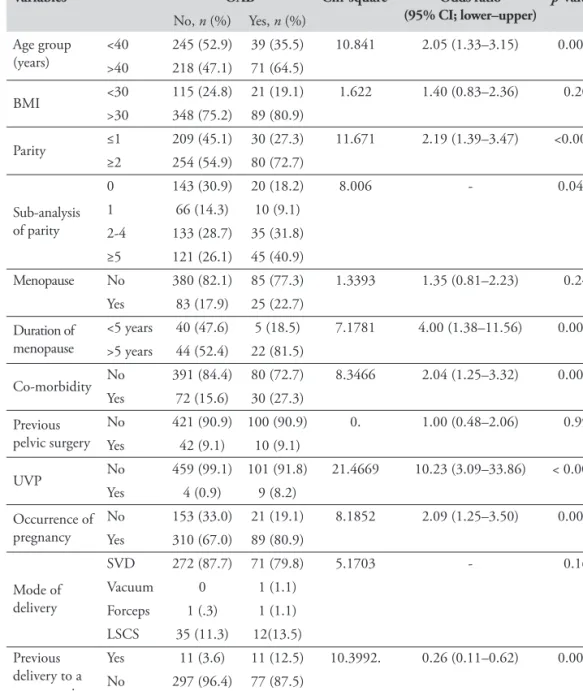
Table 2. Identified risk factors of OAB among the study population using univariate analysis Variables OAB Chi-square Odds ratio
(95% CI; lower–upper) p-value
No, n (%) Yes, n (%) Age group (years) <40>40 245 (52.9) 39 (35.5)218 (47.1) 71 (64.5) 10.841 2.05 (1.33–3.15) 0.001** BMI <30 115 (24.8) 21 (19.1) 1.622 1.40 (0.83–2.36) 0.200 >30 348 (75.2) 89 (80.9) Parity ≤1 209 (45.1) 30 (27.3) 11.671 2.19 (1.39–3.47) <0.001** ≥2 254 (54.9) 80 (72.7) Sub-analysis of parity 0 143 (30.9) 20 (18.2) 8.006 - 0.046** 1 66 (14.3) 10 (9.1) 2-4 133 (28.7) 35 (31.8) ≥5 121 (26.1) 45 (40.9) Menopause No 380 (82.1) 85 (77.3) 1.3393 1.35 (0.81–2.23) 0.247 Yes 83 (17.9) 25 (22.7) Duration of menopause <5 years 40 (47.6) 5 (18.5) 7.1781 4.00 (1.38–11.56) 0.007** >5 years 44 (52.4) 22 (81.5) Co-morbidity No 391 (84.4) 80 (72.7) 8.3466 2.04 (1.25–3.32) 0.004** Yes 72 (15.6) 30 (27.3) Previous pelvic surgery No 421 (90.9) 100 (90.9) 0. 1.00 (0.48–2.06) 0.994 Yes 42 (9.1) 10 (9.1) UVP No 459 (99.1) 101 (91.8) 21.4669 10.23 (3.09–33.86) < 0.001** Yes 4 (0.9) 9 (8.2) Occurrence of pregnancy No 153 (33.0) 21 (19.1) 8.1852 2.09 (1.25–3.50) 0.004** Yes 310 (67.0) 89 (80.9) Mode of delivery SVD 272 (87.7) 71 (79.8) 5.1703 - 0.160 Vacuum 0 1 (1.1) Forceps 1 (.3) 1 (1.1) LSCS 35 (11.3) 12(13.5) Previous delivery to a macrosomic baby Yes 11 (3.6) 11 (12.5) 10.3992. 0.26 (0.11–0.62) 0.001** No 297 (96.4) 77 (87.5) **p<0.05
The study population consisted of women from different parity, and majority of them had delivered vaginally. Almost one-third of the population had undergone lower segment Caesarean section (LSCS), while a small number of women underwent instrumental deliveries, i.e. vacuum and forceps. It was also identified that approximately a small percentage of the subjects had prolonged labours or gave births to macrosomic babies. Other factors that were analysed for its possible association with OAB were pelvic surgery for various benign causes; menopause and its duration, presence of co-morbidities such as hypertension and diabetes
and utero-vaginal prolapse of stage 1 and 2 of which three-quarters were associated with the presence of cystocoele. The findings are shown in Table 2.
The prevalence of OAB in this study population was 19.1%. Univariate analysis showed that identified risk factors like advanced age group, higher parity, menopausal status of more than 5 years, presence of co-morbidities, presence of utero-vaginal prolapse, occurrence of pregnancy and a history of vaginal births to macrosomic babies were statistically significant in the association with OAB. High body mass index
(BMI), menopausal status and history of pelvic surgery otherwise were not significantly associated with OAB. The summary of the chi-square test and univariate analysis of the OAB risk factors is illustrated in Table 2.
A binary logistic regression stepwise (Wald) test was used to identify the most significant risk factors associated with OAB. It identified the presence of utero-vaginal prolapse (UVP;
p-value: 0.001, OR: 8.13 [CI: 2.40–27.56]) and giving birth to macrosomic baby (p-value: 0.001, OR: 3.62 [CI: 1.47–8.88]) as the most significant associated risk factors for OAB. Other factors, i.e. age, higher parity, menopausal status, presence of co-morbidities and occurrence of pregnancy were found not significant.
The other objective of this study was to determine the reasons prohibiting women from seeking treatment for OAB. Only 95 out of the 110 patients with positive signs of OAB responded to the questions. More than half of the respondents did not seek treatment for OABs, as they thought that it was not a problem. About one-fifth of them believed that OAB was temporary and it would improve with time. A small number of respondents were ashamed to admit to the problem and thought OAB was part of ageing, thus not worth seeking treatment. Table 3 illustrates the reasons that prohibit patients from seeking advice or treatment for OAB symptoms.
Table 3. The factors prohibiting patients from seeking advice for OAB symptoms, n = 95
Reasons for not volunteering for
OAB treatment n (%)
Don’t think it’s a problem 53 (55.8) Thought it is temporary and will get better 19 (20.0) Feel ashamed to admit having the problem 12 (12.6) Assumed it is part of a natural aging process 11 (11.6) Discussion
The present study showed that 19.1% of the 573 participants included in our study experienced OAB. This was similar to another study that was conducted earlier in the northern part of Malaysia.7 The rates of OAB vary between 11.8% and 48.4% in the European countries and the United States but has lower prevalence in Asian
countries such as Korea and Taiwan, which was between 6.0% and 19.8%.8,9,17,18 The use of a standard diagnostic questionnaire allows a reliable evaluation of women with possible OAB when the risk factors are being determined. However, the lower prevalence among Asian women elucidates the possibility of under-reporting due to various social or psychological reasons.
Many factors have been established as the confounding risks to the development of OAB. UVP has been identified as the most significant factor associated with OAB by many community-based studies including ours.9,19 The pathophysiology; however, remains unclear. It has been postulated that bladder outlet obstruction by the herniating organs in UVP exerts pressure onto the bladder wall and stimulates the bladder stretch receptors inducing OAB symptoms. Treatment of UVP thus has resulted in the improvement of symptoms of OAB.9
Parity has also been reflected in many observational studies to have a relation with OAB. Higher parity described as more than two seemed to have more significant relationship with its incidence.10,20 It has been demonstrated that 72% of women who were pregnant with high parity (more than two) had higher incidence of OAB (p = 0.001). A hypothetical explanation describing the possible neuropathic changes increasing the sensitivity of the detrusor muscles of the bladder during its filling sensation in pregnancy can thus be stipulated.21
It has also been reported that women who had vaginal births show stronger association with the incidence of OAB, which is consistent with many other studies elsewhere.22 Repeated vaginal deliveries is believed to cause damage to the integrity of pelvic organ-supporting structures, weakening its tensile strength and thus increasing the chance of UVP, which has been significantly associated with OABs.23 This seems to be much more affected by deliveries of macrosomic babies. The postulation of disequilibrium in tissue remodelling, patterning and repair of the supporting structures due to repeated and severe injuries should be considered.
Advanced age has been consistently identified as a risk factor of OAB in many studies conducted in various geographical
locations.6,7,24 This may also be true in this study, as there was a suggestion of its association, but further research is required to ascertain the finding.
Another commonly associated risk to OAB is menopausal status.24,25 Our study; however, does not show its significant association with menopausal status of the women unless the occurrence of menopause is more than 5 years (OR: 4.00 (CI: 1.38–11.56) and p-value: 0.01).
Presence of co-morbidities such as hypertension and diabetes mellitus has also been shown to affect the incidence of OAB, though the risk ratio varies i.e. diabetes mellitus has greater impact on the condition as compared with hypertension.21,23 This explicates the hypothesis of autonomic neuropathy as a result of diabetic complication affecting function of the bladder. The association of hypertension with OAB is however uncertain though it has been reported that the use of diuretics or complication like stroke could be the triggers for the urinary problem. In current study, women with co-morbidities showed a significant association with OAB symptoms. It corresponded with the findings of others, but further analysis of possible correlation variation to each condition is required.
Obesity has been demonstrated to have an effect on OAB, perhaps secondary to increased pressure on the bladder and greater urethral mobility as well as impairment of blood flow and nerve innervations of the bladder.26 Nevertheless, there is no evidence to support that weight loss improves symptoms of OAB, and there were contradicting findings in other studies in relation to BMI and OAB.26 This study also did not show an association between obesity and OAB.
We also analysed the possibility of under-reporting leading to lower prevalence among women in Malaysia. It was found that none of the women volunteered any symptoms of OAB to their attending doctors though being seen for other health problems. The reason was consistent with a possibility of lack of awareness about the condition and its treatment among Malaysian women. Almost half of them did not regard OAB as a problem thus felt it was not necessary to seek treatment. Another study conducted in the
northern part of Malaysia found only 23% of patients with OAB actually sought help for this problem.7 This is similar to what had been observed in China, where more than 30% of women felt embarrassed to consult doctors about the problem and approximately 24% perceived it as natural ageing process.27 This explains the lower prevalence of OAB reported among Asian population as compared with European women. The cultural background probably influences their perception towards the condition, thus affecting the negative decision on seeking help or treatment.
As most women would initially approach primary care physicians or their ‘family doctors’ for health reasons, it is important to acknowledge the significant prevalence of OAB, which hopefully will encourage early screening of the symptoms. Many affected women are not well educated about the condition and its easily available treatment; thus, it is important that the primary healthcare givers are trained to be able to identify the problems early and increase awareness among women. It is more cost effective to initiate conservative treatment if OAB is suspected before referral to urologists for expensive specific assessment and specialised treatment.
This study has few limitations, which include the selection of subjects who may not be representing the true prevalence in the actual population. Answers to the survey may also be inaccurate, as it depends on the patient’s ability to recall. Perhaps a study in a general population with an objective assessment like cystometry to diagnose OAB should be conducted to improve the study outcome. Despite the limitation, it may still serve as a guideline for healthcare providers to be more vigilant in increasing awareness about OAB among women, detecting symptoms of OAB in the patients attending their clinic and administering an appropriate treatment to improve their quality of life.
Conclusion
OAB is a highly prevalent condition among women with other health conditions, including those in the reproductive age. The risk factors of OAB in Malaysian women appear to be similar to women of other continents including advanced age, duration of menopause and higher parity. This study
showed that vaginal births to macrosomic babies and presence of UVP are two strong associated factors of OAB, and thus, perhaps, could be used as predictors in women. It also showed that the majority of women neglect to seek treatment due to lack of awareness about the condition or feeling of shame. By identifying those at risk, help can be offered and tailored to their needs even though if the symptoms are not volunteered by the patients.
Acknowledgement
We express a special gratitude to the Department of Obstetrics and Gynaecology of Hospital Tuanku Jaafar, Seremban, Negeri Sembilan, Malaysia for their help during the conduct of the study. There is no grant received for this study. The study has attained its research and ethical approval from University Kebangsaan Malaysia and registered under the National Medical Research Registry.
References
1. Abrams P, Cardozo L, Fall M, et al. The standardization of terminology in lower urinary tract function: Report from the standardisation sub-committee of the International Continence Society. Urology. 2003;61:37–49.
2. Currie CJ, McEwan P, Poole CD, et al. The impact of the overactive bladder on health-related utility and quality of life. BJU Int. 2006;97:1267–72.
3. Ahmed SE, Omar MS. Measuring the barriers against seeking consultation for urinary incontinence among Middle Eastern women.
BMC Women’s Health. 2010;10:3.
4. Wellman WC, Nadia HK, Karmina KC, et al. Prevalence, evaluation and management of overactive bladder in primary care. BMC Family Practice. 2009;10:8.
5. Stewart WF, Van Rooyen JB, Cundiff GW, et al. Prevalence and burden of overactive bladder in the United States. World J Urol. 2003;20(6):327–36.
6. Lapitan MC, Chye PL. The epidemiology of overactive bladder among females in Asia: A questionnaire survey. Int Urogynecol J Pelvic Floor Dysfunct. 2001;12(4):226–31.
7. Low BY, Liong ML, Yuen KH, et al. Study of prevalence, treatment - seeking behaviour and risk factors of women with lower urinary tract symptoms in Northern Malaysia. Urology. 2006;68(4):751–8.
8. Andersson K-E. The overactive bladder: Pharmacological basis of drug treatment.
Urology. 1997;50(6A Suppl):74–84.
9. Teleman PM, Lidfelt J, Nerband C, et al. WHILA study group. Overactive bladder: Prevalence, risk factors and relation to stress incontinence in middle aged women. BJOG. 2004;111(6):600–4.
10. Wellman WC, Nadia HK, Karmina KC, et al. Prevalence, evaluation and management of overactive bladder in primary care. BMC Family Practice. 2009;10:8.
11. Gormley EA, Lightner DJ, Burgio KL, et al. Diagnosis and treatment of overactive bladder (non-neurogenic) in adults: AUA/SUFU guideline. J Urol. 2012;188(6 suppl):2455–57. 12. National Institute for Clinical Excellence.
Sacral nerve stimulation for urge incontinence and urgency-frequency, Understanding NICE guidance – information for people considering the procedure, and for the public. NICE Interventional Procedure Guideline (June 2004).
13. Duthie J, Wilson DI, Herbison GP, et al. Botulinum toxin injections for adults with overactive bladder syndrome. Cochrane Database Syst Rev. 2007;18(3):CD005493. 14. Laparoscopic augmentation cystoplasty
(including clam cystoplasty), NICE Interventional Procedure Guideline (December 2009).
15. Coyne KS, Matza LS, Thompson CL. The responsiveness of the overactive bladder questionnaire (OAB-q). Qual Life Res. 2005;14(3):849–55.
16. Muhilan AP, Sivaprakasam S, Dublin N, et al. Construction and validation of Malay version of the overactive bladder screener for assessing urinary tract symptoms in Malaysian population. JUMME. 2009;12(2).
17. Jo JK, Lee S, Kim YT, et al. Analysis of the risk factors for overactive bladder on the basis of a survey in the community. Korean J Urol. 2012;53(8):541–6.
18. Aih FC, Mei HH, Chung CW, et al. Prevalence and factors associated with overactive bladder and urinary incontinence in community-dwelling Taiwanese. Tzu Chi Medical Journal. 2012;24(2):56–60.
19. De Boer TA, Salvatore S, Cardozo L, et al. Pelvic organ prolapse and overactive bladder.
Neurourol Urodyn. 2010;29(1):30–9.
20. Witte LPW, Peschers U, Vogel M, et al. Does the number of previous vaginal deliveries affect overactive bladder symptoms and their response to treatment? LUTS: Lower Urinary Tract Symptoms. 2009;1:82–7.
21. McGrouther CW, Donaldson MM, Thompson J, et al. Etiology of overactive bladder: A diet and lifestyle model for diabetes and obesity in older women. Neurourol Urodyn. 2012;31(4):487–95.
22. Wein AJ, Rackley RR. Overactive bladder: A better understanding of pathophysiology, diagnosis and management. J Urol. 2006;175(3 Pt 2):S5–10.
23. Morrison J, Steers WD, Brading AF, et al. Neurophysiology and neuropharmacology. In: Abrams P, Cardozo L, Khoury S, Wein A, eds. Incontinence. 2nd ed. Plymouth. England: Health Publications; 2002:86–163.
24. DuBeau CE. Interpreting the effect of common medical conditions on voiding dysfunction in the elderly. Urol Clin North Am. 1996;23(1):11–8.
25. Stoddart H, Donovan J, Whitley E, et al. Urinary incontinence in older people in the community: A neglected problem? Br J Gen Pract. 2001;51(468):548–52.
26. Al-Shaiji TF, Radomski SB. Relationship between body mass index and overactive bladder in women and correlations with urodynamic evaluation. Int Neurol J.
2012;16(3):126–31.
27. Wan X, Wang C, Xu D, et al. Disease stigma and its mediating effect on the relationship between symptom severity and quality of life among community-dwelling women with stress urinary incontinence: A study from a Chinese city. J Clin Nurs. 2014;23(15– 16):2170–80.