California State University, San Bernardino
CSUSB ScholarWorks
Electronic Theses, Projects, and Dissertations Office of Graduate Studies6-2014
Examining Fully Online Degree Students'
Perceptions of Online Student Support Services: A
Mixed Method Study Using Grounded Theory and
Rasch Analysis
Tamara Dean Heimberg [email protected]
Follow this and additional works at:http://scholarworks.lib.csusb.edu/etd
This Dissertation is brought to you for free and open access by the Office of Graduate Studies at CSUSB ScholarWorks. It has been accepted for inclusion in Electronic Theses, Projects, and Dissertations by an authorized administrator of CSUSB ScholarWorks. For more information, please [email protected].
Recommended Citation
Dean Heimberg, Tamara, "Examining Fully Online Degree Students' Perceptions of Online Student Support Services: A Mixed Method Study Using Grounded Theory and Rasch Analysis" (2014).Electronic Theses, Projects, and Dissertations.Paper 21.
EXAMINING FULLY ONLINE DEGREE STUDENTS’ PERCEPTIONS OF ONLINE STUDENT SUPPORT SERVICES: A MIXED
METHOD STUDY USING GROUNDED THEORY AND RASCH ANALYSIS
A Dissertation Presented to the
Faculty of
California State University, San Bernardino
In Partial Fulfillment
of the Requirements for the Degree Doctor of Education
in
Educational Leadership
by
Tamara Dean Heimberg June 2014
EXAMINING FULLY ONLINE DEGREE STUDENTS’ PERCEPTIONS OF ONLINE STUDENT SUPPORT SERVICES: A MIXED
METHOD STUDY USING GROUNDED THEORY AND RASCH ANALYSIS
A Dissertation Presented to the
Faculty of
California State University, San Bernardino
by
Tamara Dean Heimberg June 2014
Approved by:
Dr. Doris Wilson, Committee Chair, Educational Leadership Dr. Joseph Jesunathadas, Committee Member
Dr. Eun-Ok Baek, Committee Member Dr. Aja Henriquez, Committee Member
iii ABSTRACT
The higher education market is becoming much more competitive as more students are attracted to online courses and online degree programs. In order to remain competitive, higher education institutions must provide students access to online support services. However, an online student support services plan is an often overlooked component of an online initiative even though it is a critical factor in the overall success of an online program.
This researchspecifically focused on online student support services for
students enrolled in fully online degree programs in an effort to identify the most important online student support services from students’ perspectives,
students’ perceptions of quality of services offered and, correlations between perceptions of importance and satisfaction.
This study employed a mixed method design. Data was collected through semi-structured phone interviews as well as through an online survey with Likert-type questions. Students’ perceived satisfaction and importance levels were explored by analyzing online survey items according to five areas. The five areas were: 1) Institutional Perceptions; 2) Academic Services; 3) Enrollment
Services; 4) Student Services; and 5) Online Community. In total, 22 fully online
degree students were interviewed and 206 fully online degree students completed and returned the online survey. Grounded Theory was used to
analyze the interview data and the Rasch model was used to analyze the survey data.
iv
Pearson correlation results indicated that there were positive relationships between importance and satisfaction for each of the five scales analyzed in this study. However, despite the fact that there were small percentages of online survey participants that reported low satisfaction levels with services that were important to them, interview participants reported that they would like access to
more online services that were not currently available to them, such as:
internship programs, a writing center, professional tutors with content expertise, career services (expanded to include territories/regions of online students), and health services. Findings also indicated that online services could be improved by integrating more options for live interaction with online support services staff. Additionally, the results revealed that online degree student satisfaction is highly dependent on receiving timely responses from online services staff.
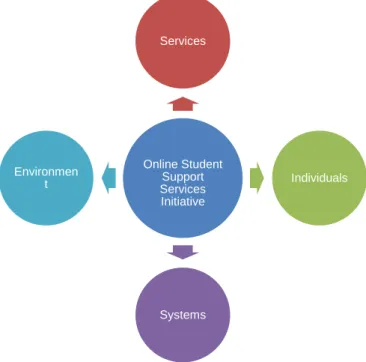
This dissertation introduces the Importance, Quality and Satisfaction (IQS) Framework. This framework is formed by four domains: services, individuals, systems and environment. By implementing an IQS Framework, institutions have the opportunity to increase student satisfaction levels by providing higher quality and better delivery of their services, systems and environment.
v
ACKNOWLEDGEMENTS
I would like to sincerely thank my dissertation committee for sharing their knowledge with me and for all of their support throughout the process of writing my dissertation. I’d like to express my deepest gratitude to my dissertation chair, Dr. Doris Wilson, for her mentorship and guidance and, for giving me that extra bit of inspiration to reach my goal. I am also most grateful for having had the opportunity to work with Dr. Joseph Jesunathadas who patiently guided me through the quantitative analysis of my study. Dr. Jesunathadas dedicated many hours of his time to helping me understand Rasch Analysis. Thank you to Dr. Eun-Ok Baek for being my first year advisor and continuing on as one of my dissertation committee members through the completion of my program. Dr. Baek’s background in online learning and instructional technology has been extremely helpful. I’d also like to extend my thanks and appreciation to Dr. Aja Henriquez for sharing her expertise in and passion for qualitative research and, for the extra hours she dedicated to reviewing and editing my dissertation.
This study would not have been possible without the support of my two participating schools. Thank you to my contacts at these institutions who worked closely with me, as well as all of the online degree students who took time out of their busy lives to participate in this study.
Finally, I wish to express my love and gratitude to my husband for his constant support and for his moonlighting as my proofreader these last few years. I’d also like to acknowledge my family and friends (in the U.S., Canada and Switzerland) who have given me so much encouragement along the way.
vi
TABLE OF CONTENTS
ABSTRACT ... iii
ACKNOWLEDGEMENTS ... v
LIST OF TABLES ... xi
LIST OF FIGURES ... xii
CHAPTER ONE: INTRODUCTION Statement of the Problem ... 1
Significance of the Dissertation ... 2
Constructs Identified and Defined ... 3
Rationale ... 4
Background ... 5
Gaps in the Literature ... 5
Success Indicators ... 6
Purpose of the Research ... 7
Research Questions ... 7 Limitations ... 8 Delimitations ... 9 Assumptions ... 9 Definition of Terms ... 10 Summary ... 11
CHAPTER TWO: LITERATURE REVIEW Evolution of Online Education ... 13
vii
Phase Two: Classes via Radio and Television ... 18
Phase Three: Online Classes ... 20
Section Summary ... 25
Distance Education Theories ... 26
Section Summary ... 29
Research Studies on Student Outcomes and Online Services ... 30
Studies on Effectiveness of Online Learning ... 30
Studies on Online Services ... 32
Section Summary ... 35
Trends in Online Education ... 35
Growth of Online Education ... 35
Students’ Attraction to Online Learning ... 39
Main Providers in Online Education ... 39
Section Summary ... 41
Factors that Influence Success or Failure ... 42
Successful Online Initiatives ... 42
Failures in Online Education ... 45
A New Generation of Online Learners and Change ... 48
Section Summary ... 51
How is the Literature Review Tied to the Purpose of this Study ... 52
CHAPTER THREE: METHODOLOGY Introduction ... 54
viii Research Questions ... 55 Participants ... 55 Site Selection ... 57 Institution A ... 57 Institution B ... 58 Recruitment ... 59 Online Survey ... 59 Interviews ... 59 Data Collection ... 60 Online Survey ... 60 Interviews ... 65 Data Analysis ... 67 Online Survey ... 67 Interviews ... 68
Positionality of the Researcher ... 73
Confidentiality of the Data ... 78
Risks and Benefits ... 79
Summary ... 79
CHAPTER FOUR: RESULTS Introduction ... 81
Participant Interviews ... 81
Themes ... 83
ix
Theme Two: Positive and Negative Experiences ... 89
Theme Three: Specific Needs of Online Degree Students ... 95
Theme Four: Personal and Professional Impact ... 101
The Online Survey ... 107
Rasch Analysis ... 108
Descriptive Statistics of Student Measures ... 109
Fit Statistics, Misfit and Interpretation ... 113
Pearson Correlations ... 114
Summary ... 116
CHAPTER FIVE: DISCUSSION Introduction ... 119
Interpretation of Themes and Findings ... 120
Theme One: Improvements to Online Services ... 120
Theme Two: Positive and Negative Experiences ... 122
Theme Three: Specific Needs of Online Degree Students ... 123
Theme Four: Personal and Professional Impact ... 124
Correlations: Importance and Satisfaction Scales ... 126
Analysis of High Importance and Low Satisfaction ... 129
A Conceptual Framework ... 131
Services ... 132
Individuals ... 132
x
Environment ... 133
Importance, Quality and Satisfaction Framework Outcome ... 134
Implications and Recommendations ... 134
Campus Leadership ... 134
Online Student Support Services Departments ... 135
Retention Departments ... 136
Technology Departments ... 136
Market Research ... 137
Suggestions for Future Research ... 137
Building an Online Community for Online Learners ... 138
Online Curriculum and Instruction ... 138
Exploring Significant Individual Remarks ... 139
Access Issues in Online Education ... 139
Conclusion ... 140
APPENDIX A: DEFINITIONS OF DISTANCE EDUCATION ...142
APPENDIX B: PARTICIPANT DEMOGRAPHICS ...147
APPENDIX C: INSTITUTIONAL REVIEW BOARD APPROVAL LETTER ...152
xi
LIST OF TABLES
Table 3.1 Scales ... 63 Table 3.2 Original 54 Codes and Groups ... 71 Table 3.3 Resultant Four Themes ... 72 Table 4.1 Summary of Student Responses of Most Important
Online Services ... 96 Table 4.2 Descriptive Statistics of Student Measures ... 112
Table 4.3 Pearson’s Correlation Coefficient (r), Correlations Between
Importance and Satisfaction (Inter-Correlations) ... 114
Table 4.4 Pearson’s Correlation Coefficient (r), Intra-Correlations for
Importance Scales ... 115
Table 4.5 Pearson’s Correlation Coefficient (r), Intra-Correlations for
Satisfaction Scales ... 116 Table 5.1 Analysis of High Importance and Low Satisfaction ... 130
xii
LIST OF FIGURES
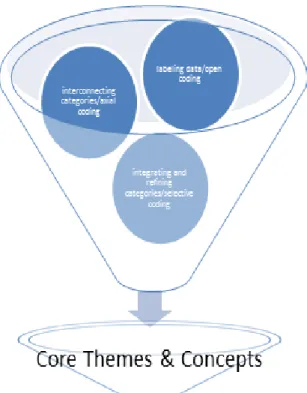
Figure 3.1 Funnel Diagram of Grounded Theory Coding Process ... 70 Figure 5.1 Importance, Quality and Satisfaction Framework ... 131
1
CHAPTER ONE INTRODUCTION
Statement of the Problem
The traditional American college or university is based on a one-hundred and fifty year-old Harvard-style academic model (Christensen & Eyring, 2011, p. 20) entailing a large physical plant, an agrarian calendar, a publish or perish tenure-track faculty, a strong focus on discovery research and time-defined learning. These characteristics of the traditional academic model “contribute to a labor-intensive process that adds costs and resists efficiencies” (Kinser & Hill, 2011, p. viii). This academic model has become increasingly unsustainable for most state universities and community colleges especially with the recent reduction in government support for education.
According to Christensen & Eyring (2011), “if traditional universities cannot find innovative, less costly ways of performing their valuable function, they are doomed to decline” (p. xxvi). The authors stated that from a market competition standpoint “it is slow institutional suicide” (pp. xxii-xxiii). Online education
initiatives can provide one solution to the budget crisis in higher education by allowing colleges and universities to better serve their students while controlling costs (Daniel, Kanwar & Uvalic-Trumbic, 2009; Groulx & Hernly, 2010; Kinser & Hill, 2011; Stuart, 2011; Young, 2008).
2
one area where traditional academic models can transform themselves in order to reduce costs and meet the needs of their students in a rapidly changing environment. The Sloan Consortium, a non-profit organization which promotes online education in higher education, developed the Five Pillars of Quality in an effort to develop and improve the practice of online education. These pillars include: learning effectiveness, cost effectiveness, access, faculty satisfaction and student satisfaction. The fifth pillar, student satisfaction, includes satisfaction with online support services for students (Moore, 2005, p. 6). Online student services is an often overlooked component of an online initiative
(Martinez-Arguelles, Castan & Juan, 2010), yet it is a critical factor in the overall success of an online program. The objective of this study is to take a closer look at online student services from students’ perspectives. This should provide salient
information on online services indicating which are most important to students in terms of supporting their success in their course or degree programs.
Significance of the Dissertation
This study addresses the importance of online student support services in transforming traditional brick-and-mortar universities through the use of cost-efficient online technologies that better serve the needs of students. With the increasing demand for anytime-anywhere degrees, institutions need to adapt their support services to meet the needs of online students. This requires a paradigm shift in terms of beliefs about teaching, learning and the organization
3 itself.
In addition, because online education is an emerging field and there is a limited amount of scholarly research available on the development and
implementation of successful online initiatives, this research will add to the current body of research in the field. Furthermore, the goal of this research is to promote understanding, inform and provide a blueprint for other institutions as they reinvent their traditional model by developing online education initiatives such as online student services. The field of online education is one of the fastest growing areas in higher education (Moloney & Oakley, 2010; Sener, 2010); however, institutions have few successful models to follow.
Constructs Identified and Defined
A common theme in the literature regarding successful online initiatives in higher education is students having access to online support services that meet their needs (Li & Irby, 2008; Moloney & Oakley, 2010; Yadgir, 2011). Online support services are defined as all areas of campus support such as advising, registration, financial aid, library services, technical support and bookstore services (Moloney & Oakely, 2010; Yadgir, 2011). Lack of online services for students shows up as a common theme in the discussions in the literature about reasons for failure in online education or obstacles to success in online education (Moloney & Oakley, 2010; Rovai & Downey, 2009; Schulte, 2011).
4 Rationale
The research specific to online education enrollments shows an increasing demand for online education (Mayadas, Bourne & Bacsich, 2009; Rennie,
Johannesdottir & Kristinsdottir, 2010; Vignare, 2009). However, despite increasing enrollments in online education, “a number of obstacles to scaling online programs remain at many traditional bricks-and-mortar institutions” (Moloney & Oakley, 2010, p. 68). In order for colleges and universities to develop successful online education programs, several factors must be addressed by administrators including: administrative and faculty buy-in,
strategic planning, visionary leadership and online support services for students (Moloney, Oakely & Juan, 2010; Rovai & Downey, 2010). Furthermore, Hornak, Akweks & Jeffs (2010) posit that in order to remain competitive in higher
education, institutions “must provide online access to student services” (p. 79). New online technologies are changing the way institutions deliver student services to all students, including campus-based students and online students. This research will specifically focus on online student support services for
students enrolled in fully online degree programs in an effort to identify the most important online student support services from students’ perspectives and why, perceptions of quality of services offered and, correlations between perceptions of importance and satisfaction, if any at all.
5 Background
The rapidly changing environment in higher education that includes increased competition, new technologies and less government funding is forcing institutions to re-examine their practices. It is apparent that “how institutions treat students is crucial” (Vignare, 2009, p. 101). The move towards a more student-centered academic model in higher education has the potential to increase an institution’s ability to attract students. Christensen and Eyring (2011) argue that “even prestigious universities will be affected by competitors, for profit or
otherwise, that put the needs of students first” (p. 351).
According to Levy (2003), there is not enough focus on support services for students in the online environment (p. 6). Many educational researchers argue that access to student services is a key component in students’ success (Levy, 2003; Tyler & Hastings, 2011). The idea that student services that are available to traditional campus-based students should be available to students in online courses/programs is also supported by Vignare (2009, p. 103).
According to Martinez-Arguelles et al. (2010), there is a gap in the literature which examines students’ perceptions of quality in online support services in higher education. This gap will be explored through this research.
Gaps in the Literature
Online education is a relatively new field and, therefore, scholarly research in online educational research is limited in its scope. Furthermore, the quality of
6
distance education research overall lacks longitudinal research (Miller & Ribble, 2010) with rigorous design and noteworthy, reliable, empirical studies (Schulte, 2011; Tallent-Runnels et al, 2006). As a result, there are many gaps in the research and a need for further study in the field of online education. According to Martinez-Arguelles et al. (2010), there is a need for further research that
explores students' overall experiences in online student support services, through holistic evaluation.
The gap in the research that is proposed to be addressed in this study is the perceived importance, satisfaction and quality of online student support services by students enrolled in fully online degree programs. By identifying key dimensions in online services in higher education as well as quality issues from a student’s perspective, this research will provide valuable information for higher education leaders and administrators as they develop online student services plans. A well-developed online services plan will not only serve the needs of online students, it will support and enhance the collegiate experience for traditional on-campus students as well (Hornak et al., 2010, p. 80).
Success Indicators
For the purpose of this research, success in online education initiatives in higher education will be defined by the following characteristics: high levels of student satisfaction during their online studies (in areas that may include instruction, instructor feedback, class interaction and/or curriculum and online
7
student support services); positive student performance outcomes in online courses; steady and/or increasing enrollments in online courses/programs; and strong retention and completion rates for students in online courses/programs. These success characteristics may be defined by the student, class and/or institutional level depending on the indicator.
Purpose of the Research
This two-phase mixed method study (interview, online survey) examined fully online degree students’ perceptions regarding online student support
services in higher education. The purpose of this research is to fill the gap in the literature which examines students’ perceptions of online student support
services by: a) discussing why online student support services are important from students’ perspectives; b) describing how students perceive the quality of online services provided; c) examining how students’ perceptions of importance correlate with perceptions of satisfaction of online student support services; and, d) offering recommendations to higher education institutions in the process of developing and/or improving online student support services.
Research Questions
The following research questions guided this study:
Research Question 1: How and in what ways do fully online degree students perceive specific online student support services to be
8 important?
Research Question 2: How and in what ways do fully online degree students perceive the quality of specific online student support services? Research Question 3: How do students’ perceptions of importance correlate with perceptions of satisfaction regarding online student support services?
Limitations
This study is an examination of fully online degree students’ perceptions of online student support services in higher education indicating which are most important and why, the perceived quality of the services offered and, finally, how students’ perceptions of importance correlate with perceptions of satisfaction regarding online student support services. The scope of the study was limited to surveying participants at two small-to- medium-sized private nonprofit
universities/colleges with established online degree programs. Students enrolled in fully online degree programs were the focus of the study due to their specific need for online student support services and, because of the fact that they would have very limited access to campus or, no access to campus to receive on-campus support services. Although the population sampled was limited to students enrolled at private nonprofit institutions, online programs attract a diverse student population, therefore, despite this limitation of the study, the information provided may provide a framework for other institutions that are in the
9
process of developing and/or improving their online student support services.
Delimitations
This study does not focus on students’ perceptions of importance, satisfaction and quality as they pertain to curriculum and instruction. This
research specifically focuses on students’ perceptions of importance, satisfaction and quality regarding online student support services. Much research has
already been conducted in the area of online curriculum and instruction. However, there is a lack of research in the area of online student support services.
Assumptions
Based on the literature and on the researcher’s own personal and professional experiences, the following assumptions were made prior to conducting this research:
1. Students enrolled in online degree programs at the participating site schools because the websites for online learners were attractive, easy to navigate and provided valuable information on the institutions and the online programs.
2. Private nonprofit institutions of higher learning tend to be more flexible in terms of adapting to new online platforms and using new user-friendly technologies.
10
3. Participants would know what online student support services meant. 4. Participants would know that the questions in both the online survey and the phone/Skype interview were tailored specifically for online degree students as opposed to on-campus students.
5. Participants would know how important or how satisfied their institutions have met their expectations for each survey item.
6. Participants in fully online degree programs would not expect to have to go to campus to access student support services.
Definition of Terms
The following terms are defined in the context of this study:
1. Online Education - the use of online technologies in formal higher education for teaching and learning (Sener, 2010).
2. Distance Education - institution-based formal education where the learning group is separated and where telecommunications systems are used to connect learners, resources and instructors (Simonson et al., 2012).
3. Online Student Support Services - all areas of campus support including: advising, registration, financial aid, technical support, library services and bookstore services (Moloney & Oakely, 2010; Yadgir, 2011). 4. Online Degree Student - a student enrolled in a degree program where all courses to complete the degree are accessible online.
11
5. Successful Online Initiatives - high levels of student satisfaction, positive student performance outcomes, steady and/or increasing enrollments in online courses/programs, and strong retention and completion rates.
6. Traditional Academic Model - based on a one-hundred and fifty year-old academic model entailing a large physical plant, an agrarian calendar, a publish or perish tenure-track faculty, a strong focus on discovery
research and time-defined learning (Christensen & Eyring, 2011). 7. Student-Centered Academic Model - in contrast to a traditional academic model, a student-centered institution or academic model
approaches all of its planning and practices with an understanding of what students need.
8. OER (Open Educational Resources) - “teaching, learning and research resources that reside in the public domain or have been released under an intellectual property license that permits their free use and re-purposing by others. Open education resources include full courses, course materials, modules, textbooks, streaming videos, tests, software, and any other tools, materials or techniques used to support access to knowledge” (The William and Flora Hewlett Foundation website, 2013).
Summary
12
can provide a solution to many of the challenges traditional academic institutions face in today’s rapidly changing environment (Daniel, Kanwar, & Uvalic-Trumbic, 2009; Groulx & Hernly, 2010; Kinser & Hill, 2011; Stuart, 2011; Young, 2008). To remain competitive, universities and colleges will need to be more adaptive to the needs of students. This will require offering more courses and programs online in an interactive, engaging environment as well as offering effective online support services for students. An online platform for offering courses, full-degree
programs, and student support services has the power to improve student learning, student-instructor collaboration and the overall student experience in higher education. Furthermore, online education initiatives also support and promote the “democratization and the advancement of the scholarship of teaching” (Larreamendy & Leinhardt, 2006, p. 567).
13
CHAPTER TWO LITERATURE REVIEW
Evolution of Online Education
In order to understand the evolution of online education in higher
education, it is important to examine its shared history with distance education. Online education is actually a descendant of distance education, sometimes called distance learning. Distance education has an interesting and rich
centuries-old history (Simonson, Smaldino, Albright & Zvacek, 2012, p. 37) and has gone through many important transitions since its beginning, impacted by the development and use of new innovative technologies.
There are numerous definitions for distance education; however, it is generally understood as a form of education “characterized by the separation of teacher and learner and of the learner from the learning group, with the
interpersonal face-to-face communication of conventional education being replaced by an apersonal mode of communication mediated by technology” (Keegan, 1996, p. 8). Many researchers such as Holmberg (2001), Peters (1994), Garrison and Shale (1987) and Moore (1993) have attempted to define distance education; however, what becomes apparent is that the exact definition of distance education is always evolving. For the purpose of this study,
Simonson et al’s (2012) definition of distance education will be used: “institution-based, formal education where the learning group is separated, and where
14
interactive telecommunications systems are used to connect learners, resources and instructors” (Simonson et al., 2012, p. 32). According to Simonson et al (2012), “this definition has gained wide acceptance” (Simonson et al., 2012, p. 32). For a summary of the development and evolution of definitions of distance education, as cited in Johnson (2010, pp. 27-30), please see Appendix A.
Distance education has gone through three distinct phases:
correspondence classes offered by mail; communications media courses via radio and television; and classes offered online through the internet (Schulte, 2011, p. 34). Casey (2008) states that the history of distance education “reflects an egalitarian approach to education. Distance education began with
rudimentary vocational courses delivered by postal delivery service. Now, distance learning programs have snowballed into online instructional delivery systems capable of granting doctoral degrees” (Casey, 2008, p. 45). Casey also points out that “distance education flourished in the United States for several reasons including: 1) the great distances of citizens from educational
institutions, both geographically and socio-economically; 2) the thirst for
education; and 3) the rapid advancement of technology” (Casey, 2008, p. 45). The development and evolution of distance education is closely linked to
advances in technology and each phase in its evolution is marked by the
introduction and use of new and innovative technologies in industry and society. Phase One: Correspondence Classes
15
appeared in newspaper advertisements. An ad in the Boston Gazette dated March 20, 1728, was posted by a teacher named Caleb Philips. He “offered to send weekly shorthand lessons to prospective students” (Mood, 1995, p. 1). Another early sign of correspondence study via the postal service dates back to 1833 where an ad in a Swedish newspaper marketed the study of “composition through the medium of the post” (Simonson et al., 2012, p. 37). In England, Sir Issac Pittman offered shorthand instruction via the post in 1840. Shortly
thereafter, Charles Toussaint and Gustav Langenscheidt established correspondence education in Germany.
In 1873 Boston, the daughter of a prominent Harvard professor, Anna Eliot Ticknor, founded the Society to Encourage Studies at Home. Ticknor founded the Society “to provide women with a liberal education” (Larreamendy-Joerns & Leinhardt, 2006, p. 573) by offering them personal enrichment courses. After being accepted, students could choose from six subjects - English, French, German, history, science or art after which they would then receive a syllabus and assignments by mail from their instructor. The students would complete their assignments on a self-paced schedule and then submit them by mail for review. Anna Ticknor’s Society to Encourage Studies at Home served over 10,000
students over a 24-year period (Casey, 2008, p. 46; Simonson et al., 2012, p. 37) and provided women with one of the first meaningful experiences in
correspondence study in the United States (Larreamendy-Joerns & Leinhardt, 2006, p. 573).
16
During this time, there were various distance learning courses for women and workers such as the International Correspondence Schools (ICS) which began in 1890 as the Colliery School of Mines in Pennsylvania (Casey, 2008). ICS’s programs focused on training iron and railroad workers as well as training miners in mine safety. ICS had a total enrollment of over 2.5 million students by the early 1920s (Casey, 2008, p. 46).
By the late 1800’s, higher education institutions in the Unites States and Britain began to incorporate correspondence study through their university
extension programs (Simonson et al., 2012). Illinois Wesleyan and the University of Chicago are recognized as pioneers in the field of early distance education programs in higher education. By 1877, Illinois Wesleyan offered bachelor’s, master’s and doctoral degrees through correspondence (Pittman, 2007). The University of Chicago, established in 1890, was led by former Yale professor William Rainey Harper who was an avid supporter of correspondence study. He believed that “the student who has prepared a certain number of lessons in the correspondence school knows more of the subject treated in those lessons, and knows it better, than the student who has covered the same ground in the
classroom” (Simonson et al., 2012, p. 38). Through the University of Chicago’s extension department, students could take up to one-third of their coursework towards a bachelor’s degree through correspondence studies (Larreamendy-Jones & Leinhardt, 2006, p. 574). Other established universities in the United States that offered degrees through correspondence or non-resident options
17
included the University of Wisconsin, Boston University, and Syracuse University as well as smaller colleges such as Mount Union College in Ohio and Lebanon Valley College in Pennsylvania (Pittman, 2007). The University of Kansas launched its first correspondence courses in the early 1900s. Richard Moulton, who developed early university extension programs at Cambridge University in England and then at the University of Chicago, explained the importance of this new form of education stating, “a university remains in an imperfect stage until it realizes how it must extend its influence to the whole body of people; how it must extend its education to the whole period of the human life; and how it must bring its high ideas to bear upon all the vital interests of mankind” (as cited in
Larreamendy-Jones & Leinhardt, 2006, p. 574). Moulton’s views about distance education set a strong foundation for distance education programs in higher education that followed. Columbia University also offered courses through correspondence study beginning in 1919. According to Hampel (2010),
“Columbia’s administrators envisioned home study as a form of public service...It would win good will for the university by showing that an elite private university took seriously the education of thousands of men and women unable to attend traditional courses held during the day” (Hampel, 2010, p. 2497). It was during this time that leaders at well-renowned universities in the United States, such as University of Chicago and Columbia University, established the importance of distance education in higher education.
18 Phase Two: Classes via Radio and Television
Advances in electronic communications technologies such as the radio and television had a great impact on distance education. Radio stations became the medium of choice in the 1920s because they allowed for faster delivery of courses (Casey, 2008; The College Blue Book: Distance Learning Programs, 2012) and, for the first time, students could hear their instructors (Casey, 2008; Simonson et al., 2012). The Federal Communications Commission (FCC) would grant educational radio licenses to over 200 colleges and universities between 1918 and 1946 (Casey, 2008, p. 46). However, most university educational programs offered through instructional radio were not offered for credit towards a degree. In the 1950s, television became the medium of choice for distance education in higher education (Johnson, 2003; Simonson et al, 2012), and many of these programs were college credit courses. Some of the more well-known programs were offered by Western Reserve University in 1951 and New York University’s Sunrise Semester of college courses broadcast on Columbia Broadcasting System (CBS) from 1957 to 1982 (Johnson, 2003). According to Johnson (2003), in the 1950s when “states were faced with shortages of
teachers and school facilities...instructional television was seen as a way to ease these problems” (Johnson, 2003, p. 6). One of the main disadvantages of
distance education via radio and television was the fact that “radio and television courses provided one-way communication...Typically there was only minimal interaction between instructor and students, and there was no interaction at all
19
among students” (The College Blue Book: Distance learning programs, 2012, p. 3). Another disadvantage with distance courses via radio and television was that students had to be listening or watching at a specific time when the course was broadcast thus putting constraints on students’ schedules.
In 1963, the FCC established the Instructional Television Fixed Service (ITFS) - 20 television channels for educational institutions for the broadcast of distance education courses (Casey, 2008, p. 46). The California State University system was the first to apply for an ITFS license in 1963 (Casey, 2008, p. 46). According to a 1979 survey by the Corporation for Public Broadcasting and the National Center for Educational Statistics, “25 percent of the nation’s colleges and universities offered courses for credit over television and 36 percent of them used broadcast television to supplement instruction” (as cited in Johnson, 2003, p. 6). Cost effective satellite technology in the 1980s helped to further develop instructional television. Learn/Alaska was the first state educational satellite system (Casey, 2008; Simonson et al, 2012). Over 100 small villages in Alaska received six hours of instructional television on a daily basis. Courses offered via cable television allowed class to be broadcast at different times allowing students to tune into their classes at their convenience. In addition, with the advent of audio and videocassette recorders, students could record a lecture and then listen or watch as their schedules allowed.
Advances in technology such as the development of multimedia
20
higher education, resulted in worldwide growth in distance learning. Great Britain, Australia, and Germany used similar instructional delivery systems (Johnson, 2003). The British Open University (OU), established in 1969, used correspondence materials and television broadcasts to deliver instruction. As a result of OU’s success, many other countries such as Spain, Holland, Norway and Sweden established their own version of OU (Johnson, 2003).
Phase Three: Online Classes
By the 1990s, distance education involved the personal computer, two-way audio and video conferencing and the Internet (The College Blue Book: Distance learning programs, 2012). These new technologies made two-way communication possible using interactive video, email, bulletin boards and chat rooms.
According to Johnson (2003), “distance learning is the most significant phenomenon occurring in higher education today. Everywhere one looks, whether in community colleges, four-year institutions, Ivy League colleges, research institutions or technical colleges, distance education is on the rise, and the rise is occurring at a rapid pace” (Johnson, 2003, p. 7). This explosion of distance learning is mainly the result of high-speed broadband transmission over the Internet which links computers all over the world. Martinez-Aleman and Renn (2002), point out that “online instruction delivered via the Internet is a global educational innovation that is fundamentally altering the way people engage in formal systems of higher education” (Martinez-Aleman & Renn, 2002, p. 174)
21
and that “online instruction is now a major strategic initiative at nine out of ten public universities and six out of ten private colleges or universities in the United States” (Martinez-Aleman & Renn, 2002, p. 175). It is important to note that broad changes in higher education along with technology are driving the
expansion of distance education. Mehrotra et al., (2001) states that the following are all factors that impact the driving interest in distance education:
1) increased requirements for higher education for career advancement; 2) the demand for flexible scheduling by potential students whose daily routines do not sync with the schedules of the traditional educational day; 3) growing market for personal fulfillment courses; 4) shift in the public’s attitude that education is a life-long learning process; 5) required
coursework for professional license renewal; 6) emphasis by employers on specific competencies; 7) shift by educators from teacher-centered education to student-centered learning; 8) increasing awareness that students vary greatly in their learning styles; 9) the need for providing flexible educational access to students with disabilities; 10) the variation in students’ willingness to participate in class and 11) the increased pressure on public institutions of higher learning from legislatures and governors to develop cost-effective models of collaboration with other institutions of higher education. (Mehrotra et al., 2001, pps. 7-9)
Today’s distance learning courses can be divided into the following categories: print-based, audio-based, video-based (two-way interactive video
22
and pre-recorded video) and Internet-based courses. However, most students prefer distance education courses delivered via video and Internet technologies (The College Blue Book: Distance learning programs, 2012).
Distance education has been greatly enhanced by online course management systems such as Blackboard and WebCT (now merged under Blackboard) in order to facilitate communication and instruction between the instructor and the student (Casey, 2008, p. 48). These new innovative online technologies provide more opportunities for students and instructors to interact thereby creating a more learner-friendly medium for distance education.
According to Casey (2008), some of the best universities in the world are now using distance education methods including the University of Oxford “which will join an alliance formed by Princeton, Standford and Yale Universities to offer distance-learning courses” (Casey, 2008, p. 49).
What have we learned from history with respect to distance education? Larreamendy-Joerns & Leinhardt (2006) outline five lessons we can learn from the history of distance education: 1) This history of distance education is “the story of creative adaptation, visionary leadership, financial challenges, politics, both internal and external to universities, and most importantly, a commitment to service” (p. 582). 2) It is clear that there is an underserved population that can benefit from distance education programs. 3) Instructional quality can override media limitations. 4) The history of distance education reveals that status and quality issues emerge when disparities arise between faculty in face-to-face
23
teaching and faculty in distance education. 5) Quality is undermined when business becomes the prevailing model of distance programs (pp. 582-583). These lessons learned from history greatly influenced the direction of this study in that the foundation of this study is built on commitment to service, improving the learning experience for non-traditional students, and examining quality issues in online education.
Distance education or what is now often referred to as online education has become mainstream and is now accepted as a legitimate alternative to traditional face-to-face courses (Sener, 2010). According to Casey (2008), “the future of distance education seems secure because of its ability to adapt to technological trends” (Casey, 2008, p. 50). Online enrollments are surpassing traditional classroom enrollments by ten percent (Allen & Seaman, 2011) and this growth in online enrollments is expected to continue (College Blue Book:
Distance Learning Programs, 2012, p. 6).
Traditional faculty in higher education have resisted online education and cast doubt on the effectiveness of distance learning. However, in response to
this, academic researcher and instructor Russell published The No Significance
Difference Phenomenon (1999) in which he reviewed 355 papers, articles and research studies from 1928 through 1999 and concluded that the learning outcomes (test scores and course grades) are the same for distance learners and traditional students. The studies reviewed were specifically focused on media comparison studies which compared face-to-face learning student
24
outcomes with distance education learning outcomes. His research is widely quoted in articles and papers discussing the effectiveness of distance education (Bates, 2005; Bernard et al, 2004; Garrison, 2011). Oblinger, Barone & Hawkins (2001) provide additional research supporting the claim that there is no
significant difference in learning outcomes of distance learners and traditional students. Regarding the amount of interaction between faculty and students in a traditional classroom setting versus an online environment, the online setting can be more interactive if there are participation requirements. Some traditional face-to-face lecture classes can be so large that there is very little interaction between the instructor and the students and among the students in the class (The College Blue Book: Distance learning programs, 2012).
An interesting new trend in conventional classroom-based courses is the incorporation of online instructional technology, such as Blackboard, indicating that these new technologies for distance education are changing the way classes are taught in an campus setting. For example, professors teaching
on-campus classes are having their students take online quizzes outside of class. In addition, the students in a conventional face-to-face class are often asked to respond to class lectures via an online discussion group (The College Blue Book: Distance learning program, 2012). Therefore, online learning tools are beneficial to both traditional and online students.
Whether or not classes are taught on-campus or online, new online
25
faculty teach and there is a definite shift to a more collaborative learning
environment (The College Blue Book: Distance learning programs, 2012, p. 6). In this learning environment, the instructor becomes a facilitator and guides the learning process, helps establish relationships, and encourages interactions among group members where group members learn from one another by exchanging ideas, and taking time to reflect on discussions. These interactions and reflections allow group members to develop a deeper and more critical understanding of ideas and beliefs (Garrison, 2011). These new online
technologies are also changing the way students need to be supported and how they expect to be served in the online environment.
Section Summary
Distance learning has gone through many transitions: correspondence study through the postal service; educational courses offered through radio and television; and; distance learning via the personal computer (two-way audio and video conferencing using the Internet). The most popular distance learning classes today are Internet-based courses. There are many factors impacting the rise of online enrollments but, the main reasons why students choose online classes are flexibility and convenience. New online technologies are changing the way students learn as well as the way instructors deliver course materials, however, these technologies are also changing the way students need to be supported in the online environment in terms of online student support services.
26
Distance Education Theories
Even though distance education was incorporated into university extension programs in the 1880s, distance education theories did not emerge until the last few decades. Leading scholars in the field - Holmberg (2001), Keegan (1996), and Moore (1993) have all stressed the need for a theory base in distance education in order for distance education to have a solid methodological application. Traditional theories in distance education emphasize independence and autonomy of the learner, industrialization of teaching and interaction and communication (Simonson et al., 1999).
Wedemeyer’s Theory of Independent Study (1981) emphasized the
independence and autonomy of the learner and defined characteristics relating to learner independence and how technology could support learner independence. Wedemeyer’s concept of Independent Study was based on the idea that
students’ took the initiative for their studies, they were highly autonomous and they set their own goals. Much of Wedemeyer’s research focused on learner and instructor characteristics, quality and effectiveness.
Moore’s Theory of Transactional Distance (1993) emphasized interaction and communication. In Moore’s theory where the student and teacher are
separated, he posits that, “there is a psychological and communications space to be crossed, a space of potential misunderstanding between the inputs of the instructor and those of the learner. It is this psychological and communications space that is the transactional distance” (Moore, 1993, p. 22). Moore
27
emphasizes dialog or student-teacher interaction, structure of the program to meet the needs of the student and the degree of student autonomy.
This next theory, Peters’ Theory of Industrialization of Teaching (1994), emphasized the industrialization of teaching and used economic and industrial theory to explain distance education. According to Peters, the principles of industrialization such as rationalization, division of labor and mass production determine the structure of distance education. He also stated that teaching has been restructured as a result of mechanization and automation.
Another theory which emphasized interaction and communication,
Holmberg’s Theory of Interaction and Communication, defines seven background assumptions for the basis of his theory of distance education:
1. the core of teaching is the interaction between student and teacher 2. emotional involvement in the subject matter and a personal relationship between student and teacher contribute to learning pleasure
3. learning pleasure encourages student motivation
4. student participation in decision making concerning their study supports student motivation
5. strong student motivation aids learning
6. learning pleasure is supported by a friendly personal tone and easy access to the subject matter
7. effectiveness of teaching is demonstrated by students’ learning of what has been taught.
28 (as cited in Simonson et al., 2011, p. 48)
Keegan’s theory of distance education emphasized interaction and communication and involved the separation of teaching and learning in terms of time and space. In order for distance education to be successful, Keegan believed that teaching and learning must be reintegrated whereby the teacher and learning reconstruct the interaction that would have taken place face-to-face. Learning materials are also needed to support student/teacher interpersonal communication and a variety of teaching methods are used to support the learning process (Keegan, 1996).
The Equivalency Theory of distance education, a more recent theory, has emerged which places emphasis on equivalent learning experiences for students instead of identical learning experiences when considering the local student or the distant student. Since traditional campus-based learners and distance learners operate in different environments, “it is the responsibility of the distance educator to design, even overdesign, learning events that provide experiences with equivalent value for learners” (Simonson et al., 2012, p. 52). This theory also emphasizes interaction and communication.
Hill, Song & West (2009) looked at Social Learning Theory (Bandura, 1977) in relation to distance learning. According to this theory, learning is
supported in a social context through modeling and observation. It has recently emerged as a framework to use in the research and practice of online learning environments. The premise of Social Learning Theory is that teaching and
29
learning are both impacted by context, culture and community, and learner characteristics (Hill et al., 2009, p. 89). Analyzing these four factors as they relate to online learning environments will undoubtedly produce new ideas for both the theory and practice of online education.
Due to the rapidly changing technologies associated with distance education, no one theory can be used as a basis or theoretical framework for distance education (Simonson et al., 1999). Researchers will need to continue to develop new theories that address how new technologies are changing and shaping distance learning and how this is impacting the learning experience. These new theories can then be used to inform the research, policies and
practice of the field of distance education. With the explosion of online education courses and degree programs after stable broadband internet access became mainstream in the early to mid-2000s, much has changed in online learning in a relatively short period of time. Therefore, one of the main reasons for using Grounded Theory as a framework for analyzing the qualitative data was so the researcher could explore what is going on right now with regards to online student support services in higher education.
Section Summary
Theories in distance education have only just emerged in the last few decades. These theories focused on independence of the learner, the
industrialization of teaching and, interaction and communication. According to Simonson et al. (1999), no one theory can be used as a theoretical framework for
30
distance education due to the rapidly changing technologies impacting the field. Therefore, Grounded Theory was chosen as a framework to use to analyze the qualitative data in order to explore the current state of students’ perceptions of online student support services in higher education.
Research Studies on Student Outcomes and Online Services Studies on Effectiveness of Online Learning
Many of the studies on online education have involved comparisons between student outcomes in an online setting and a traditional classroom setting. Sener (2010) points out that there is a large body of research that supports the idea that online education is equal to or superior to face-to-face instruction (p. 7). Other researchers also support this claim (Mayadas, Bourne & Bacsich, 2009; Miller & Ribble, 2010; Moloney & Oakley, 2010).
Tallent-Runnels et al. (2006), analyzed 76 quantitative, qualitative and mixed methods studies on online education that looked at various aspects of online education such as course environment, learner outcomes, learner characteristics and institutional and administrative factors. The following was revealed regarding online education:
1. students prefer self-paced learning even though this requires more self-management
2. students like the fact that online education is convenient and gives them autonomy
31
3. students with prior computer experience have a more positive attitude towards online courses
4. online learning is as effective as learning in a traditional classroom 5. the quality of online instruction affects student learning
6. in an effort to help students construct knowledge, faculty should focus on ways to improve interaction between teacher and student-student
7. instructor participation in discussions is important to facilitate scaffolding
8. few universities have policies for online education
9. there is a lack of technical support for both faculty and students in online courses.
(Tallent-Runnels et al., 2006, p. 116)
One of the important recommendations that came out of this analysis of the research was that because of the impact that interaction between learners has on learning in the online environment, there needs to be further research that focuses on which kinds of interaction formats for online education are the best in terms of providing the most effective experiences for learners. Furthermore, the authors suggest that further research is needed in the area of improving the design and management of discussions in an online learning environment. Another important finding that came out of this research was that few universities have formal policies for online education, such as an online student support
32 services plan.
In Means, Toyama, Murphy, Bakia & Jones’ (2009) meta-analysis of online learning studies, the authors identified over 1,132 empirical studies between 1996 and 2008 in online learning. The studies were screened for the following characteristics: online versus face-to-face comparisons, student learning outcomes, vigorous research design and ample information to calculate effect size. From the screened studies, 51 independent effects were identified for the meta-analysis. One of the important findings of this meta-analysis was that “students who took all or part of their class online performed better, on average, than those taking the same course through traditional face-to-face instruction” (Means et al., 2009, p. xiv). The above mentioned study is an important evaluation of just how effective online courses can be with regard to student learning. Therefore, it makes sense to explore students’ perceptions of online student support services in an effort to continually improve the
experiences of online learners. Studies on Online Services
There are a limited number of studies specifically involving online student support services in higher education. However, a review of the research
identified five studies since 2003 that explored this topic.
LaPadula (2003) surveyed both traditional students and online students in order to determine satisfaction with online student support services as well as identify additional services that students would like to have access to online. In
33
total, 92 participants took part in the study. Overall, the author concluded that students were satisfied with most of the online services available to them but that students wanted access to additional online services such as: social services, academic advising, technical assistance and personal/mental health counseling.
In Herbert’s (2006) study of online student satisfaction and retention, the purpose was to identify which variables were important predictors of student retention. Variables included: satisfaction with technical assistance, library services, faculty responsiveness and quality of online instruction. Herbert found that the most important variable identified by students was faculty
responsiveness. His analysis also found that there were many variables in which there were no significant differences in predicting student retention.
Responsiveness to students’ needs is an important element in the online learning environment including the area of online student support services.
Raphael’s (2006) study of perceived need for student services by distance learners examined what online degree students identified as their perceived needs with regards to student support services. A total of 272 online degree students participated in the study at six participating institutions (five were public and one was private). Academic advising was the top reported student service desired by students and personal counseling was at the bottom of the list.
In Pullan’s (2011) study of online support services for undergraduate millennial students, the researcher explored what contemporary college-aged students expect to have access to in terms of online student support services.
34
The researcher collected a total of 476 surveys from traditional students, online students and students enrolled in both online and on-campus classes. One of the recommendations that emerged out of this study was that online academic advising should be available for all students.
In Martinez-Arguelles et al.’s (2010) study of an online university in Spain, the authors collected information on students’ perceived service quality with online support services via an open-ended online survey and then data was classified into categories representing different online services using Critical Incident Technique (CIT). An online survey was sent out to a random sample of students. In total, 41 students took part in the study (21 men and 20 women). The main goal was to obtain a minimum of 200 critical incidents. A total of 380 critical incidents were reported. This study is important because it identifies a gap in the literature measuring users' perceptions about quality in e-learning services in online higher education and it greatly influences this research in that this study is meant to capture fully online degree students’ experiences with regards to online student support services.
Casanovas’ (2010) review of 42 articles from education journals and 11 international conference papers between 2005-2008 identifies a gap in the research in online education adoption and implementation in higher education. This is likely the result of online education being a new field. Therefore, the topic is limited in the literature. Casanovas states that, according to his findings, online education “is at an early unroutinized development stage in universities”
35
and that “informal initiatives have yet to be turned into formal procedures” (Casanovas, 2010, p. 82). The findings from the above mentioned studies support the goal of this study on online student support services in higher education in that the information from this research can provide guidance to colleges and universities as they develop new policies that support online learning including a formal online student services plan.
Section Summary
The above mentioned studies reveal that few universities have formal policies for online education initiatives; online learning is an effective delivery method that supports student success, therefore, students need to have access to online student support services that complement the online learning
experience; online students need access to more online services than are
currently available; responsiveness to students’ needs is an important element in online learning; and; there is a gap in the research that measures students’ perceptions of quality in the online learning environment. It is hoped that the information from this study will support the development of formal policies in online learning as well as add to the research measuring students’ perceptions of online student support services.
.
Trends in Online Education Growth of Online Education
36
States (Allen & Seaman, 2014) over 2,800 active degree-granting institutions of higher education were surveyed in regard to online education in the United States. Some of the findings included:
1. there were over 7.1 million students taking at least one online class in Fall 2012
2. approximately 33.5 percent of all higher education students take at least one course online, an all-time high
3. the online enrollment growth rate is 6.1%
Online education is the main growth engine in higher education today and in the foreseeable future (Moloney & Oakley, 2010; Sener, 2010). There is widespread agreement in the literature that online education has experienced rapid growth in higher education (Allen & Seaman, 2011; Casteneda, 2010; Li & Irby, 2008; Moloney & Oakley, 2010; Sener, 2010; Vignare, 2009). In fact, “about half of the online enrollments are estimated to be full-time traditional students” (Mayadas et al., 2009, p. 50). Furthermore, as technology savvy students graduate from high school and enter higher education, colleges and universities will need to have an online structure in place to accommodate this large pool of students. In fact, according to Vignare (2009) “almost 700,000 high school students are taking online courses at a growing number of virtual high schools” (p. 98). This makes it particularly urgent for traditional institutions to adopt comprehensive online education programs in order to keep pace with the
37
makes it particularly important for administrators to examine how their students are being served in the online environment.
In reviewing the recent literature on online education and higher education in general, a number of interesting findings revealed that online education may be closer to becoming more mainstream and more accepted in traditional higher education institutions. Some of the findings included the following:
1. growth in online course enrollments will continue to outpace enrollments in traditional classes in higher education (Sener, 2010)
2. HBCU and other minority-serving schools are increasingly looking into establishing online programs in an effort to become competitive (Stuart, 2011)
3. students place lesser value on traditional classroom based instruction (Miller & Ribble, 2010)
4. students want to enroll in complete online degree programs not just individual classes (Moloney & Oakely, 2010)
5. perceptions of online programs are improving and gaining a wider acceptance as legitimate alternatives to traditional degree programs (Sener, 2010)
6. most students taking online classes are enrolled at state universities and colleges and community colleges (Mayadas et al., 2009)
7. the federal government has recognized online education has an important part of higher education (Mayadas, et al, 2009)
38
8. institutions of higher education increasingly view online programs as a form of educational innovation (Allen & Seaman, 2011)
9. philanthropic foundations (Alfred P. Sloan Foundation, Andrew W. Mellon Foundation and the William and Flora Hewlett Foundation) are funding educational initiatives that focus the use of internet technologies to increase educational quality and access to higher education (Allen & Seaman, 2011)
10. Ivy league institutions are forming alliances with other top tier institutions to offer online classes (Li & Irby, 2008)
11. the use of Open Educational Resources (OER) is “growing in momentum and maturing” (Wiley & Gurrell, 2009, p. 20); 57 percent of academic leaders believe that OER will be valuable for their institutions (Allen & Seaman, 2011, p. 22) and
12. there is an increasing global demand for higher education (Daniel et al., 2009)
The above findings inform this study in that online education is a viable form of educational delivery and the online learning market is becoming much more competitive as more students are attracted to online courses and degree programs. Therefore, it is critical to study students’ perceptions of online student support services in an effort to improve the overall learning experience of online students.
39 Students’ Attraction to Online Learning
Students are attracted to online education for many reasons. Non-traditional students with families, mortgages and other commitments are often not able to physically attend classes on campus. Therefore, online classes provide an opportunity for them pursue a degree or to continue their education where they left off. As cited in Groulx & Hernly (2010), flexibility and
convenience are the primary reasons students choose online programs (p. 62). Other reasons for the attraction to online courses and programs include: access to programs not available in a student’s geographic area such as rural communities, professional development and career promotion goals, and increased acceptance regarding the quality of online programs. Groulx and Hernly (2010) also indicated that students like control over the type of delivery mode (ie. traditional, hybrid, online) and they wished to reduce commuting times in crowded metropolitan areas. Students are also attracted to online courses because of the greater number of choices of universities and programs and, the unique interactive learning environment with diverse students from around the country and around the world (Groulx & Hernly, 2010).
Main Providers in Online Education
Online education is now offered by a number of institutions or organizations and it is important to identify the main providers in the online education market. Public state universities and community colleges are the main providers of online education programs and courses (Mayadas et al., 2009).