The multicultural competence of entry-level housing professionals in the upper Midwest by
Kevin Marcus Cook
B.S., Southeast Missouri State University, 1998 M.A., Ball State University, 1999
AN ABSTRACT OF A DISSERTATION
submitted in partial fulfillment of the requirements for the degree
DOCTOR OF PHILOSOPHY
Department of Special Education, Counseling and Student Affairs College of Education
KANSAS STATE UNIVERSITY Manhattan, Kansas
Abstract
In this study, I sought to determine how the multicultural competence scores of entry-level housing professionals were impacted by the demographic characteristics of race, gender, sexual orientation, years of experience, and graduate school diversity curricular content and experiences. Additionally, it was important to establish a baseline of knowledge related to multicultural competence for this particular population of entry-level housing professionals. I selected participants for this study from the 2016 membership directory of the Upper Midwest Region of the Association of College and University Housing Officers (UMR-ACUHO).
I used quantitative data analysis methods to answer four research questions. I analyzed the first research question using ANOVA and post hoc tests for each of the demographic variables of race, gender, and sexual orientation. I found statistically significant differences in multicultural competence scores based on race and sexual orientation, while I found no
differences by gender. The post hoc examinations revealed that for the various racial categories, there were no statistically significant differences by group. With regard to sexual orientation, I found that gay male participants had multicultural competence scores that were statistically significantly higher than their heterosexual/straight colleagues.
I analyzed the third research question using linear regression in an attempt to determine if there was a relationship between years of experience and multicultural competence scores. There was no statistically significant relationship. The final two research questions used ANOVA and post hoc analyses to determine if there were differences in the multicultural competence scores of participants based on the diversity content in their graduate programs and their most impactful multicultural graduate school experiences. I found no statistical differences
The multicultural competence of entry-level housing professionals in the upper Midwest
by
Kevin Marcus Cook
B.S., Southeast Missouri State University, 1998 M.A., Ball State University, 1999
A DISSERTATION
submitted in partial fulfillment of the requirements for the degree
DOCTOR OF PHILOSOPHY
Department of Special Education, Counseling, and Student Affairs College of Education
KANSAS STATE UNIVERSITY Manhattan, Kansas
2016
Approved by: Major Professor
Copyright
Abstract
In this study, I sought to determine how the multicultural competence scores of entry-level housing professionals were impacted by the demographic characteristics of race, gender, sexual orientation, years of experience, and graduate school diversity curricular content and experiences. Additionally, it was important to establish a baseline of knowledge related to multicultural competence for this particular population of entry-level housing professionals. I selected participants for this study from the 2016 membership directory of the Upper Midwest Region of the Association of College and University Housing Officers (UMR-ACUHO).
I used quantitative data analysis methods to answer four research questions. I analyzed the first research question using ANOVA and post hoc tests for each of the demographic variables of race, gender, and sexual orientation. I found statistically significant differences in multicultural competence scores based on race and sexual orientation, while I found no
differences by gender. The post hoc examinations revealed that for the various racial categories, there were no statistically significant differences by group. With regard to sexual orientation, I found that gay male participants had multicultural competence scores that were statistically significantly higher than their heterosexual/straight colleagues.
I analyzed the third research question using linear regression in an attempt to determine if there was a relationship between years of experience and multicultural competence scores. There was no statistically significant relationship. The final two research questions used ANOVA and post hoc analyses to determine if there were differences in the multicultural competence scores of participants based on the diversity content in their graduate programs and their most impactful multicultural graduate school experiences. I found no statistical differences
Table of Contents
List of Figures ... ix List of Tables ... x Acknowledgements ... xi Dedication ... xvi Chapter 1 - Introduction ... 1 Overview ... 1Statement of the Problem ... 3
Residence Hall Role ... 3
Multicultural Competence in Student Affairs Staff ... 4
Graduate Preparation and Multicultural Competence ... 5
Purpose of the Study ... 8
Research Questions ... 9
Significance of the Study ... 9
Definition of Terms ... 11
Organization of the Study ... 12
Conclusion ... 13
Chapter 2 - Review of Literature ... 14
Educational Impact of Multicultural Campus Population and Diverse Interactions ... 14
Institutional Commitment to Diversity ... 15
Increased Campus Racial Diversity and Individual Interactions ... 17
Individual Development and Openness to Diversity ... 19
Student Involvement and Racial Identity Differences ... 21
Racial Identity and Campus Climate ... 23
Challenges and Strategies Related to Creating Inclusive College and University Campus Communities ... 26
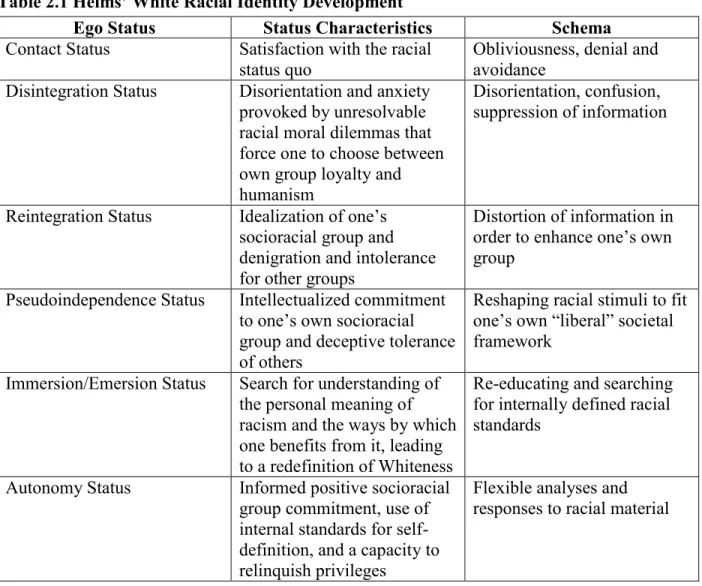
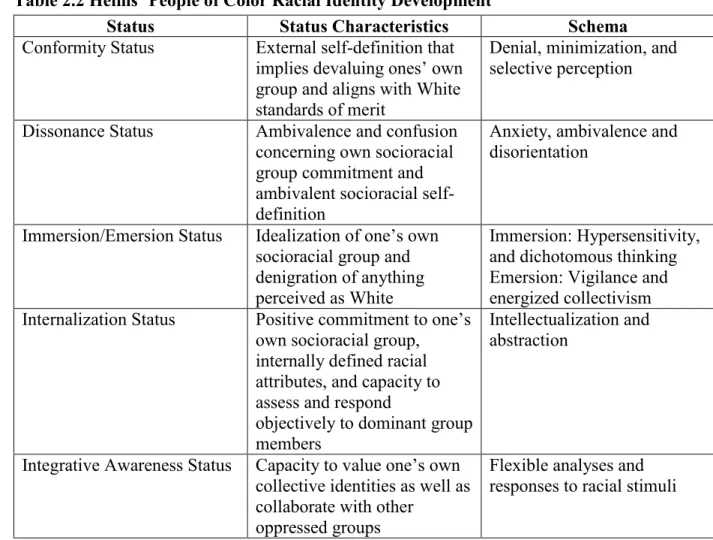
Developmental Models That Inform Multicultural Competence ... 29
The Role of Entry-level Staff Members in College and University Housing ... 47
Multicultural Competence in Student Affairs ... 62
Diversity and Multiculturalism in the Curriculum of Student Affairs Graduate Preparation Programs ... 75
Conclusion ... 88
Chapter 3 - Methodology ... 90
Study Design ... 90
Population and Sample ... 91
Instrument ... 92
Validity and Reliability of Instrument ... 94
Data Collection ... 96
Data Analysis ... 98
Variables ... 98
Limitations ... 99
Conclusion ... 100
Chapter 4 - Data Analysis and Results ... 101
Description of the Sample ... 101
Descriptive Statistics ... 102
Demographic and Experience Variables ... 102
Graduate School Curricular and Experience Variables ... 105
Analysis of Research Questions ... 109
Research Question 1 ... 110
Research Question 2 ... 113
Research Question 3 ... 114
Research Question 4 ... 116
Summary ... 118
Chapter 5 - Summary, Discussion and Recommendations ... 120
Overview ... 120
Discussion ... 122
Research Question One ... 122
Research Question Two ... 129
Research Question Three ... 130
Research Question Four ... 132
Limitations ... 137
Research Recommendations ... 138
Practical Implications ... 139
Summary ... 141
References ... 143
Appendix A - Survey Instrument ... 153
List of Figures
List of Tables
Table 2.1 Helms’ White Racial Identity Development ... 30
Table 2.2 Helms’ People of Color Racial Identity Development ... 31
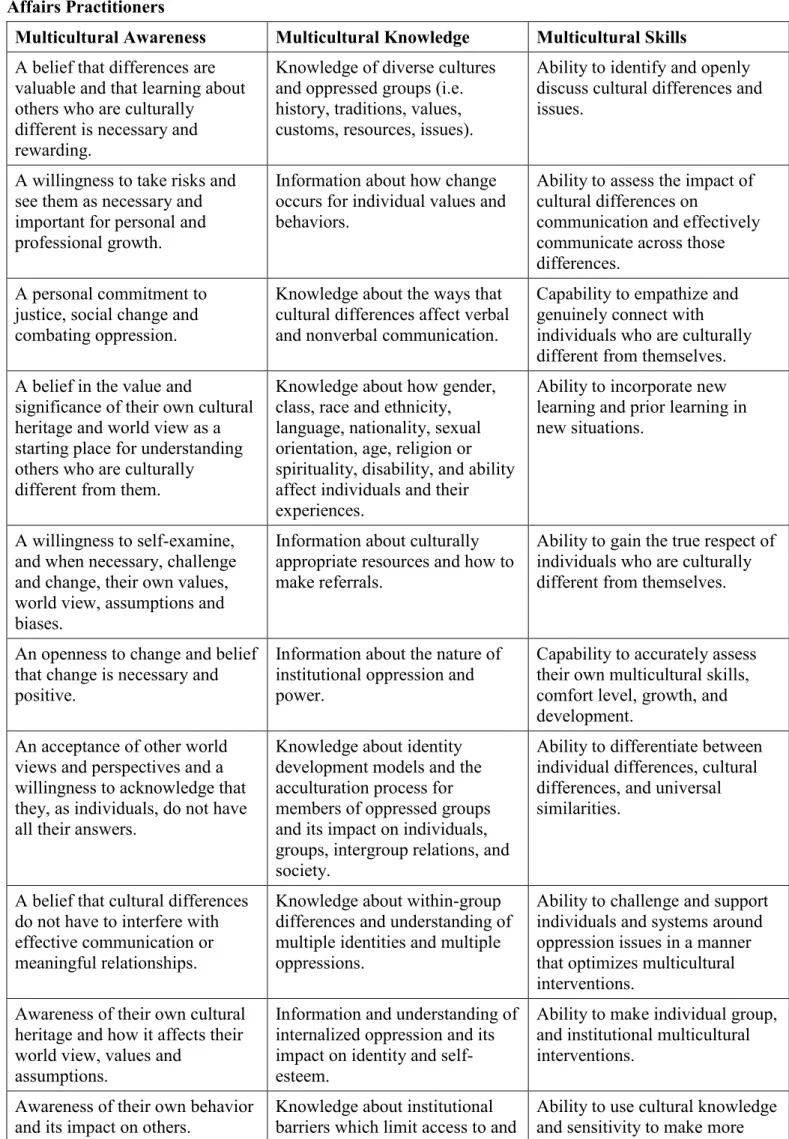
Table 2.3 Pope and Reynolds (1997) Characteristics of Multiculturally Competent Student Affairs Practitioners ... 65
Table 3.1 Description of Demographic Variables ... 99
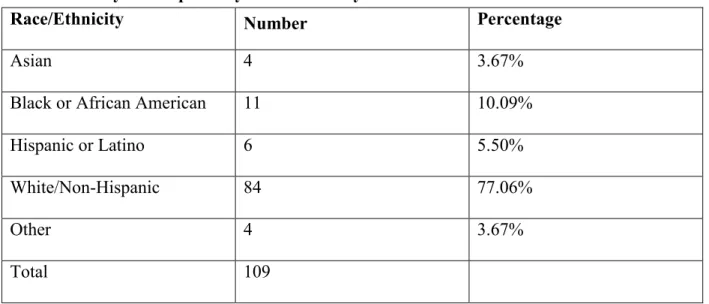
Table 4.1 Study Participants by Race/Ethnicity ... 103
Table 4.2 Study Participants by Gender Identity ... 103
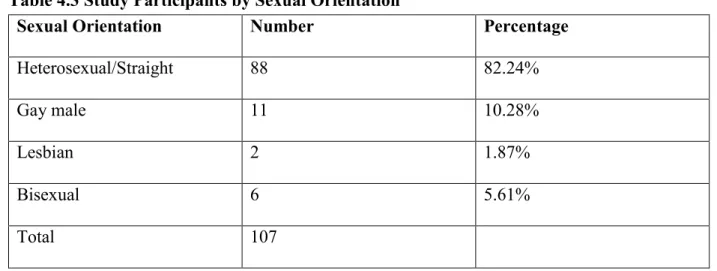
Table 4.3 Study Participants by Sexual Orientation ... 104
Table 4.4 Study Participants’ Graduate Program Diversity Curricular Requirements ... 106
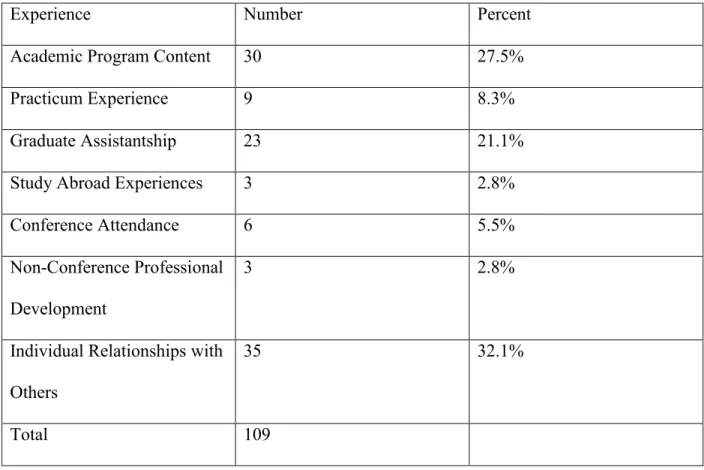
Table 4.5 Study Participants’ Experiences That Impact Multicultural Competence ... 108
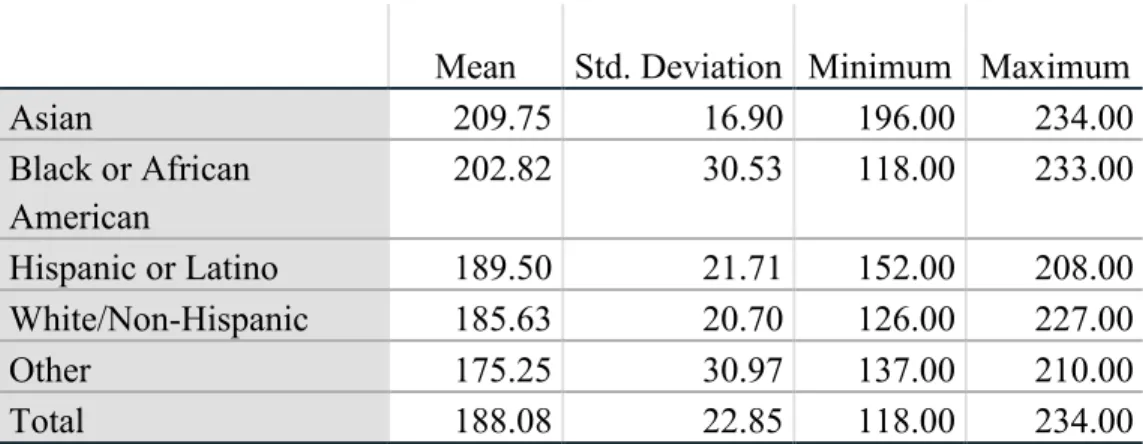
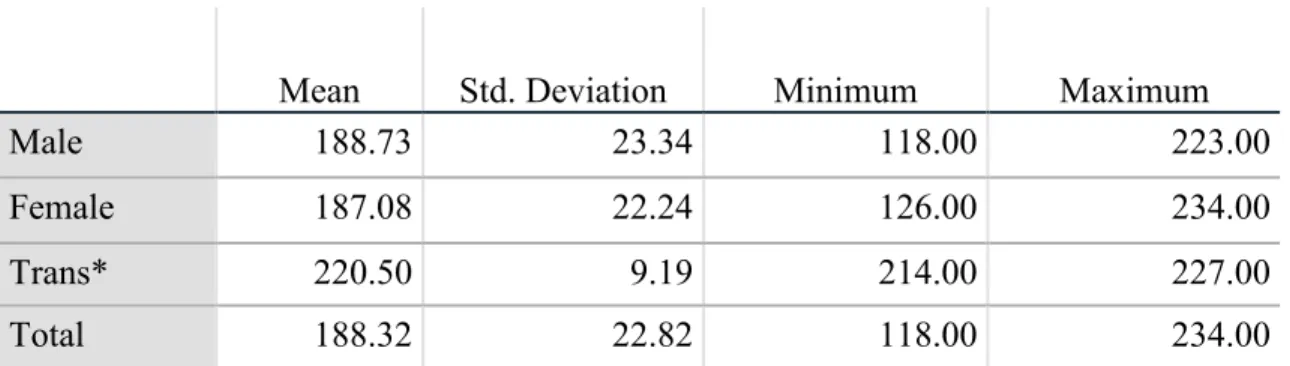
Table 4.6 ANOVA Descriptive Statistics for Racial Identity ... 110
Table 4.7 ANOVA Descriptive Statistics for Gender Identity ... 111
Table 4.8 ANOVA Descriptive Statistics for Sexual Orientation ... 112
Table 4.9 Regression Descriptive Statistics for Years of Experience ... 113
Table 4.10 Regression Coefficients for Multicultural Competence and Years of Experience ... 113
Table 4.11 Regression Model Explanation for Multicultural Competence and Years of Experience ... 114
Table 4.12 ANOVA Descriptive Statistics for Graduate Program Diversity Content ... 115
Acknowledgements
Over the course of my life, education and learning have been valued above almost anything else. This document represents the culmination of my formal education, but what I learned from my family is that education and learning are lifelong processes. Due to that legacy of learning, I must first acknowledge my grandparents and parents: Junior and Lucille Cook, Charles and Patricia Provance, and Steve and Debby Cook.
Each one of these individuals has had a profound impact on how I view learning and intellectual curiosity. Of my four grandparents, only one completed high school. However, I would never call them uneducated. Each one of them, in their own way, pursued knowledge and learning. My Grandma Cook loved to read biographies of personalities that she found
fascinating. I still remember her reading Loretta Lynn’s autobiography, Coal Miner’s Daughter. She was also a Sunday School teacher for many years and spent many hours reading and
studying her Bible. I can still see the thin, onion skin-like pages of her Bible. My Papaw Cook was someone who could fix just about anything. In particular, he was a skilled electrician, so much so that even after he retired, the factory where he worked would call him in to assist them in fixing problems. He was a great dancer, gardener, and in my opinion one of the best
fisherman I have ever known. He was always searching for better ways to grow onions as big as your head and to catch that next “mess of fish.”
My Papaw Provance was the definition of a Renaissance man. He had many “jobs” during his life, but his calling was being a farmer. He longed to be outside and to grow a bounty. He struggled for many years to make this calling a reality. This is probably why, when I decided to change my career path from optometry to working with college students, he was the first one to offer his unconditional support, telling the rest of my family to let me do want I wanted! He
also loved to read all manner of books and magazines. He is my style icon. He was someone who saw the way he dressed as an expression of his identity but also of the respect he had for people and events. He loved to laugh, and he loved music of all types. Along with my Grandma Provance, they exposed me to music and art that most people my age don’t appreciate. One of my most memorable experiences was going with them to see the Glenn Miller Orchestra; this experience began my love of traditional jazz and big band music. In the far reaches of my memory, I can still hear his artful whistle.
My only surviving grandparent is my Grandma Provance. She has endured much in her life but has continued to try new things. Though she was not a quilter, when I was younger and Pac-Man was all the rage, she worked her fingers to the bone to make me a Pac-Man themed quilt. When my grandfather was diagnosed with Alzheimer’s disease and she became his primary caregiver, she decided to learn how to create watercolors - something she had always wanted to do - as a way to care for herself during this difficult time. One of my most cherished possessions is a painting she did of my daughter, Audrey. Grandma also taught me lots of things including how to make awesome sugar cookies for all occasions, how to love Halloween, and that family is the most important thing that we all have. I am so glad that she is still here to see this accomplishment, and I hope she knows how much she played a role in my educational journey.
My parents have always stressed the value of education. Though I was a first generation college student, it was not ever really a discussion about “if” I would go to college but where. My dad, Steve, worked in a factory for almost forty years. During that time, he went through an intense training and education program to better provide for our family. I can still see him studying at our kitchen table to pass the next test he had. This was all after working a full day.
He has always told me that he has done it so that I don’t have to. He wanted me to pursue my dreams.
My mom, Debby, has always been a voracious reader. She gets this from her parents! When I was a preschooler, she worked at the local library. Talk about showing a value for learning! She reads all kinds of books: fiction and nonfiction, mysteries and humor. As a result I have loved to read my whole life. I like all kinds of books and am moved by stories. Though I am a slow reader, I have never found school reading or leisure reading to be a chore, and I attribute that to her and to her example.
Together my parents encouraged me and all of my varied interests, regardless of how odd they might have seemed. They never asked me to be any different than I am and have always loved me unconditionally. Though I know they didn’t always understand my choice of career, they are proud of what I have accomplished. This degree and accomplishment is a direct result of their example, support, and love.
To my siblings, Whitney Smith and Colton Cook, know that you also inspired me to achieve my dreams. I wanted you to be proud of me and be proud to be my sister and brother. Thank you for believing in me and always keeping me grounded. I love you both and I love your families.
To my work family, I greatly appreciate your unconditional support. I have been so lucky to have the support of my supervisors during this process. Dr. Stephanie Bannister, you have been a pivotal influence on me during this process, and outside of my family, have been my biggest supporter. I am so thankful that you are a part of my professional and personal journey.
Dr. Derek Jackson, you are the reason I work at K-State. You are my mentor and friend, who has helped me be a better version of myself and has supported me even when I didn’t
probably earn or deserve your support. The trajectory of my career is very different because of your belief in me.
Christina Hurtado and Brooks Hetle are the two full time staff members I have supervised during this process. Your competence has allowed me to feel comfortable taking the time I need to pursue this dream. I thank you for guiding and supporting our graduate students and
continuing to move the iTeam forward while always being interested in what I was doing in my classes and for my research.
All of the graduate students that I have had the chance to supervise over my career serve as the inspiration for this research, all 38 of you. I have learned much from you, and I appreciate your patience as I have done my best to guide you to the next part of your journey. My desire to pursue this degree so I can continue to guide young professionals is a direct result of the
relationships we have built over the years.
All of my K-State Housing and Dining colleagues, both current and past, have also supported me, encouraged me, challenged me, and cared for me. I am so fortunate to work in a diverse and complex department that has brought so many wonderful people into my life. I am forever in debt to the staff in our administrative services, dining services, facilities management, and student living areas.
My major professor, Dr. Christy Craft, has done everything within her power to support me and to get me to this point. She has helped me hone my ideas, challenged me to think differently, and guided me through each step of this doctoral journey. What a blessing she has been to me in my life! There is no way that I would be accomplishing this without you as my guide and mentor.
To the rest of my doctoral committee, Dr. Kevin Roberts, Dr. Lydia Yang, and Dr. Be Stoney: I am so appreciative of your guidance, feedback, and support. I have learned much from you both formally and informally over the time I have known each of you. Thank you for being part of my academic story.
Dr. Doris Wright-Carroll, Dr. Betsy Barrett, and Dr. Sheryl Hodge were a large part of my coursework journey. I learned much from each of you and appreciate the challenges and the support that you have provided.
My church family at Peace Lutheran Church has provided positive and consistent encouragement during this process. Your prayers and genuine interest in me and in my journey has not gone unnoticed. The support that my family and I receive from this community of faith is one of the reasons this process has been possible.
Finally, I want to thank all of the teachers I have had in my long educational journey. I feel that the education I got in the Malden, Missouri schools, Southeast Missouri State
University, and Ball State University have laid the foundation upon which this accomplishment is built. I would not be the person I am today without the dedication of these amazing educators. These educators have inspired me, and many of their voices run through my thoughts as I strive to live up to their example.
Dedication
I could not have done this without the love and support of my partner and number one cheerleader, Laurie! She has encouraged me to do this from the beginning and has created time and space for me to study, to write, and to reflect. At times she has had to be a lone parent and really juggle many hats. She has also made it clear that I can do this and understands why I wanted to in the first place. Her love and unconditional support has made all of this possible. I love you and am excited to not have this lingering in our lives.
My daughter, Audrey, is one of my primary motivations for pursuing this degree.
Because lifelong learning was role modeled for me by my parents and grandparents, I want to do the same for her. One difference is that she lives in community where having a Ph.D. seems status quo. Through my persistence and tenacity, I hope she sees that earning a Ph.D. is still an accomplishment and challenge. She is quickly becoming a young woman and is a member of our complex world and society. My research topic and interest in multicultural competence is a direct result of wanting her to live in world where people treat each other with dignity and in which their whole selves are acknowledged and validated. I love you, Audrey, and want you to be whatever you want to be. I want you to know that you give me a sense of purpose every day.
Chapter 1 - Introduction
College and university housing is often an essential part of the college experience at many institutions. With an increasingly diverse student body, campus housing staff may find themselves struggling to meet the cultural needs of their student population. The staff who serve students in various residence hall communities have a unique opportunity to impact a student’s experience in both positive and negative ways. Having a better understanding of the different cultural backgrounds of their students may aid housing staff in creating a more inclusive and welcoming campus climate. In this study, I plan to explore how staff members’ multicultural competence is influenced by personal, professional, and educational attributes.
Overview1
According to the United States Census Bureau in 2011, underrepresented populations comprised more than 50% of the population in about one tenth of all counties in the United States. Additionally, Hispanic and Asian populations are growing at considerably higher rates than the White population (Humes, Jones, & Ramirez, 2011). The diversification of the racial makeup of the United States is now coming to college and university campuses. These statistics do not even account for international students and individuals of non-racial, underrepresented groups that are part of college and university campus community. Campus climate significantly influences a student’s college experience, especially the experiences of students belonging to racial minority groups (Ancis, Sedlacek, & Mohr, 2000). Additionally, it is important to provide institutional support, structure, opportunities, and programming around areas of multiculturalism and diversity to enhance the learning experience for students (e.g., Astin, 1993; Chang, 1999; Hu
& Kuh, 2003; Zuniga, Williams, & Berger, 2005). Specifically, university housing facilities must be prepared to meet the needs of the changing population and to create safe environments for students. Entry-level housing professionals must possess the skills and competencies needed for creating these communities. Unfortunately, some research shows that entry-level housing staff members treat African American male paraprofessional staff differently than other racial groups (Harper, Davis, Jones, McGowan, Ingram, & Platt, 2011).
The two largest professional organizations related to student affairs work, Student Affairs Professionals in Higher Education (NASPA) and College Student Educators International
(ACPA), both include multiculturalism and inclusion in their guiding documents. Specifically, NASPA has a Commitment to Diversity, Inclusion and Equity document that encourages student affairs professionals to live multicultural values in their work with students
(www.naspa.org/about/diversity.cfm). ACPA includes multicultural competence as one of its core values (www2.myacpa.org/about-acpa/mission). The Association of College and University Housing Officers-International (ACUHO-I), in its Standards and Ethical Principals document, states: “Staff members will encourage residents to exercise responsibility for their community through opportunities to appreciate new ideas, cultural differences, perspectives . . .”
(Association of College and University Housing Officers-International, 2010). To accomplish these goals, entry-level staff must demonstrate some level of multicultural competence
themselves and then train and empower their paraprofessional staff to create communities wherein differences are valued, supported, and explored. For the purposes of this study, the concept of multicultural competence is defined as “multicultural awareness, knowledge and skills and entails the awareness of one’s own assumptions, biases, and values; an understanding of the worldview of others; information about various cultural groups; and developing
appropriate intervention strategies and techniques” (Pope, Reynolds, & Mueller, 2004, p. 9). Henning, Cilente, Kennedy, and Sloane (2011), in a national study of new residential life professionals and their professional development needs, found that these new professionals self– reported the need for the development of multicultural competencies as one of the top seven needs with regard to their professional development.
Statement of the Problem
As the demographics of the student population on college campuses continues to change, student affairs professionals will encounter increasingly sophisticated expectations for students, students’ families, and other constituents of the campus community. Thus, enhanced
multicultural competence of student affairs staff is vital to the creation of inclusive campus communities. On-campus housing can influence the experience of all students. The nature of that experience is influenced by the multicultural competence of the staff in those communities and the professional preparation they have attained.
Residence Hall Role
Residence halls on college and university campuses often make the claim of being students’ home away from home. However, there is considerable evidence that students
experience these communities differently based on their varied personal identities. Specifically, students of different racial and ethnic identities report having different experiences. African American students consistently report experiencing more discomfort in their residence hall environments than their White peers. African American students also seem less likely to get involved in hall sponsored activities and leadership opportunities than their White counterparts (Johnson-Durgans, 1994; Johnson, 2003). Feelings of alienation are also more prevalent with Asian American students than those of other races or ethnic groups (Johnson, 2003).
In each residence hall, there are staff members who are responsible for creating a welcoming community. That staff often consists, at minimum, of a full-time hall director and resident assistant peer leaders. How successful are these staff members in helping others feel like a part of the community? The racial backgrounds of the students living in residence halls seem to have an influence on how they view the residence hall staff members in their
community. Asian American students appear to have more negative impressions of their residence hall staff than other students, yet African American students have more negative experiences with staff enforcement of policy and the overall willingness of staff to get to know them than White, Hispanic, or international students (Johnson-Durgans, 1994; Johnson, 2003). The relationships that staff are willing to form with students are also a concern for international students (Johnson, 2003). Once a student becomes part of the residence hall staff in a
community, concerns related to community racial climate persist. Black male resident assistants have identified feelings of isolation, increased scrutiny, lack of support, and lack of role models. The actions of their fellow students significantly enhance these feelings but their supervisors in their residence halls can also have a negative impact (Harper et al., 2011). Thus, there appears to be a clear need to enhance the multicultural competence of the entry-level professionals who provide the guidance and vision for the creation of these residence hall communities.
Multicultural Competence in Student Affairs Staff
When exploring the overarching theoretical construct of multicultural competence in student affairs, the discussion in most of the literature points toward the need to better understand what influences professionals’ multicultural competence. For example, King and
Howard-Hamilton (2003) found differences between graduate students and professional staff, with the professional staff having higher levels of multicultural competence than the graduate students.
When racial differences were factors in this scenario, the researchers found that graduate students of color had higher levels of multicultural competence than their White peers and professional staff, which points to a potential disconnect between graduate students of color and their White supervisors and peers. This finding illustrates one of the challenges that staff
members of underrepresented racial groups might face in the field of student affairs.
In further exploration of the multicultural competence of student affairs staff, Mueller and Pope (2001) compared White racial identity development to multicultural competence. In this analysis, Mueller and Pope (2001) found that White racial identity consciousness types that are associated with being more open to other ethnic groups, being willing to explore and to discuss issues of race, having increased knowledge of racial issues, and being less ethnocentric were related to increased scores on multicultural competence scales. Therefore, it appears critical for White student affairs professionals to continue their identity development work to impact their multicultural competence positively. Castellanos, Gloria, Mayorga, and Salas (2007) found that student affairs staff members’ age, years of experience at the institution, or years of experience in their role influenced their multicultural competence, thus, prompting questions regarding the role of ongoing development of multicultural competence in student affairs staff members. Do staff members acquire a majority of the knowledge, awareness, and skills related to multicultural competence early on in their education, career, and professional development?
Graduate Preparation and Multicultural Competence
Various researchers have explored the idea of multicultural competence training and education, particularly concerning student affairs graduate preparation programs. In an early study, Talbot (1996) found that over three-quarters of graduate students indicated that diversity
training was a crucial part of their graduate program. These graduate students also felt that the multicultural competence of the faculty members who taught in the program was also equally as important. However, less than a third felt that their graduate preparation program emphasized diversity, and almost two-thirds of the students surveyed felt their graduate program provided moderate or lower levels of diversity training (Talbot, 1996). When exploring graduate preparation faculty members’ skills related to diversity in the curriculum, Talbot and Kocarek (1997) found that teaching about the needs and development of students of color was
comfortable or moderately comfortable to over two-thirds of a sample from 1991 and almost half of a sample from 1993. Comfort or moderate comfort with teaching the needs and development of sexual minorities was expressed by an average of nearly 40% of the faculty in Talbot and Kocarek’s (1997) two samples in 1991 and 1993. Moreover, teaching about the needs and development of women was comfortable or moderately comfortable for over two thirds of the 1991 sample and three-quarters of the 1993 group.
Flowers and Howard-Hamilton (2002) reinforced the idea that faculty should focus on developing their multicultural competence. In their qualitative study conducted with
underrepresented students in student affairs graduate programs, Flowers and Howard-Hamilton found that the graduate students underscored the need for faculty to be committed to their multicultural competence development and to have strong cultural self-awareness. With a more robust set of multicultural competencies, faculty can lead discussions and learning experiences in the classroom without underrepresented students feeling like it is their sole responsibility to advocate and explain (Flowers & Howard-Hamilton, 2002). Pope and Mueller (2005) supported this concept in that they found that faculty who had more recent multicultural training or
a similar relationship between the presence of multicultural issues in faculty members’ research and their multicultural competence. Particularly relevant to this study, the researchers found that faculty who had taught a course related to diversity also had higher self-reported multicultural competence scores. The variability in how diversity is addressed in the curriculum of student affairs graduate programs makes it difficult to determine how these curricular experiences impact entry-level professionals.
To better understand the issue of multicultural competence in the curriculum of graduate preparation programs, Flowers (2003) conducted a survey of over 50 programs in the United States. At that time, almost three-fourths of the programs offered a diversity course as a part of the core curriculum. That leaves over a quarter of programs without a course. With research showing the importance and value of these curricular experiences in the multicultural
development of future professionals, this reveals a problem in student affairs. It is important to note that this study took place over 10 years ago. While there is no further research, one would hope that over the course of the ensuing years, many of these programs either developed a course for the curriculum or determined ways to infuse the curriculum with multicultural content.
In a qualitative study involving student affairs graduate students and practitioners, Gayles and Kelly (2007) identified potential approaches graduate programs should take when
considering multicultural elements in the curriculum. The individuals in the focus groups agreed that including a multicultural course in the curriculum indicated the departments’ commitment to diversity issues. However, the participants felt that these courses should not just be a compilation of discrete diversity topics; it was essential that the intersections of themes and identities be explored. According to the students and practitioners in the focus groups, discussions of power, privilege, and oppression are also considered vital to multicultural competence. To help students
bridge the theoretical content and practice, the participants endorsed increased experiential opportunities to engage with those different than themselves. Such opportunities might include practicum experiences, integration into assistantships, or creating educational activities for their staff and students.
From this analysis of the existing literature, the importance that student affairs practitioners play in the creation of an inclusive campus climate is evident. It is particularly obvious that residence hall staff possess substantial responsibilities to build living environments that help all students feel welcomed on college and university campuses. It is also apparent that various demographic and experiential characteristics play a role in how people develop and experience multicultural competence. As a profession, how do entry-level staff members gain the necessary knowledge, awareness, and skills to serve the diverse student populations that inhabit our college and university campuses? Graduate preparation programs play a vital role in this development. How the graduate programs and faculty incorporate multicultural topics and experiences into the curriculum is of particular relevance to the profession since these programs are the conduit through which a vast majority of our new professionals obtain the core
competencies they need to serve students.
Purpose of the Study
The purpose of this study is to understand the relationship between various demographic factors, professional years of experience, and graduate preparation with the multicultural
competence of entry-level housing professionals. Entry-level housing professionals have the potential to impact the lives of many college students (Belch & Mueller, 2003; Blanks, Twale, & Damron, 1992; Upcraft & Pilato, 1982). Their level of multicultural competence, likewise, has the potential to impact the climate of the communities for which they are responsible (Harper et
al., 2011; Johnson-Durgans, 1994; Johnson, 2003). Faculty who teach in student affairs and higher education graduate preparation programs have the opportunity to expand the multicultural understanding of their students. Multicultural competence is a core value of the professional organizations related to student affairs and housing (Association of College and University Housing Officers-International, 2010; www2.myacpa.org/about-acpa/mission;
www.naspa.org/about/diversity.cfm). Thus, a better understanding of what influences multicultural competence should guide the training of housing staff, the design of graduate preparation programs, and the availability of professional development opportunities.
Research Questions
1. Is there a difference in the multicultural competence scores of entry-level housing professionals based on demographic factors including race, gender, and sexual orientation?
2. Is there a relationship between the years of experience in the profession and multicultural competence scores of entry-level housing professionals?
3. Is there a difference in the multicultural competence scores of entry-level housing professionals based on the diversity content of their graduate preparation program? 4. Is there a difference in the multicultural competence scores of entry-level housing
professionals based on impactful diversity experiences during their graduate preparation?
Significance of the Study
In 2001, Mueller and Pope suggested that the research on multicultural competence of student affairs professionals was limited. In the ensuing 14 years, that continued to be the case. Diversification of the college and university campus community continues, heightening the need for institutions and higher education administrators to analyze their assumptions about racial and
ethnic minorities and the impact of on campus experiences of students (Harper et al., 2011). Furthermore, an examination of the experiences and personal characteristics that influence multicultural competence is needed (Mueller & Pope, 2001). Over the course of the fall 2015 semester, the visibility of campus unrest related to racial inequalities at colleges and universities in the United States seems to have increased. In some cases, a dearth of administrators and leaders of color has exacerbated this sense of dissatisfaction. Engaging in authentic campus dialogue around issues of race and racism is crucial for the development of students and the creation of a welcoming and inclusive campus community. However, it is key that these
conversations take place within all sectors of the institution, and their initiation should not rest on the shoulders of faculty, staff and students of color. In fact, residence hall staff were specifically cited as being essential to leading these discussions (Harper et al., 2011). Additionally, students of color who are a part of the residence hall community should be encouraged to share their honest feedback and concerns about the residential climate (Harper et al., 2011). To successfully conduct honest dialogues, student affairs professionals must have an understanding of their biases and strengthen their multicultural awareness, knowledge and skills. Solely relying on individuals who work in the diversity office on campus is no longer appropriate. Thus, it is critical to conduct research that examines the multicultural competence of student affairs professionals, because they are often the individuals responsible for significant portions of the programmatic and environmental components of academia. The results of this research will also assist professionals as they work with both majority and underrepresented student populations (Gayles & Kelly, 2007; Pope, Mueller, & Reynolds, 2009; Pope & Reynolds, 1997). Conducting studies that focus on specific functional areas of student affairs could create further
Salas, 2007). This type of research will also inform the structure and content of graduate preparation programs in student affairs (Pope & Reynolds, 1997).
Graduate preparation faculty and program administrators, likewise, have a responsibility to provide curricular experiences that enhance graduate students’ multicultural competence and their ability to conduct and understand diversity-related research (Pope, Mueller, & Reynolds, 2009). Graduate students in student affairs programs have indicated a clear interest in diversity related courses and curricular content that enhances their multicultural awareness, knowledge and skills (Gayles & Kelly, 2007). The impact of the diversity content in graduate programs needs further investigation. Specifically, a better understanding of what types of experiences are provided and what impact those have on the students in the program could better inform future directions for program requirements and components (Flowers & Howard-Hamilton, 2002; Gayles & Kelly, 2007; Pope & Mueller, 2005). Many institutions have addressed the
multicultural or diversity aspect of the curriculum by instituting an individual course. However, there needs to be further exploration of the adequacy and impact of this approach (Flowers, 2003). There is slight evidence in Gayles and Kelly’s (2007) study to support the concept that internships, practica, and assistantship experiences have the potential to influence graduate students’ multicultural competence. The research proposed in this study could also illuminate what other methods might be effective in achieving similar outcomes.
Definition of Terms
Multicultural competence: Consists of “multicultural awareness, knowledge, and skills and entails the awareness of one’s own assumptions, biases, and values; an understanding of the worldview of others; information about various cultural groups; and developing appropriate intervention strategies and techniques” (Pope, Reynolds, & Mueller, 2004, p. 9).
Entry-level housing professional: Have a master’s degree in college student development or a related field. They are working in their first full-time professional position in college and university housing. They are responsible for the day-to-day operation of one or more residence halls and also supervise the student staff members who live and work on the residence hall floors with the residents.
Race: Helms (1995) describes race as “a sociopolitical and, to a lesser extent, a cultural construct. . . Racial classifications are assumed to be not biological realities, but rather
sociopolitical and economic conveniences, membership in which is determined by socially defined inclusion criteria (e.g., skin color) that are commonly (mistakenly) considered to be “racial” in nature (p. 181).
Gender: “One’s sense of one’s masculinity and femininity and the person-environment interactions related to gender roles and expression” (Patton, Renn, Guido, & Quaye, 2016, p. 182).
Sexual Identity: “The sense that individuals have of themselves as gay, lesbian, bisexual, heterosexual, asexual, or some other term” (Patton, Renn, Guido, & Quaye, 2016, p. 157).
Organization of the Study
In this study, Chapter 1 provides an introduction to the study and explains the role of residence halls on university campuses. Additionally, the concept of multicultural competence and its relationship to student affairs professionals, and multicultural competence and graduate preparation programs in student affairs is shared. The purpose of the study, the research questions, and terms are also defined in the first chapter. The review of pertinent literature is what constitutes Chapter 2. The overarching themes explored in the literature are the educational impact of a multicultural campus, the challenges and strategies when creating inclusive campus
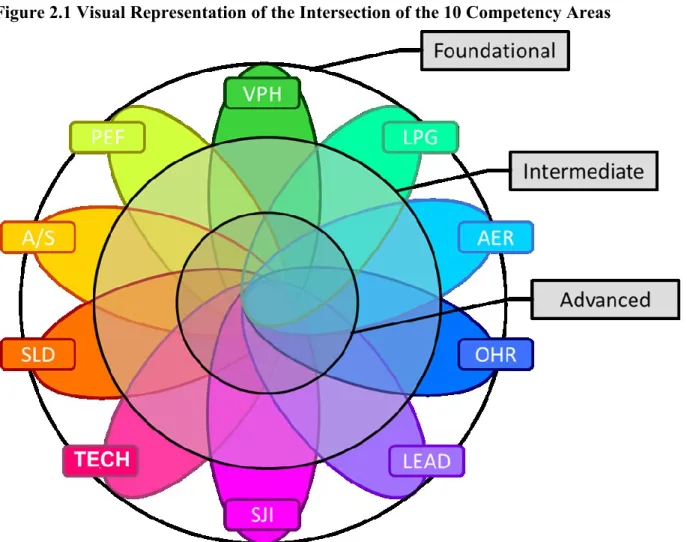
environments, developmental models that inform multicultural competence, the role of entry-level staff members in college housing, and the impact of residence hall climate. Further, the core competencies of student affairs, multicultural competence in student affairs and diversity, and multiculturalism in the curriculum of student affairs graduate programs are elucidated. Chapter 3 is an overview of the study design, the sample, the instrument being utilized, the data collection process, statistical analysis techniques and limitations. The results of the statistical analyses are reported in Chapter 4. Discussion of the results and recommendations based on these results constitute Chapter 5.
Conclusion
Multicultural competence in student affairs is an important aspect of the professional preparation and ongoing growth of student affairs professionals (Association of College and University Housing Officers-International, 2010; www2.myacpa.org/about-acpa/mission; www.naspa.org/about/diversity.cfm). Additionally, residence halls on college and university campuses have a unique place in the campus community, and the entry-level staff who work in these communities have some degree of influence. Having a better understanding of what influence various characteristics and experiences might have on an individual’s multicultural competence can lay the foundation for better training and education programs. By specifically directing this research towards entry-level housing professionals, we can gain a better
understanding of how their development might be enhanced to create inclusive campus communities that support all students.
Chapter 2 - Review of Literature
In this chapter, I will review the relevant literature and theoretical constructs that relate to diversity and multicultural competence in higher education. Specifically, I will address the important role diversity plays in the overall learning that takes place in the campus community and the impact diverse interactions have. The literature related to creating an inclusive campus community and the challenges that arise and strategies that are necessary to address these challenges will be elucidated. Pertinent developmental models related to racial identity development and increased racial and multicultural understanding are also explored.
To establish the context for this study, an understanding of the core competencies of the student affairs profession is provided. An in depth examination of multicultural competence as a concept and multicultural competence in student affairs in particular also takes place in this chapter. Specifically, the Characteristics of a Multiculturally Competent Student Affairs Professional, developed by Pope and Reynolds (1997) and explained later in this chapter, will serve as the theoretical framework for this study. Further understanding of the role of the staff in college and university residence halls and the climate created in these communities is provided. Finally, the role that diversity and multiculturalism plays in the curriculum of student affairs graduate preparation programs is discussed.
Educational Impact of Multicultural Campus Population and Diverse Interactions
Colleges and universities across the United States have developed significant policies, procedures, and programs to support their diversity goals. Some of these activities are designed to improve the overall campus climate or support faculty and staff development, but much of the effort is directed toward students. Much has been written about the impact that these initiatives have on today’s college and university students.
Institutional Commitment to Diversity
One of the important questions to consider is: How does the campus diversity policies and procedures impact students’ academic outcomes? In a groundbreaking national study, Astin (1993) analyzed data from a larger study to determine the impact that diversity initiatives and campus environments had on desired outcomes. The emphasis the institution places on diversity has a positive impact on many outcomes that are often desired outcomes of colleges’ general education requirements. In particular, cultural awareness and commitment to promoting racial understanding increase as an institution’s diversity emphasis increases. Students’ overall satisfaction with the college experience and the student life on campus also increase with increased diversity emphasis. Conversely, students’ beliefs that racial discrimination is no longer a problem decreases as campus diversity emphasis increases.
Astin (1993) also found that how faculty emphasize diversity has also shown to have an impact on students. Like institutional emphasis, as faculty emphasis on diversity increases, so does students’ overall satisfaction and cultural awareness. Further, it has been found that institutions that are perceived as having nondiscriminatory racial environments and practices have a positive impact on students’ openness to diversity in their first, second, and third years of college (Pascarella, Edison, Nora, Hegedorn, & Terenzini, 1996; Whitt, Edison, Pascarella, Terenzini, & Nora, 2001).
One of the ways institutions have responded to the changing demographics of their student population and have tried to demonstrate their commitment to diversity is to transform the curriculum so that it explicitly addresses social and cultural diversity. Gurin, Dey, Hurtado, and Gurin (2002) hypothesized that this transformation not only changes what is learned, but also has the potential to change the way students learn. Students who engage around topics of
diversity in class and interact with individuals who are different from themselves throughout the campus environment will be more active thinkers. In their national study, this was found to be true of all types of students regardless of incoming characteristics that might predispose them to engage in diversity activities and cross cultural dialogue. The researchers also found that the exposure to diversity both inside and outside the classroom promoted more engaged, active thinking amongst students.
In addition to enhancing students’ thinking, one of the purported outcomes of increased diversity on campus and in the curriculum is improved citizenship behaviors. Gurin, Dey, Hurtado, and Gurin’s (2002) study found that diversity increased students’ engagement in community and political activities, beliefs that differences are not divisive but additive, and their own awareness and acceptance of those different from themselves. Overall, taking courses that explicitly address diversity issues increases the likelihood that students will be civically minded through actions like increased propensity to be concerned about the public good, social equality, and making a societal contribution (Gurin, Dey, Hurtado, & Gurin, 2002; Hurtado, 2007).
To further emphasize the importance of a demographically diverse campus community, Gurin, Dey, Hurtado, and Gurin (2002) controlled for various curricular elements and found that informal and formal interactions with individuals who are different from themselves remained significant to students’ education and citizenship outcomes, and in most cases, had a larger impact on the students than did the curricular elements of the study. Ultimately, increasing the frequency that students discuss racial and ethnic issues during the college experience has the largest number of positive impacts. This includes increasing racial understanding, cultural awareness, and the likelihood of developing a meaningful life philosophy (Astin, 1993; Gurin, Dey, Hurtado, & Gurin, 2002; Hurtado, 2007).
Increased Campus Racial Diversity and Individual Interactions
Chang (1999) conducted further research about the educational impact of having a racially heterogeneous student body. In his research, he validated what many had assumed: Having a more racially diverse campus population increases the likelihood of interacting with someone of a different race and the opportunities to discuss racial issues. He also found that socializing with someone of a different racial identity increased retention, satisfaction with college, intellectual self-concept, and social self-concept. Likewise, Chang (1999) found that discussing racial issues increased these four outcomes as well. The forums for these types of conversations take many forms. For example, when an institution sponsors a cultural awareness workshop, it has the potential to increase racial understanding, cultural awareness and social activism among students. In fact, Pascarella, Edison, Nora, Hegedorn, and Terenzini (1996), found that racial and cultural awareness workshops had a positive impact on students’ openness to diversity, particularly for White, first year students. This same finding was discovered to be true for second and third year college students (Whitt, Edison, Pascarella, Terenzini, & Nora, 2001). Additionally, these types of formal experiences have been found to increase retention, student satisfaction and academic development. Workshops also decrease students’ beliefs that racial issues are a thing of the past (Astin, 1993). Engaging in intergroup dialogue likewise enhances a student’s ability to understand different perspectives and to have a more pluralistic worldview. These types of interactions increase a student’s academic development and
satisfaction with the college experience. When these interactions are positive in nature, they can also increase complex thinking and students’ ability to understand different perspectives (Astin, 1993; Hurtado, 2007).
Hu and Kuh (2003) further considered interactional diversity exploration. They found that having conversations with people who are of a different race or ethnicity had positive effects on all students regardless of their race. These interactions affected diversity competence,
personal development, and vocational preparation. Openness to diversity increases when the conversations center on controversial and value-laden topics. There were some differences among racial groups with regard to the magnitude of the effects. While both White students and students of color made gains, it is important to note that biracial students, females, and Black students felt that these types of activities were not prevalent enough on their campuses (Cheng & Zhao, 2006; Pascarella, Edison, Nora, Hegedorn, & Terenzini, 1996, Whitt, Edison, Pascarella, Terenzini, & Nora, 2001).
In an analysis of a national student data set consisting of almost twenty thousand responses, Chang, Denson, Saenz, and Misa (2006) found that cross-racial interactions resulted in increased levels of cognitive development, self-confidence, and openness to diversity. Moreover, students who had more frequent interactions with individuals from a different racial background also experienced increased cultural awareness and desired to promote racial understanding. This finding held true regardless of institution type and students’ backgrounds and identities. In fact the researchers found that institutional characteristics only accounted for 3.3% of the variance in these three measures (Chang, Denson, Saenz, & Misa, 2006). This further emphasizes the importance of providing opportunities for students to engage in diversity oriented programming to reinforce existing desires to reduce their own prejudices and to promote inclusion and social justice. However, it is important to keep in mind that the average college student has much development to do to move diversity from a concept to action. Specifically, in residence halls, Zuniga, Williams, and Berger (2005) found that participation in social awareness
activities and diversity awareness activities had an effect on students’ motivation to promote inclusion and social justice. But, oddly, it did not affect students’ desires to reduce their own prejudices, thus, pointing to the fact that there is no guarantee that planning diversity activities and creating a more demographically diverse campus population will be sufficient to create change on the individual level.
Individual Development and Openness to Diversity
In general, students’ identities and experiences influence their openness to diversity. When researchers have analyzed the openness to diversity of first, second, and third year students, some incoming characteristics impacted this concept. Specifically, students with a higher entering academic ability were more open to diversity. Woman, non-White students, and older students were also more likely to be open to diversity (Pascarella, Edison, Nora, Hegedorn, & Terenzini, 1996; Whitt, Edison, Pascarella, Terenzini, & Nora, 2001).
King, Baxter Magolda, and Masse (2011) further explored individuals’ self-concept and their understanding of others. In their study, they specifically examined the role anxiety can play in the meaning making process, particularly around issues of difference. This study was an application of the King and Baxter Magolda (2005) intercultural maturity model through the lens of diverse interactions that cause students anxiety. This research comes out of a larger
longitudinal study related to self-authorship. The scholars “explore(d) students’ experiences with dissonance that resulted from interactions with diverse peers, focusing on how they understand these experiences, and thus, the lessons they gleaned from them” (King, Baxter Magolda & Masse, 2011, p. 472). The data collection consisted of interviews conducted with a racially representative sample of students from six different institutions that were participants in the larger longitudinal study. One of the major themes that emerged from these interviews was
the impact of diversity experiences, and more specifically, the discomfort caused by them. The definition of diversity encompassed race, ethnicity, sexual orientation, religious belief systems, political affiliation and nationality. When analyzing the interview data, the researchers found students at all three levels of development across the intercultural maturity domains (King, Baxter Magolda, & Masse, 2011).
King, Baxter Magolda, and Masse (2011) found that if students come to the college or university campus with little exposure to individuals who they deemed different from
themselves, they often found themselves stuck in their development. They might have even chosen to attend a specific institution because it would expose them to these differences; however, they do not know what to do or how to handle the observations they are making. Through their interviews, King, Baxter Magolda, and Masse (2011) discovered that one of the outcomes of this “stuck” developmental level is that the student does not seek out authentic and meaningful interactions with diverse others, thus, exhibiting the initial development level articulated by King and Baxter Magolda (2005) in the intercultural maturity model. Instead of using the anxiety created by these interactions as a catalyst for development, these students stop and might even retreat from these interactions. One of the things that professionals,
administrators and faculty members can do enhance a students’ development is provide adequate support as they work through their anxiety and enhance their interpersonal skills (King, Baxter Magolda, & Masse, 2011).
In King, Baxter Magolda, and Masse’s (2011) analysis of their interviews, they identified students who exhibited behaviors that were also very consistent with the intermediate level of the King and Baxter Magolda (2005) intercultural maturity model. These students can articulate their anxiety. They can begin to separate people from their beliefs, and they attempt to avoid
judgment from those with whom they are uncomfortable and from those outside authorities that influence their thinking. That does not mean that they might not still maintain a dualistic mindset regarding beliefs. Similar to individuals in the early stages of intercultural maturity, these students need support, but they need support and programs that help them move past their fear of judgment so they can begin to explore their interactions with different others more (King, Baxter Magolda, & Masse, 2011).
Evidence of advanced intercultural maturity also materialized in King, Baxter Magolda and Masse’s (20011) study. These were the students who used the anxiety created by
interactions with diverse others to reconstruct their self-identity, their understanding of the world around them, and the relationships they developed. Ultimately King, Baxter Magolda, and Masse (2011) found that regardless of whether it was a White student or a student of color, they relied primarily on the initial and intermediate levels of meaning making. All of the students who exhibited advanced meaning making levels were students of color. Professionals, administrators and educators should take from this the need to focus not just on providing opportunities for diverse interaction or discussion about diverse topics, but also creating
environments in and out of the classroom that then encourage students to move beyond the initial conversation or interaction. These initial impressions are fraught with anxiety, judgment, and discomfort. Institutions have a responsibility, if they believe intercultural maturity is a valued outcome, to provide that support (King, Baxter Magolda, & Masse, 2011).
Student Involvement and Racial Identity Differences
Students’ experiences on a college campus are clearly influenced by their racial background and their individual development. Understanding these experiential differences is important to creating appropriate resources and programs to aid in student success. When
investigating how involvement in co-curricular activities influences academic success, students of color who are involved in leadership opportunities and general campus activities that
influence school spirit seem to be more successful academically than those who do not (Fischer, 2007; Hoffman, 2002). Furthermore, involvement in student government, cultural organizations, social action and community service groups enhances students’ overall perceptions of their cultural competence regardless of their race, yet it is important to note that there is variance in terms of what racial groups participate in these types of organizations. Asian, Black, and
international students are more likely to participate in cultural organizations. Black students and students with higher grade point averages are more likely to participate in social action groups, whereas Asian students and wealthy students are more likely to be involved in student
government. Community service organizations are more likely to be composed of female, Asian, domestic, and higher GPA students (Cheng & Zhao, 2006). Moreover, for first-year college students, joining a fraternity or sorority had negative impact on a student’s openness to diversity (Pascarella, Edison, Nora, Hegedorn, & Terenzini, 1996).
When further investigating how various characteristics, relationships, and experiences influence students’ college grades, there is significant variability by racial groups. Logically, being better prepared for college results in better grades for all students regardless of race. However, the types of relationships students have seem to influence college grades. Fischer (2007) found that for White and Black students, having more ties off campus negatively impacts their grades. The researcher also found that relationships with faculty members have a positive relationship with grades for all racial groups. For students of color, having more formal ties to campus resulted in higher grades, while these relationships showed no influence on the grades of White students. A student’s racial background in combination with their relationships,
involvement, and perceptions also influence their satisfaction with the college experience. Fischer (2007) also found that regardless of race, students are more satisfied with the college experience if they have more extracurricular ties and friends. Further, having strong
relationships with faculty members was particularly influential for the satisfaction of Black and Hispanic students. Moreover, involvement in formal activities is particularly important to Black students’ level of satisfaction. In addition, Fischer (2007) found that student retention is also impacted by relationships, involvement, and perceptions. Reasonably, all groups were retained at a higher level if they had friends at the institution, but this was amplified for students of color if they were involved in campus activities. Thus, it is clear that providing opportunities for students to find their places within the campus community is critical to their overall success and is even more important to students of color, yet it can be a complex task.
Racial Identity and Campus Climate
The way a campus community supports and welcomes all students has the potential to impact student success. Fischer (2007) discovered that students who sensed a more negative campus racial climate expressed higher levels of dissatisfaction regardless of their racial background. However, students of color who perceived a negative campus racial climate were more likely to leave an institution (Fischer, 2007). In particular, Asian and Black students tend to report less positive views of their campus environment. An unwelcoming campus climate often results in racism-related stress for African American students (Fischer, 2007). This stress has the potential to impact their overall motivation.
In fact, Reynolds, Sneva, and Beehler (2010) found that institutionalized racism had a significant impact on the academic motivation of African American students. The policies and practices of the institution created decreases in extrinsic and intrinsic motivation in these
students. Moreover, in a qualitative study at a predominantly White institution, Saddlemire (1996) found that second-semester White undergraduates had limited interactions with their African American peers prior to coming to college and beyond. This limited contact resulted in less knowledge and understanding as well as the perpetuation of stereotypes and negative assumptions. If this holds true for many White students, then it no wonder that African American students have negative experiences on college campuses.
One study reported that African American male resident assistants (RAs) experience a different climate as part of their staff than other students (Harper et al., 2011). These men reported significant effects related to stereotyping including feeling the need to work harder to prove their worth to White supervisors. Black male RAs also reported feeling pressured to rely on stereotypes to enforce policies through fear and intimidation and utilizing hip hop culture to connect with White residents. These student leaders also expressed a burden related to being the only student of color on their staff. As paraprofessional staff members, they also indicated that they were held to a different standard than their White colleagues (Harper et al, 2011)
While reporting fewer negative climate issues, Asian and Latino/Latina students reported that they experienced unfair treatment by faculty and staff and were pressured to conform to racial and ethnic stereotypes (Ancis, Sedlacek, & Mohr, 2000). Conversely, White students experienced little to no negative aspects of the campus climate including a lack of recognition of any racial discrimination or tensions of any kind experienced by their peers (Ancis, Sedlacek, & Mohr, 2000). However, in one study, Latino students did express decreases in extrinsic and intrinsic academic motivation when confronted with racist institutional policies and procedures, though they experienced this to a lesser degree than their African American peers (Reynolds, Sneva, & Beehler, 2010).
While much of the existing research indicates that underrepresented students have a heightened awareness of negative issues on campus, White students also have a role to play in creating campus climate. Reason, Roosa Millar, and Scales (2005) investigated the evolving role of White racial justice allies. In their qualitative study of fifteen White students who were
participating in racial justice activities at a predominantly White campus, they developed a preliminary model of racial justice ally development. Their model focuses on pre-college characteristics, curricular and co-curricular college experiences, and finally cognitive complexity.
When considering the influential pre-college experiences, Reason, Roosa Millar, and Scales (2005) found that structural diversity within their high school, positive intimate interactions with people of color, parental influences, and an overall sense of their Whiteness were significant to the development of racial ally status. Once in the college environment, coursework related to race, minority experiences, and quality interracial relationships were particularly important to the exploration of their Whiteness and understanding of other races. However, this understanding is only possible if the individual has the cognitive capacity to make meaning of these experiences. It was also crucial that these students see White racial justice ally role models in their campus community.
To that end, Ancis, Sedlacek, and Mohr (2000) discussed the importance of faculty and staff awareness and intentionality when dealing not only with outright acts of racism, but also with the underlying tensions and biases that create a campus community that is not comfortable for all students. The presence of same race representatives on campus can also be an important factor in students feeling comfortable on campus. Especially as students take on leadership roles in their residence halls, having African American professional staff was seen as a key reason
some Black male RAs chose to continue in the position (Harper et al, 2011). Moreover, for members of the campus community to take advantage of the educational benefits of a diverse campus population, they must pay attention to the climate issues facing students from
underrepresented backgrounds (Chang, 1999).
It is clear that a campus rich in diversity and that has policies and practices that support all people is fundamental to students’ learning, satisfaction, and comfort. Creating the right environment on campus where students interact with individuals different than themselves, but also see themselves reflected in the student body, faculty, and staff, leads to enhanced student development. Yet, it can be challenging for institutional leaders, faculty, and staff to determine the strategies to employ when trying to create more inclusive campus environments.
Challenges and Strategies Related to Creating Inclusive College and University Campus Communities
Diversity among the students, faculty and staff on college campuses is central to the teaching and learning mission that prepares students for our increasingly diverse global society. Institutions are consistently looking for ways to address the challenges of educating a diverse population. While this can lead to some controversy and conflict, focusing on the students’ learning experiences minimizes that conflict. One of the ways to handle these challenges is by striving to enhance the curriculum and teaching methods in order to address disparities in
preparation that is inevitably found within a diverse population. Another significant way to help students see themselves reflected in the educational environment is to validate the existence of multiple perspectives and to enable all students to think critically about their perspectives and the perspectives of others. Aiding faculty in developing approaches that capitalize on these multiple