This document and trademark(s) contained herein are protected by law as indicated in a notice appearing later in this work. This electronic representation of RAND intellectual property is provided for non-commercial use only. Permission is required from RAND to reproduce, or reuse in another form, any of our research documents.
Limited Electronic Distribution Rights
Visit RAND at www.rand.org Explore RAND Health View document details
For More Information
Purchase this document Browse Books & Publications Make a charitable contribution
Support RAND
This PDF document was made available from www.rand.org as a public service of the RAND Corporation.
6
Jump down to document
The RAND Corporation is a nonprofit research organization providing objective analysis and
effective solutions that address the challenges facing the public and private sectors around the world. THE ARTS
CHILD POLICY CIVIL JUSTICE EDUCATION ENERGY AND ENVIRONMENT HEALTH AND HEALTH CARE INTERNATIONAL AFFAIRS NATIONAL SECURITY POPULATION AND AGING PUBLIC SAFETY SCIENCE AND TECHNOLOGY SUBSTANCE ABUSE TERRORISM AND HOMELAND SECURITY TRANSPORTATION AND INFRASTRUCTURE WORKFORCE AND WORKPLACE
This product is part of the RAND Corporation monograph series. RAND monographs present major research findings that address the challenges facing the public and private sectors. All RAND monographs undergo rigorous peer review to ensure high standards for research quality and objectivity.
Improving Childhood
Blood Lead Level
Screening, Reporting,
and Surveillance in
Allegheny County,
Pennsylvania
Donna Keyser, Ray Firth, Amy Richardson, Maria Zeglen Townsend
HEALTH
The RAND Corporation is a nonprofit research organization providing objective analysis and effective solutions that address the challenges facing the public and private sectors around the world. R AND’s publications do not necessarily reflect the opinions of its research clients and sponsors.
R
®
is a registered trademark.© Copyright 2006 RAND Corporation
All rights reserved. No part of this book may be reproduced in any form by any electronic or mechanical means (including photocopying, recording, or information storage and retrieval) without permission in writing from RAND.
Published 2006 by the RAND Corporation
1776 Main Street, P.O. Box 2138, Santa Monica, CA 90407-2138 1200 South Hayes Street, Arlington, VA 22202-5050 4570 Fifth Avenue, Suite 600, Pittsburgh, PA 15213-2612
RAND URL: http://www.rand.org/
To order RAND documents or to obtain additional information, contact Distribution Services: Telephone: (310) 451-7002;
Fax: (310) 451-6915; Email: [email protected] Library of Congress Cataloging-in-Publication Data
Improving childhood blood lead level screening, reporting, and surveillance in Allegheny county, Pennsylvania / Donna Keyser ... [et al.].
p. ; cm. “MG-423.”
Includes bibliographical references. ISBN 0-8330-3945-8 (pbk. : alk. paper)
1. Lead poisoning in children—Pennsylvania—Allegheny County—Prevention— Statistics. 2. Medical screening—Pennsylvania—Allegheny County.
I. Keyser, Donna. II. Rand Corporation.
[DNLM: 1. Lead Poisoning—blood—Pennsylvania. 2. Lead Poisoning— epidemiology—Pennsylvania. 3. Child—Pennsylvania. 4. Infant—Pennsylvania. 5. Mass Screening—Pennsylvania. 6. Program Evaluation—Pennsylvania. 7. Safety Management—Pennsylvania. QV 292 I34 2006]
RA1251.L4I47 2006 615.9'256880974885—dc22
2006010689
A profile of RAND Health, abstracts of its publications, and ordering information can be found on the R AND Health home page at www.rand.org/health.
The research described in the report was conducted in RAND Health, a division of the RAND Corporation, for Healthy Home Resources.
iii
Preface
One of the key goals of current U.S. public health policy is the elimination of child-hood lead poisoning. To further this goal at the community level, Healthy Home Resources commissioned the RAND Corporation and the University of Pittsburgh Office of Child Development to examine the current status of childhood blood lead level screening, reporting, and surveillance in Allegheny County, Pennsylvania, and to offer recommendations for improving these processes. The findings and recommen-dations presented in this report are the result of a background study of the relevant literature; a review of existing blood lead level reporting and surveillance databases for Pennsylvania and Allegheny County; and interviews and focus groups with national, state, and local stakeholders. The recommendations were further enhanced and refined through discussions with an advisory group composed of state and local policymak-ers, health care and health plan providpolicymak-ers, parents, and representatives from Healthy Home Resources.
This report is intended primarily for state and local policymakers, public health officials, health care and health plan providers, local government agencies, and parents interested in improving childhood blood lead level screening, reporting, and surveil-lance in Allegheny County. However, some of the recommendations may be useful to other states, counties, and local communities seeking to make similar improvements in their childhood blood lead level screening, reporting, and surveillance processes. This research was conducted in RAND Health, a division of the RAND Corporation. A profile of RAND Health, abstracts of its publications, and ordering information can be found at www.rand.org/health. Questions and comments about this report are wel-come and should be addressed to the principal investigator:
Donna J. Keyser, Ph.D., MBA Associate Director
RAND Corporation–University of Pittsburgh Health Institute 4570 Fifth Avenue, Suite 600
Pittsburgh, PA 15213-2665 (412) 683-2300 x4928
v
Contents
v Preface. . . iii Figures. . . ix Tables. . . xi Summary. . . .xiii Acknowledgments. . . .xxi Abbreviations. . . xxiii CHAPTER ONE Introduction. . . .1Background on Lead Poisoning. . . .3
Sources of Lead Poisoning. . . .3
Impact of Lead Poisoning. . . .3
Groups Most at Risk for Lead Poisoning. . . 5
Primary Preventions for Lead Poisoning. . . .6
Secondary Preventions for Lead Poisoning. . . .6
Elimination of Childhood Lead Poisoning Remains a National and State Public Health Priority. . . .8
Special Issues Related to Lead Poisoning in Pittsburgh and Allegheny County. . . .9
Study Purpose and Methodology. . . .10
About This Report. . . .12
CHAPTER TWO Existing Data on Childhood Blood Lead Screening, Reporting, and Surveillance in Allegheny County. . . .13
Descriptions of Existing Databases and the Information They Provide About Allegheny County . . . .13
National Health and Nutrition Examination Survey (NHANES). . . .15
Pennsylvania National Electronic Disease Surveillance System (PA-NEDSS). . . .15
vi Improving Childhood Blood Lead Level Screening, Reporting, and Surveillance
Comparisons Between Allegheny County and Other Areas with Comparable Levels of
Risk for Childhood Lead Poisoning. . . .17
Levels of Risk . . . .18
Lead Screening Rates . . . .19
Prevalence Rates for Lead Poisoning. . . .21
Estimating the Extent of Lead Poisoning Among Children in Allegheny County Who Have Not Been Screened . . . 22
CHAPTER THREE Screening for Childhood Lead Poisoning in Allegheny County. . . .25
Screening Requirements and Recommendations. . . .25
Federal Requirements and Recommendations. . . .25
State and Local Recommendations. . . 26
Risk Assessment and Lead Screening Processes in Allegheny County. . . 26
Visit to a Health Care Provider. . . 28
Risk Assessment. . . 28
Lead Screening Test. . . .29
Barriers to Lead Screening in Allegheny County and Potential Strategies for Overcoming Them . . . 30
Perceptions of the Importance of Lead Screening. . . .31
Targeted Screening. . . .32
Conducting a Screening Test. . . .33
Screening Referrals. . . 34
CHAPTER FOUR Reporting and Surveillance of Childhood Lead Poisoning in Allegheny County. . . .35
National and State Reporting Requirements for Blood Lead Screening. . . .35
Reporting and Surveillance Processes in Allegheny County. . . 36
Reporting to Health Care Providers. . . 36
Reporting to PA-NEDSS. . . 38
Reporting to and by Insurers and MCOs. . . 38
Reporting to and by PA DPW. . . 38
Barriers to Reporting and Surveillance in Allegheny County and Potential Strategies for Overcoming Them. . . .39
Data Transmission. . . .39
Completeness of Data. . . .39
Quality Assurance. . . 40
Contents vii
CHAPTER FIVE Conclusions and Recommendations. . . 43
Overall Recommendations. . . 44
Long-Term Recommendations. . . 44
Near-Term Recommendations. . . 44
Additional Recommendations for Improving Screening in Allegheny County . . . .45
Additional Recommendations for Improving Reporting and Surveillance in Allegheny County . . . 46
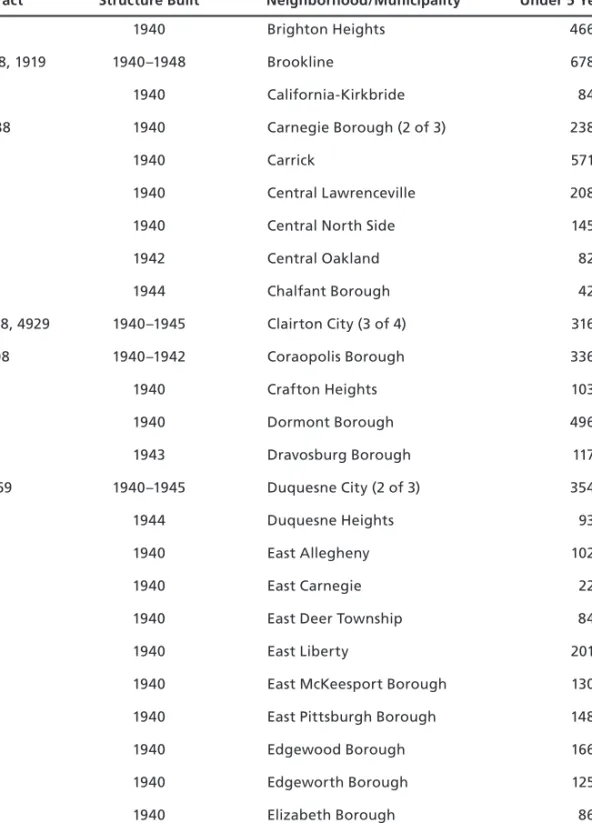
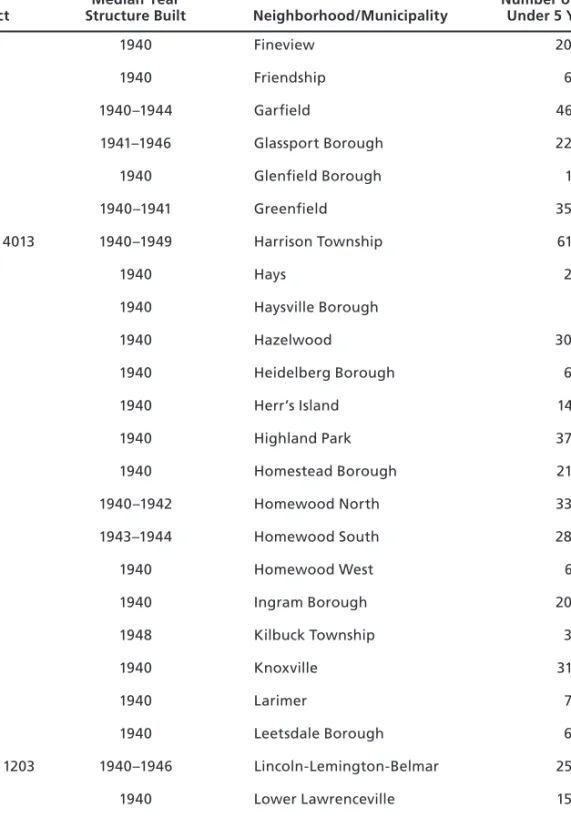
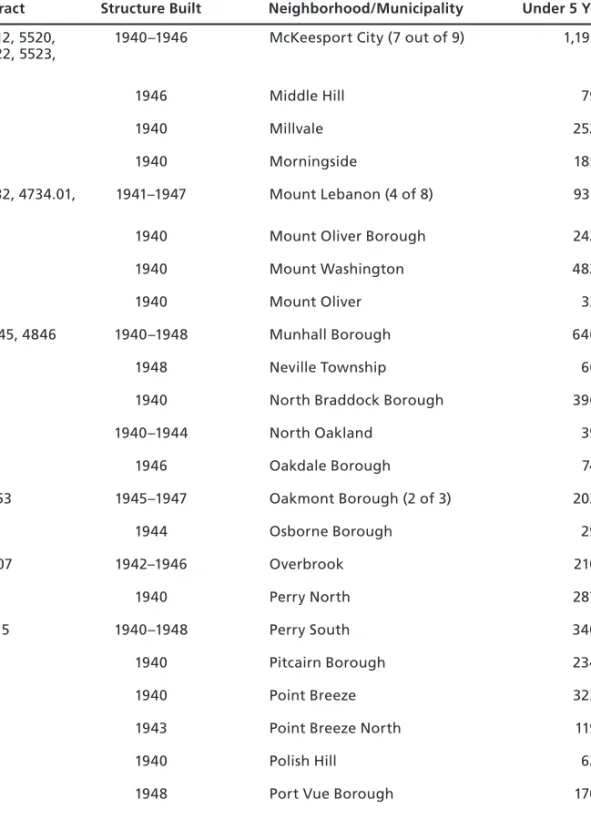
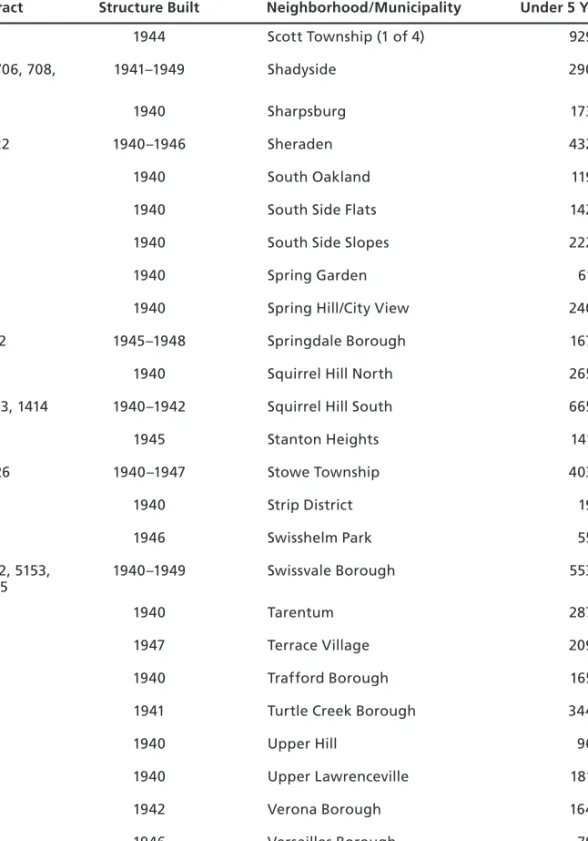
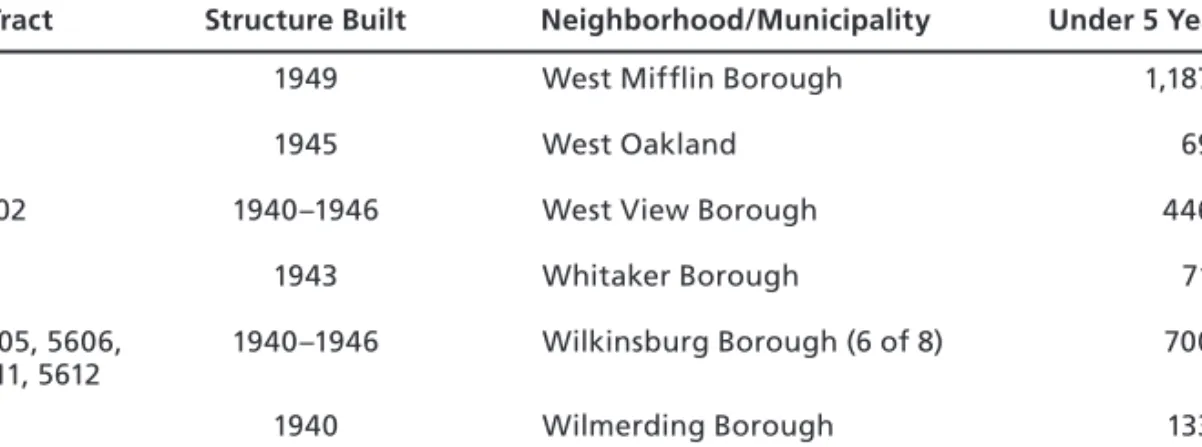
APPENDIX A. Population of Children and Median Housing Age in Allegheny County. . . .47
B. Advisory Group Members . . . .53
C. A Comparison of Risk Factors for Lead Poisoning. . . .55
Figures
ix
3.1. Risk Assessment and Screening Processes for Children in Allegheny
County. . . 27
Tables
xi
1.1. Summary of CDC Recommendations for Children with Confirmed (Venous) Elevated Blood Lead Levels. . . 7
1.2. PA DOH Standards for Services to Be Provided to Families of Children with Elevated Blood Lead Levels. . . 8
2.1. Data Characteristics of Existing Blood Lead Screening Databases. . . .14
2.2. Quality of Data in Existing Blood Lead Screening Databases. . . .14
2.3. Comparison of Risk Factors for Lead Poisoning Across Allegheny, Erie, and Philadelphia Counties and Rhode Island. . . .18
2.4. Comparison of Screening Rates Based on PA-NEDSS 2003. . . .19
2.5. Comparison of Screening Rates Based on EPSDT 2000–2001. . . 20
2.6. Comparison of Children with Elevated Blood Lead Levels Based on
PA-NEDSS 2003. . . .21
2.7. Estimates of Prevalence Rates for Childhood Lead Poisoning in Allegheny County and the Number of Children in Allegheny County with Blood Lead Levels of 10 μg/dL or Greater Who Have Not Been Screened. . . 24
A.1. Number of Children in Allegheny County Under Age Five Living in Census Tracts Where Median-Age Housing Was Built Before 1950, as of 2000. . . .47
C.1. A Comparison of Risk Factors for Lead Poisoning Across 12 Pennsylvania Counties and Rhode Island. . . .55
xiii
Summary
Lead poisoning is a serious, preventable environmental health threat to young children in many communities throughout the United States (AAP, Committee on Environ-mental Health, 1998). One of the key goals for U.S. public health policy included in the U.S. Department of Health and Human Services (HHS) Healthy People 2010
report is the elimination of elevated blood lead levels in children (see HHS, 2000). Achievement of this goal will require improvements in three general areas: (1) lead poi-soning prevention; (2) screening, reporting, and surveillance of childhood blood lead levels; and (3) treatment of childhood lead poisoning. The focus of this report is on screening, reporting, and surveillance, which are critical, not only to the overall goal of eliminating lead poisoning, but to its prevention and treatment as well.
Fortunately, past efforts focused primarily on lead poisoning prevention have led to a decline in the number of children nationwide with elevated blood lead levels. Between 1999 and 2002, 1.6 percent of children one to five years old, or 310,000, had blood lead levels at or above the current recommended cutoff of 10 micrograms of lead per deciliter of blood (μg/dL), compared to 88.2 percent between 1976 and 1980 (CDC, 2005). Despite this significant reduction in the number of children nationally between the ages of one and five years who have elevated blood lead levels and the lower levels of blood lead observed, a number of issues continue to complicate effective eradication of this important public health problem.
First, the general perception that the problem of childhood lead poisoning has been resolved must be corrected. To place the rate of high lead levels (i.e., 1.6 percent of children nationwide) in context, the national prevalence rates for autism, childhood depression, and attention deficit hyperactivity disorder—other childhood health prob-lems currently considered to be of critical concern—are 0.91 percent, 5 percent, and 3 to 5 percent, respectively (American Academy of Child and Adolescent Psychiatry, 2004a, 2004c, 2004b). Unlike these other conditions, however, the causes of child-hood lead poisoning are known, and the condition is 100-percent preventable.
Second, recent national blood lead level data continue to show a clear racial dis-parity. Although the largest decrease in elevated blood lead levels (from 11.2 percent in 1991–1994 to 3.1 percent in 1999–2002) has been among non-Hispanic black chil-dren aged one to five years, this group of young chilchil-dren remains at greater risk for
xiv Improving Childhood Blood Lead Level Screening, Reporting, and Surveillance
exposure to harmful lead levels than non-Hispanic white children (1.3 percent) and Mexican-American children (2.0 percent) in the same age range (CDC, 2005). The risk of elevated blood lead levels also remains higher for other subpopulations of young children, including children from low-income families and children who live in older homes (CDC, 1997).
Third, because most young children with elevated blood lead levels have no obvi-ous symptoms at the time of exposure, the prevention, detection, assessment, and man-agement of lead poisoning and associated risk factors rely entirely on the results of blood lead screening tests.
Fourth, the absence of obvious symptoms belies the negative impact that even low levels of blood lead (i.e., less than 10 μg/dL) can have on a young child’s cognitive, intellectual, and neurodevelopmental outcomes, and the very serious implications that these outcomes have for broader issues of national concern, such as school readiness and educational achievement levels.
Fifth, although eliminating childhood lead poisoning remains a high priority on the national public health agenda, responsibility for ensuring that at-risk young children are screened for lead poisoning and that the results are reported to relevant authorities is often fragmented at the county level, hindering adequate prevention, sur-veillance, and treatment efforts. In Pennsylvania, for example, all blood lead screening results must be reported directly to the state’s disease-surveillance system by health care providers or state-licensed laboratories. The Allegheny County Health Depart-ment (ACHD) is no longer the first recipient of this data. Its current responsibility is limited to case management for those children identified as having elevated blood lead levels based on data reported at the state level.
For all of these reasons, now more than ever, effective screening, reporting, and surveillance of childhood lead poisoning requires the concerted, proactive, and coor-dinated effort of state and local public health officials, health care and health plan providers, community agencies, and parents. Such efforts are particularly important in communities with high rates of reported elevated blood lead levels or with inadequate data on the prevalence of elevated blood lead levels, as well as in communities with older housing, which increases the risk of young children’s exposure to harmful lead levels.
Pittsburgh ranks 28th on the Centers for Disease Control and Prevention (CDC) list of the 129 cities with the greatest number of children estimated to have elevated blood lead levels (PA DOH, 2005). The CDC and the American Academy of Pediat-rics (AAP) recommend that communities with comparable blood lead levels institute universal, rather than targeted or selected, blood lead screening. Moreover, many chil-dren in Allegheny County belong to high-risk groups (i.e., they live in households that are below the poverty level or in census tracts where the median-year housing was built before 1950).
Summary xv
In light of the issues raised above, the RAND Corporation, in collaboration with the University of Pittsburgh Office of Child Development, was commissioned by Healthy Home Resources to do the following:
Review the quality of existing data on blood lead screening, reporting, and sur-veillance for young children in Allegheny County, and, if feasible, to use this data for estimating (1) the prevalence of childhood lead poisoning in Allegheny County and (2) the number of young children in Allegheny County with blood lead levels of 10 μg/dL or greater who have not been screened.
Identify key barriers to screening, reporting, and surveillance efforts in Allegheny County, and potential strategies for overcoming them.
Develop a set of recommendations for improving screening, reporting, and sur-veillance in Allegheny County.
Existing Data on Childhood Blood Lead Screening, Reporting, and Surveillance in Allegheny County
Data on blood lead screening from three extant databases were examined: the Nat-ional Health and Nutrition Examination Survey (NHANES), the Pennsylvania National Electronic Disease Surveillance System (PA-NEDSS), and the Pennsylvania Medicaid database. An analysis of each database with regard to data characteristics and data quality revealed the following:
The NHANES sample selection process and overall study methodology ensure the reliability of its results for the nation as a whole. However, the ability to make predictions from this data regarding local prevalence rates is limited. At best, these data provide an approximate range of the number of children with elevated blood lead levels in Allegheny County.
PA-NEDSS has significant potential for providing comprehensive, timely, and high-quality data. However, the lead component of PA-NEDSS currently has a number of limitations: a quality review process that has only recently been imple-mented, missing information, an inability to assess the completeness of reporting, and an inability to cross-reference the information with Medicaid data.
Medicaid claims data indicate only that a lead screening was completed and a claim was submitted; they do not specify blood lead levels in children who were screened nor whether the blood lead levels were elevated. The Medicaid database does include the ages of all children enrolled in Medicaid and, if applicable, their physical health managed care organizations (MCOs) and primary care providers. Thus, the relevant MCO or Office of Medical Assistance Program (OMAP) can • • • • • •
xvi Improving Childhood Blood Lead Level Screening, Reporting, and Surveillance
determine which Medicaid children are missing a lead screening and follow up as needed to ensure that blood lead level screenings are conducted in compliance with Medicaid requirements.
Based on the available data, we compared Allegheny County’s screening and prevalence rates for childhood lead poisoning with other regions that have comparable levels of risk for childhood lead poisoning. The range of all children screened for child-hood lead poisoning varies from 15.3 percent in Erie County to 2 percent in both Lan-caster and Chester Counties; Allegheny County ranks sixth, with 5.4 percent of young children screened. Allegheny County’s screening rate for children enrolled in Medicaid is fifth among the 12 Pennsylvania counties. Prevalence rates of blood lead levels of 10 μg/dL or greater among children screened under the age of six years range from 5 per-cent in Chester County to 22 perper-cent in Lancaster County. Allegheny County’s preva-lence rate of 5.9 percent ranks it fourth lowest among the 12 counties. In comparison, Rhode Island’s screening rate is 87 percent, and the prevalence rate for lead poisoning in this state (which is approximately the same size as Allegheny County) has declined to below 4 percent in 2003 from more than 14 percent a decade ago.
Given the limitations of the data described above, it is impossible to know with certainty the extent of the childhood lead poisoning problem in Allegheny County. However, estimates based on the available data suggest that 987 children between the ages of one and five years and 1,771 children under the age of six years with Medicaid benefits who have not been screened are likely to have blood lead levels of 10 μg/dL or greater.
Screening for Childhood Lead Poisoning in Allegheny County
According to the 1998 Medicaid Manual, a lead screening test must be provided to all children 12 to 24 months old who are enrolled in Medicaid. A child between 36 and 72 months of age who has not received a prior blood lead screening test must be screened. No risk assessment is required. For all other children, the blood lead screen-ing recommendations of the CDC or the Health Resources and Service Administra-tion should be followed as appropriate and unless superseded by state or county recom-mendations. The Pennsylvania Department of Health (PA DOH) Lead Elimination Plan calls for universal screening of all children without a confirmed prior blood lead test at the ages of one and two years and of all children three to six years old (PA DOH, 2005). The ACHD endorses the PA DOH’s call for universal screening of all children at the ages one and two years.
Although national surveys of pediatricians indicate that they know the Medicaid requirements and CDC recommendations for childhood lead screening, available data
Summary xvii
at the national, state, and local levels suggest that these guidelines are often not fol-lowed. A number of barriers currently work against adequate childhood lead screening in Allegheny County.
First, the dramatic reduction in extremely high blood lead levels in young chil-dren has reinforced the general perception that childhood lead poisoning is no longer a public health concern and that screening is not important for young children. Second, federal screening requirements and state and local screening recommendations not-withstanding, many health care providers may be following a policy of targeted screen-ing, which adds several decision points to the determination that a child is at risk for lead poisoning. At each of these decision points, some at-risk children may not be identified and therefore not screened. Third, there are reported concerns about draw-ing blood from young children, the appropriateness of capillary samples, and the skills of the staff collecting the samples. Fourth, because many health care providers prefer to conduct lead screening tests through venous blood draws and do not have a readily available pediatric blood-drawer, many children are referred to off-site laboratories for testing. This requires a number of additional steps by the parent or guardian, including identifying and finding the laboratory, arranging for transportation to get there, taking time off from work, and finding child care for any other children who must remain at home, to name a few.
Reporting and Surveillance of Childhood Lead Poisoning in Allegheny County
Reporting the results of childhood blood lead screens is essential for two reasons: It expedites the case management and/or treatment of an individual child with an ele-vated blood lead level, and it provides the data necessary to characterize the epidemi-ology of elevated blood lead levels (PA DOH, 2005). Complete and accurate surveil-lance information about local lead poisoning risk factors can help guide development of appropriate screening recommendations, reinforce public education efforts regard-ing the importance of childhood screenregard-ing, and encourage strategic partnerships for improving primary prevention efforts as well as screening and reporting.
Like most states, Pennsylvania has laboratory-reporting requirements to ensure that blood lead results are reported. However, a range of issues currently impedes reporting and surveillance processes in Allegheny County.
First, representatives of some state-licensed blood lead laboratories that serve health care providers in Allegheny County express difficulties associated with report-ing electronically to PA-NEDSS usreport-ing the specified HL7 format.
Second, many of the professionals involved in surveillance systems and at local laboratories report that health care providers are “notorious” for providing incomplete patient and/or lead test information on specimens sent for external processing and
xviii Improving Childhood Blood Lead Level Screening, Reporting, and Surveillance
reporting. Some laboratories will follow up with providers to obtain the required infor-mation; others will report to PA-NEDSS only the information they are provided. In particular, the lack of Medicaid status information for blood lead specimen results entered into PA-NEDSS makes it impossible to reliably cross-reference PA-NEDSS data with Medicaid data. Since the Pennsylvania Department of Public Welfare (PA DPW) no longer collects blood lead levels for young children when they are screened, it can be difficult to identify children who require a follow-up evaluation.
Third, until recently, there have been very few staff within the PA DOH assigned to monitor blood lead level data and identify data integrity problems. The approach of the PA DOH has been to hold the laboratory responsible for complete information, but laboratory-licensing procedures do not include adequate review of adherence to report-ing requirements for blood lead level screenreport-ing.
Fourth, the local Medicaid MCOs interviewed indicate that historically the PA DPW OMAP has not aggressively monitored blood lead screening rates. Follow up for non-Medicaid children referred for blood lead screens who are not tested is more complicated, since there is no ready mechanism for others outside the provider’s office to identify them.
Conclusions and Recommendations
The findings of this study suggest that current blood lead level reporting and surveil-lance data are inadequate for accurately assessing the true prevalence of childhood lead poisoning in Allegheny County or the number of children who are at risk for lead poi-soning but have not yet been screened. Thus, there is a clear need for more diligent state and local involvement to ensure that at-risk children in Allegheny County are screened, and that the information is reported appropriately.
At the state level, we recommend the following long- and near-term actions by the public entities that have a mandate to address these issues. These entities include the PA DOH, PA DPW, the Pennsylvania Department of Insurance (PA DOI), the ACHD, and the Medicaid MCOs serving Allegheny County.
Implement the PA DOH Lead Elimination Plan’s recommendation to institute universal blood lead screening for all children at one and two years of age.
The PA DPW Office of Child Development and the PA DOH should request that the PA DOI adopt the Medicaid blood lead screening requirements for chil-dren who are beneficiaries of the State Chilchil-dren’s Health Insurance Program (SCHIP).
The PA DOH and the PA DPW should use one integrated database (i.e., PA-NEDSS) for surveillance of childhood blood lead levels in Pennsylvania.
• •
Summary xix
The PA DOH should enforce the current requirements for blood lead reporting to PA-NEDSS, including standards of reporting that must be met by all state-licensed laboratories. At a minimum, the PA DOH should require that informa-tion on children’s insurance include Medicaid identificainforma-tion.
The PA DOH should also provide more extensive technical assistance and sup-port to state-licensed blood lead laboratories on proper electronic resup-porting. The PA DPW should reinstitute the requirements for reporting blood lead levels for all Medicaid children who are screened, or explore other options for obtaining this information, such as utilizing PA-NEDSS data.
The PA DPW OMAP should step up its efforts to aggressively monitor current Early and Periodic Screening, Diagnostic, and Treatment (EPSDT) program requirements for childhood blood lead level screening, establishing a goal of 90-percent compliance for MCOs in Allegheny County by 2006. Managed care contracts should be revised to include quality or performance standards relating specifically to lead.
The PA DOH and the PA DPW should establish procedures for cross-referencing blood lead level surveillance data in the PA-NEDSS and Medicaid databases no later than July 2006.
At the county level, we recommend the following actions, to be implemented under the guidance of the ACHD.
The ACHD, the Medicaid MCOs serving Allegheny County, and interested local organizations should enhance public education and awareness efforts targeted at parents and health care providers about the importance of repeat blood lead level screening at age two and the adverse effects of blood lead levels of 10 μg/dL or higher on early childhood neurodevelopment.
Health care providers should also be educated on the validity of capillary draws. The PA DPW, the ACHD, and Medicaid MCOs should assume responsibility for ensuring that health care providers receive training and kits for in-house capil-lary specimen collection (including filter papers) and the export of specimens for all Medicaid-enrolled children to licensed blood lead laboratories. The ACHD and the PA DOH should strongly encourage the adoption of the same practices among private commercial insurers for all other children.
The Pennsylvania Chapter of the AAP should add blood lead screening tests to the immunization records they provide to parents.
ACHD should establish a two- to three-year pilot program with the Alliance for Infants and Toddlers (Alliance) for developmental screening and tracking of a sample of children with blood lead levels of 10 μg/dL or higher, thus offering these children the benefits of the developmental screening and tracking process already conducted by the Alliance.
• • • • • • • • •
xx Improving Childhood Blood Lead Level Screening, Reporting, and Surveillance
All Medicaid MCOs serving Allegheny County should send feedback reports to their network providers on individual Medicaid children not screened for lead poisoning, including comparative data on blood lead screening compliance rates across practices. For all other children, ACHD and SCHIP administrators should encourage health care providers to develop an internal tracking (“tickler”) system for identifying individual children for whom a blood draw was ordered by an external lab but whose blood was not tested.
xxi
Acknowledgments
The authors acknowledge with appreciation the guidance and support of the state and local stakeholders who agreed to participate in the advisory group for this study. We also express our thanks to the many individuals who contributed important informa-tion through their participainforma-tion in interviews and focus groups. Finally, we thank our reviewers, Harold Alan Pincus, Herbert Needleman, and Devra Davis for their thoughtful comments and suggestions on earlier drafts of this report.
This study was made possible through the support of Healthy Home Resources, a nonprofit organization in Pittsburgh, Pennsylvania, that supports communities and families in creating and maintaining healthy homes by addressing the rise in illnesses caused or complicated by the presence of indoor environmental hazards, including lead.
xxiii
Abbreviations
AAP American Academy of Pediatrics ACHD Allegheny County Health Department Alliance Alliance for Infants and Toddlers
BLL blood lead level
CDC Centers for Disease Control and Prevention CLPPP Childhood Lead Poisoning Prevention Program CMS Centers for Medicare and Medicaid Services CRP Center for Rural Pennsylvania
EPDST Early and Periodic Screening, Diagnostic, and Treatment FEP free erythrocyte protoporphyrin
GAO U.S. General Accounting Office, now U.S. Government Accountability Office
HCFA Health Care Financing Administration
HHS U.S. Department of Health and Human Services HMO health maintenance organization
HRSA Health Resources and Services Administration
HUD U.S. Department of Housing and Urban Development
MCO managed care organization
μg/dL micrograms per deciliter
NHANES National Health and Nutrition Examination Survey OMAP Office of Medical Assistance Program
xxiv Improving Childhood Blood Lead Level Screening, Reporting, and Surveillance
PA DOH Pennsylvania Department of Health PA DOI Pennsylvania Department of Insurance PA DPW Pennsylvania Department of Public Welfare
PA-NEDSS Pennsylvania National Electronic Disease Surveillance System PPC Pennsylvania Partnerships for Children
SCHIP State Children’s Health Insurance Program
WIC Special Supplemental Nutrition Program for Women, Infants, and Children
1
CHAPTER ONE
Introduction
Lead poisoning is a serious, preventable environmental health threat to young children in many communities throughout the United States (AAP, Committee on Environ-mental Health, 1998). One of the key goals for U.S. public health policy included in the U.S. Department of Health and Human Services (HHS) Healthy People 2010
report is the elimination of elevated blood lead levels in children (see HHS, 2000). Achievement of this goal will require improvements in three general areas: (1) lead poi-soning prevention; (2) screening, reporting, and surveillance of childhood blood lead levels; and (3) treatment of childhood lead poisoning. The focus of this report is on screening, reporting, and surveillance, which are critical not only to the overall goal of eliminating lead poisoning, but to its prevention and treatment as well.
Fortunately, past prevention efforts, in particular the removal of lead from gaso-line, have led to a decline in the number of young children nationwide with elevated blood lead levels. Between 1999 and 2002, 1.6 percent of all children one to five years old, or 310,000, had blood lead levels at or above the current recommended cutoff of 10 micrograms of lead per deciliter of blood (μg/dL), compared to 88.2 percent between 1976 and 1980 (CDC, 2005). Overall, the mean national blood lead level has dropped from 13.7 μg/dL between 1976 and 1980, to 2.3 μg/dL between 1991 and 1994, and to 1.6 μg/dL between 1999 and 2002 (Pirkle, 1994; CDC, 2005).
Despite this significant reduction in the number of children nationally between the ages of one and five years who have elevated blood lead levels, and the lower levels of blood lead observed, a number of issues continue to complicate effective eradication of this important public health problem.
First, the general perception that the problem of childhood lead poisoning has been resolved must be corrected. To place the rate of high lead levels (i.e., 1.6 percent of children nationwide) in context, the national prevalence rates for autism, childhood depression, and attention deficit hyperactivity disorder—other childhood health prob-lems currently considered to be of critical concern—are 0.91 percent, 5 percent, and 3 to 5 percent, respectively (American Academy of Child and Adolescent Psychiatry, 2004a, 2004c, 2004b). Unlike these other conditions, however, the causes of child-hood lead poisoning are known, and the condition is 100-percent preventable.
2 Improving Childhood Blood Lead Level Screening, Reporting, and Surveillance
Second, recent national blood lead level data continue to show a clear racial dis-parity. Although the largest decrease in elevated blood lead levels (from 11.2 percent in 1991–1994 to 3.1 percent in 1999–2002) has been among non-Hispanic black chil-dren aged one to five years, this group of young chilchil-dren remains at greater risk for exposure to harmful lead levels than non-Hispanic white children (1.3 percent) and Mexican-American children (2.0 percent) in the same age range (CDC, 2005). The risk of elevated blood lead levels also remains higher for other subpopulations of young children, including children from low-income families and children who live in older homes (CDC, 1997).
Third, because most young children with elevated blood lead levels have no obvi-ous symptoms at the time of exposure, the prevention, detection, assessment, and man-agement of lead poisoning and associated risk factors rely entirely on the results of blood lead screening tests.
Fourth, the absence of obvious symptoms belies the negative impact that even low levels of blood lead (i.e., less than 10 μg/dL) can have on a young child’s cognitive, intellectual, and neurodevelopmental outcomes, and the very serious implications that these outcomes have for broader issues of national concern, such as school readiness and educational achievement levels.
Fifth, although eliminating childhood lead poisoning remains a high priority on the national public health agenda, responsibility for ensuring that at-risk young children are screened for lead poisoning and that the results are reported to relevant authorities is often fragmented at the county level, hindering adequate prevention, sur-veillance, and treatment efforts. In Pennsylvania, for example, all blood lead screening results must be reported directly to the state’s disease surveillance system by health care providers or state-licensed laboratories. The Allegheny County Health Department (ACHD) is no longer the first recipient of this data. Its current responsibility is limited to case management for those children identified as having elevated blood lead levels based on data reported at the state level.
For all of these reasons, now more than ever, effective screening, reporting, and surveillance of childhood lead poisoning requires the concerted, proactive, and coor-dinated effort of state and local public health officials, health care and health plan providers, community agencies, and parents. Such efforts are particularly important in communities with high rates of reported elevated blood lead levels or with inadequate data on the prevalence of elevated blood lead levels, as well as in communities with older housing, which increases the risk of young children’s exposure to harmful lead levels.
Introduction 3
Background on Lead Poisoning
Sources of Lead Poisoning
Lead-based house paint is the major source of childhood lead poisoning in the United States, followed by lead-contaminated dust and soil (Public Health Service, 1999). Lead was a major ingredient in most interior and exterior oil-based house paint before 1950 and was still used in some paints until 1978, when the production of lead paint was officially banned. The U.S. Department of Housing and Urban Development (HUD) estimates that three-quarters of pre-1980 housing units contain some lead-based paint; the likelihood, extent, and concentration of lead-based paint increase with the age of the building. House dust is often contaminated by lead-based paint that is peeling, deteriorating, or disturbed during home renovation or the preparation of painted sur-faces for repainting without proper safeguards. Soil contamination can be traced back to deteriorating exterior paint or past widespread use of leaded gasoline.
Other, less common sources of lead in a young child’s environment include lead-contaminated drinking water (where lead solder and, sometimes, lead pipes were used in the municipal water system, in the child’s home, or both); dust residues from worn lead wheel weights on urban streets; old and imported toys or furniture painted with lead-based paint; certain ethnic, traditional, or home remedies that involve lead inges-tion; and the clothing of parents whose work (e.g., car repair, industrial machinery, bridge construction, battery manufacture, smelting, foundries) or hobby (e.g., clay ceramic pottery, stained glass making) involves high levels of lead.
Impact of Lead Poisoning
Lead is a neurotoxin that when ingested can adversely affect the structural and/or functional components of the nervous system and cause serious harm to virtually every other system of the body (e.g., hematologic, endocrinologic, renal, reproductive). At extremely high levels (i.e., greater than 70 μg/dL), lead can cause seizures, coma, severe brain and kidney damage, and death. At lower levels (i.e., less than 10 μg/dL), lead can adversely impact cognition and intellectual functioning, particularly among young children (National Research Council, 1993; Needleman and Bellinger, 1989; Needle-man and Gastonis, 1990; Baghurst et al, 1992; Bellinger, Stiles, and NeedleNeedle-man, 1992; McMichael et al, 1988; Needleman, Gunnoe et al, 1979; Needleman, Leviton, and Bellinger, 1982; Bellinger and Needleman, 2003). Clearly, the impact of even low levels of blood lead in young children has serious implications for school readiness and educational achievement levels. In 1991, concern was sufficient for HHS to revise the threshold at which blood lead levels are considered to be elevated, from the previous 25 μg/dL to 10 μg/dL.
Considerable controversy and debate continue in the public health policy arena concerning the precise threshold at which blood lead levels should be considered
ele-4 Improving Childhood Blood Lead Level Screening, Reporting, and Surveillance
vated. A recent five-year study has found that children who have blood lead concentra-tions lower than 10 μg/dL suffer intellectual impairment from the exposure, and that the marginal biological impact of a microgram of lead on a child’s IQ is proportionally greater at levels below 10 μg/dL than at levels above (Canfield et al., 2003). Other stud-ies have shown that with a cutoff limit of 5 μg/dL—half the threshold currently used by the Centers for Disease Control and Prevention (CDC) to define an elevated blood lead level—there are significant effects on the verbal, perceptual, and attention skills that are critical to future reading success of young children (Beaman, 1998). Experts in the field have long argued that no exposure to lead is safe and that millions more children are adversely affected by environmental lead than previously estimated.
Recent research has also been directed to other aspects of the developmental neuro-toxicity of lead. Using instruments that provide valid and reliable measures of atten-tion, behavior, and other aspects of neurodevelopment, associations have been iden-tified between lead exposure and weaknesses in attention and vigilance, increased aggression, somatic complaints, and antisocial or delinquent behaviors (Bellinger, Titlebaum et al., 1994; Sciarillo, Alexander, and Farrell, 1992; Needleman, Riess et al., 1996). Other adverse neurodevelopmental effects that have been associated with low to moderate elevated blood lead levels include a reduction in auditory threshold, abnormal postural balance, poor eye-hand coordination, longer reaction times, and sleep disturbances (Robinson et al., 1987; Schwartz and Otto, 1987; Bhattacharya et al., 1990; Needleman, Gunnoe, and Leviton, 1979; Owens-Stively et al., 1997). More-over, many other social factors that affect young children’s health (e.g., socioeconomic status, single-parent household, teenaged mother, poor nutrition) have been shown to act in combination with lead hazards to exacerbate adverse health effects (Hubal et al., 2000).
To date, there is no empirical basis for recommending specific interventions for children with neurodevelopmental problems resulting from elevated blood lead levels. However, it is reasonable to assume that such children would benefit from the types of interventions shown to be effective in facilitating the development of other groups of children with similar problems. Given that some studies have found a stronger correla-tion between children’s previous blood lead levels and their current neurodevelopmen-tal status than between current levels and current neurodevelopmenneurodevelopmen-tal status, careful long-term surveillance of neurodevelopment is needed to ensure that children in need of such interventions are identified.
The economic costs of lead poisoning are also significant. According to the CDC, medical spending for lead poisoning treatment totaled $3 billion in 1992, an average of $925 per case (CDC, National Center for Injury Prevention and Control, 2004). Moreover, for every dollar spent on poison-control services in 1992, an estimated $7 was saved in medical care payments by reducing the number of medically treated poi-sonings. The savings per poisoning call totaled $175. One recent county-level study
Introduction 5
conducted in Mahoning, Ohio, estimated case management and treatment costs for 279 children with elevated blood levels to be in the range of $500,000, or $1,800 per child (Stefanak et al., 2005).
Groups Most at Risk for Lead Poisoning
Lead is particularly hazardous to children under the age of six who absorb lead differ-ently than adults, have still-developing nervous systems that are particularly vulnerable to lead, and engage in normal play activities that may expose them to lead-based paint and lead-contaminated dust and soil in multiple environments (e.g., child care centers, babysitters’ residences, homes of relatives, playgrounds, schools).
Children under three years of age are particularly susceptible for two reasons. First, at this age, children are at a sensory-motor developmental stage where they explore and learn about their environment by crawling on floors, playing in grass, and putting nonfood objects into their mouths, thus increasing their contact with lead contaminants, indoors and out (University of Minnesota, 2004). Second, from birth to age three, the functional capacity of a child’s brain undergoes exceedingly rapid development (Halfon, Shulman, and Hochstein, 2001). Since the synapses connecting the neurons and the myelin insulating them are not yet fully developed at birth, most of the brain’s functional capacity does not begin to develop until after birth. Before the age of three, the number of synaptic connections in the young child’s brain doubles to approximately 1,000 trillion, many more than will ultimately be present in the adult’s brain. Consequently, at this stage of neurodevelopment, the neurotoxicity effects of lead are most severe.
Some subpopulations of young children are particularly at risk, including low-income and minority children and children who live in older housing (CDC, 2005; CDC, 1997; CDC, National Center for Health Statistics, 1995). Low-income children are defined as those of families receiving some form of government assistance (i.e., Medicaid, Special Supplemental Nutrition Program for Women, Infants, and Chil-dren [WIC]; Supplemental Security Income; welfare; or subsidized child care). The U.S. General Accounting Office (GAO) estimated that 60 percent of all children with blood lead levels greater than 10 μg/dL, and 83 percent of all children with blood lead levels greater than 20 μg/dL, are enrolled in Medicaid (GAO, 1999). Another report estimated that 535,000 Medicaid-enrolled children have elevated blood lead levels, a prevalence rate of 9 percent among one- to five-year-olds—a rate three times higher than that of children not enrolled in Medicaid (3 percent) (GAO, 1998). The most recent national blood lead level data for the 1999–2002 period shows that non-His-panic black children one to five years old have the highest prevalence of elevated blood lead levels (3.1 percent) compared to other children in the same age group, with the prevalence among non-Hispanic white children and Mexican-American children at 1.3 percent and 2.0 percent, respectively (CDC, 2005).
6 Improving Childhood Blood Lead Level Screening, Reporting, and Surveillance
Primary Preventions for Lead Poisoning
Primary prevention means controlling lead hazards before children are ever exposed to lead. As lead-based paint is the primary source of lead exposure in the United States, and high lead exposures occur most frequently where children spend the majority of their time, public health efforts to remove lead from children’s residences and sites of routine care are a critical step in preventing childhood lead poisoning (PA DOH, 2005). Housing data from the U.S. Bureau of the Census, in combination with blood lead level surveillance data when available from screening, can help prevent lead expo-sure by targeting lead poisoning prevention activities to the neighborhoods and popu-lations at highest risk in a particular area.
The CDC, the federal agency within HHS responsible for issuing recommen-dations for screening and treating young children for lead poisoning, recommends environmental investigation for venous lead levels of 20 μg/dL or higher and for those persistently above 15 μg/dL. No official recommendations have been published by the CDC regarding environmental investigation of cases in which children have blood lead levels of 15 μg/dL or less. According to PA DOH guidelines, a case should be closed for case management purposes if two confirmed blood lead levels below 10 μg/dL are drawn three months apart, or if three confirmed blood lead levels below 15 μg/dL are drawn three months apart (PA DOH, 2005)
Environmental lead removal techniques include residential paint-hazard remedia-tion, high-efficiency particulate air vacuuming, interior dust abatement, and soil abate-ment. The efficacy of each technique varies depending on pre-abatement blood levels and frequency of intervention (or combined interventions) (Ellis and Kane, 2000). When lead hazard control work is required, parents and property owners should ensure that the work is done by trained professional contractors (PA DOH, 2005). If done properly, abatement work removes the immediate lead hazard that results in lead exposure. However, if done improperly, it can increase inhabitants’ exposure to lead. Although this work can be expensive (i.e., an estimated $10,000 per unit), financing through local, state, and federal grant and loan programs may be available in many communities through health departments or housing offices (AAP, Committee on Environmental Health, 1998).
Other primary preventions, such as public education about the hazards of lead exposure, provision of anticipatory guidance by health care providers, and informa-tion about nutriinforma-tion and the importance of dietary iron for preventing elevated blood lead levels, can further assist parents in taking measures to minimize their children’s exposure to lead.
Secondary Preventions for Lead Poisoning
Secondary prevention is based on the identification of exposed children through a blood lead screening test, thereby reducing the duration, intensity, and consequences of lead exposure. Identification of children with lead poisoning can lead to treatment
Introduction 7
and interventions designed to reduce blood lead levels or prevent future exposures (Lane and Kemper, 2001; Charney et al., 1983; Rhoads et al., 1999; Schultz, Pawel, and Murphy, 1999). The proper management of children with confirmed (venous) blood lead levels higher than 10 μg/dL is based on the relative degree of the elevation (see Table 1.1).
Table 1.1
Summary of CDC Recommendations for Children with Confirmed (Venous) Elevated Blood Lead Levels
Blood Lead Level (μg/dL)
10–14 15–19 20–44 45–69 70 or higher Lead education: Dietary Environmental Lead education: Dietary Environmental Lead education: Dietary Environmental Lead education: Dietary Environmental Hospitalize and commence chelation therapy Follow-up blood lead monitoring Follow-up blood lead monitoring Follow-up blood lead monitoring Follow-up blood lead monitoring Proceed according to actions for 45–69 μg/dL Proceed according to actions for 20–44 μg/dL if a follow-up BLL is in this range at least 3 months after initial venous test or BLLs increase
Complete history and physical exam Lab work:
Hemoglobin or hematocrit Iron status
Complete history and physical exam Lab work: Hemoglobin or hematocrit Iron status FEP or ZPP Environmental investigation Environmental investigation Lead hazard reduction Lead hazard reduction Neuro-developmental monitoring Neuro-developmental monitoring Abdominal X-ray (if particulate lead ingestion is suspected) with bowel decontamination if indicated Abdominal X-ray with bowel decontamination if indicated
Chelation therapy
8 Improving Childhood Blood Lead Level Screening, Reporting, and Surveillance
The CDC recommends a coordinated program of follow-up screenings, educa-tion, case management, environmental investigaeduca-tion, lead hazard control, and clinical evaluation (see Table 1.1) (CDC, 2002). These guidelines are not intended for use as a complete protocol but rather as a tool for adapting the management of childhood lead poisoning to local needs and conditions. The recommendations of the American Academy of Pediatrics (AAP) are consistent with those of the CDC (AAP, Committee on Environmental Health, 1998). Several states have also published case management and treatment guidelines to assist health care providers and public health personnel in managing children with elevated blood lead levels. Standards produced by the Penn-sylvania Department of Health (PA DOH) for ensuring that comprehensive services are provided to families of children with elevated blood lead levels are presented in Table 1.2 (PA DOH, 2005). A useful office-based approach to management for the clinician has also recently been published (Feingold and Anderson, 2004).
Elimination of Childhood Lead Poisoning Remains a National and State Public Health Priority
Addressing the problem of childhood lead poisoning remains a high priority on the national and state public health agendas. In 1991, HHS published a 15-year strategic plan calling for the elimination of childhood lead poisoning by the year 2011 (HHS, 1991). The plan identified universal screening of children and abatement of all lead Table 1.2
PA DOH Standards for Services to Be Provided to Families of Children with Elevated Blood Lead Levels
PA DOH
Standard Services to Be Provided
Standard 1 Parents/guardians who have children with confirmed venous blood lead levels of 10 to 14 μg/dL should receive educational materials from a public health professional. Standard 2 All children with confirmed initial venous blood lead levels of 15 to 19 μg/dL will be
referred for follow-up by a public health official to ensure that a second venous blood lead level is obtained within three months.
Standard 3 All children with confirmed venous blood lead levels of 20 to 44 μg/dL or two consecutive blood lead levels of 15 to 19 μg/dL (within a three-month time frame) will be referred to a public health professional for case management, home visits, and an environmental investigation.
Standard 4 All children with confirmed venous blood lead levels of 45 to 69 μg/dL will be referred to a public health professional for case management, home visits, and an environmental investigation. The public health professional will refer the child to a primary care provider for evaluation for chelation therapy.
Standard 5 All children with confirmed venous blood lead levels of 70 μg/dL or higher will be referred to a public health professional for case management, home visits, and an environmental investigation. The public health professional will make every effort to assure that all children are referred to a primary care provider for hospitalization for chelation therapy.
Introduction 9
paint in housing built before 1950 as essential parts of a national strategy to eliminate childhood lead poisoning. A strong national effort developed to eliminate the disease, but was derailed by prevailing attitudes and opposition from many directions, includ-ing the lead industry, realtors, landlords, insurance companies, some health mainte-nance organizations (HMOs), and a small number of pediatricians in private practice (Needleman, 1998). In its fiscal year 1999 performance plan to Congress, HHS reiter-ated its previous commitment by including the elimination of childhood lead poison-ing as one of the objectives for the CDC. Among its departmentwide Healthy People 2010 objectives, HHS also established the goal of no children between the ages of one and five with blood lead levels exceeding 10 μg/dL.
Likewise, the Commonwealth of Pennsylvania has identified lead poisoning as a significant health concern for Pennsylvania’s children, and the PA DOH Childhood Lead Poisoning Prevention Program (CLPPP)1 has developed a Lead Elimination Plan
to ensure that all children in the Commonwealth are free from lead poisoning (PA DOH, 2005). The Pennsylvania CLPPP surveillance subcommittee’s recommendation calls for universal screening of all children at the age of one and two years, and for all children aged three through six years without a confirmed prior blood lead test. The subcommittee found that universal screening is indicated according to the CDC crite-ria and based on the higher prevalence of both elevated blood lead levels in Pennsylva-nia children and the abundance of pre-1950 housing found in the Commonwealth.
Local city or county recommendations should be followed when they are more stringent than state recommendations. The Allegheny County Health Department is recommending the screening of all children at the age of one and two years.
Other CLPPP subcommittees have issued detailed recommendations regarding the detection and abatement of lead hazards in residential properties, the development or modification of educational materials, and the dissemination of case management manuals to health care providers.
Special Issues Related to Lead Poisoning in Pittsburgh and Allegheny County
Pittsburgh ranks 28th on the CDC’s list of the 129 cities with the greatest number of children estimated to have elevated blood lead levels (PA DOH, 2005). The CDC
1 The Lead Contamination Control Act of 1988 authorized the CDC to initiate program efforts to eliminate
childhood lead poisoning in the United States. As a result, the CDC Childhood Lead Poisoning Prevention Branch was created in 1990. One of its primary responsibilities is to provide funding to state and local health departments in order to determine the extent of childhood lead poisoning by screening children for elevated blood lead levels, help ensure that lead-poisoned infants and children receive medical and environmental follow-up, and develop neighborhood-based efforts to prevent childhood lead poisoning. In 2003, the CDC awarded $31.7 million to 42 state and local health departments, including the PA DOH and the ACHD, to develop and implement comprehensive lead poisoning prevention programs.
10 Improving Childhood Blood Lead Level Screening, Reporting, and Surveillance
and the AAP recommend that communities with comparable blood lead levels insti-tute universal, rather than targeted or selected, blood lead screening. Moreover, many children in Allegheny County belong to high-risk groups. Data from the 2000 U.S. Census show that there are 71,081 children under the age of six in Allegheny County, and approximately 17 percent of them live in households that are below the poverty level. In addition, 31,832 children in Allegheny County under the age of five live in census tracts where the median-year housing was built before 1950 (U.S. Census Bureau, 2000a; 2000b) (see Appendix A). The total number of one- and two-year-old Medicaid recipients who should have been screened for lead poisoning far exceeds the number of blood lead screening tests reported, suggesting that blood lead screening for Medicaid children in Allegheny County, as elsewhere in the United States, remains suboptimal.
Study Purpose and Methodology
In light of the continued public health importance of blood lead poisoning among children under six years of age, the critical role that lead screening can play in both its prevention and treatment, and the questions raised above regarding the screening of young children at risk for elevated blood lead levels in Allegheny County, the RAND Corporation, in collaboration with the University of Pittsburgh Office of Child Devel-opment, was commissioned by Healthy Home Resources to do the following:
Review the quality of existing data on blood lead screening, reporting, and sur-veillance for young children in Allegheny County, and, if feasible, use this data for estimating (1) the prevalence of childhood lead poisoning in Allegheny County and (2) the number of young children in Allegheny County with blood lead levels of 10 μg/dL or greater who have not been screened.
Identify key barriers to screening, reporting, and surveillance efforts in Allegheny County, and potential strategies for overcoming them.
Develop a set of recommendations for improving screening, reporting, and sur-veillance in Allegheny County.
An ancillary task was to determine how Allegheny County’s childhood lead poi-soning prevalence and blood lead screening rates compare to those of other regions with similar levels of risk, also based on existing screening, reporting, and surveillance data. We note that an assessment of efforts for enhancing primary prevention activities (such as lead hazard control work) and ensuring appropriate case management and treatment for children with elevated blood lead levels are outside the scope of this study.
To meet the study objectives, between July 2004 and June 2005, the RAND– University of Pittsburgh project team conducted a background study of the relevant
•
• •
Introduction 11
literature; a review of existing childhood blood lead level reporting and surveillance databases for Pennsylvania and Allegheny County; and interviews and focus groups with national, state, and local stakeholders.
The background study of the literature was designed to provide a foundation of knowledge upon which to conduct subsequent analyses of the screening, reporting, and surveillance processes in Allegheny County and to formulate recommendations for improving these processes. Relevant legislation, policy documents, and research studies were reviewed to gather information on national, state, and local guidelines and mandates for childhood blood lead level screening and reporting, as well as the locus of responsibility for enforcing them; known barriers to effective screening, reporting, and surveillance of childhood blood lead levels; best-practice models for enhancing screen-ing, reportscreen-ing, and surveillance of childhood blood lead levels, especially for at-risk populations; and emerging research findings on the impact of low to moderate blood lead levels on young children’s neurodevelopmental outcomes.
Three extant databases containing information on childhood lead poisoning in Pennsylvania and Allegheny County were examined: the National Health and Nutri-tion ExaminaNutri-tion Survey (NHANES), the Pennsylvania NaNutri-tional Electronic Disease Surveillance System (PA-NEDSS), and the Pennsylvania Medicaid database. In each case, we explored the following questions: What types of data are available? How com-prehensive are the available data? What are the limitations of the data? Given the strengths and weaknesses of the existing data, what conclusions, if any, can be drawn from them about blood lead poisoning among young children in Allegheny County? In particular, can estimates be made regarding the number of children under age six in Allegheny County with blood lead levels of 10 μg/dL or greater, including those who have not been screened? Finally, how do Allegheny County’s blood lead screening rates and prevalence rates for childhood lead poisoning compare with those of other regions with similar risk factors for childhood lead poisoning?
The interviews and focus groups were designed to elicit experts’ views on current screening, reporting, and surveillance efforts in Allegheny County, Pennsylvania, and elsewhere, and to identify barriers to these processes in Allegheny County and poten-tial strategies for overcoming them. In total, the project team conducted 15 interviews with the appropriate representatives from one local health clinic, two state-licensed blood lead laboratories in Allegheny County (one large and one small), two local Med-icaid physical health managed care organizations (MCOs), the ACHD, the PA DOH, the Pennsylvania Department of Public Welfare (PA DPW) Office of Medical Assis-tance Program (OMAP), the CDC, one CLPPP in another Pennsylvania county, and one CLPPP in another state. We also conducted two focus groups with parents from two family centers in at-risk communities in Allegheny County; one focus group had eight parents and the other had nine.
12 Improving Childhood Blood Lead Level Screening, Reporting, and Surveillance
The project team also established a 16-person advisory group for this study that met three times during the study period (in September 2004, January 2005, and April 2005) to review the project goals and tasks, discuss the preliminary findings, and refine the proposed recommendations, respectively (see Appendix B).
About This Report
This report provides a synthesis of the study findings, with each chapter integrating relevant information from the background study of the literature, database analyses, and interviews and focus groups, as appropriate. Chapter Two provides a review of existing blood lead level screening, reporting, and surveillance data relevant to Allegh-eny County, including estimates of childhood lead poisoning prevalence in AlleghAllegh-eny County and the number of young children in Allegheny County with blood lead levels of 10 μg/dL or higher who have not been screened. Chapters Three and Four examine the screening and reporting/surveillance processes in Allegheny County, respectively, with a particular focus on the barriers that currently impede these processes and poten-tial strategies for overcoming them. Chapter Five concludes with a set of recommenda-tions for improving childhood blood lead level screening, reporting, and surveillance in Allegheny County, Pennsylvania.
13
CHAPTER TWO
Existing Data on Childhood Blood Lead Screening,
Reporting, and Surveillance in Allegheny County
A primary task of this study was to review the quality of existing data on blood lead screening, reporting, and surveillance for children under the age of six in Allegh-eny County, and, if feasible, use this data for estimating the prevalence of childhood lead poisoning in Allegheny County and the number of young children in Allegheny County with blood lead levels of 10 μg/dL or higher who have not been screened. An ancillary task was to compare Allegheny County’s childhood lead poisoning preva-lence and blood lead screening rates to those of other regions with similar levels of risk, also based on existing screening, reporting, and surveillance data.
In this chapter, we describe the data characteristics and quality of the three blood lead level screening, reporting, and surveillance databases that were analyzed to com-plete these tasks; present the information that we were able to obtain from them, both individually and collectively; and, based on this information, offer the estimates of childhood lead poisoning prevalence and the number of children not screened, as described above. This analysis was informed by the background study of the literature and interviews with state and local stakeholders, primarily those involved in blood lead level data collection, reporting, and surveillance.
Descriptions of Existing Databases and the Information They Provide About Allegheny County
Data on blood lead testing from three extant databases were examined: the National Health and Nutrition Examination Survey (NHANES); the Pennsylvania National Electronic Disease Surveillance System (PA-NEDSS); and the Pennsylvania Medicaid database. Each database was analyzed with regard to data characteristics (e.g., years in which data were collected, population in database, source of data, ages of children analyzed for this study, types of data available, and whether blood lead level data were reported) and data quality (e.g., strengths and weaknesses of the data) (see Tables 2.1 and 2.2).
14 Improving Childhood Blood Lead Level Screening, Reporting, and Surveillance
Table 2.1
Data Characteristics of Existing Blood Lead Screening Databases
Data Characteristic NHANES PA-NEDSS EPSDT
Collecting entity Centers for Disease Control and Prevention (CDC)
PA Department of Health
PA Office of Medical Assistance (Medicaid) Year data collected 1999–2000 2004–2005 2000–2001
Population in database National random sample of 9,928 children from 44 states, NYC, and DC
Children in
Pennsylvania for whom lab work has been done for one of the 61 reportable diseases
All Medicaid children birth–20 years old who have had an EPSDT screen
Source of data CDC labs All labs servicing PA Claims data for Medicaid MCOs and fee-for-service programs
Ages of children analyzed for this study
Under 72 months of age Under 72 months of age Under 72 months of age
Types of data available Blood lead levels (all venous draws)
Blood lead levels plus lab results for 60 of the 72 reportable diseases
Lab results for all EPSDT screens, including hearing, vision, immunizations, and lead testing Blood lead level
data reported?
Yes Yes No
Table 2.2
Quality of Data in Existing Blood Lead Screening Databases
Data Characteristic NHANES PA-NEDSS EPSDT
Strengths of the data • Population-based • High control over samples and analyses (all done by CDC staff and labs)
• 100% venous draws
• Population-based electronic reporting • Data from state-licensed labs • PA DOH staff beginning to review data for quality
• Known demographic information • Known volume of anticipated reports • Can do checks to determine who is missing lead screens Weaknesses of the data • National sample
restricts predictions to areas smaller than national level
• Unknown volume of anticipated reports by lab and individual • No enforcement of mandated reporting by labs
• No match with EPSDT dataset
• No enforcement of presence and/or accuracy of some mandated data points
• No enforcement of mandated screening by CMS or OMAP (accepts 50% screening rates) • No enforcement of mandated reporting by labs • Reliant on claims data known to be underreported • EPSDT screens can be done without lead test • No blood lead levels reported