
(2015).
Video-based human action recognition using deep learning: a
review,
pp. 1-34.
© 2015
AutoresThis work is licensed under a Creative Commons
Attribution-NonCommercial-NoDerivatives 4.0 International License.
review
Huy-Hieu Pham · Louahdi Khoudour · Alain Crouzil · Pablo Zegers ·
Sergio A. Velastin
Received: date / Accepted: date
Abstract Human action recognition is an important application domain in computer vision. Its primary aim is to accurately describe human actions and their in-teractions from a previously unseen data sequence ac-quired by sensors. The ability to recognize, understand and predict complex human actions enables the con-struction of many important applications such as intel-ligent surveillance systems, human-computer interfaces, health care, security and military applications. In re-cent years, deep learning has been given particular at-tention by the computer vision community. This paper presents an overview of the current state-of-the-art in action recognition using video analysis with deep learn-ing techniques. We present the most important deep learning models for recognizing human actions,
ana-Huy-Hieu Pham ())·Louahdi Khoudour Centre d’Etudes et d’Expertise sur les Risques,
l’environnement la mobilit´e et l’am´enagement (CEREMA) 1 Avenue du Colonel Roche, 31400 Toulouse, France. E-mail: {huy-hieu.pham;louahdi.khoudour}@cerema.fr
Alain Crouzil
Institut de Recherche en Informatique de Toulouse Universit´e Paul Sabatier.
118 route de Narbonne, 31062 Toulouse Cedex 9, France. E-mail: [email protected]
Pablo Zegers
Facultad de Ingenier´ıa y Ciencias Aplicadas Universidad de los Andes.
´
Alvaro del Portillo 12455, Santiago 7620001, Chile. E-mail: [email protected]
Sergio A. Velastin
Department of Computer Science Universidad Carlos III de Madrid.
Av. Gregorio Peces-Barba 22, Colmenarejo, Madrid, Spain. E-mail: [email protected]
lyze them to provide the current progress of deep learn-ing algorithms applied to solve human action recogni-tion problems in realistic videos highlighting their ad-vantages and disadad-vantages. Based on the quantitative analysis using recognition accuracies reported in the lit-erature, our study identifies state-of-the-art deep archi-tectures in action recognition and then provides current trends and open problems for future works in this filed.
Keywords Human action recognition·deep learning·
CNNs·RNN-LSTMs· DBNs·SDAs
1 Introduction
In recent years, human action recognition continues to be an increasingly active research in the computer vi-sion community due to the interest in the development of many intelligent systems involving surveillance, con-trol, and analysis. The main goal of this area is to de-termine, and then predict what humans do in a video or a sequence of images. There are many potential ap-plications such as intelligent surveillance systems [147,
214,124], human-computer interfaces [153,191], health care [264], virtual reality [134], or security and military applications [167,137]. Fig. 1 shows some specific ap-plications of human action recognition in modern day life.
1.1 Motivation
An action can be defined as a spatio-temporal sequence of human body movements. There are many ways to de-fine an action from the literature [140,210,155]. Here, we consider “an action” as a single motion or complex sequences of motions performed by a single person or
(a) (b) (c)
(d) (e) (f)
Fig. 1 Examples of some applications based on human action recognition techniques:(a)recognizing and tracking human action in public transport systems [168];(b)stealing detection based on human-object recognition [167];(c)monitoring elderly people living at home [264]; (d)pedestrian path prediction in self-driving cars [103];(e)human-computer interaction using action recognition algorithm with depth sensor [261] in the entertainment industry;(f ) action detection and localization in realistic sports videos [207].
several humans. Actions are understood as episodic ex-amples of human dynamics that have starting and end-ing temporal points. From the viewpoint of computer vision, given an image sequence that contains one or many actions, human action recognition attempts to label each frame or a sequence of frames with a corre-sponding name of an action. In general, human action recognition is a hierarchical process, where the lower levels are on human detection and segmentation. The objective of those levels is to identify the regions of interest (ROIs) corresponding to static or moving hu-mans in video. The visual information of actions is ex-tracted at the next level and represented by features. These features are then used for recognizing actions. So, recognizing an action from features can be considered as a classification problem. Fig. 2 shows the flowchart of a typical action recognition system. Early attempts at human action recognition systems used independent frame-by-frame analysis methods, e.g. shape matching techniques [31], while later research has focused on the spatio-temporal analysis of human motions.
1.2 Challenges in human action recognition
A rapid increase in the number of researchers and tech-niques focusing on human action recognition has signif-icantly improved its accuracy. However, action
recogni-tion is still a challenging problem due to many issues including the large intra-class difference, fuzzy bound-ary between classes, viewpoint, occlusion, appearance, influence of environments and recording settings [155], in particular fromrealistic videos. Moreover, to have a complete human action recognition system, we need a mating of several disciplines including psychology and ontology [162,18].
1.3 Scope, taxonomy and organization
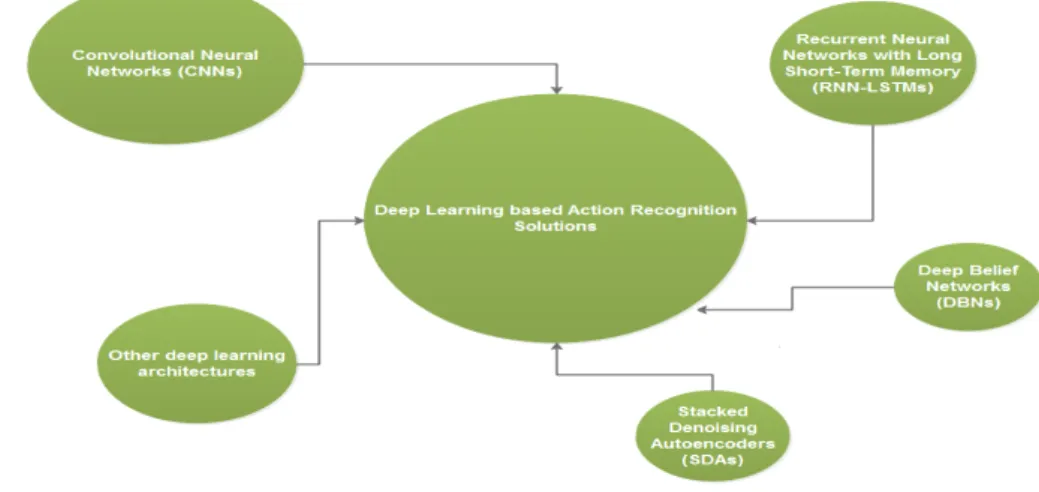
Human action recognition is a big topic in computer vision. Many different approaches have been published in the last two decades [17]. In recent years, the ad-vances of computer vision algorithms, especially ma-chine learning, has opened up a new direction for re-searchers. Therefore, it is timely that progress in this field is reviewed. In this paper, we focus on surveying publications that use deep learning, a technique that has won numerous contests in machine learning includ-ing the recognition of human actions. Our main goal is to present a review of the work that has been reported in literature, compare the performance of deep learn-ing based approaches and other existlearn-ing work in or-der to identify its advantages and limitations. To make the analysis more accessible, we used a taxonomy as shown in Fig. 3. For instance, we divide deep
learn-Fig. 2 Flowchart for a typical action recognition system. (image sequence (∗) from Southampton database [8])
ing approaches for action recognition based on their architectures. The most important models are covered including Convolutional Neural Networks (CNNs), Re-current Neural Network with Long Short-Term mem-ory (RNN-LSTMs), Deep Belief Networks (DBNs) and Stacked Denoising Autoencoders (SDAs). In addition, some combination architectures will also be discussed.
The review is organized as follows: First, we intro-duce related surveys and publicly available datasets in Sect.2. Then, we present the key deep learning architec-tures for human action recognition in Sect. 3, includ-ing the main ideas and mathematical models behind each architecture. Sect. 4 reviews the state-of-the-art in using deep models for human action recognition and related tasks. In Sect. 5, we give a quantitative anal-ysis about the recognition accuracies of deep learning approaches and discuss their pros and cons. In that sec-tion, we also provide some promising directions for fu-ture research. Finally, we conclude our paper in Sect.
6.
2 Related surveys and publicly available datasets
2.1 Previous surveys
In this section, we first consider related earlier surveys in human action recognition. Looking at the major con-ferences and journals [3,4,1,5,9], several earlier surveys have been published. Aggarwal and Cai [16] reviewed methods for human motion analysis focusing on three major areas including: motion analysis involving human body parts, tracking a moving human from a single view or multiple cameras and recognizing human activities from image sequences. Moeslund and Granum [139] re-viewed papers on human motion capture considering a general structure for systems analyzing human body
motion as a hierarchical process with four steps: ini-tialization, tracking, pose estimation and recognition. Wanget al. [227] presented a survey of work on human motion analysis, in which motion analysis was illus-trated as a three-level process including human detec-tion (low-level vision), human tracking (intermediate-level vision), and behavior understanding (high-(intermediate-level vision). Moeslundet al. [140] described the work in hu-man capture and analysis based on 280 papers from 2000 to 2006, centered on initialization of human mo-tion, tracking, pose estimamo-tion, and recognition.
Turaga et al. [210] considered that “actions” are characterized by simple motion patterns typically ex-ecuted by a single person while “activities” are more complex and involve coordinated actions among a small number of humans and reviewed the major approaches for recognizing human action and activities. Poppe [155] focused on image representation and action classifica-tion methods. A similar survey by Weinlandet al. [241] also concentrated on approaches for action representa-tion and classificarepresenta-tion. Popoola and Wang [154] pre-sented a survey focusing on contextual abnormal hu-man behavior detection for surveillance applications. Keet al. [96] reviewed human activity recognition meth-ods for both static and moving cameras, covering many problems such as feature extraction, representation tech-niques, activity detection and classification. Aggarwal and Xia [15] presented a survey of human activity recog-nition based on 3D data, especially on using RGB and depth information acquired by 3D sensors as the Kinect [261]. Guo and Lai [66] gave a survey of existing ap-proaches on still image-based action recognition.
Recently, Cheng et al. [36] reviewed approaches on human action recognition using an approach-based tax-onomy, in which all methodologies are classified into two categories: single-layered approaches and hierar-chical approaches. In addition, Vrigkaset al. [219] cat-egorized human activity recognition methods into two main categories including “unimodal” and “multimodal”.
Fig. 3 The proposed taxonomy in our work. The size of the ellipses is correspond to the number of reviewed papers in this research.
Then, they reviewed classification methods for each of these two categories. The survey of Subetha and Chi-trakala [197] mainly focused on human activity recog-nition and human-object interaction methods. Prestiet al.[128] provided a survey of human action recognition based on 3D skeletons, summarizing the main technolo-gies, including both hardware and software for solv-ing the problem of action classification inferred from time series of 3D skeletons. In addition, another survey was presented by Kang and Wildes [93]. It summarized various action recognition and detection algorithms, fo-cused on encoding and classifying features. The latest survey on human action recognition was published in early 2016 by Herath et al.[70], in which the authors reviewed methods based on hand-crafted features and some deep architectures for recognizing actions. Table1
summarizes previous surveys on human action and ac-tivity recognition published from 1997 to 2017 and re-viewed in this paper. The surveys in the literature have shown that the common approaches in human action recognition have focused on using hand-designed local features such as HOG/HOF [40,110], SIFT [129], or SURF [23]. In addition, these approaches are also ex-tended for more robustness in video processing such as Cuboids [42], HOG3D [100].
To the best of our knowledge, there is no review on human action recognition based on deep learning techniques including comparisons of the performance of deep learning based approaches with traditional meth-ods and with each other. Moreover, deep learning is a rapidly growing field, where novel algorithms appear in very short time duration and change the way of un-derstanding and recognizing actions from visual data. That has prompted us to perform this work. Not only to provide a comparative analysis about the current
state of human action recognition using deep learning algorithms, but also to point out the new trends in this field. Our survey will add to the latest reviews on hu-man action recognition in the literature.
2.2 Benchmark datasets for human action recognition
With the increase in study of human action recognition algorithms, many datasets have been recorded and pub-lished for the research community. Much of the progress in action recognition was demonstrated on standard benchmark datasets. These datasets allow us to de-velop, evaluate and compare new methods. In this sec-tion we summarize the most important public datasets in the area. From the early dataset which contained very simple actions and acquired under controlled en-vironments, to recent benchmark datasets with thou-sands of video samples and millions of frames provid-ing complex actions and human behaviors from the real world. Table 2 shows the datasets and their descrip-tions. To guide readers in the selection of the most suitable dataset for evaluating their works, we divide benchmarks into four categories including single ac-tion (category I), human interacac-tion, human-object interaction and behavior (category II), surveil-lance (category III) and sport videos and other types (category IV).
The complexity of each dataset depends much on its recorded setting. For example, early benchmark datasets such such as KTH [173] or Weizmann [61] were made under laboratory conditions for idealized human ac-tions: all of them are composed of simple and unrealistic actions and homogeneous background. Many methods
Table 1 Summary of previous surveys and its key points ordered by year of publication.
Authors Year Main topics Aggarwal et al.
[16]
1997 Human motion analysis, track-ing.
Moeslund et al.
[139]
2001 Motion initialization, tracking, pose estimation, recognition. Wanget al. [227] 2003 Human detection, tracking,
activity understanding. Moeslund et al.
[140]
2006 Human motion capture, ac-tion, and behavior analysis. Turagaet al. [210] 2008 Recognizing human behavior. Poppe [155] 2010 Feature extraction and
classi-fication of human action. Weinland [241] 2011 Full-body action
segmenta-tion, and recognition. Popoola et al.
[154]
2012 Human motion analysis, ab-normal behavior recognition.
Keet al. [96] 2013 Human activity recognition
from static and moving cam-era.
Aggarwal et al.
[15]
2014 Human activity recognition from 3D and depth data. Guoet al.[66] 2014 Human action recognition
us-ing still image.
Chenget al. [36] 2015 Single-layered and hierarchical approaches for action recogni-tion.
Vrigkaset al. [219] 2015 Human activity classification. Subetha et al.
[197]
2016 Human activity recognition and human-object interac-tions.
Prestiet al.[128] 2016 Action classification based on skeleton.
Kanget al.[93] 2016 Human action recognition and detection.
Herathet al.[70] 2016 Human action recognition based on handcrafted features and deep learning approaches
have already achieved very high recognition rates on these datasets. Performances have increased over the years and have reached perfect accuracy, e.g., 100% on the Weizman [61] by Ikizleret al. [85] or Brahnamet al.[27]. In other words, we can say that the unrealistic datasets have already solved by our action recondition systems. Another dataset named IXMAS has also been produced under laboratory conditions, but with multi-ple viewpoints [240].
After the success of the action recognition systems on benchmarks produced “in the lab”, more complex benchmarks have been released. For instance, MSR Ac-tion3D [120], UT-Interaction [169], Daily-Activity-3D [224], Cornell Activity CAD-60 [2], Cornell Activity CAD-120 [104], VIRAT 2.0 [150], SBU-Kinect Inter-action [255]. These datasets aim to provide challeng-ing videos of human action under unconstrained envi-ronments with complex background and illumination conditions. However, they are not “real” actions. Then,
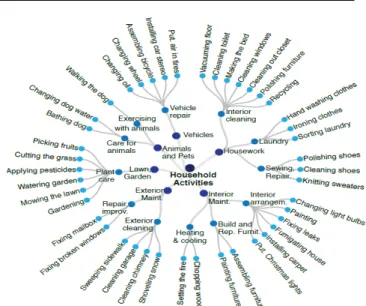
Fig. 4 Household activities from the ActivityNet [45] dataset.
many researchers have extracted realistic situations from movie or sport videos on social networks such as YouTube to make new realistic benchmark datasets. See for ex-ample Hollywood-1 [111], Hollywood-2 [135], YouTube [126], HMDB-51 [107], UCF-50 [160], UCF-101 [192], Sports-1M [94], ActivityNet [45]. The general approach in these datasets is to collect videos from “in-the-wild” sources with many clips and action classes. It is easy to see that several datasets are designed with deep learn-ing algorithms in mind due to their very large scale. For example, in Sports-1M [94] there are around 1 mil-lion YouTube videos belonging to a taxonomy of 487 classes of sports, ActivityNet [45] provides more than 200 activity classes with 10,024 training videos, 4,926 validation videos and 5,044 testing videos. Fig.4shows some actions in a class of the ActivityNet [45] dataset. These large scale datasets are an important premise for the development of deep learning methods because they require a large number of training data and tuning them on small and out-of-date datasets such as KTH [173] or Weizmann [61] leads to low performance. Most recently, Shahroudy et al. introduced NTU RGB+D dataset [179], a very large-scale RBD-D dataset for hu-man action recognition. The NTU RGB+D dataset con-tains more than 56 thousand video samples, 4 million frames with 60 different action classes and performed by 40 different subjects. To our best knowledge, this is the biggest RGB-D dataset for action recognition tasks. Some samples of RGB, depth, joints, and IR image are shown in Fig. 5. Experiments on realistic human action datasets have so far given limited results spe-cially when dealing with a large and varied range of actions (e.g., Table 3 shows recognition results
meth-Hollywood-1 Laptevet al.[111] 8 Answer phone, get out car, hand shake,hug
(II) 2008 person, kiss, sit down, sit up, stand up.
Hollywood-2 Marszaleket al.[135] 12 Answer phone, drive car, eat,
(II) 2008 fight person,hug person, kiss, run,etc.
YouTube Liuet al.[126] 8 Basketball shooting, volleyball spiking,
(II) 2009 soccer juggling, cycling, diving, etc.
MuHAVi Singhet al.[187] 17 Walk turn back, run stop, punch, kick,
(II) 2010 pick up through object, walk fall, etc.
UT-Interaction Ryooet al.[169] 6 Shake-hands, point, hug, push, kick,
(II) 2010 and punch.
MSR Action3D Liet al.[120] 20 High arm wave, horizontal arm wave, hammer,
(II) 2010 hand catch, forward punch, high throw, etc.
Daily-Activity-3D Wanget al.[224] 16 Drink, eat, read book, call cellphone, (II) 2010 cheer up, sit still, toss paper, play game, etc. MSR Action3D Liet al.[121] 20 High arm wave, horizontal arm wave, hammer,
(II) 2010 hand catch, forward punch, high throw, etc
Olympic Sports Niebleset al.[145] 16 High jump, long jump, triple jump, pole vault
(IV) 2010 discus throw, hammer throw, etc.
VIRAT 2.0 Ohet al.[150] 12 Loading an object to a vehicle, opening a (III) 2011 vehicle trunk, getting into a vehicle, etc. HMDB-51 Kuehneet al.[107] 51 Smile, laugh, chew, talk,
(II) 2011 smoke, eat, drink, etc.
Cornell Activity CAD-60 Sunget al.[199] 12 Rinsing mouth, brushing teeth,
(II) 2011 talking on the phone, drinking water, etc.
Cornell Activity CAD-120 Koppulaet al.[104] 20 Making cereal, taking medicine, stacking objects,
(II) 2012 reaching, moving, pouring, eating, etc.
SBU-Kinect Interaction Kiwonet al.[255] 8 Approach, depart, push, kick, punch,
(II) 2012 exchange objects, hug, and shake hands.
LIRIS Wolfet al.[242] 10 Discussion between two or more people, (II) 2012 put (take) an object into (from) a box (desk), etc. UCF-50 Reddyet al.[160] 50 Diving, drumming, fencing,
(IV) 2012 tennis swing, trampoline jumping, playing piano, etc. UCF-101 Soomroet al.[192] 101 Horse riding, hula hoop, ice dancing,
(IV) 2012 skiing, skijet, sky diving, etc.
Sports-1M Karpathyet al. et al.[94] 487 Juggling club, pole climbing, tricking,
(IV) 2014 foot-bag, skipping rope, slack-lining, etc.
ActivityNet Heilbronet al.[45] 203 Personal care, eating and drinking, household, (II) 2015 caring and helping, working, socializing, etc. NTU RGB+D Shahroudyet al.[179] 60 Drinking, eating, reading,
Fig. 5 Some samples of RGB, depth, skeleton and IR image from the NTU RGB+D dataset [179].
ods on the HMDB-51 [107] dataset). Therefore, the current problem in action recognition that needs solv-ing by computer vision community is recognizsolv-ing com-plex actions and behaviors on realistic scenarios. Fur-thermore, there is also the need to build cost-effective real-world applications. This explains state-of-the-art benchmark datasets such as UCF-101 [192], HMDB-51 [107], Sports-1M [94], ActivityNet [45] and NTU RGB+D [179]. Researchers who want to evaluate their algorithms on state-of-the-art benchmark datasets can participate in the THUMOS challenge [83], a common benchmark for action classification and detection for computer vision community from around the world.
Recent developments in low-cost depth sensor tech-nology have brought many opportunities for solving human action recognition tasks. RGB-D and skeleton data allow better understanding of the 3D structure of human body motion. Related to RGB-D and skeleton datasets, interested readers are referred to the recent work of Zhanget al.[259] and Firman [50]. In the next section, we will present deep learning-based approaches, one of the most interesting techniques in recent years in this field to answer the challenges highlighted here.
3 Deep learning: a short presentation
For the sake of completeness, we present this section es-pecially for readers who might not be very familiar with deep learning techniques. A full discussion is clearly outside the scope of this paper. Before discussing deep learning, we would like to briefly summarize the con-cept of machine learning (ML). ML is the branch of al-gorithms that allows computers to automatically learn from data. We can use ML systems for identifying ob-jects in images, detecting spam emails, understanding
Table 3 Accuracy (%) on the HMDB-51 dataset [107]
Approach Author Acc.
RGB+optical flow Wanget al.[237] 62.0
FST+SCI fusion Sunet al.[198] 59.1 Two-stream CNN+SVM Simonyanet al.[183] 59.4 Improved dense
trajec-tory Wanget al.[222] 57.2
W-flow dense trajectories Jainet al.[88] 52.1 Dense trajectory Wanget al.[220] 46.6 TRAJMF Jianget al.[92] 40.7 Binary ranking models Canet al.[29] 39.0 MIP Kliperet al.[101] 29.2 GIST 3D Solmazet al.[189] 29.2 Action bank Sadanandet al.[170] 26.9 C2 Kuehneet al.[107] 23.0 HOG/HOF Kuehneet al.[107] 20.0
text, finding genes associated with a particular disease and numerous other applications. The primary goal of ML is to develop general-purpose algorithms which are able to make accurate predictions in many different tasks. In other words, ML algorithms try tomatch the density function that produced the data. For example in classification problems, we need to identify a set of categories C from a space of all possible examples X. Given any set of labeled examples (x1,c1), ...,(xm,cm)
, where xi ∈ X and ci ∈ C; the goal of ML is to find
a concept F(·) that satisfies ci = F(xi) for all i.
De-pending on the way of learning, (e.g., learn from la-beled data or unlala-beled data, learn with feedback or non-feedback), ML methods are typically classified into four categories including supervised learning, unsuper-vised learning, semi-superunsuper-vised learning, reinforcement learning. Fig.6illustrates a typical supervised learning process in classification tasks.
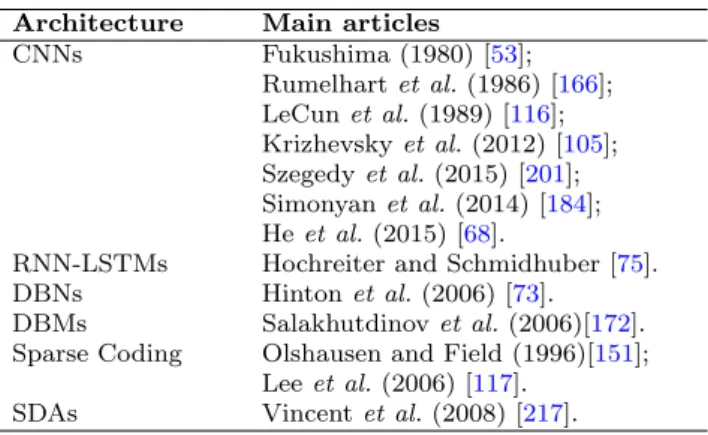
Deep Learning (DL) is a class of techniques in ma-chine learning. In 2012, DL became a major break-through in computer vision after the authors of AlexNet [106] achieved record performance on a highly challeng-ing dataset named ImageNet. AlexNet [106] was able to classify 1.2 million high-resolution images from 1000 different classes with the best error rate. In general, DL methods are machine learning methods that consists and operate on multiple (multi-layer) levels of repre-sentation. Fig. 7 illustrates a multilayer network and the construction process of the higher layers from the first layer. Various DL architectures have been proposed over the years (see Table 4) and have been shown to produce state-of-the-art results on many tasks, not least within human action recognition. In this section, we de-scribe the most important DL architectures for human action recognition including Convolutional Neural Net-works (CNNs or ConvNets) [53,166,116,105], Recur-rent Neural Networks with Long Short-Term Memory
Fig. 6 The supervised ML process for a typical classification problem.
(a) (b)
Fig. 7 (a)Illustration of a multilayer network model [115]. This model allows a computer to automatically determine the representations needed for prediction tasks. The first layer (input units) is called “visible layer”, it contains natural data in their raw form (e.g., a collection of pixels values). Starting from the visible layer, a series of hidden layers is built through extracting increasingly abstract features from lower levels. In other words, more abstract concepts are learned from the lower levels. The highest layer contains useful information for exploring and predicting the content of input data.(b)An example of a deep learning model for classification problems [256,59]. Given some pictures, the first layer includes an array of pixel values. The first hidden layer represents the presence of edges. Then, the second hidden layer can identify corners and contours from edges in the first layer. By connecting corners and contours, the third layer can determine specific objects.
(RNN-LSTMs) [75], Deep Belief Networks (DBNs) [73], and Stacked Denoising Autoencoders (SDAs) [217].
3.1 Convolutional Neural Networks (CNNs)
After obtaining breakthrough results in object recog-nition with AlexNet [106] for the ImageNet project in
2012, CNNs become one of the most important deep learning models and play a dominant role for solving visual-related tasks. A CNN is a type of artificial neu-ral network, designed for processing visual and other two-dimensional data. The main benefit of this model is that it operates directly on the raw data without any hand-crafted feature extraction. The idea of CNNs was firstly presented in 1980 by Fukushima [53] in which
Table 4 Popular deep learning architectures. Architecture Main articles
CNNs Fukushima (1980) [53]; Rumelhartet al.(1986) [166]; LeCunet al.(1989) [116]; Krizhevskyet al.(2012) [105]; Szegedyet al.(2015) [201]; Simonyanet al.(2014) [184]; Heet al.(2015) [68].
RNN-LSTMs Hochreiter and Schmidhuber [75]. DBNs Hintonet al.(2006) [73].
DBMs Salakhutdinovet al.(2006)[172]. Sparse Coding Olshausen and Field (1996)[151];
Leeet al.(2006) [117]. SDAs Vincentet al.(2008) [217].
CNNs are inspired by the structure of the visual ner-vous system [80]. CNN models continued to be proposed and developed, e.g., by Rumelhart et al. [166], LeCun et al. [116] and Krizhevskyet al. [105]. There are three key ideas behind a CNN architecture including “local connections”,“shared weights”, and“pooling”.
Local connections: In regular neural networks, each hidden layer consists of a set of neurons, where each neuron is fully connected to all neurons in the previous layer (Fig. 8a). This model does not work efficiently when the input vector has a hight dimension. To make this more efficient, the idea is to reduce the number of connections between the first hidden layer to the input or each hidden layers to each other. Given an image as an input vector, every input pixel is not connected to every neuron in the first hidden layer. Instead, neurons in the first hidden layer are connected to localized re-gions of the input image. This sub-region is called the “local receptive field”. For each local receptive field, we can identify a neuron in the first hidden layer as shown in Fig.8b.
Shared weights: For standard neural networks such as multilayer perceptrons [164] (MLP), the neurons of the first layer are computed by the dot product func-tion of input vector x and its weights w where many differentwi values are used. In a CNN, we use a
tech-nique called “weight sharing” which is able to reduce the number of parameters wi. Specifically, in weight
sharing, some of the parameters in the CNN model are constrained to be equal to each other [213]. Mathemat-ically, the weight sharing technique can be performed using a convolution operator. In this process, we apply the filters to many local receptive fields in the input image, a “feature map” is generated by sliding a filter over the input matrix and computing the dot product. We can use many different filters and each of them will produce one feature map.
Pooling: “Pooling” is a sample-based discretization process. Its main goal is to reduce the dimensionality of the input representation while retaining the most important information in feature maps. This process reduces the computational cost and at the same time it provides a form of translation invariance. Pooling is performed by using a pooling function to replace the output of the network at a certain location with sum-mary statistic of the nearby outputs. Two popular pool-ing functions include the maximum operation and the average of a rectangular neighborhood.
These concepts above can now be put together to form a complete CNN architecture (Fig.9) that consists of a series of stages. The first few stages are structured by one convolutional layer and one pooling layer. These layers are followed by one or more fully connected lay-ers at the top of the model. In a CNN, the convolution layer plays the role of a local feature extractor while the pooling layer merges semantically similar features into one. The last layer is a standard neural network working as a classifier (or a standard classifier such as an SVM). So the network learns a set of good features (c.f. with arbitrarily chosen or hand-crafted features) to use with a classifier. To prevent over-fitting and train the CNNs faster, Rectified Linear Units (ReLUs) and Dropout Layers [194,39] have also been used. However, we do not discuss these two layers here as it is be-yond the scope of this paper. Further details on the development of the CNNs can be found for example on AlexNet [106], ZF Net [257], GoogLeNet [201], VGGNet [184], ResNets [68], Inception-v3 [202], Dense-Net [79] and Inception-v4 [200] (see Fig.10).
3.2 Recurrent Neural Networks with Long-Short Term Memory (RNN-LSTMs)
Recurrent Neural Network (RNN) is a good choice to model the complex dynamics of various actions in video because its architecture allows to store and access the long range contextual information of a temporal se-quence. The main difference between an RNN and a multilayer perceptron is the presence of cyclical con-nections (Fig.11). This way, an RNN can learn to map from the entire history of previous inputs to each out-put [62]. However, they are very difficult to train due to the “vanishing gradient problem” [25,102]. The Long Short-Term Memory (LSTM) [75] approach has been proposed to solve these problems. Fig.12describes the LSTM’s structure and its information flow. RNNs not only are able to make use of previous context in data sequences but also able to exploit future context as well.
(a) (b)
Fig. 8 (a)Illustration of a full-connected model in a regular 3-layer neural network.(b)Illustration of the local receptive field in the input neurons [6].
Fig. 9 Illustration of the typical block diagram of a CNN [176].
Fig. 10 Some important architectures in the literature of convolutinal neural network.
Bidirectional RNNs [174] has been proposed to do this by processing and storing both past and future con-text of data with two separate hidden layers. All the information are then sent forwards to the same output layer. By replacing the nonlinear units in the Bidirec-tional RNNs architecture by LSTM cells, we can obtain
Bidirectional-LSTM as shown in Fig.13. In the Sect.4, we will see how to apply Bidirectional-LSTMs to model and recognize human actions in video.
3.3 Deep Belief Networks (DBNs)
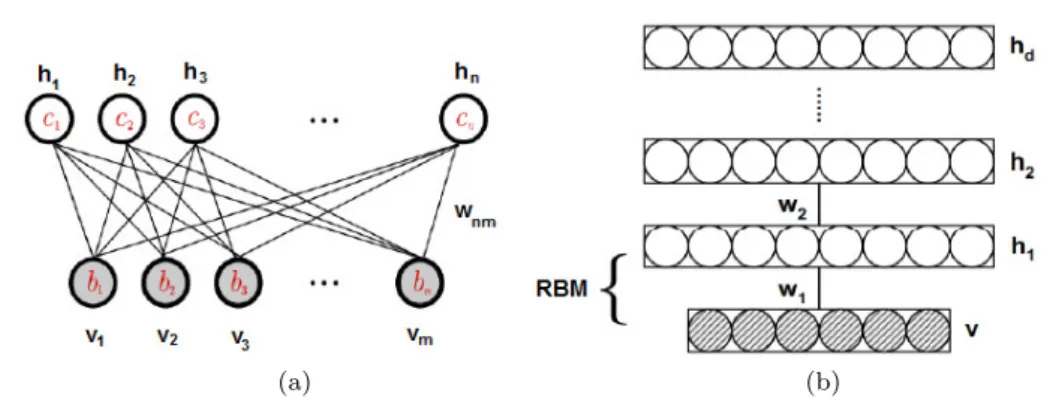
DBNs [73] have been used successfully for many recog-nition tasks such as handwritten digits recogrecog-nition [72], object recognition [142], or modeling human motion [206]. DBNs are probabilistic generative models that are constructed by stacking several restricted Boltzmann machines (RBMs) [188,74] (Fig.14b). RBMs are shal-low networks containing two layers: one layer of “ visi-ble” units that represents the input data and one layer of “hidden” units that learns to represent features. In an RBM architecture, all visible units of the visible layer are connected to all hidden units of the hidden layer,
(a) (b)
Fig. 11 Illustration of:(a)a Multilayer Perceptron and(b)a Recurrent Neural Network.
it=σ(W xixt+Whiht−1+Wcict−1+bi) ft=σ(W xfxt+Whfht−1+Wcfct−1+bf) ct=ftct−1+ittanh(W xcxt+Whcht−1+bc) ot=σ(W xoxt+Whoht−1+Wcoct+bo) ht=ottanh(ct)
Fig. 12 Diagram of an LSTM unit [62]. A typical LSTM unit contains an input gate it, a forget gateft, an output gateot, an output stateht and a memory cell statect. The information flow is described by the above equations where
σis the sigmoid activation;xtis the input to the network at timet; all the matricesWare the connection weights between units. denotes element-wise product; and ut denotes the modulated input function.
Fig. 13 Architecture of a Bidirectional-LSTM. The circular nodes represent LSTM cells.
but there are no connections between two units of the same layer (Fig.14a). The standard type of RBM has binary-valued hidden and visible units, meaning that each unit can only be in one of two states, “0” or “1”. The probability of setting a unit to “1” is a sigmoid function of its bias, weights on connections, and the state of other units. More detail, given a binary RBM withmvisible unitsV ={vi}, i∈(1, ..., m) andn
hid-den unitsH={hj}, j∈(1, ..., n), wherevi and hj are
the binary states of visible unitiand hidden unitj or (vi, hj) ∈ (0,1)m+n, the joint probability distribution
for visible and hidden units is defined as [71]:
P(vi, hj) =
1
Ze
−E(vi,hj) (1)
whereZis the partition function computed by summing over possible pairs of (vi, hj):
Z= X
vi,hj
e−E(vi,hj) (2)
andE(vi, hj) is the energy function given by:
E(vi, hj) =− m X i=1 aivi− n X j=1 bjhj− X i,j vihjwi,j. (3)
In Eq. (3), ai and bj are biases, wi,j is the weight
be-tween vi andhj units. In a binary RBM model, there
are no direct connections between visible units nor be-tween hidden units. So, given the input datavthrough the visible units, the binary state of each unit hj is 1
with probability:
p(hj= 1|v) =σ(bj+ X
i
viwi,j). (4)
Given a hidden vector h, we can also reconstruct the states of a visible unit by:
p(vi= 1|h) =σ(ai+ X
j
(a) (b)
Fig. 14 (a)An example of a RBM withmvisible units andnhidden units.(b)The schematic overview of a deep belief networks composed ofdRBMs.W1,W2,...,Wh are the weights matrices between the connections.
whereσ(x) is the sigmoid function with form: 1 1 +e−x.
For estimating the weights wi,j and biases ai, bj, we
use: ∂logp(v) ∂wi,j =hvihjidata− hvihjimodel (6) ∂logp(v) ∂ai =hviidata− hviimodel (7) ∂logp(v) ∂bj =hhjidata− hhjimodel (8)
The conditional distribution p(hj|v) in Eq. (4) shows
that the hidden layer can be constructed by updating the state of units hj when given a data vector v. In
practice, since all units in the hidden layer are condi-tionally independent given the visible layer, the state of each unit can be computed by using block Gibbs sam-pling [73]. This technique allows to update the state of all the units in parallel. As shown in Fig.14b, a DBN could be viewed as a stack of several RBMs. Therefore, training a DBN is performed through training each of its RBM. The work of Hinton et al. [73] provided an efficient procedure for training DBNs. In this process, the units of the current hidden layer are regarded as visible layer for the next hidden layer and training a DBN starts from the lowest RBM. The procedure is re-peated layer-to-layer until the highest RBM is reached and known as the “greedy layer-wise training strategy”. Each component (an RBM) of the DBNs acts as a fea-ture extractor on inputs. It extracts “low level” features at the bottom hidden layer, as well as more “abstract” features at the higher hidden layers. To improve the performance of DBNs for classification tasks, the DBN model could be extended by adding a soft-max layer on the top of its architecture.
Fig. 15 The typical structure of an autoencoder.
3.4 Stacked Denoising Autoencoders (SDAs)
SDA is another important technique in DL. It is an extension of a classical autoencoder [165] and was first introduced in 2008 by Vincentet al. [217]. The idea of an autoencoder is shortly described here: Given a set of data points x= {x1, x2, ..., xm}, map x to another
set of data points y = {y1, y2, ..., yn} where n < m.
From the compressed sety, we reconstruct a set of ˜x, which approximates the original datax. The mapping
x7→yis called “encoding” and the mappingy7→˜xis called “decoding”. Formally, the processes of encoding and decoding are performed as follows:
y=W1xi+b1 (9)
˜
x=W2yi+b2. (10)
where W1 ∈ Rm×m, W2 ∈ Rn×n. Fig. 15 illustrates
the network architecture of a typical autoencoder. To achieve the goal of reconstructing ˜xto approximate the
original data x, we minimize the difference betweenx
and ˜xby minimizing the function:
J(W1, b1, W2, b2) = m X
i=1
(˜xi−xi)2. (11)
From Eqs. (10) and (11), we have:
J(W1, b1, W2, b2) = m X i=1 (W1W2xi−1)xi+b1W2+b2)2. (12) SDAs are constructed by stacking several autoencoders together to create a “deep” architecture. The weights are fine-tuned with a back-propagation algorithm [38]. The “unsupervised pre-training” of each autoencoder is performed in a greedy layer by layer manner. Once the a SDAs is learnt, its output will then be used as the input representation of a supervised learning algorithm for recognition tasks.
4 Human action recognition approaches based on DL
This section reviews current studies of deep learning on human action recognition. We categorized publica-tions based on the proposed taxonomy shown in Fig.3, including: human action recognition based on CNNs (Sect. 4); human action recognition based on DBNs (Sect.4); human action recognition based on SDAs (Sect.
4); human action recognition based on RNN-LSTMs (Sect. 4), and some other architectures (Sect.4).
4.1 Human action recognition based on CNNs
Many works on human action recognition and related tasks based on DL models have been proposed and re-ported in the literature. Among them, one of the most used deep models is CNNs (see Sect. 3 and Fig. 3) and its extensions. Researchers have successfully ap-plied CNN-based architectures for many visual tasks such as people detection and tracking [46,175,228], pose estimation [148,86,87,58,208,37], action recognition [56,
182,90,99,91,183,226,229,209,234,41,125,30,138,186], event detection and crowded scene understanding [54,
180,32,248]. Early work on applying CNNs was made in 1995 by Nowlan et al. [148] for hand tracking and recognizing. In their work, a CNN model is proposed to locate the hand and recognize whether it is close or open with accuracies of 99.7% and 99.1% on a dataset of 900 video images from 18 different subjects for each task. However, the complex structured backgrounds of images may have a significant impact on the recognition
accuracy. Starting from the work of Fukushima [53], Giese and Poggio [56] proposed a hierarchical feedfor-ward architecture for the recognition of biological move-ments such as walking, running or various full-body ac-tions. In a related paper, Sigalaet al. [182] also devel-oped a hierarchical model for detecting a walker based on the use of the neural detectors that are able to ex-tract motion features with different levels of complex-ity. Jhuanget al. [90] proposed an extension model from the work of Giese and Poggio [56] for the recognition of actions from video sequences (Fig. 16). This model is close to the standard architecture of a CNN shown in Fig.9but it does not use the convolutional layer. In 2007, Kimet al. [99] used a modified CNN model and a weighted fuzzy min-max neural network (WFMM) [98] for human action recognition. In their paper, the CNN generates a set of feature maps from the pretreated data and a WFMM [98] plays the role of a classifier.
An important study on applying a CNN for rec-ognizing human actions in videos has been presented by Ji et al. [91]. Normally, the CNNs have been pri-marily applied on two-dimensional data (2D-CNN) in which these models compute features from the spa-tial dimensions only. In order to exploit the tempo-ral information of human motion, Ji et al. [91] used a novel three-dimensional convolutional neural network (3D-CNN) architecture for recognizing human action. This architecture used 3D kernels in the convolution stages to extract motion features from both spatial and temporal dimensions. This improvement can be applied to contiguous frames in video to extract multiple fea-tures. Fig. 17 illustrates the architecture of 3D-CNN and the function of each component. Experiments on TRECVID-2008 [11] datasets have shown that this model outperforms the frame-based 2D-CNN model and two other methods proposed by Lazebnik et al. [113] and Yanget al. [252] which follow the state-of-the-art bag-of-words (BoW) [112]. Motivated by Jiet al. [91], Wang et al. [226] has also used 3D-CNN for building a deep ar-chitecture which is able to recognize actions from RGB-D data. In addition, Tran et al. [209] investigated in detail the 3D-CNN model and showed that it outper-forms the 2D-CNN in modeling human motion infor-mation on various recognition tasks. Moreover, Tranet al. [209] found that the best kernel length for 3D-CNN is 3×3×3 size. Varolet al.[216] also used 3D-CNN for learning action representation in video but with long-term temporal convolutions at the input layer. This study demonstrated that this solution can significantly improve the performance on some state-of-the-art ac-tion recogniac-tion datasets. A visible disadvantage of 3D-CNN model is the increasing number of parameters of the network. To reduce the complexity of the model,
Fig. 16 The framework for recognizing human action proposed by Jhuang et al. [90]. Given a gray-value video sequence as input data, theS1 stage locates the object in image frame by using spatio-temporal filters. EachC1 unit is computed by
applying a local max over for eachS1unit for down-sampling. From theC1stage, we perform a template matching operation
for identifying intermediate-level features of the model. TheC2stage is constructed by computing the global max over each
S2 unit. The high-level features are extracted inS3through a template matching and theC3features are computed fromS3
using the same way like computingC2. The last stage is a linear multiclass SVM classifier that is able to recognize the actions
using theC3 features as input.
Fig. 17 The 3D-CNN architecture for human action recognition proposed by Ji et al. [91]. The first layer (hardwired layer) is used for generating multiple channels of information from the input frames (e.g. the information of gray-level, gradient, or optical flow). The model applies 3D convolutions for each channel for computing the feature maps inC2layer. TheS3layer is
obtained by applying subsampling operation on each feature map in theC2layer. The procedure is repeated until obtaining
feature maps in theS5layer that is then connected with a full connection layer.
Sun et al. [198] proposed a factorized spatio-temporal convolutional network that factorizes the 3D convolu-tion kernels into 2D spatial kernels and followed by 1D temporal kernels. Another limitation of 3D-CNN mod-els in these work above is that they need to be trained using supervised learning algorithm, and it requires a very large number of labeled data. Therefore, exploring the unsupervised training of 3D-CNN models is a new direction for future research.
After finding more efficient ways to train CNNs us-ing GPU computus-ing [196] and the success of AlexNet
[106] in the ILSVRC-2012 competition, much work on human action recognition has been published. Ijjinaet al. [84] recognized human actions in videos by using the standard action bank [171] as a feature detector and a CNN as a classifier. Gkioxari et al. [58] gave state-of-the-art performance for predicting and classi-fying human actions on the PASCAL VOC 2012 ac-tion dataset [7] by using the same CNN architecture as AlexNet [106] and extracting region proposals on input image with R-CNN technique [57]. Ch´eron et al. [37] designed a new CNN-based pose descriptor for human
action recognition from RGB and optical flow informa-tion. Two distinct CNNs with an architecture similar to AlexNet [106] have been used.
The two-stream convolutional network proposed by Simonyan and Zisserman [183] has shown strong per-formance for human action recognition in videos. This model is a two-stream architecture including the spa-tial stream and the temporal stream where each stream is executed by a CNN. The first stream recognizes ac-tions from a single frame, while the second recognizes actions from motion information of multi-frame opti-cal flow. These two streams are then combined for the classification task. The experimental results show that using multi-frame optical flow for training model allows to achieve very good performance with limited training data. This architecture has been seen as the most ef-fective approach of applying DL to action recognition with limited training data. In subsection5, the reader can find a quantitative performance analysis of action recognition models based on DL where two-stream con-volutional architecture based approaches play a promi-nent role. Inspired by the work of Simonyan and Zis-sermanet al. [183], many different authors have devel-oped two-stream convolutional networks for solving ac-tion recogniac-tion problems, e.g., Wang et al. [238,232,
14], Xionget al. [247]. Unlike the two-stream architec-ture developed by Simonyan and Zissermanet al. [183], Liuet al. [125] added a module called stCNN (Spatio-Temporal Convolutional Neural Network) to the stan-dard CNN model for exploiting motion and content-dependent features concurrently. Experiments on KTH [173] and UCF-101 [193] datasets showed that the recog-nition accuracy for motion-content combined was bet-ter when compared with motion alone. Singh et al. [186] addressed the problem of understanding egocen-tric activities by using a three-stream CNN architec-ture. More specifically, the authors proposed a frame-work for the recognition of wearer’s actions. First, a CNN model called “Ego Convnet” is trained for learn-ing features from egocentric cues includlearn-ing hand mask, head motion, and a saliency map. Then, Ego Convnet is extended by adding two more streams correspond-ing to spatial and temporal streams as the model pro-posed by Simonyan and Zisserman et al. [183]. Exper-iments showed that the model with the Ego Convnet stream alone achieved state-of-the-art accuracy on dif-ferent egocentric videos datasets. In addition, the three-stream architecture (see Fig.18) is able to improve the accuracy of Ego ConvNet. In a recent study, Wang et al. [237] divided an input video consisting oft frames
X ={x1, x2, ..., xt}into two sets: the precondition state
framesXp ={x1, ..., xzp} and effect state framesXe=
{xze, ..., xt}. The Siamese network architecture has been
designed for learning action features. In fact, this is a two-stream CNN models where the first stream is trained on the precondition state frames and the sec-ond is trained on the effect state frames as shown in Fig.19.
The key ideas behind CNNs such as “local connec-tions” or “shared weights” and the improvements on GPU computing technology have enabled CNNs to train on very large scale datasets. Karpathyet al. [95] studied the performance of CNNs by trying to predict and clas-sify on Sports-1M [10] dataset which consists of more than one million sport videos. A multiresolution CNN architecture with two-streams of processing has been proposed for reducing training time. The results show that CNNs are capable of learning powerful features and significantly outperform the feature-based baseline. Fig.20shows some examples of predictions on Sports-1M dataset [10].
Advances of 3D sensors such as Microsoft Kinect [261] brings up new opportunities in computer vision, even though they tend to be limited to small indoor environments. RGB-D data is able to provide addi-tional information about human motion. Take advan-tage of depth maps provided by Kinect sensors, Wang et al.[233] proposed the use of CNNs to learn actions from sequences of depth maps. Given a sequence of depth maps, 3D points are created and three Depth Motion Maps (DMMs) are constructed by projecting the 3D points to the three orthogonal planes. Three CNNs are constructed based on AlexNet architecture [106] to extract motion features from each DMM and then classify them into classes. This study is extended in [235] and [234]. State-of-the-art results have been shown on MSR Action3D Dataset [120], an extension of the MSR Action3D Dataset, UTKinect-Action Dataset [245], and MSR-Daily-Activity3D Dataset [224]. Ex-ploiting DMMs from depth sensors and learning human action features with a CNN model can also be found in the works of Yanget al.[253] and Dobhalet al. [41].
In addition to RGB-D information, the acquisition of the skeleton data has become easier with the sup-port of RGB-D sensor. Moet al. [138] presented a deep model which combines a CNN with a multilayer per-ceptron [164] for recognizing the human activities based on skeleton data acquired from a Kinect sensor [261]. Skeleton data has been used by Wanget al.[236]. Firstly, the spatio-temporal information of the joint trajecto-ries is encoded into color images. Then, a CNN based on the AlexNet architecture [106] is used to learn the color distribution and to classify actions. The experi-mental results on the large NTU RGB+D dataset [179] and three other public datasets have shown the effi-cacy of this approach. The idea of encoding the
spatio-Fig. 18 Three-stream CNN architecture for the recognition of wearer’s actions proposed by Singhet al. [186].
(a) (b)
Fig. 19 The Siamese network architecture proposed by Wanget al.[237].
Fig. 20 Action prediction on Sports-1M dataset [10]. The first row indicates ground truth label and the bars below show model predictions. Green and red distinguish correct and incorrect predictions, respectively [95]. (We encourage the reader to view this figure on the screen of a computer and zoom in.)
temporal information of a skeleton sequence into color texture images and using a standard CNN architeture such as AlexNet [106] can also be found in the work of Houet al.[76].
Among the local space-time features, trajectories are one of the best ways to describe motion [221,222,
24]. Wang et al. [229] combined the benefits of im-proved trajectories [222] and two-stream CNN architec-ture from the work of Simonyan and Zisserman et al. [183] for designing an effective representation of video feature called “Trajectory-Pooled Deepconvolutional De-scriptor”. The experimental results show that this frame-work has obtained state-of-the-art performance for rec-ognizing action on the UCF-101 [193] and HMDB-51 datasets [108]. Inspired by the work of Wang et al. [229], Cao et al. [30] proposed a novel 3D deep con-volutional descriptor based on joint positions named “Joints-Pooled 3D Deep Convolutional Descriptors”. The proposed method was evaluated on sub-JHMDB [89], Penn Action [260], and Composable Activities [123] and have shown that using joint-based descriptor with deep model is an effective and robust way for understanding human action.
A new powerful and simple representation of videos for action recognition based on DL, especially CNNs, called “Dynamic Image” has been presented in the work of Bilenet al.[26]. The idea of this paper is summariz-ing the video content in a ssummariz-ingle standard RGB image, then using a pre-trained CNN model such as AlexNet [106] on on a dataset of dynamic images with fine-tuning technique. The authors also proposed to train CNN from scratch by generating more dynamic images from video segments. Experiments on HMDB-51 [108] and UCF-101 [193] datasets shown the effectiveness of the “Dynamic Image” representation.
Very deep convolutional neural networks such as VGGNet [184], GoogLeNet [201] have achieved signif-icant success for object recognition and classification tasks. Several authors started to exploit these archi-tectures for action recognition problems. Wang et al. [231] introduced very deep two-stream CNNs for ac-tion recogniac-tion based on VGG-16 (VGGNet C with 13 convolutional layers and 3 fully-connected layers) and GoogLeNet [201] with 22-layers network. Feicht-enhoferet al.[48] proposed a CNNs-based novel archi-tecture for spatio-temporal fusion of two stream net-works in which the deep CNN model VGG-M-2048 [33] and very deep model VGG-16 [184] have been used. The performance comparison between deep (VGG-M-2048) and very deep (VGG-16) models on UCF-101 [193] and HMDB-51 [108] datasets shown that the use of deeper networks improves performance. In addition, GoogLeNet [201] and VGGNet [184] have also been
used to design the two-stream CNNs in the work of Wang et al.[230]. Fernando et al. [49] trained VGG-16 [184] on HMDB-51 [108], UCF-101 [193] and Holly-wood2 [136] datasets for obtaining VGG-16 CNN fea-tures. The CNN feature vectors are then encoded by a method called “Hierarchical Rank Pooling”. This method allows encoding the temporal dynamics of a video se-quence for action recognition. A video sese-quence is en-coded at multiple levels in which the output of the each level is a sequence of vectors which captures higher-order dynamics of its previous level. The final repre-sentation can be used to learn an SVM classifier for activity recognition as descriptors.
Table 5 Performance (%) comparison of deep model VGG-M-2048 with very deep model VGG-16 on the UCF-101 [193] and HMDB-51 [108] reported by Fe-ichtenhoferet al.[48]. Dataset UCF101 HMDB51 Model VGG-M-2048 VGG-16 VGG-M-2048 VGG-16 Spatial 74.22 82.61 36.77 47.06 Temporal 82.34 86.25 51.50 55.23 Spatio-Temporal 85.94 90.62 54.90 58.17
Very recently, the residual learning (ResNet) [68], a state-of-the-art CNN and one of the deepest CNN model at the moment has been exploited for human action recognition by Feichtenhofer et al. [47]. In the main ResNet paper [68], authors have suggested differ-ent architectures of ResNet with 18, 34, 50, 101, 152, and 1202 layers. The underlying network with 50 layer ResNet has been used in the work of Feichtenhofer et al. [47] to design a two-stream network. Experiments shown a state-of-the-art performance on UCF-101 [193] and HMDB51 [108] datasets. Some interesting improve-ments in ResNet architecture are studying by many researchers [204,178,200]. Therefore, we believe that ResNets have a big influence on the future of CNN and will be widely applied for human action recognition.
CNNs are also applied for solving more complex tasks related to human action recognition such as event detection, crowd analysis or behavior prediction. Xuet al. [249] proposed a CNN-based approach for event de-tection on the large scale video datasets, i.e. TRECVID MED 13 [12] and TRECVID MED 14 [13] datasets. The encoding technique is used for improving the perfor-mance and the video representation is compressed for reducing the computation costs. Gan et al. [54] pre-sented a CNN-based framework called “DevNet” for detecting events in videos. Shao et al. [180] built a large-scale crowd dataset called WWW Crowd Dataset and designed a CNN model to learn and recognize
at-Fig. 21 The framework for action recognition proposed by Wanget al. [229]. Given an input video, the model extracts trajec-tories. Multiscale convolutional feature maps are extracted by a CNN at the same time. Trajectory Pooled deep-Convolutional Descriptors (TDDs) are then estimated from a set of improved trajectories and convolutional feature maps.
tributes prediction in crowd video. A similar study can be found in the work of Castroet al. [32]. Xionget al. [248] presented a CNN-based approach which contains two-channels CNN for recognizing complex events from static images. This system is able to detect the objects, predict events, and has given a state-of-the-art result on a challenging dataset.
4.2 Human action recognition based on RNN-LSTMs
As pointed out in Sect.3, the main advantage of RNN-LSTMs is the capacity to model the long-term contex-tual information of temporal sequences. This advantage puts RNN-LSTM at one of the best sequence learners for time-series data including visual information of hu-man action. Grushin et al. [63] has demonstrated the robustness of the LSTM network’s performance on the human action recognition task with the hand-crafted feature HOF [110]. As discussed in Sect. 4, CNNs has been shown its effectiveness in learning features from raw data. Therefore, the works of Baccoucheet al.[21], Ng et al. [144], Donahue et al. [43], Giel et al.[55], Sharma et al. [181], Ibrahim et al. [82], Singh et al. [185], Liet al. [119], Wuet al.[244], Wanget al.[239], Chenet al.[34] tackle the question of understanding hu-man actions by combining a CNN and an RNN-LSTM network. The general idea of these papers is to use the standard CNN models such as AlexNet [106], VG-GNet [184], or GoogLeNet [201] for extracting motion features from input video. Then, RNN-LSTM network
Fig. 22 DL framework combining CNN and RNN-LSTM for action recognition proposed by Donahueet al.[43]
is connected to the output of the CNN to classify se-quences using learned features. Fig.22shows an exam-ple of using CNN and RNN-LSTM for human action recognition from the work of Donahueet al.[43]. While all the work above just uses RNN-LSTMs as a sequence classification, several studies have proposed the use of RNN-LSTMs as an end-to-end learning framework for skeleton based action recognition. E.g., the work of Du et al.[44], Songet al.[190], Zhuet al.[262], Liet al.[122], Liuet al.[127]. RNN-LSTMs learn directly motion fea-tures and classify them into classes from 3D human-skeleton sequences provided by depth sensors. Experi-ments on the state-of-the-art datasets demonstrate the effectiveness of these methods. In another study of Ma-hasseniet al.[133] used a parallel architecture to recog-nize actions with multi-source data. A RNN-LSTM is trained in unsupervised manner on 3D human-skeleton
Fig. 23 The parallel DL architecture with RNN-LSTM pro-posed by Mahasseniet al.[133].
sequences. In the same time, another RNN-LSTM with a CNN is trained on 2D videos. The outputs are then compared to improve the ability of the system. One drawback with RNN-LSTMs based approaches is that LSTMs are composed of a lot of parameters per unit. It makes these models more complex, specially in per-forming actions recognition on very large-scale dataset.
4.3 Human action recognition based on DBNs
DBNs have become the popular DL models after the key paper by Hintonet al. [73] was presented in 2006. A comparative evaluation by Tang [203] showed that DBNs seem ideal for semi-supervised learning, in which we do not need much labeled data. Early work on DBNs was successfully applied for handwritten digits recogni-tion [73] and object recognition [142,118]. In 2007, Tay-loret al. [206] extended the RBM model by connecting two more visible layers to the hidden layer for modeling human motion. The new model, called the conditional RBM (cRBM) allows to finds a single set of parameters that simultaneously capture several different kinds of motion after training on skeleton data. Then, the au-thors successfully constructed a DBN from cRBMs. Ex-periments on two motion datasets have demonstrated that this model is able to effectively learn different kinds of action, as well as the transitions between these kinds. In another research, Zhanget al. [258] used a modified DBN model for recognizing human actions in real-time from skeleton data. To achieve this goal, the authors used cRBMs as proposed by Taylor et al. [206] to cre-ate the new DBN architecture with two hidden layers as shown in Fig. 24. The proposed model is trained and tested by using the skeletal representation of MSR Action3D [120] and MIT datasets [77]. Results show
that the recognition accuracy depends on the num-ber of frames. For example, on the MIT datasets [77], the accuracy when using one frame is 98.34%. Mean-while, when the number of frames is more than 30, ac-curacy can reach 100%. Foggia et al. [52] proposed a DBN-based method for recognizing human actions with depth images. A DBN model is constructed as shown in Fig.25. Three types of well-known feature including the Average Depth Image (ADI), the Motion History Image (MHI), and the Depth Difference Image (DDI) are computed and encoded as low-level data represen-tation in the first layer. The high level represenrepresen-tation is then extracted by the proposed model for recognition task. The achieved results on MIVIA [51] and MHAD [149] datasets are very promising. Ali and Wang [20] presented a framework based on DBN to recognize and identify human actions. To speed up learning time, the Fast Fourier Transform (FFT) [69] technique is used for converting images to the frequency domain. The model is first pre-trained with KTH dataset [173] and then is used for predicting actions. Experiments showed that the proposed model is better than all published ap-proaches in the literature. More details about this com-parison are shown in Table 6. We can also find in the
Table 6 Average recognition accuracy (%) of human action on KTH [173] dataset. Approach Acc. DBN [20] 94.3 ISA + Norm-thresholding [114] 93.9 Harris3D + HOF [223] 92.1 Harris3D + HOG/HOF [223] 91.8 HMAX [90] 91.7 3D-CNN [91] 90.2 Cuboids + ISA [223] 90.0 GRBM [205] 90.0 Dense + HOF [223] 88.0 pLSA [146] 83.3 Volumetric [97] 62.7
literature some other human action recognition applica-tions based on DBNs. E.g., Glattet al. [163] developed a DBN-based gesture recognition system for understand-ing the sign language. Namet al. [143] employed a DBN for developing a real-time human activity recognition using 3D joint positions from RGB-D sensor.
4.4 Human action recognition based on SDAs
As pointed out in Sect.3SDAs can be trained to recon-struct the input from a corrupted version of it. The first successful application based on the encoder-decoder model is presented in 2007 by Huang et al. [78] for object
(a) (b)
Fig. 24 (a)The cRBM model proposed by Taylor et al. [206].(b)A modified DBN model designed by Zhang et al. [258].
Fig. 25 An overview of the DBN architecture for human ac-tion recogniac-tion proposed by Foggia et al. [52]. Three derived images (ADI, MHI, DDI) are computed from depth images and feed into the first level of the network. A more abstract representation is obtained at higher level. Finally, the classi-fication is done using a feed-forward neural network.
recognition tasks. A few years later, based on the prin-ciple of the model of Huanget al. [78], Baccoucheet al. [22] proposed a solution for learning of sparse spatio-temporal features based on autoencoder scheme. Ex-periments on KTH [173] and GEMEP-FERA datasets [215] showed the best results when compared to meth-ods using hand-crafted features. Some other autoencoder-based approaches have also been proposed in the works of Wu et al. [243], Xie et al. [246], Hasan et al. [67], and Budiman et al. [28]. For instance, Wu et al. [243] constructed a 3-layer SDA architecture for human ac-tion recogniac-tion using skeleton informaac-tion captured by Kinect [261] sensor. Budimanet al. [28] have also per-formed a similar study when using a SDA model to learn skeleton feature for human body pose classifica-tion. To recognize human action, Xieet al. [246] used a
SDA architecture with 3-hidden layers to learn contour features from a single depth frame. Hasan et al. [67] presented an autoencoder-based framework for learn-ing human activity models continuously from streamlearn-ing videos. This method is executed through two phases: “initial learning” phase and “incremental learning” phase. Given a streaming video with a few labeled activities, the first phase will extract space-time interest points (STIP) [109] of the motion then encode these feature vectors by a sparse autoencoder. A softmax function is used as a classification model that provides action label. To recognize human activities in unlabeled frames, the incremental learning phase uses the sparse autoencoder and the parameters of activity classification model in initial learning phase, but in an unsupervised manner. In this phase, the active learning technique [177] has also been used to reduce the amount of manual label-ing of classes.
The long training time is a disadvantage of SDAs when working with large-scale datasets. To overcome this limitation, Chenet al. [35] proposed a novel vari-ant of SDAs named “mSDA”. Experiments on the same dataset showed that mSDA matched the performance of SDA but reducing the training time down to 450 times. Taking advantage of the mSDA, Gu et al. [64] trained an mSDA network for multi-view action recog-nition. An mSDA is trained over all the camera views and the trained network is then used to generate fea-tures for each camera view respectively. These obtained features from all the camera views are then combined to create a single integrated representation, which can then be used as the input of a classifier. The evalu-ation on three benchmark multi-view action datasets provided that this model achieved the state-of-the-art recognition performance.
4.5 Other deep architectures for human action recognition
Some other deep architectures have also been used for human action recognition and related recognition tasks such as group activity analysis, or prediction of physi-cal interactions. Sparse coding [151,117,254] is also an-other potential deep model for recognizing human ac-tion. The success of the sparse representation in vari-ous fields including pattern recognition [159,251] or im-age classification [250] have shown that it could flexibly adapt to diverse low level natural signals. The sparse representations of the signals are then used as image features which are sent directly into the classifiers. There-fore, many authors [263,130,131,65,19] have exploited the advantages of sparse coding for solving human ac-tion recogniac-tion problems. Recently, some novel deep architectures for recognizing human action have been published in the literature [211,212,158]. For instance, Ullah and Petrosino [211] employed a CNN and a pyra-midal neural network (PyraNet) [152] to recognize hu-man action. A strict 3D pyramidal neural network or “3DPyraNet” was constructed which allows to learn spatio-temporal features of human motion. These works continued to be expanded by the same authors [212] and achieved competitive results on some action datasets. Rahmaniet al. [158] presented the “Robust Non-Linear Knowledge Transfer Model (R-NKTM)”, a deep fully-connected neural network which is capable of under-standing human action from cross-view by learning fea-tures from dense trajectories of synthetic 3D human models and real motion capture data. Fig. 26 illus-trates the procedure to train this network. Experiments on cross-view human action datasets including IXMAS [240], UWA3DII [157], N-UCLA Multiview Action3D [225], and UCF Sports [161] have shown that this method outperforms existing state-of-the-art.
The paper published by Leet al. [114] reports that we can combine the different network models to build a single deep architecture for improving its performance. Based on two key ideas, “convolution” and “stacking” in CNN architecture (Sect.3), the authors constructed a deep model by using the Independent Subspace Anal-ysis (ISA) [81] (see Fig.27a) and Principal Component Analysis (PCA) [141]. The ISA is trained on small in-put patches for learning feature directly from unlabeled video data. It is then convolved with a larger region of the input image. The PCA algorithm is applied on the top of ISA for reducing dimensions. The responses are then used as the input layer for another ISA. Fig.27b shows the architecture of the network. The method is evaluated on KTH [173] , Hollywood2 or HOHA2 [136],
UCF sports [161] and YouTube datasets [126]. Table7
shows that this deep architecture advanced the state-of-the-art in human action recognition when the paper was published.
Table 7 Accuracy (%) comparison between Le’s method and the best result reported before.
Method KTH HOHA2 UCF YouTube
Measure AA Mean AP AA AA
Le et al. [114] 93.9 53.3 86.5 75.8 Best result 92.1 50.9 85.6 71.2 Improvements 1.8 2.4 0.9 4.6
Here, the average accuracy is noted by AA.
Srivastava et al. [195] constructed a model which consists of two LSTMs - the encoder LSTM and the decoder LSTM to learn representations of sequences of images. The state of the LSTM encoder is the repre-sentation of the input video. Then, the LSTM decoder will reconstruct the input sequence from this represen-tation. It can be used for reconstructing the input se-quence as well as predicting the future sese-quence. Very recently, Luoet al.[132] combined many different mod-els to build a deep learning framework for recognition human motion in Videos. The idea is designing a net-work which is able to predict the future 3D motions in videos (see Fig. 28). Given input frames, the model will predict 3D flows in future frames, then use the fea-tures to recognize activities. To do that, a RNN based Encoder-Decoder framework has proposed. During the encoding process, CNNs (the standard VGG-16 net-works) are used for extracting a low-dimensionality fea-ture from the input frames. Then, the LTSMs have been used to learn the temporal representation of motion. The learned representation is then decoded in the de-coding process to generate the atomic 3D flows. This approach achieved the state-of-the-art result on NTU-RGB+D dataset [179] and MSR Daily Activity3D [121]. To the best of our knowledge, this model is the best learning framework at the moment for action recog-nition using different input modalities (RGB, Depth, RGB-D).
A new unsupervised learning approach called Gen-erative Adversarial Networks (GANs) was proposed by Ianet al.[60]. In 2016, Radfordet al.[156] introduced a set of architectures called Deep Convolutional GANs (DCGANs) in order to train GANs in a better way. This study showed that GANs can learn good represen-tations of images for supervised learning and generative modeling. After that, GANs have started to show their real potential. E.g., Vondricket al.[218] capitalized on recent advances in GANs for both action classification
Fig. 26 Architeture of R-NKTM and its learning process [158]. Firstly, 3D human models are fitted to real motion capture data for generating realistic 3D videos. These 3D videos are then projected on 2D planes for calculating dense trajectories. A general codebook is learned from trajectories which is then used as the input of R-NKTM. By this way, the R-NKTM can learn features of human action videos and use it for testing process.
(a) (b)
Fig. 27 (a)The structure of an ISA network [114].(b)Stacking ISA network for building deep architecture [114].
Fig. 28 (a)Illustration of the idea of learning a video representation by predicting a sequence of basic motions described as atomic 3D flows. The learned representation is then used for action recognition.(b)The learning framework architecture based on the Recurrent Neural Network based Encoder-Decoder proposed in the work of Luoet al.[132]
![Fig. 1 Examples of some applications based on human action recognition techniques: (a) recognizing and tracking human action in public transport systems [168]; (b) stealing detection based on human-object recognition [167]; (c) monitoring elderly people li](https://thumb-us.123doks.com/thumbv2/123dok_us/368616.2540599/3.892.90.787.119.481/examples-applications-recognition-techniques-recognizing-transport-recognition-monitoring.webp)
![Fig. 2 Flowchart for a typical action recognition system. (image sequence ( ∗ ) from Southampton database [8])](https://thumb-us.123doks.com/thumbv2/123dok_us/368616.2540599/4.892.72.796.115.323/flowchart-typical-action-recognition-image-sequence-southampton-database.webp)
![Table 3 Accuracy (%) on the HMDB-51 dataset [107]](https://thumb-us.123doks.com/thumbv2/123dok_us/368616.2540599/8.892.448.814.159.390/table-accuracy-hmdb-dataset.webp)
![Fig. 9 Illustration of the typical block diagram of a CNN [176].](https://thumb-us.123doks.com/thumbv2/123dok_us/368616.2540599/11.892.140.739.476.719/fig-illustration-typical-block-diagram-cnn.webp)
![Fig. 12 Diagram of an LSTM unit [62]. A typical LSTM unit contains an input gate i t , a forget gate f t , an output gate o t , an output state h t and a memory cell state c t](https://thumb-us.123doks.com/thumbv2/123dok_us/368616.2540599/12.892.75.421.376.659/diagram-lstm-typical-contains-forget-output-output-memory.webp)
![Fig. 17 The 3D-CNN architecture for human action recognition proposed by Ji et al. [91]](https://thumb-us.123doks.com/thumbv2/123dok_us/368616.2540599/15.892.119.751.554.796/fig-cnn-architecture-human-action-recognition-proposed-ji.webp)
