The Open University’s repository of research publications
and other research outputs
How does crowdfunding work? Understanding the
process through its activity
Thesis
How to cite:Stiver, Alexandra (2016). How does crowdfunding work? Understanding the process through its activity. PhD thesis The Open University.
For guidance on citations see FAQs.
c
2016 The Author Version: Version of Record
Copyright and Moral Rights for the articles on this site are retained by the individual authors and/or other copyright owners. For more information on Open Research Online’s data policy on reuse of materials please consult the policies page.
Understanding the process through
its activity
Alexandra Stiver
Centre for Research in Computing The Open University
A thesis submitted for the degree of
Doctor of Philosophy in Computing
Crowdfunding is a process featuring incremental financial donations from a ‘crowd’ of backers to help fund a project initiated by a creator. In recent years, crowdfunding has generated significant revenue as well as great interest from industry, government, and creative entrepreneurs. However, rate of successful funding for crowdfunding projects remains around 35% for global crowdfunding leader Kickstarter1, and lower yet for other platforms.
The identified gap between crowdfunding growth and crowdfunding success rates prompts the overarching question driving this thesis:how does crowdfundingwork? This question is explored and answered through the lens of activity, as activity is largely observable, is featured in every project, and has some degree of control for creators. Activity was uncovered using semi-structured interviews, online observation, and daily monitoring of four crowdfunding projects from pre- to post-funding.
By cataloguing the specifics of crowdfunding activity, this thesis reveals the breadth of activity common to crowdfunding projects: financial, non-financial, online, and offline. Further, in mapping activity along a timeline, five distinct periods of crowdfunding activity are identified, each with specific aims. Additionally, the relationships guiding activity are assessed through discussion of community within crowdfunding,
accentuating both emotional and behavioural investment in a project.
The resulting insights are summarised into two categories of contributions. The first is the consolidation of elements of importance to crowdfunding. By making implicit features of crowdfunding explicit, this adds precision to an understanding of the crowdfunding process. The second is the identification of underlying principles and essential steps to crowdfunding, which can be used by project creators to maximise success. This thesis provides a broader understanding of crowdfunding, emphasising the extent to which successful projects engage stakeholder communities with financial and non-financial activity and outcomes over time, as well as across various sites.
For the last three years, a quote from a Commencement speech given by journalist Robert Krulwich has been stuck on a Post-It next to my desk: “In every career, your job is to make and tell stories, of course. You will build a body of work, but you will also build a body of affection, with the people you’ve helped who’ve helped you back”.
My PhD process has been characterised by this search for a story and, even more critically, by this reciprocity. I feel an enormous sense of gratitude for the golden constellation of people around me:
I am deeply appreciative of the guidance and the encouragement of my supervisors: Leonor Barroca, Marian Petre, Mike Richards, and Dave Roberts.
I am also grateful for the friendship and counsel of other Faculty, staff, and students within the Department of Computing and Communications. The Open University is a special place; one that has contributed significantly to my development as a person, not only as a researcher.
To that end, I am indebted to all research participants who confirmed, time and again, the extent to which crowdfunding projects are passion projects. I continue to be heartened by individuals’ interest in, and enthusiasm for, this research.
Finally, to my dearest: my family – small, but mighty – and my inner circle– far away, but always held close. Special mention to Arija Stiver and Mike Jenkins. Forever thanks owed to you.
Some of the research appearing in this thesis has also been published in the following: STIVER, A. (2013).Crowdfunding and online community: maximising mutual benefit
(Doctoral Consortium). In INTERACT 2013, 14thIFIP TC13 Conference on Human-Computer Interaction. Capetown, September 2013.
STIVER, A., BARROCA, L., MINOCHA, S., RICHARDS, M. & ROBERTS, D. (2015). Civic crowdfunding research: Challenges, opportunities, and future agenda.New Media & Society. 17 (2). p.249–271.
STIVER, A., BARROCA, L., PETRE, M., RICHARDS, M. & ROBERTS, D. (2015).Civic crowdfunding: how do offline communities engage online?In Proceedings of the British HCI Conference ACM 2015. Lincoln, July 2015. p.37–45.
Preface...vii
Chapter 1: Socio-economic context and crowdfunding research focus...1
1.1 Introduction...1
1.1.1 The research context...3
1.2 Scope: parameters of research...3
1.2.1 Crowdfunding platform...4
1.2.2 Fixed details: time, funds...5
1.2.3 Project, not cause...5
1.2.4 Exchange and expectation of return...6
1.2.5 Public access...6
1.3 Motivations...7
1.4 Context: crowdfunding in practice...7
1.4.1 Background of crowdfunding...7
1.4.2 Economic developments...8
1.4.3 Technological developments...9
1.4.4 Crowd activity and collaboration...13
1.5 Focus of research: crowdfunding...15
1.5.1 Crowdfunding in 2015: what it looks like today...15
1.5.2 Types of crowdfunding...17
1.5.3 Reward-based crowdfunding: sub-types and specialisations...17
1.5.4 Crowdfunding stakeholders...18
1.5.5 Crowdfunding and community...19
1.6 Thesis structure...19
1.6.1 Research flow...19
1.6.2 Thesis roadmap...20
Chapter 2: Understanding crowdfunding within the academic landscape...23
2.1 Introduction...23
2.1.1 Scope...24
2.1.2 Rationale and approach to research review...25
2.2 Current landscape: business, digital humanities, and social computing...26
2.3 Crowdfunding: definitions and key components...29
2.4 Crowdfunding: timeline...31
2.5 Crowdfunding and success factors...32
2.5.1 Understanding success...33
2.5.2 Specific success factors and strategies...34
2.5.3 Implications of success factors...37
2.6 Crowdfunding: financial and non-financial activity and outputs...38
2.6.1 Crowdfunding ‘work’...38
2.6.2 Social media activity...40
2.6.3 The outputs of activity...42
2.7 Crowdfunding: offline activity and outputs...43
2.7.1 Offline activity...44
2.7.2 Offline activity for specific crowdfunding subtypes...45
2.8 Crowdfunding: the community element...47
2.8.1 Crowdfunding and community...48
2.8.2 Advantages of community...50
2.8.3 Crowdfunding work and community...51
Chapter 3: Research approach and methodology...59
3.1 Introduction...59
3.2 Key methodological decisions...59
3.2.1 Naturalistic Inquiry...59
3.2.2 Multidisciplinarity and mixed methods...61
3.2.3 Online research...62
3.2.4 Project creator focus...63
3.3 Understanding the landscape...64
3.4 Semi-structured interviews...66
3.4.1 Participant recruitment and sample size...66
3.4.2 Stage 1: Pilot...68
3.4.3 Stage 2: Creator interviews, process and protocols...70
3.5 Project monitoring...72
3.5.1 Introduction and influences...72
3.5.2 Focused project monitoring (n = 4)...73
3.6 Data analysis...77
3.6.1 Thematic analysis...77
3.6.2 Data per research question...81
3.7 Ethics, consent and participant privacy...86
3.8 Evaluation...87
3.8.1 Care, interpretation, and generalisability...88
3.8.2 Limitations of approach...89
3.9 Summary of methodology...91
Chapter 4: How is crowdfunding activity characterised - what, where, why, and who ... 93
4.1 Introduction...93
4.2 Specific activities across crowdfunding, and where it occurs...94
4.2.1 An introduction to crowdfunding activity...94
4.2.2 ‘Hidden’ activity...99
4.2.3 Online crowdfunding activity...100
4.2.4 Offline crowdfunding activity...105
4.2.5 Cataloguing activities per site...109
4.2.6 Online-offline transitions...112
4.3 The purpose of different activities...114
4.3.1 Financial activity...115
4.3.2 Non-financial activity...116
4.3.3 Creator purpose: beyond the project...117
4.4 The role of different stakeholders in activity...119
4.4.1 Creators...119
4.4.2 Backers...124
4.4.3 Crowdfunding platforms...130
4.4.4 Other beneficiaries...137
4.5 Summary...138
Chapter 5: When crowdfunding activity occurs - the importance of timeline...141
5.1 Introduction...141
5.1.2 Timeline within the context of crowdfunding...142
5.2 Crowdfunding time periods: introduction...142
5.3.3 Live funding: motivating participation...157
5.3.4 Transition live-to-post: delivering on promises...165
5.3.5 Post-funding: engaging...170
5.3.6 Summary of activity per time period...178
5.4 Summary...179
Chapter 6: Crowdfunding and Community...183
6.1 Introduction...183
6.2 Characterising community within crowdfunding...184
6.2.1 Community across empirical work...185
6.2.2 Community as presented in existing research...190
6.2.3 Community definition and evaluation...194
6.2.4 Emotional investment, crowdfunding and community...197
6.2.5 Behavioural investment, crowdfunding and community...204
6.2.6 Example: civic crowdfunding...210
6.3 How community matters to crowdfunding...216
6.3.1 How community can influence crowdfunding...217
6.3.2 How crowdfunding can influence community...218
6.3.3 How community may be fostered...219
6.4 Summary...220
Chapter 7: Maximising success for project creators...223
7.1 Introduction...223
7.1.1 The concept of success...224
7.2 Underlying principles that support project success...224
7.2.1 Public communication...225
7.2.2 Transparency...228
7.2.3 Engagement...233
7.2.4 How to foster public communication, transparency and engagement over time...236
7.3 Essential steps for project success...240
7.3.1 Set timeline...240
7.3.2 Social Media Strategy...242
7.3.3 Rewards and reciprocity...244
7.3.4 Essential project steps along the crowdfunding timeline...249
7.4 The effect of creator experience...250
7.5 Summary...253
7.5.1 Minimising risk: resources and emotional energy...253
7.5.2 Summary and limitations...254
Chapter 8: Reflections and conclusions...259
8.1 Introduction...259
8.2 Significance of findings...264
8.2.1 Understanding crowdfunding and related research areas...264
8.2.2 Supporting project creators...265
8.3 Limitations...266
8.4 Directions for future work...268
8.4.1 Expanding the research...268
8.4.2 Applying the findings...270
Glossary...273
Figure 1: Social media links as presented for Canary in a Coal Mine (Kickstarter)...13
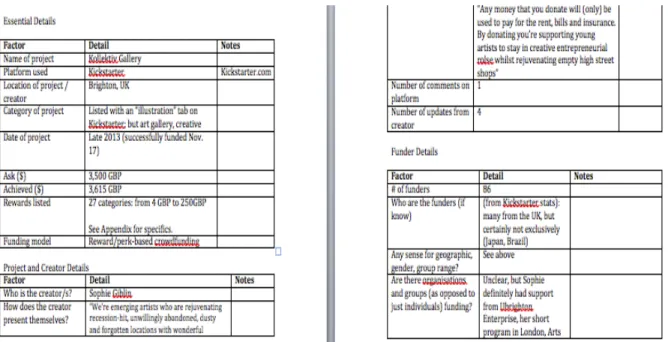
Figure 2: Example of project information sheet as compiled for Kollektiv Gallery interview...71
Figure 3: Excerpt from field notes...77
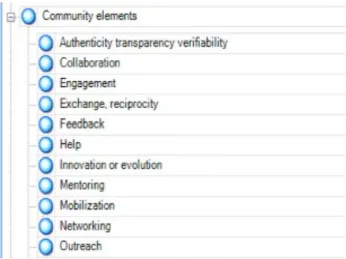
Figure 4: Illustration of thematic analysis: theme and its related codes...79
Figure 5: Chapter 4 flow...93
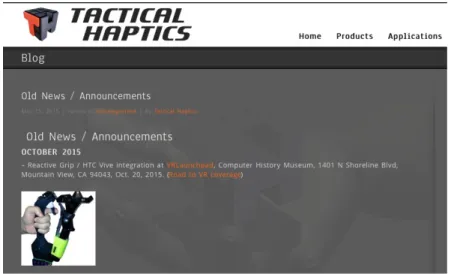
Figure 6: Blog written by creators of Reactive Grip (Kickstarter)...95
Figure 7: Canary in a Coal Mine Tumblr page...96
Figure 8: Oranjezicht City Farm ‘like’ing a backer's Facebook post...97
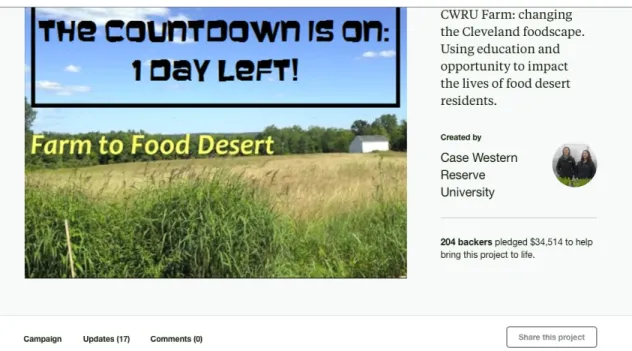
Figure 9: The ‘share this project’ feature on Farm to Food Desert (Kickstarter)...98
Figure 10: Canary in a Coal Mine media coverage, and related ‘sharing’ options...98
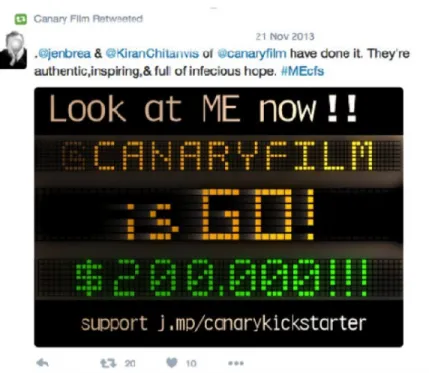
Figure 11: Project backer tweet, and project creator re-tweet...105
Figure 12: Examples of user-generated video uploaded to the Fingersurfing Instagram account . 112 Figure 13: Crowdfunding platform Thundafund...113
Figure 14: Stevenson Square offline event summarised on Facebook...114
Figure 15: In-kind gifts pledged to Stevenson Square project on Spacehive.com...116
Figure 16: Project update from Canary in a Coal Mine (Kickstarter) posted during live funding... 121
Figure 17: Backer-creator Facebook exchange during live funding...123
Figure 18: Fingersurfing creators responding to comments on the crowdfunding platform...123
Figure 19: TouchKeys' Kickstarter project: sample of rewards...128
Figure 20: Kickstarter Staff Pick landing Page...134
Figure 21: You Should Totally Meet Indiegogo project page...135
Figure 22: Thehowof crowdfunding activity: flow of insights...138
Figure 23: Chapter 5 flow...141
Figure 24: Three+two periods of crowdfunding...143
Figure 25: Key purposes per time period (3 + 2 transition) across crowdfunding...147
Figure 26: You Should Totally Meet on Facebook...148
Figure 27: Facebook page of Oranjezicht City Farm...149
Figure 28: Organisations affiliated with projects, active on Twitter pre-funding...150
Figure 29: Pinterest used to 'pin' images and links (XOAB)...151
Figure 30: Online forum discussion thread for Canary in a Coal Mine project...152
Figure 31: Questions on Facebook about the Stevenson Square project...155
Figure 32: Three contacts followed by Defying Dementia (@DefyDementiaLU) on Twitter...155
Figure 33: Smoothe Operator Facebook promotion during the pre-to-live transition...156
Figure 34: Defying Dementia project promotion, posting off-line project coverage to Facebook... 156
Figure 35: Project announcement of live funding and first update posted on Kickstarter...159
Figure 36: Reactive Grip Kickstarter comments between backer and funder...160
Figure 37: Backer-initiated strategy to increase funds raised...161
Figure 38: Fingersurfing creator updates...162
Figure 39: Canary in a Coal Mine YouTube channel...165
Figure 40: Fingersurfing post-funding notice on Kickstarter...166
Figure 41: Facebook image celebrating the successful conclusion of the live funding for Canary in a Coal Mine...167
Figure 42: Canary in a Coal Mine backers celebrate post-live funding on the project Facebook page ... 168
Figure 43: Google+ wrap party for Canary in a Coal Mine...170
Figure 44: Kickstarter's introduction to Spotlight...172
Figure 45: Geek Pulse DAC using Indiegogo's InDemand...173
Figure 46: Post-funding comments between creator and backers regarding feedback and delivery status (XOAB)...174
Figure 47: Project backers prompting creators for project updates...174
Figure 48: Post-funding project updates circulated to backers (Canary in a Coal Mine)...175
Figure 49: You Should Totally Meet project Twitter...177
Figure 50: Crowdfunding Activity Process...179
well as offline (circulating a survey)...206
Figure 56: Comments posted to the Kickstarter page of Canary in a Coal Mine...207
Figure 57: Civic crowdfunding platform ioby focusing on the local element of projects...211
Figure 58: Example of a Citizinvestor project updates...211
Figure 59: ioby projects using the platform for volunteer recruitment and coordination...212
Figure 60: Stevenson Square on Spacehive...213
Figure 61:Local community members as volunteers...214
Figure 62: Community member on Red Rose Forest Facebook page...215
Figure 63: Crowdfunding and community, the flow of insights...221
Figure 64: Chapter 7 flow...223
Figure 65: Communication from the creator to the community via Facebook group...226
Figure 66: Backer-creator communication regarding technical issue (Facebook)...227
Figure 67: Canary in a Coal Mine story, as posted to Kickstarter...229
Figure 68: Kickstarter page of Kollektiv Gallery creator on Kickstarter...230
Figure 69: Project costs for Stevenson Square Green Makeover, as posted to Spacehive...231
Figure 70: Unsuccessfully funded project that neglected to share important information with potential backers...232
Figure 71: XOAB's Kickstarter page welcomes contributions beyond the financial...235
Figure 72: Range of social media for Canary in a Coal Mine shared on Kickstarter page...243
Figure 73: Kickstarter rewards - XOAB (left) and Food to Farm (right)...246
Figure 74: Financial donation reciprocated with a named row of seed...247
Figure 75: You Should Totally Meet creators thanking backers by name...248
Figure 76: How creators maximise success of crowdfunding: the flow of insights...257
Table 1: Global Internet use (2016)...9
Table 2: Social media dates of establishment...12
Table 3: Top 5 crowdfunding project areas, and funding volume (2014)...17
Table 4: Flow of research questions across the thesis...20
Table 5: Summary of definitions of crowdfunding considered...29
Table 6: Pilot breakdown: semi-structured interviews...69
Table 7: Four projects included in project monitoring from pre- to post- funding...74
Table 8: Four projects and their corresponding project monitoring timelines...74
Table 9: Steps used for thematic analysis, as structured by Braun and Clarke (2006)...79
Table 10: Summary of research method per questions within the thesis...82
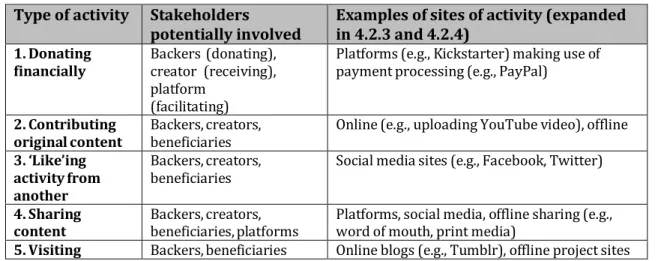
Table 11: Introduction to types of crowdfunding activity...99
Table 12: Where and what of online crowdfunding activity...102
Table 13: Details of online activity, observable and hidden...102
Table 14: Where and what of offline crowdfunding activity...108
Table 15: Details of offline activity, observable and hidden...108
Table 16: Primary sites of crowdfunding activity: summary of use across research...109
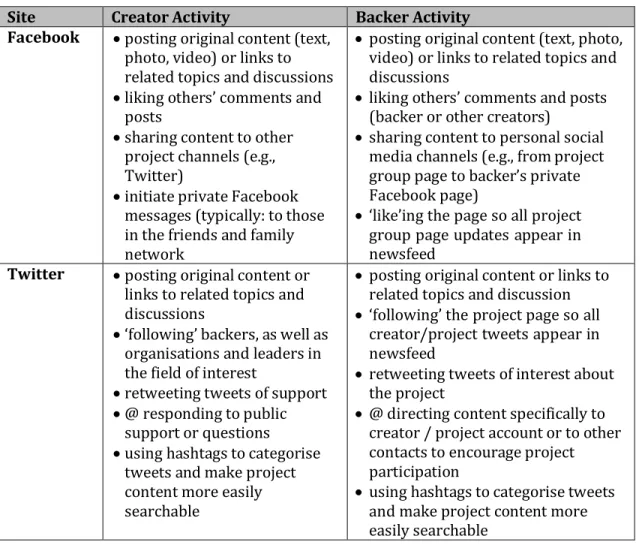
Table 17: Online, but off-platform: Facebook and Twitter activity during live funding...110
Table 18: Secondary sites of activity used within crowdfunding...111
Table 19: Number of sources and references to time as coded in NVivo...143
Table 20: Illustrations of community within crowdfunding, as identified by creators in semi-structured interviews...186
Table 21: Types of attachment and crowdfunding implications...203
Table 22: Community across time in crowdfunding...209
Table 23: Considerations for project creators regarding underlying principles...237
Table 24: Platforms used in research and their restrictions on project timelines...241
Table 25: Essential project steps along the crowdfunding timeline...249
Table 26: Considerations for project creators regarding essential steps...250
Table 27: Considerations for project creators regarding creator experience...253
Table 28: Chapter 7 summary of activity and issues for creators to consider...255
crowdfunding research focus
1.1 Introduction
Crowdfunding has helped fund a great diversity of projects:
The production of a documentary on a misunderstood medical condition received funding from an international group of backers composed of those with the condition and their allies2.
Two brothers with a new model for manufacturing socks presented their ideas online, offering discounted products to those making a financial contribution3.
A PhD student solicited funding to hire an assistant while conducting fieldwork abroad, sending postcards and circulating updates to all who donated4.
A local community group, in partnership with local government, funded the greening of a disused urban square and, through the process, brought in support from neighbours and local businesses5.
These are all examples of successful projects included in this thesis6.
Crowdfunding is an online process through which a project creator funds a project through incremental donations from a ‘crowd’ of backers. This process is often achieved by means of an online crowdfunding platform, and supplemented by social media and
2Canaryina CoalMine(https://www.kickstarter.com/projects/959776320/canary-in-a-coal-mine). 3XOAB socks (https://www.kickstarter.com/projects/ricklevine/xoab-socks-done-right).
4Seahorses (https://experiment.com/projects/searching-for-seahorses-sustainability).
other non-financial activity. Offline elements, such as promotional events, are also frequently present.
The type of crowdfunding explored through this research is reward-based
crowdfunding, characterised by awarding a symbolic ‘reward’ to backers in return for their contribution. ‘Donation-based’ and ‘reward-based’ crowdfunding were once distinct terms; they are now positioned as hybrid terms by the UK Crowdfunding Association (2015). For simplicity, reward-based crowdfunding is used exclusively in this thesis.
Examples of reward-based crowdfunding platforms are Indiegogo and Kickstarter, established in 2008 and 2009 respectively. Since their establishment, growth of the field has been fast-paced in terms of revenue generated, types of projects, number of
platforms, and geographic reach (Massolution, 2015). Despite this rapid growth, rate of successful funding for projects remains around 35% on Kickstarter7, and lower yet on other platforms, suggesting room for improvement in project execution. In response, this thesis uses the lens of crowdfunding activity to investigate:
…what makes crowdfunding
work
?
This question is answered using qualitative approaches that: 1. Catalogue the range of activity across crowdfunding;
2. Outline how these activities interact across time and crowdfunding stakeholders, and;
3. Assess implications for project success, focusing on suggestions for project creators in particular.
In answering this question, this thesis argues for a broader understanding of
crowdfunding, beyond a means to secure funding. Further, by informing creator strategy through specific project knowledge, this research aims to help close the gap between the growth of the crowdfunding field and project success rates.
1.1.1 The research context
The overarching question of this research, uncovering how crowdfunding works, is dependent upon understanding interactions between stakeholders and their various sites of activity, online as well as offline.
The interplay of technology with varied forms of stakeholder engagement helps define crowdfunding as a “socio-technical system” (Harburg et al., 2015, p.3). Socio-technical systems feature a technical component (hardware, software) and a social component (personal, social) (Whitworth & Ahmad, 2014). These interlinkages between the social and the technical can work to support crowdfunding project creators (Harburg et al., 2015). Indeed, across this research, a consideration of both components is the means through which a comprehensive understanding of crowdfunding activity is achieved. By foregrounding the ways in which stakeholders engage with technology through diverse activities, this research fits within a discussion of social computing, a field that considers how technology can support social interaction (Erickson, 2013). Social computing sits at the intersection of computer science, economics and social sciences (CRCS, 2016). This is consistent with the disciplines influencing existing crowdfunding research (Chapter 2). The outcomes of this thesis, merging an understanding of
crowdfunding activity with specific recommendations for creators to maximise project success (Chapter 7), further emphasise a social computing orientation.
1.2 Scope: parameters of research
Although online crowdfunding is a new phenomenon, it draws from both other online influences, as well as long-existing offline models of funding.
Crowdfunding is recognised as a sub-type of crowdsourcing, whereby action is
outsourced to the skills of an undefined ‘crowd’ (Howe, 2006). Crowdsourcing was first popularised as a term in 2006, used in the context of corporate research and
development problems, finding answers from ‘solvers’ across the general public (Howe, 2006). Seven elements common to crowdsourcing have been identified, all of which are reflected in this crowdfunding research:
1. Clearly defined crowd; 2. Task with a clear goal; 3. Reward to the crowd; 4. Identified crowdsourcer; 5. Benefit to the crowdsourcer; 6. Open call, and;
7. Use of the Internet (Estelles-Arolas & Gonzalez-Ladron-de-Guevara, 2012, p.197). This research specifically refers to reward-based crowdfunding, which: “allows
crowdfunders to receive a nonfinancial benefit in return to their financial contributions ” (Belleflamme et al., 2013, p.5). Reward-based crowdfunding was the fastest growing sub-type of crowdfunding when thesis research began in 2012, with Indiegogo and Kickstarter as the largest global sites, and Crowdfunder the leader in the UK. ‘Reward’ can appear in many different forms: physical or intangible (e.g., T-shirt versus public online recognition), individual or collective (e.g., personal digital download of a completed film versus shared enjoyment in a completed community swimming pool), one-time or incrementally distributed (e.g., receipt of a physical prototype versus staggered updates on the evolution of a longer-term project).
The projects and platforms included in this research are diverse, reflecting the variety that exists across the crowdfunding industry. This research has focused on activity common across crowdfunding, and the range of influences on this activity; less considered are platform-specific features, or characteristics limited to one type of crowdfunding project.
Crowdfunding is further defined by the parameters described in the following sections: crowdfunding platform (1.2.1), fixed details (1.2.2), project and not cause (1.2.3), exchange (1.2.4) and public access (1.2.5).
1.2.1 Crowdfunding platform
A crowdfunding platform is a designated website that hosts crowdfunding projects and facilitates the collection of funds. Platforms as project intermediaries are considered a distinguishing feature of contemporary crowdfunding (Belleflamme et al., 2014). This
thesis includes examples from ‘general’ platforms, those that accommodate many
different types of projects (e.g., Indiegogo, Kickstarter), and ‘specialised’ platforms, those that only host reward-based projects of a certain type, or from a shared geographic area (e.g., Spacehive, Thundafund).
Platforms included within this research employ one of two funding models: ‘all or
nothing’ (creator must meet full amount of stated goal to collect any funds) or ‘keep what you make’ (creator collects any funds accumulated during the live funding period).
Three semi-structured interviews were conducted with creators who executed projects without use of a crowdfunding platform. These projects are included as comparative examples to set against those benefitting from the structure, support and pre-existing audiences of crowdfunding platforms.
1.2.2 Fixed details: time, funds
Most crowdfunding projects have fixed timelines for the ‘live’ funding period. Typically, projects fund for 30 to 60 days, with industry research indicating that projects funding for lengthier periods are extremely demanding for the creator, lack a sense of urgency for backers, and ultimately, do not fund as successfully (Strickler, 2011). This thesis further identifies that projects with set time periods for live funding also engage with a wide range of social media and strategies for publicising projects and engaging
audiences.
Funding goals are amounts set at the outset of the project by the creator. All projects included in this research publicly disclosed their funding goals at the time of project launch.
1.2.3 Project, not cause
Crowdfunding projects considered for inclusion within this research focus on specific initiatives and projects, not funding for general causes. For example, the Canary in a Coal Mine project solicits funding for the development of a film project on the medical
This thesis explores crowdfunding activity involved in coordinating participation towards a specific project, including the pre-funding, live funding and the post-funding periods. Although this distinction is increasingly blurred, project versus cause-based work is a differentiating feature between crowdfunding and traditional fundraising. 1.2.4 Exchange and expectation of return
Reward-based crowdfunding projects are exclusively considered within this research. Unlike investment models of crowdfunding, reward-based crowdfunding precludes backers from investing or becoming equity stakeholders through the process. Instead, backers receive symbolic rewards in recognition of their contribution. As described above, these can be physical (e.g., products), experiential (e.g., invitations to events) or symbolic (e.g., implications of ‘sharing’ the final product). The feature of exchange suggests different points of interaction and different levels of engagement forged between creator and backers, which will be further discussed within the context of crowdfunding community within the thesis.
1.2.5 Public access
This research assesses examples of crowdfunding where participation – both financial (e.g., funding) and non-financial (e.g., feedback) – is open to all members of the public. The range of participants – ‘stakeholders’ – varies, from friends and family, to a specific group, to a physically located community or to online consumers, among others.
This access to, and engagement with, a dispersed public is another defining feature of crowdfunding. Project information is publicly posted and, generally, remains online beyond the funding period regardless of whether the project was successfully funded. Public access differentiates reward-based crowdfunding from other models of
crowdfunding, such as equity crowdfunding, where platform access and project
1.3 Motivations
Due to the emergent nature of the field, there remain gaps in knowledge across the academic research on crowdfunding, as well as underexplored themes that could provide guidance to crowdfunding practitioners (Macht & Weatherston, 2014). Adding precision to an understanding of crowdfunding is especially timely given the accelerated growth of the field.
The funds generated through crowdfunding provide an indicator of the progressive growth, and current strength, of the crowdfunding market; crowdfunding is projected to generate $34.4 billion globally in 2015, up from 2013’s reported $6.1 billion
(Massolution, 2015). Despite this growth, individual project success rates can be improved; Kickstarter platform statistics8suggest that success rates have stalled, and two backers interviewed expressed the opinion that projects can no longer fund based on crowdfunding novelty alone. Uncovering how crowdfunding works through this thesis addresses this problem.
1.4 Context: crowdfunding in practice
To understand the crowdfunding landscape during the research period (2012 – 2015), this section briefly references themes of relevance to crowdfunding’s development in order to summarise the contemporary context of crowdfunding in practice.
1.4.1 Background of crowdfunding
Crowdfunding is not a new concept. At its most basic, crowdfunding is the process of collecting donations over a set period from a public crowd (‘backers’) to help realise a project initiated by one or more creators. When understanding crowdfunding as
incremental donations from a public, this definition fits examples such as the patronage model supporting Mozart’s compositions and concerts in the 18thcentury, as well as the financing of the Statue of Liberty in New York in the 19thcentury (Kuppuswamy & Bayus, 2014).
What characterises the contemporary iteration of crowdfunding is an online component and access to a general, widely dispersed public. This is highlighted in the following chapters through discussion of sites of crowdfunding importance (e.g., designated online platforms), crowdfunding activity (e.g., social media), and project stakeholders (e.g., engagement of both online and offline public).
The first documented use of the term ‘crowdfunding’ was in 2006 by Michael Sullivan on the now-defunct Fundavlog (WordSpy, 2008), and the idea was executed and
popularised by reward-based crowdfunding platforms Indiegogo (established in 2008) and Kickstarter (established in 2009)9.
The following outlines the current popularisation of crowdfunding, starting at the intersection of several factors: economic developments (1.4.2), technological developments (1.4.3) and crowd activity and collaboration (1.4.4).
1.4.2 Economic developments
Providing an alternative to traditional channels of funding, crowdfunding’s popularity in the late 2000s can be partially attributed to the Great Recession, the global economic downturn from 2007 through 2009 (The National Bureau of Economic Research, 2010). The effects of this global economic crisis include constrained government budgets (Gray, 2013) and restricted access to channels such as bank loans and venture capital (Gerber et al., 2012). Crowdfunding provided a web-enabled alternative, independent of
traditional offline channels for funding (Kim & Hann, 2013).
Although crowdfunding has been celebrated for its suitability to business and
entrepreneurial ventures (Mollick, 2014) wishing to raise capital (Macht & Weatherston, 2014), crowdfunding also addresses funding needs for other project categories, inspiring the emergence of additional sub-types of crowdfunding within reward-based
crowdfunding such as:
Civic crowdfunding, enabling citizens, in collaboration with government, to fund projects providing a community service (Stiver et al., 2015a). Civic crowdfunding is positioned as an alternative tax model (Zuckerman, 2012) in response to government budget cuts (Hollow, 2013).
Crowdfunding for science, providing academics and researchers an opportunity to close the research funding gap created by budget cuts (Hui & Gerber, 2015) and the low rates of funding from traditional sources such as grants from the National Science Foundation (Wheat et al., 2013).
Crowdfunding for the arts, securing funding from the crowd in response to public funding cuts and increased competition for sponsorships (Boeuf et al., 2014). Crowdfunding developed at a time when other economic channels were constricted. Crowdfunding’s ability to address specific needs across several sectors is valuable for contextualising its popularity, identifying stakeholders, and unpacking motivations for its use.
1.4.3 Technologicaldevelopments
While the economic climate and limited access to capital helped propel crowdfunding’s growth, technological developments also significantly influence crowdfunding’s
widespread popularity. The increased global use of the Internet, for example, makes crowdfunding an accessible option to many:
Table 1: Global Internet use (2016)
Date Context # Global Internet
Users
1995 Pre-Web 2.0 (Amazon.com and EBay just beginning)
44,838,900
2000 Early days of Web 2.0 413,425,190
2008 Year Indiegogo established 1,562,067,594 2015 Estimate of present day (14 March
In addition to Internetuse, the development of, and individuals’ familiarity with, online services contributed to an environment well poised to receive crowdfunding.
E-commerce sites Amazon and eBay were established in 1994 and 1995, respectively, featuring search functions, question and answer fora, and online reviews not dissimilar to crowdfunding platform features. Further, the founding of online payment processing services PayPal and Amazon Payments, in 1998 and 2007 respectively, familiarised Internet users with the function and security of online financial transactions10.
The growing accessibility of the Internet can also influence behaviours, such as sites and types of communication. Existing research has begun to explore the influence of the Internet in these respects; for example, crediting online communication to more widespread networking, collaboration and dissemination of research in the case of scientists looking to crowdfund (Hui & Gerber, 2015).
This thesis particularly highlights the influence of associated concepts related to
technological developments, Internet usage and the social development of the Internet: Web 2.0, social media, and user generated content.
Web 2.0’s development is credited to the period between 2000 and 2005. It is defined by characteristics such as collaboration and interaction, blurring the line “between the creation and consumption of content in these environments” (Maness, 2006, p.1) as content is being created and modified, in an on-going way, by users (Kaplan & Haenlein, 2010).
Thanks to the rise of Web 2.0 several years prior to the growth of crowdfunding, Internet users were already familiar with, and responsive to, elements such as sociability
supported through online exchange and conversation. These elements are also reflected in crowdfunding. The concept of Web 2.0 relates to online tools such as social media, but also to actions, such as collaboration and forging social relationships (Parise & Guinan, 2008). It is through Web 2.0 that crowdfunding projects came to be supported online
10Although PayPal and Amazon Payments were popular payment processors at the outset of
through use of a virtual platform (Macht & Weatherston, 2015, p.193). A driving feature of Web 2.0 is social relationships, forged as a result of users creating their own content, sharing, and interacting (Parise & Guinan, 2008). Web 2.0 champions elements
important to crowdfunding: services over software, participation, and engagement with the power of collective intelligence (O’Reilly, 2005).
The influence of Web 2.0 has been acknowledged in existing crowdfunding research. This pertains to crowdfunding prioritising not only project promotion, but also interactions (Agrawal et al., 2011b), as well as its ability to facilitate activity beyond funding, such as testing and promoting products through stakeholder engagement (Belleflamme et al., 2010).
Particularly relevant to crowdfunding is social media, an illustration of the social networking consistent with Web 2.0. Social media is defined as “a group of Internet-based applications that build on the ideological and technological foundations of Web 2.0, and that allow the creation and exchange of User Generated Content.” (Kaplan & Haenlein, 2010, p.61). User generated content represents how people use social media, and is identified by three conditions. Content must:
1. Be published publicly on a site (e.g., not emails); 2. Illustrate creativity (e.g., not republished content);
3. Be created “outside of professional routines and practices” (e.g., not purely commercial use) (Kaplan & Haenlein, 2010, p.61).
Crowdfunding content fits these parameters for user generated content.
The popularisation of social media generally helped set the foundation for crowdfunding activity. Digital Trends (2014) cites the launch of Friendster in 2002 as the point when social media began gaining momentum, with dates of establishment for social media commonly used by crowdfunding listed inTable 2:
Table 2: Social media dates of establishment Date
established
Social media Active (2016)
2002 Friendster No (as a social networking site; being restructured as a social gaming site) 2003 MySpace Yes (though re-launched in 2013)
LinkedIn Yes 2004 Facebook Yes 2005 YouTube Yes 2006 Twitter Yes 2010 Instagram Yes 2011 Google+ Yes
Although crowdfunding can occur without the use of social media, social media
engagement is recognised as a success factor for projects in terms of funding total and number of backers (Moisseyev, 2013). Across the empirical research of this thesis, Facebook and Twitter are most commonly employed in the support of crowdfunding projects. These channels are used for purposes ranging from promotion to networking to collaboration. The popularity of these social media channels is relevant to crowdfunding in terms of audience and familiarity with the exchange that characterises social
media. As of December 2015, Facebook cited 1.59 billion monthly active users, and Twitter, 320 million11.
The popularity of social media has set an expectation for engagement and transparency online. Certain crowdfunding platform elements are adapted from social media, such as the concept of a ‘newsfeed’ or a comments section. Crowdfunding platforms also encourage use of social media through platform design, linking to or embedding social media newsfeeds onto project pages.Figure 1, picturing the landing page of a project on Kickstarter, showcases the comments section, the YouTube video, as well as links to Facebook, Twitter, and Tumblr.
Figure 1: Social media links as presented for Canary in a Coal Mine (Kickstarter)
1.4.4 Crowd activity and collaboration
Constantinides & Fountain (2008) identify social networks as an element of Web 2.0; in this thesis, social networks are discussed in terms of ‘community’, a complex concept to unpack.
Early references to the term ‘virtual community’ are credited to Howard Rheingold in 1993 in reference to The Well (The Whole Earth ‘Lectronic Link) launched in 1985 (Reingold, 1993). Virtual, or as used in this research,onlinecommunity is popularly found in the form of chat rooms, fora, and discussion boards; mirroring many of the sites of activity common to crowdfunding (Hof et al., 1997).
A large-scale report published by Pew Research Center’s Internet & American Life Project confirms the popularity of sites facilitating social activity: 66% of American adults
online use social networking sites, citing connecting with friends and family as the primary motivation (Smith, 2011). Although the desire to connect with existing
reinforces the diversity across communities through varying group descriptions and registration specifics12.
Three related concepts provide context to an understanding of the social elements of crowdfunding: participatory culture, crowdsourcing, and related online activity.
Participatory culture encourages individual expression and engagement, but also fosters a sense of meaning, as well as social connectedness, through activity (Jenkins, 2006, p.3). The accessibility of the Web, the low cost due to the minimized importance of
geographic location, and the low barrier to participate and produce content (Aitamurto, 2011, p.431) have all influenced the current iteration of this phenomenon.
Crowdsourcing aligns with these characteristics of participatory culture. Crowdsourcing has several sub-types in addition to crowdfunding, including crowdcreation (content produced via the crowd), crowdvoting (opinion gathered from the crowd), and crowdwisdom (aggregated crowd information yielding average conclusions from the crowd).
Empowering stakeholders to contribute to project activity, a central principle of
crowdfunding, is also reflected in co-design and co-production, two concepts that have been in existence for several decades. Co-design incorporates both designer (‘creator’) and user (‘crowd’) into the decision-making process, whereas co-production in
technology brings experts and other groups together in order to ‘produce’ something new together (e.g., knowledge, technology) (McDougall, 2012).
With the development of these 'co'-activities online, individuals are not only encouraged to participate, but also to be key decision-makers and producers of content. The positive public reception to these approaches has set the context for the development and
expansion of crowdfunding.
A broader discussion of online activity also provides context for crowdfunding’s
popularity. Beyond crowdwork, online fundraising (e.g., online patronage models, micro-financing) precedes crowdfunding. Fundraising itself is not a new concept. However, like
crowdfunding, online has changed the nature of fundraising insofar as“howpeople can
show support to causes” (Aitamurto, 2011, p.40) [emphasis added]. Furthermore, online fundraising is increasingly more transparent and project-based (Aitamurto, 2011), characteristics echoed in crowdfunding.
1.5 Focus of research: crowdfunding
The field of crowdfunding is both developing and diversifying (Massolution, 2015). The following sections frame the existing crowdfunding landscape by addressing the current state of crowdfunding (1.5.1), types of crowdfunding (1.5.2), reward-based
crowdfunding sub-types and specialisations (1.5.3) crowdfunding stakeholders (1.5.4), and crowdfunding and community (1.5.5).
1.5.1 Crowdfunding in 2015: what it looks like today
The largest and most comprehensive industry report on crowdfunding summarises research collected from over 1,250 active crowdfunding platforms (Massolution, 2015). To understand crowdfunding’s scale of activity and its influence on various sectors, the following sections consider how and where crowdfunding is growing.
Although this thesis describes crowdfunding success beyond financial terms, funds generated do serve as a way to ‘trace’ projects and to mark growth of the field. Funds raised through crowdfunding increased 167% between 2013 and 2014 (Massolution, 2015), with crowdfunding platforms raising 16.2 billion (USD) in 2014. Donation and reward-based crowdfunding grew at an annualised rate of 45% and 84% respectively between 2013 and 2014 (Massolution, 2015).
North America remains the dominant crowdfunding market by a wide margin, with 9.46 billion USD raised through crowdfunding in 2014 (Massolution, 2015). Europe was the second strongest crowdfunding market, only recently surpassed by Asia (Massolution,
Examples used within this thesis are heavily geographically focused towards North America and the United Kingdom. The justification for the former is that, as the country of origin for many of the earlier platforms, as well as several that have grown to have widespread use internationally (e.g., Indiegogo, Kickstarter), the United States has a longer crowdfunding history and, consequently, greater development of the field in terms of diversity of platforms, projects, creator types, and backers. The first Indiegogo project in Canada was in 2009, and Kickstarter launched in Canada in 201313.
The United Kingdom is home to a number of crowdfunding platforms, and the area of most significant crowdfunding growth within the European Union (Richards, 2012). The United Kingdom benefits from being another English-speaking region, which enables researcher comprehension across not only platform information, but also related project content such as social media channels and media coverage. This geographic focus ensures that research includes all platform and related project content (e.g., Facebook posts, Tweets, promotional videos).
Several projects from other countries (e.g., India, Poland, South Africa) are included within this research. Although geography is not a principal consideration, the use of crowdfunding in other countries is a valuable topic to broach; specifically, the issue of what can be borrowed from existing models, and what requires specific tailoring per socio-cultural, economic or political specifics of a country.
Beyond geography, the question of ‘where’ crowdfunding is growing maps on to project type. Considered together, the top five categories of crowdfunding activity comprise 83.12% of total global crowdfunding revenue from 2014 (Massolution, 2015). These categories are listed inTable 3, in descending order of % total funding volume:
13News from both platforms is posted to the platform blogs:
(https://go.indiegogo.com/blog/2013/09/indiegogo-is-going-on-a-canadian-road-trip.html) and (https://www.kickstarter.com/blog/kickstarter-in-canada-0), respectively.
Table 3: Top 5 crowdfunding project areas, and funding volume (2014)
Project area % Total funding volume
Business and entrepreneurship 41.3
Social causes 18.9
Film and performing arts 12.13
Real estate 6.25
Music and recording arts 4.54
TOTAL 83.12
The project areas listed inTable 3are not fixed across platforms, as individual platforms classify projects differently. Kickstarter, for example, features fifteen project categories, and the semi-structured interviews closely mirror Kickstarter’s classifications,
differentiating between art, civic, food, product development, research and social good projects (Appendix 1). This helps suggest that insights and patterns of activity reported as a result of this research could be representative.
1.5.2 Types of crowdfunding
This thesis classifies crowdfunding types in a way consistent with the UK Crowdfunding Association (UKCFA), a group founded in 2012 to promote crowdfunding, to serve as an authoritative voice across all types of crowdfunding, and to publish a code of
crowdfunding practice. The UKCFA (2015) cites three types of crowdfunding: 1. Reward-based crowdfunding: this has already been outlined in Section 1.2
2. Equity: crowdfunding through which backers become investors, and their financial contributions give them shares – or equity – in the creator’s company.
3. Debt: crowdfunding through which backers lend money to creators, who then repay that money over time.
Equity and debt-based crowdfunding are sufficiently distinct from reward-based crowdfunding that the findings of this research cannot be applied.
1.5.3 Reward-based crowdfunding: sub-types and specialisations
Although this research focuses on commonalities across crowdfunding, the development of sub-types of crowdfunding projects within reward-based crowdfunding (e.g.,
crowdfunding for academic research) means that certain characteristics of crowdfunding are more likely to appear in specific projects.
The strategy employed across this research was to observe general trends within
reward-based crowdfunding in order to assess what varied projects can, together, reveal about crowdfunding. For example, all sub-types of crowdfunding have active timelines that extend beyond the live project itself, and all sub-types make use of sites of
crowdfunding activity beyond the platform. Sub-types of crowdfunding are
differentiated when relevant, such as in the example of civic crowdfunding for which offline community activity is particularly significant (Chapter 6.2.6).
1.5.4 Crowdfunding stakeholders
The choice of language for stakeholders within this thesis – ‘creator’, ‘platform’, ‘backer’ -is cons-istent with the terminology used in the field. ‘Creators’ and ‘platforms’ are terms commonly used across industry and academic research. The amount that creators aim to raise through funding is referred to as the ‘funding goal’. The term ‘backer’ was chosen over other synonyms – the most popular alternative being ‘donor’ – because it is flexible to incorporating both financial as well as non-financial project supports. Further, ‘backer’ is terminology of the largest reward-based crowdfunding platform, Kickstarter, an
industry leader and platform of choice for many of the creators featured in this research. Other sources have identified three principal categories of stakeholder: the party seeking funds (creators), the crowd funding the project (backers) and an intermediary (the platform) (Macht & Weatherston, 2015).
This thesis considers three primary categories of stakeholders – creators, backers, and platforms – with insights tailored to the creator perspective. This focus was motivated by two realities. First, creators were those able to provide detailed perspective on
crowdfunding activity from pre-funding through to post-funding. Second, research aims to provide recommendations to maximise success of crowdfunding, both of which directly influence crowdfunding creators.
This thesis also includes discussion of a fourth type of stakeholder, revealed through empirical work: crowdfunding beneficiaries. Beneficiaries are defined as those who benefit from project outputs but are neither creators nor backers. These are not
identified in other research, but represent a secondary type of stakeholder both because they do not feature in every crowdfunding project, and because research did not identify significant instances in which beneficiaries themselves affected crowdfunding project activity.
1.5.5 Crowdfunding and community
Crowdfunding’s influences, as described through a discussion of Web 2.0 and
collaborative crowd activity above, emphasise crowdfunding’s focus on sociability and interactions. Early stages of research, as well as pilot semi-structured interviews, confirmed that crowdfunding includes significant social elements such as networking and feedback. Through this focus, non-financial activity and outcomes of crowdfunding are highlighted.
By uncovering crowdfunding activity and the stakeholders involved, the concept of community as applied to crowdfunding is considered. In this thesis the focus is placed on understanding community as it is revealed through empirical work and reinforced through existing community research. Supplemented by references to community in other crowdfunding research (Chapter 2), a consideration of community within crowdfunding uncovers both emotional and behavioural investment (Chapter 6).
1.6 Thesis structure
1.6.1 Research flow
Having observed the developing field of crowdfunding and reviewed the existing research on the subject a need for a deeper understanding of how crowdfunding works was identified, driven by the following points:
1. There is continued interest from both industry and academia in uncovering
crowdfunding success factors. Specifically, there is need for improvement on project success rates, especially in anticipation of the continued growth of the field.
2. There is an opportunity to guide creators with specific strategies and supports, as creators have a specific vested interest in project success, and involvement in its activity from pre- to post-funding.
3. There is a need to make implicit crowdfunding activity explicit. Semi-structured interviews suggest that much crowdfunding activity is ‘ad-hoc’. This thesis
summarises experiences from past creators, extracts patterns of activity, and states them explicitly to help support future projects.
The resulting overarching research question -how does crowdfunding work?- is driven by a series of interrelated questions over four chapters:
Table 4: Flow of research questions across the thesis
Main question: how does crowdfunding work? Understanding crowdfunding through its activity
Chapter Overarching Question Areas addressed
4 How is crowdfunding
activity characterised What is the specific activity acrosscrowdfunding (4.3)
Where does crowdfunding activity occur (4.3) Why, what purpose do different activities serve (4.4)
Who drives crowdfunding activity (4.5)
5 How does timeline
influence crowdfunding What are the time periods of crowdfunding(5.2)
What activity occurs per time period (5.2)
6 How does community
influence crowdfunding and vice versa
How is community within crowdfunding characterised (6.2)
How does community matter to crowdfunding (6.3)
7 How can creators maximise
success of crowdfunding Which underlying principles supportcrowdfunding success (7.3) What are the essential steps for project success (7.4)
1.6.2 Thesis roadmap
The outline of the thesis is as follows:
Chapter 2– ‘Understanding crowdfunding within the academic landscape’,presents existing crowdfunding research from the fields of business, digital humanities, and social computing. This chapter details foundational knowledge of crowdfunding definitions,
success factors, online and offline financial and non-financial activity, and the concept of community. This chapter also identifies gaps in existing crowdfunding research that this thesis aims to address.
Chapter 3–‘Research approach and methodology’,outlines the methodological decisions made, and provides details of the methodology used, across this research. Chapter 4– ‘How is crowdfunding activity characterised - what, where, why and who’, provides the foundational building blocks of activity within crowdfunding. This is achieved through cataloguing the range of activity per site, identifying different
purposes, and detailing the various involved stakeholders.
Chapter 5– ‘When crowdfunding activity occurs - the importance of time’
emphasises the importance of timing to crowdfunding by introducing the concept of a timeline to projects. This includes five periods – three action periods, and two transition periods – each with distinct purposes and related activity.
Chapter 6–‘Crowdfunding and community’,introduces the concept of community within crowdfunding. The resulting definition focuses on both emotional investment and behavioural investment. The chapter unpacks the complexities of how community affects crowdfunding but, conversely, how crowdfunding can also influence community. Civic crowdfunding is presented as a specific example.
Chapter 7– ‘Maximising success for project creators’,adopts a focused perspective on crowdfunding project success, unpacking contributing factors at two levels of
granularity: underlying principles for crowdfunding success, and essential project steps. This chapter then proposes creator-targeted recommendations to maximise project outcomes.
Chapter 8–‘Reflections and conclusions’,summarises the significance of research findings to two principal areas: understanding crowdfunding as a field of research, and guiding and supporting project creators. In this chapter limitations and possible
the academic landscape
2.1 Introduction
Chapter 1 presents the broader influences and context for the development of
crowdfunding. This chapter outlines topics of importance from existing research. This is accomplished through an exhaustive survey of crowdfunding research, noting the evolution of definitions and concepts core to a present-day understanding of crowdfunding.
The aim in this chapter is to focus on how themes central to this thesis have been presented in other work relating to crowdfunding, and to integrate the broad range of sources addressing topics relevant to this thesis from across disciplines.
The specific objectives of this review are to describe the following:
1. What are the principlefields of influenceon crowdfunding research? (Section 2.2) 2. How has thedefinitionof crowdfunding developed, and what are its core
components? (Section 2.3)
3. How has the crowdfunding literature looked at theconcept of time, both implicitly and explicitly? (Section 2.4)
4. What are considered crowdfundingsuccess factors, and how can existing research help in identifying contributors to success as well as specific success strategies? (Section 2.5)
5. What arefinancial and non-financial activityand outputs of crowdfunding, as explored in existing work? (Section 2.6)
6. How haveonline and offline activity,in which sites of activity feature in existing crowdfunding research, been reviewed? (Section 2.7)
7. What are thecommunityadvantages to crowdfunding, as well as specific examples of community? What is the understanding of community through the lens of social capital theory? (Section 2.8)
2.1.1 Scope
Consistent with the parameters outlined in Chapter 1.2, the following research was excluded from the literature review:
o Research focusing on investment, or equity, crowdfunding- Agrawal, Catalini and Goldfarb (2014) acknowledge that there are many significant differences between equity and non-equity based crowdfunding. This thesis focuses solely on reward and donation-based models, thereby excluding research on equity and investment based project types.
o Research on crowdfunding legislation– There has been a significant amount of research related to crowdfunding laws and regulations due to crowdfunding’s great potential to generate funds: specifically, those surrounding United States Federal securities law and the U.S. JOBS Act, and crowdfunding regulations set out as of April 2014 by the Financial Conduct Authority in the United Kingdom. The influence of crowdfunding on larger issues of tax law, business legislation and small and medium-sized enterprise development is beyond the scope of this thesis.
o Research on platforms operating in countries that are not represented within the empirical work of this thesis– This decision was made as crowdfunding activity can be affected by different cultural attitudes and behaviours. This thesis also
excludes studies that feature platforms that are not English-language based, as these are impossible to observe. The sole exception is work by Galuszka and Bystrov (2014) on Polish platform MegaTotal, as it provides specific insights on the discussion of community in Section 2.8.
o Research beyond contemporary iterations of crowdfunding- Chapter 1 outlines the breadth of influences on crowdfunding. This chapter’s assessment of the
crowdfunding research landscape, however, focuses the lens of research on present-day crowdfunding, as it exists online.
2.1.2 Rationale and approach to research review
This chapter provides a comprehensive review of existing crowdfunding literature, extracting common themes, and contending with the limitations in current literature. A number of the themes represented in this thesis have been addressed in existing crowdfunding research but adopt: 1. a different lens of interest, or; 2. apply different scales or research methods:
1. A significant number of the crowdfunding sources discussed in this chapter refer to Kickstarter specifically. This introduces the question of transferability of insights to crowdfunding and its stakeholders more generally. Furthermore, although social media is researched within the context of crowdfunding, Facebook is often
represented at the exclusion of other social media. This limits a complete sense of crowdfunding activity as well as options available to creators. In response, this thesis addresses platforms and social media more comprehensively.
2. Many sources of existing research have opted for larger-scale, quantitative
crowdfunding research. While acknowledging the value of these studies, quantitative research lacks the same ability to engage with explanatory detail that characterises qualitative work.
Some themes of this thesis have been addressed in other pieces of research implicitly. For example, whereas existing work may suggest a progression and chronology to crowdfunding, this thesis identifies the importance of time, names time periods and transitions precisely, and details purpose per period (Section 2.4). As a result, this thesis adds to existing crowdfunding research by making connections across research, the implicit explicit, and combining acknowledged themes of importance from the existing research landscape with insights generated through this research.
Results of this search were then sorted by thematic area, using keywords. The structure of this chapter reflects the larger insights of this thesis. The sources included are those that best relate to the approach and content of this thesis, either by identifying gaps in research or by establishing a foundation of themes corroborating findings.
Two sources—Lehner (2013), and Macht and Weatherston (2015)— provided surveys of crowdfunding research, which guided an assessment of the existing research
landscape through groupings of themes and insights. The review by Lehner (2013) was limited by its focus on crowdfunding from a business, and specifically social
entrepreneurship, perspective. Although the themes of focus differ from those
highlighted in this chapter, the review by Macht and Weatherston (2015) is consistent with the approach of this thesis, looking to both past influences and the current
crowdfunding research landscape, with an eye towards future application. In addition, two master’s dissertations on crowdfunding provide highly relevant material: Duggal & Sassoon (2015) used qualitative research on Kickstarter to assess creator motivations for crowdfunding, whereas Moisseyev (2013) considered the effect of social media on Kickstarter project results including its positive influence on
fundraising totals and backer numbers.
Research also looked to informal blog posts by academics related to crowdfunding, such as Zuckerman (2013) or McNutt (2013). These were not primary sources, but did contribute to an understanding of on-going crowdfunding research.
2.2 Current landscape: Business, digital humanities, and social computing
Langley (2015) identifies two prevalent fields from which crowdfunding research is emerging: business studies and digital humanities. This thesis also argues for the influence of social computing on crowdfunding research.
The crowdfunding literature in business studies is concentrated around two main areas: identifying contributing factors to projects’ financial success (Mollick, 2014), or
discussing theoretical models that position crowdfunding within an existing dialogue of financing options (Belleflamme et al., 2014). Sources from the fields of business and
management have a propensity to focus on financial results, including financial outputs such as pre-orders (Belleflamme et al., 2014), and marketing or consumer awareness (Belleflamme et al., 2010), as well as project mechanics such as delivering rewards on time (Mollick, 2014).
The existing research emerging from business studies serves as a valuable foundation. For instance, Mollick (2014) presents hypotheses about crowdfunding success through large-scale studies, using 48,500 Kickstarter projects. Although this thesis illustrates the non-financial advantages of crowdfunding, nonetheless funding is a primary activity for projects, and meeting financial target a primary goal for most creators.
An interest in crowdfunding by academics working in digital humanities and media (Langley, 2015) brings a specific focus to the use of crowdfunding within creative industries, and funding driven by fans, described as “fan-ancing” (Bennett et al., 2014, p.142). This research reflects the development of crowdfunding in practice, which
emerged “primarily in the arts and creativity-based industries (e.g., recorded music, film, video games)” (Agrawal et al., 2014, p.65).
Crowdfunding research from within digital humanities often targets specific backer groups, such as crowdfunding used for music lovers (Galuszka & Bystrov, 2014) or supporters of the theatre (Boeuf et al., 2014). This category of crowdfunding research is notable for its ability to illuminate both the advantages of crowdfunding and some of the weaknesses and possible criticisms of crowdfunding, such as the exploitation of fans by media conglomerates (Chin et al., 2014).
However, although a focus on subtypes of projects can showcase the variety across crowdfunding, these sources are not primary to this thesis due to their limitations: they refer only to a certain type of crowdfunding project, and the specific backers associated. Another subtype illustrating specific elements of crowdfunding and discussed with additional detail within this thesis is civic crowdfunding, the funding of public community projects (Davies 2014; Stiver et al. 2015).
Beyond the two fields identified (Langley, 2015), a third field of research contributes significantly to crowdfunding research: that of social computing, which refers to