Measuring Well-Being
A Literature Review
Hadley Centre for Adoption and Foster Care Studies
Coram Voice
Foreword
We are extremely pleased to publish the literature review on ‘Measuring
Well-being’, which seeks to define the concept of well-being, and the difficulty in
measuring this multi-faceted concept. The review delves into children’s
well-being bringing together the debate on international approaches of children’s
well-being, and in particular how to measure the well-being of looked after
children.
This literature review supports the Bright Spots project, a research project
between the University of Bristol and Coram Voice. The project aims to
improve the care journey for all looked after children and highlight the ‘bright
spots’ of practice within local authorities that contribute to the positive
aspects of being in care. The intention is that local authorities will understand
the causes of those bright spots so that they can adopt the very best standards
of care.
We would like to thank the Hadley Trust for its generous funding and support
for the development of the Bright Spots project to improve the life chances of
children and young people in care. Thanks to the passion and commitment of
our funder, we expect to be able to make a real difference to the lives of this
vulnerable group.
For enquiries re the literature review please contact: Julie Selwyn
Professor of Child and Family Social Work, University of Bristol 01179 546 734
For enquiries re the Bright Spots project please contact: Shireen Riley
Bright Spots Project Coordinator, Coram Voice 020 7239 7525
CONTENTS
CHAPTER 1 MEASURING WELL-BEING ... 3
DEFINING WELL-BEING ... 3
THE MEASURING NATIONAL WELL-BEING PROGRAMME ... 8
CHAPTER 2 CHILDREN’S WELL-BEING ... 11
NEW ECONOMICS FOUNDATION (NEF) ...27
THE CHILDREN’S SOCIETY RESEARCH ...28
MEASURING CHILDREN’S WELL-BEING – THE NATIONAL WELL-BEING PROGRAMME- ...32
CHAPTER 3 : THE WELL-BEING OF LOOKED AFTER CHILDREN ... 38
INTERNATIONAL MEASURES OF LOOKED AFTER CHILDREN’S WELL-BEING ...39
THE DEVELOPMENT OF MEASURES FOR CHILDREN’S SERVICES IN ENGLAND ...45
3
CHAPTER 1 MEASURING WELL-BEING
In this chapter, we begin with a brief introduction to the concept of well-being and describe the various approaches and some of the difficulties with measuring such a multi-faceted concept. It has long been recognised that there is not a simple association between increasing wealth and adult well-being, but many other factors are important. Consequently, improving the measurement of well-being has become an international goal (OECD 2007). The UK’s response to the challenge has been to establish a national programme on the measurement of well-being and findings from that programme will be described.
DEFINING WELL-BEING
Although the term ‘well-being’ is often used, there is no agreed definition and it is often used as an all-encompassing concept to describe the quality of people’s lives (Dodge et al. 2012). There is considerable ambiguity around the definition of well-being. For example, terms such as happiness, quality of life, and life satisfaction have been used interchangeably to mean being (Allin 2007). Each represents elements of well-being but individually do not reflect everything that well-well-being entails. Many of those who have attempted to define well-being see it as a dynamic process. For example, the New Economic Foundation (NEF)1 described well-being as: the dynamic process that gives people a sense of how their lives are going, through the interaction between their circumstances, activities and psychological resources or ‘mental capital’. Other definitions emphasise attainment and the ability to achieve one’s potential in the future. For example, the World Health Organization’s working definition of well-being is the
4 realization of one’s physical, emotional, social, mental and spiritual potential. Other writers have argued that the pre-occupation with definitions is unhelpful, as there is a consensus within society of what constitutes well-being. For example, Ereaut and Whiting (2008) argue that, wellbeing is no less than what a group or groups of people collectively agree makes a ‘good life.’ However, while there may be general agreement about the elements that contribute to a sense of well-being, individuals will vary in the importance they place on each of the elements. For example, one individual may place more importance on being financially secure, whilst another personmight prioritise the quality of his or her relationships (Waldron 2010).
Dodge and colleagues (2012 p230) have proposed a different approach envisioning well-being as the balance between resources and challenges. Dodge and colleagues argue that stable well-being is when individuals have the psychological, social and physical resources they need to meet a particular psychological, social and/or physical challenge. They illustrate this approach as a seesaw (Figure 1). When individuals have more challenges than resources, the see-saw dips, along with their wellbeing, and vice-versa.
5 FIGURE 1 THE WELL-BEING SEESAW (DODGE ET AL. 2012 P230)
Resources Challenges
WELL-BEING
One of the benefits of this model is that well-being is not viewed as static, but it is not clear how the model brings an agreed definition closer. The proposed model is very similar to models that examine stress or coping mechanisms. In addition, being able to cope with a challenge does not necessarily mean that the sense of satisfaction gained, imbues other areas of a person’s life. The personal nature of well-being makes measurement complex and consequently comparisons of well-being between groups of people or between countries controversial.
The measurement of well-being can be considered using two broad approaches: objective and subjective measures. There is general agreement that both approaches are necessary.
Objective measures make assumptions about what is required for any individual and then sets out indicators to estimate how far the requirements have been satisfied. Objective indicators usually measure three main areas:
Economic – e.g. GDP and household income
Quality of life – e.g. life expectancy, crime rates, educational attainment Psychological Social Physical Psychological Social Physical
6 Environment- e.g. air pollution, water quality
Objective measures have been used for many years, but it has been increasingly recognised that objective measures on their own cannot measure a nation’s progress and that subjective measures are also needed (Guillén-Royo and Velazco 2005).
Subjective measures ask people to assess their own well-being. The New Economics Foundation (2011) argues that the only way to know if someone is happy or satisfied is to ask him or her. Subjective measures allow for differences in people’s values and preferences and are seen as less paternalistic than objective measures. They are not subjective because they are self-reported, but because the question asks a person to rate, how they feel (Hicks 2011). Unlike objective measures, perceptions are fundamental to understanding subjective well-being. The drive to find subjective measures that are comparable has led countries worldwide to set up programmes to improve the measurement of subjective well-being (e.g. the European Commission project ‘GDP and beyond’). There are three broad approaches (the evaluative, experience and eudemonic) to measure subjective well-being.
Evaluative approach requires an individual to assess their overall life satisfaction or satisfaction with a particular aspect of their lives such as satisfaction with their job or health. Likert type scales are often used or a Cantril ladder (e.g. at the bottom of the ladder worst possible health and at the top of the ladder best possible health). The evaluative approach is very common. Studies have found that having an explicit time frame in the question (e.g. health in the last week) improves the response, as otherwise some people find it difficult to answer (ONS 2010; Dolan et al. 2011).
Experience (affect) approach requires an individual to assess the emotional quality of their lives, collecting positive and negative emotions e.g. happiness, sadness, anxiety
7 and energy levels. Questions typically ask about an individual’s feelings in the last week or day. Other methods are occasionally used such as diaries to collect the information. Some commentators and academics (see discussion in Tinkler and Hicks 2011) have argued that negative feelings such as pain, stress and misery should be core questions in any adult survey. The rationale is that negative emotions are those that public policy is most able to influence but there has been reluctance to follow the advice, partly because of uncertainty about the best ways to capture negative emotions and secondly fear of reducing response rates.
Eudemonic approach is sometimes described as the psychological approach- an individual’s assessment of their internal world. The approach is intended to measure feelings such as self-efficacy, good relationships, having a sense of purpose, achievement, and autonomy. These measures are sometimes known as measures of ‘flourishing’ (Tinkler and Hicks 2011). While there is some agreement about the type of approaches to measure well-being, there is more debate about what should be measured and how. Concerns about measurement have led the UK government to set up a national investigation on the measurement of well-being.
8 THE MEASURING NATIONAL WELL-BEING PROGRAMME
In 2010, the coalition government tasked the Office of National Statistics (ONS) to develop national measures of well-being that could measure the nation’s progress. To meet the request the ONS began a ‘Measuring National Well-being’ (MNW) programme with the intention of developing objective and subjective measures of well-being. (http://www.ons.gov.uk/ons/guide-method/user-guidance/well-being/index.html) As part of that programme, the ONS facilitated a national debate holding 175 events
involving 7,250 people and asking adults, ‘What matters to you? ’ The ONS also received 34,000 written responses from individuals and organisations. Figure 1 shows the most commonly used words in the national well-being debate.
FIGURE 2: MOST FREQUENTLY USED WORDS IN THE DEBATES ON MEASURING NATIONAL WELL-BEING
Source: Office for National Statistics
Summing up all the information, the ONS reported that the following domains were central to most adults’ well-being:
Good connections with friends and family Education and training
9 Job satisfaction and economic security
Present and future conditions of the environment
Findings from the debates led onto the development of new questions that will be incorporated into future national surveys. It is important to note that the questions are still in the development phase and the precise wording of questions and scales are being refined. During the piloting of questions the ONS found that responses to questions could be influenced by the order in which they were asked, the wording, the type of scale and whether completed by questionnaire or during an interview. The gender of the individual was also found to influence the response. For example, females generally reported higher levels of life satisfaction than did men (Hicks 2011).
The ONS work on subjective well-being highlighted new areas that had not been measured previously such as people’s feelings about their community and their sense of belonging and trust (Tinkler and Hicks 2011). NEF (2011) recommended in their contribution to the debate that questions about loneliness and feelings of lack of control be asked in national surveys of adult well-being. However, the Office of National Statistics has expressed concern that because the questions may be asked in the presence of other household members this might bias the response or result in a negative impact on the individual. Therefore, questions about negative emotions are currently limited.
As well as developing questions that capture the different aspects of subjective well-being, the ONS has been recognised that it is important to understand what is associated with or determines people’s responses (Tinkler and Hicks 2011). NEF termed these the ‘drivers’ of well-being. Understanding the drivers poses significant difficulties. For example, research has found that there is an association between high subjective
well-10 being and volunteering, but what is the direction of the effect? Does volunteering improve subjective well-being or are the people who feel a good sense of well-being more likely to volunteer?
Within the MNW Programme, there have also been efforts to explore well-being for different social groups, especially the well-being of children and young people. Establishing measures of children’s well-being was described by ONS as a key national challenge not least because there were different views on who should be asked ( e.g. children themselves , or parents or teachers) in what setting ( home, school, neutral setting) and which was the best method of collecting well-being information. Leading academics have been consulted, research commissioned and children and young people asked about the areas which were important for them (Hicks 2011). Before returning to the findings on children’s well-being stemming from the MNW programme, it is necessary to consider some of the key issues in measuring children and young people’s well-being.
11
CHAPTER 2
CHILDREN’S WELL-BEING
Children’s well-being is an important aspect of a nation’s well-being and various arguments have been put forward as to why it is important to consider children’s well-being separately from that of adults’. First, children make up a sizeable proportion of the population and improving their well-being is an investment in the future (Ben-Arieh et al. 2001). In 2012, there were 12 million children in the UK, representing nearly a fifth of the total population. Second, a growing understanding of the ecology of human development (Bronfenbrenner 1979) has highlighted how parents’ well-being is influenced by the well-being of their children and vice versa. Third, there is evidence that while there are similarities in the elements that make up adult and child well-being, there are also important differences. Fourth, greater transparency, accountability and the need to deliver evidence-based interventions has forced agencies to measure well-being and show how their services have improved children’s lives (Ben-Arieh 2000). The UN Convention on the Rights of the Child (1989 signed by UK in 1991) was an important milestone in focusing attention on children, as it committed governments to developing appropriate indicators to monitor improvements to child well-being. The coalition government have confirmed their intention to give due consideration to the UNCRC. Such an approach is likely to inform better policymaking and child advocacy (Ben-Arieh 2005, 2010; Rees et al. 2010).
While there are debates about measuring adult well-being, the measurement of children and young people’s well-being is even more hotly contested. At the most basic level there is no agreement on the age range that defines children and young people. For example, in Wales young people are defined as aged up to 25 years old, whereas the
12 UNCRC defines children and young people as only those aged under 18 years old. In comparison with research on adult well-being, research on children’s well-being is very limited.
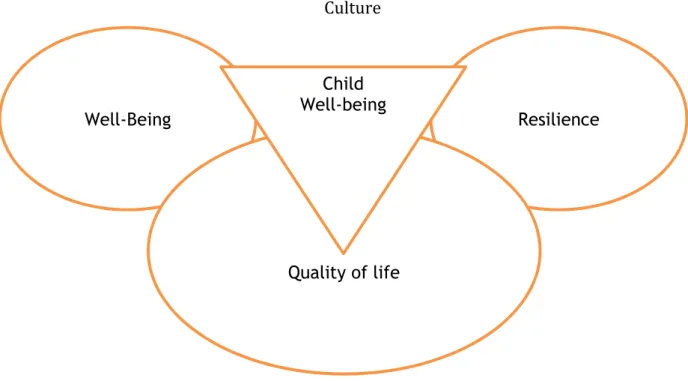
Axford (2008) states that child well-being can be viewed through five different perspectives of a) children’s needs, b) children’s rights c) poverty reduction d) quality of life and e) social inclusion/exclusion. He argues that each of the perspectives leads to a different emphasis on which domains matter and the most effective and suitable ways of collecting information. For example, a focus on poverty reduction may emphasise the negative aspects of well-being rather than strengths. As well as the perspectives identified by Axford there are other conceptual frameworks such as Sen’s (1999) capability framework. The underlying concept of Sen’s capabilities approach is that consideration should be paid to a person’s actual capability, which will in effect depend upon a multitude of things, including physical and mental characteristics and social opportunities and influences. In contrast, ecological models (e.g. Veenhoven 2000; Exenberger and Juen 2014) view child being as being the interplay between well-being, resilience and quality of life and is only understood by considering the cultural context.
13 Resilience
FIGURE 3: CHILD WELL-BEING EMBEDDED IN A CULTURAL SETTING (EXENBERGER & JUEN 2014 P20)
Culture
A further perspective reflects the belief that studies of children’s well-being must include children and young people’s own views and experiences (e.g. Frattore et al. 2007). That may sound an obvious statement but until recently children and young people’s voices were absent from the literature on well-being. McDonald and colleagues (2006) in their review of the literature on child poverty, highlight how the discourse has over-looked children’s views in understanding poverty, assuming that their experiences are similar to those of their parents. Fattore and colleagues (2007) study in Australia is one of few that have actively sought children and young people’s own views on their well-being (see also Gabhainn and Sixsmith, 2005; Andresen and Fetger 2011; Exenberger and Juen 2014). Fattore observed:
The potential of subjective well-being measures to take into account children’s own experiences and the complexities of their lives has not yet been realised. The
Well-Being
Quality of life Child Well-being
14 inability of current measures of subjective well-being to perform in this way is limited by the fact that they are not substantively based on individual children’s personal values, views and assessment of their life circumstances. … Ultimately, we do not really know whether the domains and measures identified by adult researches are meaningful to children (Fattore et al. 2007: 12).
A child centred perspective draws on social inclusion and a rights based framework and views children as taking an active and critical role in helping manage their own and their families’ experiences (Cassells et al. 2011 p 9). It is within that perspective that this study is situated.
MEASURING CHILDREN’S WELL-BEING
There are many concerns and debates about the measurement of children and young people’s well-being (e.g. Pollard and Lee 2003; Morrow and Mayall 2009; Lipman et al. 2009; Statham and Chase 2010; Holder et al. 2011; Dex and Hollingworth 2012; Fernandez et al. 2012). To summarise the identified concerns are:
1. There is no consensus on the key domains or their weighting. Many domains have been used in studies of well-being making comparison between studies difficult. Holder and colleagues (2011) identified 74 different domains that have been used in measuring children’s well-being. From the review, Holder recommended a maximum of nine domains in any survey with seven being the ideal amount.
2. There has been a disproportionate focus on the negative aspects of children’s and young people’s well-being.
15 3. Indicators often assess the absence of a particular factor, assuming that with its absence comes well-being. In research with adults, that assumption does not hold. Lack of ill health does not automatically confer feelings of being well. 4. Most measures have been objective. Subjective well-being is under-developed. 5. Tools currently used to measure well-being lack clear definition and are often
conceptually confused.
6. Little is known about the well-being of particular subgroups of children for example ethnic minorities, disabled children, those in institutions or temporary housing and hard to reach children and young people. Much of the current data relates to teenagers rather than younger children (Bradshaw 2011).
7. Lack of clarity on whether there should be different domains and measures for adolescents and younger children. Age differences have been ignored.
8. There is neglect of the voices of children and young people in defining what well-being means to them and the use of this data in the development of well-well-being measures.
9. Assumption that young children cannot reliably self-report on their well-being although research has shown that children as young as five years old can reliably report on their health ( Riley 2004; Varni et al. 2007).
The methods and range of indicators to ascertain children and young people’s views of their own well-being are also disputed. Some academics (e.g. Bradshaw et al. 2006) use a combined approach of qualitative and quantitative methods. Whilst others (e.g. Fattore et al. 2007) argue that the only appropriate method is qualitative, collecting children’s voices using interviews, focus groups, diaries, and photos. Surveys, in this latter school of thought, are described as adult-centric, devised and coded to adult
16 agendas and are not suited for use with children. However, qualitative methods also usually have questions devised, collected and coded by adults. Surveys can use indicators that are meaningful to children and young people especially if children have been involved in their design and testing (e.g. Fitzpatrick et al. 2010). The debate is complex. Adults are usually in charge of the research process and there have been critiques of what the qualitative and quantitative data actually represent (e.g. MacNaughton 2005; Lundy 2007; Spyrou 2011).
EFFORTS TO IMPROVE THE MEASUREMENT OF CHILDREN’S WELL-BEING
Compared with the extensive development of adult measures of well-being that have used research and experimental trials, there has been far less work developing questions and instruments that are child appropriate. Many measures of child well-being use the same domains as those used with adults although there is evidence that adults and children’s views of well-being differ (e.g. Sixsmith et al. 2007; Fitzpatrick et al. 2010; Watson et al. 2012; LaValle et al. 2012). For example, children and adults have a different understanding of ‘local area’ (Spilsbury et al. 2009), time concepts (Holder et al. 2011) and children can be confused by the difference between satisfaction and satisfactory (Taylor et al. 2010). It has also been suggested that children are more likely than adults to choose the first option in questions that have a scale, provide repetitive or extreme answers, and to have difficulty understanding negatively worded items (Matza et al. 2004).
In the UK efforts to improve the measurement of child poverty, led Jonathan Bradshaw and colleagues based at the University of York to develop an ‘Index of Child well-being in Europe’. The index contains seven domains of children’s lives: health, subjective
well-17 being, personal relationships; material resources; education; behaviour and risks and housing and the environment. Multiple indicators evaluate and assess each domain (Bradshaw and Richardson 2009). The domains directly informed the UNICEF report (2007) on child poverty in rich countries. That UNICEF report caused a great deal of controversy, as England appeared near the bottom of the league table. Although, a more recent update (UNICEF, 2010) demonstrated some progress on material, education and health well-being measures, the UK still remained within lower rankings compared to other OECD countries. Other international reports have used different domains. For example, the OECD report (2009) Doing Better for Children did not include any measures of subjective well-being or measures of family and peer relationships.
It has been argued that international and national reports emphasize the extremes: those who are in dire circumstances or those who attain high levels of achievement or development. Missing is the range and diversity of children’s living situations (Miringoff and Miringoff 1995). In addition, international reports rarely take information from the child but information on the child’s well-being is taken from the mother or other adults. Reports tend to collect information about children rather than from children. Nevertheless, the UNICEF report was a catalyst for UK governments to take the measurement and progress of child’s well-being more seriously.
18
COUNTRY SPECIFIC REPORTS AND FRAMEWORKS
Individual countries have also produced their own reports such as America’s Children: Key National Indicators of Well-being. Within the US, the Casey Foundation’s Kids Count materials are often used at state level to report on children’s well-being. Over the last two decades, there have been efforts in many countries to improve the measurement of children’s well-being. For example, in the Republic of Ireland an ‘Index of Child Well-being’ (using objective and subjective measures) has been developed from the first wave of data from the Growing up in Ireland study (Cheever and O’Connell 2013).
The Irish index has three domains, 1) physical, 2) social and emotional, and 3) educational development, assessed using 14 indicators. It is multi-informant and includes the child’s views. Unlike many other measures, the Irish index creates a composite score for each child and has a threshold that identifies the top and bottom 15%. Having a composite score can be advantageous, as trends over time can be more easily measured and children identified who have scored particularly well or badly. There have also been other attempts to develop a combined index of well–being, such as the Land child well-being index in the USA2, Bradshaw’s index in the EU3, Ben-Arieh in Israel and the Medchild (Mediterranean countries) index4. An examination (O’Hare and Gutierrez 2012) of 19 key studies, which had combined domains into indices found little agreement on the number of domains that best represented a comprehensive composite child well-being index. However, nearly every study rated health, education, and
material well-being into the indices.
2http://www.soc.duke.edu/~cwi/
3 https://www.york.ac.uk/inst/spru/pubs/pdf/childEU.pdf
4http://www.savechildrenlife.org/en/what_we_do/proj/children/medchild_well_being_inind/i
19 In Australia, children and young people’s views on what well-being meant to them have been investigated(New South Wales Commission for Children and Young People 2007). Three main themes emerged from talking to 126 children and young people (aged 8-15):
• Agency ( having some independent capacity to act and make choices about one’s
life)
• Security (having the personal and physical safety to be able to live life to the
full)
• A positive sense of self.
Other related themes identified were 1) taking part in activities, 2) being supported to deal with adversity 3) having enough money to have a reasonable standard of living 4) having access to child friendly environments (play and natural environments) 5) being a good person, 6) healthy and 7) acting socially responsibly at home and in the wider world. These themes were very similar to those identified in the ‘Index of Child Well-Being in the Republic of Ireland.
Other studies have focused on how formal and informal learning environments contribute to children’s well-being. For example the Universal Education Foundation’s (UEF) Voice of Children (VOC) project5 . The projectaims to create a tool that the organisation says is:
designed to inspire and encourage decision-makers to monitor and nurture the well-being of children and young people. It was developed using children and young people’s responses to surveys and focus groups on their feelings, attitudes, and
20 behaviours that come into play during their daily encounters with peers and adults in their learning environments and the impact of these environments on them. During 2006, the VOC1 toolkit was piloted with 15-16 year-olds in three countries: Palestine, Lebanon, Jordan, and more recently piloted a revised VOC2 in Wales. The domains identified in their work were:
1) Physical well-being, 2) physical and emotional safety, 3) emotional well-being, 4) relationships, 5) confidence in capabilities, 6) pleasure and joy in learning, 7) inner strength and spirit, 8) sense of interconnection with all of life, and 9) overall satisfaction with life.
Wales The UNICEF report (2007) on child poverty led to the Welsh Government establishing the Children and Young People’s Well-being Monitor (WAG, 2008, 2011). It aimed to provide a regular report on child well-being within Wales, track progress on addressing child poverty targets and raise awareness of issues that affected child well-being. In 2011, the indicators were up-dated and the age range that defined young people was extended up to the age of 25. The indicators were organised around themes based on the Welsh Government’s seven core aims for children and young people, which were themselves based on the UNCRC and the Every Child Matters 6programme.
6 Every Child Matters was an attempt by the Labour Government to establish an agreed set of five
domains within a framework to measure children’s well-being. However, there were no agreed methods of collecting data, scales or thresholds and comparison between agencies using the framework was impossible. The framework was abandoned at the governmental level when the coalition government came to power, although some social care agencies have continued to use it.
21 The Welsh Government’s seven aims are:
1. Every child should have a flying start in life and the best possible basis for their future growth and development
2. Every child and young person has access to a comprehensive range of education, training and learning opportunities, including the acquisition of essential personal and social skills
3. Enjoy the best possible physical and mental, social and emotional health, including freedom from abuse , victimisation and exploitation
4. All children have access to play, leisure, sporting and cultural activities
5. All children and young people are listened to, treated with respect and have their race and cultural identity recognised
6. All children and young people should have a safe home and community which supports physical and emotional well-being
7. No child or young person is disadvantaged by poverty
The first monitor report in 2008 was criticised, as the voices of children and young people were omitted. Subsequently, the Welsh Government commissioned new qualitative research to gather children’s perspectives – The Voices of Children and Young People in Wales Study (WAG, 2011). The study included interviews with 82 children and young people living in Wales aged from 6 months to 25 years. Children aged 4 and over spoke for themselves and those below this age were represented by their parents. Their views were incorporated into the 2011 edition of the monitor. In addition Wales has developed the Children’s and Young People’s Assembly of Wales a project to enable
22 children and young people’s voices to be heard by government http://www.funkydragon.org/en/
Scotland The Scottish Government’s Getting it Right for Every Child Approachis the key programme within the country. There are eight domains of well-being that the authors state are developed from child development theory and a children’s rights perspective. The domains are: 1) safety, 2) healthy, 3) achieving, 4) nurtured, 5) active, 6) respected, 7) responsible and 8) feeling included. The interacting domains are set within four capacities and these are: 1) to enable every child and young person to be a successful learner 2) a confident individual 3) a responsible citizen and 4) an effective contributor. The well-being framework is represented by a wheel (Figure 4). It is expected that those working with children will use the framework in their assessments and work with children and young people.
23 FIGURE 4: THE WELL-BEING WHEEL
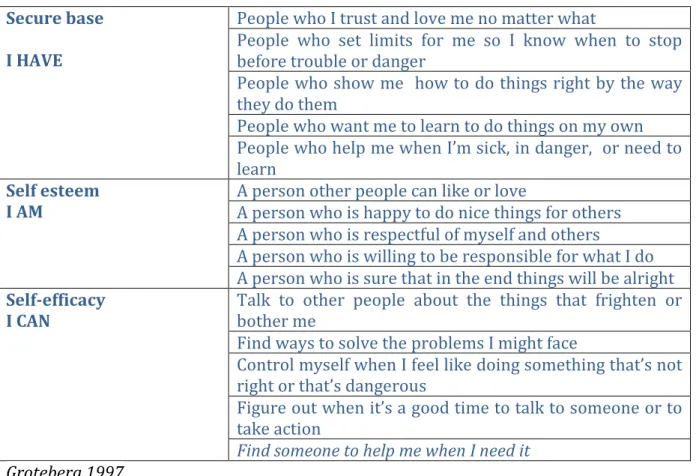
There are grids and guidance available that support the use of the framework7. One of the more interesting developments is the incorporation of resilience theory into the framework. However, the guidance states that the resilience matrix (Figure 5) should be used in complex situations, rather than with all children.
7 A comprehensive review of work on children and young people’s well-being in Europe commissioned in
response to the EU taskforce on Child Poverty and Child well-being, see the Tarki (2011a) European Social Report
24 FIGURE 5: THE RESILIENCE MATRIX
Secure base I HAVE
People who I trust and love me no matter what
People who set limits for me so I know when to stop before trouble or danger
People who show me how to do things right by the way they do them
People who want me to learn to do things on my own People who help me when I’m sick, in danger, or need to learn
Self esteem I AM
A person other people can like or love
A person who is happy to do nice things for others A person who is respectful of myself and others
A person who is willing to be responsible for what I do A person who is sure that in the end things will be alright Self-efficacy
I CAN
Talk to other people about the things that frighten or bother me
Find ways to solve the problems I might face
Control myself when I feel like doing something that’s not right or that’s dangerous
Figure out when it’s a good time to talk to someone or to take action
Find someone to help me when I need it
Groteberg 1997
Within Scotland other agencies have also taken a holistic approach to well-being. For example the Highland Children’s Forum have developed a Transition Guide in order to help young people plan their transition from school (Figure 6). The aim is that young people are: engaged in their transition, they know who they are, where they want to go, and what they need to get there.
25 FIGURE 6 THE TRANSITION GUIDE
Am I Safe, Healthy and Nurtured? Do I
• Have a place to live where I feel supported,
happy and cared for?
• Feel secure in my home and community and
safe from people who could harm me?
• Have confidence to be able to plan for myself
and to take informed risks?
• Maintain a healthy body and mind?
• Know how I feel and have someone to talk to? • Feel confident to be able to get support to
make informed and healthy choices? Am I Included and Active?
Do I
• Have the support to be accepted and
understood as an equal at home, work and play?
• Like and respect myself and am I willing to
‘have a go’? Am I Respected and Responsible.
Am I a Responsible Citizen?
Do I
• Feel heard and involved in decisions that
affect me and others?
• Have opportunities and encouragement to be
confident?
• Understand the values and beliefs of others
and look at the wider world?
26 an Effective Contributor?
Do I
• Set achievable goals for myself?
• Understand the skills and needs of others and
myself?
• Understand the importance of being a team
player? Am I a Successful Learner?
Do I
• Have curiosity; do I want to learn? • Have enthusiasm; am I keen to learn? • Have determination; do I keep trying?
• Am I achieving my wishes? Do I feel
supported to achieve my goals?
Northern Ireland within the Northern Ireland Assembly government, there has been efforts to develop indicators from a children’s rights perspective. Four charities have led the development of a manifesto for children and young people (Barnardo’s Northern Ireland, Action for Children Northern Ireland, the NSPCC Northern Ireland and Save the Children) titled Room for Improvement: a manifesto for children in Northern Ireland.
England
There are a number of efforts to improve the measuring of children’s well-being, especially the work that has been undertaken by the New Economics Foundation, the Children’s Society, New Philanthropy Capital and the Office of National Statistics.
27 NEW ECONOMICS FOUNDATION (NEF)
NEF have a long-standing interest in the measurement of well-being beyond the basic measures of life satisfaction. Their work in Nottingham schools showed the potential for using well-being concepts in the development of policy and in creating environments where young people could flourish (NEF 2004). NEF have stressed the importance of personal development for well-being considering 1) curiosity, 2) enthusiasm, 3) exploration, 4) commitment, 5) creative challenge and 6) meaningfulness.
In 2008, NEF published the Five Ways to Well-Being, based on evidence gathered in the UK government’s Foresight Project on Mental Capital and Wellbeing. That project asked NEF to develop ways to communicate the findings. The five ways: 1) Connect, 2) Be Active, 3) Take Notice, 4) Keep Learning and 5) Give were mainly based on work with adults. As part of the Children’s Society research, (see next section) the five ways were tested out with 1,500 children. Overall, the evidence showed that four of the five ways were also important to children. Evidence for the fifth way - Give - was more mixed, although children did talk about being kind and doing things to help others. However, there was evidence that for children there were other elements such as creativity, imagination and play that were important for well-being. Children that carried out the five ways reported high levels of well-being. In regression analyses, certain activities seemed to be particularly important: noticing one’s surroundings (Take Notice), talking to family members about things that matter (Connect), playing sports (Be Active) and teaching yourself new things (Keep Learning). For example, children who reported noticing and enjoying their surroundings all of the time were on average in the top 25% of well-being scores, whereas those that reported never doing so were, on average, in the bottom 20%. The evidence from focus groups suggested, however, that the biggest
28 barrier to children carrying out Five Ways were restriction and lack of permission from parents or guardians (NEF and Children’s Society in press).
THE CHILDREN’S SOCIETY RESEARCH
The Good Childhood Inquiry was officially launched by The Children’s Society in 2006 and described itself as the ‘UK’s first independent national inquiry into the conditions that lead to a good childhood’. It began with an inquiry set up to answer the following questions:
What are the conditions for a good childhood? What obstacles exist to those conditions today?
What changes could be made which on the basis of evidence would be likely to improve things?
The inquiry drew on evidence from academics and leading experts in the field. In partnership with the University of York, the Children’s Society undertook a comprehensive programme of research involving consultation with over 30,000 people (20,000 of which were children) to better understand children and young people’s well-being (Layard and Dunn, 2009). In addition, focus groups were held and survey responses received from children and young people aged 3-21 years old. The Children’s Society research programme has been the most substantial studies of children in the general population with the primary focus of the research on children’s subjective being. The survey questions were intended to measure and monitor children’s well-being over time and identify broad trends with large samples. It was not designed to assess change in an individual child, the impact of interventions, or outcomes that could be supported by Children’s Services.
29 The findings from the Children’s Society research not only affirmed the importance of domains such as school and family, but also highlighted autonomy as a key domain for children and young-people. Using this new research together with previous work, the Children Society created the Good Childhood Index to monitor well-being amongst those aged 8 – 15 years old. Ten key responses were identified: 1) family, 2) friends, 3) leisure, 4) school, 5) education and learning, behaviour, 6) the local environment, 7) community, 8) money, 9) attitudes and 10) health. The ten indicators were organised into three domains of: 1) self, 2) relationships and 3) environment. Cross cutting themes were also identified of safety and stability, freedom, love, care and support, fairness, respect, and participation (Rees et al. 2009).
There are a number of studies in progress that will bring important information on the domains that are important to children and the best ways to measure well-being. Some of these are:
1) Children's Outcome Measurement Study (CHUMS) Children with a disability are a group of children who are often not represented in research studies. The NHS has funded a study that aims to assess how to capture the views and experiences of children with neurodisability and their families in order to measure the outcomes of the NHS care they receive. For the purpose of the CHUMS study8 neurodisability is a
classification of neurological impairments that relate to the central nervous system comprised of the brain and spinal cord, such as cerebral palsy, epilepsy and autism. The CHUMS study will:
30 Ask children and parents whether current questionnaires measure what they think is important
Assess if existing outcomes questionnaires are accurate and reliable.
Investigate if the outcomes that children and parents think are important match those of health professionals.
2) The Australian child well-being project (Skattebol et al. 2013) is using young people’s (age 8-14 years) perspectives to design a well-being survey. The four-year study beginning in 2012 has paid particular attention to the perspectives of children in six groups who are often described as disadvantaged: indigenous children, culturally and linguistically diverse children, children with disabilities, children in regional and remote areas of Australia and children in out of home care. The researchers have used a range of visual tools including drawing and work with I-Pad apps to examine how children (n=78) from the six marginalised groups and mainstream children (n= 19) conceptualised a ‘good life’. The results have produced a draft survey that is being piloted in 460 schools.
3) International Study of Children’s Well-beinghttp://childrensworlds.org. –funded by the Jacobs Foundation. This on-line survey was developed by the International Society of Child Indicators (ISCI), a group of international researchers, and the Children’s Society. The purpose of the study is to collect data on children’s lives, their daily activities and time use and, above all, on their own perception of their well-being. Surveys have been completed by 50,000 children from 15 countries.
4)Learning for well-beinghttp://www.learningforwellbeing.org/ was established by the Consortium of European Foundations. The Consortiums aim to establish indicators of well-being with the emphasis on developing indicators that will capture and assess the
31 inner perception of the child/young person about how the diverse environments affects positively or negatively on their capacity to ‘learn for well-being’. Examples of these environments are early years education and care; school and out-of-school activities (including educational activities); information and communication technology and media; local communities /local community development; family; hospitals, clinics, local surgeries; etc.
However, the largest study in the UK is the ongoing national well-being programme and the work of the ONS in collaboration with the Children’s Society on measuring children’s well-being in the general population.
32 MEASURING CHILDREN’S WELL-BEING – THE NATIONAL WELL-BEING
PROGRAMME-
As part of the effort to improve the measurement of national well-being, the ONS drew on the work of the Children’s Society, consulted with leading academics in the area, commissioned research, and spoke to children and young people about what areas were important for them. The ONS found that many of the issues identified by the children and young people were similar to those that had been identified by adults. Children and young people identified 1) having good relationships with parents and friends 2) security, 3) being physically active, and 4) having enough money, as key areas (http://www.ons.gov.uk/ons/guide-method/index.html). More frequently mentioned by children and young people in comparison with adults were the importance of animals (seen as part of the family) and access to technology such as the internet. There were also age differences. Young children placed more emphasis on the importance of family and parents (including the need for physical contact), pets, toys and celebrating festivals (e.g. Christmas) than did teenagers. Adolescents were more likely to emphasise the importance of appearance to their well-being - including having the right clothes and shoes, and wearing make-up (Newton et al. 2011).
ONS also received advice from ‘Young Minds’ who stressed the importance of using child appropriate data collection methods. Young Minds suggested the following domains were of importance to children’s and young people’s well-being: 1) security, 2) feeling safe (not being bullied), 3) having choice/power over own life, 4) access to support services, 5) enjoying life, 6) good standard of living, 7) achieving what you want to achieve, and 8) helping others.
33 From all the information, the ONS suggested that the key domains of well-being for young people were:
the people in their lives (specifically friends and family), how they socialise (i.e. through technology, drinking, sport)
the spaces and times in which they socialise (schools, homes, weekends). The centrality of interpersonal relationships with family and friends, as well as the value of ‘activities’ and ‘things to do’ appears to be a recurrent theme across research on young people and well-being (Rees et al. 2010; Fattore et al. 2009). The work of the ONS and the Children’s Society led on to the development of draft outcome measure for children aged 0-15 years old and another set of measures for those aged 16-24. The measures are based on seven domains and are still under development.
DRAFT SEVEN DOMAINS OF CHILDREN AND YOUNG PEOPLE'S WELL-BEING (ONS 2014) Personal Well-being Our Relationships Health What We Do Where We Live Personal Finance Education and Skills
34
Personal well-being is measured using the following questions taken from the Children’s Society survey:
• Overall, how satisfied are you with your life nowadays?
• Overall, how happy did you feel yesterday?
• Overall, to what extent do you think the things you do in your life are worthwhile
Children are asked to give their answers on a scale of 0 to 10 where 0 is 'not at all' and 10 is 'completely'. The questions allow children to make an assessment of their life overall, as well as providing an indication of their day-to-day emotions. The Children Society state that the questions were tested with children but other research has found that children do not always understand the difference between satisfaction and satisfied (Taylor et al. 2010).
Relationships The emphasis in the measure is on the quality of parental relationships (relationships with mothers and fathers) and asks whether: children /young people quarrel with mother/father more than once a week, talk to a parent about things that matter more than once a week, and eat with the family at least three times a week. There is one question on bullying.
Health- uses objective measures on low birth weight, conception rates 13-15yrs and being overweight. There is one subjective measure taken from the Children’s Society work on satisfaction with appearance.
What we do - asks about participation in sport in the last week, engagement or participation in arts or cultural activities at least 3 times a year and whether the child or young person belongs to a social networking site.
35
Where we live – asks whether children/young people like living in their neighbourhood, worry about crime or were a victims of crime in the last year, and feel a bit unsafe walking alone in the neighbourhood.
Finance- is measured using the objective measure of living in a family that has less than 60% of median income or living in workless households.
Education and skills objective measure of children aged 3-4yrs in funded early years education places, the number with 5 GCSEs A*-C including English and Maths, having a high level of happiness at school, and aspirations to go on to full time further education at college or University.
In addition to the seven domains, the ONS asked in their consultation paper (ONS March 2014) whether other items should be added such as: how happy children are, how supported they feel by their family, incidence of cyberbullying, whether they are young carers, satisfaction with use of spare time, use of technology. Further work is being undertaken on ways to measure mental health that are acceptable to children and young people. Unlike the ONS adult measures of well-being, negative affect (e.g. anxiety and depression) were not included in the children’s survey. ONS are considering the use of the Strengths and Difficulties Questionnaire9 (self-report 11-16yrs) or the KDSCREEN-10 Mental Health index10 (self-report age 8-18yrs).
The ONS consultation has recently ended (April 2014) and there is agreement that much more work is needed to hear children and young people’s own views on what matters to them and how well-being should be measured. While the MNW programme revealed there were some themes that were important to nearly everybody, it also
9 http://www.sdqinfo.com/
36 highlighted differences between groups and age ranges in society. Younger and older children had different priorities and gender differences remain largely unexplored. For example, there is some evidence that girls give greater priority to friendships (Children’s Rights Director 2011).
It is interesting to note that the domains selected, while of importance to children, also reflect government priorities. For example a health question measures obesity and does not ask about pre-occupation with weight or being underweight- a particular issue for girls. The questions also assume that children are living with a parent, although there are least a quarter of a million children in England growing up in the care of a relative. There are also children in care, and in the next chapter, we examine how well-being has been measured for looked after children.
SUMMARY OF COMMON THEMES
1. Good relationships with family and friends,
2. Positive sense of self, confidence, coping and managing emotions, taking part in activities, being a good person, trusted,
3. Personal development, creativity, play, access to the natural environment, opportunities to care for pets, develop social responsibility, helping others and empathy
4. Healthy , physical and mental health
5. Nurtured, loved, support dealing with adversity, sense of belonging 6. Life satisfaction, pleasure, enjoyment, joy and happiness
37 8. Security and safety, free from bullying and abuse
9. Autonomy, choices in own life , feeling included , able to express opinions
38
CHAPTER 3 :
THE WELL-BEING OF LOOKED AFTER CHILDREN
Measuring well-being as we have seen is never straightforward but is particularly challenging in social care due to the nature of the support provided. The same debates on what and how to measure children and young people’s well-being are mirrored in the debates on the well-being of looked after children. There are also additional debates such as, whether measures should be concerned with how far the child has travelled or improved? Alternatively should we be concerned with whether the child is developing as would be expected (comparing against the general population) or developing as well if not better than other children from disadvantaged populations? To date most measures of looked after children have been objective and collected from carers or social workers rather than directly from the children and young people. For example, In each of the four UK countries Children’s Services supply governments with data on their looked after population and this is published in an aggregated form with some outcome data for example on educational achievement, teen pregnancies, offending, and whether in employment or education after leaving care. The measures are primarily there to compare local authority performance against national standards and benchmarks and to assess the impact of policy changes.
Most children become looked after because of abuse and neglect and therefore children need their care experiences to compensate and help them recover from early adversity. Services should also aim to do this in a way that is enabling and that allows children and young people to make choices and have a say whenever possible. However, well-being for looked after children has tended to be represented by the absence of problems rather than the presence of strengths or competency factors. Measurement has also tended to examine overall well-being without a focus on the elements that Children’s
39 Services can actually affect. The programme of work in Scotland has emphasised that to evaluate the effectiveness of Children’s Services there is a need to acknowledge that the role of services is to create the conditions for children’s well-being rather than to promote their happiness. As such, the measures of well-being for looked after children need to be fit for purpose (Scotland report). That view is similar to the views expressed by Frattore and colleagues in Australia (2007) who argue that children should be given the opportunities to gain experiences that enhance their well-being.
INTERNATIONAL MEASURES OF LOOKED AFTER CHILDREN’S WELL-BEING UNICEF (2009) has developed a set of 15 indicators for children in formal care (institutional or foster) for use throughout the world. The 15 core indicators are divided into 12 objective indicators (such as the number of children entering care, ratio of children in residential and foster care, number of child deaths) and 3 indicators that show a) the existence of policies and a framework for dealing with children’s complaints, b) registration and regulation of providers and c) a legal and policy framework for children in formal care. There are no subjective measures. In England, current DfE data collection requirements suggest that of the 15 indicators, only 12 have data collected. The UNICEF indicators where there are no national data are:
Percentage of children of school age in residential care who are attending school within the local community and with other children who are not in formal care
Percentage of children in formal care who have visited or been visited by a parent, guardian or adult family member within the last 3 months
40 Percentage of senior management and staff/carers (does not include foster carers) working with children in formal care with minimum qualifications in childcare and development
In addition one indicator is partly met, as it requires all looked after children to have a review every three months. In England, reviews at this frequency are only held for young children under the age of three years old. UNICEF also suggests in their guidance that patterns within the indicators are considered. For example, results examined by gender, age, ethnicity, and disability. In England, the disability status of looked after children is not recorded.
In America a child well-being framework for children receiving child welfare services has been implemented. It identifies four basic domains of well-being: 1) cognitive functioning, 2) physical health and development, 3) behavioural/emotional functioning and 4) social functioning. Each of the domains includes measurable indicators that vary by age and developmental stage. Understanding the impact of trauma and the resulting educational and mental health needs are given greater priority than in other available frameworks. States are held accountable through the Administration of Children Youth and Families (ACYF) and the ACYF11 are promoting a common language and definition of child well-being across child welfare agencies. However, the ACYF has recognised that the environmental context and the domain of spirituality are omitted from the framework. In addition, children and youth’s own perspective are not prioritised.
Few countries have developed subjective measures of looked after children’s well-being based on their own perspectives. One exception is the Australian child well-being
11 ACYF well-being framework http://www.acf.hhs.gov/sites/default/files/cb/im1204.pdf and
41 project (http://www.australianchildwellbeing.com.au), which intends to use the findings from focus groups and individual interviews with children from marginalised groups to develop indicators. One of the marginalised groups selected for the study are children in out of home care. In the Australian study, looked after young people ( like other young people) prioritised family as the most important influence on their wellbeing; conceptualising family as a traditional nuclear model (parents and siblings), before widening this to extended members such as grandparents, aunts and uncles and cousins. Interestingly, children in care did not include their foster carers or other people not biologically related to them in ‘family’, and their domain rankings were more fragmented than other groups of young people in the study. The researchers concluded that this might reflect the stresses on young people. While ‘family’ was ranked the most important, it was clearly a difficult topic for children in care. Unlike other groups of children little information was volunteered in group activities about the structure of families, views on normative family functioning, or the relational dimensions of family life.
Strong, supportive, and safe friendships were stressed as important, yet whereas other groups often mentioned the activities they did with their friends, looked after young people focussed more on friendship dynamics and the qualities they desired in their friends. Friends were named as peers, who could be trusted with secrets and personal information; who would help and listen; and who would if there were fights “get over them quick.”
School generated mixed feelings, with some looked after young people emphasising it was a place to establish and maintain friendships, while for others it was a place associated with bullying—at times a rotating continuum of teasing and social exclusion.
42 Homework was discussed as a burden, with no great emphasis placed on its educational value, which contrasted with a general respect for education shown by many other groups of children. However, participants appreciated gaining recognition at school for their achievements, with long discussions of prizes, “good effort cards,” and “table points.”
The group demonstrated a clear and consistent understanding of the concept of ‘health’—participating in sports, eating healthy food, and refraining from unhealthy activities such as smoking. When speaking about ‘community’, looked after young people included families, schools, and neighbourhoods and tended to emphasise the relational aspects of community—people who were familiar and whom they could trust.
Money was ranked lowest in importance. However, Australian looked after children spent more time than other groups of children imagining how goods and services might be more affordable. Money was viewed as something necessary to meet basic needs: food, clothing, and shelter. Accordingly, they assigned little weight to money as enabling the purchase of luxuries— “motorbikes,” “games,” and “televisions.” A recurring theme was the desire for goods to be more affordable, and discussions around affordability often entailed ‘what if’ scenarios of fantasy. The researchers noted that the world of the imagination was clearly an important space for these young people; a theme also shared by the Australian mainstream group.
In New Zealand the emphasis on looked after children’s well-being has seen a refocus on the quality of adult and child relationships. Fulcher and Garfat (2012) argue that quality out-of-home care begins when carers and social workers start noticing more closely what may be going on with each young person in their care. The researchers
43 refer to adults noticing what’s going on ‘out there’ – the child’s external world and noticing what’s going on ‘in here’ – the child’s internal world.
The external world - noticing what’s going on out there.
Research in New Zealand has found well-being to be associated with having ‘external assets’ such as: the involvement of family, extended family members, other adults and peer group involvement, participation in community life, school, neighbourhood and purposeful use of time. These external assets were grouped by the researchers into four themes 1) Support 2) Empowerment 3) Boundaries & Expectations; and 4) Constructive Use of Time.
The internal world- noticing what’s going on in here
Internal assets were described as children and young people’s values around caring about others, equality and social justice; children’s integrity and honesty; their planning and decision-making; and children’s responsibility and restraint. Internal assets also involve how a child uses their personal power. The internal assets were grouped around four other themes: 1) Commitment to Learning; 2) Positive Values; 3) Social Competencies; and 4) Positive Identity.
Findings from the research were translated into an ‘Outcomes that Matter’ recording form to be completed by the adult carers. The form was intended to encourage the carer to notice and record a child’s weekly achievements. It was trialled on about 1,000 foster placements including some children in the UK (Fulcher et al. 2011). The recording format was further revised after the trial to cluster outcome statements around four themes of: 1) Belonging, 2) Mastery, 3) Independence and 4) Generosity.
44 Generosity was included in the key domains and its inclusion was influenced by Maori concepts that acknowledge a spiritual dimension to development. Whereas, the NEF work on Five Ways of Well-being emphasised ‘Giving’, as a key domain, Generosity of Spirit is a much wider concept that involves nurturing one’s capacities for happiness, faith and purpose in life.
Spirituality is a domain that has received little attention in relation to well-being (Scales et al. 2014). Spirituality has been described as the intensely real experience of belonging and connectedness, wonder and awe, meaning, purpose, and wholeness (Gordon et al. 2010). It is related to, but not the same as religion. Development of the spiritual aspect includes promoting a deeper understanding of the interconnectedness and sacredness of all things, a sense of awe and wonder in nature and the universe, and opportunities to express mindfulness and empathy toward all beings. Many children spontaneously
45 express a strong desire to be close to nature (such as climbing trees, playing on the beach and in the sea, camping etc.), to have a sense of belonging and to have a sense of purpose. It should be noted that the NEF ‘Five ways to Well-being’ included ‘Giving’, as a key domain but found less support for the domain from children in comparison with adults. Perhaps the way children understood the word ’give’ was narrower than the concept of generosity of spirit.
THE DEVELOPMENT OF MEASURES FOR CHILDREN’S SERVICES IN ENGLAND One of the first attempts to develop measures was the ‘Looked After Children’s Assessment and Action’ records. The records collected information on seven dimensions of child well-being and were intended to be integral to the care planning and review system. However, the records were very lengthy, there were poor completion rates, and questions about well-being were combined with process measures (e.g. measures of delay in planning). Most of the questions were completed by the child’s social worker or carer and rarely were records used to plan how a child’s well-being could be improved. Similarly, the Integrated Children’s System was too unwieldy. Scales (e.g. measuring depression) that were recommended by the Department of Health as part of the Assessment Framework have been rarely used. Many social workers are unaware of their existence or reluctant to use scales and questionnaires, as they are viewed as too deterministic.
Aside from government’s attempts to impose outcome measures on Children’s Services, individual local authorities and agencies have commissioned or developed their own measures of child well-being. Tools to measure looked after children’s well-being have been developed such as tools to communicate with children and young people such as