Durham E-Theses
Risk Governance, Financial Performance and Financial
Stability: Comparative Studies between Conventional
and Islamic Banks in the GCC Countries
RAOUF, HAJARHow to cite:
RAOUF, HAJAR (2018) Risk Governance, Financial Performance and Financial Stability: Comparative Studies between Conventional and Islamic Banks in the GCC Countries , Durham theses, Durham University. Available at Durham E-Theses Online: http://etheses.dur.ac.uk/12650/
Use policy
The full-text may be used and/or reproduced, and given to third parties in any format or medium, without prior permission or charge, for personal research or study, educational, or not-for-prot purposes provided that:
• a full bibliographic reference is made to the original source
• alinkis made to the metadata record in Durham E-Theses
• the full-text is not changed in any way
The full-text must not be sold in any format or medium without the formal permission of the copyright holders. Please consult thefull Durham E-Theses policyfor further details.
Academic Support Oce, Durham University, University Oce, Old Elvet, Durham DH1 3HP e-mail: [email protected] Tel: +44 0191 334 6107
http://etheses.dur.ac.uk
Risk Governance, Financial Performance and Financial
Stability:
Comparative Studies between Conventional and
Islamic Banks in the GCC Countries
A Thesis Presented for the Degree of
Doctor of Philosophy
Hajar Raouf
Durham University Business School
Department of Economics and Finance
Durham University
September 2017
2
(This page is intentionally left blank)
3
Table of Contents
Abstract ... 6 List of Tables ... 8 List of Figures... 9 List of Abbreviations ... 10 Declaration ... 11 Statement of Copyright ... 12 Acknowledgments ... 13 Dedication ... 14 Chapter One ... 15 Introduction ... 151.1 Introduction and Overview and Research Background ... 16
1.2 Research Aim and Objectives ... 20
1.3 Research Questions... 20
1.4 Organisation of the empirical chapters by objectives and research questions ... 22
1.4.1 Essay One ... 22
1.4.2 Essay Two ... 22
1.4.3 Essay Three ... 23
1.5 Research Methodology ... 23
1.4.1 Risk Governance Index: Rationale and Structure ... 24
1.4.2 Data Collection, Data Structure and Estimation Method ... 27
1.6 Significance of the Research ... 29
1.7 Scope of the Study ... 31
1.8 Outline and Structure of Research ... 37
Chapter Two ... 39
Risk Governance: An Exploration of the Concept and Assessment of its Strength ... 39
2.1 Introduction ... 40
2.2 Literature Review ... 42
2.2.1 Risk Governance: Emergence of the Concept ... 42
2.2.2 Risk Governance in Banking and Finance: International Initiatives... 43
2.2.3 Corporate governance in Banking: Conceptual framework and Empirical Literature .. 45
2.2.4 Corporate Governance in Islamic Banks: The Islamic Finance Perspective ... 46
2.3 Research Objective and Hypotheses ... 50
4
2.4.1 Evaluating Risk Governance: An Exploration of the Empirical Literature ... 50
2.4.2 The Risk Governance Index “RGI” ... 53
2.4.3 Sample and Data collection ... 58
2.4.4 Scoring the Risk Governance Index ... 59
2.5 Results and Analysis ... 62
2.5.1 Univariate Analysis and Descriptive Statistics... 62
2.5.1.1 Descriptive results of RGI by country and by dimension ... 64
2.5.1.2 Comparison between RGI results in Islamic and Conventional Banks ... 70
2.5.2 Risk Governance Variations between Islamic and Conventional Banks ... 71
2.5.3 Risk Governance Variations before and after the GFC ... 74
2.5.4 Risk Governance Variations within each banks’ type before and after the GFC... 75
2.5.5 An exploration of the Risk Governance Status in Islamic and Conventional Banks at Country Levels ... 76
2.6 Implications of the Study & Conclusions ... 78
Chapter Three ... 81
What Do Risk Governance Frameworks Tell Us About Banks’ Financial Performance? A Comparative Study between Islamic and Conventional Banks in the GCC ... 81
3.1 Introduction ... 82
3.2 Literature Review ... 84
3.2.1 Corporate Governance and Financial Performance in Conventional Banking ... 84
3.2.2 Corporate Governance and Financial Performance in Islamic banking ... 86
3.2.3 Risk Governance and Financial Performance ... 88
3.3 Research Context, Objective and Hypotheses ... 89
3.4 Methodology ... 90
3.4.1 Sample, data and explanatory variables ... 90
3.4.2 The Empirical Model and Estimation Method ... 91
3.4.3 Descriptive Statistics ... 94
3.4.4 Effect of Risk Governance on Banks’ Financial Performance: Overall Results ... 94
3.4.5 Risk Governance and Financial Performance: The specific case for Islamic Banks ... 101
3.4.6 Risk Governance and Financial Performance: A Post-Crisis Analysis ... 103
3.4.7 Risk Governance and Financial Performance: A post-crisis analysis in Islamic Banks: ... 107
3.4.8 Additional Robustness Analysis ... 111
3.5 Conclusion ... 112
Chapter Four ... 113
Does Risk Governance Contribute to Banks’ Financial Stability? A Comparative Study between Islamic and Conventional Banks in the GCC ... 113
5
4.1 Introduction ... 114
4.2 Literature Review ... 115
4.2.1 Nexus between bank governance and financial stability ... 115
4.2.2 Bank Governance and Financial Stability: Empirical Explorations ... 119
4.2.3 Islamic Bank Governance and Financial Stability: Empirical Explorations ... 122
4.3 Research Hypotheses & Methodology... 124
4.3.1 Theoretical Background and Research Hypotheses ... 124
4.3.2 Sample, Data and Explanatory Variables ... 127
4.3.3 Evaluating the Bank Level Financial Stability ... 129
4.3.4 The Estimation Method ... 131
4.4 Results ... 132
4.4.1 Descriptive Statistics ... 132
4.4.2 Risk Governance and Financial Stability: Overall Results and Analysis ... 133
4.4.3 Risk Governance and Financial Stability: Specific Case of Islamic banks ... 137
4.4.4 Risk Governance and Financial Stability: A Post-Crisis Analysis on the Overall Sample ... 142
4.4.5 Risk Governance and Financial Stability: A Post-Crisis Analysis of Islamic Banks ... 146
4.4.6 Summary of the Results ... 147
4.4.7 Robustness Tests ... 148
4.5 Conclusion ... 149
Chapter Five ... 151
Conclusion ... 151
5.1 Synthesis of Results ... 152
5.2 Contribution of the thesis to the existing body of knowledge ... 154
5.3 Reflections on the Policy Implications of the Research ... 157
5.4 Limitations of the Study and Scope for Future Research Development ... 159
Appendices ... 164
6
Risk Governance, Financial Performance and Financial Stability:
Comparative Studies between Conventional and Islamic Banks in the
GCC Countries
By Hajar Raouf
Abstract
The banking institutions confront a wide range of complex risks while carrying out their traditional and innovative business activities. As financial risk management dwells at the heart of their business model, its governance is of crucial importance to achieve their performance targets while maintaining the required level of safety and stability within the national and global financial systems. The governance structures and mechanisms pertaining to the management of all types of risks are therefore of high-level concern for banks and for the regulators, particularly after the global financial crisis (GFC). Since the weaknesses in the risk management practices were identified as key contributor to the GFC, a substantial number of reports, peer-reviews and recommended guidelines published by international bodies such as the OECD, the BCBS and the FSB emphasize the important role of risk governance in ensuring financial health and stability of the financial sector in the post-crisis era. The academic evaluation of the role of risk governance in banks before and after the GFC remains limited despite the established theoretical nexus between bank governance and performance on the one hand and between bank governance and financial stability on the other hand. Given the above, the main aim of this thesis is to contribute to this nascent body of knowledge by examining the soundness of the risk governance frameworks and empirically evaluating their associations with various key indicators of banks’ performance and financial stability. To widen the scope of the analysis, the study is carried out on a sample of conventional and Islamic banks with the objective of comparing the results from the two distinct banks’ types. The interest to examine the particular case of Islamic banks stems from the results of some research that show their better performance and resilience during the GFC.
The thesis is structured as three essays to evaluate the soundness of the risk governance frameworks, a novel ‘Risk Governance Index’ (RGI) has been developed that accounts for the most important determinants identified in academic and regulatory literature. The RGI is used in dynamic panel regressions to study the causality effects of risk governance with three key
7
proxies of financial performance (namely ROAA, ROAE and Cost-to-Income) and bank’s stability indicators (namely the z-score, the capital adequacy ratio, the ratio of loan loss reserves to gross loans and the ratio of liquid assets to deposits and short-term funding). Dynamic models using the two-step Generalized Method of Moments are estimated to assess the impact of RGI and various bank-specific and macroeconomic variables on the dependent variables. The main findings from the three empirical essays show that the different nature of the two banks’ type induces different impacts of RGI on performance and stability. Specifically, conventional banks show better risk governance structures relative to Islamic banks which also enable them to achieve higher operational performance and to improve their stability. Islamic banks, however, need to improve their risk management governance practices as in addition to having weaker structures that impact financial stability adversely, there are limitations to appropriately benefit from the good risks to increase their profitability.
8
List of Tables
Table 1.1 Year of Establishment of Conventional and Islamic Banks 33 Table 2.1 Basic Structure of an Islamic Bank’s Balance Sheet 47 Table 2.2 Summary of key references of items in the Risk Governance Index 57
Table 2.3 Sample Distribution 59
Table 2.4 Checklist of criteria used for Risk Governance Index Items 61
Table 2.5 Sample Descriptive Information 63
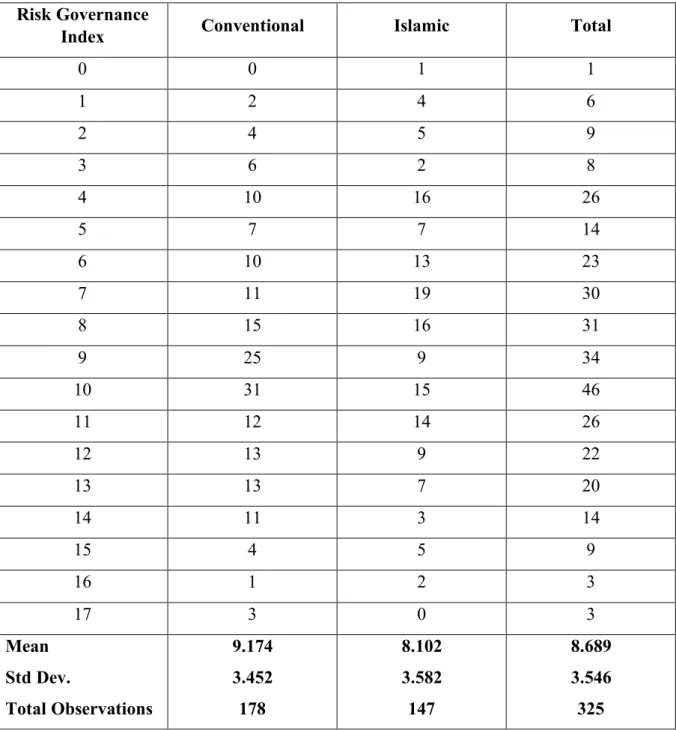
Table 2.6 Overall RGI Score and Frequencies 64
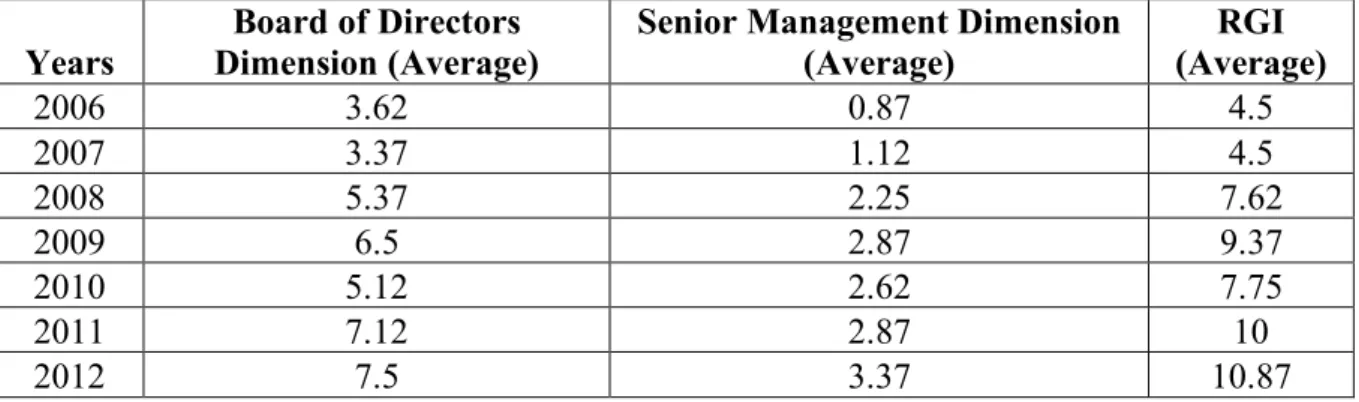
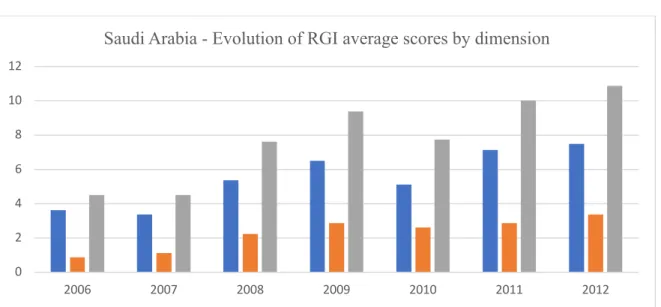
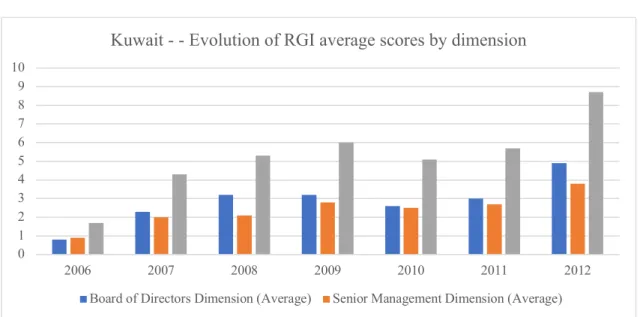
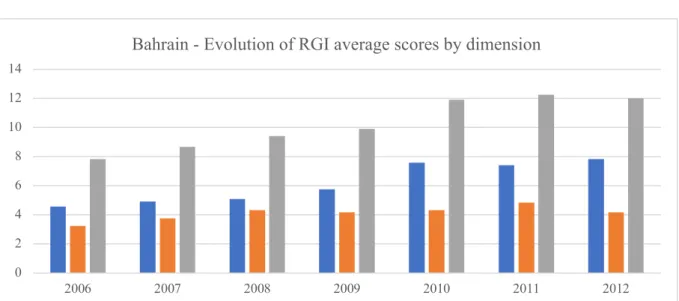
Table 2.7 Evolution of RGI average scores by dimensions in Saudi Arabia 65 Table 2.8 Evolution of RGI average scores by dimensions in Kuwait 66 Table 2.9 Evolution of RGI average scores by dimensions in Bahrain 67 Table 2.10 Evolution of RGI average scores by dimensions in Qatar 68 Table 2.11 Evolution of RGI average scores by dimensions in UAE 69 Table 2.12 Risk Governance Index: Comparison of Scores between Islamic and
Conventional banks
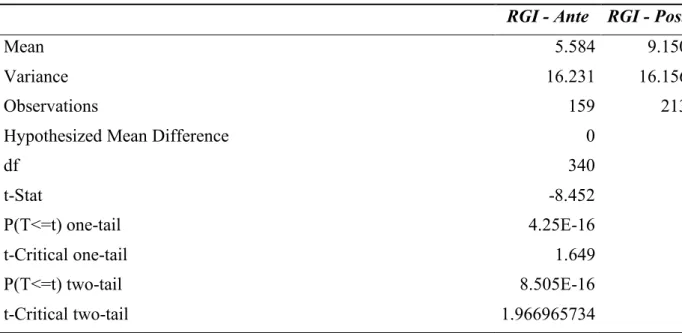
71 Table 2.13 Normality / Skewness and Kurtosis Tests for RGI 72 Table 2.14 RGI Variation between Islamic and Conventional Banks –T-test results 73 Table 2.15 RGI Variation after the GFC – T-test results 74 Table 2.16 RGI Variation before and after the GFC in the two bank types 75 Table 2.17 RGI Variations between Islamic and Conventional Banks in Saudi
Arabia
76 Table 2.18 RGI Variations between Islamic and Conventional Banks in Kuwait 77 Table 2.19 RGI Variations between Islamic and Conventional Banks in Qatar 77 Table 2.20 RGI Variations between Islamic and Conventional Banks in Bahrain 78 Table 2.21 RGI Variations between Islamic and Conventional Banks in UAE 78 Table 3.1 Description of Variables Used in the Study 92
Table 3.2 Descriptive Statistics of all Variables 96
Table 3.3 Dynamic Panel Two-Step GMM Estimations – Models 1 and 2 99 Table 3.4 Dynamic Panel Two-Step GMM Estimations – Models 3 and 4 105 Table 3.5 Dynamic Panel Two-Step GMM Estimations – Post-Crisis Financial
Performance in Islamic Banks
108 Table 4.1 Description of Variables Used in the Empirical Models 128
Table 4.2 Descriptive Statistics of all Variables 133
Table 4.3 Two-sample t-test with equal variance between z-score in Conventional & Islamic Banks
135 Table 4.4 Two-sample t-test with equal variance LnZScorebetween
Conventional & Islamic Banks
135 Table 4.5 Two-sample t-test with equal variance LiqA_DSTF between
Conventional & Islamic Banks
137 Table 4.6 Dynamic Panel Two-Step GMM Estimations – Overall Results and
Specific Case of Islamic Banks
138 Table 4.7 Dynamic Panel Two-Step GMM Estimations – Post Crisis Analysis 143
Table A2.1 Islamic financial contracts Definitions 164
Table A2.2 List of banks included in the sample 165
Table A4.1 Two-sample t-test with equal variance between CAR in pre- & post-GFC
166 Table A4.2 Two-sample t-test with equal variance of between CAR Islamic and
Conventional Banks
166 Table A4.3 Two-sample t-test with equal variance LLR_GL between Conventional
& Islamic Banks
9
List of Figures
Figure 2.1 Risk Governance Framework 45
Figure 2.2 Risk Governance Index (Author’s Contribution) 56
Figure 2.3 Evolution of RGI average scores by dimensions in Saudi Arabia
66 Figure 2.4 Evolution of RGI average scores by dimensions in
Kuwait
67 Figure 2.5 Evolution of RGI average scores by dimensions in
Bahrain
68 Figure 2.6 Evolution of RGI average scores by dimensions in
Qatar
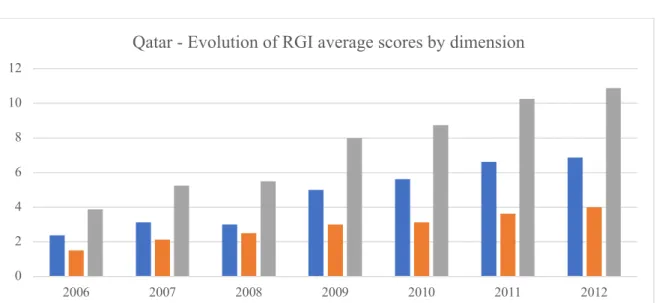
69 Figure 2.7 Evolution of RGI average scores by dimensions in
United Arab Emirates
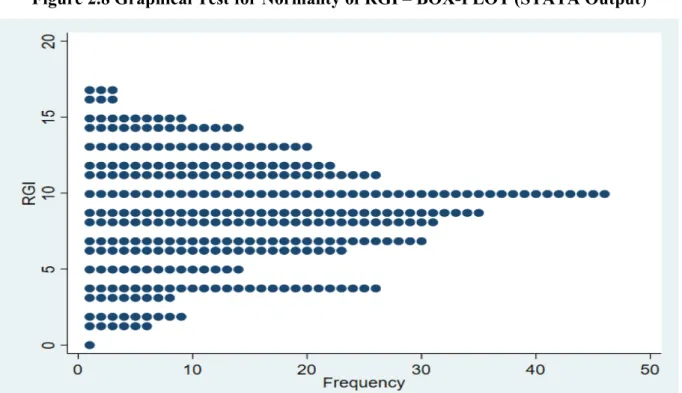
70 Figure 2.8 Graphical Test for Normality of RGI – BOX-PLOT
(STATA Output)
10
List of Abbreviations
AAOIFI Accounting and Auditing Organization for Islamic Financial Institutions
AC Audit Committee
ALCO Assets and Liabilities Committee
BCBS Basel Committee on Banking Supervision
BHC Bank Holding Company
BOD Board of Directors
C2I Cost to Income ratio
CB Conventional Banks
CEO Chief Executive Officer
CFO Chief Financial Officer
CG Corporate Governance
CRO Chief Risk Officer
EAD Exposure at default
EII Ethical Identity Index
FSB Financial Stability Board
GCC Gulf Cooperation Countries
GFC Global Financial Crisis
GMM Generalized Method of Moments
IA Internal Audit
IAH Investment Account Holders
IB Islamic Banks
IIFS Institution offering Islamic Financial Services
ISCU Internal Shari’ah Compliance Unit
ISRU Internal Shari’ah Review Unit
IRGC International Risk Governance Council
LCR Liquidity Coverage Ratio
NPL Non-Performing Loans
NSFR Net Stable Funding Ratio
OECD Organization for Economic Co-operation and Development
PLS Profit-and-Loss Sharing
RC Risk Committee
RGF Risk Governance Framework
RGI Risk Governance Index
RGS Risk Governance Structure
RMC Risk Management Committee
ROAA Return on Average Assets
ROAE Return on Average Equity
ROOE Return on Operating Equity
SIFI Systemically Important Financial Institutions
SIB Systemically Important Banks
11
Declaration
I hereby declare that this thesis is the result of my individual work and I have produced it without the prohibited assistance of third parties and without making use of aids other than
those specified from other sources and which have been identified as such.
This thesis has not been previously submitted for a degree in this or any other institution. The PhD work was conducted from January 2014 to September 2017 under the supervision of
Professor Habib Ahmed at Durham University. Hajar Raouf
12
Statement of Copyright
The copyright of this thesis rests with the author. No quotation from it should be published without the author’s prior written consent and information derived from it should be
13
Acknowledgments
The completion of this doctoral thesis from the inception of its research idea to its development, technical construction and its discussion could not have been possible without the support and guidance of several people whom I would like to sincerely thank.
First of all, Professor Habib Ahmed, my supervisor who introduced me to this thesis research topic and raised my high interest in studying it in the most comprehensive manner. I am grateful to you Professor Ahmed for your patience, continuous understanding and close supervision that helped me improve the quality of my work and feel my progress along the months.
I would like to thank Professor Mehmet Asutay, Director of the Durham Centre for Islamic Economics and Finance for his remarkable efforts in making the Islamic Finance program at Durham University a label of high quality education and research in European universities and worldwide. I am also grateful to you Professor Asutay for inspiring us, your students, and for instilling in us the awareness and necessity about being uncompromising on moralities and ethics. My special thanks go to Mr Iqbal Asaria CBE for the exceptional support and encouragement he continuously showed me since my first steps in the PhD program until today. I am thankful to you Mr Asaria for every piece of knowledge you generously shared with me and for motivating me hard to finish the Muqqadimah.
I would like to thank my second supervisor, Dr Riham Rizk, for her support especially during the difficult times that are, as is known, very common in every PhD student’s journey.
During my PhD journey, I was blessed by meeting and being surrounded by remarkably kind and kindred spirits, friends from all the corners of the world who made my four-year stay in Durham truly exceptional. Thank you for your care, limitless help and motivation.
Last and far to be least, my infinite thanks are and remain forever to my wonderful mother, Nadia, my sisters Hind and Alaei, my aunt Najat and my stepfather Haj. Thank you for your immeasurable efforts to help me achieve all my ambitions, for your trust and unbounded love.
Last and far to be least, my infinite thanks are and remain forever to my husband Amine. Thank you for your patience standing the distance, the peak periods of hard work and for tirelessly following my progress section by section.
I miss words to thank each one of you, my family, as you deserve. I am indebted to each one of you for every single achievement.
14
Dedication
To the one I love unconditionally, the one who brought me up alone, the one who instilled every good in me, Maman,
To my two soulmates, the apple of my eyes, my two companions in the route of life, Hind and
Alaei,
To my role model, my inspiration for hard-work, Taty Najat,
To the one Allah Blessed me with to accompany every day of my life, the one He Chose to be my mentor, my confidant, my husband, Amine Badii.
To you five, I dedicate the highest of my academic achievements and every small or big success, past and forthcoming.
15
Chapter One
Introduction
16
1.1
Introduction and Overview and Research Background
The centrality of risk management in financial institutions broadly and banks particularly has been recognized in research by academics, policy and regulatory bodies as well as industry experts. There has been renewed interest on risk management framework in financial institutions after the global financial crisis (GFC) of 2007-2008. Although banking corporations are in the business of complex financial risk management, it has been recognised that one of the utmost shocks from the last decade’s financial markets fiasco dwelled in risk management failures which reflected significantly in the corporate governance practices (FSB, 2013a; OECD, 2009). Examples of such failures include implementation of risk management by products or divisions rather than on a firm-wide basis, the location of risk managers in the organizational skeleton of the bank did not permit the immediate transmission of red flags indicating that they were regarded more as deterrent agents rather than efficient security watchdogs. The need for larger proportions of independent directors within the board and its main committees was worsened by the lack of knowledge of financial risks among the board members, an excessive focus on meeting capital regulatory thresholds and attempting to outperform the expected rates of return on equity to maximize shareholders’ value (FSB, 2013a; OECD, 2009).
Risk management is undoubtedly a pillar of the short and long term financial performance for companies operating in all industries as it enables gains from the good risks and reduce losses from the bad risks. Nonetheless, financial intermediaries play an important role in the economic and financial system as they collect deposits and provide credit to the real economy by funnelling savers’ funds to companies and households that need to borrow (Bhattacharya and Thakor, 1993). In other words, they perform maturity and liquidity transformation whereby they use short-term liquid funds to issue long-term illiquid loans. While they seek profitability and maximization of value through this business model, their individual financial stability is crucial to the soundness of the entire financial and economic system. A key feature of the banking system is its inter-linkages with the other financial sectors and the economy that can create systemic risks. As experienced in the recent global financial crisis, the insolvency of Bear Stearns in March 2008 followed by the bankruptcy of Lehman Brothers in September 2008 was detrimental to the world-wide financial stability which ensued large social costs at global scale. Becht et al. (2011) report that in the case of Belgium, the Netherlands and the United-Kingdom, the total effective state aid that was granted to banks by July 2009 exceeded 20% of GDP. The result was a decrease of GDP per capita by 3 percent on average in the Euro zone countries with Greece, Ireland, Iceland, Italy and Spain being the hardest hit countries
17
(Otker-Robe and Podpiera, 2013). The authors also report that the income per capita reduced in 95 countries around the world in 2009 at the peak of the financial crisis. An alarming figure in their paper shows that globally 47 to 84 million people are estimated to have fallen in extreme poverty in 2009 because of the global financial crisis (Otker-Robe and Podpiera, 2013, p. 15). Therefore, the crisis transmission channels from the financial system to the social sphere are not only real and large but astoundingly swift.
These socio-economic costs of the GFC motivated the policy-makers and regulators to improve and strengthen the operational norms and review the prudential regulations to prevent similar consequences in the future. The Basel Committee on Banking Supervision (BCBS) issued new Basel III standards to improve the resilience of banks. While Pillar 1 of Basel III increases the capital buffers and holdings of banks, Pillar 2 enhances the supervisory overview role to ensure that banks hold adequate capital to mitigate different types of risks and Pillar 3 promotes market discipline through regulatory disclosure requirements. Other than raising the exigencies in terms of the quality and quantity of capital that improve risk coverage of the capital framework (to better capture on- and off-balance sheet risks and derivatives related exposures) new liquidity standards were also issued (BCBS, 2010a, 2013). The BCBS introduced a leverage ratio1 that serves as a backstop to the risk-based capital framework (BCBS, 2014), additional
capital conservation and countercyclical buffers as well as a global standard to manage liquidity risk (BCBS, 2013). Acknowledging the findings of the OECD (2009), the Basel Committee also recognised the crucial importance of corporate governance in managing banking corporations and safeguarding the interests of all stakeholders beyond the shareholders particularly in retail banks (BCBS, 2015a). Accordingly, it issued a first set of guidelines of Corporate Governance for banks in 2010 drawing mainly from the published principles of the OECD (BCBS, 2010b). Recognizing the weaknesses in the risk management function in financial institutions during the GFC, the (FSB, 2013a) conducted a thematic peer-review on risk governance to assess the progress achieved in implementing the recommendations on enhanced supervision as set out in FSB (2012). The main findings of the peer-review show that national authorities took several initiatives to improve the regulatory and supervisory oversight of risk governance in financial institutions such as raising the supervisory expectations from the risk management function especially with respect to the chief risk officer (CRO) stature and qualifications, requiring the establishment of a risk committee, engaging more frequently with
1 This leverage ratio divides Tier 1 -as the capital measure- by the sum of the following exposure measures: on-balance sheet exposures, derivatives exposure, securities financing transaction exposure and off-on-balance sheet items. For detailed regulatory information, please refer to (BCBS, 2014).
18
the board and management as well as evaluating the accuracy and usefulness of the information provided to the board to enable the effective discharge of their responsibilities (FSB, 2013a, p. 14). Nonetheless, the peer-review also spots areas where more supervision is required to improve risk governance practices. These pertain to the clear definition of the independence status of the directors, the establishment of a stand-alone risk committee that is composed of independent directors, the kind of risk information that the firm should provide in addition to the frequency of risk reporting (FSB, 2013a, p. 15). The (FSB, 2013a) notes the responsibility of the firm above all to identify and manage the risks it faces then of the supervisors to assess whether its risk governance frameworks and processes are adequate, appropriate and effective. BCBS issued an updated version of the Corporate Governance guidelines in 2015 which also takes into account results from the peer-review survey on risk governance carried out by the Financial Stability Board (FSB, 2013a).
These efforts from the OECD, the Basel Committee and the Financial Stability Board portray the importance that regulators allot to the best practices in risk management governance that are expected to rectify mistakes from the pre-crisis period and enhance the soundness of the risk management processes, systems and strategic decisions.
Considering the positive correlation between risk and expected returns, a question that arises is whether improvement of risk governance regime promotes safer risk management decisions in banks or is likely to compromise the institution’s financial performance? In addition, is the inclusion of governance mechanisms that are less likely to put maximization of shareholders’ interests above other considerations going to achieve better or worse operational performance such as returns on assets and returns on equity? Besides profitability measures, one additional question that needs attention is whether these recommended risk governance practices are effectively associated with enhanced financial stability at the individual bank level contributing thereafter to lower systemic risk likelihood?
As Islamic banks proved better resilience to shocks during the GFC due to their lower leverage and higher solvency (Hasan and Dridi, 2010), this research explores answers to the questions raised above and carries out a comparative study of conventional and Islamic banks to assess if the distinct business model of Islamic banks, which relies on compliance to ethics and Shari’ah such as interest-free transactions, sale and equity modes of financing, speculation-free investments and imposes tighter risk governance practices, can explain to a certain extent their resilience to the external negative shocks as experienced in 2008.
It can be inferred from the above discussion that banking institutions have private incentive structures that are more performance or efficiency oriented while the regulatory authorities are
19
more concerned about their externalities that can affect the public at large. From the regulators’ perspective, the effects of these externalities cannot be ignored hence sound risk governance behaviour must be imposed on banks. Financial authorities have therefore incentive structures that are more socially oriented with a stressed focus on the costs arising from instability. Despite the crucial importance of risk management in achieving profitability and maintaining solvency in banking institutions, academic research on risk governance remains remarkably scant whether in conventional or in Islamic finance literature. As will be discussed in chapters two, three and four in ampler details, very few academic papers critically evaluate the progress achieved so far by commercial banks or financial intermediaries at large in upgrading their risk management practices to safeguard the depositors’ funds and improve market discipline to which many financial institutions sadly did not fairly submit in the past. While the specificities and implications of corporate governance mechanisms in banks have been explored from various angles such as in the works of (Adams and Mehran, 2008; Andres and Vallelado, 2008; Andrieş and Nistor, 2016; Anginer et al., 2016; Caprio et al., 2007; Ellis et al., 2014; Laeven and Levine, 2009; Pathan, 2009; Pathan and Faff, 2013) among many others or in the works of (Abdallah et al., 2015; Abu-Tapanjeh, 2009; Chapra and Ahmed, 2002; Elasrag, 2014; Mollah and Zaman, 2015; Safieddine, 2008) in the case of Islamic banks, the focus of research dwells mainly on (i) the attributes of the board of directors such as their size, the proportion of independent or non-executive directors or the meetings’ frequency or (ii) the centrality that is the remuneration and/or the power of the CEO when chairing the board as well. The inclusion of determinants pertaining to the risk management function such as the role of the chief risk officer and the internal audit or the attributes of the risk and audit committees started to appear in the literature a few years after the global crisis as in the works of Aebi et al. (2012); Battaglia and Gallo (2015); Ellul and Yerramilli (2013); Hines and Peter (2015).
Given the limited literature for a function that can be detrimental to the soundness of the business activities of banks, this research aims to fill this gap and to build-up on the previous corpus by discussing in-depth the pivotal importance of risk governance and explore its linear associations with profitability and stability. Specifically, the thesis empirically investigates the contribution of sound risk governance frameworks to the banks’ operational performance and financial stability. To consider the changes in regulatory requirements in terms of the governance of risks after the GFC, the study also accounts for the impact of risk governance regimes in the pre- and post-crisis periods.
20
1.2
Research Aim and Objectives
As introduced in the previous section, the broad aim of this thesis is to evaluate the strength of the risk governance frameworks in conventional and Islamic banks and examine their associations with financial performance and financial stability. Specifically, it entails three research objectives which constitute the rationale for each of its three empirical essays. In the first essay, the research objective is to explore the concept of risk governance in the academic and regulatory literature and assess its strength in a sample of conventional and Islamic banks in the GCC region. To assess the status of risk governance, a novel metric is developed and used for comparisons between the two bank types and before and after the global financial crisis.
The second essay aims to examine the impact of strong risk governance and financial performance. The metric introduced in the first essay is used in a dynamic econometric model to explore the associations and causality effects with three commonly-used financial performance indicators, namely the return on average assets (ROAA), the return on average equity (ROAE) and the cost-to income ratio (C2I).
The third empirical essay explores the relationship between risk governance and financial stability. The inclusion of four indicators of the bank’s health enables a comprehensive analysis on the various possible associations between sound risk governance frameworks and bank’s likelihood of insolvency (z-score), its capital adequacy (capital adequacy ratio), its assets quality (ratio of loan loss reserves to gross loans) and its liquidity profile (ratio of liquid assets to deposits and short-term funding).
It should be noted that in the second and third essays the econometric analysis starts by presenting the results for the overall sample regardless of the banks’ type or time-period. Thereafter, the second section of the econometric analysis focuses on the case of Islamic banks relative to their conventional counterparts in the pre-crisis period. In the third section of the analysis, the emphasis is on the contribution of risk governance to financial performance and to financial stability in the whole sample in the post-crisis period. Lastly, the interest in the fourth section of the econometric analysis is centred on the impact of the risk governance regimes in the specific case of Islamic banks in the post-crisis period.
1.3
Research Questions
The three empirical essays that constitute this thesis attempt to answer various research questions to achieve the research objectives set out in the previous section. The objective in the
21
first essay is to evaluate the strength of the risk governance frameworks then proceed to several comparisons including between the two bank groups and between the two periods of time of before and after the GFC. Therefore, the first empirical paper explores the following three research questions:
Research Question 1: Is there a significant difference in the risk governance disclosure between conventional and Islamic banks?
Research Question 2: Is there a significant difference in the risk governance disclosure for both types of banks before and after the global financial crisis?
Research Question 3: Is there a significant difference in the risk governance disclosure between conventional and Islamic banks within each GCC country?
Once this first set of research questions is answered, the second empirical paper proceeds to the exploration of the causality effects between risk governance and performance using more sophisticated quantitative research methods. Hence, in chapter three the following research questions will be explored:
Research Question 4: Is there a significant relationship between the extent of risk governance disclosure and the financial performance of banks?
Research Question 5: Is there a significant relationship between the extent of risk governance disclosure and the financial performance of Islamic banks?
Research Question 6: Is there a significant relationship between the extent of risk governance disclosure and the financial performance of both types of banks in the post global financial crisis period?
Research Question 7: Is there a significant relationship between the extent of risk governance disclosure and the financial performance of Islamic banks in the post global financial crisis period?
Following the second set of research questions, the third empirical essay proceeds to the investigation of the potential effects of robust risk governance frameworks on indicators of financial stability. Therefore, chapter four provides answers to the following four research questions:
Research Question 8: Is there a significant relationship between the extent of risk governance disclosure and financial stability of banks?
Research Question 9: Is there a significant relationship between the extent of risk governance disclosure and financial stability of Islamic banks?
Research Question 10: Is there a significant relationship between the extent of risk governance disclosure and financial stability of both types of banks in the post global financial crisis?
22 Research Question 11: Is there a significant relationship between the extent of risk governance disclosure and financial stability of Islamic banks in the post global financial crisis?
The eleven research questions introduced above will set out the statement of the research hypotheses to be tested later in each related empirical chapter.
1.4 Organisation of the empirical chapters by objectives and research
questions
This thesis does not follow a monograph structure with separate literature review and methodology chapters. In contrast, it adopts an essay-based structure where each empirical chapter entails its related literature, methodology and findings discussion. As stated above, the broad aim of this thesis is to evaluate the strength of the risk governance frameworks in conventional and Islamic banks and examine their associations with financial performance and financial stability. To reach this broad aim, the empirical chapters are organised as follows.
1.4.1 Essay One
In the first empirical chapter, the objective is to investigate the concept of risk governance in the academic and regulatory literature then proceed to the evaluation of its frameworks in each bank included in the sample. To achieve this objective, the following research questions are answers:
Research Question 1: Is there a significant difference in the risk governance disclosure between conventional and Islamic banks?
Research Question 2: Is there a significant difference in the risk governance disclosure for both types of banks before and after the global financial crisis?
Research Question 3: Is there a significant difference in the risk governance disclosure between conventional and Islamic banks within each GCC country?
1.4.2 Essay Two
In the second empirical chapter, the objective is to examine the effect of risk governance disclosure on three proxies of the banks’ financial performance. The analysis starts by an exploration on the overall sample regardless of the banks’ types and periods of time then proceeds to the specific case of Islamic banks overall and after the GFC. In that sense, the following research questions are answered:
Research Question 4: Is there a significant relationship between the extent of risk governance disclosure and the financial performance of banks?
23 Research Question 5: Is there a significant relationship between the extent of risk governance disclosure and the financial performance of Islamic banks?
Research Question 6: Is there a significant relationship between the extent of risk governance disclosure and the financial performance of both types of banks in the post global financial crisis period?
Research Question 7: Is there a significant relationship between the extent of risk governance disclosure and the financial performance of Islamic banks in the post global financial crisis period?
1.4.3 Essay Three
In the third empirical chapter, the objective is to examine the effect of risk governance disclosure on the banks’ financial stability. Similar to the previous chapter, the analysis starts by an exploration on the overall sample regardless of the banks’ types and periods of time then proceeds to the specific case of Islamic banks overall and after the GFC. To reach this essay’s main objective, the following research questions are answered:
Research Question 8: Is there a significant relationship between the extent of risk governance disclosure and financial stability of banks?
Research Question 9: Is there a significant relationship between the extent of risk governance disclosure and financial stability of Islamic banks?
Research Question 10: Is there a significant relationship between the extent of risk governance disclosure and financial stability of both types of banks in the post global financial crisis?
Research Question 11: Is there a significant relationship between the extent of risk governance disclosure and financial stability of Islamic banks in the post global financial crisis?
1.5
Research Methodology
This research is essay-based, hence each empirical paper (chapters two, three and four) entails its related methodology section that describes the processes of data collection, statistical tests and econometric estimations and data analysis. Nonetheless, the objective in this section is to provide a brief overview on the methodology followed to construct the ‘Risk Governance Index’ (RGI) and discuss the theoretical motivations for the choice of the Generalized Method of Moments (GMM) that was used to estimate the panel data in chapters three and four.
24 1.4.1 Risk Governance Index: Rationale and Structure
The very few empirical studies that look at corporate governance (including risk governance) estimate each attribute by a separate variable that is later used in a static or dynamic regression2.
For instance, the number of directors (sometimes transformed to natural logarithm) is used as a separate variable to capture the board size (Aebi et al., 2012; Andres and Vallelado, 2008; Andrieş and Nistor, 2016; Anginer et al., 2016; Pathan, 2009; Pathan and Faff, 2013). The percentage of independent, outside or non-executive directors out of the total number of directors will also be included as a distinct independent variable to convey the level of the board independence (Aebi et al., 2012; Andres and Vallelado, 2008; Andrieş and Nistor, 2016; Anginer et al., 2016). To measure the existence or absence of a committee at board level or the fulfilment of a threshold of required number of meetings for instance, a natural option is to use binary variables with values of 1 or 0. While these methods of quantifying corporate governance features have been extensively used in empirical literature, there are two issues that cast doubt about the general inferences that might be drawn post-estimation. One is theoretical and the second is technical. On the theoretical side, the link has long been established between bank governance and risk-taking behaviour3 by using concepts from agency problems, property
rights and separation of ownership and control that naturally affect bank profitability and its business soundness in fine (Fama and Jensen, 1983; Jensen and Meckling, 1976). Nonetheless, when it comes to exploring the implications of theory in practice, researchers are compelled to a series of constraining interrogations when quantifying bank governance characteristics which are then used in cause-effect or predictive models. If we consider the case of financial performance as one example, conceptually the measures of profitability are mainly affected by a combination of bank level variables such as the size, operating costs, income diversification, quality of assets, and the market share among other drivers. The governance structure and composition also contribute to achieving profitability as the risk appetite is defined at the strategic firm level. Nonetheless, if the regression equation that examines profitability (as the dependent variable) includes more corporate governance variables than the main drivers of return, this is likely to affect the regression weights of the predictor variables hence signify that the governance variables are the main predictors of bank’s performance. A relevant question
2 Econometric methods used in previous literature vary between (i) the fixed and random effects followed by additional two or three stage least squares to correct for endogeneity (such as in (Adams and Mehran, 2012; Mollah and Zaman, 2015) or (ii) the generalized method of moments (such as in Andres and Vallelado, 2008; Pathan and Faff, 2013)
3 More discussion on the established theoretical nexus will follow in the introduction and literature review sections of chapters three and four.
25
arises therefore for how many of these bank governance characteristics are directly associated with the selected performance indicators and cannot be ignored when constructing the econometric model? In fact, what is the theoretical relevance in attributing a linear association and causal effect of say, the meeting frequency of the board or of the audit committee with returns on assets or the Tobin’s Q? Or how sound is it to infer the impact of the number of board members on higher or lower ratios of capital adequacy or the loan loss reserves to gross loans for instance? And what about the effect of the direct or indirect reporting line of the CRO to the banks’ CEO on for example the returns on equity? These conceptual questions ensue the second technical concern mentioned earlier as a researcher would then wonder about which and how many of these governance traits should be inputted in an econometric model? While the research interest might dwell in capturing the maximum possible effect of governance features on a specific performance proxy, one technical issue could be to fall in the over-specification trap if too many variables are included in the model or on the contrary to face the omitted variable bias if too few variables are accounted for. As is commonly known, these two issues in financial econometrics theory4 engender inflated standard errors in the former case and biased
and inconsistent estimators in the latter and cannot be used to ascribe the influence of a predictor on a response variable (Antonakis et al., 2010; Wooldridge, 2009). The root cause of inflated standard errors can sometimes reside in a problem as common as multicollinearity which is very probable when including measures of certain governance attributes that are likely to be highly correlated with each other. An example is using the number of independent directors in the board together with the level of independence of the audit or risk committee. Furthermore, including too many variables on the right-hand side of the regression equations is likely to influence the explanatory power of the constructed model (Wooldridge, 2009).
The academic papers to which this thesis adds up do not converge together in terms of the number of governance measures that were implemented as predictors as there is no theory on the subject that can guide the empirical researchers on the variable selection process when constructing the adequate econometric models to explore their associations with performance or stability indicators. For instance, Andres and Vallelado (2008) use only three determinants (namely the board size, the proportion of outsiders among the board members and the number of meetings held per year) to study the role of the board of directors in the banks’ corporate
4 For a theoretical in-depth discussion on the danger of making causal claims in the presence of econometric issues such as: the omitted variable, omitted selection, simultaneity, measurement error and common method variance, please refer to the comprehensive and instructive work of (Antonakis et al., 2010)
26
governance structure. In Aebi et al. (2012) fourteen governance variables relating to corporate and risk management governance are examined. In Adams and Mehran (2012) twenty-four characteristics relating to the board (and its changes) composition, size and other governance features are explored. In their seminal paper, Ellul and Yerramilli (2013) use seven risk management governance characteristics and eight proxies for board, ownership and CEO power’s attributes. Battaglia and Gallo (2015) account for only three corporate and two risk governance features in the model.
In contrast with these studies, this thesis opts for a different method to look at the role of risk governance as part of the overall corporate governance structure in banks. To overcome the misspecification constraints discussed above and in order to draw sound inferences whilst observing the theoretical and conceptual groundwork for the most important drivers of banks’ financial performance and financial stability, a composite risk governance indicator has been constructed to operate as one explanatory variable along with other bank level control variables and macroeconomic factors that are likely to influence the selected set of performance and financial stability indicators. The composite indicator named as ‘Risk Governance Index’ (RGI) entails a total of nineteen items. These relate to three important characteristics of the board that are derived from the corporate governance literature and sixteen key attributes of strategic risk management mechanisms. The characteristics in the RGI include the roles of the risk and audit committees, the role of the CRO and of the internal audit function. This approach reduces the risk of under -or over-specifying the dynamic linear model and at the same time reflects comprehensively the soundness level of the risk governance structures through the scores that are achieved by each bank in the sample during the chosen time interval. Also, one additional advantage of constructing the RGI dwells in the possibility to use it by national and international regulators to assess the level of conformity and progress accomplished by banks on the crucial regulatory requirement of maintaining healthy governance practices.
To construct the index, the method of Haniffa and Hudaib (2007) is followed only in the way they construct their Ethical Identity Index from broad dimensions to specific items but no in the way they calculate its scores. In short, firstly a checklist of items is developed based on an in-depth coverage of the academic and financial regulatory literature. This extensive reading phase enabled the identification of the most important roles and functions that lead, oversee, implement and control the risk management mechanisms in banks. After identifying the key features in the first step, it became necessary to distinguish between two categories of characteristics in structuring the RGI. This was done mainly to differentiate between the two strategic levels that are responsible for oversight of risk management functions, namely the
27
board of directors and the senior management. Thereafter, each category has been broken down into dimensions under which the most relevant attributes of the board members, the audit and risk committees, the CRO and the internal audit were inputted. Similar to Haniffa and Hudaib (2007), the items were allocated a score of one every time the condition for sound practice is fulfilled and zero otherwise. The final score of the RGI for each bank-year observation was derived as the sum of the total scores recorded for each of the nineteen items.
1.4.2 Data Collection, Data Structure and Estimation Method
As the composite measure is self-developed, the primary data of the elements of RGI had to be collected manually from the annual reports, the financial statements and the corporate governance reports whenever available. For the three empirical essays, I used a sample of 26 commercial Islamic banks and 27 commercial conventional banks from five GCC countries5
for the years 2006 to 2012 giving a total of 371 firm-year observations. Note that the time period includes both before and after the GFC. To collect the maximum number of data, the annual reports and every available financial document including the notes sections in both English and Arabic were thoroughly read to fairly allocate the scores and to reduce chances of omitting a key statement or disclosure. As some banks were established after 2006 and as not all annual reports were available in the banks’ websites6, the panel data structure is unbalanced.
The dependent and bank level explanatory variables were extracted from the BankScope Bureau Van Dijk database and the macroeconomic indicators were downloaded from the World Bank database. The dependent variables that are used to measure financial performance in chapter three are: return on average assets (ROAA), return on average equity (ROAE) and the cost-to-income (C2I) ratio. By using these three distinct financial ratios, the exploration approaches the impact of risk governance analysis on three different aspects of a bank’s performance that matter to the external investors (ROAA), the bank’s managers (ROAA and C2I) and the shareholders (ROAE). Furthermore, by carrying out the impact analysis on three outcome variables, the results ensure multiple robustness that provide reliable and thorough inferences. The dependent variables that are used to measure the financial stability in the third essay are the z-score, the capital adequacy ratio, the ratio of loan loss reserves to gross loans and the ratio of liquid assets to deposits and short-term funding. By using these four variables, various
5 Further details on the motivations behind the choice of the GCC region will follow in section 6 that tackles the “Scope of the Study”.
6 I attempted several times to directly contact banks via email to enquire their missing annual reports. I received an automatic acknowledgment of receipt from Commercial Bank of Qatar (CBQ) and a personalized response from the Acting Head of Investor Relations at Qatar National Bank (QNB) however without the enquired reports. The other banks never replied.
28
aspects of financial stability at individual bank level are explored. Specifically, the z-score proxies the risk of banks insolvency by looking at the volatility of returns on assets with respect to the ratio of equity-to-assets. The capital adequacy ratio is the well-known and the most important regulatory requirement when measuring the banks’ capital quality and soundness. The ratio of loan loss reserves to gross loans reflects the preponderance of the bad loans and the probabilities of customers default in the banks’ assets portfolio. Lastly, the ratio of liquid assets to deposits and short-term funding, which is also called the deposit run-off ratio, is a salient measure of how much cash-convertible assets are available to the bank in case depositors unexpectedly need to withdraw their funds.
The determinants for each of these dependent variables used in the regressions are a combination of several bank-level, including the newly developed risk governance index as a focus explanatory variable, and other key macroeconomic factors that will be introduced and explained in the methodology section of each related essay.
As the data structure is both time series and cross-sectional, the relationship between the dependent and independent variables must be estimated through a panel data model. The pooled OLS estimator however cannot be used as it does not consider the unobservable and constant heterogeneity of the banks in the cross-country sample. Also, the pooled OLS estimator does not account for the endogeneity of some of the independent variables. The panel data analysis through static or dynamic panel models is therefore the most efficient tool to conduct the econometric investigation. In this research, the generalized method of moments (GMM) is chosen for several theoretical reasons that makes it the most efficient estimator.
First of all, following Blundell and Bond (1998) and Bond (2002), GMM is appropriate for panels with a large number of cross-section units and smaller time periods. Effectively, the sample size of this empirical research consists of data from fifty-three firms that are observed for seven years. Second, considering the nature of the relationships that this research aims to explore, the achievements in terms of performance and stability are very likely to follow the same trend from their previous year’s performances. While the direction of influence cannot be assumed a priori, especially that the period of study covers about two years before the GFC and five years after it, there are autoregressive dynamics from the values of year t-1 of the dependent variables that cannot be ignored although their coefficients are not of direct interest in the interpretation of the results and for the implications of the study.
The choice of GMM is further confirmed by the existence of explanatory variables that are not strictly exogenous (Bond, 2002). For the case of this research and by using the GMM method, it is possible to build instruments for the variables that are potentially endogenous. A dynamic
29
panel model at first-order is therefore the most appropriate to construct despite its substantial complications7 in contrast with the fixed and random effects models (Greene, 2011, p. 307). It
is also worth-noting that the reliability of the GMM estimates in essays two and three are verified using the Arellano and Bond (1991) test for serial correlation in the error components as well as the Hansen test for the validity of instruments.
1.6Significance of the Research
As discussed in the introduction section above, this thesis seeks to fill a gap in the academic literature that explores risk governance practices in banks and their associations with levels of profitability and financial stability. As far as this research is concerned, there are not yet any empirical papers that comprehensively include more than ten determinants related to the risk management function and investigate their linkage with various indicators of financial performance and / or financial stability. Specifically, the first empirical papers that tackled the concept of risk management governance in financial institutions and to which this thesis extensively refers are Aebi et al. (2012) Battaglia and Gallo (2015), Ellul and Yerramilli (2013) and Hines and Peter (2015). In these papers, the number of attributes of risk governance vary between two in Battaglia and Gallo (2015) and six in (Ellul and Yerramilli, 2013). In Aebi et al. (2012), the authors use five risk governance variables while in Hines and Peter (2015), the only risk governance variable is the outcome binary variable that refers to the voluntary risk committee formation. Details of the variables used in each paper will be discussed in the subsequent empirical chapters accordingly.
In fact, three out of the four papers that tackled the concept of risk governance (Aebi et al., 2012; Battaglia and Gallo, 2015; Ellul and Yerramilli, 2013) explore its nexus with several measures of operational and market-based indicators of bank performance and none has considered the potential ties with bank stability. The fourth paper by Hines and Peter (2015) is somewhat different as it looks at the determinants and consequences of voluntary risk management committee formation. Therefore, the outcome variable that the authors estimate in a probit regression model stands for the presence/absence of a risk management committee which is function of several firm characteristics and risk measures. Furthermore, these four pieces of research are on commercial banks and saving institutions in North America (Aebi et al., 2012), bank holding companies in the U.S (Ellul and Yerramilli, 2013), listed commercial banks, cooperative banks, bank holdings and holding companies in China and India (Battaglia
7 A detailed and powerful theoretical mathematical proof is provided in Chapter 13 on GMM Estimation of Dynamic Panel Data Models in (Greene, 2011, pp. 307–334).
30
and Gallo, 2015) and on financial institutions in the U.S (Hines and Peter, 2015). Hence, this thesis extends the line of research on the importance of risk governance mechanisms in promoting banks’ profitability and adds to it by exploring its role in safeguarding banks stability yet in a different geographical region that is the Gulf Cooperation Countries. It should be noted that none of the cited papers include Islamic banks in their selected samples. Hence research carried out in this thesis8 is non-existent in the Islamic finance literature. Furthermore, while
Islamic banks are present in more than sixty countries, they have become systemically important in fourteen jurisdictions (IMF, 2017) among which the GCC region accounts for the fastest growing Islamic financial sector (The Banker, 2016). Therefore, an exploration of the concept and implications in their case as well is fundamental.
Additionally, there are two more contributions of this thesis. First, it comes up with a new indicator to evaluate the strength of the risk management governance architectures by capturing together nineteen determinants of healthy risk governance practices as informed by academic and regulatory literature. This method differs from the one used in the above-mentioned papers where separate governance variables are used as explanatory variables in the econometric equations. Second, while corporate governance data are sufficiently available in corporations headquartered in the U.S and Europe9, it is widely acknowledged that this is not the case in the
GCC, MENA or Southeast-Asia regions. Therefore, several studies on corporate governance in countries of these regions are compelled to manually collect data from annual reports and financial statements or corporate governance reports if available (such as Abdullah et al., 2015; Al-Maghzom et al., 2016; Al-Malkawi et al., 2014). More details about this limitation of data unavailability will be discussed in the conclusion chapter (Chapter five). Hence, an important contribution of this thesis dwells also in the manual construction of a tailored database of nineteen governance determinants among which sixteen are specific to risk governance and three relate to attributes of the board of directors. As indicated, the constructed database covers data from 27 conventional commercial banks and 26 commercial Islamic banks from the GCC countries and required more than eight months to painstakingly read and thoroughly validate information available in more than three hundred annual reports, financial statements (as well as their “Notes” sections) and corporate governance separate reports whenever available.
8 Meaning risk management governance specifically and not corporate governance at large which counts several published papers such as (Abdallah et al., 2015; Chapra and Ahmed, 2002; Elasrag, 2014; Mollah et al., 2016; Mollah and Zaman, 2015) among many others.
9 Corporate governance data for these countries are available in the following databases: CompuStat and Risk Metrics are widely used for U.S companies in addition to BoardEx, Thomson Reuters Datastream, Bloomberg for America, Europe and a few countries in other regions, yet availability and length of the historical is a significant issue for the GCC companies and banks as is commonly known in the academia.
31
Finally, the essays’ findings from the applied quantitative research methods are of key importance to international financial regulators, national authorities such as central banks and capital markets authorities and financial institutions likewise. In fact, the results from the three essays show that (1) the risk governance structures significantly improved after the global financial crisis, but Islamic banks are required to increase efforts in adopting better risk management practices as results from their conventional counterparts are significantly better. In terms of financial performance, it is found that (2) the more robust the risk governance composition, the higher the profitability in conventional banks but the lower in Islamic banks. In fact, the differences in the two banks’ type induce different impacts of sound risk governance on the three key performance indicators. In terms of financial stability, it is found that (3) strong and healthy risk governance frameworks plays a significant role in improving various indicators of bank-level stability including insolvency likelihood and capital adequacy among others and this is specifically true in the case of conventional banks but not in Islamic banks where key stability measures are not directly associated with stringent risk management mechanisms.
1.7Scope of the Study
Considering the greater share and expansion of Islamic banks in the global financial industry, especially in some specific geographic regions such as the GCC and Southeast Asia, as well as their distinctive operating model where Shari’ah principles underpin their risk-taking behaviour, one of the objectives of this research as well as its main contributions to the body of knowledge dwells in including them in its sample and accounting for their distinctiveness in the econometric estimations. The empirical research is carried out for the GCC region where a sufficient number of Islamic banks compete with a higher number of conventional banks. While it would have been enriching to include Islamic banks from different jurisdictions where the Shari’ah governance models differ between a decentralised model in the GCC and a centralised model in countries like Malaysia (Hamza, 2013), the hand collection of data under strict deadlines is one first and important limitation to this possibility and therefore homogeneity of the Shari’ah governance model in this cross-country study is preferred. Out of the six Gulf Council Cooperation countries, only Oman is excluded from the sample because it launched its first Islamic banks in 2013. The remaining five countries included are: Saudi Arabia, Kuwait, Qatar, Bahrain and the United Arab Emirates. It should be noted that all and only full-fledged Islamic banks in these countries, that is 26 Islamic banks, have been included in the sample. Considering the fastidious hand-collection process of corporate and risk management governance data, 27 conventional banks have been added to their Islamic
32
counterparts making together a sample of 53 banks. The data and information for these banks were collected for the period 2006 to 2012 to enable the comparison of results between the overall, pre- and post-crisis periods as will follow in larger details. The rationale behind the choice of the period of study is mainly motivated by the constraint dwelling from the year of establishment of the Islamic banks in the GCC region. The unavailability of annual reports dated before 2006 for many banks, especially the Islamic ones, raised the necessity to investigate their year of establishment.
As can be found in Table 1.1, there are 11 Islamic banks out of the 26 full-fledged10 ones
operating in the selected countries that were established after 2006 while 8 were incorporated before the year 2000 and only 7 were established between years of 2000 and 2005. Therefore, an ensuing effect is to set the threshold for the starting date of the study based on the most common year of establishment of the banks in the sample. Furthermore, when considering the most common year of establishment of banks, the severity of missing data is reduced as a larger number of annual reports and financial statements -which are the primary source of data for the present study- becomes available. In the conventional banking side, there is only one conventional bank in the United Arab Emirates that was incorporated in November 2007. The remaining 26 conventional banks counted 19 that were market players since the 1970s or earlier, four were established in the 1980s, two were established in the year 2004 and only one in the year 2000. Consequently, the starting date of the study is set for 2006 and considering the objectives of the study which target effects of risk governance post-GFC, the time interval is extended to year 2012 in a way that accounts for a sufficient number of years after the onset of the crisis.
In addition to the arguments above, the choice of the time interval is further supported by the main empirical literature on which the present study builds. Without similar constraints, Aebi et al. (2012) who also look at the risk management-related corporate governance mechanisms in North American banks, restrict the pre-crisis period to the year 2006. Their study aims at examining these mechanisms during the financial crisis, a period they delimit as of July 2007 to December 2008. Also, in the seminal study of Ellul and Yerramilli (2013) which was the first to develop an index for the organizational structures of the risk management functions, the authors use data between years 1994 and 2010 and specify the years 2009 and 2010 as the period following the crisis. In Battaglia and Gallo (2015), the time interval is set between 2007
10 It is worth reiterating that all and only full-fledged Islamic banks are included in this study. In fact, the sample selection started by first identifying all of these first before adding to them with their local conventional