MAINTENANCE
G U I D E L I N E S
purposes without permission, but permission must be obtained to edit its content. The College of Physicians of Ontario
80 College Street, Toronto, Ontario M5G 2E2 Telephone: (416) 967-2661.
Table of Contents
PREFACE . . . 3 Evidence-based Review . . . 3 Limitations . . . .4 Levels of Evidence . . . 4 INTRODUCTION . . . 5 Effectiveness of Methadone . . . 5 Conclusion . . . 5 General Expectations . . . 6CRITERIA FOR ADMISSION . . . .7
General Considerations . . . 7
ASSESSMENT . . . 8
Document the Patient’s History . . . 8
Focused Physical Examination . . . 8
Initial Urine and Blood Screening . . . 8
Explaining Treatment Options . . . 9
Treatment Agreement (Plan) . . . 9
METHADONE DOSING ISSUES . . . 12
Safety of Initial Doses of Methadone . . . 12
Effectiveness and Safety of Different Methadone Dosing Levels . . . 13
I. Opioid Withdrawal, Tolerance and Overdose . . . 14
II. Guidelines on Methadone Dosage Adjustment . . . 16
(i) The early stabilization phase (0 – 2 weeks) . . . 16
(ii) The late stabilization phase (2 – 6 weeks) . . . 21
(iii) The maintenance phase (6 weeks
+
) . . . 21Management of Low and High Maintenance Doses . . . 22
Split Doses . . . 24
Methadone Tapering . . . 25
Missed Doses and Loss of Tolerance . . . 25
Vomited Doses . . . 26
URINE DRUG SCREENING . . . 27
Urine Collection . . . 28
Frequency of Urine Testing . . . 28
Urine Toxicology . . . 29
COUNSELLING . . . 29
CARRY POLICY . . . 30
Clinical Stability . . . 31
Length of Time in Treatment . . . 31
Safe Storage . . . 32
CARRY SCHEDULE . . . 32
Reassessment and Reduction of Carry Privileges . . . 33
Managing Relapse . . . 33
Exceptions to Carry Schedule . . . 34
Prescription Issues . . . 37
INVOLUNTARY DISMISSAL FROM CARE . . . 38
METHADONE AND ACUTE PAIN. . . 40
MMT IN A CORRECTIONAL FACILITY . . . 41
Issues Unique to Providing MMT in Correctional Facilities . . . 42
Treatment Planning for Release . . . 43
Reporting to CPSO . . . 44
Observed Administration . . . 45
APPENDIX A Diagnostic Criteria for Substance Dependence . . . 48
APPENDIX B Diagnostic Criteria for Opioid Withdrawal . . . 49
APPENDIX C Suggested Criteria for Methadone Treatment . . . 50
APPENDIX D Opioid Detoxification Protocol . . . 51
APPENDIX E Initial Patient Assesment Form . . . 52
APPENDIX F Sample Methadone Treatment Agreement . . . 57
APPENDIX G Sample Addiction Medicine Clinical Note . . . 62
APPENDIX H A Patient’s Guide — Avoiding Overdose . . . 64
APPENDIX I Sample Letter to Pharmacy . . . 65
APPENDIX J Patient Treatment Form . . . 66
APPENDIX K Managing Potential Methadone Overdose . . . New REFERENCES AND LITERATURE REVIEW . . . 67
PREFACE
In 1996, the College of Physicians and Surgeons of Ontario (CPSO; the College) began to administer the provincial methadone program on behalf of the Ministry of Health and Long-Term Care. The mandate of the College’s program to improve the quality and accessibility of methadone maintenance treatment in Ontario is achieved in cooperation with the Centre for Addiction and Mental Health (CAMH) and the Ontario College of Pharmacists (OCP). The profile of methadone treatment in Ontario has been enhanced through outreach activities and the recruitment of physicians to prescribe methadone in the treatment of opioid dependence.
The following guidelines are a combination of evidence-based research and clinical consensus for prescribing methadone in the maintenance treatment of opioid dependence. These guidelines are not intended to substitute for sound clinical judgment. In a specific instance where a patient’s individual circumstances provide clinical justification for deviating from the guidelines, a physician may do so. However, it is expected that he or she will document any deviation from the guidelines in the patient’s medical record indicating the clinical reason(s) for doing so.
The College’s guidelines were developed for use by doctors providing methadone maintenance treatment in Ontario. Each province regulates methadone treatment and guidelines may vary between provinces. These guidelines replace the College’s October 2001 and August 1996 Methadone
Maintenance Guidelines, and Health Canada’s “The use of opioids in the treatment of opioid dependence,” published in 1992.
Evidence-based Review
A literature review was conducted which focused on the effectiveness and safety of methadone, urine drug screening and take-home doses. The review was conducted using various MedLine search terms such as ‘methadone, toxicity, dose, urine drug screen, take-home doses, and cognitive effects.’ The search was not restricted to randomized controlled trials but looked at cohort, case control and descriptive studies.
G U I D E L I N E S
For a comprehensive physician reference, please see Methadone Maintenance: A Physician’s Guide to Treatment, 2nd Edition, CAMH
Limitations
• Due to limited time and resources, the College’s Methadone Guidelines Working Group did not conduct a systematic review, in which the quality of all relevant studies is rated according to objective criteria. The review relied on systematic reviews, where available.
• It is possible that not all relevant articles were identified (such as NIDA research monographs, articles in German, and older articles).
• Where evidence is limited or inconsistent, the Guidelines Working Group relied on consensus amongst methadone prescribers.
Levels of Evidence
General conclusions were reached for each major topic, accompanied by the level of evidence supporting the conclusion. Sometimes, the levels are accompanied by descriptors such as ‘strong’, ‘weak’ or ‘inconsistent’. These are based on such factors as the study’s sample size and length of follow-up. The levels are based on the rating system developed by McKay and Moore:
I. Strong evidence from at least one systematic review of multiple well-designed randomized controlled trials.
II. Strong evidence from at least one properly designed randomized controlled trial of appropriate size.
III. Evidence from well-designed trials without randomization, pre-post, cohort, time series, or matched case-control series.
IV. Evidence from well-designed, non-experimental studies from more than one centre or research group.
V. Opinions of respected authorities, based on clinical evidence, descriptive studies, or reports of expert committees.
G U I D E L I N E S
The levels of evidence are based on the rating system developed by McKay, H and Moore, A; An evidence-based resource for pain relief,1998: Oxford University Press.
INTRODUCTION
Effectiveness of Methadone
Methadone is a synthetic mu opioid agonist with good oral bioavailability and a long duration of action. It is used in the treatment of opioid dependence because it helps prevent opioid withdrawal symptoms, reduces cravings for opioids, and blocks the euphoric effects of shorter acting opioids.
Methadone Maintenance Treatment (MMT) reduces morbidity and mortality associated with heroin addiction (Level I).[2–5]One study found that patients were three times as likely to die if not receiving MMT than if they were maintained on treatment.[6]In addition, studies have shown that MMT can indirectly decrease mortality by decreasing the risk of HIV infection while on MMT.[7–8]A Cochrane review[21]of six randomized clinical trials found that methadone was more effective than non-pharmacological treatments with respect to the outcomes of treatment retention (RR = 3.05) and suppression of heroin use (RR = 0.32). The great majority of trials were with heroin users. MMT has higher retention rates than other treatment modalities (Level I). For example, in one study[3]of methadone treatment versus placebo, treatment retention at three years was 2% for the placebo group and 56% for the methadone group. Treatment retention is associated with reductions in drug use and crime.[1,9] There is Level I evidence that MMT reduces illicit opioid and other drug use. For example, in an early trial of methadone versus control, it was found that in addition to having much higher rates of incarceration, the control group was also 92 times more likely to be using heroin on a daily basis.[14]MMT also reduces other substance use. One large prospective study[15]of methadone patients found a reduction in the use of cocaine, amphetamines, illegal methadone, sedatives, and marijuana at follow-up. Other factors associated with decreased drug use include counselling, adequate dosing, contingency management strategies such as take-home doses, and harm reduction program orientation.[5–6,11–13,16–18,20]
Conclusion
Methadone maintenance treatment reduces illicit heroin use and its associated morbidity and mortality. The effectiveness of treatment is enhanced with contingency management and counselling. The benefits of methadone treatment
for prescription opioid users have not been extensively studied. Therefore, physicians should ensure that such patients meet DSM-IV criteria for dependence; are more likely to benefit from methadone treatment than other forms of treatment; and are likely tolerant to opioids.
General Expectations
It is expected that methadone treatment programs and/or physicians providing MMT will:
• Ensure that patients are treated with compassion, respect and dignity regardless of race, creed, age, gender, disabilities, or sexual orientation. • Retain competent and responsible personnel who will adhere to a strict code
of professional ethics including but not limited to the prohibition of fraternization with patients, exploitation of patients, and criminal behaviour. • Subscribe to the treatment principles contained in these MMT guidelines
(2005 edition), which serve as a guide to physicians in making therapeutic treatment decisions.
• Provide patients with accurate and complete information regarding methadone treatment, the nature of available services, and the availability of alternative treatment modalities prior to admission and throughout the treatment process. • Ensure that discharge from treatment is conducted in accordance with sound
and medically acceptable practice. The patient will be assured of due process if the discharge is administrative in nature.
• Provide a safe and clean environment for patients and staff that is conducive to the therapeutic process.
• Remain in compliance with the required federal, provincial and local operating standards and legislation such as Controlled Drugs and Substances Act.
• Take all necessary and appropriate measures to maintain individual patient records and information in a confidential and professional manner. • Strive to maintain good relations with the surrounding community and
pursue every reasonable action to encourage responsible patient behaviour and community safety.
CRITERIA FOR ADMISSION
Individuals requesting admission to a methadone maintenance treatment program must meet the DSM-IV criteria for opioid substance dependence. See Appendix A.
General Considerations
Before initiating MMT, inform patients of all other treatment options to treat opioid dependence so they may make an informed decision about starting MMT. Patients may not receive methadone treatment from more than one treatment facility/doctor at a time. For this reason, prior to initiating treatment, patients should have CPSO approval, or at least a minimum of one urine screen that is negative for methadone and positive for opioids.
Patients may be suitable candidates for MMT even if it was unsuccessful or discontinued in the past.
Adolescents– Those of a younger age (<18) may be considered for MMT in special circumstances. In cases where a doctor considers it appropriate to offer an adolescent MMT, it is recommended that he or she consider seeking assistance by referral, or consultation (formal or informal) with a physician knowledgeable in adolescent addiction medicine. Methadone should always be considered as a last treatment option for adolescents. A trial of medical detox with counselling should be tried first, unless the adolescent is HIV-positive or pregnant.
Pregnancy– MMT has been shown to improve both maternal and neonatal outcomes in pregnant opioid-dependent women. Referral to, or guidance from a physician experienced in managing the care of the pregnant opioid dependent patient is strongly advised. It is reccommended that, if willing, pregnant patients be stabilized in hospital. A list of physicians who are experienced in this area is available from the CPSO. Physicians can also contact the Toronto Centre for Substance Use in Pregnancy (T-CUP) at St. Joseph’s Health Centre at (416) 530-6860, or the Addiction Clinical Consultation Service (ACCS) at 1-888-720-2227.
G U I D E L I N E S
The CPSO requires a urine drug screen analysis before MMT is initiated. However, a conditional start may be appropriate if the clinical circumstances warrant it (i.e., recent incarceration or pregnant), and the reasons are documented.
ASSESSMENT
A medical and psychosocial assessment should be completed prior to beginning treatment. The purpose of the assessment is to document the patient’s dependence on opioids, evaluate the complications related to drug use and other medical conditions. Psychiatric problems and high-risk behaviour should be assessed to recommend a comprehensive and practical treatment plan. The components of the assessment are as follows:
I. Document the Patient’s History
In addition to the standard medical history, the physician should document the diagnosis of opioid dependence using DSM-IV criteria(see Appendix A), the pattern of use of all major drug classes (including tobacco and alcohol), and addiction treatment history and response. High-risk behaviour, such as needle sharing, should be documented. The physician should also review past psychiatric history, current mental status (particularly suicidal ideation), and the patient’s social situation (including child custody and the partner’s substance use history). A history of chronic or recurrent pain should also be documented.
II. Focused Physical Examination
A focused physical examination should be performed prior to starting a patient on methadone. Special attention should be given to signs of opioid withdrawal;
malnutrition; jaundice; hepatosplenomegaly; cardiovascular and respiratory status; pupil size; needle tracks; and abscesses.
III. Initial Urine and Blood Screening
A urine drug screen should be completed and interpreted prior to initiation of MMT. The results should confirm the presence of opioids and identify the patient’s primary opioid of abuse. A broad-spectrum initial analysis or an opioid-specific immunoassay will be helpful in most instances. An initial immunoassay screen that is positive for opioids without identifying the specific opioid may be sufficient if there is strong clinical evidence that the patient is opioid dependent (i.e., obvious opioid withdrawal signs along with track marks, corroborating information from a physician, or previous MMT). As a general rule, the validity of the urine screen increases if the sample collection is done under supervision. Methadone may be initiated even if the urine screen is negative, if the patient is HIV-positive, pregnant, or recently incarcerated.
G U I D E L I N E S
DSM-IV Diagnostic Criteria for Substance Dependence see Appendix A.
If the initial result is inconsistent with the patient’s self-reported drug use (for example, it is negative although the patient reported opioid use that day), the patient will require a more thorough assessment to confirm a diagnosis of opioid dependence. This may involve a repeat urine screen or corroboration from the patient’s physician. It is important to note that semi-synthetic and synthetic opioids have high false negative rates. Other options should be offered to patients with withdrawal symptoms if methadone is not prescribed on the initial visit (see Appendix D). In addition to urine screening, initial testing should include TB skin testing (if high-risk), an HIV test, Hepatitis B and C serology, liver function tests, and a pregnancy test.
IV. Explaining Treatment Options
After the assessment is completed, the patient should be informed about other treatment options. These may include opioid detoxification (see Appendix D), buprenorphine maintenance therapy, opioid antagonist therapy with naltrexone, mutual support groups (i.e., NA, AA), withdrawal management centres, and residential or non-residential treatment programs. Medical detoxification is rarely successful on its own and should always be combined with intensive counselling and follow-up. Methadone providers are encouraged to consult with addiction specialists if they are unfamiliar with other treatment options, and possibly refer patients to an addiction specialist, if the circumstances require it.
Although MMT is more effective than methadone tapering, the latter may be appropriate for patients who are motivated to abstain and willing to connect with an aftercare program. The taper should be gradual and comfortable, lasting anywhere from two weeks to six months. Patients should have a role in deciding the rate of the taper. When a daily dose of 10 –20 mg is reached, the taper may need to be slowed and adjuvant medications may be required (see Appendix D). Patients should be encouraged to attend an aftercare program, and informed of the high risk of overdose if they relapse.
V. Treatment Agreement (Plan)
It is recommended that each physician (or program) use a treatment agreement, which should include the following sections:
1. Informed consent (signed agreement and/or information sheet) 2. General consents
3. The physician’s obligations to his or her patient
G U I D E L I N E S
Prescription drug abuse, such as Oxycontin, is a growing trend for patients entering methadone programs. Oxycodone does not appear on routine immunoassay testing, but can be detected with specific immunoassay dipsticks. These patients often don’t exhibit typical withdrawal symptoms or have track marks on the initial visit.
The Ontario Drug and Alcohol Registry of Treatment (DART) www.dart.on.ca
1 800 565-8603
Metro Addiction Assessment Referral Service (MAARS) (416) 599-1448
4. Program rules
5. Exceptions to doctor-patient confidentiality 1. Informed consent
To ensure that patients give informed consent to treatment, sufficient information must be provided prior to initiating MMT, such as:
• The patient has considered the risks and benefits of treatment options other than MMT.
• MMT is generally a long-term (or lifetime) treatment. Many patients find it difficult to discontinue methadone treatment because tapering is associated with an opioid withdrawal syndrome.
• Patients may experience sedation or withdrawal during methadone initiation or dosage adjustment. Physicians should discuss with their patients the safety of driving or operating machinery during these times.
• Side effects from methadone include overdose, sedation, constipation, fatigue, decreased libido, and weight gain.
• Neonates born to women on methadone may undergo withdrawal. Neonatal withdrawal is treatable and has not been shown to cause long-term
developmental or physical problems.
• It can be dangerous to combine methadone with alcohol, sedating drugs or drugs that interfere with methadone metabolism. The patient should inform the physician of all drug use, including illicit, prescribed, and over-the-counter drugs.
• For safety reasons, the pharmacist may withhold methadone and contact the physician if the patient appears intoxicated, or has missed doses for three or more days.
• When patients receive a prescription for opioids from another physician, they must inform that physician that they are on methadone. They must also inform the doctor providing methadone that they have received an opioid prescription. Failure to do so is a criminal offence (multiple doctoring). • MMT is more effective when accompanied by counselling.
G U I D E L I N E S
Patients are at risk of methadone toxicity after three missed doses due to loss of tolerance.
• Patients must never allow anyone access to their methadone. Diverted methadone can cause serious harm or death.
• Patients may choose their own pharmacy. • Patients may withdraw from MMT at any time.
2. General consents Patients are required to allow:
• The physician to report to the CPSO the patient’s name, date of birth, OHIP number, city of residence, and the date methadone was initiated and completed.
• The exchange of information and communication between the physician and the pharmacist.
• A review of their medical chart by the CPSO or its designate, in order to assess the care provided by the treating physician. Patients have the right to request that their name be obscured for such a review, and if so, this must not have any impact on any decision made respecting the care of the patient.
3. Professional duties
Physicians owe a number of duties to their patients, including to: • Provide professional, respectful and reliable services to patients. • Provide back-up coverage for periods when on vacation or otherwise
unavailable.
• Provide appropriate notice should they close their methadone practice. Physicians should assist in the transfer of patients to other doctors who prescribe methadone.
• Provide or facilitate patient access to health and social services, such as counselling and primary health care.
• Remain current in practices and standards for MMT and the treatment of opioid dependence.
4. Program rules
It is important that the patient receive clear information about the program rules and expectations. Policies on carries, urine screens, appointments, and treatment discontinuation should be specified. See Appendix F for a copy of a sample program or treatment agreement.
5. Exceptions to doctor-patient confidentiality
Physicians should explain under which circumstances they may be required to break doctor-patient confidentiality. See Appendix F for specific examples.
METHADONE DOSING ISSUES
1. Methadone should be dispensed in a vehicle that does not lend itself to injection (e.g., Tang®).
2. Methadone/Tang®should be consumed under the direct supervision of a regulated health professional.
Safety of Initial Doses of Methadone
Patients are at a high risk of death from methadone overdose in the first two weeks of methadone treatment (Level IV).The mortality rate of patients enrolled in methadone programs was 1.7 per 1,000 in Ontario in the year 2000, with most of the deaths occurring in the first two weeks of treatment.[1]This figure is similar to the mortality rate of other jurisdictions.[2–3]The risk of fatal methadone overdose during the first two weeks of treatment is estimated to be 6.7 times higher than that of heroin addicts not in treatment, and 98 times higher than that of patients on maintenance doses of methadone.[4]The reported death rate of 1.7 per 1,000 is substantially higher than that of other common medications. In a review of mortality from NSAIDs, tricyclic antidepressants and phenytoin, only one study with a mortality rate approaching methadone could be found (elderly rheumatoid arthritis patients taking prednisone and NSAIDS without cytoprotection).[5]
Deaths have been associated with starting doses in amounts as little as 30–50 mg (Level IV).A single day’s maintenance dose of methadone can be lethal to non-tolerant adults.[6]In one case series of methadone deaths, the mean starting
G U I D E L I N E S Provide a copy of the
treatment agreement to the patient. Revisit the treatment agreement once the patient is stabilized.
methadone dose was 50 mg.[7]The ratio between the maximum recommended initial dose (30 mg) and a potentially fatal single dose is exceedingly narrow compared to other medications.[9]
Concurrent use of benzodiazepines, alcohol and other sedating drugs substantially increases the risk of methadone overdose death (Level IV).One study found evidence of polydrug use in 92% of methadone-related deaths.[8]Benzodiazepine use causes a five-fold increase in risk of fatal overdose.[10]In a report prepared by the Ontario Coroner’s Office, 60% of methadone-related deaths reviewed had benzodiazepines on their toxicology screen, and 30% had alcohol.[1]Animal studies confirm that benzodiazepines increase the lethality of methadone.[11] Other risk factors for methadone toxicity include lack of tolerance, respiratory illness, age, and medications that inhibit methadone metabolism (such as quinolone or macrolide antibiotics, fluconazole, and sertraline).[12 –14]
Effectiveness and Safety of Different
Methadone Dosing Levels
There is Level I evidence that methadone doses of 60 –100 mg are more effective than doses below 60 mg in reducing heroin use and retaining patients in treatment.Two systematic reviews of randomized controlled trials (RCT) and controlled prospective studies have concluded that higher doses (up to 100 mg per day) were more effective than lower doses (below 60 mg) at reducing illicit opioid use.[17–18]Within that range, one RCT found that doses of 80 –100 mg are more effective than doses of 60 mg or less.[15]There is limited evidence regarding the effectiveness of doses of 120 mg or above compared to doses of 80 –100 mg. Controlled trials rarely used doses above 110 mg.[15–17]One randomized trial found that a fixed dose of 160 mg was no more effective than 80 mg, although both were more effective than 40 mg.[18]
High doses of methadone are associated with Torsades de Pointes arrhythmias (Level II).Several case series have demonstrated that patients on very high doses of methadone are at risk for Torsades de Pointes caused by prolonged QT intervals. In one case series of 17 patients who had experienced Torsades, the mean methadone dose was 397
+
/–
283 mg and the mean QT interval was 615+
/–
77 msec.[22]Many of the patients had other risk factors for arrhythmias.[22–24]A QTcvalue of more than 500 msec is associated with increased mortality.[26]I. Opioid Withdrawal, Tolerance and Overdose
Physicians titrating methadone must be familiar with the clinical features of opioid withdrawal (see Appendix B).
Opioid withdrawalpeaks at 2–3 days after the last use. Physical symptoms largely resolve by 5–10 days, although psychological symptoms can continue for weeks or months. Opioid withdrawal symptoms include myalgia, nausea, abdominal cramps, and chills. Psychological symptoms include restlessness, dysphoria, insomnia, anxiety, fatigue, and drug craving. The insomnia and anxiety can be severe and distressing.
Physical signs of opioid withdrawal include restlessness, lacrimation, rhinorrhea, dilated pupils, abdominal tenderness, vomiting, diarrhea, sweating, chills, piloerection, tachycardia, and hypertension. Serious complications of withdrawal include miscarriage, premature labour, suicide, and overdose on relapse due to loss of tolerance.
Tolerance is said to occur when higher doses are required over time to achieve the same effect, and the same dose has less effect over time. Tolerance to the psychoactive effects of opioids develops within days, and is lost within days.
Overdoserisk increases with lack of tolerance, high opioid dose, parenteral use, and impaired metabolism due to medications or renal/hepatic insufficiency. Other risk factors include age, cardiorespiratory illness, use before onset of sleep, and concurrent use of sedative classification of drugs. Clinical features include decreased level of consciousness, decreased respiratory rate, bradycardia, and miosis. Long-acting opioids, particularly methadone, can have a gradual, insidious onset of symptoms. Individuals who have taken an opioid overdose appear to be drowsy and “nodding off ” (momentarily falling asleep), with slurred, drawling speech, ataxia, and emotional liability.
Assessment of methadone withdrawal
The patient on inadequate doses of methadone will describe a characteristic set of symptoms such as muscle aches; hot flashes; an electric, restless or uncomfortable feeling; nausea; yawning; fatigue; and irritability. The symptoms appear a certain number of hours after the methadone dose, although there may be some variation with the patient’s activity level and other factors. The onset of symptoms is delayed with each dose increase.
G U I D E L I N E S
The typical reasons for dose increases include:
(1) Signs and symptoms of withdrawal
(2) Amount and/or frequency of opioid use not decreasing (3) Persistent cravings for
opioids
(4) Failure to achieve a dose that blocks the euphoria of opioids
Alternative explanations should be sought if the patient: • gives an inconsistent history of withdrawal symptoms; • has one isolated symptom (such as insomnia or nausea);
• advises the onset of symptoms is not related to the time of the dose; or • has been taking a stable dose and suddenly complains of withdrawal (see below). A dose might be considered acceptable if the patient sleeps comfortably at night and only has mild withdrawal symptoms on awakening.
Conditions commonly confused with withdrawal
The clinician should determine why the patient continues to report withdrawal symptoms despite dosage adjustment. Common reasons for ongoing withdrawal include use of medications that speed methadone metabolism (such as phenytoin, chronic alcohol use), continued opioid use, and dose diversion. Physicians should consider discussing a medication review with the pharmacist. The following conditions cause symptoms that are confused with withdrawal.
Pseudonormalizationshould be suspected if the patient regularly complains some weeks after a dose increase that it is no longer ‘working.’ Patients who are mildly intoxicated on opioids feel more enthusiastic and energetic. As they develop tolerance, they may feel they need a dose increase to recreate this effect, which they view as both desirable and normal.
Insomniais often the dominant symptom of opioid withdrawal. Other causes should be ruled out if the patient reports insomnia that isn’t accompanied by other withdrawal symptoms and is not relieved by a dose increase. Depression, anxiety, and use of alcohol and cocaine are common causes of insomnia in this population. A careful sleep history will identify day-night reversal, daytime napping and other causes of nighttime insomnia. Careful instruction in sleep hygiene should be undertaken. Medication should be used only when the patient is on a stable dose and sleep hygiene counselling has failed. Trazodone or other non-benzodiazepine hypnotics are the treatments of choice.
Occasionally patients report sedation several hours after dosing, with withdrawal symptoms and insomnia at night. This can be difficult to sort out. The sedation may simply represent the onset of sleep following a night of insomnia due to
withdrawal. The methadone dose might be too high, causing excessive sleep during the day and inadequate sleep at night. Perhaps the patient has day-night reversal, independent of the methadone dose.
Other conditions:Patients may be anticipating that an increase in their dose will manage symptoms that have little to do with withdrawal. Common examples include depression, anxiety, irritable bowel syndrome, and some forms of chronic pain. The physician should identify these symptoms, explain to the patient the limitations of methadone, and assist the patient in finding an appropriate management strategy.
Clinical criteria for dosage increases
The physician should consider increasing the patient’s methadone dose if the patient experiences withdrawal, ongoing opioid use, or cravings. Persistent opioid cravings or opioid use may indicate the need for a dose increase, even in the absence of reported withdrawal symptoms.
One simple way to assess the adequacy of the dose is to ask the patient how long it “lasts” (i.e., the time interval between taking the methadone and the first appearance of withdrawal symptoms). For example, if the patient takes methadone in the morning and experiences the onset of withdrawal symptoms in the early afternoon, further dosage adjustment is needed. The optimal dose is one that is effective throughout the day and night without causing sedation.
II. Guidelines on Methadone Dosage Adjustment
It has been reported that the most common reason for methadone overdose is overly aggressive prescribing during the first two weeks of treatment. The combination of overestimated tolerance and underestimated accumulation are the main cause. After stabilization, the most common reason for overdose is drug-drug interactions, typically with sedatives and/or hypnotics.
(i) The early stabilization phase (0–2 weeks)
Methadone has a significant risk of morbidity and mortality during the early stabilization phase. Due to its prolonged half-life, serum levels increase for up to five days at the same dose. Thus, a dose that is barely adequate on day one can be toxic by day three to five.
Methadone overdose can have an insidious onset. The patient may appear relatively alert during the day, succumbing to an overdose during a nap or at night. Early signs of toxicity include ataxia, slurred speech and euphoria. Careful prescribing, patient education, and intervention at the first sign of toxicity can reduce the risk of overdose.
Based on this, the following dosing protocol is suggested:
• The initial dose should be 10–30 mg of methadone per day for the first three days. Patients at high-risk for methadone toxicity should be started on no more than 10–20 mg.
• During the early stabilization phase, doses should not be increased by more than 5–15 mg every three to four days. Caution is advised when titrating patients at high-risk for methadone toxicity.
Patients at High-risk for Methadone Toxicity
An initial dose of 10–20 mg, with careful dosage titration, is recommended for the following high-risk patients:
Recent benzodiazepine use.This applies to both abuse and therapeutic use. An exception might be the patient who has been on a small HS dose for at least several months.
Use of other sedating drugssuch as antipsychotics and sedating antidepressants, particularly if the sedating drug was started or increased within the last two months, or the dose is moderate or high.
Problem drinkers and alcohol-dependent patients. Problematic alcohol use can be identified through an alcohol history, screening questionnaires such as the CAGE, and laboratory measures (GGT and MCV). All patients should be advised to abstain from alcohol during early stabilization. Drinkers at risk for withdrawal on sudden cessation of alcohol should be detoxified before methadone initiation. Assistance from an addiction medicine physician is advised.
Older age (>60 years), respiratory illnessincluding chronic illnesses such as COPD, and acute illnesses such as pneumonia.
On drugs that inhibit methadone metabolism.If the drug is for short-term use only, the physician might recommend that the patient finish the course before prescribing methadone. Conversely, patients on medications that promote methadone metabolism should avoid abrupt cessation of the medication.
G U I D E L I N E S
“Start low—go slow dosing”
Three days represents the average time taken for an individual being dosed daily to reach 87.5% of steady state for a drug with an elimination half-life of 24 hours.
Patients at high-risk for methadone toxicity should be started on a lower
methadone dose (10–20 mg). Sedating drugs should be avoided, if possible, during the early stabilization phase of MMT.
Some drugs that inhibit methadone metabolism: – Fluconazole – Quinolone antibiotics – Erythromycin – Cimetidine – Luvox
Overdose can result from sudden cessation of a drug that promotes
methadone metabolism (e.g., carbamazepine, phenytoin). Useful resource for
methadone drug interactions: www.atforum.com
Lower opioid tolerance.Tolerance is difficult to establish by history, so, if in doubt, it is safer to initiate on a lower dose. Lowered tolerance might be possible in patients who report non-daily opioid use, daily use of codeine, or daily use of oral opioids at moderate doses. A urine drug screen can be helpful in confirming patients’ self-reported use of opioids.
Reducing Risk During the Early Stabilization Phase
Avoid prescribing any sedating drugs during the early stabilization phase. This includes benzodiazepines, non-benzodiazepine hypnotics, antipsychotics, antidepressants, and sedating antihistamines. Even moderate, therapeutic doses of these drugs may increase the risk of overdose if they are initiated at the same time as methadone and the patient is not fully tolerant to their sedating effects. Patients should also be advised to avoid alcohol and over-the-counter sedating drugs.High-dose benzodiazepine users should be tapered before initiating MMT. Benzodiazepine abuse and dependence are common in this population. As with opioids, it is difficult to accurately judge a patient’s benzodiazepine use and tolerance. Benzodiazepine tapering, while difficult on its own, can be very complicated and potentially unsafe when attempted with methadone initiation. General advice to the patient and family. Explain to the patient that it takes
several weeks to reach the optimal dose of methadone, and it is dangerous to try to relieve withdrawal symptoms with benzodiazepines, opioids, illicit methadone or other drugs. Advise the patient to limit his or her driving or use of machinery after a dose increase, particularly in the first few hours after dosing. Advise the patient to take the methadone dose in the morning, since the risk of overdose is increased at night.
During the early stabilization phase, patients and their families (if the patient consents) should be educated about methadone toxicity. Patients should be assessed twice per week and not be granted any carries.
Explain the risks of diverted methadone.Even a single dose of methadone can be fatal to both children and adults.Patients are responsible for the safe storage of their methadone (see Carry Policy). Physicians must advise patients that it is dangerous to sell or give methadone to anyone, even in small doses, or done with ‘good intentions.’
Educate the patient and family members about signs of impending overdose. Whenever feasible (with the patient’s consent), a family member or significant other should be educated about the symptoms of overdose with clear instructions to go to the emergency department immediately at the first sign of toxicity. A patient information guide may be used for this purpose (see Appendix H).
Intoxication at the pharmacy.At any stage of methadone treatment, the pharmacist should be instructed to alert the physician if the patient appears sedated or intoxicated. Intoxicated patients should not be medicated until assessed by their physician. If signs of intoxication are observed after ingestion of methadone, the patient should be sent to the hospital by ambulance for assessment.
Frequency of visits.Twice-weekly visits during the first two weeks of treatment are recommended, particularly if the patient is at increased risk for methadone toxicity or cannot be stabilized at a low dose. If possible, the visits should be scheduled for two to six hours after the methadone dose. The physician should inquire about sedation and other side effects.
Carries during initial titration.No carries should be granted during the first two months of treatment (including Sunday carries).
Missed doses.During the early stabilization phase, patients should be on the same dose for three to four consecutive days with no missed dose before a dose increase. If a patient misses two or more doses consecutively, he or she should be restarted at the initial dose (10 – 30 mg) for at least three consecutive days. Negative initial urine drug screen and recent abstinence.In patients who report no recent opioid use or have a negative initial urine drug screen, methadone should not be initiated unless recently abstinent in a supervised setting (incarceration, inpatient program, etc.). These patients should have a long history of opioid dependence, strong urges to use and/or a good response to MMT in the past. The initial dose should be 5–10 mg, titrated upwards every five or more days in increments of 5 mg or less, with careful assessment of withdrawal symptoms and sedation.
G U I D E L I N E S
An intoxicated patient should never be medicated with methadone.
G U I D E L I N E S
Summary of Recommendations for Management of the
Early Stabilization Phase
• The recommended initial daily dose is 10–30 mg.
• Methadone must be dispensed in a vehicle that does not lend itself to injection (e.g., Tang®).
• The methadone dose must be consumed under the direct supervision of a regulated health professional.
• Physicians should implement policies to prevent overdose, including patient education and frequent assessment.
Patients at Higher Risk for Methadone Toxicity
Consider prescribing a lower dose (10–20 mg) for the following patient groups: • The elderly, with underlying respiratory disease.
• Users of sedating drugs or drugs that inhibit methadone metabolism. • Those with lowered opioid tolerance — e.g., non-daily opioid use, daily use
of codeine, or moderate use of oral opioids.
• The recently abstinent with negative initial urine screen (initiate at 5–10 mg).
Benzodiazepines and Other Sedating Drugs
• Start at a lower methadone dose if history or urine drug screen suggests recent use of benzodiazepines, alcohol or other sedating drugs.
• Avoid prescribing any sedating drugs during the early stabilization phase. Advise the patient to avoid all sedating drugs, including alcohol and over-the-counter antihistamines.
• Taper a patient from high doses of benzodiazepines prior to methadone initiation.
Other Policies to Reduce Risk
Patient education: Explain the risk factors and signs of overdose to patients (and
their families, with consent) and advise them to seek immediate medical attention if the patient displays signs of toxicity (see Appendix H). Explain that even a single dose of methadone can be fatal to both children and adults.
Frequency of visits: Assess the patient twice per week for the first two weeks. Carries: Do not prescribe take-home doses in the first two months of treatment. Missed doses: Do not increase the dose for several days if the patient misses a
dose. Restart the initial dose if the patient misses two doses in a row.
(ii) The late stabilization phase (2–6 weeks)
Most patients in the late stabilization phase are taking between 50–80 mg of methadone. During the late stabilization phase, the patient experiences only partial relief of withdrawal symptoms, is only partially tolerant to methadone, and often continues to use opioids. During this period, dose adjustments should be made no more frequently than every three to four days. Dose adjustments are usually in the 5 –15 mg range, depending on the severity, onset and duration of the patient’s withdrawal symptoms. Careful assessment of withdrawal symptoms is essential.
Patients should be seen at least weekly to assess and adjust their dose. All dose adjustments require a medical assessment by a physician, and the reason for the dosage adjustment should be documented. Avoid automatic dosage adjustments on the prescription (for example —“increase by 5 mg daily”), phone assessments or assessments through non-medical personnel.
(iii) The maintenance phase (6 weeks
+
)By this time, most patients have substantially reduced their opiate use, are largely tolerant to methadone, and experience no withdrawal symptoms for most of the day. They may occasionally ask for dose increases because of episodic subjective withdrawal symptoms, opioid cravings, or a relapse to opioids. During the maintenance phase, or if the dose is 80 mg or higher, dose adjustments are typically between 5 and 10 mg every five days to two weeks. The patient should continue to meet with the physician every one to two weeks during the first year, depending on the patient’s clinical stability. The frequency
of visits may be reduced thereafter depending on the clinical stability and recovery needs of the patient.
Stable daily dose:The optimal daily dose of methadone will relieve withdrawal symptoms, block opioid-induced euphoria and reduce drug cravings without sedation or other significant side effects. With experience, physicians can establish the stable dose for the majority of their patients within two to eight weeks of initiating MMT. The stable dosage range for most MMT patients is 50–120 mg.
Summary of Recommendations for Dosage Adjustment
During the Late Stabilization and Maintenance Phases
• Doses should only be increased after the physician has assessed the patient,and determined that the patient has symptoms of withdrawal, ongoing opioid use, or opioid craving.
• During the late stabilization phase, doses should be increased by no more than 5 –15 mg every three to four days. Extra caution is advised for high-risk patients.
• During the maintenance phase, or if the dose is 80 mg or higher, the dose should be increased by no more than 5 –10 mg every five to 14 days. • For most patients, the optimal dose is between 50 and 120 mg.
Management of Low and High Maintenance Doses
Low dose maintenance, below 50 mgDoses below 50 mg are less effective than higher doses at reducing heroin use and retaining patients in treatment. Low maintenance doses are justified for patients who have no unauthorized opioid use; report no significant withdrawal symptoms or cravings for opioids; are at high-risk for methadone toxicity; or are on a tapering protocol.
Maintenance doses, above 120 mg
Some patients that require maintenance doses above 120 mg may have either a higher innate tolerance to opiates secondary to longstanding opioid use, or “increased metabolism” of the methadone secondary to certain conditions or
G U I D E L I N E S
A patient on an inadequate dose of methadone will typically describe a characteristic set of symptoms such muscle aches, hot flashes, restlessness, irritability, dysphoria, nausea, yawning, and fatigue combined with irritability.
medications (e.g., some HIV medications). Patients on high doses should be granted dosage increases if they consistently report a cluster of withdrawal symptoms that occur at a predictable time at the end of a dosing interval. The cluster should include both physical and psychological symptoms. The physician should assess the patient for other conditions that are commonly confused with withdrawal (see page 15). Drug craving alone is not an adequate reason to increase the dose above 120 mg.
The physician should consider requesting a second opinion if the patient continues to request additional dose increases above 120 mg. The consulting physician should have experience in addiction medicine and methadone treatment. The consultation may be formal or informal and should be documented in the chart.
Although controversial, peak and trough levels might be useful in patients who continue to report withdrawal symptoms despite doses of 120 mg or higher. If the trough level is high, the patient can be reassured that their symptoms are less likely to be due to withdrawal.
The physician should inquire about whether the patient or his or her family has observed cognitive effects that could be attributed to high dose methadone, such as ‘nodding off,’ lethargy, diminished concentration or memory.
High methadone doses may be associated with cognitive impairment on neuropsychological testing (Level III).[29–35]Caution is advised when titrating patients at risk for cognitive impairment, e.g., those on sedating drugs. An ECG is suggested for patients on a methadone dose greater than 150 mg. The ECG should be repeated if the patient is at a dose approaching 180–200 mg. They should be referred to a cardiologist and their dose carefully tapered if the QT interval is above 470 msec. The physician should identify and manage risk factors for arrhythmias (e.g., medications that affect the QT interval or affect methadone levels; medications that can trigger arrhythmias, i.e., cocaine or tricyclic antidepressants; electrolyte abnormalities; cardiomyopathy).
The clinician might periodically broach the subject of tapering with the patient on high doses. Clinical experience has found that patients sometimes report feeling more alert and energetic after being tapered from high doses, and some patients are able to decrease their dose by 20 – 40 mg with relative ease. The dose should be tapered by no more than 5–10% of the dose every one to two weeks. The taper should be held or reversed if the patient reports persistent,
uncomfortable withdrawal symptoms.
G U I D E L I N E S
The possibility of diversion of high range doses should always be considered.
Summary of Recommendations for Management of
Patients on Doses Greater than 120 mg
• Only grant dosage increases if the patient reports a cluster of withdrawal symptoms toward the end of a dosing interval, and/or ongoing opioid use. Drug craving alone is not an adequate reason to increase the dose.
• If the patient continues to report withdrawal symptoms despite a high dose, the physician should systematically look for causes of opioid withdrawal, and common conditions that are easily confused with withdrawal.
• A consultation should be considered if the physician has continuing difficulty in stabilizing the patient’s dose above 120 mg.
• A cardiogram should be obtained on all patients at doses greater than 150 mg, and repeated as the patient approaches 180 –200 mg. Patients with a QTc interval of 470 msec or above should be referred to a cardiologist and should have their dose carefully reduced. Special caution is required for patients at higher risk for arrhythmias.
Split Doses
Split dosing is an alternative way of providing methadone to patients, consisting of two or more doses per day. It is most commonly used for clinically stable patients who suffer from chronic pain when other non-narcotic pain medications have been ineffective. Physicians should obtain an exemption from Health Canada if they want to prescribe methadone for pain treatment, and refer to the CPSO Methadone for Pain Guidelines.
Split doses are also used for patients who have demonstrated "rapid metabolism" of their once daily methadone dose (e.g., during pregnancy) or are on medications that have been shown to induce rapid metabolism of methadone (i.e., certain HIV medications). A consultation with an experienced MMT provider should be considered in these circumstances. Split dosing is NOT recommended for any patient who does not meet the criteria of clinical stability (see page 31), or for those patients who are not otherwise eligible for take home doses. In certain situations, temporary split dosing may benefit clinically stable patients who suffer from acute pain, but once the pain is resolved, single dosing should be resumed. (See Methadone and Acute Pain section).
Methadone Tapering
Tapering is most likely to be successful if the patient has been abstinent from illicit substances for a substantial period of time, does not have current, untreated psychiatric co-morbidity, and has strong social supports and counselling. The taper should be slow, usually no more than 5–10% of a dose per week. The taper should be slower at lower doses, particular below 20 mg, as withdrawal symptoms become more pronounced. The patient should have a major role in deciding the rate of the taper. The taper should be accompanied by counselling and regular office visits. Methadone tapering can precipitate significant withdrawal symptoms, particularly at doses below 20 to 30 mg. The taper should be halted or reversed if the patient relapses to drug use, or if they experience severe withdrawal symptoms, cravings, or clinical instability.
Missed Doses and Loss of Tolerance
Missed doses may indicate a variety of problems, including relapse to alcohol or other drug use. Pharmacists should report missed doses to the prescribing physician in a timely fashion. Some pharmacists use a fax form for this purpose.
One or two days missed:Patients who have missed their methadone dose(s) for one or two days can be given their usual prescribed dose, provided that they are not intoxicated.
Three consecutive days missed:Patients who have not picked up their dose for three days or more should not be medicated until they have been reassessed by the prescribing physician and the remainder of their prescription should be cancelled. A clinically significant loss of tolerance to opioids may occur within as little as three days without methadone. For this reason the physician should consider reducing the methadone dose because the usual dose carries a risk of toxicity.
If the usual dose is 30 mg or less, the prescribing physician may direct that the prescription be continued at the same dose after the patient has been assessed. For doses greater than 30 mg, common practice after three missed days is to restart the patient at 50% of their usual maintenance dose (usually the reduced dose should be no less than the initial dose of 10 –30 mg). After tolerance to the reduced dose is demonstrated, the dose can be rapidly increased (by no more than 10 mg per day). Slower dose escalation is suggested for patients with an unstable clinical picture or concurrent benzodiazepine use. The patient should
G U I D E L I N E S
As with any period of dose escalation, the treatment team should be particularly vigilant regarding compliance. When patients miss doses and are given their prescribed, scheduled dose increase, they are at risk of overdose.
be assessed every two to three days during this rapid titration. Often the patient is comfortable with a lower maintenance dose.
Four or more days missed: After missing four or more days of methadone, the most prudent course of action is to restart methadone at 30 mg or less. After assessing the patient’s response to this new dose, the dose can be increased quickly (10 mg per day) toward the previous stable dose with reassessment by the physician every two to three days.
Vomited Doses
Vomited methadone doses are not replaced, in full or in part, unless a health professional or staff member directly observes emesis. It is impossible to completely empty the gut even with violent emesis. Repeated dose replacement involves the risk of unexpected overdose. Underlying causes of the vomiting should be addressed.
Guidelines for replacement doses
1. If emesis occurs less than 15 minutes after consumption, consider replacing 50–75% of the full dose. If the dose is in the high range above 120 mg consider replacing only 50% of the full dose.
2. If emesis occurs at between 15 and 30 minutes after consumption, consider replacing 25 –50% of the full dose.
3. If emesis occurs at more than 30 minutes after consumption, do not replace the dose.
In the case of MMT patients who are pregnant, the physician may decide to prescribe a replacement dose even if the pharmacy or clinic staff did not observe emesis. It is very important that pregnant MMT patients not go into
withdrawal.
Intoxicated patients.Concurrent use of sedatives such as benzodiazepines, greatly increase the risk of methadone toxicity. Intoxicated patients should not be medicated with methadone until they have been reassessed by the physician and found to be unimpaired. If a patient is found to be impaired after methadone ingestion, he or she should be sent to the emergency room for observation.
G U I D E L I N E S
As it is impossible to completely empty the gut with even violent emesis, repeated dose replacement can lead to unexpected overdose. The underlying cause needs to be sought. Often patients who miss doses will be comfortably restabilized on a lower dose of methadone.
URINE DRUG SCREENING
Giving take-home doses to methadone patients with drug-free urines is an effective strategy for reducing opioid, cocaine and benzodiazepine use (Level II). Several randomized trials have demonstrated that patients who receive carries for negative urine drug screens (UDS) will reduce their use of opioids, cocaine and benzodiazepines.[2–8]In one randomized trial, 56% of the UDS were negative for the methadone patients who received carries based on weekly UDS, compared to 10% whose carries were not dependent on UDS results.[9]This approach remains effective for up to one year after methadone initiation.[5] There is little evidence to support routine screening for alcohol. One study found that case managers of patients with severe psychiatric disorders identified alcohol and drug use in 45% and 32% respectively, while weekly urine drug screens detected alcohol and drug use in 4% and 38% respectively.[10]Other validated detection instruments, such as the CAGE and GGT, are recommended for alcohol detection.
UDS combined with self-reports are more accurate than either method alone (Level III).Self-report and UDS are significantly correlated,[11]and self-reports combined with UDS give more complete results than either method alone.[12] Patient self-reports of active substance use are generally very accurate;[13] however, underreporting of drug use is common in treatment trials.[14]
The impact of the frequency of UDS on patient outcomes is not known. Frequent UDS testing increases detection rates (Level III), and may reduce substance use in patients early in treatment or who continue to use illicit substances (Level II).[1,9,12,15–18]There have been no studies examining the impact of ongoing frequent UDS on clinically stable patients whose self-reports and UDS results have consistently been in agreement. A potential concern is that frequent testing will reduce patient satisfaction with treatment and decrease treatment retention. The one-year treatment retention rate in the British Columbia methadone program is only 52%,[20]and only an estimated 15–20% of illicit opioid users are on methadone treatment in Canada.[21]Patients identify restrictive practices such as urine drug testing as one reason for their reluctance to engage in methadone treatment,[22]although other factors are certainly involved.
Urine Testing: A Clinical Guide
Results of urine drug screens can be used as an aid in verifying the patient’s self-report of substance use, assessing compliance with methadone, and assessing response to treatment. Results of the urine drug screens require clinical
interpretation by a physician. Patients not willing to comply with urine testing, as directed, should be carefully assessed with respect to carry privileges.
Urine Collection
Ideally, urine samples should be obtained on a random or fixed schedule under direct observation. If direct observation is not possible or if there is any question about the reliability of testing results, other methods should be employed, such as temperature testing. If tampering is suspected, the physician should be notified and, whenever possible, a second sample should be collected the same day. Laboratory measures, such as those described in Table 1, can be used to increase reliability.
Frequency of Urine Testing
At least one urine drug screen must be collected, interpreted, and documented prior to initiation onto methadone. Thereafter, urine testing should be done on a fixed or random schedule. During the stabilization phase, a urine drug screen should be collected at least once weekly. Weekly screening should be continued during the maintenance phase, particularly during the acquisition of carry privileges. After six months of negative weekly UDS, and/or the patient has acquired full carries, urine collection may be biweekly to monthly based on the validity of the patient’s self-report, pattern of drug use, and clinical stability. Frequency of urine collection should be increased in the event of a lapse, relapse, or signs of clinical instability, and a reassessment of urine testing frequency should be made at that time.
Urine collection may be on a biweekly or monthly basis for patients who are deemed not appropriate for carries based on ongoing instability, or ongoing problematic drug use. Biweekly testing can also be justified for clinically stable patients with occasional non-problematic drug use who receive no more than one carry per week.
G U I D E L I N E S
Random urine drug screening, although impractical, is considered the gold standard. Physicians should be aware that patients might alter drug use if the screening is on a fixed schedule.
Urine Toxicology
Enzyme immunoassays typically include opioids, benzodiazepines, cocaine and methadone. Other substances such as amphetamines or cannabis may be included depending on local drug use patterns and clinical judgment.
Chromatography will identify specific drugs of abuse, as well as the presence of the methadone metabolite. Tampering should be considered if results indicate absence of methadone metabolite, low specific gravity, low creatinine, high sodium or chloride, or any abnormally low or high urine temperature.
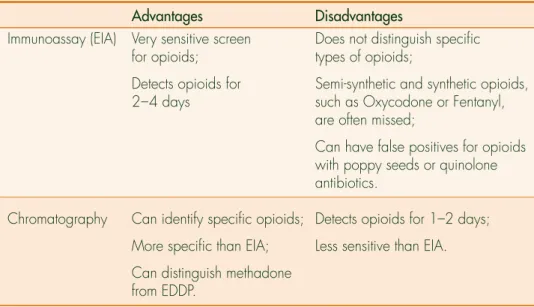
TABLE 1: Immunoassay vs Chromatography
Advantages Disadvantages
Immunoassay (EIA) Very sensitive screen Does not distinguish specific for opioids; types of opioids;
Detects opioids for Semi-synthetic and synthetic opioids, 2–4 days such as Oxycodone or Fentanyl,
are often missed;
Can have false positives for opioids with poppy seeds or quinolone antibiotics.
Chromatography Can identify specific opioids; Detects opioids for 1–2 days; More specific than EIA; Less sensitive than EIA. Can distinguish methadone
from EDDP.
COUNSELLING
Regular counselling, when added to methadone maintenance, is associated with decreased drug use.[16–19]Access to counselling should be an integral part of methadone maintenance treatment.
Counselling can be structured around the following areas: • Securing basic necessities, such as housing, food, clothing • Legal issues
• Life skills
• Coping with stress
G U I D E L I N E S
The addicted patient’s process of change has been conceptualized as a series of stages that the individual may cycle and recycle until permanent change has occurred. These are: • precontemplation • contemplation • preparation • action • maintenance • relapse
(Prachaska and Di Clementi Transtheoretical Model of Change).
• Identification and treatment of concurrent mental illness • Issues of abuse – physical, sexual, emotional
• Parenting and family counselling • Education about harm reduction
• Stopping drug use and preventing relapse
Therapeutic approaches are most successful when there is a strong therapeutic alliance with the therapist. This involves the physician creating a non-judgmental, collaborative environment whereby patients feel safe to discuss their feelings and concerns. Particularly where there are complex psychosocial problems, the physician will need to draw on the support of formal and informal resources and must realize the limits of what he or she can personally provide in his or her role. If appropriately educated and supported, the family can be a valuable resource for the patient and clinician. The physician can also play a valuable role in encouraging and facilitating access to supports and services, such as relapse prevention programs in the community.
CARRY POLICY
Take-home doses are effective in reducing substance use (Level II) and in retaining patients in treatment (Level III). Take-home doses for ‘clean’ urine drug screens have been shown in controlled trials to be effective in reducing substance use.[1–13]Surveys and observational studies suggest that patients strongly value take-home doses, and treatment retention rates are lower in clinics with restrictive take-home policies.[14 –15]
Methadone diversion is common, and most methadone-related deaths are due to diverted methadone (Level IV).A large UK study found that there is a substantial market for diverted methadone, with many patients selling small amounts of their methadone to pay for other street drugs.[17]Between 1996 and 2000 in Ontario, 151 of 194 methadone-related deaths were in individuals who took diverted methadone and were not in methadone treatment.[18] Other studies have had similar results.[19]
The impact of restrictive take-home policies on mortality is not known.While a restrictive take-home policy would likely reduce deaths from methadone diversion, its impact on overall mortality is unclear. Currently, only 15–20% of opioid
dependent patients are on methadone treatment in Canada, and restrictive policies are cited as one of the factors in dissuading patients to enter treatment.[22] The annual mortality rate of methadone patients is one quarter the rate for heroin users, due primarily to fewer deaths from overdose and suicide.[20–23] The overall mortality rate of heroin users declines sharply with entry into treatment, and climbs again with discharge.[24–26]Thus, while restrictive policies might reduce diversion, they might also reduce treatment retention and increase mortality by increasing the population of untreated opioid users. Further research is needed in this area.
The following three criteria should be assessed prior to initiating carries. These criteria should be re-assessed regularly with regard to continuing carries and/or increasing/decreasing the level of carries.
1. Clinical Stability
Patients are clinically stable when they demonstrate the social, cognitive and emotional stability necessary to assume responsibility for the care and safeguarding of methadone and use it only as prescribed.
Clinical stability can be shown when the following criteria have been considered: • Elimination of sustained problematic drug or alcohol use and demonstration
of mostly negative urine drug screens.
• The patient’s methadone dose is stable and the patient is emotionally stable. • Housing, employment, and/or a stable support system is in place.
• Adherence to the methadone treatment agreement, and program requirements (see Appendix F).
2. The Length of Time in Methadone Treatment
Carries are not recommended during the first two months of treatment.
Because some pharmacies may not be open on Sunday to dispense methadone, this may necessitate the use of an alternate pharmacy on Sundays. It is not unreasonable to ask the patient and pharmacist to make arrangements to get that dose from a pharmacy that is open on the weekend. If a pharmacy is found that dispenses methadone on Sunday, and the patient’s regular pharmacy is closed on Sunday, it is advisable to send the patient to the alternate pharmacy on both Saturday and Sunday, so the last dose can be verified by the alternate pharmacy, and communication can be made with the patient’s regular pharmacy.
G U I D E L I N E S
In order to safely prescribe carry medication, three questions must be answered: 1) Is it safe for the patient? 2) Is it safe for the public? 3) What is the risk of
diversion?
Problematic drug use refers to loss of control over substance use, and/or continued use despite harm. This refers to DSM-IV criteria for dependence and abuse. These patients have mostly positive urine drug screens. They often demonstrate social or emotional instability.
The physician should encourage a pharmacy to open at least long enough to provide methadone on Sunday.
Alternatively, patients should be told to show receipts to the Sunday pharmacy for verification of previous methadone ingestion and no missed days. It is recommended that the physician involve the regular dispensing pharmacy in making any accommodations to patients’ carries. If alternate arrangements cannot be made and there is not a pharmacy open to dispense methadone, the physician can call the Ontario College of Pharmacists at (416) 962-4861 to get the name of a local pharmacy that dispenses methadone on weekends.
3. Ability to Safely Store Methadone in a Locked Box
Patients with unstable living arrangements, such as those living on the street or in hostels without storage facilities, may not be appropriate to receive carries.It is recommended that the patient store methadone carries in a locked box, and that it be shown to the physician when carries are initiated.The use of a locked box should be specified in the treatment agreement. The regular pharmacy the patient attends may be informed not to dispense carries unless a locked box is demonstrated by the patient. Safe storage of carries using a locked box should be assessed periodically by the physician and pharmacist.
CARRY SCHEDULE
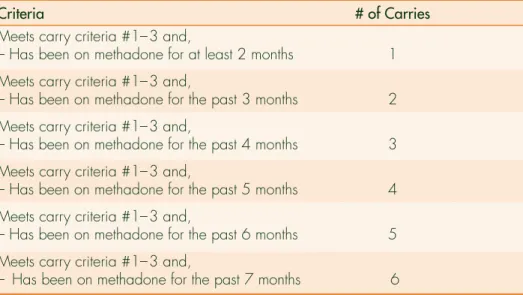
In general, methadone patients who are clinically stable and meet the criteria described above in the Carry Policy section, can receive each monthafter the first two months in treatment, one additional carry per month, to a maximum of six carries per week (one witnessed dose in the pharmacy, six take-away carry doses). Patients who have occasional non-problematic drug use may be appropriate to receive carries (although the number and progression of carries would be reduced from the schedule) if they are determined by the physician to be clinically stable and able to safely store their medication. Physicians should clearly document these exceptions.
When a patient demonstrates risky behaviour (see Managing Relapse section, which follows), the prescribing physician must reassess the progression of carries and/or level of carries. The decision to give carries must take into consideration both patient safety and public safety.