Do Men's Attitudes About Domestic Violence Affect the Perpetration of Physical Abuse Toward their Intimate Partners?
By RemmiSingh
A Master's Paper submitted to the faculty of The University ofNorlh Carolina at Chapel Hill
In partial fulfillment of the requirements for the degree of Master of Public Health in
the Public Health Leadership Program
Table of Contents
I.
Introduction
II.
Background: Male to Female Domestic Violence and the Reasons Behind
Interventions Targeted Toward Men.
A.
Burden of Suffering
B. Theoretical Basis
III.
Is there a Relationship Between Men's Attitudes Toward Domestic
Violence and Their Perpetration of Physical Aggression Toward Their
Partners'J: A Systematic Review of the Literature
A. Methods
B. Results
C. Discussion
Abstract:
Domestic violence is a serious public health concern that affects millions of women worldwide. According to the Center of Disease Control1, each year approximately 5.3 million U.S. women at least eighteen years old experience domestic violence and 1.5 million women are raped or
physically assaulted by an intimate partner. From these assaults, domestic violence causes two million injuries and thirteen hundred deaths every year nationwide.
Internationally, The World Health Organization reports that between 10% and 60% of women who have been in a relationship have experienced at least one incident of physical abuse from a partner. In Africa the percentage of women who reported ever having experienced physical abuse reached as high as 49% in Ethiopia and Zambia. In Dares Salaam, Tanzania 33% of women reported ever experiencing physical abuse, while 15% of women reported experiencing abuse within the past year2.
Male to female domestic violence remains a significant public health issue for women
I. Introduction:
It was not until 1980 with the first national survey by Straus, Gelles, & Steinmetz was published demonstrating the prevalence of marital violence that investigators began seriously focusing on domestic violence3. During the decade major strides took place for domestic violence including an increase in public awareness. Towards the latter part of the decade significant progress was made when academic journals were developed devoted specifically to domestic violence 3•
Several interventions for preventing domestic violence have been implemented over the years. A scientific review by Wathen et al.4 examined these various approaches for women, men, and couples. By far, most interventions targeted women. The interventions included an assessment of the effectiveness of staying in a shelter, advocacy counseling following at least one night at a shelter, personal and vocational counseling for victims, and prenatal counseling designed to reduce future abuse.
Only one of five studies included in this review reported less violence in the
intervention group than the control group with a F= 2.38 (p-value <0.05). During a two-year follow up, one randomized control trial of fair quality, 76% of the intervention group, compared with 89% of the control group, reported reabuse. However, the
majority of studies that investigated the effects of interventions for female victims, including prior studies by Sullivan5• 6, did not indicate differences in recurrent violence
Studies found other positive results. For instance, two of the five studies demonstrated that women spending at least one night in a shelter felt more informed about available resources and felt more satisfied with their social support compared to those who did not5• 7, but these positive outcomes were not sustained6• 7. Despite these tangential
positive outcomes, the evidence demonstrates that interventions targeted exclusively towards women do not reduce the recurrence of violence.
Fewer studies (n=3) examined interventions directed towards barterers and couples. Dunford et al.4, a randomized control trial of good quality, did not demonstrate a statistically significant difference in attitudes about domestic violence between the intervention and control groups. This conclusion is consistent with other research on interventions directed towards batterers8. However, these negative findings do not necessarily mean that interventions targeted towards men are not effective. Instead the results highlight the inadequacy of the current research related to men's role in domestic violence. The lack of understanding on attitudes about domestic violence and the method in which they affect men's behavior has lead to poor intervention design and subsequently unreliable results. As a result, only when the nature ofthis relationship is understood by further research can effective interventions be developed for the
prevention of domestic violence.
several underlying factors, it is important to evaluate the relationship between men's attitudes about domestic violence and their perpetration of violence within a global context. The more regions of the world in which studies provide evidence either supporting or not supporting the association between attitude and violence, the more information becomes available for designing effective interventions.
For instance, when compared to other countries the prevalence of violence against women in Sub-Saharan Africa is alarmingly high. Forty-eight percent of women in Zambia, 66% of the women sampled in Sierra Leone, and 30% of the women surveyed in Uganda have experienced violence from an intimate partner in their lifetimes. Approximately 25% of women in Sub-Saharan Africa reported domestic violence during their lifetimes9.
Risk factors that increase a woman's likelihood of experiencing abuse in any country include financial dependence, lack of education, and substance abuse. However, in regions that support traditional ideologies about gender roles, domestic violence is more socially desirable and occurs with more ease. For instance, research has shown that certain characteristics make Sub-Saharan African women particularly vulnerable to abuse10. Risk factors include having a less than eighth grade education, having several
children, and experiencing sexual abuse as a child. Additional risk factors include fertility problems, greater number of children, her partner having other partners, and her partner not providing financial support 9. Several of these vulnerabilities emerge from
The goal of this Master's Paper is to 1) describe the burden of suffering and theoretical benefits of studying the relationship between attitudes and behavior of male perpetrators of physical abuse, 2) review of the literature available that discusses the
attitude-behavior relationship, 3) to examine in Dares Salaam, Tanzania men's attitudes
condoning domestic violence in intimate relationships and their perpetration of physical abuse towards their partners as another measure to examine this issue better.
II. Background
Burden of Suffering:
On an international level, the World Health Organization which compiled findings from eighty population-based studies in greater than fifty countries reported that between 10 % and 60% of women who have been in a relationship have experienced at least one incident of physical abuse from a partner. In the United States, 22% of the women sampled reported being physically assaulted by an intimate partner in their lifetime, while 1% reported it within the past year. In Africa the percentage of women who reported ever having experienced physical abuse reached as high as 49% in Ethiopia and Zambia. In Dares Salaam, Tanzania 33% of women reported ever experiencing physical abuse, while 15% of women reported experiencing abuse within the past year.
In addition, the effects of domestic violence on female victims extends beyond bodily harm. Violence against women, especially when perpetrated by an intimate partner, can lead to severe long-term effects such as decreased self esteem, depression, and
substance abuse2 Male to female domestic violence remains a significant public health issue for women everywhere and effective interventions must be developed that address the issue.
Theoretical Basis:
Evidence supporting the effectiveness of psychological interventions in child and elder maltreatment provides a theoretical basis for investigating the attitude-behavior
Evidence from Child Maltreatment Literatnre:
In the child maltreatment literature evidence from a meta-analysis by Skowron et al.11(n=29) examined the effectiveness of psychological interventions for child abuse perpetrators. A standardized effect size was calculated, the Cohen d score. The results revealed a Cohen d effect of0.54, 95% Confidence Interval of0.39- 0.69, indicating that these interventions are effective. Also, the results demonstrated that 71% ofthe treated participants had more positive outcomes in the post-treatroent group than did the untreated participants. By converting means into percentages of improved treated versus improved untreated groups, investigators calculated a binomial effect size and indicated a 64% probability of improvement for clients in the treatment conditions while the control group had a 36% improvement rate. These results are consistent with other meta-analyses on psychological interventions, supporting the hypothesis that psychological interventions effectively change perpetrator behavior11.
Similarly, another meta-analysis by Lundahl et al.12 that included twenty-three studies evaluated the ability of parent training programs to reduce child maltreatment. It
moderately effective in changing parent's attitudes and subsequently their perpetration of abuse. This value is similar to the previous meta-analysis calculation of 0.54.
Another study, not included in either meta-analysis, Fetsch et alY developed a child abuse prevention program called RETHINK, a six week workshop on parenting and anger management. According to the post-test survey results, 97.3% (N= 73/75) reported improving at least one attitude, while 65.8% reported improvement in four or more attitudes. At the end of the intervention, 94.7% (N= 71/75) of the respondents claimed to have improved their behavior overall. More specifically, 32% of the participants claimed to have decreased their use of spanking as a form of discipline, while 74.7% claimed to have improved their anger management skills. An AN OVA and two-tailed tests were used to verify the differences before and after the intervention. The analysis supports the effectiveness of the intervention by demonstrating a decrease in the participant's family conflict levels (p= 0.006), overall anger levels (p= 0.000), and their partner's use of physical abuse (p= 0.032).
Evidence from Elder Maltreatment Literature:
reduction in the CTS mean from a baseline of twenty to thirteen when measured both immediately after the intervention (z = 4.8, p < 0.09, Friedman test two tail) and at six months follow-up. Unlike the physical abuse group, the neglect group's baseline CTS score was low, at four, and remained at the same following the intervention.
Although the clinical significance of these scores is difficult to determine, prior clinical evidence has demonstrated that elder abuse increases over time if no intervention takes place15. Given this claim, the reductions in CTS means for the physical abuse group should translate to improved clinical outcomes for the victims.
Summary:
Overall there appears to be strong evidence supporting the effectiveness of
III. Systematic Literature Review:
A. Methods:
1.
Overview:We used a systematic review approach to determine whether a relationship exists between men's attitudes condoning domestic violence and their perpetration of physical aggression toward their intimate female partners. We planned to search for an existing fair quality systematic evidence review. If a one was available, we would update it from that point forward with our review.
2. Search Strategy:
We searched Psychlnfo using the following search strategy:
-Search Strategy : "attitude OR belief OR ideology" AND "domestic violence OR abuse OR aggression" AND "man OR male" AND "partner OR wife" AND "attitude OR belief OR ideology"
The search was limited to human subjects, age eighteen and older, and to articles written in English between the dates 1980-2006. Through this search we found one systematic evidence review with a search date of 1993. We then searched our results from this point forward for additional relevant articles. Finally, we conducted a manual search of the references cited in key articles found during the database search.
2. Study Selection:
i. Inclusion Criteria:
measured perpetration of physical aggression towards their partner. We included studies in which the perpetrators were either men or women, and where the partnership was a heterosexual relationship. We included both male and female perpetrators even though the literature review primarily focuses on male perpetrators because we did not want to unintentionally exclude articles that provided useful information about male perpetrators just because the article also discussed female perpetrators. Articles that addressed the attitude-behavior relationship as a secondary aim were also included in the systematic literature review.
ii. Exclusion Criteria:
We excluded articles that were not published in peer review journals and were not in English. In addition, we excluded articles from the literature review that did not directly relate to partner violence and only discussed attitudes condoning violence, not the relationship between attitudes and violence. We excluded articles which discussed attitudes about domestic violence as a moderator between another variable and domestic violence such as family of origin violence. Finally, we excluded articles dealing only same sex relationships.
iii. Study Design:
abuse toward their partners. In addition, if a fair or good quality meta-analysis exists, relevant studies from the time of that analysis were used to update the evidence.
iii. Data Extraction
A single reviewer extracted information regarding the research objective, study design, study sample, method, and study findings from each included article into a table for analysis.
iv. Quality Assessment
We assessed the quality of the meta-analysis by assessing its search strategy, the method with which the analysis measured the internal validity of the included studies, the possible publication bias, and the statistical analysis. The other studies were assessed by evaluating the study's source population, comparability of subjects,
measurement of exposure, measurement of outcome, statistical analysis, and appropriate control of confounding. We rated these components as good, fair, or poor. We then combined the ratings into overall grades. The grade for internal validity depends on whether certain criteria are met such as (1) adequate description of the sample (2) sufficient recruitment strategy (2) reliable and valid measurement tools, and (4) control for confounding.
B.
Results:
exclusion were that the article had no experimental design or only addressed either attitudes or behavior, but not both. We excluded 160 articles based on these reasons. Eighty-three articles were excluded because they addressed both attitudes and physical violence independently without statistically analyzing the relationship between them. Fifty-five articles were excluded because they did not discuss physical abuse separately from other types of domestic violence such as emotional and psychological abuse. Sixteen studies were excluded because they only focused on men's attitudes about general violence without investigating their attitudes about violence towards an intimate partner. One study was excluded because it discussed attitudes about domestic violence as a factor that moderates the relationship between family of origin violence and the perpetration of abuse. The rest of the articles were excluded because they discussed gender role beliefs, but did not address beliefs about domestic violence.
(includes
ideology and wife assault from the years 1957 to 1993 and the four articles selected from Psychlnfo were used to update the meta-analysis. In addition, another set of four articles were included that were found from searching the references of the selected Psychlnfo articles. llitimately, a total of seven articles were used to update the analysis. These studies were published after the time period covered by the meta-analysis except for Russell et al. which was published in 1992, but was not included in the meta-analysis.
attitudes, and gender schemas.
-The fmdings give partial support for the hypothesis that partriarchy ideology
predicts wife assault. While assaultive males appear more accepting of violence
against their wives, little evidence associates wife assault to traditional gender
roles or gender schema.
-Significant effect size in the predicted direction (mean= 0.71, p<O.OOl) and a nonsignificant test of homogeneity (Qw= 10.78, p=0.29), meaning that there is
little variance among the effects.
were determined, a homogeneity test (Qw) was used on the average effect size
estimates {average d statistic). During the second step of the analysis a categorical
analysis examined the study variables (i.e. type of comparison group used iu the
study. year of publication) that may have caused the observed variance among the
The main objective was to evaluate the relationship between wife assault and the maintenance of patriarchal ideology using the measures: attitudes toward violence, gender attitudes, and gender schemas. It had two inclusion criteria: that the study had a primary focus on physical violence between spouses and that the study assessed the relationship between patriarchal ideology and wife assault. Various scales were used to measure attitude: Acceptance of violence scale, Adversarial sexual belief scale,
Assault and
(~ever, Factor names from Psychological
6~more used to analysis of CTSlmake Aggression was
than20 measure the validity the scale divided into
times) extent to indicates objectives severe and
which strong more cleai18
. minor the
partners in evidence reliabilities
intimate for decreased for
relationships effectivenes the severe
have used s compared subscales even
psychologic with though they had
al or original more i-tems than
physical CTS. the'minor
abuse loteroal subscales. This
towards coefficient indicates that
each other. consistency the items under
scores are the severe
at least as subscales are a
high as source of
CTSI18"lt uureliability for
has deleted the results.
and added a
few items
from the
18
7 point 25 item self- NR Uses the term
Likert Scale report ''justifiable"
(7~ instrument to-prevent
justifiable) used to placing a
assess the judgment
approval or value and
disapproval leading the
of aggression participant's
toward one's responses.
wifeuoder certain
circumstance
s.
7 point 16 item self- Compared to NR NR
Likert scale report the
(?~strongly instrument following
agree) that measures scales: Rape
attitudes Confonnity
condoning Assessment,
the use of Attraction to
force in Sexual
According to Sugarman eta!., abusive males appear more accepting of violence against
their wives. Investigators calculated a standardized effect size, Cohen's d, by
determining the difference of the mean attitudes between the nonviolent husbands and
violent husbands and then dividing the result by the standard deviation. The results
demonstrated a significant Cohen's din the predicted direction with a mean of0.71 (p
<0.001) and a 95% Confidence Interval of0.63- 0.79, suggesting that attitudes and
abuse are strongly related. The non-significant test of homogeneity (Qw= 10. 78,
p=0.29) indicates that limited variance exists among the effects.
Studies Updating the Meta-Analysis:
The seven studies that are used to update the meta-analysis included a total of 2143
participants and varied on several factors. Six studies were cross-sectional and one was
a case-control. Five studies were conducted in developed countries, while two studies
were conducted developing countries. Two studies included only married men, two
studies included only unmarried men, and three studies included both married and
unmarried men. Four studies are of fair quality and three studies are of poor quality.
In general the studies demonstrated a moderate correlation between men's attitudes
about domestic violence and their perpetration of violence. The results of the seven
studies are presented below in two subheadings: those that examined the attitude-abuse
Studies from Developed Countries:
Two studies from developed countries examined comparative data among men
reporting different levels of abuse. One article did not present a comparison group, but used logistic regression to examine differences in attitude among abuse and non-abusive men. The remaining two articles examine only correlations between attitudes and abuse. Three studies from developed countries Stith et al.24, Hanson et al.25, and Russell et al.26,
support a relationship between men's attitudes about domestic violence and their perpetration of physical aggression towards their intimate partners. Two studies from developed countries either do not indicate an association or indicate a weak association between men's attitudes and their perpetration of violence, Kane et al.22 and Reitzel-Jaffe et a!. 20. We begin with a discussion of studies demonstrating comparative data because this data best answers our research question.
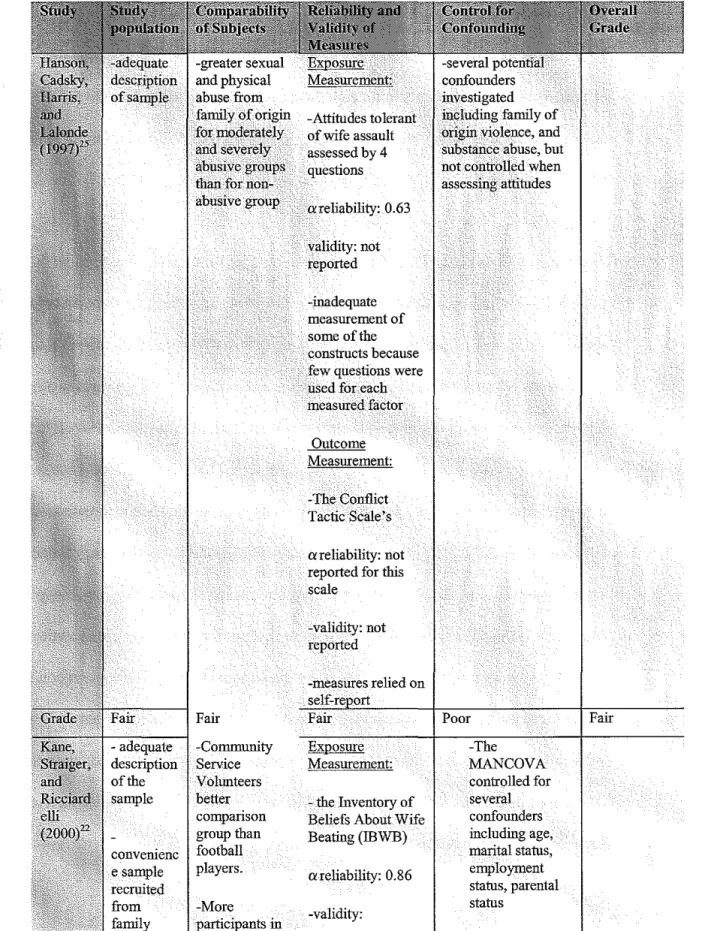
Of the studies, Hanson et al.25offers the best quality evidence supporting the relationship. It is a cross-sectional study of fair quality that used 997 married and umnarried males from Alberta, Canada with a mean age of32.3 (9.1). The study's aim, to identify the characteristics associated with physical abuse of female partners,
addressed the attitude-behavior relationship as one component of several potential factors that cause male to female violence.
that was used assessed family and personal history, criminal behavior, psychopathology, and attitudes towards violence. The clinic sample completed the questionnaire between August 1976 and June 1994, while the employment center sample completed it in the spring of 1994. Once the clinic sample completed the questionnaire as part of the clinic visit, a clinician reviewed the responses for unusual answers and then entered the
answers into the patient's file. At the employment center the participants were recruited by advertisements in the waiting rooms.
A F-test and Schem: post-hoc test was calculated for 93 variables including attitudes tolerant of wife assault across three levels of self-reported assault using the Conflict Tactic Scale (CTS). The sum scores of the four yes/no questions regarding attitudes about domestic violence were 0.29 (1.07) for the non-abusive group, 0.90 (1.07) for the moderately abusive group, and 1.39 (1.27) for the severely abusive group. Of the variables tested, the attitudes tolerant of wife assault variable created the strongest difference between the three groups of men. The results demonstrate a linear effect, suggesting that the more abusive participants have a more accepting attitude of violence.
study uses self-report of violence with the CTS which may underestimate violence due to social desirability.
Third, the clinic sample of participants completed the questionnaires over several years, 1976-1994, while the employment center sample completed it in 1994, which may result in different measurements. Societal perspectives about domestic violence have changed dramatically over time which means that early participants from the clinic sample come from a different social milieu than the other participants. Finally, because clinicians reviewed the responses of the participants from the clinic sample, these participants may have felt more pressure to respond in a socially desirable way than those from the employment center group.
The study by Kane et a!. was a case-control fair quality study that provided comparative data about the relationship between violence and attitudes with 83 married and
unmarried males from the United States. It approached the attitude-behavior
The sample consisted of men from a family violence program who consented to participate in the study. The comparison groups were thirty community service volunteers who consented to participate, and thirty football players recruited from an inner-city Australian football club. Each group had a coordinator which administered the anonymous survey which the participants answered individually. The participants in the intervention group and both comparison groups agreed to be part of the study. The study found that no meaningful differences exist in attitudes condoning domestic violence between the intervention group, men who use violence against their wives, and the two comparison groups, the football players and the community service volunteers. All three groups held approximately the same beliefs regarding domestic violence. The means for the three groups on the scale measuring attitudes condoning marital
aggression were 19 (6.12), 19.67 (8.66), and 16.03 (4.57), for the intervention group, football player comparison group, and community service comparison group,
respectively.
Two additional stndies, Stith et al.24 and Russell et al.26, rely primarily on correlation coefficients although Stith et a!. includes a beta coefficient from a regression model, giving some sense of comparative effects. Both stndies support the link between
attitndes and abuse. Stith et a!. 24 is a cross-sectional fair quality stndy that examines the relationship with 91 married and unmarried males median age of 32 from the United States. In the study, men from local support groups for battering and alcoholism completed the survey and retnrned it by mail. Thirty-nine were from the male violence program while 52 came from the alcoholism treatment program. Administrators of the support groups recruited participants on a voluntary basis over the phone, but the program leaders were not informed about which men participated in the stndy.
The first set of analysis in this stndy investigated the inter-correlation among the variables, observation of violence, egalitarianism, self-esteem, approval of violence, alcoholism, and marital stress among each other and with the outcome, severe violence. The test demonstrated a moderate and statistically significant correlation 0.35 (p <0.001) between severe violence and the approval of marital violence.
In terms of quality, Stith et al. was graded as fair. An advantage of the study is that the
participant's confidentiality was protected because the questionnaires were mailed.
Using this method, participants felt less pressure to respond in a socially desirable way.
However, a limitation is that it uses a convenience sample which increases sampling
bias. Also, the exposure measurement tool, a modified version of the scale developed
by Saunders, raises questions about bias because the article does not report the scale's
validity. Finally, the Conflict Tactic Scale also introduces measurement bias because its
responses rely on self-report.
Russell et al.26 is a cross-sectional poor quality study with 53 married males from Great Britain between 23 and 39 years old. The study's approach to the attitude-behavior
relationship was embedded in a broader research question: to make a preliminary
exploration of the causes of marital violence. While recruiting the study sample, the
research team recruited 53 married couples who were primarily personal contacts of the
team members. The participants answered the questionnaire individually in private
rooms and sealed their responses in separate envelopes.
During the first step of the statistical analysis correlations were calculated between the
variables stratified by type of abuse, physical or psychological abuse, and by perpetrator,
husband or wife. According to the results the correlation between physical abuse and
husband's tolerance of abuse was 0.528 (p <0.001 ). Next, a regression model was
tolerance of abuse and wife's poor vocabulary. The beta coefficient was 0.737, implying that a one point increase in tolerance for domestic violence leads to a 0.737 increase in abuse. Of the variables, the husband's attitude toward violence was the strongest cause of abuse.
In terms of quality, similar to several of the other studies that rely on self-report
responses to questions assessing abuse, measurement bias may have been introduced in the Russell eta!. study. Additionally, the reliability and validity of the scales were not discussed raising questions about measurement bias. In its multiple regression analysis it controls for alcohol abuse, wife vocabulary level, and wife self esteem when
calculating the beta coefficient for husband tolerance of abuse and the perpetration of abuse, but it does not control for family of origin abuse or employment status, which are potential confounders.
The sample consisted of 53 men living in a residence hall of a Canadian university. The residence staff and posters were used to recruit the participants for the study. Subjects completed the forty minute questionnaire individually within large groups in the
cafeteria and library. According to the study results, attitudes accepting of interpersonal violence and physical aggression toward intimate partuer have a weak but statistically significant correlation of 0.13 (p <0.05). The descriptive statistics show a mean for the acceptance of interpersonal violence to be 13.92 (5.48).
Several limitations to the study earned it a grade of poor. For instance, the participants were recruited as a convenience sample by posters and residence staff which may introduce sampling bias. The staff members were more likely to approach their friends, or people they thought would be more open to discussing relationship issues. In
addition, although the study reports the alpha reliability for both the attitude and
sectional unmarried men
characteris1]cs from the Alberta,
associated Canada were Scbeffe post-hoc test
with physical recruited from a measured showed a significant
abuse of forensic violence difference between the
female outpatient clinic three groups of men.
and217men
were recruited Scores from yes/no
from a -Four yes/no measurement of
community based questions attitudes and Standard employment
concerning Deviations:
center' from the
Edmonton,
acceptability Non-abusive: X~0.29
Alberta, Canada.
of wife (1.07)
Based on self
assault report responses
measured Moderately Abusive:
to questions about attitudes.
physical abuse x~o.9o (1.07)
the participants
were divided into Severely Abusive:
three groups: 184 x~1.39 (1.27)
non-abusive, 517
moderately note- 68% of severely
abusive, and 296 abusive men endorsed
severely abusive one or more items of
men. the scale, whereas only
22% of the
non-abusive men endorsed
any items. This
difference concerning
the attitudes tolerant of wife assault was the strongest group difference.
Case- 83 married and -The Brief The Means believing
Control unmarried men Anger- that wife beating is
use violence from the U.S. Aggression justified and their
toward their consented to Questionnair Standard Deviations
participate in tbe emeasured for the 3 groups:
study. violence
Intervention (men who
-The intervention use violence against
group was 23 of their partners): X~
29 men recruited -The 19.00 (6.12)
from a volnotary Inventory of
family support Beliefs Football Players:
program aimed to About Wife
Table 5: Quality of the Evidence & Component Quality Grades for Studies from Developed Countries
-greater sexual aud physical
abuse from i:uvestigated
family of origi:u -Attitudes tolerant including family of for moderately of wife assault origin violence, and
and severely assessed by 4 substance abuse, but
abusive groUps questions not controlled when
than for non- assessing attitudes
abusive group a reliability: 0.63 validity: not reported
-inadequate
measurement of
some of the
constructs because few questions were
used for each measured factor
Outcome Measurement:
-The Conflict Tactic Scale's
a reliability: not reported for this scale
-validity: not reported
-measures relied on
Fair Fair Poor Fair
-Community Exposure -The
Service Measurement: MANCOVA
Volunteers controlled for
better - the Inventory of several
comparison Beliefs About Wife confounders
group than Beating (113WB) including age,
convenienc football marital status,
e sample players. a reliability: 0.86 employment
recruited status, parental
from -More status
family participants in -validity:
!
f
r-!Studies from Developing Countries:
Two studies took place in developing countries, Swart et al.17 and Fikree et al.23. Both of these studies report comparable data that supported a relationship between men's attitudes about domestic violence and their perpetration of physical abuse towards their intimate partners.
The first study, Swart et al., is a cross-sectional fair quality study that used as its study population 434 unmarried male participants from Johannesburg, South Africa between the ages of 14 and 23 years old. The study's aim was to demonstrate the potential for school and community-based strategies for the prevention of dating violence among adolescents by examining the relationship between attitudes and domestic violence.
The research team recruited the male participants from seven secondary schools in
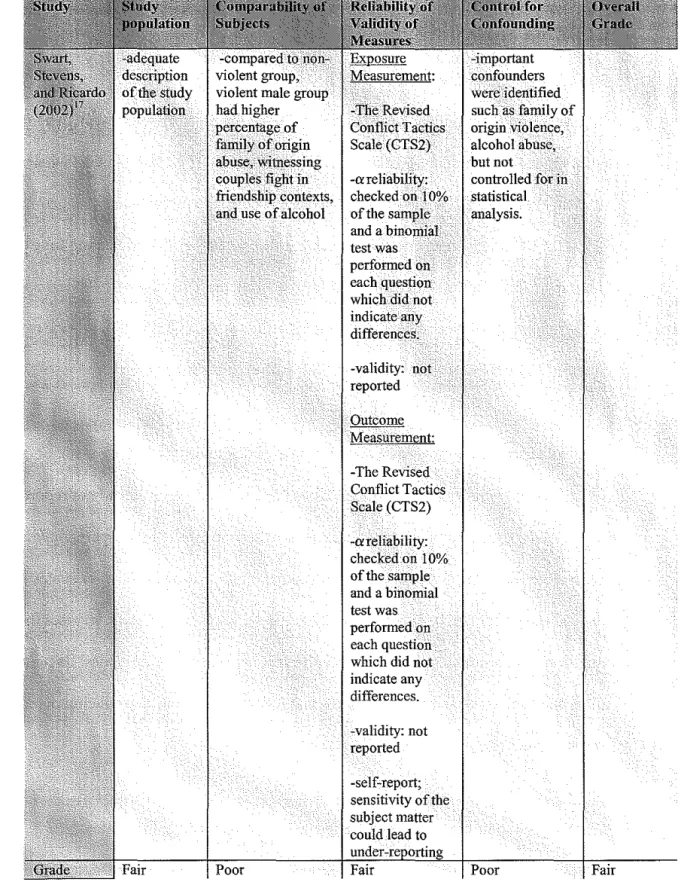
The study was graded as fair the study used a random sample of participants which increases its internal validity by decreasing sampling bias. However, the study suffers from a few limitations. For instance, even though the study uses a comparison group, the abusive and non-abusive groups differ on a few factors. According to the results, 34.3% of the violent group and 18.9% of the non-violent group has been physically hurt by a family member, 61.8% of the violent group and 48.4% of the non-violent group have witnessed couples amongst their friends fighting, and 72.9% of the violent group and 46.9% of the non-violent group have used alcohol. These factors which could affect the results were not controlled during the statistical analysis, possibly introducing bias for confounding. The study does not report the validity of the measurement tool.
Similarly, another study from a developing country, Fikree et al.23, is a cross-sectional
poor quality study that used as its study population 176 married males from Karachi, Pakistan between 18 and 34 years old. This study also found that men with attitudes condoning domestic violence perpetrated more violence. However, these studies approached the question of attitude and behavior within broader research questions regarding male to female violence. The study's main objective was to explore men's attitudes on wife abuse and examine predictors for the risk of physical abuse by Pakistani men.
The men were recruited by a convenience sample from a vegetable market, consulting clinic, and executive clinic to increase the diversity of the sample. Of the men
from the consulting clinic, and 14 from the executive clinic. A questionnaire in Urdu was used to measure the participant's attitudes and behaviors regarding male to female partner violence. Five medical students administered the questionnaire on an individual basis in forty-five minute sessions.
The study results dealing with the attitude-behavior relationship in male to female partner violence was reported as percentages and demonstrated that 74.7% of abusive men and 18% of non-abusive men believe that a husband have a right to perpetrate violence against his spouse. In addition, 92% of abusive men and 85.4% of non-abusive men believe that the general public tolerates domestic violence.
However, when considering these results one must also consider the study's internal validity. The study has a large sample size of 176 and uses a comparison group which allows comparisons in attitudes among abusive and non-abusive men. However, unlike Swart et al., the study relies on convenience sampling to recruit participants. This method could introduce sampling bias since the recruiters may be more inclined to approach men more willing to discuss domestic violence issues.
demonstrate the potential for school-and and examine predictors for the risk of physical abuse in a cohort of Pakistani
sectional males 14-23 years old from 7 secondary schools in Eldorado Park in
Johanoesburg, South Africa in 1998. 176 married men from Karachi, Pakistan participated in the study. 7 men were excluded because they had either not lived with their wives for the past year or did not complete the interview. -The fmal saruple: vegetable market=92. consulting
clinic~ 70, executive
clinic~ 14.
-The sample was recruited as a
convenience sample from three venues in Karachi, Pakistan: the vegetable market, the -The Revised Conflict Tactic Scale (CTS2) measmed violence. -Questions were included in the survey which asked about attitudes
in Urdu on demographics, behaviors, and attitudes on wife abuse.
-32.5% Vic•len1t M:lies and 17.3% Non-violent Males believe that physical aggression is part of a romantic relationship.
men and 18% of non-abusive men believe that men have a right to perpetrate violence against his spouse.
Table 7: Quality of the Evidence & Component Quality Grades for Studies
from Countries
-compared to non-violent group, of the study violent male group
population had higher -The Revised such as family of
percentage of Conflict Tactics origin violerice,
family oforigin Scale (CTS2) alcohol abuse,
abuse; witnessing but not
couples fight in -a reliability: controlled for in
friendship contexts, checked on I 0% statistical
and use of alcohol ofthe sample analysis. and a binomial
test was
performed on
each question
which did not indicate any differences.
-validity: not reported Outcome Measurement: -The Revised Conflict Tactics Scale (CTS2)
-a reliability: checked on 10% of the sample and a binomial
test was
performed on
each question
which did not indicate any
differences.
-validity: not reported
-self-report; sensitivity of the subject matter could lead to
C. DISCUSSION
Summary of Findings:
In sum, poor to fair evidence exists for supporting the association between men's attitudes about domestic violence and their perpetration of violence towards their intimate partners. In the fair quality studies, the correlation coefficients ranged from 0.13-0.528, and the beta coefficients ranged from 0.240-0.737, indicating for every 1 point increase in attitude there was a 0.24 to 0.74 increase in violence. Thus, in general the systematic evidence review found men's attitudes about domestic violence to be either moderately or weakly related to their perpetration of abuse.
The most common limitations among the studies dealt with the reported lack of reliability and validity of the questionnaires. Several studies either did not report an alpha reliability, validity, or did not adequately describe the questionnaire, making it difficult to assess their effectiveness. Although this is less of an issue for scales that have already been well established in the domestic violence literature, it raises the question of measurement bias in the studies that use more obscure scales. In addition, all of the studies use outcome measures that rely on self-report, introducing potential measurement bias.
Another common limitation is that a few studies do not control for potential
substance abuse, between the abusive and non-abusive groups. However, many studies did not control for these confounders during the statistical analysis.
Another consideration in interpreting results, although not a problem with validity, is that a few studies did not use a comparison group. Correlation coefficients are not as useful as logistic regression or mean scores because it merely indicates that an association exists between attitude and abuse without illustrating the differences in
attitudes among abusive and non-abusive groups or the magnitude of the difference.
Explanation of Findings:
Four of the seven studies, Hanson et al., Kane et al., Swart et al., and Stith et al., have fair ratings which allow us to examine the differences that may account for varying magnitude in results.
One factor that might account for study differences is the wording of the questions, such as "An unfaithful wife deserves to be hit," presents the condoning attitudes in a harsh manner. Because of its language, this presentation of the question might deter
participants who have exerted physical abuse towards their partners but did not conunit the acts asked by the questionnaire.
Another factor, uncontrolled confounders, could be potentially driving the different findings among the severely abusive and non-abusive men. One study, Hanson et al., investigates 93 variables, including attitudes tolerant of wife assault, family of origin violence and substance abuse, which could differ among the severely abusive,
moderately abusive, and non-abusive groups. However, when the study assesses each factor, the other variables were not controlled. Therefore, when the investigators calculated the results for attitudes tolerant of wife assault among the severely abusive and non-abusive groups, important confounders such as the ones mentioned above could actually be obscuring actual differences among the groups.
In addition, another consideration is that the participants self-selected into severely abusive, moderately abusive, and non-abusive categories based on their responses to the Conflict Tactic Score. Because there is no objective way to ensure that the non-abusive men are truly not abusive, misclassification in the non-abusive group could minimize the apparent relationship between attitudes condoning domestic violence and
perpetrating abuse.
partners. The fact that these men have joined this support group voluntarily suggests that whether or not they condoned domestic violence previously, at the time of the study they did had less favorable attitudes toward domestic violence. Capture of these men prior to enrolhnent in such a program may have produced very different results.
One interesting finding related to sample that remains unexplored is the underlying acceptance of violence in the non-abusive comparator group, particularly in developing countries. This could either mean that more men in these regions condone domestic violence or that the decreased social stigma surrounding domestic violence allows men in developing countries to respond more truthfully to the questionnaire than men in developed countries. The final section of the Master's Paper will explore further domestic violence in the developed world. It will examine the association between men's attitudes about domestic violence and their perpetration of physical aggression toward their partners, through data taken from a cross-sectional study from Dar es Salaam, Tanzania
Attitudes condoning violence and their relationship to other Risk Factors:
Although further research about the attitude-behavior relationship can add tremendously to the literature on domestic violence, other variables, including family of origin
violence as a cause of abuse it examined attitudes as moderator between family of origin violence and the perpetration of male to female physical aggression.
The study results raise interesting points about family of origin violence as a risk factor for the perpetration of domestic violence, however. Logistic regression results indicate that severe violence in family of origin has a beta coefficient of 0.50, suggesting that as severe violence increases by one point, the perpetration increases by 0.50 points. In
addition, the study found that within high condoners of domestic violence, severe violence in family of origin had a 0.62 (p-value <0.01) correlation with the perpetration of physical abuse, while low condoners had a 0.02 (p-value< 0.01) correlation with physical abuse. This suggests that attitudes significantly affect the relationship between other risk factors and domestic violence and attitudes should remain an area of active study.
Implications for Future Research:
In the future, research studies about the relationship between attitudes and violence should address the problems that we note in this review. In particular, it would be easier if studies evaluating this research question used uniform research designs, measuring instruments, and effect measures in order to permit better comparisons among studies.
Integration of the Evidence About Attitudes with other Areas of Research about Domestic Violence:
Examination of attitudes is only one important area within the area of domestic violence.
applied to domestic violence. For instance, Lundahl et al.10 concluded that delivering the parent training interventions for child maltreatment perpetrators in multiple settings, such as at home and in the office produces better results than only delivering it in one setting. It also concluded that interventions with a greater number of sessions were more successful than those with fewer sessions and that those which used a combination of individual and group delivery were more successful than the ones that only used one or the other.
Also, evidence from the domestic violence literature indicates that some intervention designs are superior to others. For example, long treatment programs have reported less recurrent violence than short programs6• Stover et a!. reports that an intervention of 26
t
'
L
weeks demonstrated decreased violence post-intervention compared with an eight week program. Gondolf et a!. reports similar findings from two intervention evaluations which demonstrate decreased recidivism compared with shorter programs. However, the longer programs have a higher drop-out rate and the reliability of data collected at follow-up is uncertain.
involvement remind participants that they are members of a larger cohort of individuals and that their behavior impacts society.
When investigators develop interventions certain populations of barterers require special consideration. For instance, barterers with substance abuse problems need interventions that address their addictions along with their problems with violence. If the intervention does not address the substance abuse, it will likely fail to reduce perpetration of violence.
In addition, investigators must develop culturally competent interventions in order to have a feasible chance from the start for changing the batterer's behaviors. For instance, few barterer intervention programs are available in rural towns or minority
neighborhoods, making it difficult to reach these populations. Also, intervention programs with primarily minority participants rarely have culturally sensitive features such as racially diverse staff members and administrators, a culturally competent staff, and culturally competent materials29
Global Context:
IV.
The Association Between Attitudes about Domestic
Violence and Reported Perpetration of Violence among
young men in Dar es Salaam, Tanzania: Preliminary
Results
Background:
The research aim of the study is to examine the association between men's attitudes about domestic violence and the perpetration of physical abuse towards intimate partners in Dar es Salaam, Tanzania. This study is part of a larger study that examined the association between HIV risk factors and the use of violence among young men in Dares Salaam, Tanzania. The methods and results of the attitude-behavior component of the study are presented here.
Methods:
Study Design: cross-sectional, community-based survey nested in a larger study about HIV risk behaviors and the use of violence among young men.
Setting: Two geographically distinct communities in Dares Salaam, Tanzania
Subjects: 949 male participants between 16-24 years old comprised the larger study; 659 male participants were used in this study; 659 male participants responded to all of the questions measuring attitudes condoning domestic violence, while only 379 of 659 participants answered all of the questions regarding the perpetration of domestic violence.
!-Inclusion Criteria: (1) male gender; (2) age 16-24; (3) a plan to maintain
primary residence in the intervention or comparison commllllity for at least 1.5 years; and (4) willingness to provide informed consent (5) sexually active
Exclusion Criteria: (1) men who have had only one partner and had their first
experience at age 12 or yoilllger.
Assessment: Trained interviewers administered the survey in Kiswahili. The
interviews were approximately one hour, and took place within the venue in church meeting rooms, empty school classrooms, or in the participant's house.
Measurement of Dependant Variable:
a. Physical and Sexual Violence with an Intimate Partner: The investigators measured violence by asking the men if they had ever done the following: 1) used physical force to resolve a conflict; 2) hit, slapped, kicked pushed, shoved or otherwise physically hurt a partner; 3) on the Conflict-Tactic Scale reported that they had twisted a partner's arm or hair, pushed or shoved a partner, used a knife or another weapon against a partner, punched or hit a partner with something that could hurt, choked a partner, slapped a partner, burned or scalded a partner, stabbed a partner, or kicked a partner.
against a partner, punched or hit a partner with something that could hurt, choked a partner, shoved a partner against a wall, beat a partner, grabbed a partner, slapped a partner, burned or scalded a partner, stabbed a partner, kicked a partner. Using Stata 9.0, we combined the behavior variables, which were also closely correlated, into one dichotomous outcome variable, force and no force.
Measurement of Independent Variable:
The Tuelimishane Project Questionnaire was used to assess the acceptability of violence towards partners (Cronbach alpha= 0. 799)
Using this questionnaire, we created a scale using questions on the
Tuelimishane Project Questionnaire which assessed attitudes about domestic violence. The variables were closely correlated and combined into a new exposure variable representing attitudes. Second, we examined the frequency of distribution among the newly created exposure variable and divided it into three levels of violent attitudes, low, medium, high.
Statistical Analysis:
In order to determine the relationship between attitudes and domestic violence, we used cross tabulations, or Pearson's chi 2 to find the percentages of males who exerted physical violence within each category of our attitudes condoning domestic violence variable: low, medium, high. Men were excluded if they had never had sexual intercourse, or they had only one sexual partner and it was under the age of 12 years.
Results:
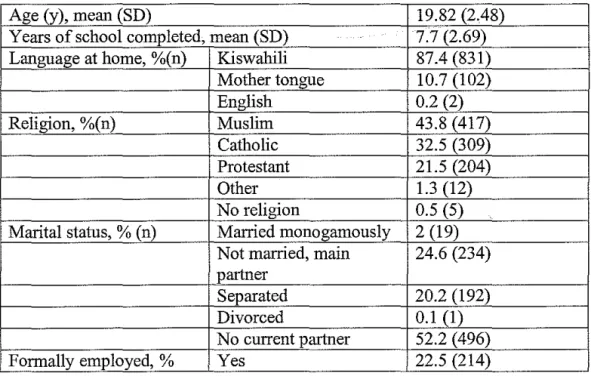
Table 1: Sociodemographic characteristics of study population (n=949)
Age (y), mean (SD) 19.82 (2.48)
Years of school completed, mean (SD) 7.7 (2.69) Language at home, %(n) Kiswahili 87.4 (831)
Mother tongue 10.7 (102)
English 0.2 (2)
Religion, %(n) Muslim 43.8 (417)
Catholic 32.5 (309)
Protestant 21.5 (204)
Other 1.3 (12)
No religion 0.5 (5)
Marital status,% (n) Married monogamously 2 (19) Not married, main 24.6 (234) partner
Separated 20.2 (192)
Divorced 0.1 (I)
No current partner 52.2 (496)
Univariate Analysis:
Descriptive Analysis for New Categorical Exposure Variable:
Descriptive Analysis for New Categorical Outcome Variables:
abuse (x=O)
Abuse
Bivariate Analysis (Dichotomous X, Dichotomos Y):
25 7
The Pearson Chi 2 value was 1.87, but these results were not significant
(p-value= 0.393). Because the overall p-value is not significant, we did not test the individual pairs of the exposure variable.
Discussion:
The results from the secondary data analysis were surprising to us. Intuitively one would think that a statistically significant difference would exist between men with different levels of attitudes condoning domestic violence and their perpetration of violence towards their intimate partners. However, the results demonstrate only slight differences between the groups. This may be because of the small number of abusers in the total sample, which limits our ability to detect a relationship.
In the bivariate analysis the Pearson Chi2 test does indicate the expected linear trend: Of the male participants with high, medium, and low condoning
attitudes about domestic violence, 9%, 7%, and 4%, respectively, are abusive. Ifthere were more abusers in the group, we may have detected significant results.
In addition to concerns about power, we must address several methodological issues with our study. First, we used self-report responses to the questionnaire to measure abuse; this may have introduced bias. Second, because the
questionnaires were administered in person and deal with a very sensitive issue, participants may not have felt able to respond freely introducing
misclassification of violence.
high-condoning attitudes about domestic violence. Alternatively, in order to reinforce traditional gender roles, it may be more socially desirable for some men to report that they perpetrate abuse when they actually do not. In this case, the low-condoners might have responded to the attitude questions based on how they feel, but then over-reported abuse according to social desirability.
Fourth, men were recruited by a convenience sample from public venues which could potentially decrease the internal validity by introducing sampling bias. For instance, the men consenting to be in the study are likely to be more willing to discuss issues about domestic violence than other men in the general population. Also, the interviews lasted one hour so the men who agreed to participate have more free time and are less likely to be working than men in the general population.
One factor limiting our interpretation is that we do not know whether the baseline characteristics differ between the population used in this study and that of the larger study. Future studies can explore these differences and examine if they provide useful information for interpreting the results.
Conculsion:
The results of this study in conjunction with the systematic review demonstrate the complexity of domestic violence and illustrate the significance of
perpetrators, investigators must first consider better studies to evaluate the attitude-abuse relationship. For instance, future studies should attempt uniformity with instruments measuring attitudes about domestic violence, effect measures, and control for important confounders identified by the literature such as family of origin violence. In addition, future intervention designs should include successful principles from effective child and elder maltreatment interventions and address special needs of the participants such as substance abuse, race-relevant materials, and cultural competency.
REFERENCES
1. Tjaden P, Thoennes N. Intimate partner violence: Fact sheet. Available at: http://www.cdc.gov/NCIPC/factsheets/ipvfacts.htm. Accessed June/15, 2006.
2. Garcia-Moreno C, Jansen H, Ellsberg M, HeiseL, Watts C. WHO multi-country study on women's health and domestic violence against women. Available at:
http://www.who.int/gender/violence/who _multi country_ stndy/enlindex.html. Accessed June/15, 2006.
3. Holtzworth-Munroe A, Bates L, SmutzlerN, Sandin E. A brief review of the research on husband violence: I. maritally violent versus nonviolent men. Aggression and Violent Behavior. 1997;2:65-99.
4. Wathen CN, MacMillan HL. Interventions for violence against women: Scientific review. JAMA: Journal of the American Medical Association. 2003;289:589-600.
5. Sullivan CM, Tan C, Basta J, Rumptz M. An advocacy intervention program for women with abusive partners: Initial evaluation. Am J Community Psycho!. 1992;20:309-332.
7. Tan C, Basta J, Sullivan CM, Davidson WS. The role of social support in the lives of
women exiting domestic violence shelters: An experimental study. J Interpers Violence.
1995;10:437-451.
8. Stover CS. Domestic violence research: What have we learned and where do we go from
here? J Interpers Violence. 2005;20:448-454.
9. Chu HY, Crump JA, Ostermann J, et a!. Sociodemographic and clinical characteristics of
clients presenting for HIV voluntary counselling and testing in moshi, tanzania. Int J STD
AIDS. 2005;16:691-696.
10. Bowman CG. Domestic violence: Does the african context demand a different approach?
Int J Law Psychiatry. 2003;26:473-491.
11. Skowron E, Reinemann DRS. Effectiveness of psychological interventions for child
maltreatment: A meta-analysis. Psychotherapy: Theory, Research, Practice, Training.
2005;42:52-71.
12. Lundahl BW, Nimer J, Parsons B. Preventing child abuse: A meta-analysis of parent
training programs. Research on Social Work Practice. 2006; 16:251-262.
13. Fetsch RJ, Schultz CJ, Wahler JJ. A preliminary evaluation of the colorado rethink
parenting and anger management program. Child Abuse Negl. 1999;23:353-360.
14. Reay AMC, Browne KD. The effectiveness of psychological interventions with
individuals who physically abuse or neglect their elderly dependents. J Interpers Violence.
15. Reay AMC, Browne KD. The effectiveness of psychological interventions with individuals who physically abuse or neglect their elderly dependents. J Interpers Violence. 2002;17:416-431.
16. Sugannan DB, Frankel SL. Patriarchal ideology and wife-assault: A meta-analytic review. J Fam Violence. 1996;11:13-40.
17. Swart L, Stevens MSG, Ricardo I. Violence in adolescents' romantic relationships:
Findings from a survey amongst school-going youth in a south african community. J Ado/esc. 2002;25:385-395.
18. Newton RR, Connelly CD, Landsverk JA. An examination of measurement characteristics and factorial valdity of the revised conflict tactics scale. Educational and Psychological Measurement. 2001;61:317-335.
19. O'Hearn HG, Margolin G. Men's attitudes condoning marital aggression: A moderator between family of origin abuse and aggression against female partners. Cognitive Therapy and Research. 2000;24:159-174.
20. Reitzel-Jaffe D, Wolfe DA. Predictors of relationship abuse among young men. J Interpers Violence. 2001;16:99-115.
21. Schewe P A, O'Donohue W. Psychometrics of the rape conformity assessment and other measures: Implications for rape prevention. Sexual Abuse: Journal of Research and
22. Kane TA, Staiger PK, Ricciardelli LA. Male domestic violence: Attitudes, aggression and interpersonal dependency. J Interpers Violence. 2000;15:16-29.
23. Fikree FF, Razzak JA, Durocher J. Attitudes of pakistani men to domestic violence: A study from karachi, pakistan. Journal of Men's Health & Gender. 2005;2:49-58.
24. Stith SM, Farley SC. A predictive model of male spousal violence. J Fam Violence. 1993;8:183-201.
25. Hanson RK, Cadsky 0, Harris A, Lalonde C. Correlates of battering among 997 men: Family history, adjustment, and attitudinal differences. Violence Viet. 1997;12:191-208.
26. Russell RJ, Bulson B. Physical and psychological abuse of heterosexual partuers. Personality and Individual Differences. 1992;13:457-473.
27. Stith SM, Farley SC. A predictive model of male spousal violence. J Fam Violence. 1993;8: 183-201.
28. Kashani JH, Daniel AE, Dandoy AC, Holcomb WR. Family violence: Impact on children. Journal of the American Academy of Child & Adolescent Psychiatry. 1992;31: 181-189.
29. Edleson JL. Children's witnessing of adult domestic violence. J Interpers Violence. 1999; 14:839-870.
30. Carlson BE. The most important things learned about violence and trauma in the past 20 years. J Interpers Violence. 2005;20:119-126.