The Effect of Probiotic Preparation Enriched with Selenium
on Performance Parameters of Laying Hens
Henrieta Arpášová
1, Peter Haš
č
ík
2, Miroslava Ka
č
ániová
3, Branislav Gálik
41Slovak Agricultural University, Department of Poultry Science and Small Animal Husbandry1, Department of
Animal Products Evaluation and Processing2, Department of Microbiology3,
Department of Animal Nutrition4, 949 76-Nitra, Tr. A. Hlinku, 2, Slovak Republic
Abstract
The effects of the diet for laying hens supplemented with probiotic product with an organic form of selenium on body weight, egg production, feeed consumption and feed conversion were studied in this experiment. Isa Brown hens (n=90) were randomly divided at the age of 17 weeks into three groups (30 birds per group). Hens in all groups
consumed the complete feed mixture ad libitum. In the control group water for drinking contained no additions. In
the first experimental group probiotic product was added to the water, in the second experimental group the same probiotic prreparation enriched with O.8 to 1 mg of organic selenium per 1 g of the product was added to the water. The probiotic preparations were administered at the dose of 15 mg per 6 l of water daily, in both experimental groups. Experiment lasted 48 weeks. Hen´s body weight (g±SD) at the end of breeding period was within the groups
as follows (in order Control–1st and 2nd experimental group): 1882.25±223.68, 1878.73±209.87 and 1860.15±190.90,
P>0.05. Between the groups were recorded relatively balanced values in the consumption of food per feeding day, even in the experimental groups werelower feed consumption per eggs, as well as feed conversion recorded, no statistically significant difference (P>0.05) was achieved. Feed conversion was in the order of groups of 2.51, 2.33 and 2.24 kg. During the whole period, the number of eggs per hen was as follows: 274.36; 292.04 and 299.0 pieces. Average number of eggs per hen per month in the order of groups was 22.86±6.76; 24.33±5.93 and 24.91±6.21 pc (mean±SD). Higher egg production, but no statistically significant (P>0.05) was achieved in both experimental groups. The average laying intensity achieved values of 80.42, 81.15 and 83.30%, values of egg mass production per hen were 16.37, 18.14 and 17.61 kg.
The results showed that addition of probiotic preparation and probiotic preparation enriched with organic selenium increased egg production and reduced consumption of feed per eggs, but statistically insignificantly. The other performance indicators showed no major influence of the addition compared with the results of the control group. Keywords: laying hens, organic selenium, performance, probiotic preparation
1. Introduction
Probiotics in the gut create conditions to inhibit the development of pathogenic bacteria [1]. According to Fuller (1992) [2] they work based on multiple mechanisms of action, producing of antibacterial substances (eg bacteriocins, organic acids and hydrogen peroxide), and leading to suppression of the development of pathogenic bacteria. They are competitive to adhesion
*Coresponding author: Henrieta Arpášová, Email:
specificities of the used microorganism species [5].
Effective probiotics must not be pathogenic or toxic, must have a high resistance to acids and has to be able to survive and multiply in the digestive tract. Probiotics produce specific metabolites (lactic acid, short chain fatty acids, antimicrobial substances, enzymes, vitamins), they act on the intestinal wall particularly in the colon, create a "biofilm" to preserve the function of the intestinal wall, increase the resorbing surface, obstruct snap (clustering) of enteropathogenic germs the intestinal villi. They increase resistance to infectious diseases and reduce the morbidity and mortality, then they can improve feed conversion, food digestion, nutrient absorption, increase the egg production and quality. Multi-species probiotics are more effective than their components separately [6].
2. Material and methods
Establishment of the experiment - the animals, feed, process
The laying hens of brown egg hybrid ISA Brown (n = 90) were aged 17 weeks and randomly divided into three groups (n = 30). For the experimental housing of laying hens was used three stage battery cage in which laying hens were housed individually. In the control group hens drank water without any additions. In the experimental groups probiotic was added daily to water. In the first experimental group was added probiotic preparation of Enterococcus faecium, in the second experimental group was added the same preparation enriched with selenium.
The product contained in 1 g of dry substance at least 200 x 109 lactacidogenic live bacteria
Enterococcus faecium M – 74.
The probiotic preparation enriched with selenium contained 0.8 to 1 mg of organic selenium in 1 g of the product. The probiotic preparations were
administered at a dose of 15 mg of 6 l of water daily, in both experimental groups.
During the trial were monitored following performance parameters: body weight of hens (g), egg production (%), egg mass production (kg), feed consumption on the day of feeding (g), feed consumption of eggs (g), feed consumption per kg of produced egg mass (kg). Body weight of hens and feed consumption were determined once a month. Total number of eggs produced and their weights were recorded daily. Experiment lasted 48 weeks.
Statistical analysis
Differences among the observed parameters in the groups were tested by one-way analysis of variance; the results were completed by Tukey's test, in the SAS program.
3. Results and discussion
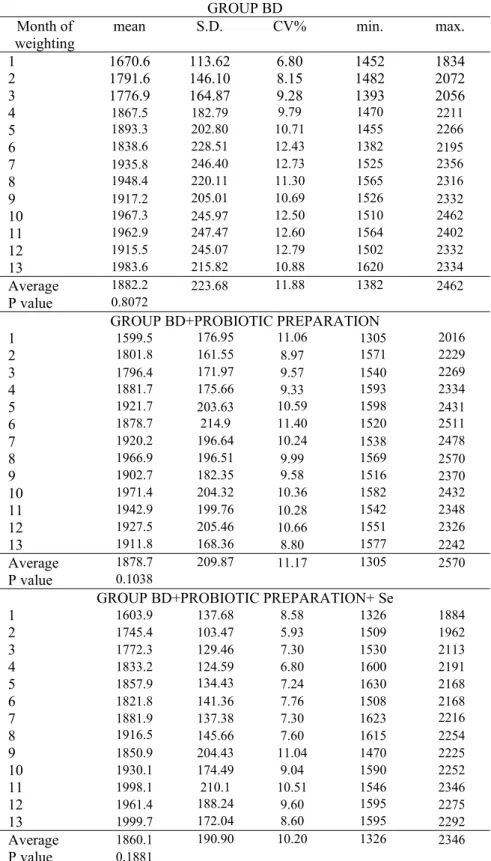
Table 1. Effect of probiotic preparation supplement based on Enterococcus faecium on the body weight of Isa Brown laying hens
GROUP BD Month of
weighting
mean S.D. CV% min. max.
1 1670.6 113.62 6.80 1452 1834
2 1791.6 146.10 8.15 1482 2072
3 1776.9 164.87 9.28 1393 2056
4 1867.5 182.79 9.79 1470 2211
5 1893.3 202.80 10.71 1455 2266
6 1838.6 228.51 12.43 1382 2195
7 1935.8 246.40 12.73 1525 2356
8 1948.4 220.11 11.30 1565 2316
9 1917.2 205.01 10.69 1526 2332
10 1967.3 245.97 12.50 1510 2462
11 1962.9 247.47 12.60 1564 2402
12 1915.5 245.07 12.79 1502 2332
13 1983.6 215.82 10.88 1620 2334
Average 1882.2 223.68 11.88 1382 2462
P value 0.8072
GROUP BD+PROBIOTIC PREPARATION
1 1599.5 176.95 11.06 1305 2016
2 1801.8 161.55 8.97 1571 2229
3 1796.4 171.97 9.57 1540 2269
4 1881.7 175.66 9.33 1593 2334
5 1921.7 203.63 10.59 1598 2431
6 1878.7 214.9 11.40 1520 2511
7 1920.2 196.64 10.24 1538 2478
8 1966.9 196.51 9.99 1569 2570
9 1902.7 182.35 9.58 1516 2370
10 1971.4 204.32 10.36 1582 2432
11 1942.9 199.76 10.28 1542 2348
12 1927.5 205.46 10.66 1551 2326
13 1911.8 168.36 8.80 1577 2242
Average 1878.7 209.87 11.17 1305 2570
P value 0.1038
GROUP BD+PROBIOTIC PREPARATION+ Se
1 1603.9 137.68 8.58 1326 1884
2 1745.4 103.47 5.93 1509 1962
3 1772.3 129.46 7.30 1530 2113
4 1833.2 124.59 6.80 1600 2191
5 1857.9 134.43 7.24 1630 2168
6 1821.8 141.36 7.76 1508 2168
7 1881.9 137.38 7.30 1623 2216
8 1916.5 145.66 7.60 1615 2254
9 1850.9 204.43 11.04 1470 2225
10 1930.1 174.49 9.04 1590 2252
11 1998.1 210.1 10.51 1546 2346
12 1961.4 188.24 9.60 1595 2275
13 1999.7 172.04 8.60 1595 2292
Average 1860.1 190.90 10.20 1326 2346
P value 0.1881
Number of hens in each group n=30; BD – basal diet; (P≤0.05) – statistically significant difference
On the contrary, higher live weight gain was observed after addition of probiotics in the
agrees with the findings of Sohail et al. (2002) [8].
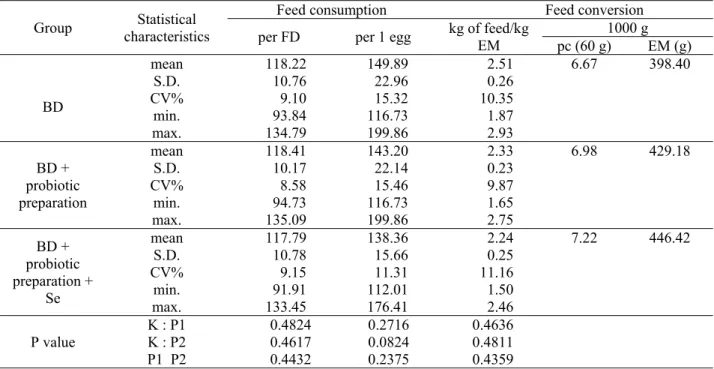
Table 2 .Effect of probiotic preparation supplement based on Enterococcus faecium
on the feed consumption of Isa Brown laying hens
Group characteristics Statistical
Feed consumption Feed conversion
per FD per 1 egg kg of feed/kg EM pc (60 g) 1000 g EM (g)
BD
mean 118.22 149.89 2.51 6.67 398.40
S.D. 10.76 22.96 0.26
CV% 9.10 15.32 10.35
min. 93.84 116.73 1.87
max. 134.79 199.86 2.93
BD + probiotic preparation
mean 118.41 143.20 2.33 6.98 429.18
S.D. 10.17 22.14 0.23
CV% 8.58 15.46 9.87
min. 94.73 116.73 1.65
max. 135.09 199.86 2.75
BD + probiotic preparation +
Se
mean 117.79 138.36 2.24 7.22 446.42
S.D. 10.78 15.66 0.25
CV% 9.15 11.31 11.16
min. 91.91 112.01 1.50
max. 133.45 176.41 2.46
P value K : P1 K : P2 0.4824 0.4617 0.2716 0.0824 0.4636 0.4811
P1 P2 0.4432 0.2375 0.4359
n= 12 months; BD – basal diet; FD – feeding day; EM – egg mass; mean – average;
S.D. – standard deviation; CV% – coefficient of variance; (P≤0.05) – statistically significant difference
In our experiment was lower feed consumption per egg in the experimental groups and lower feed consumption (kg) per egg mass, but with no statistically significant difference (P>0.05). Our results agree with Kumari et al. (2011) [14] who observed that feed consumed per kg egg mass was lower and, hen egg production per day (%) was higher in all groups in which hens were fed with feed supplement with probiotics. Also Pan et al. (2011) [15] reported in agreement with our results that after the addition of probiotics enriched with selenium was decreased the feed egg ratio. In the control group was observed average feed consumption of 118.22 g at the day of feeding, feed consumption per egg 149.89 g and feed consumed per kg egg mass 2.51 kg. In the first experimental group with the addition of probiotic was consumption at feeding day similar to that in the control group (118.41 g) under the consumption of 143.20 g of feed mixture per egg and feed consumption per kg egg mass was 2.33 kg. In the second experimental group with addition of selenium-enriched probiotics was
consumption per day 117.79 g and converted into an egg laid by 138.36 g in feed consumption per kg of egg mass 2.24 kg.
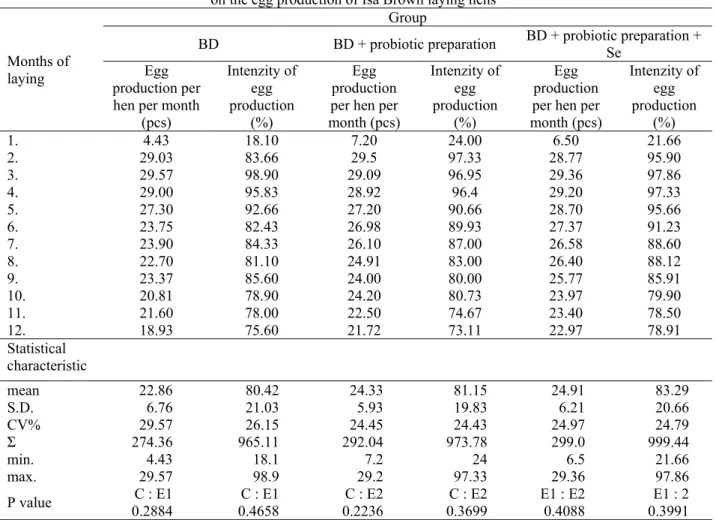
Table 3. Effect of probiotic preparation supplement based on Enterococcus faecium on the egg production of Isa Brown laying hens
Months of laying
Group
BD BD + probiotic preparation BD + probiotic preparation + Se
Egg production per hen per month
(pcs)
Intenzity of egg production
(%)
Egg production per hen per month (pcs)
Intenzity of egg production
(%)
Egg production per hen per month (pcs)
Intenzity of egg production
(%)
1. 4.43 18.10 7.20 24.00 6.50 21.66
2. 29.03 83.66 29.5 97.33 28.77 95.90
3. 29.57 98.90 29.09 96.95 29.36 97.86
4. 29.00 95.83 28.92 96.4 29.20 97.33
5. 27.30 92.66 27.20 90.66 28.70 95.66
6. 23.75 82.43 26.98 89.93 27.37 91.23
7. 23.90 84.33 26.10 87.00 26.58 88.60
8. 22.70 81.10 24.91 83.00 26.40 88.12
9. 23.37 85.60 24.00 80.00 25.77 85.91
10. 20.81 78.90 24.20 80.73 23.97 79.90
11. 21.60 78.00 22.50 74.67 23.40 78.50
12. 18.93 75.60 21.72 73.11 22.97 78.91
Statistical characteristic
mean 22.86 80.42 24.33 81.15 24.91 83.29
S.D. 6.76 21.03 5.93 19.83 6.21 20.66
CV% 29.57 26.15 24.45 24.43 24.97 24.79
Σ 274.36 965.11 292.04 973.78 299.0 999.44
min. 4.43 18.1 7.2 24 6.5 21.66
max. 29.57 98.9 29.2 97.33 29.36 97.86
P value 0.2884 0.4658 0.2236 0.3699 C : E1 C : E1 C : E2 C : E2 E1 : E2 0.4088 0.3991 E1 : 2
mean – average; BD – basal diet; (P≤0.05) – statistically significant difference
0 20 40 60 80 100 120
1 2 3 4 5 6 7 8 9 10 11 12
months of laying
ave
rage
layi
n
g i
n
te
n
si
ty
(%)
BD BD + PP BD + PP+ Se
Figure 1. Effect ofaddition ofprobiotic productandprobiotic productenriched withseleniumon the dynamics
Similar results found Yodseranee (2003) [16], respectively Asli et al. (2007) [17], who found insignificant positive effect on lying after the addition of more generic probiotic. Xu et al. after application of Bacillus subtilis showed a significant increase in lay. Similarly Kramárová and Chmelničná [18] after application of probiotic
Enterococcus faecium found greater lay intensity
in the experimental group. Kucukersan et al. (2002) [7] after addition of probiotic in combination with enzymes also reported a significant positive impact on production of laying hens. Kalavathy et al. (2005) [19] reported a
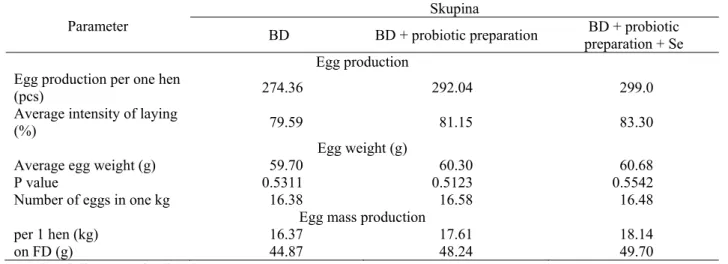
statistically significant increase in egg laying and mass but only in the second part of the period. Hong et al. (2002) [20] reported a tendency to increase the daily egg production in groups with added probiotic preparation. Similar results of Pan et al. (2011) [15] showed that selenium-enriched probiotics significantly increased the rate of egg laying, egg selenium content, GPX activity. The average weight of all eggs produced in our experiment was in the order of groups, 59.70, 60.30 and 60.68 g (Table 4), which represents between the experimental group and control group a slight difference (P>0.05).
Table 4. Effect of probiotic preparation supplement based on Enterococcus faecium on the egg production of Isa Brown laying hens - average values of whole laying period
Parameter
Skupina
BD BD + probiotic preparation preparation + Se BD + probiotic
Egg production Egg production per one hen
(pcs) 274.36 292.04 299.0
Average intensity of laying
(%) 79.59 81.15 83.30
Egg weight (g)
Average egg weight (g) 59.70 60.30 60.68
P value 0.5311 0.5123 0.5542
Number of eggs in one kg 16.38 16.58 16.48
Egg mass production
per 1 hen (kg) 16.37 17.61 18.14
on FD (g) 44.87 48.24 49.70
BD – basal diet; FD – feeding day
In accordance with our results Koudela et al. observed after application of probiotics increase of the intensity of lay, but egg weight between the groups was not significantly different. On the contrary Pan et al. (2011) [15] after application of probiotics found higher day egg weight and mean egg weight.
4. Conclusions
The results showed that addition of probiotic preparation and probiotic preparation enriched with organic selenium increased egg production and reduced consumption of feed per eggs, but statistically insignificantly.
The other performance indicators showed no major influence of the addition compared with the results of the control group.
Acknowledgement
This study was supported by Grant Agency for Science, VEGA of Slovak Republic, Grant No. 1/0493/12.
References
1. Patterson, J.A., Burkholder, K.M., Application of prebiotics and probiotics in poultry production, Poultry Science, 2003, 82, 4, 627-631
2. Fuller, R., Probiotics for farm animals. In Probiotics – A Critical Review. Ed. Tannock, G. W. Horizon Scientific Pess, Wymondham, England, 1997, p. 15-22. 3. Perdigon, G., Fuller, R., Raya, R., Lactic acid bacteria and their effect on the immune system, Current Issues in Intestinal Microbiology, 2001, 2, 1, 27-42
4. Kačániová, M., Bobček, R., Kmeť, V.,
Angelovičová, M., Kŕmne doplnky ako náhrada
antibiotík a ďalšie aplikácie. Nitra: SPU, 2005, 78 s.,
5. Isolauri, E., Rautava, S., Kaliomaki, M., et al., Role of probiotics in food Hypersenzitivity, Current Opinion in Allergy and Clinical Imunology, 2002, 2, 3, 263-271 6. Musa, H.H., Wu, S.L., Zhu, C.H., Seri, H.I., Zhu, G.Q., The potential benefits of probiotics in animal production and health, Journal of Animal and Veterinary Advances, 2009, 8, 2, 313-321
7. Kucukersan, K., Kucukersan, S., Goncuoglu, E., The effects of probiotics and enzyme supplementation on
egg production and quality, Indian Veterinary Journal,
2002, 79, 8, 805–809
8. Sohail, S.S., Bryant, M.M., Voitle, R.A., Roland, D.A., Influence of calsporin on commercial leghorns,
Journal of Applied Poultry Research, 2002, 11, 4,
379-387
9. Kurtoglu, V., Kurtoglu, F., Seker, E., Coskun, B., Balevi, T., Polat, E. S., Effect of probiotic supplementation on laying hen diets on yield performance and serum and egg yolk cholesterol, Food Additives and Contaminants, 2004, 21, 9, 817-823
10. Weis, J., Hrnčár, C,. Pál, G., Baraňska, B., Bujko,
J., Polička, M., Malíková, L., Effect of probiotic strain
Lactobacillus fermentum CCM 7158 supplementation on performance and carcass characteristics of broiler chickens, Acta fytotechnica et zootechnica, Nitra, Slovaca Universitas Agriculturae Nitriae, 2010, 13, 4, 96-98.
11. Weis, J., Hrnčár, C., Pál, G., Baraňska, B., Bujko,
J., Malíková, L., Effect of Probiotic Strain Enterococcus faecium M74 Supplementation on the Carcass Parameters of Different Hybrid Combination Chickens, Scientific Papers Animal Sciences and Biotechnologies, 2011, 44, 1, 354- 356
12. Capcarova, M., Chmelnicna, L., Kolesarova, A.,
Massanyi, P., Kovacik, J., Effect of Enterococcus
faecium M 74strain on selected blood and production parameters of laying hens, British Poultry Science, 2010, 51, 5, 614—620
13. Katoch, S., Kaistha, M., Sharma, K. S., Kumari, M., Katoch, B. S., Biological performance of chicken
fed newly isolated probiotics, Indian Journal of Animal Sciences, 2003, 73, 11, 1271-1273
14. Kumari, M., Wadhwa, D., Sharma, V.K., Sharma, K.S., Katoch, B.S., Dietary effect of combination of some probiotic microorganisms on productive performance of layer chickens fed up to the starter phase, Indian Journal of Animal Sciences, 2011, 81, 1, 68-72
15. Pan, C.L., Zhao, Y.X., Liao, S.F.F., Chen, F., Qin, S.Y., Wu, X.S., Zhou, H., Huang, K.H., Effect of Selenium-Enriched Probiotics on Laying Performance, Egg Quality, Egg Selenium Content, and Egg Glutathione Peroxidase Activity, Journal of Agricultural and Food Chemistry, 2011, 59, 21, 11424-11431
16. Yodseranne, R., Chantsavang, S., Bunchasuk, C., Effect of dietary supplementation of mixed culture compost, plantand animal bioextract compost on layer´s productive performance and egg quality. In Animal and Veterinary Medicine, 2003, pp.119–126. 17. Asli, M.M., Hosseini, S.A., Lotfollahian, H., Shariatmadari, F., Effect of probiotics, yeast, vitamin E and vitamin C supplements on performance and immune response of laying hen during high environmental temperature, International Journal of Poultry Science, 2007, 6, 12, 895-900
18. Kramárová, M., Chmelničná, Ľ., Vplyv probiotika
s účinnou zložkou baktérií Enterococcus faecium M–74
na produkčné parametre a niektoré ukazovatele
tukového metabolizmu nosníc, Acta fytotechnika et zootechnika, 2004,7, 2, 45-49
19. Kalavathy, R., Abdullah, N., Jalaludin, S., Wong,
C.M V.L., Ho, Y.W., Effects of Lactobacillus cultures
on performance and egg quality during the early laying period of hens, Journal of Animal and Feed Sciences, 2005, 14, 3, 537-547