MODELING RELATIONS BETWEEN ADOLESCENTS’ PERCEPTIONS
OF THE SCHOOL’S SOCIAL CONTEXT, ACADEMIC AND SOCIAL SELF-CONCEPT OF ABILITY BELIEFS, AND STUDENT ENGAGEMENT
Belinda L. Locke
A dissertation submitted to the faculty at the University of North Carolina at Chapel Hill in partial fulfillment of the requirements for the degree of Doctorate of Education
in the School of Education.
Chapel Hill 2014
Approved by:
Judith Meece
Jill Hamm
Matthew Irvin
Steven Knotek
iii ABSTRACT
Belinda L. Locke: Modeling relations between adolescents’ perceptions of the school’s social context, academic and social self-concept of ability beliefs, and student engagement
(Under the direction of Judith L. Meece)
Research on achievement motivation posits associations between students’
perceptions of the school environment, psychological processes, and desired educational
outcomes (e.g., Durik, Vida, & Eccles, 2006; Patrick, Ryan, & Kaplan, 2007; Skinner,
Furrer, Marchand, & Kindermann, 2008; Wentzel, Battle, Russell, & Looney, 2010).
Clarification of the nature and influence of school contexts, and advancement of insight into
the processes by which school-based social relations influence individual outcomes,
represent important tasks for research on schools and development (Janosz, 2012). This
work advances this agenda by emphasizing adolescents’ perceptions of the social context as a
key component of the school environment that shapes student engagement. The research
draws on a self-systems motivational perspective to investigate the intertwining nature of
social, self, and academic processes. The study employs structural equation modeling (SEM)
techniques to evaluate a model of student engagement in which self-concept of ability beliefs
mediate the relationship between perceptions of the social context and behavior. The work
also examines the moderating effects of gender and race as social identities that influence
associations between perceptions of the social context, motivation, and engagement.
Findingshave the potential to inform ongoing school reform efforts to reflect best practices
geared toward increasing the motivation, engagement, and inevitably the learning and
iv
ACKNOWLEDGEMENTS
I would like to express my sincere gratitude to all who supported and challenged me
throughout the process of completing my doctoral studies and dissertation. First, I would like
to thank Dr. Jacqueline Eccles, the Director of the Gender and Achievement Research
Program for sharing the data which I used to complete this dissertation study. Her extensive
research programs into the roles of psychological and contextual factors on development and
achievement-related choices are an inspiration to all nascent scholars in the field of
Educational Psychology.
My advisor, Dr. Judith Meece offered invaluable expertise, encouragement, and
patience. Her mentorship will continue to influence me across my career as a scholar and an
educator. I am grateful for and humbled by the breadth and depth of knowledge that each of
my committee members contributed to the project. I would like to extend a particularly heartfelt thanks to Dr. William Ware. Dr. Ware’s knowledge and commitment to student
success contributed to a welcome but unexpected new interest in advanced statistical
techniques and quantitative analyses.
I would also like to recognize the power of the unwavering support of family and
friends. Marion Brisk and my parents Norman and Kathleen Locke supported and believed
in me every step of the way. The Williams’ family provided a lovely refuge and a place to
curl up, sip tea, and get away from “The Project” as needed. My cohort peers, Karyl Askew
v
TABLE OF CONTENTS
LIST OF TABLES………...vii
LIST OF FIGURES………viii
CHAPTER 1: INTRODUCTION……….1
Student Engagement Matters………....3
Theoretical Overview………....6
Purpose of the Research Study………..9
Summary………..10
CHAPTER 2: LITERATURE REVIEW………11
Student Engagement as a Vital Goal of Schooling……….12
Student Engagement within a Self-Systems Framework………14
Social Context and Student Engagement………17
Social Support and Student Engagement………17
School Climate and Student Engagement………...23
Summary of Research on Schools’ Social Contexts and Student Engagement……….27
Competence Beliefs as Mediators………...28
Academic Competence Beliefs………29
Social Competence Beliefs………..33
Gender and Race as Moderators………..35
vi
Race, the Social Context of Schools, and Student Engagement……….38
Summary of Literature Review………...41
Research Questions and Hypotheses………...42
Direct Effects……….………..42
Indirect or Mediated Effects………....43
Moderation………..43
CHAPTER 3: METHODS………..45
Participants………..46
Data Collection………....47
Measures……….48
Independent Variable………..48
Mediating Variables……….49
Outcome Variable………50
Moderators and Covariates………..51
Scale Reliability………...52
Data Preparation………..53
Data Screening………53
Missing Data………54
Analytic Plan………55
Preliminary Analyses………...59
Estimating the Structural Models……….66
Summary………..67
vii
Descriptive Statistics………69
Preliminary Analyses………...71
Results of Confirmatory Factor Analysis………71
Measurement Invariance………..74
Primary Analyses……….83
Moderation in the Model……….84
SEM Results for the Gender Model……….84
SEM Results for the Race Model……….86
Post Hoc Analyses………...92
Summary of SEM Results………95
CHAPTER 5: DISCUSSION………..97
A Self-Systems Model of Student Engagement………..97
Mediation in the Model………98
Direct Effects in the Model………103
Moderation in the Model………...113
Summary of Findings……….114
Implications for Future Research………...114
Implications for Practice………120
Limitations of the Study……….123
Concluding Remarks………..126
APPENDIX A: FREQUENCIES AND PERCENTAGES FOR CATEGORICAL VARIABLES………129
viii
ix
LIST OF TABLES
Table 3.1 Descriptive statistics for the full sample prior to recoding………56
Table 3.2 Summary of missing data in calibration and validation samples………...58
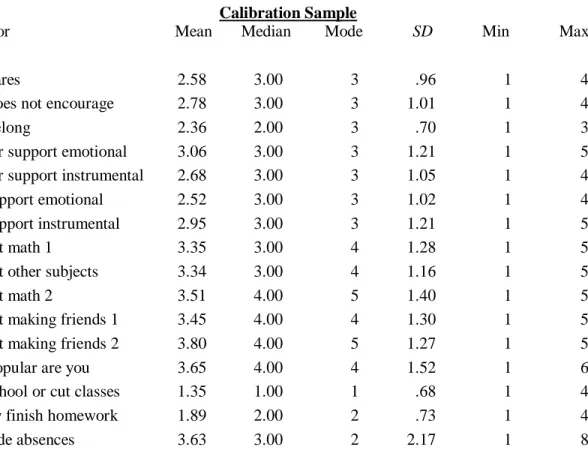
Table 4.1 Descriptive statistics for ordinal indicators of latent factors………..70
Table 4.2 Goodness of fit indices for the revised baseline measurement model………73
Table 4.3 Baseline measurement model: Factor loadings and scale reliability estimates………..75
Table 4.4 Invariance models for the four-factor model of student engagement……….81
Table 4.5 p values of path estimates in gender model for calibration, validation, and V2 samples……….93
x
LIST OF FIGURES
Figure 1 Basic self-systems model of motivational development………9
Figure 2 Basic structural model……….16
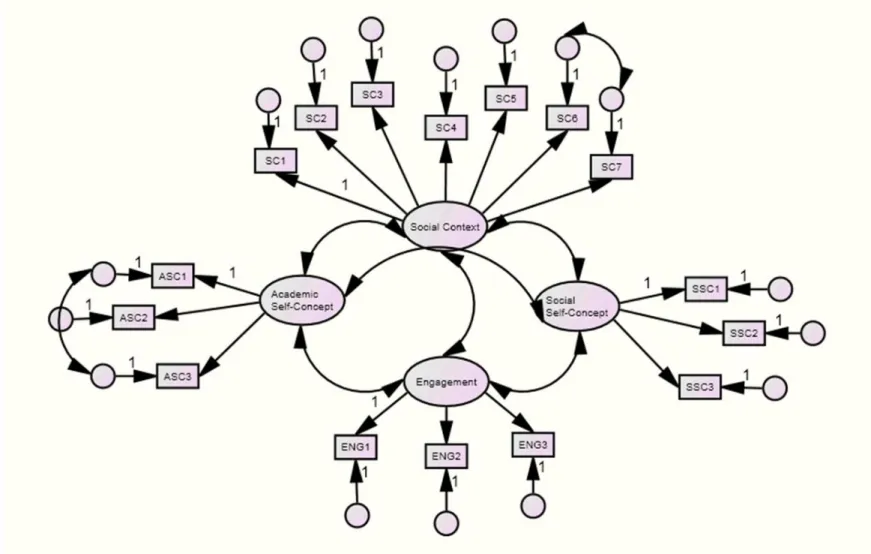
Figure 3 Final baseline measurement model………..63
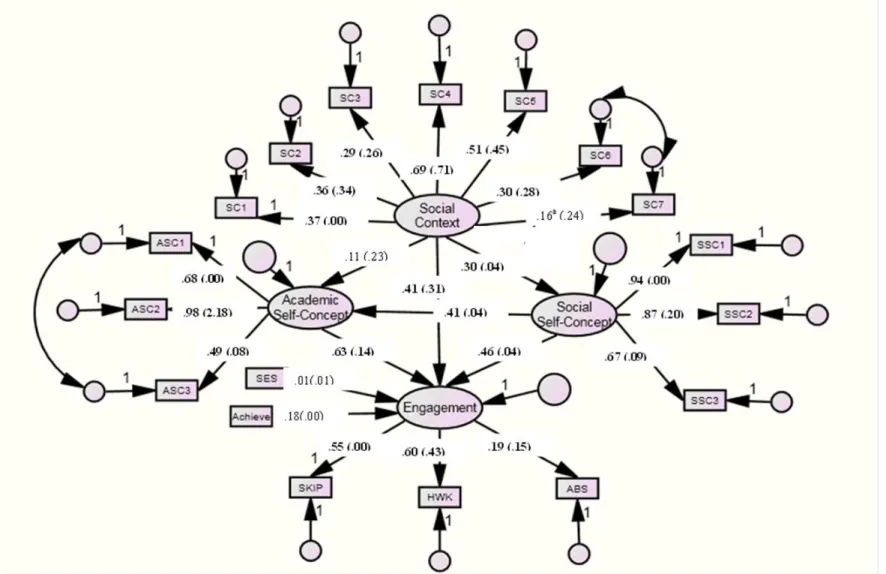
Figure 4 Results of the full model for adolescent girls………...88
Figure 5 Results of the full model for adolescent boys………..89
Figure 6 Results of the full model for African American adolescents………...90
1
CHAPTER 1: INTRODUCTION
Stories focused on evocative topics such as bullying and school violence receive
extensive attention from mainstream media outlets in the United States (Fanning, 2008;
Hirsch & Lowen, 2012; Shevlin, 2010), while equally critical topics such as student
engagement with schooling are relatively unreported. In the context of this dissertation
study, student engagement signifies the behavioral expression of motivation (Skinner &
Pitzer, 2012), a process that initiates and directs behavior toward meeting needs or
accomplishing goals (Shunk, Pintrich, & Meece, 2008). As such, engagement represents an
important focus of inquiry. Extant research demonstrates positive associations between
indicators of student engagement, academic performance, and educational attainment (Brand,
Felner, Shim, Seitsinger, & Duman, 2003; National Research Council & Institute of
Medicine, 2004; Skinner, Furrer, Marchand, & Kindermann, 2008; Wang & Eccles, 2012).
In contrast, findings point to a link between student disengagement and negative educational
outcomes including poor academic performance, behavioral problems, and an increased
likelihood of dropping out of the educational pipeline before high school graduation
(Balfanz, Herzog, & Mac Iver, 2007). Unfortunately, although we can require young people
to attend school, we cannot mandate a level of engagement necessary to construct the
knowledge and skills needed to succeed in a contemporary cultural milieu (National
Research Council & Institute of Medicine, 2004).
2
original sample of target adolescents included seventh graders who attended one of the 23
junior high schools across one county in Maryland. These schools were characterized as
racially diverse and served adolescents and families who lived in rural, suburban, and urban
neighborhoods. The current research was informed by the Self-Systems Model of
Motivational Development ([SSMMD] Connell, 1990; Connell & Wellborn, 1991; Skinner &
Wellborn, 1994). Within this theoretical framework, environmental or contextual influences
and self-processes comprise a motivational system that can contribute to or undermine
student engagement. MADICS was designed to investigate the influences of neighborhood,
family, school, and peer contexts on psychological determinants that affect individual
choices and behavior; therefore, the data were appropriate for use in the evaluation of the
hypothesized model.
A body of research on achievement motivation supports a self-systems perspective that posits associations between students’ perceptions of the school environment,
psychological processes, and desired educational outcomes (e.g., Durik, Vida, & Eccles,
2006; Patrick, Ryan, & Kaplan, 2007; Skinner et al., 2008; Wentzel, Battle, Russell, &
Looney, 2010). Clarification of the nature and influence of school contexts, and
advancement of insight into the processes by which school-based social relations influence
individual outcomes, represent important tasks for ongoing research on schools and
development (Janosz, 2012). The work presented here advances this agenda by emphasizing adolescents’ perceptions of the social context as a key component of the school environment
that shapes student engagement. In alignment with the SSMMD, this study focused on
self-appraisal as a psychological process through which school contexts shape student behavior.
3
characteristics that impact human perceptions and experiences. This chapter lays a
foundation for the research project by (a) establishing the import of student engagement, (b)
introducing the theoretical framework informing the work, and (c) outlining the study’s
purpose.
Student Engagement Matters
Graduation from high school significantly increases the probability of employment
and earning a living wage, whereas failure to complete high school is associated with lifelong
disadvantages such as chronic poverty, decreased life satisfaction, and psychological distress
(Creed, Muller, & Patton, 2003; Laird, Cataldi, Kewal Ramani, & Chapman, 2008; Sum,
Khatiwada, McLaughlin, & Palma, 2009). In addition to consequences that affect individuals
and families, failure to complete high school implies a loss of human capital vital to the
maintenance of community, state, and national prosperity because a well-educated workforce
is paramount to meeting the challenges associated with the nation’s rapidly shifting economic
landscape (Autor, 2010). In light of these considerations, a prevalent lack of school
engagement among adolescents in the United States (Bridgeland, DiIulio, & Morison, 2006;
Wigfield, Eccles, Schiefele, Roeser, & Davis-Kean, 2006; Yazzie-Mintz, 2009) gives cause
for concern. Studies characterize 40% to 60% of U.S. high school students as persistently
disengaged from the academic purposes of schooling (National Research Council & Institute
of Medicine, 2004). Declines in academic motivation and engagement cut across group
membership. However the problem appears more pervasive in urban schools or schools that
serve large numbers of racial minority and/or economically disadvantaged students and
4
continues to escalate as standardized test scores and graduation rates in the United States lag
behind those of many industrialized nations (Miller & Warren, 2011; Organization for
Economic Cooperation and Development, 2010).
The No Child Left Behind Act (NCLB), signed into law by President George W.
Bush in 2002, sparked scrutiny of schools and the academic achievement of the nation's
youth. The legislation represented an attempt to improve public education through funding
initiatives and reforms constructed around standardized testing and measures of school-level
accountability. Results to date suggest this legislative effort has been ineffectual. In 2010, 38% of the nation’s public schools failed to meet standards for raising student achievement
required for receipt of federal funding under NCLB (Usher, 2011). The legislative focus on
elevated expectations for schools, teachers, and students is laudable. However, higher
expectations have not been a sufficient means to improve achievement in the absence of measures that emphasize the development of students’ motivation and engagement with
schooling (National Research Council & Institute of Medicine, 2004). Legislative revisions
are underway as schools across the country struggle to meet mandates put forth by NCLB.
Scholarship is needed to direct reform efforts toward policies and practices grounded in
research on human motivation, learning, and development. Thoughtful and informed
decisions in terms of the practices of schooling and education are always warranted and are
particularly essential during times marked by significant social and economic transitions.
In regards to educational reform, we must bear in mind contemporary social
conditions that impact adolescents through the shaping of culture and pathways available to
adulthood (Arnett, 2012). An aging population (U.S. Census Bureau, 2010) signifies new
5
represent new opportunities and uncertainties. A reduction in the number and type of jobs
available in the United States and more specialized training and/or formal education needed
to compete for entry level positions (U.S. Department of Labor, 2007) represent significant
factors bearing influence on the transition to adulthood. Educational attainment is
increasingly important as one third of all new jobs in the coming decade will require some
form of postsecondary training (U.S. Bureau of Labor Statistics, 2012). These circumstances
clearly point to education as an increasingly requisite form of social capital and underscore
the importance of insights into the factors and processes that influence student engagement.
Moreover, by roughly midcentury, demographics are expected to reflect a
minority-majority. It is projected that persons of color soon will represent more than half of the U.S.
population. This trend is evident in public schools where 44% of students hold membership
in racial/ethnic groups characterized as non-White (National Center for Education Statistics
[NCES], 2010). Increasing racial/ethnic diversity brings about the possibility of an upsurge
in undereducation and its associated consequences as current figures indicate African
American and Latino youth are substantially more likely than their White counterparts to
drop out of school (Aud et al., 2012; NCES, 2009). One nationally representative study
reported less than half of all African American males enrolled in public schools and
scheduled to graduate in 2008 successfully completed the requirements to earn a high school
diploma (Holzman, 2010). A persistent Black-White achievement gap, the increased
probability of school failure for African American and Latino students, and gendered patterns
of school performance (Lee, 2006; Meece & Askew, 2011; Quintana et al., 2012) continue to
define race and gender as salient and challenging educational issues. If no steps are taken to
6
nation’s population will be at an increased risk of experiencing unemployment or
underemployment, as well as a heightened risk of living in poverty.
In light of research that highlights a pervasive lack of student engagement among
U.S. adolescents, efforts are justified to examine the pathways and processes through which
social participation in school contexts influence the motivational beliefs and academic
engagement of all students. Furthermore, research that broadens our understanding of the
development of student engagement in historically underserved populations is crucial to
inform school efforts aimed toward increasing the educational achievement and persistence
of students who are most at risk for school failure and associated difficulties. Focused
attempts to enhance the school engagement of underperforming groups not only represent the
right thing to do in terms of promoting a more equitable system of public education but also
represent the prudent thing to do in preparation for the not so distant future when students of
color will represent more than half of all persons entering the U.S. workforce.
Theoretical Overview
Education plays a critical role in the sustainability of individual and national welfare.
Therefore, it is decidedly problematic that motivation, a critical resource that undergirds
student engagement and academic achievement, often declines as youth matriculate from
elementary schools through secondary schools (Fredricks & Eccles, 2002; Jacobs, Lanza,
Osgood, Eccles, & Wigfield, 2002; Wigfield et al., 2006). In recognition of the influences of
interpersonal and intrapersonal contexts on achievement motivation, this study evaluated a
model in which select social and self-processes, independently and jointly, contributed to adolescents’ engagement with schooling. Social and self-processes together form the basis
7
scaffolding for the model put forth here because it emphasizes the self in social context and
engagement as an expression of motivation tied to positive educational outcomes. A
theoretical orientation that emphasizes the roles of social and self-processes in the development of adolescents’ school engagement is appropriate here because social
participation and identity formation hold unique import in the second decade of life (Brown
& Larson, 2009; Erikson, 1968; Hamm & Zhang, 2010).
According to the SSMMD, students’ relatively stable appraisals of their own
competence, autonomy, and relatedness1 constitute self-systems processes (Connell &
Wellborn, 1991) that signify the motivational basis for engagement with tasks and activities
that delineate the academic purposes of schooling. Several studies support the fundamental
assertions of the self-systems framework that students are more likely to be positively
engaged at school when they feel (a) competent to achieve desired outcomes (Ahmed,
Minnaert, van der Werf, & Kuyper, 2010; Chouinard, Karsenti, & Roy, 2007; Durik et al.,
2006; Patrick et al., 2007; Sakiz, Pape, & Hoy, 2012; Wang, 2009); (b ) capable of initiating
personally meaningful action toward meeting valued goals (Cho, Weinstein, & Wicker, 2011;
Dieseth, Danielsen, & Samdal, 2012; Roth, Assor, Niemiec, Ryan & Deci, 2009); and (c) a
strong sense of relatedness (i.e., belonging, connection, attachment) to the school
community (Demanet & Van Houtte, 2012; Pittman & Richmond, 2007; Walker & Greene,
2009; Wang & Eccles, 2012). However, in light of shifting social circumstances, effective
responses to educational challenges require a commitment to move beyond a focus on
individually oriented paradigms of motivation. Propitiously, theoretical perspectives and
1
8
empirical literature that emphasize achievement motivation increasingly reflect emphasis on
the developmental contributions of social contexts and processes (Martin & Dowson, 2009;
Ryan & Shim, 2008; Wentzel, 2010).
Educational scholarship increasingly draws on theories that recognize multiple and
overlapping contexts that influence diverse aspects of students’ lives. For example, Urie Bronfennbrenner’s ecological model of human development (1979) laid the foundation for
the emergence of a variety of models that advance insight into the ways in which dimensions
of schools, families, and community environments contribute to learning and development
(e.g., Eccles & Roeser, 2009). School interventions highlighted in Meece and Eccles (2010)
and ongoing research conducted as a part of the Rural Early Adolescent Learning Program
(e.g., Hamm, Schmid, Farmer, & Locke, 2011; Hamm & Faircloth, 2005) underscore the
significant role of perceptions and experiences of school contexts in support of adjustment
and achievement-related outcomes. These programs add to a growing body of literature
linking social participation with markers of achievement motivation in educational settings
(e.g., Kindermann & Skinner, 2009; Wang & Eccles, 2012; Wentzel, 2010).
While competence, autonomy, and relatedness are identified as basic psychological needs, and appraisal of one’s own competence, autonomy, and relatedness as the source of
motivated action, the SSMMD locates the origins of self-appraisals within the ongoing
activities that characterize a particular social context (Connell & Wellborn, 1991). The extent to which one’s basic psychological needs are fulfilled or are thwarted by participation
in a defined social context influences self-referent beliefs that in turn motivate behavior
and/or action. Within this schema, self-systems, or more specifically, self-appraisals of
9
motivated behaviors or actions (Figure 1). From an educational standpoint, when features of a school’s context facilitate a student’s sense of self as competent, autonomous, and socially
connected, the student is more likely to become engaged, rather than disengaged, in the tasks
and purposes of schooling (Skinner et al., 2008).
Figure 1. Basic self-systems model of motivational development.
Purpose of the Research Study
In light of the far-reaching developmental influences of schools and schooling,
research programs in education and psychology must attend closely to the processes that
operate within school contexts and assist students in developing belief systems that undergird
academic motivation and engagement. While multiple processes define the social context of
schooling (Skinner, Kindermann, Connell, & Wellborn, 2009), the current work draws on
well-established developmental premises to highlight the contributions of social relations and
self-appraisals to adolescents’ engagement with schooling. The first emphasis reflects the
position that social relationships take on increased developmental significance during
adolescence (Brown & Larson, 2009; Hamm & Zhang, 2010). The emphasis on
self-appraisal draws on the premise that the process of establishing a stable identity or sense of one’s self represents the primary developmental task associated with adolescence (Erikson,
1968). Building on these assumptions, this study used secondary data collected during the first wave of MADICS to examine connections between adolescents’ perceptions of
10
Drawing on Connell and Wellborn’s SSMMD (1991), the primary research question
addressed by this study is this: If adolescents perceive the school environment as a
supportive social context, are they more likely to develop views of the self as competent
within the school community, and in turn are they more likely to enact behaviors indicative
of student engagement such as attendance, effort, and compliance? In light of the potential
influence of individual characteristics on the relations between social contexts and individual
outcomes, the study evaluated the role of race and gender in shaping associations between adolescents’ perceptions of school-based social environments and student engagement.
Summary
Briefly, this study draws on insights advanced by prominent reports and research on
achievement motivation. The research draws on a self-systems motivational perspective to
investigate the intertwining nature of social, self, and academic processes. More specifically,
the study employs structural equation modeling (SEM) techniques to examine pathways that link the social context of schooling with adolescent learners’ self-concept of ability beliefs
and behaviors indicative of student engagement. In conjunction with the evaluation of a
model of student engagement in which self-concept of ability beliefs mediate the relationship
between context and behavior, the work examines the moderating effects of gender and race
as key social identities that influence associations between school-based social context,
motivational beliefs, and engagement. Findings have the potential to inform ongoing school
reform efforts to reflect best practices geared toward increasing the motivation, engagement,
11
CHAPTER 2: LITERATURE REVIEW
Over the course of the last decade, psychological research has increasingly
recognized student engagement as a critical construct related to school motivation and
achievement. This research reflects various definitions of student engagement. Current
thinking defines the construct in terms of multiple dimensions inclusive of behavioral,
cognitive, and affective types of involvement within the school community (Finn & Zimmer,
2012). Within the context of this dissertation study, engagement and related terminologies
such as student, school, or academic engagement refer to observable actions such as
attendance, compliance with school or classroom rules, and expression of effort toward
meeting the academic demands of the educational environment. The choice to emphasize
behavioral engagement is predicated on several factors. First, the literature overwhelmingly
supports a strong correlation between behavioral engagement and academic outcomes and
identifies behavioral indicators such as attendance, compliance, and effort as fundamental
actions critical to achieving school success (Finn & Zimmer, 2012; Furrer & Skinner, 2003;
Ripski & Gregory, 2009). Second, whereas the development of cognitive and emotional
engagement has been shown to overlap, evidence suggests different circumstances,
processes, or pathways contributing to behavioral engagement with schooling (Archimbault,
Janosz, Morizot, & Pagani, 2009). In addition, data from the Maryland Adolescent
Development in Context Study (MADICS) provides a rich source of information highlighting
student behavior. Notably, aspects of behavioral engagement are observable and readily
12
Skinner & Pitzer, 2012). Finally, when researchers utilize terms such as engagement, a
precise focus aids in the design and implementation of school improvement measures as well
in the as advancement of theoretical understanding (Eccles & Wang, 2012). In light of these
considerations, I apply a working definition of student engagement emphasizing behavior toward studying relations between adolescents’ perceptions of schools’ social contexts,
self-concept of ability beliefs, and engagement. This chapter supports the research in (a)
discussing the significance of student engagement in educational settings; (b) describing the
theoretical framework informing the research; (c) summarizing the literature on adolescents’
engagement with schooling emphasizing apposite contextual, psychological, and individual
influences; and (d) outlining the questions and hypotheses guiding the research.
Student Engagement as a Vital Goal of Schooling
Increasing adolescents’ engagement with schooling represents a vital goal for
educational policymakers and practitioners of teaching and learning. Student engagement
promotes positive development and acts as a buffer against risky behavior and delinquency
(Finn & Owings, 2006; Morrison, Robertson, & Laurie, 2002; National Research Council &
Institute of Medicine, 2004). Higher levels of engagement are associated with reduced
truancy, disruptive behaviors, and violations of school rules, all of which result in
disciplinary suspension (Connell, Halpern-Felsher, Clifford, Crichlow, & Usinger, 1995;
Connell, Spencer, & Aber, 1994). Students who are more engaged with schooling earn
higher grades and are less likely to drop out of high school before graduation (Alexander,
Entwisle, & Kabbini, 2001; Janosz, Archambault, Morizot, & Pagani, 2008). A review of
longitudinal studies characterizes student engagement as one of the most effective predictors
13
As key behavioral indicators of school engagement, attendance and conduct predict achievement-related outcomes. In a study of adolescents attending elementary, middle, and
high schools across one Midwestern state, Roby (2004) identified attendance as one of the
most effective predictors of academic performance. In urban high schools, absenteeism has
been shown to be negatively correlated with grades (Steward, Steward, Blair, Hanik, & Hill,
2008). Poor attendance predicts the failure to graduate on time or one year late: One study
found that sixth graders with an 80% attendance rate had only a 1 in 6 chance of graduating
from high school (Balfanz et al., 2007). In addition to showing up for school, student
conduct conforming or conflicting with school and/or classroom rules and/or policies is also
linked to performance-related outcomes. For example, Wentzel (1993) found a significant
association between noncompliance with school and/or classroom rules, course grades, and
standardized test scores. A study of African American adolescents attending rural schools in
the South found a clear association between behavioral adjustment and academic
achievement measured by end-of-year grades (Farmer, Irvin, & Thompson, 2006). Similarly,
Eccles and Wang (2012) demonstrated that adolescents who exhibited less disruptive and/or
more compliant behaviors at school were more likely to succeed academically.
A bird’s eye view of the literature suggests ample empirical support for the assertion
that school engagement plays an important role in shaping favorable educational outcomes
including achievement and persistence (Finn & Zimmer, 2012). Whereas the studies noted
above link engagement with immediate educational outcomes (e.g., grades and behavioral
compliance), the developmental influence of school engagement appears to extend beyond
the elementary and secondary school years. Longitudinal studies document long term
14
standing (Sum et al., 2009), and involvement in criminal activity, including the risk of
serving time in prison (Fine et al., 2001; Li & Learner, 2011). Student engagement predicts
school-related outcomes and developmental trajectories characterizing life satisfaction,
well-being, and future attainment. Therefore, it is prudent to advance insight into the ways school
contexts can support or undermine engagement.
Establishing meaning and import represent precursory steps toward the goal of
furthering insight into the development of adolescents’ school engagement. At this juncture,
theory is essential to outlining a precise model linking contextual factors with student
engagement. Several theoretical perspectives support the current research examining
linkages among the social environment at school and motivation related outcomes (e.g.,
Bandura, 1986; Comer, 2010; Eccles & Midgley, 1989; Ryan & Deci, 2000). This study
draws guidance from the Self-Systems Model of Motivational Development (SSMMD)
(Connell, 1990; Connell & Wellborn, 1991; Deci & Ryan, 1985; Skinner & Wellborn, 1994).
The following section discusses this theoretical framework and its application to the current
study.
Student Engagement within a Self-Systems Framework
Research on achievement motivation increasingly characterizes student engagement
as developing within a framework of personal and environmental influences (Fredricks,
Blumenfeld, & Paris, 2004, Reschly & Christenson, 2012). Aptly, the SSMMD attends to
the contributions of perceived social practices or norms and to psychological processes (i.e.,
self-appraisals) in shaping student engagement. As the self-systems frameworkhas been
utilized effectively to investigate the development of engagement as an outward
15
& Wellborn, 1991; Deci & Ryan, 1985; Grolnick & Ryan, 1989; Skinner & Belmont, 1993;
Skinner et al., 2008), it offers sound theoretical support for the hypothesized model (see
Figure 2).
An underlying premise of the SSMMD is that humans are naturally curious and aspire
to master the knowledge and skills characterizing successful participation in social life (Deci
& Ryan, 1985; Niemiec & Ryan, 2009). Basic psychological needs for competence,
autonomy, and relatedness provide the motivational basis for engagement, mastery, and
learning. Competence refers to a person’s “desire to feel efficacious, to have an effect on one’s environment, and to be able to attain valued outcomes” (Deci, 1998, p. 152).
Autonomy relates to perceptions of personal control, signifying the possibility of exercising
volition in individual or collective engagement (Ryan & Deci, 2000, p. 74), whereas
relatedness refers broadly to a person’s feelings or perceptions that they are securely and
satisfyingly connected to others in the group or community (Connell & Wellborn, 1991, p.
51; Deci, Vallerand, Pelletier, & Ryan, 1991, p. 327).
Although psychological needs represent individually situated factors influencing
engagement, it is the social context that structures, provides, or fails to provide opportunities
and experiences informing self-appraisals of competence, autonomy, and relatedness. From
a theoretical standpoint, when a school’s social environment provides opportunities and/or
supports to assist students in meeting their basic needs, students will engage in the activities
and behaviors characterizing positive school participation. On the other hand, if a school’s
social context undermines opportunities for students to meet their needs for competence, autonomy, and relatedness, they are more likely to become disengaged or withdraw from
16
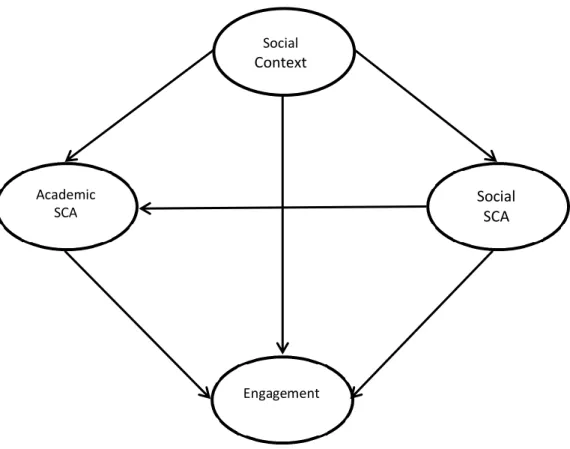
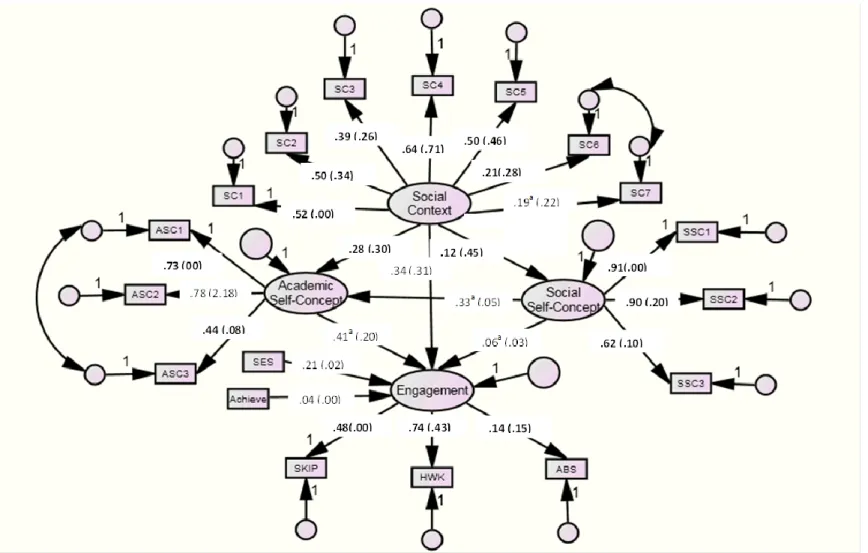
Figure 2. Basic structural model.
Social
Context
Academic
SCA Social SCA
17
school’s social context influences engagement through shaping students’ self-appraisals of
competence, autonomy, and relatedness. The following section defines the social context of
schooling as it is utilized within this dissertation study, and summarizes empirical evidence
linking this context to student engagement.
Social Context and Student Engagement
As a psychological model of motivation, the SSMMD emphasizes the importance of students’ perceptions of the environment rather than objective features such as size, physical
structures, or grade configuration. In applying this model to the study of student
engagement, Skinner and colleagues (2009) identified perceptions of social support and perceptions of “higher-order properties such as school climate” (p. 233) as critical
dimensions of school contexts that influence student development. As such, the current
investigation focuses specifically on climate and support as interpersonal dimensions of the school’s social context contributing to student engagement. Although studies demonstrate
that students’ perceptions of these dimensions of the social context of schooling contribute to
motivation (Juvonen, 2006; Skinner et al., 2009; Wentzel & Wigfield, 2007), extant literature
has not sufficiently explained relations between school-based social contexts and the
development of student engagement (Janosz, 2012). Additionally, focusing on support and climate as distinct and malleable features of the schools’ social contexts can provide targeted
information to guide educational reform efforts geared toward supporting student
engagement.
Social Support and Student Engagement
Research on social support emphasizes associations between perceptions or
experiences of support and outcomes indicative of physical or mental well-being.
18
contributions of types and sources of social support to performance-related outcomes (i.e.,
Patrick et al., 2007; Wentzel et al., 2010; Zimmer-Gembeck, Chipuer, Hanisch, Creed, &
McGregor, 2006). The current study draws on these works in emphasizing the contributions
of instrumental and emotional support (types) provided by teachers and peers (sources) to the
development of student engagement. Instrumental support refers to provisions of resources
or assistance geared towards helping individuals accomplish academic tasks or goals valued
by the school community. This type of support implies sharing information, advice, or
experiences, and it includes actions such as studying together or providing additional
instruction when needed (Wentzel et al., 2010). Whereas instrumental support is geared
toward assisting individuals in meeting specific tasks and/or academic goals, emotional
support aids the individual in feeling secure, accepted, cared for, comforted, liked, or
respected within the school community (Wentzel et al., 2010).
Teachers and peers represent immediate social partners in school contexts; therefore,
perceptions of support from both represent potential sources of developmental influence. In
response, studies selected for inclusion in this literature review conceptualize and measure social support based largely on students’ perceptions regarding the availability and/or
provisions of instrumental and/or emotional support from teachers and peers. In keeping
with the goal of the current project, these studies link perceptions of social support with indicators of adolescents’ behavioral engagement with schooling (i.e., effort, attendance, and
adherence to school or classroom policies, rules, or norms).
Teacher support. Pianta, Hamre, and Allen (2012) provided keen insight into the nature of the relationship between teacher support and student engagement:
19
developmental change to the extent that they engage, meaningfully challenge, and
provide social and relational supports. In this sense, relationships between teachers and students reflect a classroom’s capacity to promote development, and it is
precisely in this way that relationships and interactions are the key to understanding
engagement. (p. 366)
A number of studies have illuminated associations between teacher-based social
support and markers of adolescents’ school engagement. One qualitative study employed
student ratings to identify teachers who created classroom contexts supportive of motivation
and engagement (Anderman, Andrzejewski, & Allen, 2011). In analyzing field notes based
on extensive classroom observations, three distinct themes emerged. Of the three core
themes, two reflected the importance of teacher support. The first, supporting
understanding, was characterized as providing instrumental or academic support while the second theme, building and maintaining rapport, reflected teachers’ provisions of emotional
support. These findings demonstrate a view of teacher-based social support inclusive of
instrumental and emotional components and illuminate the significant contributions of students’ perceptions of teacher support toward the development of academic engagement.
Quantitative studies shed additional light on teacher support and engagement.
Students who perceive higher levels of teacher support concurrently report higher levels of
engagement whereas perceptions of low levels of teacher support predict student
disengagement in the form of reduced effort, attention, preparation, and attendance (Klem &
Connell, 2004). In this study, students who perceived high levels of support were nearly
three times more likely to report higher levels of school engagement. Other studies illustrate
20
investigated the influence of social support from teachers, defined through perceptions of care. Adolescents’ perceptions of teachers support predicted academic effort, efforts to help
others, and intentions to comply with classroom rules and/or behavioral norms. The effects
of teacher support in the sixth grade continued to contribute to behavioral outcomes and
effort across the middle school years. More recently, Wang and Holcombe (2010)
demonstrated the extent to which adolescents perceived teachers as offering emotional
support in the seventh grade, predicted participation or behavioral engagement (i.e. attention,
effort) one year later. The association between teacher support and behavioral engagement
does not appear to be limited to school settings within the United States. In a rural Canadian
sample, perceived teacher support was significantly and negatively correlated with problem
behaviors at school (Duschesne & Larose, 2007). Likewise, in a study of Turkish and
Moroccan immigrants living in Belgium, teacher support was associated with fewer instances
of school misconduct (Demanet & Van Houtte, 2012).
As a group, these studies emphasize the significance of teacher support on adolescents’ behavioral engagement with schooling and substantiate the claim that provisions
of instrumental and emotional support from teachers represent a palpable influence on students’ academic experiences. Although there is little doubt that teacher support signifies a
critical dimension of the school environment influencing engagement, the role of peer
influence is less clear. Whereas some studies minimize the import of peer support, others
report significant relations between peer-based provisions of social support and student
engagement.
21
perplexing because peer relationships are acknowledged as significant developmental
contexts characterizing the daily experiences of adolescence (Brown & Larson, 2009; Hamm
& Zhang, 2010). The effects of participation in peer contexts reach far beyond the
boundaries of friendships, cliques, or crowds in shaping behavior, thoughts, and feelings
across multiple ecological contexts (Gifford-Smith & Brownell, 2003) including schools and
classrooms. Highlighting the influence of peer support on student engagement, the studies
presented in this section align with the concept of teacher-based social support in attending to
the provisions or resources (i.e., emotional or instrumental) made available through
participation in friendships and/or peer groups.
Hamm and Faircloth (2005) utilized qualitative methods to identify aspects of
friendship contributing to perceptions of school belonging linked to school engagement
(Anderman, 2002; Goodenow, 1993; Sanchez, Colon, & Esparza, 2005). Through provisions
of loyalty and support, friendships helped students navigate academic and personal
difficulties within the school setting. Intimacy experienced within close relationships
resulted in the ability of friends to personalize or match the support they provided to
participants’ individual needs. Through the sharing of common values and interests,
participants experienced acceptance and affirmation within friendships. Finally, the
companionship afforded through friendships, and the pleasure or enjoyment of being
together, played a central role in helping students maintain positive outlooks when classroom
instruction proved to be less than engaging. While the study focused on the development of sense of belonging, all of the themes emerging from the data portray adolescents’ friendships
as sources of instrumental and/or emotional support contributing to student engagement.
22
representative sample of middle school students (Li, Lynch, Kalvin, Liu, & Lerner, 2011)
found perceived emotional support from peers in the sixth grade predicted behavioral
engagement concurrently and continued to predict engagement across the middle school
years. Other studies offer comparable findings. For example, Berndt and Keefe (1995)
reported that students who rated their friendships more positively in terms of offerings of
help, encouragement, recognition, praise and opportunities for intimate self-disclosure tended
to be more positively engaged in schooling. Wentzel and colleagues identify associations
between perceptions of peer support and adolescents’ academic effort and adherence to
classroom/school rules and policies (Wentzel, 1994; Wentzel & Caldwell, 1997). Wentzel,
Barry, and Caldwell (2004) identified significant differences in behavioral outcomes between
students with and without reciprocated best friendships. Having a friend who was willing to share, cooperate, and offer help predicted increases in an individual’s own prosocial and
socially responsible behaviors over time. Likewise, Nelson and DeBacker (2008) found that the quality of the relationship with one’s best friend conceptualized in measures of perceived
help, intimacy, and security accounted for significant variance in goals reflecting the desire
to engage in classroom tasks and activities because of the opportunities they provide to form
or sustain friendships.
Van Ryzin (2011) found that teacher and peer support showed significant associations
with student engagement. However, only peer support predicted behavioral indicators of
engagement with learning one year later. This study, along with an early work by Skinner
and Belmont (1993) is unique in that it looked at reciprocal effects and found support for the premise that adolescents’ who are more engaged in schooling elicit greater support from
23
influence on emotional and cognitive engagement. In contrast, peers exerted more influence
on behavioral engagement. These findings support the premise that different sources of
support contribute uniquely to the development of student engagement. The literature cited on social support implies that school engagement is influenced by adolescents’ perceptions of
the support provided by teachers and peers. Additional studies support the proposed model
linking social with academic processes in emphasizing the contributions of broader
perceptions of school climate. These studies are the focus of the following section.
School Climate and Student Engagement
Positive school climate has been linked to achievement-related outcomes and
increases in student engagement (e.g., Anderman, 2002; Battistich, Solomon, & Watson,
1997; Benner, Graham, & Mistry, 2008; Eccles & Roeser, 2011; Lee & Burkam, 2003;
Marks, 2000). Measures of school climate reflect constituents’ perceptions of “the values,
norms, beliefs, and sentiments associated with routine practices and social interaction in schools” (National Research Council & Institute of Medicine, 2004, p. 97). Building on
teacher and peer support literatures, this review focuses on studies that illuminate the
significance of social interactions or interpersonal features that characterize school climate.
Therefore, for the purpose of this study, school climate is defined in terms of students’
aggregated or generalized perceptions of the school community in regards to emotional
warmth and a shared sense of school attachment (i.e., care, encouragement, inclusiveness).
Scholars examining school-based social contexts, motivation, and engagement (e.g.,
Juvonen, 2006; Osterman, 2000; Wentzel, 1997) identify emotional warmth and sense of
belonging as significant factors that characterize students’ perceptions of school climate.
24
classes, encounter a larger and more diverse peer group, and work with teachers with
different expectations, rules, and instructional practices justifying this study’s measure of
climate that reflects students’ experiences across the day (Brand et al., 2003). In light of
these considerations, the following sections summarize studies of perceptions of school
climate that emphasize warmth and sense of school belonging.
Emotional warmth. Different terminologies have been employed in characterizing
school climate reflecting emotional warmth including caring or an ethic of care (Bryk &
Driscoll, 1988; Noddings, 1984; Wentzel, 1997), communal structuring (Lee & Smith,
2001), and cohesion (Loukas & Murphy, 2007). Whereas these constructs measure
distinctive aspects of the school’s interpersonal environment, they coalesce in stressing the
importance of students’ perceptions of school climate as caring, emotionally warm or
friendly, and limited in terms of expressions of social hostility and/or interpersonal friction.
Juvonen (2007) identified a caring culture as one of the most critical dimensions of school
climate supporting the possibility of school reform to enhance student engagement. In a
multinational study, Juvonen found U.S. youth perceived school environments as
significantly less caring, friendly, and accepting than adolescents who attended schools in
other North American and European countries. This is troubling in light of empirical
evidence supporting a link between a caring school climate and adolescents’ school
engagement. For example, Bryk and Driscoll (1988) investigated school climate employing
data from the High School and Beyond study. They found higher rates of attendance and achievement associated with students’ perceptions of a social climate defined by positive
caring relationships. Likewise, Lee and Burkam (2003) found associations between student
25 caring and responsive.
Additional studies point to associations between a caring school climate and an array
of behavioral indicators of student engagement including adherence to school or classroom
rules, attentiveness, and effort. Way, Reddy, and Rhodes (2007) reported a decrease in students’ perceptions of a positive school climate over the middle school years coinciding
with a significant increase in patterns of behavior (skipping class or school, breaking school
rules, etc.) indicative of declines in behavioral engagement. Data analyses tested for
bidirectional influences, and the results supported a unidirectional model in which a
supportive climate contributed to behavior. Wang and Dishion (2012) also found students’
perceptions of school climate deteriorating over the middle school years with this decline
predicting increases in teacher reports of conduct (failure to cooperate, misbehavior to get out
of schoolwork, fighting) indicative of a lack of behavioral engagement. Wang, Selman,
Dishion, and Stormshak (2010) found a significant positive correlation between school
climate characterized by caring interactions and student reports of conduct reflecting
behavioral engagement (e.g., attendance, following directions). Loukas and Murphy (2007)
found that school environments rated by students as high in friction (i.e., hostility, frequency
of conflict, lack of warmth) were associated with increased behavioral problems (e.g., failure
to follow directions, lack of self-control, fighting). In contrast, students’ perceptions of
schools as high in cohesion, characterized by a warm and/or positive relational context,
appeared to buffer against disciplinary problems and offset increases in school
disengagement particularly for those individuals who had difficulties focusing and following
through on academic tasks or assignments. Utilizing a nationally representative sample of
26
status (SES), student-teacher ratio, teacher expectations, teacher support, and school safety
explained approximately one third of the variance in initial levels of student-reported
behavioral engagement (e.g., preparedness for class, completion of assignments) and
approximately one third of the variance in growth trajectories of engagement over time.
After accounting for student-level influences, the school-level variable that had the largest
effect on adolescents' engagement was teacher support.
This group of studies conceptualized school climate focusing on generalized
perceptions of emotional warmth. Additional studies provide insight into the influence of
sense of belonging as a dimension of school climate defining the social context of schooling and contributing to adolescents’ engagement with schooling.
Sense of belonging. Baumeister and Leary (1995) identify the need to belong as a basic human desire that is linked to cognitive processes, behavioral responses, emotional
health, and physical well-being. Although many studies focus on sense of belonging at the
individual level (e.g., Farmer, & Hutchins, 2011; Goodenow, 1993; Hamm & Faircloth,
2005b; Irvin, Meece, Byun, Roeser, Midgley, & Urdan, 1996), the current research attends to
the influence of perceptions school-wide sense of belonging. Two studies have investigated
the role of school-wide belonging in regards to adolescents’ school engagement. Benner,
Graham, and Mistry (2008) measured school climate employing aggregated measures of
sense of belonging, fairness, and interracial climate to predict engagement in a racially
diverse sample of ninth grade youth attending high schools throughout the greater Los
Angeles metropolitan area. Perceptions of belonging made significant contributions to
adolescent and teacher reports of student engagement including behavioral markers of
27
of Adolescent Health to compare the impact of individual and generalized perceptions of
school belonging on the development of school problems indicative of a lack of student
engagement. School problems, including difficulties with attention, task completion, and
social functioning were negatively related to individual and generalized perceptions of
belonging. Notably, in some instances generalized perceptions of belonging were positively
correlated with behaviors indicative of a lack of school engagement.
Findings from these studies highlighting emotional warmth and a shared sense of
belonging as features of school climate are consistent with the research on peer and teacher
support in demonstrating links between adolescents’ perceptions of school-based social
relationships and behaviors indicative of school engagement.
Summary of Research on Schools’ Social Contexts and Student Engagement
The studies discussed in the previous sections point to the influences of teacher and
peer-based support and interpersonal aspects of school climate on adolescents’ school
engagement. Research on social support, school-level emotional warmth, and shared sense
of belonging informed my decision to focus on support and climate as integral components of
the social context of schools influencing student engagement. Although evidence linking
social support and school-climate with student engagement has been generated, important
questions remain. Limited studies linking generalized perceptions of belonging and adolescents’ school engagement suggest the need for additional research. Furthermore,
insight into the processes by which interpersonal contexts influence student engagement
remains lacking.
In drawing on the SSMMD the current study recognizes the possibility that students
28
partners (Danielson, Samdal, Hetland, & Wold, 2009; Marchand & Skinner, 2007; Patrick et
al., 2007). Hence, in addition to social factors, views of the self are proposed to exert
significant influence on academic functioning (e.g., Bandura, 1986; Connell & Wellborn,
1991; Meece, Wigfield, & Eccles, 1990; Skinner & Wellborn, 1994). In alignment with the
SSMMD, the model evaluated here identifies self-concept of ability (a proxy for competence
beliefs) as a key psychological process mediating the influence of social context on student
engagement. Support for this premise is discussed next.
Competence Beliefs as Mediators
A critical assumption of the SSMMD is that students’ subjective perceptions of the
school context shape self-systems (i.e., psychological factors) influencing student
engagement (Connell & Wellborn, 1991; Skinner et al., 2009). The SSMMD identifies students’ self-appraisals of competence, autonomy, and relatedness as key psychological
mechanisms mediating relations between perceptions of the school’s contexts and
engagement. While all three constructs contribute significantly to development across
adolescence (Arnett, 2000; Wigfield et al., 2006), this study emphasizes the influences of
academic and social competence beliefs or more specifically academic and social
self-concept of ability beliefs. Broadly speaking, competence beliefs represent “the individual’s
perception of his or her current competence at a given activity” (Wigfield & Eccles, 2000, p.
70). As such, academic competence beliefs or academic self-concept of ability beliefs represent measures of students’ perceptions of current ability in specified academic contexts,
whereas social competence beliefs or social self-concept of ability beliefs reference
perceptions of current ability in social situations.
29
achievement motivation as the need for competence energizes and directs behavior,
influences affect, and impacts development regardless of age or cultural membership.
Various motivational perspectives (e.g., expectancy-value, self-efficacy, self-determination
theories) reflect the assumption that persons who believe they are competent in a specific
setting and/or domain are more likely to demonstrate behaviors indicative of engagement and
make greater achievement gains within that setting and/or domain (e.g., Bandura, 1986;
Connell & Wellborn, 1991; Deci & Ryan, 1985; Eccles, Adler, & Meece, 1984).
Reflecting a self-systems perspective, the model evaluated in the current research
defines self-concept of ability beliefs as mediators, or process variables (Kenny, 2011),
explaining the relations between students’ perceptions of the school’s social context and their
behavioral engagement with schooling (see Figure 2). The proposed model hypothesizes
direct effects between social context and student engagement. However, it is the possibility
of indirect or mediated effects working through academic and social self-concept of ability
beliefs that is of particular interest as mediation offers an explanation for the relationship
between predictor and outcome variables (Baron & Kenny, 1986; Frazier, Tix, & Barron,
2004). As mentioned previously, understanding the mechanisms by which interpersonal
contexts influence student engagement remains an important task for educational research. As such, the following sections focus on evidence linking relevant aspects of schools’
interpersonal contexts and student engagement through the mediating effects of self-concept
of ability beliefs or students’ perceptions of academic and social competence.
Academic Competence Beliefs
Some studies have provided evidence of the mediating role of beliefs that characterize
30
context of schools and student engagement. First, research on stage-environment fit supports
the premise that competence beliefs mediate the association between social contexts and adolescents’ behavioral engagement with schooling. Eccles and colleagues (Eccles &
Midgley, 1989; Feldlaufer, Midgley, & Eccles, 1988; Eccles, Midgley, & Adler, 1984)
reported declines in indicators of student engagement, as assessed by self-report measures,
following the transition from elementary school to middle school. Evidence suggested these
declines were linked to key changes in the interpersonal context of schools as children
transition from elementary school to middle school environments. More specifically, Eccles
and colleagues posit that declines in engagement relate to larger peer groups and increasingly
impersonal teacher-student interactions potentially undermining competence beliefs that in
turn influence student engagement. Thus, research employing a stage-environment fit perspective emphasizes the key role of teacher and peer support in shaping adolescents’
perceptions of competence, which in turn predict levels of school engagement (National
Research Council and Institute of Medicine, 2004).
Recent studies of achievement motivation support research on stage-environment fit emphasizing connections between school-based interpersonal contexts, students’ perceptions
of academic competence, and engagement with schooling. Diseth, Danielsen, and Samdal
(2012) found students’ perceptions of teachers’ support for relatedness, a proxy for emotional
support, and support for competence, a proxy for instrumental or academic support, predicted
academic self-efficacy which in turn predicted engagement-related outcomes. Analogously,
Sakiz, Pape, and Hoy (2012) found that students who perceived greater amounts of emotional
support from teachers reported stronger competence-related beliefs, which predicted
31
reported that perceived teacher support significantly contributed to adolescents’ competence
beliefs which in turn predicted engagement (i.e., effort). In contrast, Danielsen, Breivik, and
Wold (2011) found that teacher and peer support directly contributed to academic initiative
reflecting student engagement. Teacher support also predicted engagement indirectly by contributing to adolescents’ perceptions of academic competence. However, peer support
was not significantly related to self-perceptions of academic competence. In contrast,
Ahmed, Minnaert, van der Werf, and Kuyper (2010) reported that perceptions of support
from teachers and peers influenced performance outcomes directly and indirectly through the
effects of competence beliefs. In this sample of Dutch adolescents, teacher support held the
strongest associations with competence.
Although the previously noted works provide varying levels of support for the
premise that competence beliefs mediate the association between social support and
behavioral engagement, these predicted relations were not found in at least one study. In a
sample of primarily Latino middle school students from economically disadvantaged
households and identified as at elevated risk for school failure, Bouchey and Harter (2005)
found that perceived support from teachers and classmates directly predicted engagement in
science and mathematics classrooms. Notably, analyses did not support the mediation
hypothesis in that social support was not significantly related to adolescents' perceptions of
academic competence.
While a number of studies have evaluated the mediating role of academic competence
beliefs between social support and student engagement, only one study examined
associations between school-level climate as conceptualized in the current context,
32
Marchant, Paulson, and Rothlisberg (2001) reported students’ perceptions of school climate
(i.e., a responsive and supportive social environment) influenced performance through
competence beliefs. Additionally, the authors found evidence to suggest that school climate
exerted a unique influence on competence beliefs above and beyond the contributions of
teacher support.
Studies investigating the role of competence beliefs in defining relations between adolescents’ perceptions of the social context of schooling and behavioral indicators of
student engagement provide reasonable support for a mediational hypothesis. Research demonstrates that the influence of the school’s social context on student engagement can be
partially explained by the influence of support and climate on students’ academic
competence beliefs. While most studies cited reported evidence of mediation, conflicting
findings suggest the continued need for studies examining the roles of cultural factors in
explaining how interpersonal contexts shape student engagement. Although school climate
has been cited as a vector of the social context of schools that impacts student development
(Skinner et al., 2009), little scholarship has investigated the possibility that academic
competence beliefs mediate the association between climate and engagement. Attending to
climate as a critical dimension of social context highlights a largely overlooked avenue by
which school contexts potentially influence student engagement. Recognizing the
significance of students’ perceptions of school climate may provide new insights to draw on
in planning school intervention and reform efforts emphasizing group and/or community
dynamics. Increasing evidence supports the premise that academic competence beliefs
mediate the influence of school-based social contexts on student engagement. However,
33
beliefs. Relations between the social context of schools and adolescents’ school engagement
mediated by social competence beliefs represent the focus of the following section.
Social Competence Beliefs
As schools represent academic and social arenas, an equally important consideration
is that social concept of ability or social competence beliefs, along with academic
self-concept of ability or academic competence beliefs, may mediate the relation between adolescents’ perceptions of the school’s social context and student engagement. Research
indicates an association between social competence and academic engagement (e.g., Nelson
& DeBacker, 2008; Wentzel, Filisetti, & Looney, 2007). However, only two studies were
identified as evaluating hypotheses which suggest that social competence beliefs mediate the influence of a school’s social context on student engagement.
Patrick, Ryan, and Kaplan (2007) tested a model in which teacher and peer support
contributed to academic and social competence beliefs, which in turn influenced task-related
interactions indicative of behavioral engagement. Adolescents’ perceptions of support from
teachers exerted direct and indirect influence on behavioral indicators of engagement through
academic competence beliefs. Peer support contributed directly to engagement and
influenced engagement indirectly through shaping students’ self-perceptions of academic and
social competence beliefs. While the previous study supports social competence beliefs
mediating the influence of peer-based social support on engagement, Wang (2009) found
corresponding evidence of mediation in terms of school climate. Students who perceived a
more positive school climate in seventh grade were more likely to report enhanced
perceptions of social competence which predicted behavioral and psychological outcomes