NEIGHBORHOOD CONTRIBUTIONS TO POSITIVE PARENTING AND YOUTH EXTERNALIZING PROBLEMS:
A MULTI-SAMPLE STUDY OF AFRICAN AMERICAN SINGLE MOTHER FAMILIES
Jessica A. Cuellar
A dissertation submitted to the faculty at the University of North Carolina at Chapel Hill in partial fulfillment of the requirements for the degree of Doctor of Philosophy in the Department
of Psychology (Clinical Psychology).
Chapel Hill 2014
ABSTRACT
Jessica A. Cuellar: Neighborhood Contributions to Positive Parenting and Youth Externalizing Problems:
A Multi-Sample Study of African American Single Mother Families (Under the direction of Deborah J. Jones)
African American youth, particularly those from single mother homes, are at increased risk for engaging in externalizing behaviors compared to youth from other racial and ethnic
backgrounds and those from two parent homes, with lasting implications for psychosocial adjustment into adulthood. Yet, relatively small sample sizes and inadequate power have precluded advances regarding the contextual factors associated with parenting and youth
externalizing behavior within this population. The current study aimed to strengthen and extend this literature by leveraging data from three existing studies to conduct a more comprehensive examination of the key associations between neighborhood context (through the three
ACKNOWLEDGMENTS
I want to express my deepest gratitude for the mentorship of my committee chair, Dr.
TABLE OF CONTENTS
LIST OF TABLES………...viii
LIST OF FIGURES………...ix
LIST OF ABBREVIATIONS………..x
Introduction………...1
Single Mother Families, African American Youth, and Externalizing Problems……….1
Parenting Contributions to Youth Externalizing Behavior………3
Neighborhood Context, Positive Parenting, and Externalizing Behavior………..5
Study Aims and Hypotheses………...10
Method………...16
Overview………...16
Measures………...21
Data Analytic Approach………...26
Results………...27
Item Harmonization………...27
Establishing Unidimensional Study Constructs………...27
Determining Differential Item Functioning………...28
SEM Model Analyses………...29
Discussion………...31
APPENDIX 1: HARMONIZED ITEMS: NEIGHBORHOOD DANGER………..42
APPENDIX 3: HARMONIZED ITEMS: NEIGHBORHOOD DISENGAGEMENT…………44
APPENDIX 4: HARMONIZED ITEMS: MATERNAL WARMTH………..46
APPENDIX 5: HARMONIZED ITEMS: MATERNAL MONITORING………...47
APPENDIX 6: HARMONIZED ITEMS: YOUTH EXTERNALIZING BEHAVIOR………...49
APPENDIX 7: FINAL ITEM SET: NEIGHBORHOOD DANGER………...50
APPENDIX 8: FINAL ITEM SET: NEIGHBORHOOD DISADVANTAGE………51
APPENDIX 9: FINAL ITEM SET: NEIGHBORHOOD DISENGAGEMENT……….52
APPENDIX 10: FINAL ITEM SET: MATERNAL WARMTH……….54
APPENDIX 11: FINAL ITEM SET: MATERNAL MONITORING……….55
APPENDIX 12: FINAL ITEM SET: YOUTH EXTERNALIZING BEHAVIOR………..57
TABLES………...58
FIGURES………...65
LIST OF TABLES
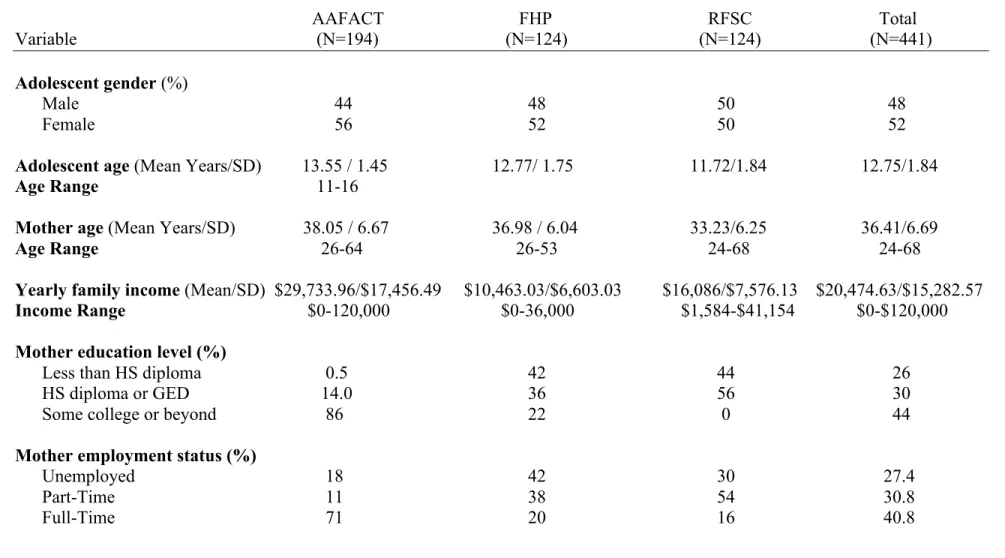
Table 1 – Demographic and descriptive characteristics of AAFACT, FHP,
RFSC, and Total samples………..58
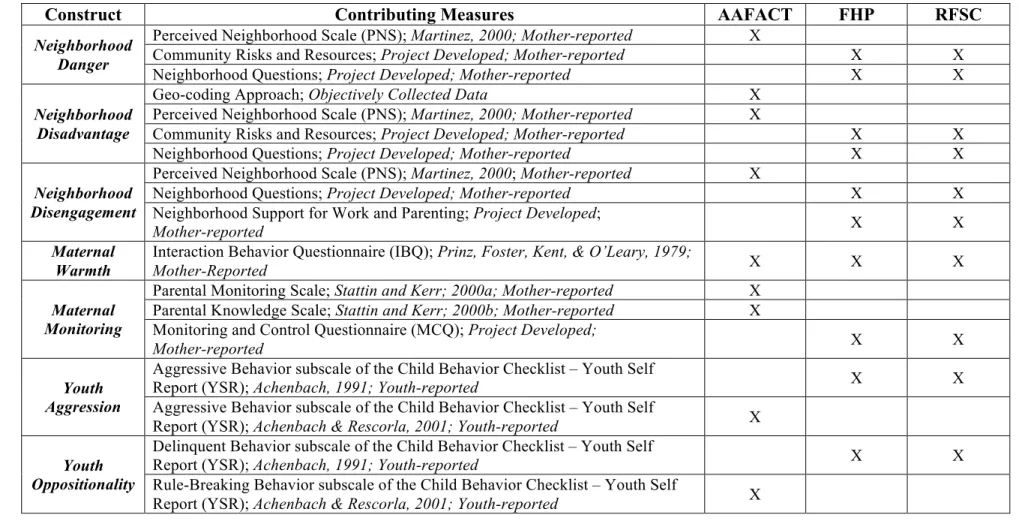
Table 2 – Study Measures………...59
Table 3 – Correlations of Study Variables………...60
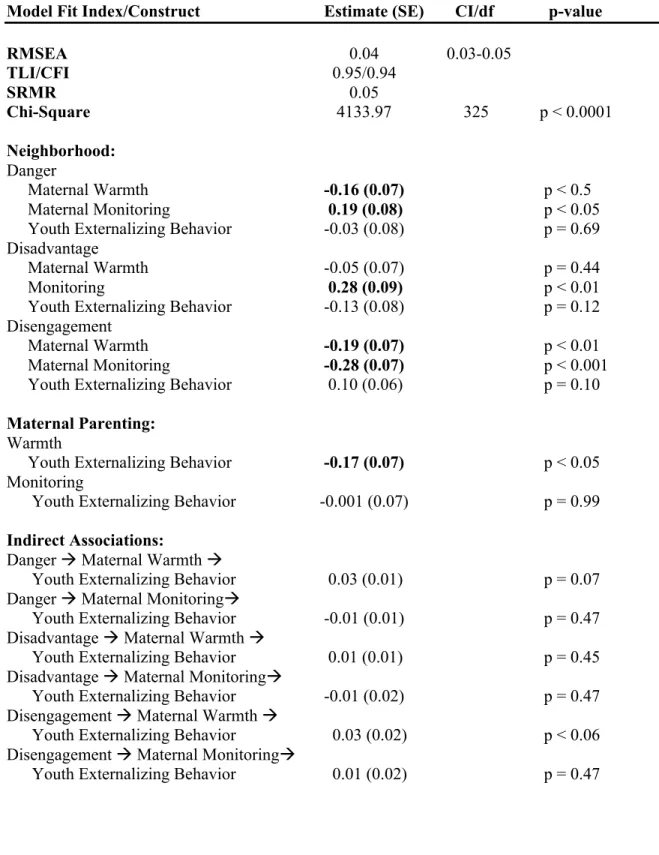
Table 4 – SEM Model Direct and Indirect Associations………...61
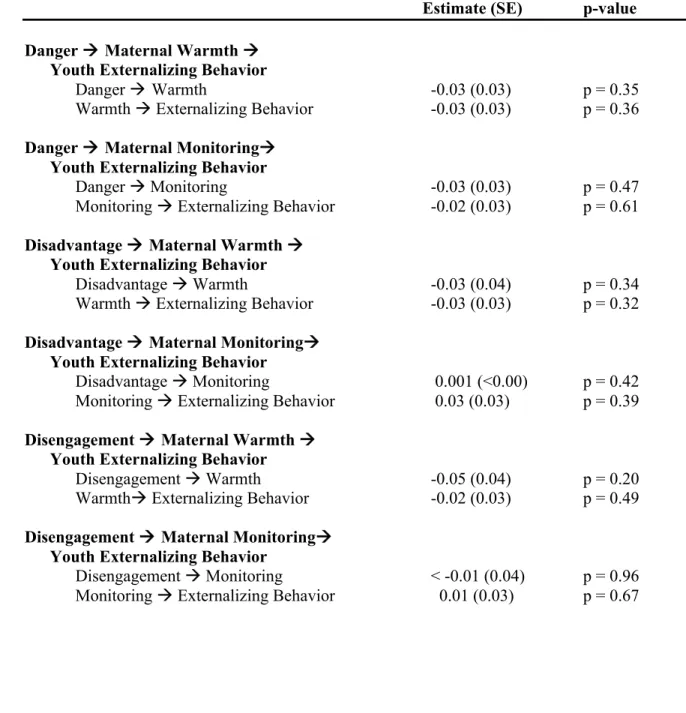
Table 5 – Moderated Mediation Results: Family Income as Moderator………...62
Table 6 - Moderated Mediation Results: Youth Age as Moderator………...63
LIST OF FIGURES
Figure 1 - Proposed Direct and Indirect Associations between Neighborhood
Domains, Parenting Behaviors, and Youth Externalizing Behavior………....….65
Figure 2 - Proposed Directions of Direct and Indirect Associations……….66
Figure 3 - Proposed Associations with Family Income as Moderator………...67
Figure 4 - Proposed Associations with Youth Gender as Moderator………68
Figure 5 - Proposed Associations with Youth Age as Moderator………...69
Figure 6 - Study Analyses Flow Chart………...70
LIST OF ABBREVIATIONS
AAFACT African American Families and Children Together CBCL Child Behavior Checklist
CFA Confirmatory Factor Analyses CFI Comparative Fit Index
EFA Exploratory Factor Analyses FHP Family Health Project
IBQ Interaction Behavior Questionnaire IDA Integrative Data Analysis
MCQ Monitoring and Control Questionnaire MLR Maximum Likelihood Robust Estimator PNS Perceived Neighborhood Scale
RMSEA Root MeanSquare Error of Approximation
RFSC The Role of Family, School, and Community Processes in Promoting Competence in Youth Living in Rural and Urban African American Single-Parent Families
SEM Structural Equation Modeling
SRMR Standardized Root Mean Square Residual TLI Tucker-Lewis Index
Neighborhood Contributions to Positive Parenting and Youth Externalizing Problems: A Multi-Sample Study of African American Single Mother Families
Introduction
This study addressed the pressing need to better understand the unique experiences and determinants of problem behavior among African American youth from single mother homes. A consistent empirical finding is that African American youth score higher than European
American youth on measures of externalizing problems (e.g., Centers for Disease Control, 2009; Child Trends, 2012; Office of Juvenile Justice and Delinquency Prevention, 2005). These findings, however, are difficult to interpret as race is often confounded with other factors associated with problem behavior, perhaps most notably family structure and its correlates (e.g., Hattery & Smith, 2007; McLoyd, 1990; Murry, Bynum, Brody, Willert, & Stephans, 2001). That is, the majority (66%) of African American youth, relative to a much smaller number (24%) of European American youth, will reside in a single mother home during childhood or
adolescence and, in turn, are more likely to experience socioeconomic disadvantage and related exposure to neighborhood risk (e.g., Annie E. Casey Foundation, 2010; Hamilton, Martin, & Ventura, 2011; McLoyd, 1990). As such, identifying developmental pathways to risk and resilience, as well as the contextual factors that influence these pathways, within African American single mother families is a critical research direction.
Single Mother Families, African American Youth, and Externalizing Problems
other substance use, as well as difficulty developing and maintaining healthy relationships (e.g., Bongers, Koot, van der Ende, & Verhulst, 2008; Kim-Cohen et al., 2003; Moffitt, Caspi, Harrington, Milne, 2002; also see Zocolillo & Rutter, 1992, for a review). The literature in this area also highlights associations between early youth problem behaviors (e.g., aggression and oppositionality) and later criminal behavior and difficulties maintaining steady employment (e.g., Caspi, Elder, & Bem, 1987; Fergusson, Horwood, & Ridder, 2005; Moffitt et al., 2002). Understanding the contexts in which externalizing outcomes are more likely to occur is
particularly important in the African American community, given that African American youth are three times more likely than European American youth to be arrested during childhood and adolescence (Huizinga et al., 2007). While previous literature has identified several factors that likely contribute to these increased rates of adverse outcomes among African American youth, it is generally agreed upon that increased exposure to environmental risks plays a primary role (Fite, Wynn, & Pardini, 2009). Therefore, understanding the development of externalizing problems among African American youth in the context of environmental risk is a clinical and public health imperative. One context of particular relevance for studying exposure to
environmental risk is the changing face of the African American family.
1970’s. Harsher drug and incarceration policies introduced by the “War on Drugs” movement during the 1970’s greatly impacted the African American community (Hattery & Smith, 2007). For example, higher rates of drug use and addiction among African American adults during this period of time, particularly within the male population, resulted in thousands of African
American males taken from their homes and into the legal system. Furthermore, during the 1960’s, changes in the United States welfare system specified that only single parent headed families would be eligible to receive welfare assistance. Subsequently, a parallel decline
occurred in marriage with some hypothesizing that many low-income African American couples did not marry in order to receive the necessary welfare benefits to support their families (Hattery & Smith, 2007). These societal and institutional changes, coupled with rising divorce rates in the African American community and more recent increased acceptance of alternative family
structures, have contributed to the high rates of African American single mother-headed homes in the United States (National Center for Family and Marriage Research, 2011; Hattery & Smith, 2007). In turn, a rising number of African American single mothers are primarily responsible for providing basic necessities such as food and shelter for their children. These responsibilities may, by necessity, take precedence over or compromise mothers’ capacity to engage in day-to-day parenting behaviors associated with positive youth psychosocial adjustment.
Parenting Contributions to Youth Externalizing Behavior
African American families (see McKee, Colletti, Rakow, Jones, & Forehand, 2008; McKee, Jones, Forehand, & Cuellar, 2013; Pittman & Chase-Lansdale, 2001 for reviews). The level of warmth and monitoring caregivers provide, in particular, have demonstrated unique contributions toward the level of youth externalizing problems. Caregiver monitoring includes behaviors such as enrolling children in extra-curricular activities and programs, being aware of a child’s peer group, and knowing a child’s whereabouts and activities in the neighborhood (see Crouter & Head, 2002, for a review). Although there is extensive discussion in the literature regarding the extent to which caregiver knowledge about child activities is a function of monitoring or a positive side-effect of communication in the parent-child relationship (i.e., knowledge), this study will use the term monitoring inclusively to refer to both monitoring and knowledge of youth activities (e.g., Jones, Forehand, O’Connell, Brody, & Armistead, 2005; Liu, Lau, Chen, Dinh, & Kim, 2009).
Using this broad definition of monitoring, research specifically focusing on African American families suggests that youth engage in lower levels of externalizing behavior when caregivers engage in higher levels of monitoring (Armistead, Forehand, Brody, & Maguen, 2002; Bird et al., 2001; Richards, Miller, O’Donnell, Wasserman, & Colder, 2004). Caregivers are better able to provide structure to their youth’s activities and prevent them from engaging in risky or dangerous behavior when they know what their children are doing and where they will be. Furthermore, caregivers who know their children’s whereabouts and activities are also better able to provide discipline when their children do engage in externalizing behavior and can reinforce good behavior as well.
kisses), and displaying attentiveness and engaging in active listening (DiBartolo & Helt, 2007). Similar to research linking caregiver monitoring and externalizing problems, the literature has consistently indicated that higher levels of caregiver warmth are associated with lower levels of externalizing behavior in samples predominantly comprised of European American families (e.g., Brendgen, Vitaro, Tremblay, and Lavoie, 2001; Lee & Gotlib, 1991; Shaw et al., 1998) and in samples of African American families (Jones et al., 2008; Miller, Loeber, & Hipwell, 2009). Caregivers who are engaging in warm interactions with their children may also provide support and guidance regarding appropriate behavior (Lamborn, Mounts, Steinberg, & Dornbusch, 1991; Masten & Coatsworth, 1998). Furthermore, youth may be less likely to engage in externalizing behavior to gain attention from their caregivers if they perceive they are receiving adequate support and attention at home.
In addition to the direct effect of parenting behaviors on youth externalizing problems, other work suggests that more distal factors, primarily the neighborhood, may impact youth externalizing problems via parenting (see Cuellar, Jones, & Sterrett, 2013; Leventhal & Brooks-Gunn, 2000, for reviews). Yet, surprisingly little attention in this area has focused on African American youth from single mother homes in particular. This remains the case in spite of data to show that youth from single parent homes are more likely to experience risks, namely in the neighborhood context, that are known to increase the vulnerability for youth externalizing problems (e.g., McLoyd, 1998; Murry et al., 2001).
Neighborhood Context, Positive Parenting, and Externalizing Behavior
As noted in a recent review of the literature (Cuellar et al., 2013), three overarching
extent to which individuals feel unsafe in their neighborhood. This aspect of the neighborhood context has been measured through social (e.g., presence of gangs, shootings, theft) aspects of the community in particular. Neighborhood Disadvantage tends to reflect the institutional and economic resources that are lacking in the community. This can be reflected through the endorsement of the presence or absence of key resources such as libraries, hospitals, and churches. Although the construct of Neighborhood Disadvantage can be correlated with family income level (McLoyd, 1990), it is unique from individual socioeconomic status because it reflects larger institutional and economic need of the community. In turn, this may be different from the need of a particular family or caregiver. Prior research has noted the increased probability of this being true, such that individuals who identify as members of some racial and ethic minority groups, including African American individuals, are more likely to live in disadvantaged neighborhoods regardless of family income (McLoyd, 1998). Finally,
Neighborhood Disengagement reflects the positive social processes (e.g., social support, social control, emotional support) that individuals may or may not experience within their community. It is the lack of these social processes that provide information regarding the level of social disengagement, or lack of community involvement, residents experience within the
neighborhood (e.g., Dorsey & Forehand, 2003; Tolan et al., 2003; Vieno et al., 2010). Most often, studies examining the link between Neighborhood Disengagement and individual behavior use subjective measures to collect information about specific social processes (Cuellar et al., 2013). These include ratings on the level of emotional support experienced within the
These organizing constructs stem from prior models and theories that have sought to explain distinct domains of the neighborhood context. For example, Neighborhood Danger and Disadvantage are primarily informed by Resource Institutional and Family Stress Models (Conger et al., 2000; Jencks & Mayer, 1990). These models emphasize the importance of considering the availability of economic resources in the community and the presence of danger when understanding parenting and youth behavior. Alternatively, the construct of Neighborhood Disengagement draws from the theories of Social Disorganization and the Social Collectivism models of behavior (e.g., Jencks & Mayer, 1990; Sampson, 1992), which highlight how neighborhood social processes may contribute to the psychosocial adjustment of the residents living in the community.
The majority of the empirical work examining the link between neighborhood and youth externalizing problems has focused on the domains of Neighborhood Disadvantage and Danger, with less attention to Disengagement. For example, research studying samples across various ages (early childhood to adolescence) and racial/ethnic backgrounds have reported that higher levels of Disadvantage are associated with higher levels of externalizing problems (see Leventhal & Brooks-Gunn, 2000, for a review). Drawing from the Resource Institutional model proposed by Jencks and Mayer (1990), it has been hypothesized that youth who are living in disadvantaged neighborhoods have less opportunities and access to activities (e.g., sports teams, after-school programs) that provide support for appropriate behavioral norms (Leventhal & Brooks-Gunn, 2000).
Prior research has also demonstrated a link between Neighborhood Danger and
Vanfossen, Brown, Kellam, Sokoloff, & Doering, 2010). That is, youth who live in
neighborhoods with higher levels of Danger are more likely to be exposed to more violence and criminal activity (e.g., drug trafficking) compared to youth living in less dangerous communities (e.g., Colder, Mott, Levy, & Flay, 2000; Lambert, Ialongo, Boyd, & Cooley, 2005; Mason, Cauce, Gonzales, & Hiraga, 1994; also see Foster & Brooks-Gunn, 2009, for a review). This exposure not only provides models for externalizing problems, such as aggression and rule-breaking behaviors, but can reinforce these behaviors as well (Jencks & Mayer, 1990).
A smaller literature, however, has examined youth psychosocial adjustment in the context of Neighborhood Disengagement. Importantly, most African American youth live in
communities that are predominantly comprised of African American residents (Hattery & Smith, 2007; McLoyd, 1990; 1998). It has also been proposed that neighborhood social processes may play an important role in the psychosocial adjustment of the residents who live in communities predominantly comprised of ethnic minorities (Bubier, Drabick, & Breiner, 2009; Seidman et al., 1998). Although empirical work in this area has not focused exclusively on African American youth, findings from research across race/ethnicity and income highlights a link between community social processes and youth problem behaviors (e.g., Moren-Cross, Wright, La Gary, & Lanzi, 2006; Sampson, Roulenbush, & Earls, 1997; Silk, Sessa, Sheffield Morris, Steinberg, & Avenevoli, 2004). Only one of these studies observed a direct positive link between
of maltreatment, autonomic functioning (e.g., higher levels of cardiac activity) and harsh parenting (Bubier et al., 2009; Silk et al., 2004; Yonas et al., 2010). Based on theories of Social Control (Hirschi, 2002) and Social Collectivism (Jencks & Mayer, 1990), youth who live in neighborhoods where they do not feel connected or supported by other residents would be less likely to adhere to community norms. Furthermore, there may not be adults in the neighborhood, aside from immediate caregivers, who are willing to enforce behavioral norms that would
prevent further development of problem behavior.
In addition to the theoretical and empirical work linking neighborhood context directly to externalizing problems, a building literature suggests an indirect effect via parenting (e.g., Chung & Steinberg, 2006; Simons, Johnson, Beaman, & Conger, 1996; Tolan et al., 2003). Studies examining samples largely consisting of African American families, many of which were single-mother headed, found indirect associations between the neighborhood domains of Disadvantage and Disengagement and youth externalizing problems through positive parenting in general (Chung & Steinberg, 2006; Dorsey & Forehand, 2003). Other research focusing on mostly European American samples found links between Neighborhood Disadvantage and youth externalizing behavior through specific parenting behaviors (e.g., warmth, monitoring; Chuang, Ennett, Bauman, & Foshee, 2005; Simons et al., 1996). What has received less empirical
Study Aims and Hypotheses
Consistent with the science of Developmental Psychopathology (Cummings et al., 2002), this study aimed to understand variability in externalizing outcomes among African American youth from single mother homes within child, family, and neighborhood contexts. As a result of practical (e.g., transportation, childcare) and societal (e.g., stigma) constraints (Freimuth et al., 2001; Henly & Lambert, 2005; McLoyd, 1998), studies of African American single mother families tend to have relatively small sample sizes, limiting the statistical power necessary to examine the main, mediating, and interactive contributions critical to understanding the
development of externalizing behavior in these youth (Cummings et al., 2002). Integrative Data Analysis (Bauer & Hussong, 2009; Hussong, Curran, & Bauer, 2013), however, provides a novel opportunity to strengthen and extend the literature by pooling data from three quantitative research projects with samples of African American single-mother families (Family Health Project Group, 1998; Forehand et al., 2000; Zalot, Jones, Kincaid, & Smith, 2009) to examine a comprehensive model of the key pathways to externalizing behaviors within this group.
Specifically, this study examined the relationships between three specific neighborhood domains (Danger, Disadvantage, and Disengagement), two domains of parenting (maternal warmth and monitoring), and youth externalizing problems among a pooled sample of African American youth from single mother homes (shown in Figure 1).
The first research question this study addressed was whether direct associations existed between neighborhood domains (Danger, Disadvantage, and Disengagement), maternal
parenting (warmth and monitoring), and youth externalizing behavior. Consistent with literature highlighting the links between neighborhood context and youth externalizing behavior
(Danger, Disadvantage, and Disengagement) would be positively related to youth externalizing problems (Figure 2). The neighborhood domains of Disadvantage and Disengagement were also predicted to be negatively related to maternal monitoring behavior and warmth (Figure 2). These predictions are consistent with prior literature highlighting that caregivers tend to engage in lower levels of positive parenting (e.g., warmth and monitoring) in the context of lower levels of resources and positive social processes in the community (e.g., Klebanov, Brooks-Gunn, & Duncan, 1994; Murry et al., 2008; Pinderhughes, Nix, Foster, & Jones, 2001). Neighborhood Danger was also expected to be negatively associated with maternal warmth (e.g., Gonzales et al., 2011; Pinderhughes et al., 2001), but positively associated with maternal monitoring
behaviors (e.g., Murry et al., 2008; Jones et al., 2005). Consistent with prior theory and research (Armistead et al., 2002; Bird et al., 2001; Miller et al., 2009), it was also hypothesized that higher levels of maternal warmth and monitoring would each be protective (i.e., negatively related) against youth externalizing problems (Figure 2).
The final question addressed by this study was the extent to which family income, youth age and youth gender would moderate the proposed indirect associations between neighborhood and youth externalizing behavior (Figure 1). When considering the indirect association between neighborhood domains and youth externalizing problems through parenting behavior, several explanations for understanding how family income plays a role in the nature of this association emerge. First, the direction of the associations between neighborhood domains such as Danger and Disadvantage seem to depend on family income level (Chuang et al., 2005; Liu et al., 2009; Tolan et al., 2003; Vieno et al., 2010). Specifically, among caregivers with higher incomes, there tend to be positive associations between Neighborhood Danger and Disadvantage and positive parenting behaviors (Chuang et al., 2005; Vieno et al., 2010). Alternatively, among low-income caregivers, there tends to be a negative association between these neighborhood constructs and positive parenting (e.g., Klebanov et al., 1994; Liu et al., 2009; Tolan et al., 2003).
Furthermore, it is likely that other residents living in the same neighborhoods as these low-income caregivers are experiencing similar financial stressors which impede their ability to engage in positive parenting behaviors. Building on Social Disorganization theory and the Epidemic Model of behavior (Sampson, 1992; Jencks & Mayer, 1990), low-income caregivers may then have fewer opportunities to observe their neighbors engaging in high levels of monitoring and warmth compared to middle-income caregivers. As a result, there is less reinforcement for using and developing these parenting behaviors.
Accordingly, it was predicted that family income would moderate the relationships between the three neighborhood domains (Danger, Disadvantage, and Disengagement) and maternal warmth and monitoring. Specifically, Neighborhood Disadvantage and Disengagement were hypothesized to be more strongly associated with maternal warmth and monitoring among lower-income families compared to higher income families (Figure 3). Neighborhood Danger was also predicted to be more closely related to maternal warmth for lower-income youth. Alternatively, Danger was hypothesized to be positively related to monitoring behavior among caregivers who were higher income, but negatively related to monitoring for lower-income mothers (Figure 3). With regard to the associations between parenting behavior and youth externalizing problems, the current study hypothesized stronger associations between maternal warmth and monitoring and youth externalizing behavior for lower-income families compared to higher-income families (Figure 3).
not female, adolescents (Simons et al., 1996). The authors explained their results by positing that mothers may have different (e.g., emotionally closer) relationships with their daughters compared to with their sons. In turn, these mother-daughter relationships may be of particular importance in coping with the hardships, including stressors stemming from the neighborhood context, single-mother households typically face. These relationships may function as a buffer against environmental stressors for single mothers. Building upon this line of thinking, this study predicted significant associations would be found between the three neighborhood domains and maternal warmth for mothers of boys but not for mothers of girls.
Since the relationship between single mothers and their daughters may be less susceptible to changes in their interactions based on outside influences (Simons et al., 1996), it was predicted that the links between the neighborhood domains of Disadvantage and Disengagement and maternal monitoring would be stronger for caregivers of male youth compared to female youth. That is, larger decreases in monitoring behaviors would be observed for mothers of sons
compared to mothers of daughters when exposed to community risks of Disadvantage and Disengagement. Alternatively, it was predicted that the increase in maternal monitoring would be larger for mothers of daughters compared to mothers of sons in neighborhoods characterized by higher levels of Danger (e.g., stronger association between Danger and maternal monitoring for mothers of daughters compared to mothers of sons; Figure 4). Mothers may feel more connected to their daughters and, in turn, may find it easier to engage in monitoring behaviors to protect them from Neighborhood Danger.
externalizing behavior would be moderated by gender such that this association would be stronger for girls compared to boys (Figure 4). This prediction highlights again the importance of considering the nature of the relationship between single mothers and their daughters (e.g., closeness) when attempting to understand the engagement in youth externalizing problems.
Alternatively, it was expected that the link between maternal monitoring practices and youth externalizing behavior would be stronger for male youth compared to their female counterparts (Figure 4). Some research with European American samples found that males, but not females, engaged in higher levels of externalizing problems (e.g., aggression, substance and alcohol use) when their mothers engaged in lower levels of monitoring (e.g., Browne,
Odueyungbo, Thabane, Byrne, & Smart, 2010; Colder et al., 2000; Lambert et al, 2005). Furthermore, other research has demonstrated higher levels of externalizing behavior (e.g., oppositionality and aggression) for male youth from single mother households compared to their female counterparts (Griffin, Botvin, Scheier, Diaz, & Miller, 2000; Thomas, Farrell, & Barnes, 1996) and in disadvantaged communities (Zalot et al., 2007).
normative, it will be important to disentangle how specific neighborhood domains and parenting behaviors are contributing to the development of externalizing behavior. It may be that, as children grow older, neighborhood factors become more strongly associated with externalizing behaviors and parenting. Meanwhile, the links between parenting behaviors youth problem behavior may decrease in strength. Accordingly, the current study expected the association between maternal monitoring and youth externalizing behavior would be stronger for older children (Figure 5). Monitoring practices during adolescence, in particular, could have determined the level of exposure to external factors that influence the developmental of externalizing behavior.
Alternatively, it was hypothesized that the links between the three neighborhood domains and maternal warmth as well as the links between maternal warmth and youth externalizing problems would be more strongly associated for families with younger, rather than older, children (Figure 5). These predictions were based on literature suggesting that younger children may be more reliant on the warmth and support they receive from their caregivers compared to older children who may be more able to seek out support from other individuals (e.g., peers, siblings) in their lives (Larson & Richards, 1991; Low, Snyder, & Shortt, 2012). As a result, younger children who received lower levels of warmth from their mothers were expected to engage in higher levels of externalizing behavior, possibly to draw attention to themselves or to cope difficult emotions and thoughts they may have been experiencing.
Method
Overview
project, the Family Health Project (FHP), and a study titled The Role of Family, School, and Community Processes (RFSC) in Promoting Competence in Youth Living in Rural and Urban African American Single-Parent Families. Each study assessed participating families over the course of at least two time points. Demographic information for each of the research projects is provided in Table 1.
AAFACT. The AAFACT study was designed to examine the role of extended family members in the health and well being of African American youth from single mother homes. African American single mother-headed families with an 11 to 16-year-old youth were recruited from counties across central North Carolina. Recruitment was conducted through community agencies (e.g., health departments, YMCAs, churches), public events (e.g., health fairs), local advertisements (e.g., university-wide informational emails, bus displays, brochures), and word-of-mouth (e.g., participants telling other families about the project). The current study focused on 193 African American mother-child dyads that participated in Assessment 1 of AAFACT. Demographics indicated that the mean age for participating youth was 13.39 years (SD = 1.59; 55% girls). On average, mothers were 38.08 (SD = 6.67) years of age (Range = 26 – 64 years); approximately half (86%) completed at least some college/vocational school after high school; the majority (82%) was employed. Importantly, relative to the majority of work with African American single-mother families, which focuses on very low-income families (e.g., Jones, Forehand, Dorsey, Foster, & Brody, 2005), income in this sample ranged from 0 to 120,000 with a mean of $29,733.96/year (SD = $17,456.49).
residence, depending on the individual needs of each family. In addition, child-care was
provided on an as-needed basis. During each interview, informed consent was obtained from the mother for her and the youth’s participation, and the youth gave assent for participation. With consideration for the potential space and privacy constraints in family homes, as well as for potential literacy issues among participants, data from each family member was separately collected on laptop computers using Audio Computer-Assisted Self-Interviewing (ACASI) software, and responses were linked to an assigned identification number rather than to any form of identity. Respondents listened through earphones to pre-recorded questions and personally recorded their answers via the computer mouse and keyboard. This approach helped to reduce the potential for interviewer influence, minimized the error that can result from varying literacy levels in the sample, and maximized confidentiality of the home or community interviews.
The mother and youth self-report questionnaires examined a variety of psychosocial variables, including the constructs of study in the current project. The interviews took
approximately 60 to 90 minutes for mother-child dyads to complete. Mother-child dyads were compensated $25 for their participation ($15 for mothers and $10 for youth).
FHP. The FHP project was a longitudinal study designed to examine the psychosocial
pooled sample relative to mothers without documented HIV/AIDS is relatively small, making it difficult to examine the impact of HIV/AIDS in the proposed models in a meaningful way; 3). The dropout rate during FHP was significantly higher for the mothers with HIV/AIDS relative to non-infected mothers (Pelton, Steele, Chance, & Forehand, 2001).
Demographically-matched non-infected mothers and their families were recruited through stratified random sampling based on zip code areas where the HIV-infected families who participated in this study resided. Recruitment was stratified on the basis of three factors: 1) school attended by the child, 2) youth gender, and 3) youth age. Letters providing a
description of the study and inviting families to participate were sent home to the randomly selected mothers by school staff at each school. The first 15 mothers from each school to return the reply card were enrolled in the sample. Demographics for the 124 non-infected HIV families included in the current study indicate that the mean age for participating youth was 12.77 years (SD = 1.75; 52% girls) at Assessment 4. The average age for participating mothers was 36.98 (SD = 6.04) years, with a range of 26 – 53 years. Over half (59%) of the mothers were employed at least part-time (Part-time = 39%; Full-time = 20%) while 42% reported being unemployed. Approximately 42% of the mothers reported that they did not complete high school, 36% received a high school diploma or GED, and 22% received some college or vocational school training. The mean yearly income for this sample was $10,463.03 (SD = $6,603.03), ranging from $0 to $36,000.
provided demographic information during an oral interview in the first session. During the second session for Assessment 4, data for each of the study variables of interest, including those examined in this study, were collected through self-report questions presented to mothers and youth. To accommodate varying literacy levels within this sample, questions were verbally presented in interview format and response options were presented on a series of cue cards for participant reference. The interviewers recorded each of the participants’ responses. At the end of the interview, the mother received $50 as compensation for her time and children chose a small toy provided by the research team.
RFSC. RFSC was designed to study African American children from impoverished
single-mother-headed families living in two different ecological environments: rural and urban neighborhoods. Data from the non-HIV infected mothers who participated in FHP at
Assessments 3 and 4 were used to represent the urban comparison group. Additional data was collected from a sample living in rural areas of Georgia. RFSC recruited families living in rural Georgia with 7- to 15-year-old youth through community contacts. A member of the research staff contacted community staff members (e.g., teachers, pastors) to explain the research project to them. Once these community staff members were informed of the project, they contacted prospective African American participant families in their communities. Community contacts would then pass along contact information for any families who expressed interest in
The current study included the 124 African American mother-child dyads that were recruited for the rural sample and participated in Assessment 2 of RFSC. Demographics for these families indicate that the mean age for participating youth was 11.72 years (SD = 1.84; 50% girls). On average, mothers were 33.23 (SD = 6.25) years of age (Range = 24 – 68 years); the highest level of educational attainment for the all mothers in this study was a high school diploma/GED or less (100%); most mothers were employed (70%), 54% held part-time work positions. The mean yearly income for this sample was $16,086.20/year (SD = $7,576.13) and ranging from $1,584 to $41,154.
The same data collection procedures were used as in FHP. Assessment 2 occurred approximately 15 months after Assessment 1. Members of the research team contacted each participating family approximately 15 months later to complete Assessment 2. Family members completed interviews with a member of the research team at their homes or at the child’s school over the course of two sessions. Mothers and youth were interviewed separately to ensure privacy and assessments were verbally administered to control for varying literacy levels. Mothers received a compensation of $50 upon completion of each data-collection session. Measures
As noted in the previous section, each project assessed various aspects of psychosocial functioning within African American single-mother households. For the purpose of the current study, this next section will focus on the measures most pertinent to the proposed study model. In order to develop the key constructs for this study, items were selected based on their
conceptual similarity across the studies. The measures included in this study have been reported in prior peer-reviewed publications and grant proposals from each contributing study. In
noted for each measure in the next section. Consistent with Integrative Data Analysis methodology, which rather than relying on complete study measures, utilizes common items across studies to establish new integrative constructs of interest, alphas are not reported; however, it is important to note that all alphas are within an adequate range for the measures from which the items were drawn. Table 2 lists the measures contributing to each study construct. The table also indicates which project each measure is drawn from, references, and reporters.
Demographic Information.In all three studies, mothers completed a demographic measure in which they provided information about themselves (e.g., age, education), their children (e.g., child age, gender), and their families (e.g., physical address, family income). The integrated sample included a total of 441 African American single-mother headed families. As indicated in Table 1, mean age for participating youth was 12.75 years (SD = 1.84; 52% girls). On average, mothers were 36.41 (SD = 6.69) years of age (Range = 24 – 68 years); 44% completed at least some college/vocational training after high school. In addition, the majority (72%) was employed. Yearly income ranged from 0 to 120,000 with a mean of $20,474.63/year (SD = $15,282.57).
Neighborhood Danger, Disengagement, and Disadvantage.In order assess the three neighborhood domains (Danger, Disengagement, and Disadvantage) in the proposed study, data was drawn from objective and subjective sources provided by the three study samples. Maternal reports were used in this study because youth may have limited awareness regarding questions that pertain to neighbors and resources in their community (Simons, Simons, Conger, & Brody, 2004). Mothers who participated in the AAFACT project completed the Perceived
that asked mothers to report on the domains of Danger and Disengagement in the community. Prior research using the PNS with a sample of African American mothers similar to the ones examined in this study documented evidence for the scale’s concurrent and convergent validity, and very good reliability estimates (Martinez, 2000; Martinez et al., 2002).
In order to assess for additional elements of Disadvantage within the AAFACT sample, the proposed study used geocoding methods (e.g., use programs such as Google Maps) to objectively identify the presence of some of the resources within the neighborhood for each of the
participating families.
The proposed study drew from items included in three mother-reported measures in FHP and RFSC: 1) Community Risks and Resources, 2) Neighborhood Questions and 3)
Neighborhood Support for Work and Parenting, in order to assess the three domains of neighborhood (Danger, Disengagement, and Disadvantage). Each of these measures was developed by the project investigators through focus groups and based on findings from prior literature. Since these measures were developed for the purpose of the FHP, validity and reliability data was not available.
shootings/knifings, gangs) or resource (e.g., pool or park, library, Salvation Army) was present in her neighborhood.
The Neighborhood Questions measure in FHP and RFSC asked mothers to report on various characteristics of the neighborhood, including aspects of neighborhood Disengagement and Disadvantage. For example, items asked mothers to report on the likelihood that their neighbors are willing to help each other, that they can be trusted, and if there are places for children to play in the community.
The Neighborhood Support for Work and Parenting measure in FHP and RFSC was comprised of items asking mothers to report on Neighborhood Disengagement. It was designed to assess how much the mother feels supported by her neighbors in her effort to parent her child and in her employment.
Maternal Warmth. To assess warmth in all three studies, mothers reported on the short
form of the Interaction Behavior Questionnaire (IBQ; Prinz, Foster, Kent, & O’Leary, 1979). This form consisted of the 20 items that have the highest phi coefficients and the highest item-to-total correlations with the 75 items in the original IBQ. The short form correlated .96 with the longer version. Sample items, which were endorsed as True or False, include, “For the most part, he or she likes to talk to you,” and “This child usually listens to what you have to tell him or her.” Scores could range from 0 to 20, with higher scores indicating greater warmth and support in the mother-child relationship. Prinz and colleagues (1979) and Robin and Weiss (1980) reported adequate internal consistency and discriminant validity.
Maternal Monitoring. To assess maternal monitoring behavior, mothers who participated
Parental Monitoring Scale was used to assess the mother’s knowledge of her child’s whereabouts, activities, and relationships (Dishion & McMahon, 1998). This measure
demonstrated acceptable reliability data in prior research, as well as good test-retest reliability (Kerr & Stattin, 2000; Stattin & Kerr, 2000). Higher scores indicated more maternal monitoring.
In addition to identifying items within the Parental Monitoring Scale, this study also used items from Stattin and Kerr’s (2000b) Parental Knowledge Scale, which assessed the sources of mother’s knowledge about their youth’s activities, particularly Parental Solicitation. Items included “Do you talk with this child’s friends when they come to your home?” and “In the last month, how often have you started a conversation with this child about his or her free time?”
Mothers from FHP and RFSC provided information regarding their monitoring practices by completing the Monitoring and Control Questionnaire (MCQ), a project developed measure. This measure asked mothers to report on how much they knew about various areas of the target child’s life. For example, mothers were asked how much they knew about their youth’s
activities outside of school, what their grades were, and the target child’s choice of friends. This measure has been proven reliable in prior work examining the African American single-mother families in this study (Armistead et al., 2002; Jones, Forehand, Brody, & Armistead, 2003; Jones et al., 2005).
Youth Externalizing Behavior. In order to assess externalizing problems in the proposed
on a three-point scale: 0 (not true), 1 (sometimes or somewhat true), and 2 (very or often true). Since FHP and RFSC were conducted prior to the 2001 revision of the YSR, youth in these studies completed the YSR/4-18 while youth enrolled in the AAFACT study completed the revised form, the YSR/6-18. Both versions of the YSR have proven reliable across ethnic groups (e.g., Jones & Forehand, 2003; Ebesutani, Bernstein, Martinez, Chorpita, & Weisz, 2011). Prior work has reported mean test-retest reliabilities of .87 and .95, for the 1991 and 2001 versions, respectively, as well as evidence for content and criterion-related validity (Achenbach, 1991; Ebesutani et al., 2011). Of note, not all items appeared in both versions of the CBCL. The proposed study used the items reflecting externalizing behavior in both versions of this measure with two exceptions. First, although the item “Thinks about sex too much” was included in both versions of the CBCL, this item was not used in the RFSC study; therefore, this item was not be included in the Externalizing Behavior subscale for the proposed study. Second, a new variable was created across samples based to indicate the endorsement of youth drug and/or alcohol use. Data Analytic Approach
In order to examine the study aims and hypotheses, Integrative Data Analysis (IDA) and Structural Equation Modeling (SEM) approaches were utilized. In preparation for these
6 provides a flow chart outlining each of the analytic stages for this study’s analyses. A full description for each of these steps is provided in the following section.
Results
Item Harmonization
In order to create the initial item sets that would reflect the constructs of interest in the proposed study, items thought to represent the same or similar construct characteristics from all three studies were extracted from the measures described above. These items were then
harmonized, or recoded, to have the same measurement scales(D’Orazio, Di Zio, & Scanu, 2006; Bauer & Hussong, 2009). Additional items that were measured in only one or two of the datasets were also extracted and included in these item sets if they were thought to significantly contribute to construct development. This methodology is consistent with previous research projects that have utilized IDA and that have discussed the ability to use noncommon items across study datasets (Bauer & Hussong, 2009). In their article, Bauer and Hussong (2009) explain that data that is missing due to study design (e.g., inclusion of noncommon items) could be considered to be “missing at random” and that the use of a maximum likelihood estimator in study analyses could be used to account for the missing data under the “missing at random” assumption proposed by earlier literature (Arbuckle, 1996; Wothke, 2000; Schafer & Graham, 2002). The final item sets are provided in Appendices 1-6.
Establishing Unidimensional Study Constructs
study’s calibration sample and for the pooled calibration sample including data from all three studies in order to evaluate factor loading strength and patterns as well as model fit statistics. In addition, the consistency of factor solutions within study and pooled over studies were also evaluated. Importantly, these analyses provided the opportunity to consider the exclusion of any items that did not seem to load on the primary dimension and to find a set of items that appeared to be unidimensional. After these analyses were conducted, two items were dropped from the dataset as they negatively loaded across individual calibrated study samples and within the pooled calibrated sample. These items included an item from the Neighborhood Disadvantage construct, “No good places for children to play” and one item from the maternal warmth
construct, “This child tells you he or she thinks you are unfair.” CFA’s were then conducted for each of the constructs to determine the model fit for unidimensionality. Per IDA protocol, factor analyses results will not be reported for study constructs as the factor analyses values are not interpreted per standard EFA and CFA procedures.
Determining Differential Item Functioning
Once unidimensionality for each of the constructs of interest was established, conditional factor analyses were conducted to test for potential differential item functioning with the covariates of interest (e.g., study membership, household income, youth age, youth gender). Based on the information obtained through these analyses, items identified as operating
SEM Model Analyses
A structural equation modeling (SEM) approach was used to examine the proposed direct
and indirect associations for the current study. Using MPlus software (Muthen & Muthen, 2008), SEM allowed for the simultaneous testing of multiple relationships between latent constructs within the proposed study model. Analyses indicated adequate model fit (RMSEA = 0.04; CFI = 0.95; TLI = 0.94; SRMR = 0.05) for the proposed model (see Figure 7). Of note, the Chi-Square value for this model (Chi-Square = 4133.97.48; df = 325; p < 0.0001) was calculated differently due to MLR estimation used in this study, as per IDA convention. Therefore, Chi-Square could not be considered to determine model fit.
Inconsistent with the first hypothesis, neighborhood domains (Danger, Disadvantage, and Disengagement) were not directly associated with youth externalizing problems. Alternatively, and as predicted, results indicated significant relationships between all three neighborhood domains (Danger, Disadvantage, and Disengagement) and maternal monitoring. Specifically, higher levels of Neighborhood Danger and Disadvantage were associated with higher levels of caregiver monitoring behavior (β = 0.19; p <0.05; β = 0.28; p <0.01, respectively). Higher levels of Neighborhood Disengagement were linked to lower levels of maternal monitoring (β = -0.28; p <0.01). In addition, Neighborhood Disengagement and Danger, but not Disadvantage, were negatively associated with maternal warmth (β = -0.19; p <0.01; β = -0.16; p <0.05,
youth aggression and oppositionality. Maternal monitoring was not associated with youth externalizing behavior for this study. These findings can be found in Figure 7.
The second and third hypotheses regarding the presence of indirect effects (e.g.,
Neighborhood Danger on youth externalizing behavior through maternal monitoring), as well as the proposed conditional direct effects (e.g., maternal warmth on youth aggression depending on level of household income), were tested using the guidelines outlined by Preacher, Rucker, and Hayes (2007). Indirect effects were significant if the 95% Bias Corrected and accelerated confidence intervals did not include 0 (Preacher & Hayes, 2004; Preacher et al., 2007). As shown in Figure 7, a marginally significant indirect effect between Neighborhood
Disengagement and youth externalizing behavior through maternal warmth was found (β = 0.03; p < 0.06). Consistent with the proposed hypothesis, higher levels of Neighborhood
Disengagement was associated with lower levels of maternal warmth which, in turn, trended toward higher levels of youth externalizing behavior. Contrary to study predictions, however, no other indirect associations were found between neighborhood domains and youth externalizing behavior (please refer to Table 4).
gender. Consistent with study predictions, a trend in the data suggests that the link between maternal monitoring behavior and youth externalizing behavior depends on the child’s gender (β = -0.22; p <0.06) such that male youth tended to engage in higher levels of externalizing
problems in the context of higher levels of maternal monitoring behavior. Another trend in the findings suggests the strength of the association between Neighborhood Disadvantage and maternal monitoring may also depend on youth gender (β = 0.27; p < 0.08). That is, the strength of this negative association appeared to be stronger for mothers with sons compared to mothers with daughters.
Discussion
This study used an innovation in data analytic methods, Integrative Data Analysis, to combine and capitalize on the strengths of three existing studies examining the adjustment of African American youth from single mother homes. Specifically, IDA afforded the opportunity to replicate and advance theoretical and empirical work by testing the relative and unique associations between neighborhood context, parenting, and externalizing problems in one comprehensive model, an approach that has been previously hindered by relatively small sample sizes and limited power in studies of African American single mother families. Study findings partially supported hypotheses that three neighborhood domains (Danger, Disadvantage,
Disengagement) would be directly related to specific maternal parenting behaviors (warmth and monitoring) and indirectly associated with youth externalizing behavior via parenting. Results from this study also suggest that these patterns may be different for boys and girls.
directionality of the associations these neighborhood domains may have with maternal positive parenting behaviors. It was predicted that each of the three neighborhood domains (Danger, Disadvantage, and Disengagement) would be uniquely associated with youth externalizing problems. Results from this study indicate that none of the neighborhood domains were directly associated with youth externalizing behavior (e.g., aggression and oppositionality). Although contrary to study hypotheses, it may be that mothers shield their children from neighborhood risks, which in turn have less opportunity to affect children’s externalizing behavior (Leventhal & Brooks-Gunn, 2000). Moreover, it may be that neighborhood context is more closely related to child behavior via more proximal variables, such as maternal parenting behaviors, which is the second set of study hypotheses.
Consistent with the second hypothesis, findings revealed that neighborhood domains were uniquely and significantly associated with maternal monitoring behaviors; however,
Neighborhood Disadvantage was the only neighborhood domain that was not associated with maternal warmth. First, mothers engaged in higher levels of maternal monitoring practices in the context of higher levels of Neighborhood Danger. Although some concern may exist that
monitoring would be compromised in the context of Danger, caregivers appear to appropriately ramp up their monitoring practices in more dangerous neighborhoods in order to ensure their children’s safety (e.g., Jones et al., 2005; Vieno et al., 2010). For example, mothers may be more likely to know about where their children are located and what they are doing if they needed to ensure that their children were not exposed to potentially dangerous situations or locations in the community.
children in the context of higher levels of community danger. Perhaps mothers experienced heightened levels of distress when they perceived higher levels of danger which, in turn, impeded their ability to engage in warm and responsive ways to their children (e.g., Family Stress Model; Conger et al., 2000). Further, mothers may have focused their parenting efforts toward keeping their children safe from danger in the community rather than engaging in warm interactions with their children.
Contrary to the study hypothesis, however, mothers engaged in relatively higher, rather than lower, levels of monitoring practices when they lived in neighborhoods characterized by higher levels of Disadvantage. Although unexpected, this pattern may be explained by further considering mothers in disadvantaged neighborhoods in context. Mothers may engage in higher levels of positive parenting behaviors, including monitoring, to buffer against the dearth of resources in the community (Chuang et al., 2005, Gonzales et al., 2011; Maton and Rappaport, 1984). In addition, the resources included in the Disadvantage construct included locations where youth may go outside of the home (e.g., parks and pools, library) to spend their free time after school or on the weekends. If these resources are unavailable in the community, youth may not have very many opportunities to go outside the house and would be more likely to spend more free time at home, making it easier for single mothers to monitor their children’s activities. This increased time at home could also afford more opportunities for mothers to discuss with their children the activities and events that are occurring in school, allowing mothers to gain more knowledge about their children’s experiences throughout the school day, in addition to the knowledge around activities their children engage in during their free time.
contrary to study hypotheses there is no association between maternal warmth and Neighborhood Disadvantage. This pattern of findings would be consistent with some prior research examining samples across ethnic groups and socioeconomic backgrounds (e.g., Chuang et al., 2005; Tendulklar et al., 2010; White, Roosa, Weaver, & Nair, 2009). Alternatively, it could be that Neighborhood Disadvantage may be indirectly related to maternal warmth through
Neighborhood Disengagement. That is, it may be more difficult for residents to build positive social processes in their community when they perceive their surroundings lacking resources. These conditions may even build processes of mistrust amongst neighbors or competition for limited resources (Kohen, Leventhal, Dahinten, & McIntosh, 2008).
Alternatively, and consistent with the study hypothesis, Neighborhood Disengagement was negatively linked with both maternal warmth and monitoring. Mothers reported lower levels of warmth and responsiveness as well as monitoring behaviors when they perceived higher levels of Disengagement in their communities. As discussed earlier, there are a few possible explanations for these patterns. First, Social Collectivism (e.g., Brody et al., 2000) suggests that caregivers engage in lower levels of positive parenting behavior (warmth and monitoring) because they do not have the opportunity to develop relationships with other residents in the community that may be able to provide assistance in caregiving responsibilities (see Cuellar et al., 2013 for a review). In turn, single-mothers may experience increased distress in trying to accomplish caregiving responsibilities on their own, which results in less warmth and monitoring.
their neighbors and neighborhoods may have more opportunities to observe other caregivers who are engaging in, and finding success from, monitoring their youth’s behavior and providing warmth/responsiveness to them. Mothers who are disengaged from their neighborhood,
however, are less able to model their parenting behavior from other caregivers in the community. A final potential explanation considered here is that a large portion of the families who participated in the current study were low-income. Relatively lower-income caregivers may be more at risk of social isolation compared to higher income caregivers (e.g., Ceballo & McLoyd, 2002; Weinraub & Wolf, 1984; Wilson, 1987). Such isolation may, in turn, make it difficult for mothers to engage in supportive or responsive interactions with their adolescents that are central to the concept of caregiver warmth. This withdrawal can also affect the level of access mothers had to other caregivers engaging in monitoring and decrease opportunities for role models.
Luyckx, & Goossens, 2006; Yau, Tasopoulos-Chan, & Smetana, 2009). This may be particularly salient for the current sample which is predominantly comprised of low-income families in which single-mothers may not have the time to engage in extensive monitoring behaviors and may need to rely on their children’s report of their activities.
In addition, the null association between maternal monitoring and youth externalizing behavior may also highlight the differences in function between warmth and monitoring. While warmth may be more closely related to youth externalizing problems, it may be that maternal monitoring may not be as important to the level of aggressive or oppositional behavior, but rather to keep children safe and away from harm in the neighborhood. In other words, although not directly examined in this model, maternal monitoring may be serving a different role in children’s lives.
This study predicted each of the neighborhood domains (Danger, Disadvantage, and Disengagement) would be indirectly related to youth externalizing behavior through maternal warmth and monitoring. Contrary to study hypotheses, there were no significant indirect associations and only one marginally significant indirect association was found: Neighborhood Disengagement was linked to youth externalizing behavior via maternal warmth. This marginal association suggests that mothers engaged in lower levels of maternal warmth when they
interventions may be tailored based on the level of perceived attachment/belonging to the community to better support the development of positive parenting behavior.
The moderating roles of family income, youth gender, and youth age were examined for each of the proposed direct associations between neighborhood domains, parenting behavior, and youth externalizing problems. Neither household income nor youth age were found to moderate any of these associations. These findings may suggest the associations between maternal warmth and monitoring and perceived levels of Neighborhood Danger, Disadvantage, or Disengagement are consistent across family income levels and youth age. Another possibility for consideration with the findings for income in particular, however, is the positively skewed income distribution in the study sample. While this distribution may be more reflective of the general income distribution observed for African American single mother-headed families than is typical in studies that focus only on low income single mother families, it may not have afforded the opportunity to fully examine potential differences in the associations between neighborhood domains, parenting behaviors, and youth externalizing problems. That is, the majority (72%) of the families were of low-income or poor backgrounds, limiting the examination of higher income families (e.g., possible variability in parenting and youth externalizing problems) within the proposed study model. The literature investigating the moderating role of family income would be strengthened by studies that included more evenly distributed with regard to this demographic variable.
more indirect strategies (e.g., eliciting information from the youth) as their children grow older. This adaptation may be consistent with normative developmental processes and needs, such as autonomy development, and may not necessarily put the youth at risk for externalizing problems.
Although youth gender did not significantly moderate the proposed associations between the three neighborhood context, maternal parenting behaviors, and youth behavior, marginally significant results suggest a possible trend in which youth gender may be important for understanding the links between Disadvantage, maternal monitoring, and youth externalizing problems. For example, results may reflect that mothers engaged in different levels of
monitoring in the context of Neighborhood Disadvantage based on the gender of their adolescent (Simons et al., 1996). Consistent with the study prediction, results indicated a trend in the data highlighting the possibility that the association between Neighborhood Disadvantage and maternal monitoring may be stronger for mothers of male youth compared to mothers of female youth. This trend further supports the notion that perhaps the relationship between single mothers and their daughters may buffer against the detrimental effects of community risk (e.g., lack of resources).
In addition, results from this study suggest that the association between maternal
monitoring and youth externalizing behavior may depend on the gender of the adolescent (e.g., Browne et al., 2010; Colder et al., 2000; Lambert et al, 2005). Contrary to study hypotheses, however, male youth tended to engage in higher levels of externalizing behavior when their mothers engaged in higher levels of monitoring behavior. Since analyses are cross-sectional in nature, the directionality of the association cannot be determined. As noted before, research has demonstrated higher levels of externalizing behavior for male youth from single mother
may be that mothers are responding to higher levels of externalizing problems by engaging in more monitoring practices for their sons compared to their daughters. Future research should further examine the moderating role of youth gender to determine the presence and/or nature of the associations between neighborhood context, maternal warmth, and youth externalizing behavior.
Discussion regarding the limitations of the current study is important for guiding future research and literature examining contextual contributions to parenting and youth externalizing behavior. First, this study focused on cross-sectional associations between neighborhood domains, parenting behaviors, and youth externalizing, which limit the understanding of
compared to the subjectively derived Disadvantage items from the two other contributing studies (FHP and RFSC). Future investigations may benefit from using constructs that are either fully subjectively or objectively derived (or both) to better understand and interpret study findings (see Zalot et al., 2009, for an example).
Strengths of the current study also merit discussion. First, this investigation demonstrated the feasibility of using IDA to facilitate a more comprehensive investigation of specific maternal positive parenting behaviors and youth externalizing behavior within the neighborhood context. Specifically, this analytic approach afforded the opportunity to combine three samples of African American single mother-headed families, a largely under-examined and hard to recruit
population, to investigate a more complex model for understanding parenting and youth
psychosocial adjustment within this population. Second, findings also highlight the great utility in using IDA to further knowledge and research on underserved and under-examined populations with existing data, which may be a more cost-effective approach to studying complex study models with at-risk and underserved groups. Third, this study allowed for an exploration of the specificity of associations between neighborhood domains and positive parenting behaviors as they relate to externalizing behavior. Fourth, this is the first known examination of these potential moderators in the simultaneous examination of these variables in an attempt to further identify specific family demographics that may influence the associations between
more economically diverse compared to previous literature focusing on African American families (Jones et al., 2005).
APPENDIX 1: HARMONIZED ITEMS - NEIGHBORHOOD DANGER
Item Rating Scale
1) Presence of deviant individuals 0 = Not Present 1 = Present 2) Presence of drug use or dealing 0 = Not Present
1 = Present
3) Presence of murders 0 = Not Present
1 = Present
4) Presence of other interpersonal crimes 0 = Not Present
(e.g., knifings, muggings) 1 = Present
5) Presence of physical fighting 0 = Not Present 1 = Present
6) Public drinking in the neighborhood 1=Strongly Disagree 2=Disagree
3=Not Sure 4= Agree 5= Strongly Agree 7) Overall Neighborhood Danger Level 0 = No Dangerous
APPENDIX 2: HARMONIZED ITEMS - NEIGHBORHOOD DISADVANTAGE
Item Rating Scale
1) Poor Building Conditions 0= Not Present
1 = Present
2) No good place for children to play 1 = Strongly Disagree 2 = Disagree
3 = Agree 4 = Strongly Agree
3) No pools or parks 0 = False
1 = True
4) No library 0 = False
1 = True
5) No police/police station 0 = False
1 = True
6) No Salvation Army 0 = False
1 = True
7) No Red Cross 0 = False
1 = True
8) No organized sports activities 0 = False 1 = True
9) No Community Recreation Center/programs 0 = False 1 = True
10) No church activities other than regular services 0 = False 1 = True
11) No adult education programs 0 = False 1 = True
12) Neighborhood is dirty (i.e. bugs, trash not picked up, etc.) 0 = False 1 = True
13) No access to good public transportation 1= Strongly Disagree 2= Disagree