PERSPECTIVES OF STRESS, PSYCHOLOGICAL DISTRESS AND SELF-CARE AMONG PERINATAL AFRICAN AMERICAN WOMEN: AN EXPLORATION OF INTERSECTIONAL AND
INTEGRATIVE FACTORS TO HELP WOMEN AND THEIR HEALTHCARE PROVIDERS UNDERSTAND AND REDUCE STRESS-RELATED RISK FACTORS FOR ADVERSE BIRTH
OUTCOMES
Karen Miles Sheffield
A dissertation submitted to the faculty at the University of North Carolina at Chapel Hill in partial fulfillment of the requirements for the degree of Doctor of Philosophy in the School of Nursing.
Chapel Hill 2019
Approved by:
Cheryl Woods-Giscombe Cecelia Roscigno
©2019
ABSTRACT
Karen Miles Sheffield: Perspectives of Stress, Psychological Distress and Self-Care Among Perinatal African American Women: An Exploration of Intersectional and Integrative Factors to Help Women and
their Healthcare Providers Understand and Reduce Stress-Related Risk for Adverse Birth Outcomes (Under the direction of Cheryl Woods-Giscombe)
Background: African American (AA) women have twice the rate of preterm birth and low birth
weight compared to European American women. Exploring the unique factors of stress in AA women and their contributions to psychological distress and adverse birth outcomes are significant pathways to consider. The conceptual frameworks, Superwoman Schema (SWS) and network-stress (NS) highlight factors that may contribute to stress and psychological distress.
Purpose: This is a three-manuscript dissertation. Chapter 2 presents a review of the literature
surrounding mindfulness-based approaches with an emphasis on self-compassion as an adjunctive modality for perinatal anxiety. Chapter 3 presents the results of a mixed-methods study examining perspectives of stress in perinatal AA women as well as, explores their perspectives regarding
mindfulness-based interventions. Chapter 4 explores the communication between perinatal AA women and their women‘s primary care providers regarding the ways in which stress is addressed.
Methods: Chapter 2 is a literature review examining mindfulness-based approaches with an
emphasis on self-compassion. Chapter 3 presents the results of a mixed-methods study. Women completed online questionnaires about SWS, NS, perceived stress, anxiety symptoms, depressive
Results: A review of the literature suggests that mindfulness-based approaches that emphasize
self-compassion should be considered when developing adjunctive approaches to conventional treatment for perinatal anxiety. The mixed-methods study data suggest associations among most of the SWS subscales and perceived stress with psychological distress, mindfulness, self-compassion and mindful self-care. Most women’s primary care providers are not having conversations with perinatal AA women regarding their stress. Perinatal AA women believe that a mindfulness-based intervention is an acceptable strategy to manage their stress.
Conclusion: Health care providers should consider AA women’s unique perspectives of stress
when addressing their health care needs. When developing a mindfulness-based intervention for perinatal AA women to cope with stress, the intervention must incorporate a safe and supportive space that
“6
Be anxious for nothing, but in everything by prayer and supplication, with thanksgiving, let your requests be made known to God;7and the peace of God, which surpasses all understanding, will guard
your hearts and minds through Christ Jesus.”
“14I can do all things through Christ who strengthens me.”
Philippians 4:6-7, 14 NKJV
ACKNOWLEDGEMENTS
I would like to acknowledge an absolutely amazing dissertation committee who supported me over the years with words of encouragement and support yet challenged me to produce a stellar and rigorous body of work that could make all of us proud. I would not have been able to endure this journey and process without you! I would like to give a special thanks to my dissertation chair, Dr. Cheryl Woods-Giscombe. Words cannot express my gratitude for your mentorship, guidance and sheer
brilliance. You made me want to do better and modeled the compassion and strength that embodies this work in so many ways.
Lastly, I would like to give special recognition to Kathy Moore, Assistant Dean of Student Affairs, who has been one of my biggest champions since I started the PhD program in 2013. Indeed, she saw something in me from the beginning that I could not even see myself. Thank you, Kathy. Your words of wisdom, prayers and thoughtfulness carried me thorough some on of my darkest days in the past 6 years and for this, I am eternally grateful.
TABLE OF CONTENTS
LIST OF TABLES ... xi
LIST OF FIGURES ... xii
LIST OF ABBREVIATIONS ... xiii
CHAPTER 1: INTRODUCTION ... 1
Background and Significance ... 1
Introduction ... 1
Innovation ... 8
Approach ... 9
Prepared Manuscripts ... 10
REFERENCES ... 14
CHAPTER 2: SELF-COMPASSION AND MINDFULNESS BASED INTERVENTIONS: A REVIEW OF THE LITERATURE AND CONSIDERATONS FOR A COMPLEMENTARY INTEGRATIVE HEALTH APPROACH FOR PERINATAL ANXIETY ... 23
Introduction ... 23
Methods ... 28
Results ... 30
Discussion ... 32
Implications for Future Research ... 33
Conclusion ... 34
REFERENCES ... 35
Introduction ... 43
Methods ... 50
Setting and Recruitment ... 51
Sample Size ... 52
Participants ... 52
Measures ... 53
Data Collection and Procedures ... 58
Data Analysis ... 60
Results ... 63
Quantitative Component Results... 63
Qualitative Component Results ... 73
Discussion ... 82
Advantages and Limitations ... 85
Conclusion ... 87
REFERENCES ... 88
CHAPTER 4: PERINATAL AFRICAN AMERICAN WOMEN AND THEIR WOMEN’S PRIMARY CARE PROVIDERS: CONVERSATIONS ABOUT STRESS ... 99
Introduction ... 99
Methods ... 104
Setting and Recruitment ... 104
Sample Size ... 105
Participants ... 105
Data Collection and Procedures ... 105
Data Analysis ... 107
Results ... 107
Participant Characteristics ... 107
Discussion ... 113
Advantages and Limitations ... 116
Implications for Practice and Research ... 117
Conclusion ... 117
REFERENCES ... 118
CHAPTER 5: DISCUSSION ... 137
Synthesis of the Dissertation Findings ... 137
Manuscript 1: Self-Compassion and Mindfulness Based Interventions: A review of the literature and considerations for a Complementary Integrative Health approach for Perinatal Anxiety ... 137
Manuscript 2: African American Women’s Experiences of Stress during the Perinatal Period and Associations among Psychological Distress and Mindfulness, Self-Compassion and Self-Care: Informing a Culturally Relevant Mindfulness Based Intervention ... 138
Manuscript 3: Perinatal, African American Women and their Women’s Health Care Providers: Conversations about Stress ... 139
Future Implications for Practice and Research ... 139
APPENDIX A: PAUSE BROCHURE ... 140
APPENDIX B: PAUSE FLYER ... 141
APPENDIX C: SUPERWOMAN SCHEMA (SWS) PRELIMINARY INSTRUMENT ... 142
APPENDIX D: GENDER RELATED STRESS SCALE & GENERIC STRESS SCALE... 149
APPENDIX E: PERCEIVED STRESS SCALE ... 161
APPENDIX F: STATE-TRAIT ANXIETY INVENTORY FOR ADULTS ... 166
APPENDIX G: CENTER FOR EPIDEMIOLOGIC STUDIES DEPRESSION SCALE ... 171
APPENDIX H: MINDFUL ATTENTION AWARENESS SCALE` ... 173
APPENDIX I: SELF-COMPASSION SCALE ... 175
APPENDIX J: MINDFUL SELF-CARE SCALE ... 178
APPENDIX K: COMPLEMENTARY HEALTH APPROACHES ... 183
LIST OF TABLES
Table 1.1. Outline of Study Aims and SWS and NS ... 12
Table 2.1. Search Terms Used For Each Database ... 29
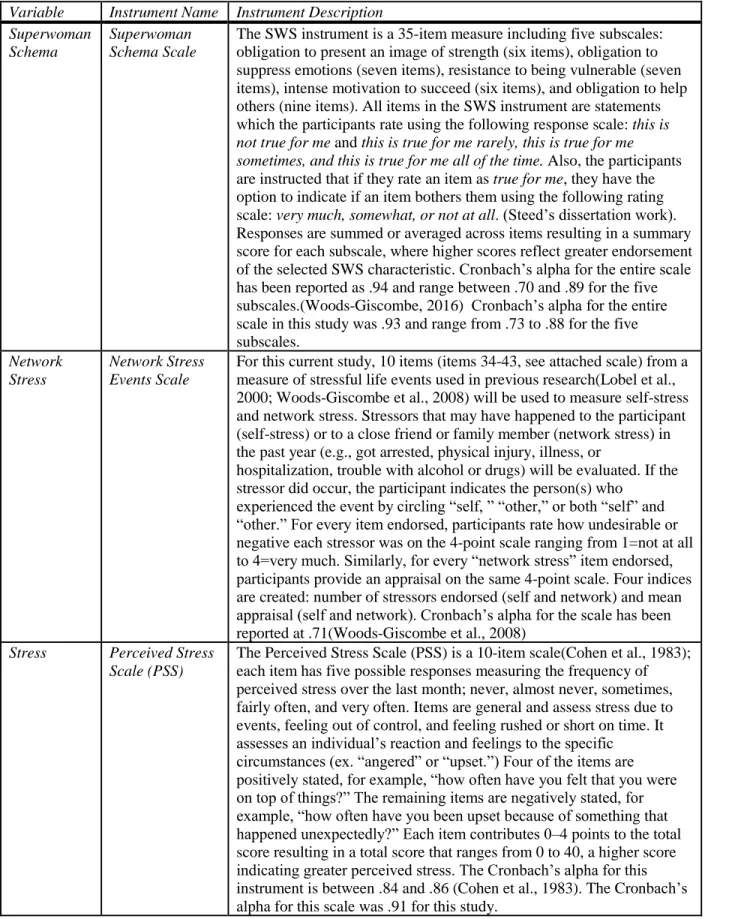
Table 3.1. Variables and Descriptions of Measures ... 54
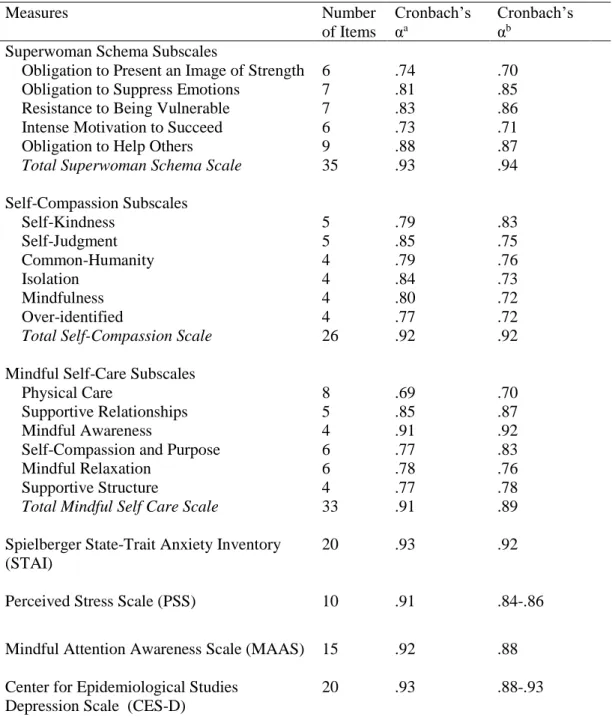
Table 3.2. Reliability Coefficients for Study Variables ... 57
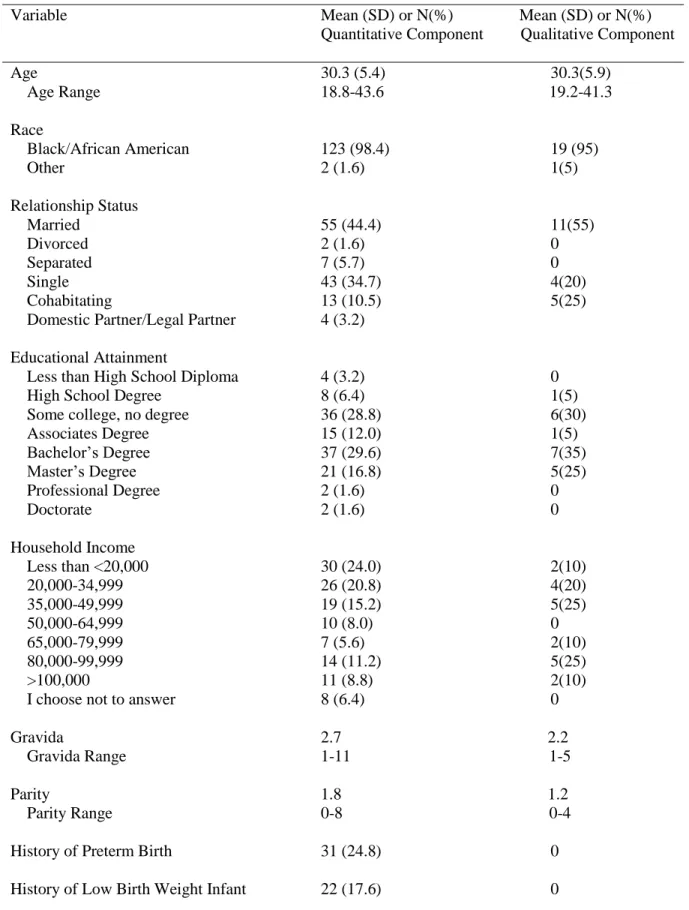
Table 3.3. Demographic Characteristics of Study Participants Quantitative (N=125); Qualitative (N=20) ... 64
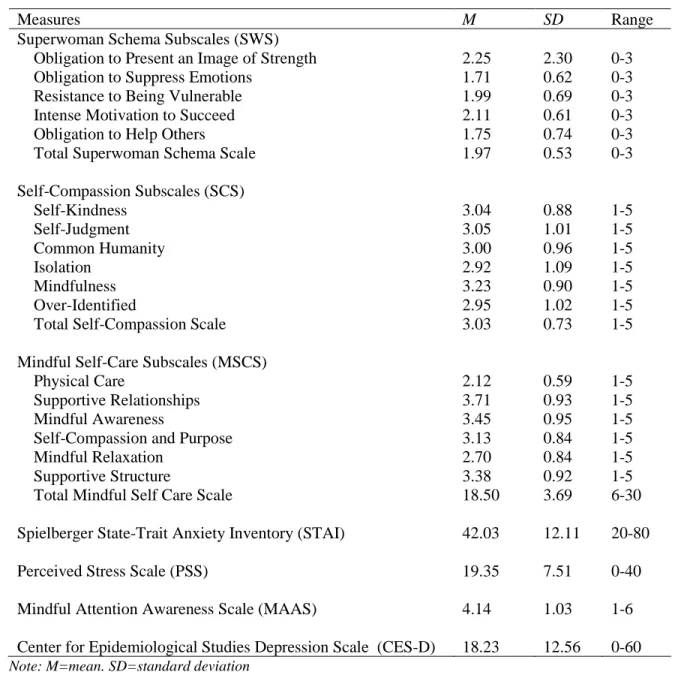
Table 3.4. Descriptive Statistics for Study Variables (N=125) ... 66
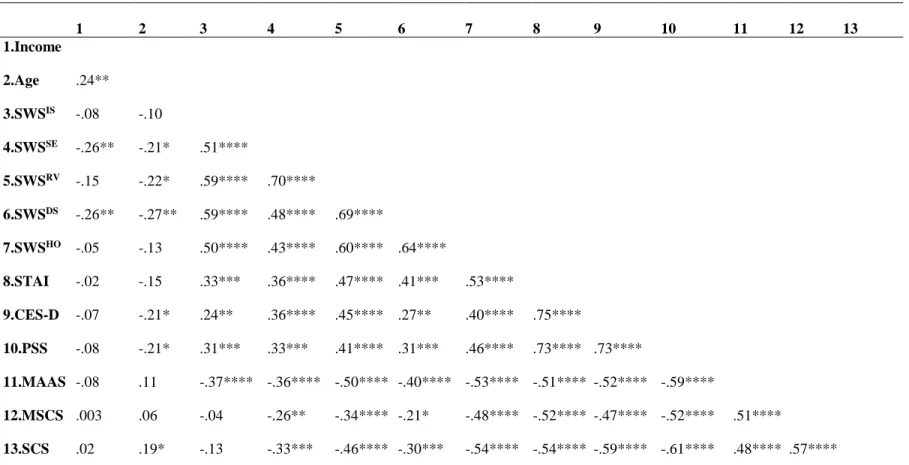
Table 3.5. Pearson’s Correlation Coefficients for Study Variables ... 69
Table 3.6. Multiple Linear Regression Results for Association of Superwoman Scheme Subscales, Mindfulness, Mindful Self-Care and Self-Compassion (Independent Variables) with Depression, Anxiety and Perceived Stress (Dependent Variables) When Adjusting for Age, Socioeconomic Status and Education. ... 72
LIST OF FIGURES
LIST OF ABBREVIATIONS
PTB Preterm Birth
LBW Low Birth Weight
SWS Superwoman Schema
NS Network Stress
CAM Complementary and Alternative Medicine PSS Perceived Stress Scale
STAI State Trait Anxiety Inventory
CESD Center for Epidemiological Studies Depression Scale IMR Infant Mortality Rate
SES Socioeconomic Status
NCCIH National Center for Complementary and Integrative Health MBSR Mindfulness Based Stress Reduction
MSC Mindful Self Compassion
MSCS Mindful Self Care Scale
NCCAM National Center for Complementary and Alternative Medicine MBCT Mindfulness-Based Cognitive Therapy
CHAPTER 1: INTRODUCTION
Background and Significance
Introduction
In the United States, African American women have twice the rate of preterm birth (PTB) and low birth weight (LBW) as compared to European American women. According to the Institute of
Medicine, the cost of preterm birth exceeds $26 billion annually (Behram RE, 2007). This estimation does not include the cost of re-hospitalization and long-term care. The sequelae from PTB and LBW include infant mortality, cognitive, physical, psychological and/or social developmental delays or morbidities, such as high rates of cerebral palsy (CDC, 2016). The infant mortality rate, (IMR), defined as the incidence of death in the first year after birth in relation to every 1000 live births, is 11.1% for African American women, as compared to 5.1% for European American women (Matthews et al., 2015). The disproportionate rate of adverse birth outcomes persists, even when controlling for factors such as
better understand and elucidate the broad factors, beyond the individual, that are contributing to adverse birth outcomes in this group.
Researchers have examined multidimensional stress-related factors that may contribute to health disparities for African American women (Giscombé et al., 2005) however, the examination of the role of stress in African American women and its potential impact on birth outcomes is complex for multiple reasons. One prominent reason is likely due to the multiple and differing definitions of stress, stressors and distress used in the literature. When defining stress, we use Lazarus and Folkman’s (Lazarus, 1986) widely accepted transactional model. They define stress as a stimulus, a response, and as an interaction between stimuli and responses (Goldenberg et al., 1996; Lobel et al., 1990). Stress is a subjectively perceived discrepancy between environmental demands and biological, psychological, or social resources (Lazarus, 1986). An important element of this definition is the perception of environmental demands or threats and perceived ability to meet these demands, labeled stress appraisal (Lazarus, 1986). “Stressors” are environmental demands, events, threats, or stimuli to which an individual is exposed
(Woods-Giscombe et al., 2008). “Distress” can be defined as an aversive physiological state, evidenced by physical or psychological symptoms, such as worry, muscle tension, headaches, weakness, anxiety and depression. Distress is a manifestation of stress, stemming from exposure to stressors in the context of intrapersonal, interpersonal, or tangible resources appraised as inadequate to manage the stressors (Dohrenwend et al., 1974). We define psychological distress as “a state of emotional suffering
characterized by symptoms of depression and anxiety. The stressors to which African American women are exposed and the ways in which they appraise these stressors, reflect this population’s distinctive
history of racism, sociocultural experiences, and minority position in society (Brown et al., 2000; Jackson et al., 2004; Jackson et al., 2001). The experiences of stress in African Americans and European
The experiences of race-related stress, gender-related stress, and generic stress (eg. job related stress, financial stress) have been shown to potentiate African American women’s experiences of distress
(Woods‐Giscombé et al., 2010). Race-related stress is defined as stress that emanates from racism and affects the psychological and physical health of African Americans (Woods-Giscombe et al., 2008). Gender-related stress in African American women is defined by sexism and unique gender-specific experiences (e.g., role expectations, body type expectations, and behavior expectations) and has been correlated with racism and psychological distress in this population (Woods-Giscombe et al., 2008). Generic stress relates to events or conditions that are not directly related to one’s race or gender
(Woods-Giscombe et al., 2008). Furthermore, research suggests that these elements of stress should be considered together, and not isolated from the other, when exploring the impact of stress on psychological or physical outcomes in African American women (Giscombé et al., 2005). African American women are diagnosed with lower rates of mental illness, compared to European American women and only one in three receive mental health treatment (Services, 2010; Woods-Giscombé et al., 2010). According to the CDC (2012), African Americans are 20 percent more likely to report having serious psychological distress than European Americans. Additionally, in comparison to European American women, African American women experience a disproportionately high rate of stress-related health problems such as diabetes and cardiovascular disease (Geronimus et al., 2010). Studies have indicated that when African American women experience anxiety or depression, the impact is more severe as evidenced by greater number of days missing work or school, impact on quality of life and well-being (Williams et al., 2007).
Schetter, 2011; Dunkel Schetter et al., 2012). Additionally, there is substantial evidence that maternal stress, depression and anxiety have been linked to poor fetal growth (Ciesielski et al., 2015) and neurodevelopmental delays (O’donnell et al., 2009). Research linking psychological distress during the perinatal period with adverse birth outcomes (Alder et al., 2007; Dunkel Schetter et al., 2012) indicates this disparity is dramatically more common among women who are African American (Dole et al., 2004; Dominguez, 2011; Giscombé et al., 2005; Glasheen et al., 2015; Jallo et al., 2015; Rosenthal et al., 2011). Researchers have also examined biopsychosocial pathways that link maternal experiences of distress with fetal gestational age, fetal development and neurodevelopmental delays in the child (Ciesielski et al., 2015; Dunkel Schetter, 2011; Dunkel Schetter et al., 2012).
2015, Woods-Giscombé et al. (2015) explored the role of network stress among African American women. They found that African American women were exposed to a greater number of network-stress related events, as compared to self-stress events. They also found that African American women perceived both types of stress events as similarly distressing. The authors state that future studies examining the role of stress, as it related to health outcomes, should consider evaluating participants’
network stress. They suggest that network stress, in particular, should be examined when developing culturally relevant stress management interventions for African American women.
According to the National Center for Complementary and Integrative Health (NCCIH), formerly the National Center for Complementary and Alternative Medicine (NCCAM), mind-body medicine focuses on 1) “the interactions among the brain, the rest of the body, the mind, and behavior”(NIH, 2013,
p. 1) and “the ways in which emotional, mental, social, spiritual, experiential, and behavioral factors can directly affect health”(NIH, 2013, p. 1). Mind-body therapies, such as mindfulness and mindful self-compassion, may be beneficial in the management of perinatal psychological distress, as they are intended to enhance self-care and self- awareness, while providing an opportunity for “increasing resilience, personal growth and self- esteem” (Marc et al., 2011, p. 3).
The use of complementary health approaches during the perinatal period has been shown to be effective in decreasing psychological distress (Goodman et al., 2014; Sheffield et al., 2015; Taylor et al., 2016). Researchers have suggested that complementary health approaches could contribute to an
appropriate intervention geared towards reducing stress-related adverse birth outcomes (Goodman et al., 2014) and reducing stress-related disparities in African American women (Woods-Giscombé et al., 2010; Woods-Giscombe et al., 2014; Zhang et al., 2015). While there are studies that have explored the use of complementary health approaches during the perinatal period (Taylor et al., 2016), and there are studies that have shown complementary approaches can result in decreased distress in African Americans (Woods-Giscombe, 2016), there are very few studies that have examined complementary health
reason, efforts should be undertaken to explore the development of culturally relevant and specific complementary health approaches for this population. There is a compelling need to explore African American women’s perceptions and beliefs regarding complementary health approaches (mindfulness and
mindful self-compassion) in order to ultimately develop a culturally relevant mindfulness-based intervention for this population. Mindfulness based stress reduction (MBSR) and Mindful Self-Compassion (MSC) are two approaches of particular interest.
MBSR, developed over 30 years ago by Jon Kabat-Zinn, Kabat-Zinn (1990) is a type of
mindfulness-based intervention that has been extensively studied in clinical and non-clinical populations. It has been shown to have a positive impact on stress, psychiatric illness and quality of life in a variety of populations (Baer, 2003; Chiesa et al., 2009; Chiesa et al., 2011; Grossman et al., 2004). Mindfulness means “paying attention in a particular way, on purpose, in the present moment and
non-judgmentally”(Kabat-Zinn, 1994, p. 4). MBSR combines mindfulness meditation with yoga in a
comprehensive and holistic 8-week group training. Several pilot studies over the past decade have indicated that mindfulness-based interventions may have a positive impact on perinatal stress, anxiety (Duncan et al., 2010; Goodman et al., 2014; Vieten et al., 2008) and depression (Duncan et al., 2010). Dunn et al. (2012) demonstrated that pregnant women participating in a mindfulness-based group intervention reported clinically reliable declines in depression, stress and anxiety; with these
improvements continuing into the postnatal period. These changes were not observed in the control group. Additionally, increases in mindfulness and self-compassion scores were observed over time (Dunn et al., 2012; Goodman et al., 2014). Notably, self-compassion has been found to be a key mechanism in the effectiveness of mindfulness-based interventions, such as mindfulness-based cognitive therapy and MBSR (Germer et al., 2013).
Broadly speaking, compassion can be defined as a fundamental awareness of the pain and
and 3) mindfulness (M) versus over-identification (OI). All three elements interact with one another to foster a self-compassionate frame of mind (Neff, 2003). Higher self-compassion has been associated with greater psychological well-being and serves as a buffer against acute stressors (Neff et al., 2007). Neff’s definition of self-compassion is grounded in Buddhist psychology, which is focused on understanding the nature of self (Neff, 2003). Germer and Neff developed a Mindful Self-Compassion (MSC) intervention that targets enhancing self-compassion in individuals, both in the general public and clinical populations (Neff et al., 2013). Mindful Self-Compassion (Germer et al., 2013) is a mindfulness-based intervention program that was developed, whereby participants meet once a week for 8 weeks. Germer and Neff found the more a participant practiced self-compassion techniques, the more they learned it (Neff et al., 2013). This implies that self-compassion is teachable and “dose dependent”. Although, there is some evidence of improved emotional well-being and reduced psychological distress with MBCT combined with self-compassion, (Lee et al., 2010) to date there are no randomized controlled trials that evaluate the treatment of perinatal distress in African American women (Goodman et al., 2014). Moreover, a review of the available literature revealed that only one mindfulness-based intervention incorporates self-compassion, aimed at reducing symptoms of perinatal anxiety (Goodman et al., 2014).
Goodman et al. (2014) developed the Coping with Anxiety through Living Mindfully (CALM) pregnancy study. This mindfulness-based intervention includes an adaptation of MBCT, combined with elements of self-compassion, as defined by Germer and Neff (2013), to reduce anxiety in pregnant women (Goodman et al., 2014). The results of this groundbreaking study, indicate that a
self-compassionate mindfulness-based intervention, targeted for women with perinatal distress, is not only feasible and acceptable, but shows promise for effectiveness in decreasing maternal psychopathology.
Innovation
This research is novel because it is the first study to position African American women’s perspectives in the forefront of understanding the problem. It is also unique in that it is the first study to combine and integrate the theoretical concepts of SWS and NS to understanding the potential factors that have previously been overlooked when evaluating stress, stressors and distress in perinatal African American women. Additionally, this study assessed the acceptability of complementary health approaches (mindfulness and mindful self-compassion practices) and women’s perspectives concerning
communication with their healthcare providers about the experiences of and strategies to manage psychological distress. This study contributed to critical knowledge about perceived stressors, which is important because stressors do not have to be directly or personally experienced to elicit a negative health response in an individual. Therefore, this study provided information that had yet to be explored or explained in addressing stress-related health disparities in perinatal African American women (Woods-Giscombé et al., 2010). This research has the potential to impact the way in which researchers and women’s primary care providers understand the perspectives of stress and psychological distress in
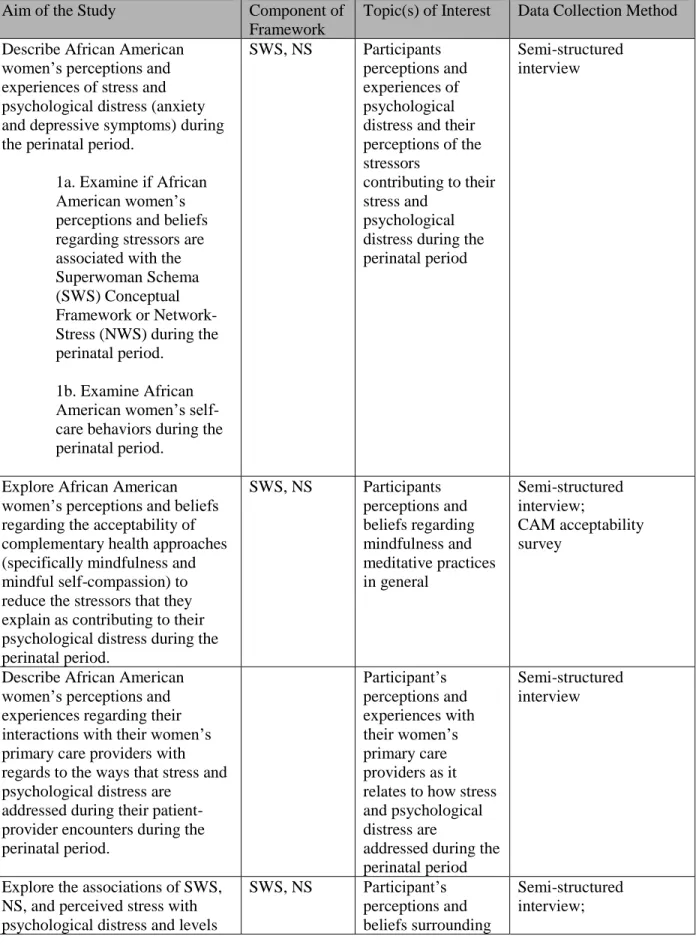
perinatal African American women through the lens of SWS and NS. The specific aims of the study are to:
Aim 1: Describe African American women’s perceptions and experiences of stress and
psychological distress (anxiety and depressive symptoms) during the perinatal period.
1a. Examine if African American women’s perceptions and beliefs regarding stressors are
associated with the Superwoman Schema (SWS) Conceptual Framework or Network-Stress
(NWS) during the perinatal period.
1b. Examine African American women’s self-care behaviors during the perinatal period.
Aim 2: Explore African American women’s perceptions and beliefs regarding the acceptability of
complementary health approaches (specifically mindfulness and mindful self-compassion) to reduce
Aim 3: Describe African American women’s perceptions and experiences regarding their
interactions with their women’s primary care providers with regards to the ways that stress and
psychological distress are addressed during their patient-provider encounters during the perinatal
period.
Aim 4: Explore the associations of SWS, NWS, and perceived stress with psychological distress and
levels of mindfulness, self-compassion and self-care among African American women during the
perinatal period. (Table 1.1)
Approach
An integrated theoretical framework that combined Superwoman Schema and Network Stress guided the proposed mixed-methods study (Woods-Giscombe, 2010; Woods-Giscombé et al., 2015). Each conceptual framework provided a unique perspective and structure for an enhanced understanding of the contextual factors contributing to stress and psychological distress in African American women during the perinatal period. The Superwoman Schema conceptual framework is rooted in Giscombe’s research and synthesis of the literature surrounding stressors, stress (race-related, gender-related and generic) and distress in African American women. It has been used in studies with African American women to examine the distinctive sociohistorical and cultural factors that impact stress experiences in this population (Woods-Giscombé et al., 2010). The Superwoman Schema conceptual framework outlines five characterizations of the superwoman role, namely; 1) perceived obligation to manifest strength, 2) perceived obligation to suppress emotions, 3) perceived resistance to being vulnerable or dependent, 4) determination to succeed despite limited resources and 5) obligation to help others (Woods-Giscombe, 2010). Network stress is defined as “stress related to events that occur to family, friends, or loved ones” (Woods-Giscombé et al., 2015, p. 710). Preliminary studies have found that African American women are exposed to a greater number of network-stress related events as compared to self-stress events.
psychological distress in African American women during the perinatal period. Table 1 outlines how the proposed study aims are linked to SWS and NS.
Prepared Manuscripts
This is a three-manuscript dissertation.
Chapter 1 is an introduction to the role of stress in adverse birth outcomes with particular
attention on the unique health disparity that African American women experience as it pertains to preterm birth and low birth weight when compared to European American women.
Chapter 2 (Manuscript 1): Self-Compassion and Mindfulness Based Interventions: A
review of the literature and considerations for a Complementary Integrative Health approach for
Perinatal Anxiety. This manuscript is a review of the literature focusing on a mindfulness-based
integrative health approach that emphasizes self-compassion and its potential adjunctive use to
conventional treatment for perinatal anxiety. Chapter 3 (Manuscript 2) and Chapter 4 (Manuscript 3) are two data-based manuscripts that comprise the dissertation project.
Chapter 3 (Manuscript 2): African American Women’s Experiences of Stress during the
Perinatal Period and Associations among Psychological Distress and Mindfulness, Self-Compassion
and Self-Care: Informing a Culturally Relevant Mindfulness Based Intervention. This manuscript
presents the results of a mixed-methods study which consisted of two components (quantitative and qualitative). In the quantitative component, participants were asked to complete online questionnaires about superwoman schema, network stress, perceived stress as well as anxiety symptoms, depressive symptoms, mindfulness, self-care and self-compassion. In the qualitative component, descriptive, semi-structured interviews were conducted to elicit more detailed descriptions of African American women’s experiences of stress, stressors, and psychological distress during the perinatal period, their interactions with their women’s primary care providers with regards to the way in which stress and psychological
Chapter 4 (Manuscript 3): Perinatal, African American Women and their Women’s Health
Care Providers: Conversations about Stress. This manuscript presents the qualitative results from the
overall mixed-methods dissertation study and examines the communication between perinatal African American women and their women’s primary care provider during their visits. This manuscript addresses aim 3 of the dissertation study.
Chapter 5 is a discussion of the dissertation study that synthesizes of the results, the implications
Table 1.1. Outline of Study Aims and SWS and NS
Aim of the Study Component of Framework
Topic(s) of Interest Data Collection Method Describe African American
women’s perceptions and experiences of stress and psychological distress (anxiety and depressive symptoms) during the perinatal period.
1a. Examine if African American women’s perceptions and beliefs regarding stressors are associated with the Superwoman Schema (SWS) Conceptual Framework or Network-Stress (NWS) during the perinatal period.
1b. Examine African American women’s self-care behaviors during the perinatal period.
SWS, NS Participants perceptions and experiences of psychological distress and their perceptions of the stressors
contributing to their stress and
psychological distress during the perinatal period
Semi-structured interview
Explore African American women’s perceptions and beliefs regarding the acceptability of complementary health approaches (specifically mindfulness and mindful self-compassion) to reduce the stressors that they explain as contributing to their psychological distress during the perinatal period.
SWS, NS Participants perceptions and beliefs regarding mindfulness and meditative practices in general Semi-structured interview; CAM acceptability survey
Describe African American women’s perceptions and experiences regarding their interactions with their women’s primary care providers with regards to the ways that stress and psychological distress are
addressed during their patient-provider encounters during the perinatal period. Participant’s perceptions and experiences with their women’s primary care providers as it relates to how stress and psychological distress are
addressed during the perinatal period
Semi-structured interview
Explore the associations of SWS, NS, and perceived stress with psychological distress and levels
SWS, NS Participant’s perceptions and beliefs surrounding
Aim of the Study Component of Framework
Topic(s) of Interest Data Collection Method of mindfulness, self-compassion
and self-care among African American women during the perinatal period.
SWS, NS, perceived stress, mindfulness, self-compassion and self-care
REFERENCES
Alder, J., Fink, N., Bitzer, J., Hosli, I., & Holzgreve, W. (2007). Depression and anxiety during pregnancy: a risk factor for obstetric, fetal and neonatal outcome? A critical review of the literature. J Matern Fetal Neonatal Med, 20(3), 189-209. Retrieved from
http://www.tandfonline.com/doi/pdf/10.1080/14767050701209560. doi:10.1080/14767050701209560
Baer, R. A. (2003). Mindfulness training as a clinical intervention: A conceptual and empirical review. Clinical psychology: Science and practice, 10(2), 125-143.
Behram RE, B. A. (2007). Committee Understanding Premature Birth and Assuring Healthy Outcomes. Retrieved from Washington, DC:
Bennett, H. A., Einarson, A., Taddio, A., Koren, G., & Einarson, T. R. (2004). Prevalence of depression during pregnancy: systematic review. Obstet Gynecol, 103(4), 698-709. Retrieved from
http://ovidsp.tx.ovid.com/ovftpdfs/FPDDNCFBJFEANP00/fs046/ovft/live/gv025/00006250/0000 6250-200404000-00016.pdf. doi:10.1097/01.AOG.0000116689.75396.5f
Berg, C. J., Wilcox, L. S., & d'Almada, P. J. (2001). The prevalence of socioeconomic and behavioral characteristics and their impact on very low birth weight in black and white infants in Georgia. Matern Child Health J, 5(2), 75-84.
Brown, K. A. E., Parker-Dominguez, T., & Sorey, M. (2000). Life Stress, Social Support, and Weil-Being Among College-Educated African American Women. Journal of Ethnic and Cultural Diversity in Social Work, 9(1-2), 55-73.
CDC. (2016). Reproductive Health. Preterm Birth. Retrieved April 3, 2017
https://www.cdc.gov/reproductivehealth/maternalinfanthealth/pretermbirth.htm
Chiesa, A., & Serretti, A. (2009). Mindfulness-based stress reduction for stress management in healthy people: a review and meta-analysis. The journal of alternative and complementary medicine, 15(5), 593-600. Retrieved from http://online.liebertpub.com/doi/pdfplus/10.1089/acm.2008.0495. Chiesa, A., & Serretti, A. (2011). Mindfulness based cognitive therapy for psychiatric disorders: a
systematic review and meta-analysis. Psychiatry research, 187(3), 441-453. Retrieved from
http://ac.els-cdn.com/S0165178110005196/1-s2.0-S0165178110005196-
main.pdf?_tid=fed6b730-84ae-11e5-a3f9-00000aab0f6b&acdnat=1446832464_35bce5af8c38714e84a768fc0e6de46c.
Ciesielski, T. H., Marsit, C. J., & Williams, S. M. (2015). Maternal psychiatric disease and epigenetic evidence suggest a common biology for poor fetal growth. BMC Pregnancy Childbirth, 15, 192. Retrieved from
http://www.ncbi.nlm.nih.gov/pmc/articles/PMC4548904/pdf/12884_2015_Article_627.pdf. doi:10.1186/s12884-015-0627-8
Dole, N., Savitz, D. A., Siega-Riz, A. M., Hertz-Picciotto, I., McMahon, M. J., & Buekens, P. (2004). Psychosocial factors and preterm birth among African American and White women in central North Carolina. American journal of public health, 94(8), 1358-1365 1358p. Retrieved from https://auth.lib.unc.edu/ezproxy_auth.php?url=http://search.ebscohost.com/login.aspx?direct=true
&db=rzh&AN=106578160&site=ehost-live&scope=sitehttp://www.ncbi.nlm.nih.gov/pmc/articles/PMC1448456/pdf/0941358.pdf. doi:10.2105/AJPH.94.8.1358
Dominguez, T. P. (2011). Adverse birth outcomes in African American women: the social context of persistent reproductive disadvantage. Soc Work Public Health, 26(1), 3-16. Retrieved from http://www.tandfonline.com/doi/pdf/10.1080/10911350902986880.
doi:10.1080/10911350902986880
Dominguez, T. P., Schetter, C. D., Mancuso, R., Rini, C. M., & Hobel, C. (2005). Stress in African American Pregnancies: Testing the Roles of Various Stress Concepts in Prediction of Birth Outcomes. Annals of Behavioral Medicine, 29(1), 12-21. Retrieved from
https://auth.lib.unc.edu/ezproxy_auth.php?url=http://search.ebscohost.com/login.aspx?direct=true &db=psyh&AN=2005-01378-003&site=ehost-live&scope=site.
doi:10.1207/s15324796abm2901_3
Duncan, L. G., & Bardacke, N. (2010). Mindfulness-Based Childbirth and Parenting Education: Promoting Family Mindfulness During the Perinatal Period. J Child Fam Stud, 19(2), 190-202. Retrieved from
http://www.ncbi.nlm.nih.gov/pmc/articles/PMC2837157/pdf/10826_2009_Article_9313.pdf. doi:10.1007/s10826-009-9313-7
Dunkel Schetter, C. (2011). Psychological science on pregnancy: stress processes, biopsychosocial models, and emerging research issues. Annu Rev Psychol, 62, 531-558. Retrieved from http://www.annualreviews.org/doi/pdf/10.1146/annurev.psych.031809.130727.
doi:10.1146/annurev.psych.031809.130727
Dunkel Schetter, C., & Tanner, L. (2012). Anxiety, depression and stress in pregnancy: implications for mothers, children, research, and practice. Current Opinion in Psychiatry, 25(2), 141-148. Retrieved from
https://auth.lib.unc.edu/ezproxy_auth.php?url=http://search.ebscohost.com/login.aspx?direct=true
&db=c8h&AN=2011449389&site=ehost-live&scope=sitehttp://graphics.tx.ovid.com/ovftpdfs/FPDDNCDCLHEGNK00/fs046/ovft/live/gv 023/00001504/00001504-201203000-00013.pdf.
Dunn, C., Hanieh, E., Roberts, R., & Powrie, R. (2012). Mindful pregnancy and childbirth: effects of a mindfulness-based intervention on women's psychological distress and well-being in the perinatal period. Arch Womens Ment Health, 15(2), 139-143. doi:10.1007/s00737-012-0264-4
Gavin, N. I., Gaynes, B. N., Lohr, K. N., Meltzer-Brody, S., Gartlehner, G., & Swinson, T. (2005). Perinatal depression: a systematic review of prevalence and incidence. Obstet Gynecol, 106(5 Pt 1), 1071-1083. Retrieved from
Germer, & Neff. (2013). Self-compassion in clinical practice. J Clin Psychol, 69(8), 856-867. Retrieved from
http://onlinelibrary.wiley.com/store/10.1002/jclp.22021/asset/jclp22021.pdf?v=1&t=i7daj1fb&s= 5a698d90d1870d1cb459f2437b6aa85f5639f970. doi:10.1002/jclp.22021
Germer, C. K., & Neff, K. D. (2013). Self‐compassion in clinical practice. Journal of Clinical Psychology, 69(8), 856-867. Retrieved from
https://auth.lib.unc.edu/ezproxy_auth.php?url=http://search.ebscohost.com/login.aspx?direct=true &db=psyh&AN=2013-24939-007&site=ehost-live&scope=site [email protected]
http://onlinelibrary.wiley.com/store/10.1002/jclp.22021/asset/jclp22021.pdf?v=1&t=i1niyfuc&s= dd616ddb36682b861a6992321484949af3a568f6.
Geronimus, A. T., Hicken, M. T., Pearson, J. A., Seashols, S. J., Brown, K. L., & Cruz, T. D. (2010). Do US black women experience stress-related accelerated biological aging? Human Nature, 21(1), 19-38. Retrieved from
http://download.springer.com/static/pdf/120/art%253A10.1007%252Fs12110-010-9078- 0.pdf?originUrl=http%3A%2F%2Flink.springer.com%2Farticle%2F10.1007%2Fs12110-010- 9078-0&token2=exp=1492706471~acl=%2Fstatic%2Fpdf%2F120%2Fart%25253A10.1007%25252Fs 12110-010-9078-0.pdf%3ForiginUrl%3Dhttp%253A%252F%252Flink.springer.com%252Farticle%252F10.1007 %252Fs12110-010-9078-0*~hmac=2d8b58479f26d4b23099acdc3e8ba77ee90f1ffb6d7ceb254ca1f63ab4b9865e.
Giscombé, C., & Lobel, M. (2005). Explaining Disproportionately High Rates of Adverse Birth Outcomes Among African Americans: The Impact of Stress, Racism, and Related Factors in Pregnancy. Psychol Bull, 131(5), 662-683. Retrieved from
https://auth.lib.unc.edu/ezproxy_auth.php?url=http://search.ebscohost.com/login.aspx?direct=true &db=psyh&AN=2005-11504-005&site=ehost-live&scope=site,
http://psycnet.apa.org/journals/bul/131/5/662/. doi:10.1037/0033-2909.131.5.662
Glasheen, C., Colpe, L., Hoffman, V., & Warren, L. K. (2015). Prevalence of serious psychological distress and mental health treatment in a national sample of pregnant and postpartum women. Matern Child Health J, 19(1), 204-216. Retrieved from
Goldenberg, R. L., Cliver, S. P., Mulvihill, F. X., Hickey, C. A., Hoffman, H. J., Klerman, L. V., & Johnson, M. J. (1996). Medical, psychosocial, and behavioral risk factors do not explain the increased risk for low birth weight among black women. Am J Obstet Gynecol, 175(5), 1317-1324. Retrieved from http://ac.els-cdn.com/S0002937896700480/1-s2.0-S0002937896700480-
main.pdf?_tid=44a15be2-1d0e-11e6-b55f-00000aab0f01&acdnat=1463585960_89183a952f08b4eeecb78b1fbbd635e7.
Goodman, J., Guarino, A., Chenausky, K., Klein, L., Prager, J., Petersen, R., . . . Freeman, M. (2014). CALM Pregnancy: results of a pilot study of mindfulness-based cognitive therapy for perinatal anxiety. Arch Womens Ment Health, 17(5), 373-387. Retrieved from
https://auth.lib.unc.edu/ezproxy_auth.php?url=http://search.ebscohost.com/login.aspx?direct=true
&db=rzh&AN=103891454&site=ehost-live&scope=sitehttps://link.springer.com/content/pdf/10.1007%2Fs00737-013-0402-7.pdf. doi:10.1007/s00737-013-0402-7
Goodman, J. H., Chenausky, K. L., & Freeman, M. P. (2014). Anxiety disorders during pregnancy: a systematic review. J Clin Psychiatry, 75(10), e1153-1184. doi:10.4088/JCP.14r09035
Goodman, J. H., & Tyer-Viola, L. (2010). Detection, treatment, and referral of perinatal depression and anxiety by obstetrical providers. J Womens Health (Larchmt), 19(3), 477-490. Retrieved from http://online.liebertpub.com/doi/pdfplus/10.1089/jwh.2008.1352. doi:10.1089/jwh.2008.1352
Grossman, P., Niemann, L., Schmidt, S., & Walach, H. (2004). Mindfulness-based stress reduction and health benefits: A meta-analysis. J Psychosom Res, 57(1), 35-43. Retrieved from http://ac.els- cdn.com/S0022399903005737/1-s2.0-S0022399903005737-main.pdf?_tid=308b9368-84af-11e5-888c-00000aab0f6c&acdnat=1446832547_eb1121110a485fd5fdf1045fdfdb460e.
Heron, J., O'Connor, T. G., Evans, J., Golding, J., & Glover, V. (2004). The course of anxiety and
depression through pregnancy and the postpartum in a community sample. J Affect Disord, 80(1), 65-73. Retrieved from
http://www.jad-journal.com/article/S0165-0327(03)00206- 4/abstracthttp://ac.els-cdn.com/S0165032703002064/1-s2.0-S0165032703002064-
main.pdf?_tid=a1342620-f06a-11e6-870f-00000aab0f6c&acdnat=1486825324_670e112d36156800b83c9a405145a90b. doi:10.1016/j.jad.2003.08.004
Hogan, V. K., Rowley, D., Bennett, T., & Taylor, K. D. (2012). Life course, social determinants, and health inequities: toward a national plan for achieving health equity for African American infants--a concept paper. Matern Child Health J, 16(6), 1143-1150. Retrieved from
http://download.springer.com/static/pdf/676/art%253A10.1007%252Fs10995-011-0847- 0.pdf?originUrl=http%3A%2F%2Flink.springer.com%2Farticle%2F10.1007%2Fs10995-011- 0847-0&token2=exp=1462374993~acl=%2Fstatic%2Fpdf%2F676%2Fart%25253A10.1007%25252Fs 10995-011-0847-0.pdf%3ForiginUrl%3Dhttp%253A%252F%252Flink.springer.com%252Farticle%252F10.1007 %252Fs10995-011-0847-0*~hmac=6a1070ba7521ab461833292282f74a2dd9ec62ae4f7227e550653370b3953b6c. doi:10.1007/s10995-011-0847-0
Jackson, F. M. (2002). Considerations for community-based research with African American women. American journal of public health, 92(4), 561-564. Retrieved from
Jackson, F. M., Hogue, C. R., & Phillips, M. T. (2004). The development of a race and gender-specific stress measure for African-American women: Jackson, Hogue, Phillips contextualized stress measure. Ethn Dis, 15(4), 594-600.
Jackson, F. M., Phillips, M. T., Hogue, C. J. R., & Curry-Owens, T. Y. (2001). Examining the burdens of gendered racism: Implications for pregnancy outcomes among college-educated African
American women. Matern Child Health J, 5(2), 95-107.
Jallo, N., Elswick, R. K., Kinser, P., Masho, S., Price, S. K., & Svikis, D. S. (2015). Prevalence and Predictors of Depressive Symptoms in Pregnant African American Women. Issues in mental health nursing, 36(11), 860-869 810p. Retrieved from
https://auth.lib.unc.edu/ezproxy_auth.php?url=http://search.ebscohost.com/login.aspx?direct=true
&db=rzh&AN=111903594&site=ehost-live&scope=sitehttp://www.tandfonline.com/doi/pdf/10.3109/01612840.2015.1048014. doi:10.3109/01612840.2015.1048014
Kabat-Zinn, J. (1990). Full Catastrophe Living: Using the Wisdom of Your Body and Mind to Face Stress, Pain and Illness. . Delta Trade, New York.
Kabat-Zinn, J. (1994). Wherever you go, there you are: Mindfulness meditation in everyday life. New York, NY: Hyperion.
Lazarus, R. S. (1986). Folkman. S.(1984) Stress, Appraisal, and Coping. New York, 1.
Lee, W. K., & Bang, H. J. (2010). The effects of mindfulness-based group intervention on the mental health of middle-aged Korean women in community. Stress & Health: Journal of the
International Society for the Investigation of Stress, 26(4), 341-348. Retrieved from
https://auth.lib.unc.edu/ezproxy_auth.php?url=http://search.ebscohost.com/login.aspx?direct=true &db=rzh&AN=2010800046&site=ehost-live&scope=site
http://onlinelibrary.wiley.com/store/10.1002/smi.1303/asset/1303_ftp.pdf?v=1&t=ic3op8o7&s=0 3ab8bd8b2d95b149e9e7de0ecbebc08cccd4cfc. doi:10.1002/smi.1303
Leight, K. L., Fitelson, E. M., Weston, C. A., & Wisner, K. L. (2010). Childbirth and mental disorders. Int Rev Psychiatry, 22(5), 453-471. Retrieved from
http://www.tandfonline.com/doi/pdf/10.3109/09540261.2010.514600. doi:10.3109/09540261.2010.514600
Lobel, M., & Dunkel-Schetter, C. (1990). Conceptualizing stress to study effects on health: Environmental, perceptual, and emotional components. Anxiety Research, 3(3), 213-230. Lobel, M., Dunkel-Schetter, C., & Scrimshaw, S. C. (1992). Prenatal maternal stress and prematurity: a
prospective study of socioeconomically disadvantaged women. Health Psychol, 11(1), 32-40. Marc, I., Toureche, N., Ernst, E., Hodnett Ellen, D., Blanchet, C., Dodin, S., & Njoya Merlin, M. (2011).
Mind-body interventions during pregnancy for preventing or treating women's anxiety. Cochrane Database of Systematic Reviews, (7), 12. Retrieved from
http://onlinelibrary.wiley.com/doi/10.1002/14651858.CD007559.pub2/abstract,
http://onlinelibrary.wiley.com/store/10.1002/14651858.CD007559.pub2/asset/CD007559.pdf?v= 1&t=ibdqgvr8&s=12af116091e28dd9319dff8249cd308554f50faa
Matthews, T. J., MacDorman, M. F., & Thoma, M. E. (2015). Infant Mortality Statistics From the 2013 Period Linked Birth/Infant Death Data Set. Natl Vital Stat Rep, 64(9), 1-30.
Neff. (2003). The development and validation of a scale to measure self-compassion. Self and Identity, 2(3), 223-250. Retrieved from
https://auth.lib.unc.edu/ezproxy_auth.php?url=http://search.ebscohost.com/login.aspx?direct=true &db=psyh&AN=2003-05728-004&site=ehost-live&scope=site
Neff, & Germer. (2013). A pilot study and randomized controlled trial of the mindful self-compassion program. J Clin Psychol, 69(1), 28-44. Retrieved from
http://onlinelibrary.wiley.com/store/10.1002/jclp.21923/asset/jclp21923.pdf?v=1&t=i7dak1t1&s= daf9d40d24b7676c4c4d09e3a29e749cd7c1629d. doi:10.1002/jclp.21923
Neff, K. D. (2003). Self-Compassion: An Alternative Conceptualization of a Healthy Attitude Toward Oneself. Self and Identity, 2(2), 85-101. Retrieved from
https://auth.lib.unc.edu/ezproxy_auth.php?url=http://search.ebscohost.com/login.aspx?direct=true &db=psyh&AN=2003-03727-001&site=ehost-live&scope=site
Neff, K. D., & Germer, C. K. (2013). A Pilot Study and Randomized Controlled Trial of the Mindful Self-Compassion Program. Journal of Clinical Psychology, 69(1), 28-44. Retrieved from http://dx.doi.org/10.1002/jclp.21923.
Neff, K. D., Rude, S. S., & Kirkpatrick, K. L. (2007). An examination of self-compassion in relation to positive psychological functioning and personality traits. Journal of Research in Personality, 41(4), 908-916. Retrieved from
https://auth.lib.unc.edu/ezproxy_auth.php?url=http://search.ebscohost.com/login.aspx?direct=true &db=psyh&AN=2007-07719-013&site=ehost-live&scope=sitehttp://www.sciencedirect.com/science/article/pii/S009265660600095X http://ac.els-cdn.com/S009265660600095X/1-s2.0-S009265660600095X- main.pdf?_tid=4092c9d0-cca3-11e4-a333-00000aab0f26&acdnat=1426596406_b39128553874b793eb36e7764c5a7f99.
NIH. (2013, March 29, 2013). Mind-Body Medicine Practices in Complementary and Alternative Medicine. Retrieved from http://report.nih.gov/nihfactsheets/ViewFactSheet.aspx?csid=102 O’donnell, K., O’connor, T., & Glover, V. (2009). Prenatal stress and neurodevelopment of the child:
focus on the HPA axis and role of the placenta. Dev Neurosci, 31(4), 285-292.
Rosenthal, L., & Lobel, M. (2011). Explaining racial disparities in adverse birth outcomes: unique sources of stress for Black American women. Soc Sci Med, 72(6), 977-983. Retrieved from
http://ac.els-cdn.com/S0277953611000566/1-s2.0-S0277953611000566-
main.pdf?_tid=c54ddbca-84ad-11e5-8a7f-00000aab0f26&acdnat=1446831938_e2572231b0c248fb9303fb40285324ac. doi:10.1016/j.socscimed.2011.01.013
Sandman, C. A., Wadhwa, P. D., Chicz-DeMet, A., Dunkel-Schetter, C., & Porto, M. (1997). Maternal stress, HPA activity, and fetal/infant outcome. Ann N Y Acad Sci, 814, 266-275. Retrieved from
Schoendorf, K. C., Hogue, C. J., Kleinman, J. C., & Rowley, D. (1992). Mortality among infants of black as compared with white college-educated parents. N Engl J Med, 326(23), 1522-1526. Retrieved from http://www.nejm.org/doi/pdf/10.1056/NEJM199206043262303.
doi:10.1056/nejm199206043262303
Services, O. o. W. s. H. D. o. H. a. H. (2010, May 18, 2010). Mental Health Problems and Suicide. Retrieved from https://www.womenshealth.gov/minority-health/african-americans/mental-health.html
Sheffield, K. M., & Woods-Giscombé, C. L. (2015). Efficacy, Feasibility, and Acceptability of Perinatal Yoga on Women’s Mental Health and Well-Being A Systematic Literature Review. Journal of Holistic Nursing, 0898010115577976.
Taylor, B. L., Cavanagh, K., & Strauss, C. (2016). The effectiveness of mindfulness-based interventions in the perinatal period: a systematic review and meta-analysis. PLoS One, 11(5), e0155720. Vieten, C., & Astin, J. (2008). Effects of a mindfulness-based intervention during pregnancy on prenatal
stress and mood: results of a pilot study. Arch Womens Ment Health, 11(1), 67-74. Retrieved from http://download.springer.com/static/pdf/804/art%253A10.1007%252Fs00737-008-0214- 3.pdf?originUrl=http%3A%2F%2Flink.springer.com%2Farticle%2F10.1007%2Fs00737-008- 0214-3&token2=exp=1438789249~acl=%2Fstatic%2Fpdf%2F804%2Fart%25253A10.1007%25252Fs 00737-008-0214-3.pdf%3ForiginUrl%3Dhttp%253A%252F%252Flink.springer.com%252Farticle%252F10.1007 %252Fs00737-008-0214-3*~hmac=04a20f9240588f0a7242c31084556c32a6406651ccf8d291bbaf96712e874f14. doi:10.1007/s00737-008-0214-3
Wadhwa, P. D., Entringer, S., Buss, C., & Lu, M. C. (2011). The contribution of maternal stress to preterm birth: issues and considerations. Clin Perinatol, 38(3), 351-384. Retrieved from http://www.ncbi.nlm.nih.gov/pmc/articles/PMC3179976/pdf/nihms318210.pdf.
doi:10.1016/j.clp.2011.06.007
Wenzel, A., Haugen, E. N., Jackson, L. C., & Brendle, J. R. (2005). Anxiety symptoms and disorders at eight weeks postpartum. J Anxiety Disord, 19(3), 295-311. Retrieved from
http://ac.els- cdn.com/S0887618504000350/1-s2.0-S0887618504000350-main.pdf?_tid=c00cf5d6-f06a-11e6-85c1-00000aab0f01&acdnat=1486825376_8aeeb77fe46632ae8b286c09cb1a04d6.
doi:10.1016/j.janxdis.2004.04.001
Williams, D. R., Gonzalez, H. M., Neighbors, H., Nesse, R., Abelson, J. M., Sweetman, J., & Jackson, J. S. (2007). Prevalence and distribution of major depressive disorder in African Americans, Caribbean blacks, and non-Hispanic whites: results from the National Survey of American Life. Arch Gen Psychiatry, 64(3), 305-315. Retrieved from
http://archpsyc.jamanetwork.com/pdfaccess.ashx?url=/data/journals/psych/11839/yoa60066_305 _315.pdf.
Woods-Giscombe, C. (2010). Superwoman schema: African American women's views on stress, strength, and health. Qual Health Res, 20(5), 668-683. Retrieved from
Woods-Giscombé, C., & Black, A. R. (2010). Mind-body interventions to reduce risk for health disparities related to stress and strength among African American women: The potential of mindfulness-based stress reduction, loving-kindness, and the NTU therapeutic framework. Complementary Health Practice Review, 15(3), 115-131. Retrieved from
https://auth.lib.unc.edu/ezproxy_auth.php?url=http://search.ebscohost.com/login.aspx?direct=true
&db=psyh&AN=2010-25846-001&site=ehost-live&scope=sitehttp://www.ncbi.nlm.nih.gov/pmc/articles/PMC3071547/pdf/nihms-279506.pdf. doi:10.1177/1533210110386776
Woods-Giscombe, C., & Gaylord, S. (2014). The Cultural Relevance of Mindfulness Meditation as a Health Intervention for African Americans: Implications for Reducing Stress-Related Health Disparities. J Holist Nurs, 32(3), 147-160. Retrieved from
http://jhn.sagepub.com/content/32/3/147.long
http://jhn.sagepub.com/content/32/3/147.full.pdf. doi:10.1177/0898010113519010
Woods-Giscombe, C., Gaylord, S. A., Li, Y., Bangdiwala, S. I., Buse, J., Mann, F. D., Lynch, C., Phillips, P. E., Smith, S., Leniek, K., Young, L., A., Al-Barwani, S., Yoo, J., & Faurot, K. (2016).
Mindfulness-based diabetes risk reduction for African Americans with pre-diabetes: A pilot, sequential mixed-methods RCT. Annals of Behavioral Medicine, 50(S240).
Woods-Giscombe, C., & Lobel, M. (2008). Race and gender matter: a multidimensional approach to conceptualizing and measuring stress in African American women. Cultur Divers Ethnic Minor Psychol, 14(3), 173-182. Retrieved from
http://www.ncbi.nlm.nih.gov/pmc/articles/PMC2553624/pdf/nihms66452.pdf. doi:10.1037/1099-9809.14.3.173
Woods-Giscombé, C., Lobel, M., Zimmer, C., Wiley Cené, C., & Corbie-Smith, G. (2015). Whose Stress is Making Me Sick? Network-stress and Emotional Distress in African-American Women. Issues in mental health nursing, 36(9), 710-717. Retrieved from
http://www.tandfonline.com/doi/pdf/10.3109/01612840.2015.1011759.
Woods-Giscombé, C. L., & Black, A. R. (2010). Mind-body interventions to reduce risk for health disparities related to stress and strength among African American women: The potential of mindfulness-based stress reduction, loving-kindness, and the NTU therapeutic framework. Complementary Health Practice Review, 15(3), 115-131. Retrieved from
https://www.ncbi.nlm.nih.gov/pmc/articles/PMC3071547/pdf/nihms-279506.pdf.
Zhang, H., & Emory, E. K. (2015). A mindfulness-based intervention for pregnant African-American women. Mindfulness, 6(3), 663-674. Retrieved from
https://auth.lib.unc.edu/ezproxy_auth.php?url=http://search.ebscohost.com/login.aspx?direct=true
&db=psyh&AN=2014-21112-001&site=ehost- live&scope=sitehttp://download.springer.com/static/pdf/30/art%253A10.1007%252Fs12671-014- 0304-4.pdf?originUrl=http%3A%2F%2Flink.springer.com%2Farticle%2F10.1007%2Fs12671-
014-0304-4&token2=exp=1462375337~acl=%2Fstatic%2Fpdf%2F30%2Fart%25253A10.1007%25252Fs1
2671-014-0304-4.pdf%3ForiginUrl%3Dhttp%253A%252F%252Flink.springer.com%252Farticle%252F10.1007
CHAPTER 2: SELF-COMPASSION AND MINDFULNESS BASED INTERVENTIONS: A REVIEW OF THE LITERATURE AND CONSIDERATONS FOR A COMPLEMENTARY
INTEGRATIVE HEALTH APPROACH FOR PERINATAL ANXIETY
Introduction
Anxiety disorders are among the most prevalent categories of psychiatric mental illness affecting Americans today (Kessler et al., 2005), with women more than twice as likely to be affected as men (Kessler et al., 2005; Somers et al., 2006). Approximately, one third of women will experience an anxiety disorder during their lifetime (Kessler et al., 1994). These disorders typically occur during the
childbearing years, with peak age of onset in the mid- to late 20’s, coinciding with the most common age range for pregnancy and the postpartum period (Heron et al., 2004; Pigott, 2003; Ross et al., 2006). Compared to depressive disorders, anxiety disorders during the perinatal period (which includes pregnancy and up to one year postpartum (Ross et al., 2006; Somerville et al., 2015)), also known as perinatal depression and anxiety, are strikingly understudied (Heron et al., 2004; Lee et al., 2007). Published research reviews examining perinatal anxiety disorders (Goodman et al., 2014; Leach et al., 2017; Ross et al., 2006; Williams et al., 2018) indicate that there is a clear gap in the literature pertaining to perinatal anxiety compared to perinatal depression.
which if left untreated, can lead to maternal suicide, the number one cause of maternal mortality in the world (Appleby et al., 1998; Chesney et al., 2014). Additionally, research suggests there is a potential association among perinatal anxiety and maternal, obstetric, and fetal outcomes (Goodman et al., 2014; Previti et al., 2014). The ways in which perinatal women cope with and manage their anxiety during pregnancy is of particular interest.
Some women need psychotropic medications to manage the symptoms of their disorder. Selective serotonin reuptake inhibitors (SSRI) are the first line medication treatment for anxiety disorders (Byatt et al., 2013; Williams et al., 2018). In general, it is believed that for most pregnant women who need medication to manage their mental illness, the benefits of the medication should outweigh the risks of untreated illness, but this must be determined on an individualized risk/risk basis (Bourke et al., 2014; Byatt et al., 2013; Stewart, 2011). Many women face the difficult decision of whether to start, continue or stop their medication. In many cases (> 50%), women who stop their medication risk relapse or
worsening of their psychiatric condition (Cohen et al., 2006). While many women manage their perinatal mental health with pharmacological options, non- pharmacological approaches are important to explore given the concern many pregnant women have regarding the safety of medication during pregnancy (Bonari et al., 2005; Einarson et al., 2001; Goodman, 2009; Osborne et al., 2015; Petersen et al., 2011).
Conflicting data regarding the safety of psychotropic medications in pregnancy as well as, women’s reluctance to take medication, during the perinatal period, justify a closer examination of
According to the National Center for Complementary and Integrative Health (NCCIH), formerly the National Center for Complementary and Alternative Medicine (NCCAM), mind-body medicine focuses on 1) “the interactions among the brain, the rest of the body, the mind, and behavior”(NIH, 2013, p. 1) and “ the ways in which emotional, mental, social, spiritual, experiential, and behavioral factors can directly affect health”(NIH, 2013, p. 1) . Mind-body therapies (such as mindful self-compassion and
mindfulness based stress reduction) may be beneficial in the management of perinatal anxiety as they are intended to enhance self-care and self- awareness, while providing an opportunity for “increasing resilience, personal growth and self-esteem”(Marc et al., 2011, p. 3). More specifically, mindfulness-based interventions (MBIs) are an area of research that show promise in addressing the mind-body-spirit connection that has not been sufficiently elucidated in the perinatal psychiatric population.
There are numerous mindfulness-based interventions that have been shown to be effective in decreasing anxiety (Vollestad et al., 2012) and depression as well as increasing mindfulness and self-compassion in women (Galhardo et al., 2013; Lee et al., 2010; Smeets et al., 2014; Smith, 2010). Although mindfulness-based interventions targeted to perinatal anxiety are sparse. A recent Cochrane review (Marc et al., 2011) performed by Marc et al. specifically examined the literature regarding mind-body interventions for anxiety during the perinatal period (Marc et al., 2011). Reviewed interventions included autogenic training, biofeedback, hypnotherapy, imagery, mediation, auto-suggestion, tai chi and yoga. They concluded that based on a limited number of randomized control trials (with small sample sizes), mind-body interventions may be useful for managing anxiety during the perinatal period (Marc et al., 2011), however, further high quality research utilizing rigorous methods must be performed to determine if mind-body therapies are effective and which are more effective in managing perinatal anxiety (Marc et al., 2011).
Broadly speaking, compassion can be defined as a fundamental awareness of the pain and
(I) and 3) mindfulness (M) versus over-identification (OI). All three elements interact with one another to foster a self-compassionate frame of mind (Neff, 2003). Higher self-compassion has been associated with greater psychological well-being and serves as a buffer against acute stressors (Neff et al., 2007).
Neff’s definition of self-compassion is grounded in Buddhist psychology, which is focused on
understanding the nature of self (Neff, 2003). Self-compassion is integral when evaluating failures, inadequacies, and mistakes when considering the painful events that occur in life (Germer et al., 2013). Self-kindness includes being understanding and gentle with oneself when experiencing suffering, failure
or feelings of inadequacy rather than being self-critical or self-judging. The concept of common
humanity involves the recognition that individuals are all part of a greater humanity or human experience
and that there are commonalities among human beings that connect them. Common humanity recognizes that the human condition is not perfect (Neff, 2003) and that individuals are not alone or isolated in their experiences of pain and/or suffering. Mindfulness, as defined by Neff, “involves turning towards our
painful thoughts and emotions and seeing them as they are-without suppression or avoidance”(Neff, 2003, p. 857).The distinction between mindfulness and over-identification in Neff’s construct is a subtle one that warrants clarification. Mindfulness means “paying attention in a particular way, on purpose, in the
present moment and non-judgmentally”(Kabat-Zinn, 1994, p. 4). Over-identification occurs when being mindful of our current circumstance transforms into a fixation on the negative aspects of our present suffering.
Germer and Neff developed a Mindful Self-Compassion (MSC) intervention that targets
are taught to help participants develop the habit of self-compassion. Participants are asked to practice these techniques for a total of 40 minutes per day, either in formal sitting meditation or informally throughout the day. They are also asked to subjectively estimate how many days per week they engage in formal meditation practice on average over the course of the MSC program. The particular type of meditation is not assessed just how many days per week they practice it. Additionally, they are also asked to subjectively estimate how many times per day they used informal compassion practices (e.g. self-compassionate language, hand on heart in times of distress) (Neff et al., 2013). In Neff and Germer’s (2013) RCT waitlist control study with 52 participants, they found that the more the MSC participants practiced formal meditation the more their self-compassion scores increased. Likewise, the more they practiced informal self-compassion techniques in daily life, the greater the gains in self-compassion scores. Hence, the more a participant practiced self-compassion techniques, the more they learned it (Neff et al., 2013). This implies that self-compassion is teachable and “dose dependent”. However, it can also be argued that traits that aid in self-compassion make it easier to do more meditation.
Methods
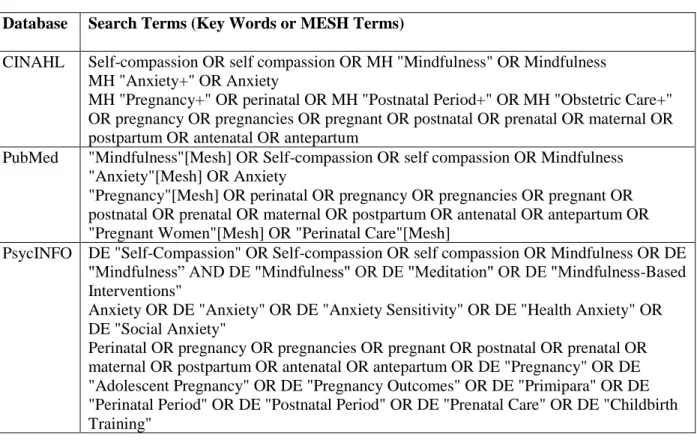
Table 2.1. Search Terms Used For Each Database
Database Search Terms (Key Words or MESH Terms)
CINAHL Self-compassion OR self compassion OR MH "Mindfulness" OR Mindfulness MH "Anxiety+" OR Anxiety
MH "Pregnancy+" OR perinatal OR MH "Postnatal Period+" OR MH "Obstetric Care+" OR pregnancy OR pregnancies OR pregnant OR postnatal OR prenatal OR maternal OR postpartum OR antenatal OR antepartum
PubMed "Mindfulness"[Mesh] OR Self-compassion OR self compassion OR Mindfulness "Anxiety"[Mesh] OR Anxiety
"Pregnancy"[Mesh] OR perinatal OR pregnancy OR pregnancies OR pregnant OR postnatal OR prenatal OR maternal OR postpartum OR antenatal OR antepartum OR "Pregnant Women"[Mesh] OR "Perinatal Care"[Mesh]
PsycINFO DE "Self-Compassion" OR Self-compassion OR self compassion OR Mindfulness OR DE "Mindfulness” AND DE "Mindfulness" OR DE "Meditation" OR DE "Mindfulness-Based Interventions"
Anxiety OR DE "Anxiety" OR DE "Anxiety Sensitivity" OR DE "Health Anxiety" OR DE "Social Anxiety"
Perinatal OR pregnancy OR pregnancies OR pregnant OR postnatal OR prenatal OR maternal OR postpartum OR antenatal OR antepartum OR DE "Pregnancy" OR DE "Adolescent Pregnancy" OR DE "Pregnancy Outcomes" OR DE "Primipara" OR DE "Perinatal Period" OR DE "Postnatal Period" OR DE "Prenatal Care" OR DE "Childbirth Training"
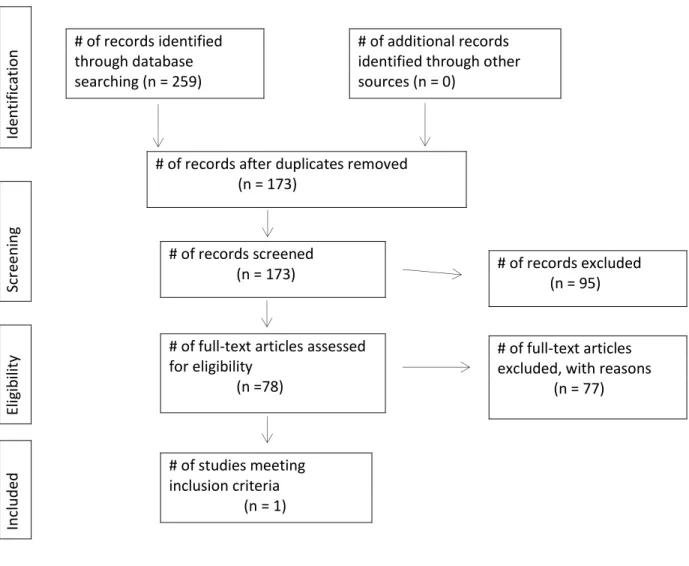
Figure 2.1. PRISMA Diagram
Results
Four pilot studies over the past decade have indicated that mindfulness-based interventions may have a positive impact on perinatal stress, anxiety (Duncan et al., 2010; Goodman et al., 2014; Vieten et al., 2008) and depression (Duncan et al., 2010). Dunn et al (2012) demonstrated that pregnant women participating in a mindfulness-based group intervention reported clinically reliable declines in depression, stress and anxiety; with these improvements continuing into the postnatal period. These changes were not observed in the control group. Additionally, increases in mindfulness and self-compassion scores were observed over time (Dunn et al., 2012; Goodman et al., 2014). Notably, self-compassion has been found
# of records identified through database searching (n = 259)
# of additional records identified through other sources (n = 0)
# of records after duplicates removed (n = 173)
# of records screened
(n = 173) # of records excluded (n = 95)
# of full-text articles assessed for eligibility
(n =78)
# of full-text articles excluded, with reasons (n = 77)
# of studies meeting inclusion criteria (n = 1)
to be a key mechanism in the effectiveness of mindfulness-based interventions such as mindfulness-based cognitive therapy (MBCT) and mindfulness-based stress reduction (MBSR)(Germer et al., 2013).
Although, there is some evidence of improved emotional well-being and reduced psychological distress with MBCT combined with self-compassion,(Lee et al., 2010) to date there are no randomized control trials that evaluate the treatment of perinatal anxiety (Goodman et al., 2014). Moreover, this review of the available literature revealed that only one mindfulness-based intervention incorporates self-compassion aimed at reducing symptoms of perinatal anxiety (Goodman et al., 2014). Goodman et al. (2014) developed the Coping with Anxiety through Living Mindfully (CALM) pregnancy study. This mindfulness-based intervention includes an adaptation of MCBT combined with elements of self-compassion, as defined by Germer and Neff (2013), to reduce anxiety in pregnant women (Goodman et al., 2014). The results of this groundbreaking study indicate that a self-compassionate mindfulness-based intervention targeted for women with perinatal anxiety is not only feasible and acceptable but shows promise for effectiveness in decreasing psychopathology. The CALM study warrants closer examination given its potential for 1) cultural adaptability and 2) applicability in other study populations.
The research sample for the CALM Pregnancy intervention developed by Goodman et al,(2014) was drawn from a community-based obstetric population and was made up of women who were suffering from clinically significant psychiatric distress. Participants who completed the intervention showed statistically and clinically significant improvements in anxiety, worry, and depression severity, as well as significant increases in self-compassion and mindfulness. Limitations of the study include, a small sample size (23 participants), inclusion of a homogenous sample (predominantly well-educated, older women), lack of control or comparison group, and use of self-report measures. The use of a structured diagnostic interview in addition to using reliable and valid self-report measures contribute to its strengths.
Qualitative data added important information regarding how women perceived the intervention and provide dimension and depth to the quantitative findings.
mindfulness/acceptance-based approach to generalized anxiety disorder developed by Roemer and Orsillo and 4) MBSR adapted for childbirth preparation developed by Bardacke (Goodman et al., 2014). These key components contributed to the intervention content, which keenly addressed anxiety (general and pregnancy specific), depression (due to the high occurrence of depression with anxiety), and self-compassion.
This intervention may be used in future randomized control trials or as a model for development of future self-compassionate mindfulness-based interventions that target anxiety in perinatal women. The core components that should be adapted for the development of future interventions are MBCT, MBSR, and self-compassion. MBCT provides skills for developing mindfulness meditation with cognitive practices. Studies of both MBSR and MBCT have indicated a reduction in anxiety. Self- compassion, which also incorporates loving kindness and affectionate breathing meditation, facilitates being in the present moment without judgment in a similar way as mindfulness. Incorporation of these core
components, based on the work by Goodman(2014), may decrease anxiety, worry and depression while increasing mindfulness and self-compassion. This in turn could enhance self-care and self-awareness, which are may enhance the psychological well-being of perinatal women with anxiety disorders.
Discussion
Although mindfulness-based interventions have been used for many years in populations with psychiatric illness and proven to be effective, they have not been fully explored or developed in perinatal populations with anxiety disorders. To date there has been only one intervention that combines
mindfulness and self-compassion to address perinatal anxiety. The CALM pregnancy intervention shows great promise as a feasible, acceptable, and effective treatment option for pregnant women with anxiety. Findings from this initial study demonstrate that participation in the CALM pregnancy intervention was associated with decreased anxiety, worry, stress and increased self-compassion and mindfulness in perinatal women with anxiety disorders. Enhancement of psychological well-being in women with perinatal anxiety disorders has potential benefit for maternal and child health outcomes. This CALM pregnancy intervention serves as a model for development of mindfulness-based interventions that incorporate mindfulness-based techniques and self-compassion.
Implications for Future Research
Future research utilizing the CALM pregnancy intervention should include randomized controlled trials in larger samples. An attention control comparison group should be considered to examine the potential contribution of group support to intervention effectiveness. Although the focus of the CALM pregnancy intervention research was on perinatal anxiety, all participants had significant depressive symptoms (evidenced by elevated Beck Depression Inventory-II (BDI-II) scores). Given the high level of comorbid anxiety and depression in this sample and in general, concurrent mood disorders should be considered in future intervention development as well (i.e tailor content to address depressive symptoms).
Future research developing self-compassionate, mindfulness-based interventions should include the incorporation of content that is specifically focused on enhancing mindfulness and self-compassion in perinatal women with anxiety thereby, improving their psychological wellbeing. The theoretical construct developed by Germer and Neff (Germer et al., 2013) potentially serves as a basis for intervention.
Conclusion