INVESTIGATING PRE-MATING AND POST-MATING REPRODUCTIVE ISOLATION IN DROSOPHILA
Charles J. J. Miller
A dissertation submitted to the faculty of the University of North Carolina at Chapel Hill in partial fulfillment of the requirements for the degree of Doctor of Philosophy in the
Curriculum of Genetics and Molecular Biology in the School of Medicine.
Chapel Hill 2016
ABSTRACT
Charles J. J. Miller: Investigating pre-mating and post-mating reproductive isolation in Drosophila
(Under the direction of Daniel R. Matute)
Reproductively isolating barriers which inhibit gene flow between species can be broadly classified into pre-mating and post-mating barriers. Pre-mating barriers evolve rapidly and are thought to be important for the initiation of speciation, while post-mating barriers evolve more slowly and are thought to be important for the maintenance of separate species after speciation has occurred. Here I present two studies, each examining one type of reproductive barrier in Drosophila species. Chapter 2 examines hybrids of Drosophila melanogaster with two other species, Drosophila simulans (5 million years diverged) and
Drosophila santomea (15 million years diverged), and examines the effects of temperature in post-mating reproductive isolation in these crosses. Post-mating isolation in hybrids with D. melanogaster is temperature sensitive in crosses with D. simulans, but not D. santomea. These data suggest that divergence time and extrinsic factors both play a significant role in post-mating isolation. Chapter 3 examines the cosmopolitan/Zimbabwe mate choice split in
D. melanogaster, in which Zimbabwe females only choose to mate with Zimbabwe males. The trait maps strongly to the rim locus on chromosome 3R, and Zimbabwe and
ACKNOWLEDGEMENTS
The completion of this work has been a significant process for me, and not always an easy one. I chose to switch labs (and projects, and fields) in my fourth year of graduate school; while challenging, this has ultimately proved to be one of the best decisions I made while at UNC. I feel blessed to have been able to work with Daniel and my colleagues in the Matute lab, who welcomed me with open arms and helped me to thrive.
To my committee, thank you for your support and guidance. Dr. Corbin Jones, thank you for answering my endless questions about fly genetics and genomics. Dr. Chris Martin, your career guidance has been invaluable. Dr. Bob Goldstein, your insightful questions forced me to never perform at less than my best. Dr. Jeff Sekelsky, your feedback was always profoundly helpful, and you are a better Director of Graduate Studies than any program could ever hope for.
Daniel, you have been a truly extraordinary mentor. You took a chance on a senior graduate student switching thesis labs, who had never worked in evolutionary biology before, and you have taught me so much the last two years. Words cannot express how fortunate I feel to have been given the chance to work with and learn from you. Thank you, thank you.
PREFACE
Chapter 2 is a manuscript accepted in the journal Genes|Genomes|Genetics. I collected the data, performed the data analysis, and drafted the figures with input from Dr. Daniel Matute. Additional data from Matute et al. 2010, published in Science, was used. Chapter 3 is a manuscript currently in preparation. I performed the experiments and drafted the figures with input from Dr. Daniel Matute. Dr. David Turissini and Dr. Aaron Comeault provided assistance with data analysis and mating experiments, as well as sequence analysis for construct design for the CRISPR/Cas9 modifications performed. Jamie Roebuck
TABLE OF CONTENTS
LIST OF TABLES ... xi
LIST OF FIGURES ... xii
LIST OF ABBREVIATIONS AND SYMBOLS ... xiii
CHAPTER ONE : INTRODUCTION ... 1
What Are Species? ... 1
Speciation ... 2
Reproductive Isolation ... 7
Pre-Mating Isolation ... 7
Post-Mating Pre-Zygotic Isolation ... 8
Post-Mating Post-Zygotic Isolation ... 9
Hybridization ... 10
The Drosophila melanogaster Species Subgroup ... 11
Studying Reproductive Isolation in the melanogaster Species Subgroup ... 12
REFERENCES ... 15
CHAPTER TWO : THE EFFECTS OF TEMPERATURE ON DROSOPHILA HYBRID FITNESS ... 19
Introduction ... 19
Results and Discussion ... 23
D. santomea ... 24
D. simulans ... 26
Effect of temperature in HI alleles ... 28
Materials and Methods ... 36
Species and stocks ... 36
Virgin collection ... 37
Deficiency mapping ... 38
Assessment of hybrid inviability ... 38
Counting hybrid inviability alleles ... 39
Effect of temperature ... 39
Effect of chromosome ... 40
REFERENCES ... 55
CHAPTER THREE : THE RIM LOCUS AFFECTS MATE CHOICE BEHAVIOR IN DROSOPHILA MELANOGASTER ... 60
Introduction ... 60
Results and Discussion ... 63
Z female preference is weakly driven by male song ... 64
Deficiency mapping across 3R reveals three genes strongly associated with Zimbabwe preference ... 67
The rim gene affects female mate choice ... 68
Zimbabwe or cosmopolitan mate choice is controlled by two SNPs in rim ... 69
Materials and Methods ... 73
Virgin collection and stocks ... 74
Deficiency mapping ... 75
Mate choice assays ... 75
CRISPR/Cas9 ... 76
REFERENCES ... 84
CHAPTER FOUR : DISCUSSION AND FUTURE WORK... 87
Post-Mating Isolation... 88
Future Studies of Post-Mating Isolation ... 89
Pre-Mating Isolation ... 90
Future Studies of Pre-Mating Isolation... 91
Summary ... 92
LIST OF TABLES
Table 2.1 Levels of heterogeneity at relative viability of df(i)/(j) hybrids, where (i)
represents a deficiency stock and (j) represents either of the two parental species ... 30
Table 2.2 Pairwise comparisons (Tukey HSD test) from a linear model show that in mel/san hybrids only chromosome two is marginally affected by temperature, and the effect size is modest ... 32
Table 3.1 Z Female preference is not strongly affected by visual cues or male song ... 64
Table 3.2 Z preference is moderately affected by cuticular hydrocarbons ... 65
Table 3.3 Deficiency mapping across 3R reveals that the rim, couch potato, and tincar genes are associated with the Zimbabwe mate choice phenotype ... 66
Table 3.4 Zimbabwe alleles of rim cause the Zimbabwe mate choice phenotype ... 69
Table 3.5 The identified SNPs in rim strongly affect female mating preference ... 70
Supplemental Table 2.1 Mutant strains used in this report ... 42
Supplemental Table 2.2 Genome distribution of recessive Drosophila santomea hybrid incompatibilities in mel/san hybrids ... 51
Supplemental Table 2.3 Distribution of recessive Drosophila simulans hybrid incompatibilities in mel/sim hybrids ... 51
Supplemental Table 2.4 Pairwise comparisons of relative viability of deficiency stocks at different temperatures in mel/sim and mel/san hybrid F1 females ... 52
Supplemental Table 3.1 Color of the food dye given to males does not significantly affect female preference ... 78
LIST OF FIGURES
Figure 1.1 Modes of speciation ... 3
Figure 1.2 Pre-mating isolation is stronglyaffected by proximity ... 6
Figure 1.3 Pre-Mating isolation evolves more rapidly than post-mating isolation ... 7
Figure 1.4 Schematic of the evolution of Dobzhansky-Muller Incompatibilities ... 10
Figure 1.5 The Drosophila melanogaster species subgroup ... 12
Figure 2.1 Deficiency mapping approach to detect alleles involved in hybrid inviability ... 24
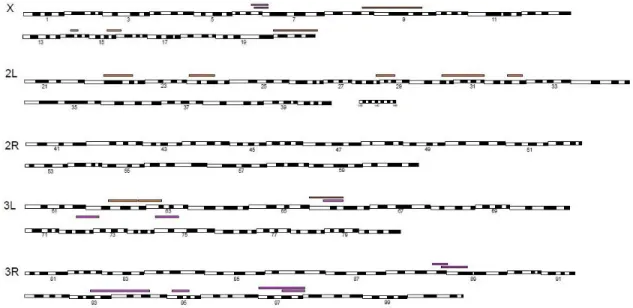
Figure 2.2 Deficiency mapping of hybrid incompatibilities in the D. santomea genome at two different temperatures... 25
Figure 2.3 Relative fitness frequencies of the df-carrying hybrids in mel/san hybrids at two different temperatures ... 26
Figure 2.4 Deficiency mapping of hybrid incompatibilities in the D. simulans genome at two different temperatures... 27
Figure 2.5 Fitness frequencies of the df-carrying hybrids in mel/sim hybrids at two different temperatures ... 29
Figure 3.1 Overlap of the deficiency stocks which reveal a recessive Z choice phenotype covers a 150 kbp region of 3R containing the genes couch potato, tincar, and rim ... 67
LIST OF ABBREVIATIONS AND SYMBOLS Bal Balancer chromosome
BSC Biological Species Concept CHC Cuticular Hydrocarbons
CRISPR Clustered Regularly Interspaced Short Palindromic Repeats
D. Drosophila
df Deficiency chromosome
DMI Dobzhansky-Muller Incompatibility F1 1st generation offspring
GSC Genic Species Concept HI Hybrid Incompatibility kbp Thousand Base Pairs
M Cosmopolitan Drosophila melanogaster mel Drosophila melanogaster
san Drosophila santomea
sim Drosophila simulans
CHAPTER ONE : INTRODUCTION What Are Species?
Perhaps the longest running argument in the field of biological science is what, exactly, are species. One of the first formal systems of describing species, Linnaean taxonomy, grouped organisms according to like-characteristics and set forth a naming and classification structure to organize the catalogue of known organisms (Vences et al., 2013). While only the most broad categories of Linnaean taxonomy are still in use today, it has had a profound effect on the way we conceptualize and classify species.
Initially, species were simply classified according to taxonomic characteristics: likeness of appearance, similarity in biological structure, etc. However, this mode of classification eventually fell out of popularity due to its fallibility (one striking example being the red panda Ailurus fulgens, initially classified as a bear, and then a type of raccoon, and now considered to be a member of the mustelid superfamily) (Flynn et al., 2000).
fertile (Guggisberg, 1975), but lions and tigers are too obviously different to be classified as one species.
Recently, the most widely used method for classifying and grouping species has involved the use of genetic and molecular data to group and classify species based on sequence similarity, frequently referred to as the Genic Species Concept. The GSC uses the wealth of DNA sequencing information currently available to group organisms by similarity in nucleotide sequence and molecular markers as well as by morphological and reproductive traits. More accurate than relying simply on physical characteristics or mating outcome, this has allowed us to expand our conceptualization of species. The biggest weakness of the Genic Species Concept is in identifying nascent species or incipient speciation, in which genetic divergence is not so high as to warrant classification as separate species but divergence is clearly occurring. One such example is in the Zimbabwe and cosmopolitan races of Drosophila melanogaster (David and Capy, 1988), which will be discussed in depth later. Thus, a synthesis of the BSC and GSC remains our best method for identifying and classifying species. Modern taxonomies and phylogenies frequently employ a combination of both methods in order to achieve the most accurate classification of species possible (Baker and Bradley, 2006).
Speciation
The process through which one species divides into two (or more) is termed
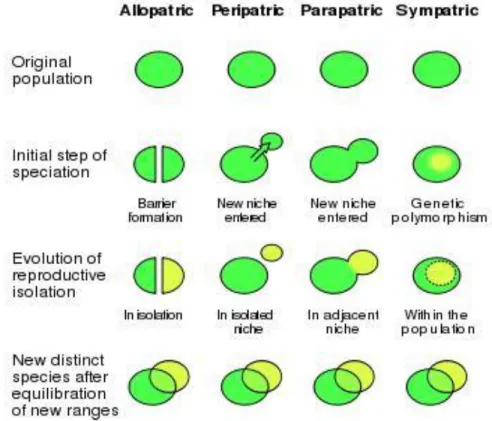
potential gene flow between the two populations, which will be discussed in detail below: allopatric, peripatric, parapatric, and sympatric (Fig 1.1).
Figure 1.1 Modes of speciation
An illustration of the four modes of speciation: allopatric, peripatric, parapatric, and sympatric. Each involves a different level of geographic isolation between the two
populations of the ancestral species, with allopatric being the most complete isolation and sympatric being no isolation at all. (Krempels, 2006)
likely the main mode of speciation (Butlin et al., 2008, Coyne and Orr, 2004), as other modes require additional barriers to gene flow beyond the physical. Peripatric speciation is a subset of allopatric speciation, and occurs when one population of a species colonizes a new niche and becomes geographically isolated as a result (Provine, 2004). The principle difference between allopatric and peripatric speciation is that in peripatric speciation one of the populations is much smaller, which may have eventual consequences for that population (such as founder or bottleneck effects) (Coyne and Orr, 2004).
Parapatric speciation is a mode of speciation in which two populations are mostly separated but may overlap in range in a narrow contact zone between the two ranges. This unequal distribution may arise through novel geographic barriers which hinder but do not entirely preclude travel, unequal dispersal into a newly colonized area resulting in unusual ranges, or divergence in behavior (Butlin et al., 2008, Coyne and Orr, 2004). The small size of the contact zone results in unequal and/or non-random gene flow, which may not
overcome divergence in the populations through genetic drift, niche specialization, or behavioral divergence leading to fixation of novel alleles. Eventually, the reduction in gene flow may lead to the differentiation of the two populations into two species. Notably, if the species maintain their initial ranges after speciation, they may hybridize in the contact zone and maintain limited gene flow through introgression (if F1 hybrids are able to produce progeny with the parental species). This may have eventual fitness consequences for both populations through adaptive introgression (Llopart et al., 2014) or reinforcement (Matute, 2010a).
be quite common (Johannesson, 2010). In sympatric speciation, two populations diverge into separate species while overlapping in geographic range and having no a priori barriers to gene flow. This model of speciation is thought to be quite uncommon, because it requires the rapid evolution of an extremely strong barrier to gene flow that is not physical (a behavior barrier is the most likely avenue through which this could occur) (Coyne and Orr, 2004). In addition to likely being quite rare, it is difficult to prove that two species have diverged in sympatry: the only proven instance is that of two species of Arecaceae palm tree on an oceanic island (Savolainen et al., 2006). One potential mechanism might be the colonization of a novel niche by one population in an organism with mating behaviors tightly tied to foraging behaviors (e.g. Drosophila), which may result in cessation of mating as the two populations can longer locate the other as potential mates. Alternatively, the evolution of strong pre-mating barriers might result in the cessation of gene flow as the two populations stop mating and diverge through genetic drift (Wu et al., 1995, Hollocher et al. 1997).
It is important to consider the mode through which two species diverged, as it can have substantial impact on those species and the interactions between species
speciation to occur (Figure 1.2) (Coyne and Orr, 1989, Coyne and Orr, 1997, Coyne and Orr, 2004). The strength of pre-mating isolation between two species can determine how readily or not those species hybridize (Coyne and Orr, 2004). When studying mating isolation between two species, it is important to consider whether they diverged in allopatry or in sympatry, as well as which state they exist in now. Species which diverged in allopatry are more likely to have weak pre-mating isolation and strong post-mating isolation, for example. This distinction can inform both the types of studies which are appropriate as well as how the data from these studies should be analyzed.
Figure 1.2 Pre-mating isolation is stronglyaffected by proximity
Reproductive Isolation
Prevalence of mating between populations and the outcomes of mating are necessary concepts in studying and understanding speciation and the divisions between species. The umbrella term reproductive isolation describes three main questions: whether two species will mate, whether they will successfully bear progeny, and what fitness consequences the progeny have. These three types of barrier are termed pre-mating, post-mating pre-zygotic, and post-mating post-zygotic. (Orr, 1995, Coyne and Orr, 2004).
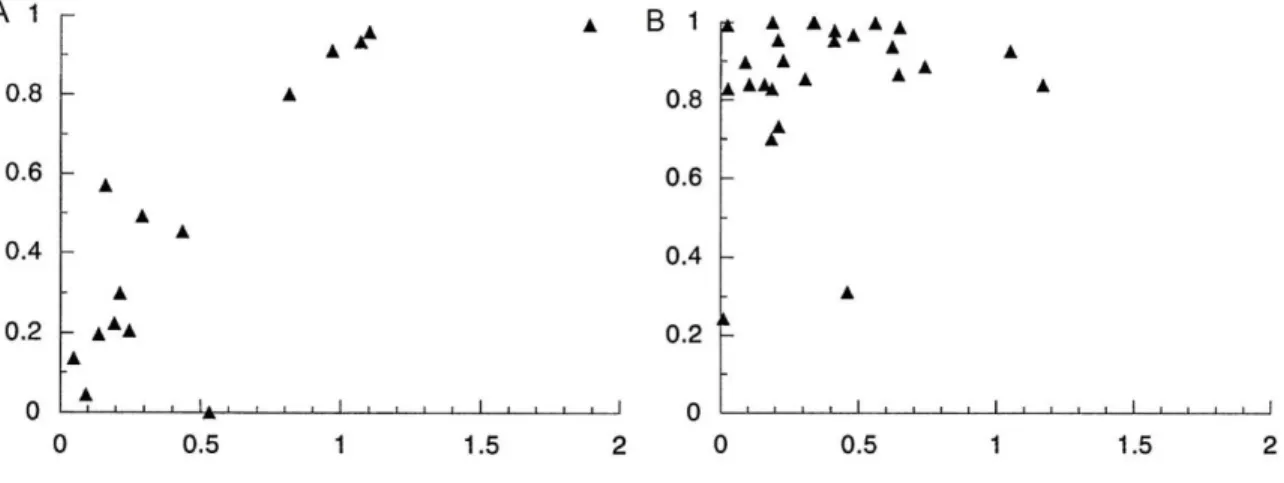
Figure 1.3 Pre-Mating isolation evolves more rapidly than post-mating isolation Strength of pre-mating isolation (A) between species reaches high levels more quickly than strength of post-mating isolation (B) between species. Y-axis: relative strength of
reproductive isolation, 0 being none and 1 being total isolation. X-axis: Nei's genetic distance between the two species. Figure adapted from Coyne and Orr, 1997.
Pre-Mating Isolation
this, it is likely that pre-mating barriers drive speciation. Pre-mating barriers are also weaker than post-mating barriers, however. For this reason, they are thought to be crucial for the initiation of speciation but less important for its maintenance (Rosenblum et al., 2012, Cenzer et al., 2015).
Pre-mating barriers evolve more strongly in sympatry than in allopatry (Coyne and Orr, 1989, Coyne and Orr, 1997), which has two main functional consequences. First, in any case except total allopatry, pre-mating barriers will necessarily be drivers of speciation, due to their rapid and strong evolution. Secondly, evolution of pre-mating barriers following speciation can have fitness consequences for species. Comeault et al. 2016 shows that
evolution of pre-mating barriers between populations of separate species existing in sympatry can have fitness consequences for those species. In this case, D. yakuba males from areas of sympatry with D. santomea sire fewer progeny than allopatric males when mated to D. yakuba females, suggesting that the evolution of pre-mating barriers with D. santomea has negatively affected the fitness of sympatric D. yakuba (Comeault et al., 2016).
Post-Mating Pre-Zygotic Isolation
lethality). Post-mating pre-zygotic barriers seem to evolve between the onset of pre-mating barriers and the evolution of post-mating post-zygotic barriers (Alipaz et al., 2001). Post-Mating Post-Zygotic Isolation
Post-zygotic barriers occur when a zygote forms but there is a fitness consequence for the hybrid offspring. This frequently involves reductions in hybrid fertility or total lethality of the hybrid organism (Maheshwari and Barbash, 2011, Coyne and Orr, 1997). It is not uncommon for one gender of offspring to be fertile while the other is sterile, or one gender to be viable but sterile while the other is inviable. Almost always, the heterogametic sex is the more severely affected in these cases, a pattern termed Haldane's Rule (Turelli and Orr, 1995, Delph, 2016). These post-zygotic barriers are importance for maintenance of species, as they both hinder gene flow between the species and provide strong negative fitness consequences for hybrids (Rosenblum et al., 2012). Post-zygotic isolation frequently results from the accumulation of alleles in each species which become deleterious when interacting in hybrids. These novel interactions are termed Dobzhansky-Muller Incompatibilities (Dobzhansky et al., 1942).
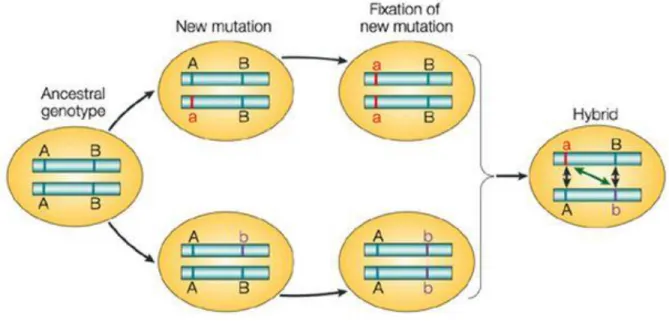
Dobzhansky-Muller Incompatibilities occur when loci which have diverged in the parental species have novel interactions with deleterious consequences in hybrids. If the ancestral state of a pair of loci is A-B, and they diverge to a-B and A-b in the two parental species, the hybrid genotype a-b will have negative consequences due to novel interactions between alleles "a" and "b" (Fig 1.4). DMIs are thought to underlie most deleterious hybrid phenotypes (Sawamura, 2016), and have been extensively studied, though rarely
conclusively proven. One example is the hybrid male rescue gene found in Drosophila, which has been shown to have lethal interactions in hybrids between Drosophila
work on hybridization has been performed in Drosophila species, due to their ease of use as a model system, ability to hybridize even with distantly related species (e.g. Drosophila
melanogaster is able to hybridize with Drosophila santomea, from which it diverged 15 million years ago), and the enormous array of genetic tools available for use in Drosophila
species (Matute et al., 2009, Turissini et al., 2015).
Figure 1.4 Schematic of the evolution of Dobzhansky-Muller Incompatibilities Dobzhansky-Muller Incompatibilities arise when two populations separate and begin to diverge through genetic drift. Over time, the accumulation of mutations results in allelic combinations which have negative fitness consequences in hybrid offspring due to novel interactions between these alleles. (Johnson, 2008)
Hybridization
Hybrids occur when two separate species mate and produce viable offspring; as a result, their genetics are often quite unusual and can result in unexpected effects such as hybrid gigantism (Reisinger, 1929). Typically, however, hybrids display phenotypes intermediate to the two parental species. If the two parental species are sufficiently
is theorized that these intermediate phenotypes may also allow hybrids to colonize novel ecological niches and undergo parapatric or peripatric speciation (Coyne and Orr, 2004, Schumer et al., 2014). Hybrid zones have been found in nature in surprising frequency (Taylor et al., 2015), and the study and observation of hybrid zones have been very helpful for our understanding of speciation and evolution (Coyne and Orr, 2004).
Many species that do not hybridize in nature can be made to hybridize in the lab, and hybrids have been extensively researched (Mallet, 2007). Studying hybrids is useful not only for understanding the genetics of the two parental species, but also advances our
understanding of the genetic interactions that maintain barriers between species and reduce fitness of hybrid offspring, impeding gene flow (Orr et al., 2007). Generally, hybrids are overall less fit than their parental species (if hybrids were more fit, we would expect that the division between the two species would slowly disappear as offspring of the hybrids
eventually out-compete the pure species) (Inoue and Watanabe, 1979). Fitness consequences in hybrids frequently involve one sex being sterile, generally the heterogametic sex (Turelli and Orr, 1995, Delph, 2016) (alternatively, one sex is sterile, and the other dies before reaching adulthood).
The Drosophila melanogaster Species Subgroup
temperature specialist endemic to the cloud forest highlands on the islands where it lives (Turissini et al., 2015). D. sechellia is perhaps the most specialized, subsisting solely on the toxic fruit Morinda citrifolia. (Yassin et al., 2016). Drosophila species have been
instrumental to our understanding of reproductive isolation, including determining how quickly DMIs evolve between diverged species (Matute et al., 2010).
Figure 1.5 The Drosophila melanogaster species subgroup
The Drosophila melanogaster species subgroup comprises a total of 9 species with
divergence times varying between 1 to 15 million years, and generalist as well as specialist species. It is arguably the most studied group of species in the world. (van der Linde, 2006) Studying Reproductive Isolation in the melanogaster Species Subgroup
genes: Hmr, Lhr, and gfzf (Barbash et al., 2000, Cooper and Phadnis, 2016). This example confirms the Dobzhansky-Muller model of hybrid incompatibilities, and has been
enormously informative for our understanding of epistatic interactions between gene products and the role they play in reproductive isolation. Additionally, two alleles affecting hybrid females in this cross have also been mapped: Nup96 (Presgraves, 2003) and Nup160
(Tang and Presgraves, 2009).
Hybrids between D. santomea, D. yakuba, and D. teissieri have also been highly informative. D. teissieri and D. yakuba diverged roughly 2.4 million years ago; D. santomea
and D. yakuba diverged 1 million years ago (Turissini et al., 2015). Hybrids between any pair of these species display identical phenotypes: females are fertile, while males are viable yet sterile, an unexpected pattern, as the increased divergence time between D. teissieri and its sister species would normally result in a more severe phenotype for hybrid offspring. When the fertile F1 females are crossed to pure species male of either parental species, a small proportion of males become fertile (increasing in size with each successive backcross). Some work mapping the basis of male hybrid infertility in this clade has been performed, and found that the trait maps strongly to the X chromosome (Moehring et al., 2006). This remains a promising avenue of research to identify loci involved in DMIs.
In addition to their used in mapping the basis of post-zygotic isolation, the
REFERENCES
1. Ahmed-Braimah, Y. H. (2016). Multiple genes cause postmating prezygotic reproductive isolation in the Drosophila virilis group. Genes Genomes Genetics, X, 1–17. http://doi.org/10.1534/g3.116.033340
2. Alipaz, J. A., Wu, C., & Karr, T. L. (2001). Gametic incompatibilities between races of Drosophila melanogaster. Proceedings of the Royal Society of London, 268(July 2000), 789–795. http://doi.org/10.1098/rspb.2000.1420
3. Arthur, N.J., & Dyer, K. A. (2015). Asymmetrical sexual isolation but no postmating isolation between the closely related species Drosophila suboccidentalis and
Drosophila occidentalis. BMC Evolutionary Biology, 15(March 2015), 1-9. http://doi.org/10.1186/s12862-015-0328-y
4. Austin, C. J., & Moehring, A. J. (2013). Optimal temperature range of a plastic species, Drosophila simulans. Journal of Animal Ecology, 82, 663–672.
http://doi.org/10.1111/1365-2656.12041
5. Baker, R. J., & Bradley, R. D. (2006). Speciation in mammals and the genetic species concept. Journal of Mammalogy, 87, 643–662.
6. Barbash, D. A., Roote, J., & Ashburner, M. (2000). The Drosophila melanogaster hybrid male rescue gene causes inviability in male and female species hybrids.
Genetics, 154, 1747–1771.
7. Butlin, R. K., Galindo, J., & Grahame, J. W. (2008). Sympatric, parapatric or
allopatric: the most important way to classify speciation? Philosophical Transactions of the Royal Society B, 363(=), 2997–3007. http://doi.org/10.1098/rstb.2008.0076 8. Cenzer, M. L. (2016). Adaptation to an invasive host is driving the loss of a native
ecotype. Evolution, (70), 2296–2307. http://doi.org/10.1111/evo.13023.This
9. Comeault, A. C., Venkat, A., & Matute, D. R. (2016). Correlated evolution of male and female reproductive traits drive a cascading effect of reinforcement in Drosophila yakuba. Proceedings of the Royal Society B, 283
10. Cooper, J. C., & Phadnis, N. (2016). A genomic approach to identify hybrid incompatibility genes. Fly, 10, 142–148.
http://doi.org/10.1080/19336934.2016.1193657
11. Coyne, J. A., & Orr, H. A. (1989). Patterns of Speciation in Drosophila. Evolution,
43(2), 362–381.
12. Coyne J. A., O. H. A. (1997). “Patterns of Speciation in Drosophila” Revisited.
Evolution, 51(1), 295–303.
14. David, J. R., & Capy, P. (1988). Genetic variation of Drosophila melanogaster natural populations. Trends in Genetics, 4(4), 106–111.
15. Delph, L. F., & Jeffery, P. (2016). Haldane’s Rule: genetic bases and their support.
Journal of Heredity, 383–391. http://doi.org/10.1093/jhered/esw026
16. Dobzhansky, T., Holz, A. M., & Spassky, B. (1942). Genetics of natural populations. VIII. Concealed variability in the second and the fourth chromosomes of Drosophila pseudoobscura and its bearing on the problem of heterosis. Genetics, 27, 463–490. 17. Fitzpatrick, B. M., Fordyce, J. A., & Gavrilets, S. (2008). What, if anything, is
sympatric speciation? Journal of Evolutionary Biology, 21, 1452–1459. http://doi.org/10.1111/j.1420-9101.2008.01611.x
18. Flynn, J. J., Nedbal, M. A., Dragoo, J. W., & Honeycutt, R. L. (2000). Whence the red panda? Molecular Phylogenetics and Evolution, 17, 190–199.
http://doi.org/10.1006/mpev.2000.0819
19. Greenberg, A. J., Moran, J. R., Coyne, J. A., & Wu, C.-I. (2003). Ecological
adaptation during incipient speciation revealed by precise gene replacement. Science,
111, 1754–1758.
20. Guggisberg, C. A. W. (1975). Wild Cats of the World (First Edit). Taplinger Pub Co. 21. Hollocher, H., Ting, C.-T., Pollack, F., & Wu, C.-I. (1997). Incipient speciation by
sexual isolation in Drosophila melanogaster: variation in mating preference and correlation between sexes. Evolution, 51(4), 1175–1181.
22. Inoue, Y., & Watanabe, T. K. (1979). Inversion polymorphisms in Japanese natural populations of Drosophila melanogaster. Japanese Journal of Genetics, 54, 69–82. 23. Johannesson, K. (2010). Are we analyzing speciation without prejudice? Annals of the New York Academy of Sciences, 1206, 143–149. http://doi.org/10.1111/j.1749-6632.2010.05701.x
24. Johnson, N. A. (2008). Hybrid incompatibility and speciation. Nature Education, 1, 20.
25. Krempels, D. (2006). Spatial aspects of speciation. Retrieved October 20, 2016, from https://en.wikipedia.org/wiki/File:Speciation_modes.svg
26. Llopart, A., Herrig, D. E., Brud, E., & Lein, Z. S. (2014). Sequential adaptive introgression of the mitochondrial genome in Drosophila yakuba and Drosophila santomea. Molecular Ecology, 23, 1124–1136. http://doi.org/10.1111/mec.12678 27. Maheshwari, S., & Barbash, D. A. (2011). The genetics of hybrid incompatibilities.
28. Mallet, J. (2007). Hybrid speciation. Nature, 446, 279–283. http://doi.org/10.1038/nature05706
29. Matute, D. R., Butler, I. A., & Coyne, J. A. (2009). Little effect of the tan locus on pigmentation in female hybrids between Drosophila santomea and D. melanogaster.
Cell, 139, 1180–1188. http://doi.org/10.1016/j.cell.2009.10.033
30. Matute, D. R., Butler, I. A., Turissini, D. A., & Coyne, J. A. (2010). A test of the snowball theory for the rate of evolution of hybrid incompatibilities. Science, 329, 1518–1522.
31. Matute, D. R. (2010a). Reinforcement of gametic isolation in Drosophila. PLoS Biology, 8, 1–11. http://doi.org/10.1371/journal.pbio.1000341
32. Matute, D. R. (2010b). Reinforcement can overcome gene flow during speciation in Drosophila. Current Biology, 20, 2229–2233.
http://doi.org/10.1016/j.cub.2010.11.036
33. Moehring, A. J., Llopart, A., Elwyn, S., Coyne, J. A., & Mackay, T. F. C. (2006). The genetic basis of postzygotic reproductive isolation between Drosophila santomea and D yakuba due to hybrid male sterility. Genetics, 233, 225–233.
http://doi.org/10.1534/genetics.105.052985
34. Orr, H. A., Masly, J. P., & Phadnis, N. (2007). Speciation in Drosophila: from phenotypes to molecules. Journal of Heredity, 98, 103–110.
http://doi.org/10.1093/jhered/esl060
35. Orr, H. A. (1995). The Population Genetics of Speciation: the Evolution of Hybrid Incompatibilities. Genetics, 139, 1805–1813.
36. Orr, H. A., Madden, L. D., Coyne, J. A., Goodwin, R., & Hawley, R. S. (1997). The Developmental Genetics of Hybrid Inviability: A Mitotic Defect in Drosophila Hybrids. Genetics, 145, 1031–1040.
37. Presgraves, D. C. (2003). A fine-scale genetic analysis of hybrid incompatibilities in Drosophila. Genetics, 163, 955–972.
38. Provine, W. B. (2004). Anecdotal, historical, and critical commentaries on genetics.
Genetics, 167, 1041–1046.
39. Reisinger, L. (1929). Bastardierung. Zoologischer Anzeiger, 81, 254–260.
40. Rosenblum, E. B., Sarver, B. A. J., Brown, J. W., Des Roches, S., Hardwick, K. M., Hether, T. D., … Harmon, L. J. (2012). Goldilocks meets Santa Rosalia: an
ephemeral speciation model explains patterns of diversification across time scales.
41. Savolainen, V., Anstett, M., Lexer, C., Hutton, I., Clarkson, J. J., Norup, M. V, … Baker, W. J. (2006). Sympatric speciation in palms on an oceanic island. Nature,
441, 9–12. http://doi.org/10.1038/nature04566
42. Sawamura, K. (2016). Genome-wide analyses of hybrid incompatibility in Drosophila. Advanced Techniques in Biology and Medicine, 4, 10–12. http://doi.org/10.4172/2379-1764.1000159
43. Schumer, M., Rosenthal, G. G., & Andolfatto, P. (2014). How common is homoploid hybrid speciation? Evolution, 68, 1553-60. doi: 10.1111/evo.12399.
44. Stanley, M., Parsons, P. A., Spence, G. E., & Weber, L. (1980). Resistance of species of the Drosophila melanogaster subgroup to environmental extremes. Australian Journal of Zoology, 28, 413–421.
45. Tang, S., & Presgraves, D. C. (2009). Evolution of the Drosophila nuclear pore complex results in multiple hybrid incompatibilities. Science, 323, 779–782.
46. Turelli, M., & Orr, H. A. (1995). The dominance theory of Haldane’s Rule. Genetics,
140, 389–402.
47. Turissini, D. A., Liu, G., David, J. R., & Matute, D. R. (2015). The evolution of reproductive isolation in the Drosophila yakuba complex of species. Journal of Evolutionary Biology, 28, 557–575. http://doi.org/10.1111/jeb.12588
48. van der Linde, K. (2006). Drosophila melanogaster subgroup phylogeny. Retrieved October 20, 2016, from
https://en.wikipedia.org/wiki/File:Drosophila_melanogaster_subgroup_phylogeny.jp g
49. Vences, M., Guayasamin, J. M., Miralles, A., & Riva, I. (2013). To name or not to name: criteria to promote economy of change in Linnaean classification schemes.
Zootaxa, 3636, 201–244.
50. Wu, C., Hollocher, H., Begun, D. J., Aquadro, C. F., Xu, Y., & Wu, M.-L. (1995). Sexual isolation in Drosophila melanogaster : A possible case of incipient speciation.
Proceedings of the National Academy of Sciences, 92(March), 2519–2523. 51. Yassin, A., Debat, V., Bastide, H., Gidaszewski, N., David, J. R., & Pool, J. E.
(2016). Recurrent specialization on a toxic fruit in an island Drosophila population.
CHAPTER TWO: THE EFFECTS OF TEMPERATURE ON DROSOPHILA HYBRID FITNESS1
Introduction
Reproductive barriers hamper gene flow between species (Coyne and Orr 2004). Depending on when in the reproductive cycle barriers occur, they can be classified as
prezygotic or postzygotic. Phenotypes that prevent the successful formation of a zygote, such as certain behavioral or gametic incompatibilities, can lead to prezygotic isolation (reviewed in Coyne and Orr 2004). Conversely, postzygotic isolation manifests as defects in hybrids and includes a range of phenotypic defects such as developmental breakdown and behavioral abnormalities (reviewed in Maheshwari and Barbash 2011). In its most extreme form,
postzygotic isolation results in hybrid inviability.
The evolution of postzygotic isolation is crucial to speciation for at least three reasons. First, even though comparative studies have strongly suggested that prezygotic isolation tends to evolve faster than postzygotic isolation (Coyne and Orr 1989, Orr et al. 1997, Mendelson 2003, Rabosky and Matute 2013), they are often not strong enough to prevent the fusion of nascent species (Rosenblum et al. 2012, Comeault et al. 2015, Cenzer 2016). Postzygotic barriers are more robust and are often crucial to maintaining separation of species. Second, hybrid defects can also influence the evolution of other barriers to gene flow (reviewed in Servedio and Noor 2003, Hopkins 2013). For example, in the process of
reinforcement, prezygotic isolation becomes stronger in areas of sympatry due to indirect
selection on hybrids with deleterious phenotypes (Noor and Servedio 2003, Hudson and Price 2014). Finally, studying postzygotic isolation, and other traits that reduce fitness in hybrids, can reveal how much functional divergence has occurred between the genomes of the parent species, furthering our understanding of the processes that initiate and maintain separation of species (Coyne and Orr 2004, Orr et al. 2007, Rosenblum et al. 2012).
Postzygotic isolation frequently results from Dobzhansky-Muller incompatibilities (reviewed in Coyne and Orr 2004, and Nosil and Schluter 2011) According to the
Dobzhansky-Muller model, deleterious epistatic interactions between alleles from different species reduce fitness in hybrids (Muller et al. 1937, Dobzhansky et al. 1942, Orr 1995, Coyne and Orr 2004). The model requires at least two interacting loci that evolve separately in allopatric populations. Postzygotic isolation arises as a collateral effect when the species come into secondary contact and hybridize. For example, the ancestral alleles at a pair of loci are "a-b," and two allopatric populations subsequently diverge into "a-B" and "A-b." The hybrid genotype "A-B" has deleterious consequences due to the interaction between the "A" and "B" alleles, which were only present together in the hybrid. Dobzhansky-Muller
incompatibilities (DMIs) are frequently implicated in the defects observed in many
interspecies hybrids, and thus are crucial to understanding how species form and persist over time.
and Presgraves 2007, Carrington et al. 2011), which may explain a pattern known as
'Haldane's rule': when hybrids have a defect, the heterogametic sex is typically more severely affected (Orr et al. 1997, Delph and Demuth 2016). Second, hybrid incompatibilities
accumulate at an exponential rate through a process known as the snowball theory, a key prediction of the Dobzhansky-Muller model (Orr 1995, Orr and Turelli 2001, Moyle and Nakazato 2010, Matute et al. 2010, Matute and Gavin-Smyth 2014, Wang et al. 2015).
Drosophila hybrids have been crucial for our understanding of the genetic basis of hybrid inviability (Orr et al. 2007, Aruna et al. 2009). In particular, studying crosses between
D. melanogaster females and D. simulans males has been one of the most informative for investigating the genetic basis of postzygotic isolation. D. simulans is thought to have originated in Southeast Africa and is widespread around the globe, and has a similar thermal tolerance and niche preference to D. melanogaster (Stanley et al. 1980, Austin and Moehring 2013). Interspecific crosses between D. melanogaster females and D. simulans males
produce only sterile hybrid females; male offspring die as larvae (Sturtevant 1920, Inoue and Watanabe 1979). The genetic basis of hybrid male lethality has been finely mapped and at least three loci, one on each major chromosome, have been found to be involved in the epistatic interaction responsible for male hybrid inviability. Different alleles are fixed in the gene triad Hmr/Lhr/gfzf between D. melanogaster and D. simulans, and their interaction in hybrid offspring is deleterious (Barbash et al. 2000; Phadnis et al. 2015; Cooper and Phadnis 2016). Additionally, two alleles influencing the viability of hybrid females have also been mapped: Nup96 (Presgraves 2003), and Nup160 (Tang and Presgraves 2009).
between D. melanogaster and D. santomea also produces only hybrid females (Matute et al. 2009a); males fail to develop the distal half of the abdomen and die as embryos (Matute and Gavin-Smyth 2014). This cross is the most divergent known to produce hybrid progeny in
Drosophila (Matute et al. 2010). Drosophila santomea is endemic to the highlands of São Tomé, a volcanic island off the coast of Cameroon (Lachaise et al. 2000). On the extinct volcano of Pico de São Tomé, D. santomea occupies the mist forests of the island at high elevations where it is thought to breed on figs of the endemic subspecies Ficus
chlamydocarpa fernandesiana (Lachaise et al. 2000, Llopart et al. 2005a, Llopart et al. 2005b). Within the melanogaster species subgroup, D. santomea and D. simulans have very different life history traits, whereas D. simulans and D. melanogaster are more similar (Capy and Gibert 2004). For example, D. melanogaster and D. simulans are both globally
distributed (Capy and Gibert 2004), but D. santomea is restricted to the high altitudes of São Tomé. Similarly, D. melanogaster and D. simulans are temperature generalists, while D. santomea is a temperature specialist.
In previous studies of hybrids between D. melanogaster and D. simulans, the penetrance of a few hybrid inviability alleles has been found to be largely independent of environmental factors (Barbash et al. 2000, Presgraves et al. 2003, Tang and Presgraves 2009). Nonetheless, other hybrid inviability loci might be affected by extrinsic factors (Coyne et al. 1998, Presgraves et al. 2003). For example, temperature has been shown to affect the magnitude of hybrid inviability in several clades (Tribolium beetles: Wade et al. 1999, Dowling et al. 2007; Nasonia wasps: Bordenstein et al. 2001, Koevoets et al. 2012;
Nicotiana: Yamada et al. 2000, Muralidharan et al. 2014). Crosses between D. melanogaster
hybrid inviability at two different temperatures (Coyne et al. 1998). Similarly, hybrids between D. melanogaster and D. mauritiana have revealed that alleles from D. melanogaster
may also have different effects at different temperatures (Cattani and Presgraves 2012). Finally, temperature dependent rescue of male inviability by mutant Hmr has been shown in hybrids of D. melanogaster with both D. simulans and D. mauritiana (Hutter and Ashburner 1987). However, we know little regarding whether the same type of variance in penetrance occurs in other interspecific hybrids.
We tested whether environmentally dependent inviability can be observed in two
Drosophila interspecific hybrids: D. melanogaster/D. santomea F1 females (mel/san) and D. melanogaster/D. simulans F1 females (mel/sim). Given that D. santomea is a temperature specialist (Matute et al. 2009a) and D. simulans is a generalist (Capy and Gibert 2004), we explored whether the penetrance of recessive inviability alleles in hybrids with D.
melanogaster was affected by temperature. Our expectation was that hybrid inviability should be strongly affected by both the identity of the species involved in the interspecific crosses and the temperature at which hybrids developed. We hypothesized that mel/san
hybrids would be much more strongly affected by temperature than mel/sim hybrids. Our results indicate that even though the penetrance of particular loci is affected by temperature in both the mel/san and mel/sim crosses, hybrid viability is more affected by temperature in
mel/sim hybrids than in mel/san hybrids. Results and Discussion
We identified the genomic regions containing recessive hybrid incompatibilities in the genomes of hybrids between D. melanogaster and either D. santomea or D. simulans
report the results for each species independently and then compare the results between species and temperatures.
Figure 2.1 Deficiency mapping approach to detect alleles involved in hybrid inviability A significant dearth of df/san individuals compared to their Bal/san sisters indicates that the deficiency uncovers a lethal, or semilethal allele involved in hybrid inviability. D.
melanogaster balancer chromosomes are shown as striped bars; deficiency chromosomes are shown as a line connecting two bars. D. santomea chromosomes are shown in light grey. Sex chromosomes are shown as shorter bars than autosomes, and Y is shown as shorter than the
X.
D. santomea
We used223 D. melanogaster deficiency stocks (spanning 78.22% of euchromatic regions) and found 91 that caused partial or complete hybrid incompatibility when crossed to
overlap of incompatibilities between temperatures was significant (randomization tests: P < 1 × 10⁻⁴; Table S2). The same result is found if we assess the effect of temperature for the minimum number of hybrid incompatibilities (correcting for overlapping deficiencies which may share a common deficiency rather than represent several unique deficiencies). We found that the slight plurality of regions (43 regions), caused hybrid inviability at both 24º C and 18ºC. Twenty-nine regions cause inviability only at 18ºC and 31 regions cause inviability only at 24ºC. The overlap of incompatibilities between temperatures was also significant (randomization tests: P < 1 × 10⁻⁴). This is particularly interesting because we find the opposite pattern in the mel/sim cross (see below).
Figure 2.2 Deficiency mapping of hybrid incompatibilities in the D. santomea genome at two different temperatures
We found no difference in the relative density of incompatibilities across
chromosomes. This was true for loci that cause hybrid inviability at only 18ºC (χ2 = 2.6154, p-value = 0.913), at only 24ºC (χ2 = 3.587, P = 0.609), and at both temperatures (χ2 = 0.789, P = 0.977).
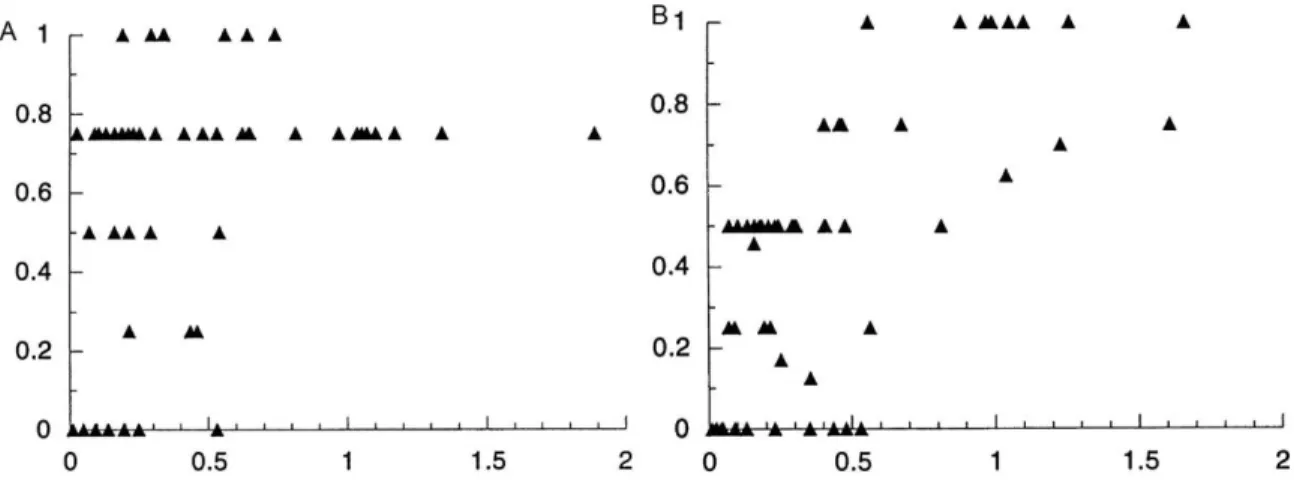
Figure 2.3 Relative fitness frequencies of the df-carrying hybrids in mel/san hybrids at two different temperatures
A. mel/san 18ºC. B. mel/san 24ºC. Black solid lines in each panel show the mean fitness of the df-carrying hybrids. Black dashed lines show the mean ± standard deviation of the mean. The X axis shows relative viability of deficiency-carrying progeny (observed df-carrying progeny/observed Bal-carrying progeny + observed df-carrying progeny) while the Y axis shows the number of stocks having a given level of viability of deficiency carrying offspring.
D. simulans
we found that 16 of these 17 regions caused hybrid inviability at only 24ºC and not at 18ºC. There was no significant overlap of incompatibilities between temperatures (randomization tests: P < 0.4312; Table S3). The same result is found when we assess the effect of
temperature on the minimal number of hybrid incompatibility regions (correcting for overlapping regions of deficiencies which may all uncover the same recessive lethal allele): only one region causes hybrid inviability at both temperatures; fourteen hybrid
incompatibility alleles cause hybrid inviability at only 24ºC. Notably, we found a group of six deficiencies that only cause hybrid inviability at 18ºC, which corresponds to at least 5 hybrid incompatibility regions.
Figure 2.4 Deficiency mapping of hybrid incompatibilities in the D. simulans genome at two different temperatures
Effect of temperature in HI alleles
We next compared the average effect size of exposing recessive alleles in the D. santomea genome in mel/san hybrid females at the two temperatures. This constitutes a test for the effect of temperature on the penetrance of alleles involved in hybrid inviability. First, we looked at the fitness distributions at the two temperatures for both hybrids: mel/san
(Figure 3) and mel/sim (Figure 5). Even though 69 of 125 individual loci cause hybrid inviability at only one temperature in mel/san hybrids (Table S2, see above), the genome-wide effect of temperature on the fitness of df-carrying hybrids is modest and non-significant (mean difference between fitness at 18ºC and 24ºC= -0.0120; 95% CI: [-0.0488, 0.0089]; paired t-test; t = -1.3659, df = 222, P = 0.1734). In mel/sim hybrids, we found that
Figure 2.5 Fitness frequencies of the df-carrying hybrids in mel/sim hybrids at two different temperatures
A. mel/sim 18ºC. B.mel/sim 24ºC. Black solid lines in each panel show the mean fitness of the df-carrying hybrids. Black dashed lines show the average ± standard deviation from the mean. The X axis shows relative viability of deficiency-carrying progeny (observed df -carrying progeny/observed Bal-carrying progeny + observed df-carrying progeny) while the Y axis shows the number of stocks having a given level of viability of deficiency carrying offspring.
We also fit a linear model to jointly assess the relative contributions of paternal species and temperature. We found that the fitness distribution of df-carrying hybrids differs significantly between mel/san and mel/sim hybrids (Table 2.1, species effect). We also found that the magnitude of hybrid inviability is not affected by the rearing temperature per se
-carrying mel/san at 18ºC (Linear contrasts with multiple comparison corrections: viability of
df/sim - viability of df/san at 18ºC: Estimate = 0.0415; t-value= 2.980; P = 0.0157). Similarly,
df-carrying mel/sim hybridsare also more fit than df-carrying mel/san hybrids at 24ºC (viability of df/sim - viability of df/san at 24ºC: Estimate = 0.08711; t-value= 6.252, P < 0.001).
Table 2.1 Levels of heterogeneity at relative viability of df(i)/(j) hybrids, where (i) represents a deficiency stock and (j) represents either of the two parental species
Linear model: HI ~ temp + species + (temp × species) Degrees of
freedom
Sum of squares
Mean square error
F value Pr(>F)
Species 1 0.9226 0.92258 42.6207 < 1 .116 × 10-10
Temperature 1 0.0018 0.00177 0.0818 0.77495
Temperature x Species
1 0.1159 0.11586 5.3523 0.02092
Residuals 888 19.2219 0.02165
A linear model shows that the two fixed effects (temperature, species of the father), and the interaction between these two effects determines the viability of hybrids.
Effect of chromosomal location
Pairwise comparisons within species confirmed that the effect of temperature on the penetrance of hybrid inviability alleles is minimal in both types of hybrids (mel/sim and
mel/san) hybrids and that none of the three chromosomes is more prone to show differential hybrid inviability when raised at different temperatures (Table 2, rows 4-6).
Hybrid inviability is one of the most extreme phenotypes of reproductive isolation and constitutes both an important barrier to gene flow and an important mechanism for completing speciation (Coyne and Orr, 2004, Noor and Feder, 2006, Edmands, 2007). Although it has generally been considered to be more environmentally independent than prezygotic isolation (Coyne and Orr, 2004, Sobel and Randle, 2009), the penetrance of hybrid inviability is affected by extrinsic factors such as temperature (Wade and Johnson, 1994; Wade et al., 1999). In this report, we measured the penetrance of hybrid inviability alleles in two interspecific Drosophila crosses at two different temperatures. While
temperature has a stronger effect on the penetrance of hybrid incompatibility loci in mel/sim
hybrids than in mel/san hybrids, the overall results from both crosses suggest that
temperature plays an important role in hybrid inviability. We found that mel/san hybrids have many more incompatibilities than mel/sim hybrids, as expected based on their longer
Table 2.2 Pairwise comparisons (Tukey HSD test) from a linear model show that in
mel/san hybrids only chromosome two is marginally affected by temperature, and the
effect size is modest Linear
hypothesis
Mean 1 Mean 2 Estimate Standard error
t-value Pr(>|t|)
X.sim.24ºC -
X.sim.18ºC == 0
0.4975 0.4465 0.0402 0.0286 1.407 0.9612
2.sim.24ºC - 2.sim.18ºC == 0
0.5278 0.4964 0.0314 0.0206 1.524 0.9323
3.sim.24ºC - 3.sim.18ºC == 0
0.4986 0.4917 0.0068 0.0244 0.279 1.0000
X.san.24ºC -
X.san.18ºC == 0
0.4014 0.5377 0.0451 0.0286 1.579 0.9144
2.san.24ºC - 2.san.18ºC == 0
0.4430 0.5027 -0.0598 0.0206 -2.901 0.1399
3.san.24ºC - 3.san.18ºC == 0
0.4113 0.4229 -0.0116 0.0244 -0.475 1.0000
The first column shows the pairwise comparisons (Chromosome.Species.Temperature). Mean 1 refers to the mean of the first category listed in the comparison; Mean 2 refers to the mean of the second category. The effect of temperature was not significant in either mel/sim
or mel/san hybrids.
Only one of the identified loci causes hybrid inviability at both 18ºC and 24ºC, indicating that different sets of loci affect HI at different temperatures. Given these data, our initial hypothesis that D. santomea's temperature specialization would cause mel/san hybrids to be more affected by temperature than mel/sim hybrids is unlikely to be correct. If
temperature had a strong effect on hybrid incompatibilities in mel/san hybrids, we would expect to see far more dependent hybrid incompatibilities than temperature-independent hybrid incompatibilities, a pattern we do not observe.
at 24ºC and at 18ºC, a somewhat surprising result. We expected that mel/san hybrids would be more temperature sensitive due to the narrow temperature range inhabited by D. santomea
(Matute et al. 2009a, Turissini et al. 2016). The mean magnitude of hybrid inviability in
mel/sim hybrids, and unlike the pattern observed in mel/san hybrids, is contingent on temperature, and df-carrying hybrids do better at 24ºC than at 18ºC. This result is surprising because, unlike D. santomea, D. simulans is a widely cosmopolitan species that is able to breed at a range of temperatures (Austin and Moehring 2013), and we expected that D. simulans hybrids would be less affected by temperature.
A possible explanation for this pattern is that hybrids between highly divergent species (mel/san) are less likely to be affected by temperature because their genomes contain a larger number of loci with potentially deleterious interactions (Orr 1995, Matute et al. 2010, Moyle and Nakazato 2010, Wang et al. 2015). Alternatively, increased divergence time between species likely leads to an increase in the number of loci involved in HI, which might be expected to lead to reduced temperature sensitivity. In such cases, the penetrance of hybrid incompatibilities might be less likely to be affected by environmental factors due to the very large number of deleterious interactions. Even with a moderate reduction in the number of interactions at a lower temperature, many other deleterious interactions will remain and cause hybrid inviability. Conversely, more recently diverged species will have fewer deleterious interactions, and so may be more strongly affected by temperature as each single interaction plays a larger role in hybrid inviability. It is also possible that D.
Temperature dependent HI alleles in mel/sim hybrids could hypothetically serve as an intermediate state for gene flow between populations, allowing successful production of progeny under only certain conditions. This is an unlikely explanation, however, as hybrids between D. melanogaster and D. simulans or D. santomea are inviable, or sterile, and have never been observed in nature.
Our results have one caveat. We cannot address whether the penetrance of alleles involved in hybrid incompatibility is more, or less pronounced in interspecific hybrids from parents with a restricted thermal niche than in interspecific hybrids with a wide thermal niche. Our experiment does not allow us to disentangle the effects of genetic distance between hybrids and the identity of the examined species. An ideal test would involve comparing the penetrance of recessive hybrid inviability alleles between pairs of hybrids whose parents have roughly equivalent genetic distances. To study highly divergent hybrids, one could study hybrids between D. melanogaster with D. santomea and between D.
melanogaster with D. yakuba. Since D. santomea and D. yakuba are sister species, their levels of divergence from D. melanogaster are roughly equivalent (Turissini et al. 2016). However, multiple attempts to hybridize D. melanogaster and D. yakuba have failed and when hybridization has succeeded, the protocol is onerous and unlikely to be applicable to a genome-wide mapping approach (Sanchez and Santamaria 1997). Another possibility is to compare the viability of mel/san hybrids with hybrids between D. melanogaster and D. teissieri, which is related to D. santomea and D. yakuba. A second set of potentially informative crosses would be D. melanogaster with D. simulans and D. melanogaster with
to assess whether there are interactions between the mitochondrial and endosymbiont genomes, the nuclear genome, and the temperature at which the hybrids are raised.
Several studies have found that hybrid defects are more common and more severe at high temperatures. The genetic underpinnings of such interactions remain unknown, although potential explanations have included differences in molecular kinetics and a high correlation of thermal tolerance alleles with DMIs. Our finding that df-carrying mel/sim hybridshave higher overall viability at 24ºC than 18ºC is surprising. Previous work examining the interaction of temperature and hybrid viability has found that hybrid viability decreases at higher temperatures (Koevoets et al. 2012), disagreeing with our finding. In the case of df -carrying mel/san hybrids, the influence of temperature on viability was negligible.This suggests that at the very least, the interaction of temperature and HI alleles is complex and likely varies depending on the species pair.
One possible explanation for this unexpected result is temperature dependent haploinsufficiency. df-carrying hybrids have only a single copy of each gene located within the particular deficiency they carry. Though these regions are known not to cause
these regions harbor temperature dependent recessive lethal alleles segregating naturally in
D. simulans, but not D. santomea, although this is an unlikely explanation for the observed pattern, as both species are capable of breeding at 18ºC (Matute et al. 2009b, Austin and Moehring 2013). If 18ºC-dependent recessive lethal variants segregated naturally in these species at frequencies high enough to be detected by our mapping, we would expect to see substantial reductions in fitness in these species when reared at 18ºC.
Our results show that temperature can play a significant role in the penetrance of hybrid inviability, and that the effect of temperature varies depending on the species pair. Overall, our results and those from similar reports suggest that we should not think of hybrid inviability solely as the product of genetic interactions in the hybrid offspring, but rather must consider the phenomenon of hybrid inviability within the broader environmental and organismal context in which it is observed.
Materials and Methods
We crossed D. melanogaster females carrying a chromosomal deficiency with either
D. simulans or D. santomea males in order to map recessive hybrid incompatibility alleles. Larvae were reared at 18ºC. We compared the results of our mapping with a previous study that identified hybrid inviability loci at 24ºC for these two species pairs. We describe each step as follows.
Species and stocks
reared on standard cornmeal/Karo/agar medium at 24ºC under a 12 h light/dark cycle in 100mL bottles. Adults were allowed to oviposit for one week, after which time the bottles were cleared. We added 1mL of propionic acid (0.5% V/V) solution to the vials and provided a pupation substrate (Kimberly Clark, Kimwipes Delicate Task; Irving, TX). At least 10 bottles of each species were kept in parallel to guarantee the collection of large numbers of virgins.
Drosophila melanogaster deficiency stocks were purchased from Bloomington stock center in five batches, one for each chromosomal arm. Once quarantined, stocks were expanded in 200mL plastic bottles containing cornmeal food. We let females oviposit; when larvae were observed in the bottles, they were monitored daily for black pupae. All flies were kept at 24ºC under a 12 hour light/dark cycle. Table S1 lists all the stocks used in this report. Virgin collection
To cross D. melanogaster deficiency stocks to male D. santomea or D. simulans, we needed virgin females from each D. melanogaster mutant stock. We kept D. melanogaster
Deficiency mapping
We used deficiency mapping to detect recessive alleles from the D. santomea genome involved in hybrid inviability (HI) (Coyne et al. 1998, Presgraves 2003). Our crossing design detects recessive partners of a DMI in a species crossable with D. melanogaster by
uncovering recessive deleterious alleles with null alleles of a genomic region from D.
melanogaster. The approach involves crossing females from Drosophila melanogaster (mel) stocks containing known genomic deletions, or “deficiencies” (df, Bloomington Drosophila Fly Stock Center), maintained as heterozygotes against a balancer (Bal) chromosome
carrying a dominant homozygous lethal mutation, to D. santomea (san) males (Figure 1). On day 4 after virgin collection, males and females were mixed in a 30mL plastic vial with cornmeal fly food. The ratio of females to males was always 1:2 and at least 10 females were used per cross. To maximize the lifespan of flies, we maintained all crosses with the vial laying on its side for the duration of the assay. Vials were inspected every five days to check for progeny. We transferred the parents to a new vial when we observed either larvae or dead embryos. The old vial was tended by dampening the media with propionic acid and adding tissue paper (Kimwipes, Kimtech Science) for the larvae to pupate upon. We performed at least 20 replicates per cross and on average 10 of them produced progeny. Crosses were kept until no more progeny were produced from each vial.
Assessment of hybrid inviability
We measured the effect of each hemizygous region (those expressing san or sim
recessive alleles) on the viability of hybrid female offspring (Figure 2). If a D. melanogaster
uncovered a recessive region of the D. santomea genome that compromised hybrid fitness but did not cause complete lethality, then, this cross would produce an excess of Bal/san
compared to df/san hybrid females (as assessed by a χ 2 test, 1 degree of freedom). Cases in which Bal/san hybrids are significantly more common than df/san hybrids indicate epistatic interactions between a recessive san allele (exposed when hemizygous) and a dominant factor in the mel genome (Coyne et al. 1998). This allowed us to measure hybrid inviability quantitatively instead of as a binary trait. All crosses were kept at 18ºC once started.
Counting hybrid inviability alleles
The minimal number of HI alleles was determined by counting the number of
overlapping deficiencies associated with HI. If two deficiencies overlap and both cause HI, it can be assumed that they share a locus involved in HI. To assess whether the density of hybrid incompatibility alleles was uniform across chromosomal arms, we compared the observed number of hybrid incompatibility alleles with the expectations from a uniform distribution (i.e., same number of hybrid incompatibilities alleles in the five chromosomal arms) using Pearson's χ2 test with simulated p-values (based on 2,000 replicates, library 'stats'; R 2014).
Effect of temperature
temperatures using paired t-tests. We did two tests, one for each interspecific cross (R, library 'stats'; R Core Team 2014).
Next, we fit two linear models to the data in order to analyze the interaction between hybrid genotype, deficiency, and temperature. First, we fit a linear model in which the viability of the df-carrying genotype was the response; the temperature (18ºC and 24ºC) and the hybrid genotype (mel/sim and mel/san) were fixed effects. We also included the
interaction between temperature and hybrid genotype. The linear model followed the form:
𝒗𝒊𝒂𝒃(𝒅𝒇)𝒊 ~ 𝒕𝒆𝒎𝒑𝒊 + 𝒈𝒆𝒏𝒐𝒕𝒚𝒑𝒆𝒋 + 𝒕𝒆𝒎𝒑 × 𝒈𝒆𝒏𝒐𝒕𝒚𝒑𝒆𝒊𝒋 + 𝑬𝒓𝒓𝒐𝒓𝒊𝒋
The linear model was fit with the function 'lm' (R, library 'stats'; R Core Team 2014). Pairwise posthoc comparisons were done with a Tukey Honest Significant Difference (HSD) test using the function 'glht' (R, library 'multcomp'; Hothorn et al. 2008). We also fit a linear model that included only the interaction between temperature and genotype:
𝒗𝒊𝒂𝒃(𝒅𝒇)𝒊 ~ 𝒕𝒆𝒎𝒑 × 𝒈𝒆𝒏𝒐𝒕𝒚𝒑𝒆𝒊𝒋 + 𝑬𝒓𝒓𝒐𝒓𝒊𝒋
Effect of chromosome
𝒗𝒊𝒂𝒃(𝒅𝒇)𝒊 ~ 𝒄𝒉𝒓𝒐𝒎𝒐𝒔𝒐𝒎𝒆 𝒊+ 𝒕𝒆𝒎𝒑𝒆𝒓𝒂𝒕𝒖𝒓𝒆𝒋+ 𝒈𝒆𝒏𝒐𝒕𝒚𝒑𝒆𝒌
+ 𝒄𝒉𝒓𝒐𝒎𝒐𝒔𝒐𝒎𝒆 × 𝒕𝒆𝒎𝒑𝒆𝒓𝒂𝒕𝒖𝒓𝒆𝒊𝒋+ 𝒄𝒉𝒓𝒐𝒎𝒐𝒔𝒐𝒎𝒆 × 𝒈𝒆𝒏𝒐𝒕𝒚𝒑𝒆𝒊𝒌
+ 𝒕𝒆𝒎𝒑𝒆𝒓𝒂𝒕𝒖𝒓𝒆 × 𝒈𝒆𝒏𝒐𝒕𝒚𝒑𝒆𝒋𝒌
+ 𝒄𝒉𝒓𝒐𝒎𝒐𝒔𝒐𝒎𝒆 × 𝒕𝒆𝒎𝒑𝒆𝒓𝒂𝒕𝒖𝒓𝒆 × 𝒈𝒆𝒏𝒐𝒕𝒚𝒑𝒆𝒊𝒋𝒌 + 𝑬𝒓𝒓𝒐𝒓𝒊𝒋𝒌
The model was fit with the function 'lm' (R, library 'stats'; R Core Team 2014). Pairwise comparisons were done with a Tukey Honest Significant Difference test using the function 'glht' (R, library multcomp; Hothorn et al. 2008) in a linear model that only included the interaction effect between deficiency location, temperature, and genotype:
Supplemental Data
Supplemental Table 2.1 Mutant strains used in this report
The 'Stock' column refers to the number of the mutant in Flybase. The table also includes all the raw data (counts) for the two types of interspecific crosses.
Stock cytology
Bal/san progeny at 18ºC df/san progeny at 18ºC Proportion df/san 18ºC Bal/sim progeny at 18ºC df/sim progeny at 18ºC Proportion df/sim 18ºC
1329 1A1--2A 76 31 0.289719626 98 104 0.514851485
25058 1A5--1B12 37 0 0 78 104 0.571428571
25062 1D1--2A3 206 115 0.358255452 134 156 0.537931034
9054 2E1--3A2 107 153 0.588461538 204 231 0.531034483
26569 2F2--3A4 181 325 0.64229249 55 47 0.460784314
935 2F6--3C5 266 270 0.504672897 29 21 0.42
8031 3A3--3A8 101 160 0.61302682 174 199 0.533512064
9348 3A8--3B1 85 65 0.433333333 205 234 0.533029613
8948 3B1--3C5 145 0 0 99 111 0.528571429
939 3C11--3E4 250 180 0.418604651 104 131 0.557446809
729 3C1--3D6 240 105 0.304347826 209 190 0.476190476
944 4C15--5A2 65 55 0.458333333 202 188 0.482051282
945 5A8--5C6 180 170 0.485714286 196 171 0.465940054
26506 5B6--5D2 104 48 0.315789474 174 156 0.472727273
946 5C2--5D6 168 151 0.473354232 97 78 0.445714286
8947 5C7--5F3 108 63 0.368421053 154 178 0.536144578
7713 5F2--6B2 347 331 0.48820059 185 199 0.518229167
7714 6B2--6C4 70 71 0.503546099 167 200 0.544959128
23670 6C11--6D3 56 41 0.422680412 172 142 0.452229299