REAGENT-DICTATED SITE SELECTIVE HYDROCARBON FUNCTIONALIZATION USING NITROGEN-CENTERED RADICALS
Anthony Michael Carestia
A dissertation submitted to the faculty of the University of North Carolina at Chapel Hill in partial fulfillment of the requirements for the degree of Doctor of Philosophy in the Department
of Chemistry.
Chapel Hill 2018
Approved by
Erik J. Alexanian
Simon J. Meek
Jeffrey S. Johnson
Frank A. Leibfarth
© 2018
iii ABSTRACT
Anthony Michael Carestia: Reagent-Dictated Site Selective Hydrocarbon Functionalization Using Nitrogen-Centered Radicals
(Under the direction of Erik J. Alexanian) Chapter 1. Aliphatic C-H Functionalization
An overview of aliphatic radical C-H functionalization is presented with an emphasis on the challenge of site selectivity. Methods covered range from simple, unselective free radical halogenation to highly regioselective biomimetic oxidation. Primary selective functionalizations using electrophilic metal catalysts are also discussed.
Chapter 2. Reagent-Dictated Site-Selective C-H Chlorination
The development of a site-selective C-H chlorination is discussed. Primary site selectivity is achieved using highly hindered N-chloroamide reagent used. A computational study of the generated amidyl radical structure and the transition state of the selectivity-determining hydrogen-atom abstraction were completed. The work in this chapter was done in collaboration with Davide Ravelli and is published at Chem. Sci., 2018, 9, 5360-5365.
Chapter 3. Primary Selective C-H Functionalization of Polyolefins
v
ACKNOWLEDGMENTS
There are so many people who I have to thank for playing a role in helping me in my
completion of my PhD. First, I would like to thank my advisor, Erik Alexanian, for his guidance,
patience, and encouragement. Erik has pushed me to be a better scientist and independent thinker.
I admire the high value he puts on learning and doing things the right way. What I have learned
from him will help me greatly as I continue in life.
The UNC Chemistry department is filled with so many people who are willing to help each
other any way they can. I am very appreciative that I was able to spend my graduate career in such
a friendly and collaborative environment. I would like to thank the professors serving on my
defense committee, Simon Meek, Jeff Johnson, Frank Leibfarth, and Kevin J. Frankowski for
taking the time to read this dissertation. I would like to thank the Nicewicz lab, Meek lab, Johnson
lab, Leibfarth lab, Gagnè lab, Meyer lab, and Dempsey lab for their generous donations of time,
equipment, and chemicals. I would like to thank Brandi Ehrmann and Marc ter Horst for assistance
using the facilities. I would like to thank the people I have directly collaborated, Davide Ravelli,
Roger Sommer, Frank Leibfarth, Jill Williamson, and Shefali Ghandi.
A lot of time during graduate school is spent working in lab. It was an honor and a privilege
to work in a lab filled with so many bright and caring individuals who I am proud to call friends.
Specifically I would like to thank Brendan Lainhart and Ryan Quinn for their mentorship when I
first joined the lab. They helped shape me into the person and chemist I am today. I would like to
thank my hood buddy Brendon Sargent for helpful and unhelpful conversations about chemistry,
excursions, late nights in lab, and being someone who I could talk to about anything and
everything. Gratifyingly, I would like to thank all the other Alexanian members, past and present,
including Joan Roque, Caitlin McMahon, Alex Venning, Will Czaplyski, Nick Jenkins, Christina
Na, Carla Morton, Megan Kwiatkowski, Tim Fazekas, Matt Tierney, Quentin Tercenio, Alex
Flores, Matt Renn, and Akil Guruparan for helpful conversations about chemistry, helping me
learn and understand new things, making lab a fun place to work, meals at Waffle House, making
jokes, playing games, and making these last five years an unforgettable experience.
My time in Chapel Hill would not have been the same without all the people I have met
and teams I was lucky to be a part of. I would like to thank Jake Green and Cortney Cavanaugh
for being an amazing friends and the best roommates anyone could ask for. I would like to thank
Paul Giokas, Desireè Matias, and Carlos Colmenarez for making board game nights fun. I would
like to thank Cole Cruz for being someone who I could always ask for advice, although it was
usually never good. I would like thank Josh McManus for being a good teammate and neighbor. I
would like to thank all the members of the men’s intramural street hockey team and the two time
champion co-ed intermural street hockey team.
Even though I have not seen many of them much during my time in graduate school, I
would like to thank my friends from undergrad and back home. The short time spent seeing them
here or otherwise was immeasurable.
Most importantly I would like to thank my parents, sister, and the rest of my family. I
would not be where I am or who I am without your love and support. I cannot adequately put into
vii
TABLE OF CONTENTS
LIST OF TABLES ... ix
LIST OF FIGURES ... xii
LIST OF ABBREVIATIONS ... xvii
CHAPTER 1 – Aliphatic C-H Functionalization... 1
1.1 Introduction ... 1
1.2 Halogen-centered Radical Reactivity ... 2
1.2.1 Chlorine and Bromine Free Radical Reactivity ... 2
1.2.2 Iodine-centered Radical Reactivity ... 6
1.3 Nitrogen-centered Radical Reactivity ... 9
1.4 Metal-oxo Radical Reactivity ... 15
1.5 Primary Selective C-H Functionalizations Using Electrophilic Metal Catalysis ... 21
1.6 Summary and Outlook ... 23
CHAPTER 2. Reagent-Dictated Site-Selective C-H Chlorination ... 24
2.1 Introduction ... 24
2.2 Reaction Development ... 25
2.3 Substrate Scope ... 28
2.4 Functionalization Scope ... 33
2.5 Computational Analysis ... 34
2.6 Conclusion ... 41
2.7.1 General Methods ... 41
2.7.2 Reagent Synthesis ... 43
2.7.3 Substrate Synthesis ... 50
2.7.4 Standard Synthesis ... 57
2.7.5 C-H Functionalizations ... 70
2.7.6 X-Ray Crystallography Data... 139
2.7.7 Computational Data ... 151
2.7.8 Spectra... 197
CHAPTER 3 Primary Selective C-H Functionalization of Polyolefins ... 224
3.1 Introduction ... 224
3.2 Results and Discussion ... 228
3.3 Summary and Outlook ... 233
3.4 Experimental Detail ... 233
3.4.1 General Method ... 233
3.4.2 General Procedure for Polyolefin Functionalization ... 234
ix
LIST OF TABLES
Table 1.1 Regioselectivity of various free-radical chlorination conditions ... 3
Table 1.2 The effects of methyl and phenyl substitution on reaction rates of C-H bonds with bromine and chlorine radical ... 5
Table 1.3 Methyl pentanoate selectivity comparing aminium radical and free radical ... 10
Table 1.4 Reaction rates of simple alkanes with various N-chloro reagents. ... 11
Table 2.1 Site selectivity of trans-decalin functionalization comparing catalytic systems and N-chloroamides ... 27
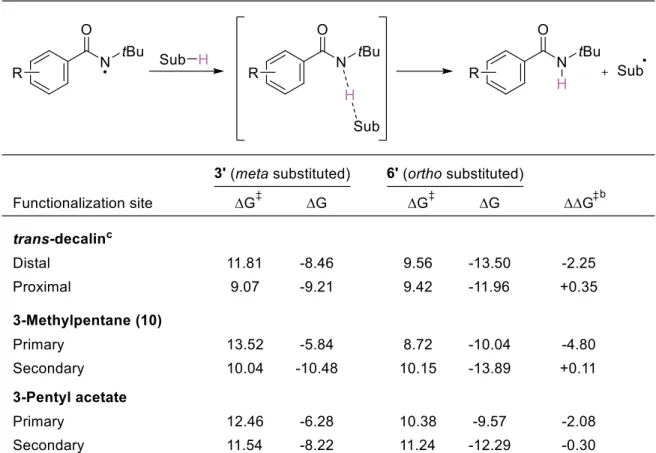
Table 2.2 Calculated parameters for hydrogen atom abstraction by amidyl radicals 3’ and 6’ from selected substrates (Sub-H) ... 40
Table 2.3 GC data for functionalization of 3-methylpentane with 6. ... 78
Table 2.4 GC data for functionalization of 3-methylpentane with 3. ... 78
Table 2.5 GC data for functionalization of 2,2-dimethylpentane with 6. ... 79
Table 2.6 GC data for functionalization of 2,2-dimethylpentane with 3. ... 80
Table 2.7 GC data for functionalization of 2,2-dimethylbutane with 6. ... 82
Table 2.8 GC data for functionalization of 2,2-dimethylbutane with 3. ... 83
Table 2.9 GC data for functionalization of n-hexane with 6. ... 84
Table 2.10 GC data for functionalization of n-hexane with 3. ... 86
Table 2.11 GC data for functionalization of 2-ethylbutyl benzoate with 6. ... 87
Table 2.12 GC data for functionalization of 2-ethylbutyl benzoate with 3. ... 88
Table 2.13 GC data for functionalization of 3-pentyl benzoate with 6. ... 89
Table 2.14 GC data for functionalization of 3-pentyl benzoate with 3. ... 89
Table 2.15 GC data for functionalization of 2-phenylbutyl benzoate with 6. ... 90
Table 2.17 GC data for functionalization of 2,4,4,5,5-pentamethyl-2-propyl-1,3-
dioxolane with 6. ... 92
Table 2.18 GC data for functionalization of 2,4,4,5,5-pentamethyl-2-propyl-1,3- dioxolane with 3. ... 93
Table 2.19 GC data for functionalization of tert-butyl 2,2-dimethylpentanoate with 6. ... 93
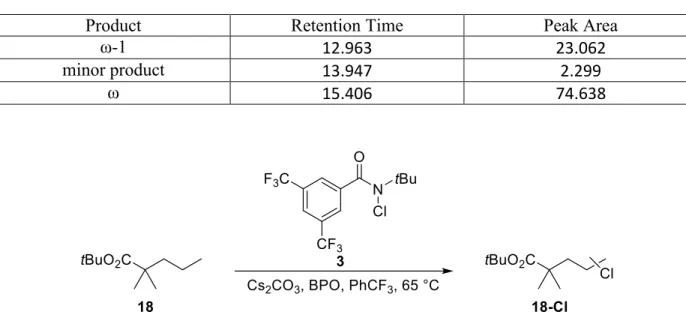
Table 2.20 GC data for functionalization of tert-butyl 2,2-dimethylpentanoate with 3. ... 94
Table 2.21 GC data for functionalization of N-n-pentyl phthalimide with 6. ... 95
Table 2.22 GC data for functionalization of N-n-pentyl phthalimide with 3. ... 96
Table 2.23 GC data for functionalization of N-(2-methyl pentyl) phthalimide with 6. ... 97
Table 2.24 GC data for functionalization of N-(2-methyl pentyl) phthalimide with 3. ... 97
Table 2.25 GC data for functionalization of trans-1,4-dimethylcyclohexane with 6. ... 101
Table 2.26 GC data for functionalization of trans-1,4-dimethylcyclohexane with 3. ... 101
Table 2.27 GC data for functionalization of trans-4-methylcyclohexylphthalimide with 6. ... 102
Table 2.28 GC data for functionalization of trans-4-methylcyclohexylphthalimide with 3. ... 102
Table 2.29 GC data for functionalization of trans-4-methylcyclohexyl benzoate with 6. ... 104
Table 2.30 GC data for functionalization of trans-4-methylcyclohexyl benzoate with 3. ... 104
Table 2.31 GC data for functionalization of cedryl acetate with 6. ... 110
Table 2.32 GC data for functionalization of cedryl acetate with 3. ... 111
Table 2.33 GC data for functionalization of tetrahydrolinalool benzoate with 6. ... 128
Table 2.34 GC data for functionalization of tetrahydrolinalool benzoate with 3. ... 129
Table 2.35 Sample and crystal data for 6. ... 141
xi
Table 2.37 Atomic coordinates and equivalent isotropic atomic displacement
parameters (Å2) for 6. ... 144
Table 2.38 Bond lengths (Å) for 6. ... 145
Table 2.39 Bond angles (°) for 6. ... 146
Table 2.40 Torsion angles (°) for 6. ... 148
Table 2.41 Anisotropic atomic displacement parameters (Å2) for 6. ... 149
Table 2.42 Hydrogen atomic coordinates and isotropic atomic displacement parameters (Å2) for 6. ... 150
Table 2.43 Calculated parameters for the TSs describing the processes reported in Table 2.2. ... 153
Table 2.44 Terms adopted to calculate the Gibbs Free Energy (G) values reported in Table 2.43. ... 155
Table 2.45 DFT raw data ... 156
Table 3.1 C-H xanthylation of PEE using N-xanthylamide 31. ... 229
LIST OF FIGURES
Figure 1.1 BDE of primary, secondary, and tertiary C-H bonds in a simple alkane ... 2
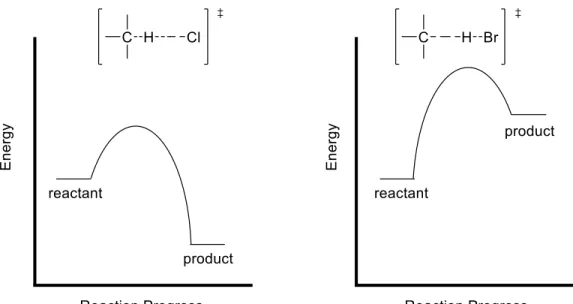
Figure 1.2 Reaction coordinate diagrams of chlorination and bromination with respective transition states ... 4
Figure 1.3 Directed biomimetic chlorination via tethered hypervalent iodine reagent ... 7
Figure 1.4 C-H azidation, chlorination, and bromination using hypervalent iodine reagent ... 7
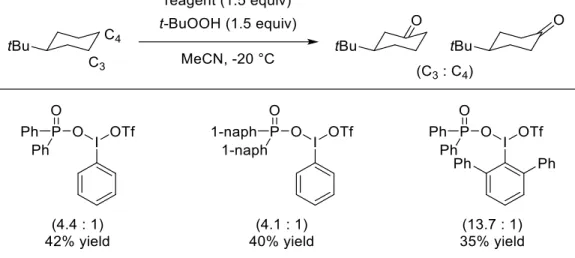
Figure 1.5. Secondary selective C-H oxidation with hypervalent-iodine as abstracting agent ... 9
Figure 1.6 C-H bromination using N-bromoamide reagent ... 12
Figure 1.7 C-H chlorination using N-chloroamide reagent ... 12
Figure 1.8. Synthesis of (+)-chlorolissoclimide using N-chloroamide reagent ... 13
Figure 1.9 C-H xanthylation using N-xanthylamide reagent ... 14
Figure 1.10 Intramolecular C-H alkylation using amidyl radicals generated via PCET ... 15
Figure 1.11 C-H chlorination of trans-decalin via different manganese porphyrin catalysts ... 17
Figure1.12 C-H oxidation of artemisinin via different non-heme iron catalysts ... 18
Figure 1.13 C-H oxidation of trans-androsterone acetate via different non-heme iron catalysts ... 19
Figure 1.14 C-H oxidation using ammonium-crown ether coordination ... 21
Figure 1.15 Primary selective C-H oxidation using a platinum catalyst and copper oxidant ... 22
Figure 1.16 Primary selective C-H borylation using a rhodium catalyst ... 23
Figure 2.1 C-H chlorination of diverse substrates comparing reagents 3 and 6. ... 29
xiii
Figure 2.4 C-H xanthylation of trans-decalin and 3-methylpentane with reagent 31. ... 34
Figure 2.5 OLEX2 structure of N-chloroamide 6. ... 35
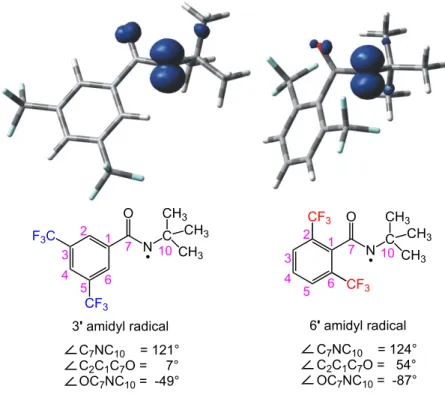
Figure 2.6 Optimized structures of amidyl radicals 3’ and 6’ with spin density plots and relevant parameters... 37
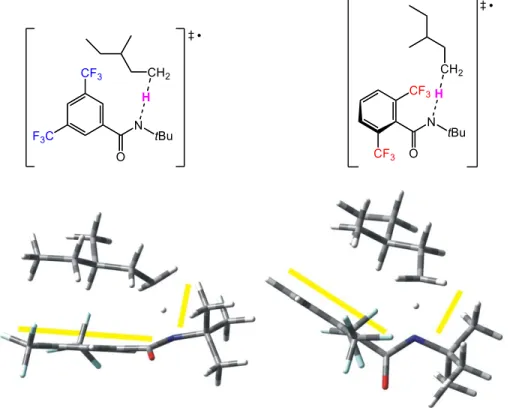
Figure 2.7 Optimized structures of the TS for the primary C-H abstraction of 3-methylpentane by 3’ (left) and 6’ (right). ... 39
Figure 2.8 1H NMR of crude reaction of trans-decalin with 3. ... 73
Figure 2.9 1H NMR of crude reaction of trans-decalin with 4. ... 74
Figure 2.10 1H NMR of crude reaction of trans-decalin with 5. ... 75
Figure 2.11 1H NMR of crude reaction of trans-decalin with 6. ... 76
Figure 2.12 1H NMR of crude reaction of trans-decalin with 6. ... 77
Figure 2.13 Chromatograph of 3-methylpentane functionalizations ... 79
Figure 2.14 Chromatograph of 2,2-dimethylpentane functionalizations. ... 80
Figure 2.15 1H NMR of crude reaction of 2,2-dimethylbutane with 6. ... 81
Figure 2.16 1H NMR of crude reaction of 2,2-dimethylbutane with 3. ... 83
Figure 2.17 Chromatograph of 2,2-dimethylbutane functionalizations. ... 84
Figure 2.18 1H NMR of crude reaction of n-hexane with 6. ... 85
Figure 2.19 1H NMR of crude reaction of n-hexane with 3. ... 86
Figure 2.20 Chromatograph of n-hexane functionalizations ... 87
Figure 2.21 Chromatograph of 2-ethylbutyl benzoate functionalizations. ... 88
Figure 2.22 Chromatograph of 3-pentyl benzoate functionalizations. ... 90
Figure 2.23 Chromatograph of 2-phenylbutyl benzoate functionalizations. ... 91
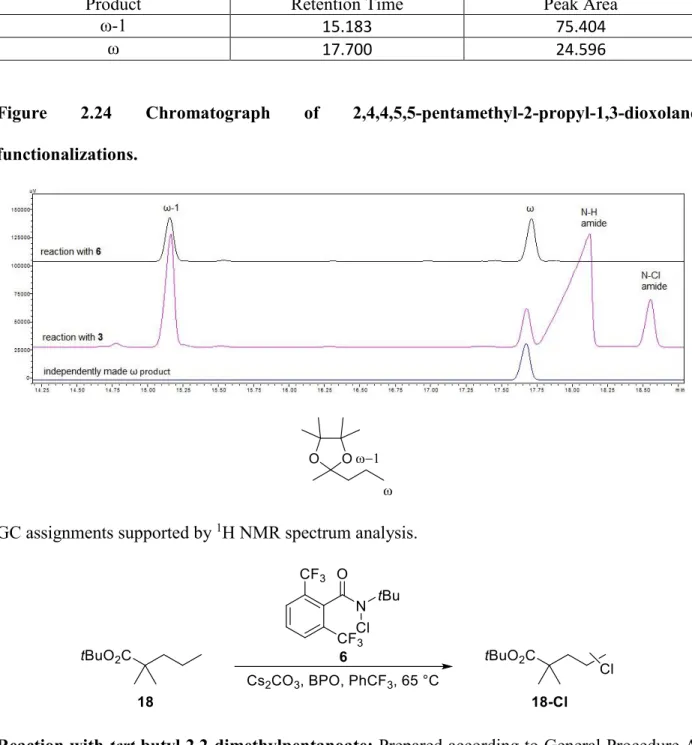
Figure 2.25 Chromatograph of tert-butyl 2,2-dimethylpentanoate
functionalizations. ... 94
Figure 2.26 Chromatograph of N-n-pentyl phthalimide functionalizations. ... 96
Figure 2.27 Chromatograph of N-(2-methyl pentyl) phthalimide functionalizations. ... 98
Figure 2.28 1H NMR of crude reaction of N-phthaloylnorvaline methyl ester with 6. ... 99
Figure 2.29 1H NMR of crude reaction of N-phthaloylnorvaline methyl ester with 3. ... 99
Figure 2.30 Chromatograph of trans-1,4-dimethylcyclohexane functionalizations. ... 101
Figure 2.31 Chromatograph of trans-4-methylcyclohexylphthalimide functionalizations. ... 103
Figure 2.32 Chromatograph of trans-4-methylcyclohexyl benzoate functionalizations. ... 105
Figure 2.33 1H NMR of isolated products 22-Cl of reaction of Artemisinin with 6. ... 106
Figure 2.34 13C NMR of isolated products 22-Cl of reaction of Artemisinin with 6. ... 107
Figure 2.35 13C NMR DEPT 135 of isolated products 22-Cl of reaction of Artemisinin with 6. ... 108
Figure 2.36 1H NMR of crude reaction of artemisinin with 3. ... 109
Figure 2.37 1H NMR of crude reaction ofcedryl acetate with 6. ... 110
Figure 2.38 1H NMR of crude reaction ofcedryl acetate with 3. ... 112
Figure 2.39 Chromatograph of cedryl acetate functionalizations. ... 112
Figure 2.40 1H NMR spectra of cedryl acetate functionalization with 6 after prep HPLC isolation ... 114
Figure 2.41 13C NMR spectra of cedryl acetate functionalization with 6 after prep HPLC isolation ... 115
xv
Figure 2.43 DEPT 135 spectra of cedryl acetate functionalization with 6 after
prep HPLC isolation ... 117
Figure 2.44 HMBC spectra of cedryl acetate functionalization with 6 after prep HPLC isolation ... 118
Figure 2.45 COSY spectra of cedryl acetate functionalization with 6 after prep HPLC isolation ... 119
Figure 2.46 1H NMR spectra of cedryl acetate functionalization with 3 after prep HPLC isolation ... 120
Figure 2.47 13C NMR spectra of cedryl acetate functionalization with 3 after prep HPLC isolation ... 121
Figure 2.48 13C NMR spectra of cedryl acetate functionalization with 3 after prep HPLC isolation ... 122
Figure 2.49 HMQC spectra of cedryl acetate functionalization with 3 after prep HPLC isolation ... 123
Figure 2.50 TOCSY spectra of cedryl acetate functionalization with 3 after prep HPLC isolation ... 124
Figure 2.51 COSY spectra of cedryl acetate functionalization with 3 after prep HPLC isolation ... 125
Figure 2.52 NOESY spectra of cedryl acetate functionalization with 3 after prep HPLC isolation ... 126
Figure 2.53 HMBC spectra of cedryl acetate functionalization with 3 after prep HPLC isolation ... 127
Figure 2.54 1H NMR of crude reaction of tetrahydrolinalool benzoate with 6. ... 128
Figure 2.55 1H NMR of crude reaction of tetrahydrolinalool benzoate with 3. ... 130
Figure 2.56 Chromatograph of tetrahydrolinalool benzoate functionalizations. ... 130
Figure 2.57 1H NMR spectra of tetrahydrolinalool benzoate functionalization with 3 after isolation ... 132
Figure 2.59 DEPT 135 spectra of tetrahydrolinalool benzoate functionalization
with 3 after isolation ... 134
Figure 2.60 HMQC spectra of tetrahydrolinalool benzoate functionalization with 3 after isolation ... 135
Figure 2.61 TOCSY spectra of tetrahydrolinalool benzoate functionalization with 3 after isolation ... 136
Figure 2.62 1H NMR of crude reaction of trans-decalin with 28. ... 137
Figure 2.63 1H NMR of crude reaction of trans-decalin with 28. ... 138
Figure 2.64 1H NMR of crude reaction of trans-decalin with 31. ... 139
Figure 3.1 Maleic anhydride grafting of branched polyolefins and competing chain scission. ... 225
Figure 3.2 Copper-catalyzed carbene insertion into branched polyolefins. ... 225
Figure 3.3 Hydroxylation of branched polyolefins via a primary selective C-H borylation. ... 226
Figure 3.4 Polyolefin hydroxylation using a manganese porphyrin catalyst. ... 227
Figure 3.5 Metal-free amination of polyethylene using oxygen-centered radicals. ... 227
Figure 3.6 GPC chromatograph of C-H xanthylation of PEE using reagent 31. ... 231
Figure 3.7 DSC curves displaying Tg of xanthylated polyolefins. ... 231
xvii
LIST OF ABBREVIATIONS
° degrees
°C degrees Celsius
°C/min degrees Celsius per minute
∠ angle
Å Angstrom
α alpha
β beta
γ gamma
δ delta
ΔG Gibb’s free energy
ΔG‡ activation energy
ΔΔG‡ change in activation energy
Ð dispersity
μL microliter
π pi
ω omega
ω-1 omega minus one
ω-2 omega minus two
1H NMR proton nuclear magnetic resonance spectroscopy
13C NMR carbon nuclear magnetic resonance spectroscopy
19F NMR fluorine nuclear magnetic resonance spectroscopy
1D one dimensional
2° secondary
2D two dimensional
3° tertiary
Ac acetate
AcOH acetic acid
atm atmosphere
BDE bond dissociation energy
Bpin pinacolatoboryl
BPO benzoyl peroxide
Br2 bromine
Br• bromine radical
br broad
BrOAc acetal hypobromite
Bu butyl
Bu4NBr tetrabutyl ammonium bromide
Bu4NCl tetrabutyl ammonium chloride
Bz benzoyl
cat. catalyst
C-C carbon-carbon bond
CCl4 carbontetrachloride
CDCl3 deuteredated chloroform
xix
C-H carbon-hydrogen bond
CH2Cl3 dichloromethane
CHCl3 chloroform
Cl2 chlorine
Cl• chlorine radical
Cl2O chlorine dioxide
CO2Me methyl ester
COSY correlation spectroscopy
CO2tBu tert-butyl ester
Cs2CO3 cesium carbonate
CuCl2 copper (II) chloride
CuSO4 copper (II) sulfate
D deuterium
d doublet
Da. Daltons
DCM dichloromethane
dd doublet of doublets
ddd doublet of doublet of doublets
DEPT 135 distortionless enhancement of polarization transfer using a 135 degree decoupler pulse
DFT density functional theory
DIAD diisopropyl azodicarboxylate
DMF dimethylforamide
DMPU N, N′-Dimethylpropyleneurea
DSC differential scanning calorimetry
Et2O diethylether
EtOAc ethyl acetate
EtOH ethanol
equiv. equivalent
FeSO4 iron (II) sulfate
g gram
GC gas chromatography
GPC gel permeation chromatography
H2 hydrogen
H hydrogen atom
h hours
HCl hydrochloric acid
HI hydroiodic acid
HLF Hofmann-Löffler-Freytag reaction
HMBC heteronuclear multiple bond coherence
HMPA hexamethylphosphoramide
HMQC heteronuclear multiple quantum coherence
H2O water
H2O2 hydrogen peroxide
xxi
HRMS high-resolution mass spectrometry
H2SO4 hydrosulfuric acid
hv light
Hz Hertz
iPr isopropyl
J dipole-dipole coupling
K kelvin
kcal kilocalorie
kp rate of primary hydrogen abstraction
K3PO4 potassium phosphate
K2PtCl4 potassium tetrachloroplatinate (II)
ks rate of secondary hydrogen abstraction
L liter
LDA lithium diisopropylamine
LED light emitting diode
LiAlH4 lithium aluminum hydride
LiCl lithium chloride
M molarity
m multiplet
MeCN acetonitrile
Mg magnesium
MgSO4 magnesium sulfate
min minutes
mL milliliter
mm millimeter
mmol millimoles
Mn manganese
Mn number average molecular weight
mol moles
NCS N-chlorosuccinimide
N-H nitrogen-hydrogen bond
NaOCl sodium hypochlorite
NEt3 triethylamine
NMR nuclear magnetic resonance
NOESY nuclear Overhauser effect spectroscopy
NaBH4 sodium borohydride
NaH sodium hydride
NMe3•HCl trimethylamine hydrochloride
nm nanometers
P450 cytochrome P450 enzymes
PCET proton coupled electron transfer
Pd/C palladium on carbon
PDI polydispersity index
PEE polyethylethylene
xxiii
PhH benzene
PINO phthalimide-N-oxy
PivCl pivaloyl chloride
Ph phenyl
PhICl2 iodobenzene dichloride
Phth phthaloyl
PPh3 triphenylphosphine
ppm parts per million
PTFE polytetrafluoroethylene, Teflon
q quartet
qd quartet of doublets
R generic organic group
RAFT reversible addition-fragmentation chain transfer polymerization
rt room temp
s singlet
sec seconds
SET single electron transfer
SMD solvent model based on density
t triplet
tAmylOH tert-amyl alcohol
tAmyl tert-amyl
TBAF tetra-n-butylammonium fluoride
tBu tert-butyl
tBuOCl tert-butyl hypochlorite
tBuOH tert-butanol
tBuNH2 tert-butylamine
td triplet of doublets
tdd triplet of doublets of doublets
THF tetrahydrofuran
Tg glass transition temperature
TMP tetramesitylporphyrin
TOCSY total correlation spectroscopy
TPP tetraphenylporphyrin
TS transition state
Ts p-toluenesulfonyl
TsCl p-toluenesulfonyl chloride
TsOH p-toluenesulfonic acid
1
CHAPTER 1 – Aliphatic C-H Functionalization 1.1 Introduction
C-H bonds are present in virtually every organic compound in nature. While this bond is inherently inert, developing a method to directly convert a C-H bond to a carbon-heteroatom bond would be an extremely valuable tool in synthesis. Direct C-H functionalization methods are desirable because it allows for the avoidance of prefunctionalized starting materials which are more expensive and less readily-available as the unfunctionalized counterpart. It is especially ideal for late-stage functionalization of complex targets because it expedites the derivatization of the target, allowing for the generation of libraries of derivatives. This streamlined synthetic approach bypasses many synthetic steps, which cuts costs and minimizes the generation of waste.
Figure 1.1 BDE of primary, secondary, and tertiary C-H bonds in a simple alkane.
While site-selective C-H functionalization is a daunting task, it is not unprecedented, as a number of enzymes have been shown to react with unactivated C-H bonds with very high levels of selectivity. Inspired by biological precedent, recently there have been a number of reports studying the reactivity and selectivity of unactivated C-H bond functionalizations using small molecule reagents and catalysts. This introduction will encompass a variety of methods used to functionalize aliphatic sp3 C-H bonds, focusing on the site selectivity of these reactions.
1.2 Halogen-centered Radical Reactivity
1.2.1 Chlorine and Bromine Free Radical Reactivity
One of the simplest and earliest C-H functionalizations is free radical halogenation. Most
commonly this reaction is achieved by use of molecular chlorine or bromine initiated by either
heat or light or a combination of both to directly convert simple alkanes to alkyl halide products.
While similar in their components, their reactivities are different. Free radical chlorinations of
alkanes can be predicted by the following: (1) every possible monochloride product without
3
ratio of 3°: 2°: 1° approaches 1: 1: 1 as temperature is increased; (4) reactivity ratios are unaffected
by moisture, light, and carbon surfaces; (5) for a given temperature, vapor-phase reactions are
more selective than liquid-phase reactions. The latter point is possibly due to the fact that the rate
of abstraction is competitive with the rate of diffusion of the chlorine radical, and once it comes
into contact with an abstractable C-H bond it is predisposed to react rather than to seek out a more
reactive C-H bond.5,6 While chlorination by chlorine radical is predisposed to statistical
distribution of products, selectivity change can be achieved by either changing the solvent,
temperature, or abstracting species. The effects of various changes can be seen in Table 1.1.7
Table 1.1 Regioselectivity of various free radical chlorination conditions.
Chlorination using molecular chlorine (Table 1.1, Entry 1) or N-chlorosuccinimide (Table 1.1, Entry 2) is thought to go through hydrogen-atom abstraction via chlorine radical, while
chlorine monoxide (Table 1.1, Entry 3) chlorination is proposed to be a combination of chlorine
4) leads to a much higher selectivity for tertiary functionalization. The selectivity is the same as
chlorosufonyl radical generated by the decomposition of sulfuryl chloride (Table 1.1, Entry 5),
suggesting that the complexation of chlorine radical with benzene or sulfur dioxide leads to the
same stabilization of the radical. Iodobenzene dichloride (Table 1.1, Entry 7) is photoinitated to
the hypervalent iodine-center iodanyl radical which is highly selective compared to the other
chlorination methods and will be discussed further later in this section.
Figure 1.2 Reaction coordinate diagrams of free-radical chlorination and bromination with respective transition states.
Bromination of alkanes is inherently more selective than chlorination, due to the transition
state of the abstraction step (Figure 1.2). Hydrogen-atom abstraction by bromine radical is an
endothermic process, and according to Hammond’s Postulate, corresponds to a later transition
state, which will resemble the product more than the reactant, thus giving the stability of the
5
abstraction by chlorine radical is exothermic, leading to an earlier, more reactant-like transition
state and thus radical stability is less significant for chlorination.
Table 1.2 The effects of methyl and phenyl substitution on reaction rates of C-H bonds with bromine and chlorine radical
The effects of radical stability on relative reaction rates of both bromine and chlorine
radical C-H abstraction are illustrated in Table 1.2. The rows illustrate the rate of activation of a
hydrogen atom at the carbon center with increasing substitution. The columns illustrate the
primary to secondary to tertiary, the relative reactivity for chlorine radical only slightly increases,
while bromine radical increases by four orders of the magnitude. This highlights the bromine
radical’s sensitivity towards stabilizing effects. As methyl groups are replaced with phenyl groups
going down each column, relative reactivity of bromine radical increases by another several orders
of magnitude initially, but as the number of phenyl substituents increase past one, a saturation
effect is seen, and eventually a reversal in reactivity occurs. While steric effects and the inability
of all the phenyl substituents to exist coplanar to the resultant radical in some cases do play a part
in the reactivity saturation, an important component is due to polar effects caused by the phenyl
ring deactivating the substrate towards hydrogen-atom abstracting. Even though the bond strength
is being lowered, the electron density around the hydrogen-atom is much lower, making
abstraction by an electrophilic bromine radical less favorable than for a more electron rich C-H
bond.8
1.2.2 Iodine-centered Radical Reactivity
The reaction of free iodine radical with alkanes does not occur because of the unfavorable
energetics of the hydrogen-atom abstraction and the facile reduction of alkyl iodides with HI.8
However, iodanyl radicals have been shown to undergo C-H abstraction.9 Table 1.1 that iodanyl
radicals showed very high selectivity for weaker tertiary C-H bonds (entry 7). Ronald Breslow was
able to take advantage of this highly selective reagent, and developed a method for the biomimetic
chlorination of steroid substrates (see Figure 1.3). It is considered biomimetic because of the
regioselectivity of the reaction, only reacting at a single tertiary C-H even though multiple tertiary
7
generated iodanyl radical could be in contact with via geometric constraints. The regioselectivity
of reaction could be altered by varying the substitutional position of the tethered aryl iodide.10
Figure 1.3 Directed biomimetic chlorination via tethered hypervalent iodine reagent.
Hypervalent iodine reagents were used in a number of other tertiary selective
functionalizations. Hartwig and coworkers were able to develop a C-H azidation using an iron
catalyst and a hypervalent iodine azide reagent. The reaction was selective for benzylic and tertiary
C-H bonds, but unreactive with unactivated secondary C-H bonds, only giving a 5% yield with
cyclohexane.11,12 Expanding upon this work, Chen and coworkers were able to use the same
hypervalent-iodine azide reagent, but with a ruthenium photocatalyst instead to achieve a similar
azidation reaction. With the addition of LiCl or Bu4NBr as an additive, chlorination and
bromination were also be achieved (see Figure 1.4).13
In 2013, the Maruoka group investigated using a hypervalent-iodine reagent to develop a
secondary selective C-H oxidation. While most iodanyl radical selectivity favors weaker tertiary
C-H bonds, the Maruoka group was able to tune the electronics of their hypervalent-iodine reagents
by appending an electron-withdrawing triflate group. They were able to provide evidence of an
iodanyl radical abstracting species by comparing different substitution on the phosphinyloxy
leaving groups and aryl rings in multiple experiments as seen in Figure 1.5. They only observed a
9
Figure 1.5. Secondary selective C-H oxidation with hypervalent-iodine as abstracting agent.
1.3 Nitrogen-centered Radical Reactivity
Another type of manifold used in C-H functionalization is the use of nitrogen-centered
radicals. Nitrogen-centered radicals have been used in C-H halogenation in the form of N -haloamines and N-haloamides for over a century. The oldest example is the Hofmann-Löffler-Freytag (HLF) reaction where an aminium cation radical is generated from protonated N -haloamine and undergoes an intramolecular 1, 5- hydrogen-atom abstraction to form a
carbon-centered radical. The carbon-carbon-centered radical abstracts a halogen atom propagating the chain
reaction forward.15 An intermolecular HLF-type reaction was developed in late 1960’s by Minisci
and coworkers, using an N-halo- dimethylamine reagent, sulfuric acid, and reducing iron sulfate salt to generate the dimethylaminium radical. This system was highly electronically selective in
the reaction of the straight chain ester methyl pentanoate.16 The reaction was 80% selective for the
(Table 1.3, Entry 1) and chlorination (Table 1.3, Entry 2) reactions, suggesting the common
aminium radical as the abstracting species.17 Reactions involving the aminium radical were much
more selective than the free radical reactions of both chlorine and bromine (Table 1.3, Entries
3-4).18
Table 1.3 Methyl pentanoate selectivity comparing aminium radical and free radical.
Around the same time, Deno and coworkers investigated steric effects on aminium radical
selectivity. They surveyed a number of disubstitued N-chloroamines varying in steric size. They found that the larger the groups the less tertiary selective and more secondary selective the reaction
became. In the case of highly hindered di-tert butyl (Table 1.4 Entry 3) and tert-butyl tert-amyl (Table 1.4 Entry 4), the secondary C-H bonds in 2-methylbutane were six times more reactive than
the tertiary C-H bonds, and even primary chlorination was slightly favored over tertiary.19 Greene
11
Table 1.4 Reaction rates of simple alkanes with various N-chloro reagents.
More recently, the Alexanian lab has developed a number of transformations harnessing
nitrogen-centered radicals in synthetically useful transformations. The first C-H functionalization
they disclosed was a secondary selective bromination reaction of unactivated sp3 C-H bonds.21 The
reaction had high electronic selectivity, similar to Minisci’s chemistry, favoring the secondary
with pendant electron-withdrawing groups. It was also sterically selective, preferentially reacting
at secondary C-H bonds over tertiary C-H bonds. A few select substrates are shown in Figure 1.6.
They also disclosed a chlorination variant of the reaction using the same amide reagent core, which
showed very similar selectivity to the bromination chemistry (see Figure 1.7). Most importantly,
these reactions used the alkane substrates as the limiting reagent, making the transformations much
more synthetically relevant than previous site-selective C-H halogenations.16–20 In collaboration
with the Vanderwal group, the bioactive compound (+)-chlorolissoclimide was synthesized in 9
steps using the selective chlorination of sclareolide (see Figure 1.8).22 This methodology was also
showcased by Stoltz in the study of late-stage functionalizations of the natural product core of
Cyanthiwigin.23
Figure 1.6 C-H bromination using N-bromoamide reagent.
13
Figure 1.8. Synthesis of (+)-chlorolissoclimide using N-chloroamide reagent.
The same amide core was also used for a site-selective C-H xanthylation (see Figure 1.9).
Similar electronic and steric selectivity was observed, but additionally substrates with activated
C-H bonds alpha to heteroatoms were also functionalized. The xanthate products formed were
elaborated to a number of different functional groups including vinyl, allyl, hydroxyl, deutero, and
Figure 1.9 C-H xanthylation using N-xanthylamide reagent.
The latest innovation in the nitrogen-centered radical C-H functionalization is the ability
to generate the nitrogen-centered radical directly from the parent N-H compound. This
advancement avoids the need to pre-functionalize the reagent and makes the reactions simpler to
use. Both the Knowles and Rovis groups independently developed a method for intramolecular
C-H alkylation using photoredox catalysis and an external alkene trap.25–27Although both reaction
conditions are similar, their mechanisms are slightly different. Knowles’ system undergoes a
proton coupled electron transfer (PCET) mechanism, while the Rovis system involoves a stepwise
deprotonation and single electron oxidation. For PCET to occur a base is needed to hydrogen bond
to the N-H bond of the reacting amide, which lowers the effective BDE allowing for facile
15
abstraction. The generated carbon-centered radical adds into the alkene trap which turns over the
catalyst via a SET step followed by protonation to furnish alkylated product. Rovis’ mechanism is
very similar, the only differing step is that the deprotonation and SET happen sequentially instead
of in a concerted fashion.
Figure 1.10 Intramolecular C-H alkylation using amidyl radicals generated via PCET.
1.4 Metal-oxo Radical Reactivity
The most selective C-H functionalizations come from nature in the form of enzymatic
catalysis, the most well-known being enzymes from the cytochrome P450 family. A majority of
these enzymes have an iron-heme active site surrounded by a hydrophobic pocket suitable for
substrate binding. Not only are these P450 enzymes notable for highly selective C-H
hydroxylations, but they also catalyze epoxidation, sulfur-oxidation, dehydrogenation,
groups have used protein engineering to modify different P450 enzymes to target different C-H
bonds in complex molecular cores such as terpenoids, alkaloids, and steroids.29–31
In recent years, there has been a rapid growth of research in the field of biomimetic C-H
functionalization using enzyme-like metal catalysts. Much of this work is geared towards trying
to mimic enzymatic selectivity by tuning the electronic and steric nature of the abstracting species
to select for a distinct C-H bond. The Groves group were the first to use iron-based porphyrin
catalysts to accomplish C-H hydroxylation.32 Later they developed chlorination, bromination and
fluorination reactions using a manganese-based porphyrin catalyst.33,34 In this system, methylene
selectivity was induced by a modification to the ligand structure around the porphyrin catalyst.
Pendant phenyl substituents were exchanged for bulkier mesityl substituents. This change in steric
17
Figure 1.11 C-H chlorination of trans-decalin via different manganese porphyrin catalysts.
The first example of a selective 3° C-H oxidation using a non-heme iron-oxo catalyst was
reported by the White group. Tertiary C-H bonds were selectively oxidized due to their
electron-rich nature and decreased bond strength.35 White was able to alter the site-selectivity to favor less
hindered 2° C-H bonds by modifying the ligand of the iron catalyst. Changing the hydrogen in the
5-position on the pyridine ligand to a phenyl ring with CF3 substituents in both ortho-positions,
changed selectivity favoring less hindered secondary C-H bonds over more reactive tertiary C-H
bonds. This selectivity change is evident in the oxidation of artemisinin as shown in Figure 1.12.
Reaction of the unsubstituted catalyst gave a ratio of 2:1 favoring the tertiary oxidation, while the
catalyst with the bulkier bis-ortho-CF3 phenyl substitution resulted in a switch in selectivity,
19
Figure 1.13 C-H oxidation of trans-androsterone acetate via different non-heme iron catalysts.
Costas and coworkers were able to use similar non-heme iron catalysts to change selectivity
of differently substituted cyclic substrates based on chirality of the catalyst used. In the oxidation
and C14. The major product was ketone C6 when using the (R,R’)-[Fe(OTf)2(TIPSPDP)] and (R,R’
)-[Fe(OTf)2(TIPSMCP)] catalysts with a selectivity of 82% and 72% respectively, but when (S,S’
)-[Fe(OTf)2(TIPSPDP)] and (S,S’)-[Fe(OTf)2(TIPSMCP)] catalysts were used, ketone C12 was favored
at 69% and 88% respectively.37 This is the first example of oxidation preferentially occurring at
C12 without the use of a directing group.
In addition to tuning the electronics and sterics of a catalyst or reagent to mimic enzymatic
selectivity, there has also been some work to react C-H bonds based on geometric constraints.
These constraints can be used to selectively orient the reactive abstracting species to be in
proximity of the desired C-H bond. Some of the earliest work in this regard was accomplished by
Breslow. A metalloporphyrin catalyst was substituted with cyclodextrin binding sites, which
encapsulate the side-chains of a steroid derivative, placing the active site of the catalyst in contact
with the C-H bond that would be hydroxylated selectively.38 More recently, Costas attained
selectivity at the C8 and C9 positions of long alkyl chain amine using a crown-ether substituted
manganese catalyst. The protonated ammonium binds to the crown ether portion of the catalyst,
positioning the hydrogens at C8 and C9 next to the reactive manganese center. This high level of
selectivity is shown in Figure 1.14, where decylamine is oxidized at C8 and C9 in an 81%
21
Figure 1.14 C-H oxidation using ammonium-crown ether coordination.
1.5 Primary Selective C-H Functionalizations Using Electrophilic Metal Catalysis
Many methods have been developed to selectively functionalize 3° or 2° C-H bonds, but not many methods exist that are selective for 1° C-H bonds. Selective 1° C-H bond functionalization is challenging and has not been achieved using a radical intermediate due to the increased BDE of 1° C-H bonds and the lack of stabilization of the generated carbon-centered radical. While 1° C-H bond functionalization has been achieved using electrophilic metal activation, the scope is very limited.
Notably, a preference for primary H/D exchange was observed.40,41 This system was extended to the C-H chlorination of simple alkanes using a platinum (II) catalyst that slightly favored primary functionalization. However, stoichiometric platinum (IV) was needed to turn the catalyst over, undermining the synthetic utility of the reaction.42
More recently, Sanford and coworkers disclosed the primary selective C-H oxidation of alkyl amines using a platinum (II) catalyst and copper (II) oxidant in high yield and selectivity. An example is shown in Figure 1.15. Sanford took advantage of ammonium ion formation of the substrates, which allowed them to be water-soluble, deactivated proximal C-H bonds towards hydrogen-atom abstraction, and prevented the nitrogen from coordinating and deactivating the platinum catalyst.43
Figure 1.15 Primary selective C-H oxidation using a platinum catalyst and copper oxidant.
23
Figure 1.16 Primary selective C-H borylation using a rhodium catalyst.
1.6 Summary and Outlook
The field of C-H functionalization has made massive progress, advancing from
unselective free radical chlorination to enzymatic levels of selectivity using metal-oxo catalysts.
However, there are still underdeveloped areas that can be further explored. One major hurdle is
the reliance on substrates to dictate the selectivity of reactions. Bietti has studied a number
factors leading to inherent activation and deactivation of different types of substrates including
activations caused by strain release and deactivation due torsional strain.46,47 While a majority of
site-selective C-H functionalizations utilize these factors to obtain regioselectivity, there has
been a lack of reagents or catalysts developed to dictate site-selectivity of the reaction overriding
the inherent bias imparted by substrates. Additionally, methods to functionalize 1° C-H bonds
without the use of directing groups or electrophilic metals are almost non-existent, compared to
the functionalization of weaker 3° and 2° C-H bonds, which have dominated the chemical
CHAPTER 2. Reagent-Dictated Site-Selective C-H Chlorination 2.1 Introduction
Recent advances in intermolecular aliphatic C–H functionalization have provided unique
tools for the synthesis and late-stage derivatization of complex molecules.48–50However, because
many substrates contain a number of different C-H bonds, the site selectivity of these reactions is a critical consideration in their application to both synthesis and late-stage functionalization. The inherent reactivity of the substrate C–H bonds often dictates the site selectivity of a given
functionalization.46,51 Among the factors influencing the relative reactivity of C–H bonds are steric
accessibility, electron richness, and participation in hyperconjugation. Solely relying on
substrate-dictated selectivity limits the scope of intermolecular C–H functionalizations. This is due to the
degeneracies of the C-H bonds contained in the substrates, many of these C-H bonds have similar
reactivies, which can lead to poor discrimination between reaction sites. Moreover,
functionalizations at less inherently reactive C–H bonds are impossible without additional
elements of control.
Reagents or catalysts that override inherent substrate-dictated site selectivity hold
significant promise in expanding the capabilities of intermolecular C–H functionalization.
Noteworthy advances in this area have been achieved via the use of modified ligand architectures
in catalytic C–H functionalizations proceeding via high-valent metal oxo or metal carbenoid
intermediates.14,36,52–54 Protein engineering has also led to enzymatic aliphatic C–H
25 2.2 Reaction Development
We have previously developed practical systems for aliphatic C–H functionalization using
readily accessed N-halo- and N-xanthylamides.21,22,24 In those studies, moderate site selectivities were achieved primarily through substrate control. We anticipated that the highly modular nature
of our reagents would offer unique opportunities in introducing reagent-dictated site selectivity.
We began our investigation with the functionalization of trans-decalin, a benchmark substrate used in studies of intermolecular, aliphatic C–H functionalizations.33,34,37,56–58 The
difficulty of achieving steric discrimination between the methylene sites is evident upon surveying
the site selectivities of several previously reported functionalizations (Table 2.1, entries 1–4). For
example, iron-catalyzed oxidations of trans-decalin with bulky tetradentate ligands poorly discriminated between these sites (entries 1 and 2).37 Manganese-catalyzed C–H chlorination using
a hindered tetramesitylporphyrin (TMP) system achieved good selectivity (4.0:1), although tertiary
functionalization was also observed (entry 3).33 The C–H chlorination using our reported N -chloroamide 3 proceeded with no selectivity between the methylene sites (entry 4).22
We hypothesized that we could observe improved site selectivities by increasing the steric
demand of the N-chloroamide. We evaluated a set of N-chloroamides containing ortho
trifluoromethyl substitution of the benzamide. Reagents 4 and 5 containing a single ortho
substituent increased the selectivity for the less hindered, distal methylene site, although the ratio
influence of the nitrogen substituents, we saw that increasing substitution from tBu to tAmyl or dimethylphenyl for the mono ortho substituted amide to make reagents 7 and 8, saw virtually no increase in site selectivity compared to its tBu counterpart 4 (entries 8 and 9). However, when the nitrogen substituent is changed to iPr on the more hindered 2,6-bistrifluoromethyl benzamide core, a slight drop in selectivity to 4.7:1 (entry 10) is observed. Performing the reaction with reagent 6
with 1 equiv. of substrate the products were provided in a 7.2:1 ratio in 76% combined yield (entry
8). To the best of our knowledge, this is the most site-selective secondary C–H functionalization
27
Table 2.1 Site selectivity of trans-decalin functionalization comparing catalytic systems and
2.3 Substrate Scope
We next evaluated the site selectivities of the C–H chlorination using reagent 6 across a range of substrates (see Figure 2.1). The C–H chlorination of these substrates with N-chloroamide 6 also proceeded with unique site selectivities, and notably includes radical functionalizations selective for primary sites. Site selectivities with our first-generation reagent 3 are shown for direct comparison. For example, the chlorination of 3-methylpentane (10) with reagent 3 showed a preference for the 2-position (64%) over the 1-position (27%). However, reagent 6 provided a remarkable reagent-dictated switch in site selectivity, favoring the 1-chloro isomer (69%, 69% combined yield). Free radical species demonstrating such selectivity for the strongest, primary C– H bond over secondary or tertiary C–H bonds in synthetic alkane functionalizations are unknown to the best of our knowledge.19,20
29
The presence of electron-withdrawing functionality disfavors reaction at proximal methylene sites and increased the site selectivity for the primary positions to 88% and 89% for substrates 14 and 15, respectively. The functionalization of 2-phenylbutyl benzoate (16) remarkably demonstrated a high selectivity for the primary position (89%) even in the presence of a benzylic C–H site. The fully substituted carbon centers in acetal 17 and ester 18 lead to a clear reagent-dictated change in selectivity between reagents 3 and 6; the primary C–H chlorination product is favored with up to 75% selectivity with ester substrate 18.
Phthalimide-protected amines undergo intermolecular C–H functionalizations using amidyl radicals with high levels of electronically-dictated site selectivities.21,22,24 We surveyed several substrates containing this electron-withdrawing group. With the lack of major steric discrimination between the C–H sites, the functionalization of substrate 19 with reagent 6 only increased the level of primary functionalization to a modest 33%. In the case of substrate 20 containing chain branching, a higher level of primary functionalization was observed (45%). The shorter aliphatic chain in the norleucine derivative 21 electronically disfavored methylene functionalization, and the use of hindered N-chloroamide 6 resulted in good primary selectivity (80%).
31
chlorination of these substrates significantly increased the levels of primary functionalization. The kp/ks of substrate 22 with reagent 6 was 0.57, which is a 10-fold increase in 1° functionalization compared to the reaction of 22 with 3 (ks/kp= 18.0). Reactions of substrates 23 and 24 with reagent 6 both favored 1° functionalization over 2° functionalization having kp/ks of 1.4 and 2.0 respectively.
Figure 2.2 Reagent dictated C-H chlorination of complex natural products.a
33 2.4 Functionalization Scope
In prior work, we have developed protocols for C–H bromination and xanthylation using functionalized amides.21,24 As these transformations are likewise synthetically valuable,64,65 we sought to demonstrate that the reagent-dictated selectivity herein was transferrable to those reactions. We prepared the N-bromo and N-xanthylamides 28 and 31 to address this question.
Figure 2.3 C-H bromination of trans-decalin and 3-methylpentane with reagent 28.
Figure 2.4 C-H xanthylation of trans-decalin and 3-methylpentane with reagent 31.
The C-H xanthylation of trans-decalin and 3-methylpentane 10 with reagent 31 is shown in Figure 2.4. The reaction selectivities and efficiencies are similar to that of the C-H chlorination using reagent 6, thus showing that the tuning of the amidyl radical is responsible for dictating the site selectivity of these C-H functionalizations.
2.5 Computational Analysis
The X-Ray crystal structure of the N-chloroamide 6 provides some insight into the basis for increased site selectivity (see Figure 2.5). Non-bonded interactions between the ortho
35 Figure 2.5 OLEX2 structure of N-chloroamide 6.
In order to gain further insight regarding the observed site selectivities, we performed computational studies of the structures of the amidyl radicals involved, as well as the hydrogen atom abstractions of select substrates. The relevant transition states of the H-atom abstractions were optimized, and the associated energy changes were evaluated. A DFT approach was used, with the ωB97XD functional, standard 6-31G(d,p) basis set, and Gaussian16 software (see section 2.7.7 for details). Optimizations were initially carried out in vacuo, then solvent effects were included through single-point calculations at the same level of theory with the SMD model and adopting the standard parameters for CH2Cl2 (a computationally convenient alternative to PhCF3,66 the solvent used in this work).
37
Figure 2.6 Optimized structures of amidyl radicals 3’ and 6’ with spin density plots and relevant parameters.
We next modeled the transition states (TS) of the H-atom abstractions by 3’ and 6’ involving select substrates, with the goal of identifying important factors that account for the observed site selectivities. We studied a diverse set of cyclic and acyclic substrates, including
39
Figure 2.7 Optimized structures of the TS for the primary C-H abstraction of 3-methylpentane by 3’ (left) and 6’ (right).
Table 2.2 Calculated parameters for hydrogen atom abstraction by amidyl radicals 3’ and 6’ from selected substrates (Sub-H).a
41
the experimental results, as reagent 6 consistently provided higher selectivities for the least hindered positions of substrates–either primary or distal—throughout our studies.
2.6 Conclusion
In conclusion, we have developed an approach to introduce reagent-dictated site selectivity to aliphatic C–H functionalizations using tuned nitrogen-centered radicals. The use of hindered N -functionalized amides has led to C–H functionalization of diverse substrates that are among the most sites-selective intermolecular C–H transformations known. This strategy has also enabled the first radical-mediated aliphatic C–H functionalizations targeting primary C–H bonds across a wide range of simple and complex substrates. Computational studies revealed the different chemical environments of the reacting amidyl radicals, and established a direct correlation between the steric hindrance at the reacting site and the preference for functionalization of the least hindered substrate C–H bonds. Future studies will continue to develop unique reagents that offer increased levels of site selectivity in intermolecular C–H functionalization for applications in chemical synthesis.
2.7 Experimental Details
2.7.1 General Methods
43
use. All other reagents were obtained from commercial sources and used without further purification unless otherwise noted.
2.7.2 Reagent Synthesis
N-(tert-butyl)-3,5-bis(trifluoromethyl)benzamide (S1) was prepared according to a literature procedure, and spectral data were in accordance with the literature values.21
N-(tert-butyl)-N-chloro-3,5-bis(trifluoromethyl)benzamide (3) was prepared according to a literature procedure, and spectral data were in accordance with the literature values.22
(3.30 mL, 31.6 mmol) was added. The reaction was allowed to warm to room temperature and stir overnight. The reaction was washed with 10% sodium hydroxide solution, 1 M hydrochloric acid solution, and brine, dried with MgSO4, and concentrated in vacuo. The crude product was purified via column chromatography (10% ethyl acetate in hexanes) to give the product (4.10 g, 99% yield) as a white solid.
1H NMR: (600MHz ,CDCl3) 7.68 - 7.65 (m, 1 H), 7.59 - 7.54 (m, 1 H), 7.54 - 7.47 (m, 2 H), 5.56 (br. s., 1 H), 1.45 (d, J = 0.7 Hz, 9 H)
13C NMR: (151MHz ,CDCl3) 167.0, 137.0 (q, J = 1.50 Hz), 132.0, 129.4, 128.6, 126.9, 126.1 (q,
J = 4.53 Hz), 122.8, 52.2, 28.5 19F NMR: (376MHz ,CDCl3) -58.622
HRMS: calculated for [C12H14F3NO+H]+ = 246.1100, found = 26.1099
45
via column chromatography (5% ethyl acetate in hexanes) to give the product (1.28 g, 57% yield) as a white solid.
1H NMR: (600MHz ,CDCl3) 7.67 (d, J = 7.7 Hz, 1 H), 7.61 - 7.54 (m, 1 H), 7.52 - 7.46 (m, 1 H), 7.38 (d, J = 7.7 Hz, 1 H), 1.60 (s, 9 H)
13C NMR: (151MHz ,CDCl3) 171.6, 136.3 (q, J = 3.00 Hz), 131.7, 129.1, 127.0, 126.4 (q, J = 31.5 Hz), 126.4 (t, J = 4.50 Hz), 123.6 (d, J = 273 Hz), 64.9, 28.2
19F NMR: (376MHz ,CDCl3) -59.860
HRMS: calculated for [C12H13ClF3NO+H]+ = 280.0711, found = 280.0709
1H NMR: (600MHz ,CDCl3) 7.83 - 7.80 (m, 1 H), 7.79 - 7.76 (m, 2 H), 5.60 (br. s., 1 H), 1.47 (s, 9 H)
13C NMR: (151MHz ,CDCl3) 167.0, 137.0 (q, J = 1.50 Hz), 132.0, 129.4, 128.6, 126.9, 126.1 (q,
J = 4.50 Hz), 122.8, 52.2, 28.5
19F NMR: (376MHz ,CDCl3) -59.154, -63.288
HRMS: calculated for [C13H13F6NO+H]+ = 314.0974, found = 314.0973
N-(tert-butyl)-N-chloro-2,5-bis(trifluoromethyl)benzamide (5): To a foil wrapped 500 mL round bottom flask was charged with N-(tert-butyl)-2,5-bis(trifluoromethyl)benzamide (600 mg, 1.90 mmol) and tert-butanol (1.20 mL, 12.5 mmol) and dissolved in 38.0 mL ethyl acetate. To a foil wrapped addition funnel was added sodium hypochlorite (21.7 mL, 32.6 mmol), water (13.0 mL, 0.720 mmol), and glacial acetic acid (8.60 mL, 151 mmol). The contents of the addition funnel were added slowly to the reaction over 1 hour. The reaction was allowed to stir for 5 hours. The reaction was diluted with DCM and quenched with bicarbonate solution. The organic layer was separated and washed with bicarbonate, dried with MgSO4, and concentrated in vacuo. The crude product was purified via column chromatography (5% ethyl acetate in hexanes) to give the product (0.520 g, 79% yield) as a white solid.
47 19F NMR: (376MHz ,CDCl3) -60.342, -63.229
HRMS: calculated for [C13H12ClF6NO+H]+ = 348.0584, found = 348.0584
N-(tert-butyl)-2,6-bis(trifluoromethyl)benzamide (S5): To a flame dried 1 L round bottom flask was charged with magnesium turnings (1.66 g, 68.3 mmol) in the glovebox. To the reaction 20.0 mL ether and a few drops of iodine in 1,2-dibromoethane was added to activate the magnesium. Then 2,6-bis(trifluoromethyl)bromobenzene (20.0 g, 68.3 mmol) was dissolved in 48.0 mL ether and added to the reaction. The reaction was heated to 30 °C. The reaction was allowed to stir until all the magnesium was consumed. The reaction was cooled to 0 °C and 204 mL of ether was added to the reaction. Then tert-butyl isocyanate (7.10 mL, 62.1 mmol) was added. The reaction was allowed to warm to room temperature and stir overnight. The reaction was quenched with ammonium chloride solution and extracted with ethyl acetate, dried with MgSO4, and concentrated
in vacuo. The crude product was purified via column chromatography (10% ethyl acetate in hexanes) to give the product (18.5 g, 95% yield) as a white solid.
1H NMR: (600MHz ,CDCl3) 7.88 (d, J = 8.1 Hz, 2 H), 7.62 (t, J = 7.9 Hz, 1 H), 5.53 (br. s., 1 H), 1.44 (s, 9 H)
13C NMR: (151MHz ,CDCl3) 162.8, 135.0 (q, J = 1.50 Hz), 129.9 (q, J = 4.50 Hz), 129.3, 129.0 (q, J = 33.0 Hz), 123.1 (q, J = 273 Hz), 52.7, 28.1
19F NMR: (376MHz ,CDCl3) -58.658
N-(tert-butyl)-N-chloro-2,6-bis(trifluoromethyl)benzamide (6): To a foil wrapped 5 L round bottom flask was charged with N-(tert-butyl)-2,6-bis(trifluoromethyl)benzamide (15.0 g, 47.9 mmol) and tert-butanol (30.0 mL, 311.5 mmol) and dissolved in 1.00 L ethyl acetate. To a foil wrapped addition funnel was added sodium hypochlorite (543 mL, 814 mmol), water (324 mL, 18.0 mmol), and glacial acetic acid (216 mL, 3,780 mmol). The contents of the addition funnel were added slowly to the reaction over 2 hours. The reaction was allowed to stir for 8 hours. The reaction was diluted with DCM and quenched with bicarbonate solution. The organic layer was separated and washed with bicarbonate, dried with MgSO4, and concentrated in vacuo. The crude product was purified via column chromatography (5% ethyl acetate in hexanes) to give the product (14.4 g, 86% yield) as a white solid.
1H NMR: (600MHz ,CDCl3) 7.89 (d, J = 8.1 Hz, 2 H), 7.63 (t, J = 8.1 Hz, 1 H), 1.60 (s, 9 H) 13C NMR: (151MHz ,CDCl3) 167.0, 134.4 (q, J = 3.00 Hz), 130.1 (q, J = 4.50 Hz), 129.2, 127.7 (q, J = 31.5 Hz), 123.1 (q, J = 273 Hz), 65.3, 65.5, 28.1
19F NMR: (376MHz ,CDCl3) -59.708
HRMS: calculated for [C13H12ClF6NO+H]+ = 348.0584, found = 348.0583
49
(200 mg, 0.640 mmol) and acetyl hypobromite solution in carbontetrachloride (4.00 mL, 0.960 mmol) freshly prepared as described by us previously.21 The reaction was monitored by 1H NMR. The reaction was allowed to stir for 72 hours adding multiple additions of 4.00 mL aliquots of hypobromite solution after 18 hours, 42 hours, and 64 hours. The reaction was concentrated in vacuo. After concentrating, starting material was still observed by 1H NMR. The crude product was resubjected to the reaction conditions and stirred for 8 hours. Hypobromite solution was added in 4.00 mL aliquots initially, after 3 hours, and 5 hours. The reaction was concentrated in vacuo. The product (179 mg, 71% yield) was obtained as a yellow solid without further purification. 1H NMR: (600MHz ,CDCl3) 7.88 (d, J = 8.1 Hz, 2 H), 7.61 (t, J = 8.1 Hz, 1 H), 1.59 (s, 9 H) 13C NMR: (151MHz ,CDCl3) 68.1, 135.6 (q, J = 3.00 Hz), 130.1 (q, J = 4.50 Hz), 129.1, 127.7 (q,
J = 31.5 Hz), 123.1 (q, J = 273 Hz), 65.5, 29.0 19F NMR: (376MHz ,CDCl3) -58.658, -59.575
HRMS: calculated for [C13H12BrF6NO+H]+ = 392.0079, found = 392.0079
product was purified via column chromatography (2.5% ethyl acetate in hexanes) to give the product (0.970 g, 31% yield) as a yellow solid.
1H NMR: (600MHz ,CDCl3) 7.87 (d, J = 7.7 Hz, 1 H), 7.80 (d, J = 8.1 Hz, 1 H), 7.61 (t, J = 7.9 Hz, 1 H), 4.79 (qd, J = 7.2, 10.6 Hz, 1 H), 4.51 (qd, J = 7.2, 10.8 Hz, 1 H), 1.60 (s, 9 H), 1.53 (t, J
= 7.2 Hz, 3 H)
13C NMR: (151MHz ,CDCl3) 211.8, 168.7, 134.4 (q, J = 3.00 Hz), 131.0 (q, J = 4.50 Hz), 130.2 (q, J = 4.50 Hz), 129.2, 127.0 (quint, J = 31.5 Hz), 123.2 (qd, J = 273, 33.0 Hz), 70.8, 64.4, 64.3, 28.5, 13.5
19F NMR: (376MHz ,CDCl3) -57.517, -59.063
HRMS: calculated for [C16H17F6NO2S2+H]+ = 434.0678, found = 434.0676
2.7.3 Substrate Synthesis
2-ethylbutyl benzoate (14): To a flame dried 500 mL round bottom flask was charged with DMAP (0.600 g, 4.90 mmol) and dissolved in 120 mL DCM was added 2-ethylbutanol (3.00 mL, 24.4 mmol) and trimethylamine (5.10 mL, 36.6 mmol). The reaction was cooled to 0 °C. Benzoyl chloride (3.40 mL, 29.3 mmol) was then added dropwise. The reaction was allowed to warm to room temperature and stir overnight. The reaction was quenched with water and extracted with DCM, dried with MgSO4, and concentrated in vacuo. The crude product was purified via column chromatography (5% ethyl acetate in hexanes) to give the product (4.64 g, 92% yield) as a clear oil.