CULTURAL VARIATION IN GRATITUDE DEMONSTRATIONS AND PERCEPTIONS BETWEEN THE UNITED STATES AND TAIWAN
Yen-Ping Chang
A dissertation submitted to the faculty of the University of North Carolina at Chapel Hill in partial fulfillment of the requirement for the degree of Doctor of Philosophy in the Department
of Psychology and Neuroscience in the College of Arts & Sciences
Chapel Hill 2018
Approved by: Sara B. Algoe
Barbara L. Fredrickson Brian K. Payne
ABSTRACT
Yen-Ping Chang: Cultural Variation in Gratitude Demonstrations and Perceptions between the United States and Taiwan
(Under the direction of Sara B. Algoe)
Linking two well-developed yet rarely conversing bodies of literature, I propose a general cultural paradigm for testing the functions of emotions. Taking gratitude for example, I predicted that, for gratitude to function, people in Confucius cultures would use self-improvement
(cultivating personal skills and living up to social roles) to communicate gratitude, whereas people in individualist cultures would use bodily contact instead. Indeed, although both Taiwanese (Confucius) and American (individualist) participants communicated gratitude by verbal acknowledgment and reciprocating kindness (Study 1 & 2), they spontaneously
demonstrated their respective cultural behaviors when being asked to thank someone they chose (Study 1), deliberately listed down such behaviors as their everyday gratitude demonstration strategies more than did the other group (Study 1), and reported applying their cultural behaviors but not those of the other culture similarly to applying non-cultural demonstrations of gratitude (acknowledgment and reciprocity; Study 2). Extending to the perception side of dyadic
ostensible manifestations, bolstering its function over specific behavioral manifestations. The research, therefore, demonstrates the utility of studying culture to further functionalist emotion theories; I also developed and demonstrate a new method for de-biasing cross-cultural
ACKNOWLEDGMENTS
Mom and Dad, this one is for you. You taught me to always try to be a better person, even just a tiny bit every day. So I do, and I’ll pass the same gift to little Luxy. Mom, do you know she’s born on your birthday, with your eyes, and Dad’s silly curiosity about everything in the world? I’ll tell her you two’s stories, how you raised us with all your love, and made sure we received the best education. This research is my incomparable gratitude for all you did. I owe you too much, and I regret every day that I wasn’t there for you before it’s too late. Thank you. I miss you so much.
Montine, thank you for being my harbor over the years, with all your patience, support, and wisdom. I know it’s hard to be with me, and I’ve never done enough in return, for you, and our little girl. But you know what, I likely won’t achieve that anyway, because you’re you, too saintly to match. So sorry in advance. I love you, and thank you.
Everything praiseworthy in the research goes to my wonderful mentors, Drs. Sara Algoe and Yi-Cheng Lin, as well as my committee members. I’m blessed to have you in this journey, guiding me and being my role models. You’re not only the sharpest scientists but also the human beings that I’ll always look up to. Thank you for picking me in the first place, walking me through all the highs and lows, and showing me hope and the love of truth.
TABLE OF CONTENTS
LIST OF TABLES ... viii
LIST OF FIGURES ... ix
INTRODUCTION ... 1
The Functionalism of Emotions ... 4
The Find-Remind-and-Bind Theory of Gratitude ... 5
Culture, the Missing Piece in Gratitude Research ... 6
Culture, the Needed Piece in Gratitude Research ... 9
Culture, Continua or Discrete? ... 10
Cultural Similarities in Gratitude Demonstrations ... 12
Cultural Specialties in Gratitude Demonstrations in Taiwan ... 14
The Current Research ... 16
STUDY 1 ... 19
Task 1 Procedure... 19
Task 1 Participants ... 20
Task 1 Measures ... 20
Task 1 Results ... 22
Task 2 Procedure... 25
Task 2 Participants ... 26
Task 2 Measures ... 26
Discussion ... 31
STUDY 2 ... 33
Analytical Approach to Account for Culture ... 35
Design and Procedure ... 37
Participants ... 39
Measures ... 40
Results ... 41
STUDY 3 ... 46
Design and Procedure ... 47
Participants ... 48
Measures ... 49
Results ... 49
GENERAL DISCUSSION ... 52
Implications and Future Directions ... 55
Limitations ... 62
Conclusion ... 64
APPENDIX: STUDY 3 STIMULUS SCRIPTING ... 66
LIST OF TABLES
Table 1 - Results of Study 1 Task 1A ... 24
Table 2 - Results of Study 1 Task 1B ... 30
Table 3 - Results of Pattern Matrices of Study 2 ... 43
Table 4 - Composition of Opening and Ending Sentence of Voice Messages ... 68
Table 5 - Composition of Emotion Manipulation of Body Sentence of Voice Messages ... 69
LIST OF FIGURES
Figure 1 - Exemplar stimulus of Study 2 ... 33 Figure 2 - Scree Plots of PCA of Study 2 ... 44 Figure 3 - Profiles of Americans’ and the Taiwanese’s Likelihoods of each
INTRODUCTION
In Italy, finishing the plate at a dinner party shows the feeling of gratitude to the host by implying the food is tasty, whereas in Hong Kong, leaving a little behind communicates about the same emotion by implying the food is abundant. This cultural contrast in “how to thank” is apparent; it is thus curious why scant endeavor has been made to investigate how culture influences the communication of the emotion of gratitude—including both gratitude demonstrations and perceptions. Indeed, looking into the literature, I find little advancement in how to formally address the interplay between culture and emotion in interpersonal communication. This is somewhat surprising given that the two bodies of research have each well developed over the past half-century.
It might be worth noting that, although guided by emotion (expression) research, I intentionally avoid the term emotion expression and replace it with demonstration throughout. This is because the former has been mostly reserved in the literature for a rather specific, fixed-level unit of analysis focusing on the face—i.e., facial expressions of emotions (Lazarus, 1991, p. 69). This is the case in the foundational work of emotions of Darwin (2009), the subsequent basic-emotion research of Ekman (2007), as well as modern studies either extending (e.g. the current research; Keltner, 1996) or aiming to renovate (e.g. Gendron, Roberson, van der Vyver, & Barrett, 2014) such a tradition. Nonetheless, a large body of recent research has documented that individuals may convey emotional states through several other communicative channels such as verbal and non-verbal acoustics (e.g., Russell, Bachorowski, & Fernández-Dols, 2003; Weninger, Eyben, Schuller, Mortillaro, & Scherer, 2013) as well as gestures and physical bodily contact (e.g. Haidt, 2003; Hertenstein, Keltner, App, Bulleit, & Jaskolka, 2006). Beyond these modes of communication, emotions can also induce and, thus, potentially manifest themselves through a relatively long-lasting repertoire of actions (e.g., seeing pride in social others via their behavioral continuation and persistence; Weidman, Tracy, & Elliot, 2016), interactions (e.g., seeing contempt in relationship partners via sarcasm in arguments;Carstensen, Graff, Levenson, & Gottman, 1996) and even inactions (e.g., seeing frustration via social withdrawal and the so-called “stonewalling”; Gottman & Levenson, 2000).
Together, the emotions that one has may be directly demonstrated by, indirectly inferred from1, and then communicated through intended or unintended behavioral consequences of
1 This prediction can be formally deduced from the social projection theory (Krueger, 2007), which states that a
emotions. These demonstrations of emotions may vary in temporal scope as well as levels of subjective conceptualization between individuals around the world (Lazarus, 1991, p. 29); the behavior used to show the focal emotion—gratitude—may similarly be enacted at the level of short-term bodily movements sometimes (e.g., hug; Algoe & Haidt, 2009), but at the level of long-term social activities other times (e.g., hanging out with the one being thanked; Algoe, Haidt, & Gable, 2008). Subsequently, culture may have the potential to moderate how gratitude is socially communicated 2. Indeed, theories have pointed out the possibility of culture in moderating
emotion-behavior associations (e.g., Barrett, 2017b; Baumeister, Vohs, Nathan DeWall, & Zhang, 2007), even though not much has been said on how specifically culture and emotion may be combined in research.
Tackling this issue, I follow these steps in the current cultural investigation into gratitude. First, I introduce the general functionalist approach to emotions and the specific functionalist theory of gratitude that guides the present research. I then bring in the perspective of culture, putting the theorized social function of gratitude into the cultural context. It is argued that the relation-regulatory function of gratitude may be realized through different demonstrations by people in different parts of the world, because cultures have their own relational norms that may require unique regulatory behavior to achieve the same functional goal of gratitude. Following these differential yet specifically predicted demonstrations, corresponding differential perceptions of gratitude may also exist between cultures. To examine both the demonstration and the perception hypothesis, I study two countries—the United States (U.S.) and Taiwan—that would
2 There is research on whether the emotion of gratitude would arise in similar social contexts in different cultures
help derive meaningful emic communication behavior of gratitude and, at the same time, shed light on how culture can be generally factored into the broader emotion research.
The Functionalism of Emotions
With variation in specificities, functionalist theories of emotions can be summarized in their shared overarching axiom that emotions are human features that once functioned—that is, helped facilitate behavioral tendencies that were advantageous for the reproduction of the human race. Because of being reproductively functional, these tendencies were selected and retained by environmental pressure from the evolutionary history (Lazarus, 1991, pp. 29, 69). This process of emotions is no different from that of many other features of humans; it is not limited to biological-genetic inheritance and may work through cross-generational social teaching and learning (i.e., cultural evolution; see Mesoudi, 2011), as well as not limited to individual reproduction (i.e., mating and mating-related features) and may happen at the group-to-species level (i.e., general prosperity of the species; Keltner & Haidt, 1999).
In emotion and affective science, functionalist theorists have been focusing on both the general meta-evolutionary structure of emotions, as well as the functions of individual emotions. For the former, scholars debate about theoretical specificities (see the debate of Adolphs, 2017; Barrett, 2017a) 3 such as whether natural selection of emotions happens for discrete emotions
individually, or for their underlying affective tones and thus all emotions together; as well as whether emotions have corresponding biological bases (e.g., unique brain regions), or only have shared common biology (e.g., the one brain network) that prepares one to learn emotional reactions
3 In the debate, Barrett (2017a) explicitly rejects the concept of functionalism. I however believe the version of
functionalism that she refers to is only one of the most elaborated and, thus, restricted interpretation of
prescribed by cultures. These considerations are no doubt enlightening, but as far as I am aware, they do not change the above underlying functionalist idea that, in the end, emotions function, in their ways, in their contexts (Barrett, 2017b; Baumeister et al., 2007; Keltner & Haidt, 1999; Lazarus, 1991, p. 29).
The Find-Remind-and-Bind Theory of Gratitude
As an example of the research on the specific functions of emotions, the find-remind-and-bind theory of gratitude (Algoe, 2012) proposes that gratitude—the warm and positive emotion people commonly experience after receiving others’ goodwill—functions by promoting an individual’s relationships with high-quality social partners. Specifically, gratitude fulfills such function by alerting the person feeling grateful that she has found a potentially good partner or— if the two are not strangers—by reminding her that the partner has indeed been a good one. Subsequently, the emotion of gratitude helps induce the behavioral demonstrations of gratitude from the grateful individual to her partner, so the latter would be more interested and invested in binding with the former in the future.
a future relationship between the two (Jia, Lee, & Tong, 2014). Outside the laboratory, studies have also indicated that those who experience more gratitude to their romantic partners report stronger general commitment to the relationships (Gordon, Impett, Kogan, Oveis, & Keltner, 2012) as well as stronger tendencies not only of reciprocity but also of a wide array of concrete bonding behavior in the relationships (Kubacka, Finkenauer, Rusbult, & Keijsers, 2011). Finally, showing the consequences of such relational behavior, researchers examined the role of gratitude in developing relationships between a new member of college sororities (i.e., the little sister) and a more senior member (i.e., the big sister) who was assigned to a little sister and then spent a week doing kind things for her new sister. The results show that the little sister’s gratitude accumulated over the week toward her benefactor—her big sister—forecasted the relationship quality experienced by both parties one month later (Algoe et al., 2008), revealing the relational function of gratitude not only for the grateful beneficiary but also for her kind benefactor.
Culture, the Missing Piece in Gratitude Research
existing findings on gratitude generalize beyond and even just within the mainly-English-speaking countries that have been studied.
Despite this omission in the literature, there is a wealth of theoretical rationale for considering culture in gratitude communication. First and foremost, since the beginning of the modern psychological investigation into culture, culture research has been defined mostly, if not solely, by a focus on social relationships—the domain in which gratitude functions (Algoe, 2012). For instance, early psychological explorations of culture found the distinction between individualism (i.e., the relational structure in which people associate and dissociate with others freely) to collectivism (i.e., relating following a preexisting social order) to be the most salient cross-cultural individual difference (Hofstede, 1984, pp. 39-64). On emotion demonstrations specifically, Matsumoto, Yoo, and Fontaine (2008) also reviewed the literature and concluded that, because of differential relational goals, collectivists tend to use physically subtler and generally less provocative emotion displays than do individualists, and this presumably includes gratitude.
It might be worth noting that these early investigations of cultural differences are not without criticisms (e.g., Henrich, Heine, & Norenzayan, 2010; McSweeney, 2002) 4. I, however, believe that they do not change the general point of the current research: to the extent that the evidence is evidential, social relationships were and still are highly relevant to the theorizing of culture and emotion demonstrations. Indeed, a recent investigation takes a different relational angle and analyzes the effects of culture on emotion demonstrations by the cultural heterogeneity-homogeneity of society—how many ethnicities the society’s population consisted of in the past
4 For example, it has been argued that the original finding of the individualism-collectivism dimension is mainly
five centuries; the larger this number, the more historically heterogeneous and the less homogeneous the culture. Importantly, the researchers argue that this dimension of culture is relevant to interpersonal emotion communication because the more heterogeneous a population was in the past, the less shared knowledge among the people regarding how to convey social intentions in relationships through emotions. To avoid misunderstandings and unnecessary interpersonal conflicts, less subtle, less omissible, and less complex demonstrations of emotions would have been preferred and then selected to form a set of culture-like conventions of how to show emotions between individuals—the emotion culture (Rychlowska et al., 2015).
More than raising the quantitative expressivity of demonstrations of all emotions alike, qualitative differences in the uses of specific demonstration behaviors may also have evolved into emotion cultures. Supporting the prediction, empirical evidence reveals that, today, people in more historically heterogeneous societies not only show higher general emotion expressivity (the quantity); they also show a stronger tendency to convey interpersonal affiliation intent by a specific behavior—smile—and a weaker tendency to convey interpersonal dominance by the same demonstration (the quality) than do those in homogenous societies (Rychlowska et al., 2015). Here, the researchers again reason that, in heterogeneous cultures, where little shared emotion culture existed in the past, common emotion demonstrations—e.g., smile—might have been prioritized over other behaviors to lower interpersonal uncertainty, possibility of conflicts, and thus been selected to convey friendly affiliative intentions. In homogenous cultures, in contrast, the same behavioral demonstration 5 could have been selected to gently communicate riskier, potentially
5 To be clear, there are more than one facial movements in the family of smiles, and research suggests that affiliation-
conflict generating, yet also highly important relational intentions such as negotiating responsibilities, hierarchical positions, and relative dominance (Rychlowska et al., 2015).
Taken together, the implication is that emotion demonstrations—including those of positive emotions such as smile (Rychlowska et al., 2015) and showing gratitude—may have come a long way to fit into the history and culture of a society and have given the people a unique culture of emotion demonstrations that support the relationship structure in the society. Given that gratitude functions to support relationships and social bonding (Algoe, 2012), this general cultural prediction may be readily observed for gratitude. By studying chosen cultures carefully, specific behavioral predictions may also be made for cross-cultural similarities and differences in gratitude communication.
Culture, the Needed Piece in Gratitude Research
More than showing whether a phenomenological association between culture and gratitude communication exists, I would further argue that a consideration of culture may also help examine the underlying function of gratitude and thus advance theoretical understandings of gratitude. This use of culture, critically, may apply to emotions other than gratitude as well. Specifically, it is possible to combine a functionalist theory of emotion—here, the find-remind-and-bind theory of gratitude (Algoe, 2012)—with knowledge of specific cultures—e.g. the U.S. and Taiwan—to generate predictions of concrete emotion-demonstration behavior within the chosen cultures. Comparing the differences and similarities in such behavioral predictions between the cultures, subsequently, may help scrutinize whether the underlying function of the focal emotion generalizes across cultures—showing a functional universal (Norenzayan & Heine, 2005).
e.g., as behavior (set) Bx in culture context (set) Cx yet as behavior By in culture context Cy. Here,
the flexibility should allow and only allow the demonstrations of gratitude that are identified a priori to support the theorized relational function of gratitude in the demonstrations’ cultural contexts. Namely, both Bx and By may promote relationships in their respective cultures Cx and Cy
but not vice versa. In contrast, if the demonstrations vary outside this restriction—e.g., gratitude evokes Bx in both Cx and Cy while Bx only promotes relationships in Cx but not Cy—one would
instead conclude that gratitude may have a behavioral universal of demonstrations (e.g., Bx)
instead but not a functional universal underlying those demonstrations. By conceptually deconfounding the behavior of an emotion from its function in this paradigm, culture then becomes an analytical tool to sharpen functionalist theories of emotions; it would test functionalism at the level of functions and help reveal novel functional demonstrations of emotions.
Culture, Continua or Discrete?
sovereign national states 6 in total in the “world” sample pool, when nation is the operationalization of cultural dimensions—as it has been most of the time in the literature (Brewer & Venaik, 2014). On the other hand, using a unit of sampling that is more fine-grained than nation (and therefore a larger pool) would beg the question of whether this smaller unit still reflects the construct of culture—is culture of cities “culture” or group disposition; how about culture of couples? In contrast, given that the present investigation focuses on testing the nature of emotion but not that of culture, so long as the guiding theory of gratitude can be combined with cultural analysis to predict concrete behavior in gratitude demonstrations, I should be able to answer the question about the function of gratitude in selected cultures.
Accordingly, the two focal societies chosen in the current research are the U.S. and Taiwan, which are arguably among the most typical instances of their respective cultural types in the literature, that is, individualism and collectivism. Individualism, especially that of the U.S., is the most documented and studied in psychological research (Henrich et al., 2010) and, therefore, a common point of reference. On the other hand, framed as an individualist culture, the U.S. is often contrasted with collectivism, this time, disproportionately represented by East Asian societies such as Japan, South Korea, and Taiwan (Henrich et al., 2010). A possible cause of this biased representation of collectivism might be that, if scaled along the individualism-collectivism dimension, both East Asian and non-East Asian collectivist countries are truly more similar than different and thus might require little distinction from the U.S. Yet, scholars in a broader field of social sciences and humanities have long argued that East Asian societies established collectivism mainly as Confucianism, whereas Italy and Mexico did it through Catholic familialism (see the discussion of Fukuyama, 1995, pp. 3-12, 49-60, & 97-112), and India was and still is
predominantly, if not entirely, structured under the caste hierarchy (Heitzman & Worden, 1996, pp. 231-294). Consequently, I limit my interpretation of the culture of Taiwan to Confucianism and closely follow the corresponding literature to derive the hypotheses of the present research.
Cultural Similarities in Gratitude Demonstrations
For the U.S. and Taiwan, I identified both cultural similarities as well as differences in how people might demonstrate gratitude. For similarities, I found the behavior of verbal acknowledgment (e.g., saying “thank you”) and reciprocating kindness (e.g., returning a favor) to be potentially shared between the U.S. (e.g., Algoe & Haidt, 2009) and Taiwan (e.g., Chen & Li, 2007), because these demonstrations have been regularly reported in research from both cultures; reciprocity has long been theorized as universal in several theories of gratitude and moral norms too (Gächter & Herrmann, 2009; Gouldner, 1960; McCullough et al., 2008). To derive potential differences, below, I first followed the heterogeneity-homogeneity literature because it addresses emotion culture most directly. To go beyond cultural dimensions, I then elaborated general dimensional guidance by cultural considerations specifically for the U.S. and Taiwan.
Cultural Specialties in Gratitude Demonstrations in the U.S.
verbal acknowledgments such as saying “thank you” as well as physical acknowledgment such as hugging (Algoe & Haidt, 2009). In short, these American authors saw physical gestures and, specifically, hugging, to have the potential to convey the same interpersonal information as a verbal “thank you”. Indeed, supporting that such a coding decision may be theoretically sound and not simply anecdotal, past research has theorized and empirically showed that positively valenced bodily touch such as hugging does regularly serve as a channel of social communication for building intimate relationships (Jakubiak & Feeney, 2016).
(thus with physical contact) was traditionally rude and is still somewhat unexpected for people in these cultures.
Overall, I find that “touching to thank” fits well with the cultural conventions of the U.S. and is likely an American demonstration of gratitude that I was looking for. Indeed, bodily contact by definition takes extra perceptive qualities and sensational channels—the haptic—than do no-physical-contact demonstrations. It can, in turn, be a relatively “direct, unsubtle, and unmistakable” emotion demonstration suggested by theory (Rychlowska et al., 2015). Consequently, I hypothesize that people in the U.S. may show gratitude with more bodily contact than do those in Taiwan.
Cultural Specialties in Gratitude Demonstrations in Taiwan
Compared to heterogeneous societies, which lack a common emotion culture, previous research has argued that people in homogenous societies—e.g., Taiwan, 95% Han in the past five centuries (Putterman & Weil, 2010)—have both a shared emotion culture and a tight pre-structured social network within them. Relative to building new relationships, maintaining existing ones may, therefore, be prioritized in emotion communication (Rychlowska et al., 2015). The question that follows is then what unique features or behavior, if any, would help with the goal of maintaining the relational structure in homogenous and, specifically, Confucian societies such as Taiwan.
Confucianism 7. Specifically, although in practice, self-improvement is helpful to the self and does not come with a limited set of actions as far as I am aware, the cultural value of self-improvement is that—when recognized by others—it can increase a person’s social recognition (called face; 面 子) and then her social others’ willingness to affiliate with her in the long run (Heine & Buchtel,
2009; Heine et al., 2001). Indeed, when asked by students what an ideal (“humane”) society would be, Confucius (2007, sec. 12) says “Let the ruler be a ruler; the subject, a subject; the father, a father; the son, a son [fulfilling their respective social responsibilities].”, emphasizing that “To master the self and return to ritual [interpersonal harmony] is to be humane (the ideal). For one day master the self and return to ritual, and the whole world will become humane. Being humane proceeds from you yourself. How could it proceed from others?” In other words, Confucianism assumes that ideal interpersonal relationships start from self-mastering and individual improvement. It is through such a process that social roles are maintained and an ideal, harmonious society would eventually be achieved. Consequently, it seems plausible that one in such a culture might “proceed from the self” when trying to be a responsive societal member. Gratitude, as the emotion that induces behavioral demonstrations to convey interpersonal responsiveness (Algoe, 2012), may thus make people improve themselves in Confucian societies. Together, I, therefore,
7 As Heine et al. (2001), I define the construct of self-improvement following a cultural analysis of Confucianism. It
might be worth noting that one piece of evidence from a U.S. sample has named a similar construct in a narrower way. There, researchers coded for Americans’ spontaneous mentioning of “moral self-improvement”—becoming a more virtuous person—and found the behavior was not induced differently by gratitude compared to other positive emotions under investigation (Algoe & Haidt, 2009). In addition, published after the current work was
hypothesized that people in Taiwan may show gratitude with more self-improvement than do those in the U.S.
Before concluding and summarizing the theorizing so far, it might be worth noting that all the above predictions are about relative cultural comparisons between two rather specific cultures chosen. The hypotheses do not imply that bodily contact and self-improvement only exist in exchanges of gratitude as opposed to other emotions. Nor do they assume the two cultural behaviors to be exhaustive and represent every possible difference in demonstrating gratitude in the world. In fact, the rationale for the two behaviors to be chosen is their relative relational use in their cultural contexts, so to the extent that relationships are being concerned, the expected behavioral differences should show up. This relational reasoning puts gratitude and both relational demonstrations under the spotlight, relative to other emotions and demonstrations having been documented in between the two target countries. The current investigation nonetheless does not preclude future extension of the lists of gratitude demonstrations and relational emotions that may also induce bodily contact and self-improvement in U.S. and Taiwan.
The Current Research
Investigating the relations between gratitude demonstrations and culture, I propose both cultural similarities and differences between the U.S. and Taiwan. It was hypothesized that both Americans and the Taiwanese would use verbal acknowledgment and reciprocating kindness to show gratitude. However, people in the U.S. would show gratitude with more bodily contact than would those in Taiwan, whereas those in Taiwan would show gratitude with more self-improvement than would those in the U.S.
Taiwanese participants both showed gratitude freely on camera to someone they pre-selected as having done something for which the participants felt grateful (Task 1A), and consciously reflected on and then listed the ways that they show gratitude in typical daily life to anyone (Task 1B). Participants’ video-recorded demonstrations (Task 1A) and written answers (Task 1B) were then content-coded to test against the hypotheses.
In Study 2, I conceptually replicated Study 1 using a more restricted top-down approach: participants with either an American or Taiwanese cultural background rated on a scale how likely they would be to perform each of the demonstrations of interest when feeling grateful for a social other. Here, the rated demonstrations included bodily contact, self-improvement, reciprocating kindness, and verbal acknowledgment, as well as two more potential demonstrations of gratitude according to prior research. In addition, I address the theoretical considerations that the predicted effects are due to general positive valence but not gratitude as a discrete emotion, and that the effects are due to specificities of the benefactor-beneficiary relation confounding with culture.
Finally, to advance the theory, I turned to the receiving side of gratitude communication in Study 3. I argue that, so long as a culture (e.g., the U.S.) prefers to demonstrate gratitude by some behavior (e.g., bodily contact) over another (e.g., self-improvement), people in the culture would perceive gratitude in social others through the preferred demonstrations over the non-preferred behavior. This demonstration-perception matching should be the case because, otherwise, the demonstration would not have been successful and functional in communicating the demonstrator’s grateful feelings and would not have been evolutionarily selected to form the emotion culture witnessed today. Accordingly, I presented participants with brief messages wherein the messenger’s intent of demonstrating bodily contact, self-improvement, and
STUDY 1
In this first study, which consists of two independent tasks—reported as Tasks 1A and 1B—I adopted a naturalistic bottom-up approach to explore how individuals in the U.S. and Taiwan demonstrate gratitude. Task 1A, described first, involved participant-recorded webcam videos. In this part of the study, although I had formulated the general cultural paradigm described in the Introduction (Chang, 2015) and had hypothesized self-improvement as a gratitude demonstration for the Taiwanese (Chang & Chen, 2013), I had not yet predicted the specific demonstration of bodily contact for Americans until I watched participants’ videos (described below). That is, this one prediction emerged from viewing the empirical evidence through a theoretical lens (i.e., Matsumoto et al., 2008; Rychlowska et al., 2015); I then formalized a behavioral code which was implemented by naïve judges, and tested the hypothesis. For all subsequent tests (Study 1 Task 1B, Study 2, and Study 3), the three predictions—for similarities and for the two predicted behavioral differences—were made a priori. Specifically, in the present video task (1A), a participant in either the U.S. or Taiwan was requested to freely choose a target person who made the participant grateful in the past and for whom the participant would like to show gratitude. I then had the participant actually show gratitude to the target on webcam as if talking to her in person. This demonstration could, therefore, include whatever the participant wanted to say and to do, and was content-coded to test against the hypotheses.
Participants in the U.S. and Taiwan were told to first “think back to a time when a person did something good for you and made you feel positive and grateful” and then to record on webcam
8 a video in which they “showed gratitude to the person as if talking to the person face-to-face”.
Seven trained coders unaware of the hypotheses then independently coded the videos. Here, the videos were presumably recorded in the participants’ primary languages, so coders who spoke either Taiwanese Mandarin, American English, or both were enlisted to the coding team 9. This resulted in seven coders for each American-English-speaking participant and her video, as well as five coders for each Taiwanese-Mandarin-speaking participant and her video.
Task 1 Participants
Undergraduate students in the U.S. (N = 197 10; 31.47 % females; age = 20.68, SD = 2.35) and Taiwan (N = 67; 34.33 % females; age = 19.94, SD = 1.46) were recruited for Study 1 in exchange for course credits or monetary compensation. Among the participants, 106 American and 54 Taiwanese participants uploaded a video for the present Task 1A. However, some videos did not show required content (e.g., did not play, had no sound, or contained unrelated cartoons), so the final data were 92 American and 51 Taiwanese videos for the task, and the projected effect sensitivity was a medium d = .49 in a t-test design, with power = .80.
Task 1 Measures
8 Participants were also told they could instead record on another device and then upload the video, in case they did
not have a webcam.
9 Three native American English speakers among whom one is fluent in Taiwanese Mandarin, three native Mandarin
speakers fluent in English, and one native South Korean speaker fluent in both Mandarin and English.
10 Across all studies in the current research, I planned to recruit 70 Taiwanese participants in a study, because I
know that was about the number of people that I could practically achieve given my recruitment opportunities. For Americans, the plan was to stop recruiting when the sample size of the Taiwanese hit 70, because I expected it to be easier and faster to recruit Americans as I am based in the U.S. and this strategy, assuming an ≥ 70 sample size for Americans, would render my target, at-least-medium effect sensitivity d < .45 under power = .80 in a
Bodily contact. Coders answered two items of bodily contact, one more general and one more specific: “Participant expressed a desire to touch any part of the benefactor’s body,” (general touch; e.g., hand-shaking and kissing) and “Participant mentioned he/she wanted to hug the benefactor” (hug) 11. In addition to stating the desire, if either coded action appeared in a video—
a handful of participants actually made hugging motions toward their webcams—coders checked off a box to indicate the behavior’s presence (versus absence). The intra-class correlations (ICCs) of the touch and the hug code were .67 and .93 respectively.
Self-improvement. Given the novelty of the demonstration and that I was not aware of a nonverbal indication of self-improvement that could be unambiguously extracted from the recordings, the coding scheme first introduced self-improvement to coders as “actions that an individual takes to make him/herself more competent”, and then presented three exemplifying aspects of self-improvement, one by one, in the same check-box format as that of the bodily contact items (i.e., presence/absence). The aspects were “Participant explicitly expressed willingness to improve him/herself” (intention of self-improvement; e.g., to improve skills in sports or understandings of school work), “Participant had improved” (action of self-improvement; descriptions of improvement in skills and performance having been achieved), and “Participant explicitly expressed awareness that self-improvement could be a way to realize thankfulness” (cognition of self-improvement; either of the previous codes with a casual signifier such as “to show how thankful I am, I would improve in…”). Readers are also advised to refer to the short example descriptions of self-improvement provided by participants in Task 1B; I show the exemplars from Task 1B instead of 1A simply because there participants actually wrote down their answers in more concise sentences than they did in recorded videos. Finally, the ICCs of the
intention, action, and cognition code of self-improvement were .45, .28, and .42 respectively. Here, the internal consistency of the action code did not reach the conventional criterion for ICC (i.e., < .40; Cicchetti, 1994). I, however, did not average across or arbitrate among coders on this or any behavioral code in the current task as is often done in traditional methods. Instead, the data were analyzed in a multilevel framework where such inter-coder variation is explicitly estimated and thus controlled for. Please see Results for more information.
Reciprocating kindness. The coding scheme introduced this demonstration as “actions that an individual nicely treats or wants to do so to a person who did something nice to the individual” and then presented two exemplifying aspects of the behavior in the same presence/absence format: “Participant explicitly expressed willingness to reciprocate” (intention; e.g., saying explicitly “I’d like to do the same for you.”) and “Participant had reciprocated” (action; e.g., “I did the same for you.”). The ICCs of the intention and action code here were .91 and .70 respectively.
Task 1 Results
Task 2 Procedure
The writing task (Task 1B) took place between the recalling and the recording portion of the video task (Task 1A). The data were coded after Task 1A was fully analyzed, and served to confirm the findings of Task 1A. Specifically, for this part of the study, participants were told to nominate one to seven “strategies that you use to show gratitude to people being kind to you”, to give each nominated strategy a name, and then to write a short description of each strategy. Given that participants could list different numbers of strategies and the strategies so listed shared the same space (i.e., one to seven nominations), the current design of Task 1B allowed me to estimate the relative degree to which a demonstration of interest occupies one person’s general demonstration “toolbox.” This was not the case in Task 1A because a demonstration there could only be present or absent in a video and such presence or absence of a behavior presumably would not influence other demonstration behaviors given their independent measures.
Unaware of the hypotheses, three trained coders who read both American English and Taiwanese Chinese 12 independently categorized each nominated strategy, focusing on whether or not the strategy described bodily contact, self-improvement, or reciprocating kindness—the three strategies studied in Task 1A—in addition to one more that has been widely studied in the literature, verbal acknowledgment (see review of McCulluogh et al., 2008). I then “profiled” each participant’s demonstration toolbox by calculating the relative weight of each of these four targeted strategies to the total number of strategies nominated by a participant. For example, if a person nominated total 5 strategies among which 3 were indicated by most coders and thus categorized as reciprocating kindness, the person’ reciprocating kindness weight would be 3 / 5 = 60% of her personal toolbox of gratitude demonstrations. It is worth noting that, different from the data
processing in Task 1A, I did arbitrate between coders in the current task in order to calculate these percentages and to extract the weight information that was not possible in Task 1A. Unlike those in Task 1A, the ICCs of the codes here were also theoretically high enough (i.e., > .40; Cicchetti, 1994) to support arbitration.
Task 2 Participants
The same group of 254 participants of Task 1A generated 980 gratitude demonstration strategies in total as the data of Task 1B. For Americans, the average number of strategies generated by an individual was 3.81 (SD = 1.42); for the Taiwanese, it was 3.42 (SD = 1.51). Different from Task 1A, no participant here was removed from the analysis because everyone had listed at least one demonstration strategy. Accordingly, the projected effect sensitivity was a small-to-medium d = .40 in a t-test design, with power = .80.
Task 2 Measures
Bodily contact. Coders categorized any demonstration strategy that was the behavior of touching the benefactor’s body—such as hugging, kissing, and shaking hands—into the bodily contact category. Coders were instructed to only put behavior intended for bodily contact but not those that might lead to such contact unintentionally (e.g., dancing might include touch at some point) into the category. The code thus tapped into how participants consciously construed their gratitude demonstrations. Assuming independence between strategies, the ICC of all strategies collected was .73.
appearance/strength goals”) and changing personality in a positive way (e.g., “[…] try to be independent”, “Act humbly”, and “To smile more”). If a demonstration strategy fit with any of the criteria, it was put into the self-improvement category. The ICC of the current code was .71.
Reciprocating kindness. Coders identified the behavior of “providing the benefactor what she’s in need of” (e.g., “[…] provide help when he is in need” and “[…] be available to them if they ever need me”) as a common way to reciprocate kindness. I did not use the same definition as in Task 1A, because both bodily contact and self-improvement could often be deemed as treating someone nicely in return—the definition in Task 1A—and thus overlap with this broader reciprocating kindness in the current mutually exclusive coding system. In contrast, with a narrowed definition, the present code of reciprocating kindness measured a specific kind of reciprocating kindness that is not bodily contact or self-improvement. The ICC here was .55.
Verbal acknowledgment. Coders identified three behaviors for the code: verbally saying “thank you,” “thanks,” or synonymous phrases; communicating such language through other media such as cards, emails, and social media; and using symbolic acknowledgment without bodily contact, such as nodding, smiling, and waving hands. Critically, for this last, relatively ambiguous type of behavior to qualify as language-like acknowledgment, participants needed to explicitly express the purpose of the behavior as conveying gratitude to the receiver. For example, by adding “to let the person know my appreciation” to “nodding”. Without the qualification, nodding would not be counted. The ICC of the code was .78.
Task 2 Results
Having derived the percentage weight of each demonstration of interest, I tested the effect of culture on the percentage by Mann-Whitney U test instead of the t-test, because
t-test when the data approaches a normal distribution, so often serves as an alternative to t-test (Conover, 1999, p. 272). Following the analytic plan, results in Table 2 indicate that, as
predicted, self-improvement took up significantly more weight in the Taiwanese’s self-generated gratitude demonstration strategies than in that of Americans, whereas bodily contact showed an opposite pattern, more likely to occupy Americans’ demonstration strategies than the
Taiwanese’s.
Interestingly, here I found 19.40% Taiwanese to list at least one demonstration of self-improvement as well as 9.14% Americans to do the same. In contrast, only about the same size of Americans—10.66%—had at least one of their demonstrations coded as bodily contact and, again as in Task 1A, there was almost no—merely 2.99%—Taiwanese who listed such behavior in their responses. Together, the results seem to suggest that, although self-improvement might be conceptually novel relative to bodily contact, it may, in fact, be equally or even more prevalent in both cultures than bodily contact.
Turning to the two potentially cross-culturally shared demonstrations, as expected, I found no difference detected between cultures in reciprocating kindness or verbal
acknowledgment. Additionally, it was observed that the prevalence of reciprocating kindness was considerably lower than that in Task 1A, potentially because of its narrower definition in the current coding. Specifically, there were only 17.91% Taiwanese and 26.90% Americans who mentioned reciprocating kindness at least once in the current task, compared to more than half of participants in both cultures who did the same in Task 1A. Finally, the results showed that almost all participants—92.54% Taiwanese and 96.95% Americans—included at least one
Discussion
With ecologically rich data, Study 1 indicates that Americans and the Taiwanese tend to spontaneously (Task 1A) and deliberately (Task 1B) show bodily contact and self-improvement, respectively, in demonstrations of gratitude, more than does the other culture. The finding supports the hypotheses of the current research, showing both bodily contact and self-improvement as novel and theoretically derived cultural demonstrations of gratitude. Together, the results bolster a functional universal (Heine & Buchtel, 2009) of gratitude in facilitating human social bonding (Algoe, 2012), over and above its observable behavioral manifestations. As a reference, I also find reciprocating kindness and verbal acknowledgment to be the more commonly-used demonstration of gratitude than self-improvement and bodily contact, and there is no statistically significant difference in the uses of the two demonstrations between the U.S. and Taiwan.
A key strength of this study was the opportunity for internal conceptual replication using two methods with high ecological validity. At the same time, in terms of theory-testing,
questions remain, which I address in Study 2. First, although there were always multiple codes of each demonstration to triangulate the construct, one of ten content codes did show unsatisfactory (i.e., < .40; Cicchetti, 1994) internal consistency among coders. To complement the coding, in Study 2, I instead used participants’ ratings of the pre-defined behaviors. Second, I argue that these demonstrations are due to gratitude, but in this study, I did not address the possibility that they would be due to positive valence more generally (e.g., George, 1991), and took the
opportunity in Study 2 to test for that possibility. Third, I did not know to whom and in what social relations American and Taiwanese participants showed gratitude. It is, therefore, possible that participants in different cultures thought of targets in different relationships with the
demonstrations. To address this, I systematically varied relationship type in Study 2. Lastly, I conducted the study for American and Taiwanese participants in the U.S. and Taiwan,
STUDY 2
Complementing the previous study, I turned to a more top-down approach to again examine bodily contact, self-improvement, reciprocating kindness, verbal acknowledgement, as well two more demonstrations that have been documented in past research—socializing (see the review of Algoe, 2012) and paying it forward (Chang, Lin, & Chen, 2012; DeSteno, Bartlett, Baumann, Williams, & Dickens, 2010; McCullough et al., 2008). I included the two new behaviors from the literature to be inclusive of prior gratitude scholarship and for exploration without specific hypotheses. For each of the six potential demonstrations, a closed-ended rating scale was used to measure the likelihood that participants would use the demonstration in common daily life to show gratitude.
Note: This example trial tests the condition of close other X verbal acknowledgment.
Beyond conceptually replicating the results of Study 1, the current study also sought to address the alternative explanations laid out in the above sectional discussion. First, I crossed each demonstration strategy by two emotion conditions: gratitude as the target emotion, and amusement as the positive emotion comparison. This design would help rule out the possibility that the findings in Study 1 were mere manifestations of the association between general positive affect and prosociality that has been suggested in the literature (George, 1991) and is not specific to gratitude but rather general to all positively valenced emotions. Following the theory of gratitude as a relationship-specialized emotion, I expected the effects of gratitude to be beyond the effects of other positive emotions—here, amusement. Accordingly, participants reported the extent to which they would show each of the six demonstrations, once assuming that they were feeling grateful, and once when assuming they were feeling amused (within-participant and counter-balanced). Following the template of an actual stimulus in Figure 1, participants thus made 12 ratings in total—6 demonstrations x 2 emotions—with which I could then estimate the unique contribution of gratitude to each demonstration over and above that of amusement.
it seems plausible that physical bodily contact may appear more in closer, shorter-distance relationships (Debrot, Schoebi, Perrez, & Horn, 2013), whereas self-improvement can happen with theoretically infinitely long distance, that is, without actual future interactions between the thanks-giving and the thanks-receiving party. As such, social distance—currently operationalized as two discrete conditions of close versus distant relationships (between-participant)—may not only be a theoretically informative choice but also be a potential confounding variable that should be considered.
Third, individuals may show culture-like behaviors (e.g., being more collectivist and thus cooperative v. individualist and thus competitive) when being primed by their surroundings to use specific culture-like mindsets in the moment (e.g., using a collectivist v. individualist mindset after seeing people practicing Kung Fu v. playing football respectively; Wong & Hong, 2005). As such, it was unclear whether participants in Study 1 showed predicted cultural behaviors merely because they were primed by their different study surroundings consisting of the locations (the U.S. for Americans but Taiwan for the Taiwanese) and the languages (American English for Americans but Taiwanese Chinese for the Taiwanese). The current study helped examine this possibility of culture as relatively stable individual differences against culture as environmental setups by recruiting American and Taiwanese participants only in the U.S. and testing both groups only in English. I again expected the same patterns of cross-cultural behavioral consistency and variability, because emotion culture is theoretically gradually formed in the history and then gradually learned by individuals through acculturation; it could depend on the situation and change swiftly to some degree, but should not be only so.
As alluded to in the beginning of the paper, unlike the traditional approach, I did not directly compare the mean level ratings of each demonstration between cultures (e.g., by mixed ANOVA or multiple independent-culture/group t-tests) because such comparisons have been shown to be highly problematic in cross-cultural contexts (see the review of Boer et al., 2018). Specifically for the present research, it has indeed been documented that individuals with Eastern-Asian cultural heritage (e.g., the Taiwanese) show less positivity bias in attribution (Mezulis, Abramson, Hyde, & Hankin, 2004) and more dialectical thinking (Hamamura, Heine, & Paulhus, 2008) than do those with European cultural heritage (e.g., Americans). As a result, the former may center their responses to a rating scale around a lower set point (because of low positivity bias) and then avoid scoring extremely (because of dialectical thinking) on the scale around the point— on both the high and the low end—regardless of what the scale measures (Hamamura et al., 2008). For instance, the Taiwanese might anchor their neutral responses around 0 with a modest variability of ± 3 on a [-5, 5] scale, therefore only using the range of [-3, 3] on the scale. In contrast, Americans might start from a higher set point of 1 and then vary their answered a little more— say, ± 4. Together, the scale range utilized in the U.S. would be [-3, 5] and intrinsically wider and higher than that in Taiwan. Comparing the means of the cultures, in turn, would be equivocal and reveal little substantive meaning; the comparison itself might also violate the universal-metric assumption required by traditional methods.
Tackling the problem, I developed a statistical procedure in which I introduced theoretically-derived cross-cultural anchor variables—analogous to what Poortinga and Van De Vijver (1987) call “context variables” 13—and only analyzed the data within cultures using such
13 I did not conduct exactly the same analysis as do Poortinga and Van De Vijver (1987), so did not call the variables
anchors, so that the resulting intra-cultural analytical approach would conceptually standardize individuals’ mental metrics—including both the set points and the units—and test how multiple gratitude demonstrations are structured into different behavioral (principal) components within the groups of Americans and the Taiwanese. Cross-cultural comparisons would be made conceptually after conclusions are drawn for each culture from its respective quantitative analyses.
Specifically, to derive one score for each behavior for each participant, I first estimated the extent to which a demonstration of interest was induced by gratitude relative to by amusement by subtracting the rating of each behavior in the amusement condition from its counterpart in the gratitude condition. I then conducted principal component analysis (PCA) within each of the two cultures on the six difference scores of demonstrations, in order to profile how the demonstrations bundle and structure together into the cultural toolbox of gratitude demonstrations in each culture. To put it another way, consistent with Study 1B, I again “profiled” the gratitude demonstration toolbox of the culture.
Accordingly, the predictions of the present study were, for Americans, bodily contact but not self-improvement would be under the same principal component as verbal acknowledgment and reciprocating kindness—the two most common, non-cultural-specific anchor demonstrations—implying bodily contact is treated and preferred similarly as the anchors. In contrast, I expected bodily contact to be replaced by self-improvement for the Taiwanese to indicate that, for the Taiwanese, self-improvement is deemed similar to verbal acknowledgment and reciprocating kindness in gratitude demonstrations but bodily contact is not.
Design and Procedure
The study followed a two-by-two, emotion (gratitude v. amusement; within-participant, counter-balanced)-by-social distance (close v. distant; between-participant) design. The same six demonstration behaviors were rated on their likelihood of happening in the assigned emotion-social distance combination, for each of the four conditions. Specifically, participants first answered questions on demographics, including the countries in which they considered themselves to have mainly grown up. This was the operationalization of culture in the present and the next study, and I removed the data of those who chose countries other than the U.S. and Taiwan.
Participants then responded to the question “When someone makes you feel grateful, would you…” followed by a rating question of the likelihood that they would use a given demonstration strategy. The survey turned to a new page for every demonstration to rate, so participants could focus on one behavior at a time. The demonstration behavior was always ordered from more short-term to more longer-short-term behavior—that is, in the order of verbal acknowledgment, bodily contact, reciprocating kindness, paying-it-forward, socializing, and then self-improvement. After having rated all six demonstrations, the emotion-condition prompt changed to the next emotion, showing “When someone makes you feel amused, would you…”, followed by ratings of the same six demonstrations in the same order. The two emotions were counter-balanced.
hypotheses about this factor and did not plan for statistical power to test it as a moderator. I thus collapsed cross the two conditions of social distance in all following analyses.
Finally, it might be worth noting that each demonstration strategy had examples of how the behavior might be manifested. The information was provided to participants to communicate in detail what kinds of demonstration behaviors that I referred to, circumventing the issue of inter-rater consistency in Study 1. By providing examples, it was believed that participants’ understandings of the demonstrations would be relatively restricted and, thus, enhanced in terms of consistency. Together with the above, please find in Figure 1 an example of the full rating prompt of “verbal acknowledgement (v. other five demonstrations) for a close other (v. an acquaintance) when feeling grateful (v. amused),” as well as the key information of other demonstrations in Measures following the same template.
Participants
of 1 Americans and 7 Taiwanese because they failed at least one of the two attention checks. The checks were, first, choosing the correct planet in the solar system (i.e., Earth) when being asked about the planet one is on; this happened in between demographic questions and ratings of demonstrations. Having rated all demonstrations in the first emotion condition and switching to the next, participants then answered the second check that explicitly asked one to scroll a bar to “negative 20” between negative and positive 50. Together, the projected effect sensitivity was thus a medium d = .47 in a t-test design, with power = .80.
Measures
For each demonstration strategy, as in the example above, I presented the name of the strategy, followed by a few examples and/or explanations, and then the likelihood rating. The rating used a negative-to-positive-50 scroll bar, with the two ends labeled “extremely unlikely” and “extremely likely”. Below I describe the specific prompt of each demonstration.
Verbal acknowledgment. The demonstration was named “Thank the person [who either made them feel grateful or amused] verbally” with examples of “Verbally saying thanks, thank you, or I appreciate it; Expressing thanks in writing, e.g., emails, cards, Facebook posts; Explaining to the person why you feel thankful”.
Bodily contact. The demonstration was named “Touch the person” with examples of “Hugging; Kissing; Shaking hands; Any other behavior that leads to physical touch”.
Reciprocating kindness. The demonstration was named “Repay the person” with an explanation of “Anything, as long as what the person did for you and what you'd do for her/him are similar.”
Socializing. The demonstration was named “Socialize with the person” with examples of “Doing pleasurable activities with the person, e.g., hanging out together, shopping together; Showing care of her/his life and well-being, e.g., calling/mailing the person to talk about her life, listening to her frustration, giving her birthday gifts, food, prayers, kindness, or affection; Sharing things with the person, e.g., course notes, kitchenware, other resources, and positive or negative emotions; Showing respect to the person, e.g., listening to her advice, valuing her opinions”.
Self-improvement. The demonstration was named “Improve yourself” with examples of “changing personal character or doing something to change personality in a positive way, e.g., trying to be a more humble, thankful, diligent, or forgiving person; working harder, e.g., studying harder, or practicing sports harder; fulfilling personal responsibilities, e.g., doing one’s share of housework”.
Results
As noted in Table 3 and visualized in Figure 3, in either culture, the first component in the two-component model likely summarized the immediate “demonstration” aspect of the behavior of gratitude, as it consisted mainly of verbal acknowledgment, reciprocating kindness, and paying it forward. By contrast, the second component likely summarized a more prolonged “affiliation” aspect of gratitude as it consisted mainly of socializing, reciprocating kindness, and paying it forward, again, within either culture. Critically, supporting the research hypotheses, the results in Table 3 showed that bodily contact and self-improvement loaded highly on the demonstration component for the U.S. and for Taiwan respectively and, in line with the predictions, not vice versa. Specifically, on the demonstration component for the U.S., the bodily contact loading was .684 whereas the self-improvement loading was .132; on the demonstration component for Taiwan the bodily contact loading was .341 whereas the self-improvement loading was .700. These findings were further complemented by the results of the single-component model that showed loadings of bodily contact and self-improvement were .544 and .336 respectively for Americans, and the pattern reversed to that the loadings were .513 and .660 respectively for the Taiwanese.
STUDY 3
Studies 1 and 2 used various designs to provide convergent evidence that individuals in the U.S. and Taiwan systematically show gratitude to social others using behavioral demonstrations that would theoretically fit with the demonstrators’ cultural-relational contexts. Now in Study 3, I turned the focus to the reception side in order to complete this gratitude communication interaction. The study followed the premise that the social signal of the demonstrations of emotion—including that of gratitude—must be effectively received as what it is supposed to be. Otherwise, the communication of the emotion would not have been successful in human cultural-evolutionary history. The demonstrations, in turn, would not have been selected and fixed as a stable functional part of emotion culture as people see the demonstrations today.
reciprocating kindness as the cross-cultural anchor. I did not include verbal acknowledgment as another anchor, so it was less obvious that the messages were demonstrations of gratitude, and participants could be reasonably asked to rate each of the stimuli in how grateful the demonstrator was (perceived gratitude of the demonstration).
Analogous to the design of Study 2, participants also rated perceived amusement in the demonstrator, so I could again control for the alterative explanation of general positivity and estimate the effects of gratitude above and beyond those of amusement. Based on a similar analytical rationale in Study 2, I predicted that, for Americans, perceived gratitude in bodily contact would track with perceived gratitude in reciprocating kindness more than does perceived gratitude in self-improvement. For the Taiwanese, however, I predicted that a reversed pattern would emerge in which perceived gratitude in self-improvement would track with perceived gratitude in reciprocating kindness more than does perceived gratitude in bodily contact. Together, the predictions would support that Americans treat bodily contact as a more typical way to show gratitude—more similar to reciprocating kindness—whereas the Taiwanese treat self-improvement as more typical and similar to reciprocating kindness.
Design and Procedure
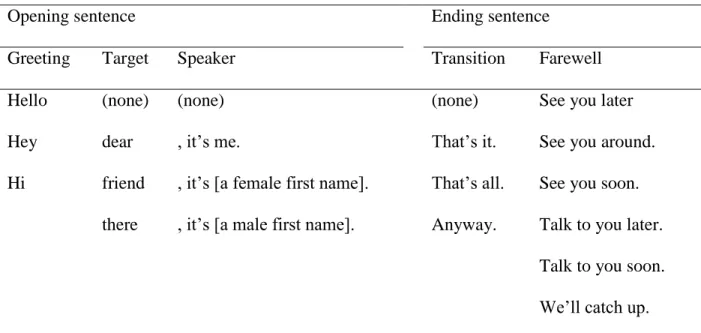
one post-it note. For instance, a script was “Hi girl. I want to tell you that the gift you gave me yesterday really made my day, and I want to do the same for you. Alright, see you soon.”
In the sentences, “to do the same for you” and “to repay you” were used to signal intent of reciprocating kindness, “to make myself a better person” and “to improve myself” showed self-improvement, and “to give you a big hug” and “to hug you” demonstrated bodily contact. All these 6 options appeared once for each format of stimuli and, therefore, twice in the study for a participant. To increase psychological realism and to again address potentially confounded relationships as in Study 2, several linguistic components were also considered. For instance, I systematically varied the social distance between the demonstrator and the receiver by, say, using “Hi dear” to signal a closer distance than did “Hi friend”. I also randomized the gender of the receiver (e.g., by inserting the most typical first names of woman and men in participants’ age range), the objects of the feelings of the demonstrator (e.g., “the gift you gave me” and “what you did”), the temporal distance to these objects of feelings (e.g., “yesterday” and “the other day”), and arguably the formality of the language (e.g., “Hello” is likely more formal than “Hey”). Here, even though I did not plan for statistical power to fully cross all these speech components and I indeed included more options for each of these components that then required even higher power (as detailed in the scripting procedure in Appendix), the 12 scripts were first carefully made in American English and then translated to Taiwanese Chinese for American and Taiwanese participants respectively. As a result, the two groups of people received the same stimuli and study setups except for stimulus languages. This design, in turn, balanced all the linguistic components factored in between the two cultures.