Neuro-Oncology
Neuro-Oncology 18(9), 1209–1218, 2016doi:10.1093/neuonc/now051 Advance Access date 14 May 2016
10.1093/neuonc/now051
Creation of an NCI comparative brain tumor consortium: informing
the translation of new knowledge from canine to human brain
tumor patients
Amy K. LeBlanc, Christina Mazcko, Diane E. Brown, Jennifer W. Koehler, Andrew D. Miller, C. Ryan Miller,
R. Timothy Bentley, Rebecca A. Packer, Matthew Breen, C. Elizabeth Boudreau, Jonathan M. Levine,
R. Mark Simpson, Charles Halsey, William Kisseberth, John H. Rossmeisl Jr., Peter J. Dickinson,
Timothy M. Fan, Kara Corps, Kenneth Aldape, Vinay Puduvalli, G. Elizabeth Pluhar, and Mark R. Gilbert
Comparative Oncology Program, Center for Cancer Research, National Cancer Institute, Bethesda, Maryland (A.K.L, C.M.); American Kennel Club Canine Health Foundation, Raleigh, North Carolina (D.E.B); Department of Pathobiology, College of Veterinary Medicine, Auburn University, Auburn, Alabama (J.W.K); Department of Biomedical Sciences, Section of Anatomic Pathology, Cornell University College of Veterinary Medicine, Ithaca, New York (A.D.M); Departments of Pathology and Laboratory Medicine and Neurology, Lineberger Comprehensive Cancer Center and Neuroscience Center, University of North Carolina School of Medicine, Chapel Hill, North Carolina (C.R.M); Department of Veterinary Clinical Sciences, College of Veterinary Medicine, Purdue University, West Lafayette, Indiana (R.T.B); Department of Clinical Sciences, College of Veterinary Medicine and Biomedical Sciences, Colorado State University, Fort Collins, Colorado, (R.A.P); Department of Molecular Biomedical Sciences, College of Veterinary Medicine, North Carolina State University, Raleigh, North Carolina (M.B.); Department of Small Animal Clinical Sciences, Texas A&M University, College Station, Texas (J.M.L, C.E.B); Laboratory of Cancer Biology and Genetics, Center for Cancer Research, National Cancer Institute, Bethesda, Maryland (R.M.S, C.H.); Department of Veterinary Clinical Sciences, College of Veterinary Medicine, The Ohio State University, Columbus, Ohio, (W.K.); Veterinary and Comparative Neuro-Oncology Laboratory, Department of Small Animal Clinical Sciences, Virginia-Maryland College of Veterinary Medicine, Virginia Tech, Blacksburg, Virginia (J.H.R); Department of Surgery and Radiology, School of Veterinary Medicine, University of California, Davis, California (P.J.D); Department of Veterinary Clinical Medicine, University of Illinois at Urbana-Champaign, Urbana, Illinois (T.M.F); National Institute of Neurological Disorders and Stroke and National Cancer Institute, Bethesda, Maryland (K.C., M.R.G); Department of Pathology, University Health Network, Toronto Medical Discovery Tower, Toronto, Ontario, Canada (K.A.); Department of Neurosurgery, The Ohio State University College of Medicine, Columbus, Ohio, (V.P.); Department of Veterinary Clinical Sciences, College of Veterinary Medicine, University of Minnesota, St. Paul, Minnesota (G.E.P); Neuro-Oncology Branch, Center for Cancer Research, National Cancer Institute, Bethesda, Maryland (M.R.G)
Corresponding Author:Amy LeBlanc, D.V.M., Center for Cancer Research, National Cancer Institute, Bethesda, Maryland 20892 ([email protected]).
On September 14–15, 2015, a meeting of clinicians and investigators in the fields of veterinary and human neuro-oncology, clin-ical trials, neuropathology, and drug development was convened at the National Institutes of Health campus in Bethesda, Mary-land. This meeting served as the inaugural event launching a new consortium focused on improving the knowledge, development of, and access to naturally occurring canine brain cancer, specifically glioma, as a model for human disease. Within the meeting, a SWOT (strengths, weaknesses, opportunities, and threats) assessment was undertaken to critically evaluate the role that naturally occurring canine brain tumors could have in advancing this aspect of comparative oncology aimed at improving outcomes for dogs and human beings. A summary of this meeting and subsequent discussion are provided to inform the scientific and clinical community of the potential for this initiative. Canine and human comparisons represent an unprecedented opportunity to com-plement conventional brain tumor research paradigms, addressing a devastating disease for which innovative diagnostic and treatment strategies are clearly needed.
Keywords:comparative oncology, glioma, translational research.
The past several decades have witnessed remarkable advances in our understanding of human cancers on a genomic level, and hence have provided new opportunities to implement the
practice of personalized medicine. The pharmaceutical industry has invested substantial resources, in both capital and research effort, to identify new cancer drugs that might provide a major
Received 18 December 2015; accepted 27 February 2016
Published by Oxford University Press on behalf of the Society for Neuro-Oncology 2016. This work is written by (a) US Government employee(s) and is in the public domain in the US.
Neuro-Oncology
positive impact on cancer patient survival. Disappointingly, identification of new agents to improve cancer treatment remains elusive for many lethal cancers, with approximately 1 in 4 deaths in the United States being attributed to cancer annually (Cancer Facts & Figures 2015;www.cancer.org). This has been particularly true for malignant primary brain tumors, for which there have been only 2 new therapeutic agents ap-proved over the last 2 decades.1The pathway to successful cancer drug discovery remains difficult and expensive despite significant economic investment, and the development of breakthrough novel therapeutics to match the impact of com-pounds such as imatinib remains extremely infrequent. Given these challenges, there is potential for the pharmaceutical in-dustry to become too risk averse and for the advancement of effective novel therapeutic discovery to ultimately slow. An improved drug development paradigm facilitated by the utiliza-tion of more predictive and accurate preclinical models would offer opportunities to mitigate some of the risk associated with drug development. Such an alternative strategy could be sub-stantively enabled by comparative tumor oncology, pathology, and genomics through the inclusion of companion animals with naturally occurring cancer.2,3
Comparative oncology is a growing field of study centered around investigation of naturally occurring cancers in nonhu-man species, such as pet dogs, as a parallel and complemen-tary model for human cancer research efforts.4–6Like humans, pet dogs naturally develop primary central nervous system neoplasms that encompass a wide variety of tumor histologies, including, but not limited to, glial tumors (astrocytomas, oligo-dendrogliomas), meningiomas, and pituitary gland tumors.7At this time the pet dog is the most widely studied companion an-imal species, due primarily to the degree of genome similarity, shared environment, and the incidence of diagnosed spontane-ous canine cancers reported each year in the US. The promise of comparative oncology and the specific role of the domestic dog formed the basis of a recent review in a special issue of the Royal Society’s journal, and highlights the global opportunities for advancing medicine through the inclusion of naturally oc-curring canine disease models.8
The incidence of brain tumors in dogs is approximately 2%– 4.5% based upon necropsy-dependent surveys and is likely an underestimation given the practical limitations of veterinary medical care.9,10Most descriptive studies agree that approxi-mately 50% of primary brain tumors are meningioma, with gli-omas representing 30%–40% and the remaining comprising choroid plexus tumors, ependymoma, and primitive neuroecto-dermal tumors. Specific breeds are known to have significantly increased risk of primary intracranial tumor development, namely the Boxer, Boston Terrier, Golden Retriever, French Bull-dog, Miniature Schnauzer, and Rat Terrier.10
Recent improvements in the diagnosis and management of canine brain tumors are largely due to the broad adoption of cross-sectional imaging techniques (CT and MRI) within the vet-erinary medical community, coupled with growing expertise and collective clinical experience among veterinary specialists in neurosurgical techniques, radiation therapy protocols, and use of chemotherapy. However, most therapeutic studies in dogs with brain tumors are descriptive in nature, and the con-clusions are limited by retrospective study design and small pa-tient numbers, along with a lack of standardization in tumor
biopsy and/or imaging endpoints across studies. In the absence of prospective and rational clinical trial design, fundamental gaps in knowledge regarding canine brain tumor biology and therapeutic response persist within the veterinary scientific community, and advancement has been hindered by the chal-lenges posed by limitations of the late-stage diagnosis of intra-cranial disease, the morbidity associated with intraintra-cranial procedures such as biopsy/surgical resection and external beam irradiation, and, not inconsequentially, pet owners’ dis-posable income.9,11Despite these limitations, available prelim-inary data suggest that core oncogenic pathways defined in human brain tumors may be implicated in dog tumors, sup-porting a more detailed and thorough evaluation of the model.12–18
Although much is known about the clinical outcomes, imag-ing characteristics, and breed predilection for certain intracrani-al mintracrani-alignancies, there is a paucity of data to enable accurate statistics to catalog true incidence and natural disease history or to establish histologic and molecular relevance to human brain tumors. Despite the expertise and training afforded by American College of Veterinary Internal Medicine specialists in oncology and neurology, as well as critically aligned fields and specialty colleges such as pathology, imaging, neurology, and surgery since the mid-1980s, much remains unknown regard-ing the molecular underpinnregard-ings of canine cancers to better op-timize prevention and patient care. Therefore, there are recognized, but not insurmountable, limitations in being able to assess the true potential of including pet dogs with brain cancers as predictive models to advance therapies for human use. By organizing a focused initiative aimed at overcoming a number of these challenges, the potential inclusion of dogs with brain cancer as a sophisticated preclinical model of human patients offers several advantages for expediting drug discovery and development efforts.19
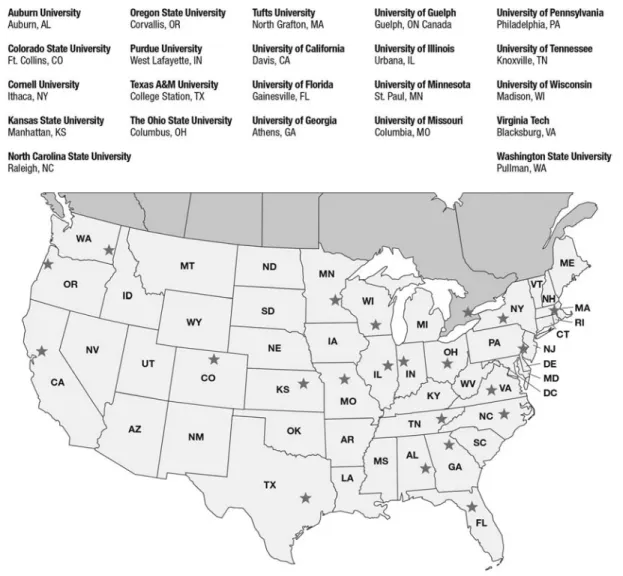
Comparative oncology is now being advanced as a research discipline by many diverse research institutions. The National Cancer Institute’s (NCI) Comparative Oncology Program (COP) is a collaborative group, utilizing an extramural clinical trial con-sortium (Comparative Oncology Trials Concon-sortium [COTC]) (Fig.1) with a demonstrable track record in conducting high-quality sci-entifically robust clinical trials with a variety of sponsors to ad-dress drug development questions that would be difficult to study in the context of conventional animal models of cancer and/or to overcome developmental barrier issues not feasible within the human clinical trial setting.20,21The COTC mechanism provides a facile method for recruiting dogs from multiple partic-ipating veterinary academic institutions. Funding for these trials comes from a variety of sources, including but not limited to the pharmaceutical industry, philanthropic organizations, and NCI. Study support provided to veterinarians caring for dogs enrolled in COTC trials includes clinical veterinary care, conduct of correl-ative assays on biologic samples, and in some cases financial support to owners for future veterinary care for their pet after the study concludes. This group has historically relied on veteri-nary medical oncologists as the institutional COTC investigators. The comparative aspects of canine brain tumors have not been previously studied within the context of a COTC clinical trial. Inconsistent availability of expertise in the field of veterinary neuro-oncology may be a reason that canine brain tumors have not been sufficiently explored as a model for human
brain cancer. To address this challenge, we seek directed im-provements in cooperation of veterinary neurologists, surgeons, and radiation oncologists who manage dogs with intracranial malignancies with other neuro-oncology investigators. Indeed, the somewhat “siloed” nature of research environments and re-liance on single-institution efforts result in potentially biased in-cidence rates and sample populations and small numbers of samples and/or patients being reported in any given aspect of such research.
Human brain tumor research would benefit from a similar need to improve our understanding of the molecular drivers of the disease. However, many novel strategies could potential-ly be borne out of a deeper understanding of tumor biology via The Cancer Genome Atlas and other efforts in molecular char-acterization which are supporting drug discovery.22,23The
lim-itations of current conventional animal models still impede forward progress. Murine models of brain cancer can be in-duced via cell line or patient-derived xenograft techniques or be the result of molecular manipulation, but do not recapitu-late all facets of naturally occurring disease.24 – 27One of the
main obstacles for leveraging the comparative approach for brain tumor research is insufficient evidence that these
mouse and rat models translate to human disease; this in-cludes the lack of consensus among histopathology, molecular markers, genomics, and clinical outcome data.
Organized research groups such as the Collaborative Epen-dymoma Research Network (CERN) provide a roadmap to guide the organization and forward progress of the COP/COTC and other comparative initiatives.28 – 30This initiative uses a
working-group format that unifies multidisciplinary teams around central themes (pathology/molecular markers, tumor biology/immunology, drug discovery, clinical trials, and patient outcomes) to facilitate discussions and exchange of knowl-edge. CERN’s mission and infrastructure were utilized as guiding principles for the discussions during this meeting.
The meeting convened at the National Institutes of Health had 3 main goals:
(1) Establish a collaborative research network with an immediate goal of sharing cross-discipline experiences and knowledge. (2) Define a working group structure (Fig. 2) that could be
positive impact on cancer patient survival. Disappointingly, identification of new agents to improve cancer treatment remains elusive for many lethal cancers, with approximately 1 in 4 deaths in the United States being attributed to cancer annually (Cancer Facts & Figures 2015; www.cancer.org). This has been particularly true for malignant primary brain tumors, for which there have been only 2 new therapeutic agents ap-proved over the last 2 decades.1The pathway to successful
cancer drug discovery remains difficult and expensive despite significant economic investment, and the development of breakthrough novel therapeutics to match the impact of com-pounds such as imatinib remains extremely infrequent. Given these challenges, there is potential for the pharmaceutical in-dustry to become too risk averse and for the advancement of effective novel therapeutic discovery to ultimately slow. An improved drug development paradigm facilitated by the utiliza-tion of more predictive and accurate preclinical models would offer opportunities to mitigate some of the risk associated with drug development. Such an alternative strategy could be sub-stantively enabled by comparative tumor oncology, pathology, and genomics through the inclusion of companion animals with naturally occurring cancer.2,3
Comparative oncology is a growing field of study centered around investigation of naturally occurring cancers in nonhu-man species, such as pet dogs, as a parallel and complemen-tary model for human cancer research efforts.4 – 6Like humans, pet dogs naturally develop primary central nervous system neoplasms that encompass a wide variety of tumor histologies, including, but not limited to, glial tumors (astrocytomas, oligo-dendrogliomas), meningiomas, and pituitary gland tumors.7At
this time the pet dog is the most widely studied companion an-imal species, due primarily to the degree of genome similarity, shared environment, and the incidence of diagnosed spontane-ous canine cancers reported each year in the US. The promise of comparative oncology and the specific role of the domestic dog formed the basis of a recent review in a special issue of the Royal Society’s journal, and highlights the global opportunities for advancing medicine through the inclusion of naturally oc-curring canine disease models.8
The incidence of brain tumors in dogs is approximately 2%– 4.5% based upon necropsy-dependent surveys and is likely an underestimation given the practical limitations of veterinary medical care.9,10Most descriptive studies agree that
approxi-mately 50% of primary brain tumors are meningioma, with gli-omas representing 30%–40% and the remaining comprising choroid plexus tumors, ependymoma, and primitive neuroecto-dermal tumors. Specific breeds are known to have significantly increased risk of primary intracranial tumor development, namely the Boxer, Boston Terrier, Golden Retriever, French Bull-dog, Miniature Schnauzer, and Rat Terrier.10
Recent improvements in the diagnosis and management of canine brain tumors are largely due to the broad adoption of cross-sectional imaging techniques (CT and MRI) within the vet-erinary medical community, coupled with growing expertise and collective clinical experience among veterinary specialists in neurosurgical techniques, radiation therapy protocols, and use of chemotherapy. However, most therapeutic studies in dogs with brain tumors are descriptive in nature, and the con-clusions are limited by retrospective study design and small pa-tient numbers, along with a lack of standardization in tumor
biopsy and/or imaging endpoints across studies. In the absence of prospective and rational clinical trial design, fundamental gaps in knowledge regarding canine brain tumor biology and therapeutic response persist within the veterinary scientific community, and advancement has been hindered by the chal-lenges posed by limitations of the late-stage diagnosis of intra-cranial disease, the morbidity associated with intraintra-cranial procedures such as biopsy/surgical resection and external beam irradiation, and, not inconsequentially, pet owners’ dis-posable income.9,11Despite these limitations, available
prelim-inary data suggest that core oncogenic pathways defined in human brain tumors may be implicated in dog tumors, sup-porting a more detailed and thorough evaluation of the model.12 – 18
Although much is known about the clinical outcomes, imag-ing characteristics, and breed predilection for certain intracrani-al mintracrani-alignancies, there is a paucity of data to enable accurate statistics to catalog true incidence and natural disease history or to establish histologic and molecular relevance to human brain tumors. Despite the expertise and training afforded by American College of Veterinary Internal Medicine specialists in oncology and neurology, as well as critically aligned fields and specialty colleges such as pathology, imaging, neurology, and surgery since the mid-1980s, much remains unknown regard-ing the molecular underpinnregard-ings of canine cancers to better op-timize prevention and patient care. Therefore, there are recognized, but not insurmountable, limitations in being able to assess the true potential of including pet dogs with brain cancers as predictive models to advance therapies for human use. By organizing a focused initiative aimed at overcoming a number of these challenges, the potential inclusion of dogs with brain cancer as a sophisticated preclinical model of human patients offers several advantages for expediting drug discovery and development efforts.19
Comparative oncology is now being advanced as a research discipline by many diverse research institutions. The National Cancer Institute’s (NCI) Comparative Oncology Program (COP) is a collaborative group, utilizing an extramural clinical trial con-sortium (Comparative Oncology Trials Concon-sortium [COTC]) (Fig. 1) with a demonstrable track record in conducting high-quality sci-entifically robust clinical trials with a variety of sponsors to ad-dress drug development questions that would be difficult to study in the context of conventional animal models of cancer and/or to overcome developmental barrier issues not feasible within the human clinical trial setting.20,21The COTC mechanism
provides a facile method for recruiting dogs from multiple partic-ipating veterinary academic institutions. Funding for these trials comes from a variety of sources, including but not limited to the pharmaceutical industry, philanthropic organizations, and NCI. Study support provided to veterinarians caring for dogs enrolled in COTC trials includes clinical veterinary care, conduct of correl-ative assays on biologic samples, and in some cases financial support to owners for future veterinary care for their pet after the study concludes. This group has historically relied on veteri-nary medical oncologists as the institutional COTC investigators. The comparative aspects of canine brain tumors have not been previously studied within the context of a COTC clinical trial. Inconsistent availability of expertise in the field of veterinary neuro-oncology may be a reason that canine brain tumors have not been sufficiently explored as a model for human
brain cancer. To address this challenge, we seek directed im-provements in cooperation of veterinary neurologists, surgeons, and radiation oncologists who manage dogs with intracranial malignancies with other neuro-oncology investigators. Indeed, the somewhat “siloed” nature of research environments and re-liance on single-institution efforts result in potentially biased in-cidence rates and sample populations and small numbers of samples and/or patients being reported in any given aspect of such research.
Human brain tumor research would benefit from a similar need to improve our understanding of the molecular drivers of the disease. However, many novel strategies could potential-ly be borne out of a deeper understanding of tumor biology via The Cancer Genome Atlas and other efforts in molecular char-acterization which are supporting drug discovery.22,23The lim-itations of current conventional animal models still impede forward progress. Murine models of brain cancer can be in-duced via cell line or patient-derived xenograft techniques or be the result of molecular manipulation, but do not recapitu-late all facets of naturally occurring disease.24–27One of the main obstacles for leveraging the comparative approach for brain tumor research is insufficient evidence that these
mouse and rat models translate to human disease; this in-cludes the lack of consensus among histopathology, molecular markers, genomics, and clinical outcome data.
Organized research groups such as the Collaborative Epen-dymoma Research Network (CERN) provide a roadmap to guide the organization and forward progress of the COP/COTC and other comparative initiatives.28–30This initiative uses a working-group format that unifies multidisciplinary teams around central themes (pathology/molecular markers, tumor biology/immunology, drug discovery, clinical trials, and patient outcomes) to facilitate discussions and exchange of knowl-edge. CERN’s mission and infrastructure were utilized as guiding principles for the discussions during this meeting.
The meeting convened at the National Institutes of Health had 3 main goals:
(1) Establish a collaborative research network with an immediate goal of sharing cross-discipline experiences and knowledge. (2) Define a working group structure (Fig.2) that could be
(3) Define the goals of the consortium efforts in a project-based format for each working group.
Herein we present a consensus of the opportunities and chal-lenges identified within the summary of each working group discussion and provide an agenda that can be used to advance this field for the bidirectional benefit of both humans and dogs with this challenging disease.
Strengths
The wide variety of brain tumor histologies that dogs spontane-ously develop, including but not limited to glial tumors (astrocy-tomas, oligodendrogliomas), meningiomas, and pituitary gland tumors, are an obvious strength of the comparative approach. A focus on the dog as a model for human gliomas specifically (Fig.3), as a first priority for tissue-based projects, was consis-tently identified among all 5 working groups as most immedi-ately impactful for improving both human and dog outcomes. A noteworthy advantage of the companion dog model is that spontaneous disease in an immune-competenthost is critical for developing immunomodulatory therapies.31,32Similar physi-cal size and vascular biology should facilitate investigation of the role of the blood–brain barrier and how it limits drug therapies, along with comparable pharmacokinetics (PK) (and potentially pharmacodynamics [PD]) to facilitate dose finding in early clini-cal studies. Realistic assessments of novel physiclini-cal delivery/ther-apeutic strategies have already been demonstrated across several different approaches using dog tumors as a model plat-form.33–36Finally and most importantly, disease heterogeneity,
particularly genomic and epigenomic heterogeneity, is a critical
attribute of canine and human brain cancers that cannot be accurately modeled in conventional animal model approaches to date.
From a clinical trial perspective, one particular strength/op-portunity of the canine brain tumor model in drug development is the initiation of phase 0 studies—small-cohort studies in which the primary endpoints of investigation are (i) target mod-ulation: confirmed and serially evaluated (diagnosis, surgery, necropsy), (ii) outcome assessment: radiological or clinical met-rics of drug effect, and (iii) biodistribution, PK, and PD endpoints to enable identification of “effective exposure” correlated to target modulation while also supporting discovery and valida-tion of biomarkers representative of outcome effect. Several ex-amples of such studies in other canine cancers exist in the scientific literature and forma basis for such endeavors in brain tumor drug development.37–40
Clinical trials in pet dogs with cancer and a variety of other diseases are routinely carried out at veterinary academic cen-ters that evaluate investigational therapies under the care and direction of veterinary specialists in a wide range of disciplines. Clinical care is provided within the veterinary teaching hospital by highly trained teams of veterinary clinicians and technicians according to a standardized protocol. There are specific oppor-tunities for dogs with brain tumors to participate in a clinical trial offered alongside standard treatments, such as surgical re-section and external beam radiotherapy. In this situation, own-ers have the ability to choose the best option for their pet based upon their financial resources and goals and expectations for their pet’s outcome. Funding for such clinical trials is obtained through grants and/or research contracts via philanthropic Fig. 2. A schematic representation of the participating groups within the Comparative Brain Tumor Consortium.
agencies or pharmaceutical companies. Dogs are recruited from the community by participating sites using a variety of social networking, mail, and web-based advertising techniques. The conduct of COTC trials is centrally managed by the NCI-COP, with input from a Data Safety Monitoring Board convened for each trial. Data from these trials are presented and
published in the proceedings of national and international meetings as well as in the biomedical research literature.
The cost/benefit rationale for performing comparative stud-ies in tumor-bearing pet dogs prior to or in parallel with human clinical trials was recently discussed at a National Academies workshop entitled “The Role of Clinical Studies for Pets with Fig. 3. Representative photomicrographs of high-grade (WHO grade III) cerebral oligodendrogliomas in humans, dogs, and mice. (A) Human high-grade oligodendroglioma contains a delicate “chicken wire” vasculature and mucin-rich microcystic spaces and is composed of neoplastic cells with oval, hyperchromatic nuclei, and clear cytoplasm. (B) Higher magnification of a human high-grade oligodendroglioma shows tumor nuclei with crisp nuclear borders and abundant mitoses. (C) A surgical biopsy of a high-grade (grade III) cerebral oligodendroglioma in a Boston Terrier, demonstrating clear cytoplasm and distinct cell membranes, with ovoid hyperchromatic nuclei. (D) Higher magnification highlights endothelial hyperplasia of this lesion. (E) A high-grade oligodendroglioma allograft from a mouse stereotactically injected with oligodendrocyte progenitor cells harboring deletion mutations in transformation related protein 53 and neurofibromatosis type 1 (Ref PMID 25246577) shows similar features, including (F) the delicate vasculature and microcystic spaces and nuclei with crisp nuclear membranes and abundant mitoses. All sections were stained with hematoxylin and eosin. Original magnifications: 200×(A), 600×(B), 200×(C), 400×(D), 400×
(3) Define the goals of the consortium efforts in a project-based format for each working group.
Herein we present a consensus of the opportunities and chal-lenges identified within the summary of each working group discussion and provide an agenda that can be used to advance this field for the bidirectional benefit of both humans and dogs with this challenging disease.
Strengths
The wide variety of brain tumor histologies that dogs spontane-ously develop, including but not limited to glial tumors (astrocy-tomas, oligodendrogliomas), meningiomas, and pituitary gland tumors, are an obvious strength of the comparative approach. A focus on the dog as a model for human gliomas specifically (Fig. 3), as a first priority for tissue-based projects, was consis-tently identified among all 5 working groups as most immedi-ately impactful for improving both human and dog outcomes. A noteworthy advantage of the companion dog model is that spontaneous disease in an immune-competent host is critical for developing immunomodulatory therapies.31,32Similar physi-cal size and vascular biology should facilitate investigation of the role of the blood–brain barrier and how it limits drug therapies, along with comparable pharmacokinetics (PK) (and potentially pharmacodynamics [PD]) to facilitate dose finding in early clini-cal studies. Realistic assessments of novel physiclini-cal delivery/ther-apeutic strategies have already been demonstrated across several different approaches using dog tumors as a model plat-form.33 – 36Finally and most importantly, disease heterogeneity, particularly genomic and epigenomic heterogeneity, is a critical
attribute of canine and human brain cancers that cannot be accurately modeled in conventional animal model approaches to date.
From a clinical trial perspective, one particular strength/op-portunity of the canine brain tumor model in drug development is the initiation of phase 0 studies—small-cohort studies in which the primary endpoints of investigation are (i) target mod-ulation: confirmed and serially evaluated (diagnosis, surgery, necropsy), (ii) outcome assessment: radiological or clinical met-rics of drug effect, and (iii) biodistribution, PK, and PD endpoints to enable identification of “effective exposure” correlated to target modulation while also supporting discovery and valida-tion of biomarkers representative of outcome effect. Several ex-amples of such studies in other canine cancers exist in the scientific literature and form a basis for such endeavors in brain tumor drug development.37 – 40
Clinical trials in pet dogs with cancer and a variety of other diseases are routinely carried out at veterinary academic cen-ters that evaluate investigational therapies under the care and direction of veterinary specialists in a wide range of disciplines. Clinical care is provided within the veterinary teaching hospital by highly trained teams of veterinary clinicians and technicians according to a standardized protocol. There are specific oppor-tunities for dogs with brain tumors to participate in a clinical trial offered alongside standard treatments, such as surgical re-section and external beam radiotherapy. In this situation, own-ers have the ability to choose the best option for their pet based upon their financial resources and goals and expectations for their pet’s outcome. Funding for such clinical trials is obtained through grants and/or research contracts via philanthropic Fig. 2. A schematic representation of the participating groups within the Comparative Brain Tumor Consortium.
agencies or pharmaceutical companies. Dogs are recruited from the community by participating sites using a variety of social networking, mail, and web-based advertising techniques. The conduct of COTC trials is centrally managed by the NCI-COP, with input from a Data Safety Monitoring Board convened for each trial. Data from these trials are presented and
published in the proceedings of national and international meetings as well as in the biomedical research literature.
The cost/benefit rationale for performing comparative stud-ies in tumor-bearing pet dogs prior to or in parallel with human clinical trials was recently discussed at a National Academies workshop entitled “The Role of Clinical Studies for Pets with Fig. 3. Representative photomicrographs of high-grade (WHO grade III) cerebral oligodendrogliomas in humans, dogs, and mice. (A) Human high-grade oligodendroglioma contains a delicate “chicken wire” vasculature and mucin-rich microcystic spaces and is composed of neoplastic cells with oval, hyperchromatic nuclei, and clear cytoplasm. (B) Higher magnification of a human high-grade oligodendroglioma shows tumor nuclei with crisp nuclear borders and abundant mitoses. (C) A surgical biopsy of a high-grade (grade III) cerebral oligodendroglioma in a Boston Terrier, demonstrating clear cytoplasm and distinct cell membranes, with ovoid hyperchromatic nuclei. (D) Higher magnification highlights endothelial hyperplasia of this lesion. (E) A high-grade oligodendroglioma allograft from a mouse stereotactically injected with oligodendrocyte progenitor cells harboring deletion mutations in transformation related protein 53 and neurofibromatosis type 1 (Ref PMID 25246577) shows similar features, including (F) the delicate vasculature and microcystic spaces and nuclei with crisp nuclear membranes and abundant mitoses. All sections were stained with hematoxylin and eosin. Original magnifications: 200×(A), 600×(B), 200×(C), 400×(D), 400×
Naturally Occurring Tumors in Translational Cancer Research” (http://iom.nationalacademies.org/Activities/Disease/NCPF/ 2015-JUN-08.aspx).41Of the many advantages to studying
cancer in dogs for the purposes of human cancer drug devel-opment, one significant benefit is the ability to evaluate novel therapies in treatment-naı¨ve disease, particularly when dogs’ owners are not able or interested in pursuing conventional treatments for their pet. This allows interrogation of relation-ships between drug target and drug exposure within a natural-ly occurring tumor that has not been extensivenatural-ly pretreated with other therapies and thus may provide a more accurate assessment of that drug’s potential for human use. The value of the comparative approach is highlighted by the unique opportunities to explore PK/PD relationships over a range of doses, including serial tissue and biologic sample col-lections, and the ability to make changes to the study protocol in response to data in real time.42
Imaging agent and device development can also uniquely benefit from the physical size of dogs’ brains, and several exam-ples demonstrate the opportunities to evaluate prototype devices (eg, convection-enhanced delivery catheters, stereotactic radio-surgery) utilizing the same or similar clinical technologies that are routinely used in human cancer treatment. To facilitate such efforts, most veterinary medical centers that routinely diag-nose and treat dogs with brain tumors maintain state-of-the-art imaging and therapeutic technologies, such as CT and/or high-strength MRI for brain imaging and stereotactic brain biopsy, interventional radiology suites, and linear accelerators for radio-therapy (Fig.4).43–50
Weaknesses: Where Are the Critical Gaps in This Field?
Limitations include a paucity of knowledge about the natural history of disease progression and its impact on clinical diagno-sis, which can be addressed by a robust survey of veterinarians involved in the diagnosis, management, and treatment of such pets. Most diagnoses of brain cancer in dogs come when signif-icant neurologic deficits and/or seizures are noted, thus tumors are often large and responses even to aggressive therapy are poor.9,51,52The advanced stage of these tumors may actually
lend itself to a new era of collaboration between veterinary
and physician neurologists and neurosurgeons, particularly in the area of complex neurosurgical approaches wherein achiev-ing a gross total resection may be of high prognostic value for the canine patient based upon the human literature.53–55
The lack of standardized methods to evaluate response to therapy limits investigation of patterns of recurrence. This too can be addressed via consensus documents generated within the veterinary community. The lack of robust incidence and prevalence estimates, which may be intensely biased by pat-terns of care, can be addressed in a similar fashion. Some unique features of veterinary medicine are that many patients remain untreated, as dog owners have an option for early election of humane euthanasia, and the overriding impact of finance-driven decisions influences selection biases in treat-ment. These issues can skew estimates of the true incidence of disease among pet dogs, as well as effectiveness of therapies and outcomes data.
The current lack of understanding of molecular underpin-nings that may drive genetics of tumorigenesis and progression in both dogs and humans leaves open the possibility that these may differ between dogs and humans in substantial ways. This area, including an improved understanding of the molecular basis for brain cancer development in dogs, should receive major emphasis in future research. Successful inclusion of pet dogs with brain cancer into the drug discovery and develop-ment pathway will require additional resources and research to confirm the suitability of the pet dog as a reliable preclinical model of human cancer patients. This also would require the thorough characterization and annotation of the canine im-mune system and its response to neoplasia, as well as confir-mation that brain cancers that arise naturally in dogs possess similar or overlapping histopathological, molecular, and genetic signatures as those in human cancer patients. Some data have been generated in the field to address these critical gaps, but larger studies are clearly needed.12,15,24,56–59
Opportunities: How to Address the Weaknesses and
Advocate for the Strengths of the Canine Cancer Model
Each working group generated a robust list of concepts and specific projects in direct response to the acknowledged
Fig. 4. High-grade (grade III) cerebral oligodendroglioma in a Boxer dog. (A) T1-weighted post-contrast transverse MRI. An intra-axial mass lesion displays mixed contrast enhancement and partial ring enhancement. (B) Intraoperative image. A gray lesion has indistinct margins with the surrounding cerebrum. (C) Photomicrograph, surgical biopsy, hematoxylin and eosin. Neoplastic cells have ovoid, hyperchromatic nuclei and clear cytoplasm. Nuclei are ovoid and hyperchromatic. (D) Postoperative T1-weighted post-contrast MRI. There is no evidence of the previous mass. The adjacent lateral ventricle is displaced toward the resection cavity. Note the bone defect associated with previous craniectomy. Images courtesy of Dr R. Timothy Bentley, Purdue University College of Veterinary Medicine.
strengths and weaknesses of studying and utilizing the canine brain cancer model. Creation of a central tissue registry, a cen-tral catalog of veterinary institutions highlighting their individu-al fixed technology/infrastructure, expertise, resources in support of clinical trials, and development of consensus proto-cols were all considered key to rapid advancement of the field with a critical mass of investigators, knowledge, and materials. The largest opportunity facing this initiative is to substantiate valid translation to human disease, and then to leverage this unique model for funding activities to support large-scale investigations.
Opportunities to expand upon the existing, albeit limited, knowledge of canine brain tumors begin with the fact that many veterinary institutions have existing tumor banks in var-ious forms (formalin-fixed paraffin-embedded/frozen) which could support a multiplatform integrative molecular analysis analogous to that performed by The Cancer Genome Atlas on retrospective cohorts, thus helping to establish canine tumor molecular genetic landscapes for comparison with hu-mans.60,61This could include single nucleotide variant and copy number alterations, expression and methylation profiles, comprehensive histopathological characterization to establish diagnostic criteria with comparisons with analogous human tu-mors, and characterization of tumor immunology via immuno-histochemistry and related expression profiles.
Such an effort would begin with the development of an up-dated classification and grading scheme for canine gliomas. The pathology and molecular markers working group felt that developing such a scheme would promote uniformity in diag-nosis across institutions and improve understanding in making comparisons with human adult and pediatric glial tumors. This initiative was envisioned to take place in 2 distinct phases: first, a retrospective pathologic assessment of approximately 200 hematoxylin and eosin stained glass slides of treatment-naı¨ve canine gliomas of all subtypes and grades by both veterinary and physician neuropathologists from multiple participating in-stitutions. High-resolution images will be centrally scanned and hosted digitally, and a consensus panel of a minimum of 6 of each physician and veterinary pathologists would develop a consensus on clear, concise criteria for classification and grad-ing; these should be based whenever possible on the current human World Health Organization system to allow for compar-ison but should incorporate species-specific features as identi-fied and agreed upon. A subgroup of tumors (formalin-fixed paraffin-embedded tissue) that were optimally stored and characterized for this review would then be selected for expres-sion of pertinent molecular markers (such as glial fibrillary acidic protein, vimentin, Olig2, CNPase, synaptophysin, neurofilament M, neuronal nuclei/beta-III tubulin/neurofilament, and Ki67).62 This will be performed using immunohistochemistry to allow fur-ther uniformity in diagnosis and comparisons between human adult and pediatric glial tumors. Development and optimization of the appropriate species-specific reagents to interrogate addi-tional markers of molecular pathogenesis, such as protein 53, alpha thalassemia/mental retardation syndrome X-linked, beta-catenin, and integrase interactor 1, would be valuable in this context and could also be assessed in the setting of RNA sequencing or other techniques.
Second, this group proposed genomic analyses and expres-sion profiling of 50 canine high-grade gliomas meeting these
newly revised classification criteria to allow for comparison with human adult and pediatric glial tumors, and to generate potential pharmacologic targets for canine patients. This aspect of the project will be both retrospective and prospective in na-ture. For the retrospective portion, snap-frozen tissue from insti-tutions with paired banked formalin-fixed paraffin-embedded tissue from glial tumors which have been histopathology-confirmed within the newly proposed grading and classification scheme will be subjected to whole-exome and RNA sequencing. For the prospective portion, kits and detailed standard operating procedures (SOPs) will be distributed to selected sites, both aca-demic institutions and private practices, for the collection of tumor specimens. Samples will be snap-frozen tissue or tissue in RNAlater and formalin-fixed tissue. Samples will be stored at a central biobank location and subjected to histopathological confirmation, whole-exome sequencing, and RNA sequencing, as funding is available. Sequence information will be subjected to informatics, processed, and shared publicly as soon as publi-cation ready. Collection of tissues and sharing of data for public dissemination to advance these goals was felt to be optimally facilitated by the NCI-COP. The NCI is ideally positioned to take a leadership role in this effort, as demonstrated within other comparative oncology initiatives.63
If successful, the above effort could be used to create infra-structure that would facilitate establishing a multi-institutional collaboration for prospective tissue banking in order to estab-lish best practices for tissue collection and estabestab-lish SOPs for analysis and public dissemination of data. This could be fol-lowed by formation of a multi-institutional cooperative group for generating patient-derived xenografts and cell lines to facil-itate in vitro and in vivo studies alongside a multi-institutional cooperative clinical trials group to establish standards of diag-nosis (pathology and imaging), treatment (surgery, radiation and chemotherapy), and definition of outcomes (pathology and clinical care). Additionally, there is the opportunity to lever-age the existing NCI-COTC infrastructure, currently comprising 22 active veterinary academic centers, many of which repre-sent the key leaders in veterinary neurology and oncology. The existing COTC membership and agreements for study con-duct and data management could be expanded and/or modi-fied to include additional collaborators.
Naturally Occurring Tumors in Translational Cancer Research” (http://iom.nationalacademies.org/Activities/Disease/NCPF/ 2015-JUN-08.aspx).41Of the many advantages to studying
cancer in dogs for the purposes of human cancer drug devel-opment, one significant benefit is the ability to evaluate novel therapies in treatment-naı¨ve disease, particularly when dogs’ owners are not able or interested in pursuing conventional treatments for their pet. This allows interrogation of relation-ships between drug target and drug exposure within a natural-ly occurring tumor that has not been extensivenatural-ly pretreated with other therapies and thus may provide a more accurate assessment of that drug’s potential for human use. The value of the comparative approach is highlighted by the unique opportunities to explore PK/PD relationships over a range of doses, including serial tissue and biologic sample col-lections, and the ability to make changes to the study protocol in response to data in real time.42
Imaging agent and device development can also uniquely benefit from the physical size of dogs’ brains, and several exam-ples demonstrate the opportunities to evaluate prototype devices (eg, convection-enhanced delivery catheters, stereotactic radio-surgery) utilizing the same or similar clinical technologies that are routinely used in human cancer treatment. To facilitate such efforts, most veterinary medical centers that routinely diag-nose and treat dogs with brain tumors maintain state-of-the-art imaging and therapeutic technologies, such as CT and/or high-strength MRI for brain imaging and stereotactic brain biopsy, interventional radiology suites, and linear accelerators for radio-therapy (Fig. 4).43 – 50
Weaknesses: Where Are the Critical Gaps in This Field?
Limitations include a paucity of knowledge about the natural history of disease progression and its impact on clinical diagno-sis, which can be addressed by a robust survey of veterinarians involved in the diagnosis, management, and treatment of such pets. Most diagnoses of brain cancer in dogs come when signif-icant neurologic deficits and/or seizures are noted, thus tumors are often large and responses even to aggressive therapy are poor.9,51,52The advanced stage of these tumors may actually
lend itself to a new era of collaboration between veterinary
and physician neurologists and neurosurgeons, particularly in the area of complex neurosurgical approaches wherein achiev-ing a gross total resection may be of high prognostic value for the canine patient based upon the human literature.53 – 55
The lack of standardized methods to evaluate response to therapy limits investigation of patterns of recurrence. This too can be addressed via consensus documents generated within the veterinary community. The lack of robust incidence and prevalence estimates, which may be intensely biased by pat-terns of care, can be addressed in a similar fashion. Some unique features of veterinary medicine are that many patients remain untreated, as dog owners have an option for early election of humane euthanasia, and the overriding impact of finance-driven decisions influences selection biases in treat-ment. These issues can skew estimates of the true incidence of disease among pet dogs, as well as effectiveness of therapies and outcomes data.
The current lack of understanding of molecular underpin-nings that may drive genetics of tumorigenesis and progression in both dogs and humans leaves open the possibility that these may differ between dogs and humans in substantial ways. This area, including an improved understanding of the molecular basis for brain cancer development in dogs, should receive major emphasis in future research. Successful inclusion of pet dogs with brain cancer into the drug discovery and develop-ment pathway will require additional resources and research to confirm the suitability of the pet dog as a reliable preclinical model of human cancer patients. This also would require the thorough characterization and annotation of the canine im-mune system and its response to neoplasia, as well as confir-mation that brain cancers that arise naturally in dogs possess similar or overlapping histopathological, molecular, and genetic signatures as those in human cancer patients. Some data have been generated in the field to address these critical gaps, but larger studies are clearly needed.12,15,24,56 – 59
Opportunities: How to Address the Weaknesses and
Advocate for the Strengths of the Canine Cancer Model
Each working group generated a robust list of concepts and specific projects in direct response to the acknowledged
Fig. 4. High-grade (grade III) cerebral oligodendroglioma in a Boxer dog. (A) T1-weighted post-contrast transverse MRI. An intra-axial mass lesion displays mixed contrast enhancement and partial ring enhancement. (B) Intraoperative image. A gray lesion has indistinct margins with the surrounding cerebrum. (C) Photomicrograph, surgical biopsy, hematoxylin and eosin. Neoplastic cells have ovoid, hyperchromatic nuclei and clear cytoplasm. Nuclei are ovoid and hyperchromatic. (D) Postoperative T1-weighted post-contrast MRI. There is no evidence of the previous mass. The adjacent lateral ventricle is displaced toward the resection cavity. Note the bone defect associated with previous craniectomy. Images courtesy of Dr R. Timothy Bentley, Purdue University College of Veterinary Medicine.
strengths and weaknesses of studying and utilizing the canine brain cancer model. Creation of a central tissue registry, a cen-tral catalog of veterinary institutions highlighting their individu-al fixed technology/infrastructure, expertise, resources in support of clinical trials, and development of consensus proto-cols were all considered key to rapid advancement of the field with a critical mass of investigators, knowledge, and materials. The largest opportunity facing this initiative is to substantiate valid translation to human disease, and then to leverage this unique model for funding activities to support large-scale investigations.
Opportunities to expand upon the existing, albeit limited, knowledge of canine brain tumors begin with the fact that many veterinary institutions have existing tumor banks in var-ious forms (formalin-fixed paraffin-embedded/frozen) which could support a multiplatform integrative molecular analysis analogous to that performed by The Cancer Genome Atlas on retrospective cohorts, thus helping to establish canine tumor molecular genetic landscapes for comparison with hu-mans.60,61This could include single nucleotide variant and
copy number alterations, expression and methylation profiles, comprehensive histopathological characterization to establish diagnostic criteria with comparisons with analogous human tu-mors, and characterization of tumor immunology via immuno-histochemistry and related expression profiles.
Such an effort would begin with the development of an up-dated classification and grading scheme for canine gliomas. The pathology and molecular markers working group felt that developing such a scheme would promote uniformity in diag-nosis across institutions and improve understanding in making comparisons with human adult and pediatric glial tumors. This initiative was envisioned to take place in 2 distinct phases: first, a retrospective pathologic assessment of approximately 200 hematoxylin and eosin stained glass slides of treatment-naı¨ve canine gliomas of all subtypes and grades by both veterinary and physician neuropathologists from multiple participating in-stitutions. High-resolution images will be centrally scanned and hosted digitally, and a consensus panel of a minimum of 6 of each physician and veterinary pathologists would develop a consensus on clear, concise criteria for classification and grad-ing; these should be based whenever possible on the current human World Health Organization system to allow for compar-ison but should incorporate species-specific features as identi-fied and agreed upon. A subgroup of tumors (formalin-fixed paraffin-embedded tissue) that were optimally stored and characterized for this review would then be selected for expres-sion of pertinent molecular markers (such as glial fibrillary acidic protein, vimentin, Olig2, CNPase, synaptophysin, neurofilament M, neuronal nuclei/beta-III tubulin/neurofilament, and Ki67).62
This will be performed using immunohistochemistry to allow fur-ther uniformity in diagnosis and comparisons between human adult and pediatric glial tumors. Development and optimization of the appropriate species-specific reagents to interrogate addi-tional markers of molecular pathogenesis, such as protein 53, alpha thalassemia/mental retardation syndrome X-linked, beta-catenin, and integrase interactor 1, would be valuable in this context and could also be assessed in the setting of RNA sequencing or other techniques.
Second, this group proposed genomic analyses and expres-sion profiling of 50 canine high-grade gliomas meeting these
newly revised classification criteria to allow for comparison with human adult and pediatric glial tumors, and to generate potential pharmacologic targets for canine patients. This aspect of the project will be both retrospective and prospective in na-ture. For the retrospective portion, snap-frozen tissue from insti-tutions with paired banked formalin-fixed paraffin-embedded tissue from glial tumors which have been histopathology-confirmed within the newly proposed grading and classification scheme will be subjected to whole-exome and RNA sequencing. For the prospective portion, kits and detailed standard operating procedures (SOPs) will be distributed to selected sites, both aca-demic institutions and private practices, for the collection of tumor specimens. Samples will be snap-frozen tissue or tissue in RNAlater and formalin-fixed tissue. Samples will be stored at a central biobank location and subjected to histopathological confirmation, whole-exome sequencing, and RNA sequencing, as funding is available. Sequence information will be subjected to informatics, processed, and shared publicly as soon as publi-cation ready. Collection of tissues and sharing of data for public dissemination to advance these goals was felt to be optimally facilitated by the NCI-COP. The NCI is ideally positioned to take a leadership role in this effort, as demonstrated within other comparative oncology initiatives.63
If successful, the above effort could be used to create infra-structure that would facilitate establishing a multi-institutional collaboration for prospective tissue banking in order to estab-lish best practices for tissue collection and estabestab-lish SOPs for analysis and public dissemination of data. This could be fol-lowed by formation of a multi-institutional cooperative group for generating patient-derived xenografts and cell lines to facil-itate in vitro and in vivo studies alongside a multi-institutional cooperative clinical trials group to establish standards of diag-nosis (pathology and imaging), treatment (surgery, radiation and chemotherapy), and definition of outcomes (pathology and clinical care). Additionally, there is the opportunity to lever-age the existing NCI-COTC infrastructure, currently comprising 22 active veterinary academic centers, many of which repre-sent the key leaders in veterinary neurology and oncology. The existing COTC membership and agreements for study con-duct and data management could be expanded and/or modi-fied to include additional collaborators.
Threats to Advancement of the Field
In order for the scientific community to assess the potential value of diagnoses of brain cancer in pet dogs as a valuable and predictive preclinical model for drug discovery and develop-ment, several key opportunities must be seized and acted upon by leaders in the field as described above. The meeting partic-ipants widely acknowledged that a critical first step needs to be the establishment of a consortium of scientific and clinical in-vestigators working toward well-defined and common goals. These will be identified as areas of priority within the brain can-cer community, and as such will help to galvanize these inves-tigators to engage in continued scientific collaborations, requiring ongoing attention and leadership within a designated neutral third party. The NCI naturally fulfills this role with its commitment to support of the extramural community while le-veraging unique resources and acting as a stimulus to convene cross-discipline audiences around topics such as comparative oncology.
Perhaps the biggest risk facing this new consortium is the possibility that the model of the molecular landscape of ca-nines is not widely translatable to the human disease and/or is limited to the study of a small subset of human tumors. If comparative overlap is narrow, the momentum behind the con-sortium may be lost and a lack of buy-in from other researchers will result in continuation of small independent projects with lesser impact. Also acknowledged during this meeting was the need for increased understanding by physicians of the sta-tus of veterinary knowledge and expertise in canine brain tu-mors, realizing that there is an ongoing need to overcome preconceptions within the human cancer research community. We believe that it is critical to define the comparative areas most likely to provide informative data for cross-species thera-peutic development, whether these are pathway targeted ther-apies, cell targeting therther-apies, gross delivery/interventional strategies, or assessment of immunomodulatory strategies. Early goals must be attainable and informative to maintain con-sortium momentum with a focus on defining model strengths, which we contend are “barrier” questions that are difficult to swer in rodent models or human trials but which could be an-swered in the validated dog model with relatively small numbers of cases. Care should be taken not to oversell the po-tential for therapeutic outcome trials as the primary or only long-term goal for this consortium, particularly given the logistical, fi-nancial, and technical limitations inherent in the veterinary neuro-oncology field. Similarly, it could be imprudent to assign go/no-go decisions for the continuation of consortium activities that are linked to the outcomes of experiments that have yet to be defined. The National Academies workshop on comparative oncology highlighted a number of critical gaps in the field, most notably characterization of the molecular landscape of ca-nine cancers. We agree that definition of the critical similarities and differences that may exist in histopathological characteriza-tion and key molecular pathways is an early and important pri-ority. However, there are still several important facets of canine brain cancer that make this approach a valuable complement to traditional animal models. A significant body of published work indicates where successes exist in the application of the compar-ative approach to brain tumor research for the purposes of drug development and delivery techniques.31–36An ongoing priority
will be the advocacy and dissemination of such data to the larger brain tumor community to maintain momentum of this consortium.
In summary, a commitment to collaboration has been es-tablished among veterinarians involved in canine brain tumor patient management and physician investigators. Translational and basic research is clearly needed for an improved under-standing of natural disease progression and how clinical obser-vations can be leveraged for the development of novel treatment strategies for both dogs and humans. Further, ac-knowledgment and appreciation of the unique strengths and opportunities that exist between species and among veterinar-ians and physicveterinar-ians are keys to establishing a consensus of what comparative aspects are most important to the field.
Funding
This research was supported in part by the Intramural Research Program of the National Institutes of Health (NIH), the NCI, and the Center for Cancer Research. The results and interpretations do not reflect the views of the US government. K.C. is a fellow in the NIH Comparative Biomedical Scientist Training Program supported by the National Institute of Neurological Disorders and Stroke, the NCI, and North Carolina State University.
References
1. Kang JH, Adamson C. Novel chemotherapeutics and other therapies for treating high-grade glioma.Expert Opin Investig Drugs. 2015;24(10):1361–1379.
2. Gordon IK, Khanna C. Modeling opportunities in comparative oncology for drug development.ILAR J. 2010;51(3):214–220. 3. Gordon I, Paoloni M, Mazcko C, et al. The Comparative Oncology
Trials Consortium: using spontaneously occurring cancers in dogs to inform the cancer drug development pathway.PLoS Med. 2009;6(10):e1000161. doi:10.1371/journal.pmed.1000161. 4. Vail DM, MacEwen EG. Spontaneously occurring tumors of
companion animals as models for human cancer.Cancer Invest.
2000;18:781–792.
5. Lairmore MD, Khanna C. Naturally occurring diseases in animals: contributions to translational medicine.ILAR J. 2014;55(1):1–3. 6. Khanna C, London C, Vail D, et al. Guiding the optimal translation
of new cancer treatments from canine to human cancer patients.
Clin Cancer Res. 2009;15(18):5671–5677.
7. Hicks J, Platt S, Kent M, et al. Canine brain tumours: a model for the human disease?Vet Comp Oncol. 2015. doi:10.1111/vco.12152. 8. Schiffman JD, Breen M. Comparative oncology: what dogs and
other species can teach us about humans with cancer.Philos Trans R Soc Lond B Biol Sci. 2015;370(1673). pii: 20140231. 9. Song RB, Vite CH, Bradley CW, et al. Postmortem evaluation of 435
cases of intracranial neoplasia in dogs and relationship of neoplasm with breed, age, and body weight.J Vet Intern Med. 2013;27(5):1143–1152.
10. Dickinson PJ. Advances in diagnostic and treatment modalities for intracranial tumors.J Vet Intern Med. 2014;28(4):1165–1185. 11. Hu H, Barker A, Harcourt-Brown T, et al. Systematic review of brain
tumor treatment in dogs. J Vet Intern Med. 2015;29(6): 1456–1463.
12. Boudreau CE, York D, Higgins RJ, et al. Molecular signaling pathways in canine gliomas. Vet Comp Oncol. 2015. [Epub ahead of print] PubMed PMID: 25808605. doi: 10.1111/vco.12147. 13. Debinski W, Dickinson P, Rossmeisl JH, et al. New agents for targeting of IL-13RA2 expressed in primary human and canine brain tumors.PLoS One. 2013;8(10):e77719.
14. Dickinson PJ, Roberts BN, Higgins RJ, et al. Expression of receptor tyrosine kinases VEGFR-1 (FLT-1), VEGFR-2 (KDR), EGFR-1, PDGFRalpha and c-Met in canine primary brain tumours.Vet Comp Oncol. 2006;4:132–140.
15. Higgins RJ, Dickinson PJ, LeCouteur RA, et al. Spontaneous canine gliomas: overexpression of EGFR, PDGFRalpha and IGFBP2 demonstrated by tissue microarray immunophenotyping.
J Neurooncol. 2010;98(1):49–55.
16. Stoica G, Kim HT, Hall DG, et al. Morphology, immunohistochemistry, and genetic alterations in dog astrocytomas.Vet Pathol. 2004;41: 10–19.
17. Lipsitz D, Higgins RJ, Kortz GD, et al. Glioblastoma multiforme: clinical findings, magnetic resonance imaging, and pathology in five dogs.Vet Pathol. 2003;40:659–669.
18. Dickinson PJ, Sturges BK, Higgins RJ, et al. Vascular endothelial growth factor mRNA expression and peritumoral edema in canine primary central nervous system tumors. Vet Pathol. 2008;45:131–139.
19. Kimmelman J, Nalbantoglu J. Faithful companions: a proposal for neurooncology trials in pet dogs. Cancer Res. 2007;67(10): 4541–4544.
20. Paoloni MC, Tandle A, Mazcko C, et al. Launching a novel preclinical infrastructure: Comparative Oncology Trials Consortium directed therapeutic targeting of TNFalpha to cancer vasculature.PLoS One. 2009;4:e4972.
21. Paoloni M, Mazcko C, Selting K, et al. Defining the pharmacodynamic profile and therapeutic index of NHS-IL12 immunocytokine in dogs with malignant melanoma.PLoS One. 2015;10(6):e0129954.
22. Kim YW, Koul D, Kim SH, et al. Identification of prognostic gene signatures of glioblastoma: a study based on TCGA data analysis.Neuro Oncol. 2013;15(7):829–839.
23. Doucette T, Rao G, Rao A, et al. Immune heterogeneity of glioblastoma subtypes: extrapolation from The Cancer Genome Atlas.Cancer Immunol Res. 2013;1(2):112–122.
24. Candolfi M, Curtin JF, Nichols SW, et al. Intracranial glioblastoma models in preclinical neuro-oncology: neuropathological characterization and tumor progression.J Neurooncol. 2007; 85(2):133–148.
25. Lim SK, Llaguno SR, McKay RM, et al. Glioblastoma multiforme: a perspective on recent findings in human cancer and mouse models.BMB Rep. 2011;44(3):158–164.
26. El Meskini R, Iacovelli AJ, Kulaga A, et al. A preclinical orthotopic model for glioblastoma recapitulates key features of human tumors and demonstrates sensitivity to a combination of MEK and PI3K pathway inhibitors.Dis Model Mech. 2015;8(1):45–56. 27. McNeill RS, Vitucci M, Wu J, et al. Contemporary murine models in
preclinical astrocytoma drug development.Neuro Oncol. 2015; 17(1):12–28.
28. DeWire M, Fouladi M, Turner DC, et al. An open-label, two-stage, phase II study of bevacizumab and lapatinib in children with recurrent or refractory ependymoma: a Collaborative Ependymoma Research Network study (CERN).J Neurooncol. 2015;123(1):85–91.
29. Raghunathan A, Wani K, Armstrong TS, et al. Histological predictors of outcome in ependymoma are dependent on anatomic site within the central nervous system.Brain Pathol. 2013;23(5):584–594.
30. Wani K, Armstrong TS, Vera-Bolanos E, et al. A prognostic gene expression signature in infratentorial ependymoma. Acta Neuropathol. 2012;123(5):727–738.
31. Olin MR, Pluhar GE, Andersen BM, et al. Victory and defeat in the induction of a therapeutic response through vaccine therapy for human and canine brain tumors: a review of the state of the art.Crit Rev Immunol. 2014;34(5):399–432.
32. Andersen BM, Pluhar GE, Seiler CE, et al. Vaccination for invasive canine meningioma induces in situ production of antibodies capable of antibody-dependent cell-mediated cytotoxicity.
Cancer Res. 2013;73(10):2987–2997.
33. Platt S, Nduom E, Kent M, et al. Canine model of convection-enhanced delivery of cetuximab-conjugated iron-oxide nanoparticles monitored with magnetic resonance imaging.Clin Neurosurg. 2012;59:107–113.
34. Dickinson PJ, LeCouteur RA, Higgins RJ, et al. Canine spontaneous glioma: a translational model system for convection-enhanced delivery.Neuro Oncol. 2010;12(9):928–940.
35. Dickinson PJ, LeCouteur RA, Higgins RJ, et al. Canine model of convection-enhanced delivery of liposomes containing CPT-11 monitored with real-time magnetic resonance imaging: laboratory investigation.J Neurosurg. 2008;108(5):989–998. 36. Packer RA, Freeman LJ, Miller MA, et al. Evaluation of minimally
invasive excisional brain biopsy and intracranial brachytherapy catheter placement in dogs.Am J Vet Res. 2011;72:109–121. 37. Paoloni MC, Mazcko C, Fox E, et al. Rapamycin pharmacokinetic
and pharmacodynamic relationships in osteosarcoma: a comparative oncology study in dogs.PLoS One. 2010;5(6):e11013. 38. London CA, Bear MD, McCleese J, et al. Phase I evaluation of STA-1474, a prodrug of the novel HSP90 inhibitor ganetespib, in dogs with spontaneous cancer.PLoSOne. 2011;6(11):e27018. 39. London CA, Bernabe LF, Barnard S, et al. Evaluation of the novel,
orally bioavailable selective inhibitor of nuclear export (SINE) KPT-335 in spontaneous canine cancer: results of a phase I study.PLoSOne. 2014;9(2):e87585.
40. Honigberg LA, Smith AM, Sirisawad M, et al. The Bruton tyrosine kinase inhibitor PCI-32765 blocks B-cell activation and is efficacious in models of autoimmune disease and B-cell malignancy. Proc Natl Acad Sci U S A. 2010;107(29): 13075–13080.
41. LeBlanc AK, Mazcko CN, Khanna C. Defining the value of a comparative approach to cancer drug development.Clin Cancer Res. 2015. pii: clincanres.2347.2015. [Epub ahead of print]. 42. LeBlanc AK, Breen M, Choyke P, et al. Perspectives from man’s best
friend: National Academy of Medicine’s workshop on comparative oncology.Sci Transl Med. 2016;8(324). [Epub ahead of print]. 43. Rossmeisl JH Jr, Garcia PA, Pancotto TE, et al. Safety and feasibility
of the NanoKnife system for irreversible electroporation ablative treatment of canine spontaneous intracranial gliomas.
J Neurosurg. 2015;123(4):1008–1025.
44. Zwingenberger AL, Pollard RE, Kent MS. Measuring response of brain tumors to stereotactic radiosurgery: interim results.Vet Radiol Ultrasound. 2010;51:577.