ASSESSING THE PREVENTION IMPACT OF HIV COUNSELING AND TESTING IN THE SOUTH AFRICAN CONTEXT
Nora E. Rosenberg
A dissertation submitted to the faculty of the University of North Carolina at Chapel Hill in partial fulfillment of the requirements for the degree of Doctor of Philosophy
in the Department of Epidemiology.
Chapel Hill 2012
Approved by:
Dr. Audrey Pettifor
Dr. William C. Miller
Dr. Frieda Behets
Dr. Suzanne Maman
ii
iii
ABSTRACT
NORA E. ROSENBERG: Assessing the Prevention Impact of HIV Counseling and Testing in the South African Context
(Under the direction of Audrey E. Pettifor)
HIV counseling and testing (HCT) is rapidly being brought to scale in South Africa, yet
its impact on sexual behavior and HIV incidence is not well understood. The purpose of Aim 1
was to assess whether HIV-infected persons in HIV-discordant couples were less likely to engage
in unprotected sex after HCT. Self-reported behavioral data from 500 HIV-infected South
Africans enrolled in Partners in Prevention HSV/HIV Transmission Study was used. The sexual
behavior of two groups was compared: HIV-infected persons who had just learned their HIV
status from HCT (< 7 days before baseline) and those who previously learned their HIV status
from HCT (> 30 days before baseline). Among those tested <7 days before baseline the predicted
probability of unprotected sex was high at baseline (0.71), declined in month one (0.08) and
remained lower at month twelve (0.08).Among those tested >30 days before baseline the
predicted probability of unprotected sex was lower at baseline (0.26), declined futher by month
one (0.14) and remained lower at month twelve (0.19). These findings suggest HCT lead to
substantial reductions in unprotected sex.In the second aim, the effect of HCT on future HIV
acquisition among HIV-uninfected youth was assessed. A retrospective cohort study of 3959
HIV-uninfected youth 15-24 years-old was conducted using a demographic and health
surveillance from KwaZulu-Natal, South Africa (2006-2011). Young persons who reported
knowing their HIV status from HCT were compared to those who reported not knowing their
HIV status from HCT for time to HIV seroconversion using marginal structural Cox proportional
iv
protective [HR: 0.59, 95% CI: 0.44, 0.78], underscoring the importance of HCT for youth. In the
third aim a framework was developed to describe nine “awareness patterns” within
HIV-discordant dyads considering both HCT and HIV disclosure together. It was hypothesized that
different types of HCT lead to different awareness patterns and that certain patterns are more
strongly associated with uptake of and adherence to behavioral and biomedical HIV prevention
strategies. Better understandings of these associations may inform how to optimize HCT delivery
v
ACKNOWLEDGMENTS
Nora E. Rosenberg was supported by the John Motley Morehead Fellowship awarded by
the Graduate School at the University of North Carolina at Chapel Hill from 2008-2012. She was
supported by the DHHS/NIH/NIAID (T32 AI 007001-34) from 2010 to 2012 for the research and
writing of this dissertation. She was also recognized by the Department of Epidemiology with the
Cornoni-Huntley Endowed Scholarship in Epidemiology and by the UNC Gillings School of
Global Public Health with the Winstanly Scholarship. She is grateful for these generous sources
of support.
For Aim 1, data came from the Partners in Prevention HSV/HIV Transmission Study.
Partners in Prevention was funded by the Bill & Melinda Gates Foundation (Grant #26469).
For Aim 2, data came from The Africa Centre for Health and Population Studies. The
Africa Centre receives core funding from the Wellcome Trust for the Demographic and HIV
Surveillance.
vi
TABLE OF CONTENTS
LIST OF TABLES ... vii
LIST OF FIGURES ... ix
LIST OF
ABBREVIATIONS ... x
CHAPTER I: Specific Aims...1
References ... 4
CHAPTER II: Background ... 6
Tables and Figures ... 17
References ... 20
CHAPTER III: Resarch Design and Methods ... 27
Tables and Figures ... 49
References ... 57
CHAPTER IV: Aim 1—Couples HIV Testing and Counseling Leads to
Immediate, Sustained Consistent Condom Use among
South African Stable HIV-discordant Couples...61
Tables and Figures ... 73
References ... 80
CHAPTER V: Aim 2—The Effect of HIV Counseling and Testing on HIV
Acquisition among South African Youth: Evidence of
Protectiveness...83
Tables and Figures ... 95
vii
CHAPTER VI: Aim 3—The Awareness Framework: A Novel Approach
for Understanding HIV Testing and Disclosure in HIV-
HIV-discordant Dyads...105
Tables and Figures ... 113
References ... 115
CHAPTER VII: Discussion ... 119
Tables and Figures ... 132
viii
LIST OF TABLES
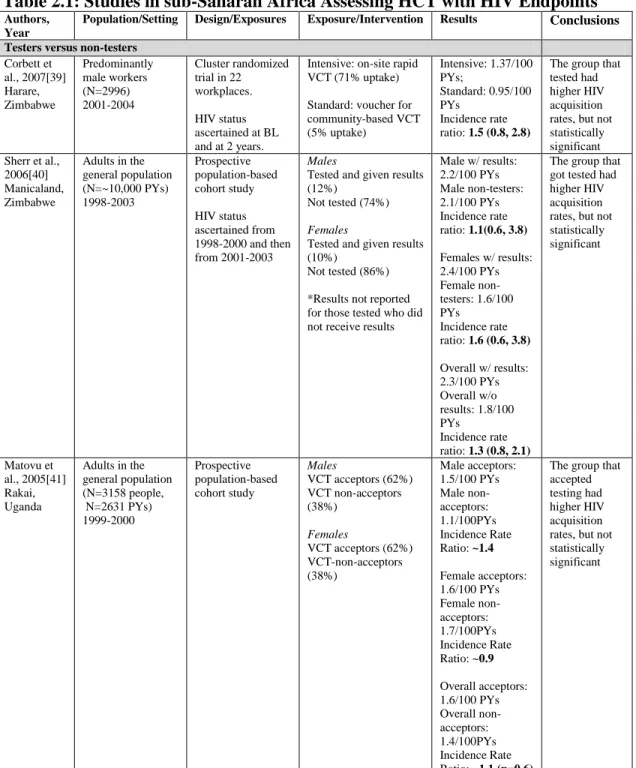
Table 2.1: Studies in sub-Saharan Africa Assessing HCT with HIV Endpoints...17
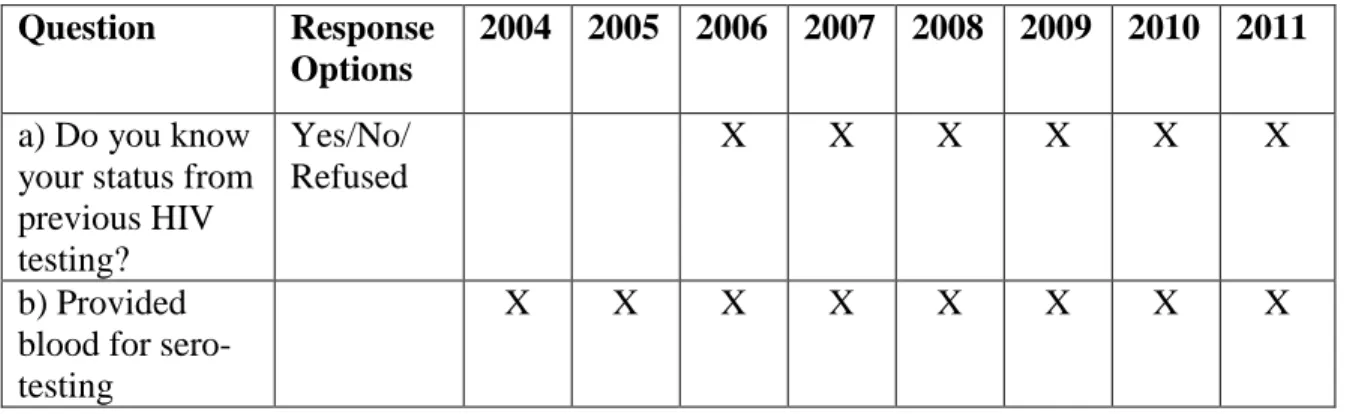
Table 3.1: Timing of Exposure and Outcome Assessment...49
Table 3.2: The Awareness Framework...50
Table 4.1a: Baseline Characteristics of HIV-infected Participants by Time Since HCT...73
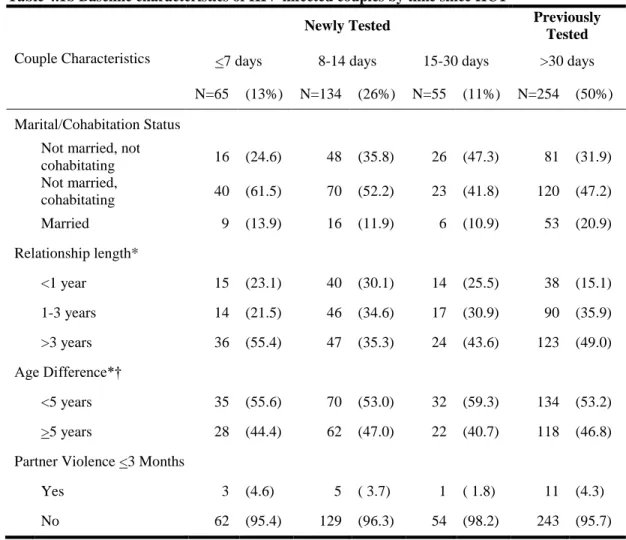
Table 4.1b: Baseline Characteristics of HIV-infected Couples by Time Since HCT...74
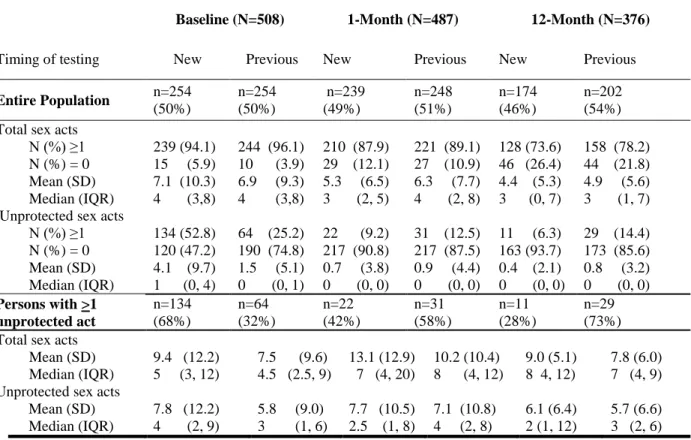
Table 4.2: Sexual Behavior in the Previous Month Comparing Newly to Previously Tested at Baseline, Month One, and Month Twelve...75
Table 4.3: Unadjusted and Adjusted Baseline ZINB Models by Time since HCT...76
Table 5.1: Baseline Characteristics of the Study Population...95
Table 5.2: Incidence of HIV Acquisition by HCT Exposure and Covariates...96
Table 5.3: Hazard of HIV Acquisition by HIV Counseling and Testing Status...98
Table 6.1: The Awareness Framework—Nine Patterns for HIV-Discordant Dyads...113
ix
LIST OF FIGURES
Figure 2.1: Information, Motivation, Behavioral Skills Theoretical Framework...19
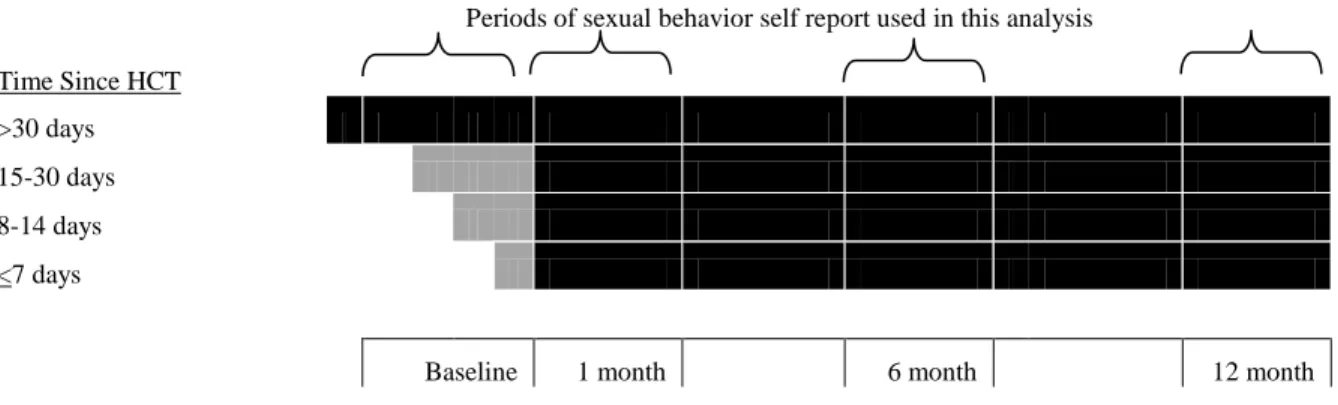
Figure 3.1: Schematic for Aim 1 ...51
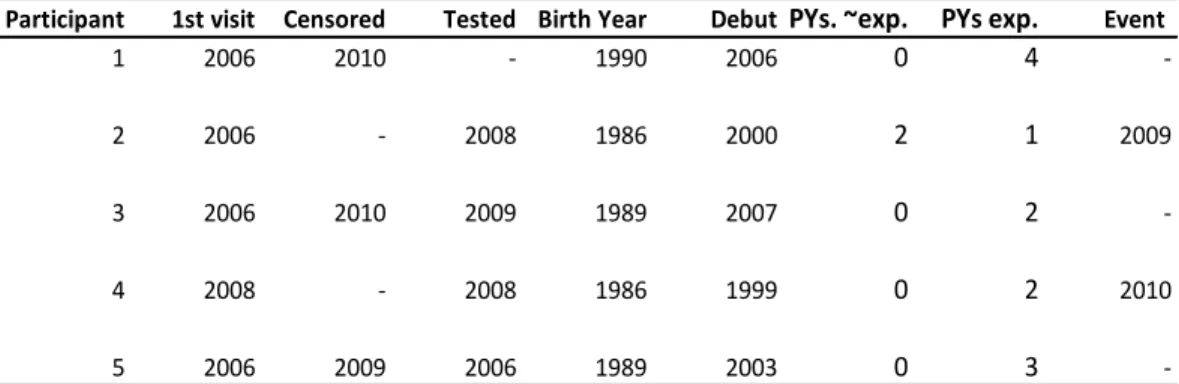
Figure 3.2:Examination of a Small Risk Set Using Four Different Time Scales...52
Figure 3.3: Causal Structure of Selection Bias...54
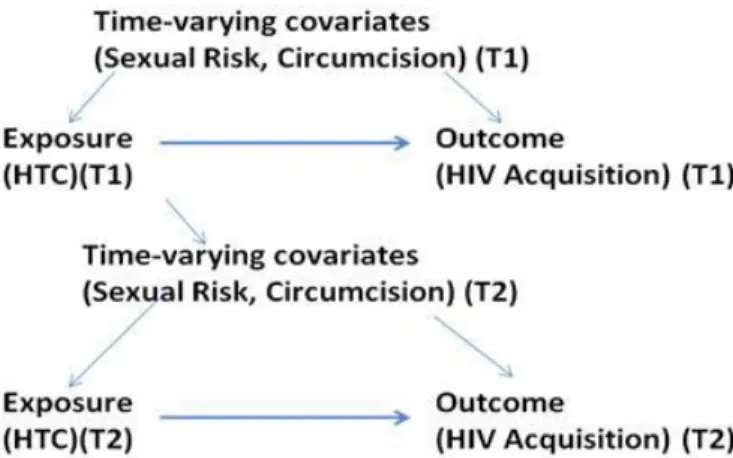
Figure 3.4: A Causal Structure of Time-varying Confounding...55
Figure 3.5: Power Calculation for Aim 2...56
Figure 4.1: Schematic of Baseline and Longitudinal Analyses...77
Figure 4.2a: Unadjusted Predicted Probability of Any Unprotected Sex Acts (95% CIs) by Time Since HCT...78
Figure 4.2b: Unadjusted Predicted Number of Unprotected Sex Acts (95% CIs) by Time Since HCT...78
Figure 5.1: Study Population...99
Figure 5.2: Adjusted Survival by HIV Counseling and Testing Status...100
x
LIST OF ABBREVIATIONS
AIDS Acquired Immune Deficiency Syndrome
ACDIS Africa Centre Demographic Information System
CHCT Couples HIV Counseling and Testing
CI Confidence Interval
HCT HIV Counseling and Testing
HIV Human Immunodeficiency Virus
HSV Herpes Simplex Virus
HR Hazard Ratio
OR Odds Ratio
PIP Partners in Prevention HIV/HSV Transmission Study
PICT Provider-initiated counseling and testing
RSA Republic of South Africa
SSA sub-Saharan Africa
STI Sexually Transmitted Infection
CHAPTER I: Specific Aims
HIV counseling and testing (HCT), which is rapidly being brought to scale throughout
sub-Saharan Africa (SSA), has been promoted as an HIV prevention intervention by UNAIDS
and the World Health Organization [1-3]. However, evidence for the prevention effectiveness of
HCT in individuals [4] and couples is of limited rigor [5-6]. This deficit makes it difficult to
determine how aggressively to promote HCT compared to more rigorously evaluated HIV
prevention interventions, and how aggressively to promote individual- versus couple-HCT.
Additionally, this question has primarily been studied in adults, and findings may differ in youth
ages 15-24.
In SSA, the prevention effectiveness of HCT has been assessed in a number of
randomized and observational studies with behavioral endpoints. For those who test
HIV-positive, awareness of HIV status has been associated with an increase in protective behaviors
[7-16]. For those who test HIV-negative, awareness seems to have neither an overall increase nor
decrease in protective behaviors, but considerable variability exists [7, 9, 12, 17-18]. For
HIV-discordant couples who test together, mutual awareness has been associated with extremely high
levels of behavior change, levels that surpass those of HIV-positive or HIV-negative persons
testing individually, [7, 17] though selection factors may play a role [19].
In SSA, persons who test HIV-negative appear slightly more likely to acquire HIV than
those who have never tested based on one randomized study [4] and two limited observational
studies [12, 18]. However, all had insufficient sample sizes, and did not account for bias due to
2
In this dissertation, I assessed the relationship between HCT, behavior change, and HIV
acquisition as HCT was becoming widely available in South Africa. These issues were addressed
in three manuscripts:
In Aim 1 I assessed whether awareness of being HIV-positive was associated with less unprotected sex in HIV-discordant couples. Using self-reported awareness and sexual behavior data collected from three South African sites in the Partners in Prevention HSV/HIV
Transmission Study from 2004-2008, I compared those who were tested for HIV recently (in the
week before baseline) to those who were tested for HIV previously (prior to the month before
baseline) for levels of unprotected sex in the last month at four time points: baseline, month one,
month six, and month twelve. I hypothesized that at baseline those recently tested would report more unprotected sex acts than those previously tested due to lack of awareness for most of the previous month. I also hypothesized that once both groups had been aware of their own HIV status and their partner’s HIV status for the entire preceding month that sexual behavior would be comparable.
In Aim 2 I assessed whether HIV-negative youth who received HCT were more likely to acquire HIV than HIV-negative youth who had not received HCT. In this aim, I used HCT and sero-status data from a large, longitudinal household-based survey collected by the
Africa Centre for Health and Population Studies in South Africa. I hypothesized that HIV acquisition rates would be higher in those who were aware of their HIV status from HCT. This was the first longitudinal study to assess this question among young persons aged 15-24.
Additionally, I expected it would be one of the first studies to assess the relationship between
HCT and HIV acquisition with sufficient statistical power and the ability to address time-varying
confounding appropriately.
3
partner’s HIV status are often considered separately. In this thought piece I developed a
framework for considering these two types of awareness together. Existing research was
discussed within this framework, research gaps were identified, and strategies to address these
gaps were proposed. This is not a hypothesis-driven aim, but rather a hypothesis-generating aim.
This dissertation improves upon the existing understanding of awareness of HIV status,
sexual behavior, and HIV prevention with a particular focus on the South African context. This
4
References
1. World Health Organization. Guidance on provider-initiated HIV testing and counselling in health facilities, 2007.
2. UNAIDS. Practical Guidelines for Intensifying HIV Prevention: Towards Universal Access. Geneva2007 Contract No.: ISBN 978 92 9173 557 0.
3. De Cock KM, Marum E, Mbori-Ngacha D. A serostatus-based approach to HIV/AIDS prevention and care in Africa. Lancet. 2003 Nov 29;362(9398):1847-9.
4. Corbett EL, Makamure B, Cheung YB, Dauya E, Matambo R, Bandason T, et al. HIV incidence during a cluster-randomized trial of two strategies providing voluntary counselling and testing at the workplace, Zimbabwe. AIDS. 2007 Feb 19;21(4):483-9.
5. Padian NS, McCoy SI, Balkus JE, Wasserheit JN. Weighing the gold in the gold standard: challenges in HIV prevention research. AIDS. 2010 Mar 13;24(5):621-35.
6. Hayes R, Kapiga S, Padian N, McCormack S, Wasserheit J. HIV prevention research: taking stock and the way forward. AIDS. 2010 Oct;24 Suppl 4:S81-92.
7. Denison JA, O'Reilly KR, Schmid GP, Kennedy CE, Sweat MD. HIV voluntary counseling and testing and behavioral risk reduction in developing countries: a meta-analysis, 1990--2005. AIDS Behav. 2008 May;12(3):363-73.
8. Kamenga M, Ryder RW, Jingu M, Mbuyi N, Mbu L, Behets F, et al. Evidence of marked sexual behavior change associated with low HIV-1 seroconversion in 149 married couples with discordant HIV-1 serostatus: experience at an HIV counselling center in Zaire. AIDS. 1991 Jan;5(1):61-7.
9. Weinhardt L, Care M, Johnson B, Bickman N. Effects of HIV Counseling and Testing and Sexual Risk Behavior: A Meta-Analytic Review of Published Research, 1985-1997. American Journal of Public Health. 1999.
10. Marks G, Crepaz N, Janssen RS. Estimating sexual transmission of HIV from persons aware and unaware that they are infected with the virus in the USA. AIDS. 2006 Jun
26;20(10):1447-50.
11. Marks G, Crepaz N, Senterfitt JW, Janssen RS. Meta-analysis of high-risk sexual behavior in persons aware and unaware they are infected with HIV in the United States: implications for HIV prevention programs. J Acquir Immune Defic Syndr. 2005 Aug 1;39(4):446-53.
12. Sherr L, Lopman B, Kakowa M, Dube S, Chawira G, Nyamukapa C, et al. Voluntary counselling and testing: uptake, impact on sexual behaviour, and HIV incidence in a rural Zimbabwean cohort. AIDS. 2007 Apr 23;21(7):851-60.
5
14. Efficacy of voluntary HIV-1 counselling and testing in individuals and couples in Kenya, Tanzania, and Trinidad: a randomised trial. The Voluntary HIV-1 Counseling and Testing Efficacy Study Group. Lancet. 2000 Jul 8;356(9224):103-12.
15. Allen S, Meinzen-Derr J, Kautzman M, Zulu I, Trask S, Fideli U, et al. Sexual behavior of HIV discordant couples after HIV counseling and testing. AIDS. 2003 Mar 28;17(5):733-40.
16. Roth DL, Stewart KE, Clay OJ, van Der Straten A, Karita E, Allen S. Sexual practices of HIV discordant and concordant couples in Rwanda: effects of a testing and counselling
programme for men. Int J STD AIDS. 2001 Mar;12(3):181-8.
17. Kennedy CE, Medley AM, Sweat MD, O'Reilly KR. Behavioural interventions for HIV positive prevention in developing countries: a systematic review and meta-analysis. Bull World Health Organ. 2010 Aug 1;88(8):615-23.
18. Matovu JK, Gray RH, Makumbi F, Wawer MJ, Serwadda D, Kigozi G, et al. Voluntary HIV counseling and testing acceptance, sexual risk behavior and HIV incidence in Rakai, Uganda. AIDS. 2005 Mar 25;19(5):503-11.
CHAPTER II: Background
Significance
Over the last decade, the response to the HIV epidemic in sub-Saharan Africa (SSA) has
intensified dramatically. A decade ago, few people had access to HIV treatment and few knew
their HIV status. Today, millions of HIV-infected people in SSA have access to life-saving highly
active antiretroviral therapy (HAART) [1] and in order to identify HIV infected persons and link
them to treatment, millions test for HIV each year [1-4].
HIV counseling and testing in South Africa
In recent years, South Africa, the country with the world’s largest burden of HIV [3], has
become increasingly aggressive in its response to the HIV epidemic with HIV counseling and
testing (HCT) becoming a central pillar of this response. In 2003 HAART became available in the
public sector for the first time [5] and HCT was needed to support linkage to care. In South
Africa’s 2007-2011 HIV/AIDS Strategic Plan, HCT was promoted as a “gateway into HIV
prevention, treatment, and care” and aggressive HCT targets were set [6]. However, in 2009
South Africa was not on track to reach these targets, and a national campaign was launched to
mobilize many South Africans to get tested from April 2010 to June 2011 [6]. On the supply side,
test kits were made available in clinics throughout the country and HCT was encouraged for all
persons attending a health facility. On the demand side, there was a mass mobilization campaign
with a strong media presence and multi-sectoral involvement [6].
The proportions of South Africans who have ever or recently sought HCT have increased.
7
to 51%, and the proportion reporting tested in the last year climbed from 13% to 30% [7-8].
Although comparable statistics are not available from 2011, South Africa nearly reached its
ambitious target of testing 15 million people during the 2010-2011 campaign [9], suggesting large
increases in both the proportions of people ever tested and recently tested.
Different models of HCT have been implemented in South Africa. Voluntary counseling
and testing (VCT) is typically client-initiated and can be delivered in a health facility or
community based venue [10]. Provider-initiated counseling and testing (PICT) is typically offered
to all patients in clinics using an opt-out model, and was introduced in order to increase the
volume of people aware of their HIV status. PICT has become common in antenatal settings,
resulting in a higher proportion of women than men aware of their HIV status in South Africa and
many other sub-Saharan African countries [11-13]. PICT models have also been introduced into
other clinical settings, including tuberculosis, sexually transmitted infection, and outpatient
[14-16]. There have also been efforts to expand HCT through home-based, mobile, and workplace
models in order to reach persons who do not attend clinics regularly [17-18].
In all of these HCT models, there is often a group information session, and almost always
an individual pre-test counseling session, the HIV test itself, and an individual post-test
counseling session [19]. During the group session, modes of HIV acquisition and transmission are
described, as well as HIV behavioral prevention measures. In the individual counseling sessions,
these messages are reinforced and discussed in relation to the client’s personal risk factors. The
HIV test typically consists of a serial rapid testing algorithm with results available on the same
day. And in post-test counseling, different messages are given to infected and
HIV-uninfected clients. For those who are HIV-infected, there is discussion of methods for preventing
onward sexual transmission of HIV, and for HIV-uninfected persons there are messages about
preventing acquisition. Often, a patient commits to a behavioral plan. In VCT models, counseling
tends to be longer and more intensive, as counselors tend to have more dedicated time than
8
HCT is a necessary first step for linkage to care. However, understanding how best to
leverage HCT for prevention purposes is less well understood. This dissertation addressed how
HCT influences two very different populations in need of HIV prevention interventions:
HIV-discordant couples who are primarily in marital and cohabiting relationships and HIV-uninfected
youth aged 15-24 living in a high prevalence region in South Africa.
Populations at risk for HIV Acquisition
Aim 1 is conducted in a population of South African discordant couples.
HIV-discordant couples are important from a prevention perspective because the HIV-uninfected
partner is at ongoing risk for HIV acquisition through sexual exposure to the HIV-infected partner
[20]. In sub-Saharan Africa, there is considerable variation in the share of married and cohabiting
couples that are HIV-discordant, with an estimated 1% in Niger and Senegal and 14% in Lesotho
[21]. South Africa’s epidemic is more similar to Lesotho’s, suggesting its share of
HIV-discordant couples would be comparable to Lesotho’s [3].
There is considerable debate over what share of total transmissions occur within married
and cohabiting HIV-discordant couples in generalized epidemics. Estimates range from 14% to
94% of all infections [22-23] with the share of total couples that are married and cohabiting being
a key determinant [24]. Even if the fraction of new infections occurring in married and cohabiting
relationships is on the lower end of the range, the absolute number of persons acquiring HIV from
stable HIV-infected partners is substantial, given 1.8 million annual infections in sub-Saharan
Africa [3]. Thus, interventions for these couples are important.
Couples HCT has long been recognized as an important intervention for HIV-discordant
couples, and has been implemented in a variety of clinical and community settings in sub-Saharan
Africa [25]. Recent guidance from the World Health Organization emphasizes the importance of
9
delivery. In spite of the numerous benefits and multiple delivery models, the majority of HCT is
still conducted among individuals, not couples [26-27].
Aim 2 is conducted in a population of HIV-uninfected youth living in a high prevalence
sub-district of KwaZulu-Natal, South Africa. Youth, and especially young girls, are at very high
risk for HIV acquisition throughout sub-Saharan Africa [3]. In South Africa, an estimated 21% of
girls and 5% of boys acquire HIV by the time they are 24 years old [8, 28-29]. Although there is
some indication that incidence rates are declining in South Africa [7], it is unclear if findings
reflect a true decline or simply increasing rates of non-participation by HIV-infected youth.
There are a variety of settings where youth 15-24 can get tested for HIV in South Africa.
Youth over the age of 12 are able to test for HIV without adult consent [19]. As such, youth can
be tested in antenatal and other clinical settings, stand alone HCT services, or home-based or
mobile services. Nonetheless, South African youth report lower prevalence of HCT than adults
[30].
There are important questions about how best to deliver HCT to youth. Delivering HCT
in youth-appropriate ways is critical, as youth often report judgmental care-seeking environments,
and this can be a barrier to care [31-32]. Stand-alone youth-only services are one option, but
difficult to sustain at a national level. LoveLife, a South African organization dedicated to sexual
health among young persons, has proposed a model for improving and then accrediting
adolescent-friendly services in existing facilities, rather than creating stand-alone services [33].
This model has been shown to be effective at improving a variety of process indicators [34], but
has not been evaluated for uptake of services or health outcomes. Schools are another possible
venue for testing of youth. Demonstration projects have found a very high uptake of testing when
it is offered in secondary schools, suggesting this may be an effective way of reaching a large
volume of youth [35]. In 2011 South Africa announced its intention to introduce HCT into
10
about this environment being non-confidential, stigmatizing and deficient with respect to
psychosocial support and linkage to care [36-37].
HCT and HIV Incidence
The effect of HCT on HIV prevention is surprisingly not well established. Randomized
trials with HIV incidence endpoints are considered the gold standard for assessing the efficacy of
HIV prevention interventions [38]. To date, there is only one randomized trial in sub-Saharan
Africa assessing the efficacy of HCT with an HIV incidence endpoint [39]. In a cluster
randomized trial in Zimbabwean workplaces, participants randomized to intensive on-site HCT
were fifty percent more likely to acquire HIV than participants randomized to passive off-site
HCT (Table 2.1). Although results were not statistically significant, the trend suggested HCT was
not protective.
A second randomized trial, HPTN 043 (Project Accept) randomized communities to
either a multilevel HCT intervention (community-based mobile HCT, community mobilization,
and posttest support services) or to standard clinic-based HCT [17, 27]. The study, which was
conducted in South Africa, Zimbabwe, Tanzania, and Thailand, used community HIV incidence
as the primary endpoint. Efficacy data have not been published yet, but early data show that
uptake of HCT was much higher in intervention communities [17].
In the absence of randomized trials, non-randomized observational studies with HIV
incidence endpoints serve as an important source of evidence. In a large population-based study
in Manicaland, Zimbabwe [40] those who received HCT were 30% more likely to acquire HIV
than those who did not, although results were not statistically significant. In a large
population-based study in Rakai, Uganda [41] results were null and imprecise. In a clinic-population-based study in
Kigali, Rwanda, incidence was slightly higher among HIV-negative women after HCT compared
to before, although the effect was very small and not significant [42]. Although none of these
11
was either non-protective with a trend towards elevated rates of HIV acquisition among HIV
negative persons (Table 2.1).
Additional observational studies with HIV incidence endpoints have compared those who
test for HIV as couples to those who test for HIV as individuals. In Kigali, Rwanda, two years
after HIV testing, those who accessed HCT with their partners experienced half the rate of HIV
acquisition as those who accessed HCT individually [42-43]. This was the case among
HIV-negative women overall [43] and specifically among HIV-HIV-negative women in HIV-discordant
relationships [42] (Table 2.1). This suggests that couples’ HCT may be more effective at reducing
HIV incidence than individual HCT.
Studies assessing the relationship between HCT and HIV acquisition have not been
conducted among youth, and studies from adults cannot be readily extended to young persons.
Understanding how HCT impacts HIV acquisition in this very high risk population is important.
Associations between HCT and Sexual Behavior
Behavioral endpoints are often used as intermediate measures for assessing the
effectiveness of behavioral HIV prevention interventions. In assessments of the relationship
between HCT and behavior change in SSA, there appears to be a marked contrast between
persons who test negative and those who test positive [44]. Among those testing
HIV-negative, HCT does not appear to have an overall protective or harmful effect, though there is
considerable variability between studies [10, 43, 45-47]. However, among those who test
HIV-positive, there is a consistent positive association with protective behaviors, especially condom
use [44]. This has been seen in longitudinal studies within the same persons over time [45-46,
48-50] and in cross sectional studies comparing aware persons to unaware persons [51-52]. These
results are consistent with the results of studies with HIV incidence outcomes.
In addition, several observational studies assessing the effect of HCT on behavior change
12
self-reported condom use, an effect that exceeds what would be expected if both the HIV-positive
and HIV-negative members of the couple tested separately [10, 42-44, 48, 53]. These effect sizes
are consistent with, but more extreme than the results of studies with HIV incidence endpoints.
The World Health Organization has recently released guidance emphasizing the importance of
couples-based HCT strategies, and suggests several options for achieving these strategies [26].
Although studies of HIV-discordant couples have large effect sizes, their generalizability
has been questioned. Recruitment of couples has proven challenging in a number of clinical and
research settings [45, 54-55] and those who participate may be more prevention-oriented. It is not
known whether the large effect sizes would be seen in the general population.
Conceptual Model
Understanding why HCT may have little effect in HIV-negative persons, but a protective
effect in HIV-positive persons and HIV-discordant couples is important. At the individual level
the effect of HCT on sexual behavior and ultimately HIV incidence may be mediated by
constructs in the “Information-Motivation-Behavioral Skills” (IMB) theoretical framework
[56-57]. This framework has been validated extensively in a number of settings, including South
Africa, with HIV-positive and HIV-negative persons [57-60]. Within the context of HCT,
information pertains to basic facts about HIV transmission and prevention, as well as information about one’s own and one’s partner’s HIV status. Motivation pertains to one’s desires to protect oneself or one’s partner from HIV, as well as one’s perception of the likelihood of HIV
transmission or acquisition. Behavioral skills relate to one’s perceived ability (self-efficacy) or
actual ability to perform risk reduction behaviors. These three IMB constructs can mediate or
modify the adoption of a number of sexual behaviors (abstinence, condom use, pre-exposure
prophylaxis use, partner reduction, sero-sorting) and care-seeking behaviors (circumcision and
HAART for prevention) which could in turn affect rates of HIV transmission or acquisition
13
HCT likely impacts IMB constructs differentially by HIV status. Learning that one is
HIV-positive may increase one’s perceived risk of HIV transmission and motivate condom use
[61]. On the other hand, learning that one is HIV-negative may lead to misperceptions about
personal risk, such as perceived immunity [62], or the belief that one’s partner is also
HIV-negative. These misperceptions may lead to a decreased motivation to engage in protective
behaviors and affirm past risk [63]. Mutual awareness of discordance may lead to the highest
level of behavior change because the knowledge of HIV risk within the dyad is shared between
both members of the couple as is the motivation to protect the uninfected partner.
The AIDS Risk Reduction model (ARRM) is a second behavioral theory with direct
applicability to the relationship between HCT and subsequent sexual risk [64]. ARRM postulates
that HIV-related behavior change typically consists of three stages. The first, labeling, involves recognizing that one’s activities are putting them at risk for acquiring or HIV. The second,
commitment, entails deciding to alter that risky behavior. The third, enactment entails making plans to overcome barriers to risky behaviors (such as communication with a partner) and
learning strategies to reduce risky behaviors (such as correct condom use). The counseling
portions of HCT sessions map directly onto these three stages.
Additionally, these individual-level characteristics are embedded within a broader social
ecology with dyad-level dynamics and larger social structures at play. In particular, the relative
importance of these constructs may vary by gender [65-66] or age [67]. In South Africa, a society
with wealth and power gaps between men and women [68], gender may be an important
moderator of the relationship between HCT and HIV risk. In particular, a woman’s motivation to
disclose her HIV status and subsequent self-efficacy to negotiate protective behaviors may be
dampened by a fear of abandonment, blame, discrimination or violence [69-70]. Men’s
motivation for risk reduction may be influenced by a fear of exposing unfaithful behaviors
[71-73]. Associations between HCT and these constructs may also differ by age. Adolescents are
14
types of sexual partnerships. For a variety of reasons, the age of marriage has been rising in South
Africa and persons in the 15-24 age range are generally in unions of shorter duration than their
older counterparts [75]. For all of these reasons, young persons may experience HCT differently
than older persons.
Innovation
There are several key gaps in the understanding of HCT, sexual behavior, and HIV
incidence. First, much of the research addressing these topics, especially research with HIV
endpoints, was conducted when the care-seeking environment was quite different: HCT was less
widely available and ART was largely unavailable. Second, studies conducted among
HIV-discordant couples did not account for how quickly after HCT condom use was adopted. Next,
studies assessing the relationship between HCT and HIV incidence have not been conducted
among young persons, and those conducted among adults had important design limitations [40,
76]. Finally, there are several patterns of HIV status awareness within HIV-discordant couples
that have not been well characterized. This dissertation addressed these gaps. I elaborate on them
below.
As the HIV care-seeking environment has evolved, the relationship between HCT and
sexual behavior must be reassessed. The availability of treatment may alter the perceived severity
of HIV. Such a change could lead HIV-negative persons to take fewer precautions to avoid HIV
acquisition. Similarly, beliefs that those on HAART are less infectious could lead to behavioral
disinhibition among HIV-positive persons and their sex partners. The relationship between
HAART and disinhibition has been seen in developed countries [77], though it has not yet been
seen in sub-Saharan Africa [78]. In Aims 1 and 2, the relationships between HCT and sexual
behavior change were assessed in the era when HAART was being brought to scale. In Aim 1,
15
couples [79]. In Aim 2, this relationship was assessed among HIV-uninfected youth aged 15-24 in
a large demographic surveillance area [80].
The primary innovation of Aim 1 was the assessment of the impact of HCT on behavior
change within HIV-discordant couples immediately after HCT. Couples HCT is associated with
increased condom uptake [8-12]. However, timing of condom uptake is not well understood,
because most studies did not have an assessment in the month after HCT. Thus behavior change
could have taken several weeks or months to adopt. It is also not known whether those who
continue engaging in unprotected sex engage in fewer unprotected acts. These questions, along
with durability of condom use over a one-year period, were addressed in this aim.
The primary innovation in Aim 2 is the assessment of the impact of HCT on HIV
acquisition among young persons. Although the relationship between HCT and HIV acquisition
has been assessed in adults, it has never been assessed in youth 15-24. HIV-uninfected adults who
have received HCT have experienced equal or elevated rates of HIV acquisition compared to
adults who have not [40-41]. Elevated infection among testers may be due to behavioral
disinhibition among some high risk HIV-uninfected persons [47] or higher risk persons being
more likely to seek testing. However, the implications of these findings are unclear for
adolescents, who are cognitively, emotionally, and behaviorally different from adults [74].
Understanding how HCT impacts HIV in youth is essential, and may help inform ongoing
discussions about whether, when, and how to offer HCT to young persons.
Aim 2 also had novel design strengths that were not used in previous observational
research. First, I used marginal structural models (MSMs) to account for time-varying
confounders. This is particularly important when the exposure (HCT) in one time period
influences confounders (e.g. sexual behavior) in a subsequent time period. In this context, MSMs
allow for valid estimation of the exposure and outcome relationship, whereas traditional statistical
methods may not [40-41]. Next, I formally correct for selection bias due to refusal. In large
16
likely to participate [81-82]. This has the potential to lead to biased results if persons who were
aware of their HIV status were more likely to sero-convert, but less likely to participate at later
time points. I used inverse probability of censoring weights to account for this. Finally, none of
the previous observational studies had sufficient power to detect the small differences in HIV
incidence rates between exposure groups [39-41]. Given the large number of people in the
catchment area, extremely high HIV incidence rates [83], and prevalence of HCT, I had sufficient
power to detect smaller differences in incidence between HCT groups. Overall, these
improvements produced results that were likely more valid and more reliable than previous
observational estimates.
In the third aim, a framework for considering several different patterns of HIV awareness
was proposed in an Awareness Framework. This novel framework delineates all possible
combinations of HCT and HIV status disclosure within HIV-discordant dyads. This is a
descriptive aim that discusses how different types of HCT may result in different pattern mixes,
and how these different pattern mixes may be associated with uptake of and adherence to
behavioral and biomedical prevention.
In summary, this dissertation offers four primary innovations. In Aims 1 and 2, questions
about HCT and sexual behavior were revisited in a later time period. In Aim 1 the timing of
condom uptake was explored. In Aim 2, the relationship between HCT and HIV acquisition were
assessed in a younger population using more rigorous methods. And in Aim 3, a framework for a
unified understanding of individual and mutual awareness of HIV status was proposed. Taken
together, these three aims have contributed to ongoing discussions about what the prevention
17
Tables and Figures
Table 2.1: Studies in sub-Saharan Africa Assessing HCT with HIV Endpoints
Authors,Year
Population/Setting Design/Exposures Exposure/Intervention Results Conclusions
Testers versus non-testers Corbett et al., 2007[39] Harare, Zimbabwe Predominantly male workers (N=2996) 2001-2004 Cluster randomized trial in 22 workplaces.
HIV status ascertained at BL and at 2 years.
Intensive: on-site rapid VCT (71% uptake)
Standard: voucher for community-based VCT (5% uptake) Intensive: 1.37/100 PYs; Standard: 0.95/100 PYs Incidence rate ratio: 1.5 (0.8, 2.8)
The group that tested had higher HIV acquisition rates, but not statistically significant Sherr et al.,
2006[40] Manicaland, Zimbabwe
Adults in the general population (N=~10,000 PYs) 1998-2003 Prospective population-based cohort study HIV status ascertained from 1998-2000 and then from 2001-2003
Males
Tested and given results (12%)
Not tested (74%)
Females
Tested and given results (10%)
Not tested (86%)
*Results not reported for those tested who did not receive results
Male w/ results: 2.2/100 PYs Male non-testers: 2.1/100 PYs Incidence rate ratio: 1.1(0.6, 3.8)
Females w/ results: 2.4/100 PYs Female non-testers: 1.6/100 PYs
Incidence rate ratio: 1.6 (0.6, 3.8)
Overall w/ results: 2.3/100 PYs Overall w/o results: 1.8/100 PYs
Incidence rate ratio: 1.3 (0.8, 2.1)
The group that got tested had higher HIV acquisition rates, but not statistically significant Matovu et al., 2005[41] Rakai, Uganda
Adults in the general population (N=3158 people, N=2631 PYs) 1999-2000 Prospective population-based cohort study Males
VCT acceptors (62%) VCT non-acceptors (38%)
Females
VCT acceptors (62%) VCT-non-acceptors (38%) Male acceptors: 1.5/100 PYs Male non-acceptors: 1.1/100PYs Incidence Rate Ratio: ~1.4 Female acceptors: 1.6/100 PYs Female non-acceptors: 1.7/100PYs Incidence Rate Ratio: ~0.9 Overall acceptors: 1.6/100 PYs Overall non-acceptors: 1.4/100PYs Incidence Rate Ratio: ~1.1 (p=0.6)
18
Matovu et al., 2007[75] Rakai, Uganda
Adults in the general population in 2 or more annual surveys N=6637 Prospective population-based cohort study Overall
VCT repeat acceptors: 24%
VCT 1st acceptors: 40%
VCT-non-acceptors: 36% Overall VCT repeat acceptors:1.4/100 PYs
VCT 1st acceptors:
1.6/100 PYs VCT-non-acceptors: 1.6/100 PYs Incidence Rate Ratio: 1.0 Repeat acceptors seemed slightly protected compared to first time-acceptors or non-acceptors. Results were not significant. Individual testers versus couple testers
Allen et al., 1992[42] Kigali Rwanda N=945 HIV-negative women Followed from Pre:1986-1988 Post: 1988-1990 Prospective cohort study with a pre-post and exposed/ unexposed groups
Females
Tested individually: 667
Tested with partner: 278 Individually aware Pre:2.8/100 PYs, Post:2.9/100 PYs Mutually aware Pre:4.2/100PYs, Post:1.4/100PYs
Incidence rate ratio (post): 0.5
The group that tested in a couple had a significantly lower acquisition rate.
Allen et al., 1992[43] Kigali, Rwanda
Women seeking ANC who tested HIV-negative individually or with HIV-positive male partner followed for 2.2 years.
Prospective cohort study with modeling component. Proportion of HIV-negative women testing individually who were in HIV-discordant couples was modeled.
Females
Tested individually: 1160 PYs Tested with partner: ~60 PYs Individually aware probable discordant couples: 22/100 PYs Mutually aware discordant couples: 9/100 PYs Incidence Rate Ratio: 0.4
The group that tested individually had presumably higher HIV acquisition rates. Results were not significant.
Caption: Table 2.1 summarizes completed studies in sub-Saharan Africa of HCT with HIV endpoints.
19
Figure 2.1: Information, Motivation, Behavioral Skills Theoretical Framework
20
References
1. WHO/UNAIDS/UNICEF. HIV Testing and Counseling. Towards Universal Access:
Scaling up Priority HIV/AIDS Interventions in the Health Sector, Progress Report 2010 [serial on the Internet]. 2010.
2. Parekh BS, Kalou MB, Alemnji G, Ou CY, Gershy-Damet GM, Nkengasong JN. Scaling
up HIV rapid testing in developing countries: comprehensive approach for implementing quality assurance. Am J Clin Pathol. 2010 Oct;134(4):573-84.
3. UNAIDS. Global Report: UNAIDS Report on the Global AIDS Epidemic 20102010.
4. Mitchell S, Cockcroft A, Lamothe G, Andersson N. Equity in HIV testing: evidence from a cross-sectional study in ten Southern African countries. BMC Int Health Hum Rights.
2010;10:23.
5. Abdool Karim SS, Churchyard GJ, Abdool Karim Q, Lawn SD. HIV infection and
tuberculosis in South Africa: an urgent need to escalate the public health response. Lancet. 2009 Sep 12;374(9693):921-33.
6. SANAC Secretariat. The National HIV Counseling and Testing Campaign Strategy. 2010.
7. Rehle TM, Hallett TB, Shisana O, Pillay-van Wyk V, Zuma K, Carrara H, et al. A decline in new HIV infections in south africa: estimating HIV incidence from three national HIV surveys in 2002, 2005 and 2008. PLoS One. 2010;5(6):e11094.
8. Shisana O, Rehle T, Simbayi LC, Zuma K, Jooste S, Pillay-van Wyk V, et al. South African national HIV prevalence, incidence, behavior and communication survey 2008: a turning tide among teenagers? Cape Town, 2009.
9. HIV Test Challenge to South Africans. 2010 [cited 2010 December 1]; Available from: http://www.southafrica.info/services/health/hivcampaign-060410.htm.
10. Efficacy of voluntary HIV-1 counselling and testing in individuals and couples in Kenya, Tanzania, and Trinidad: a randomised trial. The Voluntary HIV-1 Counseling and Testing Efficacy Study Group. Lancet. 2000 Jul 8;356(9224):103-12.
11. Maman S, King E. Changes in HIV testing policies and the implications for women. J Midwifery Womens Health. 2008 May-Jun;53(3):195-201.
12. Creek TL, Ntumy R, Seipone K, Smith M, Mogodi M, Smit M, et al. Successful
introduction of routine opt-out HIV testing in antenatal care in Botswana. J Acquir Immune Defic Syndr. 2007 May 1;45(1):102-7.
21
14. Dalal S, Lee CW, Farirai T, Schilsky A, Goldman T, Moore J, et al. Provider-initiated HIV testing and counseling: increased uptake in two public community health centers in South Africa and implications for scale-up. PLoS One. 2011;6(11):e27293.
15. Chimbindi N, Barnighausen T, Newell ML. Almost universal coverage: HIV testing among TB patients in a rural public programme. Int J Tuberc Lung Dis. 2012 May;16(5):708.
16. Leon N, Naidoo P, Mathews C, Lewin S, Lombard C. The impact of provider-initiated (opt-out) HIV testing and counseling of patients with sexually transmitted infection in Cape Town, South Africa: a controlled trial. Implement Sci. 2010;5:8.
17. Khumalo-Sakutukwa G, Morin SF, Fritz K, Charlebois ED, van Rooyen H, Chingono A, et al. Project Accept (HPTN 043): a community-based intervention to reduce HIV incidence in populations at risk for HIV in sub-Saharan Africa and Thailand. J Acquir Immune Defic Syndr. 2008 Dec 1;49(4):422-31.
18. Maheswaran H, Thulare H, Stanistreet D, Tanser F, Newell ML. Starting a home and mobile HIV testing service in a rural area of South Africa. J Acquir Immune Defic Syndr. 2011 Nov 20.
19. Department of Health Republic of South Africa. National HIV Counselling and Testing Policy Guidelines. 2010.
20. Serwadda D, Gray RH, Wawer MJ, Stallings RY, Sewankambo NK, Konde-Lule JK, et
al. The social dynamics of HIV transmission as reflected through discordant couples in rural Uganda. AIDS. 1995 Jul;9(7):745-50.
21. Eyawo O, de Walque D, Ford N, Gakii G, Lester RT, Mills EJ. HIV status in discordant couples in sub-Saharan Africa: a systematic review and meta-analysis. Lancet Infect Dis. 2010 Nov;10(11):770-7.
22. Dunkle KL, Stephenson R, Karita E, Chomba E, Kayitenkore K, Vwalika C, et al. New heterosexually transmitted HIV infections in married or cohabiting couples in urban Zambia and Rwanda: an analysis of survey and clinical data. Lancet. 2008 Jun 28;371(9631):2183-91.
23. Gray R, Ssempiija V, Shelton J, Serwadda D, Nalugoda F, Kagaayi J, et al. The contribution of HIV-discordant relationships to new HIV infections in Rakai, Uganda. AIDS. 2011 Mar 27;25(6):863-5.
24. Coburn BJ, Gerberry DJ, Blower S. Quantification of the role of discordant couples in driving incidence of HIV in sub-Saharan Africa. Lancet Infect Dis. 2011 Apr;11(4):263-4.
25. Matovu JK, Makumbi FE. Expanding access to voluntary HIV counselling and testing in sub-Saharan Africa: alternative approaches for improving uptake, 2001-2007. Trop Med Int Health. 2007 Nov;12(11):1315-22.
26. World Health Organization. Guidance on couples HIV testing and counselling, including antiretroviral therapy for treatment and prevention in serodiscordant couples, 2012.
22
Tanzania, Zimbabwe, and Thailand (NIMH Project Accept, HPTN 043): a randomised study. Lancet Infect Dis. 2011 Jul;11(7):525-32.
28. Pettifor AE, Hudgens MG, Levandowski BA, Rees HV, Cohen MS. Highly efficient HIV transmission to young women in South Africa. AIDS. 2007 Apr 23;21(7):861-5.
29. Pettifor AE, Rees HV, Kleinschmidt I, Steffenson AE, MacPhail C, Hlongwa-Madikizela L, et al. Young people's sexual health in South Africa: HIV prevalence and sexual behaviors from a nationally representative household survey. AIDS. 2005 Sep 23;19(14):1525-34.
30. Hutchinson PL, Mahlalela X. Utilization of voluntary counseling and testing services in the Eastern Cape, South Africa. AIDS Care. 2006 Jul;18(5):446-55.
31. MacPhail CL, Pettifor A, Coates T, Rees H. "You must do the test to know your status": attitudes to HIV voluntary counseling and testing for adolescents among South African youth and parents. Health Educ Behav. 2008 Feb;35(1):87-104.
32. Wood K, Jewkes R. Blood blockages and scolding nurses: barriers to adolescent contraceptive use in South Africa. Reprod Health Matters. 2006 May;14(27):109-18.
33. Dickson-Tetteh K, Pettifor A, Moleko W. Working with public sector clinics to provide adolescent-friendly services in South Africa. Reprod Health Matters. 2001 May;9(17):160-9.
34. Dickson KE, Ashton J, Smith JM. Does setting adolescent-friendly standards improve the quality of care in clinics? Evidence from South Africa. Int J Qual Health Care. 2007
Apr;19(2):80-9.
35. Kharsany AB, Mlotshwa M, Frohlich JA, Yende Zuma N, Samsunder N, Abdool Karim
SS, et al. HIV prevalence among high school learners - opportunities for schools-based HIV testing programmes and sexual reproductive health services. BMC Public Health. 2012;12:231.
36. Naughton J, Hughes H, Wilkinson L, Boyles T. HIV counselling and testing in South African schools. Lancet. 2011 May 21;377(9779):1748.
37. School: a place for children to learn their HIV status? Lancet. 2011 Feb 12;377(9765):528.
38. Padian NS, McCoy SI, Balkus JE, Wasserheit JN. Weighing the gold in the gold standard: challenges in HIV prevention research. AIDS. 2010 Mar 13;24(5):621-35.
39. Corbett EL, Makamure B, Cheung YB, Dauya E, Matambo R, Bandason T, et al. HIV incidence during a cluster-randomized trial of two strategies providing voluntary counselling and testing at the workplace, Zimbabwe. AIDS. 2007 Feb 19;21(4):483-9.
40. Sherr L, Lopman B, Kakowa M, Dube S, Chawira G, Nyamukapa C, et al. Voluntary counselling and testing: uptake, impact on sexual behaviour, and HIV incidence in a rural Zimbabwean cohort. AIDS. 2007 Apr 23;21(7):851-60.
23
42. Allen S, Tice J, Van de Perre P, Serufilira A, Hudes E, Nsengumuremyi F, et al. Effect of serotesting with counselling on condom use and seroconversion among HIV discordant couples in Africa. BMJ. 1992 Jun 20;304(6842):1605-9.
43. Allen S, Serufilira A, Bogaerts J, Van de Perre P, Nsengumuremyi F, Lindan C, et al. Confidential HIV testing and condom promotion in Africa. Impact on HIV and gonorrhea rates. JAMA. 1992 Dec 16;268(23):3338-43.
44. Kennedy CE, Medley AM, Sweat MD, O'Reilly KR. Behavioural interventions for HIV positive prevention in developing countries: a systematic review and meta-analysis. Bull World Health Organ. 2010 Aug 1;88(8):615-23.
45. Farquhar C, Kiarie JN, Richardson BA, Kabura MN, John FN, Nduati RW, et al. Antenatal couple counseling increases uptake of interventions to prevent HIV-1 transmission. J Acquir Immune Defic Syndr. 2004 Dec 15;37(5):1620-6.
46. Turner AN, Miller WC, Padian NS, Kaufman JS, Behets FM, Chipato T, et al. Unprotected sex following HIV testing among women in Uganda and Zimbabwe: short- and long-term comparisons with pre-test behaviour. Int J Epidemiol. 2009 Aug;38(4):997-1007.
47. Cremin I, Nyamukapa C, Sherr L, Hallett TB, Chawira G, Cauchemez S, et al. Patterns of self-reported behaviour change associated with receiving voluntary counselling and testing in a longitudinal study from Manicaland, Zimbabwe. AIDS Behav. 2010 Jun;14(3):708-15.
48. Kamenga M, Ryder RW, Jingu M, Mbuyi N, Mbu L, Behets F, et al. Evidence of marked sexual behavior change associated with low HIV-1 seroconversion in 149 married couples with discordant HIV-1 serostatus: experience at an HIV counselling center in Zaire. AIDS. 1991 Jan;5(1):61-7.
49. Allen S, Meinzen-Derr J, Kautzman M, Zulu I, Trask S, Fideli U, et al. Sexual behavior of HIV discordant couples after HIV counseling and testing. AIDS. 2003 Mar 28;17(5):733-40.
50. Ryder RW, Kamenga C, Jingu M, Mbuyi N, Mbu L, Behets F. Pregnancy and HIV-1
incidence in 178 married couples with discordant HIV-1 serostatus: additional experience at an HIV-1 counselling centre in the Democratic Republic of the Congo. Trop Med Int Health. 2000 Jul;5(7):482-7.
51. Bunnell R, Opio A, Musinguzi J, Kirungi W, Ekwaru P, Mishra V, et al. HIV transmission risk behavior among HIV-infected adults in Uganda: results of a nationally representative survey. AIDS. 2008 Mar 12;22(5):617-24.
52. Anand A, Shiraishi RW, Bunnell RE, Jacobs K, Solehdin N, Abdul-Quader AS, et al. Knowledge of HIV status, sexual risk behaviors and contraceptive need among people living with HIV in Kenya and Malawi. AIDS. 2009 Jul 31;23(12):1565-73.
24
54. Becker S, Mlay R, Schwandt HM, Lyamuya E. Comparing couples' and individual voluntary counseling and testing for HIV at antenatal clinics in Tanzania: a randomized trial. AIDS Behav. 2010 Jun;14(3):558-66.
55. Dillnessa E, Enquselassie F. Couples voluntary counselling and testing among VCT clients in Addis Ababa, Ethiopia. Ethiop Med J. 2010 Apr;48(2):95-103.
56. Fisher JD, Fisher WA. Changing AIDS-risk behavior. Psychol Bull. 1992 May;111(3):455-74.
57. Fisher J, Fisher W. Theoretical approaches to individual-level change in HIV risk behavior. In: Peterson J, DiClemente R, editors. Handbook of HIV Prevention. New York: Kluwer Academic/Plenum Publishers; 2000. p. 3-55.
58. Crepaz N, Lyles CM, Wolitski RJ, Passin WF, Rama SM, Herbst JH, et al. Do prevention interventions reduce HIV risk behaviours among people living with HIV? A meta-analytic review of controlled trials. AIDS. 2006 Jan 9;20(2):143-57.
59. Kalichman SC, Simbayi LC, Cain D, Jooste S, Skinner D, Cherry C. Generalizing a model of health behaviour change and AIDS stigma for use with sexually transmitted infection clinic patients in Cape Town, South Africa. AIDS Care. 2006 Apr;18(3):178-82.
60. Mathiti V, Simbayi LC, Jooste S, Kekana Q, Nibe XP, Shasha L, et al. Development of an HIV risk reduction counselling intervention for use in South African sexually transmitted infection clinics. SAHARA J. 2005 Jul;2(2):267-76.
61. Scott-Sheldon LA, Carey MP, Carey KB, Cain D, Vermaak R, Mthembu J, et al. Impact of HIV testing on sexual health communication in South Africa. Sex Transm Infect. 2010 Dec 16.
62. Bunnell RE, Nassozi J, Marum E, Mubangizi J, Malamba S, Dillon B, et al. Living with discordance: knowledge, challenges, and prevention strategies of HIV-discordant couples in Uganda. AIDS Care. 2005 Nov;17(8):999-1012.
63. MacKellar DA, Valleroy LA, Secura GM, Bartholow BN, McFarland W, Shehan D, et al. Repeat HIV testing, risk behaviors, and HIV seroconversion among young men who have sex with men: a call to monitor and improve the practice of prevention. J Acquir Immune Defic Syndr. 2002 Jan 1;29(1):76-85.
64. Catania JA, Kegeles SM, Coates TJ. Towards an understanding of risk behavior: an AIDS risk reduction model (ARRM). Health Educ Q. 1990 Spring;17(1):53-72.
65. Maticka-Tyndale E, Tenkorang EY. A multi-level model of condom use among male and female upper primary school students in Nyanza, Kenya. Soc Sci Med. 2010 Aug;71(3):616-25. 66. Wingood GM, Scd, DiClemente RJ. Application of the theory of gender and power to examine HIV-related exposures, risk factors, and effective interventions for women. Health Educ Behav. 2000 Oct;27(5):539-65.
25
68. Shisana O, Rice K, Zungu N, Zuma K. Gender and poverty in South Africa in the era of HIV/AIDS: a quantitative study. J Womens Health (Larchmt). 2010 Jan;19(1):39-46.
69. Medley A, Garcia-Moreno C, McGill S, Maman S. Rates, barriers and outcomes of HIV serostatus disclosure among women in developing countries: implications for prevention of mother-to-child transmission programmes. Bull World Health Organ. 2004 Apr;82(4):299-307.
70. van der Straten A, King R, Grinstead O, Serufilira A, Allen S. Couple communication, sexual coercion and HIV risk reduction in Kigali, Rwanda. AIDS. 1995 Aug;9(8):935-44.
71. Deribe K, Woldemichael K, Njau BJ, Yakob B, Biadgilign S, Amberbir A. Gender differences regarding barriers and motivators of HIV status disclosure among HIV-positive service users. SAHARA J. 2010 Jul;7(1):30-9.
72. Deribe K, Woldemichael K, Bernard N, Yakob B. Gender difference in HIV status disclosure among HIV positive service users. East Afr J Public Health. 2009 Dec;6(3):248-55.
73. Anglewicz PA, Bignami-Van Assche S, Clark S, Mkandawire J. HIV risk among
currently married couples in rural Malawi: what do spouses know about each other? AIDS Behav. 2010 Feb;14(1):103-12.
74. MacPhail C, Pettifor A, Moyo W, Rees H. Factors associated with HIV testing among sexually active South African youth aged 15-24 years. AIDS Care. 2009 Apr;21(4):456-67.
75. Hosegood V, McGrath N, Moultrie T. Dispensing with marriage: Marital and partnership trends in rural KwaZulu-Natal, South Africa, 2000-2006. Demogr Res. 2009;20:279-312.
76. Matovu JK, Gray RH, Kiwanuka N, Kigozi G, Wabwire-Mangen F, Nalugoda F, et al. Repeat voluntary HIV counseling and testing (VCT), sexual risk behavior and HIV incidence in Rakai, Uganda. AIDS Behav. 2007 Jan;11(1):71-8.
77. Crepaz N, Hart TA, Marks G. Highly active antiretroviral therapy and sexual risk behavior: a meta-analytic review. JAMA. 2004 Jul 14;292(2):224-36.
78. Bechange S, Bunnell R, Awor A, Moore D, King R, Mermin J, et al. Two-year follow-up of sexual behavior among HIV-uninfected household members of adults taking antiretroviral therapy in Uganda: no evidence of disinhibition. AIDS Behav. 2010 Aug;14(4):816-23.
79. Lingappa JR, Kahle E, Mugo N, Mujugira A, Magaret A, Baeten J, et al. Characteristics of HIV-1 discordant couples enrolled in a trial of HSV-2 suppression to reduce HIV-1
transmission: the partners study. PLoS One. 2009;4(4):e5272.
80. Tanser F, Hosegood V, Barnighausen T, Herbst K, Nyirenda M, Muhwava W, et al. Cohort Profile: Africa Centre Demographic Information System (ACDIS) and population-based HIV survey. Int J Epidemiol. 2008 Oct;37(5):956-62.
26
82. Reniers G, Eaton J. Refusal bias in HIV prevalence estimates from nationally representative seroprevalence surveys. AIDS. 2009 Mar 13;23(5):621-9.
CHAPTER III: Resarch Design and Methods
The study designs, study populations, exposure and outcome assessments, and statistical
methods for aims 1 and 2 were distinct. In this chapter, I describe the entire approach for Aim 1
before proceeding to the approach for Aim 2. Since the third aim is not data-driven, this approach
is described only briefly.
Aim 1 Study Design:
In the first Aim I assessed whether awareness of being HIV-positive was associated with less unprotected sex in HIV-discordant couples. This aim relied on behavioral data from the Partners in Prevention HSV/ HIV Transmission Study (PIP) conducted among HIV-discordant couples in
sub-Saharan Africa. PIP was a Phase III randomized placebo controlled trial. It was designed to
assess the effect of acyclovir taken daily by HIV-1/HSV-2 co-infected “index participants” on
disease progression [1] and 1 transmission to uninfected sex “partners” [2].
HIV-infected index participants in both the intervention and placebo groups were seen monthly to
receive intervention or placebo tablets, condoms, and counseling. In addition, at monthly visits,
biomarkers were collected and index participants were assessed for sexual behavior in the
previous month.
The underlying research question in Aim 1 is whether HIV-positive persons who know
their HIV status are less likely to have unprotected sex than HIV-positive persons who do not
know their HIV status. In observational analysis, this is typically assessed through comparisons
28
28
comparisons of sexual behavior in persons who do and do not know their HIV status. Because
everyone in PIP was aware of their HIV status at baseline, neither of these comparisons is
possible. However, many participants had learned their HIV status in the month preceding
baseline (<30 days), and some of these participants had even learned their HIV status in the week
preceding baseline (<7 days). Therefore some participants were aware of their HIV status for only
a small part of the previous month (<7 days) and others had been aware of their HIV status for the
entire previous month (>30 days). For participants aware for the entire previous month, all
reported sexual activity must have occurred after learning their HIV status. For participants recently aware, some sexual activity may have occurred before learning their HIV status. This baseline comparison was used to approximate the comparison between persons who do and do
not know their HIV status. Comparisons of reported sexual behavior at baseline with
self-reported behavior afterwards approximate the comparison of the same persons before and after
learning their HIV status.
The primary analysis compared those who learned their HIV status <7 days before
baseline to those who learned their HIV status >30 days before baseline. I assessed whether the
recently aware group was more likely to report unprotected sex and a higher relative number of
unprotected sex acts in the last month at baseline, month one, month six, and month twelve
(Figure 3.1). One strength of this analysis was that it allowed for comparisons between groups at
each point in time, as well as a comparison within each group over time. The baseline comparison
was included to compare those aware for the full month to those aware for part of the month. The
month-one comparisons were included to compare whether behavior change in both groups
occurred immediately. The six and twelve month comparisons were used to assess whether
behavior change in each group was maintained over time.
At the baseline cross section, I also conducted a sensitivity analysis on the time since HCT
cut-point. In addition to comparing sexual behavior among persons tested >30 days before
29
29
persons tested >30 days before baseline to persons tested 8-14 days before baseline and persons
tested 21-30 days before baseline. These additional comparisons allowed for assessments of
whether there was a dose-response relationship between the amount of time someone was
unaware of their HIV status and both the odds of unprotected sex and relative number of
unprotected sex. If awareness was protective, persons aware for less time (e.g. 7 days) would be
more likely to report any unprotected sex and more likely to report more unprotected sex acts
than those aware for more time (i.e. 8-14 or 15-30 days) (Figure 3.2).
This study addressed a question that was similar to questions from previous behavioral
research among HIV-discordant couples [3-7]. However, previous studies were conducted prior
to the scale-up of treatment, whereas PIP was conducted from 2004-2008, when HAART was
being brought to scale. This context could have altered the motivation to change behavior, if
availability of treatment altered the perceived severity of HIV acquisition. In addition, this was
the first study to be conducted in South Africa, which is often characterized by union instability
[8]. Findings may have differed in this social context. Findings from this study were qualitatively
compared to the findings of previous work conducted at early time periods in other parts of SSA.
Study Population
The entire PIP trial enrolled 3408 couples from 14 sites in seven sub-Saharan African
countries. This analysis relied on data from 508 HIV-infected index participants enrolled from
2004-2007 at the three South African sites: Gugulethu, Orange Farm, and Soweto. Each couple
was followed for 12-24 months between November 2004 and October 2008.
All three sites are situated in populous areas with predominantly black inhabitants.
Gugulethu is a township located 10 miles outside of Cape Town with a population of 340,000.
Orange Farm is a township located 30 miles outside of Johannesburg with a population of
500,000. Soweto is a lower middle class urban part of the city of Johannesburg with a population
30
30
both Orange Farm and Soweto [9]. At all three sites, ARV rollout began prior to the beginning of
the study period [10-12].
Recruitment
Recruitment and initial screening for the study were conducted using individual and
couples HCT in both HIV testing and HIV clinical facilities at all three sites. In the larger study
51,900 couples were screened. The prevalence of HIV-discordance at the three South African
sites was 31% at Gugulethu, 28% at Orange Farm, and 23% at Soweto [9].
Eligibility
Of those who were screened and identified as HIV-discordant, 48% (N=3135) did not meet study
eligibility criteria or decided not to enroll. The eligibility criteria are listed below, along with the
proportion of couples ineligible for each reason.
The HIV-positive index participant had a CD4 count >250 (54%)
The HIV-positive index participant had an AIDS-defining illness (2%)
The HIV-positive index participant was HSV-2 sero-positive (14%)
The couple had been sexually inactive for the previous three months or likely to
terminate the relationship in the next 24 months (5%)
In addition, 20% of couples did not participate for other reasons.[13]
At the three South African sites, three quarters of index participants were female, a
fraction that reflects the higher prevalence of HIV among women in South Africa and the higher
rates of testing among women [14-15]. The mean age was 33 years (SD=8.5) and the mean
education level was 9.4 years (SD=2.8). The majority of indexes (82%) had at least one child.
Few (<5%) reported more than one sex partner in the last month. One third of couples were
31
31
married and cohabitating. The average relationship length was 4.4 years (SD=5.1). On average,
males were 4.1 (SD=6.4) years older than females, regardless of which partner was HIV-positive.
Few indexes reported relationship violence in the last month.
A small minority of South African index participants (<1%) enrolled with two
HIV-uninfected partners. For this analysis, only the sexual behavior pertaining to the first enrolled
partner was analyzed. If a second partner was enrolled, this person was categorized as an
additional sexual partner, along with other additional reported partners.
External Validity
The recruitment procedures and eligibility criteria lead to several questions about the
generalizability of the study population. First, persons who presented for testing as couples may
have differed from persons who presented individually or did not present at all. They reflect a
subset of the population in which both members of the partnership were willing to learn their own
results and disclose their results to one another. In a society that has been characterized by
male-dominated decision-making and high rates of partner violence [16-18], this may reflect a subset
of couples where power is shared more equitably. The very low baseline rates of reported partner
violence suggested that this may be the case [19]. They may also reflect couples in which one or
both members had previous consecutive or concurrent partnerships but not current concurrent
partnerships at the time of enrollment. In addition, couples in the study population may have been
more stable than couples in the general population. The fact that all were willing to enroll for a
two-year period and almost all were married or cohabitating supports this notion as there have
been documented declines in marriage and cohabitation in the South African social structure [20].
Finally, because of the CD4 and disease progression eligibility criteria, these couples represented
32
32
Exposure AssessmentThe primary exposure for aim 1 is time since diagnosis dichotomized as those who learned their
HIV status <7 before baseline versus those tested >30 days before baseline.Two other categories
were also explored: persons tested 8-14 and 15-30 days before baseline. At baseline, the three
groups that reported <30 days could have had unprotected sex before they were aware of their
HIV status. Those diagnosed >30 days before baseline could have only unprotected sex only after
they were aware of their HIV status. Among all of the indexes, the median time since diagnosis
was 29 days (IQR: 11 days, 9.2 months).
Outcome Assessment
Unprotected sex was characterized based on index self-report at baseline and then every
month thereafter. In this analysis, data is used from four of those time points: baseline and months
one, six, and twelve. At each time point, indexes were first asked how many times they had sex
with their study partner in the last month. If indexes reported at least one act, they were then
asked how many times a condom was used. From these questions, the primary outcome was
determined: a) whether or not the index had any unprotected sex in the past month and b) the
number of unprotected sex acts in the past month. These two behavioral endpoints were selected
because they determined whether and how often a partner was exposed to HIV, the measures of
greatest public health relevance. In addition to these primary outcomes, I calculated whether or
not participants had any sex acts at all with their study partner in the past month.
For previously diagnosed indexes (>30 days before baseline), all unprotected sex acts