Scholarship@Western
Scholarship@Western
Electronic Thesis and Dissertation Repository
7-28-2017 2:30 PM
Minimizing the Impact of Disease While Maximizing Quality of
Minimizing the Impact of Disease While Maximizing Quality of
Life: An Exploration of Resilience in Head and Neck Cancer
Life: An Exploration of Resilience in Head and Neck Cancer
Survivors
Survivors
Chelsea A. MacDonald
The University of Western Ontario
Supervisor Dr. Philip Doyle
The University of Western Ontario
Graduate Program in Health and Rehabilitation Sciences
A thesis submitted in partial fulfillment of the requirements for the degree in Master of Science © Chelsea A. MacDonald 2017
Follow this and additional works at: https://ir.lib.uwo.ca/etd
Part of the Oncology Commons
Recommended Citation Recommended Citation
MacDonald, Chelsea A., "Minimizing the Impact of Disease While Maximizing Quality of Life: An
Exploration of Resilience in Head and Neck Cancer Survivors" (2017). Electronic Thesis and Dissertation Repository. 4790.
https://ir.lib.uwo.ca/etd/4790
This Dissertation/Thesis is brought to you for free and open access by Scholarship@Western. It has been accepted for inclusion in Electronic Thesis and Dissertation Repository by an authorized administrator of
ii
ABSTRACT
Introduction: Individuals with head and neck cancer (HNCa) face myriad biopsychosocial challenges. Even after treatment completion, these challenges may continue to cause diminished
quality of life (QoL). Resilience may serve to minimize the impact of HNCa and, thus, maximize
QoL. The purpose of this study was to identify resilience in HNCa survivors and explore its
potential relationship with QoL.
Methods: Thirty-one HNCa survivors completed three validated, self-report questionnaires pertaining to the collection of resilience and QoL data. Descriptive, correlational, and
observational analyses were performed.
Results: Resilience was identified in the HNCa survivors and a positive correlation was found between resilience and QoL.
Conclusions: Data suggest that resilience may buffer the influence of HNCa on QoL. Screening for low levels of resilience may facilitate the identification of those who are vulnerable to the
impact of HNCa. Interventions that foster resilience may serve to ameliorate the challenges of
HNCa and improve QoL.
iii
ACKNOWLEDGEMENTS
I would like to acknowledge the invaluable guidance, support, and contributions of those
who have assisted me through the journey of my master’s degree. First and foremost, I would
like to extend my sincere gratitude to my thesis supervisor, Dr. Philip Doyle. I will be forever
grateful for his innate insight into my idiosyncratic academic process and his consistent ability to
shape my learning experience to optimize my strengths while supporting my weaknesses. I
would like to express my profound gratitude for his ability to consistently guide my independent
discovery while instilling the capacity to become a scholar.
I am also extremely grateful for the opportunities provided to me by the Department of
Otolaryngology – Head and Neck Surgery Clinic. I would like to acknowledge Dr. John Yoo and
Dr. Kevin Fung for granting me access to their clinics and for the enriching learning experiences
that this provided. I would like to express a special thanks to the nursing and administrative staff;
my integration into the methodical routine of the clinics would not have been possible without
them.
It is also imperative to thank all the individuals who participated in this study. I am so
thankful for their time and willingness to participate. I am genuinely grateful for the candid
anecdotal experiences they shared while modeling remarkable resilience. It was truly inspiring.
Special gratitude goes to my lab mates for their collegial support. I will also be forever
indebted to senior lab member Melissa Nash. Her insightful guidance and warmth was an
inspirational model that will influence me as I move forward in academia.
Lastly, words cannot express how thankful I am to my family. The constant love and
iv
degree. I am eternally grateful to Taylor for his unconditional love, patience, and encouragement.
I cannot find the words to communicate how thankful I am for their positive and kindhearted
v
TABLE OF CONTENTS
Abstract ... ii
Acknowledgements ... iii
Table of Contents ...v
List of Tables ... viii
List of Figures ... ix
List of Appendices ...x
Page Number Chapter 1 Introduction and Review of Literature 1
Introduction ...1
Head and Neck Cancer ...4
Staging of head and neck cancer ...4
Presentation of head and neck cancer ...5
Etiology of head and neck cancer ...6
Treatment of Head and Neck Cancer ...8
Treatment sequelae: Physical domain of functioning ...11
Treatment sequelae: Psychological domain of functioning ...14
Treatment sequelae: Social domain of functioning ...17
Survivorship ...20
Acute phase of survivorship...26
Extended phase of survivorship ...28
Permanent phase of survivorship ...30
Resilience ...31
Quality of Life ...40
Statement of Problem ...42
Chapter 2 Method 47
Participants ...47
Demographic information ...47
Site and clinical stage of cancer and method of treatment ...48
Inclusion criteria ...50
vi
Page Number
Procedure ...51
Data collection ...51
Measurement instruments ...52
CD-RISC ...53
EORTC QLQ-C30 ...54
EORTC QLQ-H&N35 ...55
Data analysis ...57
Chapter 3 Results 58
Response Rates ...58
Descriptive Statistics ...58
CD-RISC ...58
EORTC QLQ-C30 ...60
EORTC QLQ-H&N35 ...63
Correlational Analysis ...66
CD-RISC and EORTC QLQ-C30 ...66
CD-RISC, Global Health Status/QoL Scale, and EORTC QLQ-H&N35 ...68
Observational Analysis ...71
Sex...71
Age ...72
Site of cancer...74
Clinical stage of cancer ...75
Treatment modality ...77
Time since diagnosis ...78
Time since treatment completion ...80
Chapter 4 Discussion 82
CD-RISC ...83
EORTC QLQ-C30 ...86
EORTC QLQ-H&N35 ...90
vii
Page Number
Resilience and QoL ...91
Resilience and social functioning ...93
QoL and functional domains ...95
Resilience, QoL, and symptomology ...96
Symptomology on the EORTC QLQ-H&N35 ...98
Observational Analysis of Demographic Characteristics ...99
Sex...99
Age ...100
Site of HNCa, clinical stage, and treatment modality ...101
Time since diagnosis and completion of treatment...102
Limitations of the Current Study ...102
Clinical Implications ...104
Directions for Future Research...106
Conclusions ...108
References ...110
Appendices ...125
viii
LIST OF TABLES
Page Number
Table 1: Common TNM Staging for Head and Neck Squamous Cell Carcinomas ...5
Table 2: Summary of Physical Long-Term and Late Effects of Head and Neck Cancer and its Treatment by Treatment Type ...25
Table 3: General Psychosocial Long-Term and Late Effects ...26
Table 4: Commonalities Among Definitions of Resilience ...32
Table 5: Demographic Information of Study Participants ...48
Table 6: Site and Clinical Stage of Cancer and Modality of Treatment ...49
Table 7: Time Since Diagnosis and Treatment Completion ...50
Table 8: Measures of Central Tendency and Dispersion for CD-RISC...60
Table 9: Measures of Central Tendency and Dispersion for Items of EORTC QLQ-C30 ...62
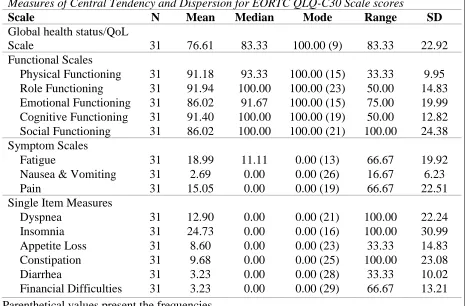
Table 10: Measures of Central Tendency and Dispersion for EORTC QLQ-C30 Scale Scores ...63
Table 11: Measures of Central Tendency and Dispersion for Items of EORTC QLQ-H&N35....65
Table 12: Measures of Central Tendency and Dispersion for EORTC QLQ-H&N35 Scale Scores ...66
Table 13: Correlational Matrix: Comparing Total CD-RISC Scores and EORTC QLQ-C30 Scale Scores ...69
ix
LIST OF FIGURES
Page Number
Figure 1: Comparison of Global Health Status/QoL scale scores and CD-RISC total scores ...67
Figure 2: Comparison of CD-RISC total scores and sex ...71
Figure 3: Comparison of Global Health Status/QoL scale scores and sex ...72
Figure 4: Comparison of CD-RISC total scores and participant age ...73
Figure 5: Comparison of Global Health Status/QoL scale scores and participant age ...73
Figure 6: Comparison of CD-RISC total scores and site of cancer ...74
Figure 7: Comparison of Global Health Status/QoL scale scores and site of cancer ...75
Figure 8: Comparison of CD-RISC total scores and clinical stage of cancer ...76
Figure 9: Comparison of Global Health Status/QoL scale scores and clinical stage of cancer ...76
Figure 10: Comparison of CD-RISC total scores and treatment modality ...77
Figure 11: Comparison of Global Health Status/QoL scale scores and treatment modality ...78
Figure 12: Comparison of CD-RISC total scores and months since diagnosis ...79
Figure 13: Comparison of Global Health Status/QoL scale scores and months since diagnosis ..79
Figure 14: Comparison of CD-RISC total scores and months since treatment completion ...80
x
LIST OF APPENDICES
Page Number
Appendix A: Ethical Approval – Initial Approval Notice ...125
Appendix B: Ethical Approval – Amendment Approval Notice ...126
Appendix C: Letter of Information and Consent ...127
Appendix D: Demographic Information Survey...131
Appendix E: CD-RISC ...134
Appendix F: EORTC QLQ-C30 ...135
Appendix G: EORTC QLQ-H&N35 ...137
CHAPTER 1
Introduction and Review of Literature
Introduction
Everyone who is born holds dual citizenship, in the kingdom of the well and in the
kingdom of the sick. Although we all prefer to use only the good passport, sooner or later
each of us is obliged, at least for a spell, to identify ourselves as citizens of that other
place. (Sontag, 1978, p. 3)
The diagnosis of head and neck cancer (HNCa) acts as a vehicle through which an
individual is permitted to cross the border from the kingdom of the well to the kingdom of the
sick. Citizens of the kingdom of the sick are initiated by the disabling physical, psychological,
and social consequences of HNCa and its treatment. Owing to medical advancements in
oncological treatment, an increasing number of individuals residing in the kingdom of the sick
secondary to a diagnosis of HNCa are commonly issued a third passport. This additional passport
grants them citizenship to a new kingdom that Frank (1995) refers to as the “remission society”
(p. 8). For those who have completed treatment for HNCa, gaining citizenship to the remission
society implies that individuals are no longer sick, but simultaneously remain marked by their
past experience of sickness (Frank, 1995).
Unfortunately, citizenship in the remission society comes at a great cost. Despite
delivering a biological cure for cancer, advanced medical treatment often leaves members of the
remission society who are deemed “cancer free” at a great distance away from the kingdom of
the well. It follows that something must be done to provide HNCa survivors with the direction
survivors leave the kingdom of the sick, they should be equipped with a map to guide them
through the process of positive adaptation to their experience with HNCa. If a proactive stance is
adopted in oncological care to help those who will become cancer survivors rebound from their
time spent in the kingdom of the sick, individuals may find their way back to the kingdom of the
well more effectively. As part of this journey, resilience may serve as the proverbial map that aids HNCa survivors’ navigation back to the kingdom of the well. Intrinsically, resilience may
enable HNCa survivors who are citizens of the remission society to bridge the potentially
expansive gap between Sontag’s two metaphoric kingdoms.
Regrettably, the distance between the kingdoms of the sick and well may become
expansive as a result of significant detriments to quality of life (QoL) secondary to HNCa and its
treatment. Poor QoL often denotes that a significant gap exists between an individual’s ideal
functional status and current level of functioning (Semple, Sullivan, Dunwoody, & Kernohan,
2004). For individuals who have received a diagnosis of HNCa, this gap may be particularly
expansive due to the profound biopsychosocial challenges they may experience related to
speech, swallowing, social interaction, pain, and depression. Consideration of the potential gap
between an individual’s current and ideal functional status may promote the notion that survival
alone is an insufficient indicator of the effectiveness of cancer treatment and, thus, shift the focus
of care to providing individuals with the maximum quality of life, in addition to providing individuals with the maximum quantity of life (Semple et al., 2004).
Although it can be expected that one’s QoL is negatively influenced by HNCa, no simple
or linear relationship exists between the experience of the disease and dimensions of QoL
(Lawford & Eiser, 2001). Individuals’ capacity to rebound from their experience of surviving
QoL (Lawford & Eiser, 2001). As such, substantial evidence exists to suggest that individuals
with similar cancer diagnoses and treatment statuses have divergent levels of perceived QoL
(Huber, Sillick, & Skarakis-Doyle, 2010). It is suggested that resilience may act as a central
factor to explain differing perceptions of QoL despite parallel circumstances (Tian & Hong,
2014). For instance, two individuals with comparable experiences of HNCa may vary
substantially in their perceived QoL as a function of the role played by resilience in their
subjective disablement experiences. In essence, resilience may substantially influence how one
fares following the completion of treatment for HNCa. Moreover, resilience may play a role in
buffering the influence of the adverse experience of HNCa and its treatment on survivors’ QoL.
The identification of resilience in individuals who have completed treatment for HNCa may
initiate acknowledgement of its value in acting as a potential protective process that may reduce
the impact of HNCa on one’s QoL and ultimately, bridge the gap between the kingdom of the
sick and the kingdom of the well.
In the sections to follow, a comprehensive introduction related to HNCa will be initially
presented. This will be followed by a presentation of the multifaceted concept of survivorship.
Introductory information pertaining to the constructs of resilience and QoL will subsequently be
provided. Finally, the statement of problem and rationale for the present study will be delineated.
Owing to the expansive array of challenges secondary to the experience of HNCa and its
treatment, the process through which HNCa survivors navigate the complex path back to
wellness is of particular interest. As such, the investigation of resilience in HNCa survivors may
Head and Neck Cancer
HNCa is the sixth most common malignancy in the world, with approximately 650,000
new cases diagnosed annually (Howren, Christensen, Karnell, & Funk, 2012; Pai & Westra,
2009). HNCa refers to malignant tumours that originate from the epithelial lining of the
paranasal sinuses, nasal cavity, oral cavity, salivary glands, pharynx, and larynx (Howren et al.,
2012; Murphy, Ridner, Wells, & Dietrich, 2007). HNCa also includes tumours arising from the
craniofacial bones, soft tissues, skin, and neurovascular structures of the head and neck region
(Shah & Lydiatt, 1995; Pai & Westra, 2009). Malignancies found in the thyroid gland,
parathyroid gland, and the parapharyngeal space also fall under the extensive classification of
HNCa (Shah & Lydiatt, 1995). Head and neck cancers are predominantly squamous cell
carcinomas of the mucosal surfaces in the upper aerodigestive tract (Campisi & Giovannelli,
2009). Melanomas, sarcomas, lymphomas, and adenocarcinomas are other less common types of
head and neck tumours (Semple et al., 2004).
Staging of head and neck cancer. The American Joint Committee on Cancer
Tumour-Node-Metastasis (TNM) staging system stipulates the staging criteria for HNCa (Vokes, 2012).
The TNM staging system categorizes malignancies based on their anatomic site and scope or
extent of disease (McQuade, Gunn, William, & Kies, 2016). For HNCa, the primary subsite of
the malignancy dictates the intricate parameters for both clinical and pathological staging of the
primary tumour (McQuade et al., 2016). The “T” classification describes the size of the primary
tumour. Vokes (2012) explained that “in general, primary tumours are classified as T1 to T3 by
increasing size, whereas T4 usually represents invasion of another structure such as bone, muscle,
or root of tongue” (Clinical Presentation and Differential Diagnosis, para. 7). The extent of
involvement, staging is based on the location of the involved lymph nodes (ipsilateral versus
contralateral to the primary tumour), as well as the size and number of nodes involved (Vokes,
2012). The degree of metastases, or spread of the cancer to other parts of the body, is described
by the “M” classification. For all HNCa sites, excluding the nasopharynx, the TNM staging
system has uniform criteria for making categorizations based on lymph node (N) involvement
and potential distant metastases (M) of the tumour (McQuade et al., 2016). Table 1 summarizes
common TNM staging for squamous cell carcinomas in the head and neck region, with the
exception of nasopharyngeal carcinomas.
Presentation of head and neck cancer. The presentation of HNCa varies according to
the stage and site of the primary tumour (Vokes, 2012). In general, early-stage head and neck
malignancies infrequently cause symptoms, but may manifest vague and minimal somatic
indications (Marur & Forastiere, 2008). Tumours that arise from the paranasal sinuses, nasal
cavity, and nasopharynx generally manifest in sinusitis (inflammation of a nasal sinus), nasal air
way obstruction, otitis media (inflammation of the middle ear), and epistaxis (bleeding from the
nose) (Marur & Forastiere, 2008; Vokes, 2012). Additionally, advanced nasopharyngeal Table 1
Common TNM Staging for Head and Neck Squamous Cell Carcinomas (Except Nasopharyngeal Carcinoma) *
Classification Characteristic T1
T2 T3 T4
Tumour ≤ 2cm in greatest dimension Tumour > 2cm but < 4cm in greatest dimension Tumour > 4cm in greatest dimension Tumour invades adjacent structure N0 N1 N2a N2b N2c N3
No regional LNs Single ipsilateral LN, ≤ 3cm Single ipsilateral LN, > 3cm but < 6cm Multiple ipsilateral LNs, none > 6cm Bilateral or contralateral LN, none > 6cm Any LN > 6cm
M0 M1
No distant metastasis Distant metastasis *LN = lymph node.
carcinomas may also present with cranial nerve palsies (Marur & Forastiere, 2008). Painful
lesions and non-healing ulcers or sores are typical presentations of oral cavity malignancies
(Vokes, 2012). When tumours arise from structures that comprise the oropharynx, patients may
present with reduced mobility of the tongue, sore throat, dysphagia (impaired swallowing) or
odynophagia (painful swallowing), changes in voice, speech, and otalgia (ear ache) (Marur &
Forastiere, 2008; Vokes, 2012).
In later stages of cancers occurring in the hypopharynx, sore throat, hoarseness,
dysphagia, cervical adenopathy (enlargement of lymph nodes in the neck), and otalgia are
common symptoms (Marur & Forastiere, 2008; Vokes, 2012). Individuals with laryngeal cancer
may also present with hoarseness, however, the disease progression of cancers of the larynx may
vary with subsite (Marur & Forastiere, 2008; Vokes, 2012). For instance, glottic cancers (cancers
of the vocal folds) are often diagnosed early in the course of the disease and have higher success
rates of curative treatment (Marur & Forastiere, 2008). Conversely, supraglottic carcinomas
(lesions superior to the vocal folds) are typically diagnosed at later stages of the disease upon
discovery of a neck mass (Marur & Forastiere, 2008).
Etiology of head and neck cancer. The most common etiological factors of HNCa are
tobacco and alcohol (Marur & Forastiere, 2008). These substances contribute independently to
the development of HNCa, however, they are often used in combination and also act
synergistically to produce a multiplicative impact on carcinogenesis (Howren et al., 2012;
Muscat & Wynder, 1992; Rodriguez et al., 2003; Vokes, 2012; Wynder & Stellman, 1977). The
carcinogenic effect of tobacco is a result of the consumption of nicotine and polycyclic aromatic
hydrocarbons (Marur & Forastiere, 2008; Pai & Westra, 2009). Tobacco smoke effects the
reactive metabolites that interact with DNA through the action of oxidative enzymes
(Vargas-Ferreira et al., 2012). The genotoxic effect of the carcinogenic chemicals found in tobacco also
increases the risk of developing HNCa when individuals are subjected to passive smoking (Pai &
Westra, 2009).
Alcohol acts as a chemical solvent that heightens the risks associated with smoking by
“enhancing and prolonging mucosal exposure to the carcinogens present in tobacco smoke” (Pai
& Westra, 2009, p. 51). Extended exposure to the carcinogenic chemicals found in tobacco
enables the passage of the carcinogens into the cells of the mucous membrane of the upper
aerodigestive tract (Lee et al., 2007). The carcinogenic influence of alcohol and tobacco
consumption can be observed at the level of the squamous cells that line the mucous membranes
in the form of substantial damage to the DNA contained in these cells (Scully, Field, & Tanzawa,
2000). For instance, squamous cell carcinoma in the head and neck region commonly occurs as a
result of extensive molecular damage to the DNA and consequent cell dysregulation that occurs
secondary to “disruption of cell signaling, the cell growth cycle, or mechanisms to repair cell
damage or eliminate dysfunctional cells” (Scully et al., 2000). The progressive assemblage of
DNA damage ultimately leads to autonomous division of the squamous cells that eventually
results in carcinoma (Scully et al., 2000). The process of alcohol-related carcinogenesis in the
head and neck region is also attributable to the metabolism of ethanol into the metabolite
acetaldehyde (Seitz & Stickel, 2007). Acetaldehyde binds to segments of DNA to form DNA
adducts that hinder DNA synthesis and repair and are commonly the beginning of carcinogenesis
(Pai & Westra, 2009; Seitz & Stickel, 2007).
Traditionally, smoking trends have mirrored the rate of oropharyngeal cancer (Pai &
has increased substantially without any corresponding increase in smoking trends (Pai & Westra,
2009; Walden & Aygun, 2013). Subtypes of the Human Papilloma Virus (HPV) are now
recognized as being the reason for the divergence between oropharyngeal cancer trends and
smoking trends. HPV is also responsible for shifting the demographics of oropharyngeal
carcinomas towards younger non-smoking individuals (Marur & Forastiere, 2008; Pai & Westra,
2009). Fortunately, HPV positive oropharyngeal malignancies have a more favourable prognosis
and are associated with increased survival since HPV positive tumours have heightened
sensitivity and responsivity to radiation and chemotherapy (Howren et al., 2012; Marur,
D’Souza, Westra, & Forastiere, 2010; Vokes, 2012).
The Epstein-Barr virus is another common viral etiological factor of HNCa (Howren et
al., 2012; Marur & Forastiere, 2008). While HPV is commonly linked to oropharyngeal cancers,
the Epstein-Barr virus is recognized as being a causative factor in the development of
nasopharyngeal carcinomas (Howren et al., 2012; Vokes, 2012). It is also worth noting that other
etiological factors of HNCa include diet; oral hygiene; carcinogen exposure to nickel, chromium,
radium, mustard gas, and asbestos; infectious agents; marijuana use; family history and
pre-existing health conditions (Marur & Forastiere, 2008; Pai & Westra, 2009). Regardless of
etiology, the treatment modality acts as an additional factor that further effects an individual’s
experience with HNCa.
Treatment of Head and Neck Cancer
The treatment for HNCa and the associated treatment morbidities that may affect
physical, psychological, and social functioning have the potential to substantially influence an
individual’s journey through HNCa and intensify the experience of living with a life-threatening
commonly includes surgery, radiation therapy, chemotherapy, or multimodal approaches (Marur
& Forastiere, 2016). Surgery alone may be sufficient to remove an early-stage tumour, however,
more aggressive surgical procedures may be utilized when organ-preserving therapies that seek
to retain anatomic structure of the affected site, are deemed insufficient as the sole treatment
modality (Marur & Forastiere, 2016). Additionally, salvage surgery may be done when radiation
or chemotherapy fail (Argiris, Karamouzis, Raben, & Ferris, 2008). Radiation therapy may be
used in isolation, adjunctively with surgery, or concurrently with chemotherapy (Marur &
Forastiere, 2016). Chemotherapy is commonly used as part of initial multimodal treatment of
HNCa, but generally only as adjuvant treatment (Marur & Forastiere, 2016).
Complete tumour eradication is the primary goal of treatment, however, the preservation
of structure and function, minimization of treatment sequelae, and maximization of QoL should
also be central to treatment choice (Shah & Lydiatt, 1995). Nonetheless, the TNM staging of the
tumour provides foundational information that guides the treatment decision process. For
instance, surgery or radiation are generally deemed to be the optimal singular treatment modality
for early-stage tumours staged as T1 or T2 that do not involve nearby lymph nodes or distant
metastases (Marur & Forastiere, 2008; McQuade et al., 2016; Vokes, 2012). A multimodal
treatment approach that includes concomitant chemoradiation therapy (CRT) is standard for
intermediate tumours staged as T2 or T3 with N0 to N1 lymph node involvement that are either
unresectable or resectable, but require further treatment postoperatively (Marur & Forastiere,
2008; McQuade et al., 2016; Vokes, 2012). Optimal treatment plans for advanced HNCa, staged
as T3 or T4, with lymph node involvement characterized as N2 or N3, generally consist of one of
(1) induction, also known as neoadjuvant therapy, with chemotherapy given before
surgery or radiation; (2) concomitant chemoradiation, with chemotherapy given
simultaneously with radiation to enhance its effect; [or] (3) adjuvant therapy, where
chemotherapy is given after surgery or radiation in an effort to decrease microscopic
metastatic disease burden. (McQuade et al., 2016, Combined-Modality Therapy section,
para. 1)
Consideration of the TNM staging must also be balanced with consideration of the
anatomical location of the tumour and associated risk of lymphatic system involvement in order
to determine the optimal treatment modality (Shah & Lydiatt, 1995; Walden & Aygun, 2013).
For instance, when the primary tumour occurs in the larynx, radiation therapy is often the
selected treatment method so that the structure of the larynx remains intact and voice and
swallowing functions can be preserved (Walden & Aygun, 2013; Vokes, 2012; Shah & Lydiatt,
1995). Conversely, surgery is often deemed the optimal treatment modality when the primary
tumour arises out of the oral cavity so that long-term side effects of radiation including xerstomia
(sensation of dry mouth) and dental decay are prevented (Vokes, 2012). Depending on the
amount of involvement of the base of tongue, constrictor muscles, and epiglottis, prevention of
aspiration and conservation of the swallowing function and speech are central considerations in
treatment decisions for tumours that occur in the oropharynx or hypopharynx (Walden & Aygun,
2013). Accordingly, in an attempt to preserve the structure of the pharynx, radiation is often the
preferred treatment for nasopharyngeal and oropharyngeal tumours (Shah & Lydiatt, 1995).
Since nasal cavity or paranasal sinus carcinomas rarely present at an early stage, surgery is
Regardless of the treatment modality selected, the management of HNCa carries a
significant risk to individuals’ functioning in the pursuit of achieving a biological cure
(McQuade et al., 2016). Therefore, the grueling effects of the treatment associated with HNCa
often add substantial burden to an individual’s experience with cancer (Pauloski, 2008) and
subjects the individual to profound disablement. Disablement can be conceptualized as the
influence of chronic and acute health conditions on an individual’s functioning at intrapersonal,
interpersonal and environmental levels (Jette, 2006). From a biopsychosocial perspective, an
individual’s experience of disablement can be considered to be an outcome of the dynamic
interaction of biological, personal, and social forces (Jette, 2006). As such, not only does HNCa
cause substantial disablement, but surgery, radiation therapy, and chemotherapy commonly have
a significant influence on HNCa survivors’ process of recovery owing to the consequential
decrements to multiple domains of functioning (DeBoer, McCormick, Pruyn, Ryckman, & Van
Den Borne, 1999).
Even after treatment for HNCa has concluded, the effects of treatment continue to impact
the individual in domains of physical, psychological, and social functioning. Owing to the
complexity of the anatomical location and necessity of the pathological function of the region
affected by HNCa, surgery, radiation therapy, and chemotherapy have the potential to result in
substantial physical, psychological, and social treatment sequelae that are highly interrelated
(Newell, Sanson-Fisher, Girgis, & Ackland, 1999).
Treatment sequelae: Physical domain of functioning. Significant treatment sequelae
may occur secondary to surgery, radiation therapy, and/or chemotherapy that impair an
individual’s functioning in the physical domain. Radical surgery for HNCa often significantly
and swallowing function (McQuade et al., 2016). Although uncommon, postoperative
complications associated with surgery for HNCa may include infection, fistula (an atypical
fusion between tubal organs, such as those in the head and neck region), wound dehiscence (the
rupture of a surgical wound along the sutures), haematoma (a pooling of blood outside the blood
vessels), seroma (a collection of fluid in a tissue or an organ), and flap necrosis (death of tissue
that has been relocated from one location of the body to another) (Derks, De Leeuw, Hordijk, &
Winnubst, 2003).
Nevertheless, nonsurgical treatment modalities also have the potential to cause harm to a
patient’s physical functional status (McQuade et al., 2016). Although radiation therapy is
primarily prescribed for curative purposes, this modality has the perceived benefit of preserving
structures of the head and neck (Pauloski, 2008). It could be assumed that if macroscopic
structure is preserved, the function of the exposed anatomical region will also be maintained. In
actuality, radiation therapy for HNCa is prescribed for tumour eradication, however, radiation
therapy commonly results in substantial negative consequences in relation to physical
functioning that may nullify the benefits of organ preservation accomplished (Adelstein et al.,
2000). The disabling side effects of radiation therapy are a result of damage to soft tissue
structures that are within the radiation treatment volume, including tendons, ligaments, fascia,
muscles, and fibrous and connective tissues (Murphy & Gilbert, 2009). In response to the
inflicted damage, an inflammatory reaction in this anatomical region is triggered, which in turn
causes radiation-induced fibrosis (Murphy & Gilbert, 2009). Fibrosis in the irradiated tissues is
demarcated by a diffuse scarring process that ultimately causes the tissue to become less elastic
cancerous cells, chronic oxidative stress causes the perpetuation of tissue damage that results in
ongoing side-effects long after the completion of the radiotherapy (Murphy & Gilbert, 2009).
Howren et al. (2012) explained that during the course of radiotherapy, “the importance of
pain as a patient-reported outcome cannot be overstated as at least half of [HNCa] patients will
experience some degree of pain” (p. 15). Pain is a very common and significant side-effect
associated with radiotherapy for the treatment of HNCa due to the structural damage to the oral
mucosa that results in mucositis (Pauloski, 2008). Mucositis is characterized by ulceration of the
mucous membranes that line the tissues in the field of radiation and is caused by the
consequential increase in levels of reactive oxygen species utilized by the radiotherapy to destroy
the cancerous cells (Pauloski, 2008). Functionally, the pain and ulceration of mucositis impairs
chewing, swallowing, and manipulation of food in the mouth and may lead to dehydration,
malnutrition, and weight loss (Vokes, 2012). As a result of radiation therapy, severe ulceration
associated with mucositis, in conjunction with an immobile larynx as a result of the
radiation-induced fibrosis, may lead to the narrowing or complete closure of the pharynx or esophagus,
referred to as stricture (Pauloski, 2008). Stricture results when the anterior and posterior mucosal
surfaces heal together which causes adhesion and the ultimate closure of the pharynx or
esophagus (Pauloski, 2008). Stricture limits the passage of liquid and food which has a
significant impact on swallowing function and the risk of malnutrition and weight loss (Pauloski,
2008).
Dysphagia refers to the disruption of the swallowing function that causes difficulty with
the transport of solids or liquids from the mouth to the stomach and may be the result of fibrosis
and stricture caused by radiation for HNCa (Gaziano, 2002). Coincidentally, damage to the
as hypofunction of the salivary glands (Pauloski, 2008). Thus, an individual’s experience with
dysphagia is commonly augmented by the perception of dryness in the oral cavity, referred to as
xerostomia, which is commonly associated with salivary gland hypofunction (Pauloski, 2008).
Chemotherapy is also associated with a host of disabling side-effects. A common
treatment sequela of chemotherapy is myelosuppression, which refers to a decrease in bone
marrow activity that causes a decline in red blood cells, white blood cells, and/or platelets,
(Vokes, 2012). Myelosuppression can result in fatigue, dizziness, and the body’s diminished
ability to fight infection and disease (Zangemeister-Wittke & Simon, 2012). Kidney damage
(nephrotoxicity) may be a further complication of chemotherapy (Vokes, 2012). Individuals may
also experience nausea, vomiting, mucositis, and dysgeusia (alteration of the perception of taste),
all of which make maintaining adequate nutrition a difficult task (Vokes, 2012). To further
complicate matters of nutrition, chemotherapy may also result in dysphagia, xerostomia, fibrosis,
and pharyngeal scarring that may lead to feeding-tube dependence (Marur et al., 2010).
Treatment sequelae: Psychological domain of functioning. The extensive array of
physical sequelae of HNCa treatment is paralleled by substantial distress characterized by
marked psychological dysfunction (Bornbaum, Doyle, Skarakis-Doyle, & Theurer, 2013;
Bornbaum et al., 2012; Semple et al., 2004). The National Comprehensive Cancer Network
Distress Management Panel defines distress in the context of an individual’s experience with
cancer as:
a multi-determined unpleasant emotional experience of a psychological (cognitive,
behavioural, emotional), social, and/or spiritual nature that may interfere with the ability
to cope effectively with cancer, its physical symptoms, and its treatment. Distress extends
fears to problems that can become disabling, such as depression, anxiety, panic, social
isolation, and spiritual crisis. (as cited in Carlson & Bultz, 2004, p. 838)
HNCa patients’ experience of distress, specifically depression, either as clinical depressive
disorder or subclinical symptomology, is notable since the prevalence of depression is higher in
individuals with HNCa than in individuals with other cancer diagnoses (Howren et al., 2012).
This is understandable since the experience of distress is associated with the physical and social
sequelae of treatment that are particularly grueling for individuals with HNCa. For instance, a
positive correlation exists between high levels of distress and intense experiences of physical
sequelae, such as pain, fatigue, and nausea, and social sequelae, such as social isolation and
relationship disruption (Aaronson, 1991; Bjordal & Kaasa, 1995; Kugaya et al., 2000; Newell et
al., 1999).
It is worth noting that transient negative emotions are a natural and common response to
an adverse life event such as the experience of HNCa and its treatment (McDonough, Boyd,
Varvares, & Maves, 1996). In other words, depressive feelings are a normal and foreseeable
element of the HNCa experience. However, in a select group of individuals with HNCa, the
depressive feelings may persist to a degree that substantially inhibits coping for a period of time
that is considered extensive enough to determine that the expected negative feelings have
transitioned to dysfunctional depressive symptoms (Haman, 2008; McDonough et al., 1996).
When normal negative feelings become dysfunctional, the underlying cause of the depression
must be determined and addressed in order to avoid serious potential implications of the
experience of depression (McDonough et al., 1996).
One potential implication is that the experience of depression secondary to HNCa and its
domains of speech, eating, and social interactions (Howren et al., 2012). Depression may also
impact a HNCa patient’s immune response, habits of self-care, treatment compliance, and risk of
malnutrition (Howren et al., 2012). Furthermore, it is suggested that depression and
psychological dysfunction that result from the disabling physical and social side-effects of HNCa
and its treatment are probable contributing factors for the majority of suicides in those with
HNCa (Kendal, 2007). Concerningly, the incidence of suicide is highest in individuals who have
received a diagnosis of HNCa compared to individuals who have received other cancer
diagnoses (Bjordal & Kaasa, 1995; Kendal, 2007; Misono, Weiss, Fann, Redman, & Yueh,
2008). This high suicide rate is telling of the significant burden of HNCa and its treatment.
Due to the anatomical location of the structures impacted by HNCa and its treatment,
visible disfigurement is another common treatment outcome that has the potential to contribute
to psychological dysfunction. It is almost impossible for many individuals who have received
treatment for HNCa to conceal the signs of the disease and its treatment (Howren et al., 2012;
Nash, 2014; Semple et al., 2004). The unconcealable signs of HNCa treatments often cause
individuals to experience challenges related to intimacy, making friends, and acquiring jobs
(Howren et al., 2012; Semple et al., 2004). Visible disfigurement may also augment distress,
depression, and social anxiety and isolation (Howren et al., 2012; Semple et al., 2004).
Additionally, permanent disfigurement often has noteworthy implications for the individual’s
body-image, self-esteem, and self-concept (Cohen et al., 2015; Gritz et al., 1999; Murphy et al.,
2007; Nash, 2014).
The physical treatment sequelae of HNCa that influence an individual’s psychological
functioning are not only visually apparent, but also auditorily apparent (Doyle, 2005). HNCa is
communicate, or in some instances render the individual unable to verbally communicate at all”
(Doyle, 2005, p. 11). As a result of the extreme visibility of HNCa and its treatment, those with
HNCa may be exposed to unsolicited and untoward staring and comments (Semple et al., 2004).
Correspondingly, individuals with HNCa are at a heightened risk of feeling stigmatized in
society (Howren et al., 2012; Semple et al., 2004). Goffman explained that “stigmatizing
conditions, whether real or perceived, cannot be overlooked because they threaten the
individual’s judgment of self, which might then pose a risk to relationships within the
individual’s own social milieu” (as cited in Doyle, 2005, p. 11).
Treatment sequelae: Social domain of functioning. The functional impairment
associated with HNCa and its treatment also exerts a wide-ranging influence on the individual’s
social functioning. Several of the physical treatment sequelae of HNCa treatments, including
dysphagia, xerostomia, dysgeusia, and mucositis, can impair individuals’ ability to engage in
shared meal times in social settings which can lead to social isolation (Pateman, Ford, Batsone,
& Farah, 2015; Threats, 2007). The consequential restricted social involvement may be an
outcome of the perceived indignity of the restricted food choices necessitated by swallowing and
chewing dysfunction that result from the aforementioned physical sequelae of HNCa treatment
(Patterson, McColl, Wilson, Carding & Rapley, 2015). Individuals may be influenced to select
social engagements carefully to avoid the added burden of social tension or pressure that could
result from a clash between the challenges of dysphagia and socially constructed norms, which
can lead to further social isolation (Nund et al., 2014).
Furthermore, socially constructed eating and drinking customs are associated with
significant symbolic value (DeRenzo, 1997). The social customs surrounding eating and drinking
(DeRenzo, 1997). Unfortunately, individuals who have undergone treatment for HNCa may no
longer be able to conform to these social customs of eating. The added perception of not
conforming to social norms can augment the burden of the physical HNCa treatment sequelae
and concomitant social isolation. An individual’s experience with dysphagia, xerostomia,
dysgeusia, and mucositis can promote the attribution of a strictly nutritional and survival based
meaning to food that may clash with social customs of food that have minimal connection to
nutritional factors but are instead in place to define and solidify social relations (DeRenzo,
1997).
Poor speech intelligibility may be an additional result of HNCa treatment, which may
further complicate and inhibit an individual’s desire or capacity to engage socially (Semple et al.,
2004). Not only does an individiual’s inhibited ability to communicate with others augment
issues of social isolation, it may also lead to feelings of embarrassment, lowered self-esteem, and
depression which in turn, may impede adherence to rehabilitation or self-care regimens, as well
as tobacco and alcohol cessation programs that are crucial for HNCa survivors (Blood, Luther, &
Stemple, 1992; Blood et al., 1994; Howren et al., 2012). The extensive range of social challenges
faced by individuals who have undergone treatment for HNCa is particularly concerning since it
is well documented that social support is correlated with positive adjustment to the experience of
disease (McDonough et al., 1996). In essence, is it concerning that the population of HNCa
survivors faces a profoundly disabling disease, while also being at an elevated risk for significant
social isolation.
The range of deficits experienced by individuals who have received a diagnosis of HNCa
are multidimensional and highly interdependent. Accordingly, HNCa is commonly considered to
biopsychosocial sequelae (Bornbaum et al., 2012). Thus, despite over 4,300 new diagnoses in
Canada each year, the impact of HNCa on those who receive this diagnosis far exceeds the
incidence of the disease (Canadian Society of Otolaryngology – Head & Neck Surgery, 2013;
Giuliani et al., 2016).
Since the beginning of the twenty-first century, substantial medical advances have been
made that have improved the efficacy of HNCa treatments (Giuliani et al., 2016; Stanton,
Rowland, & Ganz, 2015; Wells, Semple, & Lane, 2015). The advanced techniques for
eliminating the disease may yield a more probable medical cure, however, newly cured
individuals may be bestowed with residual trauma that leaves them far from healed. The
extensive array of the biopsychosocial treatment sequelae of the advanced treatment modalities
illustrates that achieving curative intent is often at the expense of the individual’s QoL. In
essence, the increasing quantity of life provided by the treatment advancements does not necessarily equate to increasing quality of life. Furthermore, increased quantity of life does not mean that an individual’s struggle to cope with and adapt to the disablement experience of HNCa
will cease when the transition is made from cancer patient to cancer survivor. In actuality, a new
assortment of challenges arises following the completion of curative treatment for HNCa as
“survivors experience changes in the frequency of contact with their healthcare team, manage the
lingering side effects of treatment, and resume important social roles and activities—all of which
can precipitate feelings of distress” (de Moor et al., 2013, p. 562). The collective multifaceted
experience of the cancer survivor that is associated with these new challenges is commonly
Survivorship
It is estimated that approximately two-thirds of individuals diagnosed with HNCa will
survive the disease; a figure that is expected to rise with continued advancements in detection
and treatment of HNCa (Giuliani et al., 2016; Semple et al., 2004; Stanton et al., 2015). Hassey
Dow (2003) explained that the rising number of cancer survivors is also attributable to “changes
in the fundamental understanding of genetics, rapid translation of basic science to practice,
modification of dose-limiting toxicities, an increase in screening and early detection activities,
enhanced rehabilitation and support interventions, and changes in sociocultural factors” (p. 455).
Additionally, due to the more favourable prognosis of human papillomavirus-positive oral and
oropharyngeal cancers, a projected 90% of HNCa survivors will experience long-term (e.g., > 5
years) survival (LaMonte, 2016; Marur et al., 2010; Vokes, 2012). As a result, there has been a
substantial increase in the number of individuals who are surviving HNCa and living longer after
diagnosis and treatment of the disease (Giuliani et al., 2016).
From a biomedical perspective, the notion of survival may be understood as a static state
of being cancer free, however, survivorship cannot be reduced to a categorical measure of the
efficacy of cancer treatment (Miller & Shuman, 2016). If survivorship is considered through a
biopsychosocial lens, it becomes apparent that for individuals who have survived HNCa,
survivorship is a more complex notion that encompasses the act and process of living through
and beyond the diagnosis and treatment (Brearley et al., 2011; Feuerstein, 2007a; Miller &
Shuman, 2016; Mullan, 1985). Accordingly, widely accepted conceptualizations of survivorship
posit that an individual is considered a survivor, and, thus, enters the survivorship phase of the
cancer continuum at the time of initial diagnosis (Giuliani et al., 2016; Miller & Shuman, 2016).
[individuals] must confront their own mortality and the inevitable change in the course of their
life moving forward” (Miller & Shuman, 2016, p. 1).
Beginning at the time of diagnosis and continuing until the end of life, survivorship can
be conceptualized as a continuous and fluid state (Brearley et al., 2011; Miller & Shuman, 2016).
Miller and Shuman (2016) posited that “survival does not occur in a vacuum,” (p. 1) as
evidenced by the “medical, psychosocial, interpersonal, financial, and functional consequences
of disease and its therapies [that] all contribute to [the] experience of the cancer survivor” (Miller
& Shuman, 2016, p. 1). As such, the notion of survivorship encompasses the dynamic process of
navigating the challenges that are associated with individuals’ adjustment and adaptation to the
altered life course that evolves from their experience with HNCa. It is worth noting in light of the
variety of survivorship definitions that exist, that this conceptualization of survivorship has been
employed for the context of this study in order to portray a holistic representation of individuals’
experience with HNCa. Furthermore, this definition of survivorship has been selected to
highlight the range of biopsychosocial challenges associated with an individual’s experience
with HNCa that begin at the time of diagnosis and persist for years after the individual has
completed treatment.
An increased risk of compromised physical and psychosocial outcomes commonly
accompanies the challenges of adjusting to life after cancer (Molina et al., 2012). Evidence
suggests that individuals who have received a diagnosis of cancer have the potential to exhibit
positive psychosocial adjustment over time; however, a subset of survivors becomes susceptible
to diminished psychosocial and physical health, that may arise from the persistent effects of
HNCa and its treatment (Stanton et al., 2015). Residual effects of the diagnosis and treatment of
are demarcated as medical complications acquired during active treatment that continue after
treatment completion (Cohen et al., 2015). Medical problems that arise months or years after
treatment completion are categorized as late effects (Cohen et al., 2015). Wolff (2007) explained
that while the conceptualization of survivorship has “shifted from a narrow focus on the direct
effects of anti-cancer therapy” (p. 7), it is still important for the notion of survivorship to
encompasses traditional outcomes of cancer and its treatment such as long-term and late effects.
Due to the functional significance of the anatomical region affected by HNCa and its
treatment, individuals who have received treatment face an overwhelming collection of
long-term and late effects (Cohen et al., 2015; Murphy et al., 2007; Hutton & Williams, 2001). The
development of physical long-term and late effects may be influenced by several variables,
including type, duration and dose of treatment, location of primary tumour, the presence of
regional or distant disease, and patient demographic factors (Cohen et al., 2015). Common
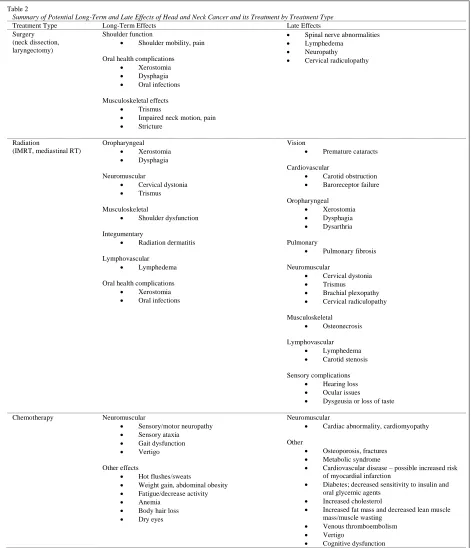
physical long-term and late effects of HNCa and its treatment are presented in Table 2. In
addition to myriad physical long-term and late effects, a multitude of psychosocial sequelae have
also been reported to affect HNCa survivors (Molina et al., 2012; Coughlin, 2008; Stanton et al.,
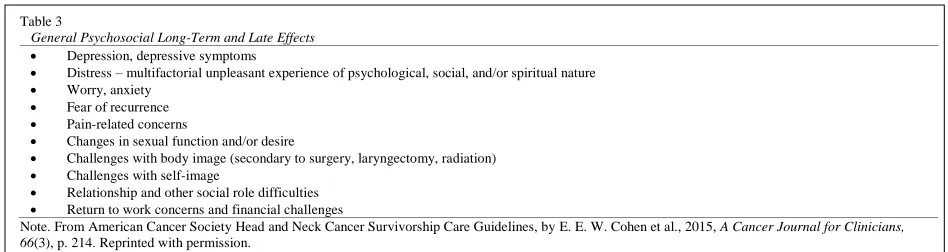
2015). General psychosocial long-term and late effects are summarized in Table 3. It is worth
noting that in many cases, these psychosocial effects of survivorship “are more challenging than
the defined course of direct anti-cancer therapy” (Wolff, 2007). Moreover, since the
psychosocial aspects of the disease are commonly more arduous to contend with than the
physical aspects, unresolved suffering in the psychosocial domain of disablement often results in
diminished coping and adjustment (McDonough et al., 1996). Concurrent consideration of the
physical and psychosocial domains of disablement is advantageous because it allows healthcare
well-being, as well as their compliance and use of healthcare resources (McDonough et al.,
1996).
Furthermore, the physical and psychosocial long-term and late effects faced by
post-treatment HNCa survivors have a profound effect on their functioning and perceived QoL
(Murphy et al., 2007; Bjordal & Kaasa, 1995). As such, the awareness and management of the
multitude of treatment sequelae must continue even after the completion of treatment, thereby
indicating that active holistic care must also encompass the survivorship phase of the cancer
continuum (Miller & Shuman, 2016; Stanton et al., 2015). In essence, owing to the long-term
and late effects of HNCa, there is a substantial need to provide survivors with support and
assistance through their process of adjusting to the disabling physical and psychosocial
treatment-related challenges associated with survivorship (Bornbaum, 2013).
Unfortunately, due to the physical focus of oncological care provision, patients may be
hesitant to disclose psychosocial concerns, contributing to common psychosocial challenges
“remaining undisclosed and only becoming apparent when [associated] symptoms [of
psychosocial morbidity] are overt and individuals are no longer able to cope” (Bornbaum et al.,
2012, p. 2163). However, attending to the psychosocial dimension of an individual’s experience
with HNCa may serve to decrease the extreme strain placed on the healthcare system by the
high-utilizers of care who are predominantly those who are experiencing substantial
psychosocial morbidity, such as anxiety, depression, and mood disturbances (Carlson & Bultz,
2004). Moreover, if the psychosocial aspects of disablement are highlighted so that health care
providers are tuned in to the psychosocial struggles of individuals with HNCa, those who are
struggling to cope, and often represent the highest utilizers of care, may be identified and
maximize benefits and savings to the healthcare system (Carlson & Bultz, 2004). For instance,
increased attention to individuals’ psychosocial disablement experience with HNCa has been
linked to improved medical outcomes and increased patient satisfaction in addition to decreased
health care costs (Bornbaum et al., 2012).
Despite delivering a medical cure, therapeutic endeavors that neglect individuals’
subjective experience of disablement can threaten their ability to be resilient in psychological
and social domains of well-being (Frank, 1995). In essence, when subjective domains of
disablement are ignored, individuals who have completed treatment often reach the end of the
clinical pathway before their psychosocial functioning has returned to a homeostatic level. In
other words, the clinical pathway rectified the abnormal cell growth that was the cause of the
individual’s disablement experience with HNCa but has done nothing to encourage or support a
resilient response in the survivor. Based on the above considerations, there is a need to
investigate the potential for resilience to ameliorate the impact of the biopsychosocial
consequences of HNCa and its treatment, not only in hopes of maximizing survivors’ QoL, but
Table 2
Summary of Potential Long-Term and Late Effects of Head and Neck Cancer and its Treatment by Treatment Type
Treatment Type Long-Term Effects Late Effects Surgery
(neck dissection, laryngectomy)
Shoulder function
• Shoulder mobility, pain Oral health complications
• Xerostomia
• Dysphagia
• Oral infections Musculoskeletal effects
• Trismus
• Impaired neck motion, pain
• Stricture
• Spinal nerve abnormalities
• Lymphedema
• Neuropathy
• Cervical radiculopathy
Radiation
(IMRT, mediastinal RT)
Oropharyngeal
• Xerostomia
• Dysphagia Neuromuscular
• Cervical dystonia
• Trismus Musculoskeletal
• Shoulder dysfunction Integumentary
• Radiation dermatitis Lymphovascular
• Lymphedema Oral health complications
• Xerostomia
• Oral infections
Vision
• Premature cataracts Cardiovascular
• Carotid obstruction
• Baroreceptor failure Oropharyngeal
• Xerostomia
• Dysphagia
• Dysarthria Pulmonary
• Pulmonary fibrosis Neuromuscular
• Cervical dystonia
• Trismus
• Brachial plexopathy
• Cervical radiculopathy Musculoskeletal
• Osteonecrosis Lymphovascular
• Lymphedema
• Carotid stenosis Sensory complications
• Hearing loss
• Ocular issues
• Dysgeusia or loss of taste Chemotherapy Neuromuscular
• Sensory/motor neuropathy
• Sensory ataxia
• Gait dysfunction
• Vertigo Other effects
• Hot flushes/sweats
• Weight gain, abdominal obesity
• Fatigue/decrease activity
• Anemia
• Body hair loss
• Dry eyes
Neuromuscular
• Cardiac abnormality, cardiomyopathy Other
• Osteoporosis, fractures
• Metabolic syndrome
• Cardiovascular disease – possible increased risk of myocardial infarction
• Diabetes; decreased sensitivity to insulin and oral glycemic agents
• Increased cholesterol
• Increased fat mass and decreased lean muscle mass/muscle wasting
• Venous thromboembolism
• Vertigo
• Cognitive dysfunction
To reflect the myriad short and long-term challenges concomitant with survivorship,
three phases have been suggested to demarcate typical groupings of potential long-term and late
effects. The three phases of survivorship were proposed by Mullan and include “‘acute survival,’
the phase that includes diagnosis and treatment; ‘extended survival,’ the phase that begins at the
completion of intensive therapy and includes surveillance; and ‘permanent survival,’ a phase
vaguely defined as the period of cure” (as cited in Miller & Shuman, 2016, p. 1). Although
specific challenges and experiences may be representative of a certain survivorship phase, the
heterogeneity of survivors renders the three phases fluid and dynamic (Feuerstein, 2007a;
Stanton et al., 2015). At the outset of their experience with HNCa, individuals encounter a
unique subset of challenges related to the diagnosis and treatment that are reflected in the acute
phase of survivorship.
Acute phase of survivorship. At the time of diagnosis and commencement of the acute
survival phase, the “emotional stress of simply being characterized as a ‘patient with cancer’
coupled with the realization that [the individual] may bear substantial functional impairment can
be significant – even in the event of cure” (Miller & Shuman, 2016, p. 2). This psychosocial
disruption elicited by the diagnosis of cancer is evidenced by a higher representation of
symptoms of depression and anxiety in survivorship populations (Cohen et al., 2015; Stanton et
al., 2015). Mullan (1985) posited that anxiety secondary to the diagnosis of cancer instigates a Table 3
General Psychosocial Long-Term and Late Effects
• Depression, depressive symptoms
• Distress – multifactorial unpleasant experience of psychological, social, and/or spiritual nature
• Worry, anxiety
• Fear of recurrence
• Pain-related concerns
• Changes in sexual function and/or desire
• Challenges with body image (secondary to surgery, laryngectomy, radiation)
• Challenges with self-image
• Relationship and other social role difficulties
• Return to work concerns and financial challenges
“state of mental ill-being that is sometimes more punishing than the biologic presence of the
disease” (p. 271). Nonetheless, the “biologic” and physical symptoms of the head and neck
malignancies may be already weighing heavily on the individual at the time of initial diagnosis
(Miller & Shuman, 2016). For instance, newly diagnosed individuals may already be suffering
from speech deficits, dysphagia, fatigue, and pain (Brearley et al., 2011; Cohen et al., 2015; Gritz
et al., 1999).
When individuals receive a diagnosis of HNCa they embark on a journey that often
creates chaos in all aspects of their daily functioning (Semple et al., 2004). While the duration of
the acute survival phase is generally only a few weeks, the time following the initial diagnosis of
HNCa is characterized by an inundation of unfamiliar and potentially frightening encounters
concomitant with the diagnosis (Miller & Shuman, 2016). At the time of diagnosis, the
individual is forced to quickly assimilate a large amount of information about their disease and
the corresponding treatment options (Semple et al., 2004). Individuals in the acute phase:
confront in rapid succession a number of … issues: treatment options; the immediate
interpersonal and financial consequences of therapy, including time away from work and
income and myriad others; treatment-associated pain and morbidity; the risks inherent to
head and neck surgery, radiotherapy, and/or chemotherapy; acquiring new skills, such as
tracheostomy, gastrostomy, and wound care; and potentially even anger or guilt over the
factors contributing to their development of the disease. (Miller & Shuman, 2016, p. 2)
When individuals encounter the treatment related challenges of the acute survivorship
phase, the aforementioned challenges associated with the diagnosis are compounded by disabling
symptoms that are a direct effect not of the cancer, but of the treatment itself. Unfortunately, the
survivors. When individuals enter the extended phase of survivorship they are confronted with a
new subset of challenges.
Extended phase of survivorship. Tasks of reassimilation and reentry characterize the
extended survival phase that commences following treatment completion (Miller & Shuman,
2016). An individual who has survived a cancer diagnosis and treatment, may be poorly prepared
for the reentry period that categorizes the transition from active cancer patient to cancer survivor
(Stanton et al., 2015; Mullan, 1985). Consequently, individuals who have survived HNCa, as
well as their significant others and caregivers, may hold “unrealistically lofty expectations for
rapid recovery … and [may be] surprised by their feelings as treatment ends” (Stanton et al.,
2015, p. 161). Individuals may expect that both their health and daily routines will begin to
stabilize now that the rigmarole of active treatment has ended (Brearley et al. 2011). However,
this expectation may not be entirely realistic and individuals may now face the challenge of
readjusting to a new normal. There exists a somewhat myopically comforting linearity of the
events associated with the active treatment of HNCa that is discontinued subsequent to treatment
completion. Stanton et al. (2015) explained that:
the months after treatment typically involve loss of the safety net of active treatment and
the accompanying supportive milieu offered by frequent visits to health care providers,
resumption or alteration of former roles within and outside the home, a decline in social
support, and experience of lingering or emerging physical and psychological effects of
diagnosis and treatment. (p. 162)
Following recovery from HNCa and its treatment, continued cancer surveillance,
innocuous symptoms that may mimic cancer, or the cancer related illness or death of a public
(Coughlin, 2008; Rolland, 2005; Stanton et al., 2015). Fear of cancer recurrence has a significant
impact on individuals who are in the extended phase of survivorship and, thus, should not be
minimized (Doyle, 1994). Fear of cancer recurrence is a multidimensional concept that refers to
the uncertainty, concern, and associated dysfunctional behaviour regarding the chance that a
cancer survivor may have to confront another diagnosis of cancer (Howren et al., 2012). It
cannot be reduced or minimized as a “transient affective state manifested upon the conclusion of
treatment” (p. 6) because in reality, fear of cancer recurrence can persist for years post-treatment
(Howren et al., 2012). The survivor’s concern that the malignancy may return after the
completion of treatment is of particular interest since it is related to an increased use of health
care services, as well as poorer QoL for survivors (Stanton et al., 2015). Moreover, the survivor’s
persistent fear of recurrence augments the individual’s risk of diminished mental health that may
be experienced in the form of distress, depression, and anxiety (Cohen et al., 2015; Stanton et al.,
2015).
The extended phase of survivorship is commonly associated with substantial
psychosocial burden (Stanton et al., 2015). Studies have found that individuals commonly
experience an escalation of psychosocial distress after treatment has been completed (Bjordal &
Kaasa, 1995; Lim, Shon, Paek, & Daly, 2014; Stanton et al., 2015). Following completion of
treatment, psychological anxieties of cancer survivors frequently revolve around the uncertainty
of cancer recurrence or progression, disablement, and premature death (Coughlin, 2008; Doyle,
1994). Therefore, an amplified sense of physical vulnerability may lead to somatization and
subsequent misuse of limited healthcare resources (Doyle, 1994; Lim et al., 2014). Moreover,
Misono et al. (2008) found that the “relative increase in suicide risk among persons with cancer
survivors are still at a heightened risk of suicide for approximately 15 years following their
diagnosis when compared to those who had no history of cancer, the risk of suicide among
cancer survivors gradually decreases as they transition into the permanent stage of survivorship
(Misono et al., 2008).
Permanent phase of survivorship. Miller and Shuman (2016) reported that the
permanent phase of survivorship is conceptualized as commencing at the “point of ‘cure’” (p. 2),
where, from a strictly biomedical perspective, “cure” is widely considered to be reached when
the individual has been disease free for five years. As individuals transition into this later
survivorship period, acute somatic morbidities have usually subsided, and the individual has had
time to psychologically process and resolve their disablement experience with HNCa (Stanton et
al., 2015). Nevertheless, survivors may continue to endure the physical and psychosocial
sequelae that were experienced in the extended survival phase continually or periodically
(Stanton et al., 2015). Individuals may experience continued challenges with “reacclimation to
new family or societal roles, coping with the late-effects of therapy, and potentially dealing with
second primary cancers” (Miller & Shuman, 2016, p. 2).
In light of the expansive array of concerns and challenges associated with HNCa and its
treatment, the process through which an individual successfully bridges the gap between sickness
and wellness is of particular interest. Despite all odds, it is possible for positive adaptation to
follow the potentially traumatic and adverse experiences of HNCa (Coughlin, 2008). It follows
that the consideration and conceptualization of this process of positive adaptation may delineate
how survivors may be better equipped to restore wellness after their disabling experiences with
HNCa. Since resilience denotes a dynamic process, characterized by positive adaptation in the