NAVAL
POSTGRADUATE
SCHOOL
MONTEREY, CALIFORNIA
MBA PROFESSIONAL REPORT
STRATEGIC SOURCING AND SPEND
ANALYSIS: A CASE STUDY OF THE
NAVAL POSTGRADUATE SCHOOL
December 2014
By:
Dwayne Q. Lyons,
Thomas G. Maloney, and
Brett M. Rodgers
Advisors: Rene G. Rendon Richard Nalwasky
REPORT DOCUMENTATION PAGE Form Approved OMB No. 0704–0188
Public reporting burden for this collection of information is estimated to average 1 hour per response, including the time for reviewing instruction, searching existing data sources, gathering and maintaining the data needed, and completing and reviewing the collection of information. Send comments regarding this burden estimate or any other aspect of this collection of information, including suggestions for reducing this burden, to Washington headquarters Services, Directorate for Information Operations and Reports, 1215 Jefferson Davis Highway, Suite 1204, Arlington, VA 22202-4302, and to the Office of Management and Budget, Paperwork Reduction Project (0704-0188) Washington, DC 20503.
1. AGENCY USE ONLY (Leave blank) 2. REPORT DATE
December 2014 3. REPORT TYPE AND DATES COVEREDMBA Professional Report 4. TITLE AND SUBTITLE
STRATEGIC SOURCING AND SPEND ANALYSIS: A CASE STUDY OF THE NAVAL POSTGRADUATE SCHOOL
5. FUNDING NUMBERS
6. AUTHOR(S) Dwayne Q. Lyons, Thomas G. Maloney, and Brett M. Rodgers 7. PERFORMING ORGANIZATION NAME(S) AND ADDRESS(ES)
Naval Postgraduate School Monterey, CA 93943-5000
8. PERFORMING ORGANIZATION REPORT NUMBER
9. SPONSORING /MONITORING AGENCY NAME(S) AND ADDRESS(ES)
N/A 10. SPONSORING/MONITORING AGENCY REPORT NUMBER
11. SUPPLEMENTARY NOTES The views expressed in this thesis are those of the author and do not reflect the official policy or position of the Department of Defense or the U.S. Government.
12a. DISTRIBUTION / AVAILABILITY STATEMENT
Approved for public release; distribution is unlimited 12b. DISTRIBUTION CODE 13. ABSTRACT (maximum 200 words)
The purpose of this study is to identify opportunities for strategic sourcing in the Naval Postgraduate School contracting office. The benefits of strategic sourcing in industry have helped realize cost savings time and time again. The necessity to acquire products and services more efficiently is a growing concern across the Department of Defense. A major step in strategic sourcing is to conduct a spend analysis, which identifies strategic sourcing opportunities. This research includes a spend analysis on the NPS contracting office, using data from FY2012 through FY2014. With the findings of the analysis, the authors identified opportunities to reduce the school’s supply base and lower the number of contract actions, making the overall contracting process more efficient. The study concludes with recommendations of commodity and service categories that could be strategically sourced to realize cost savings across NPS.
14. SUBJECT TERMS
Strategic sourcing, contracting, spend analysis 15. NUMBER OF PAGES 73 16. PRICE CODE 17. SECURITY
CLASSIFICATION OF REPORT
Unclassified
18. SECURITY
CLASSIFICATION OF THIS PAGE Unclassified 19. SECURITY CLASSIFICATION OF ABSTRACT Unclassified
20. LIMITATION OF ABSTRACT
UU
NSN 7540–01-280-5500 Standard Form 298 (Rev. 2–89)
Approved for public release; distribution is unlimited
STRATEGIC SOURCING AND SPEND ANALYSIS: A CASE STUDY OF THE NAVAL POSTGRADUATE SCHOOL
Dwayne Q. Lyons, Captain, United States Air Force Thomas G. Maloney, Captain, United States Air Force
Brett M. Rodgers, Captain, United States Air Force
Submitted in partial fulfillment of the requirements for the degree of
MASTER OF BUSINESS ADMINISTRATION
from the
NAVAL POSTGRADUATE SCHOOL December 2014
Authors: Dwayne Q. Lyons
Thomas G. Maloney
Brett M. Rodgers
Approved by: Dr. Rene G. Rendon, Co-Advisor
CDR Richard Nalwasky, Co-Advisor
Dr. William Gates, Dean
STRATEGIC SOURCING AND SPEND ANALYSIS: A CASE
STUDY OF THE NAVAL POSTGRADUATE SCHOOL
ABSTRACT
The purpose of this study is to identify opportunities for strategic sourcing in the Naval Postgraduate School contracting office. The benefits of strategic sourcing in industry have helped realize cost savings time and time again. The necessity to acquire products and services more efficiently is a growing concern across the Department of Defense. A major step in strategic sourcing is to conduct a spend analysis, which identifies strategic sourcing opportunities. This research includes a spend analysis on the NPS contracting office, using data from FY2012 through FY2014. With the findings of the analysis, the authors identified opportunities to reduce the school’s supply base and lower the number of contract actions, making the overall contracting process more efficient. The study concludes with recommendations of commodity and service categories that could be strategically sourced to realize cost savings across NPS.
TABLE OF CONTENTS
I. INTRODUCTION ... 1
A. INTRODUCTION ... 1
B. BACKGROUND ... 1
C. PURPOSE OF RESEARCH ... 2
D. RESEARCH QUESTIONS ... 2
E. METHODOLOGY ... 3
F. SIGNIFICANCE OF RESEARCH ... 4
G. ORGANIZATION OF PAPER ... 4
H. SUMMARY ... 5
II. LITERATURE REVIEW ... 7
A. INTRODUCTION ... 7
B. STRATEGIC SOURCING ... 7
1. Strategic Sourcing in the Department of Defense ... 8
2. Strategic Sourcing in the Navy ... 10
C. BENEFITS OF STRATEGIC SOURCING ... 12
D. OPPORTUNITIES FOR STRATEGIC SOURCING ... 13
E. BEST PRACTICES IN STRATEGIC SOURCING ... 14
F. CHALLENGES TO STRATEGIC SOURCING ... 18
G. SPEND ANALYSIS ... 20
H. BENEFITS OF CONDUCTING A SPEND ANALYSIS ... 21
I. LIMITATIONS OF SPEND ANALYSIS ... 23
J. REQUIREMENTS FOR A SPEND ANALYSIS ... 23
K. SUMMARY ... 26
III. NPS CONTRACTING OFFICE ... 27
A. INTRODUCTION ... 27
B. INSTITUTION OPERATIONS ... 27
C. ORGANIZATION ... 28
D. HISTORY ... 28
E. CURRENT OPERATIONS ... 28
F. SUMMARY ... 29
IV. NPS SPEND ANALYSIS ... 31
A. INTRODUCTION ... 31
B. PROCESS OF OUR SPEND ANALYSIS ... 32
C. RESULTS OF SPEND ANALYSIS ... 32
1. Spend by Warrant Authority ... 33
2. Spend by Federal Supply Code ... 34
3. Spend by Contract Type ... 39
4. Spend by Extent Competed ... 39
5. Spend by Business Size (Small vs. Large) ... 40
D. RECOMMENDATIONS ... 41
2. Education & Training ... 42
3. Support Services – PAM ... 42
4. ADP - ESS and IT & Telecommunication Services ... 42
5. Barriers to Implementation ... 43
6. Program Management Office ... 44
7. Annual Spend Analysis ... 44
E. LIMITATIONS OF RESEARCH ... 45
F. SUMMARY ... 45
V. SUMMARY, CONCLUSION, AND AREAS FOR FURTHER RESEARCH .... 47
A. SUMMARY ... 47
B. CONCLUSION ... 47
C. AREAS OF FURTHER RESEARCH ... 49
LIST OF REFERENCES ... 51
LIST OF FIGURES
Figure 1. Portfolio Analysis Model (from Monczka et al., 2011, p. 216) ... 17
Figure 2. Historical NPS Operating Budget (from NPS Annual Report, 2014) ... 27
Figure 3. NPS Contracting Office Organizational Structure ... 29
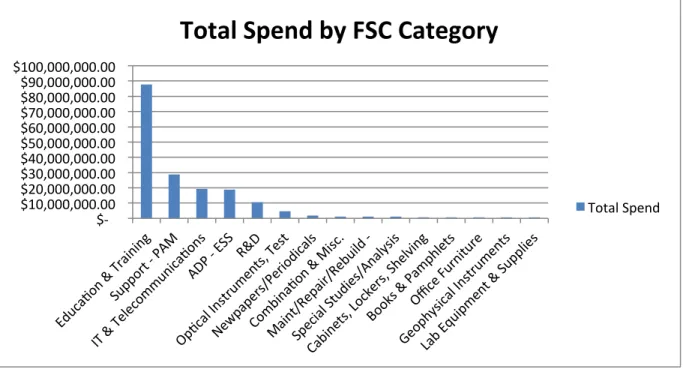
Figure 4. Total Spend by FSC Category ... 34
LIST OF TABLES
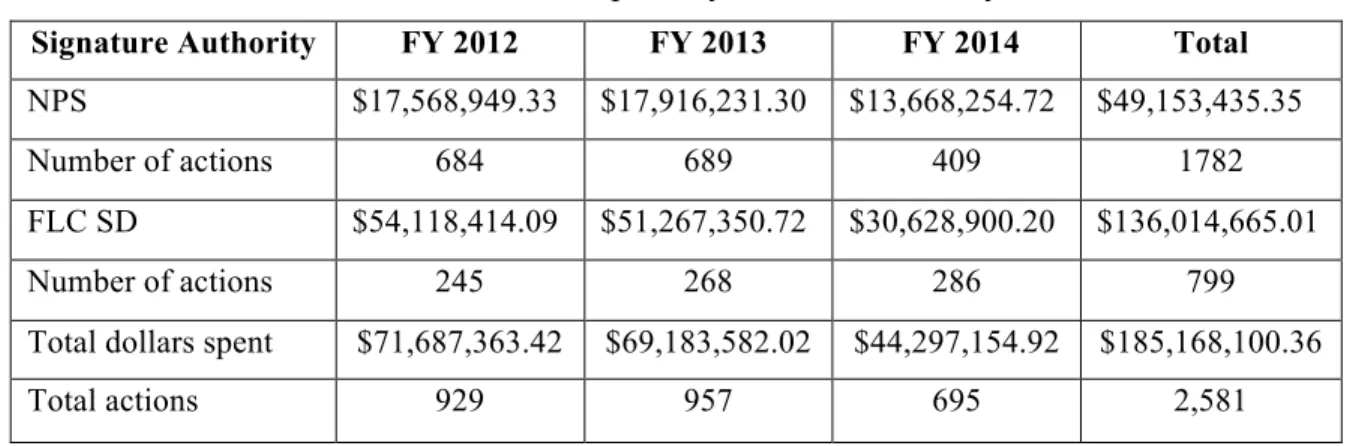
Table 1. Contract Spend by Warrant Authority ... 33
Table 2. Top Five Spend Categories ... 36
Table 3. Education & Training Total Spend by Subcategory ... 37
Table 4. Total Spend by Contract Type ... 39
Table 5. Total Spend by Extent Competed ... 40
LIST OF ACRONYMS AND ABBREVIATIONS
ADP Administrative Processing Data AFIT Air Force Institute of Technology AT&L Acquisition, Technology, and Logistics BPA Blanket Purchase Agreement
CAR Contract Action Report
DAU Defense Acquisition University
DOD Department of Defense
DoDAAC Department of Defense Activity Address Code
DON Department of the Navy
DPAP Defense Procurement and Acquisition Policy DWSS DOD-Wide Strategic Sourcing
ESS Equipment/Software/Supplies FAR Federal Acquisition Regulation
FFP Firm Fixed Price
FLC SD Fleet Logistics Center San Diego
FPDS–NG Federal Procurement Data System–Next Generation
FSC Federal Supply Class
FSS Federal Supply Schedule
FSSI Federal Strategic Sourcing Initiative
FY Fiscal Year
GAO Government Accountability Office GSA General Services Administration IDIQ Indefinite Delivery Indefinite Quantity
IT Information Technology
ITACS Information Technology and Communications Services MILCON Military Construction
MWR Morale, Welfare, and Recreation
NAICS North American Industry Classification System NPS Naval Postgraduate School
NSAM Naval Support Activity Monterey NS WSS Naval Supply Weapons System Support OMB Office of Management & Budget
PAM Professional/Administrative/Management
PMO Program Management Office
R&D Research and Development SAT Simplified Acquisition Threshold
ACKNOWLEDGMENTS
Successful completion of our research could not have been accomplished without the guidance of Dr. Rene Rendon and CDR Richard Nalwasky from the Graduate School of Business and Public Policy of the Naval Postgraduate School. They provided a great amount of support and introduced us to the topic initially.
We would also like to thank Patricia Hirsch from the NPS contracting office for her time and efforts. Without the data from the contracting office, this study would not have been possible. Thank you to her and her staff for their efforts and support.
Finally, we would like to thank our family members who have been with us every step of the way. Thank you for always supporting our military careers and academic endeavors.
I.
INTRODUCTION
A. INTRODUCTION
The purpose of this chapter is to introduce our research on the Naval Postgraduate School (NPS) contracting office spend analysis. It presents background information on our report and the purpose of the research. In this chapter, we also highlight our research questions for this study, as well as the potential benefits and limitations of the study. We conclude this chapter with a summary of the organization of the remainder of the report.
B. BACKGROUND
Budget constraints in the current fiscal environment require continuous process improvement across the Department of Defense (DOD). NPS is not immune to these budgetary constraints and is seeking information to capitalize on opportunities such as strategic sourcing. The Office of Management and Budget (OMB) defined strategic sourcing as “the collaborative and structured process of critically analyzing an organization’s spending and using this information to make business decisions about acquiring commodities and services more effectively and efficiently” (OMB, 2005, para. 1). Stemming from the OMB guidance, the Defense Procurement and Policy (DPAP) developed DOD-wide strategic sourcing initiatives with the purpose of developing cost savings measures and capitalize on sourcing across federal agencies (GSA, 2014a). The Navy developed its own strategic sourcing programs to promote more standardized and efficient purchasing service-wide (Secretary of the Navy, 2011). The Navy has initiatives for a number of products and services after realizing the savings potential of strategic sourcing. NPS has the potential for similar cost savings once those products and services are identified through a spend analysis.
A spend analysis provides an agency the opportunity to review its entire spend while determining whether it received the appropriate amount of products and services given the amount paid. When an organization assesses its top supplies and services— those that consume the most dollars and actions—it is able to identify spending trends within the organization; this awareness provides opportunities for the organization to
strategically source its goods. The Government Accountability Office (2013) stated that “The government is not fully leveraging its aggregate buying power” (p. 3). To combat this, the DOD’s Better Buying Power initiatives have emphasized the elimination of unproductive, bureaucratic processes to control costs while creating incentives for industry to produce better products, thus strengthening competition within the market (Kendall, 2014). NPS has recognized potential spending inefficiencies, and a spend analysis is the most thorough tool available to break down and rebuild contracting processes.
Ultimately, strategic sourcing focuses on consolidating requirements, allowing an organization to take advantage of economies of scale. Through consolidation, an entity like NPS will have lower transaction and contract administration costs. Government agencies across the globe, including NPS, increase the value per dollar spent by utilizing a leveraged buying power and cost-savings techniques.
C. PURPOSE OF RESEARCH
The purpose of this research is to apply strategic sourcing initiatives directly to the NPS contracting office in order to promote spending efficiency and effectiveness campus-wide. Spend analysis, a strategic sourcing process that analyzes an organization’s spending, can lead to substantial cost savings. This concept focuses on leveraging economies of scale, which is vital during the current fiscally constrained budgetary environment. By taking strategic sourcing best practices from industry and the DOD, we will provide recommendations to NPS on the best course of action, in addition to steps for implementing NPS’s own sourcing initiatives, both short-term and long-term.
D. RESEARCH QUESTIONS
The purpose of this research project is to answer the following questions:
1. How can strategic sourcing be implemented to improve the efficiency and effectiveness of the NPS contracting office?
2. How can a spend analysis identify campus-wide requirements and provide a better understanding of how to consolidate purchases?
3. What contract vehicles are the most optimal for major commodities and services procured campus-wide?
4. How can a program management approach to managing contract requirements improve the overall acquisition process?
E. METHODOLOGY
This project identifies approaches the NPS contracting office can utilize through its understanding of strategic sourcing best practices from industry and the federal government and through the utilization of tools, such as spend analysis, to facilitate the concise management of organizational spend. These best practices and tools represent a more proactive approach to organizational spending, as opposed to a reactive approach, allowing for instant savings and providing NPS more money to spend on needed commodities and services.
Within this report, we first identify these best practices and tools in an academic and policy literature review to include academic research studies and articles, DOD policies and initiatives, GAO reports, and industry best practices. Next, we present a spend analysis report on purchases from January 2012–August 2014 that we conducted on two different types of contracts: (1) below the simplified acquisition threshold (SAT) contracts awarded by the NPS contracting office, and (2) above the SAT contracts sent from NPS to Fleet San Diego for award through data provided from the Federal Procurement Data System–Next Generation (FPDS–NG). This spend analysis examines overall spend and then focuses on top commodity and service spend based on federal supply codes (FSC). Finally, this data analysis identifies opportunities for strategic sourcing initiatives.
NPS has an opportunity to utilize industry tools and best practices to operate with a more proactive, strategic approach to contracting rather than the current reactive, traditional model. The objective of this project is to increase organizational savings by offering recommendations of commodities and services that can be strategically sourced, implementing the appropriate contracting tools that will increase worker efficiency, while overcoming organizational barriers unique to NPS. By increasing the efficiency and
effectiveness of the NPS contracting office, opportunities down the road for expanded responsibility of contracting warrant authority may be possible. After the sourcing initiative foundation is laid, consolidating all the school’s purchases above the SAT under one roof will only further promote savings to the organization.
F. SIGNIFICANCE OF RESEARCH
A benefit of analyzing a DOD academic institution’s contracting practices is that the analysis can show how DOD and DON strategic sourcing initiatives are trickling down to unique organizations like NPS. This paper’s process of analyzing spend data and providing strategic sourcing recommendations could be used in the future for other academic institutions like the Naval Academy, Naval War College, or Air Force Institute of Technology. However, the unique mission and organizational structure of NPS may be a limitation in implementing recommendations across the DOD, DON, and other military academic institutions. Another limitation of the research is that the NPS contracting office provided only approximately three years of data, because this was the time for which it received warrant authority. The data’s reliability, validity, and accuracy is also a concern because it was provided by NPS from the FPDS–NG, and this system is known to have errors when processing the DD350 Contract Action Report (CAR).
G. ORGANIZATION OF PAPER
The organization of this paper is as follows:
Chapter II presents a literature review, which reviews the key characteristics and benefits of strategic sourcing and spend analysis. The information obtained from this literature review reveals industry best practices in addition to current challenges in implementing strategic sourcing in the DOD.
In Chapter III, the NPS contracting office structure is examined. This chapter includes an organizational breakdown of the NPS contracting office, including the number of employees as well as respective job titles and responsibilities. Chapter III also identifies the types of contracts typically awarded at NPS, as well as the types of services
and/or commodities purchased by NPS. Finally, this chapter includes a discussion of NPS’s contracting process for acquiring goods and services.
Chapter IV presents the results of the spend analysis conducted on NPS spend from fiscal year (FY) 2011 through FY 2014. The NPS spend analysis is based on contract data obtained from the FPDS–NG and takes into consideration various aspects of data, to include total dollar value of contract actions, number of actions and types, number of customers and contractors, and FSC codes. The analysis also provides strategic sourcing recommendations for the NPS contracting office based on the results of the spend analysis. Recommendations are provided for the acquisition of common products and services campus-wide, contract vehicles for specific commodities and services, and processes for increased oversight in contract performance via program management implementation.
Chapter V concludes with answers to the research questions and addresses barriers that NPS contracting may face in implementing the study’s strategic sourcing recommendations. The chapter concludes with recommendations for areas of future research.
H. SUMMARY
This chapter introduced the research on the Naval Postgraduate School contracting office spend analysis. It presented background information as well as the purpose of the research, followed by the research questions, methodology, and
significance of the research. The chapter concluded with a summary of the organization of this report. The next chapter presents a review of literature on strategic sourcing and spend analysis.
II.
LITERATURE REVIEW
A. INTRODUCTION
The purpose of this chapter is to present a literature review on strategic sourcing and spend analysis. We examine strategic sourcing as well as its application in the DOD and DON. Additionally, we discuss the benefits, opportunities, best practices, and challenges of both strategic sourcing and spend analysis.
B. STRATEGIC SOURCING
The origins of strategic sourcing go back to Japan in the 1960s. When the Japanese economy started to rebound after World War II, competition increased, and the Japanese government began to procure a greater complexity of goods and services (Dieges, Shaw, & Meyer, 2010). Companies found it necessary to reduce costs while maintaining quality products and services; therefore, they overhauled their procurement practices, specifically changing how they developed contractual relationships with suppliers (Dieges et al., 2010).
Strategic sourcing is a vital mechanism for reducing waste and promoting efficient and effective spending in procurements. Strategic sourcing allows commercial and government agencies to optimize performance, minimize price, increase achievement of socio-economic acquisition goals, evaluate total life-cycle management costs, improve vendor access to business opportunities, and otherwise increase the value of dollars spent (OMB, 2005). Strategic sourcing is a critical process that once implemented allows products and services to be procured more effectively.
At a time of intense global competition and increasing customer demands, strategic sourcing within the supply chain is even more important (Kocabasoglu & Suresh, 2006). Companies are challenged to reduce costs while also improving service or product quality. According to Kocabasoglu and Suresh (2006), strategic sourcing is the mechanism to meet these challenges. Strategic sourcing allows for major savings if supply management activities are streamlined and non-value-added tasks eliminated.
Kocabasoglu and Suresh (2006) found that strategic sourcing is more beneficial to a company when it transforms from simply the supply managers responsibility to being more aligned with an organization’s overall objectives (Kocabasoglu & Suresh, 2006).
Strategic sourcing is vital to a company’s bottom line. According to Pennino (2014), “heads of sourcing and supply chain are becoming as prevalent and as vital in the preservation and the performance of a company’s bottom line as chief technical officers” (para. 4). Strategic sourcing provides companies with spend leverage and more efficient processes; it also provides speed and transparency in supplier relationships. Companies that best optimize their spend patterns will create sustainable savings for the years ahead (Pennino, 2014).
Strategic sourcing leads to cost savings by capitalizing on economies of scale to leverage buying power. It leads to more efficient practices by consolidating requirements, aggregating and standardizing demand, and utilizing fewer contract vehicles to procure products and services agency-wide. Strategic sourcing allows for better control of purchasing processes while also reducing transaction costs. Opportunities for strategic sourcing exist when there are suppliers with multiple contracts, or when multiple divisions have contracts with the same contractors or same products, among other scenarios. Strategic sourcing lowers transaction, production, and delivery costs by leveraging buying power. Despite the realized benefits, it took a considerable amount of time for strategic sourcing principles to be implemented in the DOD.
1. Strategic Sourcing in the Department of Defense
Strategic sourcing was not introduced in the DOD until 1999 when it was augmented into the A-76 program (GAO, 2001). The General Services Administration (GSA; 2014b) defined strategic sourcing as “the structured and collaborative process of critically analyzing an organization’s spending patterns to better leverage its purchasing power, reduce costs and improve overall performance” (para. 1). Given the current fiscal environment, doing more with less is a necessity. This is evident in Executive Order No. 13589—Promoting Efficient Spend, in which the Obama administration stated that it is
opportunities to promote efficient and effective spending” (The White House, Office of the Press Secretary, 2011, para 1).
Fiscal pressures and budgetary constraints have increased the need to implement strategic sourcing across federal agencies (GAO, 2013). The GAO has assessed strategic sourcing and its potential value for the past decade and strongly recommends its implementation in procurement strategies. Strategic sourcing represents a move away from numerous individual procurements to a broader and more comprehensive approach to acquisitions (GAO, 2013). Strategic sourcing includes a range of methods for acquiring products and services more effectively and efficiently. Methods include leveraging buying power, managing demand by changing customer behavior, achieving efficiencies through standardization of the acquisition process, evaluating total cost of ownership, and better managing supplier relationships (GAO, 2013). These methods are discussed in more detail later in this chapter in the section Best Practices in Strategic Sourcing.
DOD procurements are transforming from a transaction-focused outlook to a more strategic-focused enterprise. The purchasing function is no longer a clerical or administrative task but, rather, is viewed now as a key part in helping organizations achieve strategic objectives and gain competitive advantage (Apte, Rendon, & Salmeron, 2011). The growing number of strategic sourcing initiatives across the DOD, which is discussed next, is a testament to that fact.
In 2005, the Federal Strategic Sourcing Initiative (FSSI) was established to implement strategic sourcing solutions for the government. Its primary goals are to strategically source across federal agencies, develop cost-saving measures, foster socioeconomic participation, collaborate with industry to develop solutions, share best practices, and create a strategic sourcing environment (GSA, 2014a). The FSSI has made great strides in improving the government’s management of commonly purchased products and services. The FSSI currently has strategic sourcing solutions for the following commodities: delivery services; maintenance, repair, and operations supplies; office supplies; print management; wireless; and information services (GSA, 2014a).
The under secretary of defense for acquisition, technology, and logistics (USD [AT&L]) issued the Better Buying Power initiatives to emphasize the importance of most effectively acquiring warfighter requirements. Kendall (2014) called for eliminating unproductive processes and bureaucracy. He also enforced the importance of building stronger partnerships with the requirements community to control costs. The Better Buying Power mandates have been implemented throughout the DOD and the services.
The DOD-Wide Strategic Sourcing (DWSS) Program is an initiative to implement strategic sourcing across defense agencies. The DWSS Program was established to improve mission responsiveness by aligning the DOD’s acquisition processes with functions that will obtain efficiencies in defense spending (DOD, 2013). It is a strategic acquisition management program to provide reliable, responsive, and cost-effective support to warfighters. The increased use of the DWSS program is a response to the Better Buying Power mandates to improve acquisition efficiencies through strategic sourcing initiatives to achieve cost savings and greater effectiveness (DOD, 2014).
In 2012, the Strategic Sourcing Leadership Council was established to increase government-wide sourcing of goods and services. It includes representatives from the DOD and most other federal agencies, who will be the long-term leadership of the entire government’s strategic sourcing efforts (OMB, 2012). It is the council’s intention that the involved agencies “promote, to the maximum extent practicable, sound strategic souring practices” (OMB, 2012, p. 3). The DOD initiatives have trickled down to the services, leading to the Navy developing its own strategic sourcing strategies.
2. Strategic Sourcing in the Navy
Although it implemented strategies based on the DOD initiatives long before, the Navy did not officially establish a strategic sourcing organization until 2008. That year, it started the Department of Navy Strategic Sourcing Governance Charter and Process Structure. It also designated a Strategic Sourcing Program Management Office (SSPMO) to manage the Navy’s strategic sourcing program (Secretary of the Navy, 2011). The Navy’s objective for strategic sourcing is “to identify opportunities for making better
generates spend, how it develops requirements, and how it sources those requirements” (Secretary of the Navy, 2011, para. 2). The initiatives were a result of the Navy realizing the potential of strategic sourcing to lead to cost savings and to reduce total spend.
The goals of the Navy’s strategic sourcing are as follows: provide visibility of strategic sourcing opportunities within the Navy, involve stakeholders early in the strategic sourcing initiatives to align requirements, mandate collaboration and use of best practices to increase savings, promote more standardized and efficient processes, align opportunities with customer needs, and achieve higher socio-economic goals (Secretary of the Navy, 2011).
Since establishing the strategic sourcing organization and goals, the Navy has taken great strides in capitalizing on opportunities. The Navy utilized the DOD EMALL as the single point of entry for office supplies Navy-wide (DOD, 2008). Users could utilize the established Navy indefinite delivery indefinite quantity (IDIQ) contracts or compare pricing from multiple sources through EMALL. The Navy estimated that it saved $5.4 million on office supplies service-wide in FY 2008 alone (DOD, 2008). DOD EMALL eliminated the need for contracting officers to award local contracts, giving them more time to focus on other requirements (DOD, 2008).
In 2006, the Navy took the lead in developing DOD-wide clerical services contracts through the DWSS Program. Like most strategic sourcing initiatives, the goal was “to improve visibility into Department-wide clerical services spend and provide a streamlined and standardized acquisition business process, improve support of socio-economic goals, and achieve cost avoidance” (DOD, 2008, p. 92). As of 2008, the DOD-wide clerical services contracts saved $3.15 million in its short time of use (DOD, 2008). In 2008, the Navy established the Navy Furniture Initiative, which resulted in awarding 74 blanket purchase agreements (BPAs) with various discounts less than the Federal Supply Schedule (FSS) pricing. While the cost savings is only 1%, the Navy was able to award 31.8% of awards to small businesses. The creation of this initiative was also significant because it began to allow the Navy to capture spend information, including buying patterns, to standardize future acquisitions (DOD, 2008). As noted in
the Navy examples, strategic sourcing lends itself to considerable benefits if utilized properly.
C. BENEFITS OF STRATEGIC SOURCING
With growing budgetary constraints, agencies must assess their spending patterns and identify opportunities to utilize strategic sourcing. Strategic sourcing practices drive efficiencies and lead to savings, increased business knowledge, and better supplier management (GAO, 2013). Strategic sourcing leads to cost savings through leveraging buying power, taking advantage of economies of scale, and reducing transaction costs (Moore, Cook, Grammich, & Lindenblatt, 2004). The GAO (2012) indicated that billions of dollars can be saved annually by strategic sourcing, but agencies’ lack of commitment towards it has led to subpar results.
The GAO found that some agencies saved as little as 5%, while others saved upwards of 20% by employing strategic sourcing. In 2011, the Department of Homeland Security managed 20% of its spending through strategic sourcing and achieved $324 million in savings (GAO, 2013). The FSSI, the government-wide program established in 2005, managed $339 million in requirements with strategic sourcing, which led to $60 million, or 18%, in savings (GAO, 2013). Still, only 15% of government-wide procurements went through the FSSI, so there is great potential for even more savings. Although the results show the benefits of strategic sourcing, the GAO (2013) ascertained that the government does not fully employ strategic sourcing methods as it should. Across the DOD, little progress has been made to better incorporate strategic sourcing in higher-spend categories such as services (GAO, 2013). Great efficiencies can be achieved through strategic sourcing, especially with the broad scope and volume of government procurement. Strategic sourcing lends itself to greater results when it is applied to all facets of acquisitions.
Strategic sourcing drives acquisition efficiency while also meeting customer requirements and making wise use of taxpayer dollars (GSA, 2014b). Strategic sourcing increases efficiency because it provides visibility into spending habits, creates
minimizes complexity for end-users. Strategic sourcing also improves vendor performance in that it increases the clarity of requirements, encourages innovative solutions, improves contract structures, and improves vendor ability to achieve performance goals. Strategic sourcing led agencies to achieve the President’s savings target of $40 billion, enabled the right-sizing of the acquisition workforce, minimized redundancies in the acquisition process, and increased spending transparency (GSA, 2014b). These benefits can only be realized once opportunities for strategic sourcing are identified.
D. OPPORTUNITIES FOR STRATEGIC SOURCING
Opportunities for strategic sourcing in DOD acquisitions include suppliers with multiple contracts, products or services with many suppliers, and multiple independent buying offices (Moore et al., 2004). Potential performance improvement opportunities include varied or poor quality and delivery, long wait times, little information sharing or supplier innovation, and few multiyear contracts (Moore et al., 2004). Another opportunity for strategic sourcing is when an organization has many contracts or dollars spent in the same Federal Supply Code (FSC). Federal agencies sometimes rely heavily on the North American Industry Classification System (NAICS) codes when classifying actions. However, Moore et al. (2004) offered this insight: “FSC codes offer a more finely grained indicator of a particular group of goods and services than the broader NAICS codes” (p. 31). Whether using the NAICS or FSC, the codes indicate the organization is buying the same type of products and services on separate contracts.
Another opportunity exists to exploit the use of strategic sourcing when customers are buying products or services from the same company using multiple contracts. Each contract involves transaction costs, with each additional contract reducing the ability to capitalize on economies of scale (Moore et al., 2004). High purchasing costs occur when many buyers in the same agency make similar purchases. Lower transaction costs, greater efficiencies, and substantial economies of scale can be achieved through strategic sourcing (Moore et al., 2004).
E. BEST PRACTICES IN STRATEGIC SOURCING
The best practices identified in strategic sourcing include cross-functional teams, management and customer buy-in, market intelligence, and commodity categories. The potential positive results of strategic sourcing can be achieved with leadership, shared data, and a focus on strategic categories (GAO, 2013). In regard to accessing strategic sourcing, a 2013 GAO report found that companies had to make structural changes with top leadership support and establish commodity managers to be better able to leverage their buying power to achieve savings through strategic sourcing. Companies generally agreed that the following principles were important to achieve successful acquisition outcomes: “maintaining spend visibility, centralizing procurement, developing category strategies, focusing on total cost of ownership, and regularly reviewing strategies and tactics” (GAO, 2013, p. 10).
The principles outlined in the GAO report (2013) enable companies to identify and share information on spending and increase market knowledge about suppliers to gain more insight into their procurement environments. This knowledge helps companies make more informed spending decisions. The GAO found that companies could centralize procurement decisions by aligning, prioritizing, and integrating procurement functions within the organization. Without a centralized process, different parts of the organization could unknowingly buy the same products or services. This centralization does not mean centralizing the procurement activity, but centralizing the procurement knowledge so there is an open flow of communication across the organization (GAO, 2013).
The development of sourcing strategies and supplier relationships must be done using a strategic, cross-functional approach (Moore et al., 2004). The GAO (2004) also asserted that cross-functional commodity teams should be established to access and analyze information regularly to integrate strategic sourcing. Banfield (1999) explained that cross-functional teams should be assembled to represent areas of expertise from all corporate functions. Rendon (2005) suggested that the team, consisting of functional representatives with a stake in the acquisition, should be educated in requirements
analysis, cost analysis, purchasing and supply management, and negotiations. These team members should work together to develop strategic sourcing recommendations and to select suppliers (Banfield, 1999). Including end-user customers and technical experts in the decision-making process would ensure successful customer participation and collaboration (Rendon, 2005).
Strategic sourcing requires experienced personnel with business acumen, a disciplined process, an alignment of organizational goals and resources, leadership, an awareness of organizational needs and the marketplace’s capabilities, and a culture that rewards innovation. Sound market intelligence is the foundation of effective strategic sourcing; it reveals whether goals are attainable. Mere compliance with the Federal Acquisition Regulation (FAR) on a market intelligence report is not necessarily sufficient because a report can omit valuable information (Hawkins, Knipper, & Reed, 2013).
Market research is the continuous process of collecting information to maximize reliance on a commercial marketplace and to capitalize on capabilities, technologies, and competitive forces to meet an agency’s need (DOD, 2011). Market research provides the expertise required to effectively conduct an acquisition. It identifies potential sources of supply, commercial product characteristics, market characteristics, commercial item standards and best practices, emerging technologies, vendor capabilities, non-development item solutions, and government leverage opportunities (Headquarters, Air Force Materiel Command, 2007). Market intelligence is the key to developing strategic sourcing to provide more value to the customer (Hawkins et al., 2013).
The GAO (2004) cited commitment, knowledge, change, and support as the major tenets of strategic sourcing. Strategic sourcing requires a firm commitment to meeting leaderships’ objectives and knowledge in terms of better understanding spending habits. The changes aspect refers to the need for a structured process to transition to strategic sourcing. Support refers to sustained leadership, communication, and tracking metrics (GAO, 2004).
Nearly a decade later, the GAO (2013) still highlighted a lack of leadership as an impediment to strategic sourcing, finding that senior management commitment is
essential to facilitate a strategic approach. Strong analytical skills are necessary to do the front-end work for strategic sourcing (GAO, 2013). Strategic sourcing requires the sorting and analysis of spend data to identify products and services that are best suited for strategic sourcing. According to Rendon (2005), team sponsorship and level of authority are vital to strategic sourcing. Sponsors should provide goals and resources and advocate for strategic sourcing initiatives; this is key to knocking down obstacles and barriers to strategic sourcing in an organization (Rendon, 2005). The team should have the authority and power to make decisions and implement sourcing policies (Rendon, 2005).
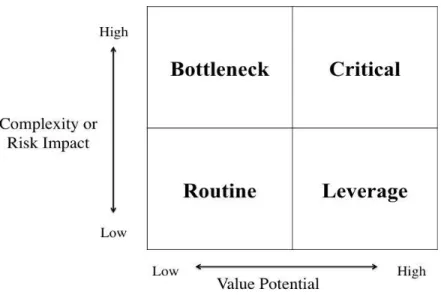
Implementing common purchasing processes and purchasing tools is a best practice in strategic sourcing. This includes establishing a standard commodity-strategy process and utilizing spend-analysis tools to maximize strategic sourcing opportunities (Rendon, 2005). Procurement strategies should be category-specific to use the most effective sourcing strategy for each category. The degree of complexity of the product or service and its value potential determine the choice of one of the four general categories of procurement tactics (Monczka, Handfield, Giunipero, & Patterson, 2011). Banfield (1999) also noted that procurement teams should analyze expenditure data to see where the product or service falls within the quadrant to determine the relationship between the agency and suppliers. The Kraljic model, shown in Figure 1, is a portfolio analysis framework that many federal and commercial firms use to categorize products and services. The profit impact and risk of the procurement determine the agency’s relationship with the supplier.
Figure 1. Portfolio Analysis Model (from Monczka et al., 2011, p. 216)
The model classifies commodities and services into four categories: critical, leverage, routine, and bottleneck. A critical commodity requires a high degree of business alignment and process integration (Banfield, 1999). Agencies should develop alliances with suppliers, build close working relationships with them, and jointly solve problems. Leverage commodities are those that are readily available but also account for a significant portion of an agency’s spending (Monczka et al., 2011). Routine commodities are products and services that are also readily available but are low in costs. These purchases should be streamlined and standardized. Bottleneck commodities and services are highly specialized; it is important to ensure supply continuity by validating supplier capabilities (Monczka et al., 2011).
Closely related to categorizing commodities is requirements management, another best practice in strategic sourcing. As Rendon (2005) observed, “Commodity strategies involve consolidating all ... requirements for a specific supply or service into one or a few standardized configuration requirements” (p. 17). The level of standardization of requirements determines an organization’s leveraging power (Rendon, 2005). This practice is not always well received; customers usually push back when their requirements are standardized. The following section includes a review of other challenges that exist when implementing strategic sourcing in federal agencies.
F. CHALLENGES TO STRATEGIC SOURCING
The following are some of the challenges in implementing strategic sourcing within the DOD: achieving public policy objectives, collecting contract data, centralizing purchasing, and standardizing requirements. Military departments have to balance prospective savings, performance improvements, risks, socioeconomic and competition goals, and other regulations not present in the private sector. This limits the DOD’s ability to apply commercial best practices in strategic sourcing (Moore et al., 2004). There are some valid reasons for an organization not to explore strategic sourcing. There may be a need for diverse, unique requirements; a lack of economies of scale; separate pots of funding; independent supplier business units; and political pressures for specific suppliers (Moore et al., 2004). The GAO (2013) found that some obstacles to strategic sourcing were a result of agencies wanting to maintain control over their contracting activities and retain the flexibility to purchase unique requirements.
DOD acquisitions are governed by public law and are required to achieve public policy objectives. This is a significant challenge with regards to strategic sourcing (Rendon, 2005). The FAR (2014) states the following: “The vision of the Federal Acquisition System is to deliver on a timely basis the best-value product or service to the customer, while maintaining the public’s trust and fulfilling public policy objectives” (FAR 1.102(a)). These public policies include maximizing competition and providing opportunities for small and disadvantaged businesses (Rendon, 2005). Strategic sourcing increases the scope of work performed by firms on a single contract. This can make it difficult to obtain competition and small business participation requirements. Compelling savings and performance improvement opportunities may reduce an agency’s hesitation to adopt strategic sourcing (Hawkins et al., 2013). Strategic sourcing, with its goal to leverage buying power, often restricts competition and limits or excludes small business participation (Rendon, 2005). Most small businesses are not qualified to meet government strategic sourcing requirements, because they are not able to perform $100 million or more per year in requirements. If they could, they would not be considered small businesses for future requirements (Gross, 2011).
The starting point for a spend analysis and strategic sourcing is good data; this is commonly one of the largest obstacles for an agency (GAO, 2013). Most federal agencies get their spend data from the DD350, the Individual Contract Action Report, which is reported through the FPDS–NG. It is the government’s tracking system for contracting actions, but there are some limitations with the data (GAO, 2013). The report is submitted every time a contract is awarded and is used to collect contract data statistics in the DOD (Rendon, 2005). Challenges with the reporting include poor data quality and a lack of detailed information on purchases and on intra-government transfers less than $25,000. The lack of information on supplier performance and spend data and the need to scrub the data before analyzing are major challenges (Moore et al., 2004). There is also a risk that the data may have been input incorrectly, that the details are insufficient, or that the data is incomplete (Rendon, 2005). Errors were found with incorrect small or disadvantaged business classification for contractors. Also, the DD350 data system allows the reporting of only the dominant FSC. This can lead to incorrect estimation of dollars for a particular product or service (Moore et al., 2004). Conducting a complete spend analysis also requires information on the needs, preferences, and priorities of commodity users, which are not available in DD350 data; this lack of data often leads to data analyzers guessing what was purchased (Moore et al., 2004).
Metrics are also a challenge to implementing strategic sourcing, for example, the DOD’s inability to evaluate the return on investment on initiating strategic sourcing (Rendon, 2005). There is no clear guidance on which metrics should be used to measure the success of strategic sourcing. The GAO (2013) found that it was a challenge for agencies to produce utilization rates, spending amounts through strategic sourcing, and savings achieved that could be used to monitor progress and success. The instant savings from leveraging large-quantity buys of commodities allows an assessment of the dollars saved per procurement. Beyond that, long-term life-cycle costs like total ownership costs have not been determined. The results of standardizing configurations of supplies and services to procure high volumes have not been balanced with the training and infrastructure costs associated with strategic sourcing (Rendon, 2005). Despite its
challenges, strategic sourcing opportunities must be initiated across the DOD during this fiscally constrained environment; the first step in doing so is to conduct a spend analysis.
G. SPEND ANALYSIS
A spend analysis is the best method to identify strategic sourcing opportunities in an agency. A spend analysis is the review of an organization’s purchases to get a better understanding of what the organization is buying, how much it is spending, and who are its customers and suppliers. It provides vital information and answers questions that may have otherwise gone unanswered. According to Hawkins, Nissen, & Rendon (2014), a “spend analysis is used to develop optimal sourcing strategies, and identifies opportunities to rationalize the supply base, reduce transactions, aggregate spend, leverage spend volume, standardize requirements eliminating duplicate parts and reducing inventory, and estimate potential savings” (p. 225).
Conducting a spend analysis is the first step in identifying opportunities for strategic sourcing, because it can significantly help a federal agency improve purchasing practices (Moore et al., 2004). According to DPAP, “spend analysis is part of the first critical step in making an informed business decision in the strategic sourcing process” (DOD, 2014, para 4). This is also the case in the commercial sector, as Pandit and Marmanis (2008) observed: “Spend analysis is the starting point of strategic sourcing and creates the foundation for spend visibility, compliance, and control” (p. 5). Spend analysis is the analysis of expenditures in terms of the type of commodity or service, the identity of the suppliers, the number of contracts and expenditures, and other variables that show how current money is spent (Moore et al., 2004). According to Moore et al. (2004), “A spend analysis integrates internal spend data and external supplier and market data and applies analytical and benchmarking techniques to help identify risks and opportunities for performance improvements and savings by applying best practices in purchasing and supply management” (p. 8). In order to reduce costs and improve performance, a spend analysis identifies where numerous suppliers are providing similar goods and services (GAO, 2004).
Since 2002, the GAO has emphasized the importance of a comprehensive spend analysis. A spend analysis is used in both commercial and federal organizations to provide knowledge on how money is spent. A spend analysis evaluates spend patterns in order to identify what the organization is buying, how much is being spent for what goods and services, how they are buying, who are the buyers, and who are the suppliers (GAO, 2004). Strategic sourcing utilizes a spend analysis to identify where numerous suppliers are providing similar goods and services and where costs can be reduced while improving performance through leveraged buying power, thus reducing the number of suppliers to meet agency needs (GAO, 2013). Now that spend analysis has been defined, the next section addresses the kind of information organizations gain when conducting a spend analysis.
H. BENEFITS OF CONDUCTING A SPEND ANALYSIS
A spend analysis provides great insight into an organization’s leaders and customers. According to Pandit and Marmanis (2008), the commercial sector found that a spend analysis answers the following questions:
(1) What was the corporate-wide spend associated with each cost center last year? Does the aggregate amount enable me to increase leverage with suppliers?; (2) What are the top commodities? What has the spend trend been over the last few years? Which of these commodities represent opportunities for spend reduction?; (3) Which suppliers are the most valuable and strategic?; (4) How much am I spending with preferred suppliers? How much am I spending with poorly performing suppliers?; (5) What percentage of spend is associated with contracts? (p. 5)
Similar to the commercial sector, the DOD (2014) has found that a spend analysis is vital to assess the breakdown of spend in terms of the following: the amount being spent, nature of the purchases, buying practices or types of contracts, requirements offices, buying offices, and suppliers. A spend analysis highlights procurement best practices while identifying opportunities for cost savings, leveraging economies of scale, and employing demand management principles (DOD, 2014).
A spend analysis provides invaluable information to the commercial and government sectors. Agencies get a better sense of the requirements, number of contract
vehicles, customers, dollars spent, and contractors. They are able to identify trends in spending patterns and create policies and structures to best handle these trends. Leaders can also make organizational and structure changes, and increase efficiency with spend analysis information. Leaders are able to completely transform every aspect of the organization based on the spend analysis through strategic sourcing to better serve their customers.
To fully reap the benefits of strategic sourcing, agencies must research and conduct a spend analysis. Spend analysis arranges procurement information to ascertain true category spend and identify strategic sourcing opportunities through demand aggregation and supplier rationalization (Pandit & Marmanis, 2008). Demand aggregation is the process of consolidating multiple customer requirements into a standardized form to allow for procurement through strategic sourcing. If volume can be increased under a contract by consolidating demand, lower prices can be negotiated with the supplier (Pandit & Marmanis, 2008). There are further benefits besides looking at just an organization’s purchases; next, the effects of pooling resources and leveraging buying power are discussed.
The GAO (2004) found that federal agencies can achieve significant benefits from using a spend analysis to develop strategic sourcing. A spend analysis helps reduce duplication in purchasing and improves supplier performance. The GAO (2004) noted that
agencies that establish an effective spend analysis program can then achieve a total-spending perspective across the agency; make the business case for collaboration in joint purchasing rather than fragmented purchasing; create supporting structure, processes and roles to assign accountability and exercise oversight; identify potentially hundreds of millions of dollars in procurement savings opportunities by leveraging buying power; and identify opportunities to achieve other procurement process efficiencies. (p. 24)
A spend analysis unifies the purchasing power of an organization and reduces inefficient purchasing. It creates oversight and accountability measures to ensure proper contract performance. Most significantly, a spend analysis can save organizations money
by utilizing economies of scale to drive down prices. Although there are benefits to conducting a spend analysis, there may be some limitations that are uncovered after its completion.
I. LIMITATIONS OF SPEND ANALYSIS
In addition to identifying strategic sourcing opportunities, a spend analysis can also identify some limitations within a commodity. According to Moore et al. (2004), the following situations may be identified: “only one supplier or limited competition with few bidders, suppliers with financial problems, low or highly variable demand, no contract, no supplier performance incentives or commitment to improve, inadequate or poor past performance information, inappropriate scopes of work” (p. 25).
One supplier or limited competition could lead to overcharging or incorrect billing. Supplier financial problems increase the risk of poor performance or default. Variability in demand may be straining suppliers, as they need a stable amount of work to maintain equipment, personnel, and operations. No contract in place increases procurement time and transaction costs. Poor performance standards reduce incentives for suppliers to improve, and poor past performance information makes it difficult to identify the most innovative and qualified contractors (Moore et al., 2004). If an organization decides to pursue strategic sourcing initiatives, it must be prepared to fully commit to the requirements needed in order to conduct a proper spend analysis.
J. REQUIREMENTS FOR A SPEND ANALYSIS
Key processes have been identified to develop a successful spend analysis program, which involve automating, extracting, supplementing, organizing, and analyzing data (GAO, 2004). Automation denotes that the data is automatically compiled. Extracting means essential data is culled from accounts payable and other internal systems. Supplemental information includes additional data sought from internal and external sources. Organization is required to ensure data is accurate and complete. Data should be organized in logical, comprehensive categories of commodities and suppliers (GAO, 2004). Databases may have suspect information or not enough details on the
products and services being procured. Data should be accurate, complete, and consistent, and undergo extensive review to validate. Data analysis is used to cut costs, streamline acquisitions, and optimize the supply base. This includes using analytical tools to continually analyze data to support strategic sourcing decisions (GAO, 2004).
Implementing a spend analysis program requires capable personnel and organizational changes. Pandit and Marmanis (2008) suggested the following guidelines to successfully implement a spend analysis program:
(1) Set objectives, (2) Lead from the top, (3) Establish a focused center of excellence, (4) Carefully evaluate choices, (5) Take a limited-scope, phased-rollout approach, (6) Know your data, (7) Ensure that technology supports business, (8) Align the team to support the organization, (9) Increase organizational visibility to spend and sell internally, (10) Measure constantly and report frequently, and (11) Engage with your application provider. (p. 5)
It is important for management to create an environment conducive to maintaining a spend analysis program by setting clear and achievable objectives. Management must develop a transition plan to initiate the change in the organization and should then ensure that the necessary technology systems and organizational structures are in place to support the program. Finally, for the program to remain effective, the organization must remain transparent, must constantly track spending patterns, and then must adjust its future outlays (Pandit & Marmanis, 2008).
The academic literature provides a solid foundation on strategic sourcing and the key principles associated with it. Strategic sourcing has several definitions, but ultimately it means taking a strategic approach to purchasing in a way that leverages buying power to maximize economies of scale. This reduces costs and improves efficiency. The Department of Homeland Security and FSSI achieved tremendous savings through strategic sourcing. There is potential for even more savings because strategic sourcing is not fully utilized across the DOD. Customers buying products from the same company on multiple contracts represent some of the many opportunities to utilize strategic sourcing to reduce costs. Unstable quality levels and lack of innovation are great opportunities to
To fully reap the benefits of strategic sourcing, research shows that agencies must conduct a spend analysis. A spend analysis gives insight into the amount spent by an organization, identifies the customers and suppliers, and determines the procurement method for products and services. A thorough spend analysis can provide many benefits, such as identifying duplicated efforts as well as commodities with unfavorable markets. A spend analysis program requires management to create an environment of transparency in the organization to allow for a successful program.
After years of use, the commercial sector and the DOD have identified some best practices in strategic sourcing. Cross-functional teams have proven successful in having personnel from various business functions involved early in the acquisition process. Market research is also very important; it provides the foundation for strategic sourcing possibilities. Research shows that it is important for leadership to buy in and to empower the strategic sourcing team through sponsorship and authority. Categorizing commodities in line with the Kraljic model has been found to be successful in managing supplier relationships (Monczka et al., 2011).
Implementing strategic sourcing is not without some challenges, especially in the DOD. As we know, maintaining small business policies and regulations is part of the vision of the Federal Acquisition System. Strategic sourcing, on the other hand, limits competition and participation by small and disadvantaged businesses due to the scale of the requirements. Complications also exist with the contract reporting data in the FPDS– NG: Information is often omitted or mislabeled, which translates into errors in conducting the spend analysis. It is a challenge to quantify the savings and return on investment in implementing strategic sourcing practices in an organization.
Overall, the literature shows that, if implemented properly, strategic sourcing can be vitally important to an organization. Conducting a spend analysis is the first step in identifying strategic sourcing opportunities. In this chapter we introduced the methods, benefits, best practices, and challenges introduce background information that assisted us in our research to identify strategic sourcing possibilities for the NPS contracting office.
K. SUMMARY
In this chapter, we presented a literature review in which the purpose and outcomes of a spend analysis were explained. We provided a foundation of strategic sourcing best practices and challenges and their application to DOD acquisitions. The following chapter describes the NPS contracting office—its organization and the mission, history, and current operations. Chapter III provides a foundation for our research into the NPS contracting office, which this study is based upon.
III.
NPS CONTRACTING OFFICE
A. INTRODUCTION
Since the data used in the spend analysis is from the NPS contracting office, it is important to establish a fundamental understanding of the organization’s structure, functions, and capabilities. This chapter provides an in-depth description of the institution and its organization, history, and current operations and contracting activities.
B. INSTITUTION OPERATIONS
The mission of NPS (2014) is to
provide relevant and unique advanced education and research programs to increase the combat effectiveness of commissioned officers of the naval service to enhance the security of the United States. In support of the foregoing, and to sustain academic excellence, foster and encourage a program of relevant and meritorious research which both supports the needs of the Navy and Department of Defense while building the intellectual capital of the Naval Postgraduate School faculty.
The FY 2013 operating budget for NPS was approximately $294,500,000. Figure 2 details the changes in the operating budget from 2009 to 2013. There have been significant fluctuations in budgets, which is consistent with the ever-changing fiscal environment within the DOD and the need to identify cost savings.
C. ORGANIZATION
The NPS contracting office is one of three purchasing entities located on Naval Support Activity Monterey (NSAM). There other two on the installation are NPS NSAM, which is an activity of the Commander Naval Region Southwest; and Morale, Welfare, and Recreation (MWR), which is an activity of the Navy Exchange Command (Lee, 2013). Despite being located on the same installation, the offices perform different functions and fall under different commands. NSAM facilitates the Military Construction (MILCON) projects for the base, while the NPS contracting office executes the educational and research mission requirements (Lee, 2013). The NPS contracting office falls under the senior management functional support are, specifically the Directorate of Contracting and Logistics Management which reports directly to the NPS President.
D. HISTORY
Prior to the establishment of the NPS contracting office, Fleet Logistics Center San Diego (FLC SD) and Naval Supply Weapons System Support (NS WSS) awarded all requirements for service support above the micro purchase threshold for NPS (Lee, 2013). FLC SD also administered a single IDIQ time and materials contract for all research, educational, and administrative mission essential support services requirements, which expired in 2011 (Lee, 2013). NPS had warranty authority to procure firm fixed priced (FFP) products and services from GSA and NASA up to $150,000 to be paid with the Government wide Purchase Card. FLC SD handled all GSA and NASA purchases over $150,000 (Lee, 2013). In December 2011, NPS was granted warrant authority by FLC SD up to the simplified acquisition threshold for FFP type awards, which allowed them to self-support research and education mission requirements under the $150,000. FLC SD awards requirements over $150,000 with assistance from NPS (Lee, 2013).
E. CURRENT OPERATIONS
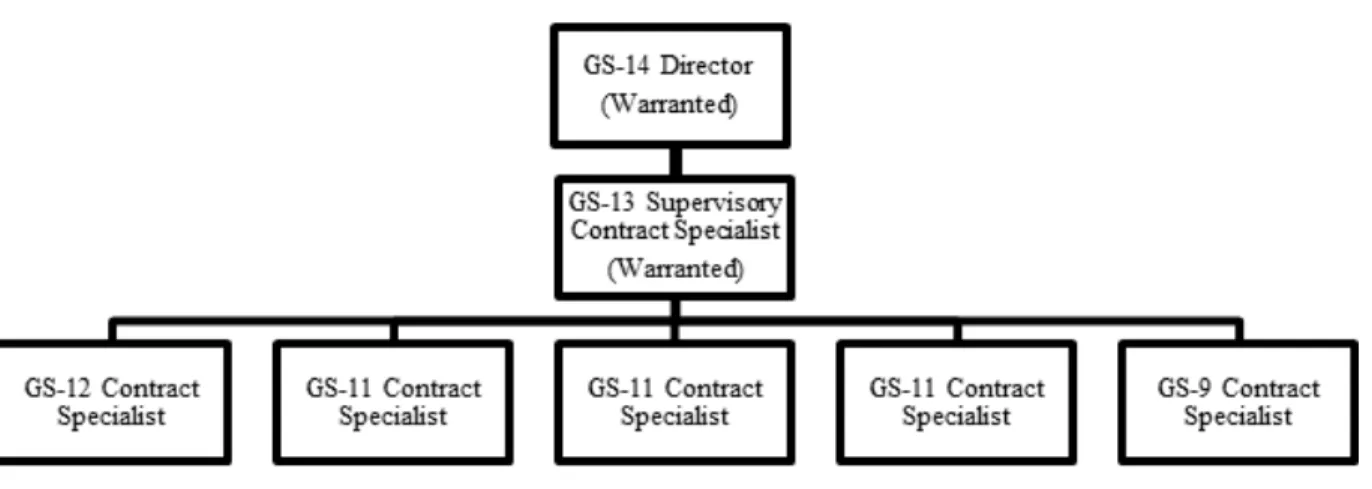
The NPS contracting office currently consists of seven personnel. The Director of Contracting and Logistics Management is a General Business and Industry Series, 1101. The other personnel are all Government Contracting Series, 1102. Figure 3 outlines the