70
A STUDY ON FACTORS AFFECTING
DESIGN-CONSTRUCTION INTERFACE
MAGI THOMAS
1& R.M JENIFER PRIYANKA
21
P.G STUDENT, DEPT OF CIVIL ENGG, RVS TECHNICAL CAMPUS, COIMBATORE, INDIA
2ASSISTANT PROFESSOR, DEPT OF CIVIL ENGG, RVS TECHNICAL CAMPUS, COIMBATORE, INDIA
ABSTRACT: - This study focuses on the factors that affects design-construction interface in construction industry. To accomplish study objectives, literature reviews and Pilot studies were carried out and based on that survey questionnaire was developed. Data collection was conducted through online survey and direct interviews. Responses from twenty companies were analyzed through Relative Importance Index method. The results indicate that design complexity, time limitation in the design phase, lack of accuracy in specification and working drawings, lack of communication between designer and owner’s family & participants’ honest wrong beliefs are the most important problems that affects design-construction interface. Whereas, effect of material changes during design-construction, weather conditions, involvement of the contractor in the design conceptual phase and development phase revealed as least important problems. In conclusion, frequent professional meetings, maximizing standardization, regular safety meetings and preconstruction exercise done prior to any construction activity can reduce the severity of these problems.
Keywords – design complexity, design-construction interface
INTRODUCTION
Construction industry is one of the key industries of any
country. But constructions are becoming more and more
complex these days. But one of the main problems in
construction industry is the construction of buildings as
per the design. Problems mainly take place intermediate
to the design phase and construction phase. To eliminate
these problems it must be identified. Once the problems
are identified it is easy to prevent their occurrence. For
this reason effective construction management is essential
which deals with identifying the factors that cause these
problems and avoiding them. This thesis is a study of the
design-construction interface in construction industry.
The main objective of the thesis is:
To identify the problems that affects
design-construction interface.
To analyze these factors and to find the most
important factors
To provide suggestions and recommendations to
eliminate the problems at the
design-construction interface.
REVIEW OF LITERATURE
Fu-Cih Siao et al., (2004) says that based on
good integration of interfaces, there are positive benefits
for the use of the resource, the constructability and the
construction schedule etc. And further to affect the
project cost.
Luis F. Alarcon and Daniel A. Mardones
(1998) conducted a performance study of the
design-construction interface. A review of the most frequent
design defects found during the construction phase in four
71
prevent the occurrence of these defects. The proposedchanges were implemented in a construction company
participating in study with significant impact on
performance. The implementation comprised new design
and review procedures, standards for communication as
well as explicit definition of internal customer
requirements and design attributes. The implementations
helped the company to avoid rework and all type of waste
in both the designer office and the construction site.
Eric Johansen and John Carson (2003) says
that there are many factors which contribute design
management and quality of design and documentation but
in the main they do not add value to design process and
there is a need of an impingement in contractors
performance in terms of safety, time , cost and quality to
improve design-construction interface. They have
concluded that in order to improve the , the most
significant concepts which need attention are , the design
time available, the quality of briefing, the need for a team
approach that a clearly identified competent manager
controls the process and that the task dependencies are
understood.
Mohammad Mryyian1 and Patricia
Tzortzopoulos (2013) conducted a study to develop a
framework to support designers to identify sources of
errors and reduce waste through different design phases.
Results demonstrate perceptions that the main causes of
errors and waste are related to (a) client changes; (b)
design drawing and detail issues; and (c) problems with
following regulations and building codes.
Abdul-Mohsen Hammad and Ibrahim
AI-Hammad (1996) conducted a study with an objective to
identify and assess the relationship between building
owners and designers in tens of their interface problems.
This study says that interface problems between owner
and designer mainly comes under three categories
namely: inadequate contract and specifications, financial
problems, and lack of proper communication. They
concluded that lack of accuracy in specification and
working drawings, change orders, lack of proper
communication etc. are the most important problems
between owners and designers.
Aina, O.O. And Wahab, A.B. (2001)
conducted a study that examined the occurrence of
buildability problems and the factors that cause
buildability problems in construction projects in Nigeria.
The study shows that the complexity of project, faulty
and defective working drawings, resistance of client to
buildability programmes, budgetary limitation and
non-standardization of design are ranked most as the cause of
buildability problems. The study concludes that working
drawings, specifications and other contract documents
must be prepared by construction professionals; they
should be aware of the likely impacts of buildability
problems and the communication skill among
construction parties must be effective at all stages of
construction projects.
Fu-Cih Siao and Yu-Cheng Lin (2010) says
that interface management plays an important role in
construction management due to construction projects
tend to be complex. This study presents a Construction
Interface Matrix (CIM) approach to represent the
interface issue-related information for project participants
which enables project participants and managers to
directly acquire available information for managing
interfaces efficiently without other data supporting.
Overall, through utilizing the CIM approach, users can
directly and efficiently acquire information related to the
interface relationships among participants and interface
72
V.senthil kumar and koshy Varghese (2008)says that complex information intensive and dynamic
nature of the fast track concurrent construction design
process makes it hard to manage the information flows
using the traditional project management techniques and
tools. This paper proposes a new methodology ‘DIMS’
for managing dynamic design information in the detailed
design phase. It has five main components, (i)
Identification/Definition of project elements, (ii)
Development of the Physical Interface Matrix (PIM):
capturing the physical interfaces among the components,
(iii) Development of Design Interface Matrix (DIM):
capturing the design interfaces between the components
and the disciplines, (iv) Development of Design Interface
Agreement (DIA): capturing the detailed design interface
parameters, (v) Developing Drawing DSM: capturing the
design interfaces between the drawings and its
Optimization to ensure optimal drawing release
sequences.
Wai kiong chong and sui pheng low (2006)
conducted a research study on design and construction
interface dissonances in large building projects in the
contextual boundaries of Eastern province of Saudi
Arabia. The results indicate that lack of coordination,
insufficient working drawing details, involvement of
designer as consultant, involvement of contractor as
consultant & participants’ honest wrong beliefs are
considered as most important origins of professional
dissonances on project design and construction interfaces.
Whereas the project management as individual
professional service, nationality of professional firms &
involvement of contractor in design phases are
interestingly revealed as least important origins of
dissonances between professionals on project design and
construction interfaces in large building projects.
METHODOLOGY ADOPTED
This research involves evaluation of the
interface between design and construction and also
identifies the potential causes of discrepancies at the
interface between design and construction. The
preliminary insight of the subject data for this study has
been collected through a literature. Through literature and
pilot studies various causes dominating design
construction interface issues have been identified and
based on those causes a questionnaire has been prepared
to analyze the causes of discrepancy based on the
response from design consultants, contractors skilled
labours and clients.
STEPS INVOLVED
1. Literature survey and pilot studies
2. Identification of factors affecting
design-construction interface
3. Prepare questionnaire related to factors
4. Conducting direct interviews and online surveys
5. Data collection from respondents
6. Data analysis using Relative Importance Index
method
7. Suggestion for improvement of
design-construction interface
RESEARCH METHODOLOGY
DATA COLLECTION
From literature reviews and pilot studies
conducted, 35 major factors contributing
design-construction interface problems were selected. Based on
this factors questionnaire is prepared. Questionnaire
includes preference survey which shows the severity of
the corresponding factor in design-construction interface.
For collecting the data for this project, 30 companies
were selected which include large, medium and small
73
interviews and on-line surveys. And the collected datawere analyzed using Relative Importance Index (RII)
method.
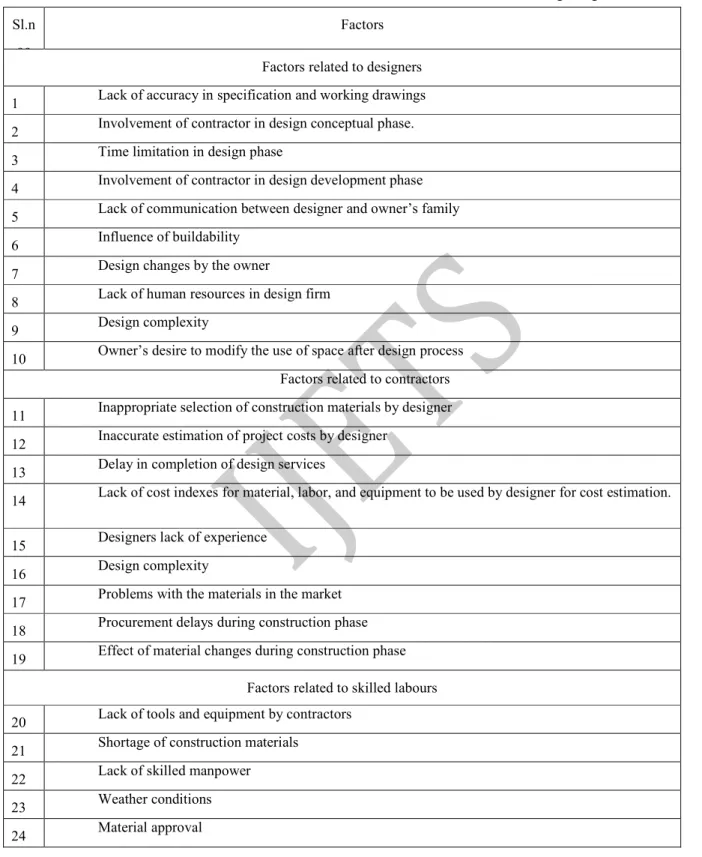
TABLE 1 Factors affecting design-construction interface
Sl.n
oo
Factors
Factors related to designers
1 Lack of accuracy in specification and working drawings
2 Involvement of contractor in design conceptual phase.
3 Time limitation in design phase
4 Involvement of contractor in design development phase
5 Lack of communication between designer and owner’s family
6 Influence of buildability
7 Design changes by the owner
8 Lack of human resources in design firm
9 Design complexity
10 Owner’s desire to modify the use of space after design process Factors related to contractors
11 Inappropriate selection of construction materials by designer
12 Inaccurate estimation of project costs by designer
13 Delay in completion of design services
14 Lack of cost indexes for material, labor, and equipment to be used by designer for cost estimation.
15 Designers lack of experience
16 Design complexity
17 Problems with the materials in the market
18 Procurement delays during construction phase
19 Effect of material changes during construction phase
Factors related to skilled labours
20 Lack of tools and equipment by contractors
21 Shortage of construction materials
22 Lack of skilled manpower
23 Weather conditions
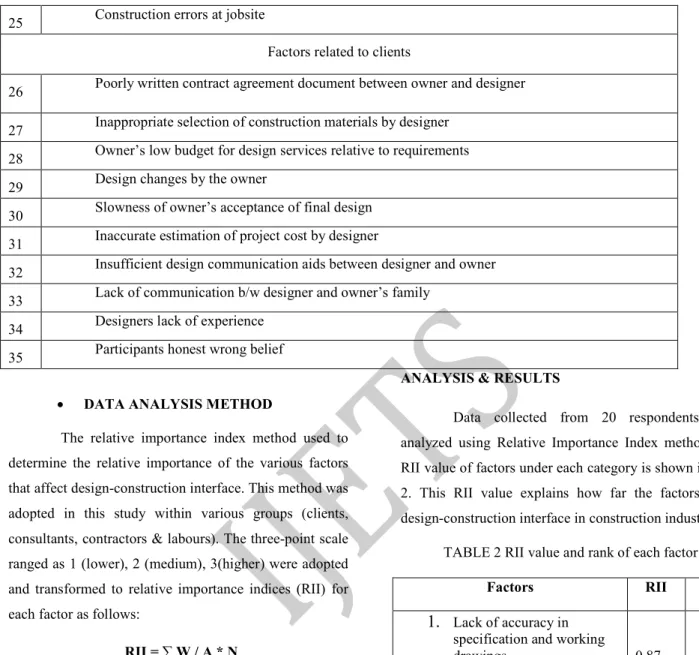
74
25 Construction errors at jobsiteFactors related to clients
26 Poorly written contract agreement document between owner and designer
27 Inappropriate selection of construction materials by designer
28 Owner’s low budget for design services relative to requirements
29 Design changes by the owner
30 Slowness of owner’s acceptance of final design
31 Inaccurate estimation of project cost by designer
32 Insufficient design communication aids between designer and owner
33 Lack of communication b/w designer and owner’s family
34 Designers lack of experience
35 Participants honest wrong belief
DATA ANALYSIS METHOD
The relative importance index method used to
determine the relative importance of the various factors
that affect design-construction interface. This method was
adopted in this study within various groups (clients,
consultants, contractors & labours). The three-point scale
ranged as 1 (lower), 2 (medium), 3(higher) were adopted
and transformed to relative importance indices (RII) for
each factor as follows:
RII = ∑ W / A * N
Where W is the weighting given to each factor
by the respondents (ranging from 1 to 3), A is the highest
weight (i.e. 3 in this case), and N is the total number of
respondents. The RII value had a range from 0 to 1 (0 not
inclusive), higher the value of RII, more important was
the cause or effect. The RII was used to rank the different
factors. These rankings made it possible to cross-compare
the importance of the factors as perceived by the four
groups of respondents (i.e. clients, consultants,
contractors & labors).
ANALYSIS & RESULTS
Data collected from 20 respondents were
analyzed using Relative Importance Index method. The
RII value of factors under each category is shown in table
2. This RII value explains how far the factors affect
design-construction interface in construction industry.
TABLE 2 RII value and rank of each factor
Factors RII Rank
1.
Lack of accuracy in specification and workingdrawings 0.87
2
2.
Involvement of contractorin design conceptual phase. 0.47 20
3.
Time limitation in designphase 0.883
1
4.
Involvement of contractor in design developmentphase 0.43
21
5.
Lack of communication between designer andowner’s family 0.85
3
6.
Influence of buildability 0.63 137.
Design changes by theowner 0.80
6
75
design firm9.
Design complexity 0.883 110.
Owner’s desire to modifythe use of space after design
process 0.817
5
11.
Inappropriate selection of construction materials bydesigner 0.5
18
12.
Inaccurate estimation ofproject costs by designer 0.58
16
13.
Delay in completion ofdesign services 0.57
17
14.
Lack of cost indexes for material, labor, and equipment to be used bydesigner for cost estimation. 0.75
8
15.
Designers lack ofexperience 0.68
11
16.
Design complexity 0.85 317.
Problems with the materialsin the market 0.78
7
18.
Procurement delays during construction phase0.67 12
19.
Effect of material changesduring construction phase 0.52 19
20.
Lack of tools andequipment by contractors 0.62
14
21.
Shortage of constructionmaterials 0.8
6
22.
Lack of skilled manpower 0.67 1223.
Weather conditions 0.433 2124.
Material approval 0.73 925.
Construction errors atjobsite 0.63
13
26.
Poorly written contract agreement document between owner and designer0.833 4
27.
Inappropriate selection of construction materials by designer0.58 16
28.
Owner’s low budget for design services relative to requirements0.6 15
29.
Design changes by the owner0.8 6
30.
Slowness of owner’s acceptance of final design0.53 18
31.
Inaccurate estimation of project cost by designer0.7 10
32.
Insufficient design communication aids between designer and owner0.68 11
33.
Lack of communication b/w designer and owner’s family0.8 6
34.
Designers lack of experience0.75 8
35.
Participants honest wrong belief0.85 3
10 MOST IMPORTANT FACTORS THAT
AFFECTS DESIGN-CONSTRUCTION INTERFACE
35 factors were selected for this study. Out of these 10 most important factors that affects design-construction interface is described below.
1. Design complexity
Complexity affects the flow of construction activities.
Complex design can lead to loss of productivity. Here the
respondents are designers.
Fig 1 Design complexity
From fig 1 it can be concluded that 70% of the
respondents accepted that design complexity is a major
factor that affects design-construction interface.
2. Time limitation in design phase
Time limitation may occasionally force the designer to
76
Fig 2 Time limitation in design phaseFrom fig 2 it can be concluded that 70% of the
respondents agreed that time limitation in design phase
affects construction industry.
3. Lack of accuracy in specification and
working drawings
If the working drawings or the specifications are
incomplete or unclear, it will create problems in their
interpretation between the contractor and the owner and
cause delay in construction.
Fig 3 Lack of accuracy in specification and working
drawings
Fig 3 states that 70% of the respondents accepted that
lack of accuracy in specification and working drawings
affects construction.
4. Lack of communication between designer and
owner’s family
If the actual family design requirements are not
incorporated in the design, the approval of the final
design will be delayed and also more modification of the
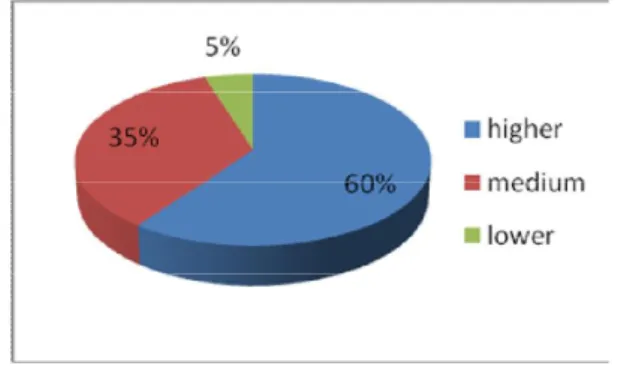
design may be required. Here respondents are designers.
Fig 4 Lack of communication between
designer and owner’s family
From fig 4 it is clear that 60% of the participants agreed
to this statement. Only 5% of them considered lack of
communication between designer and owner’s family as a
lower factor.
5. Participant’s honest wrong belief
Participant’s honest wrong beliefs may cause construction
professionals to contribute poor value add in projects.
Fig 5 Participant’s honest wrong belief
Fig 5 states that 60% of the respondents accepted that
77
affects design-construction interface. 0nly 5% of themresponded that it is a lower factor.
6. Design complexity
Complexity may cause problems at project interfaces.
Here the
respondents
are
contractors.
Fig 6 Design complexity
From Fig 6 it can be concluded that 60% of the
participants accepted that design complexity is a higher
factor that affects design-construction interface
7. Poorly written contract agreement document
between owner and designer
A contract is written to prevent any unlawful act and it
refers to all records in connection with the work at any
specific time.
Fig 7 Poor agreements
Fig 7 states that 70% of the respondents accepted that
poor agreement is a major factor that affects
design-construction interface.
8. Lack of human resources in design firm
Quality work and timely schedule would be affected in
the absence of adequate manpower support.
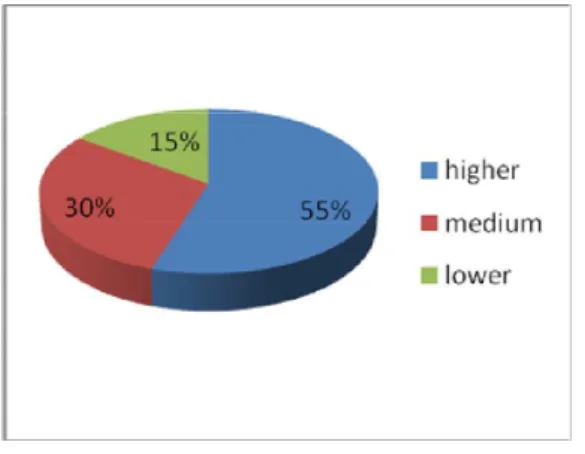
Fig 8 Lack of human resources in design
firm
Fig 8 states that 55% of the respondents accepted that
lack of human resource in design firm is a higher factor
that affects design-construction interface.
9. Owner’s desire to modify the use of space
after design process
This problem only arises when the owner needs to add,
delete or modify the original plans and specifications
Fig 9 Owner’s desire to modify the use of space after
design process
Fig 9 states that 55% of the respondents agreed that
owner’s desire to modify the use of space after design
process affects construction process.
78
The shortage of materials may change the design toaccommodate the new materials used as the replacement.
Fig 10 Shortage of construction
materials
From the fig 10 it can be concluded that 55% of the
respondents accepted that shortage of materials is a
higher factor that affects construction process.
CONCLUSIONS AND SUGGESTIONS
The main objective of the thesis was to
determine the factors affecting design-construction
interface, to know their causes on construction works and
to identify ways of preventing or solving these problems.
35 major factors contributing design-construction
interface problems were selected for the study. For
collecting the data for this project, 30 companies were
selected. 20 companies responded to the direct interviews
and on-line surveys. Method used for analysis of data is
relative importance index. From the analysis & results 35
factors are ranked according to their Relative Importance
Index value.
From the study most important sources of
problems at the design-construction interface are design
complexity, time limitation in the design phase, lack of
accuracy in specification and working drawings, lack of
communication between designer and owner’s family &
participants’ honest wrong beliefs. And the least
important sources of problems at the design-construction
interface are weather conditions, involvement of the
contractor in the design conceptual phase, involvement of
the contractor in the design development phase. These
problems produce a series of impacts in the construction
works such as: delays in construction, rework, conflicts
between professionals etc.
Time limitation in the design phase is one of the
most important factors. If adequate time is not given, the
design cannot be developed in proper way and may result
in misunderstandings between professionals working on
project. Therefore allocating adequate time for the design
phase would help in eliminating the design discrepancies.
Lack of accuracy in specification & working drawings is
another most important factor that affects
design-construction interface. It can be eliminated by providing
guideline standards for stipulated drawings. By
conducting frequent professional meetings during the
various project phases can reduce gap between the
contractor and the designer at the project interface. This
can also help in eliminating problems that may be caused
because of the honest wrong beliefs of the participants.
Regular safety meetings and preconstruction
exercise done prior to any construction activity can
reduce the severity of these problems. The project
construction management team should also work hard for
reducing these problems. They should be strictly
professional in maintaining the stipulated time schedule
of the client. There may arise many conflicts during the
construction phase but as a construction management
team shall be well planned enough to battle out these
conflicts without hurting the client.
REFERENCES
[1] Faisal M. Arain and Sadi Assaf (2007), ‘Consultant’s
79
problems in Large Building Projects in Saudi Arabia’ Journal
of Environmental Design Science Vol. 5 No. 2, pp: 15-37.
[2] Rong-Yau Huang, Chin-Tien Huang, Hung Lin, and
Wen-Hsiang Ku (2008) ‘Factor Analysis of Interface Problems
Among Construction Industries- A case study of MRT’ Journal
of Marine Science and Technology, Vol. 16, No. 1, 52 pp.
52-63.
[3]Eric Johansen and John Carson (2003) ‘Improving the
Effectiveness of the Building Design Management in UK’, In:
Greenwood, D J (Ed.), 19th Annual ARCOM Conference, 3-5,
University of Brighton.Vol. 1, 151-60, September.
[4]Karen A. Moreau & Edward Back (2000) ‘Improving the
design process with information management’, International
Journal of Sustainable Construction Engineering & Technology
Vol 2, Issue 1, June.
[5]Luis F. Alarcon and Daniel A.Mardones (1998) ‘Improving
the Design Construction Interface’, Guaruja, Brazil,
Proceedings IGLC.
[6]Shaik Hussein Mydin, Rosli Mohamad Zin, MuhdZaimiAbd
Majid, MardiyahZahidi& Aftab Hameed Memon (2011)
‘Buildability Attributes at Design Phase in Malaysian Building
Construction’, International Journal of Sustainable Construction
Engineering & Technology, Vol 2, Issue 1, June.
[7]Mohammad Mryyian1 and Patricia Tzortzopoulos (2013),
‘Identifying Sources of Design Error in the Design of
Residential Building’,Proceedings IGLC-21, Fortaleza, Brazil,
July.
[8]Abdul-Mohsen AI-Hammad and Ibrahim AI-Hammad
(1996) ‘Interface Problems between Building owners and
Designers’ Journal of performance of constructed facilities ,
pp123-126, October.
[9]Aina, O.O. And Wahab, A.B. (2011) ‘An Assessment of
Build ability Problems In The Nigerian Construction Industry’
Global Journal of Research Engineering, vol 11, issue 2 march.
[10] Corey Daniels, Clifton B. Farnsworth & P.E., and Justin
Weidman (2014) ‘Interface Management on Megaprojects: A
Case Study’, 50th ASC Annual International Conference
Proceedings.
[11]Patricia Tzortzopoulos and Carlos Torres Formoso (1999),
‘Developing a Protocol For Managing the Design Process in the
Building Industry’ Formoso, Tzotzopoulos, Jobim, and Liedtke,
Proceedings IGLC.
[12]Fu-CihSiao and Yu-Cheng Lin (2010),‘The Development of
Construction Interface Information Management System’
Department of Civil Engineering, National Taipei University of
Technology, Taipei, Taiwan, s-12.
[13]Philip Crowther (2002), ‘Design for Buildability and
Deconstruction sequence’, design for deconstruction and
materials reuse, Queensland University of Technology,
Brisbane, Australia, CIB 272.
[14]V.senthilkumar and koshy Varghese (2008), ‘Design
Interface Management System for Construction Projects’ 10th
International design structure matrix conference DSM’08,
Stockholm Sweden, 11-12 November.
[15]Waikiongchong and suipheng low (2006), ‘Latent Building
Defects: Causes and Design Strategies to prevent them’, Journal
of Performance of Constructed Facilities’ ASCE, vol. 20. No.3
August.
[16]Ken Fredrickson (1998), ‘Design Guidelines For
Design-Build Projects’, Journal of Management in Engineering, ASCE,
vol. 14, no1, January.
[17] Fu-Cih Siao. Yen-Chi Shu and Yu-Cheng Li (2004) ‘
Interface Management Practices in Taiwan Construction
Project’ Department of Civil Engineering, National Taipei
University of Technology, Taipei, Taiwan, S27-5.
[18] Jorge A. Vanegas & Augusto Opdenbosch (1994), ‘Using
Simulation and Visualization Technologies to Strengthen the
Design-Construction Interface’, Winter simulation conference,
Proceedings.
[19] Adrian Mitchell, Ian Frame &Dr. Alan Coday (2009), ‘A
Conceptual View of the Interface between the Detailed Design
Process and the Construction Process’ Department of the Built
Environment, Anglia Ruskin University, Chelmsford, Essex.
2009.
[20] Glenn Ballard and Lauri Koskela (1998),‘On the Agenda of