Address for correspondence Dr. Afif Nurul Hidayati
Department of Dermatology and Venereology, Faculty of Medicines, Universitas Airlangga/ Dr. Soetomo General Hospital, Surabaya, Indonesia 60286.
Email: [email protected]
Original Article
Association of psoriasis severity degree with
self-esteem, depression and dermatology life quality
index
Introduction
Psoriasis is a chronic inflammatory auto-immune skin disease marked by skin thickening with erythematous plaque and papules, well defined with multilayered rough squama and
Nurina Dhani Rahmayanti, Afif Nurul Hidayati, Evy Ervianti, Nalini Muhdi*
Department of Dermatology and Venereology, Faculty of Medicines, Universitas Airlangga/ Dr. Soetomo General Hospital, Surabaya, Indonesia.
* Department of Psychiatry, Faculty of Medicine, Universitas Airlangga/ Dr. Soetomo General Hospital Surabaya, Indonesia.
Abstract Background Psoriasis is a chronic inflammatory skin disease that affects physical health as well as self-esteem, depression, and quality of life.
Objective We aimed to evaluate the association of psoriasis severity with self-esteem, depression, and dermatology life of quality index (DLQI) on outpatient and inpatient unit at Department of Dermatology and Venereology, Dr. Soetomo General Hospital, Surabaya, Indonesia.
Materials and Methods This study included 37 patients that fulfilled the inclusion and denied exclusion criteria. Sociodemographic characteristics of the patients were assessed, the Psoriasis Area Severity Index (PASI) were scored to determine psoriasis severity, as well as self-esteem (Rosenberg Self-Esteem Scale), depression (Hamilton Rating Scale for Depression), and Dermatology Life Quality Index.
Results Our study showed there were no subjects with high self esteem, 73% subjects had standard self esteem, 27% subjects had low self esteem, and there was a significant negative association between psoriasis severity with self-esteem (p=0,035, r=-0,215). Eighty nine point one percent of patients got depression (35.1% mild depression; 27% moderate depression; 16.2% severe depression, and 10.8% very severe depression. Positive association between psoriasis severity with depression degree, however, was not statistically significant (p=0,107, r=0,124). Ninety seven point two percent patients got impaired DLQI. Positive association between psoriasis severity with DLQI, however, was not statistically significant (p=0,315, r=0,256).
Conclusion Psoriasis is associated with low self-esteem, depression, and decrease in DLQI, although not statistically significant association between psoriasis severity (PASI) with depression and DLQI. Therefore, comprehensive treatment with psychiatrist for psoriasis patients is recommended. All patients with psoriasis without regards to its severity have to be screened for self-esteem, depression, and QOL. It is necessary to assess patients with low psoriasis severity to psychiatrist.
Key words
may be accompanied with pustular eruption and erythrodermic or Auspitz and Koebner phenomenon. Psoriasis Vulgaris is the most prevalent type found in 90% of all psoriasis patients. Psoriasis severity is frequently evaluated with Psoriasis Area and Severity Index (PASI), which is often used in clinical trials for its practical and fast uses but with high variability.1
Psoriasis can affect all age groups, mostly at age of 15-30 years then there is no prevalence difference between men and women. In Indonesia, based on data from Dr. Mohammad Hoesin General Hospital Palembang from August 2008 to June 2012, psoriasis incidence was 1.35% in 491 cases, whereas in RSUP Prof. Dr. D. Kandou Manado from January 2013 to December 2015 188 new cases of psoriasis (5.26%) was found from 3573 new visits of skin diseases. WHO also declared that psoriasis is a global issue that affects at least 100 million people all over the world, not only physically, but also mentally.2-4
Psoriasis can be triggered by environmental factors such as stress, infection, or treatment. Psorasis is not life threatening, but for this disease to affects patient’s appearance and often persists for a lifetime; particularly in face, hands, legs, or genitals; can disturbs social and emotional aspects of the patients. Nervousness, anger, shame, lower self-esteem or confidence can lead to isolation and low productivity, to depression and decreases daily quality of life (QOL).5-7This study aimed to evaluate severity
of psoriasis and its association with self esteem, depression and DLQI to increase the quality of psoriasis management.
Materials and Methods
We used an analytic cross-sectional
observational study to evaluate the association
of psoriasis vulgaris severity using PASI with self-esteem (using Rosenberg Self Esteem Scale), depression (using Hamiltan Rating Scale for Depression), and QOL (using Dermatology Life Quality Index). The study population consisted of 37 psoriasis patients acquired by consecutive sampling, on outpatient and inpatients at Dermatology and Venereology Department in Dr. Soetomo General Hospital Surabaya during 2018, which fulfilled the inclusion and denied exclusion criteria. The
inclusion criteria were clinically and
histopathologically diagnosed psoriasis, age >18 years old, and willing to participate in the study after informed consent. The exclusion criteria were pregnancy and other diseases that were not correlated with psoriasis. Data was evaluated with bivariate analysis using Chi Square and correlation test to measure the correlation between variables. Ethical clearance for the study was given by the Research Ethics Committee of Dr. Soetomo General Hospital, Surabaya, Indonesia.
Results
were not married (24.3%) and 3 patients were widow/widower (8.1%) (Table 1).
Subjects were classified based on duration of the disease, 12 patients with disease duration <5 years (32.4%), 12 patients with disease duration between 5-10 years (32.4%), and 13 patients with disease duration of more than 10 years (35.2%). Comorbidities were also identified, 8 patients (21.6%) had hypertension, 1 patient (2.7%) had history of stroke, 9 patients (24.3%) had hypercholesterolemia, 6 patients (16.2%) had type 2 diabetes mellitus, 9 patients (24.3%) had hyperuricemia, 5 patients (13.5%) were smokers, 2 patients (5.4%) had alcohol consumption habit, 2 patients (5.4%) had used narcotics, and 8 patients (21.6%) had history of psoriasis vulgaris in family (Table 1).
Based on gender, male psoriasis patients were 19 patients (51.3%) with 17 patients (54.8%) having moderate-severe psoriasis (PASI score >10), although not statistically significant (p=0.405). Most patients were aged between 46-55 years old (13 patients, 35.1%) with 12 patients (38.7%) having moderate-severe psoriasis (PASI >10) and 1 patients (16.7%) with mild psoriasis. Early elderly patients (aged 46-55 years old) and late teenage (17-25 years old) had most number of low self-esteem, with 4 patients (10.8%) each. Early elderly patients were the age group with the most very severe depression (3 patients, 8.1%) and severe depression (2 patients, 5.4%). Late teenage group had 1 patient (2.7%) with very severe depression. Most psoriasis patients (48.64%) had psoriasis with very big effect (DLQI 11-20) on QOL, with 2 patients (5.4%) were early elderly age group and 2 patients (5.4%) elderly age group.
Most patients (23 patients, 62.2%) were educated till high school, with 19 patients (61.3)
Table 1 Patient's Baseline Characteristics
Variables n, %
Outpatient Inpatient
36 (97.29%) 1 (2.71%) Gender Male
Female
19 (51.4%) 18 (48.6%) Age 17-25 years
26-35 years 36-45 years 46-55 years 56-65 years >65 years 7 (18.9%) 3 (8.1%) 5 (13.5%) 13 (35.1%) 8 (21.6%) 1 (2.8%) Education None
Elementary School Middle School High School Bachelor 1 (2.7%) 7 (18.9%) 2 (5.4%) 23 (62.2%) 4 (10.8%) Occupation Private Sector
Entrepreneur Student Not working Housewives 18 (48.6%) 6 (16.2%) 2 (5.4%) 2 (5.4%) 9 (24.3%) Marital status Married
Not Married Widow/Widower
25 (67.6%) 9 (24.3%) 3 (8.1%) Visits New Patient
Late Patient
6 (16.2%) 31 (83.8%) Disease
duration
< 5 years 5-10 years >10 years
12 (32.4%) 12 (32.4%) 13 (35.1%) Comorbidities Hypetension
History of Stroke Hypercholesterolemia Type 2 Diabetes Mellitus Hyperuricemia Smoking habit
Alcohol consumption habit Used Narcotics
History of psoriasis vulgaris in family
8 (21.6%) 1 (2.7%) 9 (24.3%) 6 (16.2%) 9 (24.3%) 5 (13.5%) 2 (5.4%) 2 (5.4%) 8 (21.6%)
Table 2 Patient's characteristics on psoriasis severity, self esteem, depression and quality of life Patient’s characteristics Stress and Psoriasis P value
Gender Psoriasis Area Severity Index 0.405
Age Psoriasis Area Severity Index Rosenberg Self Esteem Scale
Hamilton Rating Scale for Depression Dermatology Life Quality Index
0.317 0.234 0.763 0.450 Education level Psoriasis Area Severity Index Rosenberg
Self Esteem Scale
Hamilton Rating Scale for Depression Dermatology Life Quality Index
0.932 0.213 0.698 0.033
Occupation Psoriasis Area Severity Index 0.423
Disease duration Psoriasis Area Severity Index Rosenberg Self Esteem Scale
Hamilton Rating Scale for Depression Dermatology Life Quality Index
0.012 0.156 0.146 0.545
identified, with very severe depression found in 4 patients (10.8%).
Most patient with disease duration of >10 years had mild depression (66.8%), while severe depression and very severe depression were found more on disease duration of 5-10 years. There were 5 patients with extremely affected QOL, three of them (8.1%) had disease of 5-10 years, while most patients (7 patients, 18.9%) with duration <5 years and greatly affected QOL. There were 23 psoriasis patients with comorbidities (62.2%), 19 of them had moderate-severe psoriasis (61.3%)
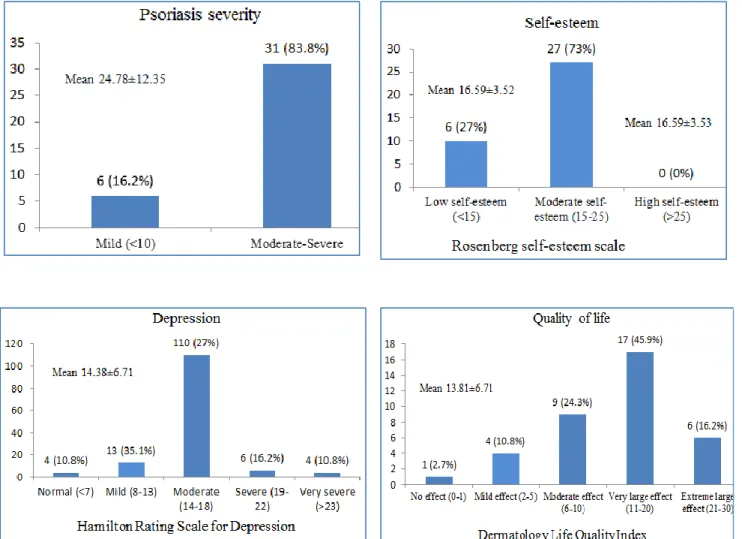
In general, there were 31 patients with moderate-severe psoriasis (83.8%) with normality of psoriasis severity data. No patients had high self-esteem. There were 10 patients with low self-esteem (27%). There were 4 patients with very severe depression (10.8%), with normality of depression data were p=0.896 (normally distributed). There were 6 patients with extremely affected QOL (16.2%) with normality of QOL were p=0.497 (normally distributed).
Table 2 describes patient’s baseline
characteristics in association with psoriasis severity, self-esteem, depression and quality of
life. No statistically significant differences were determined between the groups. Significant statistic difference were found in education level on DLQI (p=0.033), disease duration on psoriasis severity (p=0.012) (Table 2).
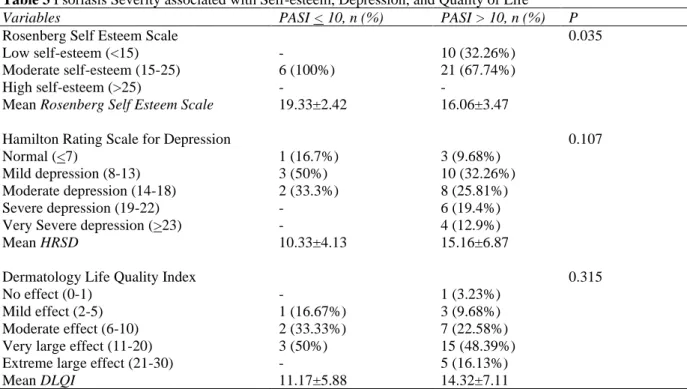
Table 3 Psoriasis Severity associated with Self-esteem, Depression, and Quality of Life
Variables PASI < 10, n (%) PASI > 10, n (%) P
Rosenberg Self Esteem Scale Low self-esteem (<15) Moderate self-esteem (15-25) High self-esteem (>25)
-
6 (100%) -
10 (32.26%) 21 (67.74%) -
0.035
Mean Rosenberg Self Esteem Scale 19.33±2.42 16.06±3.47 Hamilton Rating Scale for Depression
Normal (<7)
Mild depression (8-13) Moderate depression (14-18) Severe depression (19-22) Very Severe depression (>23)
1 (16.7%) 3 (50%) 2 (33.3%) -
-
3 (9.68%) 10 (32.26%) 8 (25.81%) 6 (19.4%) 4 (12.9%)
0.107
Mean HRSD 10.33±4.13 15.16±6.87
Dermatology Life Quality Index No effect (0-1)
Mild effect (2-5) Moderate effect (6-10) Very large effect (11-20) Extreme large effect (21-30)
-
1 (16.67%) 2 (33.33%) 3 (50%) -
1 (3.23%) 3 (9.68%) 7 (22.58%) 15 (48.39%) 5 (16.13%)
0.315
Mean DLQI 11.17±5.88 14.32±7.11
Table 4 Correlation of psoriasis severity with self-esteem, depression, and quality of life Psoriasis Area
Severity Index
Rosenberg Self Esteem Scale
Hamilton Rating Scale for Depression
Dermatology Life Quality Index Psoriasis Area
Severity Index
Pearson Correlation 1 -0.215 0.124 0.256
Sig. (2-tailed) 0.202 0.466 0.126
Table 4 describes the correlation between psoriasis severity with self esteem, depression, and quality of life. There is a weak negative correlation between PASI score with Rosenberg Self Esteem Score (p= 0.202, r=-0.215), weak positive correlation between PASI score with Hamilton Rating Scale for Depression (HRSD) (p=0.466, r=0.124) and PASI score with Dermatology Quality Life Index (DLQI) (p=0,126, r=0.256). Significant statistic correlation were found between Rosenberg Self Esteem Score with HRSD (p<0.001) and Rosenberg Self Esteem Score with DLQI (p=0.030) (Table 4).
Discussion
This study is consistent with Boehncke et al8
that stated psoriasis prevalence between men
and women were similar, also psoriasis in men were more severe than women, this study did not explain why.9 Various studies stated that
psoriasis prevalence in men and women were similar, a few states that men were more prevalent as in a retrospective epidemiological study in Polyclinic of Dermatology and Venereology RSUP Dr. Mohammad Hoesin Palembang from August 2008 to June 2012 (312 patients, 74%) and study in RSUP Prof. Dr. R. D. Kandou Manado about psoriasis profile from January 2013 to December 2015 (57.98%).2-4
Figure 1 Psoriasis Severity, Self-esteem, Depression, Quality of Life
Most age group that suffered from psoriasis was early elderly patients, which were consistent with a study in RSUP Prof. Dr. R. D. Kandou Manado about psoriasis profile from January 2013 to December 2015 (50.53%).4This
difference occurs for there is difference in geographical areas. Psoriasis is more prevalent in area away from the Equator such as countries in Europe and Australia, and more seldom found in Asian countries.11 Psoriasis incidence in Asia
is the lowest (0.4%), while in other continents were higher with 2.2%-5.2% in Europe and 2.3%-6.6% in Australia.1,11
Psoriasis can emerge in any age group, with more prevalence in third decade and before 40 years old in 70% patients.12 Stigma on psoriasis
were found more in lower age group.13 Patient
with psoriasis had 16 times more chance to have dysfunction in family, which is important to identify its risk and psychological factors that can affects family relationship.14,15
Psoriasis symptoms such as pain, burning sensation, itch, bleeding, exudation, weakness and difficulty falling asleep were more likely found in lower education level based on Sampogna (2009), which contradicted with the present study although not statistically significant, but patients with lower educational level were less likely to use mental health facility.16
status with psoriasis did not have a clear explanation. Higher stress level on private sectors and psoriasis conditions that affects working difficulties can influence one’s productivity which may have impact on patients socioeconomic condition, although the specific factors affecting this condition needs further evaluation.15
Higher self-esteem score were found more on higher educational level, although not significant to DLQI. Study from Ustundag et al17 stated that
higher educational level shows higher self esteem, while Kim et al18 stated there were no
association between education level and DLQI. In general, higher educational level gives certain protective factors against depression.19
Our study showed there were no patients with mild psoriasis that had that had the disease for more than 10 years. This was consistent with Song et al that stated the more early patient had psoriasis and the longer one’s suffer, the more severe its condition.20 Pakran et al showed
longer disease duration could reduce DLQI more as it affected certain physical disability.21 Lee, et
al (2010) also stated that disease duration is a predictor of lower DLQI.22 Disease duration on
DLQI showed insignificant statistic association, found also in Gelfand et al23 that explained
patients were not always adapting with the disease as time goes by. But on a study from Monali et al explained that the chronic and recurrent characteristic of the disease often lowers patients hope of curing and had constant uneasiness about their treatment plan that may emerge new lesions, which were aggravated by the nature of the disease that were difficult to control.24
Increasing comorbidities in psoriasis were suggested to be caused by systemic inflammation of psoriasis that influence different inflammation activity that lead to insulin
resistance, atherosclerosis that often happened in psoriasis patients10, although not statistically
significant in our study. There were various studies that explained higher prevalence and severity of comorbidities in psoriasis patients.15,20,25-40
Our present study (p=0.035) was consistent with Sivanesan et al41 that stated 60% psoriasis
patients had lower self-esteem level. Aydin et al
stated lower self-esteem on psoriasis patients for its causes negative impact on social and physical appearance, which may be explained in recurrent cases, repeated treatment, cosmetics problems, difficulty sleeping, also other symptoms such as pain, itch, and no improvement in performed treatment.7 Chronic psoriasis patients may
actively constructs their own disease model in order to subdue the diseases symptoms. Higher severity psoriasis patients had more understanding and faith about their chronicity of the disease, may be an indicator for coping mechanism, and had lower complaints compared with new psoriasis patients.42
Psoriasis severity may be associated to depression level, although not statistically significant in our study, which may be explained by social and cultural factors of Indonesian people that expresses sickness often as physically ill, rarely psychologically ill. We also classified mild psoriasis as PASI score < 10 and moderate-severe as PASI score > 10, while there was difference in study such as from Sivanesan et al that used PASI score <3,3-5, and >5.41Sivanesan et al showed that higher severity
psoriasis could lead to higher depression level and suicide ideas.41,43,44 there were also many
factors that influence depression on psoriasis patients such as comorbidities, symptoms, environmental factors and stigmatization.45
Our study found higher DLQI score on moderate-severe psoriasis compared with mild psoriasis, although not statistically significant, showed that psoriasis severity can affects patient’s DLQI, but may be influenced by other factors that may also influence DLQI on psoriasis patients. Khawaja et al showed weak correlation between PASI dan DLQI (r=0.345, p<0.01).47,48 Psoriasis appearance on visible skin
could affect DLQI.49,50 Duration of the disease,
recurrency, repeated treatment, can make psoriasis patients developed hopelessness on their illness.51
We found weak correlation between PASI score and Rosenberg Self Esteem Scale, HRSD, and DLQI, nevertheless there is no significant association. Nazik et al study showed otherwise, but they did not evaluate other factors such as disease duration and socioeconomic status that could be a confounding factor.52Sivanesan et al
found psoriasis patients had significantly lower self esteem, significantly higher depression level, and significantly more extemely affected DLQI compared to normal patients.41 Consistent
results found in study from Owczarek et al, that explained that DLQI scoring is subjective and can be different from one to another patient. Even so, there were a different DLQI score, using WHODLQI-BREF, in evaluating psoriasis patients’ DLQI.53
Factors affecting self esteem, depression level, and QOL in psoriasis patients had also been evaluated by previous studies. Lakuta et al on regression analysis showed that female, shorter disease duration, low social support, and high stigma on environment were significant predictors to depression symptoms. The study also states that psoriasis severity did not had significant influence to depression symptoms.47
Systematic review from Mattei et al states that there were stigma and psychological burden that affects signs of uneasiness dan depression in
30% psoriasis patients without regard to its severity. There may be other factors such as recurrency, location of the lesion, cosmetics, and other symptoms of psoriasis.54 Genetics and
coping mechanism can affects mental health, stigmatization were also an important factor.55 In
our study, most moderate-severe psoriasis were early elderly age group, which were not a productive age group that did not had many interactions with their working or social environment. On study from Judith et al, psoriasis patients shows low positive intrinsic affect, and high score for impulsive behaviour. Faced with a stressful situation, patients with psoriasis shows deficit in controlling the situation and more likely to avoid negative outcome for they tend to be passive in action.56
To this present moment, there were no literature found that explains certain personality type that affects self-esteem, depression and DLQI in psoriasis patients.
With the effect of psoriasis on mental health, psychotherapy and psychological intervantion were considered effective in managing stress that occurs in psoriasis patients, with the most often method used were stress reduction, meditation and cognitive behaviour therapy (CBT). A study from Fortune et al shows significant PASI score reduction after 6 weeks and 6 months with CBT as supportive therapy, as well as lower depression score and significant elevation of QOL.14,55,57,58
Conclusion
undergo comprehensive treatment with psychiatrist. On all psoriasis patients, without regards to its severity, there is a need of screening for self-esteem, depression, and DLQI. We also suggest that psoriasis patients have to be accompanied by a psychiatrist even on mild psoriasis severity.
References
1. Gudjonsson, JE Elder J. Psoriasis. In: Wolff, Klaus Goldsmith, LA Katz S, editor. Fitzpatrick’s Dermatology in General Medicine. 8th ed. New York: McGraw Hill; 2013. p. 197–231.
2. WHO. Global Report on Psoriasis. WHO Library Cataloguing-in-Publication data. Switzerland; 2017.
3. Boham, MP Suling, PL Pandaleke H. Profil psoriasis di poliklinik kulit dan kelamin RSUP Prof.Dr. R. D. Kandoi Manado periode Januari 2013- Desember 2015. J e-Clinic. 2016; 4(2):24–8.
4. U AA V, Thaha A, Devi M. AngkaKejadian Psoriasis Vulgaris di poliklinik kulit dan kelamin RSUP dr . Mohammad Hoesin Palembang Periode Agustus 2008 – Juni 2012. 2014;(4):253–8.
5. Karimi M, Brazier J. Health, Health-Related Quality of Life, and Quality of Life: What is the Difference? Pharmaco economics. 2016; 34(7):645–9.
6. Garcia-Sanchez L, Montiel-Jarquin AJ, Vazquez-Cruz E, May-Salazar A, Gutierrez-Gabriel I, Loria-Castellanoso J. [Quality of life in patients with psoriasis]. Gac Med Mex. 2017; 153(2): 185–9.
7. Baumeister, R. F., Campbell, J. D., Krueger, J. I., &Vohs KD. Rosenberg Self-Esteem Scale. New York. 1965.
8. Boehncke W-H. Etiology and Pathogenesis of Psoriasis. Rheum Dis Clin North Am [Internet]. 2015; 41(4):665–75. Available from:
https://linkinghub.elsevier.com/retrieve/pii/S 0889857X15000642
9. Engler D, Pharmacology B, Pharmacy MC. No Title. 2017; 84(5): 38–42.
10. Kojanova M, Fialova J, Cetkovska P, Gkalpakiotis S, Jircikova J, Dolezal T, et al. Characteristics and risk profile of psoriasis patients included in the Czech national registry BIOREP and a comparison with
other registries. Int J Dermatol. 2017; 56(4): 428–34.
11. Parisi R, Symmons DPM, Griffiths CEM, Ashcroft DM. Global epidemiology of psoriasis: A systematic review of incidence and prevalence. J Invest Dermatol [Internet]. 2013; 133(2): 377–85. Available from: http://dx.doi.org/10.1038/jid.2012.339 12. Gurer, MA Adisen E. Psoriasis,
GenelBilgiler, Epidemiyoloji. J Am AcadDermatol. 2015; 72: 599–605.
13. Ginsburg, IH Link B. Feeling of stigmatization in patients with psoriasis. J Am Acad Dermatol. 1989; 20: 53–63. 14. Ermertcan A, Bilac D, Deveci A, Horasan
G, Bilac C. The relationship between symptoms and patient characteristics among psoriasis patients. Indian J Dermatol Venereol Leprol [Internet]. 2009; 75(5):
551. Available from:
http://www.ijdvl.com/text.asp?2009/75/5/55 1/55426
15. Moon, HS Mizara, A McBride S. Psoriasis and Psycho-dermatology. Dermatol Ther. 2013; 3(2): 117–30.
16. Leah, SS Carolyn, SD Elizabeth L. Education level, income level and mental health services use in Canada: associations and policy implications. Heal Policy. 2007;3(1):96–106.
17. Ustundag, H Demir, N Zengin N. Stomali Hastalardabedenimajive Benlik. Saygisi Turkiye Klin J Med Sci. 2007;27:522–7. 18. Kim, WH Cho, YS Yoo H. Quality of life in
korean patients with inflammatory bowel diseases: ulcerative colitis, crohn disease and intestinal Behcet’s disease. Int J Color Dis. 1999;14:52–7.
19. Lorant V. Socioeconomic inequalities in depression: a meta-analysis. Am J Epidemiol. 2003; 157: 98–112.
20. Song HJ, Park CJ, Kim TY, Choe YB, Lee SJ, Kim NI, et al. The clinical profile of patients with psoriasis in Korea: A nationwide cross-sectional study (EPI-PSODE). Ann Dermatol. 2017; 29(4): 462– 70.
21. Pakran, J Riyaz, N Nandakumar G. Determinants of quality of life in psoriasis patients: a cluster analysis of 50 patients. Indian J Dermatol. 2011; 56(6): 689–93. 22. Lee, YW Park, EJ Kwon I. Impact of
23. Gelfand, JM Feldman, SR Stern R. Determinants of quality of life in patients with psoriasis: a study from the US population. J Am Acad Dermatol. 2004; 51: 704–8.
24. Monali, JB Amit, K Steven R. Quality of life in patients with psoriasis. Heal Qual Life Outcomes. 2006; 4: 35.
25. Schwandt, A Bergis, D Dapp A. Psoriasis and Diabetes: a Multicenter Study in 222078 Type 2 Diabetes Patients Reveals High Levels of Depression. J Diabetes Res. 2015; (10): 1–10.
26. Gyldenlove, M Storgaard, H Holst J. Patients with psoriasis are insulin resistant. J Am AcadDermatol. 2015; 72: 599–605. 27. Ip, W Kirchhof M. Glycemic control in the
treatment of psoriasis. Dermatology. 2017; 233: 23–9.
28. Singh, S Bhansali A. Randomized placebo control study of insulin sensitizers (Metformin and Pioglitazone) in psoriasis patients with metabolic syndrome (Topical Treatment Cohort). BMC Dermatol. 2016; 16: 12.
29. Wu, S Li, WQ Han J. Hypercholesterolemia and risko of incident psoriasis and psoriatic arthritis in US women. Arthritis Rheumatol. 2014; 66: 304–10.
30. Yilmaz E, Tamer E, Artüz F, Külcü Çakmak S, Köktürk F. Evaluation of serum uric acid levels in psoriasis vulgaris. Turkish J Med Sci. 2017;47(2):531–4.
31. Xin, L Xiao, M Hongshen W. association of serum uric acid levels in psoriasis. Med. 2016;95(19).
32. Vasili E, Vargu M, Burazeri G, Hysa K, Cano E, Bezati B. Psoriasis and Diabetes. In: Inflammatory Diseases - Immunopathology, Clinical and Pharmacological Bases [Internet]. In Tech;
2012. Available from:
http://www.intechopen.com/books/inflamma tory-diseases-immunopathology-clinical- and-pharmacological-bases/psoriasis-and-diabetes
33. Cohen, AD Weitzman, D Dreiher J. Psoriasis and hypertension: a case-control study. Acta DermVenereol. 2010;(90):23–6. 34. Armstrong, AW Harskamp, CT Armstrong E. the association between psoriasis and hypertension: a systemic review and meta-analysis of observational studies. J Hypertens. 2013;31:433–42.
35. Takeshita, J Wang, S Shin D. Effect of psoriasis severity on hypertension control. A
population-based study in the United Kingdom. JAMA Dermatol. 2015;151:161– 9.
36. Kimball AB, Guerin A, Latremouille-Viau D, Yu AP, Gupta S, Bao Y, et al. Coronary Heart Disease and Stroke Risk in Patients with Psoriasis: Retrospective Analysis. Am J Med [Internet]. 2010;123(4): 350–7.
Available from:
http://dx.doi.org/10.1016/j.amjmed.2009.08. 022.
37. Xu, T Zhang Y. Association of psoriasis with stroke and myocardial infarction: meta-analysis of cohort studies. Br J Dermatol. 2012;167(6):1345–50.
38. Karne, PP Pawar, SM Bargale A. Study of lipid profile in psoriasis patients. IJCBR. 2015;2(1):1–4.
39. Wu, CY Shieh, JJ Liu Y. Association between antidiabetic drugs and psoriasis risk in diabetic patients: results from a nationwide nested case control study in Taiwan. J Am AcadDermatol. 2014;72:123– 30.
40. Cohen, AD Dreiher, J Shapiro, Y Vidavsky, L Vardy, DA Davidovici, B Meyerovitch J. Psoriasis and diabetes: a population based cross-sectional study 2008. J Eur Acad Dermatol Venerol. 2008;22(5):585–9. 41. Sivanesan AR, Daniel SJ. A Study of
Psychiatric Morbidity Among Patients with Early-onset Psoriasis. Int J Sci Study. 2017;5(3):108–14.
42. Wahl AK, Robinson HS, Langeland E, Larsen MH, Krogstad AL, Moum T. Clinical characteristics associated with illness perception in psoriasis. Acta Derm Venereol. 2014;94(3):271–5.
43. Kurd, SK Troxel, AB Crits-Christoph P. The risk of depression, anxiety and suicidality in patients with psoriasis: A population-based cohort study. Arch Dermatol. 2010;146(8):891–5.
44. Sivanesan, AR Daniel S. A study of psychiatric morbidity among patients with early-onset psoriasis. IJSS. 2017;5(3):108– 13.
45. Korman AM, Hill D, Alikhan A, Feldman SR. Impact and management of depression in psoriasis patients. Expert Opin Pharmacother [Internet]. 2016;17(2):147–
52. Available from:
http://www.tandfonline.com/doi/full/10.151 7/14656566.2016.1128894
Organization South-East Asia Region: A systematic Review. WHO South East Asia J Public Heal. 2017;6(1):60–6.
47. Lakuta, P Basista H. Toward a better understanding of social anxiety and depression in psoriasis patients: The role of determinants, mediators and moderators. J Psychosom Res. 2017;(94):32–8.
48. Khawaja AR, Bokhari SMA, Rasheed T, Shahzad A, Hanif M, Qadeer F, et al. Disease Severity, Quality of Life, and Psychiatric Morbidity in Patients With Psoriasis With Reference to Sociodemographic, Lifestyle, and Clinical Variables. Prim Care Companion CNS Disord [Internet]. 2015;17(3):1–17.
Available from:
http://www.psychiatrist.com/PCC/article/Pa ges/2015/v17n03/14m01629.aspx
49. Heydendael VMR, De Borgie CAJM, Spuls PI, Bossuyt PMM, Bos JD, De Rie MA. The burden of psoriasis is not determined by disease severity only. J Investig Dermatology Symp Proc [Internet]. 2004;9(2):131–5. Available from:
http://dx.doi.org/10.1111/j.1087-0024.2004.09115.x
50. RaddadiA Al, Jfri A, Samarghandi S, Matury N, Habibullah T, Alfarshoti M, et al. Psoriasis: Correlation between severity index (PASI) and quality of life index (DLQI) based on the type of treatment. J Dermatology Dermatologic Surg [Internet]. 2016;20(1):15–8. Available from: http://linkinghub.elsevier.com/retrieve/pii/S 2352241015000456
51. Bhosle, MJ Kulkarni, A Feldman S. Quality of life in Patients with Psoriasis. Heal Qual Life Outcomes. 2006;4(35):1–7.
52. Nazik, H Nazik, S Gul F. Body Image, Self esteem and Quality of Life in Patients with
Psoriasis. Indian Dermatol Online J. 2017;8(5):343–6.
53. Owczarek K, Jaworski M. Quality of life and severity of skin changes in the dynamics of Psoriasis. Postep Dermatologii Alergol. 2016;33(2):102–8.
54. Mattei PL, Corey KC, Kimball AB. Psoriasis Area Severity Index (PASI) and the Dermatology Life Quality Index (DLQI): The correlation between disease severity and psychological burden in patients treated with biological therapies. J Eur Acad Dermatology Venereol. 2014;28(3):333–7.
55. Pujol RM, Puig L, Daudén E, Sánchez-Carazo JL, Toribio J, Vanaclocha F, et al. Mental health self-assessment in patients with moderate to severe psoriasis: An observational, multicenter study of 1164 patients in Spain (The VACAP study). Actas
Dermosifiliogr [Internet].
2013;104(10):897–903. Available from: http://dx.doi.org/10.1016/j.ad.2013.04.014 56. Judtih, AB Friedrich A. Psoriasis,
Addiction, and personality. Arch Dermatol. 2011;147(8):988.
57. Kabat-Zinn J, Wheeler E, Light T, Skillings A, Scharf MJ, Cropley TG, et al. Influence of a mindfulness meditation-based stress reduction intervention on rates of skin clearing in patients with moderate to severe psoriasis undergoing phototherapy (UVB) and photochemotherapy (PUVA). Psychosom Med. 1998;60(5):625–32. 58. Fortune DG, Richards HL, Kirby B,