Address for correspondence Dr. Chandramohan Kudligi Assistant Professor, Department of Skin & STD,
Karnataka Institute of Medical Sciences, Hubli, Karnataka
Ph:09845089897
E-mail: [email protected]
Original Article
A clinical study of psoriasis and its association with
co-morbid conditions
Introduction
Psoriasis is a chronic, inflammatory
cell-mediated, genetically determined, common
dermatological disorder affecting skin, nails,
joints and associated with various systemic
associations.
1,2The disease is characterized by
epidermal
hyperproliferation,
abnormal
keratinocyte differentiation, angiogenesis with
Chandramohan Kudligi*, Suman Gurunathgouda Odugouda**, Vidya Kuntoji*, Pradeep Vittal Bhagwat*, Dinesh Prasad Asati***, Elangkathiravan Dhayaneethi, Kaivalyam* * Department of Dermatology and Venereology, Karnataka Institute of Medical Sciences, Hubli, Karnataka** Department of Dermatology and Venereology, Shri Dharmasthala Manjunata College of Medical Sciences Dharwadi, Karnataka
** Department of Dermatology and Venereology, All India Institute Of Medical Sciences, Bhopal, India
Abstract
Objectives The study aimed (1) to compare incidence of co-morbidities among psoriatic patients (cases) and nonpsoriatic patients (controls), (2) to determine the association between psoriasis and various co-morbidities and (3) to determine the relationship between the severity of psoriasis and co-morbidities.Methods We performed a hospital-based case-control study involving 100 psoriatic patients (cases) and 100 age- and sex-matched nonpsoriatic patients (controls) from the dermatology outpatient department in a government teaching institute. Detailed history and examination was followed by relevant investigations. The severity of psoriasis was assessed according to Psoriasis Area and Severity Index (PASI), and body surface area (BSA) measurement. Cardiovascular risk factors were assessed by using the definition for metabolic syndrome, which includes the presence of three or more of the National Cholesterol Education Program’s Adult Panel III (ATP III) criteria.
Results The study revealed statistically significant association of psoriasis with metabolic syndrome (27% vs 8%, p = 0.0004) and psoriatic arthritis. Psoriatic patients had significantly higher levels of triglycerides (24% vs 8%, p = 0.002) and fasting blood sugar (23 % vs 8%, p = 0.003) along with significantly lower HDL levels (29 % vs 7%, p = 0.000, in males and 7% vs 2%, p = 0.043 in females). Abdominal obesity was more prevalent in psoriatic patients (24 % vs 9%, p = 0.02 in male and 9 % vs 3%, p = 0.033 in females). Neither metabolic syndrome nor psoriatic arthritis correlated with the severity of psoriasis.
Conclusion There was higher prevalence of metabolic syndrome in patients with psoriasis. However, its presence did not correlate with either severity or duration of the psoriasis. Hence, we suggest that all patients need to be evaluated for metabolic syndrome irrespective of severity of psoriasis which is the risk factor for systemic diseases.
Key words
blood vessel dilatation, and Th1 and Th17
inflammation.
3The chronic inflammatory nature
of psoriasis is also thought to predispose patients
to other diseases with an inflammatory
component,
the
most
notable
being
cardiovascular and metabolic disorders. This
concept is supported by studies showing that
psoriasis is associated with cardiovascular risk
factors such as diabetes, obesity, hypertension,
dyslipidemia, and smoking.
4,5One of the strong
predictors of cardiovascular disease is metabolic
syndrome which is a cluster of risk factors
including
central
obesity,
atherogenic
dyslipidemia,
hypertension
and
glucose
intolerance.
6Hypertension which is a predictor
of cardiovascular disease may be related to the
increased
levels
of
angiotensin-converting
enzyme, endothelin-1(ET-1) and renin in
patients with psoriasis,
7whereas increased
insulin resistance is due to TNF-α which plays a
central role in the immune-pathogenesis of
psoriasis.
The objectives of this study were to determine
the association between psoriasis and various
co-morbidities
like
diabetes
mellitus,
dyslipidemia,
hypertension,
cardiovascular
disease
etc.,
to
compare
incidence
of
comorbidities among psoriatic patients (cases)
and nonpsoriatic patients (controls) and to
determine the relationship between the severity
of psoriasis and comorbidities.
Methods
This
was
a
hospital-based
case-control,
observational, cross-sectional study involving a
series of 100 psoriatic patients (cases) and 100
controls from the dermatology outpatient
department in government teaching institute.
The study was conducted from November 2012
to October 2014 after being approved by the
Institutional Ethical Committee. Subjects of age
18 years and above with all clinical forms of
psoriasis except for pustular and erythrodermic
psoriasis were included in the study and patients
who were pregnant or breast feeding or
receiving disease modifying systemic therapy
within 6 weeks from the date of enrolment were
excluded. 100 age and sex-matched controls
were enrolled among nonpsoriatic patients of
other dermatological conditions attending the
dermatology outpatient department.
metabolic syndrome, which includes the
presence of three or more of the National
Cholesterol Education Program’s Adult Panel III
(ATP III) criteria: waist circumference ≥ 102 cm
or 40 inches (male), ≥88 cm or 36 inches
(female); triglycerides≥150 mg/dl; reduced
HDL≤40mg/dl in males and ≤50mg/dl in
females, blood pressure ≥ 130/85 mmHg, and
fasting plasma glucose ≥ 6.1 mmol/L (110
mg/dl).
Results
In our study, age of patients ranged from 18
years to 68 years. The mean age for cases and
control group were 52 and 50 years,
respectively, hence the difference was not
statistically significant (
p
= 0.922) [
Table 1
].
Maximum number of patients (n=35) was in
fourth decade followed by fifth decade (n=23).
There were similar proportions of male and
female patients in each of the study group (
p
=
0.645). Extent and severity of psoriasis was
measured in PASI and BSA. Mean BSA was 32
and mean PASI was 15.75.
Duration of disease ranged from 2 months to 30
years, half of the patients (52%) had duration of
the disease of more than 5 years. Chronic plaque
psoriasis was the most common type of psoriasis
contributing 91 (91%) cases. Two (2%) patients
presented with guttate psoriasis and 7 (7%) with
palmoplantar psoriasis. Eleven (11%) patients
had joint complaints compared to 10 (10%)
among controls. Among these 11 cases, 6
patients had mild psoriasis and 5 had severe
psoriasis showing no association between
psoriatic arthritis and severity of psoriasis. X-ray
changes of involved joint were observed in all
patients. Among cases, 1 patient had distal
interphalangeal joint involvement (DIP arthritis
alone), 2 patients had metacarpophalangeal and
proximal interphalangeal joint involvement
(symmetric polyarthritis), 1 patient had
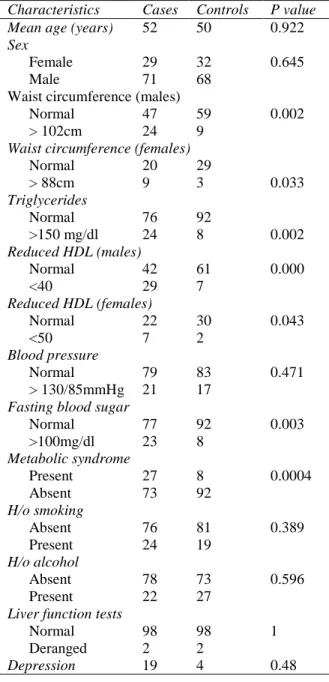
Table 1 Different clinical and laboratory parameters in cases and controls.
Characteristics Cases Controls P value Mean age (years) 52 50 0.922 Sex
Female 29 32 0.645
Male 71 68
Waist circumference (males)
Normal 47 59 0.002
> 102cm 24 9 Waist circumference (females)
Normal 20 29
> 88cm 9 3 0.033
Triglycerides
Normal 76 92
>150 mg/dl 24 8 0.002 Reduced HDL (males)
Normal 42 61 0.000
<40 29 7
Reduced HDL (females)
Normal 22 30 0.043
<50 7 2
Blood pressure
Normal 79 83 0.471
> 130/85mmHg 21 17 Fasting blood sugar
Normal 77 92 0.003
>100mg/dl 23 8 Metabolic syndrome
Present 27 8 0.0004
Absent 73 92
H/o smoking
Absent 76 81 0.389
Present 24 19
H/o alcohol
Absent 78 73 0.596
Present 22 27
Liver function tests
Normal 98 98 1
Deranged 2 2
Depression 19 4 0.48
spondyloarthropathy, 8 patients had joint
erosions, 5 patients had dactylitis and 3 patients
had enthesitis. Among controls, only one patient
had
radiographic
changes
suggestive
of
osteoarthritis.
with nail involvement and psoriatic arthritis.
Nail involvement was seen in 41 (41%) patients.
Among these, 17 patients had mild disease and
24 patients had severe disease. Among 59
patients without nail involvement, 35 patients
had mild disease and 24 patients had severe
disease showing no statistically significant (
p =
0.079) association between nail involvement and
severity of psoriasis. Among the nail changes,
pitting was the most common finding followed
by subungual hyperkeratosis, onycholysis and
dystrophy.
Of 33 patients with raised waist circumference,
24 were male and 9 female and in control group
there were 9 male and 3 female showing
significant
association
of
raised
waist
circumference in psoriatic cases compared to
controls (
p
= 0.002). There were 24 (24%)
patients with raised triglycerides compared to
8% controls (
p
= 0.002). The number of
psoriatic patients with reduced HDL was 36, (29
males and 7 females) as compared to 9 (7 males
and 2 females) among controls.
Twenty-one (21%) psoriatic patients had
hypertension as compared to 17% controls (
p
=
0.471). Raised fasting blood sugar level (BSL)
was observed in 23 (23%) patients compared to
8% controls (
p
= 0.003). Among 27 patients
with metabolic syndrome, 15 (15%) patients had
mild psoriasis and 12 (12%) patients had severe
psoriasis (
p
= 0.665). Out of these 27 patients,
11 (11%) had psoriasis for less than 5 years and
16 (16%) had for more than 5 years (
p
= 0.878).
Hence neither the severity nor the duration had
any statistical association between metabolic
syndrome, severity and duration of psoriasis.
Association of hepatic system involvement was
studied with the help of deranged liver function
tests (LFTs). There were 2 patients with
deranged LFT among cases and 2 patients
among controls. There was no statistically
significant difference between cases and controls
(Fisher exact test,
p
= 1). In our study, 4 (4%)
patients had raised uric acid levels among cases
and none among controls. There was no
significant association between depression and
psoriasis (
p
= 0.48).
Discussion
Psoriasis is a multisystem inflammatory disease
where the skin and the joints are the primary
targets. There are many reports that psoriatic
patients tend to have concurrent illnesses that are
termed as comorbidities, though there are
remarkably
few
studies
from
India.
Comorbidities can be physical and psychological
Table 2 Comorbidities associated with psoriasis. Psoriatic arthritis
Depression Hypertension Diabetes
Metabolic syndrome
Cardiovascular disease, such as coronary artery calcification and
myocardial infarction Dyslipidemia
Crohn’s disease and ulcerative colitis Autoimmune diseases
Non-alcoholic fatty liver disease Chronic obstructive pulmonary disease Obstructive sleep apnea
disease and 48% had severe disease. Most
commonly, psoriasis presents as chronic,
bilaterally
symmetrical,
well
defined,
erythematous, dry, red, scaly papules and
plaques, Apart from this, there are several
unique cutaneous manifestations, ranging from
small papules (guttate psoriasis) to pustules
(pustular psoriasis) and generalized erythema
and scaling (erythrodermic psoriasis). In our
study 91 cases [91%] presented with chronic
plaque psoriasis, 2 cases (2%) had guttate
psoriasis and 7% were diagnosed to have
palmoplantar psoriasis. Bedi
et al.
12reported
chronic plaque psoriasis as the commonest type
[90%] followed by erythrodermic psoriasis in
3% cases and guttate psoriasis in 0.94%.
Arthritis occurs in about 5% to 10% of patients
of psoriasis.
13In our study the number of
patients with joint complaints
11was not
significantly higher when compared to control
group.
10Nail changes are seen in about 20% to
50% of psoriatics.
13The common changes are
pitting of the nail plate. The finger nails are
more frequently involved than toe nails. The
incidence of nail involvement is higher if there
is associated arthropathy. Prasad
et al.
14studied
472 psoriatic patients. 40 patients had psoriatic
arthropathy and out of these 40 patients, nail
involvement was seen in 37 (92.5%) cases. In a
study by Reich
et al.
15out of 1511 patients, 20.
6% had psoriatic arthritis and among these
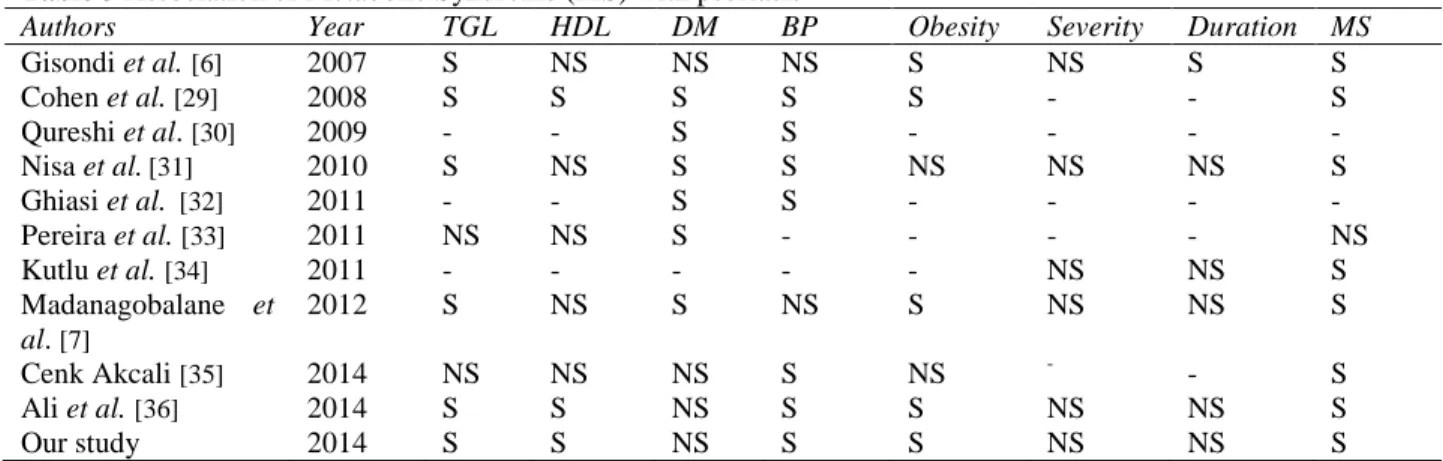
Table 3 Association of Metabolic Syndrome (MS) with psoriasis
Authors Year TGL HDL DM BP Obesity Severity Duration MS
Gisondi et al.[6] 2007 S NS NS NS S NS S S
Cohen et al. [29] 2008 S S S S S - - S
Qureshi et al. [30] 2009 - - S S - - - -
Nisa et al.[31] 2010 S NS S S NS NS NS S
Ghiasi et al. [32] 2011 - - S S - - - -
Pereira et al.[33] 2011 NS NS S - - - - NS
Kutlu et al.[34] 2011 - - - NS NS S
Madanagobalane et al. [7]
2012 S NS S NS S NS NS S
Cenk Akcali [35] 2014 NS NS NS S NS - - S
Ali et al.[36] 2014 S S NS S S NS NS S
Our study 2014 S S NS S S NS NS S
BP=blood pressure, DM= diabetes mellitus, HDL=high density lipoprotein, TGL=triglyceride lipids
to
controls
(12%).
Similarly
hypertriglyceridemia 24 patients and reduced
HDL (36%) showed significant association with
psoriasis. In a survey from Love
et al.
26The
most common feature of the metabolic
syndrome among patients with psoriasis was
abdominal
obesity,
followed
by
hypertriglyceridemia and low levels of HDL
cholesterol. Obesity itself is an independent risk
factor for developing psoriasis. Sterry
et al
.
27found that obese patients were more likely to
have severe psoriasis (i.e. >20% body surface
area). Intra-abdominal obesity was directly
linked to the metabolic syndrome. Several
studies have shown that psoriasis is associated
with atherogenic dyslipidemia with increased
blood levels of total cholesterol, triglycerides,
low density lipoprotein (LDL), very low density
lipoprotein, and lipoprotein A, and low levels of
HDL
and
apolipoprotein
B.
28Though
observational studies have detected independent
associations between psoriasis and hypertension,
our study showed no significant association.
However, fasting BSL was increased in 23 cases
as compared to 8 controls with P value of 0.003
indicating significant association with psoriasis.
Multiple case control studies linking psoriasis
and components of the metabolic syndrome have
been done with variable results
(Table 3)
.
Psoriasis is associated with low self-esteem and
the prevalence of anxiety and depressive
disorders is 30% and 60%, respectively.
Recently, a high prevalence of alexithymia was
observed.
37About 10% of patients with psoriasis
consider the possibility of suicide.
38-40Recent
data shows that depression and anxiety are
mainly found in women with family problems.
41In our study we found that incidence of
depression was more among psoriatic patients
(19%) compared to controls (4%). However,
there was no statistical difference among the two
groups in contrast to the study done by Esposito
et al.
39and Devrimci-Ozguven
et al.
42In
conclusion, we have found higher prevalence of
metabolic syndrome in patients with psoriasis.
This association was not limited to severe cases
but also occurs in mild cases and was not
associated with duration of psoriasis. Hence, we
suggest that all patients need to be evaluated for
metabolic syndrome irrespective of severity of
psoriasis which is the risk factor for systemic
diseases.
References
1. Griffiths C, Barker J. Psoriasis. In: Burns T, Breathnach S, Cox N, Griffiths C, editors. Rook’s Textbook of Dermatology. 8th ed. Oxford: Blackwell Science; 2010. p. 20.1-20.19
dermatology in General Medicine. 8th ed. New York: McGraw-Hill: 2012. p. 197-231. 3. Azfar RS, Gelfand JM. Psoriasis and
metabolic diseases: epidemiology and pathophysiology. Curr Opin Rheumatol. 2008;20:416-22.
4. Menter A, Griffiths C, Tebbey P, Horn E, Sterry W; on behalf of the international Psoriasis Council. Exploring the association between cardiovascular and other disease-related risk factors in the psoriasis population: The need for increased understanding across the medical community. J Eur Acad Dermatol Venereol. 2010;24:1371-7.
5. Sommer DM, Jenisch S, Suchan M, Christophers E, Weichenthal M. Increased prevalence of the metabolic syndrome in patients with moderate to severe psoriasis. Arch Dermatol Res. 2006;298; 321-8. 6. Gisondi P, Tessari G, Conti A, Piaserico S,
Schianchi S, Peserico A et al. Prevalence of metabolic syndrome in patients with psoriasis: a hospital-based case-control study. Br J Dermatol. 2007;157:68-73 7. Ena P, Madeddu P, Glorioso N, Cerimele D,
Rappelli A. High prevalence of cardiovascular diseases and enhanced activity of the renin-angiotensin system in psoriatic patients. Acta Cardiol. 1985;40:199-205.
8. Onumah N, Kircik LH. Psoriasis and its comorbidities. J Drugs Dermatol. 2012;11:s5-10
9. Lal S. Clinical pattern of psoriasis in Punjab. Indian J Dermatol Venereol Leprol. 1996;35:5-12.
10. Bedi TR. Psoriasis in north India. Geographical variations. Dermatological 1977;155:310-4.
11. Grover C. Psoriasis. In: Sacchidanand S, Editor. IADVL Textbook of Dermatology. Mumbai: Bhalani; 2015. p.1042.
12. Bedi TR. Clinical profile of psoriasis in North India. Indian J Dermatol Venereol Leprol. 1995;61:202-5.
13. Pavithran K, Karunakaran M, Aparna P, Raghunatha S. Disorders of keratinization. In: Sacchidanand S, Editor. IADVL Textbook of Dermatology. Mumbai: Bhalani; 2013. p.1037.
14. Prasad PVS, Babu B, Kaviarasan PK, Senthilnathan A. A clinical study of psoriatic arthropathy. Indian J Dermatol Venereol Leprol. 2007;73:166-70.
15. Reich K, Kruger K, Mossner R, Augustin M. Epidemiology and clinical pattern of psoriatic arthritis in Germany: A prospective interdisciplinary epidemiological study of 1511 patients with plaque-type psoriasis. Br J Dermatol. 2009;160:1040-7.
16. Henseler T, Christophers E. Disease concomitance in psoriasis. J Am Acad Dermatol. 1995;32:982-6.
17. Christophers E. Comorbidities in psoriasis. Clin Dermatol. 2007;25:529-34.
18. Naldi L, Mercury SR. Epidemiology of comorbidities in psoriasis. Dermatol Ther. 2010;23:114-8.
19. Sanjeev JA. Comorbidities in psoriasis. Indian J Dermatol Venereal Leprol. 2013;79:s10-s17.
20. Neimann AL, Shin DB, Wang X, Margolis DJ, Troxel AB, Gelfand JM. Prevalence of cardiovascular risk factors in patients with psoriasis. J Am Acad Dermatol. 2006;55:829-35.
21. Yang YW, Keller JJ, Lin HC. Medical comorbidity associated with psoriasis in adults: A population-based study. Br J Dermatol. 2011;165:1037-43.
22. Expert Panel on Detection, Evaluation, and Treatment of High Blood Cholesterol Education Program (NCEP) Expert Panel On Detection, Evaluation, and Treatment of High Blood Cholesterol in Adults (Adult Treatment Panel III). JAMA. 2001;285:2486-97.
23. The IDF consensus worldwide definition of the metabolic syndrome. Internal Diabetes Federation, 2006.
24. Alberti KG, Zimmet P, Shaw J, IDF Epidemiology Task Force Consensus Group. The metabolic syndrome – A new worldwide definition. Lancet 2005;366:1059-62.
25. Liu J, Grundy SM, Wang W, Smith SC Jr, Vega GL, Wu Z et al. Ethnic-specific criteria for the metabolic syndrome: Evidence from China. Diabetes Care 2006;29:1414-6.
26. Love TJ, Qureshi AA, Karlson EW, Gelfand JM, Choi HK. Prevalence of the metabolic syndrome in psoriasis: Results from the National Health and Nutrition Examination Survey, 2003-2006. Arch Dermatol. 2011;147:419-24.
interdisciplinary conference and review. Br J Dermatol 2007;157:649-55.
28. Pietrzak A, Chodorowska G, Szepietowski J, Zalewska-Janowska A, Krasowska D, Hercogová J. Psoriasis and serum lipid abnormalities. Dermatol Ther. 2010;23:160-73.
29. Cohen AD, Gilutz H, Henkin Y, Zahger D, Shapiro J, Bonneh DY et al. Psoriasis and the metabolic syndrome. Acta Derm Venereol. 2007;87:506-9.
30. Qureshi AA, Choi HK, Setty AR, Curhan GC. Psoriasis and the risk of diabetes and hypertension: a prospective study of US female nurses. Arch Dermatol.
2009;145:379-82
31. Nisa N, Qazi MA. Prevalence of metabolic syndrome in patients with psoriasis. Indian J Dermatol Venereol Leprol. 2010;76:662-5. 32. Ghiasi M, Nouri M, Abbasi A, Hatami P,
Abbasi MA, Nourijelyani K. Psoriasis and increased prevalence of hypertension and diabetes mellitus. Indian J Dermatol. 2011;56:533-6.
33. Pereira RR, Amladi ST, Varthakavi PK. A study of the prevalence of diabetes, insulin resistance, lipid abnormalities, and cardiovascular risk factors in patients with chronic plaque psoriasis. Indian J Dermatol. 2011;56:520-6.
34. Kutlu S, Ekmekci TR, Ucak S, Koslu A, Altuntas Y. Prevalence of metabolic syndrome in patients with psoriasis. Indian J Dermatol Venereol Leprol. 2011;77;193-4. 35. Akcali C, Buyukcelik B, Kirtak N, Inaloz S.
Clinical and laboratory parameters associated with metabolic syndrome in
Turkish patients with psoriasis. J Int Med Res. 2014;
36. Ali NM, Kuruvila M, Unnikrishnan B. Psoriasis and metabolic syndrome: A case control study. Indian J Dermatol Venereol Leprol. 2014;80:255-6
37. Masmoudi J, Maalej I, Masmoudi A, Rached H, Rebai A, Turki H et al. Alexithymia and psoriasis: a case control study of 53 patients. Encephale. 2009;35:10-7.
38. Krueger G, Koo J, Lebwohl M, Menter A, Stern RS, Rolstad T. The impact of psoriasis on quality of life: results of a 1998 National Psoriasis Foundation patient membership survey. Arch Dermatol. 2001;137:280-4. 39. Esposito M, Saraceno R, Giunta A,
Maccarone M, Chimenti S. An Italian study on psoriasis and depression. Dermatology. 2006;212:123-7.
40. Gupta MA, Gupta AK. Depression and suicidal ideation in dermatology patients with acne, alopecia areata, atopic dermatitis and psoriasis. Br J Dermatol. 1998;139:846-50.
41. Campolmi E, Zanieri F, Santosuosso U, D'Erme AM, Betti S, Lotti T et al. The importance of stressful family events in psoriatic patients: a retrospective study. J Eur Acad Dermatol Venereol. 2012;26:1236-9.