Technology (IJRASET)
Traffic Sign Detection Based on Key Point Method
Savita Mogare11
M.E. Student in E&TC Deptt, R. H. Sapat COE, Nashik, Pune University
Abstract: Automatic traffic sign detection is an essential task of regulating the traffic, warning and guiding road users or drivers. Road and traffic signs are designed to be easily detected by drivers or road users mainly because their colours and shapes are readily distinguishable from their surroundings. A traffic sign detection system could in principle be developed as part of an Intelligent Transport Systems (ITS) that continuously monitors the driver, the vehicle, and the road in order, for example, to inform the driver in time about upcoming decision points regarding navigation and potentially risky traffic situations. Traffic signs are detected by using Gabor filter bank and BRISK keypoint features. After experimentation on publically available databases it is evident that the proposed descriptor works effectively for traffic sign detection.
Keywords: Intelligent Transport System (ITS), Traffic Signs, BRISK detection, Gabor Filter, Post processing
I. INTRODUCTION
Road and traffic sign detection has now been successfully transferred from research to the market. Originally, this field of applied computer vision research was concerned with the automatic detection and organization of traffic signs in scene images acquired from a moving car. It is not difficult to see that a system of this kind can significantly increase driving safety and comfort, but this is not its only application: for instance, it can be used in a highway maintenance system to verify the presence and conditions of traffic signs. Recognition of road signs is a difficult problem that has engaged the Computer Vision community for more than 40 years. Significant breakthroughs were made in the 1980 and 1990s, when the problem of computer vision based driver assistance began to be taken seriously for the first time. In recent years the car industry has pushed forward large-scale research and industrial projects in Japan, the US and Europe. Although with the latest technology cars carry automatic traffic sign detectors, at present it is still human drivers who have to recognize traffic signs and ensure security in the traffic environment. The following applications are examples of automatic traffic sign recognition (the list is not exhaustive)[1]:
Assisted-driving application: Automatic traffic signs recognition can help drivers in basic tasks warning them of situations of particular danger, assisting in controlling speed, “ reading the text” on road signs [2], etc.
Constructing autonomous, intelligent vehicles: In the near future, intelligent vehicles are expected to take advantage of auto- matic TS recognition systems and other functions such as detection of road lines, pedestrians, and other road obstacles. Autono-mous intelligent vehicles should contain facilities for traffic detection and recognition. An example is the “Intelligent Stop and Go” system developed in the European Prometheus project which constructs an intelligent vehicle that “keeps a constant distance from the vehicle in front (as a radar-based system would do), is able to follow the car infront, stop at red traffic lights and stop signs, give way to other vehicles if necessary, and try to avoid unpredictable hazards, such as children running across the street”.
Sign maintenance application: Many road maintenance and other road inventory companies still inspect roads manually. Manual detection and recognition of traffic signs is a slow, expensive and tedious process because of the size of today’s road networks (comprising millions of kilometers) and the high number of traffic signs per kilometer. Automating this process allows the replacement of human operators by automatic image processing and computer vision systems able to achieve faster and efficient results and drastically/significantly bring down their production cost.
Drivers, cyclists and pedestrians are the main users of traffic signs. For these reason, traffic signs were designed for optimal human detection and reading. Visibility design requirements ensure that the sign is visible by people of all age groups from an appropriate distance. Visibility also means that the sign has enough contrast with the background to be conspicuous and that the contents on the sign have sufficient contrast with the background of the sign. These characteristics make the problem less difficult than the general object recognition nproblem in computer vision, but there are nonetheless at least four sources of problems when detecting and recognizing traffic signs:
Lighting conditions: Lighting differs according to the time of the day and season, weather conditions, and local variations such as the direction of light.
Technology (IJRASET)
Sign variability: The sign installation and surface material can physically change over time, influenced by accidents and weather. Moreover, traffic signs exist in hundreds of variants that often do not comply with legally defined standards.
Data acquisition: Images taken from the camera of a moving car often suffer from motion blur and car vibration.
In traffic environments, signs regulate traffic, warn the driver, and command certain actions. A real time and vigorous automatic traffic sign recognition can support and reduce the burden on the driver, and thus, significantly increase driving safety and comfort. For instance, it can remind the driver of the current speed limit, prevent him from performing inappropriate actions such as entering a one-way street, passing another car in a no passing zone, unwanted speeding, etc. Further, it can be integrated into an adaptive cruise control (ACC) for a less stressful driving. In a more global context, it can contribute to the scene understanding of traffic context (e.g., if the car is driving in a city or on a freeway). Many real-world computer vision applications require accurate detection of context-relevant objects in video images. Traffic sign detection is a challenging example, in which the algorithms have to cope with natural and thus complex dynamic environments, high accuracy demands, and real time constraints. Because of the great industrial applicability, many approaches for traffic sign detection and
recognition have been proposed. Advanced driver assistance systems featuring traffic sign recognition, usually limited to a subset of possible signs, have been deployed by the automotive industry. Against this background it is surprising that an extensive unbiased comparison of traffic sign detection systems has been missing and that no suitably large benchmark data sets are freely available.
II. LITERATURESURVEY
Chen et al. [1] an efficient and perfect traffic sign detection technique by exploring Adaboost and support vector regression (SVR) for discriminative detector learning. Different from the reported traffic sign detection techniques, a novel saliency estimation approach is first proposed, where a new saliency model is built based on the traffic sign-specific color, shape and spatial information. By incorporating the saliency information, enhanced feature pyramids are built to learn an Adaboost model which detects a set of traffic sign candidates from images. A novel iterative codeword selection algorithm is then designed to generate a discriminative codebook for the representation of sign candidates as detected by the Adaboost, and a SVR model is learned to identify the real traffic signs from the detected sign candidates.
Sheikh et al. [2] presented a framework that will detect and classify different types of traffic signs from images. The technique consists of two main modules: road sign detection, and classification and recognition .In the first step, colour space conversion, colour based segmentation are applied to find out if a traffic sign is present. If present, the sign will be highlighted, normalized in size and then classified. Neural network is used for classification purposes. For evaluation purpose, four type traffic signs such as Stop Sign, No Entry Sign, Give Way Sign, and Speed Limit Sign are used.
Qian et al. [3] proposed a road surface traffic sign detection system by applying convolutional neural network (CNN). The proposed system consists of two main stages: (1) a hybrid region proposal method to hypothesize the traffic sign locations by taking into account complementary information of color and edge; (2) feature extraction, classification, bounding box regression and non-maximum suppression by Fast R-CNN. Extensive experiments have been conducted using our field-captured dataset, demonstrating outstanding performance with regard to high recall and precision rate.
Kassani et al. [4] presented a new feature, called soft Histogram of Oriented Gradients (SHOG). This feature is designed for traffic sign detection. SHOG differs from traditional (hard) HOG in terms of symmetry information and cell of histogram positions. Unlike hard HOG, SHOG changes the positions of cells to a randomized selection of cells following by symmetry shapes of the traffic sign images. SHOG is implemented on the famous German traffic sign detection benchmark (GTSDB) dataset. Comparing to the conventional HOG feature experimented on GTSDB, SHOG could show better performance while uses smaller feature size.
Technology (IJRASET)
Berkaya et al. [6] represented a novel approach for circular traffic sign detection and recognition on color images. A newfangled approach, which utilizes a lately developed circle detection algorithm and an RGB-based color thresholding technique, is proposed. In traffic sign recognition, an ensemble of features counting HOG and Gabor features are employed within a support vector machine classification framework. Performances of the proposed detection and recognition approaches are evaluated on German Traffic Sign Detection and Recognition Benchmark datasets, respectively. The results of the experimental work reveal that both approaches offer comparable or even better performances with respect to the best ones reported in the literature and are compatible to real time operation as well.
Yang et al. [7] aimed to deal with real-time traffic sign recognition, i.e., localizing what type of traffic sign appears in which area of an input image at a fast processing time. To achieve this goal, they first propose an extremely fast detection module, which is 20 times faster than the existing best detection module. Their detection module is based on traffic sign proposal extraction and classification built upon a color probability model and a color HOG. Then, they harvest from a convolutional neural network to further classify the detected signs into their subclasses within each superclass. Experimental results on both German and Chinese roads show that both their detection and classification methods achieve comparable performance with the state-of-the-art methods, with significantly improved computational efficiency.
III. SYSTEMDESIGNANDOVERVIEW
A. Gabor Filters
Texture is main part of the visual world of animals and humans and they can successfully detect, differentiate, and segment texture using their visual systems. Textural properties in an image can be used to collect different information’s e.g., micro-patterns like edges, lines, spots & flat areas. Majority of an intrinsic ROI do contain sturdy edges and local spatial patterns at different frequencies and specific orientations. These micro-patterns are helpful in recognition of cancerous regions in a CAD system. Gabor filters can be employed to detect these micro-patterns & this task aims to validate this research statement. A brief overview of the Gabor filters is given in the next paragraph.
Gabor filters are biologically motivated convolution kernels that have applications in the field of low level computer vision & intrinsic image processing e.g., face recognition, facial expression recognition, iris recognition, optical character recognition, vehicle detection etc. For the purpose of extraction of local pixel level and global distinct spatial textural microlevel-patterns in ROIs, directional Gabor filters with different orientations and scales thus provide powerful statistics. The general function g(x,y) of 2D (for image) Gabor filter family can be represented as a Gaussian kernel modulated by an oriented complex sinusoidal wave can be described below:
(1)
and
Where the σx and σy are the scaling parameters of the filter and particularly describe the neighborhood of a pixel where weighted
summation takes place. W is the central frequency of the complex sinusoidal and θƐ[0,π) is the orientation of the normal to the parallel stripes of the Gabor function [8].
A specific bank of Gabor filters contain multiple individual Gabor filters adjusted with different parameters. In this paper, different combination of Gabor filter bank e.g., a Gabor filter bank containing 6 filters (2 scales[S]×3 orientations[O]) referre to as GS2O3, 15 filters i.e., GS3O5, 24 filters i.e., GS4O6 and 40 filters i.e., GS5O8 are used with initial max frequency equal to 0.2 and initial orientation set to 0.
B. BRISK
Technology (IJRASET)
scale information and make it invariant to affine transformation, Blob-based features own localization, scale and orientation information simultaneously. SIFT is one of the most popular blobs detector and descriptor, but it is time and memory consuming. SURF, also based on blob feature, can be several times faster than SIFT with small performance degradation. Although being computationally intensive, SIFT and SURF are not affine invariant. MSER (Maximally Stable Extrernal Regions) is affine invariant, but not accurate in location. The feature of local image pattern is usually described with high dimensional real vectors and the similarity between two features is measured by Euclidean or Mahalanobis distance. BRISK is a newly presented keypoint generation method, which is rotation/scale invariant. It exploits the latest fast keypoint detection method, namely AGAST, to detect keypoint in several scale spaces. Moreover, non-maxima suppression is conducted to give keypoint location and scale information. Then, BRISK determines a set of pixel pairs in the adjacent of the keypoint based on the position, scale information and constellation topology. Let A be the set of pixel pairs,
(2)
N = 60 is the number of points on the constellation of BRISK. i; j is the index of point and pi; pj denotes the point pair which consist of point i and point j. R2 denotes the 2-dimensional space of image coordinates system. Then, the gradient of the keypoint is presented by the summation of intensity difference from the pixel pairs with a long distance by the following equation:
(3)
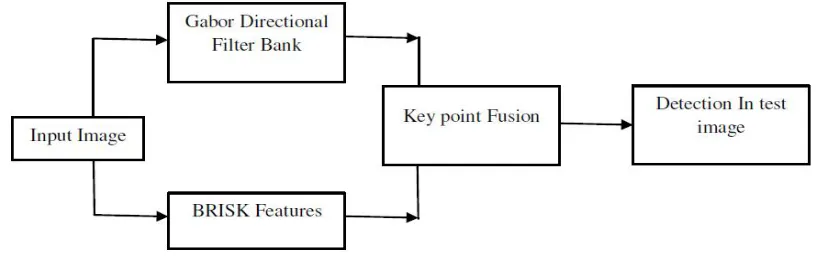
[image:5.612.110.518.447.578.2]BRISK, is a binary local feature detection and description method with very high computational efficiency. The first step is to create a scale space pyramid, generally consisting of 4- layer octave images and 4-layer intra-octave images. Each octave is half-sampled from previous octave, and each intraoctave is down-sampled so that it is located between two octaves. Next, the FAST detector score s is computed at each octave and intra-octave to generate the keypoint candidates. Non-maximum suppression is then performed at each octave and intra-octave so that score s is the maximum within a 3x3 neighborhood; and score s is the largest among the scales above and below. These maxima are then interpolated using a 1D quadratic function across scale spaces and the local maximum is chosen as the scale for the feature found. Given a set of the detected keypoints, the BRISK descriptor is constructed as a binary descriptor by simple brightness comparison tests. The brightness comparison test is performed on the samples in a pattern. This pattern is defined as N equally spaced locations on circles concentric with the keypoint.
Fig. 1 Proposed traffic sign detection system
Technology (IJRASET)
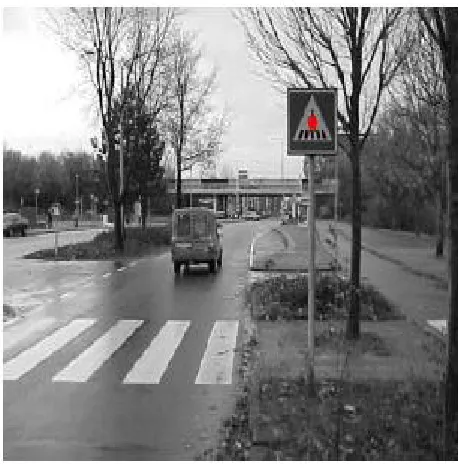
[image:6.612.190.419.257.493.2]Fig. 2 Trained Feature Map for Pedestrian image
Fig. 3 Sample output
For this system we are considering the recorded video as an input to the proposed system. The video stream is initially segmented into individual RGB.The detection rate for each specific classes is as follows: For pedestrian the detection rate is 100%. For bike class the detection rate is 68.75%.
IV.CONCLUSIONS
This work gives a combination of BRISK and Gabor filter based keypoint detectors for efficient detection of traffic signs like pedestrian and bikes. The Gabor filter bank yields brain’s visual cortex like features for accumulating the response of brain activity due to edges. BRISK features compute local level features effectively. Thus combination of both detectors yields effective descriptor.
V. ACKNOWLEDGMENT
I express great many thanks to Dr, H. Y. Patil, for his great effort of supervising and leading me, to accomplish this fine work. To college and department staff, they were a great source of support and encouragement.
REFERENCES
[1] T. Chen and S. Lu, "Accurate and Efficient Traffic Sign Detection Using Discriminative AdaBoost and Support Vector Regression," IEEE Transactions on Vehicular Technology, vol. 65, pp. 4006-4015, 2016.
Technology (IJRASET)
[3] R. Qian, Q. Liu, Y. Yue, F. Coenen, and B. Zhang, "Road surface traffic sign detection with hybrid region proposal and fast R-CNN," in 2016 12th International Conference on Natural Computation, Fuzzy Systems and Knowledge Discovery (ICNC-FSKD), pp. 555-559, 2016.
[4] P. H. Kassani, J. Hyun, and E. Kim, "Application of soft Histogram of Oriented Gradient on traffic sign detection," in 2016 13th International Conference on Ubiquitous Robots and Ambient Intelligence (URAI), pp. 388-392, 2016.
[5] Z. Abedin, P. Dhar, M. K. Hossenand, and K. Deb, "Traffic sign detection and recognition using fuzzy segmentation approach and artificial neural network classifier respectively," in 2017 International Conference on Electrical, Computer and Communication Engineering (ECCE), pp. 518-523, 2017.
[6] ] S. Kaplan Berkaya, H. Gunduz, O. Ozsen, C. Akinlar, and S. Gunal, "On circular traffic sign detection and recognition," Expert Systems with Applications, vol. 48, pp. 67-75, 2016.