Segmentation and Risk Identification of Melanoma
Skin Lesions Using Boundary Tracing Algorithm
Nishadevi.R1, Gunavathi.C2
PG Scholar1, Assistant Professor2, Department of Computer Science and Engineering, K.S.Rangasamy College of Technology
Abstract: Skin cancer account for more than 40% of all malignancies all over the world. Melanoma is the most dangerous type of skin cancer. Incidence rates of skin cancer have been increasing but the survival rates are high if it is detect early. In order to reduce the cost for dermatologists to screen every patient an automated melanoma screening system is needed. First the image is preprocessed before segmentation to remove the undesired artifacts. Segmentation is an important process in Computer Aided Diagnosis (CAD) system. For an efficient segmentation process, Boundary Trace Algorithm is done. In this paper the features of the lesions such as shape, color, texture, etc., are calculated and using these values the probability is detected. Finally the cancer is diagnosed and finds whether the skin lesion is Benign or malignant Melanoma.
Keywords: Melanoma, skin cancer, Computer Aided Diagnosis (CAD), Boundary Tracing Algorithm
I. INTRODUCTION
Skin cancer is the most common of all cancer types. Each year more than 3.5 million skin cancers are diagnosed in the United States [7]. That’s more when compared to all other cancers in the world. Over the past few decades the skin cancer cases have been going up but the survival rate is high if it is detected earlier [1] . Most type skin cancers are due to too much exposure to ultraviolet (UV) rays. Melanomas can occur at anywhere on the body, but are more commonly to start in certain regions in human body. Where in men the trunk (chest and back) is the most common site and in women, the legs are the most common site. Even melanoma can occur anywhere on the body. On the other types of skin cancers such as basal cell and squamous cell skin cancers melanomas are not common, but they can be far more serious. Melanoma is also curable in its early stages like basal cell and squamous cell cancers. But if it left alone, melanoma is much more likely to spread to other parts of the body, where it can be very hard to treat [6]. The standard method to evaluate skin growth in order to rule out melanoma is by biopsy followed by histopathological examination [4]. The challenge lies in identifying the lesions that have the highest probability for being melanoma. Mostly dermoscopy is used for the diagnosing the skin cancer. It is a non-invasive
Skin imaging technique which uses a hand-held lighted magnifier to analyses skin lesions by observing newly defined and descriptively named subsurface structures (e.g., dots, streaks, veils, networks). Due to the high cost, time for screening every patient computerized analysis of dermoscopy images has become an important research area. The general approach for CAD is to find the location of lesion and also to determine an estimate of the probability of disease [10].
Read Input Image Pre-processing Boundary Trace
Algorithm
Extract the Shape and color of segmented
image Display Result based Risk
based identification
Find Probability of Skin lesion
Technology (IJRASET)
II. METHODOLGY
The typical architecture of CAD system includes selection of training samples; Image preprocessing, segmentation and feature extraction is the standard approach in dermoscopy image analysis [8]. Pre-processing step is to eliminate the background noise and improve the image quality for the purpose of determining the focal areas in the image. Image segmentation is an important step where an accurate image segmentation process is required for an better efficiency. An accurate segmentation of skin images can help the diagnosis to define well the region of cancer.
A. Preprocessing
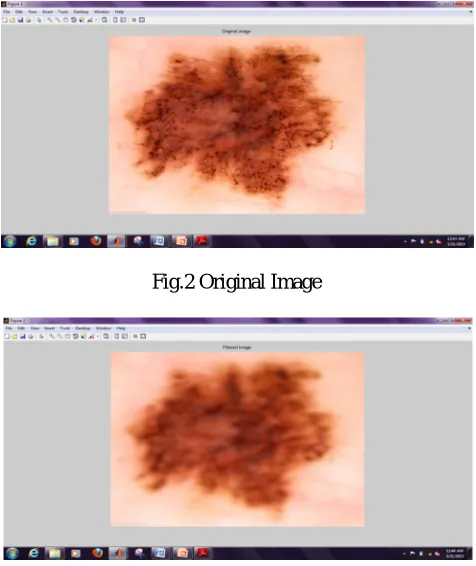
[image:3.612.188.426.268.551.2]Image pre-processing is the term of operations on images at the lowest level of abstraction. These operations do not increase image information content but they decrease it if entropy is an information measure. A important first step in image pre-processing is image cropping where some irrelevant parts of the image can be removed and the image region of interest is focused. This tool provides a user with the size information of the cropped image.
Fig.2 Original Image
Fig 3. Filtered Image
B. Segmentation
assumed that the image with regions is either binary or those regions have been previously labeled is extracted.
Fig.4 Traced on boundary
The Boundary is traced and then the segmented region is extracted. The Inner boundary gives the locations of the outermost pixels of the object bwtrace boundary command is used for single objects and bwboundaries for multiple objects.
Fig.5 After segmentation
C. Calculating The Features
Features Extraction is an important stage that uses algorithms and techniques to detect and isolate various desired portions or shapes (features) of a given image. Feature extraction is a sub-division of improved image into its constituent parts for identifying meaningful object forms such as finding lines, circles or specific shapes and identifying pimples, white heads or black heads, etc,. The Transformation of input data into the set of features is called as feature extraction. To classify an image, some features relevant to the disease are considered as basis.
The purpose of feature extraction is to reduce the original data by measuring certain properties or features that distinguish one input pattern from another pattern. Here we are extracting features using Gray Level Co-occurrence Matrix parameters (GLCM) [5] The characteristics needed to diagnose a melanoma as malignant are[2]:
1) Asymmetry: A lesion is considered to be cancerous if one half of its lesion is unlike the other half. Cancerous lesions are checked for symmetry where it is an important aspect for understanding shape and it is used in pattern analysis. Asymmetric metric is useful in sorting lesions relative to risk. It separates cancerous from non-cancerous regions [3].
Asymmetry Index is computed by the following equation:
= ∆A
A × 100
Where, A= Area of the total Image
Technology (IJRASET)
2) Border: Most of the cancerous lesions edges are ragger, notched or blurred. To verify Border irregularity the parameter called Compact Index is calculated (CI), it is measurement of the most popular form of barrier unanimous 2D objects. For a melanoma skin lesion the compactness range will be 1.5 to 2.0. This can be determined by using the following equation:
CI = PL2
4∏
Where PL = Perimeter of the lesion
AL = Area of the lesion
3) Color: The lesions may be potentially cancerous if they exhibit variations in color from one area to another i.e., Cancerous skin lesions pigmentation is not uniform. Colors can be identified numerically by their coordinates. They are cancerous if they have shades of tan, presence of up to six known colors must be detected - white, red, light brown, dark brown, blue-gray, and black. Its value ranges 0 to 6.
4) Entropy: Entropy is a measure of the uncertainty in a random variable. Entropy shows the amount of information of the image that is needed for the image compression. Entropy measures the loss of information or message in a transmitted signal and also measures the image information [3].
= −ln(Pij)Pij
5) Correlation: Correlation will measures the linear dependency of grey levels of the neighboring pixels. Correlation is computed into what is known as the correlation coefficient, which ranges between -1 and +1. [3] If the correlation is 0, the movements of the securities are said to have no correlation; they are completely random.
= Pij (i− μ)(j− μ)
σ
,
6) Texture: To quantify the perceived texture of an image the Texture is used where it is a set of metrics calculated in image processing. Image texture gives us information about the spatial arrangement of color or intensities in an image where it may get vary for each pixel or particularly the selected region of an image.
7) Intensity: The intensity can be measured by measuring the strength of a color. After Extracting the Features from the images the probability is determined by using all these values.
the probability the lesions are determined whether it is melanoma or non-melanoma.
III. CONCLUSION
Melanoma can be cured if it is detected early. Biopsy method was used to detect melanoma but it takes more time, cost and gives pain for the patient. To overcome this Computer based techniques are used. Early skin cancer diagnostic system using computer based techniques is more efficient than the conventional Biopsy methods. Many steps have been followed in CAD to detect and classify melanoma. In this paper by Extracting the features of the Lesions and finding the Probability the lesion is classified as benign, suspicious and melanoma.
REFERENCES
[1] www.skincancer.org
[2] Nandini M.N., M.S.Mallikarjunaswamy (2014), “Detection of Melanoma Skin Diesease using Dermoscopy Images” International Journal of Electronics Communication and Computer Technology, Vol 4, pp 643-647.
[3] SivaSankari.S, Sindhu.M, Sangeetha.R, ShenbagaRajan(2014), “Feature Extraction of Brain Tumor Using MRI” International Journal of Innovative Research in Science, Engineering and Technology Vol. 3, pp 10281-10286.
[4] Nilkamal S Ramteke (2013), “ABCD rule based automatic computer-aided skin cancer detection using MATLAB”, pp 691-697.
[5] P. Mohanaiah, P. Sathyanarayana, L. GuruKumar (2011), “Image Texture Feature Extraction Using GLCM Approach”, International Journal of Scientific and Research Publications.
[6] Schwartz, R. A. (2008), “Skin Cancer - Recognition and Management,” Blackwell Publishing, Massachusetts. [7] http://www.healthline.com/health/skin-lesions
[8] Snehal Salunke (2014), “Survey on Skin lesion segmentation and classification”, International journal of image processing and data visualization. [9]Elder, D.E. “Skin cancer: Melanoma and other specific nonmelanoma skin cancers”, Cancer Supplement, pp.245–256.
[10] NIH Consensus Conference, Diagnosis and treatment of early melanoma, pp.1314–1319.