ISSN Online: 2333-9721 ISSN Print: 2333-9705
DOI: 10.4236/oalib.1103115 November 14, 2016
Intelligence vs. Artificial Intelligence: The
King Is Naked
Claudio Messori
Str. Villaggio Prinzera 1, Fraz. Boschi di Bardone, Terenzo, Italy
Abstract
The sociological dimension of ArtificialIntelligence (AI), and automation, is placed in the path traced by the man-machine integration process, started in the eighteenth century by the Industrial Revolution that assumes its current connotation after World War II. The use of the term intelligence, which appears in the expression Ar-tificialIntelligence, is shown to be improper and misleading, and the expression itself should be replaced, eventually, by ArtificialSimulationofthe SavantSyndrome. By adopting a theoretical perspective, namely Endo-Dynamo-TensiveModel [Messori 2012B], it is traced the mapping of human’s neurological (neuro-dynamics) and psychological (psycho-dynamics) dimension, and is provided the coordinates to be followed in the phenomenological qualification and definition of the psychic-mental- cognitive function intelligence. The neuro-dynamics of the Nervous System (NS), is taken into account by adopting the theoretical, interpretative and investigative per-spective indicated by the particular line of research developed in the context of Quantum Field Theory (QFT) and QED (Quantum Electrodynamic Field Theory), that describes the water of which all living systems are composed, i.e. biological ter, as water in a coherent oscillatory phase or state other than that of common wa-ter, named super-coherent oscillatorystate. By introducing the possible functional role exerted within brain activity by glial cells, cerebrospinal fluid, intra- and extra- cellular fluid is outlined the overcoming of the classical neuroscience paradigm, based on the vision of brain activity as ruled by networks of neurons interconnected by synapses. The body-mind hard problem is taken into account and a solution is advanced. The psycho-dynamics of the humans mind territory is taken into account according to the four poles of mental functions introduced by C.G. Jung in his
Psy-chologicalTypes (1921), where he introduces a hierarchy of mental functions in two
mental bipolar dimensions (dichotomies). These are sensing (attentiveness by means of the sense organs) coupled to intuition (awareness in unconscious way or being aware of unconscious contents) and thinking (function of intellectual cognition; the forming of logical conclusions) coupled to feeling (function of subjective estimation).
How to cite this paper: Messori, C. (2016) Intelligence vs. Artificial Intelligence: The King Is Naked. Open Access Library Journal, 3: e3115.
http://dx.doi.org/10.4236/oalib.1103115
Received: October 6, 2016 Accepted: November 11, 2016 Published: November 14, 2016
Copyright © 2016 by author and Open Access Library Inc.
This work is licensed under the Creative Commons Attribution International License (CC BY 4.0).
http://creativecommons.org/licenses/by/4.0/
2/38 OALib Journal
At the conclusion of this work, it is provided the phenomenological definition of in-telligence that does not contemplate the possibility to apply to neuroscience, and to natural and human sciences in general, the paradigm that inspires the research on AI, i.e. computational model and Information Theory.
Subject Areas
AnthropologyKeywords
Artificial Intelligence, Man-Machine Integration Process, Artificial Simulation of the Savant Syndrome, Endo-Dynamo-Tensive Model, Biological Water, Autopoietic Psycho-Neuro Dynamics, Intelligence
1. Artificial Intelligence: Falsifying the Identity of the
Mental Phenomenon and Its Functions
GrouchoMarxsaidthat “Militaryintelligenceisacontradictioninterms”.
Well, AIisthehyper-technologicalproductofthiscontradiction, andIguess NorbertWienerwasrightinsayingthat
“…wartimetechnology, whichhasfurnished
fromsmallbitsofscientifictruthgreatwarehousesofpotentialthreatand arsenalsofdestruction, hasmuchtothankscientistfortheir
intellectualprostitutionhasbeensignificant”. Anonymous To possess and exert control is the mantra of the third millennium, and the com-puterization of society meets this purpose: “Thecomputerizationofsociety…has essen-tiallybeenasideeffectofthecomputerizationofwar”. (Frank Rose). The globalization of computerization is a project planned by the US military fields during the years of the Cold War1, which offers to those who run it the possibility to control almost everything
based on telecommunications and on computer processes. The Artificial Intelligence
(AI) is strategically located in this project.
ArtificialIntelligence, a term coined in 1956 by the young American mathematician
John McCarthy, ranks in the footsteps of the man-machineintegrationprocess started by the eighteenth-century Industrial Revolution, and is the legitimate daughter of the
InformationTheory, a discipline born in the Telecommunications field (telegraph and
telephone) between the 20’s and 30’s and developed between the 40’s and 50’s separate-ly by Claude Shannon (The Mathematical Theory of Communication) and Norbert Wiener (Cybernetics). The term intelligence that appears in the expression coined in 1956 by McCarthy is a legacy of the terminology used by one of the pioneers of
Infor-1See: Kay, L.E. (2000) Who Wrote the Book of Life? A History of the Genetic Code. Stanford University Press,
3/38 OALib Journal
mation Theory, Harry Nyquist of the American Telephone and Telegraph Company (AT & T). In 1924 Nyquist publishes an article on the Bell System Technical Journal (BSTJ) entitled CertainFactorsAffectingTelegraphSpeed, where deals with the factors that affect the “maximumspeedoftransmissionofintelligence”. For those in the works of the period, the metaphorical term “intelligence” used by Nyquist for the transmis-sion of an electromagnetic signal, appeared improper and misleading, compromised by anthropomorphic and psychological references incompatible with the subject matter. The transmission of signals between machines (coder/decoder), i.e. the sending and re-ceiving of electromagnetic state variations through a medium (broadcast or via cable), could not be in any way confused with the transmission of meaning (messages) and neither could be associated with human properties generated by the possibility to feel, to sense, to think, to perceive, to intuit, to hypothesize, to imagine, to invent, to reflect, to dream, to experience. Four years after the publication of Nyquist’s article, a colleague of Bell Telephone Laboratories Inc., Ralph V.L. Hartley, published an article on the BSTJ, entitled Transmission of Information, where the intelligence metaphor is re-placed, for reasons of “physicalascontrastedwithpsychologicalconsiderations”, by the metaphor information.
But what did Nyquist mean by the term intelligence? In fact nothing would have to deal with human properties as those listed above, or could attribute to a signal a seman-ticmeaning. By the term intelligence, Nyquist refers to the statisticallydeterminedand decipherablecomponentofarandomsignal (i.e. to the datainputs, conveyedandmade availablebyananalogicsignal, qualified by Nyquist as “thenumberofcharacters, rep-resentingdifferentletters, figures, etc.” transmitted in a certain period of time), whose transmissibility (with no loss of intelligencei.e. data) from a transmitting device (cod-er) to a receiver (decod(cod-er) depends on the degreeofuncertaintyresolution (associated with the noise inherently generated by the transmission medium or by the involved apparatuses) obtained in the signal transmission.
But times change, and what in the 20’s for reasons of “physical as contrastedwith psychological considerations” could not be described as intelligent, it became in the 50’s.
From the 50’s onwards, a wide array of scientists, researchers, scholars and experts, who for various reasons and to varying degrees have conformed to AI, have started adopting the computational model on which AI is based, transferring it to biology, ge-netics, psychology, psychiatry, anthropology, ethology, neuroscience, so as to make the
mentalphenomenon (the res cogitans of Cartesian memory) somehow objective
(ac-cording to the Cartesian dichotomy rescogitans is a fictitious, not objective entity, and as such of no interest to science), a phenomenon that ever since is governed by the same laws that regulate the transmission of signals fittedwithmeaning in telecommu-nications (coder and decoder exchange messages → cells also exchange messages) and in computer programming (computer coding is based on computation → genetic cod-ing also is based on computation) is no longer as fictitious as it seemed. In docod-ing so, the
4/38 OALib Journal
Theory.
Unconcerned of the fact that “.the brainisnot abundleof neurons dissectedin a
laboratory but exists within an organism which is essentially carrying on its own
auto-regulation, its nutritionand self-preservation, which feelshungerand thirstand needs social relations, while continually permeated, interwoven, by emotions, senti-ments, needs, desires”2, these AI followers insist on locating the brain functions in this
or that area and neuronal network, in this or that sub-cellular (e.g. microtubules) or in-ter-cellular (e.g. synapses) structure, in this or that sequence (code), deterministic or probabilistic, of information, and not pleased with that come to resurrect the adult- metric vision of some pseudo-scientific tradition of the past, according to which “.the
human infant is a decerebrated being equipped with reflexes”. (Paul Emil Flechsig,
1847-1929), and “TheNegrobrainpossessesaspinalcordofthetypefoundinchildren andwomen, andbeyondthis, approachesthetypeofbrainfoundinhigherapes” (Emil Huschke, 1797-1858), to discredit the cognitive level of a child, associating his IQ not anymore to that of a de-cerebrated being or to that of a higher ape, but to that of a computer, alias intelligentmachine.
That’s what has been done in 2013, for example, by an AI experts team of the Uni-versity of Illinois at Chicago (UIC), which has designed and conducted a study3 the
purpose of which was to evaluate the degree of “intelligence” of the super computer ConceptNet 4, by administering to the machine a part of a well known IQ test, admi-nistered as IQ test of children aged between two years and six months and seven years and seven months, the Wechsler Preschool and Primary Scale of Intelligence Test
(WPPSI) created in 1967 by American psychologist David Wechsler, already creator of
the WechslerIntelligenceScaleforChildren (WISC, 1949) and of the WechslerAdult
IntelligenceScale (WAIS, 1955). The study suggested that ConceptNet 4 would have an
IQ comparable to that of a four-year age child.
Studies like this demonstrate two things, the first is that even in the twenty-first cen-tury kids are being targeted by new detractors of their intelligence, and the second is that the temptation to falsify the physical identity of the mental phenomenon, and its functions including intelligence, trying to pass the camelintelligence through the eye of the needle of telecommunications, information technology and cybernetics is too high so as not to bear fruits.
The definition of intelligence provided by David Wechsler goes exactly in this direc-tion: Intelligenceisthe aggregate or global capacity of the individualto act purpose-fully, tothinkrationallyandtodealeffectivelywithhisenvironment (Wechsler, 1944). Act intentionally, think rationally, effectively deal with the environment: are these the conditions that qualify intelligence and make a being intelligent?
Intentionality and the use of rational thinking for adaptive and supra-adaptive pur-poses, are very late events in the history of mankind [1]. The occurrence of a behavior
2Benvenuto, S. (2002) Consciousness in the Neurosciences. In: A conversation of Sergio Benvenuto with
Francisco Varela. http://www.psychomedia.it/jep/number14/varela.htm
3University of Illinois at Chicago (2013) Computer smart as a 4-year-old.
5/38 OALib Journal
clearly moved by intentionality dates back to the Middle Paleolithic, while for rational thinking strictusensu we must wait for the Upper Paleolithic: does it means that before that, human communities were deprived of intelligence? The relational life of a two year old child is governed by the symbolic way of thinking and if left to himself will hardly be able to survive: can we consider him or her intelligent? The magicalthinking
that characterizes the social life of an indigenous belonging to a settled community of the Amazon forests, which for generations has never abandoned his ancestral territory, and has never changed his own traditions and his own means of livelihood, makes him an intelligent being? ConceptNet 4 can really be considered somehow intelligent?
Claim to measure intelligence with a test means to apply to the rescogitans the same reductionist and mechanistic pattern applied by the positivist paradigm to the res
ex-tensa: the structuring of the objects and phenomena that we observe inside and outside
of us, happens thanks to a sequenceofcombinations (factorizable), guided by a code
(algorithmic) among certain structuralelements (building blocks). In the case of a ma-terial object, the structural elements can be molecules, atoms, particles. In the case of a
fictitious object as intelligence can be, e.g. the logical-mathematical intelligence, the
verbali., the spatiali., the musicali., the kinesthesici., the emotionali. (Howard Gard-ner), in turn decomposable into sub-groups, and so on and so forth. Once broken down into objectifiable structural elements, the object shall be subjected to measuring and eventually reproduced and controlled.
The result is a puzzle composed by many elements, connected to joint, in a frame which develops a given function. But in the invivo reality things are very different, and it is not the structure that generates the function, while the opposite is true.
1.1. Artificial Intelligence: The Man-Machine Integration Process
Iftheseventeenthandearlyeighteenthcenturiesaretheageofclocks, andthelatereighteenthandthenineteenth
centuriesconstitutetheageofsteamengines, thepresenttime
istheageofcommunicationandcontrol. Norbert Wiener The profile provided today of the rescogitans, must be functional to the modern ap-plication of the teaching imparted to history by the eighteenth-century Industrial Revolution: thanks to the positivistmachines, invented and realized with the ingenuos-ity and the hands of skilled artisans and the money of daring patrons of the eighteenth and nineteenth-century bourgeois urban class, open up perspectives for profit and wellbeing (but also of destruction and death, the other side of the coin) unthinkable without them, a true technological Eldorado. The entire socio-economic system of al-most the entire planet would not exist without the introduction of mechanicalsystems
in the production cycle. The very idea of the productioncycle belongs to the man-ma
wea-6/38 OALib Journal
pons). When patrons became entrepreneurs and artisans technicians, science and scientists became an essential part of this man-machineintegrationprocess. AI belongs, in fact and in law, to it.
Over the lifetime of a septuagenarian born in the late nineteenth century, Western society was driven by an unshakable faith in the power of science and technology, and technology itself was transformed from a haphazard process of invention to a science- based discipline. Steam engines and railroads, electric lights and airplanes, the tele-graph, typewriter, motion pictures, radio communication, radar systems and plastics were just some of the achievements reached by the Western scientific and technological miracle between late nineteenth and the mid-twentieth, when by conceiving, building and using the first weapons of mass destruction (e.g. rockets, atomic bomb, hydrogen bomb, intercontinental ballistic missiles), the miracle showed to history its terrible de-structive power.
Between the 50’s and 70’s, in the shadow of the devastating effects produced by the launching of the atomic bomb on Hiroshima (LittleBoy) and Nagasaki (FatMan), the machines definitely come out of crafts and industrial productive perimeter to become television sets and household appliances, partners that bring advantages and comfort in the homes’ habitat of millions of people, integral part of their lives and relationship dy-namics, differentiating themselves according to the consumers tastes and expectations, to set up the conditions for what will become a gradual addiction to the availability of technological solutions, more and more disconnected from the real needs of their users and increasingly self-referential.
The years between the 60’s and 90’s mark a new qualitative leap in the man-machine integration process, a new technological and psychological revolution that thanks to the fortunate combination between personalcomputers, World WildeWeb and the scion AI, whose mission is “designingsystemsthatexhibitthecharacteristicsassociatedwith human intelligence, like understanding language, learning, reasoning, solving pro
-blems, andso on”, and whose belief is that “everyaspectoflearningoranyother
fea-ture of intelligence canin principle be so precisely described that a machinecan be
madetosimulateit”, transforms the machine in a metacognitive tool, in an interactive platform that can assist you in work, study, communication, socialization, in leisure, entertainment, in portal to have access to a virtual ocean where you can draw every-thing and its opposite. From now on, the machine is no longer just part of our habitat, the machine becomes partofus and we part of it. It is in this period of time that those who deal with AI mature the conviction that to perform the spell to animate the ma-chine and make it as oneof us, to make the illusion of its presumed intelligence the more likely, it needs to be equipped by the ability to speak, and this is one of the task of
the StrategicComputingProgram (SCP).
7/38 OALib Journal
and the Systems Development Corporation, SDC), thanks to which will come out the so-called intelligentmachines, namely: machinewithadvancedintelligencetechnology
and high-performance computing, including speech recognition and understanding,
natural-language computer interfaces, vision comprehension systems, and advanced
expert systems development, provided by a significant increasing in computer
per-formance, through parallel-computer architectures, software, and supporting micro
-electronics.
1.2. Artificial Intelligence: Artificial Simulation of the Savant
Syndrome Leading to Cyborgs
Theemperorwalkedbeneaththebeautifulcanopyintheprocession,
andallthepeopleinthestreetandintheirwindowssaid, “Goodness,
theemperor’snewclothesareincomparable!Whatabeautifultrainonhisjacket.
Whataperfectfit!” Noonewantedittobenoticedthathecouldseenothing,
forthenitwouldbesaidthathewasunfitforhispositionorthathewasstupid.
Noneoftheemperor’sclotheshadeverbeforereceivedsuchpraise. “Buthedoesn’thaveanythingon!” saidasmallchild. Hans Christian Andersen (TheEmperor’sNewClothes)
Drones remotely controlled via Advanced Drone Interfacing System. A
nthropo-morphicrobots interfaced in the CloudMachine. Vocalassistants interconnected in the
cloudenvironment supported by a neuralnet…
The dawn of the third millennium marks the spread on a global scale of very per-forming computing devices for home, medical, scientific, military, industrial use, that thanks to sophisticated voice recognition and production systems make them able to entertain, actively and in real time, an exchange of verbal information (although virtual, because you are anyway talking to a computing platform masquerade as human inter-locutor), computationally itemized and statistically endowed with meaning. A fact equipped with enormous evocative implications (fascination).
In givingvoice to a machine, reemerges the magic power assigned to the word-sound
by the mid and late Paleolithic human communities [1] [2] [3], subsequently merged in the post-Neolithic metaphysical and philosophical concept of psyche, pneuma, breath,
ruah, prana, anima/animus, and finally in that of Energy (energheia), i.e. the ability at-tributed to the acoustic vibration to animate, to give life to the inanimate (a skill of which the male gender was soon made depositary, imposing the semanticbaptism as an act of legitimation of reality, to be able to contend and to pull out from the female ute-rus her natural power to generate life).
8/38 OALib Journal
shaman-scientist is much more ambitious: he wants literally subdue and even replace the forces of Nature. Meanwhile he succeeded, thanks to artificial insemination invitro, to pull out from the female uterus (and not just thanks to the speechmonopoly, but in deeds, artificially) the natural power of generating life belonging to woman.
Here, in this bacchanal that involves talkingmachines and a wide array of scientists, researchers, scholars and experts, who for various reasons and to varying degrees have conformed to the AI Eldorado, makes its way the idea of a future populated by
intelli-gentmachinesequippedwithconsciousness (androids), perhaps in service to humanity
or maybe not and maybe, as some claim (transhumanists), smarter, more reliable and better performing (Ray Kurzweil, chief engineer of Google, theorizes the overcoming of human intelligence by computers), definitely more programmable and controllable than humans.
If we’ll have to compete with more and more “advanced generationsof machines”, somehow equipped with consciousness, a question arise: is there any kind of
intelli-gence in AI, or to pursue the development of human-machine hybrids, imagining them
as a first step towards the production of artificial humanoids, somehow better than humans, is a project that resuscitates eugenics in an AI format?
60 years have passed since John McCarthy coined the term ArtificialIntelligence and what we can say about the research in the AI field is that: isconductedbyarangeof scientistsandtechnologistswithvaryingperspectives, interests, andmotivations. Scien-tiststendtobeinterestedinunderstandingtheunderlyingbasisofintelligenceandcog
-nition, somewithanemphasisonunravelingthemysteriesofhumanthoughtand
oth-ersexaminingintelligencemorebroadly. Engineering-orientedresearchers, bycontrast,
areinterestedinbuildingsystemsthatbehaveintelligently. Someattempttobuild
sys-tems using techniques analogous to those used by humans, whereas others apply a
range of techniques adopted from fields such as information theory, electrical
engi-neering, statistics, and patternrecognition. Those in the latter category often donot necessarilyconsiderthemselvesAIresearchers, butratherfallintoabroadercategoryof researchersinterestedinmachineintelligence4.
Is there any kind of intelligence in AI?
In the best case, the performances of the so-called intelligent machines are and will remain a computational, artificial simulation of some abilities manifested by people af-fected by the savant syndrome5, or syndrome of the “idiotsavant”, where idiot is
re-ferred to a male (savantsyndrome occurs approximately four times more frequently in males than females as does the incidence of autism) suffering from a series of more or
4Hughes, T., et al. (1999) Developments in Artificial Intelligence. In: Funding a Revolution. Government
Support for Computing Research, Computer Science and Telecommunications Board, National Research Council, Chapter 9, 198-225. http://www.nap.edu/read/6323/chapter/11#199
5Savant syndrome is a rare but remarkable condition in which persons with some underlying developmental
9/38 OALib Journal
less severe cognitive and mental disabilities, but that has one or more than one super- developed abilities, a jarring juxtaposition of ability and disability in the same person always combined with massive memory (typically eidetic memory). This is all that an
intelligent machine can and will aspire to do: artificial simulation of the savant
syn-drome (ASSS). What the ASSS experts can do and will be able to do is to develop and
get the most out of the super-memory (storing) and computational skills that qualify an
intelligentmachine, inventing new algorithmic systems, new software and new media
devices for new applications (e.g., via emotionmodelling[4] the machine will be pro-grammed and tuned on the affective history, memories and aspirations, disappoint-ments and expectations, desires and frustrations of their owner, so to satisfy at best their wishes and demands).
Realizeanintelligent machine equippedwithconsciousness? Ridiculous. What can
be done, and that is already being done, is to acquire new persuasive and pervasive technological tools, including robotic and computer systems exploiting AI, to be used in the military and civilian field, as a means for expansion and control of the market dynamics, or as a deterrent for the resolution of conflicts related to it, both locally and globally, on a small and large scale.
What is already being done is to prepare next generations of consumers willing, or predisposed, to become or to be transformed into one of the two types of cyborgs cur-rently proposed by the high-tech communication marketing, the standard- integrated
and the extra-integratedcyborg.
The standard-integratedcyborg (SIC) is the average technology products consumer
affected by TechnologyAddiction or CommunicationAddiction, that thanks to a de-vice inserted a dimora in his own body, a nanorobot or an intracranialmicrochip for
neuralinteractions (brain-computerinterfaces) for example [5], or a subcutaneouschip
(e.g. transponderimplantation), can interface directly, via NearFieldCommunication
(NFC) or via Far Field Communication (FFC) [6], with an external device (e.g. a smartphone or a computer or any other wireless or bluetooth device equipped with an appropriate interface), or with the cloud (exposing himself to the risk of hacking).
This SIC will be easily identifiable and traceable and will be able to make some regu-lar transactions, such as paying the bill at a supermarket or restaurant, make a with-drawal at an ATM, or punch the clock at entry and exit at workplace or school.
The extra-integrated cyborg (EIC), instead, is a man-machine hybrid trained to face high-risk experiences (e.g. military, policing or espionage missions, terrorist or criminal actions, space travels and stays in extra-terrestrial environments), supplemented by in-ternal technological components which increase the self-adjusting body-mind functions (such as tolerance to pain, hunger and thirst, heat regulation, etc.), enhance the so-called normal performances (such as the ability to calculate, memorization and perceptual skills), make him or her remotely controllable and programmable [7] [8] [9] [10] [11].
10/38 OALib Journal
more monitorable.
2. Approaching Intelligence
Thependulumofthemindoscillatesbetweensenseandnonsense,
notbetweenrightandwrong. C.G. Jung Intelligence is a psychic, a mental or a cognitive function? In literature these three adjectives, psychic-mental-cognitive, are often used as synonyms, but in agreement with the interpretative model of the mental phenomenon which I have set in [1] [12]-[17], it is appropriate to give them a distinct meaning. The reasons justifying the opportunity to introduce this distinction are three:
1) The first stems from the need to place the functions, in this case intelligence, in a phylogenetic perspective6, trying to identify what can be the pre-constitutive
psycho-logical requirements, essential, predisposed ante rem, innate, phylogenetically pre-scribed, ready to use, that underpin the capacity, the possibility and the relational trend of the genus Homo, and on what structural and functional transformations and solu-tions, they went to meet during the long process of in-formation of the inner life (
in-sight) of human communities.
2) The second stems from the need to determine how these transformations and so-lutions have affected, over a period of time ranging from the Lower Paleolithic to the Upper Paleolithic, on the information of the functions.
3) The third stems from the need to clarify how and to what extent these functional transformations and solutions are correlated to the structural transformations and so-lutions that has faced the neuro-anatomy and/or the neuro-biology and/or the neuro- physiology of the CNS. In particular, we would like to clarify whether and to what ex-tent there is a clearly established correspondence between the increase in functional capacities (e.g. Intelligence) and the increase of the cerebral mass in relation to body mass and/or the increase of the density of neurons and/or synaptic junctions in relation to the cerebral mass.
These three reasons lay down two distinct perspectives of investigation of the func-tion. The first aims to explore the dynamics of the inner life of the genus Homo, that is its psycho-dynamics (the constitutive patterns, the trans-generational and supra-indi- vidual processes and transformations to which its insight went to meet over the phyletic time7). The second one focuses on the relationship of dependency between the psycho
-6By phylogenesis is meant: the ongoing non-linear (non-predictable, non-reversible, non-reproducible)
process of diversification and integration to which undergoes the biological phenomenon from its origin, in relation to all the transitions (bifurcations), and to all the dissipative/anticipatory structures/systems solu-tions, induced by macroscopic (climatological, geological, planetary) and/or microscopic (biophysical and biochemical) state variations, that have affected it, directly or indirectly, in space and time. In this perspec-tive, phylogeny resembles less to a tree with different branches and more to a basin of attraction of the chaotic type (riddled basin of attraction) with different attractors and different dissipative/anticipatory structures/ systems. [Messori 2011, 2015, 2016]
7For a full discussion, see my article: Messori, C. (2016) From Continuity to contiguity. On the Genesis of
11/38 OALib Journal
dynamics and the structural and functional properties of the NS in general and of the
CNS in particular, i.e. of the human neuro-dynamics.
The three acceptations, psychic-mental-cognitive, of the functionintelligence will be discussed separately, first from the point of view of neuro-dynamics (Section 4 and 5) and then from the psycho-dynamics point of view (Section 6).
For convenience, the three definitions of the function referred to in section 6, will be provided at the end of that section. Advance use of the three adjectives meets these definitions, to which I refer.
Following (Section 7) will be provided a definition of intelligence that, in the absence of an established significant neuro-anatomical correlation, will be formulated within the framework of the interpretative physical model of the mental phenomenon which I have set in [Messori 2012B, 2013, 2015, 2016], that I’m going to summarize in Section 3.
As a general preamble to what I am going to expose, I would point out that from the perspective of this study, the phylogenetic changes, transformations and differentia- tions, genotypical and phenotypical, structural and functional, are never to be under-stood as the product of a purposeful design or plan, neither natural nor otherwise in-tended. On the contrary: 1) they are always the expression of solutions that thanks to an uninterrupted relationshipofcontinuity, in time and space, are intertwined with all the solutions already adopted and with those adoptable (anticipatorysystems), even when they are the result of a phylogeneticbifurcation8; 2) are always nonlinear and transient
solutions (in relation to their evolution over phyletic times); 3) are always stationary but unstable solutions (in relation to the mutability of the unconditioned and condi-tioned habitat variables); are always intermediate solutions between adaptation and
exaptation9; 4) are always solutions that for their becoming rely on the poieticaction
8Under the thermodynamic profile, the countless functional and structural solutions that characterize the
bi-ological varieties, produced in the course of the phylogenetic diversification in general, and in particular that of the Cambrian, represent as many dissipative structures far from thermodynamic equilibrium. Stationary states to the phase boundary between order and chaos, that if carried further away (→mass extinctions) from thermodynamic equilibrium, may experience a crisis, or bifurcation point, in which the system prefer to move away from the steady state, evolving into some other unpredictable state of stability. [Messori 2015]
9The concept of exaptation was introduced by paleontologists Stephen Gould and Elisabeth Vrba in 1982, to
12/38 OALib Journal
(which produces development and structure) exerted by the self-organization on the genesis and transformation of the forms of manifestation.
Continuity, transience, instability and non-linearity are properties that do not di-minish but increase the possibilities of adaptation of biological systems to the continu-ity, transience, instability and non-linearity of the geo-environmental conditions, on a small and large-scale. Without them, for example, ecosystems would not have had, and would not have, any chance to re-invent and re-adapt themselves to the geo-environ- mental scenarios produced, e.g., by glaciations and by the various mass extinctions, which have followed in phyletic times as a consequence of natural disasters.
A scenario, the one that emerges from the perspective of investigation adopted here, in contrasts with the supposed quasi-finalistic and quasi-linear consequentiality of the phy-letic lineage suggested by the Darwinian and neo-Darwinian arborealmodel of phylogeny.
3. The Physical Dimensions of the Universe
Each element of reality, at any level of observation, is a micro system of relations, set in a macro system of relations. Nothing of what we observe exists in and by itself. Every-thing we can think of, observable and unobservable (i.e. virtual), instead of being made up of building blocks, or even quantized, in its ground state consists of tenso-relation
-shipsystems.
To clarify the meaning of these statements, and the effects they may have on the in-terpretation of the issues also examined in this work, we first need to set the ontological scenario within which to place the energyphenomenon, as well as the biological, neu-rological and mental one.
According to my Endo-Dynamo-TensiveModel [Messori 2012B], the establishment of a physical dimension based on a relationaldynamic it arises as a consequence of a
cosmogonic event, namely the supraliminal auto-perturbation (tensorial symmetry breaking) of aprimary, irreducible andintrinsically dynamic stateof tension10,
onto-logically assumed as the physical background from which emerge all the differences in potential, all the interactions or forces and all the physical and psychical relationships. A second supraliminal perturbation (tensorialtransition11) leads to the constitution of
the spacetime system of correlative interactions between gradients of tension that we know as relativistic dimension or dimension of an exitedtension- gradientsdistribution
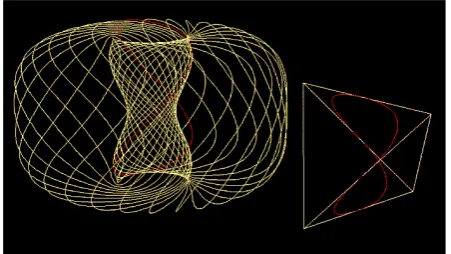
or ET-GD (mass and energy free dimension) (Figure 1). A third supraliminal pertur-
10In its non-exited regime it correspond to a state devoid of structure (continuous, isotropic, homogeneous,
imperturbed) and super-symmetrical, of a tension (tension super-symmetry) qualifiable as Implicated Ten-sion (IT), which bears within it a protodynamic principle, whose meaning leads to the Aristotelian concept of “dynamis”. In Aristotele by dynamis is meant the potency correlated to the action (energheia), efficient cause connected to the movement and its quantitative and qualitative effects, the inherent potency or intrinsic pos-sibility of a body to be translated in an action (energheia) that may be realized or not, a value of reality only possible with respect to the real action realized. Among the energy dimension IT-dynamics leads to the no-tion of quanta of acno-tion.
11In cosmogonic transitions, the state of tension is ensured step by step by symmetry breaking. The centrality
13/38 OALib Journal
Figure 1. Image source: http://harmoniouspalette.com/TetMold.html. Biaxial or
tetra-toroid, also coined as external toroid warped around an internalpoloid, as drawn here has 27 identical loops. Compared with ordinary toroid coil, the main differences are twisted loops instead of the plain toroid loops and the involuted “donut hole”. While 27 closed loops are presented to show a tetrahedron relation-ship, all loops can be one continuous twisting line. ET-GD structure corresponds to a non-local (diffuse) holographic cavity resonator with toroidal-poloidal topology consisting of a differentiated (tangent tensions → toroid) and undifferentiated (qualia → poloid) fractal- tensor foam, wrapped around a wormhole (vortex) lacking in structure and dynamics (emptiness/void/vacuum). ET-GD structure constitutes the basic space-time fabric upon which are grafted all the physical and para-physical phenomena (psychism) that qualify the dimensions of the manifestation. All succes-sive bifurcations are derived from this one via homomorphism (basic dynamic- structural equivalence) and translate the dynamic and structure of the ET-GD, by contextualizing it [Messori 2012B].
bation leads to the constitution of anon-exited energy-quanta gradients distribution
(zero point quantum field), from whose perturbation (supra-liminal oscillatory motions and/or charge densities of energy-quanta and impulse) takes shape the quantum and supra-quantum dimension (the dimension of the exitedenergy quanta-gradients dis-tribution or EEQ-GD), where the relation (ship) is somehow explicated and may possi-bly be observed and directly experienced.
Every object or phenomenon of the quantum dimension is assimilable to a vibra-tional system (describable via a mathematical tool known as wave function), that vi-brates with a certain frequentialconfiguration, a certain oscillatoryorphase modality
(rhythm of oscillation) and a certain intensity, maintaining an uninterrupted local and non-local relationshipofinterference with other vibrational systems.
The phenomena of interference between the oscillatory modalities of the energy
flows and impulse, involved in the perturbation/excitation of the quantum field, give rise to coupling-phase (oscillatory resonance12), able to trigger the phase transitions
that lead, according to QED (Quantum Electrodynamic Field Theory), to the struc-
12In physics resonance or coupling-phase is a condition under which an oscillating system responds to an
14/38 OALib Journal
turing of matter (CoherentDomains vs. IncoherentDomains). In particular, each lo-calized (in space and/or in time) form of confinement (tensorial, energetic, massive, subatomic, atomic, supra-atomic, biological, cosmological), i.e. delimited by a bound-ary13, is a tenso-vibrational micro-environment and corresponds to an oscillator or a
resonantcavity (cavity resonator), a stationary system organized around a particular tensorial/frequential configuration of perturbations (tensions/oscillations), existing thanks to the relationships of interference it has with the endogenous and exogenous tenso-vibrational environment14.
The final result is the diversification of the structuring of the phenomena affecting the exited energy quanta-gradients distribution (EEQ-GD) regime in four orders of phenomena, relatively autonomous and independent, associated with just as many physical varieties, the first belonging to the territory of the ET-GD, the second to the territory of the EEQ-GD, and the other two to the territory of the Hyper (cosmological) and Middle Dimension (H-MD):
- Tensorial phenomena (tensorial varieties: differentiated vs. undifferentiated ten-sions; qualia; images);
- Energy phenomena (electrodynamicvarieties: wave fields and matter fields; wave- particle duality; anti-symmetrical/chiral composite quantum states and symmetri-cal/achiral composite quantum states);
- Condensed matter phenomena (thermodynamic varieties, gas/liquid/solid, and chemicalvarieties, inorganic/organic);
- Biological phenomena (autopoieticvarieties).
The condensativevarieties of the EEQ-GD and of the H-MD derives from different
correlations among tensorialgradients on the one hand, and, on the other hand, from different correlations among anti-symmetrical/chiral composite quantum states (fer-mions15) and symmetrical/achiral composite quantum states (bosons), corresponding
13Every structuring process of a system of correlations endowed with a degree of subsistence (condition of
reso-nance) such as to make it distinct and/or distinguishable (even when not observable) from the context of the re-lationships it forms part of; in general, a confinement process is equivalent to a phenomenon of localization.
14In this sense the terrestrial environment is to all effects a tenso-vibrational environment and every biological
structure/system corresponds to an oscillator/resonant cavity tuned on the particular tenso-vibrational con-figuration of the environment to which it belongs.
15The particles described by symmetrical wave functions are known as bosons and obey the statistics of
15/38 OALib Journal
to different coherent oscillatory configurations (domains of oscillatory coherence or
Coherent Domains, CD) that oscillate with a non-linear pattern to the rhythm im-pressedbyacarrierfrequencymodulation.
On quantum and supra-quantum level, the weft of each energy phenomenon, con-densed or rarefied, originate from the ongoing and self-organized warp of tensorial gradients constantly regenerated similar to themselves (in order to keep a globalquasi
-symmetricalcondition) by the interaction between the quasi-continuous (fractal) and non-uniform distribution of monopolar/achiral gradients of non-hertzian potential
(bosons → symmetrical wave function16; scalar component of the electromagnetic wave)
and the quantized and non-uniform distribution of dipolar/chiralgradientsofhertzian potential (fermions → anti-symmetrical wave function; vectorial component of the electromagnetic wave).
Furthermore, the fourordersofphenomena relatively autonomous and independent affecting the EEQ-GD regime, can interact thanks to three types of correlative dynam-ics or couplings:
- Phase Conjugate Dynamics (of the type Frequency-PhaseCorrelativeDynamics);
- Spin Coniugate Dynamics (of the type Phase-TensionCorrelativeDynamics);
- Tension Coniugate Dynamics (of the type Tension-TensionCorrelative Dynam-ics)
However, the global balanced relationship that sets up this interfacing, namely the fact that the forms taken by energy-matter always remain similar to themselves (self similarity) is endowed by a cascade of unbalanced relationships. That is to say that locally (in space and/or in time) the universe of (self-similar) transformations, where nothing is created and nothing is destroyed, it is constantly shifted towards the com-ponent polarized in space or towards the comcom-ponent polarized in time. When this has to happen we speak of transitory quantum or supra-quantum symmetry breaking. Moreover, when this unbalanced state becomes stationary we may observe some very strange phenomenon, e.g. cosmological blackholes when it is dramatically shifted to-wards the figuresofinterference polarized in space (space collapses), and living sys-tems when it is shifted towards the quasi-tensorialfiguresofinterferencepolarizedin time. That is: inbiologicalsystemsitprevailsthecomponentpolarizedintimeandare themselvespolarizedintime.
According to this model, then, there aren’t pieces of a mosaic (buildingblocks), but
relationshipsystems (that in the ground state corresponds to pure tenso-relational sys-tems). Their identity and their existence is determined by being part of a particular sys-tem of relationships, which manifest themselves solely in the correlative and functional availability of a complex series of energeticand/or tensorial relationships. Talk about
16Postulate of symmetrization: The observables of a system of identical n particles are represented by auto-
16/38 OALib Journal
hidden codes or pieces of thoughts (e.g., we have neurones that can generate electrical impulses, and these electrical impulses correspond to thoughts) or consciousness, without specifying that it is a scientific artifice, which can be provisionally adopted to facilitate the investigation of a certain object of study, it is a falsification of the mental phenomenon.
4. From Protoplasm to Nervous System: Part One
Living systems are transientsystems tuned on statevariations or stimuli (perturbative events as frequencyvariations, phasevariations, tensionvariations) of the internal and external environment: their subsistence depends on their ability to adapt to (specific) applied perturbations. To adapt they must be, at first, selectively excitable. Selectivity is an essential condition for the existence of an autopoieticsystem. An example of bio-logical selectivity is enantioselectivity. Biological systems are enantioselective, i.e. they strictly select the enantiomeric forms of the molecular species of which they consist (biological reactions synthesize and use always and only one of the two enantiomeric forms of a given molecule).
The enantioselectivity of biological systems is the reason for their homochirality, namely the presence of groups of molecules that have all the same enantiomeric con-figuration (e.g., the amino acids are all in the levorotatory concon-figuration, while the ri-bose and deoxyriri-bose of the nucleic acids have only dextrorotatory configuration).
Enantioselectivity, homochirality and autopoiesis of biological phenomenon seem to be related to the phase transition of water from the ordinary coherence of its liquid state to the semi-crystalline or glassy and super-coherentstateofbiologicalwater [20]- [28], the liquid medium within which the protoplasm (the colourless, translucent, vis-coid, gelatinous and semi-fluid matrix of all cells) is formed.
The water (H2O) is the third most common molecule in the Universe (following the
H2 and CO molecule), and its chemical structure, based on the hydrogen bond, it is studied long since. Many models have been proposed but none has yet been able to ex-plain a number of water properties considered anomalous [29].
The Quantum Field Theory (QFT) and QED (Quantum Electrodynamic Field The-ory) have produced a vision of water in a liquid state as a medium, which for a peculi-arity of its molecular electronic spectrum reveals itself as an essential tool for long range communications, being able to change its supramolecular organization in func-tion of the interacfunc-tion with the environment.
The electromagnetic fields that are trapped within the CoherentDomains (CDs) of water and within their coherent matrices [30], produce electromagnetic potentials that regulate the phase of the entire system, which in turn gives rise to selective attractions between the molecules of the solute.
“……theCDofliquidwater”, writes Emilio Del Giudice17 [translation from Italian is
mine], “unliketheCDsofothermolecularspecies, issusceptibletogiverisetoalarge 17Del Giudice, E., Tedeschi, A., (2009) La respirazione dell'acqua come base della dinamica della vita. Atti del
17/38 OALib Journal
numberofexcitedstates. Arises, consequently, the possibilityof afurther levelof co-herence, generatedbythecollectiveoscillationof apluralityofCDsofwater, between twoownconfigurations: acoherence betweenCDs, namely Super-coherence, that on
onehand makesitgrowthesizeoftherelated regionbythetenth ofamicronofthe
elementaryCDsofwater, uptomicronsofthecells, tocentimetersoftheorgans, orto themetersofhigherorganisms. HowithappensthecollectiveoscillationoftheseCDs?
GiventhepluralityoftheexcitedlevelsoftheCD, itisabletowithdrawfromthe
envi-ronmentalnoisesmallamountsofenergy, transformingthemintocoherentvorticesof
quasi-freeelectrons. Theduration ofthesevorticalexcitationscanbevery long (days,
weeks, months), sincebecauseofthecoherencetheinternalfrictioniszero, thereareno collisionsandtheCDcannotdissipateenergyinthermalform. Giventhelongduration oftheseexcitations, itispossibletoaccumulatealargenumberofthemwithinthe do-main, suchasbeingabletoaccumulateacapitalof1millioneuroincoinsfrom1cent.
Each vortex is a motion of electrons [31] [32], that is, electrically charged particles,
whichgivesrisetotheappearanceofamagneticmoment, whichinturnalignswiththe environmentalmagnetic field, whichinthefinal analysiscanalsobethe Earth’s mag-neticfield. The vorticesthereforecannot cancel eachoneanother, but addup coher-ently, then transforming low-quality environmental energy (high entropy), in high quality coherent energy (low entropy), capable of inducing, as predicted by Szent
-Gyorgyi, theelectronicexcitationofthemoleculessurroundingtheCD. Whenthe
en-ergyaccumulatedintheCDreachesthelevelcorrespondingtothe energyofchemical
activationofbiomoleculespresentintheCDinthewater, itdevelops, for electromag-neticresonance, the energytransfer[33] [34] [35]. TheCDwill discharge, thus com-pletingits oscillation, andasetofwell-definedchemicalreactionstakeplace, ruledby
anelectromagneticresonancelaw, andnotbythediffusiveregimebasedontherandom
motionsandcollisionsofmoleculestypicalofnon-biologicalchemistry. This makesit possibletoachievetwoobjectivessimultaneously:
-itallowstheoscillationofthewaterCDs, anecessary preconditionfortheonsetof theSuper-coherence, extendingthecorrelationradiustobiologicallyrelevantdistances;
-itcreatesabiochemistrynotgovernedbyrandomcollisionsbetweenmolecules, but
bya codeof mutual recognition andrecall among molecules basedon long-distance
electromagneticinteraction.
Thebiochemicalreactionsbecomethereforeselective, thatisobedienttospecific or-ganiccodes, andfast. Furthermore, thechemicalenergyreleasedduringchemical reac-tionsoncetakenfromtheCDmodifiesitscharacteristicfrequencyofoscillation,
caus-ingin turnthe changeofthe type ofmolecular species ableto resonatewith the
do-main. Wehave, therefore, anon-stationarycoherentregime, butthatevolvesovertime,
generating in turn a time-dependent biochemical framework. This way, we get a
qualitativeagreementwiththemainmanifestationsof thelivingdynamic, which
ap-pearincomprehensibleintheconceptualframeworkofachemistryruledbydiffusive
18/38 OALib Journal
emerge, ultimately, bythe oscillatory rhythm of water and by the related energetic
events”.
All biological envelopes, from cell membrane to epithelial tissue, contain this aque-ous phase in a semi-crystallinestate (likened to the liquidice) or are perfused by it. It is water in a particular phase of quantum organization (oscillatorysuper-coherence) that gives it a high capacity to:
1) retain electronic charges, in the form of vortical excitations of quasi-free electrons, storable as energetic reserve;
2) induce an electronic and protonic long-range and long life excitation of the dif-ferent molecular species available, enabling their selective activation and mutual attrac-tion (→enantioselectiveabsorption);
3) convert mechanical vibrations (phonons) in quantum of electromagnetic energy (photons) and vice versa (piezoelectric effect).
According to this line of research, the resonance phenomena induced by the elec-tromagnetic field occupy a central role in the explanation of the establishment of the
super-coherent phase of biological water, which in living organisms results also in
plasmamembranes, amnioticfluid (AF)18, cerebrospinalfluid (CSF), interfacialand
in-tracellularwater (the viscous, glassy layers of interfacial water contiguous to biological surfaces are called ExclusionZones, EZs, in which the solutes are not able to penetrate) (Figure 2), the latter being considered a key characteristic that has been exploited by Nature in setting up a mechanism able to match the quite different time scales of pro-tein and solvent dynamics [36], and a key characteristic for intercellularsignal trans-mission[37] [38] [39] [40].
4.1. From Protoplasm to Nervous System: Part Two
One of the general properties of the protoplasm, the biological material of which all cells are constituted (chemically composed by water, electrolytes, proteins, lipids and carbohydrates), possibly originated by the structuring process to which has undergone
biologicalwater[34] [41] [42] [43] during the early Archean period of the Precambrian Era, is irritability, namely the ability to sense an external stimulus and react to it. An organism consisting of a single cell (like the amoeba) reacts to a contact by contracting its cytoplasm. Irritability, however, is not an answer, but a cell must be irritable to re-spond to a stimulus. In vertebrates, for example, epithelial cells, when stimulated, can respond by secreting, muscle cells by contracting, and nerve cells (neurons) producing
18In human placental mammal the intrauterine development process, first embryonal and then fetal, takes
19/38 OALib Journal
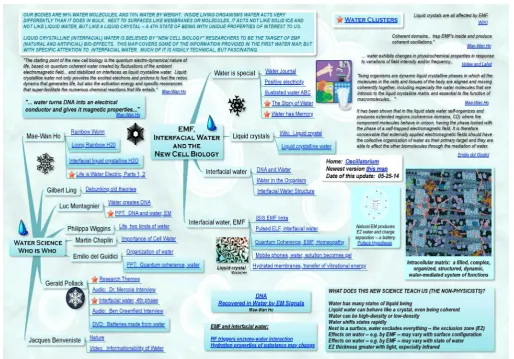
Figure 2. EMF, Interfacial water and the new cell biology. Image source: www.oscillatorium.com/id54.html.
and/or conducting neuro-electro-chemicalimpulses, or actionpotentials19, that
propa-gate along their extensions (axons and dendrites) at variable speed. In multicellular or-ganisms of the animal kingdom (from Metazoa down to us), in which the various func-tions are distributed among different and increasingly specialized tissues, this characte-ristic property of irritability is acquired and perfected to the maximum degree by neu-rons that, together with other cells, such as glial cells [44], form the Nervous Tissue
(NT), whose morphological, anatomical and functional diversification and integration leads to the establishment of the NervousSystem (NS) [45] [46].
In animals with a structural and functional neurological degree of integration per-fectly efficient and relatively diversified, such as Coelenterates, for example jellyfish and
polyps, the NS is limited to a network of neuromuscular elements, equipped at the same
19A neuro-electro-chemical impulse or nerve impulse or action potential is a soliton wave that propagates
20/38 OALib Journal
time with sensitive and contractile capacity. In animals with a higher structural and functional degree of diversification and integration, as in some Shellfish, the NS is or-ganized into more complex and selective structures, constituted by differentiated cells (that is, which have acquired particular structural characteristics fulfilling the function to be performed) grouped in depth, under the integuments, to form a chainofganglia
(neuronalclusters) at the side of the digestive tract. With the appearance of vertebrates the subdivision of the NS in central organs (notochord → neural tube) and peripheral structures (nervesandreceptororgans), prefigured in some species of marine animals at the border between invertebrates and vertebrates (such as Pikaia gracilens, consi-dered the fossil ancestor of the Amphioxus), undergoes a decisive stabilization and the central units of it (encephalus and spinalcord) are contained within a osteo-fibrous case represented by the skull and the vertebralcanal.
Characteristic of the animals with bilateral symmetry (such as the species Homo) is a body structural plan arranged along a longitudinal axis, with the right half which is roughly the mirror image (but not overlapping) of the left half. An animal with bilateral symmetry can move more effectively than an animal with radial symmetry (such as
Coelenterates) that, in turn, is better adapted to a sedentary life. Another characteristic of animals with bilateral symmetry is having a spatial orientation of the axialtype, i.e. arranged longitudinally between two ends, a front (cephalic or rostral) and a posterior (caudal). Having a forward end is a characteristic of very active animals. In such organ-isms many of the sensorycells (nervous cells specialized in receptorial-stimulusspecific functions) are concentrated in the front end of the body with a greater concentration of nervous cells specialized in functions other than those stimulus specific: thanks to this particular neuro-anatomical organization the organism is found to be practically oriented in a preferred direction, forward, on the basis of which the animal organizes its motorbehavior.
4.2. Nervous System and Functional Role of Neurons and Glial Cells
Theamazingthingaboutthebrainisthatitpermits, forexample,thesensory-motorco-ordinationofthewholeinteraction, thehormonalregulation whichensuresthemaintenanceofcorporealintegrity, andsoon, butthe notionofneuronalcorrelatesofmindassuchis, tousethewords
ofAlfredNortonWhitehead, “aninopportuneconcretization”. Francisco Varela In the non-linear process of phylogenetic diversification, nervecells play the role of
-21/38 OALib Journal
furcation), which at a certain stage of evolution (Cambrian), gave a new degree of free-dom to the biological systems in their relationship with the environment: the zoo-logi- cal line of neuro-dependentbehaviouralrelationship.
Diversification of behavioral strategies require then cell differentiation, the process by which cells specialize, acquiring or enhancing their ability to perform a specific function20. With cell differentiation the whole clusters of unicellular organisms that
have colonized the planet until then, distributed over one or more areas and linked by a common adaptive and bio-energetic gain, found the way to come together (a process of in-formation governed by the self-organization of specific associative patterns induced, in the short and long range, by resonance phenomena involving various kind of cellular and molecular species) to become localizedcells colonies, specialized and joined by a common structural and functional link, defined and identified in the construction of
different tissues, organs and systems of organs, that operate coherently and in syn-chrony for the survival and unity of the multicellularsystem. The biologicalunit (cell), from being a composed, integrated system delimiting (membrane) a multitude of sub- cellular structures and molecular units, became an integratedspecializedcellular eco-system (multi-cellularorganism), consisting of differentiated cells, specialized accord-ing to the role and function they must play to be part of a choral unit.
In vertebrates, CNS functional and morphological organization follows exactly this pattern. At increasingly specialized and diversified behavioral strategies, pointing at species-specific CNS functions, also corresponds a distribution of different, morpho-logically and/or functionally specialized neuron-glial colonies, whole groups of cells belonging to species-specific Coherent Domains of the CNSbasinofattraction21, each
of them in a relation of continuity with all the others, where the single behaviour is prescribed by the colony’s choral interference network, and described by a unanimous and synchronised dynamic, based on self-organized biophysical processes occurring via
PhaseConjugateDynamics, SpinConiugateDynamics, TensionConiugateDynamics.
Throughout the NT of invertebrates and vertebrates, neurons are invariably found in close association with glialcells (or glia-like cells in primitive animals, with very simple cellular organization), a type of cells that have been co-opted (exaptation), at least in vertebrates, to perform functions other than the original ones. Indeed, until recent
20All cells have the fundamental properties of living protoplasm, i.e. metabolic activity (synthesis,
respira-tion), excitability, the conduction of excitation, the ability to receive stimuli from the environment and to re-spond by movement, secretion or other ways, plus the capacity to reproduce. When a cell specializes it loses none of these fundamental properties related to biological life, but it differs because it potentiates one of these properties. Generally speaking, when a cell specializes in a particular function, it also modifies its morphol-ogy.
21Roughly speaking, an attractor of a dynamical system is a subset of the state space to which orbits
originat-ing from typical initial conditions tend as time increases. It is very common for dynamical systems to have more than one attractor. For each such attractor, its basin of attraction is the set of initial conditions leading to long-time behavior that approaches that attractor. Thus the qualitative behavior of the long-time motion of a given system can be fundamentally different depending on which basin of attraction the initial condition lies in (e.g., attractors can correspond to periodic, quasiperiodic or chaotic behaviors of different types). Re-garding a basin of attraction as a region in the state space, it has been found that the basic topological struc-ture of such regions can vary greatly from system to system. [Credit: Ott, E. (2006) Scholarpedia.
22/38 OALib Journal
times it was believed that only neurons and synapses were to carry out the functional activity of the NS and CNS, but increasing evidence accumulated in the last decades suggest that this role should be shared with glialcells, the number of which is signifi-cantly higher than that of neurons (ratio of about 10-50:1), which regulate the neuronal synaptic responses associated with learning and memory processes and share with neurons the role of mediators in the genesis of brain functional skills [48] [49] and oc-cupy a prominent place in the neurogenesis of NT and in the evolution (e.g. via astro-glyallineagecells[50]) and architecture of the CNS22. The term glia includes non-
neu-ronal cells known to play several functions in the maintenance of neural homeo- stasis in both central (CNS) and peripheral (PNS) nervous system. The main glial cell types are, in the CNS, astrocytes, oligodendrocytes and microglia and, in the PNS, Schwann cells, enteric glial cells and satellite cells. Evolutionary origins of glia are possibly linked to organizational needs, including structural support, by-product removal, phagocytic functions, developmental programming and circuit modulation [51]. Glia probably evolved from neuro-ectodermal cells, possibly from a mobile lineage or independently in different regions of the body, having multiple functions in both developing and ma-ture nervous system [52] [53]. A notable exception is microglia, which are part of the immune system and enter the CNS from blood circulation early in an organisms de-velopment. Radial glia is generated before neurogenesis (see below), the process of gen-erating functional neurons from neural and glial precursors (→ stem cells), very active in the pre-natal period (→ development of the CNS) and relatively active also in post-natal period (→ neuronal repair processes) [54], and guide neuronal migration in the developing brain. In mammals, radial glial cells disappear or become astrocytes within days to weeks after birth, but in non-mammals they persist into adult- hood as radial glia [55] [56].
Neurogenesis is a complicated process of generating functional neurons, which in-volves, in addition to neural and glial precursors, mature glial cells, the CSF and epen- dymal cells23. During embryonic development, the vast majority of neurons and a large
number of glial cells are generated in the germinal zones or germinal matrices or
Neu-22The CNS appears at the beginning of the 3rd gestational week as stretched ectodermal thickening, the neural
plate, located in the dorsal-central region of the embryo, in front of Hensen’s node and the primitive streak. The neural plate is lifted, forming two reliefs, the neural crests. These crests are then joined incorporating part of the AF in which the embryo is immersed, giving shape to a tubular structure, the neural tube. The amniotic fluid incorporated in the neural tube is then turned into CSF, initially by the neuroepithelial cells (NECs) and by the radial glial cells (RGCs), and subsequently by the choroid plexuses (CHPs), folded struc-tures residing in the brain ventricles that consist of a single layer of highly active epithelium sandwiching an elaborate vascular network (this vascular-neural composite controls the passage of molecules into the CSF, which impacts neurogenic zones throughout life), which start to develop when the embryo reaches the 8 mm (9th week of gestation). The neural plate and later the neural tube, continue to elongate caudally until it is sketched the entire embryo axis. At the end of this period, 29th day, the CNS, of tubular structure, consists of a cephalic enlarged end, the brain, and a long caudal portion, the spinal cord. At the 6th week of gestation the cephalic end has three expansions, the primary encephalic vesicles: the forebrain or front brain; the midbrain or medium brain; and the hindbrain or rear brain.
23Specialized epithelial cells, which create a selectively permeable barrier (ependyma) between the CSF and
23/38 OALib Journal
rogenicNiche[57] [58] [59], the micro-anatomical environment that depending on the
period of neuronal development (prenatal → postnatal) may contain endothelial cells, ependymal cells, stem cells, astrocytes, microglia, neurons and mature descendants of adult neural precursors, and that functionally controls their development invivo. In the early phases of cytogenesis, the germinal zones are located primarily at the ventricles surface (ventricularzone, VZ). While embryonic development proceeds, on the surface of VZ forms a germinal subventricular zone (SVZ)24, which together form the
ven-tricu-lar-subventricularzones (V-SVZs) [60] [61] [62].
As the cerebral hemispheres enlarge, and the distance to be travelled by the cells in-creases, most of the neurons that will form the cerebral cortex migrate to their destina-tions along specialized radial glial fibers (RGFs) that span the entire thickness of the hemisphere from the ventricular surface to the pia25.
After birth neurogenesis is carried out by the specialized activity of the neurogermi- native subgranularzone (SGZ) of the dentate gyrus of the hippocampus [59] [63] [64].
5. The Autopoietic Psycho-Neuro Dynamics
Iviewthebrainnotasaboxwithcompartmentsthat
containsadness, joy, color, texture, andalltheother “objects” andcategoriesthatonemightthinkof.
Instead, Ienvisageitasaconstantlyshiftingdynamicsystem; moreliketheflowofariverinwhichpatternsemerge anddisappear, thanastaticlandscape.
Thisisanentirelydifferentimagefromthebrainasacomputer withstoredcontentsorsubroutinestobecalledupbyaprogram.
Innature’spattern-formingsystems, contentsaren’t
containedanywherebutarerevealedonlybythedynamics.
Formandcontentarethusinextricablyconnected
andcan’teverbeseparated. J.A. Scott Kelso Through NT and NS, the organism may develop the ability to interface biunivocally the territoryoftension with the territoryofenergy, so as to give way to newrelational andadaptivestrategies (new compared to the non- or pre-neurological relational and adaptive strategies). In this sense, NT-NS as a unit is a selective interface between the
24The cells that will form the deep cerebellar nuclei and the Purkinje cells of the cerebellar cortex are
gener-ated in germinal zones in the subventricular region of the fourth ventricle. The cells that form the deep cere-bral nuclei are formed along the ventricular surface of the diencephalon (the future third ventricle) and from the ganglionic eminence of the telencephalon (the future site of the caudate nucleus). The diencephalic ger-minal zone will produce cells that form the thalamus, hypothalamus, and globus pallidus, whereas the cells produced in the ganglionic eminence will form the striatum (caudate nucleus and putamen), amygdaloid complex, and claustrum.
25The orderly production and migration of the cells, from the germinal zone to the cerebral cortex along the