ScholarWorks @ Georgia State University
ScholarWorks @ Georgia State University
Educational Policy Studies Dissertations Department of Educational Policy Studies
Spring 3-16-2010
The Study of Literacy Coaching Observations and Interviews with
The Study of Literacy Coaching Observations and Interviews with
Elementary Teachers
Elementary Teachers
Rhonda S. Hayes Georgia State University
Follow this and additional works at: https://scholarworks.gsu.edu/eps_diss
Recommended Citation Recommended Citation
Hayes, Rhonda S., "The Study of Literacy Coaching Observations and Interviews with Elementary Teachers." Dissertation, Georgia State University, 2010.
https://scholarworks.gsu.edu/eps_diss/53
This dissertation, THE STUDY OF LITERACY COACHING OBSERVATIONS AND INTERVIEWS WITH ELEMENTARY TEACHERS, by RHONDA SEGLER HAYES, was prepared under the direction of the candidate’s Dissertation Advisory Committee. It is accepted by the committee members in partial fulfillment of the requirements for the degree Doctor of Philosophy in the College of Education, Georgia State University.
The Dissertation Advisory Committee and the student’s Department Chair, as representatives of the faculty, certify that this dissertation has met all standards of excellence and scholarship as determined by the faculty. The Dean of the College of Education concurs.
_________________________________ ______________________________
Sheryl A. Gowen, Ph.D. Richard Lakes, Ph.D.
Committee Chair Committee Member
_________________________________ ______________________________
Robert Michael, Ph.D. Emily Dexter, Ed.D.
Committee Member Committee Member
_________________________________ Date
_________________________________ Sheryl A. Gowen, Ph.D.
Chair, Department of Educational Policy Studies
_________________________________ R. W. Kamphaus, Ph.D.
AUTHOR’S STATEMENT
By presenting this dissertation as a partial fulfillment of the requirements for the advanced degree from Georgia State University, I agree that the library of Georgia State University shall make it available for inspection and circulation in accordance with its regulations governing materials of this type. I agree that permission to quote, to copy from, or to publish this dissertation may be granted by the professor under whose direction it was written, by the College of Education's director of graduate studies and research, or by me. Such quoting, copying, or publishing must be solely for scholarly purposes and will not involve potential financial gain. It is understood that any copying from or publication of this dissertation which involves potential financial gain will not be allowed without my written permission.
NOTICE TO BORROWERS
All dissertations deposited in the Georgia State University library must be used in
accordance with the stipulations prescribed by the author in the preceding statement. The author of this dissertation is:
Rhonda Segler Hayes 354 Golf View Drive Cohutta, Georgia 30710
The director of this dissertation is:
Dr. Sheryl Gowen
Department of Educational Policy Studies College of Education
VITA
Rhonda Segler Hayes
ADDRESS: 354 Golf View Drive
Cohutta, Georgia 30710
EDUCATION:
Ph.D. 2010 Georgia State University Educational Policy Studies
M.S. 1982 Georgia Southwestern State University Reading Specialist
B.S. 1979 Georgia Southwestern State University Early Childhood Education
PROFESSIONAL EXPERIENCE:
2006-Present Assistant Superintendent Dalton Public Schools 2000-2006 District Literacy Trainer
Habersham County Schools
1997-2000 Reading Recovery Teacher/Literacy Coach Lee County Schools
1993-1997 First Grade Teacher Westwood Schools 1991-1993 Fourth Grade Teacher
Dougherty County Schools
PROFESSIONAL ORGANIZATIONS:
1991-Present Professional Association of Georgia Educators 1997-Present- Reading Recovery Council of North America 2006-Present Georgia Association of Curriculum & Supervision
PRESENTATIONS:
2004 Intermediate Summer Institute Lesley University
2005 Literacy for All Conference Rhode Island
2006 National Reading Recovery Conference Ohio State University
ABSTRACT
THE STUDY OF LITERACY COACHING OBSERVATIONS AND INTERVIEWS WITH ELEMENTARY TEACHERS
by
Rhonda S. Hayes
The purpose of this study is to examine the coaching interactions of two literacy
coaches and four classroom teachers in order to explore how these interactions serve to
support teacher learning. The analysis of the study describes how the coaches support
teacher reflection and teaching for processing strategies during guided reading lessons.
The literature review suggests that reflective practice (Schön, 1996) involves thoughtfully
considering one’s own experiences while being coached by a professional in the
discipline. I conducted observations and interviews for two cycles of teaching and
coaching sessions per teacher coach dyad, for a total of eight guided reading lessons, 16
pre/post conferences, and conducted interviews with each teacher and literacy coach.
The research questions for this study are:
1. How does the discourse found within the coaching interactions support teachers in
their learning as described by the coaches?
2. How does the discourse found within the coaching interactions support teachers in
their learning as described by the teachers?
3. What patterns of discourse are seen within coaching interactions?
a. How do the interactions support teacher reflection during the dialog?
b. How do the interactions support the teachers’ understanding of teaching for
processing strategies within small group reading instruction?
The findings of this study are presented through: (a) case studies; (b) the
participants’ descriptions of coaches supporting student and teacher learning; and (c) a
description of the characteristics and interaction patterns within pre-and post-conferences.
My analysis showed that these coaches support reflection-on-action through their
post-conferences with teachers and that the support varies with the expertise of the literacy
coach. Analysis of the data revealed that these teachers believe that literacy coaches
support them in the following ways: (a) by giving them feedback; (b) giving them
confidence; (c) making connections to learning theory; (d) praising their teaching; (e)
helping foster teacher reflection; (f) identifying professional texts; (g) providing language
to use while teaching reading and writing; and (h) identifying observable evidence of
WITH ELEMENTARY TEACHERS by
Rhonda S. Hayes
A Dissertation
Presented in Partial Fulfillment of Requirements for the Degree of
Doctor of Philosophy in
Educational Policy Studies in
the Department of Educational Policy Studies in
the College of Education Georgia State University
Copyright by Rhonda S. Hayes
Professors try to prepare you for the commitment: The physical, mental, and financial costs that will challenge a doctoral program. But no one can truly understand the price that is paid, until the journey begins. My family has experienced this journey with me. My husband committed to support me in this endeavor to the very end. And he did. My daughter supported me too. Since I’ve been on this journey, she’s graduated from high school and college, has moved from Georgia to Alaska, and has been engaged. Both my husband and my daughter have been my cheerleaders. They have encouraged me and pushed me when I really did not have it in me to keep going. My mother, father, brother, sister, and grandmother have listened to my stories and waited patiently for me to finish so that I could spend more time with them. Families endure great sacrifices during a journey such as this. Our family dog, Emma, has been my constant companion. She’s snuggled next to me either in my lap or at my feet throughout this journey. Sometimes, her head even rested on the keyboard of my laptop. Because of their consistent love and support, I would like to dedicate this dissertation to my family.
I want to express appreciation to Dr. Sheryl Gowen, Dr. Bob Michael, Dr. Emily Dexter, Dr. Rick Lakes, Dr. Donna Breault, and Dr. Eric Freeman for their guidance, wisdom, and support. Thank you for meeting with me, having phone conferences with me, and encouraging me through this project.
A special thanks to the participants of this study. You were wonderful. You took time to meet with me and welcomed me into your classrooms with open arms. You shared your insights openly and honestly. Thank you for the effort that you put forth everyday to help all children learn to read and write.
I also want to thank my dear friends who have supported me. Jamie car-pooled with me for two years. He helped me with things that no one else would have taken the time to do. He has inspired me, challenged my thinking, and encouraged me. Orval read my drafts, questioned my thinking, and inspired me to move forward. They have my undying respect and enormous gratitude for the support they have given me.
I would also like to express a special note of appreciation to Dr. Bob Michael, the staff at North Georgia College and State University, and the members of the North GA Doctoral Co-hort. I will forever hold a special place in my heart for this journey we took together. You have answered questions, shared ideas, and given freely of your time. Finally, I am grateful to the guidance of Dr. Sheryl Gowen and Dr. Eric Freeman, my major advisors, who showed a genuine interest in my project and challenged my thinking. You have my respect and upmost appreciation. Thank you for your assistance and
TABLE OF CONTENTS
Page
List of Tables ... iv
Abbreviations ...v
Chapter 1 THE INTRODUCTION ...1
Background ...2
Previous Research ...8
Literacy Coaching in Georgia ...9
Research Problem ...15
Significance of the Problem ...15
Purpose Statement. ...17
Theoretical Perspective ...17
Research Questions ...18
Researchers Positionality ...18
Definition of Terms...20
Organization of the Study ...26
Summary ...26
2 REVIEW OF LITERATURE ...28
Literacy Coaching ...28
Teacher Learning ...37
Reflection ...51
Theories of the Reading Process ...65
Theories of Literacy for English language learners ...73
Summary ...77
3 METHODOLOGY ...78
Rational and Assumptions for the Design ...79
The Research Setting ...83
Participants ...88
Methods for Collecting Data ...94
Data Analysis ...98
Establishing Credibility ...107
Summary ...109
4 FINDINGS ...111
Coaching Interactions as Described by Coaches ...112
Coaching Interactions as Described by Teachers ...117
Characteristics and Interactions with Pre and Post Conferences ...127
Differences in Novice and Experienced Teachers ...148
5 DISCUSSION ...153
Teachers Describe the Support Coaches Give to Teachers ...156
Relationships ...157
Role of Coaching ...157
Teacher Learning ...160
Schools as Learning Organizations ...161
Teacher Learning Connected to Student Learning ...163
Professional Development ...163
Coaches Describe the Support They Give to Teachers ...164
Pedagogical Knowledge...165
Teaching to Reflection ...165
Implications for Training of Literacy Coaches ...167
Intentionality of Pre-Conferences ...170
Implications for English Language Learners ...171
Limitations of the Study...173
Summary and Suggestions for Further Research ...173
References ...177
LIST OF TABLES
Table Page
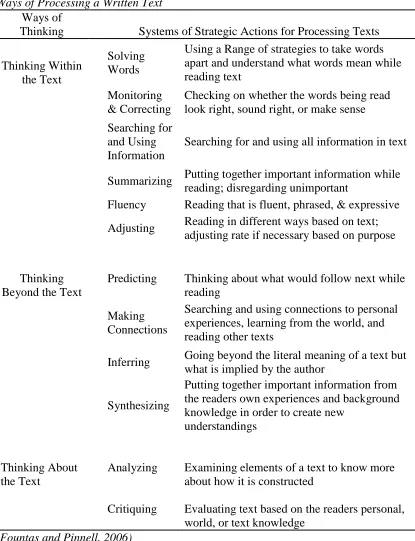
1 Ways of Processing a Written Text………101
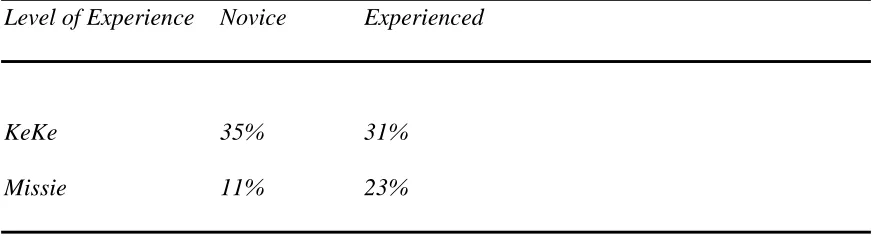
2 Percentages of Coaching Interactions and Reflection ………..131
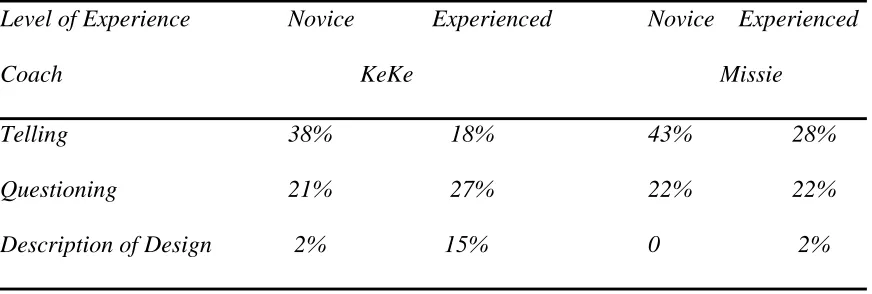
3 Percentages of Coaching Conversations ……... …………...133
4 Percentages of Coaching on Strategic Actions ………..…...133
5 Excerpt from Post Conference Using Observable Evidence……….137
6 Excerpt from Coach/Teacher Interaction Focusing on Intro……….142
7 Excerpt from Coach Affirming Teacher………145
ABBREVIATIONS
ELL English Language Learner
ESEA Elementary Secondary Education Act
IES Institute of Education Sciences
IRA International Reading Association
L1 First language or home language
L2 Second language
LC Literacy Collaborative
NCLB No Child Left Behind
NRP National Reading Panel
REA Reading Excellence Act
CHAPTER 1
INTRODUCTION
Societal changes, rising expectations and accountability, evolving definitions of
literacy, and new ways to teach children to read have created a chasm between classroom
instructional practices and the research knowledge base of literacy development.
Coaching has become a popular model for providing professional development in schools
for teachers. “Seeking to improve instructional practice and, ultimately, student learning,
districts across the country have embraced an old idea and given it a new application”
(Neufeld & Roper, 2003, p. iii).
Neufeld and Roper explained that districts have taken cues from athletics, where
coaches have enabled athletes to strengthen their skills, and have adopted a coaching
model for professional development of teachers and principals. “The goal is to engage
educators in collaborative work designed to contribute to the development of intellectual
capacity in schools” (Neufeld & Roper, 2003, p. iii). Literacy coaching has emerged as a
way to fill in the gaps of teacher knowledge and support schools facing diversity like they
have never before seen. Neufeld and Roper (2003) noted that “there is good reason to
believe coaching holds promise” (p. iv).
This multiple case study will focus on one aspect of literacy coaching, the
one-on-one coaching interactions that occur between a teacher and coach. It will explore the
reading instruction and how the dialogue between coaches and teachers can provide
support for teachers in their professional learning.
Background
The concept of literacy coaches is protean, varying through the years and across
regions of the country. Bean and Wilson (1981) traced the literacy coach movement to
the 1930’s.
In looking at the evolution of the reading specialist as a support person, it is interesting to note that the early specialists (1930s) were essentially supervisors who worked with teachers to improve the reading program. It was after World War II, in response to the raging criticism of the schools and their inability to teach children to read, that remedial reading teachers became fixtures in many schools, public and private, elementary through secondary. The primary responsibility of the specialist was to work with individuals or small groups of children who were experiencing difficulty in learning to read. (p. 2).
In the mid-1960’s, the role of the reading specialist shifted from one of resource
to one who works with parents, administrators, and other resource workers.
The functions of the specialists might be viewed on a continuum. Remedial reading teachers at one end of the continuum have little opportunity to interact with teachers; generally, they spend most of their time instructing students who have difficulty with reading. Conversely, reading specialists who function as resource people may never work with children. These specialists spend much of their time on both informal and formal staff development. (Bean & Wilson, 1981, p. 1).
As early as 1981, classroom teachers supported the resource teachers’ role. In
1981, Bean and Wilson (Bean & Wilson, 1981) directed a project that studied specialists’
roles and their impact on reading achievement of students as well as on teachers. The
specialists assumed four major roles: diagnosis, instruction, providing staff development,
and serving as a resource to parents. Teachers were asked to evaluate the various roles
according to their impact on children. The findings concluded that three of the four most
teacher (providing in-service, developing materials, and conferring). “Instruction of
children by the specialist was rated fourth in importance. The teachers valued most
whatever enabled them, the classroom teacher, to become better instructors of reading”
(Bean & Wilson, 1981, p. 5).
Title I Evolves Under Elementary and Secondary Education Act
A comparison of Title I as it evolved under the Elementary and Secondary
Education Act (ESEA) of 1965 and the new role of the reading specialist as coach under
Title I of the reauthorized ESEA of 2000 (NCLB) establishes the context for
understanding the role for reading specialists. “Title I ESEA of 1965 was the first federal
initiative specifically designed to establish funding for compensatory reading education
in U.S. schools” (Dole, 2004, p. 462). Title I’s funding goal was to improve reading
achievement for the schools with many students living in poverty and was originally
established as a funding source for schools rather than a specific program. Over time, it
became a program for at-risk students. Often times schools had a Title I teacher, a
reading specialist, who worked with struggling readers by pulling them from their regular
classrooms and working with them in small groups.
Dole (2004) explained that the instructional focus was on supplementary
intervention. “Classroom teachers continued to teach most of the students, and those
students who were failing were sent to the Title I teacher for supplementary instruction”
(Dole, 2004, p. 463). This model provided little attention to instruction of the regular
classroom teacher. Furthermore, there was very little interaction between the Title I
“Despite the large amount of time and effort as well as the literally billions of
dollars funneled into pullout programs under Title I, researchers found very limited
success in these programs” (Dole, 2004, p. 463). Of particular importance is that Puma et
al. (1997) found that these programs did not lead to student improvement and success
when the students were back in their regular classrooms. Dole (2004) explained, “…this
model of intervention and the billions of dollars that went into it have not delivered the
anticipated significant improvement in academic learning at-risk students” (p. 463).
In 2000, Congress reauthorized ESEA of 1965. The new Title I provides
supplementary resources to schools with large numbers of low-income students to ensure
that all of them obtain a high-quality education, but the goal remains the same as that of
the old—improved reading and academic achievement for all students. However, under
the new ESEA of 2000, the process of ensuring this achievement has changed quite
substantially (Dole, 2004). Under the new ESEA, all teachers need to be highly qualified
to teach reading in order to minimize the number of students who need supplementary
instruction or intervention and also to minimize the number of students recommended for
special education services. Another significant change requires schools to use
scientifically based reading instructional strategies and programs (U.S. Department of
Education, 2001). Finally, schools are required to maintain effective and efficient
informal assessment techniques to assist teachers in monitoring the progress of each
child.
The changes in ESEA were made after a significant body of research pointed out
what it takes for all students to achieve. One important finding indicated that the best
Highly trained teachers made a significant difference in student achievement (Ferguson,
1991; Ferguson & Ladd, 1996). A second feature of the new ESEA legislature is that
instructional strategies and programs be scientifically based. Panel studies such as Report
of the National Reading Panel (2000) and Preventing Reading Difficulties in Young
Children (Snow, Burns, & Griffin, 1998) have identified phonemic awareness, phonics
instruction, fluency, vocabulary, and strategies for comprehension as the basic concepts
necessary for quality literacy instruction. The final feature for ensuring reading
achievement is the use of classroom-based assessment to inform instruction and monitor
reading progress. A body of research suggested that frequent monitoring of student
progress decreases the number of students who read below grade level (Good, Simmons,
& Kame’enui, 2001).
Dole (2004) explained that there will always be students who need supplementary
instructional intervention. Additionally, there are a variety of effective ways in which to
provide that instruction. It is at this point that reading specialists have an opportunity for
a unique role. Reading specialists have a knowledge base to provide classroom teachers
with the support they need to learn the new content and research-based instruction to
assist teachers (Darling-Hammond & Sykes, 1999).
Therefore, the reading specialist’s role continues to evolve. The new role
conceptualizes the reading specialist as someone who works directly with the teachers as
a coach and a mentor (Quatroche, Bean, & Hamilton, 2001). “In the new role, the reading
specialist supports teachers in their daily work—planning, modeling, team-teaching, and
providing feedback on completed lessons in collaboration with classroom teachers in a
various ways-- from helping them understand the assessment and instructional cycle and
how that cycle can help them as they develop lessons and organize their classes for
instruction (Dole, 2004).
Neufeld and Roper (2003) explained that there are not, as of yet, enough studies
about how this form of professional development influences teachers’ practices and
students’ learning. However, the authors stated that “in light of our current knowledge
about what it takes to change a complex practice like teaching, there are reasons to think
that coaching, in combination with other professional development strategies, is a
plausible way to increase schools’ instructional capacity (2003, p. 1). Nevertheless, there
is a good amount of agreement on the purpose of the position to provide high quality
professional development for teachers with the ultimate goal of increasing student
achievement (International Reading Association, 2004).
Inconsistencies are found in the name for the position (e.g. reading specialist,
reading coach, literacy coach etc.) (Rainville, 2007). The title literacy coach is the most
prevalent term used to designate the role of the literacy leader within the schools and
amongst educators in the state and location for this study. Hence, the term “literacy
coach” will be used when specifically writing about this study, but “reading specialist”
will be used to refer to the role in general.
Systems Thinking as a Base of Professional Development
As early as 1967, Dietrich (1967) suggested that professional development must
be provided for the specialists in the field. Dietrich stressed the importance of
communication skills for effective performance of specialists. Ivers (1975) conducted a
their concepts of the ideal role and functions of reading specialists with the actual role
and functions. The findings suggested that there was a need for improving
communications between classroom teachers and reading specialists in order for the
specialist to be more effective. Ivers reported that the specialists had great difficulty
assuming the resource role, further suggesting professional development was needed.
Lyons and Pinnell (2001) explained that most efforts of professional development
are “…scant, piecemeal, and scattered. There is no cohesive system to assure learning for
either teachers or students. Efforts are not rewarded with lasting improvement; resources,
while not completely wasted, do no achieve the intent of the investment” (p.44). Lyons
and Pinnell suggested that a systems approach to professional development is essential to
create an effective professional development plan that will have lasting effects.
A system is an arrangement of things so intimately connected that they form a unified whole. A system is greater than the sum of its parts. The components of a system work together in synergy, producing an effect greater than each could accomplish alone. (Lyons & Pinnell, 2001, p. 44).
Furthermore, Lyons and Pinnell explained,
Professional development, therefore, is an interrelated system whose components form a unified whole. ‘Systems thinking’ is the only way to improve literacy education and create more satisfying roles for teachers. The interconnected components of the system include: ways to start an exciting, relevant program of professional development; initial training courses; in-class demonstration and assistance; coaching for shifts in teaching; shared experiences that extend teachers’ learning; ways to work toward independence in learning and development; ways to monitor and assess the professional training program. (Lyons & Pinnell, 2001, p. 45)
This new role of reading specialists as a literacy coach has emerged as one of the
systems to provide professional development (Rodgers & Rodgers, 2007). However,
there is little research about what it is that effective literacy coaches do to develop teacher
Previous Resarch
Although the volume of literature on the topic of literacy coaching is rapidly
growing, a preponderance of the research that is found on literacy coaching is found in
publications other than peer reviewed journals or unpublished dissertations and very few
are specifically focused towards working with teachers in small group reading instruction
(Belcastro, 2009; Deweese, 2008; Gibson, 2002; Heineke, 2009; Ippolito, 2009; Poglinco
et al., 2003; Nowak, 2003; Neufeld & Roper, 2003). Most of the available studies on
literacy coaching focus on roles and responsibilities of coaching (e.g. Dole, 2004;
Poglinco, et al., 2003)
There is an overarching goal of literacy coaching leading to improved instruction
therefore increased student achievement (Neufeld & Roper, 2003; International Reading
Association, 2004). Researchers are beginning to report findings related to the effects of
coaching, increased student learning, indicating that literacy coaching is making a
difference (Biancarosa, Bryk& Dexter, 2008; L’Allier & Elish-Piper, 2007). The small
number of empirical research studies, however, is not sufficient to document the impact
literacy coaching on student achievement (Dole, 2004). Of the twenty-three dissertations
I reviewed on literacy coaching, only six provided pertinent information (Belcastro,
2009; Deweese, 2008; Gibson, 2002; Heinke, 2009; Ippolito, 2009; Nowak, 2003) and
three focused specifically on one-on-coaching (Belcastro, 2009; Gibson, 2002; Heinke,
2009) and are further discussed in Chapter 2. Of these three, only one pertained to
one-on-one coaching and also focused on the conversation between the literacy coach and the
Literacy Coaching in Georgia
In 2000, the Georgia Department of Education challenged all schools to get at
least 50 percent of their students to proficiency in English language arts and mathematics
on a new state test within three years (America’s Choice, 2009). Literacy coaching began
to emerge in Georgia through several models. Poglinco et al. (2003) explained that the
greatest teachers need training to become coaches and the coaching that emerged in
Georgia included a range of training experiences. Entitled America’s Choice/Georgia’s
Choice, a literacy coaching model scattered across Georgia in approximately 119 schools
(Georgia Department of Education, 2010). America’s Choice/Georgia’s Choice’s
coaching training consisted of a five-day institute that empowered coaches to support
ongoing collaboration and change through professional learning communities and teams
(America’s Choice, 2009). During the five days, the program’s modules consist of
training on skills, process, and culture. The modules are designed to help coaches hone
interpersonal skills, create coaching plans, support classroom instruction and meet the
needs of all students. Optional on-site technical assistance and follow-up were available.
In 2001, Georgia was awarded approximately $48 million in Reading Excellence
Act (P.L. 105-277) (REA) grant funds to improve reading instruction throughout the
state. The Reading Excellence Act amended the Elementary and Secondary Education
Act of 1965. This initiative was a building block for Georgia’s Reading First and
established in approximately 50-75 schools. Each school was awarded an average of
$735,000 per year over a two year period. REA was established to improve the reading
skills of children and the instructional practices for teachers based on scientific reading
and reading comprehension; to expand the number of high-quality family literacy
programs; to provide early literacy intervention to children who are experiencing reading
difficulties (P.L. 105-277).
I had the opportunity to help write and implement two REA grants for a school
district in Georgia. The grants totaled over 1.5 million dollars over a two-year period and
consisted of the hiring of a literacy coach and a family literacy coordinator for each
school, providing intensive professional development for teachers on research based
literacy practices, establishing an adult education center and a child care center for the
parents on the schools’ campuses. I was hired as a literacy coach for one of the schools.
The State of Georgia contracted with Sharon Walpole, Associate Professor at the
University of Delaware, as architect of the professional development for the REA
coaches across the state. Monthly professional development sessions were held coupled
with summer institutes.
While working with the literacy coaches in Georgia, Walpole (Walpole &
McKenna, 2004) conducted a research study and subsequently published, The Literacy
Coach’s Handbook: A Guide to Research-Based Practice. Walpole’s study and book was
focused towards supporting literacy coaches. I was influenced by working with Walpole
and began wondering about how teachers felt about working with literacy coaches, how
the dialogue between teachers and coaches supported teacher learning, teacher reflection,
and student achievement. It was during this period in my life that the seed was planted for
this research study.
As state accountability increased, school districts searched for partners other than
districts in Georgia (approximately seven) chose Literacy Collaborative®. Literacy
Collaborative (LC) was developed at The Ohio State University in 1986 and is currently a
service mark of The Ohio State University, Lesley University, and Georgia State
University. Literacy Collaborative is a comprehensive school reform project designed to
improve literacy instruction (Literacy Collaborative, 2008) (see Appendix E). .
The cornerstone of the Literacy Collaborative is long-term professional
development. School based literacy coaches are trained in research-based methods and
provided with on-going professional development. Training for a literacy coach within
Literacy Collaborative is a multi-year process, beginning with initial training of seven
weeks and site visits made by university trainers and ongoing training each subsequent
year (Literacy Collaborative, 2008). The focus of the LC professional development
program is on developing each literacy coach’s ability to (a) implement an effective,
research-based framework for K-8 literacy instruction; and (b) design and present
professional development sessions, in-class assistance, and coaching for the teachers at
their own school site. Each literacy coach is required to continue to teach children for a
minimum of three-hours per day, work with a school-based leadership team, enroll in
nine hours of graduate credit at Lesley University, complete a variety of assignments,
collect and maintain data, and attend a literacy conference. The district where this study
is located selected Literacy Collaborative as a partner to train their literacy coaches and
guide professional development of their teachers.
As REA transitioned to Reading First (2002), literacy coaching began to gain
momentum. Another promise of literacy coaching rests in the large amounts of money
some of the money is specifically allocated for literacy coaches. Reading First provided
funds to improve schools with large numbers of children achieving at low levels. More
than 5,000 schools participated in Reading First nationally and virtually of them used
some of their funding to employ literacy coaches, and Georgia was no exception (Beaty,
2009). Reading First provided a multitude of training for the literacy coaches including
lectures, book studies, conferences, and sessions held one day per month for literacy
coaches (Georgia Department of Education, 2009).
A literacy coach’s salary varies in amount; however, $72,000 is the approximate
cost of an average teacher’s salary with benefits in Georgia (Personal Communication,
Porter, 2008). Because literacy coaches are not typically regular classroom teachers and
do not teach children on a regular basis they would not earn any money from the state.
Therefore, a literacy coach is an additional expense for a district and is usually paid for
out of local or Title I dollars (Personal Communication, Porter, 2008).
Georgia was awarded approximately $200 million in Reading First funds between
2002-2007 and impacted as many as 47,365 students in 142 of Georgia’s 1,224
elementary schools (Georgia Department of Education, 2009 ). National Reading First
focuses on putting proven methods of early reading instruction in classrooms. The
primary focus of this unprecedented level of funding is to provide professional
development of sufficient intensity and duration to ensure that all teachers have the skills
they need to teach reading effectively (Georgia Department of Education, 2009).
Approximately 3,000 teachers received professional development through Georgia’s
Reading First program (Georgia Department of Education, 2009). All funds awarded to
literacy coach), and supplies. All personnel involved in the Reading First program were
required to complete 30 hours of staff development during the school year which was
provided by literacy coaches (Georgia Department of Education, 2009).
A summary of the key findings from Reading First in Georgia of 109 schools
during 2008-2009 indicated that achievement trends in phonemic awareness, phonics,
comprehension, vocabulary, fluency are generally positive. Interactive read alouds and
small group differentiated instruction were the targets for the comparison (Walpole &
McKenna, 2009).
Another indicator of the promise of literacy coaching as a preferred model of
professional development is the increased interest in developing high quality instruction.
Effectiveness of traditional professional development has been questioned by researchers
and educators. According to multiple correlation studies on teacher quality and
professional learning, higher levels of student achievement are associated with educators
who participate in sustained professional development grounded in content-specific
pedagogy (Barth, 1990; Corcoran, 1995; Darling-Hammond, 1997, 1998; Joyce &
Showers, 1995; Robb, 2000). Conventional formats, such as workshops, seminars, or
conferences are not effective. Moreover, there is a growing awareness that the key to
successful professional development lies in an organized system that provides on-going,
job-embedded, systemic, focused efforts (Darling-Hammond, 1998; Guskey, 2005; Lyons
& Pinnell 2001). When professional development “connects the curriculum materials that
teachers use with the district and state academic standards that guide their work and the
learning as more relevant and immediately useful(American Educational Research
Association (AERA), 2005, p. 2).
Increased publications and availability of technical or “how to” books that discuss
the role of the literacy coach have been created within the past several years (Bean, 2004;
Burkins, 2007; Casey, 2006; Kise, 2006; Lyons & Pinnell, 2001; McKenna & Walpole,
2008; Moran, 2007; Rodgers &Rodgers, 2007; Toll, 2007; Walpole & McKenna, 2004).
Additionally, guidelines regarding coaching have been articulated from professional
educator organizations such as IRA. Finally, there is pressure for schools and districts to
be accountable for the results of all children as measured by standardized tests.
After an extensive study on coaching, Neufeld and Roper (2003) concluded that
“there is no widespread evidence that coaching will improve student achievement” (p.
iv). However, “coaching does increase the instructional capacity of schools and teachers,
a known prerequisite for increasing learning” (Neufeld and Roper, 2003, p. v). Yet, how
literacy coaches provide supportive professional development to teachers and how the
literacy coaches themselves are supported are key questions, among many that need to be
explored (Literacy Coaching Clearinghouse, 2006; Neufeld & Roper 2003; Quatroche, D.
J., Bean, R. M., & Hamilton, R. L. 2001).
The dialogue between teachers and coaches provides a platform for reflection and
analysis of teaching practices that are seen as effective. More importantly, decisions
about instruction can be made in a supportive climate through a collaborative inquiry
process between the coach and the teacher. The coach has the opportunity to provide
formative support to teachers. “Most importantly, the literacy coach recognizes that as a
teachers….While literacy coaching might offer the promise of the best teaching…”
(Rodgers & Rodgers, 2007, p. xxi).
Research Problem
Literacy coaching is being utilized widely as a form of professional development
for teachers. Although there is a growing body of knowledge about literacy coaching,
little is known regarding the conversations between literacy coaches and teachers (IRA,
2004). Hence, learning more about literacy coaching and how literacy coaches scaffold
professional development will contribute to the field. There is a need for detailed
information on how literacy coaching supports teachers as they change their teaching
practices and how teachers document the changes in their instruction based on having
worked with a literacy coach (Literacy Coach Clearinghouse, National Advisory Board,
2006). This information is needed because of the challenges to the funding of literacy
coaches, justification for the use of teacher time with a literacy coach, and to learn more
regarding teaching diverse learners, specifically, English language learners (ELLs). This
study adds to the small but growing research on the process of literacy coaching by
exploring the dialogue between teachers and literacy coaches and how coaches provide
professional development that scaffolds (the way structures are created to learn) teachers’
knowledge development specifically in teaching the strategic actions of reading (see
Appendix D).
Significance of the Problem
“The connection between professional development and student learning has been
difficult to establish” (Heineke, 2009). Guskey (2000) stated that “one constant finding in
in the absence of professional development" (p. 4). Furthermore, Guskey stated that
professional development may not bring about gains in student achievement, but it is a
critical factor in all school improvement efforts. Additionally, Guskey cited coaching as
an example of a variable that has the potential to positively or negatively effect
professional development. Therefore, research on the coaching discourse and how it is
influences teacher learning, could contribute to a growing knowledge base on effective
professional development. Additionally, little of the academic literature examines how
coaches scaffold teacher knowledge through observation and feedback. Vygotsky (1978)
used the term scaffold to refer to the support provided by others—parents, peers,
teachers, or reference sources which enables one to perform increasingly well.
Although there are many resources and studies emerging that are primarily
prescriptive describing how to coach, these investigations have been designed and carried
out with little regard for the background experiences and knowledge of the teachers who
participated in them. For example, Burkins (2007), a practicing literacy coach, shared
steps in the dance of change and descriptions of things that have worked in the school in
which she works. Moreover, most of the studies have failed to focus on the processes of
interaction between the teachers and coaches. Finally, little consideration has been given
to the discourse in coaching interactions through which teachers and coaches
co-constructed their understandings about the reading process. Such knowledge could assist
in developing tools for coaching and further develop methods for to be used by those
The Purpose Statement
This multiple-case study will examine the coaching interactions of two literacy
coaches and four classroom teachers to explore what is happening during one-on-one
coaching discourse and how these interactions serve to support teacher learning.
Theoretical Perspectives
Vygotsky, one of the earliest and most famous theorist in Social Constructivism,
developed a theory that learning is a social process (Vygotsky, 1978). One important
concept underlying Vygotsky’s Social Constructivism is the zone of proximal
development (Vygotsky, 1978). The zone of proximal development (ZPD) maintains that
the child follows the adult’s example and gradually developments the ability to do certain
tasks without help or assistance. The premise of the idea is the level at which a child can
be successful with appropriate support. Vygotsky defined the ZPD as “the distance
between the actual developmental level as determined by independent problem solving
and the level of potential development level as determined through problem solving
under adult guidance or in collaboration with more capable peers” (Vygotsky, 1978, p.
86, author’s italics).
One central feature of ZPD related to this study is the role of language and the
dialogue between the literacy coaches and teachers and the social construction of
knowledge. According to Vygotsky (1978), dialogue is where learning takes place
(Vygotsky, 1978).
Another salient feature of Vygotsky’s Social Constructivism that is pertinent to
this study is scaffolding. Scaffolding is a fundamental concept in social constructivism
knowledgeable other adjusts the amount of support and guidance the learner needs to
accomplish the task at hand. Dialogue is an important tool in the concept of the ZPD.
Learning takes place as a result of the scaffolding of others.
There are several implications for adult learning and literacy coaching related to
Vygotsky’s theory. Rodgers and Rodgers (2007) explained that it is especially helpful in
providing guidance to coaches who want to look at teacher participation in activities as a
measure of change. Rodgers and Rodgers stated “an essential feature of effective
scaffolding is pitching help at just the right level of sensitivity) (p. 74). Therefore, a
central feature related to literacy coaching is not only the kind of help that is offered but
also, when it is offered.
Research Questions
1. How does the discourse found within the coaching interactions support teachers in
their learning as described by the coaches?
2. How does the discourse found within coaching interactions support teachers in
their learning as described by the teachers?
3. What patterns of discourse are seen within coaching interactions?
a. How do the interactions support teacher reflection during the dialog?
b. How do the interactions support the teachers’ understanding of teaching
for processing strategies within small group reading instruction?
4. What if any are the differences related to training and knowledge of the coaches?
Researcher Positionality
In order to address my own potential bias, I must disclose my role as an insider in
own beliefs and experiences would shade my perspective as I collected and analyzed
data. In an effort to minimize this impact of personal bias, I took great precaution to
guard against my own subjectivity. As I collected the data for this study, I explained to
the participants the importance of their honesty. Through collaborating with others, one
can learn about strengths and needs of a project, and thusly, make improvements.
Early in my career of education, I realized that I had a love for teaching reading
and that has served as a catalyst over the years, propelling me to pursue an educational
focus on literacy. I received my Masters as a Reading Specialist from Georgia
Southwestern State University in 1982. My teaching experience has spanned all grades
kindergarten through sixth grade. Over the last twelve years, I have received intense
training in literacy ranging from training as a Reading Recovery Teacher at Georgia State
University, a Primary (Grades K-2) Literacy Coach at Georgia State University, an
Intermediate (Grades 3-6) Literacy Coach and a District Trainer of Primary and
Intermediate Literacy Coaches at Lesley University. I am currently Curriculum Director
for grades Pre-K through fifth grade of the school district in which the study was
conducted. Although I do not serve in a supervisory capacity or have direct authority over
the coaches or teachers, I have indirect authority over them through decisions related to
the effectiveness of the district’s literacy initiatives. It is important to note that trust had
been developed between me and the participants in this study through my previous role in
the district thus making it possible for the participants to participate without fear of harm
for participation. Additionally, to guard against any potential bias, triangulation was
provided through multiple data sources, multiple methods of data collection, and
My first hand experiences with one-on-one coaching, as well as a provider of
professional development of literacy coaches have influenced my views of literacy
coaching. My work has motivated me to explore more deeply the interactions and
characteristics that empower coaching discourse as supportive professional development
or adversely, characteristics that prevent coaching discourse from meeting this potential.
Definition of Terms
Coaching cycles—The coaching cycles (sessions) investigated in this study consisted of
three components a pre-conference, lesson observation, and a post conference. The goal
of the literacy coaches within the district in this study, is to complete two cycles with
each novice teacher per month and one cycle per month with each experienced teacher
(see Appendixes A and B).
Coaching discourse—Discourse carries multiple meanings, however, this study is
focused on the actual talk occurring between the teacher and a literacy coach. Therefore,
“discourse” herein is generally used to mean the “language in use” (Cameron, 2001, p.
13). Two major components of the literacy coaching process are pre-and
post-conferences and supporting classroom instruction. Essential to the work of a literacy
coach is fostering non-threatening dialogue (coaching discourse) about teaching practices
with the teachers. Through these discussions the coach has the opportunity to provoke
reflection and prompt teachers to change teaching practices (Rodgers & Rodgers, 2007).
Moreover, through dialogue and classroom support literacy coaches helps teachers make
decisions based on their beliefs and provides the support necessary for teachers to make
Rodgers and Rodgers (2007) described this kind of collaboration as potent
because it is the teacher who voluntarily decides to change her practices, rather than
having someone else compel her. Because teaching is complex and hinges on a multitude
of factors, the literacy coach can assist a teacher by giving feedback about what the
teacher is trying to change, enabling the teacher to make the changes, and monitor
progress towards the desired changes.
Guided reading—A homogeneous, small flexible group (no more than six children) of
children reading a teacher-selected text. The teacher provides explicit teaching and
support for reading increasingly challenging texts. “The heart of the guided reading
continuum is a description of the expectations for thinking on the part of readers…”
(Pinnell & Fountas, 2007, p. 230) (see Appendix C).
Lesson observations—A literacy coach observes many components of classroom
instruction. For the purposes of this study, the lesson observations consisted of observing
guided reading lessons.
Literacy— Au (1993) defines literacy as “the ability and the willingness to use reading
and writing to construct meaning from printed text, in ways which meet the requirements
of a particular social context" (p. 20). She notes the importance of teaching literacy "to
affirm the cultural identities of students of diverse backgrounds" (p. 29) and to "help
students of diverse backgrounds understand their own experiences, as well as the
experiences of others, in terms of the dynamics of the larger society" (p. 33). She adds:
lessons might need to be adjusted to be more beneficial for students of diverse backgrounds. Patterns of literacy use and beliefs about literacy may differ from community to community. Literacy practices are very much a part of culture. For the benefit of students of diverse backgrounds, school literacy should be redefined to highlight the study of multicultural literature, instructional practices that involve an active process of meaning making, writing instruction that makes students' background experiences central, culturally responsive instruction, and the development of critical literacy. (pp. 33-34)
Current standards for English language arts include viewing and visually representing
(how people gather and share information) as important as the traditional areas of
reading, writing, listening, and speaking (International Reading Association & National
Council of Teachers of English, 1996). Higher levels of thinking skills are now required,
which allow students to embrace critical literacy (Au & Raphel, 2000). Critical literacy
encourages readers to analyze texts through a critical and questioning approach. The
changes have important implications for educators as they are held accountable for
educating all students, especially students from diverse backgrounds (Moll, 1994) and
also for the definition of literacy itself.
Literacy coach—A more expert other who is a model and a teacher; one who gives ideas;
suggests next steps; helps break down complex processes; and offers support,
encouragement, and guidance for a school’s literacy program. This leadership includes
creating and supervising professional development processes that supports both the
development and implementation of the literacy program at a school. In a review of the
literature, numerous terms are used to refer to the work of literacy coaches, including but
not limited to: reading specialist, instructional coach, literacy coach, literacy coach,
content-focused coach, academic coach, cognitive coach, and peer coach. To further
A reading specialist who focuses on providing professional development for teachers by providing them with the additional support needed to implement various instructional programs and practices. They provide essential leadership for the school’s entire literacy program by helping create and supervise a long- term staff development process that supports both the development and implementation of the literacy program over months and years. These individuals need to have experiences that enable them to provide effective professional development for the teachers in their schools. (Category III, bullet 2)
Literacy Collaborative—A school reform program designed to transform school literacy
achievement from kindergarten through grade eight. It is a long term, collaborative
professional development program between Lesley University, The Ohio State
University, Georgia State University and individual schools that partner with Reading
Recovery to ensure successful literacy achievement for every children. School-based
literacy coaches are trained in research based methods. The support includes: A
research-based instructional model that is language-research-based, student centered, process-oriented, and
outcome based; creating in-school and in-district leadership through training and support
of school-based literacy leadership teams, administrators, and literacy coaches;
establishing long-term site-based development for every member of the school’s faculty;
and helping schools monitor the progress of every student through systematized
assessment, data collection, and analysis (Literacy Collaborative, 2008).
Pre-conference—A focus for the lesson is established and the teacher and the literacy
coach establish how the coach can best support the teacher. A pre-conference typically
spans approximately 15-30 minutes.
Post-conference—A follow-up conversation between the teacher and the literacy coach
discussing the teaching decisions and student responses that occurred during the lesson.
teacher both referring to notes taken during the lesson itself. Next steps and goals are
established for subsequent instruction with the students
Reading Recovery—A research based, highly effective short term early intervention of
one on one tutoring for first graders children experiencing extreme difficulty with reading
and writing. Individual students receive a half-hour lesson each day for 12 to 20 weeks
with a specially trained Reading Recovery teacher. As soon as students can meet grade
level expectations and demonstrate they can continue to work independently in the
classroom, their lessons are discontinued, and new students begin individual instruction
(Literacy Collaborative, 2008).
Scaffold—A process that enables a learner or novice to solve a problem, carry out a task,
or a goal that would be beyond his/her unassisted efforts (Wood, Bruner, & Ross, 1976).
Strategic processing—While reading, a highly literate individual processes information
and constructs meaning all the time: while anticipating reading; during reading; and
sometimes long after reading is over (Fountas & Pinnell, 2006). This work is invisible to
the reader and teacher because it is done in the child’s head. Comprehension involves an
individual deliberately selecting cognitive, linguistic, sensory-motor, artistic, and creative
strategies for making meaning of the text (Almasi, 2003). The value of teaching students
how to process text strategically is grounded in research on theory and advanced learning
(Pressley, Goodchild, Fleet, Zajchowski, & Evans, 1989) because strategies enhance
learning. However, it is not necessarily a regular part of the school curriculum. There are
six reasons for teaching students to become strategic readers: (a) strategies enable readers
to organize and evaluate texts; (b) it coincides with students’ cognitive development in
them flexibly; (d) it fosters metacognition development; (e) research shows it can be
taught to children, and; (f) teaching students to become strategic readers promotes their
growth and development in all areas of the curriculum (Paris, Wasik, & Turner, 1991).
Teaching students to use strategic actions will enable them to read text with greater
comprehension and retention.
Fountas and Pinnell (2006) identified twelve systems of strategic actions readers
employ: solving words; monitoring and correcting; searching for and using information;
summarizing; maintaining fluency; adjusting; predicting; making connections; inferring;
synthesizing; analyzing; and critiquing. Understanding these systems of strategic actions
is foundational to planning explicit lessons, helping students during individual
conferences, introducing texts in guided reading and guiding discussions after reading. A
teacher’s goal is to enable readers to assimilate, apply and coordinate systems of strategic
actions. Three ways of thinking about a text while reading include thinking within,
beyond, and about the text. Thinking within the text involves efficiently and effectively
understanding what’s on the page, the author’s literal message. Thinking beyond the text
requires making inferences and putting text ideas together in different ways to construct
the text’s meaning. In thinking about the text, readers analyze and critique the author’s
craft.
Thinking about the text--Readers analyze and critique the author’s craft.
Thinking beyond the text--Requires the reader to make predictions; to make connections
gained in personal experiences, knowledge of the world, and from reading other texts; to
make inferences and; to synthesize the text by putting ideas together in different ways to
Thinking within the text--Readers use a range of strategies to solve words and understand
what they mean.
Organization of the Study
This study is presented in five chapters, a reference section, and Appendixes.
Chapter 1 serves as the introduction and includes the historical background leading to the
research problem, a brief look at previous research, the research purpose, research
questions, researcher’s positionality, the definition of terms, organization of the study,
and a summary of Chapter 1. Chapter 2 includes a comprehensive review of the relevant
literature on literacy coaching, teacher learning, reflection, and teaching for strategic
actions in the reading process. Literature about teaching English to second language
learners is also included in Chapter 2. The overall design and trustworthiness of the study
and methodology are discussed in Chapter 3. Chapter 4 begins with an explanation of the
findings beginning with a description of each of the participants and their beliefs about
students and teaching. The second phase of Chapter 4 consists of the findings related to
the dialogue between the teachers and the coaches as it relates to reflection. The final
section of Chapter 4 summarizes the findings of the coaching dialogue as it related to the
teaching of processing strategies during guided reading. Finally, a discussion of the
findings is included in Chapter 5 and recommendations for further research.
Summary
Chapter 1 introduces the study. The research problem is presented as emerging
from a historical background including its social and political context. A brief glimpse
into the body of research on coaching indicates the need and significance of the study.
boundaries. My own experiences influencing my personal interest, interpretation, and
inquiry are shared. A definition of terms is included to provide clarity. Chapter 1,
CHAPTER 2
REVIEW OF LITERATURE
Walpole and McKenna (2008) explained that literacy coaching touches on areas
that previously have been peripheral to literacy, including leadership and policy, adult
learning, professional development, and coaching directed at content areas. Although my
study did not explore all of these areas, the review of the literature parallels the
complexities they suggested, by including teacher learning as a combination of adult
learning and professional development. Additionally, I included a review of the literature
on the reading process, which corresponds with Walpole’s and McKenna’s area of
coaching directed at content areas. Finally, the location of this study has a large
population of English language learners (ELLs). Therefore, I also reviewed the literature
related to teaching children who speak English as a second language.
This literature review is organized in five themes: (a) literacy coaching; (b)
teacher learning, (c) reflective (coach-teacher) dialogue, (d) theories of the reading
process, and (e) theories of literacy learning for English language learners. Within each
theme there is theory or definition and the relevant research related to the theme. Through
this review of the literature review I will identify the weaknesses in the literature, the
preponderance of “how to”, and the dearth of research about coaching.
Literacy Coaching
“Literacy coaching currently is one of the responses to the need to improve
(Belcastro, 2009, p. 10). Poglinco, Bach, Hovde, Rosenblum, Saunders, and Supovitz
(2003) explained that the rationale behind having a literacy coach is rooted in research on
creating an effective professional development environment, one characterized by
providing ongoing support to teachers and creating a learning community that include
structures for focusing on instruction and curriculum. Puig and Foelich (2007) defined
literacy coaches as co-learners who assist in shifting classroom teachers to better
understand critical pedagogy and the need for change based on evidence. Puig and
Foelich also explained that literacy coaches support colleagues by collaboratively
forming questions as co-learners. They explained that changing teacher’s practices are
grounded in the coaches’ pedagogical knowledge of literacy processing and founded on
collegial trust.
The International Reading Association (IRA) (2004) identified five requirements
of reading/literacy coaches: (a) documentation of successful teaching including positive
outcomes for student achievement; (b) in-depth knowledge of reading processes,
acquisition, assessment, and instruction; (c) experience working with teachers to improve
their practices; (d) excellent presenter, skilled in leading teacher groups and facilitating
reflection and change for colleagues; and finally, (e) experience or preparation that
enables the coach to master the complexities of observing and modeling in classrooms
and providing feedback to teachers. Technical skills for these coaching tasks must be
developed. Moreover, coaches must be sensitive to the need to develop open, trusting
relationships with the teachers they are coaching.
Researchers were beginning to learn how coaching supported teachers as early as
of professional development. In the 1970’s evaluations of staff development that focused
on teaching strategies and curriculum revealed that as few as 10 percent of the
participants implemented what they had learned. Joyce and Showers (1980) discovered
that even if the participants volunteered for the training, that the rate of transfer was low.
In a series of studies, beginning in 1980, Joyce and Showers tested hypotheses related to
the proposition that weekly seminars would enable teachers to practice and implement the
content they were learning. The seminars, or coaching sessions, focused on classroom
implementation and analysis of teaching, with an emphasis on students’ responses. The
results were consistent. Implementation rose dramatically, whether experts or participants
conducted the sessions. Thusly, they recommended that teachers who were studying
teaching and curriculum form small peer coaching groups that would share the learning
process. In this way, they posited that staff development might directly affect student
learning.
Their findings have influenced the field of literacy coaching (International
Reading Association, 2004). Joyce and Showers (2002) asserted that only five to ten
percent of teachers implemented strategies learned in staff development sessions, while
they incorporated the strategies at a 90 % level if provided coaching. In summing of
Joyce and Showers conclusions, in order for teachers to transfer new knowledge or skills
in their classroom practice they need professional development designed with multiple
components: theory, demonstration, practice, feedback and coaching. However, in later
research, Joyce and Showers (2002) indicated that utilization of coaching involves
collaboration, They removed “feedback” from their coaching process altogether. They
tends to disintegrate. Peer coaches told them that they found themselves slipping into
supervisory or evaluative comments, despite their intentions to avoid them. Teachers
began sharing with them that they began expecting the cycle of first the good news, then
the bad news. Omitting feedback in the coaching process has not depressed
implementation or student growth (Joyce and Showers, 1995). The authors suggested that
learning to provide technical feedback requires extensive training and time. Now, as they
work with teachers, the one teaching is called the “coach”, while the one observing is the
“coached”. There is no discussion of the observation in the technical feedback sense. The
one observing does so to learn from their colleague. Joyce and Showers (2002) continue
to encourage peer teams to observe one another’s teaching, although they structure the
experiences so that they are learning from each other. This theory has influenced the
widespread adoption of coaching as an integral component in the new paradigm of
job-embedded, ongoing professional development.
The IRA (2004) identified five requirements of reading/literacy coaches: (a)
documentation of successful teaching including positive outcomes for student
achievement; (b) in-depth knowledge of reading processes, acquisition, assessment, and
instruction; (c) experience working with teachers to improve their practices; (d) excellent
presenter, skilled in leading teacher groups and facilitating reflection and change for
colleagues; and finally, (e) experience or preparation that enables one to master the
complexities of observing and modeling in classrooms and providing feedback to
teachers. Technical skills for these coaching tasks must be developed. Moreover, coaches
they are coaching. The IRA expects that literacy coach will provide feedback to teachers
while Joyce and Showers (1996) state,
Many educators believe that the essence of the coaching transaction in the offering of advice to teachers following observations. It is not. Teachers learn from each other in the process of planning instruction, developing the materials to support it, watching each other work with students, and thinking together about the effect of their behavior on student learning. The collaborative work of peer coaching is much broader than
observations and conferences. (p. 94)
Gibson (2006) investigated the practices of an expert reading coach providing
lesson feedback to one experienced kindergarten teacher. Gibson’s study was influential
in the research design for this study. Data sources for Gibson’s study consisted of three
cycles of observation of coaching sessions and guided reading instruction, along with
interviews of one coach and one teacher. Gibson’s (2006) study was as a follow-up to a
larger study (Gibson, 2002) of four coach/teacher dyads. Gibson reported that the sample
size allowed for detailed analysis of details of the interaction between the coach and the
classroom teachers. Each cycle of observation included (a) observation and video
recording of a classroom guided reading lesson, (b) observation and audio recording of a
coaching session, (c) observation and recording of a second guided reading lesson, and
(d) audio taping of an interview with the coach. Each interview was standardized
open-ended formation including a short segment of audiotape of the coaching session was
played for the coach, who was then asked to comment on her thinking and
decision-making. A qualitative verbal analysis of each of the coaching transcripts was conducted
to determine the nature of the conversations between a literacy coach and a teacher