2016 International Conference on Wireless Communication and Network Engineering (WCNE 2016) ISBN: 978-1-60595-403-5
Data Dissemination and Parallel Processing Techniques Research
Based on Massively Parallel Processing
Qiao SUN
1, Bu-qiao DENG
1, Xiao-bo NIE
1, Hui-yuan MA
2,
and Jia-song SUN
3,*1
Beijing Guodiantong Network Technology Co., Ltd., Beijing, 100070, China 2
State Grid Beijing Electric Power Company, Beijing, 100031, China 3
Electronic Engineering Department, Tsinghua University, Beijing, 100084, China
*Corresponding author
Keywords: Distributed database, Massively parallel processing, Data distribution, Data consistency.
Abstract. In the current distributed database system architecture enterprise-class, the massively
parallel processing architecture is used frequently. This method can be used to carry out large-scale analysis of data through distributed across multiple nodes and storage and query process, from its scope of application produce simple reports to perform complex analytics workloads. However, due to the characteristics of shared-nothing MPP technology, to carry out large-scale data analysis query and maintain data consistency there are some difficulties. In this paper, a relational SQL-based query parsing distributed MPP data distribution and parallel processing technology, the goal is to maintain and improve the consistency of distributed data query speed. First SQL query analysis section, according to the syntax analysis, semantic analysis and sentence parsing steps such order; in the form of work distribution node/data node in the data distribution phase, all tasks emanating from the work of a distribution node, all need to treated results are returned to the node; when parallel processing, each node needs to store a copy of the lookup table, and on each node concurrent execution of SQL statements for each query. Experimental results show that the proposed MPP data distribution and parallel processing scheme can support large volume of data processing, ensuring data consistency in the premise of improving query processing speed.
Introduction
With the arrival of the big data era, the distributed database system, which is composed of multiple computers connected by network, has become the primary database system. Distributed database system includes distributed database management system (DDBMS) and distributed database (DDB). Distributed database is physically distributed in the computer network on a number of logically interrelated database collection, which means the geographical location of the management and controlling need to concentrate multiple centralized database together on different levels to form a unified Database [1]. Each node of distributed database is a local separate database and the communications between nodes need the network. To the user, the decentralized nature of the system is not a concern. They only need to operate it as a unified independent database system. The characteristics of distributed database system make it has the advantages of economic superiority, reliability and availability, fast response and expansibility [2].
Parallel processing is a kind of processing method that uses parallel means in the information processing to achieve efficient development and calculation. In other words, it refers to the completion of a number of work in the same time range, the work can be the same nature, but also the nature of different. As long as the time there is overlap, can be called parallel. It is mainly used in high-performance processors, large-scale database management, complex mathematical modeling and other fields, and its application is still constantly expanding. It consists of three elements: simultaneity, concurrency, flow. In order to meet the requirements of high performance and meet the needs of large computation, parallel computing model can be used to deal with.
Large data analysis is becoming increasingly common in many business areas, including financial enterprises, government agencies and insurance institutions. Applications range from producing simple reports to performing complex analytical workloads. The difficulty is that, with the increase in the amount of data, how to carry out these areas of inquiry and storage. Massively Parallel Processing (MPP) architecture can address these challenges through distributed storage and querying across multiple nodes and processes [4, 5]. MPP is usually used in mathematical modeling of heavy computation, arduous database processing, complex weather modeling and other fields, which is characterized by accommodating multiple processing servers running in parallel. MPP can be connected through the Internet communication, the terminal can be used more than low-cost servers co-processing.
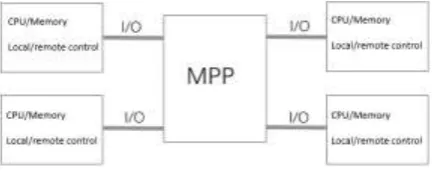
[image:2.595.190.407.440.531.2]Distributed system design needs to consider data consistency, availability and partition tolerance. Data consistency means that if the data is replicated to multiple servers, all servers need to be updated when the data is updated; availability refers to timely response to user needs; partition fault tolerance is the scalability of nodes. In the MPP architecture shown in Figure 1, each module has CPU, memory, etc. to manage the data and allows to dynamically add or delete nodes. So the data and computing power between these modules are not shared and the data is distributed locally. So one of the challenges is how to ensure the consistency of data in the absence of such sharing.
Figure 1. MPP general structure.
This paper proposes a distributed MPP data distribution and parallel processing technology based on relational SQL query resolution. The goal is to maintain the consistency of distributed data and improve query speed. First, the database is divided into a number of sub-rules in accordance with certain rules, each server on an independent decision, given whether the current task should be suspended or submitted, the principle is that there is no conflict in the transaction can be submitted, if there is a conflict, Called adaptive replication of its subset and compared with the current verification of the task, given the decision.
The structure of this paper is as follows: Firstly, the basic architecture and principle of large-scale parallel processing are introduced. Then, distributed MPP data distribution and parallel processing based on relational SQL query and analysis are proposed, and the method is consistent with the traditional SMP data. Finally, the conclusion and prospect are given.
The Structure and Principle of MPP
use and other aspects, and its object-based distributed relational database there is a big gap. At this point, the most effective large-scale data analysis system with MPP database with the need to be built [7].
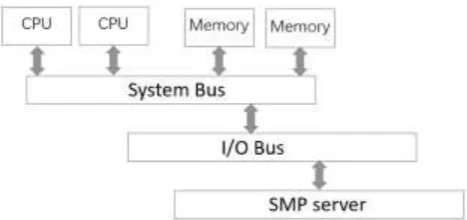
[image:3.595.181.415.309.419.2]The Symmetrical Multi-Processing (SMP) model of a traditional server architecture connects multiple processors to a centralized memory, as shown in Figure 1. This is one of the most popular server architectures because it increases server performance in a low-processor system by simply increasing the number of processors. Not only many server hardware, such as the CPU (including the brand server CPU), chipset and other generally support the SMP architecture, even the operating system are basically support SMP, such as Windows 2000 Server, Windows Server 2003 and UNIX, LINUX system. In SMP mode, all processors can access the same system physical memory, which means that the SMP system only runs one copy of the operating system. So the SMP system is sometimes referred to as the Uniform Memory Access (UMA) architecture. Consistency means that at any given time, the processor can only hold or share only one value for each data in memory. Obviously, SMP's drawback is limited scalability, because the memory interface to saturation, increase the processor and cannot get higher performance. So generally use SMP architecture of the server is generally only 8-way processor system [8].
Figure 2. Basic Schematic Diagram of Distributed System Resource Management.
MPP mode is a distributed memory model that can be more processors into a system memory, as shown in Figure 2. A distributed memory model has multiple nodes, each node has its own memory, and the SMP mode can also be configured to non-SMP mode. A single node is connected to each other to form a total system. Because there is no hardware to support shared memory or cache coherency issues, it is relatively easy to achieve a large number of processor connections. The key difference between the single SMP and MPP modes is that in SMP mode, data coherency is managed exclusively by hardware, which is easier to implement but more costly. In MPP mode, the consistency between nodes is determined by Software to manage, therefore, its speed is relatively slow, but the cost is much lower.
MPP by a number of SMP server through a certain node network to connect, work together to complete the same task, from the user's point of view is a server system. Its basic characteristic is a plurality of SMP servers, each SMP server is called a node, is connected through the interconnection network of nodes, each node only visits own memory, store and other local resources, No share structure, good scalability, in theory, the expansion of unlimited.
In the MPP system, the CPU in each node cannot access the memory of another node. Information exchange between nodes is achieved through the node network, this process is generally known as data reallocation. MPP servers require a sophisticated mechanism to schedule and balance the load and parallel processing of each node. At present, some MPP technology-based servers tend to shield this complexity through system-level software such as databases. The MPP database distributes the tasks in parallel to multiple servers and nodes. After each node computation is complete, the results are aggregated to produce the final result.
the dynamic increase or deletion of nodes. So the data and computing power between these modules are not shared and the data is distributed locally.
Second, the general database architecture in dealing with large-scale data cannot do anything, MPP technology can not only handle TB or even PB level of bulk data, but also some of its deeper data analysis. And, MPP technology through parallel processing to achieve no sharing, to avoid the general database system on I/O processing capacity demanding. MPP divides and divides the data into different physical nodes, improves the overall performance of the system through the distributed query optimization, so it has great advantages in calculation and storage, and can be run on X86 nodes.
Finally, MPP will generally be structured data storage columns, usually star or snowflake structure, it has a fast index and compression ratio advantages, mainly used in data warehousing and large-scale data analysis and processing applications.
In summary, MPP can carry on the large data analysis of the PB volume that the traditional database technology can not realize. It is very realistic for the enterprise with large data volume to use MPP technology to build its proprietary data warehouse and carry out data analysis.
Data Distribution and Parallel Processing of MPP Based on SQL Query
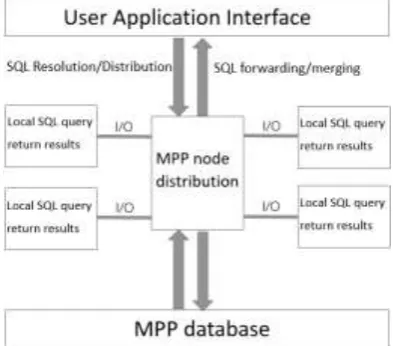
[image:4.595.199.396.397.570.2]Because MPP data is stored locally, the data between the modules is not shared, so ensuring data consistency is one of the problems to be solved. This paper proposes a distributed MPP data distribution and parallel processing technology based on relational SQL query analysis. The goal is to maintain the consistency of distributed data, as shown in Figure 3.
Figure 3. Distributed MPP Data Distribution and Parallel Processing.
In the SQL query parsing part of the main include syntax analysis, lexical analysis, semantic analysis, statement analysis steps [9]. The purpose of parsing is to replace an input string with a structure that describes the string, making it easier for a computer to understand what a user's input string is. This stage contains three processes, namely, lexical analysis, syntax analysis, output abstract syntax tree. The lexical analyzer is a deterministic finite automata that converts the input character set into words according to our defined lexicon.
Abstract Syntax Tree (AST) is the representation of the tree structure of user input statements. Each node in the tree is a word, and the tree structure reflects the syntax. The syntax of the abstract syntax tree is constructed with the process of parsing. When the parsing is finished normally, the parser will output an abstract syntax tree. The user input corresponds to the structure of the abstract syntax tree.
In the data distribution phase, the following approach: the use of work distribution nodes / data nodes in the form of the former responsible for the distribution of the latter, the former has been monitoring from the latter issued by each task such as SQL analytical tasks, and the results returned to the Assignment node. All tasks issued from the work assignment node need to return the processed results to that node. Specifically, on the one hand, the specific situation of each node is detected and the node allocation is performed and the updating of the data information table is maintained on the node; on the other hand, the operations such as position information and copy corresponding to the table are performed Table storage. In order to ensure fault tolerance, each primary database is equipped with a copy of its data exactly the same, by specifying the database address of the master copy of the update, you can save the database for each processing node location information. All of the information of the original data can be stored in the processing node, and the backup data is retrieved from the data of the corresponding data / backup data node based on the information.
In the data parallel processing stage, according to the characteristics of data distribution and MPP-sharing, each node can save response tables and execute each query statement concurrently on each node, which can shorten the response time and improve query performance.
Experiments and Results
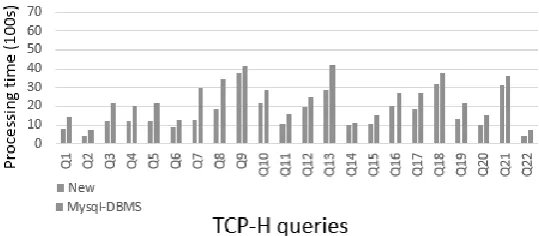
[image:5.595.161.431.478.596.2]In order to test the performance of the above method, we evaluated and tested in the existing network environment. Experimental configuration: 12 servers IBM-x3650M4-2U (2 CPU, 6-core 12-thread Xeon E5-2620, 48G memory, 2T hard disk), one for the central data node, the other server as a data node, the operating system Ubuntu11.10 and Windows7, are pre-installed FTP service through the FTP interface in the client and the central data node-side data read in the system security generally use the local linux interface to complete the management operation, while accessing the database of local users is about one hundred.
Figure 4. The TCP-H queries results by standard database system vs. ours.
Conclusions
As a primary distributed memory model, MPP technology has multiple nodes, more processors into a system memory. Due to the non-shared memory and hardware problems, MPP can achieve a large-scale CPU connection, but it is precisely because no shared characteristics, making the data consistency there is a certain degree of difficulty. This paper proposes a distributed MPP data distribution and parallel processing technology based on relational SQL query resolution. The goal is to maintain the consistency of distributed data and improve query speed. First, in the SQL query resolution part, in accordance with the syntax analysis, semantic analysis and statement parsing and other steps in the order; in the data distribution phase using the work distribution node / data node form, issued from the work distribution node, all tasks need to be processed The results are returned to the node; in parallel processing, each node needs to store a copy of the query table, and execute SQL statements concurrently on each node for each query statement. The experimental results show that the proposed MPP data distribution and parallel processing scheme can support large amount of data processing, and improve the query processing speed under the premise of ensuring data consistency. The next step is to investigate how to further improve the efficiency of query and result merging in parallel processing.
Acknowledgments
This research was financially supported by Science and Technology Project of the State Grid Corporation of China (SGBJDK00KJJS1500180) and the State Grid Information & Telecommunication Group Co., Ltd. (SGITG-KJ-JSKF[2015]0010).
References
[1] Che Wujiang. Study on Data Locking and Consistency of Distributed Database [D]. Master's dissertation, Hunan: Hunan University of Science and Technology, 2011.
[2] S. K. Das, D. J. Harvey, R. Biswas, A latency-tolerant partitioner for distributed computing on the information power grid [C], Parallel and Distributed Processing Symposium., Proceedings 15th International, 2001:6.
[3] Li Cunchen. Research and Application of Massive Data Distributed Storage Technology [D]. Master's dissertation, Beijing University of Posts and Telecommunications, 2013.
[4] El-Helw A, Raghavan V, Soliman M A, et al. Optimization of common table expressions in MPP database systems [J]. Proceedings of the Vldb Endowment, 2015, 8(12):1704-1715.
[5] Antova L, El-Helw A, Soliman M A, et al. Optimizing queries over partitioned tables in MPP systems[C]. Proceedings of the 2014 ACM SIGMOD international conference on Management of data. ACM, 2014:373-384.
[6] Zhang Yu, Cai Xin, Li Aimin, Liu Yi, and Yao Xiaohui. Application of Distribute File System & MPP Database Mashup Architecture in Telecom Big Data Platform [J]. Telecommunications Science, 2013, 29(11):12-16.
[7] Xin Huang, Yi Xinghui, Chen Zhenyu. Design of Telecom Operators’ Network Data Sharing Platform Based on Hadoop+MPP Architecture [J]. Telecommunications Science, 2014, 30(4):135-145.
[8] http://www.cnblogs.com/viviancc/articles/2310105.html. [EB/OL]. [2016-11-1].
[10] Zhao Jun, Gao Jing-Chang, Li Ze-Hai, He Yi-bin. Utilize reoccupying query plan to optimize database performance [J]. Journal of Jilin University (Information Science Edition), 2004, 21(4): 408-411.