570
LINKED OPEN GOVERNMENT DATA AS BACKGROUND
KNOWLEDGE IN PREDICTING FOREST FIRE
1GURUH FAJAR SHIDIK, 2AHMAD ASHARI
1Universitas Dian Nuswantoro, Semarang, Indonesia
2Universitas Gadjah Mada, Yogyakarta, Indonesia
Email: [email protected] , [email protected]
ABSTRACT
Nowadays with linked open data, we can access numerous data over the world that more easily and seman-tically. This research focus on technique for accessing linked open government data LOGD from SPARQL Endpoint for resulting time series historical of Forest Fire data. Moreover, the data will automatically uses
as background knowledge for predicting the number of forest fire and size of burn area with machine
learn-ing. By using this technique, LOGD could be used as an online background knowledge that provide time series data for predicting trend of fire disaster. In evaluation, mean square error MSE and root mean square error RMSE are used to evaluate the performance of prediction in this research. We also compare several algorithm such as Linear Regression, Neural Network and SVM in different window size.
Keywords: Linked Open Government Data, Forest Fire Prediction, Time Series Data, Data Mining.
1 INTRODUCTION
Forest fire is a common natural world phenome-non. Every year millions of hectares of forests in the worldwide are destroyed, in 1980 - 2007 at least 2.7 million hectares were burnt in Portugal [1]. This causes severe damages to the natural environment and results in loss of precious human lives. Forest fires is one of the major environmental concern that affects the preservation of forests, resulting in economy and ecological damage that causes human suffering. Refer to Elmas [2], quick fire detection and response are the effective way in reducing the damages caused by forest fires, where the various studies have been made in order to improve early fire prediction and detection systems that helps to develop response strategies during the fire. That means, one of key success of putting out forest fires is by providing an early warning detection. Early warning detection is related to accurate prediction of results based on determined parameters. There are three trends technique that could be used in pre-dicting forest fire such as the use of satellite data, infrared or smoke scanners and local sensors, for example, using the meteorological [1].
However the time series data as a knowledge for predicting forest fire is still limited, beside that the data is provide by offline access that actually ac-cessed by downloading the bulk of data. Today
with the advancement web of data technology, we could gathering an online data, moreover in real-time or live data, where the data sources is account-able because it comes from the government. With the available semantically annotated data, the inter-est in extracting valuable information from this area receives increasing attention. Most classical ma-chine learning approaches they require certain at-tributes that have nominal or numerical values as-signed as source of dataset. In contrast, semantic data is based on a RDF graph model which is repre-sent with triple tuples there are subject, predicate, and object. The example Linked Open Data (LOD) could be seen in TWC LOGD [3] that provide an open access to government data or also known Linked Open Government Data (LOGD).
ISSN: 1992-8645 www.jatit.org E-ISSN: 1817-3195
571 Based on Paulheim [6], Linked Open Data could be used as background knowledge in data mining. Where the number of feature that relate with the objective of data mining can be retrieve. There are two principle strategies for using Linked Open Data for data mining: (1) Developing specialized mining methods for Linked Open Data. (2) Pre-processing Linked Open Data so that it can be accessed with traditional data mining methods.
Linked Open Data can be related as source of online knowledge in data mining, especially in pre-dicting many real world problems or to test any scientific understanding of the behavior of complex systems or phenomena. The predictions could be used as a guide or basis for decision making [1]. According to Iliadis [7] based on the perspectives of forest fires, several scientists around the world had performed statistical approaches such as re-gression analysis, probabilistic analysis and artifi-cial intelligence approaches in predicting the forest fire. Some data mining techniques have been ap-plied in the domain of fire detection, for example adopted meteorological data to predict forest fire [1]. Back propagation neural network and the rule generation approach [8], fuzzy c-means clustering application in the case of forest fires [7], artificial neural network to the real word problem of predict-ing forest fires [9], Neural Network (NN) and Sup-port Vector Machines to predict forest fire occur-rence based on weather data [10], classifying hotspot location using Decision Tree Algorithm [11]. However, there is no any research that con-cern in using Linked Open Government Data, as Background Knowledge that provide data for pre-dicting Forest Fire.
In this research, we have motivation in utilizing Linked Open Government Data (LOGD) as Back-ground Knowledge that provide time series data for prediction Number of Forest Fire and Burn Area Size of Forest Fire. This research describe overall process in accessing and extracting LOGD with SPARQL Endpoint into Row and Colom time se-ries data, then machine learning such as Linear Re-gression, Back-Propagation Neural Network and Support Vector Machine will be used to provide online prediction.
The reminder of this page could be seen as fol-low: chapter two talking about related work, chap-ter three talking fundamentals, chapchap-ter four describ-ing the overall proposed method we used to predict number of forest fire and size of Burn Area from
Linked Open Government Data, chapter five de-scribing the result experiment and discussion, the last chapter is conclusion and future work of this research.
2 RELATED WORK
Refer to [12] the used of Semantic Web (LOGD) and data mining itself has emerged as sub field of Semantic Web Mining that focus in mining the documents in web of data. There are several re-search that works with linked open data in data mining such as Mencia et al [13], they introduce a general approach in order to convert linked data in a relational format which can be used by traditional machine learning approaches, where the results will give complex procurement information as a support strategic decision making based on World Wide Web information.
Heiko Paulheim [14] has present a fully automat-ic approach for enrautomat-iching data with features that are derived from Linked Open Data that also produce open-source tool FeGeLOD. They give simple fea-ture generation technique that has been used in his study, the generated features may help improve the results in data mining tasks, where his approach also can be used in the fields of ontology learning and ontology matching.
Mathieu d’Aquin [15] has present an initial ap-proach for exploring open Linked Data sources in interpreting the results of a data mining method, as part of a Learning Analytics process. They demon-strate on a use case relying on data about students' enrolment in course modules how results from a sequential pattern mining process can be automati-cally organized in a variety of dimensions, obtained from a connected Linked Data source. They also discuss the advantages his approach that combining data mining and Linked Data for Learning Analyt-ics.
572 There are several research that focus in predicting forest fire with machine learning such as conduct by Satoh et al [18], developed a system for predict-ing the dangers of forest fires. A simulation of dan-gers related to forest fires was created not only us-ing the weather conditions before, but also coupled with data on population density and so on. Cortez in his research [1], use of five different data mining techniques to predict the burned area of forest fires using Support Vector Machines (SVM) and Ran-dom Forests. With the four distinct features likes spatial, temporal, Fire Weather Index components and weather variable such as temperature, relative humidity, rain and wind it is found that the best configuration uses a Support Vector Machine, which is capable of predicting the frequent burned areas due to small fires.
Iliadis et al [7], they conducted a study to in-crease the fuzzy c-means model intelligently using a flexible termination criteria. For the clustering of forest fires. This way enables the algorithm to be more flexible and human like in an intelligent way. It also avoids possible infinite loops and unneces-sary iterations. Sitanggung et al [11], applied deci-sion tree C4.5 algorithm to predict the location of the incident hotspots in Rokan Hilir district, Riau province, Indonesia. The dataset consists of hotspot occurrence locations, human activity factors, and land cover types. Human activity factors include city center locations, road network and rivers net-work. The results indicated a decision tree which contains 18 leaves and 26 nodes with an accuracy of about 63.17%.
Safi et al in his research [9], applying artificial neural networks to the real world problem of pre-dicting forest fires, using the back propagation learning algorithm. The synaptic weights of this architecture were adjusted with back propagation algorithm. Yu et al [8], conducted a research inves-tigating the nonlinear relationship between the size of a forest fire and meteorological variables (temperature, relative humidity, wind speed and rainfall) using two hybrid approaches namely the historical meteorological variables clustering us-ing Self Organizus-ing Map. Back-propagation neural network and the rule generation approaches to get a different input from the clustered data.
Sakr et al in his first publication [19] applied a description and analysis of forest fire prediction
methods based on artificial intelligence. A novel forest fire risk prediction algorithm, was presented based on Support Vector Machines to predict the fire hazard level of a day, where the algorithm de-pended on previous weather conditions. In his se-cond publication [10], they reducing a set of weath-er parametweath-ers that utilizing relative humidity and cumulative precipitation to estimate the risk of the output, to predict the occurrence of forest fires by comparing two artificial intelligence based methods that is the Artificial Neural Networks (ANN) and Support Vector Machines (SVM).
Based on the information above, there has been no any research that predict number of forest fire and Burn Area with the sources of data based on Linked Open Government Data (LOGD). Since the technology web of data also categorized as new field, there has been no any research that concern in utilize LOGD as background knowledge especially in predict forest fire. With Linked Open Govern-ment Data, there is possibilities to conducting online data mining.
3 FUNDAMENTAL
3.1 Forest Fire
Forest fires are natural disasters that occur be-cause of a fire that destroyed forests, and can make great danger to people who live in forests as well as to wildlife. Forest fire can occur by lightning, hu-man negligence or arson that can burn thousands of square kilometers. According to Brown and Davis [10], there are three types of forest fires namely: ground fire, surface fire and crown fire.
ISSN: 1992-8645 www.jatit.org E-ISSN: 1817-3195
[image:4.595.88.514.86.306.2]
573
Figure. 1. Concept of linked open government data [21].
3.2 Linked Open Government Data (LOGD)
Linked Open Government Data (LOGD) is the advancement from Linked Open Data (LOD) con-cept that applied in Government area, where basi-cally is a number of publish RDF graphs that can be navigated across servers by following the links in the graph that similar like navigating HTML Web.
Refer to Ding et al [21] LOGD has been start by Data.gov and Data.gov.uk that linked Web with government data as a way of facilitating opening, linking. LOGD represents a new data integration paradigm for sustainable growth of OGD that al-lowing users to mash up government data with crowd sourced data, private owned data, and many other types of non-governmental data. Besides that, since the LOGD adapted data oriented architecture (DOA) in principal anyone can make contribution to LOGD deployment. LOGD can be accessed with SPARQL query from its SPARQL Endpoint.
According to Tim Berners-Lee's, LOGD is rec-ognized as a Web-based open ecosystem that or-ganically interconnects the original data owners (e.g. government agencies), data-processing service providers (e.g. entity resolution services), and data consumers (e.g. enterprises and citizens). Figure 1 shows the roadmap concept of LOGD with three data-processing stages there are [21]:
• Open stage, where government agencies play a
key role in putting OGD datasets online in reus-able formats and maintaining central OGD cata-logs to help citizens finding available and rele-vant datasets
• Link stage, community participants (industry and
academia, for example) help enhance the quality of the released OGD data.
• Reuse stage, developers pull the published OGD
datasets together to build high-value applica-tions.
3.3 SPARQL Query
SPARQL can be used to express requests across diverse data sources, whether the data is stored na-tively as RDF or viewed as RDF via middleware. SPARQL contains capabilities for querying re-quired and optional graph patterns along with their conjunctions and disjunctions. SPARQL also sup-ports extensible value testing and questions con-strained by source RDF graph. The results of SPARQL queries can be results sets or RDF graphs [22].
Refer to Sirin [23], the vocabulary for RDF graphs is basic three disjoint sets there are: a set of
URIs , a set of bnode identifiers , and a
set of well-formed literals uri. The union of
these sets is called the set of RDF terms. An RDF
have triple tuple , , ∈ ∪
∪ . An RDF graph is a finite set of
574 The uses of SPARQL Query in this research is for extracting and building background knowledge to become Row and Colom time series data with its attribute, where the process of extracting by ac-cessing the SPARQL Endpoint from SPARQL Iter-ator.
3.4 Data Mining
3.4.1 Preprocessing
There are several process in preprocessing data refer to Han [24] such as data cleansing, data inte-gration, data reduction and data transformation. In this research we doing data transformation that will be used to normalize the data. In this research we used Min-max normalization that performs a linear transformation on the original data. The time series data will be normalize with the max value is 1 and the minimum value is 0. Suppose that minA and maxA are the minimum and maximum values of an
attribute, . Min - max normalization maps a value,
, of to ′ in the range _ , _
where the formula could be seen at (14).
ᇱ
௩ିಲ
௫ಲିಲ
_ _ _ (1)
3.4.2 Time Series Data and Window Size.
A time series is a sequences of vector , 0,1,…. , where represent elapsed time, will be sampled to give a series of discrete data points, equally spaced in time. The size of the time interval usually depends on the problem that can be anything in time format from milliseconds, hours to days, or even years. The sampling frequency in time series have important roles, because different frequencies can essentially change the main charac-teristics of the resulting time series. In many cases, the observer sampling time series data could be at discrete time, accumulated time interval or aver-aged time interval.
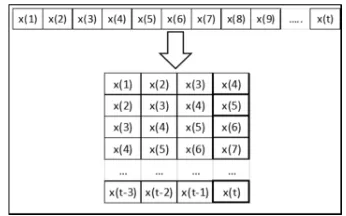
Window size in time series data is process to transform the data to have more attribute in time series manner as showed in Figure 2. Refer to frank [25], if the window size is too small then the attrac-tor of the system is being projected onto a space of insufficient dimension, in which proximity is not a reliable guide to actual proximity on the original attractor. Moreover, a window of too large a size may also produce problems: since all necessary information is populated in a subset of the window,
[image:5.595.319.492.154.262.2]the remaining fields will represent noise or contam-ination.
Figure. 2. Example Of Window Size Time Series Data.
3.4.3 Prediction Algorithm.
According to Witten et al [26], data mining is de-fined as the process of discovering patterns in large volume of data that have meaningful information, where the process must be automatic or semiauto-matic. There are several algorithm that capable in predicting or forecasting time series data, such as Neural Network, Linear Regression, and Support Vector Machine SVM. In this research we used those algorithm to find out which algorithm that have best prediction results. Where the detail in-formation about those algorithm could be showed below.
3.4.3.1 Linear regression model
Linear regression model is a statistical technique that has been applied in various fields. The model is one of the most commonly used methods for fore-casting [27], [28] the regression model describes the mean of the normally distributed dependent
variable as a function of the predictor or
inde-pendent variable [27]:
(2)
where is the value of the response or
depend-ent variable from the its pair, ! and !are the two
unknown parameters, is the value of the
inde-pendent variable from the tth pair, and is a
ran-dom error term. The estimated values of the
regres-sion model are calculated in (3), where ! is
inter-cept and ! is slope parameter:
! ! (3)
3.4.3.2 Neural network model
ap-ISSN: 1992-8645 www.jatit.org E-ISSN: 1817-3195
575 proach has been applied such as in market predic-tions, meteorological and network traffic forecast-ing. Back-Propagation Neural Network BPNN is a Neural Net forecasting model that capable in han-dling nonlinear, where the output value of a multi-layer back propagation neural network is computed as [28]:
∑ுୀଵ ∑ୀଵ (4)
Where , , … . , $, … . $ are the
weights or parameters of the neural network, and
the symbol % is the activation function, where in
this research we uses sigmoid activation function.
3.4.3.3 Support vector machine
Support vector machine SVM is known as the al-gorithm that finds a special kind of linear model with the maximum margin hyperplane, where the maximum margin hyperplane gives the maximum separation between the decision classes. The train-ing examples that are closest to the maximum mar-gin hyperplane are called support vectors. All other training examples are irrelevant for defining the binary class boundaries. For the linearly separable case, a hyperplane separating the binary decision classes in the three-attribute case can be represented as the following equation:
Refer to Kim, [29] in linear separable case, a hy-perplane for separating the binary decision classes can be represented in equation (5):
0 11 22 33. . … (5)
Where is the outcome, is the attribute and
is the weight parameter that determine the hyper-plane. The maximum hyperplane in term support vector could be calculate with equation (6):
! ∑ ' $ ( . ( (6)
Where ! and ' are parameter that determine the
hyperplane, than $ is the class of training (.
The parameter ( is representing a test example and
the vector ( are the support vector. For
imple-menting SVM in nonlinear class we can use equa-tion (7) to find out the maximum hyperplane.
! ∑ ' $ )(. ( (7)
The function )(. ( is defined as kernel in
SVM for generating inner product to construct ma-chine in nonlinear input. The kernel SVM have
several type such as based on polynomial, Gaussian radial function and etc.
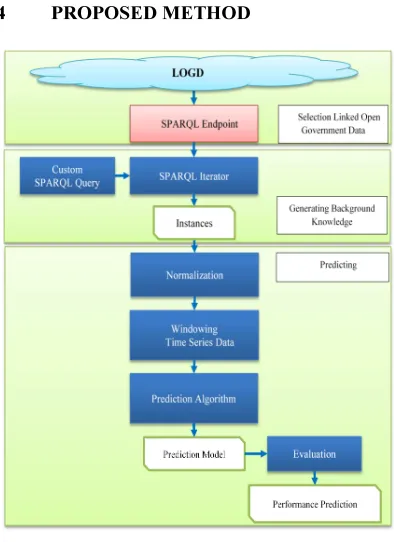
[image:6.595.307.504.173.444.2]4 PROPOSED METHOD
Figure 3. Proposed Method
4.1 Linked Open Government Data
In this phase we selecting which Linked Open Government Data Portal that could be access to provide background knowledge of time series data to predict number of Forest Fire and Burn Area Forest Fire. We find out Tetherless World Constel-lation Linked Open Government Data (TWC LOGD) [3] as a sources portal that have accounta-ble data from open government United States of America http://data.gov, especially from Depart-ment of The Interior.
TWC LOGD has define as LOGD ecosystem as a Linked Data-based system where stakeholders of different sizes and roles find, manage, archive, pub-lish, reuse, integrate, mash-up, and consume open government data in connection with online tools, services and societies as showed in Figure 4.
576 query language. The detail datasets catalogue that relate with forest fire in TWC LOGD could be showed at http://data-gov.tw.rpi.edu/wiki/. We search which RDF (linked data) that contain with time series Forest or Wildland Fire data, than with simple SPARQL query bellow we check its varia-ble. From this portal, we could gather open gov-ernment time series data of Forest Fire from 1960 until 2008.
Figure 4. Workflow Of The TWC LOGD Portal [3]
PREFIX rdfs: http://www.w3.org/2000/01/rdf-schema#
SELECT ?attribute ?g WHERE{
GRAPH http://data-gov.tw.rpi.edu/vocab/Dataset_1187 {
?g rdfs:label ?attribute. }
}
4.2 SPARQL Query and Iterator
In this step we access the SPARQL Endpoint of TWC LOGD with SPARQL Query. There are sev-eral tools that has been built by existing research as Iterator to access The SPARQL Endpoint such as in [14], [17]. RapidMiner Linked Open Data
Exten-sion1 is used as SPARQL Iterator that capable
inter-facing selected endpoint and delivery the query results into Row and Colom instance.
PREFIX data: http://data-gov.tw.rpi.edu/vocab/p/1187/
SELECT ?year ?fires WHERE{
GRAPH <http://data-gov.tw.rpi.edu/vocab/Dataset_1187>
{
?o data:year ?year .
1http://dws.informatik.uni-mannheim.de/en/research/
rapidminer-lod-extension/
?o data:fires ?fires . }
}
PREFIX data: http://data-gov.tw.rpi.edu/vocab/p/1187/
SELECT ?year ?burn_area WHERE{
GRAPH <http://data-gov.tw.rpi.edu/vocab/Dataset_1187> {
?o data:year ?year . ?o data:acres ?burn_area . }
}
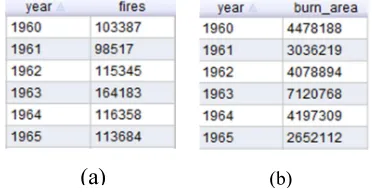
[image:7.595.313.499.417.514.2]The focus in this phase is accessing two type da-ta, the first is Number of Forest Fire data and the second is Burn Area Size data. The detail SPARQL query that used in building Row and Colom data are showed in the upper part. The results of this phase are the instance data that consist with attrib-ute and time series data, where the instant could be showed in Figure 5.
Figure 5. Results of Instance SPARQL Query, (a) time series data of Number Forest Fire, (b) time series data of
Burn Area Size
4.3 Normalization
After we retrieve the results from SPARQL Que-ry instant, we continue with the process of normali-zation. Normalization process in this research using formula (1) with min max normalization.
The normalization process only transform ‘fires’
or ‘burn_area’ attribute, the attribute ‘year’ have not normalized because it used as (id). These pro-cess will giving results minimum and maximum value between [0, 1] in its time series data. The sample of process before and after normalization could be seen in Figure.3 and Figure.4.
ISSN: 1992-8645 www.jatit.org E-ISSN: 1817-3195
[image:8.595.89.290.389.584.2]
577
Figure 6. Results Instances After Normalization, (A) Time Series Data Of Number Forest Fire, (B) Time Series
Data Of Burn Area Size
4.4 Window size of Time Series Data
In this part we transform the number fire and burn area time series data in several window slide to produce more attribute into four types size of window. We make the size of window into 2, 4, 8, and 10 window size. The sample of results in pro-cess window size could be showed in Figure 7.
Figure 7. (a) Window Size n=2 (b) Window Size n=4
4.5 Prediction Algorithm
After the process of windowing time series data that has been extract from LOGD, the instances data is ready to proceed by machine learning. Three machine learning such as Back Propagation Neural Network BPNN, Linear Regression and Support Vector Machine SVM are applied in this phase. The detail method explanation of each algorithm could be showed in fundamental. The experiment is done
with RAPIDMINER2, we setup the parameter of
Linear Regression, BPNN and SVM to perform satisfaction results in predicting Number Forest Fire and Burn Area:
─ Linear Regression :
• M5-prime is set as Feature Selection during
regression,
• Minimum tolerance of eliminate collinear
fea-ture is set as 0.05.
─ Back propagation neural network Parameter :
• The momentum size is set as 0.3,
• Learning rate as 0.001,
• Training cycles size as 1000.
─ Support Vector Machine Parameter :
• The Radial Kernel is set as kernel,
• Kernel Gama is set as 7.0,
• Kernel Cache is set as 200,
• Convergence epsilon 0. 1,
• Maximum iteration is set as 100000.
The proposed method in predicting Number of Forest Fire and Burn Area in this research, can be applied to others prediction time series field re-search that using Linked Open Government Data as Background Knowledge for data sources.
5 RESULTS & DISCUSSION
5.1 Performance Measures
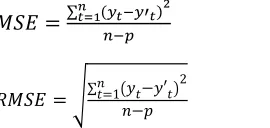
The prediction or forecasting models are evaluat-ed in terms of their ability to forecast the future values. The performance of prediction algorithm in this research using mean square error (MSE) and root mean square error (RMSE) as standard that calculate the number of error rate prediction, where the equation could be showed below:
∑సభ మ
(8)
*+,- .∑1′2
(9)
5.2 Results Experiment
In this research, based on the graphical represen-tation used in context of the RDF data model in LOGD, prediction time series model with machine
2 http://rapidminer.com/products/rapidminer-studio
(a) (b)
(a)
[image:8.595.345.480.608.672.2]578 learning techniques are applicable for predicting Forest Fire. Result experiment in this study has capable in using linked open government data LOGD as background Knowledge in provide time series forest fire data, where the data consist with number forest fire and burn area. LOGD was given an easy ways in accessing accountable open gov-ernment data from its SPARQL Endpoint.
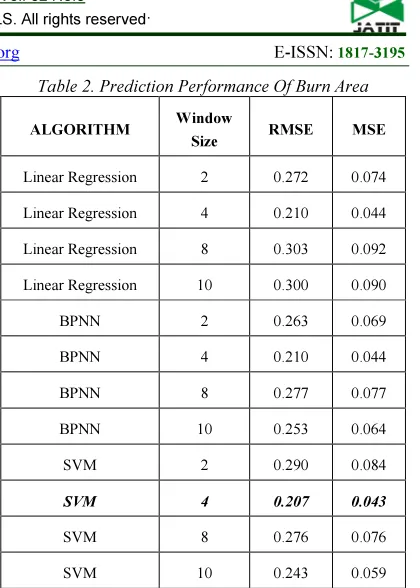
[image:9.595.305.515.89.383.2]The overall prediction performance of number forest fire and burn area size forest fire could be showed in Table 1 and Table 2. The results compar-ison of three prediction model have showed that if Linear Regression algorithm capable to achieve best prediction results of Number Forest Fire using 2 window size with MSE 0.065 and RMSE 0.255. In the other hands, Support Vector Machine SVM capable in resulting best prediction performance in predicting Burn Area of Forest Fires using 4 win-dow size with MSE 0.043 and RMSE 0.207. The performance of Back-Propagation Neural network in this study unable to achieve the best result, but this method is stable in predicting both data that showed its performance always have second posi-tion compare with other algorithm.
Table 1. Predicion Performance Of Number Forest Fire
ALGORITHM
Window
Size
RMSE MSE
Linear Regression 2 0.255 0.065
Linear Regression 4 0.274 0.075
Linear Regression 8 0.797 0.636
Linear Regression 10 0.586 0.343
BPNN 2 0.266 0.071
BPNN 4 0.277 0.077
BPNN 8 0.276 0.076
BPNN 10 0.378 0.143
SVM 2 0.311 0.097
SVM 4 0.316 0.100
SVM 8 0.297 0.088
SVM 10 0.298 0.089
Table 2. Prediction Performance Of Burn Area
ALGORITHM Window
Size
RMSE MSE
Linear Regression 2 0.272 0.074
Linear Regression 4 0.210 0.044
Linear Regression 8 0.303 0.092
Linear Regression 10 0.300 0.090
BPNN 2 0.263 0.069
BPNN 4 0.210 0.044
BPNN 8 0.277 0.077
BPNN 10 0.253 0.064
SVM 2 0.290 0.084
SVM 4 0.207 0.043
SVM 8 0.276 0.076
SVM 10 0.243 0.059
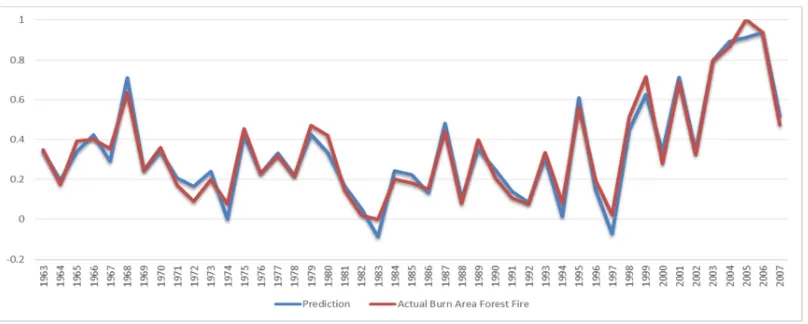
Figure 8 and Figure 9 are showed the gap be-tween Actual data and the prediction results of number forest fire and burn area forest fire predic-tion. In Figure 8 is showed Linear Regression that used two window size to predict number of forest fire. Moreover, in Figure 9 is showed the prediction of Support Vector Machine in predict size of burn area forest fire data, where the gap is not too far with the actual data. The result in this study have showed if Linked Open Government Data has able to be used as Background Knowledge to provide accountable Forest Fire data from the government, where the results in this study also give promising result in predicting Forest Fire.
6 CONCLUSION AND FUTURE WORK
Linked Open Government Data in this study has able to be used as background knowledge in providing time series data especially number of forest fire and size of burn area forest fire. This research has showed promising results in predict both data.
[image:9.595.82.295.441.689.2]ISSN: 1992-8645 www.jatit.org E-ISSN: 1817-3195
579 The method that used in this research, is applica-ble to others time series prediction field research that used Linked Open Government Data as Back-ground Knowledge for data sources. For the future
[image:10.595.99.497.192.350.2]work, optimization technique could be considered to improve the prediction performance, besides that linked open sensor that provide live data will be used for real time prediction.
Figure 8. Number Of Forest Fire Prediction With Linear Regression In Window Size =2
Figure 9. Burn Area Forest Fire Prediction With SVM In Window Size =4
REFERENCES:
[1] P. Cortez and A. Morais, "A data mining approach to predict forest fires using
meteorological data," in Procedings of 13
Portugese Conference on Artificial Intelligence, 2007.
[2] C. Elmas and Y. Sonmez, "A data fusion framework with novel hybrid algorithm for multi-agent Decision Support System for
Forest Fire," Expert Systems with Applications
journal, vol. 38, p. 9225–9236 Contents, 2011.
[3] L. Ding, T. Lebo, J. S. Erickson, D. DiFranzo, G. T. Wil-liams, X. Li, J. Michaelis, A. Graves, J. G. Zheng and Z. S. a. J. F. a. D. L. M. a. J. A. Hendler, "TWC LOGD: A portal for linked open government data ecosystems," Web Semantics: Science, Services and Agents on the World Wide Web, vol. 9, no. 3, pp. 325-333, 2011.
[4] T. Berners-Lee, "Design Issues: Linked Data," W3C, 18 06 2009. [Online]. Available: http://www.w3.org/DesignIssues/LinkedData. html. [Accessed 1 12 2013].
[5] L. Ding, D. DiFranzo, A. Graves,
[image:10.595.98.502.388.550.2]580 J. Hendler, "Data-gov Wiki: Towards Linking
Government Data.," in AAAI Spring
Symposium: Linked Data Meets Artificial Intelligence, 2010.
[6] H. Paulheim, "Exploiting Linked Open Data as Background Knowledge in Data Mining," 2013.
[7] L. Iliadis, M. Vangeloudh and S. Spartalis,
"An intelligent system employing an
enhanced fuzzy c-means clustering model: Application in the case of forest fires.," Computers and Electronics in Agriculture, vol. 70, no. 2, pp. 276-284, 2010.
[8] Y. P. Yu, R. Omar, R. D. Harrison, M. K. Sammathuria and A. R. Nik, " Pattern
clustering of forest fires based on
meteorological variables and its classification
using hybrid data mining methods," Journal
of Computational Biology and Bioinformatics Research, vol. vol. 3, pp. 47-52, 2011. [9] Y. Safi and A. Bouroumi, "A neural network
approach for predicting forest fires.," in IEEE
Multimedia Computing and System, 2010.
[10] G. E. Sakr, I. H. Elhajj and G. Mitri, "Efficient forest fire occurrence prediction for developing countries using two weather
parameters," Engineering Applications of
Artificial Intelligence, vol. vol 24, no. 5, p. 888–894, 2011.
[11] I. S. Sitanggang and M. H. Ismail, "Hotspot occurrences classification using decision tree method: Case study in the Rokan Hilir, Riau
Province, Indonesia," in International
Conference in ICT and Knowladge Engineering IEEE , Bangkok, 2010.
[12] B. Berendt, A. Hotho and G. Stumme,
"Towards semantic web mining," in in
Proceedings of the 1st International Semantic Web Conference, ISWC2002, 2002.
[13] E. L. Mencia, S. Holthausen, A. Schulz and F. Janssen, "Using Data Mining on Linked Open
Data for Analyzing E-Procurement
Information - A Machine Learning approach to the Linked Data Mining Challenge 2013," in CEUR Workshop Proceedings, 2013. [14] H. Paulheim and J. mkranz, "Unsupervised
Generation of Data Mining Features from
Linked Open Data," in Proceedings of the
2Nd International Conference on Web Intelligence, Mining and Semantics - ACM, New York, 2012.
[15] N. J. Mathieud'Aquin, "Interpreting data mining results with linked data for learning
analytics: motivation, case study and
directions," in Proceedings of the Third
International Conference on Learning Analytics and Knowledge - ACM, 2013. [16] N. Fanizzi, C. dAmato and F. Esposito,
"Mining Linked Open Data through Semi-supervised Learning Methods Based on
Self-Training," in IEEE Sixth International
Conference on Semantic Computing (ICSC), 2012.
[17] C. Tsoukalas, D. Dervos, J. Martinez-Gil and J. F. Aldana-Montes, "TheMa: An API for
Mining Linked Datasets," in 16th Panhellenic
Conference on Informatics (PCI), 2012. [18] K. Satoh, W. Song and K. T. Yang, "A Study
of Forest Fire Danger Prediction," in 15th
International Workshop on Database and Expert Systems Applications IEEE, 2004. [19] G. E. Sakr, I. Elhaj and G. Mitri, "Artificial
intelligence for forest fire prediction," in IEEE in Advanced Intelligent Mechatronics, 2010.
[20] W. Groot, R. Field, M. Brady, O. Roswintiarti and M. Mohamad, "Development of Indonesia and Malaysia Fire Danger Rating System," Mitigation and Adaptation Strategies for Global Change, Springer Link, vol. 12, no. 1, pp. 165-180, 2007.
[21] L. Ding, V. Peristeras and M. Hausenblas,
"Linked Open Government Data," IEEE
Intelligent Systems, vol. 27, no. 3, pp. 11-15, 2012.
[22] E. Prud’Hommeaux and A. Seaborne,
"SPARQL query language for RDF," W3C
recommendation, vol. 15, 2008.
[23] E. Sirin and B. Parsia, "SPARQL-DL:
SPARQL Query for OWL-DL," in
Proceedings of the OWLED 2007 Workshop on OWL: Experiences and Directions, Insbruck, Austria, 2007.
[24] J. Han, M. Kamber and J. Pei, DATA MINING: CONCEPTS AND TECHNIQUES 3RD EDITION, Morgan Kaufman, 2011. [25] R. J. Frank, N. N Davey and S. P. Hunt,
"Input window size and neural network
predictors," in IEEE-INNS-ENNS
International Joint Conference on Neural Networks IJCNN, 2000.
ISSN: 1992-8645 www.jatit.org E-ISSN: 1817-3195
581 [27] C. T. Le, Introductory Biostatistics, New
Jersy: John Wiley and Son, 2003.
[28] Purwanto, C. Eswaran and R. Logeswaran, "A dual hybrid forecasting model for support of decision making in healthcare management," Advances in Engineering Software, vol. 53, no. 0, pp. 23 - 32, 2012.
[29] K.-j. Kim, "Financial time series forecasting
using support vector machines,"
![Figure. 1. Concept of linked open government data [21].](https://thumb-us.123doks.com/thumbv2/123dok_us/8913255.960419/4.595.88.514.86.306/figure-concept-linked-open-government-data.webp)