Full Length Research Article
CONVULSION IN CHILDREN WITH DEVELOPMENTAL DISABILITIES: A HOSPITAL-BASED STUDY
*Dr. Anwar T. Elgasseir
Department of Paediatric, Misurata Teaching Hospital, Faculty of Medicine, Misurata University, Misurata, Libya
ARTICLE INFO ABSTRACT
Objectives: To describe the epidemiological risk factors and to determine thelikely underlying causes associated with developmentally disabled children with convulsion.
Patients and Methods: Descriptive study (Longitudinal hospital based study) where children with convulsion in developmental disabilities disorder were enrolled in this study. All children admitted to pediatric department or attending the outpatient clinic in Misurata Teaching hospital >2months -15 years of age in the period between January 2012-December 2012 are included in the study. Febrile convulsions and convulsions in developmentally normal children were excluded from the study. The study sample was 55 children with age ranging from three month to 15 years. Prospectively collected data on cases of convulsion with developmental disabilities include; history, clinical examination, investigations, and treatment.
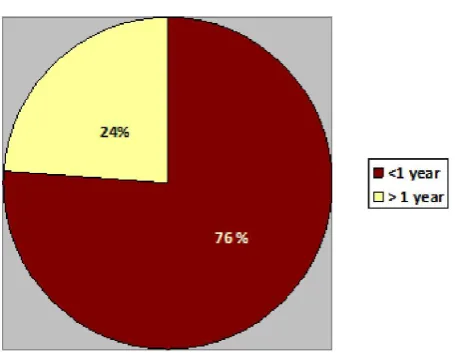
Results: The commonest underling cause of developmental disabilities were neonatal causes, 29 patients (53%) including perinatal asphyxia, and prematurity. The neurodegenerative diseases (13%), congenital anomalies (9%), CNS infection (7%). Regarding categorization of patient according to age, we had 26 patient (47%) <36 month, between 36-72 month 13 patient (24%), and older than 72 month 16 patients (29%). The mean age of patients was 54.4 month (approximately 4.5 year) with standard deviation 46.4. 42 patients (76%) their onset of convulsion was started below one year of age and12 patients (22%) develop status epileptics at hospital.
Conclusion: Among all convulsion-associated variables, the underlying cause (etiology) plus the onset of convulsion, when convulsion begins at an early age, are seems the best predictor of developmental disabilities.
Copyright © 2015 Dr. Anwar T. Elgasseir.This is an open access article distributed under the Creative Commons Attribution License, which permits unrestricted use, distribution, and reproduction in any medium, provided the original work is properly cited.
INTRODUCTION
The tendency of the young brain to develop seizures is much greater than that of the adult brain(Hauser and Kurland, 1975; Hauser, 1994). There are many more provoked seizures in neonates and infants than in adults. Their causes may involve trauma, hypoxic-ischemic encephalopathy, hypertension, metabolic abnormalities (amino acid disturbances, hypocalcemia, hypoglycemia, and electrolyte imbalance), infections, pyridoxine dependency, and toxins (Scher, 1996). Similarly, a genetic predisposition to convulsion may be expressed in infancy. Genetic factors may involve congenital cerebral malformations and familial seizures such as neurocutaneous syndromes, genetic syndromes, and benign familial epilepsy(Scher, 1996).
*Corresponding author: Dr. Anwar T. Elgasseir
Department of Paediatric, Misurata Teaching Hospital, Faculty of Medicine, Misurata University, Misurata, Libya
Additionally, several intractable seizure syndromes occur in early infancy or childhood and not later on (Shields, 1994). Many of previously mentioned conditions lead to Developmental Disabilities (DD) and the prevalence of convulsion in children with DD is significantly higher, ranging from 30% to 50% (Sunder, 1997). Moreover, seizures in developmentally-disabled children are difficult to control (Alvarez et al., 1998; Airaksinen et al., 2000), with increasing seizure incidence directly proportional to the severity of the developmental disability (Airaksinen et al., 2000). The primarily problems associated with disabled children are number of relevant issues, including the degree and location of brain lesion, the nature of the underlying disease, and the difficulty in treating convulsion. DD is a group of children who share impairments and mandate a common approach to diagnostic evaluation, possible medical requirements, therapeutic needs, interventions, and individual or family challenges to participation and integration(Shevell and Sherr, 2006). The diagnosis of DD is often initially formulated based
ISSN: 2230-9926
International Journal of Development Research
Vol. 5, Issue, 05, pp. 4446-4450, May,2015
DEVELOPMENT RESEARCH
Article History:
Received 28th February, 2015
Received in revised form 04th March, 2015
Accepted 13th April, 2015
Published online 31st May, 2015
Key words:
Developmental Disabilities; Convulsion;
on clinical judgment rather than on formal standardized assessments (Shevell and Sherr, 2006). Such judgment should be based on experience with individuals dealing with these patients. In our study we try to identify the epidemiological risk factors associated with developmentally disabled children with convulsion.
MATERIALS AND METHODS
Descriptive study (Longitudinal hospital based study) where children with convulsion in DD disorder were enrolled in this study. All children admitted to pediatric department or attending the outpatient clinic in Misurata Teaching hospital >2months-15 years of age in the period between January 2012-December 2012 are included in the study. Febrile convulsions and convulsions in developmentally normal children were excluded from the study. The study sample was 55 children with age ranging from three month to 15 years. Prospectively collected data on cases of convulsion with DD include; history, clinical examination, investigations, and treatment (Details of relevant clinical information, investigation, and treatment are recorded on a data collecting form). We adapt the following classification:
International League Against Epilepsy (ILAE) for classification of seizures and of epilepsy syndromes,
Classification of seizures in infants and ILAE classification core group (Nordli et al, 1997; Engel, 2006).
In our study the following definitions were adapted:
Developmental disabilities are defined as condition with functional limitation to one or more activities include self-care, understanding and use of language, learning, mobility, self-direction, and capacity for independent living (Hauser and Hesdorffer, 1990). The term mental retardation ‘‘a disability characterized by significant limitation both in intellectual functioning and in adaptive behavior as expressed in conceptual, social, and practical adaptive skills.'' (American Association on Mental Retardation, 2002). Cerebral palsy describes a group of disorders of the development of movement and posture, causing activity limitations, that are attributed to non-progressive disturbances that occurred in the developing fetal or infant brain. The motor disorders of cerebral palsy are often accompanied by disturbances of sensation, cognition, communication perception and/or by a seizure disorder (Paneth et al, 2005). Epilepsy is a condition characterized by recurrent (two or more) unprovoked seizures separated by more than 24 hours. Convulsion is the clinical manifestation of an abnormal and excessive activity of a set of cortical neurons. Epilepsy syndrome is a constellation of a particular type of seizure (or seizures), EEG features, and other clinical phenomenon often associated with a particular age of onset.
RESULTS
Based on the results of this study, our study sample represents 4.6% from the total hospital admission (1182). Male to female ratio was 1.1: 1. The commonest underling causes of DD were neonatal causes, 29 patients (53%) including perinatal
[image:2.595.319.545.144.203.2]asphyxia, and prematurity. The neurodegenerative diseases seen in7 patient (13%), congenital anomalies (9%), CNS infection (7%), and 10 patient (18%) with other causes (including metabolic, genetic and undiagnosed cases). (Table1).
Table 1. Causes of *DD
% No.
Causes of DD
53 29
**Neonatal causes
13 7
Neurodegenerative diseases
9 5
Congenital Anomalies
7 4
CNS infection
18 10
Others
*Developmental Disabilities **Asphyxia, Prematurity± Sepsis
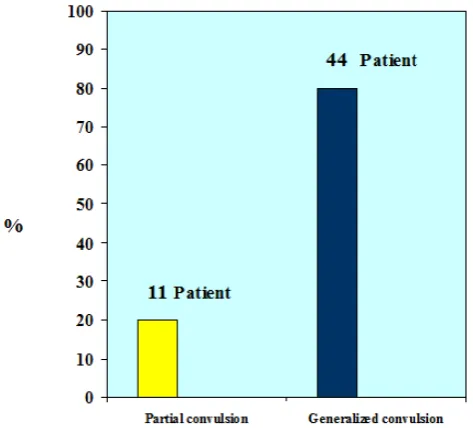
[image:2.595.315.552.296.510.2]The generalized seizure was the commonest type of convulsion in our study group where 44 patient (80%) present with this type (Figure 1), while the tonic-clonic was the commonest in generalized group (62%).
Figure 1. Classification of Convulsion
Regarding categorization of patient according to age, we had 26 patient (47%) <36 month, between 36-72 month 13 patient (24%), and older than 72 month 16 patients (29%). The mean age of patients was 54.4 month (approximately 4.5 year) with standard deviation 46.4(Table 2).
Table 2. Age of patients
Age No. % Mean Age in month *SD
<36 month 26 47 14.3 9.3
36-72 month 13 24 56.2 10.2
>72 month 16 29 118.1 20.1
Total=55 patients 54.4 46.4
*Standard Deviation
[image:2.595.310.554.629.680.2]Figure 2. Onset of Convulsion in Children with *DD *Developmental Disabilities
DISCUSSION
Developmental disabilities are a group of chronic clinically distinct disorders that all share a documented disturbance, in developmental progress in one or more developmental domains compared with established norms (Kinsbourne, 2001). The convulsion considered is important associated complication with these conditions where the accurate diagnosis and appropriate evaluation is the most important challenge in my opinion. Neonatal causes is an important determinant of infant neurological outcome (Sridhar et al, 2001). In our study, neonatal causes were the most frequently observed cases accounting for 53% of DD. It was also reported in other studies that seizures are common squeal to neonatal causes in particular to sever perinatal asphyxia (de souza and richards, 1978; de Menezes and Rho, 2002).In another study it was found that perinatal factors were the most common cause of epilepsy (Kwong et al., 2001; Miller, 2002; Gunn and Gunn, 1997). The perinatal asphyxia causes a distinctive combination of cerebral palsy, mental retardation, and convulsion.
Findings from studies revealed that when perinatal asphyxia in full-term newborns caused later convulsion, it also caused cerebral palsy (Susser et al., 1985; Nelson and Ellenberg, 1981). In the absence of cerebral palsy, no relationship was found between various measures of perinatal asphyxia and the occurrence of epilepsy in later childhood (Nelson and Ellenberg, 1981).Among 87 newborns who had Apgar scores of 0-3 at 10 minutes and who did not develop cerebral palsy, none developed epilepsy during the 7-year followup period (Beran and Flanagan, 1987). The other important cause in neonatal period is the prematurity and the prematurity was the relevant finding in the history of 13% of the studied cases. The problem in our hospital, the majority of preterm baby develop infection, so the DD to the premature babies difficult to be attributed only to the prematurity. When the etiology is identified, the outcome is usually clear. For newborns with extremely low birth weight, the risk of various degree of DD is high and increases with increasing degrees of prematurity, with declining birth weight, with shorter gestation, and with more severe degrees of intraventricular hemorrhage when it is present (Fedrizzi et al., 1996; Mikkola et al., 2005; Doyle and
Casalaz, 2001). Among all related variables, (e.g. etiology of DD, seizure type, seizure control, age at onset of convulsion, and comorbidities, including cognitive impairment), the etiology of the DD has the most pervasive effect on outcome. Studies indicate that associated brain disease, not seizures, is the most important contributor to the severity among children with DD (Mandelbaum and Burack, 1997). Chromosomal disorders illustrate how a particular etiology can produce both seizures and DD independently. Among patients with Down syndrome the chance of the patients with this disorder will develop DD, independent of convulsion. In addition, hypocalcemia which seen frequently in our hospital in neonatal unit, can cause dramatic and numerous seizures, but it does not increase the risk of DD unless there are additional complications. On the other hand, hypoglycemia that causes seizures increase the risk of DD compared to hypoglycemia that does not cause seizures (Fluge, 1975).
CNS infection was an etiological factor for seizures in 7% of cases in our study group. This reflects a low incidence of infection among the studied group while other studies have reported a higher incidence (Scrapa, 1982). They found that CNS infection was an etiological factor in 10% of their cases. Some reported an incidence of seizures of 2-8% in a prospective study of 50 infants who recovered from H. influenza meningitis (Sell, 1983). Our immunization programme may be the reason in decrease the cases of meningitis (H. influenza meningitis) in our community that probably attribute the lower patients in our study of DD secondary to meningitis. The most fundamental elements of neurologic diagnosis are anatomic and etiologic. Where is the lesion, and what caused it? Thus, it is not surprising that the etiology of a child's epilepsy predicts cognitive functioning best. Unfortunately, in some of children in our study with convulsion and DD the accurate etiology cannot be identified. As a result, the diagnosis that can be made is usually descriptive, in terms of the child's seizure type(s) or type of epilepsy or epileptic syndrome. In our study generalized convulsion were seen 80% of the children and the tonic-clonic was the commonest in this group (62%).
(Figure 2) and about 47% of our study group are below 3 years of age (Table 2). Status epileptics were seen in 22% of all patients with DD. Investigators have found relationships between the age of onset of seizures and DD. Seizure-related variables can interact simultaneously with etiology and the location of cerebral lesions to contribute to the child's DD. For example, in tuberous sclerosis the age of onset of seizures correlates with DD. Whereas most people with tuberous sclerosis are mentally retarded, virtually all mentally retarded patients with tuberous sclerosis have convulsion, too (Jambaque et al., 1991). Dikman and colleagues evaluated measures that were categorized on the basis of age of onset of seizure (Dikmen et al., 1977). When these investigators compared the patient with this risk factor, the cognitive measures were worse in this risk group who had earliest onset of convulsion especially if the patient had longest duration, and increase frequency of seizures. Similar findings have been reported by others (Oyegbile et al., 2004).
Seizure control usually results in improved cognitive function (Czochanska et al., 1994; Gilliam et al., 1997; Gordon et al., 1996; Marcus, 1993). In our study we can't study precisely the seizure frequency because of poor recall of the families to the seizure frequency. Seizure Frequency is another important factor in determining the degree of DD. Farwell et al found that among children whose seizures were controlled, the DD is better than the group with continuing seizures (Farwell et al., 1985). The diagnosis of being developmentally disabled has important consequences because it may qualify the child for important educational and rehabilitative benefits. Although disabled children should have the access to educational and rehabilitative services. Disability determinations are not categorical by diagnosis but rather depend on the child's functional ability. In my opinion, seizures may or may not be handicapping depending on their frequency, severity, and time of occurrence.
Conclusion and Recommendation
Studies of DD are difficult because of the many issues that are involved and various investigators have different theoretical orientations and use different technical approaches. The underlying causes have far-reaching impact on global achievements and adjustment of children who are affected by the condition. Among all convulsion-associated variables, the underlying cause (etiology) plus the onset of convulsion, when convulsion begins at an early age, are seems the best predictor of DD. In the management of any child with a DD, the guiding principle should always be to uncover the primary etiology, which will determine available treatment options, and prognosis. Improving recognition andmanagement of neonatal causes by appropriate perinatal and neonatal care programs can reduce cases of DD. The occurrence of seizures in a child with DD can be an important clue to the presence of an inherited metabolic disease or other genetically determined disorder of the nervous system. As the actual cause may be occult, a systemic approach is needed in the evaluation of these children. In my opinion convulsion in patients with DD should be controlled effectively because uncontrolled seizures in DD patients will persists and can cause more dramatic and pervasive disruption of the acquisition social and cognitive
skills of the affected child and can increase the psychological impact to the family.
REFERENCES
Airaksinen, EM., Natilainen, R., Mononen, T. et al. 2000. A populationbased study on epilepsy inmentally retarded children. Epilepsia; 41:1214-1220.
Alvarez, N., Besag, F. and Iivanainen, M. 1998. Use of antiepileptic drugs in the treatment of epilepsy in people with intellectual disability. J Intellect Disabil Res.; 42(Suppl 1):1-15.
American Association on Mental Retardation (AAMR), 2002. Mental retardation: definition, classification and systems of support. Washington, DC: American Association on Mental Retardation.
Beran, RG. and Flanagan, PJ. 1987. Psychosocial sequelae of epilepsy: the role of associated cerebral pathology.
Epilepsia; 28(2):107-110.
Czochanska, J., Langner-Tyszka, B., Losiowski, Z. and Schmidt-Sidor, B. 1994. Children who develop epilepsy in the first year of life: a prospective study. Dev Med Child Neurol; 36(4):345-350.
De Menezes, MA. and Rho, JM. 2002. Clinical and electrographic features of epileptic spasms persisting beyond the second year of life Epilepsia. 2002; 43(6): 623-30. Erratum in: Epilepsia; 43(9): 1111-2.
De souza, SJW. and Richards, B. 1978. Neurological sequelae in new-born babies after perinatal asphyxia. Arch Dis Child; 53: 564.
Dikmen, S., Matthews, CG. and Harley, JP. 1977. Effect of early versus late onset of major motor epilepsy on cognitive-intellectual performance: further considerations.
Epilepsia; 18(1):31-36.
Doyle, LW. and Casalaz, D. 2001. Victorian Infant Collaborative Study G. Outcome at 14 years of extremely low birthweight infants: a regional study. Arch Dis Child Fetal Neonatal Ed; 85(3):F159-F164.
Engel, J. Jr. 2006. Report of the ILAE classification core group. Epilepsia; 47(9):1558-1568.
Farwell, JR., Dodrill, CB. and Batzel, LW. 1985. Neuropsychological abilities of children with epilepsy. Epilepsia; 26(5):395-400.
Fedrizzi, E., Inverno, M., Bruzzone, MG. et al. 1996. MRI features of cerebral lesions and cognitive functions in preterm spastic diplegic children. Pediatric Neurol; 15(3):207-212.
Fluge, G. 1975. Neurological findings at follow-up in neonatal hypoglycaemia. Acta Paediatr Scand; 64(4):629-634. Gilliam F, Wyllie E, Kashden J, et al. 1997. Epilepsy surgery
outcome: comprehensive assessment in children.
Neurology; 48(5):1368-1374.
Giordani, B., Sackellares, JC., Miller, S. et al. 1983. Improvement in neuropsychological performance in patients with refractory seizures after intensive diagnostic and therapeutic intervention. Neurology; 33(4):489-493. Gordon, K., Bawden, H., Camfield, P. et al. 1996. Valproic
Gunn, AJ. and Gunn, TR. 1997. Changes in risk factors for hypoxic-ischaemic seizures in term infants. Aust N Z J Obstet Gynaecol; 37(1): 36-9.
Hauser, WA. and Kurland, LT. 1975. The epidemiology of epilepsy in Rochester, Minnesota, 1935-1967. Epilepsia; 16:1-66
Hauser, W. and Hesdorffer, D. 1990. Epilepsy frequency, causes and consequences. New York: Demos.
Hauser, W. 1994. The prevalence and incidence of convulsive disorders in children. Epilepsia; 35:1-6.
Jambaque, I., Cusmai, R., Curatolo, P. et al. 1991. Neuropsychological aspects of tuberous sclerosis in relation to epilepsy and MRI findings. Dev Med Child Neurol; 33(8):698-705.
Kinsbourne, M. 2001. Disorders of mental development. In: Menkes J, Sarnat B, Maria B, editors. Child neurology. 6th edition. Baltimore (MD): Lippincott Williams & Wilkins. p. 1155-211.
Kramer, U., Phatal, A., Neufeld, MY. et al. 1997. Outcome of seizures in the first year of life. Eur J Paediatr Neurol.; 1:165-71.
Kwong, KL., Chak, WK. and Wong, SN. 2001. Epidemiology of childhood epilepsy in a cohort of 309 Chinese children Pediatr Neurol; 24(4): 276-82.
Mandelbaum, DE. and Burack, GD. 1997. The effect of seizure type and medication on cognitive and behavioral functioning in children with idiopathic epilepsy. Dev Med Child Neurol; 39(11):731-735.
Marcus, JC. 1993. Control of epilepsy in a mentally retarded population: lack of correlation with IQ, neurological status, and electroencephalogram. Am J Ment Retard; 98 Suppl:47-51.
Mikkola, K., Ritari, N., Tommiska, V. et al. 2005. Neurodevelopmental outcome at 5 years of age of a national cohort of extremely low birth weight infants who were born in 1996-1997. Pediatrics; 116(6):1391-1400. Miller, SP., Weiss, J. and Barnwell, A. 2002.
Seizure-associated brain injury in term newborns with perinatal asphyxia. Neurology; 58(4): 542-8.
Nelson, KB. and Ellenberg, JH. 1981. An epidemiological approach to the problems of cerebral palsy. In: Maekawa K, Yamaguchi K, eds. International Congress Series No. 579: Child Neurology. Ámsterdam: Excerpta Medica, 341-350.
Nordli, DR. Jr, Bazil, CW., Scheuer, ML. and Pedley, TA. 1997. Recognition and classification of seizures in infants.
Epilepsia; 38(5):553-560.
Oyegbile, TO., Dow, C., Jones, J. et al. 2004. The nature and course of neuropsychological morbidity in chronic temporal lobe epilepsy. Neurology; 62(10):1736-1742. Paneth, N., Damiano, D., Rosenbau, P. et al. 2005. Proposed
definition and classification of cerebral palsy, April 2005.
Dev Med Child Neurol; 47:571-6.
Scher, M. 1996. Neonatal seizures. In: Wyllie E, ed. The Treatment of Epilepsy: Principles and Practice. Baltimore: Williams & Wilkins, 600-621.
Scrapa arid Carassini - Partial epilepsy in childhood Clinical and E.E.G. study of 261 cases. Epilepsia 1982; 23: 333. Sell, SHW. 1983. Long-term sequelae of bacterial meningitis
in children. Pediatr. Inf Dis; 2: 90.
Shevell, MR. and Sherr, E. 2006. Global developmental delay and mental retardation. In: Swaiman K, Ashwal S, Ferreira D, editors. Pediatric neurology: principles and practice. 4th edition. Philadelphia: Mosby Elsevier. p. 799-820.
Shields, WD. 1994. Investigational antiepileptic drugs for the treatment of childhood seizure disorders: a review of efficacy and safety. Epilepsia; 35 Suppl 2:S24-S29. Sridhar, K., Kumar, P. and Katariya, S. 2001. Postasphyxial
encephalopathy in preterm neonates. Indian J Pediatr; 68(12): 1121-5.
Sunder, TR. 1997. Meeting the challenge of epilepsy in persons with multiple handicaps. J Child Neurol.; 12(Suppl 1):S38-S43.
Susser, M., Hauser, W., Kiely, J. et al. 1985. Quantitative estimates of prenatal and perinatal risk factors for perinatal mortality, cerebral palsy, mental retardation, and epilepsy. NIH Publ. No. 85-1149. Bethesda, MD: National Institutes of Health.