IJPSR (2016), Vol. 7, Issue 11 (Research Article)
Received on 12 June, 2016; received in revised form, 29 August, 2016; accepted, 03 October, 2016; published 01 November, 2016
IDENTIFICATION AND CHARACTERIZATION OF E, Z ISOMERS FOR ACID DEGRADENTS OF SECONDARY ALCOHOL IN API BY HS/GC/ EI-MS
Kaviraj Yarbagi *1, 2, Nagaraju Rajana 1, J. Moses Babu1, B. Venkateswara Rao 2 and Paul Douglas 2
Analytical Research 1, Custom Pharmaceutical Services, Dr. Reddy’s Laboratories Ltd., Bollaram road,
Miyapur, Hyderabad-500049, Andhra Pradesh, India.
Department of Engineering Chemistry 2, Andhra University, Visakhapatnam-530003, Andhra Pradesh,
India.
ABSTRACT: 2º alcohols under acidic conditions (such as sulphuric acid) undergo degradation into E & Z isomers. There are many drug substances with sulphate as salt, and sulphuric acid is used for the preparation of sulphate of drug substance. Also, sulphuric acid is widely used in synthetic process for many drug substances. 2º alcohols are widely used as process solvents and as crystallization solvents. Loss of solvents is very high, when 2º alcohols used as crystallization solvent and drug substance will have high crystalline stability. Flash points of 2º alcohols are comparatively higher than other solvents such as methanol, ethanol, benzene, dichloromethane and many other volatile solvents resulting into better fire safety for reactions and also lower exposure limits. Residual odour while drying of drug substance is minimum. 2º alcohols possess very low practical handling difficulties. For all these reasons, 2º alcohols are the preferred choice as process solvents and crystallization solvent. However and unfortunately when these 2º alcohols and sulphuric acids used together in a reaction, 2º alcohols undergo degradation into their E & Z isomers, the impact of these E & Z isomers on drug substance are unknown, hence, they need to be evaluated.
INTRODUCTION: Residual solvents in
pharmaceuticals are defined as organic volatile chemicals that are used or produced in the manufacture of drug substances or in the preparation of drug products. The solvents are not completely removed by practical manufacturing techniques. Appropriate selection of the solvent for the synthesis of drug substance may enhance the yield, or determine characteristics such as crystal form, purity, and solubility.
QUICK RESPONSE CODE
DOI:
10.13040/IJPSR.0975-8232.7(11).4637-43
Article can be accessed online on: www.ijpsr.com
DOI link: http://dx.doi.org/10.13040/IJPSR.0975-8232.7 (11).4637-43
Therefore, the solvent may sometimes be a critical
parameter in the synthetic process 8. Residual
solvents are typically determined using
chromatographic techniques such as gas
chromatography 9.
The determination of residual solvents in drug substances or drug products is known to be one of the most difficult and demanding analytical tasks in the pharmaceutical industry. Furthermore, the determination of polar residual solvents in pharmaceutical preparations continues to present an
analytical challenge mainly because these
compounds are quite difficult to remove from water or polar solvents. Presently in the pharmaceutical industries, special importance is given for residual solvents testing.
Keywords:
Electron impact ionization mass spectrometry, Secondary alcohols,
E, Z isomers, API (Active pharmaceutical ingredient).
Correspondence to Author: Kaviraj Yarbagi
Analytical Research,
Custom Pharmaceutical Services, Dr. Reddy’s Laboratories Ltd., Bollaram road, Miyapur, Hyderabad-500049, Andhra Pradesh, India.
residual solvents can create odor problem and color changes in the finished products.
Many synthetic schemes involves 2° alcohols 1 for
recrystallization and as process solvents, in the
same processsulphuric acid used for preparation of
sulphate salts, during this process solvents converts into some degradents. In this present work the Secondary alcohol like propanol, butanol, 2-pentanol and 2-heptanol were degraded into
sulphate salt, unknown peaks identified and confirmed as degradents peaks of 2-butanol. The
degraded products 5 were identified by using
HS/GC, EI–MS 3 with better resolution and
structures were confirmed by NIST software 4, 6, 7.
[image:2.612.82.530.334.504.2]It is important to identify and justify the presence of unknown impurities eluting in GC-HS method of analysis with s/n more than 10.
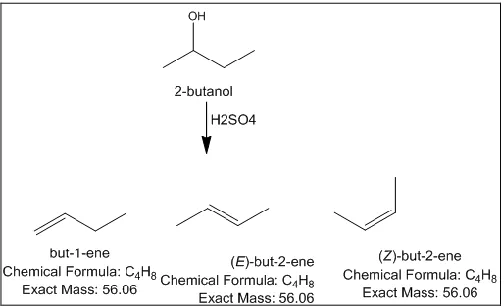
FIG.1: SCHEMATIC REPRESENTATION OF 1-ENE, E ISOMER AND Z ISOMER FORMATION.
Gas Chromatography-Head space (GC-HS) analysis:
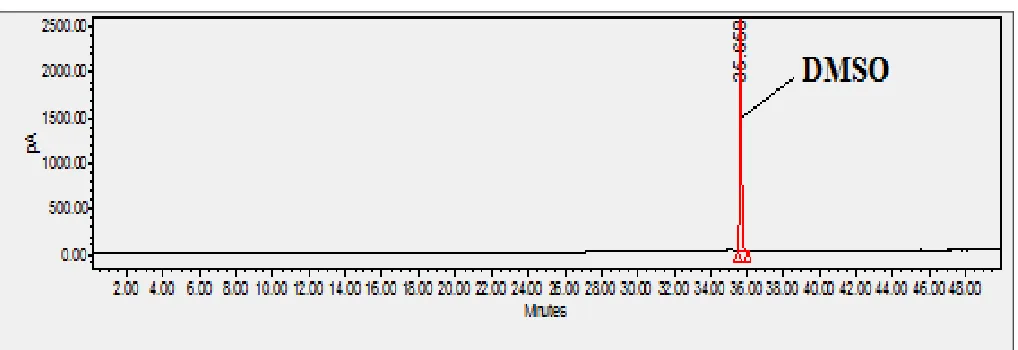
[image:2.612.54.563.546.721.2]FIG. 3: CHROMATOGRAM OF 2-BUTANOL SOLVENT IN DMSO DILUENT BY GC-HS
FIG. 4: CHROMATOGRAM SHOWING DEGREDENTS OF 2-BUTANOL IN PRESENCE OF DMSO AND SULPHURIC ACID BY GC-HS
Chemicals and Reagents: Analytical grade
2-propanol, 2-butanol, 2-pentanol, 2-heptanol,
sulphuric acid and dimethyl sulphoxide was purchased from Merck Mumbai, India, the API’s for research, were obtained from Dr. Reddy’s laboratories Ltd, Hyderabad India.
Instrumentation, Mass & Chromatographic condition:
Gas chromatography-head space -electron imact ionization: HS/GC-EI methods were developed and optimized to identify the 2º alcohol degredents, GC/EI- MS data of alkene and E, Z isomers were
recorded by using Agilent 7890A Gas
chromatograph equipped with 5975C Mass selective detector and G1888 network headspace sampler in dimethyl sulfoxide diluent and API sample concentration is 40 mg/mL. CP-Sil 5 CB Column with 325°C maximum temperature, 60 m x 320 µm x 5µm. The column temperature were
40°C for 0.0 min then 4°C/min to 80°C for 4 min then 1°C/min to 90°C for 4 min then 50°C/min to 250°C for 10 min. Injector temperature was 200°C Auxiliary temperature was 240°C, mass condition were optimized to 230°C as EI source temperature, 150°C as Quadrupole temperature, EMV mode was Gain factor (1), mass range were 25-700 a.m.u and the HS conditions were 10 psi vial pressure, 95°C vial temperature, 100°C loop temperature, 120°C
transfer line temperature, 0.15 min loop
equilibration time, Agitation mode was high, injection time was 1.0 min.
Preparation of Standard solution: About 25 mg of butanol were taken in a 50 mL volumetric flask containing 10 mL of DMSO and added 1.0
equivalence of H2SO4 and made up to the mark
[image:3.612.54.563.55.431.2]FIG. 5: TOTAL ION CHROMATOGRAM OF 2-BUTANOL DEGREDENTS ELUTING AT RT 6.9, 7.4 AND 7.9 MINUTES
FIG. 6: MASS SPECTRUM OF 2-BUTANOL DEGREDENT BUT-1-ENE ELUTING AT RT 6.9 MINUTE.
[image:4.612.48.563.26.743.2]FIG. 7: MASS SPECTRUM OF 2-BUTANOL DEGREDENT (E) BUT-2-ENE ELUTING AT RT 7.4 MINUTE.
FIG. 9: MASS SPECTRUM OF 2-BUTANOL DEGREDENT BUTAN-2-ONE ELUTING AT RT 14.5 MINUTE.
FIG. 10: MASS SPECTRUM OF 2-BUTANOL ELUTING AT RT 15.1 MINUTE.
Preparation of API Test solution: 25 mg of API was taken in 10.0 mL HS vial containing 3 ml of diluent and Added 2mL of diluent. This solution
was taken into HS vial for HS/GC-MS analysis. Because of absence of residual secondary alcohol in API-I and API-II degredent peaks not observed.
FIG. 11: ACTIVE PHARMACEUTICAL INGREDIENT TIC SHOWING ABSENCE OF DEGREDENT PEAKS
Preparation of Spiked secondary alcohols: 25 mg of API was taken in 10.0 mL HS vial containing 3mL of diluent, 2.5 mg of secondary alcohol with 1.0 equivalence of sulphuric acid and
[image:5.612.56.560.474.655.2]FIG. 12: TIC SHOWING DEGREDENTS OF SECONDARY ALCOHOL
RESULTS AND DISCUSSION:
Observation in 2-Butanol standard solution: In GC-MS TIC three major peaks of 2- butanol in presence of sulphuric acid were but-1-ene, (E)-but-2-ene and (Z)-but-(E)-but-2-ene, based on the percent ratio, boiling point and elution order, the two were confirmed as (E),(Z) isomers.
Observation in 2-pentanol standard solution: In GC-MS TIC three major peaks of 2- pentanol in presence of sulphuric acid were pent-1-ene, (E)-pent-2-ene and (Z)-(E)-pent-2-ene, based on the percent ratio, boiling point and elution order ,the two were confirmed as (E),(Z) isomers.
Observation in 2-heptanol standard solution: In GC-MS TIC three major peaks of 2-heptanol in presence of sulphuric acid were hept-1-ene, (E)-hept-2-ene and (Z)-(E)-hept-2-ene, based on the percent ratio, boiling point and elution order ,the two were confirmed as (E),(Z) isomers.
CONCLUSION: From the above data, any active pharmaceutical ingredient in sulphate salt form and
2°alcohols as process solvents in Gas
Chromatography-Head Space analysis, there is a possibility of degrdation of secondary alcohols and these degraded products are isomers of secondary alcohols (at polar reason of chromatogram). These isomers namely E and Z were confirmed by
HS/GC/EI-MS. The 1°alchols like
2-propanol/propan-2-ol were not given E and Z isomers in presence of sulphate salt. Secondary alcohols are not degrading in presence of HCl solution.
Note: DRL-IPDO Communication No.: IPDO IPM-00478 has been alloted for this research article in the research laboratory.
The authors declare no competing financial interest.
ACKNOWLEDGEMENT: The authors are
thankful to the management of Dr. Reddy’s Laboratories Ltd., Hyderabad, India, for providing the facilities to carry out this study. Cooperation from colleagues of Analytical Research &
Development and Process Research &
Development of Dr. Reddy’s Laboratories Ltd. is acknowledged.
COMPETING INTERESTS: The authors declare no conflict of interest.
REFERENCES:
1. Differentiating between primary, secondary, and tertiary alcohols, Frank O. Ritter, J. Chem. Educ., 1953, 30 (8), p 395, DOI: 10.1021/ed030p395
2. Quantitative Mass Spectrometric Identification of Isomers Applying Coherent Laser Control, Johanna M. Dela Cruz, Vadim V. Lozovoy, and Marcos Dantus, the journal of physical chemistry, A Letters, 2005, 109, 8447-8450 3. GC-MS analysis of cassia italica leaf methanol extract
Sermakkani M. and V. Thangapandian, Asian Journal of Pharmaceutical and Clinical Research, Vol 5, Issue 2, 2012 ISSN - 0974-2441
4. National Institute of Standards and Technology/Gaithersburg, MD, USA.
5. Design of a secondary alcohol degradation pathway from Pseudomonas fluorescens DSM 50106 in an engineered Escherichia coli. Applied Genetics And Molecular Biotechnology, Applied Microbiology and Biotechnology, July 2007, Volume 75, Issue 5, pp 1095-1101.
6. Solvent-free selective oxidation of primary and secondary alcohols catalyzed by ruthenium-bis (benzimidazole) pyridinedicarboxylate complex using hydrogen peroxide as an oxidant, Xian-Tai Zhou a , Hong-Bing Ji , Sheng-Gui Liu, Tetrahedron Letters 54 (2013) 3882–3885. 7. ChemInform Abstract: Solvent-Free Selective Oxidation
of Primary and Secondary Alcohols Catalyzed by Ruthenium - bis (benzimidazole) pyridinedicarboxylate Complex Using Hydrogen Peroxide as an Oxidant. Tetrahedron letters 54(29):3882–3885 · July 2013. 8. ICH guideline-Impurities guideline for residual solvents
Q3C(R5)
9. Hymer CB. Residual solvent testing: A review of gas chromatographic and alternative techniques. Pharm Res 2003; 23:337-44.
All © 2013 are reserved by International Journal of Pharmaceutical Sciences and Research. This Journal licensed under a Creative Commons Attribution-NonCommercial-ShareAlike 3.0 Unported License.
This article can be downloaded to ANDROID OS based mobile. Scan QR Code using Code/Bar Scanner from your mobile. (Scanners are available on Google Playstore)
How to cite this article: