Australian Journal of Basic and Applied Sciences
ISSN:1991-8178Journal home page: www.ajbasweb.com
Corresponding Author: Siti Khadijah Hubadillah, Department of Material and Design, Faculty of Mechanical and Manufacturing Engineering, Universiti Tun Hussein Onn Malaysia, Parit Raja, Batu Pahat 86400, Johor, Malaysia.
Tel: 60 745376080; Fax: 60 74536080; E-mail: [email protected]
Ceramic Membrane Surface Roughness Induced by Modified Phase Inversion: The
Effect of Thermodynamic Properties
1Siti Khadijah Hubadillah, 1,2Zawati Harun, 3Nurul Nabilah Aminudin, 4Nurafiqah Rosman
1Department of Material and Design, Faculty of Mechanical and Manufacturing Engineering, Universiti Tun Hussein Onn Malaysia, Parit
Raja, Batu Pahat 86400, Johor, Malaysia
2 Department of Science, Faculty of Science, Technology and Human Development, Universiti Tun Hussein Onn Malaysia, Parit Raja, Batu
Pahat 86400, Johor, Malaysia
3Advanced Materials and Manufacturing Centre (AMMC), Faculty of Mechanical and Manufacturing Engineering, Universiti Tun Hussein
Onn Malaysia, 86400 Parit Raja, Batu Pahat, Johor Darul Takzim, Malaysia.
A R T I C L E I N F O A B S T R A C T Article history:
Received 15 September 2014 Accepted 5 October 2014 Available online 25 October 2014
Keywords:
Ceramic membrane, phase inversion, thermodynamic properties, kaolin, surface roughness
Emphasizing upon the need to develop and target application within surface roughness of ceramic membrane, this work addresses the new method of „modified phase inversion‟. Phase inversion that commonly used in the fabrication of polymeric membrane was applied. The thermodynamic properties (composition and temperature) involved in the phase inversion system was studied. Knowledge of the surface roughness of ceramic membrane is very important towards it characterization and performance. In this study, the investigation towards the surface of ceramic membrane was characterized in term of surface roughness and morphology. Kaolin with 25µm was used as the composition of membrane preparation. The amounts of kaolin investigated were 60g, 70g and 80g respectively while the temperature was conducted assist room temperature and 3oC. Result of atomic force microscopy (AFM) showed that by decreasing phase inversion temperature improve the membrane surface roughness from 0.136 µm to 0.093 µm at 80g of kaolin content. Similar trend for the study towards the effect of kaolin composition. In addition, the SEM images explained that membrane surface morphology obviously change with the effect of temperature during phase inversion process. Experimental investigations inferred that te membrane performance is optimal for minimum combination of thermodynamic properties, temperature (room temperature) and kaolin composition (60g) at which conditions, PWF and mean pore radius were obtained as 80.1221 Lm-2h-1 and 0.112µm respectively. Membrane prepared at low temperature (3oC) possesses smallest pore size of 0.043µm under 80g of kaolin composition.
© 2014 AENSI Publisher All rights reserved. To Cite This Article: Siti Khadijah Hubadillah, Zawati Harun, Nurul Nabilah Aminudin, Nurafiqah Rosman., Ceramic Membrane Surface Roughness Induced by Modified Phase Inversion: The Effect of Thermodynamic Properties. Aust. J. Basic & Appl. Sci., 8(15): 233-240, 2014
INTRODUCTION
Fig. 1: Asymmetric structure of ceramic membrane.
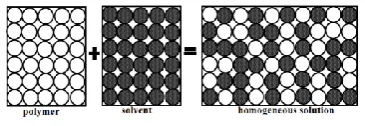
Thermodynamic properties of phase inversion involved many parameters such as temperature and composition. In fabrication of ceramic membrane via phase inversion, every parameters are very important in producing desired structure. These have been reported elsewhere (Lalia et al., 2013). In formation of porous polymeric membrane, the term phase inversion was used to describe the phase changing of the membrane fabrication mechanism. Conceptually, membrane formation by phase inversion system can be described by ternary diagram which consist of three components; polymer, solvent and non-solvent. Prior to fabrication of ceramic membrane via phase inversion, the system can be explained by the exchange between the solvent and the non-solvent coagulant bath which induces the precipitation of polymer in the suspension and thus consolidate the ceramic material (Baker, 2004). Previously, concentrations and temperature represent for the polymer solution is called Flory-Huggins model (Flory, 1953) which can be described as in Figure 2. In most cases however, the thermodynamical properties can be described reasonable through a Flory-Huggins model at constant temperature and pressure, when concentration dependent interaction parameters are used (Pouchly et al., 1969). In contrast of preparing ceramic suspension, there is one additional component which are raw material or powder. Due to this, Kingsbury et al have proposed a viscous fingering mechanism which explain the finger-like formation in ceramic membrane structure (Kingsbury et al., 2009). This phenomenon was further studied by Wang et al in verify unique features of the viscous fingering phenomenon in alumina/PES/NMP suspension (Wang et al., 2012). However, this phenomenon investigated towards membrane cross section only and their interpretation did not exclude the possibility that other properties also involved before the immersion precipitation method of phase inversion. In addition, the membrane surface also plays an important role in membrane characterizations and performances. In this study, we are proposed a new method as “modified phase inversion system” to demonstrate that the thermodynamic properties (composition and temperature) is also responsible for the surface membrane morphology.
Fig. 2: Flory-Huggins Theory Diagram.
[image:2.595.207.390.480.543.2]separation or TIPS). The original polymer solution can also be subjected to a reaction which causes phase separation (reaction induced phase separation) (RIPS). The most used technique is based on diffusion induced phase separation (DIPS). By contacting a polymer solution to a vapour or liquid, diffusional mass exchange will lead to a change in the local composition of the polymer film and demixing can be induced. For the interpretation of membrane formation, the term delayed and instantaneous demixing are further studied in relation to its diffusional mechanism. Composition also is one of the thermodynamic properties in phase inversion. According to Zeng et al, surface roughness of ceramic membrane is strongly affected by composition (Zeng et al., 1997). In the phase inversion process induced by immersion precipitation, commonly a polymer solution cast onto a suitable support such as glass plate which then immersed directly into non-solvent coagulant bath. In this work, the non-solvent coagulant bath used is distilled water. The same method was applied in the „modified phase inversion‟ method by changing the immersion method. In this work, the casting solution was dried for 24h before directly immersion method. Subsequently, this mechanism can be explained by the delay demixing phenomenon which formed a thicker dense layer (Wienk, 1996).
In this work, the effect of „modified phase inversion‟ method was studied towards ceramic membrane surface roughness. AFM and SEM were utilized to elucidate the changes in surface roughness and surface morphology which results from the effect of thermodynamic properties (composition and temperature) via phase inversion system. AFM is a relatively recent technique with a resolution which can reach atomic dimensions for flat surfaces (Albrecht and Quate, 1987). In addition, this technique produces topographical images by scanning a sharp tip, at the end of a cantilever, over the target surface (Binnig et al., 1987). According to Li, the AFM have much better function over the SEM as it can zoom images much smallest as 1nm that that of SEM which is around 100nm only. In addition, AFM can produce three dimensional image which SEM can only produce two dimensional images.
Surface roughness and surface morphology of ceramic membrane is also significantly affecting the application involved such as filtration. They play an important role in determining the characteristics of membrane fouling (Zhong et al., 2013). Rough surface is more easily to be fouled due to large surface area. In addition, the membrane flux decreased due to higher surface roughness. Therefore, methods to control the ceramic membrane surface roughness is so important. Refer to Corneal et al., surface morphology can be affected by surface modification (Corneal et al., 2010). However, surface modification involved many complicated steps and it required long period. In addition, it can change the original characteristic of the ceramic membrane. To reach the global aim of the present work, the pure water flux (PWF) performance and mean pore radius was investigated to relate within the effect of surface roughness. The PWF was determined the volume of water that drips penetrate the membrane layer at the time period specified. The PWF was investigated using Archimedes‟ principle by using equation 1:
(1)
where Q is permeate volume (L), A is effective membrane area (0.00159m2) and ∆𝑡 is permeate time (0.167h).
Filtration process divides into four stages like Microfiltration, Ultrafiltration, Reverse Osmosis, and nanofiltration as illustrated in figure 3. The different between those processes basically base on their pore molecules size and separation capability. In this work, the type of membrane fabricated was investigated by using mean pore radius (rm). Mean pore radius rm (μm) on the other hand was determined using the filtration
velocity method. According to the Guerout–Elford–Ferry equation, rm (Basri et al., 2011) could be
experimentally determined by equation 2:
𝑀𝑒𝑎𝑛 𝑝𝑜𝑟𝑒 𝑟𝑎𝑑𝑖𝑢𝑠, 𝑟𝑚 =
2.9−1.75𝜀 𝑥 8𝜂𝑙𝑄
𝜀 𝑥 𝐴 𝑥 ∆𝑃
(2)
Fig. 3: Type of membrane based on their pore size (Mulder, 1996).
MATERIALS AND METHODS
Materials:
Dope solutions were prepared using PES (UDEL P1700) as polymeric material, NMP (MERCK) as solvent, sieve 25µm kaolin as raw material and distilled water was used as non-solvent additive and non-solvent bath. All chemicals purchased in this work were used without further purification.
Ceramic membrane preparation:
The 85g of NMP was taken in 100mL beaker and the 15g of PES was slowly added into the NMP solution. The solution was kept stirrer with 500 rpm on the hot plate of 60oC for 3 hours until they completely dissolved.
Table 1: Composition of the suspension.
Thermodynamic properties
Sample NMP (g) PES (g) Kaolin (g) Temperature
S1 85 15 60 3oC
S2 85 15 70 3oC
S3 85 15 80 3oC
S4 85 15 60 Room temperature
S5 85 15 70 Room temperature
S6 85 15 80 Room temperature
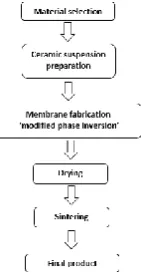
[image:4.595.264.335.485.625.2]Then, the 6g of distilled water was slowly added into polymer dope under constantly agitation. After that, the desired amount of sieved kaolin was subsequently added and kept stirred for at least 10 hours to make sure the dope was completely became homogeneous solution. The desired amounts mentioned were 60, 70g and 80g. To remove air bubbles contained in the dope, the solution was left in the oven with 60oC and to avoid local precipitation occurred. If local precipitation occurred, the agitation was continued until the dope became homogeneous again. After that, the ceramic suspension was cast on a glass plate with casting knife and the thickness of the membranes was controlled within 1.5mm by using masking tape at each side of the glass plate (Sarbatly, 2011). The cast film was left under two conditions: 1) room temperature; 2) ice box, 3oC for 24 hours. Then, the membranes were immersed in distilled water overnight to remove NMP and then dried at room temperature. Accordingly, the ceramic membranes green body was heated using furnace (PLF 140/5) at 800oC for 3 hours in order to completely remove the binder and another 1100oC for 3 hours to for fusion and bonding occur. The furnace is set up 100oC for every 1 hour before reached hold temperatures. The compositions of the suspensions used are list listed in Table 1. The main stages of the preparation process required for the modified phase inversion membrane used in this work are described in Figure 4.
Fig. 4: Main stages of modified phase inversion ceramic membrane.
Atomic Force Microscopy (AFM):
All AFM experiments were carried out using XE-100 Park at Mint-SRC, UTHM. AFM samples preparation started with cutting a 1cm x 1cm of ceramic membrane before sintering procedure. Measurement were performed on dry membrane samples under ambient atmospheric conditions. Roughness is reported as average roughness (Ra).
In a similar method as for the AFM samples, SEM samples were prepared by cutting 1cm x 1cm before sinter. Then, the membrane samples were immersed in liquid nitrogen, fractured carefully then coated with thin platinum prior to SEM analysis.
RESULTS AND DISCUSSION
Surface morphology characterization:
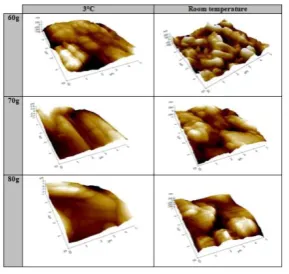
The AFM images showed the representative 3-D surface morphologies. Table 2 and Figure 5 revealed the surface roughness of the membrane within the effect of composition and temperature. Table 2 list the mean roughness parameter (Ra), root-mean-squared roughness (Rq) and the point average roughness (Rz).
For the membrane at kaolin composition of 60g, the surface roughness is 0.218 µm and 0.306µm, at different temperature, respectively. Compared to membrane at 80g, the surface roughness is 0.093µm and 0.136µm, respectively. According to the AFM measurements, the surface roughness of the ceramic membrane decreased with increased of kaolin composition. Refer to Zeng et al., surface roughness of ceramic membrane is strongly affected by composition (Zeng et al., 1997). This is due to the larger surface area provided by the ceramic membrane at low kaolin composition (60g). In fact, crystal structure of kaolinite is the reason of the membrane roughness.
[image:5.595.227.372.314.451.2]In contrast, the surface roughness of the ceramic membrane prepared at low temperature (3oC) is less rough compare to the ceramic membrane prepared at room temperature. This phenomenon is due to the evaporation process that takes place easily at lower temperature that have high humidity (Harun et al., 2014). In addition, the kaolin particles freeze at low temperature and packed closely together which reduce surface area of the ceramic membrane.
Fig. 5: AFM images and membrane surface roughness (Ra) value of ceramic membranes, (a) 3oC/60g; (b) room
temperature/60g; (c) 3oC/70g; (d) room temperature/70g ;(e) 3oC/80g; (f) room temperature/80g.
Table 2: Average ceramic membrane surface roughness via AFM.
Ra (µm) Rq (µm) Rz (µm)
S1 0.218 ± 0.03 0.282 ± 0.05 2.255 ± 1.13
S2 0.113 ± 0.07 0.153 ± 0.07 0.137 ± 1.07
S3 0.093 ± 0.05 0.099 ± 0.02 0.101 ± 0.98
S4 0.306 ± 0.06 0.417 ± 0.06 0.531 ± 0.37
S5 0.298 ± 0.03 0.312 ± 0.05 0.311 ± 0.12
S6 0.136 ± 0.03 0.170 ± 0.08 1.001 ± 1.23
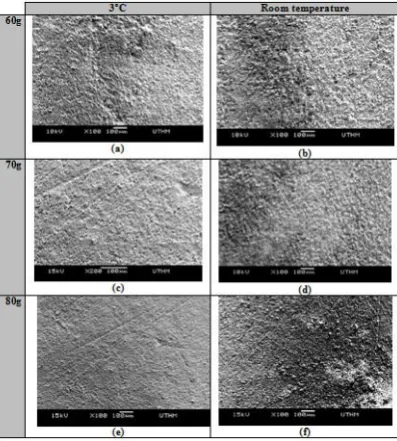
Figure 3 presents the SEM images of the membrane prepared at different temperature and composition. Obviously, surface morphologies of ceramic membrane were strongly influenced by the composition and temperature. From the SEM images, figure 6(e) shows the smoothest image of ceramic membrane surface and give the lowest value of surface roughness (Ra = 0.093 µm). Various application of ceramic membrane was
referred to its unique characteristics. In some application, membrane required to have hydrophobic or hydrophilic characteristic. Refer to Kujawa et al, hydrophobicity of the ceramic membrane can be achieved when the membrane surface roughness decreased (Kujawa et al., 2014).
Permeation result:
illustrated from the membrane prepared at 80g under low temperature. This is due to the surface roughness of membrane which is the smoothest compared to others prepared membranes (figure 5 and 6). The aim of this experiment was to study the effect of thermodynamic properties towards membrane surface roughness.
Fig. 6: FESEM images of ceramic membranes, (a) 3oC/60g; (b) room temperature/60g; (c) 3oC/70g; (d) room temperature/70g ;(e) 3oC/80g; (f) room temperature/80g.
Fig. 7: Comparing thermodynamic properties of modified phase inversion ceramic membrane.
From the literature review at previous section, the surface roughness of membrane have strong relationship with the flux performance. For all cases, it has been observed that distinct membrane flux, profiles have been obtained for combinations of composition and temperature with the membrane flux (figure 7) and pore size (figure 8). According to Emani et al., 2014, substantial enhancement in membrane fouling did not occur with the enhancement of these two parameters. Similar flux profiles have been obtained within the membrane surface roughness by Zhong et al., 2011.
[image:6.595.189.406.377.516.2]Fig. 8: Effect of thermodynamic properties towards mean pore radius (rm).
Figure 8 shows membrane mean pore radius investigated from the Archimedes principle. From the mean pore radius trend, it was clearly seen that the addition of kaolin composition has reduced the membrane pore size in which the pore size decreased from 80g prepared membrane by 36% and 46% with kaolin composition of 70g and 80g respectively under room temperature. In contrast, the pore size decreased in low percentage for membrane prepared at low temperature (3oC). The pore size decreased from 80g by 11% and 25% with kaolin composition of 70g and 80g respectively. This could be due to rapid solvent exchange that took place during modified phase inversion at room temperature resulting in leaching of kaolin particles and causing the formation of bigger pores.
Conclusion:
With limited literature data, this work emphasized upon the need to develop new method of „modified phase inversion‟ towards ceramic membrane fabrication. The modified phase inversion was studied thermodynamically. The thermodynamic properties that have been studied in this work were temperature and composition. Membranes prepared under low temperature (3oC) possessed smooth surface with smallest pore size. These characteristics were decreased the PWF performance. However, this membrane was deemed to have good integrity towards rejection performance and membrane fouling that will be further studied. In contrast, prepared membranes under room temperature indicated better PWF performance subjected to the bigger pore size and rougher surface significantly. Thus, it is apparent that temperature do have relationship with the membrane surface roughness. Comparing the other thermodynamic properties, composition, also shows the significant effect towards membrane surface roughness. Overall, the combinations of thermodynamic properties (temperature and composition) possesses the effect towards membrane surface roughness (with the comparison between optimal rough and smooth membrane surface of 0.306 ± 0.06 µm and 0.093 ± 0.05 µm respectively) which provided a slightly difference PWF of 80.1221 Lm-2 h-1 and 21.0173 Lm-2h-1 respectively. Inferentially, this work was further highlighted upon the need to prepare the ceramic membrane via „modified phase inversion‟ towards others membrane performance. Thus, in the near future, research shall target upon the rejection and fouling performance.
ACKNOWLEDGEMENT
The authors would like to thank to Universiti Tun Hussein Onn Malaysia for their Long Term ResearchGrant Scheme (LRGS vot A022) for support in providing the grant implements “High Performance of Polymeric Materials” project.
REFERENCES
Albrecht, T.R., C.F. Quate, 1987. Atomic resolution imaging of a nonconductor by atomic force microscopy. Journal of Applied Physics, 62: 2599-2602.
Kingsbury, B.F.K., K. Li, 2009. A morphological study of ceramic hollow fibre membranes, Journal of Membrane Science, 328: 134-140.
Basri, H., A.F. Ismail and M. Aziz, Polyethersulfone (PES)-silver composite UF membrane: Effect of silver loading and PVP molecular weight on membrane morphology and antibacterial activity, Desalination, 273(1): 72-80.
Binnig, G., Gerber, Ch., E. Stoll, T.R. Albrecht, C.F. Quate, 1987. Atomic Resolution with atomic force microscope. Surface Science, 189/190: 1-6.
Corneal, L.M., S.J. Mansten, S.H.R. Davies, V.V. Tarabara, S. Byun and M.J. Baumann, 2010. AFM, SEM and EDS characterization of manganese oxide coated ceramic water filtration membranes, Journal of membrane Science, 360(1-2): 292-302.
Dong, Z., G. Liu, S. Liu, Z. Liu and W. Jin, 2014. High performance ceramic hollow fiber supported PDMS composite pervaporation membrane for bio-butanol recovery, Journal of membrane science, 450: 38-47.
Flory, P.J., 1953. Principles in polymer chemistry, Ithaca: Cornell University Press.
Harun, A., S.K. Hubadillah, S. Hasan and M.Z. Yunos, 2014. Effect of thermodynamic properties on porosity of ceramic membrane prepared by phase inversion, Applied mechanics and materials, 575: 31-35.
Kingsbury, B.F.K. and K. Li, 2009. A morphological study of ceramic hollow fibre membranes, Journal of membrane science, 328: 134-140.
Kujawa, J., A. Rozicka, S. Cerneaux and W. Kujawski, 2014. The influence of surface modification on the physicochemical properties of ceramic membranes, Colloids and surface A: Physicochemical and Engineering Aspects, 443: 567-575.
Lalia, B.S., V. Kochkodan, R. Hashaikeh and N. Hilal, 2013. A review on membrane fabrication: Structure, properties and performance relationship, Desalination, 326: 77-95.
Li, K., 2007. Ceramic membrane for separation and reaction. West Sussex, England: John Wiley & Sons. Loeb, S. and S. Sourirajan, 1963. Sea water demineralization by means of an osmotic membrane, in saline water conversion – II, Advance in chemistry. Washington DC: American Chemical Society, 117-132.
Mulder, M., 1996. Basic principles of membrane technology. (2nd edition). Dordrecht, the Netherlands: Kluwer Academic Publisher.
Othman, M.H.D., Z. Wu, N. Droushiotis, G. Kelsall and K. Li, 2010. Morphological studied of macrostructure of Ni-CGO anode hollow fibres for intermediate temperature solid oxide fuel cells, Journal of Membrane Science, 360(1-2): 410-417.
Pan, Y., B. Wang and Z. Lai, 2012. Synthesis of ceramic hollow fiber supported zeolitic imidazolate framework-8 (ZIF-8) membranes with high hydrogen permeability, Journal of membrane science, 421-422: 292-298.
Pouchly, J., A. Zivny, K. Solc, 1969. Thermodynamic equilibrium in the system macromolecular coil-binary solvent, Journal of Polymer Science Part C: Polymer Symposia, 23(1): 245-256.
Sarbatly, R., 2011. Effect of kaolin/pesf ratio and sintering temperature on pore size and porosity of the kaolin membrane support, Journal of Applied Science. 11(13): 2306-2312.
Shohur, M.F., 2014. Performance of PSf ultrafiltration membrane: Effect of different nonsolvent and temperature of coagulant medium, Master Thesis, Universiti Tun Hussein Onn Malaysia.
Wang, B. and Z. Lai, 2012. Finger-like voids induced by viscous fingering during phase inversion of alumina/PES/NMP suspensions, Journal of membrane science, 405-406: 275-283.
Wei, C.C., O.Y. Chen, Y. Liu and K. Li, 2008. Ceramic asymmetric hollow fibre membranes – one step fabrication process, Journal of membrane science, 320: 191- 197.
Wienk, I.M., R.M. Boom, M.A.M. Beerlage, A.M.W. Bulte C.A. Smolders and H. Strathmann, 1996. Recent advances in the formation of phase inversion membranes made from amorphous or semi-crystalline polymers, Journal of membrane science, 113: 361-371.
Yunos, M.Z., Z. Harun, H. Basri and A.F. Ismail, 2014. Studies on fouling by natural organic matter (NOM) on polysulfone membranes: Effect of polyethylene glycol (PEG), Desalination, 333(1): 36-44.
Zeng. Z., X. Xiao, Z. Gui and L. Li, 1997. AFM study on surface morphology of Al2O3-SiO2-TiO2
composite ceramic membranes, Journal of membrane science, 136: 153-160.