G and Banerjee, S and Woods, B and Perneczky, R and Lafortune, L and Roberts, C and McCleery, J and Pickett, J and Bunn, F and Challis, D and Charlesworth, G and Featherstone, K and Fox, C and Goodman, C and Jones, R and Lamb, S and Moniz-Cook, E and Schneider, J and Shepperd, S and Surr, C and Thompson-Coon, J and Ballard, C and Brayne, C and Burke, O and Burns, A and Clare, L and Garrard, P and Kehoe, P and Passmore, P and Holmes, C and Maidment, I and Murtagh, F and Robinson, L and Livingston, G (2017) Development of a core outcome set for disease modification trials in mild to moderate dementia: a systematic review, patient and public consultation and consensus recommendations. Health Technol Assess, 21 (26). pp. 1-192. ISSN 2046-4924 DOI: https://doi.org/10.3310/hta21260
Link to Leeds Beckett Repository record:
http://eprints.leedsbeckett.ac.uk/3846/
Document Version: Article
Creative Commons: Attribution-Noncommercial 4.0
The aim of the Leeds Beckett Repository is to provide open access to our research, as required by funder policies and permitted by publishers and copyright law.
The Leeds Beckett repository holds a wide range of publications, each of which has been checked for copyright and the relevant embargo period has been applied by the Research Services team.
We operate on a standard take-down policy. If you are the author or publisher of an output and you would like it removed from the repository, please contact us and we will investigate on a case-by-case basis.
VOLUME 21 ISSUE 26 MAY 2017 ISSN 1366-5278
Development of a core outcome set for disease
modification trials in mild to moderate dementia:
a systematic review, patient and public consultation
and consensus recommendations
Lucy Webster, Derek Groskreutz, Anna Grinbergs-Saull, Rob Howard,
John T O’Brien, Gail Mountain, Sube Banerjee, Bob Woods,
Robert Perneczky, Louise Lafortune, Charlotte Roberts, Jenny McCleery,
James Pickett, Frances Bunn, David Challis, Georgina Charlesworth,
Katie Featherstone, Chris Fox, Claire Goodman, Roy Jones, Sallie Lamb,
Esme Moniz-Cook, Justine Schneider, Sasha Shepperd, Claire Surr,
Jo Thompson-Coon, Clive Ballard, Carol Brayne, Orlaith Burke,
Alistair Burns, Linda Clare, Peter Garrard, Patrick Kehoe,
disease modification trials in mild to
moderate dementia: a systematic review,
patient and public consultation and
consensus recommendations
Lucy Webster,
1
Derek Groskreutz,
2
Anna Grinbergs-Saull,
3
Rob Howard,
1
John T O
’
Brien,
4
Gail Mountain,
5
Sube Banerjee,
6
Bob Woods,
7
Robert Perneczky,
8
Louise Lafortune,
9
Charlotte Roberts,
10
Jenny McCleery,
11
James Pickett,
3
Frances Bunn,
12
David Challis,
13
Georgina Charlesworth,
14
Katie Featherstone,
15
Chris Fox,
16
Claire Goodman,
12
Roy Jones,
17
Sallie Lamb,
18
Esme Moniz-Cook,
19
Justine Schneider,
20
Sasha Shepperd,
21
Claire Surr,
22
Jo Thompson-Coon,
23
Clive Ballard,
24
Carol Brayne,
9
Orlaith Burke,
21
Alistair Burns,
25
Linda Clare,
23,26,27
Peter Garrard,
28
Patrick Kehoe,
29
Peter Passmore,
30
Clive Holmes,
31
Ian Maidment,
32
Fliss Murtagh,
33
Louise Robinson
34
and Gill Livingston
1,35,36
*
1
Division of Psychiatry, University College London, London, UK
2
Division of Psychology and Language Sciences, University College London,
London, UK
3
Alzheimer
’
s Society, London, UK
4
Department of Psychiatry, University of Cambridge, Cambridge, UK
5
School of Health and Related Research, University of Sheffield, Sheffield, UK
6
Brighton and Sussex Medical School, University of Sussex, Brighton, UK
7
Dementia Services Development Centre Wales, Bangor University, Bangor, UK
8
Faculty of Medicine, School of Public Health, Imperial College London,
London, UK
9
Cambridge Institute of Public Health, University of Cambridge, Cambridge, UK
10
International Consortium for Health Outcomes Measurement, London, UK
Personal Social Services Research Unit, University of Manchester, Manchester, UK
14
Research Department of Clinical, Educational, and Health Psychology, University
College London, London, UK
15
School of Healthcare Sciences, Cardiff University, Cardiff, UK
16
Norwich Medical School, University of East Anglia, Norwich, UK
17
Research Institute for the Care of Older People, University of Bath, Bath, UK
18
Oxford Clinical Trials Research Unit, University of Oxford, Oxford, UK
19
Faculty of Health and Social Care, University of Hull, Hull, UK
20
Institute of Mental Health, University of Nottingham, Nottingham, UK
21
Nuffield Department of Population Health, University of Oxford, Oxford, UK
22
School of Health & Community Studies, Leeds Beckett University, Leeds, UK
23
Collaboration for Leadership in Applied Health Research and Care South West
Peninsula, University of Exeter, Exeter, UK
24
Wolfson Centre for Age-Related Diseases, King
’
s College London, London, UK
25
Institute of Brain, Behaviour and Mental Health, University of Manchester,
Manchester, UK
26
School of Psychology, University of Exeter, Exeter, UK
27
Centre for Research in Ageing and Cognitive Health, University of Exeter
Medical School, Exeter, UK
28
Neuroscience Research Centre, St George
’
s, University of London, UK
29
School of Clinical Sciences, University of Bristol, Bristol, UK
30
Centre for Public Health, Queen
’
s University Belfast, Belfast, UK
31
School of Medicine, University of Southampton, Southampton, UK
32
Aston Research Centre for Healthy Ageing, Aston University, Birmingham, UK
33
Cicely Saunders Institute, King
’
s College London, London, UK
34
Institute of Health and Society, Newcastle University, Newcastle upon Tyne, UK
35
Camden and Islington NHS Foundation Trust, London, UK
36
North Thames Collaboration for Leadership in Applied Health Research and
Care, London, UK
*Corresponding author
Declared competing interests of authors:Clive Ballard reports grants and personal fees from Lundbeck Ltd and ACADIA Pharmaceuticals Inc., and personal fees from Roche, Orion Pharma, GlaxoSmithKline, Otsuka Pharmaceutical, Heptares Therapeutics Ltd and Eli Lilly and Company outside the submitted work. Sube Banerjee reports grants and personal fees from AbbVie, personal fees and non-financial support from Eli Lilly and Company, and personal fees from Eleusis Pharmaceuticals Ltd, Daval International, Boehringer Ingelheim, Axovant Sciences, Lundbeck Ltd and Nutricia outside the submitted work. Sube Banerjee also reports being a member of the Health Technology Assessment (HTA) Mental, Psychological and Occupational Health Panel, and has been involved as the principal investigator in a series of National Institute for Health Research grants that has developed the Dementia Quality of Life measure (DEMQOL) system for the measurement of
Published May 2017
DOI: 10.3310/hta21260
This report should be referenced as follows:
Webster L, Groskreutz D, Grinbergs-Saull A, Howard R, O’Brien JT, Mountain G,et al.
Development of a core outcome set for disease modification trials in mild to moderate dementia: a systematic review, patient and public consultation and consensus recommendations.Health Technol Assess2017;21(26).
Health Technology Assessmentis indexed and abstracted inIndex Medicus/MEDLINE,Excerpta Medica/EMBASE,Science Citation Index Expanded(SciSearch®) andCurrent Contents®/
ISSN 1366-5278 (Print)
ISSN 2046-4924 (Online)
Impact factor: 4.058
Health Technology Assessmentis indexed in MEDLINE, CINAHL, EMBASE, The Cochrane Library and the ISI Science Citation Index.
This journal is a member of and subscribes to the principles of the Committee on Publication Ethics (COPE) (www.publicationethics.org/).
Editorial contact: [email protected]
The full HTA archive is freely available to view online at www.journalslibrary.nihr.ac.uk/hta. Print-on-demand copies can be purchased from the report pages of the NIHR Journals Library website: www.journalslibrary.nihr.ac.uk
Criteria for inclusion in theHealth Technology Assessmentjournal
Reports are published inHealth Technology Assessment(HTA) if (1) they have resulted from work for the HTA programme, and (2) they are of a sufficiently high scientific quality as assessed by the reviewers and editors.
Reviews inHealth Technology Assessmentare termed‘systematic’when the account of the search appraisal and synthesis methods (to minimise biases and random errors) would, in theory, permit the replication of the review by others.
HTA programme
The HTA programme, part of the National Institute for Health Research (NIHR), was set up in 1993. It produces high-quality research information on the effectiveness, costs and broader impact of health technologies for those who use, manage and provide care in the NHS.
‘Health technologies’are broadly defined as all interventions used to promote health, prevent and treat disease, and improve rehabilitation and long-term care.
The journal is indexed in NHS Evidence via its abstracts included in MEDLINE and its Technology Assessment Reports inform National Institute for Health and Care Excellence (NICE) guidance. HTA research is also an important source of evidence for National Screening Committee (NSC) policy decisions.
For more information about the HTA programme please visit the website: http://www.nets.nihr.ac.uk/programmes/hta
This report
The research reported in this issue of the journal was funded by the HTA programme as project number 15/62/02. The contractual start date was in December 2015. The draft report began editorial review in June 2016 and was accepted for publication in October 2016. The authors have been wholly responsible for all data collection, analysis and interpretation, and for writing up their work. The HTA editors and publisher have tried to ensure the accuracy of the authors’report and would like to thank the reviewers for their constructive comments on the draft document. However, they do not accept liability for damages or losses arising from material published in this report.
This report presents independent research funded by the National Institute for Health Research (NIHR). The views and opinions expressed by authors in this publication are those of the authors and do not necessarily reflect those of the NHS, the NIHR, NETSCC, the HTA programme or the Department of Health. If there are verbatim quotations included in this publication the views and opinions expressed by the
interviewees are those of the interviewees and do not necessarily reflect those of the authors, those of the NHS, the NIHR, NETSCC, the HTA programme or the Department of Health.
© Queen’s Printer and Controller of HMSO 2017. This work was produced by Websteret al.under the terms of a commissioning contract issued by the Secretary of State for Health. This issue may be freely reproduced for the purposes of private research and study and extracts (or indeed, the full report) may be included in professional journals provided that suitable acknowledgement is made and the reproduction is not associated with any form of advertising. Applications for commercial reproduction should be addressed to: NIHR Journals Library, National Institute for Health Research, Evaluation, Trials and Studies Coordinating Centre, Alpha House, University of Southampton Science Park, Southampton SO16 7NS, UK.
Editor-in-Chief
NIHR Journals Library
Professor Tom Walley Director, NIHR Evaluation, Trials and Studies and Director of the EME Programme, UK
NIHR Journals Library Editors
Professor Ken Stein Chair of HTA Editorial Board and Professor of Public Health, University of Exeter Medical School, UK
Professor Andree Le May Chair of NIHR Journals Library Editorial Group (EME, HS&DR, PGfAR, PHR journals)
Dr Martin Ashton-Key Consultant in Public Health Medicine/Consultant Advisor, NETSCC, UK
Professor Matthias Beck Chair in Public Sector Management and Subject Leader (Management Group), Queen’s University Management School, Queen’s University Belfast, UK
Dr Tessa Crilly Director, Crystal Blue Consulting Ltd, UK
Professor William McGuire Professor of Child Health, Hull York Medical School, University of York, UK
Professor John Norrie Chair in Medical Statistics, University of Edinburgh, UK
Professor John Powell Consultant Clinical Adviser, National Institute for Health and Care Excellence (NICE), UK
Professor James Raftery Professor of Health Technology Assessment, Wessex Institute, Faculty of Medicine, University of Southampton, UK
Dr Rob Riemsma Reviews Manager, Kleijnen Systematic Reviews Ltd, UK
Professor Helen Roberts Professor of Child Health Research, UCL Institute of Child Health, UK
Professor Helen Snooks Professor of Health Services Research, Institute of Life Science, College of Medicine, Swansea University, UK
Professor Jim Thornton Professor of Obstetrics and Gynaecology, Faculty of Medicine and Health Sciences, University of Nottingham, UK
Please visit the website for a list of members of the NIHR Journals Library Board: www.journalslibrary.nihr.ac.uk/about/editors
Editorial contact: [email protected]
Centre of Evidence-Based Dermatology, University of Nottingham, UK
Professor Jonathan Ross Professor of Sexual Health and HIV, University Hospital Birmingham, UK Dr Eugenia Cronin Senior Scientific Advisor, Wessex Institute, UK
Professor Martin Underwood Director, Warwick Clinical Trials Unit, Warwick Medical School, University of Warwick, UK
Professor Geoffrey Meads Professor of Health Sciences Research, Health and Wellbeing Research Group, University of Winchester, UK
Ms Tara Lamont Scientific Advisor, NETSCC, UK
Abstract
Development of a core outcome set for disease modification
trials in mild to moderate dementia: a systematic review,
patient and public consultation and consensus
recommendations
Lucy Webster,
1Derek Groskreutz,
2Anna Grinbergs-Saull,
3Rob Howard,
1John T O
’
Brien,
4Gail Mountain,
5Sube Banerjee,
6Bob Woods,
7Robert Perneczky,
8Louise Lafortune,
9Charlotte Roberts,
10Jenny McCleery,
11James Pickett,
3Frances Bunn,
12David Challis,
13Georgina Charlesworth,
14Katie Featherstone,
15Chris Fox,
16Claire Goodman,
12Roy Jones,
17Sallie Lamb,
18Esme Moniz-Cook,
19Justine Schneider,
20Sasha Shepperd,
21Claire Surr,
22Jo Thompson-Coon,
23Clive Ballard,
24Carol Brayne,
9Orlaith Burke,
21Alistair Burns,
25Linda Clare,
23,26,27Peter Garrard,
28Patrick Kehoe,
29Peter Passmore,
30Clive Holmes,
31Ian Maidment,
32Fliss Murtagh,
33Louise Robinson
34and Gill Livingston
1,35,36*
1Division of Psychiatry, University College London, London, UK
2Division of Psychology and Language Sciences, University College London, London, UK 3Alzheimer’s Society, London, UK
4Department of Psychiatry, University of Cambridge, Cambridge, UK
5School of Health and Related Research, University of Sheffield, Sheffield, UK 6Brighton and Sussex Medical School, University of Sussex, Brighton, UK 7Dementia Services Development Centre Wales, Bangor University, Bangor, UK 8Faculty of Medicine, School of Public Health, Imperial College London, London, UK 9Cambridge Institute of Public Health, University of Cambridge, Cambridge, UK 10International Consortium for Health Outcomes Measurement, London, UK 11Oxford Health NHS Foundation Trust, Banbury, UK
12Centre for Research in Primary and Community Care, University of Hertfordshire, Hatfield, UK 13Personal Social Services Research Unit, University of Manchester, Manchester, UK
14Research Department of Clinical, Educational, and Health Psychology, University College London, London, UK
15School of Healthcare Sciences, Cardiff University, Cardiff, UK 16Norwich Medical School, University of East Anglia, Norwich, UK
17Research Institute for the Care of Older People, University of Bath, Bath, UK 18Oxford Clinical Trials Research Unit, University of Oxford, Oxford, UK 19Faculty of Health and Social Care, University of Hull, Hull, UK
20Institute of Mental Health, University of Nottingham, Nottingham, UK 21Nuffield Department of Population Health, University of Oxford, Oxford, UK 22School of Health & Community Studies, Leeds Beckett University, Leeds, UK
24Wolfson Centre for Age-Related Diseases, King’s College London, London, UK
25Institute of Brain, Behaviour and Mental Health, University of Manchester, Manchester, UK 26School of Psychology, University of Exeter, Exeter, UK
27Centre for Research in Ageing and Cognitive Health, University of Exeter Medical School, Exeter, UK
28Neuroscience Research Centre, St George’s, University of London, UK 29School of Clinical Sciences, University of Bristol, Bristol, UK
30Centre for Public Health, Queen’s University Belfast, Belfast, UK 31School of Medicine, University of Southampton, Southampton, UK
32Aston Research Centre for Healthy Ageing, Aston University, Birmingham, UK 33Cicely Saunders Institute, King’s College London, London, UK
34Institute of Health and Society, Newcastle University, Newcastle upon Tyne, UK 35Camden and Islington NHS Foundation Trust, London, UK
36North Thames Collaboration for Leadership in Applied Health Research and Care, London, UK
*Corresponding author [email protected]
Background:There is currently no disease-modifying treatment available to halt or delay the progression of the disease pathology in dementia. An agreed core set of the best-available and most appropriate outcomes for disease modification would facilitate the design of trials and ensure consistency across disease modification trials, as well as making results comparable and meta-analysable in future trials.
Objectives:To agree a set of core outcomes for disease modification trials for mild to moderate dementia with the UK dementia research community and patient and public involvement (PPI).
Data sources:We included disease modification trials with quantitative outcomes of efficacy from (1) references from related systematic reviews in workstream 1; (2) searches of the Cochrane Dementia and Cognitive Improvement Group study register, Cochrane Central Register of Controlled Trials,
Cumulative Index to Nursing and Allied Health Literature, EMBASE, Latin American and Caribbean Health Sciences Literature and PsycINFO on 11 December 2015, and clinical trial registries [International Standard Randomised Controlled Trial Number (ISRCTN) and clinicaltrials.gov] on 22 and 29 January 2016; and (3) hand-searches of reference lists of relevant systematic reviews from database searches.
Review methods:The project consisted of four workstreams. (1) We obtained related core outcome sets and work from co-applicants. (2) We systematically reviewed published and ongoing disease modification trials to identify the outcomes used in different domains. We extracted outcomes used in each trial, recording how many used each outcome and with how many participants. We divided outcomes into the domains measured and searched for validation data. (3) We consulted with PPI participants about recommended outcomes. (4) We presented all the synthesised information at a conference attended by the wider body of National Institute for Health Research (NIHR) dementia researchers to reach consensus on a core set of outcomes.
Limitations:Most of the trials included participants with Alzheimer’s disease, so recommendations may not apply to other types of dementia. We did not conduct economic analyses. The PPI consultation was limited to members of the Alzheimer’s Society Research Network.
Conclusions:Cognitive outcomes and biological markers form the core outcome set for future disease modification trials, measured by the MMSE or ADAS-Cog, and structural MRI in a subset of participants.
Future work:We envisage that the core set may be superseded in the future, particularly for other types of dementia. There is a need to develop an algorithm to compare scores on the MMSE and ADAS-Cog.
Study registration:The project was registered with Core Outcome Measures in Effectiveness Trials [www.comet-initiative.org/studies/details/819?result=true (accessed 7 April 2016)]. The systematic review protocol is registered as PROSPERO CRD42015027346.
Contents
List of tables xv
List of figures xvii
List of boxes xix
List of abbreviations xxi
Plain English summary xxiii
Scientific summary xxv
Chapter 1Introduction 1
Chapter 2Research question and objectives 5
Objectives 5
Core Outcome Measures in Effectiveness Trials 5
Chapter 3Systematic review methods 7
Protocol 7
Search strategy 7
Database searches 7
Additional databases 7
Hand-searches 7
Search dates 7
Study inclusion 8
Inclusion criteria 8
Exclusion criteria 8
Screening titles and abstracts, and full texts 8
Data extraction 9
Data synthesis 9
Quality assessment 9
Outcome validation 9
Chapter 4Results of the systematic review 11
Details of included and excluded studies 11 Outcomes found in the review 12
Published trials 14
Published protocols 14
Ongoing trials 38
Validation data 38
Cognitive outcomes 38
Neuropsychiatric outcomes 57
Chapter 5Methods of patient and public involvement consultation 59
Purpose 59
Procedure 59
Focus groups 59
First e-mail consultation 60
Second e-mail consultation 60
Chapter 6Results of patient and public involvement consultation 61
Demographic details of participants 61
Focus groups 61
First e-mail consultation 62
Second e-mail consultation 62
What should be measured? 62
General recommendations 62
Questioning and terms used 62
Time and travel requirements 63
Role of the‘carer’in completing outcomes 63
Engagement: communication and relevance 63
Standardised interviews 64
Cognition 64
Activities of daily living 64
Neuropsychiatric symptoms 65
Quality of life 66
Global measures 66
Biological measures 66
Cerebrospinal fluid measures 67
Blood tests 67
Imaging 68
Summary 69
Chapter 7Consensus conference 71
Purpose 71
Preparations 71
Participants 71
Conference proceedings 72
Cognition 72
Batteries of neuropsychological tests 73
Biological markers: imaging 73
Biological markers: cerebrospinal fluid 75
Neuropsychiatric symptoms 76
Activities of daily living 78
Quality of life 81
Global 82
Discussion 85
Cognition 85
Imaging 85
Fluid makers 86
Neuropsychiatric symptoms 86
Activities of daily living 86
Quality of life 87
Global functioning 87
Main findings 87
Chapter 8Discussion 89
Findings 89
Recommendations of outcomes 89
Recommendations around completing outcomes 91
Patient and public involvement 91
Future of biomarkers 92
Previous outcome recommendations 92
Strengths and limitations 93
Chapter 9Conclusions 95
Recommendations for future research 95
Acknowledgements 97
References 99
Appendix 1MEDLINE (via OvidSP) search strategy 133
Appendix 2Disagreements on exclusion of full texts 135
Appendix 3List of excluded studies and reasons for exclusion 137
Appendix 4Information sheet for focus group participants 183
Appendix 5First e-mail consultation 187
Appendix 6Second e-mail consultation 189
List of tables
TABLE 1 Published trials 15
TABLE 2 Published protocols 37
TABLE 3 Ongoing trials 39
TABLE 4 Validation of cognitive outcomes 46
TABLE 5 Validation of neuropsychiatric outcomes 48
TABLE 6 Validation of quality-of-life outcomes 50
TABLE 7 Validation of ADL outcomes 52
TABLE 8 Validation of global outcomes 54
TABLE 9 Validation of biological markers outcomes 56
TABLE 10 Consultation topics 59
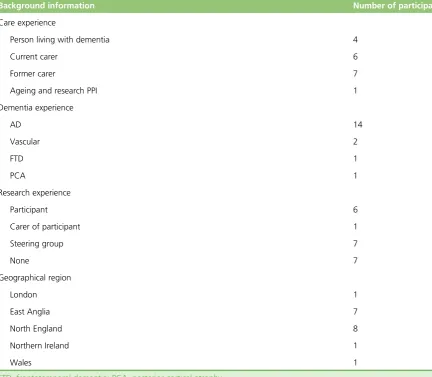
TABLE 11 Volunteer background information 61
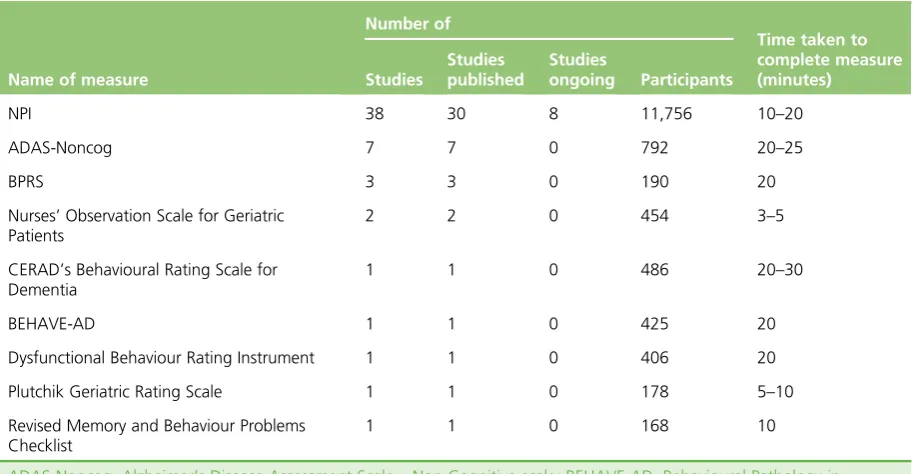
TABLE 12 Neuropsychiatric outcomes found 77
TABLE 13 Use of measures of HRQoL in published and ongoing studies 82
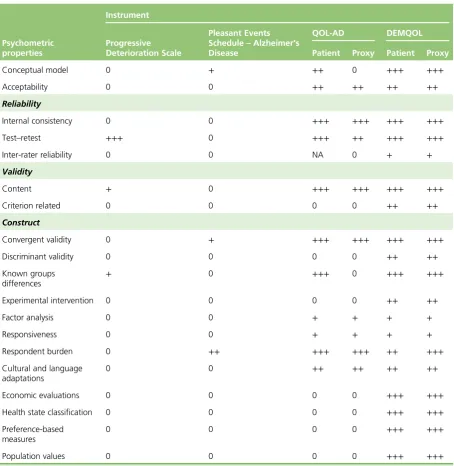
TABLE 14 Summary of psychometric properties of HRQoL instruments by gold
standard criteria 83
List of figures
List of boxes
List of abbreviations
AD Alzheimer’s disease
ADAS-Cog Alzheimer’s Disease Assessment Scale–Cognitive subscale
ADAS-Noncog
Alzheimer’s Disease Assessment Scale-Non Cognitive scale
ADCS-ADL Alzheimer’s Disease Co-operative Study–Activities of Daily
Living Inventory
ADFACS Alzheimer’s Disease Functional Activity and Change Scale
ADL activity of daily living
ALOIS Cochrane Dementia and Cognitive Improvement Group study register
AS Alzheimer’s Society
BADL Bristol Activities of Daily Living
BEHAVE-AD Behavioural Pathology in Alzheimer’s Disease
BPRS Brief Psychiatric Rating Scale
CCT clinical controlled trial
CDR Clinical Dementia Rating scale
CENTRAL Cochrane Central Register of Controlled Trials
CERAD Consortium to Establish a Registry for Alzheimer’s Disease
CIBIC+ Clinician’s Interview-Based Impression of Change plus Caregiver Input
CINAHL Cumulative Index to Nursing and Allied Health Literature
COMET Core Outcome Measures in Effectiveness Trials
CSF cerebrospinal fluid
DAD Disability Assessment For Dementia
DEMQOL Dementia Quality of Life measure
DSRS Dementia Severity Rating Scale
EEG electroencephalography
EQ-5D EuroQol-5 Dimensions
HRQoL health-related quality of life
IADL instrumental activities of daily living
ICHOM International Consortium for Health Outcomes Measurement Working Group
ISRCTN International Standard Randomised Controlled Trial Number
JPND European Union Joint Programme– Neurodegenerative Disease
Research
LILACS Latin American and Caribbean Health Sciences Literature
MCI mild cognitive impairment
MMSE Mini Mental State Examination
MRI magnetic resonance imaging
NIHR National Institute for Health Research
NPI Neuropsychiatric Inventory
NTB Neuropsychological Test Battery
P-tau phosphorylated tau
P-tau181 phosphorylated tau 181
PET positron emission tomography
PiB Pittsburgh compound B
PPI patient and public involvement
PRISMA Preferred Reporting Items for Systematic Reviews and Meta-Analyses
PSMS Personal Self-Maintenance Scale
PWD person with dementia
QALY quality-adjusted life-year
QOL-AD Quality of Life in Alzheimer’s Disease
RCT randomised controlled trial
Plain English summary
I
n the UK, around 850,000 people have dementia. If a treatment can change the underlying pathology of dementia this is called disease modification, although no trials have yet found effective disease-modifying treatments. Trials have used differing outcome measures to evaluate if a treatment works, making it difficult to compare and contrast results. To address this issue we aimed, in collaboration with the UK dementia research community and the Alzheimer’s Society’s Research Network, to develop a core set of outcome measures for use in future disease-modifying trials for mild to moderate dementia.We looked at the outcomes used across completed and ongoing disease modification trials and found measures in six test areas: cognition, biological, behaviour, quality of life, activities of daily living and global. We used these findings to conduct a small consultation with people living with dementia and family carers. We presented all results at our consensus conference and discussed them to reach our conclusions.
Scientific summary
Introduction
In the UK, as in the rest of the developed and developing world, the prevalence of dementia is increasing, primarily driven by the ageing population. People living with dementia can currently only be offered management to improve their symptoms as no disease-modifying treatments that would halt or delay the progression of the underlying disease pathology are available. The G8 Dementia Summit in 2013 committed to find a disease-modifying treatment by 2025. If a treatment were found to slow disease progression of mild to moderate dementia, then this would reduce the number of people living with severe dementia in the future.
However, across both published and ongoing disease modification trials there is large variation in the outcomes used as end points, making it difficult to compare and contrast results. To improve future disease modification trials there is a need for harmonisation among the outcomes measured, as well as for outcomes to be
appropriate, sensitive to change and clinically meaningful. An agreed core set of the best-available outcomes would enhance interpretation of data across trials, including the combination of results in meta-analyses.
There is, therefore, an urgent need for consensus from National Institute for Health Research (NIHR) dementia researchers in the UK on a core outcome set of measures to be used across future disease modification trials in mild to moderate dementia. This will ensure that new trials can be combined in systematic reviews and contrasted as to their effectiveness.
Review question
What are the core clinical health outcomes that should be used in all NIHR-funded trials of disease modification in mild to moderate dementia, and how should they be measured?
Methods
The project consisted of four workstreams.
1. First, we used overlapping core outcome sets and work from co-applicants.
2. At the same time we performed a systematic review to identify which outcomes are used in published and ongoing disease modification trials.
3. We then consulted with people living with dementia and carers about the outcomes found in the systematic review.
4. Finally, we held a conference where the synthesis of information from the previous workstreams was debated by a wider body of NIHR dementia researchers to reach consensus on a core set of outcomes.
Workstream 1: co-applicants core outcome sets and work
First, we considered overlapping core outcome sets that had been, or were currently being, developed by co-applicants of the project, as well as reference lists from co-applicants. This included:
1. an outcome set of what is most important to people living with dementia 2. an outcome set for psychosocial interventions in dementia
3. reference lists from a systematic review of non-pharmacological interventions previously conducted by a co-applicant
Workstream 2: systematic review
Protocol
We registered the protocol with PROSPERO [CRD42015027346; www.crd.york.ac.uk/PROSPERO/display_ record.asp?ID=CRD42015027346 (accessed 7 April 2016)].
Searches
We conducted database searches (ALOIS, Cochrane Central Register of Controlled Trials, Cumulative Index to Nursing and Allied Health Literature, EMBASE, Latin American and Caribbean Health Sciences Literature and PsycINFO) on 11 December 2015. Additionally, we decided to search ongoing trials on clinical trials registries [International Standard Randomised Controlled Trial Number (ISRCTN) and clinicaltrials.gov) on 22 and 29 January 2016, respectively, to ensure that we had complete data about what measures are currently being used. We also hand-searched the reference lists of relevant systematic reviews found within the database searches.
Inclusion and exclusion criteria
We included trials that met all of the inclusion criteria:
1. The full text is written in English.
2. The trial is published in a peer-reviewed journal article or is an ongoing trial.
3. At least some of the participants have clinically diagnosed mild or moderate dementia. 4. The intervention aimed to modify the dementia disease.
5. It is a randomised controlled trial (RCT) or clinical controlled trial with: i. the intervention directed at the person with dementia
ii. the control or comparator arm comprising treatment as usual, no intervention, sham therapy, other therapy or placebo.
6. At least one quantitative outcome measure related to disease modification in mild or moderate dementia.
We excluded studies in which all participants had severe dementia or mild cognitive impairment, and if the whole study was set in care homes, as very few people with mild to moderate dementia would be resident in care homes. We also excluded trials if the outcomes were only qualitative, economic or related only to carers or drug levels.
Data extraction
We extracted characteristics from each of the trials, including trial type, location, intervention, control group, participants and which outcomes were measured at what time points. Across the trials we
calculated how many used each outcome and with how many participants. We also divided the outcomes into the domains that they measured, namely cognition, biological markers, activities of daily living (ADLs), global assessment, neuropsychiatric symptoms and quality of life.
Validation data
We searched separately for validation data for each outcome measure. This included information about any relevant populations that the outcome is validated for use with, minimal clinically important difference, reliability (inter-rater and test–retest), ceiling-and-floor effects, sensitivity to change and any risks associated with using the measure.
Workstream 3: patient and public involvement
We conducted an e-mail consultation with focus group participants afterwards on a report of the main recommendations from across the three groups, to allow participants to comment on domains they had not discussed and to make sure the recommendations to be presented at the conference represented what had been said across the groups.
We also conducted a second e-mail consultation after the consensus conference with the wider AS research network who had not attended the focus groups, to gain further feedback on a report of the main recommendations made at the conference.
Workstream 4: consensus conference
We invited all co-applicants and collaborators of the project to the conference, thus including the wider body of NIHR dementia researchers and additional people who had been involved during the project. Twenty-seven people attended the conference from a wide range of specialties within dementia research.
The conference began with an overview of the project, the systematic review results and recommendations from the focus group consultations. We had previously selected champions with expertise within each of the domains and asked them to synthesise the results of the systematic review and validation data to present recommendations for that domain at the conference. The conference attendees discussed their opinions after each presentation. After this was finished the whole group agreed on overall recommendations.
Results
Systematic review results
Included studies
We found 22,918 original references from database searches and additional references from workstream 1, and included 149 references referring to 125 trials.
Of the 125 included trials, 95 were published completed studies, three were published protocols and 27 were ongoing trials listed on trial registries. Most were RCTs (n=124), and all tested the efficacy of pharmacological interventions.
Outcomes
There were 81 different outcomes used across the trials; 72 questionnaire-/interview-based measures and nine biological techniques used to measure biomarkers. We categorised outcomes by the domain they measured. The domains were:
l cognition (31 outcome measures)
l quality of life (three outcome measures)
l ADLs (12 outcome measures)
l neuropsychiatric symptoms (16 outcome measures)
l global assessment (10 outcome measures)
l biological markers (nine biological techniques).
Patient and public involvement results
Participants
Overall, 18 people participated in patient and public involvement (PPI). The focus groups comprised 12 people: three people living with dementia, two current family carers, six former family carers and one PPI group member.
Main recommendations
The participants made general recommendations around completing outcomes, as well as recommendations specific to the domains.
Questionnaires’ content and delivery
Questioning should be clear, as participants may give different answers depending on the wording of the questions, and too many questions and fast delivery can cause anxiety.
Time and travel
The maximum time for a meeting without a break is 1.5 hours, although researchers should aim for shorter periods. Being able to participate in research locally, rather than having to travel far to a specific centre, would encourage and help with participation.
Carers’ participation
Volunteers highlighted the probable disparity between the answers given by people with dementia and carers, although they also thought that this could provide additional data. Volunteers also highlighted that not all people with dementia will have a defined carer and, in the case of those who do, carers should be involved in decisions around participating in research if their time and availability is needed.
Engagement
Many participants thought that clear restatement during the study of the reasons why they were completing particular measures would aid continued engagement in the trial.
Activities of daily living
Volunteers had differing opinions about the use of ADL measures, but generally judged that instrumental ADLs, rather than basic ADLs, were more relevant in mild to moderate dementia. Volunteers suggested that questions should ask about the reasons for impairment, as this is not included in ADL measures.
Biological markers
Volunteers generally thought that biomarkers should be core, viewing them as being the most reliable, objective measures, although carers questioned the value of the data collected, particularly from blood tests.
Some volunteers particularly liked cerebrospinal fluid (CSF) measures, even though they were aware of possible side effects, but they thought that misconceptions about what the procedure involves might discourage participation. Those who had experienced CSF tests did not like the need to have it done in a specific location.
Most volunteers thought that imaging could be core, as it can provide objective data, and that many would consent to scans as giving biological data can make a person with dementia feel that they are contributing useful information. Practical issues around travel were raised, and volunteers agreed that scanning may be difficult for some people with dementia.
Cognition
Overall, volunteers agreed that cognition should be core. People with dementia described the distress of seeing their score worsen, and a tendency to try to prepare for tests to prevent this from happening. Some people preferred the Alzheimer’s Disease Assessment Scale–Cognitive subscale (ADAS-Cog) to the Mini Mental State Examination (MMSE) as it is more detailed.
Neuropsychiatric symptoms
Quality of life
Volunteers had different opinions over the inclusion of quality-of-life measures as core. One volunteer thought that quality of life is core, as it can give a summary of an individual’s experience of dementia. Others were unsure about the sensitivity of quality-of-life measures. It was suggested that comparing carer and patient responses would give the most accurate account of quality of life.
Global
Volunteers had differing opinions about global rating scales. Some approved of the breadth of the measures. However, others suggested that global measures are superficial, depending too much on the individual’s experience on the day, and not meaningful.
Consensus conference results
Core domains
Cognition
Cognitive impairment is the core symptom of dementia, and it was therefore judged to be a core domain. The conference recommended the use of either the ADAS-Cog or MMSE, as both are the best available of the included tests based on psychometric properties and are the most commonly used. It would be helpful for a future study to formulate an algorithm to be able to compare scores on both the ADAS-Cog and MMSE.
Biological markers
The conference concluded that structural magnetic resonance imaging (MRI) currently offers the best
biological marker of disease progression, although it is not a perfect biomarker. The conference recommends MRI as a core outcome, but only as an optional part of the study, as it would not require as many participants as a cognitive outcome for satisfactory power. This would enable people who are unable or unwilling to undergo MRI to participate.
Non-core domains
The conference judged that the other four domains are important but not core. It was thought that they will frequently be measured in studies and, therefore, we have made recommendations as to which to use on the basis of their frequency of use and psychometric properties.
Activities of daily living
We recommend using an informant-rated measure as people with dementia can underestimate their functional impairment. We recommend the use of the Disability Assessment for Dementia (DAD), a dementia-specific ADL measure that has acceptable psychometric properties in this domain.
Neuropsychiatric
Within this category we recommend the Neuropsychiatric Inventory (NPI), the only measure being used in ongoing disease modification trials and with satisfactory psychometric measures in this population.
Quality of life
We recommend the Dementia Quality of Life Measure (DEMQOL), as it is a dementia-specific measure with acceptable psychometric properties and because it is possible to collect data for it from both the person with dementia and an informant.
Global
Conclusions
Recommendations
The main recommendations are that cognition and biological markers are the only core outcome domains, and should be measured by the ADAS-Cog or MMSE, respectively, and structural MRI. MRI can be
conducted on a subset of trial participants and so MRI findings are an optional outcome. We have also made recommendations for the important, but non-core, domains of ADLs, global, neuropsychiatric and quality of life, recommending the DAD, CDR, NPI and DEMQOL, respectively. As the recommended measures are currently the best available, we expect that additional or alternative outcome measures may supersede the current core set, particularly biological markers, which are the subject of considerable ongoing research.
Future research
As we recommend using either the ADAS-Cog or MMSE for cognition, it would be useful to develop an algorithm to directly compare the scale scores. It would also be useful to conduct further detailed qualitative research with PPI and trial staff, such as clinical research nurses.
Study registration
The project was registered with Core Outcome Measures in Effectiveness Trials [www.comet-initiative.org/ studies/details/819?result=true (accessed 7 April)]. The systematic review protocol is registered as
PROSPERO CRD42015027346.
Funding
Chapter 1
Introduction
I
t is estimated that 850,000 people in the UK are currently living with dementia (>1% of the entire UK population),1and one-third of people born in the UK in 2015 will develop dementia during theirlifetime.2Dementia care currently costs in excess of £23B per annum,1with costs expected to triple in the
next 30 years as the number of older people increases. Dementia affects not only the person with the illness, but also their family and wider society, and with the current absence of a preventative treatment, the number of people with dementia is projected to reach>1 million by 2020 and double again in the subsequent 20 years.1However, some recent population studies3,4have suggested that the prevalence
of dementia among those now reaching 65–75 years of age may be slightly lower and, therefore, the rate of increase, primarily driven by the ageing of the population, may not be as great as once thought. These new data increase the optimism about potential primary prevention of dementia and of finding a disease-modifying treatment5that would either halt or delay underlying pathology.
There have been huge strides forward across dementia research, in particular with early diagnosis, information, advanced decision-making, psychological therapies, management of neuropsychiatric symptoms, strategies for family carers and cholinesterase inhibitors in Alzheimer’s disease (AD). There have also been positive changes in attitudes, including highlighting personhood and living well with dementia. There is, however, currently no cure or disease-modifying treatment for the common dementias. This may be partly because our research knowledge and funding of dementia lags behind that of other major diseases, such as cancer or heart disease.6
Following the successful expansion of NHS Memory Services, the number of people diagnosed with dementia has increased dramatically in England.7Currently, dementia sufferers can be offered only symptomatic
treatments, as well as access to social and psychological treatment, education, support and advice.1,8The NHS
thus has a huge potential to use effective disease course-modifying treatments (which may be pharmacological or non-pharmacological, and aimed at dementia in general or individual subtypes) and provides a large and highly motivated group of affected patients and their families who would want to support research and developments in this area.
The National Institute for Health Research (NIHR) has identified this as an important area of research and, through the Efficacy and Mechanism Evaluation programme, is supporting two large drug-repurposing disease modification trials of AD. The first of these, the RADAR trial (Reducing pathology in Alzheimer’s Disease through Angiotensin TaRgeting),9is a Phase II randomised controlled trial (RCT) evaluating the effect
of losartan on brain tissue changes in AD, with magnetic resonance imaging (MRI) brain volume change over 12 months as a primary outcome measure. Second, the MADE study (Minocycline for Alzheimer’s Disease Trial),10looking at the efficacy of minocycline in AD, measures change in cognition at 24 months with the
Mini Mental State Examination (MMSE) and function with the Bristol Activities of Daily Living (BADL) scale. These trials were developed, funded and set up without any liaison between the trial teams. Indeed, both had been funded for almost 2 years before the chief investigators found out about each other’s trials and began to communicate about progress and difficulties. The completely different nature of the designs and choice of outcome measures for these trials, together with the lack of co-ordinated activity of the trial teams, illustrate starkly just how much more the UK dementia research community could do at this early stage to strategically develop a co-ordinated approach to developing research in an effective and cost-efficient way, particularly with the outcomes used across trials. Demonstrating efficacy in AD modification has so far defeated the resources and efforts of the global pharmaceutical industry, and it is unlikely that individual academic and NHS organisations will do any better if we cannot agree a unified approach that will allow us to co-ordinate resources and integrate findings.
launched‘Join Dementia Research’to provide‘ready’cohorts of patients consenting to be approached about research. In addition, it has established ENRICH (Enabling Research in Care Homes), a network to support an increase of dementia research in care homes. In February 2015, the UK prime minister announced plans for a further £300M investment in dementia research. The UK has an experienced cadre of dementia triallists with a track record of designing and delivering studies of pharmacological, psychological, educational and other complex interventions, the results of which have often had an international impact on practice. The NIHR has intimated that prospective investigators’testing of putative disease modifiers should very seriously consider the use of adaptive trial designs to improve the efficiency of trials.
Between 1998 and 2012, 101 new potential pharmacological treatments for AD entered trials internationally, but only four drugs have received regulatory approval, all of which were symptomatic treatments rather than disease modifying;11these included cholinesterase inhibitors (donepezil, rivastigmine and galantamine).
Memantine, the last new drug to receive regulatory approval, was approved more than 10 years ago.12Since
then, many promising disease-modifying drugs have been proposed, but all have failed at the point of Phase III trials or at earlier stages of development.13As a consequence, the number of pharmaceutical companies
with drug development programmes in neurodegeneration is shrinking. One suggested explanation for the failure of so many new drugs for AD has been that by the point of clinical presentation the burden of neurodegeneration may already be too great for disease-modifying interventions to have efficacy. Another is that the majority of new drugs target just one of the numerous pathological mechanisms (e.g. inflammation, hypoxia and oxidative stress, reduced energy metabolism) that are active and probably contribute to disease severity and progression. It is predicted that if a treatment that could slow the progression of mild to moderate dementia by 50% became available in 2020, this could reduce the numbers of people living with severe dementia from 14% to 2% by 2050.14At the G8 Dementia Summit held in London in December 2013, a
commitment was made to find a disease-modifying treatment by 2025.15
To improve the possibility of identifying a disease-modifying treatment, it is important that the outcomes measured in trials are appropriate, sensitive and clinically meaningful.16–18It is also essential that there is a harmonisation of the outcome measures being used across trials to combat the large variance of measures currently used.19In 2015, the NIHR commissioned a call for the development of a core set of outcomes to be
used in future disease modification trials, particularly in mild to moderate dementia. Developing standardised outcome sets is now being recognised as important across medical research, so that there should be a commitment to measuring minimum sufficient sets of outcomes for every major medical condition.20
An agreed core set of outcomes would improve the efficiency and effectiveness of trials, and enhance interpretation of data across disease-modifying trials. This applies to both drugs and non-pharmacological interventions so that the efficacy of, for example, exercise, diet changes and new drugs can be compared. It is also important to consider the acceptability of measurement packages and the burden that they put on patients and their families. The priorities of patients in disease-modifying trials may not be the same as those of researchers, and patients in focus groups appear to be less concerned about stigma and other negative effects of diagnoses but wish to unambiguously know their disease status and accept biological and possibly invasive tests.21These may include quality-of-life and related outcomes that people with dementia and their
families report as being important to them, and can inform cost-effectiveness analysis, as well as more symptom-related scales, such as cognition. Finally, a standardised core outcome set would aid meta-analysis and thus enable the combination of small data sets to better inform practice. Therefore, there is an urgent need for a consensus from dementia researchers in the UK about the core outcomes that should be used in future disease modification trials in mild to moderate dementia.
In workstream 1 we gathered possible relevant references that had been identified by other related systematic reviews. These came from co-applicant Louise Lafortune, who led a systematic review on non-pharmacological interventions for people living with dementia. We also searched the Cochrane Dementia and Cognitive Improvement Group study register (ALOIS), which is maintained by the Cochrane Dementia and Cognitive Improvement Group, represented by co-applicant Jenny McCleery. The use of additional references from workstream 1 is detailed inChapter 3. In addition, we looked at other core sets being developed by members of the group, including an AS and European Union Joint Programme–Neurodegenerative Disease Research (JPND)-funded study about outcomes used in psychosocial interventions in dementia, led by co-applicant Gail Mountain, and a review of measures which are important to patients with dementia funded by the International Consortium for Health Outcomes Measurement Working Group (ICHOM) led by co-applicant Charlotte Roberts.
In workstream 2, we conducted a systematic review of the outcome measures that have been, and are currently, used in disease-modifying trials of dementia; to our knowledge this is the first systematic review of outcomes used in disease modification trials, the methods and results of which are detailed in
Chapters 3and4.
We considered the frequency of outcome use and validation, and discussed these outcomes with people living with dementia and their carers. This patient and public involvement (PPI) consultation method and results are detailed inChapters 5and6.
Chapter 2
Research question and objectives
T
he research question we set out to answer was‘what are the core clinical and patient-relevant health outcomes that should be used in all NIHR-funded trials of disease modification in mild to moderate dementia, and how should they be measured?’.Objectives
1. To appraise existing research into outcome sets being developed for use in psychosocial interventions (funded by the AS and JPND) and around what is most important to patients (measured by the ICHOM), in the light of the goals of this study.
2. To update and add to the existing body of work by a systematic search of the outcomes used in pharmacological and non-pharmacological studies of disease modification.
3. To appraise the outcomes identified through this systematic search, either using the existing research as above or through the literature.
4. To synthesise the evidence to identify important, valid, reliable and acceptable outcome measures in mild to moderate dementia.
5. To ensure by consultation that these outcome measures are acceptable and relevant to patients, carers, clinicians and the research community, and that they would be practical to include in NIHR trials and other studies.
6. To produce updated, evidence-based recommendations on the best outcome measures for disease modification in mild to moderate dementia research and practice.
7. To validate these recommendations through a consensus conference.
8. To set out these results in a research paper and report for theHealth Technology Assessmentjournal. 9. To enable the NIHR to specify an agreed set of core outcomes to be used for all funded trials of disease
modification in mild to moderate dementia.
Core Outcome Measures in Effectiveness Trials
Chapter 3
Systematic review methods
Protocol
We created the protocol for the systematic review according to the Preferred Reporting Items for Systematic Reviews and Meta-Analyses (PRISMA) criteria22and registered it with PROSPERO [no. CRD42015027346;
accessible at www.crd.york.ac.uk/PROSPERO/display_record.asp?ID=CRD42015027346 (accessed 7 April 2016)].
Search strategy
Database searches
As specified in the protocol, we searched Cochrane Central Register of Controlled Trials (CENTRAL), Cumulative Index to Nursing and Allied Health Literature (CINAHL), EMBASE, MEDLINE, Latin American and Caribbean Health Sciences Literature (LILACS) and PsycINFO.
The search terms within the protocol were originally adapted from another systematic review being carried out by a member of the group.23These search terms, however, resulted in an unacceptably high number
of irrelevant results, with>85,000 references identified in a search of MEDLINE alone. Therefore, in consultation with the project steering group, we adapted the search terms to reduce irrelevant references being picked up. The full search strategy for MEDLINE (via OvidSP) is shown inAppendix 1, with the same strategy used for EMBASE and PsycINFO (via OvidSP), and modified for searches in CENTRAL (via The Cochrane Library), CINAHL (via EBSCOhost), and LILACS [via the Virtual Health Library (VHL) Regional Portal]. As we are interested in outcome measures available in English, we limited database searches to English language where possible (CINAHL, EMBASE, LILACS, MEDLINE and PsycINFO).
As part of workstream 1 we also searched ALOIS and added these references to the ones found in the other database searches. We used the advanced search for intervention studies, with a combination of search terms: (‘outcome’OR outcome OR outcomes OR‘instrument’OR instrument OR instruments OR
‘measure’OR measure OR measures) AND (intervention OR therapy OR therapeutic OR trial OR trials) AND (control OR controlled), selecting‘Treatment dementia’as the study aim, all study designs,<any>
interventions, and<any>if included in Cochrane.
Additional databases
In order to ensure that we picked up all outcomes that are currently being used, we adapted the protocol to include searches of the International Standard Randomised Controlled Trial Number (ISRCTN) and ClinicalTrials.gov trial registries for ongoing disease modification trials in dementia. To search the ISRCTN database we selected the trial status as‘ongoing’and the condition as‘dementia’. To search ClinicalTrials.gov we combined‘dementia’AND‘(control OR controlled)’, and limited the search to‘open studies’.
Hand-searches
We hand-searched the bibliographies of relevant systematic reviews that were found within the database searches. We then also searched additional references collected in workstream 1, from a systematic review of non-pharmacological interventions for dementia.
Search dates
Study inclusion
Inclusion criteria
We defined a disease modification trial as one where the intervention aims to change the underlying pathology of the dementia disease. This is as opposed to trials that aim solely to treat the symptoms of dementia, but not affect the underlying illness.
We included trials if they met all of the following criteria:
1. The full text is written in English.
2. The trial is published in a peer-reviewed journal or is an ongoing trial.
3. At least some of the participants have clinically diagnosed mild or moderate dementia. 4. It is a trial that aimed to modify the dementia disease.
5. It is a RCT or clinical controlled trial (CCT) with:
i. the intervention directed at the person with dementia
ii. the control or comparator arm comprising treatment as usual, no intervention, sham therapy, other therapy or placebo.
6. At least one quantitative outcome measure related to disease modification in mild or moderate dementia.
Exclusion criteria
We excluded studies where:
1. all participants had severe dementia (according to the study inclusion criteria, including a MMSE score of<12 or equivalent)
2. the whole study was set in care homes, as the commission call specified a review of outcome measures that modify the disease of mild to moderate dementia and very few of whom would be resident in care homes
3. all participants had mild cognitive impairment (MCI) 4. the outcomes were only:
i. qualitative ii. related to carers iii. economic
iv. related to drug levels.
Screening titles and abstracts, and full texts
We screened titles and abstracts found across the searches for relevance. Two reviewers (DG and LW) piloted this procedure by independently screening the first 20 titles and abstracts and then compared their decisions. There were no disagreements, confirming the reliability of the first screening.
Data extraction
We extracted data about trial location, trial type, dementia type and severity, how the dementia diagnosis was made, participants’sex and age, description of the intervention (number of participants;n), description of the comparator group (n), outcomes related to disease modification (primary or secondary if reported) and when outcomes were measured. To assess the accuracy of extracted data, Derek Groskreutz and Lucy Webster independently extracted data from the same subsample of five trials and compared their answers. There were no differences between the raters’extracted data. We used this exercise, and an additional five papers, to pilot the data extraction tool and ensure that all relevant data from trials were captured. After piloting the tool, we created a second data extraction tool, which included the time period from baseline when each outcome was measured for each study, as within trials different outcomes were measured at different time points.
Data synthesis
For each outcome measure we listed how frequently it was used (i.e. number of trials) with how many participants there were across the trials. We searched Google Scholar (Google Inc., Mountain View, CA, USA) to find a copy of each outcome measure in English, either the manual or a key paper relating to its development. We divided all outcomes into domains [specifically cognition, activities of daily living (ADLs), biological markers, neuropsychiatric symptoms, quality of life and global]. Initially we had not planned to consider global outcomes, but we added it as a separate outcome category as we found relevant measures.
Quality assessment
As our aim was to synthesise the outcomes used across trials, rather than to report results, we did not consider it necessary to assess the quality of studies.
Outcome validation
We conducted separate iterative searches on Google Scholar using the name of the measure and
psychometric terms, and consulted within our expert group for each outcome measure to find information on the measures’psychometric properties relevant to people living with dementia. Specifically, we sought information about:
l if the measure is validated in people with mild to moderate dementia for the outcome in which it is used as a measure
l if there are any relevant populations in which the measure is validated (e.g. mild to moderate dementia, ethnic groups, languages)
l unit of measurement
l sensitivity to change
l minimal clinically important difference
l reliability (inter-rater and test–retest)
l acceptability
l ceiling-and-floor effects
l average time taken to complete
l who fills in the questionnaire (i.e. researcher through patient, family carer, paid carer or observation, or self-complete)
Chapter 4
Results of the systematic review
Details of included and excluded studies
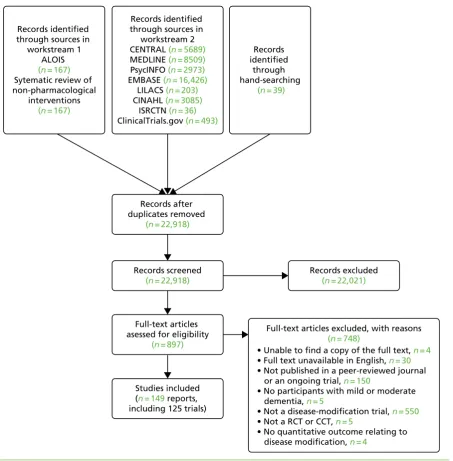
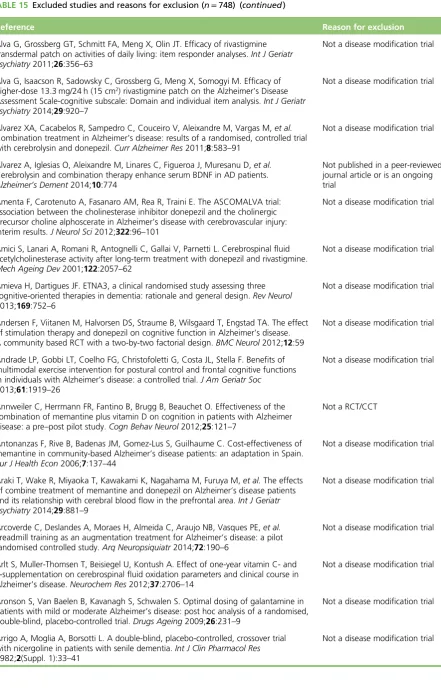
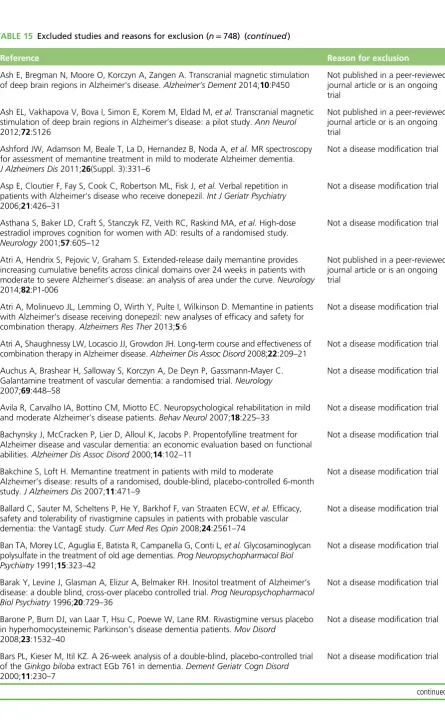
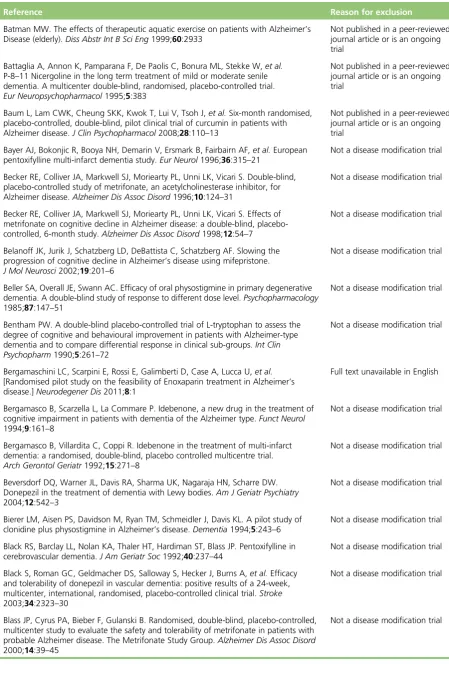
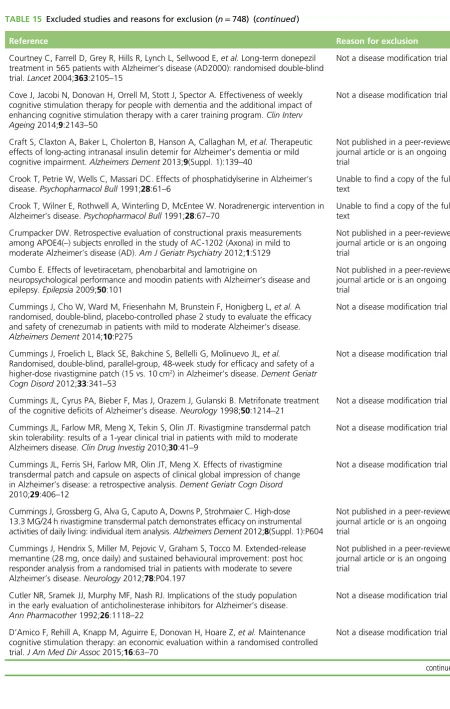
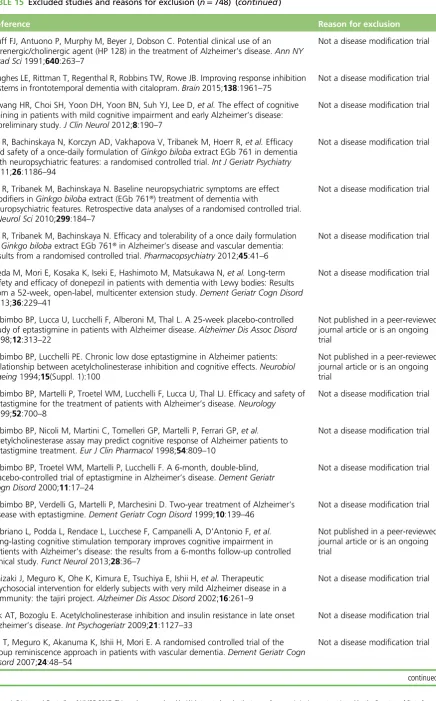
Figure 1shows a PRISMA flow diagram with the results of the searches. Altogether we found 22,918 original references from searches of databases and workstream 1 (ALOIS and another systematic review of non-pharmacological interventions for dementia). From the screening of all titles and abstracts, we excluded 22,021 references and sought the full texts of 897 abstracts. From the full texts, we excluded 748 papers; a list of excluded studies and reasons for exclusion is inAppendix 3. We included 149 reports of 125 trials.
The 125 trials included 95 published trials, three published protocols and 27 ongoing trials, the characteristics of which are available, respectively, inTables 1–3in this chapter. One trial was a CCT, with the other
Records identified
through hand-searching
(n = 39)
Records identified through sources in
workstream 1 ALOIS
(n = 167)
Sytematic review of non-pharmacological
interventions
(n = 167)
Records identified through sources in
workstream 2
CENTRAL (n = 5689)
MEDLINE (n = 8509)
PsycINFO (n = 2973)
EMBASE (n = 16,426)
LILACS (n = 203)
CINAHL (n = 3085)
ISRCTN (n = 36)
ClinicalTrials.gov (n = 493)
Records after duplicates removed
(n = 22,918)
Full-text articles asessed for eligibility
(n = 897)
Studies included
(n = 149 reports,
including 125 trials) Records screened
(n = 22,918)
Records excluded
(n = 22,021)
Full-text articles excluded, with reasons
(n = 748)
• Unable to find a copy of the full text, n = 4
• Full text unavailable in English, n = 30
• Not published in a peer-reviewed journal
or an ongoing trial, n = 150
• No participants with mild or moderate
dementia, n = 5
• Not a disease-modification trial, n = 550
• Not a RCT or CCT, n = 5
• No quantitative outcome relating to
[image:44.595.66.520.292.754.2]disease modification, n = 4
124 trials being RCTs. Trials were carried out in Australia (n=2), Austria (n=1), Canada (n=1), China (n=2), Denmark (n=1), France (n=2), Germany (n=5), Iran (n=2), Italy (n=4), Japan (n=1), Korea (n=1), the Netherlands (n=2), New Zealand (n=1), Poland (n=2), Russia (n=1), Spain (n=3), Sweden (n=4), Taiwan (n=1), the UK (n=6) and the USA (n=46); 37 were multicountry studies.
Across the trials, most participants had only AD; 16 studies included only patients with mild AD (seven of which specified early AD), six included patients with moderate AD, 84 involved patients with mild to moderate AD, two included patients with mild to severe AD, two studies included patients with moderate to severe AD and in one study all participants had AD of unspecified severity but were living at home. Eight trials also included participants with MCI, alongside mild (n=5) or mild to moderate AD (n=3). Three trials combined participants with AD and vascular dementia, two included patients with mild to moderate AD or vascular dementia, and one comprised patients with mild to moderate AD, with or without vascular dementia. Two trials included participants with vascular dementia only, one included patients with mild to moderately severe vascular dementia and one included patients with mild to moderate subcortical ischaemic vascular dementia. One trial included participants with mild to moderate primary degenerative dementia or vascular dementia.
Outcomes found in the review
An overview of the findings of the systematic review is available inBox 1.
BOX 1 Overview of findings of the systematic review
Findings (number of trials)
Cognitive outcomes (117 trials measured at least one cognitive outcome; 31 different outcomes)
Global: Alzheimer’s Disease Assessment Scale–Cognitive subscale (ADAS-Cog) (n=92); Mattis Dementia Rating Scale (n=1); MMSE (n=83); Modified Telephone Interview for Cognitive Status (n=1); and Vascular Dementia Assessment Scale Cognitive subscale (n=1).
Batteries: The Consortium to Establish a Registry for Alzheimer’s Disease (CERAD)’s Neuropsychological Test Battery (n=2); Cogstate Alzheimer’s Battery (n=6); Computerised Neuropsychological Test Battery (n=1); Frontal Assessment Battery (n=1); Mental Deterioration Battery (n=1); Neuropsychological Test Battery (n=7); Severe Impairment Battery (n=1); Syndrome Short Test (n=2); Wechsler Adult Intelligence Scale–Revised (n=1); Wechsler Memory Scale (n=5); and Western Aphasia Battery (n=1).
Individual tests (either used in combination or to supplement the ADAS-Cog or MMSE): Buschke Selective Reminding Test (n=3); Benton Visual Retention Test (n=1); clock drawing test (n=2); controlled oral word association test (n=2); digit span test (n=2); digit symbol (n=3); dot countingn-back task (n=1); fluency tests (n=7); Mohs number cancellation test (n=1); recall tasks (n=3); Rey 15-Item Memory Test (n=1); Stroop Colour Word Interference Test (n=4); token test (n=1); trail making test (n=10); and word recognition (n=1).
Techniques for biological markers (71 trials measured at least one biological marker; nine different techniques)
Imaging: electroencephalography (n=3); Doppler ultrasound (n=1); MRI (n=30); magnetic resonance spectroscopy (n=1); positron emission tomography (n=20); and single-photon emission computerised tomography (n=1).
We contacted three authors to request extra information regarding outcomes; two of whom provided this.9,24There were 81 different outcomes used across the trials; 72 questionnaire- or interview-based
measures and nine biological techniques used to measure biomarkers. We categorised outcomes by the domain they measured. The domains were:
l cognition
l quality of life
l ADLs
l neuropsychiatric symptoms
Neuropsychiatric outcomes (58 trials measured at least one neuropsychiatric outcome; 16 different outcomes)
Global: Alzheimer’s Disease Assessment Scale–Non-Cognitive subscale (n=7); Behavioural Pathology in Alzheimer’s Disease Rating Scale (n=1); Brief Psychiatric Rating Scale (n=3); CERAD’s Behavioural Scale (n=1); Dysfunctional Behavior Rating Instrument (n=1); Neuropsychiatric Inventory (n=38); Nurses’Observation Scale for Geriatric Patients (n=2); Plutchik Geriatric Rating Scale (n=1); and Revised Memory and Behaviour Problems Checklist (n=1).
Specific symptoms: Cohen-Mansfield Agitation Inventory (n=1); Columbia Suicide Severity Rating Scale (n=3); Cornell Scale for Depression