IMPROVING THE QUALITY OF NURSING CARE: A STUDY OF NURSING ERRORS AND THEIR REDUCTION
Clency Emmanuel Meurier
Department of Psychology University College London
Thesis submitted for the degree of doctor in philosophy in the University of London
All rights reserved
INFORMATION TO ALL USERS
The quality of this reproduction is dependent upon the quality of the copy submitted.
In the unlikely event that the author did not send a complete manuscript and there are missing pages, these will be noted. Also, if material had to be removed,
a note will indicate the deletion.
uest.
ProQuest U642826
Published by ProQuest LLC(2016). Copyright of the Dissertation is held by the Author.
All rights reserved.
This work is protected against unauthorized copying under Title 17, United States Code. Microform Edition © ProQuest LLC.
ProQuest LLC
789 East Eisenhower Parkway P.O. Box 1346
Acknowledgements Thanks are due to a number of people.
Firstly thanks are due to my supervisor Dr Charles Vincent for his support, patient advice, encouragement and constructive criticism. This work could not have been completed without his quality supervision.
Thanks to Dr Susan Merchant-Haycox who was instrumental in encouraging me to do this degree at University College London, and for providing me moral support throughout the course.
Assistance with using main frame SPSS was sought from D.G. Parmar at the IT Services, Nene University College, Northampton.
France):
ABSTRACT.
Errors and adverse events are common in clinical practice, and have a significant impact on quality and safety issues. They are also a major source of complaints and litigation. However, the study of errors in nursing (apart from medication errors) has been a neglected area of research enquiry. As a result, very little is known of the interaction between professional, contextual, organisational and psychological factors in the production of errors and in their prevention.
A series of studies were carried out to investigate the antecedents, types, and incidence of errors as well as nurses' responses to them, principally to identify the types of strategies that may be most effective in reducing errors in nursing care.
Using a critical incident technique, the types of errors that were made by nurses and their responses to them were investigated. These were found to occur at various stages of the nursing process. Accepting responsibility for one's error was linked to constructive changes in their practice.
care would be effective in reducing omissions in assessment and care of these patients. The results showed significant improvement in the assessment records of the patients as well as a positive impact on various clinical indicators, including better awareness of patients' needs and improved patients' satisfaction.
TABLE OF CONTENTS.
CHAPTER ONE INTRODUCTION... 23
1.1 The Context of Nursing... 23
1.2 The Development of Nursing... 24
1.3 Quality and Safety in nursing Care... 26
1.4 The Regulatory Rules ... 29
1.4.1 Concerns about Standards of Care... 30
1.5 The Reporting of Errors... 31
1.6 Dealing with errors and Inadequacies in Clinical Practice... 32
1.7 Conclusion... 33
CHAPTER TWO THE DELIVERY OF NURSING CARE 34 2.1 Changes in the Delivery of Nursing care 34 2.2 Task-oriented Care... 34
2.2.1 Problems with the Task System... 35
2.3 The Introduction of the Nursing Process 35 2.3.1 The Stages of the Nursing Process... 36
2.3.2 Application of the Nursing Process to a Patient with Chest Pain... 38
2.3.3 Problems with the Nursing Process... 38
2.4 Improving the Nursing Process... 40
2.4.1 Clinical Guidelines and Care Pathways 41 2.5 Conclusion... 42
CHAPTER ERRORS AND ADVERSE EVENTS IN THREE HEALTH CARE... 43
3.2.1 Confidential Enquiries on Adverse Events in
Medicine... 45
3.3 Errors in Medicine... 47
3.3.1 Factors Relating to Errors in Medicine... 48
3.4 The Problematic Nature of Nursing Errors 50 3.4.1 Studies of Errors in Nursing... 51
3.4.2 Incidence of Medication Errors... 51
3.4.3 The Reporting of Medication Errors... 53
3.4.4 Types of Medication Errors made by Nurses.... 55
3.4.5 Causes of Medication Errors... 56
3.5 Methods of Investigating Errors and Deficiencies in Care... 57
3.5.1 Occurrence Screening... 58
3.5.2 Incident Reporting... 59
3.5.3 Critical Incident Technique... 59
3.5.4 The Observational Methods... 61
3.5.5 "Tracer" Methodology... 62
3.6 Conclusion... 63
CHAPTER PSYCHOLOGICAL BASES OF HUMAN FOUR ERRORS... 65
4.1 The Problems of Errors in the Health Care Field... 65
4.2 The Nature of Errors... 66
4.3 Cognitive Processes and Performance... 68
4.5.1
4.6
Applying the Organisational Accident Model in the Analysis of Clinical Incidents... Conclusion... 77 82 CHAPTER FIVE 5.1 5.2 5.3 5.4 5.4.1 5.5 5.6 5.7 5.8 CHAPTER SIX 6.1 6.1.1 6.1.2
6.2
6.2.1
6.2.2
6.2.3 6.3 6.3.1 6.3.1.1
PSYCHOLOGICAL RESPONSES TO ERRORS... Psychological Impact of Errors... Explanations of Causes of Errors: Attribution Theory... Causal Attribution and Emotional Reaction.... Application of Attribution Theory to Nursing Errors...
The Importance of Attribution in the Prevention of Errors...
Stress Associated with Errors in Practice... Coping with Errors... Conclusion... Overview of Introductory Chapters...
TYPES OF NURSING ERRORS AND THEIR PERCEIVED CAUSES: THE POTENTIAL FOR LEARNING FROM ERRORS... Introduction and Background to the Study... Operational Definition... Exclusion Criteria... Method... ... The Sample... Procedures... The Questionnaire... Results... Types of Errors... Nursing Classification of Errors...
6.3.3 Perceived Causes of Errors... 106
6.3.4 Initial Responses to Errors... 107
6.3.5 Discussion of Errors with Others... 108
6.3.5.1 Reaction from Discussion of the Error with Senior Staff (Ward Sisters/Charge Nurses) 108 6.3.6 Coping Strategies used by the Nurses... 109
6.3.7 Changes in Practice... 112
6.3.8 Factors Relating to Changes in Practice 113 6.3.8.1 Multiple Regression Analysis... 116
6.4 Discussion... 121
6.4.1 General Findings... 121
6.4.2 Types of Errors... 122
6.4.3 Perceived Causes of Errors... 123
6.4.4 Reporting of Nursing Errors... 123
6.4.5 Responses to Errors... 124
6.4.6 Changes in Practice... 125
6.5 General Implications... 126
6.5.1 Supervision and Support... 126
6.5.2 Updating of Knowledge and Skills... 126
6.5.3 Addressing the Causes of Errors... 126
CHAPTER THE DEVELOPMENT OF AN AUDIT SEVEN QUESTIONNAIRE TO INVESTIGATE THE FREQUENCIES OF OMISSIONS IN THE ASSESSMENT OF PATIENTS WITH CHEST PAIN... 128
7.1 Introduction... 128
7.1.2 Aims of the Study... 131
7.1.3 Operational Definition... 131
7.2 Method... 131
7.3 The Development of the Assessment Questionnaire... 132
7.3.1 Critical Care Pathway... 132
7.3.2 The Audit Questionnaire... 133
7.4 Data collection... 134
7.5 Validity and Reliability... 135
7.5.1 Validity of Audit Questionnaire... 135
7.5.2 Internal Consistency of the Audit Questionnaire... 135
7.5.3 Inter-rater Reliability of Questionnaire 136 7.6 Results... 138
7.6.1 Audit of the Nursing Assessment Records of 30 Patients with Chest Pain... 138
7.6.1.1 History of Development of Chest Pain... 140
7.6.1.2 Physiological and Physical Observations 140 7.6.1.3 Psychological Responses/Knowledge... 140
7.6.1.4 Assessment of Patients'Lifestyle... 140
7.6.1.5 Synthesis of Assessment... 141
7.7 Discussion... 141
7.7.1 Initial Findings... 141
7.7.2 Assessment of Pain... 141
7.7.3 Assessment of Physiological Status... 142
7.7.4 Lifestyle Assessment... 142
7.8 Conclusions... 143
CHAPTER EIGHT
8.1
8.2 8.2.1 8.2.2 8.2.3 8.2.4 8.3 8.3.1 8.3.2 8.3.3 8.3.4 8.3.5 8.4 8.4.1 8.4.2 8.4.3 8.4.4 8.4.5 CHAPTER NINE
Assessment Records of Patients with Chest Pain...
PERCEPTION OF CAUSES OF OMISSIONS IN THE ASSESSMENT OF PATIENTS WITH CHEST PAIN... Introduction... Method... Design... The Subjects... Procedures... The Self-report Questionnaire... Results... Responses from the Self-report Questionnaire.. Perceptions of Nurses with Regards to Frequency of Omissions in the Assessment of Patients with Chest Pain...
Perceived Causes of Omissions in the Assessment of Patients With Chest Pain...
Internal and External Causes of Omissions... Causal Attributions of the Reported Omissions in Assessment...
Discussion... Reported Omissions and Omissions found in Assessment Records... Causal Attributions of Omissions.
Clinical Implications... Limitations of the Study... Conclusions...
NURSES’ CLINICAL KNOWLEDGE RELATING TO THE ASSESSMENT Of PATIENTS WITH CHEST PAIN...
9.1 Introduction... 164
9.1.1 The Retrieval of Knowledge from Memory 165 9.2 Method... 167
9.2.1 Design... 167
9.2.2 Procedures... 168
9.2.3 The Questionnaire... 169
9.2.4 Validity and Reliability... 170
9.3 Results... 171
9.3.1 Nurses' Recall of Knowledge Relating to Chest Pain... 171
9.3.2 Nurses' Recognition of Knowledge Relating to Chest Pain... 171
9.3.3 Comparison of Recall and Recognition... 172
9.3.3.1 History of the Development of Chest Pain 174 9.3.3.2 Physiological/Physical Observations... 174
9.3.3.3 Lifestyle... 174
9.4 Discussion... 175
9.4.1 Level of Clinical Knowledge Relating to the Assessment of Patients with Chest Pain 175 9.5 Limitations of the Study... 177
9.6 Possible Role of Clinical Knowledge in Care Planning... 177
9.7 Clinical Implications of the Study... 178
9.7.1 The Development of a Proforma for the Assessment of Angina/Myocardial Infarction... 179
9.8 Conclusion... 180
CHAPTER TEN COMPARISON OF THE NURSES’ RESPONSES TO ERRORS WITH A SERIOUS AND NON-SERIOUS OUTCOME: THE IMPLICATIONS FOR PRACTICE 181 10.1 Introduction... 181
10.3 Results... 184
10.3.1 Causal Dimensions Scores... 185
10.3.2 Implications of Errors... 186
10.3.3 Factors Associated With Accepting Responsibility for the Error... 187
10.4 Discussion... 190
10.4.1 General Findings... 190
10.4.2 Comparison with Previous Research... 191
10.5 Implications of the Study... 192
10.5.1 Changes in Practice... 192
10.6 Conclusion... 193
CHAPTER REDUCING OMISSIONS IN THE ELEVEN ASSESSMENT OF PATIENTS WITH CHEST PAIN... 195
11.1 Introduction... 195
11.1.1 Intervention Strategies... 197
11.1.2 Issues Relating to the Implementation of Changes in Clinical Care... 198
11.2 Methodology... 200
11.2.1 Design... 200
11.2.2 Patients... 201
11.2.3 Inclusion Criteria... 201
11.2.4 Exclusion Criteria... 202
11.2.5 Questionnaires... 202
11.2.5.1 The Audit of Nursing Assessment Questionnaire... 202
11.2.5.3 The Short Form McGill Pain Questionnaire
(SF-MPQ)... 203
11.2.5.4 The Beck Anxiety Inventory (BAJ)... 203
11.2.5.5 The Newcastle Satisfaction With Nursing Scales (NSNS)... 204
11.2.6 Procedure... 205
11.2.6.1 The Baseline Group... 205
11.2.6.2 Intervention Strategies... 205
11.2.6.3 The Experimental Group... 206
11.3 Results... 206
11.3.1 Comparison Between the Two Groups on Demographic Data... 207
11.3.2 Quality of the Assessment of Patients With 209 Angina/ Myocardial Infarction... 11.3.3 Comparison of the Mean Audit Scores of the Two Groups... 211
11.3.4 Areas of Deficiencies... 211
11.3.4.1 History of the Development of Chest Pain... 211
11.3.4.2 Physiological and Physical Observations... 212
11.3.4.3 Knowledge and Psychological Responses... 212
11.3.4.4 Lifestyle... 212
11.3.5 Influence of Intervention on Clinical Indicators 212 11.3.6 Changes in Nursing Behaviours... 215
11.3.7 Factors Influencing Satisfaction With Care Outcomes... 217
11.4 Discussion... 229
11.4.1 Audit of the Assessment Records of Patients with Chest Pain... 229
11.4.2 Effects of Intervention on Specific Outcomes... 230
11.4.2.1 Physiological Outcomes... 231
11.4.2.2 Anxiety Reports and Knowledge Level... 231
11.5 Implications of the Study... 233
11.5.1 The audit Questionnaire... 233
11.5.2 A System Approach to Making Improvement in Nursing Practice... 234
11.5.3 Evidence-Based Practice... 234
11.6 Conclusions... 235
CHAPTER REDUCING OMISSIONS AND TWELVE INADEQUACIES IN THE ASSESSMENT OF PATIENTS WITH CHEST PAIN: A FOLLOW-UP STUDY... 236
12.1 Introduction... 236
12.2 Method... 237
12.2.1 Sample... 237
12.2.2 Procedures... 237
12.2.3 Questionnaires... 237
12.3 Results... 238
12.3.1 Comparison Between the Baseline, Experimental and Follow-up Groups on Demographic Data... 238
12.3.2 Quality of Assessment of Patients with Angina/Myocardial Infarction... 240
12.3.2.1 Areas of Deficiencies... 242
12.3.2.2 History of the Development of Pain... 242
12.3.2.3 Physiological and Physical Observations 242 12.3.2.4 Knowledge and Psychological Response 242 12.3.2.5 Lifestyle... 243 12.3.3 Comparison of Patient Assessment (Audit Score)
12.3.3.1 Paired Group Comparisons of Audit Scores and
Post-hoc Analysis (Scheffe Test)... 244 12.3.4 Evaluation of Differences of Clinical Indicators
Between the Three Groups... 246 12.3.5 Evaluation of Nursing Behaviours in Baseline,
Experimental and Follow-up Groups... 249 12.4 Discussion... 252 12.4.1 The Quality of the Assessment Records in the
Follow-up Group... 253 12.4.2 Effects of Intervention on Specific Outcomes 253 12.4.2.1 Physiological outcomes... 253 12.4.2.2 Anxiety and Knowledge of Condition... 254 12.4.2.3 Experience of Nursing Care and Satisfaction
Scores... 254 12.5 Conclusions... 254
CHAPTER
THIRTEEN DISCUSSION... 256 13.1 Overview Of the Findings of the Thesis 257 13.1.1 Findings from the Literature Review... 257 13.1.2 Findings from the Empirical Studies... 259 13.1.2.1 Types of Errors Made and Nurses' Responses to
Them... 259 13.1.2.2 Frequency of Errors of Omissions in the
Assessment of Patients with Chest Pain 260 13.1.2.3 Perceptions of Causes of Omissions in the
Assessment of Patients with Chest Pain 260 13.1.2.4 Clinical Knowledge and the Assessment of
Patients with Chest Pain... 261 13.1.2.5 Reducing Omissions in the Assessment of Patients
13.2.2 13.2.3
13.2.3.1 13.2.3.2
13.2.4
13.3 13.4
Skill-mix and Workload... 265
The Need to Apply Lessons from Psychological and Human Factors Research to Clinical Errors... 266
Attitudes to errors... 267
The Human Factors Approach to Dealing with Errors... 268
Improving the System of Care: Care Pathway, Clinical Guidelines and Evidence-based Practice... 269
Future Research... 270
Final Conclusions... 272
REFERENCES 273 APPENDIX 1 Regulatory Rules and Framework... 296
APPENDIX 2 Data Sheets (Chapter Six)... 306
APPENDIX 3 Data Sheets (Chapter Seven)... 312
APPENDIX 4 Data Sheets (Chapter Eight)... 327
APPENDIX 5 Data Sheets (Chapter Nine)... 331
APPENDIX 6 Data Sheets (Chapter Ten)... 336
LIST OF TABLES
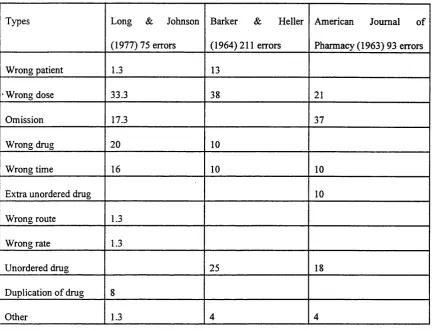
3.1 Errors Reported By Clinical Areas... 54 3.2 Common Types of Medication Errors in Three
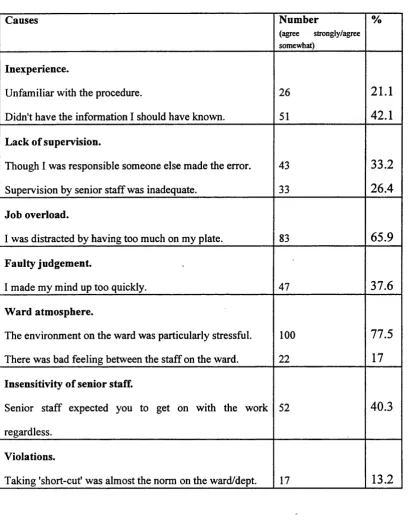
Studies... 56 6.1 Perceived Causes of Errors... 107 6.2 Reactions of Nurses from Discussion of error
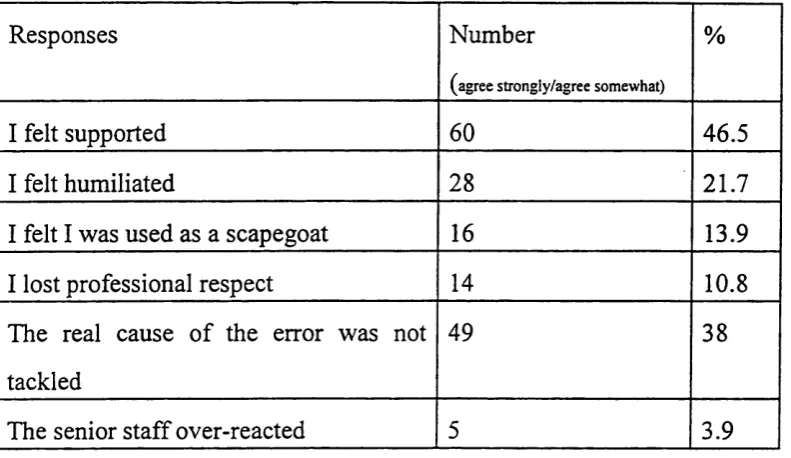
with senior staff... 109 6.3 Coping Strategies Nurses used in Response to
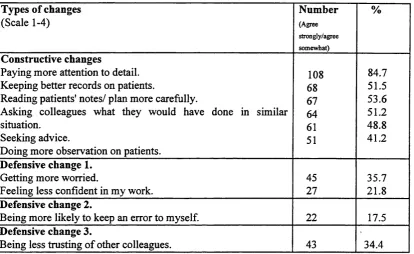
their errors... 111 6.4 Constructive and Defensive Changes in
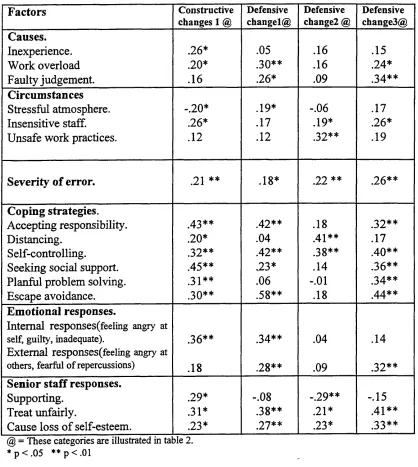
Practice... 113 6.5 Correlation of causes of Error, Circumstances of
the Error, Severity of the Error, Coping Strategies, and Responses to Error with Constructive and
Defensive Changes in
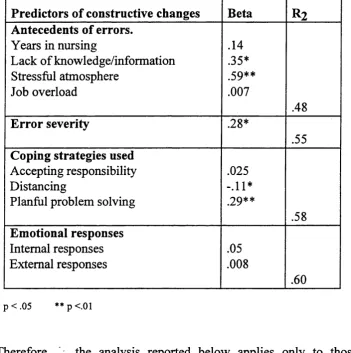
Practice... 115 6.6 Predictors of Constructive Changes in Practice in
Nurses Who did not Directly Make the
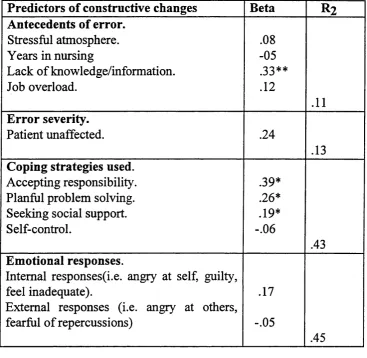
Error... 117 6.7 Predictors of Constructive Changes in Practice
Who Accepted Responsibility for the Error 118 6.8 Predictors of Defensive Change 1 (More Anxious
and Less Confident)... 119 6.9 Predictors of Defensive Change 2 (More Likely to
Keep an Error to Myself)... 120 6.10 Predictors of Defensive Change 3 (Less Trusting
of Others)... 120 7.1 Level of Agreement Between the Two Raters on
the 19 Criteria Relating to the Assessment of
Patient's with Chest Pain... 137 7.2 Compliance with Criteria Pertaining to the
Assessment of Chest Pain... 139 8.1 Comparison of Reported Omissions and
Omissions in the Assessment Records (in %) in
From a List of Scales 154 8.3 Classification of Reported Causes of Omissions
into Internal and External
Categories... 155 8.4 Mean Scores and T-value of the Three Subscales
of the Causal Dimensions in Relation to Reported Internal and External Causes of
Omissions... 158 9.1 Comparison of Scores From Recall and
Recognition Tests... 172 9.2 Difference Between Mean Scores Obtained in the
Recall and Recognition Tests... 173 10.1 Difference Between Mean Scores Obtained by the
Groups in the Serious and Non-Serious Conditions on the Three Sub-Scales of the Causal Dimension
Scale... 185 10.2 Comparison of Responses of the Two Groups
(Serious and Non-serious Conditions) on the Globality Dimension, Perceived Importance of
Error and Acceptance of Responsibility... 187 10.3 Correlation of Locus, Stability, Importance, Grade
with Accepting Responsibility for one’s Error in
the Serious and Non-serious Conditions. 188 10.4 Association of Years of Experience in Nursing,
Importance Attached to the Error, Globality, Locus, Stability, Controllability with Accepting Responsibility. Summary of Hierarchical
Regression Analyses... 190 11.1 Comparison of the Demographic Data Between
the Baseline and Experimental
Groups... 208 11.2 Distribution of Patients on the Three Medical
11.3 Comparison of Assessment of Patients with Chest Pain Between Baseline and Experimental
Groups... 210 11.4 Comparison of Audit Scores Between Control and
Experimental Groups... 211 11.5 Comparison of the Two Groups on Physiological
indicators, Cognitive Indicators, Satisfaction with Care Outcomes. Results of One Way
ANOVA... 214 11.6 Comparison Of Nursing Behaviours Between the
Baseline and Experimental Group... 216 11.7 Variables Associated With Satisfaction with Care
Outcomes... 218 11.8 Predictors of Experience of Nursing Care...
11.9 Predictors of Satisfaction with Care...
220 221
12.1 Comparison of the Demographic Data Between the Baseline, Experimental and
Follow-up... 239 12.2 Distribution of Patients on the Three Medical
Wards... 240 12.3 Comparison of "fully met" Compliance Between
the Three Groups... 241 12.4 Comparison of Patient Assessment (Audit Score)
Between the Baseline, Experimental and
Follow-up GroFollow-ups... 243 12.5 Paired Group Comparisons of Audit Scores
Between the Baseline and Experimental, Baseline and Follow-up and Experimental and Follow-up and Post-hoc analyses
(ScheffeTest)... 245 12.6 Comparison of the Three Groups on Physiological
Indicators, Cognitive Indicators and Satisfaction with Care Outcomes. Results of One Way
Experimental and Follow-up on Physiological Indicators, Cognitive Indicators and Satisfaction with Care Outcomes and Post-hoc
Analyses... 248 12.8 Comparison of Nursing Behaviours Between the
Baseline, Experimental and Follow-up
groups... 250 12.9 Paired Comparisons on Nursing Behaviours
Between the Baseline and Experimental, Baseline and Follow-up and Experimental and Follow-up
and Post-hoc 251
LIST OF FIGURES
2.1 The Relationship Between the Four Stages of the
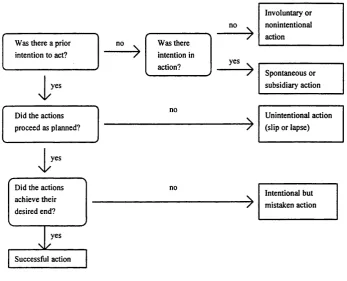
Nursing Process... 36 4.1 Varieties of Intentional Behaviour... 68 4.2 Organisational Accident Model... 76
11.1 Path Diagram for Satisfaction with Care Outcomes (Experience of Care And Satisfaction
CHAPTER ONE: INTRODUCTION.
Nursing is at a critical stage of its development as a profession. There have been concerted attempts in the past two decades or so to establish a firm knowledge base for nursing, to demonstrate its unique contribution to health care, and to enhance its status as a burgeoning profession.
The Briggs' (1972) recommendations that nursing should become a researched- based profession was undoubtedly a major landmark in the history of the nursing profession. It created the momentum for nurses to start carrying out research into nursing care during the 1970's and to start building a knowledge base for the practice of nursing. This emphasis on developing nursing knowledge has been the main thrust of the many changes which have been introduced in nursing in the past few decades, culminating in the replacement of the certificate hospital-based course in nursing to an all diploma course (UKCC, 1986) taught at universities and colleges of higher education.
In the climate of rapid changes, finite resources and public demands for better health services, the issue of quality and safety has become fundamental to the practice of nursing and the other health care professions and audit has now become an integral part of all aspects of health care.
1.1 The context of nursing.
Chapter 1: Introduction
work makes it rather difficult for them to fulfil their aspirations to function as fully fletched autonomous professionals who are in control of their own work. It is against this backdrop that one has to view some of the difficulties experienced by nurses in the delivery of care.
1.2 The development of nursing.
The beginning of the nursing profession is thought to be about the end of the 19th century. However, what or who influenced it is more debatable. Some reformers such as Bedford-Fenwick (Maggs, 1985) claimed that it was Florence Nightingale who established a trained nursing profession. Others (e.g. Burdett) saw the emergence of General Nursing as inextricably linked with the growth of the general hospital system (Maggs, 1985).
The legal definition of a nurse originated with the Nurse Registration Act (1919). The law defined only the State Registered Nurse (i.e. one who had been registered with the General Nursing Council by virtue of having followed a prescribed training course).This means untrained people could still call themselves nurses, "provided the impression was not given that 'nurse' means State Registered Nurse" (Baly, 1982). This led Bedford-Fenwick (Maggs, 1985) to argue that the public had a right to know "what was a nurse, what duties and responsibilities she had...". Bedford-Fenwick postulated that the training of nurses should be geared towards instilling a rigid code of behaviour and discipline. The acquisition of knowledge and skills was not considered as important. In fact, interest in nursing knowledge and research is a relatively new phenomenon.
a more uniform framework of planning and administration" (Dingwall et al, 1988). The formation of the National Health Service (NHS) in 1948 consolidated this trend.
However, there was no logical or consistent pattern of participation of nurses in policy matters (Dingwall et al, 1988). The introduction of the Salmon structure (1966) was a serious attempt to modernise nursing management and to give it more opportunities in determining hospital policies. The flaw in the Salmon structure was "the progressive dilution of nursing by the development of low level staff to carry out many of the less technical aspects of personal care", with more qualified staff being lost to management and education (Dingwall et al, 1988). This was rectified by the introduction of clinical grading structure in the 1980's, aiming to keep expertise at clinical level and increase the standing of the profession (see appendix 1 for explanation).
With the implementation of the Griffith's report (1983), nurses lost most of the influence they had gained as a result of previous reforms. The Griffith's report led to the transformation of the old NHS administrative structure to one of efficiency-oriented management. Professional general managers were appointed at every tier of NHS to promote local decision making. As only a negligible number of nurses were appointed to these managerial positions, their influence on policy matters were markedly reduced.
Chapter 1: Introduction
introduce a complex mixture of personnel within the clinical areas is illustrated by the following statement:
Nurses sometimes perform duties simply because they happen to be on the spot, the various contributions
and roles o f other groups need to be taken into account in building up a complete picture o f the staffing
functions in an environment such as the hospital ward.
(Institute of Health Sevice Management, 1997).
1.3 Quality and Safety in Nursing Care.
In line with current developments in the medical profession, nursing is being increasingly subject to quality assessment. It is now a requirement that nurses and other healthcare staff should audit the care they give to their patients as a result of the government white paper "working for patients" (1989). Morrison (1991) argues that the fundamental aim of audit in nursing should be to "foster in nurses a critical questioning approach to their activities and the needs of their patients".
There is certainly a growing pressure for health care professionals to reduce variations in the delivery of care (Crombie et al, 1994). The concepts of clinical effectiveness, clinical appropriateness and evidence-based practice have become very important in professional clinical practice. Increasingly, health care professionals have to cope with other pressures such as the mismatch between demands and resources as well as the growing pressure of consumerism (Crombie et al, 1994). All of these developments have brought professional practice under the microscope, requiring health professionals to be more open, critical and accountable for their practice.
the tasks they have to perform. This idea that nurses must keep abreast with changes in their practice and continuously update themselves is enshrined in the Post Registration Education and Practice (PREP) legislation, which came into effect from April 1996. This requires nurses to show evidence of professional updating before they are able to renew their registration at the end of every three years. PREP is based on the assumption that pre-registration education does not give the nurse all the knowledge that she/he needs to practice for the rest of her/his professional life. It is based on the current educational philosophy that learning is lifelong. The rapid technological change in various spheres of life, and especially healthcare, means that much of what is learnt has a finite and shrinking life. This means that nurses must continually acquire a higher level of knowledge, skills and understanding in order to be able to continue to practice nursing in a safe and effective way, particularly as there have been concerns that some nurses may not have been 'refreshing' their knowledge following their initial registration or on their return to nursing after a break and that this may jeopardise patients' care.
There has also been other parallel developments to improve the system within which nurses have to work to reduce risk in the delivery of care. For instance, it has been recommended ( DOH , 1993 ; UKCC , 1992 ; UKCC , 1994; UKCC,
1996) that all nurses should have the benefit of supervision not only to ensure good practice and prevent patients from being harmed but also to enable proper targeting of their professional development needs and helping them to develop their skills and knowledge . The UKCC (1992) has also published a document entitled ' The scope of professional practice ' to be used by the nurses as a framework for developing practice and meeting the needs of the patients and clients. It focuses upon six principles, namely :
* putting the needs of patients and client first at all times
Chapter 1: Introduction
* recognising limitations in your personal knowledge and skills and taking actions to address these deficiencies
* ensuring that you do not compromise standards of care by new developments to your practice and taking on new responsibilities * acknowledging your own personal professional accountability * refusing tasks for which you are not competent.
The UKCC (1996) particularly stresses that professional accountability is an integral part of professional practice. In fact, each clause of the Code of Conduct (see appendix 1) begins with the statement that :
A s a reg istered nurse, m idwife o r heath visitor, y o u are p erso n a lly accountable f o r y o u r
p r a c tic e and, in the exercise o f yo u r profession al accountability, must....
According to the UKCC(1996), accountability provides the principles to help the nurses in their decision-making process, enabling them to weigh up the interests of patients in complex situations, using professional knowledge, judgement and skills to make decisions about care. Thus nurses are expected to ensure that they do not harm their patients in the process of giving care and to exercise professional accountability for their actions. Since accountability means being able to explain why an action had been taken or an event took place, knowledge is essential to enable the nurse to make this explanation (Bernard and Chapman, 1988). Thus, the issue of accountability is intimately linked with competence. To be competent means that the nurse has the knowledge and skills to function safely and take responsibility for his or her professional development (Elliott Fennels,
members, and the tendency by nurses not to rely entirely on the liability insurance provided by the health authorities for their staff.
1.4. The regulatory rules.
Nurses deliver care to their patients within a legal and ethical framework to ensure that risks to patients are minimised and patients' rights are safeguarded. The United Kingdom Council for Nurses, Midwives and Health Visitors (UKCC) is the statutory body which governs the work of the nurses. It was established by the Nurses, Midwives and Health Visitors Act (1979). The act states that the "principal functions of the central council shall be to establish and improve standards of training and professional conduct". The UKCC exercises its power by ensuring that the public is served by well-trained and conscientious nurses, who will be able to give them safe and quality care, particularly through its requirements that nurses have to undergo a prescribed course leading to the acquisition of thirteen core competencies (UKCC, Rule ISA, 1989 -see appendix 1) and its code of professional conduct. Achievement of these competencies will enable the nurses to become "knowledgeable- doers", i.e. they will have the knowledge and skills to provide competent care to their patients.
Through its professional code of conduct, the UKCC has the power to apply appropriate sanctions to those nurses who are found to be seriously incompetent, negligent or grossly irresponsible. The ultimate sanction is the removal of one's name from the register of nurses, thereby removing the person's right to practise as a nurse.
Chapter 1: Introduction
was established as a result of section 2 (5) of the Nurses, Midwives and Health Visitors Act (1979) which states :
The powers o f the council shall include that o f providing, in such manner as it thinks fit, advice fo r
nurses, midwives and health visitors on standards o f professional conduct.
The "code" is a professional and ethical guide for every nurse. It sets out the norm of acceptable professional behaviour. Pyne (1990) argues that the "primacy of the interests of the patient or client" is the principle theme of the code. The nurse is not only expected to act in the best interests of the patient but also be accountable for the care she/he gives to the patient. The care must necessarily be of high standard. Thus, judgement in "misconduct" cases is based on standard which is implicitly stated in the code.
1.4.1. Concerns about standard of care.
Recently, the UKCC (1996) has expressed concerns about the growing rate of professional misconduct cases, particularly from the nursing home sector. The UKCC is of the view that many of these cases highlight inappropriate delegation and inadequate supervision. It also found that "a significant number of cases reflect incompetence, rather than professional misconduct...", and that there may be a need to examine the feasibility of developing procedures to deal with the "poor performer". However, focusing solely on the "poor performers" may not necessarily lead to an improvement in care and general performance. Rather, we should look more widely at the causes of poor care as well as the circumstances which are associated with poor care.
Service Commissioner regularly reports his concern about serious "short comings" in patient care and management and about the failure of healthcare staff to address these issues constructively. In his 1986-1987 reports, he unveiled a catalogue of nursing errors which he claims to be due to failure of nurses to fully understand the nature of the nursing process and its application to care. We need to know why nursing staff have difficulties with certain aspects of the nursing process as well as the type of measures that are needed to improve the situation.
1.5. The reporting of errors.
Although the available literature indicates that errors and therapeutic misadventures affect a substantial percentage of hospitalised patients, almost all studies suggest that significant errors are under reported (Perper, 1994). The major culprit for the under reporting are thought to be due to the secretive methods by which adverse events are internally handled in hospitals (Perper, 1994). With respect to nursing, it can also be argued that the reluctance to report errors may be partly due to the fact that "erroneous action" has not been labelled as such and partly because of uncertainty inherent in health care practice. Fear of repercussions may also influence whether a particular action is considered erroneous or not (Arndt, 1994). For instance, depending on the perception of the supervisors, in "two similar cases with identical outcomes, one person may be considered guilty of an error while the other person is blameless" (Bosk, 1979). This apparent uncertainty about the nature of errors may not only affect the level of reporting of errors but also make it less likely for all incidence of errors to be properly investigated.
Chapter 1: Introduction
after a set period of time. As a result most information on nursing errors are inaccessible to the investigators. More serious errors are reported to the UKCC, which can be accessed. But this form of reporting does neither reflect the actual incidence of errors nor provide information about the range of errors that occur in nursing. This may be due to the fact that the criteria for reporting errors to the UKCC are not entirely explicit or are not strictly adhered to. In addition, we have to contend with the natural reluctance of nurses to report their errors, particularly where they fear they might compromise their image or their career (Arndt, 1994).
It is natural that nurses and the other health professionals do not want to be seen as incompetent or negligent. They are primarily motivated by the ethic of "do no harm to patients". They want to be seen as responsible and trustworthy professionals who have the welfare of their patients at heart. Indeed, Arndt (1994) found that the need to be seen as competent, skilful and to be respected by the general public is very important for the nurses' self-image. Making errors is anathema to being considered as a good nurse. This might explain not only the nurses' reluctance to admitting to their own errors but also their tendency to judge harshly those colleagues who have made errors (Arndt, 1994).
1.6. Dealing with errors and inadequacies in clinical practice.
The tendency to focus on blaming individuals for errors in nursing and medicine is purely a reactive approach to the management of errors and is unlikely to prevent or reduce further errors. Rather, there is a need to gain better understanding of human error mechanisms in clinical practice as well as the impact of the structures and systems on the performance of health professionals.
1.7. Conclusion
Chapter 2: The delivery o f nursing care
CHAPTER TWO: THE DELIVERY OF NURSING CARE.
2.1 Changes in the Delivery of Care.
Over the past two decades, the delivery of nursing care in the UK has changed from a task-oriented approach to a more systematic and problem-solving method called the nursing process. More recently, various conceptual models of nursing have been developed to be used with the nursing process ostensibly to rectify some of the shortcomings of the nursing process. Further improvements include the use of clinical guidelines, care pathways and evidence-based practice. These various developments will now be discussed to demonstrate how nurses operate in the clinical environments in order to gain insight into the difficulties that nurses may experience in the delivery of care.
2.2 Task-oriented care.
2.2.1 Problems with the task system.
The main flaw with the task-oriented system is the lack of a comprehensive or holistic assessment of the patient's needs and problems. Instead of an individual care plan for the patient, there is a list of "nursing orders" or instructions written down by the nurse in charge for different nurses to carry out for the patient over the course of the shift. This potentially makes the care less systematic in the sense that individual nurses attending the patient may not be inclined to focus on the inter relatedness of the patient's different problems, hence possibly overlooking significant changes in the patient's condition. This problem may be compounded by the inherent weakness of the task allocation system in not being able to foster continuity of care because of the daily changes in the assignment of duties and not having a nurse in charge of the patient himselftherself.
There were also concerns about the superficial nurse/patient relationships inherent with this task oriented care. With the task oriented approach to care, the patient had to relate to an array of nurses who may be more concerned with treating his condition and symptoms than dealing with him/her as a person. This was seen to be incompatible with the wider social movements of the time "which were based on a call for more holistic relationships between people" (Dingwall et al, 1988).
2.3 The Introduction of the Nursing Process.
Chapter 2: The delivery o f nursing care
through the use of a more systematic and individualised approach. Surprisingly, there were hardly any confirmatory studies to support this view. In fact, the Nursing Process Evaluation Group (1986) conceded that very little was known
about the ways patients reacted to this approach of care.
2.3.1 The Stages of the Nursing Process.
The nursing process is often described as a problem-solving approach to care consisting of four interlinking stages, namely assessment, planning, implementation and evaluation (Jones, 1977; Yura & Walsh, 1978; Hargreaves,
1985).
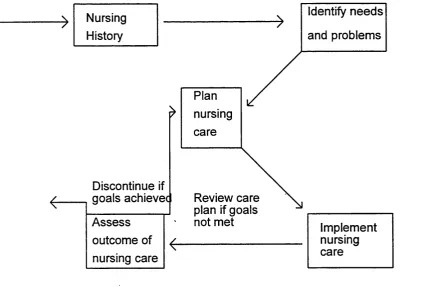
The four stages of the nursing process are shown diagrammatically in figure 2.1.
Figure 2.1 The Relationship between the four Stages of the Nursing Process.
Nursing ---> Identify needs
History and problems
Discontinue if goals achievec Assess
outcome of nursing care
nursing
Review care plan if goals
not met Implement
Assessment involves taking a history of the patient’s complaint as well as making appropriate observations and physiological measurements with a view to identifying the patient's specific problems. This is a difficult stage of the nursing process and its success is dependent not only on the skills of the nurse but also on how busy the ward is. If the nurse has multiple tasks to carry out, is stressed or lack knowledge and skills, the assessment may be inadequate and certain problems may not be identified. This in turn may affect the subsequent stages of the nursing process. For instance, if a frail and poorly patient is admitted to hospital and his pressure sore risk is not initially recognised, preventative measures may not be planned for and actual pressure sores may then develop.
Planning is intimately linked with assessment. Once the nurse has identified the patient's specific actual and potential problems as a result of the assessment of the patient, she or he will then set objectives about the desired outcome for each problem. In the example of pressure sore, the nurse will write down how the development of pressure sore could be prevented.
Intervention involves carrying out the care that has been planned. This is dependent on the nurses practical knowledge, appropriate delegation of duties, resources and general management of the ward. Failure to carry out the planned care may adversely affect the patient's care.
Chapter 2: The delivery o f nursing care
2.3.2 Application of the stages of the nursing process to a patient with chest pain.
To illustrate how the nursing process operates, the assessment and care of a patient admitted with chest pain using this system of care will now be described. On the admission of the patient, the nurse would first of all carry out a thorough assessment, encompassing an interview to determine the history of the chest pain and related factors, observations of vital signs as well as general observations and physiological measurements. This would enable the nurse to identify the patient's specific problems and needs as well (e.g. chest pain, low blood pressure, arrhythmias etc.) as prioritising them. Based on these problems and needs, a care plan would be designed with specific objectives for each problem and need (e.g. the chest pain will be relieved, blood pressure will return to normal, arrhythmias will be monitored). The care would then be implemented to achieve the objectives of the care plan. Finally, the patient would be re-assessed (i.e. the initial problems and needs would be evaluated to see whether or not they have been resolved) to ensure that the objectives of care have been achieved. A successful outcome would be the patient would be free of pain and complications, his basic needs and comfort would have been met during his period of illness ,and he would have been equipped with the knowledge to deal with some aspects of his care.
2.3.3 Problems with the Nursing Process.
nursing records' study sponsored by the Department of Health (DoH, 1992), it was found that "some patients were charted to death but there was no evidence of action and that day to day states were deficient". The study also recommends that nurses should be more factual and precise in their description of nursing observations. In a study of the records of patients admitted with Myocardial infarction , Hale et al (1997) found no evidence of assessment of needs with regards to anxiety and health education of individual patients. They found that in all cases, the records failed to satisfy the criteria outlined in the UKCC(1993) in their document 'standards for records and records keeping'.
The hasty introduction of the nursing process may have contributed to the difficulties with its use. The fundamental aspects of the nursing process such as intellectual skills, individual accountability, and patient participation were played down when the nursing process was first introduced in the UK (De La Cuesta, 1983). In 1986, the Nursing Process Evaluation Group commented that "the problems have been brought about by the lack of understanding of and negative perception towards the nursing process....coupled with too speedy introduction to an unprepared workforce". As a result, there was more focus on explaining the documentation associated with the nursing process than in enabling the staff to understand the principles underpinning the nursing process. This may explain the nurses' apparent difficulty in operationalising the nursing process at its broad theoretical level, hence the focus on paper work associated with the nursing process. Miller (1985) has also remarked that nurses have tended to concentrate more on the procedural (i.e. method) component of the nursing process and less on its ideological (i.e. principles and beliefs) component.
Chapter 2: The delivery o f nursing care
approach (i.e. the nursing process) if they do not have a clear concept of "what the goals are and where the boundaries of nursing lie" (Wright, 1986). As a result some nurse theorists (e.g. Roper et al, 1980; Aggleton & Chalmers, 1985; Wright, 1986) have advocated the use of explicit "model of nursing" for use with the nursing process. They suggest that a model of nursing is a conceptual explanation of what nursing is and the relationships between the various components which make nursing. They argue that a model will provide the clinical nurses with a theoretical framework for use with the nursing process to make the principles underlying the nursing process more explicit.
2.4 Improving the nursing process.
2.4.1 Clinical guidelines and care pathways.
Chassin (1990) defines practice guidelines as "statements that describe specific manoeuvres that should or should not be undertaken in specific clinical circumstances". Practice guidelines specify good management for specific conditions. They focus on quality of care and appropriateness of practice (Lomas et al., 1989). Kosecoff et al (1987) argue that guidelines can keep physicians up to date in the face of explosion of medical knowledge. Guidelines may help to reduce variations in care of patients, contribute to reducing errors, omissions or inappropriate care in clinical practice and assist in protecting the legal liability of the physicians (Fowkes et al, 1987). However, Lomas et al (1989) found that guidelines by themselves do not improve care. They state that other incentives or removal of disincentives will also probably be required. Koseloff et al (1987) recommend that guidelines be "coupled with follow-up programs that help to translate the message into local or individual actions...".
Chapter 2: The delivery o f nursing care
place between all those involved in the care of the patient and also promotes patient and relatives participation . The use of this approach to the care of patients with specific conditions may help to minimise the problems and confusion associated with nursing process which have been discussed earlier.
It must also be noted that carepathways/guidelines may complement and enhance individualised care, particularly as the indentification and tackling of variances are integral to this system of care (Johnson, 1997).
2.5 Conclusion.
It has been argued in this chapter that to fully understand the way nursing is organised and delivered as well as the difficulties that nurses experience in the process of care, we need to be aware of some of the salient factors which have influenced changes in nursing practice. Nursing has had a very unsettled history, with nurses having had to accept many changes in the way they deliver their care being imposed on them rather than being proactive in these changes. On the whole, nurses received little preparation to help them cope with these various developments in a competent manner, hence possibly making them less able to use the nursing process in a knowledgeable and confident way. Although the nursing process was initially hailed as an important development which would enable nurses to make that final push towards professional status and improved standard of care, its speedy introduction and the lack of consideration of its potential impact on the nurses have conspired to create a permanent state of unease with this system of delivering care, and is a potential source of many errors of omission and commission (Reid, 1987) . It is suggested that by modifying and simplifying the nursing process system of care by the provision of clinical guidelines/evidence-based health care and care pathways, much of the difficulty and confusion associated with the nursing process could be reduced.
CHAPTER THREE: ERRORS AND ADVERSE EVENTS IN HEALTH CARE.
3.1 Introduction.
Health care professionals are trained to be careful and competent at their job, and to ensure that they use resources effectively so that they can give care of the highest possible standard. But, given the complexity of health care and the high number of interventions that each patient may require as well as the number of health professionals that may be involved in carrying out these interventions, it is not surprising that errors and other problems occur, sometimes resulting in unintended injuries. Unfortunately, little attention has been given to the causes of clinical errors or to developing methods to prevent them. Leape (1994) has identified three main reasons as to why nurses and physicians have not developed more effective methods of error prevention. First, they may lack awareness of the severity of the problem. Second, most errors do not cause harm. Thirdly, the culture of clinical practice (i.e. to strive for error-free practice) makes it difficult for nurses and physicians to deal with human error when it does occur.
3.2 Nature and incidence of adverse events in medicine.
Chapter 3: Errors and adverse events in health care
To date, the Harvard Medical Practice Study is the most thorough and comprehensive investigation of adverse events in medicine that has been carried out. This study looked at a random sample of all discharge records (N= 30,429) in 1984 in 51 New York State hospitals according to pre-defined criteria which included death, increased length of stay, hospital re-admission, fever at discharge and complications requiring transfer to operating theatre or intensive therapy unit. It identified injuries sustained to patients during medical therapy and how many of them were the result of negligence. Of the 31,429 medical records examined, 1,133 (3.7 % of all cases) revealed an adverse event caused by medical treatment, 280 (27.6 %) of which were the result of negligence. When these findings are extrapolated to all patient discharges from New York Hospitals, the study concludes that for every 2.6 million patients discharged, 56,000 sustained injuries with minimal impairment, 13,500 with moderate impairment, 3,800 with permanent impairment, 2,500 with permanent and total disabilities and 13,400 with adverse events that caused death. The most common types of adverse events were found to be drug complications (19.4 %), wound infection (14 %) and technical complications. Risk factors included age, patients' condition, race, type of insurance and the hospital where care was given. There was a higher rate of adverse events in teaching hospitals, but lower rate of substandard care or negligence. This indicates that the rate of adverse incidents is influenced by severity of illness as well as the standard of care.
A similar study was carried out in Australian hospitals (Quality in Australian Health Care Study, 1995), involving the retrospective clinical review of 14179 medical records according to 18 specific criteria (McL Wilson et al., 1995). The study reveals that 16.6 % (N= 2353) of admissions resulted in an adverse event, 51 % of which were considered preventable. This was considerably higher than the 3.7 % recorded in the Harvard Medical Practice Study. The authors of the Australian study argue that this may be because of the different focus of the two studies, the Harvard Medical Practice Study concentrating on negligence and the Quality in Australian Health Care Study on preventability. This may have influenced the level of reporting of adverse events. A second reason given for the higher incidence of adverse events in the Australian study was that the quality of medical records may have improved since the Harvard Medical Practice Study was carried out.
Thus, both studies indicate that adverse events are common in clinical practice and may lead to serious consequences for the patients. There were also many similarities in the findings of the two studies, particularly regarding the timing and nature of adverse events. If these figures are extrapolated to a British context, a medium sized hospital with 50,000 admissions per aimum would have between 2000 to 8000 adverse events per annum each leading either to patient injury or to a longer hospital stay (Vincent, 1997). In England alone, out of approximately 5 million admissions per annum, some 200,000 adverse events occur, with 50,000 being due to negligence (Vincent, 1997).
3.2.1 Confidential enquiries on adverse events in medicine.
In the United Kingdom, audit studies such as the confidential enquiry on maternal deaths (HMSO, 1986), the confidential enquiry into perioperative deaths (Buck et al., 1987), mortality associated with anaesthesia (Lunn and Mushin,
Chapter 3: Errors and adverse events in health care
department (Dearden and Rutherford, 1985) have yielded valuable information on the causes and incidence of adverse events and substandard care. All of these studies have indicated that a significant proportion of deaths and other adverse events to patients were avoidable and have also identified areas where the care is substandard. Staff shortages, lack of consultant involvement, inadequate supervision, inappropriate delegation of cases, deficient case notes, surgeons operating outside their specialties and failures of communication have all been found to be prominent contributing factors to deaths and injuries to patients.
fifth of requests for information were met with silence and a further fifth yielded incomplete data. Whether this represents simple apathy, active resistance , or an attempt to conceal is unknown".
3.3 Errors in medicine.
An error is defined as " an unintended act (either of omission or commission) or one that does not achieve its intended outcome" (Leape, 1991). In the Harvard Medical Practice Study, 69 % of the injuries were due to errors. However, since most errors do not lead to patient injury, the incidence of error in medical practice is likely to be much higher than the rate of adverse events. The incidence of medication errors, for instance, are high in patients admitted to hospitals, but most do not result in injury (Bates et al., 1995). McL Wilson et al (1995) argue that adverse events in health care "seldom arise from a single human error or the failure of one item of equipment, but are usually associated with complex interactions between management, organisational, technical and equipment problems". They found that system errors accounted for 16 % of adverse events, errors of omission were judged to have occurred in 52 % of them, and errors of commission in 27 %. The type of error could not be determined in 21 % of adverse events.
Chapter 3: Errors and adverse events in health care
omission and errors of judgement...", the most common cause of diagnostic errors being lack of awareness or alertness on the part of the physician.
In the autopsy studies, it was also observed that improvement in diagnostic technologies had not had an apparent impact on the accuracy of diagnosis. In fact, several studies have shown that doctors have problems in interpreting particular tests or using certain types of diagnostic procedures. Cooper, Newbower and Kitz (1984) claim that the increased sophistication and complexity of medical technology have made errors more likely to occur in its operation. Even with frequently used and relatively more mundane diagnostic technique such as X-rays, junior doctors working in accident and emergency department were unable to detect 35 % of radiographic abnormalities (Vincent et al., 1988). They also reported high rates of error in detecting signs of cyanosis, interpreting electrocardiograms, and assessing biopsy specimens. The most startling findings of errors in assessing biopsy specimens is the revelation that 42 patients in a bone tumour unit in a Birmingham hospital were misdiagnosed and received extensive unnecessary treatment (Milhill, 1993). Errors in cytology tests have also been widely reported in the press in recent months (e.g. The Times,
1998).
In a study of house officers' mistakes involving 254 house officers (Wu et al, 1991), it was found that the most common types of reported errors were errors of diagnosis (33%), prescribing (29%), evaluation (21%), communications (5%) and procedural complications (11%). The findings also revealed that there was serious outcomes in 90 % of reported cases of errors, 31 % of which were death.
3.3.1 Factors relating to errors in medicine.
illness (Steel et aL, 1981 ; Bedell et al., 1991). The type and frequency of identifiable factors associated with these iatrogenic injuries will now be examined as they might help us to understand the cause of errors in the care of hospitalised patients and also suggest interventions to reduce their frequency in the future.
The overall medication prescribing error rate over a 1-year study period in a 631- bed teaching hospital in New York was 3.99 per 1000 orders, giving a total of 2103 confirmed clinically significant medication errors (Lesar et al., 1997). The most common types of errors detected accounting for 81 % of all medication prescribing errors were dosing errors (both overdoses and underdoses), prescribing medications to which the patient was allergic and errors involving the prescribing of inappropriate dosage forms.
A large number of these errors were found to be due to lack of knowledge, inadequate access to patient's information, miscalculation of medication doses, mental slip and memory lapse (Lesar et al., 1997). In a study of errors causing adverse drug events, Leape et al (1995) also found that lack of knowledge, lack of information about the patient, slips and lapses were major proximal causes of errors, accounting for 22 % and 14 % of the 334 errors respectively. However, Lesar et al (1997) argue that is not always easy to identify the true underlying cause of a medication error as identical errors may be caused by any proximal and underlying causes or by a number of causes. But, by focusing efforts on the factors which have been found to be associated with medication prescribing errors, the problematic areas of medication prescribing could be identified and the risk to patients from prescribing errors should be reduced.
Chapter 3: Errors and adverse events in health care
omission". They found that the main causes of iatrogenic cardiac arrests were medications, procedures, and sub optimal attention to clinical signs and symptoms. Bedell et al (1991) suggest that 64 % of the iatrogenic cardiac arrests might have been prevented if the physicians paid more attention to the laboratory and clinical data prior to the arrest.
3.4 The problematic nature of nursing errors.
3.4.1 Studies of errors in nursing.
The vast majority of the limited literature on errors and adverse events in clinical practice relates to medicine. As yet, errors in nursing have not attracted similar level of interest, judging from the almost complete lack of empirical studies on nursing errors. Virtually all studies of errors in nursing relate to medication errors, and even then most of these studies tend to originate from North America. The longer history of nursing audit in North America, the more advanced nursing courses, and the different system of care may partly explain these differences in emphasis on the investigation of errors.
For the purpose of this thesis, a medication error is defined "as a deviation from the physician's medication order as written on the patient's chart" (Allan and Barker, 1990). The discussion will be focused mainly on North American studies because of the lack of valid quantitative medication error study from the UK. Although there may be some variations in the health care system between the two countries, there is broad similarities and consensus in the principle, purpose and method of administration of medication.
3.4.2 Incidence of medication errors.
Most studies on medication errors indicate they are quite frequent in clinical nursing practice and are major causes of adverse events. For instance, when medication error rates across several hospitals in the United States were compared, it was found to range from 13 % to 18 % of all doses administered (Jesse, 1981). Robinson (1988) reported that in some hospitals medication errors rank second to only accidental falls in the list of adverse outcomes experienced by patients.
Chapter 3: Errors and adverse events in health care
and pharmacists and concurrent chart reviews by nurse investigators, Bates et al (1995) detected 247 adverse drug events (ADEs) and 194 potential ADEs . The crude rates of ADEs were 11.5 per 1000 patient-days and 6.1 per 100 admissions compared to the 0.7 ADEs identified in the Harvard Medical Practice Study. Bates et al (1995) argue that their particular approach of investigating ADEs was an attempt to overcome the inherent flaw with the traditional self-reporting approach which "severely limits the ability to obtain detailed information about individual events". They also suggest that previous studies on medication errors did not take a systems approach , relied too heavily on retrospective data and did not take near-misses into account.
An in-depth evaluation of a unit dose drug distribution system a^large hospital in the United States revealed an initial error rate of 9 %, i.e. 183 errors per 2018 opportunities for error excluding wrong time errors (Barker et al., 1984a). Fourteen recommendation were then made by the researchers to reduce the error rate, but the hospital fully implemented only two of them. When the study was repeated again two years later. Barker et al (1984 b) found no reduction in the error rate which they attributed to the partial implementation of the recommendations.
Girotti et al (1987) found only a 2.2 % medication error rate in an adult intensive care unit (ICU). During a period of approximately one month, each day the nursing medication administration record was compared with the physicians’ orders to identify any error. Girotti et al (1987) detected 102 errors (2.2 %) in the dosing of 35 of the 60 patients surveyed. They attributed the low error rate to the
I ?
Medication errors can result in serious consequences to the patients. Several studies (e.g. Williams et al., 1983; Irey, 1976; Buehler et al., 1985; Cooper & Long, 1982) have reported fatal occurrences following a medication error. Barker et al (1966) classified 66.1 % of 653 medication errors as serious. Medication errors can also lead to other consequences such as malpractice suits (Barker et al., 1984c) or extension of patients' stay (Garich & Saito, 1985). Thus, it is important that accurate information are obtained on the incidence of medication errors as well as the stage at which errors occur in order to reduce their impact on patients and to structure preventative measures. The actual audit of adverse and potentially adverse drug events as used by Bates et al (1995) appear to provide more accurate and useful information on drug-related incidents than studies using self report or retrospective charts review.
3.4.3. The reporting of medication errors.
Chapter 3: Errors and adverse events in health care
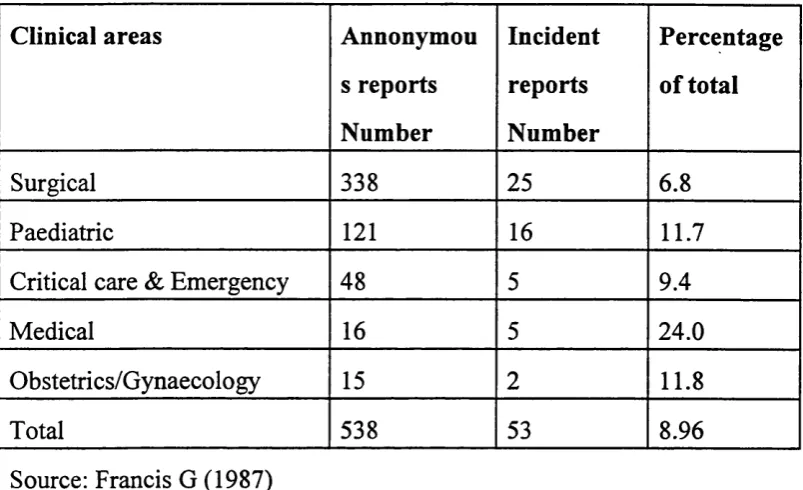
Table 3.1 E rrors reported by clinical area.
Clinical areas Annonymou
s reports Number
Incident reports Number
Percentage of total
Surgical 338 25 6.8
Paediatric 121 16 11.7
Critical care & Emergency 48 5 9.4
Medical 16 5 24.0
Obstetrics/Gynaecology 15 2 11.8
Total 538 53 8.96
Source: Francis G (1987)
The under-reporting of medication errors detected in incident reports may be due not only to the reluctance of staff to report their errors, but also "incident reports require error awareness as a prerequisite for reporting" (Barker and McConnell, 1962). It is also argued that "direct comparison of error rates across studies should be made cautiously because of variations in error category definitions and methodologies" (Allan & Barker, 1990). For instance, Francis (1980) found that nurses were more likely to report a medication error if it had resulted from not adhering to the procedures relating to the administration of medicines than to situational factors. These difficulties affect the reliability of the results obtained in medication error studies which rely on self-reporting, and may also explain some of the ambiguous findings. Thus, what gets reported may represent only the tip of the iceberg (Francis, 1980). Moreover, many factors may militate against the reporting of medication errors, including fear of disciplinary actions (Walters,