TECHNICAL REPORT
Male Circumcision
abstract
Male circumcision consists of the surgical removal of some, or all, of the foreskin (or prepuce) from the penis. It is one of the most common pro-cedures in the world. In the United States, the procedure is commonly per-formed during the newborn period. In 2007, the American Academy of Pediatrics (AAP) convened a multidisciplinary workgroup of AAP members and other stakeholders to evaluate the evidence regarding male circumci-sion and update the AAP’s 1999 recommendations in this area. The Task Force included AAP representatives from specialty areas as well as mem-bers of the AAP Board of Directors and liaisons representing the American Academy of Family Physicians, the American College of Obstetricians and Gynecologists, and the Centers for Disease Control and Prevention. The Task Force members identified selected topics relevant to male circumci-sion and conducted a critical review of peer-reviewed literature by using the American Heart Association’s template for evidence evaluation. Evaluation of current evidence indicates that the health benefits of new-born male circumcision outweigh the risks; furthermore, the benefits of newborn male circumcision justify access to this procedure for families who choose it. Specific benefits from male circumcision were identified for the prevention of urinary tract infections, acquisition of HIV, transmission of some sexually transmitted infections, and penile cancer. Male cir-cumcision does not appear to adversely affect penile sexual function/ sensitivity or sexual satisfaction. It is imperative that those providing cir-cumcision are adequately trained and that both sterile techniques and effective pain management are used. Significant acute complications are rare. In general, untrained providers who perform circumcisions have more complications than well-trained providers who perform the proce-dure, regardless of whether the former are physicians, nurses, or tradi-tional religious providers.
Parents are entitled to factually correct, nonbiased information about cir-cumcision and should receive this information from clinicians before con-ception or early in pregnancy, which is when parents typically make circumcision decisions. Parents should determine what is in the best in-terest of their child. Physicians who counsel families about this decision should provide assistance by explaining the potential benefits and risks and ensuring that parents understand that circumcision is an elective procedure. The Task Force strongly recommends the creation, revision, and enhancement of educational materials to assist parents of male infants with the care of circumcised and uncircumcised penises. The Task Force also strongly recommends the development of educational materi-als for providers to enhance practitioners’ competency in discussing circumcision’s benefits and risks with parents.
The Task Force made the following recommendations:
TASK FORCE ON CIRCUMCISION
KEY WORD
circumcision
ABBREVIATIONS
AAFP—American Academy of Family Physicians AAP—American Academy of Pediatrics
ACOG—American College of Obstetricians and Gynecologists BV—bacterial vaginosis
CB—caudal block
CDC—Centers for Disease Control and Prevention CDM—Charge Data Master
CI—confidence interval DPNB—dorsal penile nerve block HPV—human papillomavirus HSV—herpes simplex virus
IELT—Intravaginal Ejaculatory Latency Times MSM—men who have sex with men NHDS—National Hospital Discharge Survey NIS—National Inpatient Sample
OR—odds ratio
RCT—randomized controlled trial STI—sexually transmitted infection UTI—urinary tract infection
This document is copyrighted and is property of the American Academy of Pediatrics and its Board of Directors. All authors havefiled conflict of interest statements with the American Academy of Pediatrics. Any conflicts have been resolved through a process approved by the Board of Directors. The American Academy of Pediatrics has neither solicited nor accepted any commercial involvement in the development of the content of this publication.
The guidance in this report does not indicate an exclusive course of treatment or serve as a standard of medical care. Variations, taking into account individual circumstances, may be appropriate.
All technical reports from the American Academy of Pediatrics automatically expire 5 years after publication unless reaffirmed, revised, or retired at or before that time.
www.pediatrics.org/cgi/doi/10.1542/peds.2012-1990
doi:10.1542/peds.2012-1990
PEDIATRICS (ISSN Numbers: Print, 0031-4005; Online, 1098-4275).
8
Nonpharmacologic techniques (eg, positioning, sucrose paci-fiers) alone are insufficient toprevent procedural and post-procedural pain and are not recommended as the sole meth-od of analgesia. They should be used only as analgesic adjuncts to improve infant comfort dur-ing circumcision.
8
If used, topical creams may cause a higher incidence of skin irrita-tion in low birth weight infants, compared with infants of normal weight; penile nerve block tech-niques should therefore be cho-sen for this group of newborns. Key professional organizations (AAP, the American Academy of Family Physicians, the American College of Obstetricians and Gyne-cologists, the American Society of Anesthesiologists, the American College of Nurse Midwives, and other midlevel clinicians such as nurse practitioners) should work collaboratively to:8
Develop standards of trainee proficiency in the performance of anesthetic and procedure techniques, including suturing;8
Teach the procedure and anal-gesic techniques during post-graduate training programs;8
Develop educational materials for clinicians to enhance their own competency in discussing the benefits and risks of cir-cumcision with parents;8
Offer educational materials to assist parents of male infants with the care of both circumcised and uncircumcised penises. The preventive and public health ben-efits associated with newborn male circumcision warrant third-party reimbursement of the procedure.The American College of Obstetricians and Gynecologists has endorsed this technical report. Pediatrics 2012;130: e756–e785
INTRODUCTION AND BACKGROUND
Statement of the Issue
The American Academy of Pediatrics’ (AAP) statement on circumcision of the newborn penis was last issued in May 1999.1 The Circumcision Policy
Statementrecognized the health ben-efits of circumcision but did not deem the procedure to be a medical neces-sity for the well-being of the child. Since that time, substantial contributions have been made to the peer-reviewed literature concerning circumcision of males and its possible benefits. For this reason, in 2007, the AAP formed a Task Force charged with reviewing current evidence on male circumcision and updating the policy on this procedure to provide guidance to AAP member-ship regarding the circumcision of newborn males.
The American College of Obstetricians and Gynecologists has endorsed this technical report.
Background
Male circumcision consists of the surgical removal of some, or all, of the foreskin (or prepuce) from the penis. It is one of the most common procedures in the world. In the United States, the procedure is most frequently per-formed during the newborn period. Elective circumcision performed soon after the newborn period is generally a result of deferral because of low birth weight or illness in the newborn. Circumcision after the newborn period is most commonly performed because of the infant’s low birth weight or ill-ness precluded newborn circumci-sion. Other infants are circumcised later in life because of the occurrence of tight phimosis and/or urinary tract infection (UTI).
principle on which each of these devices is based). The elements that are common to the use of each of these devices to accomplish circumcision include the following: estimation of the amount of external skin to be removed; dilation of the preputial orifice so that the glans can be visualized to ensure that the glans itself is normal; bluntly freeing the inner preputial epithelium from the epithelium of the glans; placing the device (at times a dorsal slit is necessary to do so); leaving the device in situ long enough to pro-duce hemostasis; and removal of the foreskin.
The extent of this practice in the United States has been estimated by various federally sponsored national surveys, each of which has its strengths and limitations; thus, multiple measures of circumcision prevalence and incidence are presented. There are large pop-ulation measures of male circumcision in the United States, measuring either the occurrence (ie, incidence) of male circumcision among newborns or the existence of the circumcised state among representative samples of males in the United States at a par-ticular period in time (ie, prevalence). The findings of these studies are qualitatively similar and consistently estimate the rate of male circumcision to range from 42% to 80% among various populations.2–6
A recent Centers for Disease Control and Prevention (CDC) study assessed trends in the incidence of in-hospital newborn male circumcision from 1999 to 2010 using 3 independent sources of discharge data on in-patient hospital-izations: the National Center for Health Statistics’National Hospital Discharge Survey (NHDS), the Agency for Health-care Research and Quality’s National In-patient Sample (NIS), and the SDI Health’s Charge Data Master (CDM).2,3
These sources were used to estimate the incidence of newborn male circumcision
in thefirst month of life. Overall from 1999 to 2010, the CDC’s weighted analysis found that the approximate percentage of newborn US males who were circumcised was approxi-mately 59.1% according to the NHDS, 57.8% according to the NIS, and 55.8% according to the CDM. The incidence of newborn male circumcision decreased over time in all 3 data sources: from 62.5% in 1999 to 56.9% in 2008 according to the NHDS; from 63.5% in 1999 to 56.3% in 2008 according to the NIS; and from 58.4% in 2001 to 54.7% in 2010 according to the CDM (Fig 1). A key limitation is that these incidence rates were derived from hospital-based surveys and do not in-clude out-of-hospital circumcisions; thus, these data sources underes-timate the actual rate of newborn male circumcision in the first month of life.
NIS
The NIS is a database of 5 to 8 million hospital inpatient stays drawn from states that participate in the Health-care Cost and Utilization Project (HCUP). In 2008, these states com-prised 95% of the US population. The NIS is used to track and analyze na-tional trends in health care utilization, delivery, and outcomes via a 20% stratified sample of 1000 community hospitals. Weights are provided to calculate national estimates.4
The NIS indicates that circumcision was performed in 57% of male new-born hospitalizations between 1998 and 2005. NIS data from 1988 to 2008 indicate that the rate of circumcision performed during newborn male de-livery hospitalizations increased sig-nificantly from 48% in 1988–1991, to 61% in 1997–2000,5then declined from
61% to 56% in 2000–20086 (Fig 1).
Circumcision rates were highest in the Midwestern states (74%), followed by the Northeastern (67%) and Southern states (61%). The lowest circumcision
rates were found in the Western states (30%) (Table 1).3
NHANES
The NHANES provides a snapshot of the health and nutritional status of the US population aged 14 to 59 years at the time of the survey, by using a proba-bility sample of persons aged 0 to over 60 years. Prevalence of male cir-cumcision is derived from participant self-report and is thus subject to misclassification. From 1999 to 2004, NHANES found that, of the 6174 men surveyed, 79% of men reported be-ing circumcised, includbe-ing 88% of Hispanic white men, 73% of non-Hispanic black men, 42% of Mexican-American men, and 50% of men of other races/ethnicities6(Fig 2).
However, prevalence rates are limited by the accuracy of the examiner and/or the self-report.7,8 These findings
un-derscore the necessity of using a standardized clinical examination for establishing circumcision status for the purpose of research on circumci-sion. It also highlights the potential difficulty of advising on care of the circumcised and uncircumcised penis when an individual and/or clinician may not know which condition is present.
Ethical Issues
or guardians are empowered to make health care decisions on their behalf.9
In most situations, parents are gran-ted wide latitude in terms of the decisions they make on behalf of their children, and the law has respected those decisions except where they are clearly contrary to the best interests of the child or place the child’s health, well-being, or life at significant risk of serious harm.10
Parents and physicians each have an ethical duty to the child to attempt to secure the child’s best interest and
well-being.11 Reasonable people may
disagree, however, as to what is in the best interest of any individual patient or how the potential medical benefits and potential medical harms of circumci-sion should be weighed against each other. This situation is further compli-cated by the fact that there are social, cultural, religious, and familial benefits and harms to be considered as well.12It
is reasonable to take these nonmedical benefits and harms for an individual into consideration when making a de-cision about circumde-cision.13
In cases such as the decision to per-form a circumcision in the newborn period (where there is reasonable disagreement about the balance be-tween medical benefits and harms, where there are nonmedical benefits and harms that can result from a de-cision on whether to perform the procedure, and where the procedure is not essential to the child’s imme-diate well-being), the parents should determine what is in the best interest of the child. In the pluralistic society of the United States, where parents are afforded wide authority for de-termining what constitutes appropri-ate child-rearing and child welfare, it is legitimate for the parents to take into account their own cultural, re-ligious, and ethnic traditions, in addi-tion to medical factors, when making this choice.11
Physicians who counsel families about this decision should assist parents by objectively explaining the potential benefits and risks of circumcising their infant.10Because some families may opt
to circumcise as part of religious or traditional practice, discussion should also encompass risks and benefits of
TABLE 1 Multivariate Cox Proportional Hazards Regression of Selected Factors Associated With Circumcision Among Male Newborn Delivery Hospitalizations, United States, 1998–20052
Characteristic Weighted % of Male
Infant Circumcisions
Adjusted Prevalence Rate Ratios (95% CI)
Hospital region
Midwest 74 3.53 (3.23–3.87)
Northeast 67 2.90 (2.64–3.18)
South 61 2.80 (2.56–3.07)
West 30 1.00
Payer
Private 67 1.76 (1.70–1.82)
Public 45 1.00
Hospital location
Urban 66 1.29 (1.24–1.34)
Rural 56 1.00
Newborn health status
Term, healthy 61 1.22 (1.20–1.23)
Not term, healthy 54 1.00
FIGURE 1
having a medical professional per-form this procedure in a clinical set-ting versus having it performed by a traditional/religious provider in a nonmedical environment.
Parents may wish to consider whether the benefits of the procedure can be attained in equal measure if the pro-cedure is delayed until the child is of sufficient age to provide his own formed consent. These interests in-clude the medical benefits; the cultural and religious implications of being circumcised; and the fact that the procedure has the least surgical risk and the greatest accumulated health benefits if performed during the new-born period. Newnew-born males who are not circumcised at birth are much less likely to elect circumcision in adoles-cence or early adulthood. Parents who are considering deferring circumcision should be explicitly informed that cir-cumcision performed later in life has increased risks and costs. Further-more, deferral of the procedure also requires longer healing time than if performed during the newborn period and requires sexual abstinence during healing. Those who are already sexually active by the time they have the pro-cedure lose some opportunities for the protective benefit against sexually transmitted infection (STI) acquisition,
including HIV; moreover, there is the risk of acquiring an STI if the in-dividual is sexually active during the healing process. (See the section en-titled Sexually Transmitted Diseases, Including HIV.)
Finally, there is a moral obligation to take reasonable steps to reduce the risk of harm associated with the performance of any surgical inter-vention. These include ensuring that the providers who perform circumci-sion have adequate training and demonstrate competence in perform-ing the procedure; the provision of adequate procedural analgesia and postprocedural pain control; and that the risks of infection are minimized through appropriate infection control measures, such as a sterile environ-ment and sterilized instruenviron-ments.14The
Task Force advises against the prac-tice of mouth-to-penis contact during circumcision, which is part of some religious practices, because it poses serious infectious risk to the child.
TASK FORCE ON MALE CIRCUMCISION
Committee Membership and Research Questions
In December 2007, the AAP formed a multidisciplinary workgroup of AAP
members and other stakeholders to evaluate the evidence on male circum-cision and update the AAP’s recom-mendations in this area. The Task Force included AAP representatives from spe-cialty areas, including anesthesiology/ pain management, bioethics, child health care financing, epidemiology, fetus and newborn medicine, infectious diseases (including pediatric AIDS), and urology. The Task Force also in-cluded members of the AAP Board of Directors and liaisons representing the American Academy of Family Physicians (AAFP), the American Col-lege of Obstetricians and Gynecologists (ACOG), and the CDC. The Task Force’s evidence review was supplemented by an independent, AAP-contracted, physi-cian and doctoral-level epidemiologist who was also part of the entire evi-dence review process.
Literature Search Overview
The Task Force members identified the following topics and questions as relevant to male circumcision and to be addressed through a critical review of the peer-reviewed literature:
What is the current epidemiology of male circumcision in the United States? What are the most common proce-dures and techniques for newborn male circumcision? What best supports the parental decision-making process regard-ing circumcision? What is the association between male circumcision and both mor-bidity and sexual function/satisfac-tion? What is the impact of anesthesia and analgesia? What are the common complica-tions and the complication rates as-sociated with male circumcision? What workforce issues affect new-born male circumcision?FIGURE 2
The group agreed on parameters for reviewing the literature on associa-tions between male circumcision and other outcomes. The literature review comprised analytic studies (including meta-analyses) in the topic areas in English-language, peer-reviewed, sci-entific literature. The Task Force eval-uated studies that addressed the identified clinical questions, including all meta-analyses; all randomized con-trolled trials; and all case-control, prospective and retrospective cohort, and cross-sectional studies based on the American Heart Association’s tem-plate for evidence evaluation (see the following section). Case reports, case series, ecological studies, reviews, and opinions were excluded from the re-view. Although case reports and case series are important for generating hypotheses, the Task Force limited itself to reviewing analytic studies. The Task Force compiled and vetted Medical Subject Headings, which are defined by the National Library of Medicine.
Searches were conducted in Medline, Cochrane Database, and Embase for the period 1995 through 2010. The literature search produced 1388 ab-stracts that were reviewed by both the epidemiologist and the Task Force chair, and those citations meeting the established criteria were included; ultimately, 1014 articles were included in the review (Table 2). A second search was conducted in April 2010, which yielded 42 additional citations, of which 17 were included. All 1031 accepted articles were reviewed by the con-tracted physician epidemiologist and at least 1 Task Force member; any dif-ferences were resolved by consensus. In 2011, individual Task Force members also identified other key articles that appeared in the peer-reviewed litera-ture; these articles were consulted in
the preparation of the current report and cited accordingly. These additional articles did not affect the findings of the Task Force. Areas in which there were no analytic studies available for the time period of interest are noted as such within this document.
Evidence Quality and Use in Forming Recommendations
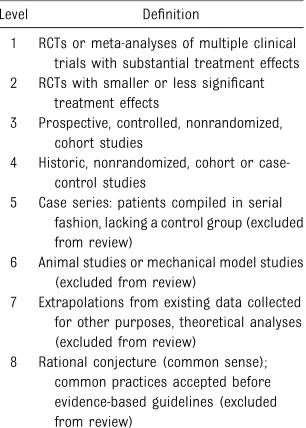
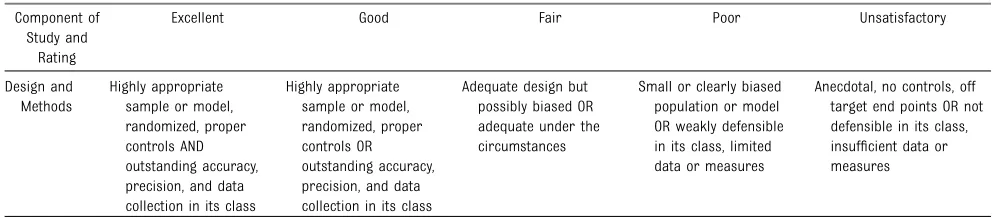
Articles were reviewed by using the American Heart Association’s template for evidence evaluation.15The articles
were also assigned a level of evidence (Table 3) based on the methodology used. Among those with evidence lev-els 1 through 4, the reviewers assessed the quality of the evidence as “ excel-lent,” “good,” “fair,” or“poor” depend-ing on how well the methodology was applied. Articles with an evidence level of 5 or higher were not included in this review. A critical assessment was made of each article/source in terms of the research design and methods, by using the American Heart Association’s tem-plate (Table 4).
RESULTS
As a result of thesefindings, the Task Force made the following recom-mendations, which are described further in the following text:
Evaluation of current evidence indi-cates that the health benefits of newborn male circumcision out-weigh the risks, and the benefits of newborn male circumcision jus-tify access to this procedure for those families who choose it. Parents are entitled to factually correct, nonbiased information about circumcision that should be provided before conception and early in preg-nancy, when parents are most likely to be weighing the option of circum-cision of a male child. Physicians counseling families about elective male circumcision shouldassist parents by explaining, in a nonbiased manner, the potential benefits and risks, and by ensuring that they understand the elective nature of the procedure.
Parents should weigh the health benefits and risks in light of their own religious, cultural, and per-sonal preferences, as the medical benefits alone may not outweigh these other considerations for in-dividual families. Parents of newborn boys should be instructed in the care of the penis at the time of discharge from the newborn hospital stay, re-gardless of whether the newborn has been circumcised or not. Elective circumcision should be performed only if the infant’s con-dition is stable and healthy. Male circumcision should be per-formed by trained and competent practitioners, by using sterile techni-ques and effective pain management. Analgesia is safe and effective in reducing the procedural pain asso-ciated with newborn circumcision; thus, adequate analgesia should be provided whenever newborn circumcision is performed.8
Nonpharmacologic techniques (eg, positioning, sucrose paci-fiers) alone are insufficient to prevent procedural and post-procedural pain and are not re-commended as the sole method of analgesia. They should be used only as analgesic adjuncts to improve infant comfort dur-ing circumcision.8
Develop standards of trainee proficiency in the performance of anesthetic and procedure techniques, including suturing;8
Teach the procedure and anal-gesic techniques during post-graduate training programs;8
Develop educational materials for clinicians to enhance prac-titioners’ competency in dis-cussing the benefits and risks of circumcision with parents;8
Offer educational materials to assist parents of male infants with the care of both circum-cised and uncircumcircum-cised pe-nises. The preventive and public health benefits associated with new-born male circumcision warrant third-party reimbursement of the procedure.Parental Decision-Making
Task Force Recommendations:8
Parents are entitled to factually correct, nonbiased information about circumcision that should be provided before conception and early in pregnancy, when parents are most likely to be weighing the option of circum-cision of a male child.8
Physicians counseling families about elective male circumci-sion should assist parents by explaining, in a nonbiased man-ner, the potential benefits and risks, and by ensuring that they understand the elective nature of the procedure.8
Parents should weigh the health benefits and risks in light of their own religious, cul-tural, and personal preferen-ces, as the medical benefits alone may not outweigh these other considerations for indi-vidual families.The decision of whether to circumcise a male newborn is frequently made early in the pregnancy and even before conception.16–18 In a cross-sectional
study of parents of 55 male infants presenting to a family practice clinic for a well-child visit, 80% of parents
reported that the circumcision de-cision was made before a discussion occurred with the clinician about this issue. Only 4% of parents reportedly discussed circumcision with their cli-nician before the pregnancy.16 This
finding is substantiated by the 2009 AAP survey of 1620 members with a response rate of 57%, in which most respondents reported that parents of newborn male patients generally do not seek their pediatrician’s recommendation regarding circum-cision; only 5% reported that“all” or “most” parents “are uncertain about circumcision and seek their recom-mendation” about the procedure.19
There is fair evidence that parental decisions about circumcision are shaped more by family and socio-cultural influences than by discussion with medical clinicians or by parental education.16,20
In 4 cross-sectional studies with fair evidence, US parents most often reported that they chose to have their newborn son circumcised for health/ medical benefits, including hygiene and cleanliness of the penis (reported by 39.6%, 46%, 53%, and 67%, re-spectively).16,17,21,22 Social concerns
(such as having a father or brother who was circumcised) were also an important reason given for newborn male circumcision (22.8%, 23.5%, 28%, and 37%). Religious requirements for circumcision, such as those of the Jewish and Islamic faiths, were ranked less highly in importance (11%, 12.1%, 13%, and 19%). Although one of these studies was small and included only 55 patients drawn from a homogeneous population,16thefindings coincide with
the 3 larger and more diverse studies.
For parents to receive nonbiased in-formation about male circumcision in time to inform their decisions, clini-cians need to provide this information at least before conception and/or early in the pregnancy, probably as a
TABLE 2 Results from Medline, Cochrane Database, and Embase Search for 1995–2010
Clinical Topic Areaa No. of Articles Included
HIV/STI 231
Procedure and complications
219
UTI 53
Pain management 159
Penile dermatoses 107
Penile hygiene 76
Phimosis 64
Parental decision-making
60
Carcinoma (penile) 58
Carcinoma (cervical) 3
Sexual satisfaction 1
aDoes not include nonclinical areas such as ethics and
financing.
TABLE 3 Evidence Levels
Level Definition
1 RCTs or meta-analyses of multiple clinical trials with substantial treatment effects 2 RCTs with smaller or less significant
treatment effects
3 Prospective, controlled, nonrandomized, cohort studies
4 Historic, nonrandomized, cohort or case-control studies
5 Case series: patients compiled in serial fashion, lacking a control group (excluded from review)
6 Animal studies or mechanical model studies (excluded from review)
7 Extrapolations from existing data collected for other purposes, theoretical analyses (excluded from review)
curriculum item in childbirth classes. Information to assist in parental de-cision-making should be made avail-able as early as possible. For this reason, obstetrician-gynecologists and family physicians who manage prenatal care probably have a more pivotal role in this decision than do pediatricians. Bright Futures: Guidelines for Health Supervision of Infants, Children, and Adolescents, Third Edition, supports prenatal pediatric visits, at which time pediatricians can provide counsel-ing about male circumcision (http:// brightfutures.aap.org). Medical benefits and risks need to be presented accu-rately and in a nonbiased fashion so families can make a decision in light of their own cultural, religious, and per-sonal preferences.
There is fair evidence that there are financial barriers to the circumcision decision in the United States; when the procedure is not covered by in-surance, parents are less likely to choose to have their child circum-cised.21Thisfinding does not seem to
be true in Canada, where the preva-lence of circumcision did not change after circumcision for ritual, re-ligious, cultural, or cosmetic reasons was delisted from insurance benefits in 1994.17,23
Care of the Circumcised Versus Uncircumcised Penis
Task Force Recommendations:8
Parents of newborn boys should be instructed in thecare of the penis at the time of discharge from the newborn hospital stay, regardless of whether the newborn has been circumcised or not.
This review found no systematic studies in infants and children on the care of the uncircumcised versus circumcised penis.
Parents of newborn boys should be instructed in the care of the penis at the time of discharge from the newborn hospital stay, regardless of whether they choose circumcision or not. The circumcised penis should be washed gently without any aggressive pulling back of the skin.24 The
non-circumcised penis should be washed with soap and water. Most adhesions present at birth spontaneously re-solve by age 2 to 4 months, and the foreskin should not be forcibly re-tracted. When these adhesions dis-appear physiologically (which occurs at an individual pace), the foreskin can be easily retracted, and the whole penis washed with soap and water.25
Circumcision reduces the bacteria that accumulate under the prepuce which can cause UTIs and, in the adult male, can be a reservoir for bacteria that cause STIs. In an internally controlled study with fair evidence, researchers cultured the periure-thral and glandular sulcus of 50 children aged 1 to 12 weeks before and 4 weeks after circumcision and found the pathogenic bacteria
largely disappeared after circum-cision (33 children had pathogenic bacteria before circumcision and 4 had pathogenic bacteria after circumcision).26
In adults and children, there is fair evidence that periurethral flora con-tains fewer pathogens after circum-cision than before circumcircum-cision.26,27
Because these studies looked at cul-tures 1 time (4 weeks after the cir-cumcision), the long-term significance of thefindings is unclear.
Penile wetness (defined as the ob-servation of a diffuse homogeneous film of moisture on the surface of the glans and coronal sulcus) is consid-ered a marker for poor penile hygiene and is more prevalent in uncir-cumcised than in ciruncir-cumcised men.28
Penile wetness has been associated with HIV infection in 1 cross-sectional study, although the temporal re-lationship is unclear and the evidence level is fair.29A related study with fair
evidence assessed the frequency of washing the whole penis (including retracting the foreskin for uncir-cumcised men) and found that not always washing the whole penis was approximately 10 times more com-mon in uncircumcised than in cir-cumcised men.30 The relationship
between penile wetness and thor-ough washing of the penis is unclear and, because the studies were con-ducted in STI clinics, the findings may not be generalizable to the population at large.
TABLE 4 Assessment of Research Design and Methods
Component of Study and
Rating
Excellent Good Fair Poor Unsatisfactory
Design and Methods
Highly appropriate sample or model, randomized, proper controls AND outstanding accuracy, precision, and data collection in its class
Highly appropriate sample or model, randomized, proper controls OR outstanding accuracy, precision, and data collection in its class
Adequate design but possibly biased OR adequate under the circumstances
Small or clearly biased population or model OR weakly defensible in its class, limited data or measures
Male Circumcision and Diseases, Morbidities, and Sexual Function/ Satisfaction
STIs, Including HIV
Task Force Recommendation:8
Evaluation of the current evi-dence indicates that the health benefits of newborn male circum-cision outweigh the risks, and the benefits of newborn male circumcision justify access to this procedure for those fami-lies who choose it.The most notable research con-tributions to the literature since 1995 are studies of male circumcision and the acquisition of HIV and the trans-mission of other STIs. Review of the literature revealed a consistently re-ported protective effect of 40% to 60% for male circumcision in reducing the risk of HIV acquisition among hetero-sexual males in areas with high HIV prevalence due to heterosexual trans-mission (ie, Africa).
There is also good evidence from randomized controlled trials that male circumcision is associated with a lower prevalence of human papillo-mavirus (HPV) infection31,32 and
her-pes simplex virus type 2 (HSV-2) transmission,31,33 as well as a
de-creased likelihood of bacterial vagi-nosis (BV) in female partners.80 The
evidence for male circumcision being protective against syphilis is less strong,65–68 however, and male
cir-cumcision was not found to be asso-ciated with decreased risk of gonorrhea84,85,91–93or chlamydia.84–89
It is biologically plausible that the circumcised state may confer pro-tection against STIs (including HIV). Possible mechanisms for the pro-tective effect of circumcision include the fact that the foreskin’s thin inner surface is susceptible to microtears and abrasions (especially during sex-ual activity), which provides a port of
entry for pathogens. The foreskin also contains a high density of HIV target cells (ie, Langerhans cells, CD4 T cells, macrophages), which facilitates HIV infection of host cells. The preputial space provides an environment that is thought to“trap”pathogens and bodily secretions and favor their survival and replication.26,27,34The circumcised male
has no foreskin and may likely provide a less welcoming environment for such substances. In addition, STI-containing secretions have increased contact time in the prospective uncircumcised male host, which may increase the likelihood of transmission and infection. The ex-posed surfaces of the uncircumcised penis do not offer the same physical barrier to resist infection that the highly keratinized surface of a circum-cised penis does. Finally, the higher rates of sexually transmitted genital ulcerative disease (eg, HSV-2) observed in uncircumcised men may also increase susceptibility to HIV infec-tion, as the presence of genital ulcers, irrespective of circumcision status, increases the likelihood of HIV acquisition.35–37
HIV
The CDC estimates that 1.2 million people in the United States are living with HIV, the virus that causes AIDS, which is incurable. Approximately 50 000 Americans are newly infected with HIV each year; more than 619 000 people in the United States have died of AIDS since the epidemic began.38
In the United States, HIV/AIDS predom-inantly affects men who have sex with men (MSM), who account for almost two-thirds (61%) of all new infections. Heterosexual exposure accounts for 27% of new HIV infections, and in-jection drug use accounts for 9% of new HIV cases. In other parts of the world (eg, Africa), heterosexual trans-mission is far more common.39
Fourteen studies provide fair evidence that circumcision is protective against
heterosexually acquired HIV infection in men.40–53 One study with fair
evi-dence found that male circumcision before puberty (specifically before 12 years of age) is more protective than circumcision occurring at a later age.50 Three large randomized
con-trolled trials provide good evidence of such protection.54–56A cross-sectional
study with fair evidence is neutral regarding the relationship between circumcision and HIV infection.57 Two
other studies with a cross-sectional design provide fair evidence that cir-cumcision increases the risk of HIV infection, although one of these stud-ies highlights the HIV risks associated with circumcision performed outside the hospital setting and without ster-ile equipment and medically trained personnel.58,59
A recently published study from the CDC provides good evidence that, in the United States, male circumcision before the age of sexual debut would reduce HIV acquisition among hetero-sexual males.60 Although individual
would be circumcised. The propor-tions of transmissions prevented are lower than in Africa because a higher proportion of US HIV transmission occurs between MSM. In addition, a portion of the population would be circumcised without any policy change, and the prevented cases would only occur in the additional circumcised males. This ranges from an estimated 8% reduction in non-Hispanic white males to an estimated 21% reduction among non-Hispanic black males. The CDC study suggests that newborn cir-cumcision performed in the United States to prevent HIV infection is cost-effective without consideration of other health benefits. The CDC recommen-dations state that all parents of new-born males should be given the choice of circumcision.
Specific HIV Risk Populations
MSM
The association of circumcision and the decreased likelihood of HIV acquisition applies to heterosexual males. Circumcision seems to be less likely to protect MSM, however, and has not been associated with de-creased acquisition of HIV among MSM.61There is fair evidence from 1
study that there is a protective effect of circumcision from HIV infection in MSM; however, this study used self-report to establish circumcision sta-tus.62 One study with fair evidence is
neutral regarding the relationship between circumcision and HIV in-fection in MSM.61 It is probable that
the differences found in the level of protection (or lack of protection) by studies of MSM are confounded by the fact that MSM commonly perform both receptive and insertive sex. It is not known to what extent circumci-sion may be protective against HIV transmission for MSM who practice insertive sex versus for those who engage in receptive sex.
Heterosexual Women
Women account for 23% of new HIV infections in the United States; HIV in-fection in women is primarily attributed either to heterosexual contact or in-jection drug use.38 Two prospective
cohort studies with fair evidence lo-oked at the relationship between a woman’s risk of HIV infection and whether her primary male partner is circumcised. The first study describes a protective effect but had consider-able loss-to-follow-up and possible misclassification of the partners’ cir-cumcision status.63 The other study
showed nonsignificant protection in the high-risk group (ie, women who were more likely to have ever engaged in sex work; to have reported 2 or more partners in the last 3 months; and/or to have had a higher median lifetime number of sex partners) but neither protection nor increased risk in the study population as a whole.64A
meta-analysis with good evidence of data from 1 randomized controlled trial (RCT) and 6 longitudinal analyses found little evidence that male circumcision directly reduces their female partner’s risk of acquiring HIV (summary relative risk: 0.8 [95% confidence interval (CI): 0.53–1.36]); however, male circum-cision’s protective effect did not reach a level of statistical significance.65 One
Ugandan RCT study with good evidence found that, at 24 months, the risk of HIV infection among women whose male partners were circumcised was 21.7% compared with 13.4% for female part-ners of uncircumcised men.66
Ulcerative STIs
Genital ulcers are notable both because of the morbidity and mortality associ-ated with the causative organism and because the presence of the ulcer itself facilitates the transmission of HIV.
Syphilis
From 2009 to 2010, there were 13 604 cases of early latent syphilis reported
to the CDC and 18 079 cases of late and late latent syphilis. The rate of pri-mary and secondary syphilis in 2010 was 4.5 cases per 100 000 individuals, 2.2% lower than the 2009 rate. “The total number of cases of syphilis (primary and secondary, early latent, late, late latent, and congenital) re-ported to CDC increased 2.2% (from 44,830 to 45,834 cases) during 2009– 2010.”67A large percentage of syphilis
cases occur in MSM; in 2010, 67% of the reported primary and secondary syphilis cases were among MSM.67
The balance of evidence suggests that male circumcision is protective against syphilis.68–70 One meta-analysis with
good evidence describes a protective effect (relative risk: 0.67 [95% CI: 0.54–0.83]), but there is considerable heterogeneity among the studies in-cluded.68 An additional cohort study
with fair evidence found that circum-cised men were significantly less likely to have active syphilis at the point of study recruitment; when the men were followed up prospectively for 2 years, a protective effect was also observed but was nonsignifi -cant.69 Good evidence from a large
RCT reported no reduction or trend toward reduction for male circumci-sion and the incidence of syphilis71;
however, the extent to which protec-tion might be afforded, and among which specific populations, is difficult to determine.
Genital Herpes
Genital herpes is an STI commonly manifested by recurrent genital ulcers caused by HSV-1 or HSV-2. HSV may not be clinically evident despite infection. Approximately 16.2% of US individuals aged 14 to 49 years have HSV-2.31,72
been diagnosed with genital herpes at some point was 18.9%.72
One meta-analysis with good evidence found some protective effect of cir-cumcision against HSV-2 of borderline statistical significance.68Good evidence
of the protective effect of male cir-cumcision is available from two of the large randomized controlled trials in Africa. In the South African study, the incidence of HSV-2 was 34% lower in circumcised men.73 In the Uganda
study, the risk of HSV-2 infection (ad-justed for other factors) was 28% lower in circumcised men.71 There is
fair evidence from 1 study that male circumcision protects female partners against HSV-2 infection.33 Two studies
with fair evidence found that there is no effect of circumcision on the risk of HSV-2 acquisition.6,74
Chancroid
Chancroid is a bacterial disease spread through sexual contact. It is rare in the United States, with a total of 24 cases reported in 2010 (a rate of 0.08 case per 100 000 individuals).75
The literature search produced no individual studies since 1995 exploring the relationship between male cir-cumcision and chancroid. One meta-analysis with good evidence found that 6 of 7 older studies (85%) de-scribed circumcision as having a pro-tective effect against chancroid. This meta-analysis did not provide a sum-mary value for the relationship due to differences in the definition and as-certainment of outcomes and variabil-ity among the comparison groups.68
One methodologically poor meta-analysis found no effect of male circumcision on chancroid.76
Lymphogranuloma Venereum and Granuloma Inguinale (Donovanosis)
The CDC reports that the frequency of lymphogranuloma venereum infection is thought to be rare in industrialized
countries, although its identification is not always obvious; the number of cases of this infection in the United States is unknown.77 Granuloma
in-guinale is a genital ulcerative disease that is rare in the United States but endemic in some tropical and veloping areas. The lesions might de-velop secondary bacterial infection or can coexist with other sexually trans-mitted pathogens.
The literature search produced no studies since 1995 exploring the re-lationship between male circumci-sion and lymphogranuloma venereum or granuloma inguinale. One meta-analysis provided fair evidence that genital ulcerative disease was more common in uncircumcised men but not to a statistically significant degree.78
One cross-sectional study with fair evidence found that male circumci-sion was protective against genital ulcers, but thefindings were based on respondents self-reporting a history of genital ulcerative disease and may not be accurate.79
Nonulcerative STIs
Nonulcerative STIs generally cause in-flammation and scarring along the re-productive tract. Untreated infection can cause cancer, can interfere with reproduction, and can negatively impact newborn health. Additionally, these in-fections can facilitate the transmission of HIV.
BV
BV is a condition“in women where the normal balance of bacteria in the va-gina is disrupted and replaced by an overgrowth of certain bacteria.”80 BV
is common among pregnant women; an estimated 1 080 000 pregnant women have BV annually.
There is good evidence from 1 large randomized controlled trial that male circumcision is protective against BV in female partners.81A small prospective
cohort study with good evidence also found that male circumcision, among other factors, was protective against BV in female partners.82 A cross-sectional
study with fair evidence found no effect but may have lacked the power to de-tect an effect.83
Chlamydia
Chlamydia is the most commonly reported notifiable disease in the United States and the most common STI reported to the CDC, with 1 307 893 chlamydial infections (426.0 cases per 100 000 individuals) reported to the CDC in 2010.84
The balance of evidence does not re-veal any relationship between circum-cision and chlamydia infection.85–87The
1 prospective cohort study with fair evidence showed a protective effect, but the study had a composite end point with several STIs combined and used self-report of STI as the out-come (increasing the possibility of misclassification).88 Two studies with
fair evidence explored the effect of male circumcision on chlamydia in-fection in female partners. The first, a prospective cohort study, found a nonsignificant increased risk in the female partners of circumcised men.89
The second, a cross-sectional study, found a significantly decreased risk of chlamydia infection among women with circumcised male sexual part-ners, but a possible selection bias may have affected results because only 51.8% of subjects had specimens for analysis.90
Gonorrhea
Gonorrhea is the second most com-monly reported STI in the United States, with 309 341 cases reported to the CDC (a rate of 100.8 cases per 100 000 individuals) in 2010.91
studies that show a protective effect are either barely significant or have poorly defined or self-reported out-comes, thus offering only a fair level of evidence.79,88
HPV
HPV is among the most commonly oc-curring STIs in the United States and can lead to the development of can-cers, including cervical cancer. The population-based data from NHANES 2003–2006 indicate that the overall prevalence of high- and low-oncogenic risk HPV types was 42.5% among US women aged 14 to 59 years. The prevalence of infection was lower for the 2 viral types with the highest risk of causing cancer, however, at 4.7% for HPV type 16 and 1.9% for HPV type 18.95
There is good evidence that male cir-cumcision is protective against all types of HPV infection (nononcogenic and oncogenic). Two prevalence studies with good evidence found a 30% to 40% reduction in risk of infection among circumcised men.96,97These studies fail
to provide information on the risk of acquiring HPV and may reflect persis-tence of HPV rather than acquisition of infection. Four studies provide fair ev-idence that male circumcision protects against HPV.98–101 The selection of
an-atomic sites sampled may influence the results.98
Good evidence of the protective effect of male circumcision against HPV is available from two of the large ran-domized controlled trials in Africa. In the South African study, the preva-lence of high-risk HPV was 32% lower in circumcised men.102 In the Uganda
study, the risk of oncogenic HPV in-fection (adjusted for other factors) was 35% lower in circumcised men.71
There is also good evidence that male circumcision reduces the risk of male-to-female transmission of high-risk HPV from HIV-uninfected men. In the Uganda randomized controlled trial, the
prevalence of high-risk HPV infection was 28% lower in female partners of circumcised HIV-uninfected men, while the incidence was 23% lower.32 Good
evidence from another Uganda ran-domized controlled trial of male cir-cumcision in HIV-infected men indicates that a circumcision did not reduce the risk of male-to-female transmission of high-risk HPV from HIV-infected men.103
Male Circumcision and UTIs
According to the CDC,“A urinary tract infection (UTI) is an infection involving any part of the urinary system, in-cluding urethra, bladder, ureters, and kidney.”104UTIs are the most common
type of health care–associated infec-tion reported to the Nainfec-tional Health-care Safety Network among US individuals. The majority of UTIs in males occur during the first year of life. In children, UTIs usually necessi-tate a physician visit and may involve the possibility of an invasive pro-cedure and hospitalization.
Most available data were published before 1995 and consistently show an association between the lack of cir-cumcision and increased risk of UTI. Studies published since 1995 have similar findings. There is good evi-dence from 2 well-conducted meta-analyses105,106 and a cohort study107
that UTI incidence among boys under age 2 years is reduced in those who were circumcised compared with un-circumcised boys. The data from ran-domized controlled trials are limited. However, there are large cohort and case-controlled studies with similar findings. Given that the risk of UTI among this population is approxi-mately 1%, the number needed to circumcise to prevent UTI is approxi-mately 100. The benefits of male cir-cumcision are, therefore, likely to be greater in boys at higher risk of UTI, such as male infants with underlying
anatomic defects such as reflux or recurrent UTIs.
There is fair evidence from 5 obser-vational studies that UTI incidence among boys under age 2 years is re-duced in circumcised infant boys, compared with uncircumcised boys under the age of 2.108–112The degree of
reduction is between threefold and 10-fold in all studies.
There is fair evidence from a prospective study that there is a decreased preva-lence of uropathogens in the periure-thral area 3 weeks after circumcision, compared with similar cultures taken at the time of circumcision.113 By using
these rates and the increased risks suggested from the literature, it is es-timated that 7 to 14 of 1000 un-circumcised male infants will develop a UTI during thefirst year of life, com-pared with 1 to 2 infants among 1000 circumcised male infants.
There is a biologically plausible ex-planation for the relationship between an intact foreskin and an increased association of UTI during infancy. In-creased periurethral bacterial coloni-zation may be a risk factor for UTI.114
During thefirst 6 months of life, there are more uropathogenic organisms around the urethral meatus of un-circumcised male infants than around those of circumcised male infants (this colonization decreases in both groups after thefirst 6 months).115 In
addition, an experimental preparation found that uropathogenic bacteria adhered to, and readily colonized, the mucosal surface of the foreskin but did not adhere to the keratinized skin surface of the foreskin.116
Cancer
Penile Cancer
Results data indicate that the in-cidence of primary, malignant penile cancer was 0.58 case per 100 000 individuals for 1993 to 2002, a decline from 0.84 case per 100 000 individuals from 1973 to 1982.117 An analysis of
the Danish Cancer Registry found that the incidence of epidermoid cancer of the penis (excluding scrotal, epi-didymal, and nonepidermoid) declined from a rate of 1.15 cases per 100 000 individuals from 1943 to 1947 to 0.82 case per 100 000 individuals in 1988 to 1990.118
Thus, declines have been noted in nations with both low and high cir-cumcision rates (Denmark and the United States, respectively). Declines are not explained by changing patterns
in circumcision utilization; it is thought that socioeconomic and economic
de-velopment factors (including effects on hygiene habits) may have an important
role.
The literature review yielded 2 case-control studies; although the studies were well designed, the evidence level for case-control studies is only deemed to be fair.119,120These studies
show an association between cir-cumcision and a decreased likelihood of invasive penile cancer. For all men with penile cancer (carcinoma in situ and squamous cell carcinoma), the absence of circumcision confers an increased risk with an odds ratio (OR) of 1.5, although this finding was not significant (P= .07), with a CI of 1.1– 2.2.119 An OR indicates the odds of an
event happening in 1 group divided by the odds of an event happening in another group. An OR of 1 thus means that there is an equal chance for the event to occur in each group. When separated into squamous cell carci-noma and carcicarci-noma in situ, the ab-sence of circumcision was a risk factor for invasive squamous cell carcinoma (OR: 2.3 [CI: 1.3–4.1]) but not for carci-noma in situ (OR: 1.1 [CI not provided]).
Phimosis is a condition in which the foreskin cannot be fully retracted from the penis. A history of phimosis alone confers a significantly elevated risk of invasive cancer (OR: 11.4). In fact, in men with an intact prepuce and no phimosis, there is a decreased risk of invasive penile cancer (OR: 0.5). When excluding phimosis, the risk dis-appears, which suggests that the benefit of circumcision is conferred by reducing the risk of phimosis and that the phimosis is responsible for the increased risk. Other forms of penile injury or irritation likewise can pose a significant risk factor for cancer. There is accumulating evidence that circumcised men have a lower preva-lence of oncogenic (high-risk) and nononcogenic (low-risk) HPV when compared with uncircumcised men, and this may be another means by which circumcision has a protective effect against invasive penile cancer (as discussed in the earlier STI section).
It is difficult to establish how many male circumcisions it would take to prevent a case of penile cancer, and at what cost economically and physically. One study with good evidence estimates that based on having to do 909 circum-cisions to prevent 1 penile cancer event, 2 complications would be expected for every penile cancer event avoided.121
However, another study with fair evidence estimates that more than 322 000 newborn circumcisions are re-quired to prevent 1 penile cancer event per year.122 This would translate into
644 complications per cancer event, by using the most favorable rate of com-plications, including rare but signifi -cant complications.123The clinical value
of the modest risk reduction from cir-cumcision for a rare cancer is difficult to measure against the potential for complications from the procedure. In addition, these findings are likely to decrease with increasing rates of HPV vaccination in the United States.
Cervical Cancer
Up to 12 000 new cases of cervical cancer are diagnosed in the United States annually. Cervical cancer is a leading cause of death for women in developing countries; more than 80% of all cervical cancer deaths occur in developing countries.124 Persistent
HPV infection with high-risk (ie, onco-genic) types (HPV types 16, 18, 31, 33, 35, 39, 45, 51, 52, 56, 58, 59, 68, 73, and 82) is the main prerequisite to developing cervical squamous car-cinoma.
The association of cervical cancer, penile HPV infection, and circumcision was studied in an article of fair quality that found a protective effect of male circumcision against cervical cancer in the female partner(s) of men who have multiple female partners.100
There was a lower incidence of HPV detection in circumcised men com-pared with uncircumcised men (5.5% and 19.6%, respectively). The OR for men who self-reported having been circumcised and who had penile HPV was 0.37 (95% CI: 0.16–0.85). In women whose partner had more than 6 lifetime sexual partners, male circumcision lowered her odds of cervical cancer significantly (OR: 0.42). The overall rate of cervical cancer for women who currently had cir-cumcised male partners was not significantly decreased. Thus, the contribution of male circumcision to prevention of cervical cancer is likely to be small.
Penile Dermatoses and Phimosis
eczema, and irritant dermatitis, among others.
From 1995 to 2011, all publications addressing this concern were case series and were therefore excluded from the literature forming the current analysis. Before 1995, a New Zealand prospective cohort study with good evidence explored rates of penile problems for 635 boys from birth to 8 years of age.125 Four types of penile
problems were defined: first was the number of episodes of inflammation of the penis experienced by the child. Penile inflammation included balanitis, meatitis, inflammation of the prepuce, and conditions in which the penis was described as sore or inflamed without any further diagnostic elaboration. The second type was the number of epi-sodes of phimosis experienced by the child. These episodes included every time medical attention was sought for phimosis and associated symptoms. Episodes in which the child was brought to medical attention for“tight” or “non-retractable” foreskin but was not treated were not classified as phimosis, due to the likelihood that most of these attendances resulted from parental anxiety or uncertainty about the development of the foreskin rather than any pathologic condition in the child. The third type was in-adequate circumcision requiring re-pair or recircumcision. Fourth was postoperative infection after circumci-sion from birth to 8 years of age by circumcision status. Findings were in-conclusive for thefirst year of life; the adjusted rate of problems experienced was 5.2 penile problems per 100 cir-cumcised boys over the study period, compared with 1.2 penile problems in uncircumcised boys at risk. From ages 1 through 8 years, the rates were 6.5 penile problems per 100 circumcised boys over the study period, compared with 17.2 penile problems per 100 un-circumcised boys.
Sexual Function and Penile Sexual Sensitivity
The literature review does not support the belief that male circumcision ad-versely affects penile sexual function or sensitivity, or sexual satisfaction, regardless of how these factors are defined.
Sexual Satisfaction and Sensitivity
Literature since 1995 includes 2 good-quality randomized controlled trials that evaluated the effect of adult cir-cumcision on sexual satisfaction and sensitivity in Uganda and Kenya, re-spectively.126,127 Among 5000 Ugandan
participants, circumcised men repor-ted significantly less pain on in-tercourse than uncircumcised men.126
At 2 years’ postcircumcision, sexual satisfaction had increased signifi -cantly from baseline measures in the control group (from 98% at baseline to 99.9%); satisfaction levels remained stable among the circumcised men (98.5% at baseline, 98.4% 2 years after the procedure). This study included no measures of time to ejaculation or sensory changes on the penis. In the Kenyan study (which had a nearly identical design and similar results), 64% of circumcised men reported much greater penile sensitivity post-circumcision.127 At the 2-year
follow-up, 55% of circumcised men reported having an easier time reaching orgasm than they had precircumcision, although the findings did not reach statistical significance. The studies’ limitation is that the outcomes of interest were subjective, self-reported measures rather than objective measures.
Other studies in the area of function, sensation, and satisfaction have been less rigorous in design, and they fail to provide evidence that the circumcised penis has decreased sensitivity com-pared with the uncircumcised penis. There is both good and fair evidence that no statistically significant
differ-ences exist between circumcised and uncircumcised men in terms of sexual sensation and satisfaction.128–131
Sen-sation end points in these studies in-cluded subjective touch and pain sensation, response to the International Index of Erectile Function, the Brief Male Sexual Function Inventory, pudendal nerve evoked potentials, and Intravagi-nal Ejaculatory Latency Times (IELTs).
There is fair evidence that men cir-cumcised as adults demonstrate a higher threshold for light touch sensitivity with a static monofilament compared with uncircumcised men; thesefindings failed to attain statistical significance for most locations on the penis, however, and it is unclear that sensitivity to static monofilament (as opposed to dynamic stimulus) has any relevance to sexual satisfaction.132
There is fair evidence from a cross-sectional study of Korean men of de-creased masturbatory pleasure after adult circumcision.133
Sexual Function
There is both good and fair evidence that sexual function is not adversely affected in circumcised men compared with uncircumcised men.131,134–136There
is fair evidence that no significant dif-ference exists between circumcised and uncircumcised men in terms of sexual function, as assessed by using the IELT.129
participants’ages and any coexisting medical conditions.
Analgesia and Anesthesia
Task Force Recommendation:8
Trained and competent prac-titioners, by using sterile techniques and effective pain management, should perform male circumcision. Analgesia is safe and effective in reducing the procedural pain associated with newborn circumcision; thus, adequate analgesia should be provided whenever newborn circumcision is performed.8
Nonpharmacologic techniques (eg, positioning, sucrose paci-fiers) alone are insufficient to prevent procedural and post-procedural pain and are not recommended as the sole method of analgesia. They should be used only as analgesic adjuncts to improve infant com-fort during circumcision.8
If used, topical creams may cause a higher incidence of skin irritation in low birth weight infants, compared with infants of normal weight, so penile nerve block techniques should be chosen for this group of newborns.The analgesics used for newborn cir-cumcision include nonpharmacologic and pharmacologic (topical and nerve blocks) techniques. The Task Force’s review included nonnutritive sucking, a pacifier dipped in sucrose, acet-aminophen, topical 4% lidocaine (ie, LMX4 cream), a eutectic mixture of lidocaine-prilocaine local anes-thetic (EMLA), subcutaneous ring block, and the dorsal penile nerve block (DPNB). These methods, which reduce the pain and stress of new-born circumcision, are representative of the principles discussed in the AAP
Policy Statement on Prevention and Management of Pain in the Neonate, which was updated in 2006.137,138
There are no evidence-based recom-mendations that state there is persis-tent pain that must be treated after the local preprocedure anesthetic wears off.
Analgesia is safe and effective in re-ducing the procedural pain associated with newborn circumcision, as in-dicated by changes in heart rate, ox-ygen saturation, facial action, crying, and other measures.139–145 Therefore,
adequate analgesia should be pro-vided when newborn circumcision is performed. Topical 4% lidocaine, DPNB, and a subcutaneous ring block are all effective options, although the latter may provide the most effective analgesia. In addition there is good evidence that infants circumcised without analgesia exhibit a stronger behavioral pain response to subse-quent routine immunization at 4 to 6 months of age, compared with both infants circumcised with analgesia and with uncircumcised infants.145
The literature search did not produce any reports of local anesthetic toxicity, such as seizures or cardiovascular instability, among the newborns re-ceiving either local anesthetic injec-tions or topical applicainjec-tions (ie, topical 4% lidocaine).
Nonpharmacologic Techniques
There is good evidence that oral su-crose and oral analgesics are not different from placebo or environ-mental modification in their ability to control pain.141,142,144 There is good
evidence that a more physiologic po-sitioning of the infant in a padded environment may decrease distress during the procedure.146 There is fair
evidence that sucrose on a pacifier has been demonstrated to be more effec-tive than water alone for decreasing crying during circumcision.147–149
Non-pharmacologic techniques alone are
insufficient to prevent procedural pain, however. Positioning and a sucrose pacifier should be used as analgesic adjuncts to improve infant comfort during circumcision but are not rec-ommended as the sole method of an-algesia.
Topical Local Anesthesia Techniques
There is good evidence that topical anesthesia with lidocaine-prilocaine (which contains 2.5% lidocaine and 2.5% prilocaine) or 4% lidocaine is superior to no anesthesia in prevent-ing pain durprevent-ing male circumcision.150
There is good evidence from a pro-spective cohort study that lidocaine-prilocaine cream attenuates the pain response to circumcision (as mea-sured by using heart rate, oxygen saturation, facial actions, and time and characteristics of crying) when ap-plied 60 to 90 minutes before the procedure.150,151There is fair evidence
from an RCT that lidocaine-prilocaine cream attenuates the pain response to circumcision, although it was less effective in doing so than DPNB or ring block.152 There is good evidence that
topical 4% lidocaine is as effective as lidocaine-prilocaine at preventing pain.140,153 Topical 4% lidocaine has
the advantage of having a faster onset of action (2 g applied 30 minutes before circumcision, compared with 1 to 2 hours before circumcision for lidocaine-prilocaine). Both topical preparations require coverage with plastic wrap to keep the cream in place. Topical 4% li-docaine is the preferred topical local anesthetic (over lidocaine-prilocaine) because there is no risk of methemo-globinemia.
The most common complications re-ported with analgesic techniques were an 8% to 14% incidence of erythema, swelling, and blistering associated with topical analgesia.142,150,153,154There