ISSN (Online): 2320-9364, ISSN (Print): 2320-9356
www.ijres.org Volume 7 Issue 2 Ser. I ǁ 2019 ǁ PP. 06-11
Assessment Biology Learning Practicality Based On Indonesian
National Qualification Framework on Biology Learning and
Evaluation
Annika Maizeli
1, Siska Nerita
1dan Aulia Afza
11Biology Education Study Program of STKIP PGRI West Sumatra Street Gunung Pangilun Padang, Padang City, West Sumatra
Corresponding Author: Annika Maizeli
ABSTRACT: The assessment of Biology Learning based on Indonesian National Qualifications Framework has been validated by experts as very valid 95.43%. Furthermore, the assessment of Biology Learning was carried out practicality by lecturers on the subject of evaluation of Biology Learning Processes. The purpose of this study is to result an assessment based on the Indonesian National Qualifications Framework in lectures on Evaluation of Processes and practical Biological Learning Outcomes. This research is development research using the Plomp’s model. The instrument used was a practicality questionnaire. The data analysis technique uses the percentage formula. The results showed that the practicality of assessment of attitudes and values, knowledge and skills was 98.30% with very practical criteria. It can be concluded that assessment based on Indonesian National Qualifications Framework at attitudes and values, knowledge and skills in the course of Biological Evaluation and Learning Outcomes have very practical to Process Evaluation and Biology Learning Outcomes.
Keyword: practicality, assessment, Indonesian National Qualifications Framework
--- --- Date of Submission: 22-06-2019 Date of acceptance:08-07-2019
---
---I.
INTRODUCTION
The learning process in the lecture on Process Evaluation and Biological Learning Outcomes is carried out by applying guided discovery methods and the use of guided discovery-based handouts. Hasibuan et al (2014:38) spelling the method of discovery is a way of teaching that regulates teaching in such a way that students acquire knowledge that they have not known not through notification, some of which is found entirely by them. Nerita (2017:2) spelling learning with guided discovery methods can be converted into guided discovery-based handouts.
Assessments made by lecturers to measure students' abilities must be in accordance with the lecture process. William (2013:15) spelling assessment is a bridge between teaching and learning. An assessment carried out includes the assessment of attitudes and values, general and special knowledge and skills. This is in accordance with the demands of the Indonesian National Qualifications Framework (KKNI) and the National Standards for Higher Education, demanding that the assessment of lectures include assessing attitudes, knowledge, general skills, and special skills.
Nufus et al (2017:45) assessment activities require an instrument in the process of implementation. Therefore, it is necessary to develop a KKNI-based assessment to measure the ability of these students. This KKNI-based assessment was validated by experts and obtained validation results of 95.43% with very valid categories and revised according to the validation’s suggestions. To find out the practicality of this KKNI-based assessment, it is necessary to do further testing on the stage of prototyping stage on the Plomp development model, namely the practical stage.
The purpose of this study was to produce an assessment tool based on the Indonesian National Qualifications Framework in the course of practical Evaluation of Process and Biological Learning Outcomes in the Biology Education Study Program of STKIP PGRI West Sumatra.
Method
This research is development research using the Plomp model (Plomp, 2007). The Plomp model consists of the preliminary research stage, the prototyping phase, and the phase assessment phase. In this study discussed the stage of prototyping phase in the practicality test. The instrument used was the KKNI-based assessment practicality questionnaire. Questionnaires were filled by 2 lecturers to assess the practicality of the assessment that had previously been valid. Data analysis on KKNI based assessment practices from lecturers was obtained from questionnaires on the use of KKNI based assessments. This practical data analysis is carried out with the following steps.
1.The panel is arranged in the form of a Likert scale with details in Table 1.
Table 1. Categories and Score of Likert Scale Practicality of Assessment Based on KKNI
Score Category
4 Strongly agree (SS)
3 Agree (S)
2 Disagree (KS)
1 Disagree (TS)
2.Determine the average score by the number of values obtained is divided by as many indicators.
3.Evaluation of the value of practicality based on the Likert scale is used the proposed formula (Riduwan 2012:41)
V = score item yang diperole h
score maximum x 100%
4.Based on the price of "V" obtained, the criteria for assessing the practicality of the KKNI based assessment can be determined, which can be seen in Table 2.
Table 2. Category of Practicality Assessment Based on KKNI
Practical value (%) Category
0 - 20 Not practical
21 - 40 Not practical
41 - 60 Quite practical
61 - 80 Practical
81 - 100 Very practical
Source: Riduwan (2012: 41)
II.
RESULTS AND DISCUSSION
The results of the KKNI based practicality assessment were obtained from the recapitulation of the practical questionnaire from two lecturers as in Tables 3, 4 and 5 and in Figures 1, 2 and 3
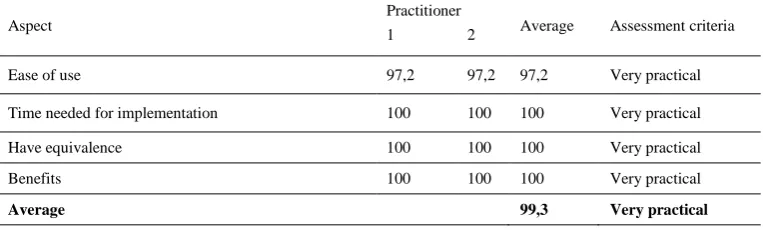
Table 3. Practicality Value of Assessment of Attitudes and Values by Practitioners
Aspect Practitioner Average Assessment criteria
1 2
Ease of use 97,2 97,2 97,2 Very practical
Time needed for implementation 100 100 100 Very practical
Have equivalence 100 100 100 Very practical
Benefits 100 100 100 Very practical
Figure 1. Value of Practicality Assessment of Attitudes and Values Based on KKNI by Lecturers
Based on Table 3 and Figure 1, it can be seen that the KKNI-based attitude and value assessment developed very practically was used by lecturers in the lectures on the process and learning outcomes of biology. The practicality of the ease of use of the KKNI based assessment was assessed at 97.2% (very practical). This assessment already has an attitude and value assessment instrument equipped with filling instructions that can assist lecturers in completing instruments. The instrument is also equipped with assessment rubrics that are in accordance with the descriptors that have been formulated so that they can measure the lecture process carried out. In addition, this attitude and value system instrument has clear scoring so that score processing is easily applied. Instruments of attitudes and values are easily interpreted by lecturers in evaluating Biology learning processes and results as well as other lecturers who are in the same level of knowledge. This can be seen during the lecture process, the lecturer can use the instrument to measure student attitudes.
Practical aspects of implementation time, the KKNI-based assessment is considered very practical (100%). This shows that the attitude indicators assessed in the KKNI-based assessment include courtesy, respect, cooperation, discipline, and responsibility can be measured as a whole based on lecture time. The practicality of aspects has equivalence; KKNI-based assessments get very practical values (100%). Means the attitude and value system designed based on the KKNI have the same equivalence. The practicality in terms of the benefits of the KKNI-based assessment is considered very practical (100%). This shows that the KKNI-based attitude and value instruments help lecturers to measure the ability of student attitudes and values accordingly. Instruments of attitudes and values are stated to be very practical in accordance with the statement of Rahayu et al (2008: 21) that assessment instruments are said to be practical if the results of expert and practitioner evaluations show that the assessment instruments can be carried out and take place during the learning process.
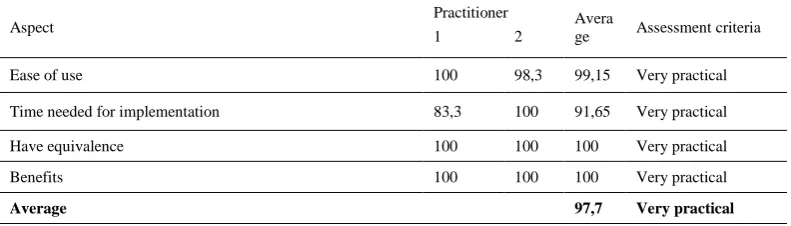
Table 4. Value of Practicality of Knowledge Assessment by Practitioners
Aspect
Practitioner Avera
ge Assessment criteria
1 2
Ease of use 100 98,3 99,15 Very practical
Time needed for implementation 83,3 100 91,65 Very practical
Have equivalence 100 100 100 Very practical
Benefits 100 100 100 Very practical
Average 97,7 Very practical
97.2 97.2
100100 100 100100 100
95.5 96 96.5 97 97.5 98 98.5 99 99.5 100 100.5
Praktisi 1 Praktisi 2
Kemudahan dalam penggunaan
Waktu yang diperlukan dalam pelaksanaan Memiliki ekivalensi
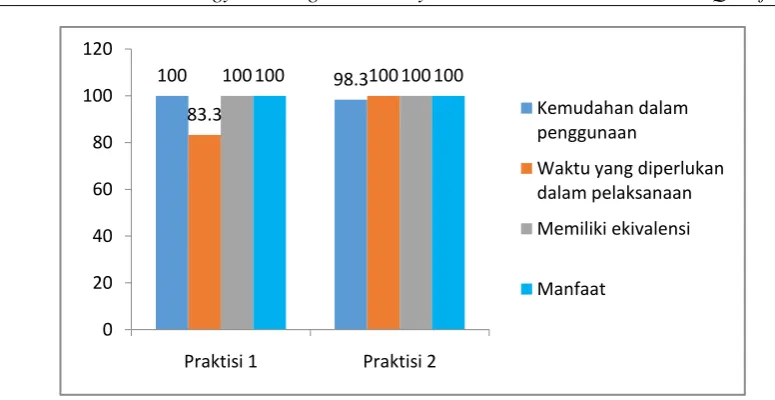
Figure 2. The Practicality Value of Knowledge Assessment Based on KKNI by Lecturers
Based on Table 4 and Figure 2, it can be seen that the KKNI-based knowledge assessment developed very practically was used by lecturers in the lectures on the process and learning outcomes of biology. The practicality of the ease of use aspect of the KKNI-based assessment was assessed at 99.15% (very practical). This assessment already has a knowledge assessment instrument equipped with clear filling instructions so that students are more focused on working on the questions. The subject matter of the instrument has been clearly and clearly formulated. This is prepared by referring to the signs of question writing, one of which is in accordance with the indicator indicators. Nurfillaili (2016: 83) told that in making questions also need to be considered the problem indicators. The sentence in each question does not have a double meaning. Instruments equipped with images, graphics, tables, diagrams and the like are clear and functional so that it does not confuse students to answer the question. The language used is communicative so the statement is easy to understand. Questions also have varying levels of knowledge between C2 to C6 so that they can measure students' knowledge abilities and can make students develop high-level thinking skills (HOTS). Higher Order Thinking Skills is a process of thinking students in higher cognitive levels developed from various concepts and cognitive methods and taxonomy of learning such as problem-solving methods, bloom taxonomy, and taxonomy of learning, teaching, and assessment (Saputra, 2016: 91). Basic HOTS refers to the activity of analyzing, evaluating, and creating knowledge that is adapted to conceptual, procedural and metacognitive (Dinni, 2018: 172). Based on this, it can be seen that HOTS is related to C4, C5, and C6 on Bloom's Taxonomy.
The instrument is in accordance with the study material studied in the lecture and the close relationship between process, material, competence and learning experience so that it can see how students understand the material learned during the lecture. Knowledge assessment instruments in the KKNI-based assessment already have clear assessment criteria, clear assessment standards, clear scoring and processing of scores easily applied. The knowledge assessment instrument in the KKNI-based assessment is easily interpreted by lecturers in the subject of evaluation of Biology learning processes and results as well as other lecturers who are in the same level of knowledge.
The practicality of the implementation time aspect, the KKNI-based assessment was considered very practical (91.65%). This shows that the number of questions is in accordance with the time specified, the time that has been provided is in accordance with the level of difficulty of the problem and students can complete the question in accordance with the time specified. In addition, the level of difficulty of the problem is in accordance with the time specified. The practicality of aspects has equivalence; KKNI-based knowledge assessment gets very practical value (100%). It means that the knowledge assessment designed based on the KKNI on the assessment of knowledge already has the same equivalence. Practicality in terms of the benefits of the KKNI-based knowledge assessment is considered very practical (100%). This shows that the KKNI-based knowledge instrument can help lecturers in measuring students' knowledge skills appropriately. It can be concluded that easy lecturers use the KKNI-based assessment so that the assessment is said to be very practical to be used to measure the ability of attitudes and values, knowledge skills and skills abilities of students in the lecture process. A product is said to be practical if the product is realistically usable (Plomp, 2077: 27).
100 98.3
83.3
100
100100 100100
0 20 40 60 80 100 120
Praktisi 1 Praktisi 2
Kemudahan dalam penggunaan
Waktu yang diperlukan dalam pelaksanaan Memiliki ekivalensi
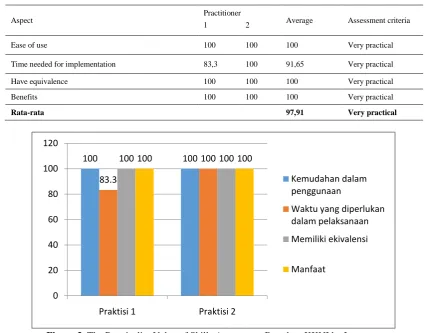
Table 5. Practicality Value of Skills Assessment by Practitioners
Figure 3. The Practicality Value of Skills Assessment Based on KKNI by Lecturers
Based on Table 5 and Figure 3, it can be seen that the KKNI-based general and special skills assessment developed very practically was used by lecturers in the lectures on Biology Process and Learning Outcomes. The practicality of the ease of use of the KKNI-based assessment was assessed at 100% (very practical). This assessment already has a general and special skills assessment instrument equipped with clear filling instructions so that it can assist lecturers in filling out the instruments. Instruments are also equipped with assessment rubrics that are in accordance with the descriptors that have been formulated so that they can measure the skills of students in the lecture process carried out. This is in accordance with the definition of the rubric according to Salamah (2018: 287) that the rubric contains instructions/descriptions in the scale assessment or checklist. In addition, these general and special skills instruments in the KKNI-based assessment have clear scoring so that score processing is easily applied. General and special skills instruments are easily interpreted by lecturers in the evaluation process and Biology learning outcomes as well as other lecturers who are in the field of science.
The practicality of the implementation time aspect, the KKNI-based general and special skills assessment was assessed at 91.65% with very practical criteria. This is because the assessment can describe the students' skills in applying the material studied, including the systematic writing of reports, presentation media, the content of the material delivered, communication, expressing opinions, asking questions and answering questions can be measured as a whole based on lecture time. Judging from the practicality of special skills, students have been seen to be able to develop their skills in designing the question grid, instrument design, data processing validity, difficulty index, power difference and processing of reliability data can be measured as a whole based on lecture time.
The practicality of the aspects has equivalence, the KKNI-based general and special skills assessment instruments get 100% scores with very practical criteria. It means that the KKNI-based general and special skills assessment instruments have the same equivalence. The assessment has been arranged in such a way that is easily understood so that the responses of all users are the same.
Practicality in terms of the benefits of the KKNI-based assessment is assessed 100% with very practical criteria. This shows that general and special skills instruments designed based on the KKNI help lecturers to measure the general and specific skills of students appropriately.
100 100
83.3
100
100100 100100
0 20 40 60 80 100 120
Praktisi 1 Praktisi 2
Kemudahan dalam penggunaan
Waktu yang diperlukan dalam pelaksanaan Memiliki ekivalensi
Manfaat
Aspect Practitioner Average Assessment criteria
1 2
Ease of use 100 100 100 Very practical
Time needed for implementation 83,3 100 91,65 Very practical
Have equivalence 100 100 100 Very practical
Benefits 100 100 100 Very practical
www.ijres.org 11 | Page]
III.
CONCLUSION
The conclusion of this study is an assessment based on the Indonesian National Qualifications Framework in the lecture Process Evaluation and Biological Learning Outcomes has been stated as practical in terms of ease of use, the time required in the implementation has equivalence and benefits.
REFERENSI
[1]. Dinni, H.N., 2018. HOTS (Higher Order Thinking Skills) dan Kaitannya dengan Kemampuan Literasi Matematika. Prosiding Seminar Nasional Matematika Universitas Negeri Semarang. 170-176.
[2]. Direktorat Pembelajaran Kemenristekdikti. 2016. Panduan Penyusunan Kurikulum Perguruan Tinggi. Jakarta: Kementerian Riset, Teknologi, dan Pendidikan Tinggi.
[3]. Hasibuan, H., Irwan, dan Mirna. 2014. Penerapan Metode Penemuan Terbimbing pada Pembelajaran Matematika Kelas XI IPA SMA N 1 Lubuk Alung. Jurnal Pendidikan Matematika. 3(1):38-44.
[4]. Nerita, S., A. Maizeli, and A. Afza. 2017. Student Analysis of Handout based on Guided Discovery Method in Process Evaluation and Learning Outcomes of Biology. Journal of Physic: Conference Series. 895012006.
[5]. Nurfillaili, U., M.Yusuf T., dan S. Anggraini. 2016. Pengembangan Instrumen Tes Hasil Belajar Kognitif Mata Pelajaran Fisika pada Pokok Bahasan Usaha dan Energi SMA Negeri Khusus Jeneponto Kelas XI Semester I. Jurnal Pendidikan Fisika.4(2):83-87. [6]. Plomp, T. 2007. Educational Design Research: an Introduction. Proceedings of the Seminar Conducted at East China Normal
University, Shanghai (PR China). November 23-26 p 9-36
[7]. Rahayu, T., Purwoko, dan Zulkardi. 2008. Pengembangan Instrumen Penilaian dalam Pendidikan Matematika Realistik Indonesia (PMRI) di SMP N 7 Palembang. Jurnal Pendidikan Matematika. 2(2):19-35.
[8]. Riduwan. 2012. Dasar-dasar Statistika. Alfabeta : Bandung
[9]. Saputra, H. 2016. Pengembangan Mutu Pendidikan Menuju Era Global: Penguatan Mutu Pembelajaran dengan Penerapan HOTS (Higher Order Thinking Skills). Bandung : SMILE’s Publishing.
[10]. Salamah, U. 2018. Penjaminan Mutu Penilaian Pendidikan. Evaluasi. 2(1):274-293.
[11]. William, D. 2013. Assessment: The Bridge Between Teaching and Learning. Voices From The Middle.21(2):15-20.