Original Research Article
Awareness about complementary and alternative medicine among
attendees of urban and rural health training centres of a medical
college in North Karnataka
Chandan N.
1, Kiran Patil
2*
INTRODUCTION
Since time immemorial, mankind has developed unique indigenous health systems, practices, and products which are outside conventional scientific medicine collectively known as Complementary and Alternative Medicine (CAM).1 CAM has been defined as “a group of diverse medical and healthcare systems, practices and products that are presently not considered to be a part of conventional medicine”. CAM is being increasingly used
by people all over the world.2 The term CAM is used interchangeably with traditional medicine in some foreign countries. They refer to a broad set of health care practices that are not part of that country‟s own tradition and are not integrated into the health care system. It includes professionally regulated and unregulated practices, for example: Ayurveda, Yoga And Naturopathy, Unani, Siddha, Homeopathy, Acupuncture, Osteopathy, Reiki, Aromatherapy, Faith Healing.3 Complementary medicine is one that is used along with
ABSTRACT
Background: Complementary and alternative medicine (CAM) includes a wide range of practices that do not fit within the dominant biomedical model of health care and are not commonly provided within orthodox medicine settings. People might be attracted to and use CAM because they hold beliefs that are congruent with CAM. But safety and efficacy of these systems are not well established. So this study was done to assess awareness among patients attending UHTC and RHTC about CAM.
Methods: Cross sectional study was done in UHTC and RHTC of SDMCMSH, Dharwad, India. Data was collected by using pre designed interview schedule from 200 patients. Data was entered in Microsoft excel 2013 and analysed using IBM SPSS v20. Descriptive statistics and chi square test were applied. p<0.05 was considered statistically significant.
Results: 100 patients each from UHTC and RHTC were included in the study. 93% of UHTC and 98% of RHTC patients were aware about CAM. 74% in UHTC and 60% in RHTC were aware of advertisements about CAM. 96% of UHTC and 100% of RHTC patients said CAMs have no side effects. 45% from UHTC and 14% from RHTC preferred CAM. 43% from UHTC and 42% from RHTC patients had used CAM.
Conclusions: The awareness about CAM in our study is high, 93% among urban and 98% among rural study participants. Ayurveda was the most commonly used AMT.
Keywords: Allopathy, Ayurveda, Complementary and alternative medicine, Homeopathy, Traditional therapy 1
Assistant Professor, Department of Community Medicine, Adichunchanagiri Institute of Medical Sciences, B.G. Nagara, Nagamangala, Mandya, Karnataka, India
2
Medical Officer, RHTC, Devikoppa, Kalghatagi, Dharwad, Karnataka, India
Received: 28 June 2018
Revised: 04 July 2018
Accepted: 05 July 2018
*Correspondence:
Dr. Kiran Patil,
E-mail: [email protected]
Copyright: © the author(s), publisher and licensee Medip Academy. This is an open-access article distributed under the terms of the Creative Commons Attribution Non-Commercial License, which permits unrestricted non-commercial use, distribution, and reproduction in any medium, provided the original work is properly cited.
conventional system of medicine, but the alternative medicine is used as an alternate to conventional system of medicine.4
India is the birth place of one of the oldest systems of medicines, Ayurveda, which had its origin around 2000 years back. Ayurveda, Yoga, Siddha and Unani and Homeopathy are recognized in India as the Indian systems of medicines. The increasing incidence of chronic diseases such as diabetes mellitus (DM) along with other chronic diseases, their serious complications and incurable nature may force people to use complementary and alternative medicine (CAM) either alone or in combination with modern medicines.5
Although CAM has been practiced in India for thousands of years, there is limited literature available on the extent of use, attitude and perception of patients utilizing CAM services. Since practitioners of modern medicines may have to encounter patients using CAM, it would be useful to know attitude and perception of patients towards CAM.2 So this study was conducted to study the knowledge, attitude and practice regarding complementary and alternative medicines among attendees of urban and rural health training centres of SDM College of Medical Sciences & Hospital, Dharwad.
METHODS
Study design
Cross-sectional study.
Study area
Urban health training centre (UHTC) and Rural health training centre (RHTC), SDM College of Medical Sciences & Hospital, Dharwad, Karnataka, India.
Study period
The study was carried out from July 2016 to September 2016.
Study subjects
Patients visiting the urban and rural health training centres for consultation who are more than 18 years old were selected by simple random sampling technique after obtaining written informed consent.
Sample size
A total of 200 patients (100 from UHTC and 100 from RHTC) were selected for the study for convenience.
Study tools
Pre designed, semi structured interview schedule was used to collect the data. The questions related with their knowledge, attitude and practice about complementary
and alternative medicine and such alternate home remedies sought.
Inclusion criteria
All patients aged more than 18 years and who gave voluntary written consent.
Exclusion criteria
Patients less than 18 years, patient attendants and patients who did not give consent.
Data collection was done after taking written informed consent from the patients attending UHTC and RHTC. Basic socio demographic data of the study participants such as age, sex, address, religion, education, occupation and socio economic status were collected. Then questions regarding knowledge, attitude and practice about CAM were recorded.
Statistical analysis
Data entry was done in Microsoft Excel 2013 and analysis was done using SPSS v20.0. The analysis was done separately for UHTC and RHTC participants and compared. Descriptive statistics like percentages, frequencies, mean and standard deviation was used. Chi square test was used to test association between two categorical variables.
RESULTS
Two hundred study participants, 100 from UHTC and 100 from RHTC were included in the study. Majority of the study participants in both UHTC (82%) and RHTC (83%) were aged between 21 to 60 years of age. In UHTC 40% of study participants were males and 60% were females in comparison with 62% males and 38% females in RHTC. In UHTC 81% were belonging to Hindu religion and 19% to Muslim religion, whereas in RHTC 85% were Hindus and 15% were Muslims which is fairly similar. With respect to education 73% in UHTC were educated from high school and above, whereas 69% in RHTC were educated till primary and high school. Majority of study participants 41% from UHTC were house wives and 63% in RHTC were involved in agriculture. Marital status was similar among study participants with 83% married in UHTC and 86% in RHTC.
The socio demographic factors age, religion and marital status were not significantly different between UHTC and RHTC study participants. Sex, education and occupation were significantly differently distributed among UHTC and RHTC participants (Table 1).
Table 1: Socio demographic characteristics of study participants.
Characteristics UHTC (%) RHTC (%) Significance
Age
χ2 =1.116 df=4 p=0.891
With Yate‟s correction
<20 years 06 (06.0) 03 (03.0)
21-40 years 39 (39.0) 41 (41.0)
41-60 years 43 (43.0) 42 (42.0)
61-80 years 09 (09.0) 13 (13.0)
>80 years 03 (03.0) 01 (01.0)
Sex χ2
=9.684 df=1 p=0.001
Male 40 (40.0) 62 (62.0)
Female 60 (60.0) 38 (38.0)
Religion χ2
=1.073 df=1 p=0.300
Hindu 81 (81.0) 85 (85.0)
Muslim 19 (19.0) 15 (15.0)
Education
χ2
=34.089 df=5 p<0.001
Illiterate 16 (16.0) 15 (15.0)
Primary 11 (11.0) 35 (35.0)
High school 25 (25.0) 34 (34.0)
PUC 16 (16.0) 10 (10.0)
Graduate 31 (31.0) 05 (05.0)
Post graduate 1 (1.0) 01 (01.0)
Occupation
χ2
=102.607 df=6 p<0.001
With Yate‟s correction
Unemployed 00 (0.0) 04 (04.0)
House wife 41 (41.0) 18 (18.0)
Student 14 (14.0) 01 (01.0)
Agriculture 02 (02.0) 63 (63.0)
Business 12 (12.0) 14 (14.0)
Professional 17 (17.0) 0 (0.0)
Others 14 (14.0) 0 (0.0)
Marital status
χ2 =0.344 df=1 p=0.557
Married 83 (83.0) 86 (86.0)
Unmarried 17 (17.0) 14 (14.0)
Total 100 (100.0) 100 (100.0)
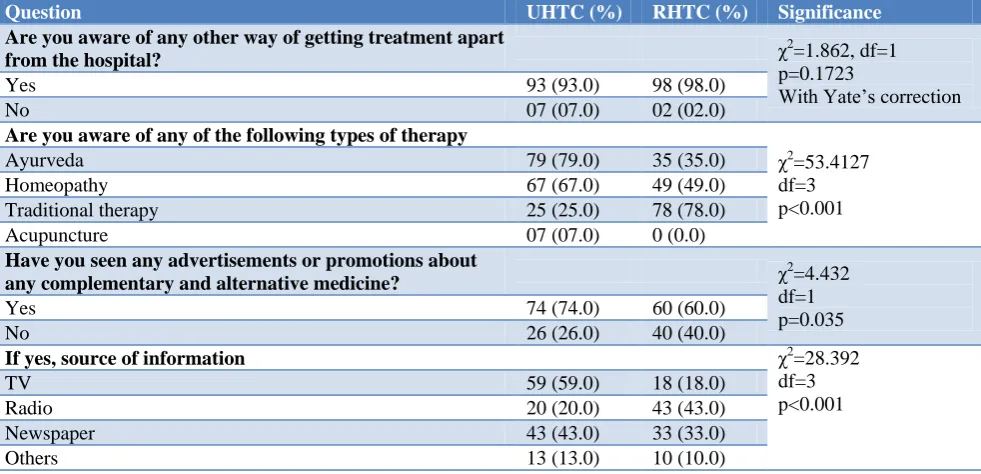
Table 2: Knowledge of study participants about alternative medical therapy.
Question UHTC (%) RHTC (%) Significance
Are you aware of any other way of getting treatment apart
from the hospital? χ
2
=1.862, df=1 p=0.1723
With Yate‟s correction
Yes 93 (93.0) 98 (98.0)
No 07 (07.0) 02 (02.0)
Are you aware of any of the following types of therapy
χ2
=53.4127 df=3 p<0.001
Ayurveda 79 (79.0) 35 (35.0)
Homeopathy 67 (67.0) 49 (49.0)
Traditional therapy 25 (25.0) 78 (78.0)
Acupuncture 07 (07.0) 0 (0.0)
Have you seen any advertisements or promotions about
any complementary and alternative medicine? χ
2 =4.432 df=1 p=0.035
Yes 74 (74.0) 60 (60.0)
No 26 (26.0) 40 (40.0)
If yes, source of information χ2=28.392
df=3 p<0.001
TV 59 (59.0) 18 (18.0)
Radio 20 (20.0) 43 (43.0)
Newspaper 43 (43.0) 33 (33.0)
Others 13 (13.0) 10 (10.0)
Question UHTC (%) RHTC (%) Significance Are you aware of the side effects of alternative medical
therapy? χ
2
=2.296, df=1 p=0.1297
With Yate‟s correction
Yes 04 (04.0) 0 (0.0)
No 96 (96.0) 100 (100.0)
Table 3: Attitude of study participants about alternative medical therapy.
Question UHTC (%) RHTC (%) Significance
Do you think that alternative medicine can cure all forms
of illness? χ2
=9.28 df=1 p=0.002
Yes 19 (19.0) 05 (05.0)
No 65 (65.0) 31 (31.0)
Don‟t know 16 (16.0) 64 (64.0)
Rate the effectiveness of complementary and alternative medicine when compared to allopathy?
χ2 =14.48 df=3 p=0.002 Less effective than allopathy 33 (33.0) 26 (26.0)
Equally effective to allopathy 17 (17.0) 13 (13.0) More effective than allopathy 20 (20.0) 07 (07.0)
Don‟t know 30 (30.0) 54 (54.0)
Do you think complementary and alternative medicine
can be injurious to health? χ2
=1.601 df=1 p=0.205
Yes 10 (10.0) 10 (10.0)
No 58 (58.0) 31 (31.0)
Don‟t know 32 (32.0) 59 (59.0)
Do you prefer complementary and alternative medicine
to allopathy? χ2
=42.623 df=2 p<0.001
Yes 45 (45.0) 14 (14.0)
No 33 (33.0) 32 (32.0)
Not sure 12 (12.0) 54 (54.0)
Reason for preferring complementary and alternative medicine?
χ2
=39.149 df=4 p<0.001
Cheap 14 (14.0) 0 (0.0)
Acceptable 25 (25.0) 03 (03.0)
Accessible 05 (05.0) 04 (04.0)
Delay in allopathic hospital 03 (03.0) 06 (06.0)
No particular reason 51 (51.0) 87 (87.0)
Do you think that allopathic medicine alone can cure
illness without complementary and alternative medicine? χ
2 =5.05 df=1 p=0.024
Yes 41 (41.0) 26 (26.0)
No 29 (29.0) 62 (62.0)
Don‟t know 30 (30.0) 12 (12.0)
View towards advertisements of complementary and alternative medicine?
χ2
=24.483 df=3 p<0.001
They are true 16 (16.0) 04 (04.0)
May be true 36 (36.0) 15 (15.0)
They are false 13 (13.0) 25 (25.0)
I don‟t know 35 (35.0) 56 (56.0)
Awareness about Ayurveda (79%), homeopathy (67%) and traditional therapy (25%) were present in UHTC study participants, as compared to 35% Ayurveda, 49% homeopathy and 78% traditional therapy in RHTC study participants. About 74% of UHTC and 60% of RHTC study participants had come across advertisements or promotions about CAMs. They had come across these
There was statistically significant difference among knowledge about awareness of types of CAM, advertisements and promotions about CAM, source of advertisements between UHTC and RHTC study participants (Table 2).
While assessing the attitude of study participants 65% of UHTC and 31% of RHTC were of the opinion that CAM cannot cure all forms of illnesses. 64% of RHTC study participants did not know about curative aspect. 33% of the UHTC and 26% of RHTC study participants were of the opinion that CAMs were less effective than allopathy, 17% of UHTC and 13% of RHTC study participants opined CAMs were equally effective to allopathy, 20% of UHTC and 7% of RHTC study participants opined that CAMs are more effective than allopathy. Whereas 30% of UHTC and 54% of RHTC participants were not aware of the effectiveness difference. 58% of UHTC and 31%
of RHTC study participants were of the opinion that CAMs are not injurious to health. 45% of UHTC and 14% of RHTC study participants preferred CAMs over allopathy and 12% from UHTC and 54% from RHTC did not have preference to either. There was no particular reason for preference to CAMs among majority (87%) RHTC study participants when compared to 51% among UHTC study participants. 41% of UHTC study participants were of the opinion that allopathy can alone cure illnesses without CAM but 62% of the RHTC participants were against this opinion. When asked about their view towards advertisements of CAM 16% of UHTC and 4% of RHTC study participants said that they are true, 36% from UHTC and 15% from RHTC opined they may be true, 13% from UHTC and 25% from RHTC said they are false and 35% from UHTC and 56% from RHTC did not know anything about advertisements (Table 3).
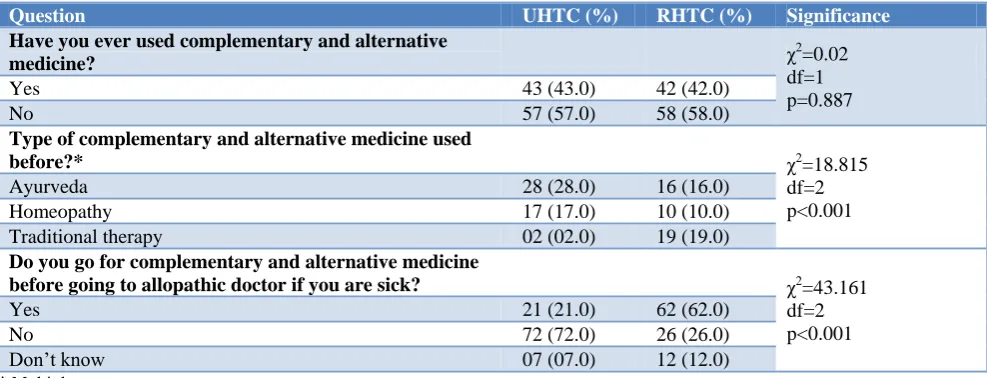
Table 4: Practice of study participants about alternative medical therapy.
Question UHTC (%) RHTC (%) Significance
Have you ever used complementary and alternative
medicine? χ
2 =0.02 df=1 p=0.887
Yes 43 (43.0) 42 (42.0)
No 57 (57.0) 58 (58.0)
Type of complementary and alternative medicine used
before?* χ2
=18.815 df=2 p<0.001
Ayurveda 28 (28.0) 16 (16.0)
Homeopathy 17 (17.0) 10 (10.0)
Traditional therapy 02 (02.0) 19 (19.0)
Do you go for complementary and alternative medicine
before going to allopathic doctor if you are sick? χ2
=43.161 df=2 p<0.001
Yes 21 (21.0) 62 (62.0)
No 72 (72.0) 26 (26.0)
Don‟t know 07 (07.0) 12 (12.0)
* Multiple responses
Practice of CAM among study participants is presented in table 4. Among UHTC study participants 43% had used CAM before in comparison with 42% of RHTC participants. Among UHTC 28% had used Ayurveda, 17% homeopathy and 2% traditional therapy before, whereas 16% had used Ayurveda, 10% homeopathy and 19% traditional therapy among RHTC study participants. 62% of RHTC and 21% of UHTC study participants said they would go for CAM before consulting allopathy (Table 4).
DISCUSSION
Awareness about complementary and alternative medicine in our study was 93% among UHTC and 98% among RHTC study participants. 79% in UHTC and 35% in RHTC were aware about Ayurveda, 67% of UHTC and 49% of RHTC study participants were aware about homeopathy, 7% of UHTC study participants were aware about acupuncture and 25% in UHTC and 78% of study participants in RHTC were aware about traditional
medical therapy. In a study done in Riyadh, Saudi Arabia 89% of the study participants were aware about alternative medical therapy.6 In a study done in Osun state, Nigeria 90.4% of the study participants were about CAM.7
13.4% newspaper, 6.8% books and 13.1% by other means. 54.9% were aware of side effects of CAM. 47.3% of the study participants thought CAM is injurious to health. 35.7% who were aware about CAM preferred it over orthodox medical therapy. Reasons for preferring CAM over orthodox medical therapy were 21.4% cheap, 16.4% accessible and 13.4% acceptable by them. Only 50.0% were of the opinion that allopathic medical therapy alone can cure their illnesses.7
In the present study 43% had used CAM at least once in their lifetime. Among them 28% had utilized ayurveda, 17% homeopathy and only 2% traditional therapy. In a study done in Riyadh, Saudi Arabia 84.6% of the study participants had used CAM before. Usage of CAM increased with age. Among CAM 58.89% used medical herbs, 54% prayers, 35.71% Hijama and 22% medical massage therapy for various ailments.6 In a study done in Osun state, Nigeria 90.4% of the study participants were about CAM. Among them 94.2% used concoction (herbal preparation), 85% consulted herbalists/traditionalists and 59.9% went to traditional bone setters54.6% of the study participants had used CAM in the last 12 months and most used CAM was concoction (80.5%).7
In a study done in New Delhi, ayurveda was the most commonly used CAM (36%), homeopathy 27%, unani 16%, yoga 8% and home remedies about 8%.2
In the present study 20% of the study participants thought that CAM was more effective than allopathic medical therapy and 17% as equally effective. In a study done in New Delhi 50% of the patients thought that CAM is more effective than conventional medical therapy. 2
The awareness about CAM in our study is high, 93% among UHTC and 98% among RHTC study participants. Ayurveda was the most commonly used CAM. Since safety and efficacy of CAM remain largely unknown and untested to have met the „gold standard‟ therapy, advising patients and the general public who use or seek alternative medical therapy presents a professional challenge.
ACKNOWLEDGEMENTS
We acknowledge our interns who helped in data collection and data entry.
Funding: No funding sources Conflict of interest: None declared Ethical approval: Not required
REFERENCES
1. James PB, Bah AJ. Awareness, use, attitude and perceived need for Complementary and Alternative Medicine (CAM) education among undergraduate pharmacy students in Sierra Leone: a descriptive cross-sectional survey. BMC Complementary Alternative Med. 2014;14:438.
2. Ghosh RK, Gupta M, Roy V, Roy V. Perception, attitude and usage of complementary and alternative medicine among doctors and patients in a tertiary care hospital in India. Indian J Pharmacol. 2016;47(2):1–8.
3. Warren N, Canaway R, Unantenne N and Manderson L. Taking control: Complementary and alternative medicine in diabetes and cardiovascular disease management. Health (London). 2013;17(4):323–39.
4. Kumar D, Bajaj S Mehrotra R. Knowledge, attitude and practice of complementary and alternative medicines for diabetes. Public Health. 2006;120(8):705–11.
5. Thankappan KR, Shah B, Mathur P, Sarma PS, Srinivas G, Mini GK, et al. Risk factor profile for chronic non-communicable diseases: results of a community-based study in Kerala, India. Indian J Med Res. 2010;131:53–63.
6. Elolemy AT, Albedah AMN. Public Knowledge, Attitude and Practice of Complementary and Alternative Medicine in Riyadh Region, Saudi Arabia. Oman Medical J. 2012;27(1):20–6.
7. Osun OF, Olusegun J, Olalekan W. Knowledge, Attitude and Use of Alternative Medical Therapy amongst Urban Residents of Osun State, Southwestern Nigeria. Afr J Trad. 2009;6:281–8.