begun to receive archaeological attention, and therefore no mass of evidence has
been gathered for the dating of the works of this late period. In general, the levels
of the later centuries have been so disturbed as to offer little in the way of a con-
tinuous picture. Since only by the publication of considerable masses of material can
the chronological development of the pottery of the later periods be established, the
Turkish pottery from the Agora excavations is presented with only tentative sug-
gestions for dating. It is hoped that the publication of pottery from other sites will
correct, confirm, or supplement whatever conclusions are reached here. To facilitate
future comparisons the Agora pieces will be I)resented in catalogue form.
The basis for the present discussion is the pottery from ten different deposits
in the Agora, as well as examples of one ware found in various parts of the excava-
tions and proved to be of local manufacture. In these groups there were a few slight
indications of absolute date, and the coincidence of different wares gives a certain
relative chronology. Little need be said about artistic influences found in the pottery
of Athens; the commercial and political relations of Greece with both east and west
from the sixteenth to eighteenth centuries are too well
knownto need light from these
somewhat dubious sources, and to discuss artistic influences from the point of view
of the pottery itself implies an intrinsic merit unhappily for the most part absent.
A few obvious imports or imitations will simply be noted.
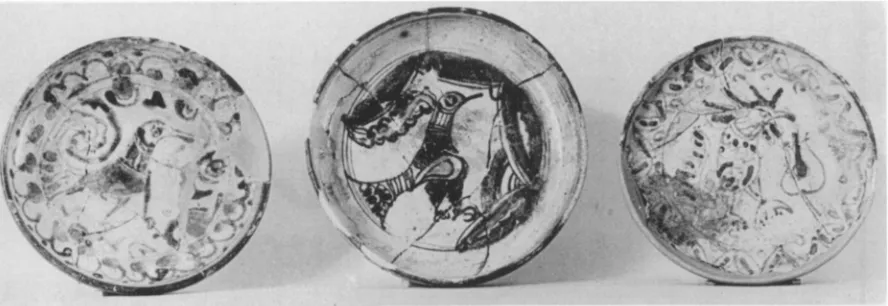
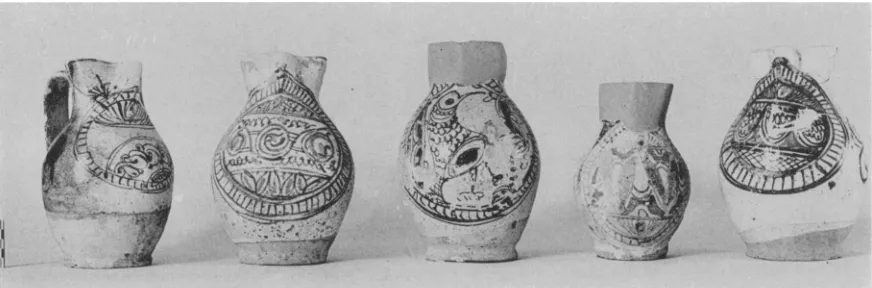
The ware which can be localized in Athens will be called here " blue and white
painted ware." It is one of the most attractive of the later wares and-has the fol-
lowing characteristics: on a ground of white slip designs are drawn in blue, usually
in outline, occasionally with some surfaces filled in; accessory details are in red or
yellow-brown, occasionally green. The inside is covered with a colorless to very light
green glaze and the outside is slipped and glazed, except for the underside of the
foot, with a darker glaze of the same color, a different color, or the same glaze as on
the inside. The first is the most commnon. Occasionally the outside is unslipped and
unglazed except for the upper edge of the rim. The most frequent decorative motives
are birds, rosettes, and cross-hatchings; they are usually surrounded by a floral
border of varying degrees of decadence. The clay is the usual Attic pinkish buff of
a medium coarseness.
1 I am indebted to the authorities of Durnbarton Oaks for permission to work on this material while in residence there as Junior Feltow.
Hesperia, XI, 1
American School of Classical Studies at Athens is collaborating with JSTOR to digitize, preserve, and extend access to
Hesperia
Characteristic examples of these are shown in Figures 2, 3, and 4. Finally there is
the oval-bodied pitcher with flat bottom, ribbon handle, short neck and trefoil lip
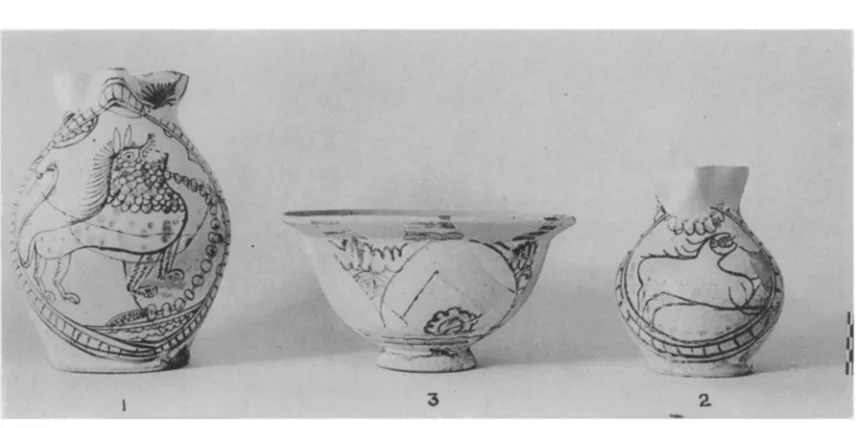
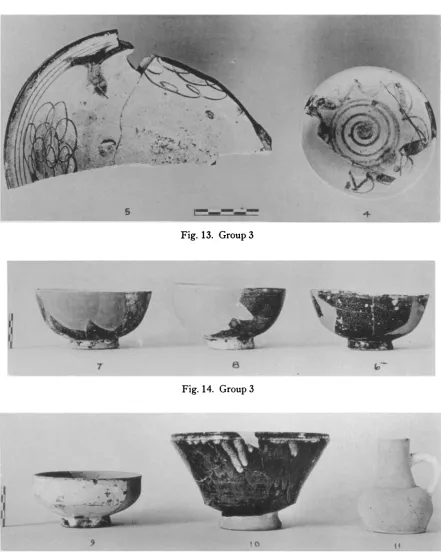
(Fig. 5). A particularly pleasant piece is the jug from Group 3 (Fig. 12, left), with
a lion; another, smaller, jug from the same place was perhaps made by an apprentice
in the same shop, imitating none too successfully the work of the master potter
(Fig. 12, right).
A terminus
acte quemnfor the manufacture of blue and white painted ware,
as well as evidence of its Athenian origin, is provided by the two potter's kilns under
the Church of the Vlassarou, beneath the paving of the first building period. In
the entrances to the two kilns were found some unfinished sherds and numerous kiln
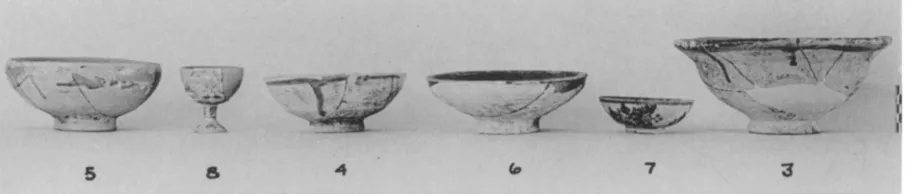
tripods; from one of the kilns itself came a small blue and white bowl (Fig. 1, upper
right). Many more tripods were found in a pit a few metres away. Since the Church
of the Vlassarou was seen by Spon in 1676,2 the latest possible floruit of this ware
must be considered to be the first half of the seventeenth centurv.
A variant of blue and white painted ware, made in a kiln near the South Stoa
and perhaps also in those of the Vlassaroti, uses accessory sgraffito decoration: some-
times it is merely a pair of lines around the inner edge of the rim or a few crude
spirals; sometimes the painted design is outlined and supplemented.
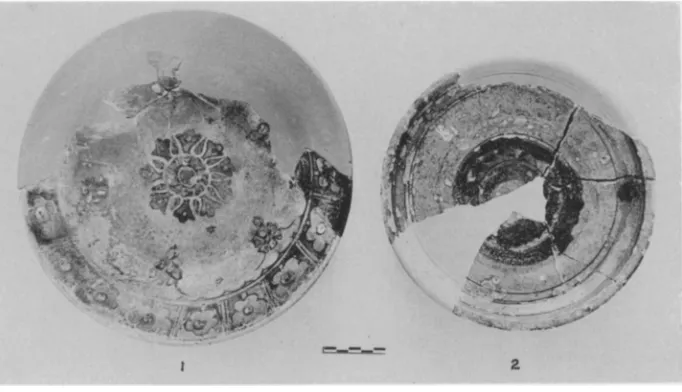
Of the groups under discussion the earliest seems to be one which contains an
Asia Minor ware plate of the sixteenth century (Figs. 6-9). Considering the rela-
tively good quality of the sgraffito on the small bowl with the warrior (Fig. 7, no. 3),
one is inclined to assign the rest of the contents of the well to the same century. The
other, presumably later, groups have nothing comparable. This group has also an
example of a distinctive type which has appeared in various places in the excavations:
a fragment of a small bowl with a sgraffito bird in the centre. The bowls of this
class are always the sanme
in shape and fabric, and are made of a fine hard red clay
of thin fabric, with low ring foot and plain rim; the glaze is light yellow to cream.
The outside is occasionally unslipped and unglazed except for a narrow band around
the rim; a more common form of outer decoration, however, is a pair of sgraffito
lines borderinlg an undulating one, the lines followed roughly by one or two colors
of glaze, usually green and yellow (Figs. 9, 10, 18). Bowls of this type are found
also in Groups 2 and 5. Another, from no significant context, is illustrated in Figure
36. The significance of the inscription remains obscure, though one suggestion is that
it may have been the name of the potter. These bowls will be referred to as " bird
- Spon and Wheler, Voyage d'Italie de Dalntatie de Grece et du Levant, fait aux annees 1675
this group.
The presence of blue and white painted ware is the unifying feature of Groups
3, 4, and 5 (Figs. 12-19). One Turkish coin was found in Group 3, identified as
before the eighteenth century. Groups 3 and 4 have also in common bowls of identical
shape, with flaring sides sharply angled near the base, and nmoulded
rim (Figs. 15, 17).
In both Group 4 and Group 5 are the flat-bottomed, low-sided plates characteristic
of blue and white painted ware, and Group 5 has a bird bowl, without any interior
decoration. All these features suggest that the three groups are not far apart in
date and, on the basis of the blue and white ware, may perhaps be assigned to the
late sixteenth or early seventeenth century.
The other groups have none of the characteristics of the first five. Several new
types make their appearance and occur in two or more instances. A general indication
of date is given by the occurrence in two groups (9 and 10) of Kioutakia ware, and
by the comparison of their contents with the extremely fragmentary contents of
another well. The pottery from this well was washed after the end of the season
of 1940 and no pieces were catalogued or photographed. Notes were made, however,
of the characteristic pieces and the one coin proved to be of 1773
A.D.Most of the
types found in the later five groups can be paralleled in these uncatalogued fragments,
which therefore provide a convenient anchorage. Of the new types two have long
been recognized: marbled ware' and Kioutakia. Hobson' has identified the true
Kioutakia, as opposed to the earlier wares which have gone by the same name, as a
thin sandy fabric decorated in blue, green, yellow, dark manganese purple, and red.
The decoration is usually outlined in black and potters' nmarks
are frequent. Hobson
regards the most characteristic feature of the color scheme as the prominence of
yellow, and puts the manufacture of the ware in the eighteenth century. In all these
respects, as well as in general appearance, the Kioutakia pieces from the Agora
deposits correspond closely (Figs. 25, 35).
The marbled ware follows the examples published by Rice.5 The most common
shape is a wide shallow bowl with a narrow projecting rim, slightly concave; the
inside is genuinely marbled, the outside sometimes marbled, sometimes speckled, and
occasionally covered with plain glaze. Other shapes, such as the small bowl in Group
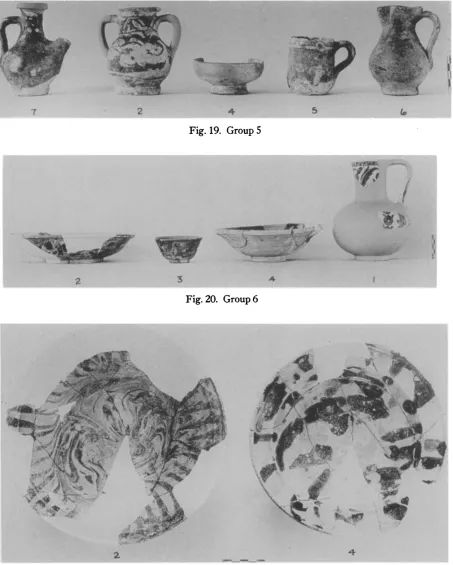
6 (Fig. 20) are rare. An offshoot, apparently, of marbled ware is a slip-painted fabric
in which the slip runs down from the rim to the centre in streaks; this variation will
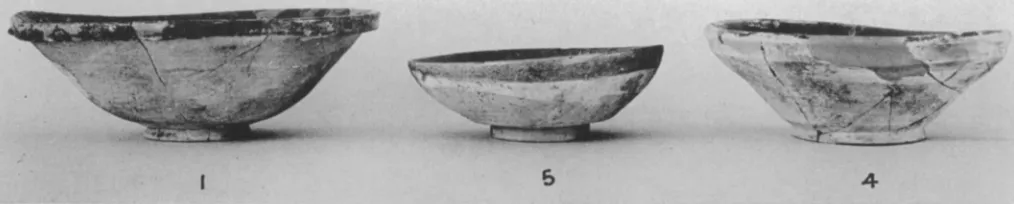
be referred to as " drip-painted ware." It seems to occur chiefly in open bowls with
flaring sides and slightly overhanging rim (Figs. 22, 23).
3D. Talbot Rice, Byzantine Glazed Pottery, Oxford, 1930, p. 48.
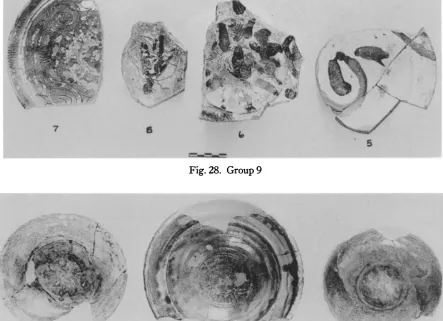
for the most part simply of large blobs of color applied at random over the white slip of the pot (Figs. 21, 26, 28). It is sometimes enlivened by a large sgraffito fish or bird scrawled generously over the whole area (Fig. 24). This scrawling sgraffito bears little resemblance to the crisp, concise designs of Byzantine work. Both inside and outside of several of these bowls are seen in Figures 20 to 29.
Medallions lightly impressed in the centre of a bowl are first found in the later groups. They usually take the form of a simple rosette, with or without a border, and appear either in the bowls with concave projecting rim just discussed, or else in low, plain-rimmed bowls. This impressed ware differs greatly from the impressed white ware of Byzantine times with its characteristic chalky white fabric and mottled green or yellow glaze. The designs are much simpler and are so lightly stamped as to be sometimes barely visible. Three examples from Group 9 are shown in Figure 29. The last of the distinctive wares in the later groups is the pseudo-majolica, repre- sented by two pitchers from Groups 9 and 10 (Figs. 32, 35). The lambda on the bottom of one (Fig. 33) seems to imply that it was of local manufacture rather than an importation. The blue and white painted jugs (Figs. 5, 12, 17) seem to show a certain 'influence of majolica.
CHART
NAME OF WARE NUMBER OF GROUP
1 2 3 4 5 6 7 8 9 10
Asia Minor Ware
V.
.
.. .. .. .. ..Good Sgraffito ...
.
.. .. .. .. ..Bird Bowls ... V V *- *- V *. *.
Blue and White Painted ... . .. V
V
V
.. ..Flaring Angular Bowls ... . ..
V
V
.. .. ..Marbled Ware ... . .. .. .. .. ..
V
Drip-painted Ware
.
....V
..Concave Projecting Rim ... . V
v
v
Scrawling Sgraffito . .... V .
Blob-painted Ware... ... . ..
V
Stamped Medallions
.
....V
V
Kioutakia Ware ... .. .. .. .. .. .. V
V
Fig. 1. Blue and White Painted Ware
F 2t
Fig 3 Blue and White Painted Ware
Fig. 4. Blue and White Painted Ware
d
MW_iS
F
. _
2
Fig. 6. Group 1
TI'.
3
5-- 4Fig. 7. Group 1
i 0R f 'f ': ,0 : , .~~~ -7;'''..
~~~
10 7
a
13Fig. 9. Group 1
Fig 10. Group 2
5 1. 7
Fig. 11. Group 2
B - 4
Fig. 13. Group 3
~~~~~
P~.7 (O
Fig. 14. Group 3
ia~~~~~~1
Fig. 16. Group 3
_ -~~~~~~~~~> -
4
Fig. 17. Group 4
2 I 3
7 2 4 S
Fig. 19. Group 5
Fig. 20. Group 6
Fig 21
u p 6
a
X,'~~~~~~~~~~~~~~~~~~ 'W _
Fig. 22. Group 7
2 _3
Fig. 23. Group 7
Fig. 25. Group 8
2 3
Fig. 26. Group 9
4~~~
4 1F 9
.t
7 6
5
Fig. 28. Group 9
I 0
1% 12
Fig. 29. Group 9
1-7 14 15
Fig. 31. Group 9 Fig. 32. Group 9
21 I
20
8 22.Fig. 33. Group 9
ER
2. 2 6
:1 3
:1
Fig. 35. Group 10
development, or at least, the sequence cannot be established in detail; what seems to
be clear is that Groups t to 5 are related to each other in date and content and probably
date from the late sixteenth or early seventeenth century, and that Groups 6 to 10
are likewise interrelated, with the existing evidence for their date pointing to the
eighteenth century. Since this classification depends on the occurrence of the same
ware in different groups, a chart has been printed (p. 4) to show the incidence of the
different types. It will be seen that the onlv one which appears both in what have
been called the early and the late groups is A.sia Minor ware. Considering the fact
that this is an imported ware, it is perhaps reasonable to suppose that the one late
example was preserved as an heirloom, just as similar pieces are preserved today.
Of all the pieces published here, only one, perhaps, deserves to stand on its own
merit, apart from its context. This is a bowl with a portrait of a doge seated between
two columns (Fig. 37).' The background is cut away and is unglazed. The details
are done in sgraffito and are glazed in yellow, green, blue, and colorless glaze. Mr.
Arthur Lane of the Victoria and Albert Museum has kindly examined a photograph
and pronounces the bowl a North Italian work, probably from one of the factories
which existed at Padua, and dating from about the middle of the sixteenth century.
CATALOGUE
GROUP 1
Section B, Bothros-well at 71/ SIT
1. Painted plate: Asia Minor ware (?). Fig. 6. Inv. No. P4922. Height, 0.055m.; diameter, 0.255 m.
More than half preserved. A deep plate with projecting rim and wide, medium ring foot. In the centre, a double rosette; rosettes in the field. On the rim rosettes separated by vertical lines. The whole badly stained but the glaze was probably colorless over the white slip, the rosettes painted dark blue, bright blue, and green. The paint in the petals is in places so thick that it gives the effect of relief. The outside slipped and glazed, with small scattered ornaments.
2. Green glazed plate. Fig. 6. Inv. No. P 5034. Height, 0.031 m.; diameter, 0.215 m.
Part of rim and floor missing. A flat-bottomed plate with outward sloping rim, thickened at the top. No foot. Around the centre a thick band, first of brown then of dark green glaze, over a band of sgraffito zigzags. Sgraffito lines bordering zigzags, around junction of rim and floor, and below upper edge of rim. Buff clay covered all over with a heavy white slip and grayish green glaze, black on the under side.
the centre. On the outside, an irregular band of white slip around the upper part, with an un- dulating line of thick green glaze over it. Three incised lines around the upper edge of the rim. Fine, light orange clay.
4. Sgraffito plate: painted. Fig. 7. Tnv. No. P 4921. Preserved height, 0.047 m.; diameter, 0.17 m. The foot and a small piece of rim and floor missing. A deep saucer-like plate with a flat rim, thickened at the top; the outer edge of the rim slightly pie-crusted. The plate probably originally stood on a stemmed foot, the start of the narrow stem only preserved. On the inside an elongated fish nearly encircles the plate, surrounding a plant ( ?). Very light green glaze with splotches of darker green and yellow; the outside glazed darker green. Coarse, pinkish buff clay.
5. Sgraffito bird bowl. Fig. 7. Inv. No. _P 5030. Height, 0.037 m.; estimated diameter, ca. 0.09 m. About one third, including the whole foot, preserved. A small, shallow bowl with medium ring foot and plain rim. A long-necked bird with flaring tail (?). Almost colorless glaze, bothros- stained white slip and the same glaze on upper half of outside. Fairly fine, reddish clay.
Similar bowls are Inv. Nos. P 509. P 1417, P 1420, P 1919, as yet unpublished.
6. Green glazed bowl. Fig. 9. Inv. No. P 5032. Height, 0.08 m.; diameter, 0.13 m.
The foot and about half the bowl preserved. High flaring foot; slightly outturned lip, with a single groove incised around the outside. Dark green glaze over all except on under side of foot and a little of its outside. Marks of kiln tripod on floor. Coarse buff clay.
7. Green glazed bowl. Fig. 8. Inv. No. P 5033. Height, 0.065 m.; diameter, 0.17 n.
Fragment of rim and side missing. A shallow bowl with plain rim; medium ring foot. Mottled light green glaze, worn away in centre, with a few streaks of darker green. A shallow groove runs around the middle of the wall inside. Outside unglazed except for a few splotches. Buff clay, bothros-stained.
8. Green glazed bowl. Fig. 8. Inv. No. P 5035. Height, 0.072 m.; estimated diameter, ca. 0.13 m. A large part of rim and wall, and a small piece of foot missing. A deep bowl with medium rin-g foot; plain rim with a wheel-run groove outside. Buff clay, bothros-stained. Yellowish green glaze over irregular buff slip inside and outside, except on foot.
9. Green glazed bowl. Fig. 8. Inv. No. P 5036. Height, 0.058 m.; diameter, 0.184 m.
Much of rim missing. A shallow bowl with broad projecting rim; medium ring foot. Dark green glaze on the inside, and on the outside of the rim; much chipped inside. Coarse buff clay.
10. Green glazed bowl. Fig. 8. Inv. No. P 5037. Height, 0.076 m.; diameter, 0.167 m.
Fragments of rim missing. Plain, slightly inturned rim; medium ring foot. Profile of wall angular on outside, a continuous curve inside. Olive green glaze on inside with splashes on outside of rim. Buff clay, bothros-stained.
11. Green glazed bowl. Fig. 8. Inv. No. P 5038. Height, 0.056 m.; diameter, 0.181 m.
About half preserved. A very shallow bowl with broad projecting rim on which is a crude leaf (?) sgraffito; a sgraffito line around outer edge of rim and at junction of rim and wall. Mottled green glaze on inside, on upper part of rim outside, and a thick streak across the wall
other, part of the body and the start of the neck. No trace of handle. Decorated with green and yellow spirals and stripes over a cream colored slip. Colorless glaze. Buff clay.
13. Unglazed two-handled jug. Fig. 9. Inv. No. P 4920. Estimated height, ca. 0.147 m.; diameter, 0.09 m.
Two non-joining fragments; profile can be restored. Tall, flaring lip; raised flat base; a flat- tened band in two degrees around the middle of the body; this band, the neck and the shoulder decorated with incised lines, broken and continuous. Fairly fine, light grey clay.
14. Unglazed two-handled jug. Fig. 9. Inv. No. P 5031. Height, 0.152 n.; diameter, 0.127 n. Handles and most of neck missing; lower handle attachments preserved. Plump body, drawn in above flat base; several ridges at the bottom of the narrow neck; a band of wheel-run grooves above the handle attachments; groups of curved incised lines on the shoulder. Greyish buff clay; slip of the same color ( ?).
GROUP 2
Section 1, Pit at 18/KA-KE
1. Painted bowl. Fig. 10. Inv. No. P 7624. Height, 0.05 mn.; estimated diameter, ca. 0.10 m. About three quarters of rim and walls missing. A shallow bowl with medium ring foot, the under side hollowed deeply out of the thick floor. Plain rim. On the inside, colorless glaze with crude decoration of dark green and brown streaks; light yellow glaze on outside. Clay grey to buff.
2. Sgraffito bird bowl. Fig. 10. Inv. No. P 7625. Height, 0.045 m.; diameter, 0.11 mn.
Parts of rim and wall missing. A small shallow bowl with light ring foot and plain rim. Inside, a bird ( ?) crudely drawn, and a sgrafflto line around the inner edge of the rim. Outside, elongated loops, sgraffito, running vertically through a quadruple band of glaze: straight green lines alter- nating with wavy brown. Cream. colored glaze inside and out. Reddish clay; fairly fine fabric.
3. Sgraffito bowl. Fig. 10. Inv. No. P 7620. Height, 0.053 m.; estimated diameter, ca. 0.125 m. A fragment preserving the full profile. A small shallow bowl with low ring foot and plain rim. On the inside, the remains of an uncertain design from rim to centre; outside, an undulating sgraffito line between two bands of thick green glaze, the upper one undulating, the lower straight. Very poor yellow glaze, much bubbled and discolored, over thick creami slip inside and out. Pinkish buff clay.
4. Glazed bowl. Fig. 10. Inv. No. P 7619. Height, 0.08 m.; estimated diameter, ca. 0.15 m. About one third preserved, including the whole foot. Fairly high ring foot; outturned rim; flaring sides. Very dark brown glaze over white slip all over, except on foot. Three tripod marks on the floor. Fairly fine pinkish buff clay.
5. Glazed bowl. Fig. 11. Inv. No. P 7626. Height, 0.117 in.; estimated diameter, ca. 0.20 m. A large part of rim and wall missing. Fairly high, flaring, heavy ring foot; incurving rim. Brownish yellow glaze inside and out. Pinkish buff clay. Two tripod marks on floor.
6. Glazed bowl. Fig. 11. Inv. No. P 7627. Height, 0.082 m.; diameter, 0.16 m. .
8. Unglazed two-handled jug. Fig. 11. Inv. No. P 7621. Height, 0.13 n.; diameter, 0.12 m. One handle and most of neck and rim missing. Squat body drawn in above flat base; high wide neck. Incised lines around neck and shoulder. Grey-buff clay.
GROUP 3
Section Z, Square well at 66/B
1. Blue and white painted pitcher. Fig. 12. Inv. No. P 1902. Height, 0.242 m.; diameter, 0.18 m. Complete except for a small fragment from the rim and one fronm the neck. Swelling body, drawn in above flat base; trefoil lip; ribbon handle. In an oval frame with transverse bars between double lines is a lion marchant right, with uplifted curling tail and bristling mane; his mouth is open and shows two rows of teeth. From behind issues a fanciful curving design perhaps intended to represent a vine tendril; below the ground line, two wavy lines may represent water; other loops and triangles hang in the field from the frame; outside the frame, tufts and spirals. All the out- lines in blue; the scales and spots on the lion are alternately green and purplish brown, as are the leaves (?) of the vine tendril. Almost colorless glaze on outside, except on base and on inside of rim. The glaze, without the slip, also covers the whole of the interior. Pinkish buff clay.
2. Blue and white painted pitcher. Fig. 12. Inv. No. P 1937. Height, 0.165 ni.; diameter, 0.145 ni. Complete except for most of trefoil lip, and a small piece of the bottom. 'Plump body drawn in above flat base; ribbon handle. A simplified and crude version of P 1902 (No. 1). Within a round frame of transverse bars connecting a double line, an animal, perhaps intended to be a lion, running right; bristling mane, a large eve, open jaws with -two rows of teeth, and tongue sticking out. A scalloped design halngs from the frame as in P 1902, and there are tufts and spirals outside the frame. The outlines in blue; green and purplish brown dots on the scalloped pattern and a large green circle on the lion's haunch. Almost colorless glaze, peeled in spots, on outside except on bottom, and on the inside of the lip. Pinkish buff clay.
3. Blue and white painted bowl. Fig. 12. Inv. No. P 2177. Height, 0.127 m.; estimnated diameter, ca. 0.24 m.
A deep bowl with medium, fairly heavy ring foot and sharply projecting rim. Much missing from sides and rim. Light yellow-green glaze over all, decorated on the outside with triangles and rosettes in blue with green and brown spots, and on the inside of the rim with a zigzag leaf border; the inside of the bowl plain-glazed. Light pinkish buff clay.
4. Small blue and white painted bowl. Fig. 13. Inv. No. P 2179. Height, 0.046 m.; estimated diameter, ca. 0.095 m.
About one third preserved. Medium, fairly lheavy ring foot; sides curving sharply upward; plain rim. On inside, sgraffito, crude spirals alternating with triangles pencdant from a band of three lines just below rim; a blob of yellow glaze on the spirals, of dark green on the triangles. Very light green glaze on inside; an irregular band of thick white slip and darker green glaze around the outside of the rim. Light pinkish buff clay.
6. Glazed bowl. Fig. 14. Inv. No. P 2178. Height, 0.088 m.; estimated diameter, ca. 0.175 rm. Several non-joining fragments preserving abotit one half, including the profile, of bowl with medium ring foot and sides curving sharply upward; plain rim. Light green glaze on inside, granular light and dark brown glaze on outside. Pinkish buff clay.
7. Glazed bowl. Fig. 14. Inv. No. P 2180. Height, 0.086 m.; diameter, 0.17 m.
Considerable parts of rim and sides missing. Mediumi ring foot; sides curving sharply upward; plain rim. A triple sgraffito line just inside the rim-i. Light green glaze inside, purplish brown outside. Pinkish buff clay.
8. Glazed bowl. Fig. 14. Inv. No. P 2181. Height, 0.089 m.; estimated diameter, ca. 0.175 m. About one quarter preserved. Medium ring foot; sides curving sharply upward; plain rim. Light greenish yellow glaze on inside, darker green on outside and around inner edge of rim. Pinkish buff clay.
9. Glazed bowl. Fig. 15. Inv. No. P 2183. Height, 0.064 m.; estimated diameter, ca. 0.14 m. About one third, including the whole foot, preserved. A shallow bowl with medium ring foot; the floor slopes gently upward to the low vertical sides, drawn in a little below tlle plain rim. Colorless glaze inside and otit. Pinkish buff clay.
10. Glazed bowl. Fig. 15. Inv. No. P 2182. Height, 0.123 m.; diameter, 0.205 m.
A few pieces of rim and sides missing. A deep bowl with fairly high ring foot; almost straight flaring sides, sharply angled on the outside just above the base; slightly inset rim. Almost color- less glaze on inside; dark green on outside and around inner edge of rim. Three traces of kiln support on floor. Pinkish buff clay.
11. Small unglazed jug. Fig. 15. lnv. No. P 2184. Height, 0.117 m.; diameter, 0.092 m.
Complete except for handle. Flat bottom; squat body; tall neck set off from body by a wheel- run groove; round miiouth. Light grey clay.
12. Bronze buckle. Fig. 16. Inv. No. B 91. Hleight, 0.064 m.; width, 0.101 m.
A few pieces of the edge missing. One half of a buckle consisting of an elongated oval, raised, surrounded by a broad scalloped border; small repousse dots surround the oval in a single row, the scallops in a double row; a large repousse boss in the centre of each scallop and a row of smaller ones down the centre of the oval. Engraved on the oval a conventional flower and spiral pattern divided into three zones by bands of zigzags.
Most of the rim missing. Rounded body drawn in above flat bottom; slightly flaring trefoil mouth; strap handle. In front, enclosed in a double circle with cross bars, a conventionalized tree; outside the circle, a horizontal line around the centre of the pot. Main drawing in blue; details of the tree in brown and green splotches. White slip and almost colorless glaze to a little above bottom. Pinkish buff clay.
2. Blue and white painted pitcher. Fig. 17. Inv. No. P 2124. Height, 0.23 m.; diameter, 0.16m. A few pieces missing from body and rim. Trefoil lip; gently swelling sides drawn in above flat bottom; strap handle. In front, an oval cross-barred frame surrounding a horizontal band of diagonals, alternately solid and cross-hatched, bounded above and below by a zigzag band; the spaces above and below filled with solid and linear ornament; outside the frame, vertical cross- hatched and solid bands on either side, framing elongated ovals filled with a red stripe; around neck, a row of red dots between blue bands; all drawing in blue except for a few red details. Colorless glaze all over inside and on outside to just above bottom; the inside unslipped except around inner edge of rim. Pinkish buff clay.
3. Blue and white painted plate. Fig. 17. Inv. No. P 2090. Preserved height, 0.045 m.; maximum dimension, 0.193 m.
All of the rim broken away, but a trace of a groove at the highest preserved point indicates that there was little more. Fairly high ring foot; almost flat floor and low upcurving sides. In the centre, a cross-hatched circle, blue lines, with brown dots in the squares; outside, a broad zigzag leaf border; the enclosing lines and all the outlines are in blue; the large leaves filled with brown, the small filling leaves left in outline. Light green glaze inside; darker green outside. Pinkish buff clay.
4. Glazed bowl. Fig. 17. Inv. No. P 2236. Height, 0.077 m.; diameter, 0.158 m.
Much of rim and sides missing. Medium, flaring ring foot; sides curving sharply upward; plain rim. Light green glaze on inside; darker green on outside and around inner edge of rim. Pinkish buff clay. Tripod marks on floor.
5. Glazed bowl. Fig. 17. Inv. No. P2237. Height, 0.115 m.; estimated diameter, cc. 0.20 m. Much of rim and walls missing. A deep bowl with fairly high, slightly flaring ring foot; almost straight flaring sides, sharply angled on the outside just above the foot; slightly inset rim. Almost colorless glaze on the inside; dark brown on the outside and around inner edge of rim; traces of kiln tripod on floor. Pinkish buff clay.
Almost identical in shape with P 2182 (Group 3, No. 10).
GROUP 5
Section 1D,
Well at
71/KEdrawn in above flat bottom; lip projects slightly. Around body, uncertain scroll ( ?) or rinceau ( ?) design; around neck within double lines, a zigzag leaf border. Main drawing blue; some details, including leaves of border, filled in with light reddish brown. Colorless glaze inside and out except on under side of foot. Light grey clay.
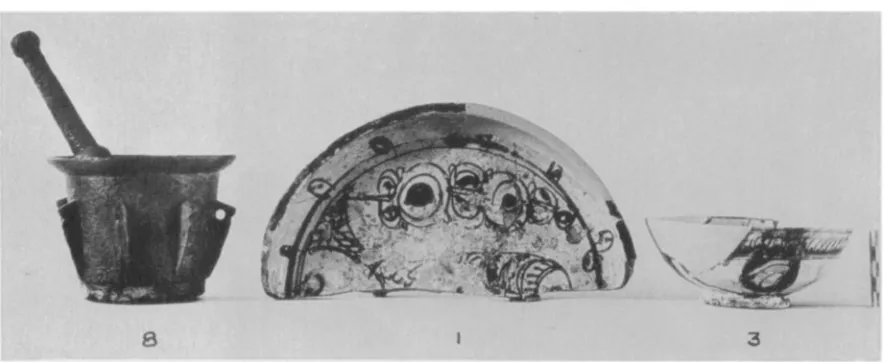
3. Sgraffito bowl: bird bowl type. Fig. 18. Inv. No. P 9334. Height, 0.055 mn.; diameter, 0.135 m. Considerable parts of rim and wall missing. A small shallow bowl with low ring foot and plain rim. On the inside, plain colorless glaze; kiln tripod marks; outside, a wavy line, sgraffito, between straight lines; below, four spirals; a yellow and green stripe around the upper band and around spirals; colorless glaze over all, except under side of foot. Along the major breaks, both inside and out, the glaze has darkened, indicating breakage in kiln (?). Fine pinkish buff clay. 4. Glazed bowl. Fig. 19. Inv. No. P 9335. Height, 0.043 m.; diameter, 0.094 m.
A small part of rim and wall missing. A small shallow bowl on slightly flaring ring foot; upcurving sides; plain rim. Almost colorless glaze inside and out; tripod marks on floor. Pinkish buff clay.
5. Glazed mug. Fig. 19. Inv. No. P 9336. Height, 0.073 m.; diameter, 0.06 m.
Intact save for -minor chips. A small mug with one handle, vertical sides, flat bottom, plain rim with a low ridge just below it. White slip all over outside except bottom, and dripping irregu- larly down the inside; green glaze all over inside, and on most of outside, but leaving some of the slip unglazed; much peeled. Pinkish buff clay.
6. Glazed jug. Fig. 19. Inv. No. P 9338. Height, 0.115 m.; diameter, 0.08 m.
Intact. A small jug with fairly squat body drawn in slightly above flat bottom; trefoil mouth; strap handle. Dark green glaze on outside to just above bottom, very badly stained. Light grey- buff clay.
7. Glazed spouted jug. Fig. 19. Inv. No. P 9339. Height, 0.12 m.; diameter, 0.075 m.
Much of lip and end of spout broken away. A small jug with round body, narrow neck, strap handle and overhanging rim; flat bottom. Green glaze to just above bottom. Buff clay.
8. Bronze mortar and pestle. Fig. 18. Inv. No. B 407. Height of mortar, 0.095 m.; diameter of mortar, 0.125 m. Length of pestle, 0.19 n.
Surface corroded; otherwise intact. Eight vertical lugs on outside of mortar; flat bottom set in a little from sides; flaring rim. Two of the lugs, on opposite sides of the mortar, are pierced at the upper end. The mortar is flattened out at the bottonm and has a knob at the top and in the middle.
GROUP 6
Section N, Cistern at
17-18/K2T-KZ1. Fragments of Asia Minor ware pitcher. Fig. 20. Inv. No. P 6669. Height as restored, 0.208 m.; diameter as restored, 0.162 m.
3. Marbled ware bowl. Fig. 20. Inv. No. P 6666. Height, 0.05 m.; estimated diameter, ca. 0.095 m. Almost half preserved. A small bowl with low concave foot; flaring sides and plain rim. The whole bowl seems to have been covered with a dark slip, over which the marbling was done in green, brown and white. Muddy glaze on the inside, and on the outside to just above the foot. Hard red clay.
4. Painted bowl. Figs. 20, 21. Inv. No. P 6668. Height, 0.081 m.; diameter, 0.22 m.
A few fragments missing from rim and walls. Medium ring foot; rim sharply offset on inside, moulded and overhanging slightly at outer edge (for the shape compare P 2159 [Group 9, No. 111] ). The inside decorated with splotches of green and brown glaze; the inside covered with very light green glaze; the outside unglazed except for upper edge of rim. Buff clay.
GROUP 7
Section K, Pit A
1. Slip-painted bowl. Fig. 22. Inv. No. P 5511. Height, 0.08 m.; diameter, 0.235 m.
Complete save for two small pieces of the side. Low ring foot; flaring sides; overhanging rim. Drips of thick white slip running from rim to centre: dirty yellow glaze on inside and around outer edge of rim; a few splashes of slip on the outside. Pinkish buff clay.
2. Slip-painted bowl. Fig. 23. Inv. No. P 6598. Height, 0.073 m.; diameter, 0.24 m.
A piece missing from rim and wall. Low ring foot; shallow flaring sides; overhanging rim. Drips of thick white slip running from rim to centre; light green glaze on inside and around outer
edge of rim; a few splashes of slip on the outside. Pinkish buff clay.
3. Painted bowl. Fig. 23. Inv. No. P 6600. Height, 0.11 in.; diameter, 0.25 m.
Pieces missing from rim, side and foot. Low ring foot; flaring sides: rim moulded on outside, deep and offset by a ridge inside. Dirty yellow-green glaze inside, with splotches of dark green; outside unglazed, except where the glaze has run over in one place. Greyish buff clay.
4. Glazed bowl. Fig. 22. Inv. No. P 6599. Height, 0.075 m.; diameter, 0.195 m.
A few pieces missing from rim. Low ring foot; flaring sides; rim moulded on outside, offset and concave on inside. Brownish yellow glaze on inside, over a dark slip (?), traces of which are seen on the outside. Buff clay.
5. Glazed bowl. Fig. 22. Inv. No. P 6601. Height, 0.053 m.; diameter, 0.17 m.
Small pieces missing from rim and bottom. Low ring foot; shallow flaring sides; plain rim. Light green glaze on inside and around outer edge of rim; the thick white slip has run down over a considerable part of the outside. Pinkish buff clay.
GROUP 8
Section 4>, Pit at 78/KB
1. Sgraffito bowl. Fig. 24. Inv. No. P 9022. Height, 0.08 m.; diameter, 0.22 m.
Colorless glaze over all inside, with an irregular band of yellow-brown on most of rim; both colorless glaze and yellow-brown irregularly around outer edge of rim. Pinkish buff clay.
2. Sgrafflto bowl. Fig. 24. Inv. No. P 9023. Height, 0.08 m.; diameter, 0.215 m.
Complete save for a small piece of the rim. Medium ring foot; shallow flaring sides; rim slightly thickened and flattened on top. Inside a fish and two birds ( ?) very crudely drawn. Color- less glaze on inside with crude bands and a spiral of green and dark yellow; outside unglazed except for upper edge of rim. Pinkish buff clay.
3. Sgrafflto bowl. Fig. 25. Tnv. No. P 9024. Height, 0.102 m.; diameter, 0.23 m.
Fragments of rim and body missing. A fairly deep bowl with offset flaring rim; medium ring foot. A sgrafflto line around body just below rim, and another around edge of rim; crude spirals around rim. Dull green glaze on inside and around outer edge of rim; three splotches of darker green on inside of rim. Pinkish buff clay.
4. Painted bowl. Figs. 24, 25. Inv. No. P 9025. Height, 0.06 m.; diameter, 0.15 m.
A small piece of body missing. A small shallow bowl with medium ring foot and plain rim. On the bottom two concentric ridged circles. Very light yellow-green glaze on inside and around outer edge of rim, with splashes of green and darker yellow. Pinkish buff clay.
5. Impressed ware bowl. Fig. 25. Inv. No. P 9026. Height, 0.07 m.; estimated diameter, ca. 0.15 m. About one half, including the whole foot, preserved. Medium ring foot; shallow sides; slightly incurving rim. On the bottom, in very low relief, a six-petalled rosette within two con- centric circles. Light green glaze inside and around outer edge of rim. Pinkish buff to pink clay.
6. Glazed bowl. Fig. 25. Tnv. No. P 9027. Hleight, 0.06 m.; diameter, 0.175 m.
Small fragments of rim and body missing. A shallow bowl with medium ring foot and rim slightly thickened and flattened on top. Dull green glaze, much bubbled, on inside and around outer edge of rim. Pinkish buff clay.
7. Small Kioutakia bowl. Fig. 25. Inv. No. P 9028. Height, 0.036 m.; diameter, 0.102 mn. Fragments of rim and body missing. A shallow bowl with small ring foot and plain rimi. Decorated inside and out with leaves and flowers in blue, turquoise, yellow, red, and black. On the floor a six-pointed star, turquoise, surrounding a raised boss. Sandy clay, light buff. Colorless glaze over all. On the under side of the foot an eight-pointed star, identical with that on P 5516
(Group 10, No. 1).
8. Stemmed Kioutakia cup. Fig. 25. Inv. No. P 9029. Height, 0.065 m.; estimated diameter,
ca. 0.06 m.
The whole foot and part of the bowl preserved. A small egg-cup shaped pot with short stem and flaring foot; upcurving sides and plain rim; on the outside the wall inset a little from the floor; undefined on the inside. Conventional floral ornament inside and out in blue, turquoise, yellow, red and black. Sandy light buff clay. Colorless glaze over all.
GROUP 9
Section Z, Pit at 44/KA.
1. Sgrafflto bowl. Fig. 26. Inv. No. P 2165. Height, 0.076 m.; diameter, 0.213 m.
3. Glazed bowl. Fig. 26. Inv. No. P 2167. Height, 0.071 m.; diameter, 0.207 m.
A large piece of rim and wall missing. Similar in shape to P 2154 (No. 4). Colorless glaze on inside, with a streak of brown part way around rim; outside unglazed except around outer edge of rim. Buff clay.
4. Glazed bowl. Fig. 27. Inv. No. P 2154. Height, 0.077; diameter, 0.215 m.
Broken but complete. Low ring foot; flaring sides; sharply offset rim turned in a little at the edge. Uneven greenish yellow glaze on inside and outer edge of rim. Buff clay.
5. Painted bowl. Fig. 28. Inv. No. P 2171. Height, 0.075 m.; estimated diameter, ca. 0.21 m. About one quarter, including the whole foot, preserved. Similar in shape to P 2154 (No. 4), but the rim rather less sharply offset. On the inside, on a thick white slip, occasional blobs and streaks of green and brownish yellow glaze; no all-over glaze; outside unglazed; a narrow band of slip around the outer edge of the rim. Pinkish buff clay.
6. Sgraffito bowl. Fig. 28. Inv. No. P 2166. Height, 0.078 m.; maximum dimension, 0.17 m. None of the edge preserved but the shape was probably similar to that of P 2154 (No. 4). An elaborate but crude design of trees (?) in the bowl proper; on the rim, groups of trees seem to alternate with a large rosette in a circle. Blobs of green and brown glaze, but no all-over glaze. Outside unglazed. Buff clay.
7. Sgraffito bowl. Fig. 28. Inv. No. P 2150. Height, 0.064 m.; estimated diameter, ca. 0.22 m. A single fragment preserving rather less than half the bowl. A very shallow bowl with low ring foot and projecting, slightly concave rim. On the inside, crude spirals separated by zigzags; groups of zigzags (one group only preserved) oii rim. Green glaze, somewhat peeled, over splotchy white slip on inside and on outer edge of rim; the slip extends about half way down the outside, Buff clay.
8. Fragment of sgraffito bowl. Fig. 28. Inv. No. P 2149. Diameter of foot, 0.089 m.; maxinmum dimension, 0.12 m.
A fragment preserving the low, broad ring foot and a small part of the sides. In the centre, a bird, right, roughly drawn, the top of the head and the end of the tail missing. Dull yellow-green glaze with splotches of darker yellow and green; the outside, as preserved, unglazed. Pinkish buff clay.
9. Impressed bowl. Fig. 27. Inv. No. P 2160. Height, 0.08 m.; diameter, 0.205 m.
Part of the rim missing. Identical in shape with P 2159 (No. 11). In the centre, in very low relief, a rosette within two pairs of concentric circles. Brownish yellow glaze. Buff clay.
10. Impressed bowl. Fig. 29. Inv. No. P 2151. Height, 0.051 m.; diameter, 0.159 m.
A small piece of the rim and wall missing. A shallow bowl with low ring foot and flaring sides; plain rim. In the centre a raised boss with an impressed rosette. Very light greenish yellow glaze, nmuch discolored, inside and out. Three pieces of a kiln tripod stick to the floor. Reddish clay.
slightly outturned rim. In the centre, a raised boss with an impressed rosette, set off by a ridge and an uncertain impressed border. Pinkish slip; mottled yellow-brown glaze on inside and upper two thirds of outside. Pinkish buff clay.
13. Marbled ware bowl. Fig. 27. Inv. No. P 2156. Height, 0.044 m.; diameter, 0.188 m.
A very shallow bowl with low ring foot and narrow, slightly concave, projecting rim. Bright yellow-green glaze inside and out, spotted on inside only with reddish brown. Pink clay.
14. Marbled ware bowl. Fig. 30. Inv. No. P 2163. Height, 0.09 m.; estinmated diameter, ca. 0.23 m. Most of rim and walls missing. Low ring foot; slightly flaring sides; plain rim. Bright greenish yellow glaze mottled and streaked with dark green and- reddish brown inside and out, more sparsely inside. Reddish clay.
15. Marbled ware bowl. Figs. 30, 31. Inv. No. P 2158. Height, 0.077 m.; diameter, 0.272 m. Parts of rim and sides missing. A very shallow bowl with low ring foot and narrow, concave, projecting rim. Similar in shape to P 2156 (No. 13). On the inside, light green glaze with streaks of darker green and brown so applied as to give the effect of a loose floral pattern. Outside, brown dots only under the glaze. Pinkish buff clay.
16. Marbled ware bowl. Fig. 31. Inv. No. P 2164. Height, 0.061 m.; diameter, 0.24 m.
A considerable part of rim and walls missing. Similar in shape to P 2158 (No. 15). Yellow- green glaze over all, mottled on the inside only with darker green and reddish brown. Pinkish buff clay.
17. Glazed bowl. Fig. 30. Inv. No. P 2162. Height, 0.05 m.; diameter, 0.228 m.
Small fragments of rim missing. Similar in shape to P 2158 (No. 15), but the rim is ridged at the outer edge and is not concave. A ridged circle around centre. Bright yellow glaze on inside and on upper part of outside, where it extends below the slip. Pink clay.
18. Small glazed bowl. Fig. 32. Inv. No. P 2152. Height, 0.051 m.; estimated diameter, ca. 0.11 m. Part of the rim and wall missing. Medium ring foot; plain rim. Pinkish slip; dull colorless glaze on inside and outer edge of rim. Buff clay.
19. Small glazed bowl. Fig. 32. Inv. No. P 2161. Height, 0.051 m.; diameter, 0.116 m.
A little missing from rim and wall. Medium, slightly projecting ring foot; outturned rim. In the centre, possibly accidental, some lines in low relief vaguely resembling a penguin. Poor yellow glaze on inside and around outer edge of rim. Buff clay.
20. Glazed censer ( ?). Fig. 32. Inv. No. P 2169. Height, 0.084 m.; estimated diameter, ca. 0.08 mn. Part of the body and rim missing. A one-handled cup with plump body, incurving rim, short, thick stem and flat, solid foot. The body pierced by two horizontal rows of holes. Yellow glaze on outside from rim to lower handle attachment; on inside, unevenly around upper part. Buff clay.
21. Sgraffito pitcher. Fig. 32. Inv. No. P 2157. Height, 0.165 m.; diameter, 0.135 m.
Neck, handle and fragments of body missing. Swelling body drawn in a little above flat base. On upper part of body in front, three rosettes surrounded by circular banded borders of zigzags; yellow-brown glaze over decorated part; white slip over all, except just above base. Buff clay.
22. Pseudo-majolica pitcher. Figs. 32, 33. Inv. No. P 2168. Height, 0.197 m.; diameter of body, ca. 0.12m.
A fragment preserving the profile. Fairly low ring foot; sides almost vertical, sloping inward very gently toward the top; plain rim. Cream-colored glaze (discolored) on inside; on outside, a broad band of ornament consisting of reddish brown rosettes alternating with blue floral designs. enclosed within a banded border of a double row of reddish brown dots. The glaze the same as on the inside. Pinkish buff clay.
24. Small painted cup. Fig. 34. Inv. No. P 2148. Height, 0.037 m.; estimnated diameter, ca. 0.055 m. A little less than half preserved. A small cup or bowl of the Kioutakia coffee cup type. Small ring foot; sides curving sharply upward; plain rim. Colorless glaze on the inside; on the outside a broad red band bordered on either side by a row of purple dots between light blue lines. Hard white clay. Fine fabric.
25. Painted plate. Fig. 34. Inv. No. P 2147. Height, 0.023 m.; diameter, 0.218 m.
One piece missing from the rim. No foot; broad projecting rim set off from the floor on the inside but forming a contintuous curve with the rest of the plate on the under side. Decoration in greyish blue: a double line around the inner edge of the rinm, from which hang groups of dots, on stems; in the centre, a floral pattern. Opaque, greyish white glaze, inside and out; three tripod marks on under side. Buff clay.
GROUP 10
Section N, Pit at 12/NZ
1. Kioutakia bowl. Fig. 35. Inv. No. P 5516. Height, 0.04 m.; estimated diameter, ca. 0.11 m. Much of rim and wall missing; foot complete. A small shallow bowl with low ring foot andl plain rim; a boss in the centre of the floor. Inside, single sprays of flowers in grey-blue, turquoist blue, yellow, and red around the central boss; a simple debased guilloche between blue lines below rim; outside, sprays of flowers in grey-blue and turquoise blue separated by long slender yellow leaves with red berries; double blue line around rim and foot. Hard sandy white clay. Colorless, slightly lustrous glaze. On under side of foot an eight-pointed star, as on P 9028 (Group 8, No. 7).
2. Kioutakia coffee cup. Fig. 35. Inv. No. P 5517. Height, 0.04 m.; estimated diameter, ca. 0.07 m.. Less than half preserved. A small, lhandleless ( ?) cup with light ring foot and outturned rim. Inside, on the middle of the floor, a small grey-blue leaf; outside, flowers and tendrils in grey-blue yellow, and red. Clay, glaze, and signature as in P 5516 (No. 1).
3. Kioutakia coffee cup. Fig. 35. Inv. No. P 5518. Height, 0.045 m.; estimated diameter, ca. 0.07 m. About half preserved. Small ring foot; plain rim. Inside, a small green and yellow flower in the middle of the floor; double blue line around rim; outside, flowers and leaves in yellow and green with large light red dots in thick paint; a row of similar dots between blue lines around rim and just above foot. White sandy clay; colorless glaze.
4. Pseudo-majolica pitcher. Fig. 35. Inv. No. P 5519. Height, 0.156 m.; maximum diameter, ca. 0.145 m.
Much missing but the shape can be restored. A squat pitcher with flat base, plump body, wide trefoil mouth and concave strap handle. Uncertain painted decoration in grey-blue, light yellow, light and dark orange and black; traces of a signature in black under the handle. Yellow-buff clay; thick light grey glaze.