© KONINKLIJKE BRILL NV, LEIDEN, 2018 | DOI:10.1163/9789004388987_008
8. LAW
INTRODUCTION
The teaching of law at University level in the England has always had a rather peculiar place, compared both to law teaching in other European countries and to the study of other superficially comparable fields of practice and knowledge in the UK. Law as a serious field of University study in its own right only truly developed midway through the Twentieth Century. Prior to that time, legal study consisted of either the study of arcane fields such as Roman Law at older academic institutions, such as Oxford, or the study of law as a practical subject in order to qualify for the Bar or to become a practicing solicitor. In part, this reflected the peculiarly English notion that law was not a genuine field of knowledge or research. This notion was never shared in other European countries, where legal study and legal research had long been recognised as legitimate, autonomous, and indeed prestigious, fields of knowledge and study. The teaching of law as a serious, and indeed elite, subject at University emerged during the Twentieth Century, although many remnants of those previous perceptions and practices remain. While law is now one of the most popular subjects to study at both undergraduate and postgraduate level at English Universities, there is no general consensus regarding the precise nature of legal learning, nor even what legal knowledge consists of.
There is permanent confusion regarding the link between legal study at University and legal practice, and there exists a rather complex relationship between the academic study of law and the additional stages of study which must be completed at postgraduate level in order to become a practising lawyer. In recent decades students
���������������������������������������������������������������������������������
number of credits in a certain number of core areas of legal knowledge) have been exempt from an additional year of postgraduate study in order to then take the requisite courses and periods of training to become practising lawyers. Non-law graduates have generally been required to take an intensive one-year Graduate Diploma in Law before being able to do this. The English legal profession is therefore rather unusual in not restricting law graduates to its ranks. This has the effect of creating a rather conflicted relationship between University law teaching and the profession to which it has the most obvious link. While some see legal education as essentially
�� ������� ��� ������������� ������������ ���� ���������� �������� ������� ���� ���� �����������
stage of legal education as a traditional area of scholarly endeavour, offering an interdisciplinary exploration of law in its social, philosophical, cultural, empirical
Luke Mason, 'Law' in Kinchin (ed)
and critical dimensions. Currently, only around a third of law graduates in England and Wales go into legal practice. Most law degrees therefore seek to strike some kind of balance between these two dichotomous perspectives, and the QAA benchmark statement for law underlines the multidisciplinary nature of the area of study and a law degree’s status as separate to a professional qualification.
Legal teaching is however in permanent flux, largely due to this complex relationship with the profession, and despite its continued popularity among students and the employability of law graduates. Currently there are changes afoot to remove the notion of a Qualifying Law Degree and to make subtle changes to the form and ordering of the professional stage of education and training to become a solicitor. This may have the effect of bringing closer to the surface the deep lying dissonances between visions of legal education and teaching, as the Qualifying Law Degree and its requirements have generally had the effect of providing a stable core of legal education and teaching despite these latent, and sometimes explicit, differences in visions of legal education. Finally, legal education and law teaching has never fully resolved its complex relationship with academic legal research which is carried out in Universities.
While this picture might come across as one of chaos or confusion, it also creates a great deal of leeway for innovative approaches and a general embracing of new ideas and perspectives. The lack of a clear disciplinary epistemology means that law teaching takes on many forms and there can be great variance in learning outcomes and teaching methods between colleagues, modules and institutions. However, this same epistemic openness causes a great deal of insecurity which, on the whole, leads to conservatism in the teaching of law, both in terms of actual classroom and assessment practices and of programme design and aspiration.
PERSONAL CONTEXT
I have been teaching law at University level for seven years. This has involved teaching at all levels from introductory undergraduate and preparation modules to postgraduate instruction and doctoral supervision. Like many legal educators I was required, in the early part of my teaching career, to teach core modules which were slightly distant from my fields of research expertise and experience but which make
�������������������������������������������������������������������������������������
���
some of the critical methods for effective legal study for the first time during my modules, whether because these had not been effectively presented to them earlier in their degree, or, more likely, because they had not been convinced of the utility of adopting them. This led me to volunteer to do more introductory teaching on early general modules within law degrees, introducing the basics of critical legal reasoning to first year law students. I have also taught in other European countries, where legal learning is often perceived quite differently in various ways, mostly in the field of European and comparative employment law. I currently teach Legal Ethics, EU law, and an introductory legal skills and sources module. I have extensive experience of management of law programmes and the design and validation of law degrees at different levels and with different focuses and target audiences. In 2014, I won the
��������� ������������� ��� ���������� ������� �� ��� ����� ����������� ��� ������ ����������
policy and sit on the national committee of the Association of Law Teachers.
���������������������������������������������������������������������������������
legal field is labour law and social policy, in particular from a European perspective. I also have a research interest in legal education and its nature, which is linked to my third area of research, legal theory and the philosophy of law, in particular the nature of legal reasoning and its relationship with other forms of knowledge and learning. I have a slightly broader portfolio of research areas than is typical in law, although most legal research is, by definition, both interdisciplinary in a traditional sense, but also generally covers several putatively separate areas of law. My work, while ostensibly about employment law, covers aspects of constitutional law, international law, European law, contract law, political philosophy, and social theory.
HOW ARE DISCUSSIONS AROUND TEACHING FRAMED?
Legal education is, broadly speaking, traditionally broken into two parts, the academic and the vocational stage, with the former preceding the latter (see Figure 8.1). The
��������� ������ ��� ���������� ��� ���� �������������� ������� �������� �� ������������ ���
QAA guidance and academic self-regulation and/or autonomy. However, it is also de facto regulated by the notion of the Qualifying Law Degree (QLD), which is only awarded to students who have completed a certain number of credits in the
������������������������������������������������������������������������������������
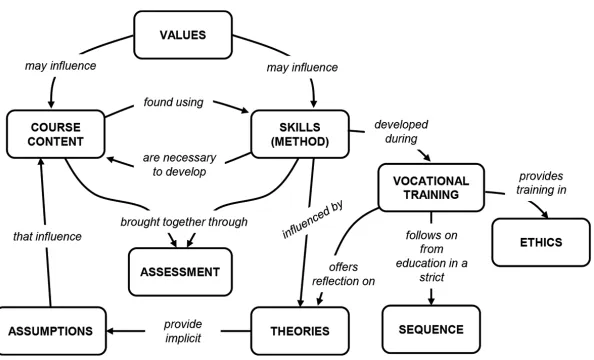
similarity in law degrees across institutions, despite the relatively ecumenical nature of the current and previous QAA benchmark statements. Almost all law degrees offered in England and Wales are QLDs, meaning that they share a great deal of core content. In terms of the academic stage, the lack of general agreement regarding the epistemology of legal knowledge and research means that much design and delivery of legal teaching is often influenced unknowingly or unreflectively by a series of contested values and aims. These generally inform both the content and the skills or methods which are taught to law students, whether at the level of the institution, the module or the individual instructor. In many cases, however, such values are rather inchoate at all of these levels, so there is often a lack of clarity regarding what the values underpinning legal education are.
While values are therefore crucial, it is sometimes very difficult to either articulate or identify them clearly for many teachers of law, even very accomplished ones. As
�������������������������������������������������������������������������������������
for me, and I have a relatively stable and clear concept of the values which inform my own teaching. Firstly, I see law as a radically egalitarian practice, much like all
������������������������������������������������������������������������������������� �������������������������������������������������������������������������������������
This therefore involves a teaching method which is often quite challenging for students at first, but ultimately emancipatory if successful. The ultimate goal is to provide students with the deep methods and knowledge of scholarly perspectives on law which will allow them to respond proactively to questions and situations which have no clear answer to someone who is merely in possession of knowledge formed by rote learning. This is sometimes seen as a controversial notion in law,
109 due to the confusion between the authoritative aspirations of certainty and solemnity which the legal system projects in the world generally, which many law teachers and students assume should be replicated in the study of law and the production of legal scholarship. This is a grave error in my view, and is reflected in confused values and methods, ultimately resulting in an emasculated form of legal knowledge and method in frustrated and ill-equipped students. However, I recognise that there are many other equally valid forms of legal learning which are equally located in valid sets of values. These result in very different approaches to legal learning and teaching, perhaps reflecting other forms of legal scholarship and method, including sociological, historical, ethical and comparative approaches, among many others. My own values stem from a vision of how legal reasoning itself works, and the values I think this involves. Whatever the values the teacher or programme brings, this should have a deep impact on the way in which students encounter both the content and the methods of legal learning.
Ideally, this content and methodology is brought together in a series of assessments which test both at the same time. However, as the precise method of legal learning is rather contested and multifaceted, there is often a lack of clarity in the mind of students
���������������������������������������������������������������������������������
critical skills to demonstrate legal reasoning in assessments. On a deeper level, in particular regarding overall programme design and broader questions of policy in legal education, there is a deep link between overarching views of legal knowledge and education and what the focus of a law degree should be. In recent years, a focus of empirical legal studies, socio-legal perspectives, and critical legal methods incorporating ideas from radical social theory and moral and political philosophy have come to dominate in many legal research milieux. Certain law programmes or individual modules have come to incorporate these changing research agendas into the content and focus of the law degree. Other programmes have tended to focus
�������������������������������������������������������������������������������������
the nature of legal knowledge will lead therefore, often implicitly, to choices about the appropriate course content of a law degree or module.
However, the fact that there exists a second stage of legal education, means that many professional legal skills are taught at this second stage. This will often also involve a didactic approach to teaching professional legal ethics. The extent to which the academic stage of legal training should mimic, offer preparation for, or be distinguished from, the vocational stage remains a deep source of explicit, and implicit disagreement in higher education in law. In my own context, I seek to manage these tensions by bringing to the fore certain deep convictions of mine which relate to my vision of this dichotomy as fundamentally flawed: I seek to demonstrate
���������������������������������������������������������������������������������������
rote learning. To some extent, this activity becomes one of trust between me and my students, where they are willing to follow me as I reason through a problem, or, in
���������������������������������������������������������������������������������������
same with my suggestions and assistance.
HOW DO WE TEACH IN OUR DISCIPLINE?
Legal knowledge and reasoning cannot be clearly separated from other forms of learning or easily defined on its own terms (see Figure 8.2). Generally speaking however, professional or practical legal knowledge or learning is distinguished
����� ����� ������ ������ ��� �������� ��� ��������������� �� ������������������ ������ ���
study in which the law, its content, function and social role are interrogated in an
������������������������������������������������������������������������������������
tend to underline the focus on scholarly legal learning, bringing with them a certain prestige to this form of legal scholarship and study, due to its association with such institutions. Practice-based legal learning tends to focus on more practical tasks and less controversial applications of legal ideas in order to develop legal professionals. While this is the focus of the vocational stage of legal education, it also characterises
��������������������������������������������������������������������������������������
111 post-92 institutions. The goal of this form of legal education is generally understood
��� ������ ���� �������� ��� ���������� �������� ���� �������� ����� ���� ��������������
who can practice in the law from day one, rather than who possess deep, reflective understanding of the law and its function. This creates a complex relationship with that form of legal learning which is considered to possess prestige. Within the
���������������������������������������������������������������������������������������
possesses certain elements which overlap with scholarly legal learning, and there is traditionally quite a strong link between legal scholarship and the bar, bringing prestige to the latter, although solicitors are often far more highly paid.
HOW DO WE BALANCE TEACHING, RESEARCH AND PRACTICE?
There is a slightly more nuanced relationship between research and teaching in law
������������������������������������������������������������������������������������
academic institutions where the legal education provided seeks to mimic the forms of learning present within legal scholarship, there is a clear incentive structure based on research and research outputs for legal academics. These factors will tend to bring professional success and status, and clear promotion pathways are structured around the production of research. In these traditional universities, those people on research-track academic pathways generally must be motivated by intrinsic factors rather than
institutional incentives to engage in excellent teaching practice. This picture would appear to be relatively similar to most other academic disciplines. However, with law, the picture is more complex. Firstly, a form of job security is provided by the large number of law students, thus requiring teaching in a large number of core and optional fields of legal study. This, combined with the lack of the very large amounts of research funding more typical in the natural and social sciences for empirical work, means that students provide a large proportion of the funding for university law departments, even in elite research institutions, thus changing the institutional attitude towards teaching slightly. More importantly, in newer Universities the focus is more squarely placed on teaching, with teaching-track research paths beginning to emerge with an equal level of esteem and prestige to research-track options. These career paths are now also emerging in older institutions.
There has also emerged, quite recently, a rather serious research focus on the theory and practice of legal education and training, which has begun to bridge the divide between research and teaching. Finally, the existence of the vocational stage of legal training means that many highly regarded law teachers and institutions do not engage in research at all, or at least very little, although these people and institutions often lack the prestige attached to those who engage in scholarly research. Within the law context, however, the Research Excellence Framework (REF) has slightly recalibrated many departments’ attitudes towards research, with its importance being recognised more widely within the discipline. Like in all disciplines, of course, any positive impact has been determined by the uses and misuses of the REF by those in management positions in law schools, who have often misunderstood many of the elements of REF, in particular in the way they relate to legal scholarship. The lack
��������������������������������������������������������������������������������������
matter further. Due to my own personal perspectives on the nature of legal learning and reasoning, and the broadly theoretical nature of my own research, I do not see a
�������������������������������������������������������������������������������������
to see myself as someone engaged in research-led teaching, which I often see as both vain and misguided. Instead, I see my teaching and research as stemming from core synergies related to my deep values and beliefs about legal scholarship, in particular the idea that legal knowledge ultimately stems from asking deep-lying theoretical and philosophical questions about the nature, aims and values of the law. As a result, the major tensions in my own work largely come to the management of the ultimate scarce resource: time. Earlier in my career, I would dedicate huge amounts of time to teaching, almost in the manner of writing small pieces of original, accessible scholarship for student audiences.
���
research-related work, although it also creates a relaxed classroom atmosphere, which is conducive to pro-active student participation. As my research profile has grown, it has become easier to justify an insistence upon my research activities being valued by my department. However, I have found that the best way to balance these conflicts has been to remain very active at research events, presenting work as often as possible, and attending the presentation of others’ research. This has, psychologically and practically, given me the necessary impetus to become ever more prolific in my research. It has also meant that I always feel part of the research
������������������������������������������������������������������������������������
colleagues to do the same thing, but also to see their students as junior scholarly colleagues, so that lectures are an extension of an academic’s scholarly endeavours. This requires additional effort, in the first instance, to get students to buy into this image of student as scholar rather than passive recipient of expertise. When it is successful, however, it has a positive impact on all facets of academic life.
HOW IS TEACHING REGULATED?
The regulatory environment for legal education is rather nuanced, but often has the (perhaps unintentional) effect of standardising legal education across the higher education sector (see Figure 8.4). Degrees in law are covered by the benchmark statement issued by the QAA. This document takes a rather ecumenical approach to the content and approaches possible within a law degree and specifies very clearly that university-level education in law does not primarily serve the purpose of professional preparation for legal practice. As a consequence, there is a de jure level of academic autonomy in legal education in universities. Some Law Schools have, over the years, developed rather unique law programmes as a result, although many of these subsequently revert to a more standard form made up of a core of subjects and a wide range of optional modules which might contain all manner of less traditional areas of a legal study, covering social theory, empirical approaches, philosophy, literature, culture and so on. However, the general direction of law degrees over
���������������������������������������������������������������������������������������
stage of legal qualification. The content of the GDL is exceptionally uniform across providers. However, the GDL has also had the indirect effect of influencing many degree programmes in law in terms of their content and structuring, a curious and unintended outcome of regulation.
Currently, the BSB and SRA are moving away from this current model, and the latter has expressed a preference for a move away from the QLD and the GDL, instead introducing a centralised exam open to graduates in any subject covering some core areas of law. The precise form and impact of these changes are not yet known, but it is likely that there will be some disruption to the content and methods of legal education. The vocational stage itself is heavily regulated in terms of prescribed content and methods, and this will likely remain the case for the foreseeable future.
In terms of my own teaching, I tend to treat such regulation as a structuring device, in particular in terms of dictating content. However, due to my strong belief that all forms of legal knowledge rest upon deeper forms of reasoning and reflection, this regulation frustrates me slightly less than other colleagues who see it as more of a constraint. I do also share one core element of the regulatory framework, that is, that there is a core of legal areas of knowledge which are necessary for all students of law to master in order to think clearly about the law. Of course, I have my own
115
������������������������������������������������������������������������������������
however there is a great deal of overlap. In this way, the presence of the direct and indirect forms of regulation do not seem to me to impact on my own teaching to the extent that perhaps they do in reality. One clear impact is the impetus which is sometimes placed on me to justify and explain to both colleagues and students why I advocate and practice certain forms of deep legal learning which are not, on the face of it, immediately necessary for the vocational training of a lawyer. In my case
���������������������������������������������������������������������������������������
forms of deeper legal learning, and of seeking to make my classes genuinely fun and entertaining. In simple terms, my approach is to try and make scholarly learning
����������������������������������������������������������������������������������� ������������������������������������������������������������������������������������ ������������������������������������������������������������������������������������������ ��� ���� ��� ������� ��������� ��� �������� ���� ����������� ���������� ���� ��������� ��� �����
in’ to my approach. In the early years of my career I was seen, to some extent, as a trendy older brother character. This form of deep complicity in my relationship with students is crucial to my teaching, and maintaining this is crucial to the success of my approach to teaching. In many ways, this is not a sustainable nor transferable approach to teaching, as it depends on personal charisma, and it does not fit easily, paradoxically, with many modern orthodoxies regarding enhancement or student-focused approaches to learning.
������������������������������������������
This environment can be viewed as either a framework within which to operate or a series of obstacles which make life difficult for you as a teacher. This environment might include students’ attitudes and prior learning, institutional incentives and pressures, regulatory and curricular constraints, and so on. Whatever this environment consists of would seem to have little impact on certain core constants related to the nature of legal learning and education and professional standards and goals. A good legal education is always made up of a (variable) core of content and skills, which can be developed in conjunction with students. If this is successful, teacher and students feel as if a great deal has been achieved as concrete progress is often easily identified. Much frustration in legal education is down to dissonances, in particular between students and teachers, regarding learning outcomes and their complexity. Avoiding such dissonances and providing the charismatic championing of deep learning allows the avoidance of the emergence of frailties.
���
����������������������������������������
Like many academics, I never intended to go into either academia or teaching, but rather fell into both through my joy in learning and the emancipation it brought me. My early experiences in teaching were very successful, much to my surprise and delight. I realised very early on that I possessed certain notions of learning and teaching in my field which were not typical, although they struck me (and continue to strike me) as a relatively incontrovertible epistemology of my field. In simple terms, this involves a vision of legal reasoning and knowledge which necessarily involves deep theoretical interrogation of the philosophical foundations and social functions of law. However, it is also informed by an understanding of legal learning as being about developing the capacity to generate new and original legal accounts, rather than simply repeat derivative ones. A clear vision of learning and reasoning in my field, and an ability to communicate these, meant that I have quickly taken on roles connected to management and revision of academic programmes, which, in turn, has fed back into my teaching approach as one centred on ambitious learning outcomes. This has also sometimes caused difficulties as my teaching is sometimes seen by a small number of colleagues as atypical, unusual, or even peripheral to the core concerns of legal education, and as a consequence I have tended to proceed with caution in many contexts, wanting to ensure good relations with all colleagues. To the best of my knowledge, this perception of my approach boils down to a view that sees theoretical or critical viewpoints as somehow extraneous to the core aspects of
�������������������������������������������������������������������������������������
in practice’. As I have tried to explain, I find these visions of legal learning and knowledge not only unfortunately but fundamentally self-contradictory, as what the
����������������������������������������������������������������������������������
and other forms of inquiry.
It must also be said that I did not attend lectures when I was a student, with some notable exceptions, although I was a very diligent student in general. This has influenced my approach to teaching more than any other factor from my personal experience. My own career in teaching has confirmed what I often suspected when I was a student, that is, that many research-focused academics despise teaching, or at least that teaching which is not simply a didactic overview of their own research or pre-existing perspectives. As a consequence, when I first started teaching I was at pains to communicate both the joy and emancipation of knowledge acquisition,
�������������������������������������������������������������������������������������
difficulty in teaching emerges from colleagues actively or passively resisting good
������������������������������������������������������������������������������������
learning outcomes and more complex content. Much of my career has therefore been spent navigating this complex path, underlining how good teaching practices and academic rigour are synergistic rather than mutually antagonistic. In many ways, I have sought to achieve this by co-opting my students, in some sense, into the scholarly community, while seeking to convince them that this is the secret to also gaining core legal skills. In the context of my teaching, this has a certain coherence because of my core convictions regarding legal reasoning’s dependence on deeper forms of philosophical reasoning. This brings the student experience much closer to traditional scholarly work in my own teaching. I recognise, however, that many teachers of law do not have the training to engage in this form of teaching. This is problematic in itself from my perspective, as it can risk debasing legal education, and creating the damaging impression that such ambitious forms of legal learning are peripheral. One key ability, however, given the contested nature of law in particular, is to develop a broad canon or repertoire of perspectives to bring to teaching, rather than simply reflect your own theoretical or methodological perspectives in your teaching. This is a common error among early career academics, where they seek to communicate their own perspectives and methods in a rather transparent and inflexible manner to students, who do not respond positively as it comes across as simply another thing to learn, with no obvious general utility for them. This in turn often leads to disillusionment on the part of the academic, who responds by teaching
��������������������������������������������������������������������������������������
their own approaches within a broader canon of theoretical and other perspectives which are presented in a relevant and empowering manner for students. I have seen many colleagues who have developed genuine hostility towards students because they have failed to show interest or engagement with perspectives which the lecturer has developed in his or her own research.
Locating oneself within a broader community of scholarship, which includes both other perspectives and the students themselves, and doing this in an accessible manner, seems to me to be a way to avoid this form of disillusionment. This is of course a taxing approach, as it involves the development of an entire new canon of approaches and a history of ideas on the part of the academic. I recognise that this is a demanding approach therefore; however, it seems that this is required should you want teaching to be rewarding. In the long-run, if done well, this should also help a young researcher locate his or her work within a far broader community of ideas, rather than simply within the confines of a niche of method and content.
CONCEPTUAL EXAPTATION
���������������������������������������������������������������������������������
119 the impact, function, role, future, history, or desirability of the law or its alternative
��������������������������������������������������������������������������������������
legal knowledge to practical scenarios and a series of professional legal skills such
����������������������������������������������������������������������������������
elements overlap in various ways, and there is some implicit disagreement about their interdependence.
DISCUSSION
������ ���������� ��� ������������ ���� ��������� ��� ���� ��� ������ ������ ��� �������� ��������
that, despite its wild levels of popularity with students, it is always vulnerable to reform. Equally, having no core, it is epistemically open, meaning that legal learning incorporates methods and perspectives from other areas, such as sociology, philosophy, psychology and politics, with little difficulty. The consequences of this openness and vulnerability however are counterintuitive: there has been a remarkable
������ ��� ��������������� ��� ������ ����������� ���� ���� ������� ��� ������ ��������� ����
continually expanded due to many of the factors which emerge in the concept maps here. Having a relatively clear understanding of this epistemic openness, I believe, makes me less susceptible to the frailties of legal education which I believe are quite widespread, although to some extent I believe that such matters are also linked to the psychological dispositions of the person in question, which are more a question of brute luck than anything else. One thing that emerges from the concept maps here is the importance of communicating, to colleagues and students, the learning outcomes and skills which a module or programme is seeking to develop, in order to avoid some of the problems which emerge as a consequence of the methodological promiscuity and uncertainty and the uneasy relationship with practice and vocational training.
PERSONAL ACTION PLANNING
This exercise has been a transformative one for me. I subsequently began a research project of my own concerning the underlying nature of legal learning among legal academics as a direct result of taking part in this project. I have also revisited the learning outcomes and their communication to students in all the modules which I have taken on since taking part in the project. One realisation which has emerged from
�������������������
���� ������� ��� ����������� ��������� ��� ���� ��� ������� �������� ������ ���� ��� �����
a prominent theme in his narrative. The discourse of prestige is notable in two
����������� ���������� ���� ����������� �������� ����� �������������� ���� ������ �������
education institutions; and the difference between different arms of professional legal practice, most notably that between barristers and solicitors. These two contexts are not mutually exclusive; evidence suggests that Oxbridge graduates are more likely than non-Oxbridge counterparts to gain pupillage as a barrister (Zimdars, 2011). Of the 12 UK Supreme Court Justices in 2015, all had been educated at a Russell Group University; 10 were Oxbridge graduates (Mountford-Zimdars & Flood, 2016).
Luke identifies an interesting complexity in the branches of legal practice; whilst barristers are seen as occupying one of society’s most prestigious professions (Bottero, 2005), and are viewed as being of higher status than solicitors, due to the common self-employed nature of barristers, solicitors are often more highly paid. In many ways, then, motivation to become a barrister might be seen as more intrinsic than extrinsic in nature. However, a further motivational influence,
���� ���������� ��������� ������ ���������� �� ��������� ������� ������ �������� �����
occupational decision-making. Notions of the prestige economy recognise that not all motivations are financial in nature; instead, some decisions can be driven by the likelihood of conferring intellectual status, professional legitimacy, and prestige (Blackmore & Kandiko, 2011). Just as in the practice of law, Blackmore and Kandiko assert that motivation in the academy does not fall into a neat intrinsic-extrinsic dichotomy; rather, the prestige economy can also be a source of motivation for academics.
Luke reflects on the relationship between legal practice and legal scholarship, identifying an academic and vocational dichotomy in legal education. Luke draws a clear link between legal scholarship and the bar, implying that prestige accompanies both the research/scholarship branch of academic legal practice, and the barrister branch of professional legal practice. It is through this lens that notions of prestige also apply to different types of higher education institutions; Luke speaks of post-92 institutions as engaging in pedagogic practices that focus on practical training, rather than focusing on the more foundational, scholarly, legal reasoning. In contrast, Luke identifies the latter approach as being more prevalent in higher status, more
��������������������������������������������������������������������������������������
of legal reasoning. We see within the discussion of his teaching that this approach to legal education is not without its challenges, and that often has to explain to colleagues and students why he chooses to indoctrinate students in deep legal reasoning, rather than simply equipping them with the skills and knowledge needed to be a legal practitioner.
����������������������������������������������������������������������������������
121 instances of the ways in which his values drive his pedagogic decision-making. As well as Luke’s focus on the area of legal reasoning, we also see examples within his narrative of a desire to include students within a professional community. We can return here to notions of prestige; the hierarchical nature of the legal profession is often argued to be reflected in legal education (Kennedy, 1982), where students are seen as occupying the bottom rung of the ladder within an academic community. Within Luke’s practice, we see that he deliberately aims to draw students into this community. He speaks of putting students in situations where they may not necessarily know the answers to questions, in order to demonstrate the importance ��������������������������������������������������������������������������������������� where they are willing to follow me as I reason through a problem’. This approach to teaching is far from conservative, there is considerable risk associated with exposing ��������� ��� ����������� ������ ������ ��� ��� ���������� �������� �������� ����� ����������� is one of the reasons why legal reasoning is seen as a threshold concept (Finch & ����������������������������������������������������������������������������������� Luke’s values enable him to push boundaries in his teaching practice. This might go some way to explaining his teaching excellence, given that:
Good teaching concentrates on the individual’s process of reasoning and argument, rather than paying attention to whether an answer is right or wrong (in the view of the professor). The professor is not an authorising judge – an external source of truth – but is a model for discourse to be imitated by the �������������������������������������������������������������������������
We also see evidence of an approach where Luke adopts a kind of apprenticeship model in his interaction with students, stating that he would advise junior colleagues ����������������������������������������������������������������������������������������� of an academic’s scholarly endeavours’. Thus, rather than students being excluded from a professional community of practice, Luke’s approach deliberately draws ����� ���� ����� ����������� ����� ��� ��������� ����������� ������� ��� ���� ��� ���������� practice:
A powerful community of practice for students in higher education is one which takes them seriously. From a pedagogic point of view, this means paying attention to their cognitive development, reasoning skills and critical insights, rather than expecting replication of the solutions and insights of hierarchically superior staff and “research stars”.
REFERENCES
Blackmore, P., & Kandiko, C. B. (2011). Motivation in academic life: A prestige economy. Research in Post-Compulsory Education, 16�������������
Bottero, W. (2005). Stratification: Social division and inequality. London: Routledge.
����������������������������������Legal skills (6th ed.). Oxford: Oxford University Press.
Kennedy, D. (1982). Legal education and the reproduction of hierarchy. Journal of Legal Education, 32(4), 591–615.
Mountford-Zimdars, A., & Flood, J. (2016). The relative weight of subject knowledge and type of university attended: A comparison of law higher education in England and Germany. SSRN Electronic Journal��������������������������
��������������������������������������������������������������������������������������������The Law Teacher, 1–12.
Zimdars, A. K. (2010). The profile of pupil barristers at the bar of England and Wales 2004–2008. International Journal of the Legal Profession, 17�������������
Zimdars, A. K. (2011). The competition for pupillages at the bar of England and Wales 2000–2004. Journal of Law and Society, 38�������������