University of Pennsylvania
ScholarlyCommons
Publicly Accessible Penn Dissertations
2018
Working Off-Track: Adjunct Labor In Higher
Education
Chad Gregory Evans
University of Pennsylvania, [email protected]
Follow this and additional works at:
https://repository.upenn.edu/edissertations
Part of the
Educational Sociology Commons
,
Higher Education Administration Commons
,
Higher Education and Teaching Commons
, and the
Organizational Behavior and Theory Commons
This paper is posted at ScholarlyCommons.https://repository.upenn.edu/edissertations/2727 For more information, please [email protected].
Recommended Citation
Working Off-Track: Adjunct Labor In Higher Education
Abstract
The proportion of non-tenure track faculty has grown over the last decade and adjuncts now constitute two-thirds of the academic workforce. Despite this growth, there remain important limitations to our
understanding of this new faculty majority. For one, typologies for conceptualizing adjunct diversity are often poorly aligned and make limited use of information valuable for classification. This study addresses these issues by employing the multivariate typological method of cluster analysis. The analysis implied a “natural typology” for adjunct faculty and suggested important nuances for fully recognizing adjunct diversity in higher education. This dissertation also addresses limitations with regard to adjunct job satisfaction and turnover. With lower earnings and less job security, it has typically been assumed that beginning off the tenure line carries with it a greater risk of early career departure. However, the empirical evidence of this has been weak. Using survival analysis and a behavioral measure of career attrition, this study confirmed the risks of beginning off the tenure track. Furthermore, using a structural equation model, this study examined nuances in the satisfaction and turnover intentions of different subclasses of contingent faculty members. Satisfaction with benefits and financial satisfaction are distinct among aspiring academics and career-ending adjuncts and this has important implications with regard to faculty retention policies.
Degree Type Dissertation
Degree Name
Doctor of Philosophy (PhD)
Graduate Group Sociology
First Advisor Paul D. Allison
Keywords
adjunct, contingent, new faculty majority, non-tenure, tenure, track
Subject Categories
Educational Sociology | Higher Education Administration | Higher Education and Teaching | Organizational Behavior and Theory
WORKING OFF-TRACK: ADJUNCT LABOR IN HIGHER EDUCATION
Chad Evans
A DISSERTATION
in
Sociology
Presented to the Faculties of the University of Pennsylvania
in
Partial Fulfillment of the Requirements for the
Degree of Doctor of Philosophy
2018
Supervisor of Dissertation
_____________________
Paul Allison
Professor of Sociology
Graduate Group Chairperson
________________________
David Grazian, Associate Professor of Sociology
Dissertation Committee
Frank Furstenberg, Zellerbach Family Professor of Sociology, Emeritus
ii
ABSTRACT
WORKING OFF-TRACK: ADJUNCT LABOR IN HIGHER EDUCATION
Chad Evans
Paul Allison
The proportion of non-tenure track faculty has grown over the last decade and
adjuncts now constitute two-thirds of the academic workforce. Despite this growth, there
remain important limitations to our understanding of this new faculty majority. For one,
typologies for conceptualizing adjunct diversity are often poorly aligned and make limited
use of information valuable for classification. This study addresses these issues by
employing the multivariate typological method of cluster analysis. The analysis implied a
“natural typology” for adjunct faculty and suggested important nuances for fully
recognizing adjunct diversity in higher education. This dissertation also addresses
limitations with regard to adjunct job satisfaction and turnover. With lower earnings and
less job security, it has typically been assumed that beginning off the tenure line carries
with it a greater risk of early career departure. However, the empirical evidence of this
has been weak. Using survival analysis and a behavioral measure of career attrition,
this study confirmed the risks of beginning off the tenure track. Furthermore, using a
structural equation model, this study examined nuances in the satisfaction and turnover
intentions of different subclasses of contingent faculty members. Satisfaction with
benefits and financial satisfaction are distinct among aspiring academics and
career-ending adjuncts and this has important implications with regard to faculty retention
iii
TABLE OF CONTENTS
ABSTRACT ... II
LIST OF TABLES ... VI
LIST OF ILLUSTRATIONS ... VII
CHAPTER 1: INTRODUCTION ... 1
Theoretical Framework ... 2
Problem statement ... 2
Research Questions ... 3
Research design ... 3
Significance ... 4
CHAPTER 2: CLASSIFYING NON-TENURE TRACK FACULTY ... 6
Abstract ... 6
Introduction ... 6
Literature Review ... 7
Classifying Adjuncts ... 7
Research Problem ... 8
Research Questions ... 10
Method... 10
Measures ... 11
Results ... 11
Classification of Full-time Adjunct Faculty ... 12
Classification of Part-time Adjunct Faculty ... 13
Discussion ... 16
Conclusion ... 18
References ... 18
iv
CHAPTER 3: NON-TENURE TRACK JOB SATISFACTION AND TURNOVER
INTENTIONS ... 24
Abstract ... 24
Introduction ... 24
Literature Review ... 25
Turnover ... 25
Job Satisfaction ... 26
Satisfaction of Adjunct Types ... 28
Limitations of Earlier Work ... 29
Proposed Model ... 30
Research Questions ... 30
Adjunct Job Satisfaction Hypotheses ... 31
Turnover Hypotheses ... 32
Method... 33
Measures ... 34
Analytic Approach ... 35
Results ... 36
Discussion ... 41
Conclusion ... 43
References ... 43
Appendix ... 48
CHAPTER 4: ATTRITION: NON-TENURE TRACK FACULTY LEAVING
ACADEMIA ... 51
Abstract ... 51
Introduction ... 51
Literature Review ... 52
Conceptual Framework ... 52
Theory on Turnover ... 53
Prior Research on Faculty Career Attrition ... 55
Limitations of Earlier Research ... 56
Proposed Model ... 57
Research Questions ... 57
Hypotheses ... 58
Method... 60
v
Measures ... 60
Results ... 61
Discussion ... 65
Conclusion ... 67
References ... 67
Appendix ... 74
CHAPTER 5: CONCLUSION ... 75
Contribution ... 76
Practical implications ... 76
vi
LIST OF TABLES
Table 1: Crosstabulation of Full-time Adjunct Clusters ...12
Table 2: Crosstabulation of Part-time Adjunct Clusters ...14
Table 3: Descriptive Statistics of Quantitative Variables in the Analysis ...22
Table 4: Variables Used in Cluster Analysis ...23
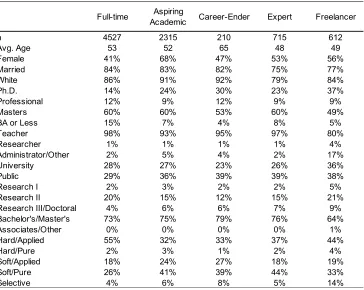
Table 5: Adjunct Satisfaction ...38
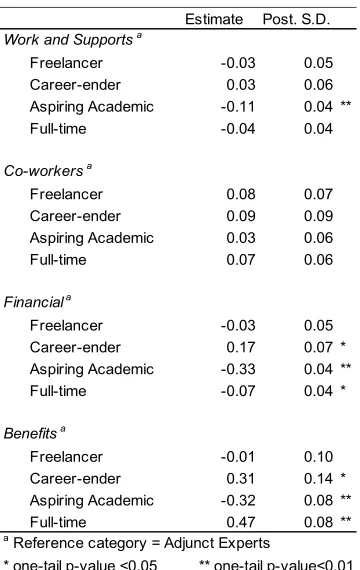
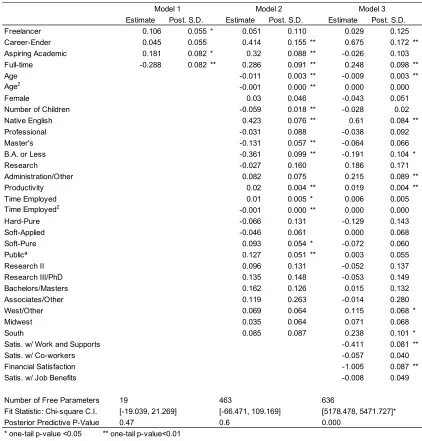
Table 6: Bayesian Structural Equation Models Predicting Turnover Intentions ...40
Table 7: Descriptive Statistics (n=8418) ...48
Table 8: Standardized Factor Loadings ...49
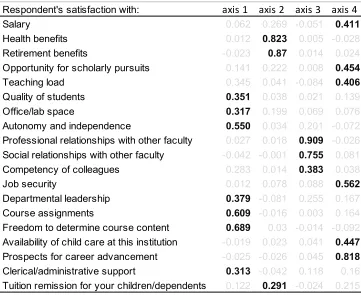
Table 9: Latent Factors with Satisfaction Items ...50
Table 10: Cox Proportional Hazards Models...64
Table 11: Life Table ...74
vii
LIST OF ILLUSTRATIONS
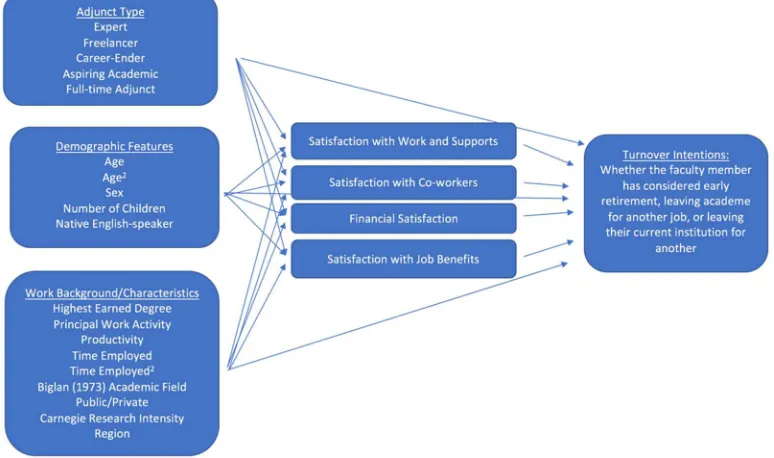
Figure 1: Bayesian Structural Equation Model (Full Model with All Covariates) ...36
Figure 2: Survival Curves ...63
1
CHAPTER 1: INTRODUCTION
Decades ago, the work of higher education was conducted mostly by long-term faculty with tenured contracts. Visiting, clinical and in-residence faculty had a role, but that role was limited to short-term course assignments or ancillary support that tenured faculty were not able to provide. In recent years, however, there has been an eruption of criticism regarding the use of adjunct faculty, as it has become clear that adjunct faculty are now permanent fixtures on college campuses. Scholars have documented the uptick in non-tenure track faculty, tracing back to the late 1960s. At that point, a mere 22% of faculty members were tenure-ineligible (Schuster and Finkelstein 2006).
However, by the Fall of 2009, nearly two-thirds of all faculty were non-tenure track. This dramatic change has revolutionized the academic workforce: fixed-term faculty are now the new faculty majority.
This fundamental shift in the academic workforce has attracted substantial
research for decades. Considerable efforts have been made to understand the historical and economic reasons for this extensive growth (Schuster and Finkelstein 2006).
Others have examined how uncoordinated and decentralized hiring practices relate to fixed-term faculty (Cross and Goldenberg 2003). Some have focused on the job conditions and work responsibilities of these faculty members (Baldwin and Chronister 2001, Schell and Stock 2001). Others have examined student persistence and
undergraduate academics under the instruction of adjuncts (Jaeger and Eagan 2009, Eagan and Jaeger 2008). These are only a few of the many themes undertaken due to this revolutionary change in the contracts of postsecondary faculty.
The scope of this dissertation is focused on two key aspects of non-tenure track faculty and their work. First, faculty adjuncts are far too often treated as a homogenous block with uniform experiences working in academia. They are portrayed as struggling with poverty wages, disrespected by their tenure-line peers, and universally exploited. No one would dispute the importance of these topics and possibilities. No doubt, some members of the adjunct population do work under such regrettable conditions. However, before implementing policies to ameliorate these conditions, it is of great importance to consider just how widespread these conditions and experiences are. It is possible that not all adjuncts experience them—maybe not even a majority. After all, we know that some adjuncts teach outside of a professional career because they enjoy sharing their expertise. Others work part-time to stay productive during their early retirement years. In short, there is surely diversity among postsecondary adjuncts, and an understanding of this diversity is sorely needed.
The second component of this dissertation relates to the job satisfaction, turnover, and permanence of non-tenure track faculty in higher education. It is a fact that non-tenure track faculty earn less and are less likely to receive health and
2
potentially their careers. However, demonstrating this empirically is a formidable challenge.
Theoretical Framework
Extensive research on employee withdrawal and turnover exists. Researchers in this line of work typically approach the topic from one of four theoretical angles. Some focus specifically on the psychological commitment that bonds employee with employer (Porter, Crampon, and Smith 1976, Porter et al. 1976, Meyer and Allen 1991). Workers commit due to the implied costs of leaving as well as normative pressures. Another group of researchers has approached turnover from the theoretical lens of
embeddedness (Mitchell and Lee 2001). This line of research draws on social networks, employee “fit,” and cost-avoidance to understand worker decisions (Lee, Burch, and Mitchell 2014). The unfolding model—a third perspective—highlights the importance of unexpected shocks causing employees to leave (Hom et al. 2017, Holtom et al. 2008, Weller et al. 2009).
Vroom’s (1964) work on expectancy theory may be the most influential of all. Expectancy theory views motivation as a cognitive process and focuses on how
structural, attitudinal and environmental factors influence this process. In the context of work, this perspective implies that employees maintain the work arrangements that fulfill their job expectations. When unfulfilled, workers pursue other options like exerting less effort, detaching from their work, or leaving a job altogether (March and Simon 1958). Job satisfaction is central to expectancy theory because it is viewed as an expression of “fit.” Satisfied workers feel more aligned and connected to their employer and
colleagues. Dissatisfied workers feel alienated and detached from their work.
Researchers integrate job satisfaction into turnover models in several ways. Herzberg, Mausner, and Snyderman's (1959) argued that there were two principal dimensions to job satisfaction. Some work conditions mapped explicitly onto a factor measuring satisfaction while other work features mapped onto a factor measuring dissatisfaction. These factors were viewed as entirely independent in their framework. A second important job satisfaction model is Hackman and Oldham’s (1980) “Job Characteristics” model. This framework was very important for elaborating on the intrinsic aspects of job satisfaction like task variety, meaningfulness and task feedback. In the domain of higher education research, however, the work of Kalleberg (1977) truly stands out. Like Hackman and Oldham (1980), Kalleberg also recognized the intrinsic components of job satisfaction. However, his model was valuable for its incorporation of external factors of job satisfaction as well. Specifically, he found six dimensions to the job satisfaction construct: intrinsic value, convenience, financial, relationships with co-workers, career and resource adequacy.
Problem statement
3
clearly demonstrating that actual differences exist in new classes. As a result, there has been redundancy in some cases and conceptual vagueness in others. To truly carve out distinct classes of adjunct faculty members, this line of research would benefit from a method inferring how many clusters are justified in the adjunct population.
The second limitation this study aims to address relates to the failure to utilize information that is potentially valuable for creating an adjunct typology. Commonly, researchers build typologies around two or sometimes three characteristics they believe to be self-evident. The problem is that this approach potentially excludes variables important for classification. Ethnographers get around this to some extent by pouring over fieldnotes. However, even there, it is not certain that the right information is employed for the purposes of creating a robust typology. Ideally, a method would be employed that systematically extracts and draws on all information useful for creating distinct faculty types.
This dissertation also aims to address limitations in research on adjunct institutional and career turnover. For one, the timing of faculty attrition is rarely
examined and when it has, the focus has been mainly on traditional, tenure-line faculty. Investigating the departure of adjunct subclasses is even more rare. Research on the turnover of adjunct experts or freelancers, for example, is unheard of. Secondly, this line of work commonly oversimplifies job satisfaction by measuring it on a unidimensional scale (e.g., “overall satisfaction”). It is well-known that this overlooks important aspects of job satisfaction and produces upwardly biased estimates (Oshagbemi 1999). Better research designs can correct this.
Research Questions
Regarding adjunct classification, what can a large dataset with extensive information on non-tenure track faculty tell us about the types of adjuncts working in higher education? Do natural clusters emerge from the data among full-time and part-time adjunct faculty? How does the typology suggested by a cluster analysis compare to earlier findings based on traditional typological methods?
This study also aims to address research questions related to adjunct turnover and career attrition. It seems likely that non-tenure track faculty leave their careers at higher rates than tenure-line faculty. Can this be demonstrated empirically? How does job satisfaction fit into the institutional turnover of postsecondary adjuncts? Are there differences among different kinds of non-tenure track faculty (i.e., adjunct experts, career-enders, aspiring academics, and freelancers)? Which work activities and institutional characteristics are related to turnover?
Research design
4
cross-sectional survey that contains extensive information on the job experiences, demographic characteristics, and institutional features of 8,418 non-tenure track faculty members.
This rich dataset was also extremely valuable for the examination of turnover intentions among non-tenure track faculty members. To do so, these data were
analyzed in a structural equation model. The choice of this methodology was driven by its capacity to incorporate a more comprehensive and appropriate measure of job satisfaction. This allowed for a test of whether adjunct faculty subclasses may
experience job satisfaction in different ways and how this all relates to their decisions to leave their institutions.
Finally, recognizing the importance of career attrition, this study also acquired longitudinal data from the Survey of Doctorate Recipients (1993-2013). By utilizing information from doctorate recipients pursuing academic appointments, this study was able to calculate nonparametric estimates of career permanence among faculty
beginning on and off the tenure line. Furthermore, these data were examined using Cox proportional hazards regression, allowing for deeper exploration of how work and
institutional features relate to attrition behavior.
Significance
Higher education has not been isolated from the range of important social and economic changes over the last decades (Schuster and Finkelstein 2006). The structure of the economy has shifted from a material foundation to one based on information and knowledge. Education has changed in the public’s eye from being a public good to resembling more of a private good. Coupled with a demographic transformation, new technologies, and marketplace pressure, administrators in higher education have consistently been forced to reexamine costs. As it is the largest institutional cost, instruction has often been the target. The usage of lower-cost, adjunct faculty has slowly grown over decades and, today, non-tenure track faculty members constitute over two-thirds of the American professoriate.
Of the many research questions engendered by the new faculty majority, this study prioritized questions related to adjunct classification and turnover. By classifying adjuncts better, this study helps do better science. This is because distinguishing the objects of inquiry is fundamental to the scientific method. A clearer typology also improves public policy by distinguishing subgroups that can be targeted. If there are inadequate supports and conditions among the adjunct population (as most believe), identifying who those adjuncts are and tailoring interventions with their interests in mind would be prudent.
5
understanding of these individuals and their work environments (National Center for Education Statistics 2015).
There is also concern that an increased use of non-tenure track labor may open up new modes of stratification of educational quality and opportunity in the United States. If tenured faculty perform better at promoting student learning, then institutions more reliant on adjunct labor are more likely to produce inferior educational results. Students at elite colleges and universities (where there are more tenured faculty), by contrast, may have their advantages compounded thanks to stable and more
experienced faculty members. A greater understanding of non-tenured faculty will help us assess the role of contingency in the stratification of educational opportunity.
Finally, institutions also have a very large stake in the careers and job
satisfaction of their contingent faculty. Today, contingent faculty are a stopgap, allowing administrators to cope with fluctuations in enrollment and the withdrawal of government support. But there are subtle costs associated with this system that may add up in a substantial way. It is not clear how colleges and universities can continue to attract “the best and the brightest” if positions are increasingly off the tenure line. There are
potentially large losses in the process of hiring, orientating and training short-term faculty. By elucidating the kinds of adjuncts in higher education and how the turnover process unfolds for them, this dissertation makes a substantial contribution to
6
CHAPTER 2: CLASSIFYING NON-TENURE TRACK FACULTY
Abstract
With large increases in the number of faculty members working off the tenure track, scholars have developed numerous typologies to conceptualize this
heterogeneous group of academic laborers. However, the proliferation of typologies has sometimes obscured patterns more than elucidated them. These studies are also limited in the information they use for classification. The following study employs cluster analysis—a multivariate typological approach—to identify natural groupings of adjunct faculty in higher education. By applying this procedure to a dataset with extensive information (2010 HERI Faculty Survey, n=8,418), this study brings greater information to bear on the task of adjunct classification. The findings of this study suggest an eight-fold typology with important connections to past typological research.
Introduction
Schuster and colleagues recently considered updating their influential book The American Faculty (2006); however, they concluded that an update was impossible. Postsecondary education “had transformed to such an extent [that an update] could not adequately capture the magnitude and significance of what [had] transpired (Finkelstein, Conley, and Schuster 2016).” This view is broadly shared. Colleges and universities have changed in many ways, including how they are financed, how they use technology, the students who attend them and the programs of study they offer. They have also changed with regard to their workforce. Beginning in the 1960s, postsecondary
institutions began hiring increasing numbers of faculty off the tenure line. As “adjuncts” earn lower salaries and receive fewer benefits, the broader use of them has resulted in important cost-savings. However, few would have predicted the formation of a “new faculty majority.” Indeed, over two-thirds of academic faculty today work off the tenure line (Finkelstein et al. 2016).
An important observation is the diversity among non-tenure track faculty (Kezar and Sam 2010). Adjuncts have different job responsibilities and many reasons for working off the tenure line. They experience diverse work environments and have a multitude of job titles and academic backgrounds. Some work full-time and some work part-time. For this reason, researchers have developed adjunct typologies in order to better conceptualize and understand this heterogeneous group of academic laborers. As the number of contingent faculty has grown, so too have the number of typologies for describing them. However, in many instances, additional typologies have not resulted in greater conceptual clarity or deeper insights. Often, typologies are redundant or re-describe earlier adjunct classes in trivial ways. This line of research is also limited by not making full use of the entire span of information available for classification.
7
scheme? How would such a typology compare to earlier work that has sought to classify non-tenure track faculty? An important strength of this design is its use of data with unparalleled information on non-tenure track faculty (HERI Faculty Survey 2010). This dataset includes a broad range of variables related to non-tenure track job experiences, demographic characteristics, institutional features, and more. As cluster analysis is most useful when applied to broad information on the objects of classification, the
expansiveness of this dataset is integral. Drawing on contemporary data also has the advantage of updating a field that has changed rapidly over the last decade.
It is crucial to develop a better typology of non-tenure track faculty.
Distinguishing the objects of inquiry is part of science, and better categories means better science. By improving how we conceptualize types of adjunct faculty, we advance our knowledge and understanding rooted in and around those categories. Typologies also suggest different occupational needs and different potential responses to
interventions. As higher education is currently undergoing serious reforms, having better typologies will help policy-makers and administrators implement targeted policies that are efficient and effective. It is well known that many non-tenured track faculty work in challenging environments, and it is important for policy changes to be tailored to the varying needs of different subgroups.
Literature Review Classifying Adjuncts
Classification1 is the method of systematically arranging objects into groups
(McQuitty 1987). This process is fundamental to learning and understanding, and it is only through classification that scholars, scientists, and people in general come to identify, differentiate and understand the objects of knowledge. The set of categories that emerge from this process is called a typology. Typologies often pertain to some domain like appearance, role, function, behavior, or activity. They are also typically developed with some purpose or goal in mind. However, there is also great interest in developing typologies that can be applied more generally.
The classification of postsecondary adjuncts has a long history. Tuckman's (1978) seminal work surveyed nearly four thousand part-time faculty members, classifying adjuncts according to their reasons for working part-time. This variable-centered analysis suggested seven principal types of part-time faculty: semiretireds, graduate students, hopeful full-timers, full-mooners, part-mooners, homeworkers, and part unknowners. The largest category was full-mooners (27.6%) who, in addition to their adjunct position, held full-time careers outside of academia. Graduate students were another large class (21.2%), completing their graduate studies while working part-time at a nearby institution.
The adjunct typology created by Tuckman was subsumed into a more general framework in Gappa and Leslie’s Invisible Faculty (1993). Interviewing part-time faculty at eighteen colleges and universities, Gappa and Leslie identified career enders,
experts2, freelancers, and aspiring academics. Career enders referred to faculty who
1 More specifically, taxonomic classification.
2 Gappa and Leslie specifically called these faculty members “specialists, experts, and
8
were in the process of retiring from the workforce. Many of these individuals were not career academics, but instead had worked in the private sector. Part-time faculty in this class worked for supplemental income or simply because they enjoyed teaching. Experts were hired for their specialized knowledge or experience. Freelancers were mostly faculty who wanted to supplement the income earned from a career outside of academia. These faculty were also commonly homemakers, taking care of children and domestic chores on the side. The final category consisted of aspiring academics3.
These were Ph.D. recipients who were seeking full-time, tenure-track appointments.
In Teaching without Tenure (2001), Baldwin and Chronister conducted interviews with faculty members at twelve colleges and universities. This study was important for its incorporation of full-time, non-tenure track faculty—a group that had been growing rapidly since the early 1990s. Their typology was centered on principal work
responsibilities. Teachers spent most of their time teaching and researchers spend most of their time in research. They also identified significant numbers of adjuncts working in an administrative capacity (“administrators”). A residual category was retained for faculty spending the majority of their time on something else. This included lab technicians, programmers, and faculty members in community service.
Recognizing the rising number of adjuncts providing online instruction, Schnitzer and Crosby (2003) identified additional classes of adjunct faculty. Philosophers were faculty members employed in a field outside the area of study they took a degree in. While some of these faculty members did hold philosophy degrees, this category also included individuals with backgrounds in the humanities, religion and other fields with weak academic job markets. Full-time part-timers were adjuncts who created full-time work schedules by piecing together multiple part-time positions at different institutions. Bedford and Miller (2013) found that full-time part-timers constituted the largest category of adjuncts in their study. They also found substantial numbers of full-time instructors who, in addition to their full-time job, provided part-time instruction online. Other faculty groups they identified included full-time administrators, recent graduates, and
employment seekers.
The studies presented here are only a few of the adjunct typologies proposed over the last decades. Researchers have also distinguished non-tenure track faculty according to their preference for tenure-line or full-time work, institutional titles4 (Shavers
2000), skill-level (Wagoner 2007) and professional ambitions (Bedford 2009, Carnevale 2004).
Research Problem
This study aims to address two main limitations of the typological research on postsecondary adjuncts. First, with the growth of adjunct faculty, there has been a proliferation of adjunct typologies. Some of these were reported above. However, more typologies have not always resulted in more insights. Maynard and Joseph (2008), for example, examined “underemployed adjuncts”—a category described earlier as “hopeful
3 In this formulation, aspiring academics also include graduate students, itinerants (a.k.a freeway
fliers), and those aspiring only to a full-time position (tenure-track or not).
9
full-timers” (Tuckman 1978) and “aspiring academics5” (Gappa and Leslie 1993).
Schnitzer and Crosby (2003) and Bedford and Miller (2013) described the experiences of full-time part-timers working in online education. However, this is just a nuanced spin on the concept of “itinerants” or “freeway fliers” defined years earlier (Cross and
Goldenberg 2009, Schell and Stock 2001). In short, it is not really adjunct classes that have proliferated as much as the labels used to describe them. This line of research would benefit from a study that systematically and objectively determines how many distinct classes of adjuncts are justifiable. Proposed adjunct types would then avoid redundancy and provide greater conceptual leverage.
The other important limitation of this line of research is its constrained use of information. In simple bivariate designs, two variables of theoretical importance are cross-tabulated, resulting in a four-quadrant classification schema. In other studies, researchers pour over interview data or field notes and ultimately settle on a number of classes that seems appropriate and consistent with the data. In both cases,
classification fails to make full use of available information. In the first case, the procedure utilizes two principal variables but ignores any additional components that may be of importance for classification. The second case is limited by human perceptivity. At some point, the human mind is incapable of recognizing patterns in dense information. Such approaches are often incapable of capturing the naturally occurring interactions between components that constitute an entity.
For these reasons, Robins et al. (1996) and others have advocated for broader use of multivariate methods of classification like cluster analysis. Cluster analysis utilizes information from a high-dimensional dataset and separates units into groups according to similarity. There are many algorithms for accomplishing this task. One popular class that performs this task particularly well is the method of k-means. Jain (2010) attributes the popularity of k-means to its “ease of implementation, simplicity, efficiency, and empirical success.” This algorithm has been used in the natural and social sciences for decades (Le Roch et al. 2003, Clatworthy et al. 2005, Klemmack et al. 2007), although it has never been applied to the problem of classifying non-tenure track faculty.
There are limitations of course. This work does not and cannot replace foundational research conducted by domain experts in the field of higher education. However, by approaching the problem of adjunct classification with a new methodology and a new dataset, this study helps to validate what has been found in the past. The exploratory nature of this study may also suggest novel ideas and fruitful avenues for future research on adjunct faculty. This study is also limited in its classification of a subset of faculty—non-tenure track faculty—instead of all professors in higher education. While it was necessary to limit the scope for this chapter, a larger study that integrates classifications of tenure-line faculty is certainly merited. This is particularly important on account of the role of tenure in the highly differentiated environment of academia.
5 Gappa and Leslie (1993) argued that their concept stressed the desire to be “fully participating,
10
Research Questions
What can a large dataset tell us about the types of non-tenure track faculty working in higher education? Is there natural structure in the data useful for classifying full-time and part-time non-tenure track faculty? How does the emergent typology scheme compare to earlier work? This study employs a k-means clustering algorithm to discover a natural typology of non-tenure track faculty. A strength of this study design is its use of a high-dimensional dataset and cluster analysis—a method that has not been utilized before in this line of research. By drawing on new tools and new data, this study complements earlier typological research, working towards an adjunct typology of
general use. As this method is exploratory, there are no formal hypotheses to be tested.
Method
The goal of cluster analysis is to discover a natural grouping within a collection of data objects, patterns, or points. Operationally, for a set of data points and a
pre-specified number of clusters, the basic k-means algorithm iteratively6 minimizes the
within-cluster sum of squared errors. This study specifically employed the Hartigan and Wong (1979) algorithm, which makes improvements to the computational efficiency of this process. To validate resultant clusters, the groups were cross-tabulated across various domains of non-tenure track faculty characteristics, including: demography, institutional, departmental, and employment features7. This study conducted two
separate cluster analyses, one for full-time faculty and one for part-time faculty. This was because the survey instrument contained an important battery of questions that only pertained to part-time faculty8. For more details on the method, see Aldenderfer and
Blashfield (1984).
The data in this study came from the Faculty Survey (2010), a cross-sectional survey conducted by the Higher Education Research Institute (HERI). HERI has been collecting faculty survey data since 1978, however, the focus of earlier iterations has been on traditional tenured and tenure-track faculty teaching undergraduate students in the United States. Beginning in 2007-2008, HERI began developing a separate series of questions for part-time faculty and expanded their part-time sample, recognizing the important role of part-timers in higher education. These changes were of extreme importance to this study because the performance of the clustering algorithm and the representativeness9 of the resultant typology depend on it10. When data representation
(choice of variables) is good, resultant clusters are more likely to be compact and
6 Another popular class of methods is agglomerative.
7 Variation across work characteristics was most apparent and therefore the focus of this paper is
on work variables.
8 Exploratory analysis was also conducted on the pooled data.
9 The variables that are chosen should reflect the content of the domain that the researcher is
interested in uncovering a natural typology Mandara (2003).
10 The survey created for 2007-2008 was the first to introduce a module with approximately thirty
11
distinguishable from other clusters. This study utilizes data from the instrument distributed in 2010.
The dataset included information on 4,527 full-time non-tenure track faculty members and 3,891 part-time non-tenure track faculty members. In general, missing information was very low11. However, because the analysis was conducted on
numerous faculty variables, a missing data method was necessary to retain the near-complete data. To this end, data were singly imputed. See the methodological appendix for more information on this procedure.
Measures
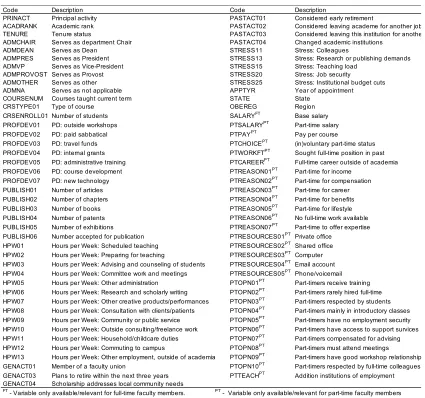
A strength of this study is its inclusion of extensive information on non-tenure track faculty. The cluster analysis utilized 55 variables for full-time faculty and 82 variables for part-time faculty. All of these variables are tabulated in the appendix. In short, variables included a range of work features, including: number of courses, principal activities, stress, and productivity (to name a few). All categorical variables were coded into binaries for the cluster analysis. Quantitative variables maintained their numeric values. See the appendix for descriptive statistics on the quantitative variables.
Results
In order to discuss the emergent clusters in this study, it was necessary to label them. However, this is somewhat paradoxical because the goal of this study and its methodology was to avoid unnecessarily reducing phenomena to a single dimension. Cluster analysis is novel specifically because of how it utilizes a multitude of interactions and correlations to identify “natural groups” in a data source. The labels proposed in this study, thus, are made with a light hand. What is most important in the section that follows are the clusters of interrelated variables. Unlike univariate and bivariate typological approaches, cluster analysis allows for great complexity and nonlinearity in the formation of natural groups. Three clusters resulted from the analysis of full-time faculty and five clusters emerged among the part-time faculty.
11 Only four full-time faculty variables had more than 10% missingness. Only ten part-time faculty
12
Classification of Full-time Adjunct Faculty
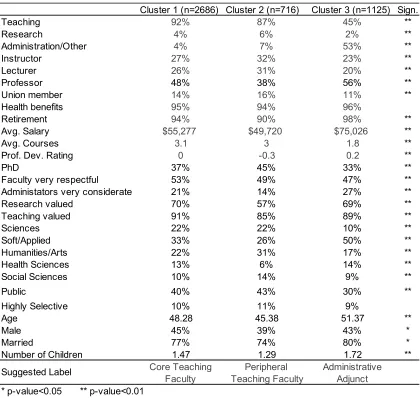
Table 1: Crosstabulation of Full-time Adjunct Clusters
Cluster 1 (n=2686) Cluster 2 (n=716) Cluster 3 (n=1125) Sign.
Teaching 92% 87% 45% **
Research 4% 6% 2% **
Administration/Other 4% 7% 53% **
Instructor 27% 32% 23% **
Lecturer 26% 31% 20% **
Professor 48% 38% 56% **
Union member 14% 16% 11% **
Health benefits 95% 94% 96%
Retirement 94% 90% 98% **
Avg. Salary $55,277 $49,720 $75,026 **
Avg. Courses 3.1 3 1.8 **
Prof. Dev. Rating 0 -0.3 0.2 **
PhD 37% 45% 33% **
Faculty very respectful 53% 49% 47% **
Administators very considerate 21% 14% 27% **
Research valued 70% 57% 69% **
Teaching valued 91% 85% 89% **
Sciences 22% 22% 10% **
Soft/Applied 33% 26% 50% **
Humanities/Arts 22% 31% 17% **
Health Sciences 13% 6% 14% **
Social Sciences 10% 14% 9% **
Public 40% 43% 30% **
Highly Selective 10% 11% 9%
Age 48.28 45.38 51.37 **
Male 45% 39% 43% *
Married 77% 74% 80% *
Number of Children 1.47 1.29 1.72 **
* p-value<0.05 ** p-value<0.01
Suggested Label Core Teaching Faculty
Peripheral Teaching Faculty
Administrative Adjunct
Administrative Adjunct: A distinct faculty type identified in this study was the
“administrative adjunct.” These faculty members work full-time and, unlike other full-time adjunct types, tend to report administration12 as their principal work responsibility (Table
1). Administrative adjuncts also typically have higher academic rank (although untenured), higher salaries (over $75,000 annually), more benefits and greater opportunities for professional development. These adjuncts also tended to be older. This all supports the assertion that this is the managerial class of adjuncts. Interestingly, administrative adjuncts tended to have professional credentials (although some have
13
Ph.D.’s as well). They were also overrepresented in applied fields like public administration, law, journalism, and education.
Two Classes of Full-time Teaching Faculty
Core Teaching Faculty: From Table 1, like administrative adjuncts, core teaching faculty are full-time employees and central to their institution’s mission. This centrality is reflected in their academic rank (which tends to be higher), their salaries (they earn ten percent more than peripheral teaching faculty), their benefits, and opportunities for professional development. Core teaching faculty constitute the largest group of adjunct faculty members in this study.
Peripheral Teaching Faculty: Peripheral teaching faculty (Table 1) teach full-time for a college or university but exhibit less integration in their institutions. These adjuncts generally have lower rank, receive less compensation, and undergo less professional development. However, compared to administrative adjuncts and core teaching faculty, peripheral instructors are actually more likely to possess Ph.D.’s. They are also more likely to be women working in the arts and humanities. Probably because they are less integrated into their institutions, the workplace attitudes of peripheral teaching faculty tend to be more critical of colleagues, administrators and their institutions more generally.
14
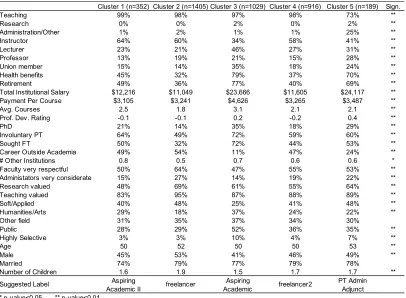
Table 2: Crosstabulation of Part-time Adjunct Clusters
Cluster 1 (n=352) Cluster 2 (n=1405) Cluster 3 (n=1029) Cluster 4 (n=916) Cluster 5 (n=189) Sign.
Teaching 99% 98% 97% 98% 73% **
Research 0% 0% 2% 0% 2% **
Administration/Other 1% 2% 1% 1% 25% **
Instructor 64% 60% 34% 58% 41% **
Lecturer 23% 21% 46% 27% 31% **
Professor 13% 19% 21% 15% 28% **
Union member 15% 14% 35% 18% 24% **
Health benefits 45% 32% 79% 37% 70% **
Retirement 49% 36% 77% 40% 69% **
Total Institutional Salary $12,216 $11,049 $23,666 $11,605 $24,117 ** Payment Per Course $3,105 $3,241 $4,626 $3,265 $3,487 **
Avg. Courses 2.5 1.8 3.1 2.1 2.1 **
Prof. Dev. Rating -0.1 -0.1 0.2 -0.2 0.4 **
PhD 21% 14% 35% 18% 29% **
Involuntary PT 64% 49% 72% 59% 60% **
Sought FT 50% 32% 72% 44% 53% **
Career Outside Academia 49% 54% 11% 47% 24% **
# Other Institutions 0.8 0.5 0.7 0.6 0.6 *
Faculty very respectful 50% 64% 47% 55% 53% **
Administators very considerate 15% 27% 14% 19% 22% **
Research valued 48% 69% 61% 55% 64% **
Teaching valued 83% 95% 87% 88% 89% **
Soft/Applied 40% 48% 25% 41% 48% **
Humanities/Arts 29% 18% 37% 24% 22% **
Other field 31% 35% 37% 34% 30%
Public 28% 29% 52% 36% 35% **
Highly Selective 3% 3% 10% 4% 7% **
Age 50 52 50 50 53 **
Male 45% 53% 41% 46% 49% **
Married 74% 79% 77% 79% 78%
Number of Children 1.6 1.9 1.5 1.7 1.7 **
* p-value<0.05 ** p-value<0.01
PT Admin Adjunct Suggested Label Aspiring
Academic II freelancer
Aspiring
Academic freelancer2
Adjunct Administrator: Unlike other classes of part-time faculty, the principal work responsibilities of adjuncts in this class are often administrative (Table 2). To this end, they are offered more opportunities for professional development than other part-time faculty. They also receive greater institutional compensation than other part-timers (salary) and most report receiving health and retirement benefits. With this kind of security, only a quarter of adjunct administrators hold positions outside of academia. Adjunct administrators work in academically selective institutions at higher rates.
Academic Aspirant: Although part-time employees, Academic Aspirants tend to be more integrated into their departments than any other class of part-time adjunct. They teach the most courses on average and are more likely than other teaching-focused adjuncts to receive professional development (Table 2). They tend to receive better salaries and earn much more on a per-course basis than any other class of part-time adjunct. Most of them (about three-quarters) receive health and retirement benefits. They also are more likely to hold the title of lecturer—rather than instructor—which generally connotes higher status.
15
they are the most likely to have pursued full-time faculty positions in the recent past and the least likely to be working part-time by their own volition. These setbacks may be why they express more negative views about colleagues and administrators than other adjunct types. Academic Aspirants work disproportionately in the humanities and at selective, public colleges and universities.
Journeyman Aspirant: Journeyman aspirants tend to be postsecondary instructors— not lecturers. As a class, they bear resemblance to Academic Aspirants in some ways. They teach a great deal—nearly two and a half courses every term—and their classes are often in the humanities (Table 2). Among part-timers, only Academic Aspirants teach more courses. Journeyman Aspirants have often pursued full-time academic work in the recent past and been unsuccessful in that endeavor. Like Academic Aspirants, they often have negative perspectives with regard to their faculty co-workers and administrators. They also tend to say that research may not be a priority for their institution.
They differ from Academic Aspirants principally in their engagement with outside employment. While only a small percentage of Academic Aspirants have careers outside of academia, nearly half of Journeyman Aspirants do. They are also more likely to teach at other academic institutions—sometimes referred to as itinerancy. Coupled with the workload they report at their surveyed institution, it is clear that these adjuncts work a lot. With fewer children and a slightly lower marital rate, these adjuncts seem to be placing a strong emphasis on their careers—even if these are not traditional career pathways.
Freelancing Aspirant: Freelancing Aspirants tend to be professionals teaching a couple of classes for their institution (Table 2). Among other part-time adjuncts, Freelancing Aspirants resemble Journeyman Aspirants in important ways. Like Journeymen, they also work as teachers in academia and tend to hold the title of instructor. It is also not uncommon for them to be pursuing full-time careers outside of academia. However, compared to Journeyman Aspirants, they hold outside careers at lower rates. They also teach fewer classes and have fewer institutional employers. Thus, while many aspire to full-time work in academia, it may not be their principal focus. Perhaps the flexibility of freelance work helps them manage family responsibilities or gives them a better work-life balance.
Adjunct Expert: Unlike other part-time adjuncts, most Adjunct Experts (54%) have full-time careers outside of academia (Table 2). Probably for this reason, they tend to teach fewer academic courses than other adjunct types. Many Experts seem satisfied with this kind of part-time work arrangement. More so than other adjunct classes, they report working part-time by choice and fewer of them have pursued full-time academic work. The agreeableness of this work arrangement is probably related to their positive
16
Discussion
Now the “new faculty majority,” non-tenure track faculty constitute over two-thirds of academic faculty members today. On account of the considerable diversity among these postsecondary adjuncts, researchers have created numerous typologies for conceptualizing them. However, this line of research has historically been unable to make full use of all information available for classification and faces limitations inherent to traditional methodologies of classification. These studies also on many occasions have proliferated adjunct labels in ways that have not always enhanced our
understanding. By applying cluster analysis to the HERI Faculty Survey, this study approached the problem of classification from a new perspective. Model diagnostics suggested three natural groupings of full-time adjunct faculty and five natural clusters of part-time faculty.
Among the full-time adjuncts, administrative adjuncts were more established in their institutions and had extensive administrative responsibilities. Core teaching faculty and peripheral teaching faculty were the other two types of full-time faculty, distinguished by their level of institutional integration. Among part-time faculty, the analysis also identified an adjunct class with a greater emphasis on administrative responsibilities: part-time Adjunct Administrators. This study also identified Adjunct Experts. These were part-time faculty members with careers outside of academia. Experts held some of the most positive attitudes about their work, even though they were poorly compensated (in traditional ways) for their efforts. This study also found three classes of aspirants. Academic Aspirants often resembled traditional faculty with Ph.D. credentials and very few of them pursued careers outside academic walls. Journeyman Aspirants tended to have professional backgrounds and often worked extensively both within and outside of academia. Their career pathways were diversified but many still seemed to hold out hope for a full-time academic position. Finally, Freelancing Aspirants resembled Journeymen, except that they worked less in the formal economy. Perhaps they dedicate more of their time to volunteering, caring for family members or pursuing additional education.
17
working in academia presumably for the intellectual climate of the classroom or for an opportunity to share their expertise with young people.
In contrast to the findings of Gappa and Leslie, the cluster analysis uncovered a distinct part-time adjunct type focusing on administration—the so-called Adjunct
Administrator. It is unclear why this adjunct type would emerge from the cluster analysis and not in the Gappa and Leslie study. One explanation is that part-time faculty perform more administrative duties today than in the past. Potentially institutions today are using part-time labor to lower the costs of administration—similar to the way they do for
instruction. Alternatively, this category may have been subsumed into the career-ender type in Gappa and Leslie’s study. The career-ender type did not emerge as a type in the cluster analysis. However, this might have been due to the exclusion of part-timers holding tenure. Indeed, exploratory research suggested this may be the case.
The cluster analysis of full-time faculty also revealed types that were similar to foundational work. Like Baldwin and Chronister (2001), this study found that full-time faculty were principally distinguished according to their main work responsibilities. Some of these adjuncts were administrators and the other two types of full-time adjuncts were teaching faculty. Unlike Baldwin and Chronister (2001), however, this study did not identify a strictly “research” adjunct. This is in part because the HERI sample excluded faculty without a classroom presence. An important nuance overlooked by Baldwin and Chronister (and other researchers) was the core versus periphery distinction among full-time adjunct teaching faculty. Core teaching faculty have reasonable salaries and more opportunities for professional development. Peripheral teaching faculty, while employed full-time, undergo less professionalization in their departments and receive less
compensation for their work. This probably leads to a lower level of workplace integration. Of course, this study did not find strong separation between core and peripheral teaching adjuncts. However, this point is still worth noting.
With the dramatic growth and diversification of adjunct faculty, it is imperative for researchers to consistently update how they conceptualize and think about
postsecondary adjuncts. This is because better conceptual tools provide greater leverage over unwieldy and ever-changing social phenomena. While the clusters that emerged in this study were similar to earlier classifications, this study identified important nuances. These subtleties can help researchers articulate their ideas more clearly and test their hypotheses more rigorously. Improved typologies also help frame the “adjunct problem” among policy-makers, administrators and in the popular media. This work suggests that the role of administration should factor into classification, as well as the engagement of aspirants in outside work. Policies and programs should be created that target peripheral teaching faculty, integrating them better into their workplaces. Policy-makers should also be aware of the value that many adjuncts place on flexible, part-time work. It would be a mistake to dismantle the part-time system altogether.
Cluster analysis is an exploratory technique, and there were no formal
hypotheses tested in this study: the method simply extracted patterns that were naturally present among variables in the data. This is not to say that this study is without
18
representativeness of the proposed typology sub-optimal, even if only a fraction of adjuncts were missing from the study.
This method also raises concerns with regard to cluster partitioning. Ideally, the natural groupings that emerge from a data source are compact and highly distinctive. When this occurs, the implied typology has greater integrity. In this study, the clusters that emerged had some degree of fuzziness or vagueness: there was substantial overlap between some of the clusters. Core teaching faculty and peripheral teaching faculty, for example, did exhibit similarity across many dimensions. Nevertheless, overlap in the partitioning may not be a serious problem. It may simply suggest that two or more clusters are very similar or that there is a hierarchical nature to the ordering of groups. Future work should seek out what may be responsible for partitioning issues. Useful strategies might include using more variables, better measurements or k-fold cross-validation to improve model performance and help with validation.
There are many other ways for researchers to build on this line of research. This study focused on how faculty clustered with regard to job function and workplace
characteristics. However, cluster analysis could provide insights into other aspects of faculty work-life as well. Past research, for example, utilized work titles for classification of adjuncts (Shavers 2000, Hollenshead et al. 2007). This information could also be used in a cluster analysis to see whether there may be natural status-based groupings among postsecondary adjuncts. Researchers may also want to consider a data source with information on the entire population of adjuncts (with research-oriented and career-ending adjuncts). NSOPF data13, for example, may be useful for its generality, although
it is important to understand that it lacks the extensive set of important adjunct variables contained in the HERI sample.
Conclusion
Adjunct typologies have stagnated in recent years, due to the application of traditional methods with inherent limitations. Using a new method and a new dataset, this study approached adjunct classification from a fresh direction. Importantly, this study helped validate typological findings from foundational work in this line of research. However, it also shed new light onto nuances associated with these traditional adjunct groupings. By honing our understanding of adjunct classes, this study strengthens our conceptual framework for thinking about and understanding postsecondary adjuncts. With better conceptual tools, researchers, administrators, and policy-makers have better instruments for designing efficient and effective policies for the postsecondary workforce.
References
Aldenderfer, M. S. and R. K. Blashfield. 1984. Cluster Analysis. Beverly Hills, CA: SAGE Publications, Inc.
13 The NSOPF instrument was discontinued in 2004, but still may hold relevant information for the
19
Baldwin, Roger G. and Jay L. Chronister. 2001. Teaching without Tenure: Policies and Practices for a New Era. Baltimore, MD: Johns Hopkins University Press.
Bedford, Laurie A. 2009. “The Professional Adjunct: An Emerging Trend in Online Instruction.” Online Journal of Distance Learning Administration 12(3).
Bedford, Laurie and Heather Miller. 2013. “All Adjuncts Are Not Created Equal: An Exploratory Study of Teaching and Professional Needs of Online Adjuncts.” Online Journal of Distance Learning Administration 16(1).
Berry, Joe. 2005. Reclaiming the Ivory Tower: Organizing Adjuncts to Change Higher Education. New York: Monthly Review Press.
Carnevale, D. 2004. “For Online Adjuncts, a Seller’s Market.” Chronicle of Higher Education, (50)34.
Clatworthy, J., D. Buick, M. Hankins, J. Weinman, and R. Horne. 2005. “The Use and Reporting of Cluster Analysis in Health Psychology: A Review.” British Journal of Health Psychology 10:329–58.
Cross, John and Edie Goldenberg. 2009. Off-Track Profs: Nontenured Teachers in Higher Education.
Finkelstein, Martin J., Valerie Martin Conley, and Jack H. Schuster. 2016. The Faculty Factor: Reassessing the American Academy in a Turbulent Era. Baltimore, Maryland: Johns Hopkins University Press.
Gappa, Judith M. and David W. Leslie. 1993. The Invisible Faculty. Improving the Status of Part-Timers in Higher Education. San Francisco, CA: Jossey-Bass Inc.
Hartigan, J. A. and M. A. Wong. 1979. “Algorithm AS 136: A K-Means Clustering Algorithm.” Journal of the Royal Statistics Society 28(1):100–108.
Hollenshead, Carol et al. 2007. Making the Best of Both Worlds: Findings from a National Institution-Level Survey on Non-Tenure Track Faculty. Center for the Education of Women: University of Michigan.
Jain, Anil K. 2010. “Data Clustering: 50 Years beyond K-Means.” Pattern Recognition Letters 31(8):651–66.
Kezar, Adrianna and Cecile Sam. 2010. Understanding the New Majority of Non-Tenure-Track Faculty in Higher Education: Demographics, Experiences, and Plans of Action: ASHE Higher Education Report. Jossey-Bass, Inc.
Klemmack, D. L. et al. 2007. “A Cluster Analysis Typology of Religiousness/Spirituality Among Older Adults.” Research on Aging 29(2):163–83.
20
Mandara, Jelani. 2003. “The Typological Approach in Child and Family Psychology: A Review of Theory, Methods, and Research.” Clinical Child and Family
Psychology Review 6(2):129–46.
Maynard, Douglas C. and Todd Allen Joseph. 2008. “Are All Part-Time Faculty
Underemployed? The Influence of Faculty Status Preference on Satisfaction and Commitment.” Higher Education: The International Journal of Higher Education and Educational Planning 55(2):139–54.
McQuitty, L. L. 1987. Pattern-Analytic Clustering: Theory, Method, Research and Configural Findings. Lanham, MD: University Press of America.
Milligan, G. W. 1980. “An Examination of the Effect of Six Types of Error Perturbation on Fifteen Clustering Algorithms.” Psychometrika 45:325–42.
Milligan, G. W. 1996. “Cluster Validation: Results and Implications for Applied Analyses.” in Clustering and classification, edited by P. Arabie, L. J. Hubert, and G. De Soto. River Edge, NJ: World Scientific.
Milligan, G. W. and L. M. Sokol. 1980. “A Two-Stage Clustering Algorithm with Robust Recovery Characteristics.” Educational and Psychological Measurement 40:755– 59.
Robins, R. W., O. P. John, A. Caspi, T. E. Moffitt, and M. Stouthamer-Loeber. 1996. “Resilient, Overcontrolled, and Undercontrolled Boys: Three Replicable
Personality Types.” Journal of Personality and Social Psychology 70(1):157–71.
Schell, Eileen E. and Patricia Lambert Stock. 2001. Moving a Mountain: Transforming the Role of Contingent Faculty in Composition Studies and Higher Education. Urbana, IL: National Council of Teachers of English.
Schnitzer, Maria and Lynne Crosby. 2003. “Recruitment and Development of Online Adjunct Instructors.” Online Journal of Distance Learning Administration 6(2).
Schuster, Jack H. and Martin J. Finkelstein. 2006. The American Faculty: The Restructuring of Academic Work and Careers. Baltimore, MD: The Johns Hopkins University Press.
Shavers, Frances. 2000. “Academic Ranks and Titles of Full-Time Non-Tenure-Track Faculty.” Pp. 110–40 in Policies on faculty appointment: Standard practices and unusual arrangements.
Tuckman, Howard P. 1978. “Who Is Part-Time in Academe?” AAUP Bulletin 64(4):305– 15.
21
Wagoner, Richard L. 2007. “Globalization, the New Economy, and Part-Time Faculty.” New Directions for Community Colleges 2007(140):21–27.
Appendix
Clustering Algorithm
K-means clustering requires the specification of three parameters: the number of clusters, how clusters are initialized and how distance is measured. The number of clusters was guided by hierarchical agglomerative clustering (Milligan 1980) and an elbow plot associated with the within-cluster sum of squared errors14. Three clusters
were optimal for full-time faculty and five clusters were optimal for part-time faculty. Before conducting k-means clustering, all variables were scaled and normalized15 so
that variables with the greatest ranges did not have undue influence on the formation of clusters. To conduct the k-means analysis, it is important to choose random starting points for the means (Milligan and Sokol 1980). This helps prevent convergence on suboptimal means. This study used 10 different sets of starting points to identify the means that best summarized the information in the data. The Hartigan-Wong algorithm employed in this study uses the Euclidean measure of distance.
Imputation
Listwise deletion across a large number of variables led to an unacceptably small sample. To rectangularize the matrices, this study utilized the mice package in R to produce a single imputation (Van Buuren and Groothuis-Oudshoorn 2011). As calculating standard errors16 was not important to this study, single imputation was
simple and sufficient. This method was implemented specifically using a CART
algorithm. Each target column was imputed drawing on information from all of the other columns in the data. As most other columns had some degree of missingness as well, the algorithm used the most recent round of imputations for each. The iteration
maximum was set to five, giving the chained equations multiple attempts to converge on a good imputed value for each cell.
14 It is still not established which way is best for determining the number of clusters. 15 The importance of this step is unresolved in the literature (Milligan 1996).
16 When standard errors are important, there are better missing data methods available like
22
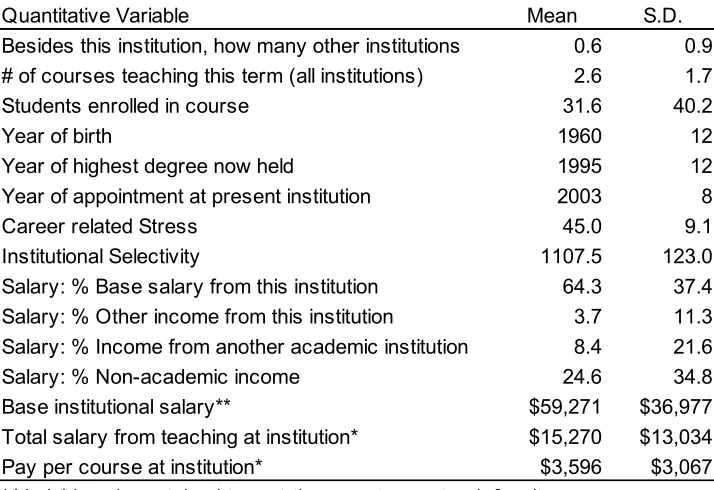
Table 3: Descriptive Statistics of Quantitative Variables in the Analysis
Quantitative Variable Mean S.D. Besides this institution, how many other institutions 0.6 0.9 # of courses teaching this term (all institutions) 2.6 1.7 Students enrolled in course 31.6 40.2
Year of birth 1960 12
Year of highest degree now held 1995 12 Year of appointment at present institution 2003 8 Career related Stress 45.0 9.1 Institutional Selectivity 1107.5 123.0 Salary: % Base salary from this institution 64.3 37.4 Salary: % Other income from this institution 3.7 11.3 Salary: % Income from another academic institution 8.4 21.6 Salary: % Non-academic income 24.6 34.8 Base institutional salary** $59,271 $36,977 Total salary from teaching at institution* $15,270 $13,034 Pay per course at institution* $3,596 $3,067 * Variable only pertained to part-time non-tenure track faculty
23
Table 4: Variables Used in Cluster Analysis
Code Description Code Description
PRINACT Principal activity PASTACT01 Considered early retirement
ACADRANK Academic rank PASTACT02 Considered leaving academe for another job
TENURE Tenure status PASTACT03 Considered leaving this institution for anothe
ADMCHAIR Serves as department Chair PASTACT04 Changed academic institutions
ADMDEAN Serves as Dean STRESS11 Stress: Colleagues
ADMPRES Serves as President STRESS13 Stress: Research or publishing demands
ADMVP Serves as Vice-President STRESS15 Stress: Teaching load
ADMPROVOST Serves as Provost STRESS20 Stress: Job security
ADMOTHER Serves as other STRESS25 Stress: Institutional budget cuts
ADMNA Serves as not applicable APPTYR Year of appointment
COURSENUM Courses taught current term STATE State
CRSTYPE01 Type of course OBEREG Region
CRSENROLL01 Number of students SALARYFT Base salary
PROFDEV01 PD: outside workshops PTSALARYPT Part-time salary
PROFDEV02 PD: paid sabbatical PTPAYPT Pay per course
PROFDEV03 PD: travel funds PTCHOICEPT (in)voluntary part-time status
PROFDEV04 PD: internal grants PTWORKFTPT Sought full-time position in past
PROFDEV05 PD: administrative training PTCAREERPT Full-time career outside of academia
PROFDEV06 PD: course development PTREASON01PT Part-time for income
PROFDEV07 PD: new technology PTREASON02PT Part-time for compensation
PUBLISH01 Number of articles PTREASON03PT Part-time for career
PUBLISH02 Number of chapters PTREASON04PT Part-time for benefits
PUBLISH03 Number of books PTREASON05PT Part-time for lifestyle
PUBLISH04 Number of patents PTREASON06PT No full-time work available
PUBLISH05 Number of exhibitions PTREASON07PT Part-time to offer expertise
PUBLISH06 Number accepted for publication PTRESOURCES01PT Private office
HPW01 Hours per Week: Scheduled teaching PTRESOURCES02PT Shared office
HPW02 Hours per Week: Preparing for teaching PTRESOURCES03PT Computer
HPW03 Hours per Week: Advising and counseling of students PTRESOURCES04PT Email account
HPW04 Hours per Week: Committee work and meetings PTRESOURCES05PT Phone/voicemail
HPW05 Hours per Week: Other administration PTOPN01PT Part-timers receive training
HPW06 Hours per Week: Research and scholarly writing PTOPN02PT Part-timers rarely hired full-time
HPW07 Hours per Week: Other creative products/performances PTOPN03PT Part-timers respected by students
HPW08 Hours per Week: Consultation with clients/patients PTOPN04PT Part-timers mainly in introductory classes
HPW09 Hours per Week: Community or public service PTOPN05PT Part-timers have no employment security
HPW10 Hours per Week: Outside consulting/freelance work PTOPN06PT Part-timers have access to support survices
HPW11 Hours per Week: Household/childcare duties PTOPN07PT Part-timers compensated for advising
HPW12 Hours per Week: Commuting to campus PTOPN08PT Part-timers must attend meetings
HPW13 Hours per Week: Other employment, outside of academia PTOPN09PT Part-timers have good workshop relationship
GENACT01 Member of a faculty union PTOPN10PT Part-timers respected by full-time colleagues
GENACT03 Plans to retire within the next three years PTTEACHPT Addition institutions of employment GENACT04 Scholarship addresses local community needs
FT - Variable only available/relevant for full-time faculty members. PT - Variable only available/relevant for part-time faculty members