
Formulation and targeting efficiency of cisplatin engineered solid lipid nanoparticles
5
0
0
Full text
(2) www.ijpsonline.com. from Acros Organics, New Jersey, USA. Sodium glycolate was purchased from Acros Organics, New Jersey, USA. Millipore-Academic series (Elix, Mill-Q) were gift sample from Ranbaxy Pvt Ltd., Gurgaon, New Delhi. All other chemicals purchased from S. D. Fine Chemicals, Mumbai, were of analytical reagent grade. Preparation of solid lipid nanoparticles by microemulsification technique: SLN were prepared from a warm o/w microemulsion containing Stearic acid as internal phase, Soy lecithin as surfactant and sodium glycolate as co-surfactant. Microemulsion of cisplatin were prepared by melting lipid (stearic acid) at 80º, to which cisplatin was added and stirred for 5 min, followed by sonication. To this mixture soy lecithin was added and stirred for 2 min. Aqueous phase containing co-surfactant (sodium glycolate) heated at 80º and added to melted lipid phase with mechanical stirring at 80º for 10-15 min, results in o/w microemulsion. This microemulsion was then added carefully drop wise into ice cold water present in a beaker with continuous stirring. Factors such as rate of addition, distance of needle from the surface of the beaker, rate of stirring were standardized to reduce particle size. In order to obtain optimum microemulsion, the needle was placed 4 cm from the surface of the water and mixture stirred at 3000 rpm. The SLN dispersion was further stirred for 3 h after the complete addition of microemulsion. After completion of stirring, the SLN dispersion was subjected to ultra sonication for a period of 10 min4. Physical evaluation of solid lipid nanoparticles: Average particle size and surface morphology of SLN were evaluated under scanning electron microscopy (Jeol JSM-T330A). A brass specimen stub were used for mounting the sample and wet solvent paint was applied on the stub, while the paint was wet the pellets were placed on each stub and allowed to dry5. Then the sample was observed under scanning electron microscope. For the drug content assay, the freeze-dried, 10 mg of cisplatin-loaded SLNs were dissolved in ethanol under water bath at 650 for 30 min and then cooled to room temperature to precipitate the lipid. The drug content in the supernatant after centrifugation (1252 × g for 15 min) was measured by UV/Vis spectrophotometer (UV-1201 Shimadzu, Japan) at 210 nm6. The drug content in the SLN was calculated 204. using the Eqn., Drug content = (Analyzed weight of drug in SLN/ Theoretical weight of drug loaded in system) × 100. Zeta potential was measured by using zeta potentiometer (Zeta+3 meter, USA). Samples were diluted with KCl (0.1 mM) and placed in electrophoretic cell where the electric field of 15.2 V/cm was applied 7. Each sample was analyzed in triplicate. Evaluation of in vitro release: Solid lipid nanoparticles, equivalent to 10 mg of cisplatin were weighed and transferred into a conical flask containing 50 ml of phosphate buffer saline (PBS pH 7.4) Then the ßask was kept in a metabolic shaker and the shaker was adjusted to 50 horizontal shakes per min at 37±0.5°. One ml aliquot of release medium were withdrawn at time intervals of 1, 2, 4, 8, 16, 24 h and replaced by the same volume of PBS 8. Samples were filtered through 0.45 µm membrane filter (Elix, Mill-Q) and the filtrate was diluted suitably with PBS and estimated by UV/Vis spectrophotometer at 210 nm. In vivo tissue distribution: This study was carried out after obtaining the due permission for conduction of experiments from relevant ethics committee (K. L. E. S’s College of Pharmacy, Belgaum) which is registered for “Teaching and Research on Animals” by committee for the purpose of control and supervision of experiments on animal, Chennai (Registration number 221/CPCSEA). It is performed to compare the targeting efÞciency of drug-loaded solid lipid nanoparticles with that of free drug in terms of percentage increase in targeting to various organs of reticuloendothelial system like liver, lungs, spleen, kidney, heart and brain9. Nine healthy adult Wistar rats weighing 200-250 g were selected, a constant day and night cycle was maintained and they were fasted for 12 h. The animals were divided into 3 groups, each containing 3 rats. Group I received solid lipid nanoparticles equivalent to 607.5 µg of cisplatin intravenously in the tail vein after redispersing them in sterile phosphate buffer saline solution, F3 (optimized) batch were selected for the study. Group-II rats received 607.5 µg of pure cisplatin intravenously. Group-III rats were treated as solvent control and were injected intravenously with sterile phosphate buffer saline solution. After 3 h the rats were sacrificed and their liver,. Indian Journal of Pharmaceutical Sciences. March - April 2008.
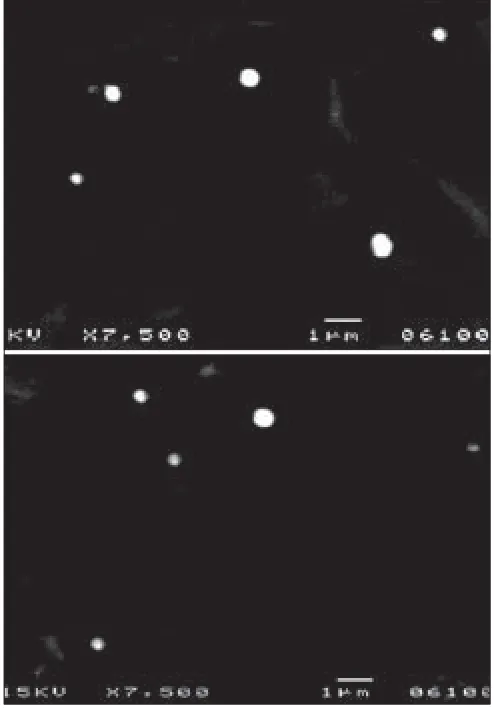
(3) www.ijpsonline.com. lungs, spleen, kidney, heart and brain were isolated. The individual organs of each rat were homogenized separately by using a tissue homogenizer with 5ml of ethanol and the homogenate was centrifuged at 17609 × g for 30 min. The supernatant was collected and filtered through 0.45 µ filters and analyzed spectrophotometrically after suitable dilution with phosphate buffer saline at 210 nm10. Stability studies: The purpose of stability testing is to provide evidence on how the quality of a drug substance or drug product varies with time under the inßuence of variety of environmental conditions such as temperature, humidity and light. The best batch of cisplatin loaded solid lipid nanoparticles were tested for their stability. All the preparations were divided into 3 sets and were stored at 4±2º in refrigerator, 25±2º/60%±5% RH and 37±2º/65%±5% RH in humidity control oven (Ginkya IM 3500 Series). After 3 mo, the drug content and in vitro release of all the formulation was determined by the method discussed previously11.. The in vitro release of all the four batches of SLN (F1 to F4) were carried out, which showed an interesting biphasic release with an initial burst effect in the 1st h drug release was 15.18%, 16.2%, 16.22% and 17.34% for F1, F2, F3 and F4, respectively. This was followed by a prolonged second phase (zero order) release, which may due to diffusion of drug through the polymer matrix as the lipid erodes slowly. Cumulative percent drug release for F1, F2 after 16 h was 97.22%, 94.88% and for F-3, F-4 after 24 h was 81.39% and 78.43%, respectively, and was 93.93 % in 3 h for pure drug cisplatin (Þg. 2). TABLE 1: DRUG ENTRAPMENT EFFICIENCY OF CISPLATIN LOADED SOLID LIPID NANOPARTICLES Formulation F1 F2 F3 F4. Concentration (µg /ml) 48.13±0.223 26.53±0.168 17.46±0.141 11.8±0.066. Drug content (µg /10 mg) 722±3.357 398±2.524 262±2.109 177±0.994. % Drug content 47.59±0.221 60.42±0.383 69.18±0.557 74.53±0.418. Each value represents mean±SD for (n=3). RESULTS AND DISCUSSION To ensure the compatibility of the drug with polymers preformulation studies were done using IR spectrum recorded on Impact-410 Nicolet, FT-IR USA, by preparing KBr disk. The IR peaks of cisplatin with the polymers resemble almost same structural peaks of pure cisplatin indicating the compatibility between the drug and polymers. Cisplatin loaded solid lipid nanoparticles were in the range of 250-500 nm and the surface morphology of the particle revealed that the particle were spherical in shape and discrete (fig. 1). Scanning electron microscopy also reveled that the particle size increases with the increase in the lipid concentration. Results of zeta potential showed plateau of slight stability and few aggregations. The amount of drug bound to the SLN was found to increase with the increase in the stearic acid concentration and this may be due to the higher intactness of the lipid. The maximum drug entrapment was found with F4 (74.53%) and lowest entrapment with F1 (47.59%) (Table 1). It was also found that, the increase in lipid concentration affects the in vitro release kinetics, higher lipid ratio leads to high initial burst release. March - April 2008. Fig. 1: Scanning electron microscope photographs of solid lipid nanoparticles.. Indian Journal of Pharmaceutical Sciences. 205.
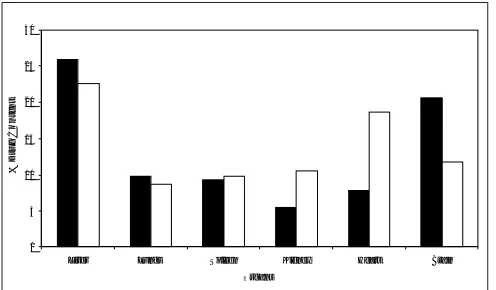
(4) www.ijpsonline.com. Formulation (F3) with optimal particle size and satisfactory in-vitro release was selected for in vivo drug targeting studies. The comparison between the amount of drug targeted from SLN and pure drug in various organs are presented in (Þg. 3). The average targeting efÞciency of drug loaded SLN was found to be 25.93% of the injected dose in liver, 9.79% in lungs, 9.33% in spleen and 5.4% in kidney, 7.78% in heart, and 20.6% in brain, whereas accumulation of pure drug was 22.65% in liver, 8.72% in lungs, 9.72% in spleen, 10.57% in kidneys, 18.66% in heart, and 11.7% in brain of the injected dose. These results reveal that the drug loaded solid lipid nanoparticles showed preferential drug targeting to liver followed by brain, lungs, spleen, heart and kidneys. Compared to pure drug, higher concentration of drug was targeted to the organs like liver and brain after administering. 120. Cum. % Drug Released. 100. 80. the dose in the form of solid lipid nanoparticles. Higher drug targeting in brain and liver showed that the increased lipophilicity of cisplatin loaded SLN, played an important role in increasing the brain targeting efÞciency. Stability studies revealed that, there is no much reduction in drug content after storage for 3 mo at 4±2º in refrigerator, 25±2º/60%±5% RH and 37±2º/65%±5% RH in humidity control oven (Ginkya IM 3500 Sieries). In vitro release studies were carried out at the end of 3rd mo proved that the formulation stored at 4º showed 83.68% release, the one which stored at 25º showed 85.68% and formulation stored at 37º showed 84.27% release after 24 h. These results indicate that the drug release from the formulation stored at 25º was highest followed by formulation stored at 37º and 4º. On comparing this data with the previous release data of F3, it was observed that there was an overall increase in the drug release. These results may be attributed to erosion of lipid particles to some extent during storage. Thus it can be concluded that 4° is the most suitable condition for storage of cisplatin loaded solid lipid nanoparticles.. 60. ACKNOWLEDGEMENTS. 40. 20. 0 0. 1. 2. 4. 8. 16. 24. Time Time(h) (hours). Fig. 2: Plot of cumulative % drug released vs time for different formulation of cisplatin solid lipid nanoparticles. In vitro release proÞle (zero order plot) for different formulation of cisplatin solid lipid nanoparticles, formulation F1 (─♦─), formulation F2 (─■─), formulation F3 (─▲─) and formulation F4 (─×─).. The authors are thankful to Shri S. K. Krishnan, Analytical research, Indal, Belgaum, for providing the facility of SEM. We also thank Sun Pharmaceuticals, Vadodara, Gujarat and Cipla Ltd. Bangalore, for providing the gift sample of Cisplatin.. REFERENCES 1. 2.. 30. 25. % Drug Content. 3. 20. 4. 15. 10. 5.. 5. 6.. 0 Liver. Lungs. Spleen. Kidney. Heart. Brain. Organs. Fig. 3: Comparison between amounts of drug distributed from formulation F3 after i.v. administration. Optimized formulation F3 is denoted by (■) and pure drug is denoted by (□). 206. 7. 8.. Nabuhiro N, Souichiro O, Horacio C, Miyamoto M. Novel cisplatinincorporated polymeric micelles can eradicate solid tumors in mice. Cancer Res 2003;63:8977-83. Wolfgang M, Karsten M. Solid lipid nanoparticles: Production, characterization and application. Adv Drug Deliv Rev 2001;47:16596. Wissing SA, Kayser O, Muller RH. Solid lipid nanoparticles for parenteral drug delivery. Adv Drug Deliv Rev 2004;56:1257-72. Mayur K, Padhi BK, Chougule M, Mishra A. Methotrexate loaded solid lipid nanoparticles for topical treatment of psoriasis: Formulation and clinical implication. Drug Deliv Tech 2002;5:1-13. Zengshuan MA, Yeoh H, Lim LY. Formulation pH modulates the interaction of insulin with chitosan nanoparticles. J Pharm Sci 2002;91:1404-11. Hu FQ, Yuan H, Zhang HH, Fang M. Preparation of solid lipid nanoparticles with dobetasol propionate by a novel solvent diffusion method in aqueous system and physicochemical characterization. Int J Pharm 2002;239:121-8. Bekerman T, Golenser J, Domb A. Cyclosporine nanoparticulate lipospheres for oral administration. J Pharm Sci 2004;93:1264-70. Santhi K, Dhanraj SA, Ponnusankar S, Suresh B. Study on formulation. Indian Journal of Pharmaceutical Sciences. March - April 2008.
(5) www.ijpsonline.com. and targeting efÞciency of amphotericin B nanospheres. Indian J Pharm Sci 2000;6:421-3. 9. Wang JX, Sun X, Zhang ZR. Enhanced brain targeting by synthesis of 31,51-dioctonyl-5- ßuoro-21-deoxyuridine and incorporation into solid lipid nanoparticles. Eur J Pharm Biopharm 2002;54:285-90. 10. Sacchi A, Gasparri A, Gallo-Stampino C, Toma S, Curnis F, Corti A. Synergistic antitumor activity of cisplatin, paclitaxel, and gemcitabine with tumor vasculature-targeted tumor necrosis factor-α. Clin Cancer Res 2006;12:175-82. 11. The European agency for the evaluation of medicinal products.. March - April 2008. Stability testing guidelines: Stability testing of new drug substances and products. London: ICH–Technical coordination, EMEA; 2003. Available from: http://www.emea.eu.int. [cited on 2005 Dec 20].. Indian Journal of Pharmaceutical Sciences. Accepted 22 March 2008 Revised 28 January 2008 Received 30 May 2007 Indian J. Pharm. Sci., 2008, 70 (2): 203-207. 207.
(6)
Figure
Related documents
The proposed architecture of adder tree with compessor is used for both DLMS and NLMS adaptive filter to achieve faster multiplication in partial product generator (ppg) block..
oxidative stress as well as the composition of phenolics and flavonoids compounds would have contributed to the antioxidant activities of the plant[24]. The DPPH radical
evidence collection and forensics investigation process, proactive forensics, intrusion detection systems with the help of honeypots, building evidence graphs, identifying usage
Earlier experimental investigations have highlighted that the incorporation of an adequate amount of steel fibers (1-2%) into the concrete matrix significantly improves the
We emphasize that child health care providers, educators, and others with regular con- tact with the drivers of children should not only encourage the use of child restraint devices
Bhat, Essential norm of products of multiplication composition and differentia- tion operators on weighted Bergman spaces, Appl. Stevi´c, Products of composition and
The present study appears to prove that Con-Dis can give adequate information on a test subject's perceived well- being, because the average of mood and quality of life is very
Philip and coworkers [57] report that montelu- kast therapy improved asthma outcomes as well as pro- viding significant relief from symptoms of seasonal AR in a multicenter study of
