Volume-5 Issue-2
International Journal of Intellectual Advancements
and Research in Engineering Computations
Wear Behaviour Analysis of Aluminium Metal Matrix
Composites Reinforced With Bore Sand Particles
Mr.B.Velliyangiri1, JerinSaji2 ,Gokulakrishnan.G2 , Govindaraj.R2 , Soundarajan.N 21
Assistant Professor, 2UG Students,
Department of Mechanical Engineering, Nandha Engineering College, Erode-52, Tamil Nadu, India.
1
Abstract - The present study deals with the investigation of dry sliding wear behavior of aluminium alloy (Al6063) based composites, reinforced with bore sand. Bore sand a waste material obtained while digging bore well. We are using this bore sand for the reinforcing with aluminium. Since the bore sand is waste during the bore well making process, we take this bore sand for reusing it. We take bore sand and tested the wear behaviour, hardness and did the microstructure analysis.The project mainly aims at the reusing of bore sand which a waste material is obtained while digging bore wells.
INTRODUCTION
The bore sand best particles are used various construction admixtures, used as land fillers, dumped in agricultural lands or discard into environment that leads to serious problems relating to the dust pollution and environmental deterioration. This leads to different health problems like asthma bronchitis and in the almost cases cancer. Therefore different types of efforts should be taken to control environmental pollution arising due to disposal of these industrial wastes by converting them into raw materials for different purposes.
In this method aluminium metal matrix composite (AMMC) is prepared by reinforcing wet grinder stone dust particles, an Industrial waste generated during the stone depression operation of the quarry rocks. AMMCs are extensively used in many different applications like aerospace, defence, and sports equipment because of many good properties like high strength high stiffness, high thermal conductivity, and combined properties like wear resistance with fracture toughness and high strength with corrosion resistance. On the other hand, the application of AMMC is restricted due to poor wear resistance under dry lubrication condition.
Wear is encountered to a material mainly by speed, environmental condition and working load. Wear means slow and progressive loss of material which is subjected to rubbing action. Wear cases
huge amount of money by repairing or replacing worn out parts. Wear resistance of a material mainly depends on various micro structural characteristics like particle, volume fraction distribution of reinforcement material and shape. So in this research work we made an attempt prepare AMMC suitable for use in engineering application where wear properties are desired.
I. MATERIALANDMETHODS
A. Experimental Test and Instrumentation
In this project Al6063 alloy is used as the matrix material to prepare composite .This Al6063 is typically used in aircraft, extrusion, architectural application, window frames and irrigation tubing. The chemical composition of Al6063 Alloy(%) is Si=0.303,Fe=0.071,Cu=0.0050,Mn=0.0759,Mg=0.5 29,Cr=0.037,Ni=0.041,Zn=0.025,Ti=0.0151, Ca=0.0146, and Al=98.94.
The composites were prepared by two-step stir casting process. Initially the bore sand particles were preheated up to 250⁰C in order to improve its wet ability with the base matrix alloy and eliminate the moisture content. Then the Al6063 alloy was charged into the crucible which is fitted with a temperature probe and heated to a temperature of 780⁰C in order to melt the alloy. Then the liquid alloy was allowed to cool until it attains semisolid state. The preheated bore sand particles along with 0.1wt% magnesium were added to the melt which is in the semisolid state and stirred manually for 15-20 minutes. The temperature was then raised 850⁰C and second stirring was then for 15 minutes. Finally the prepared composite was poured into the prepared sand moulds.
For this project, three samples are prepared as follows: sample I = Al6063 alloy, sample II = Al6063 alloy + 10wt% of bore sand particles of 45 micron of particle mean size , and sample III = Al6063 alloy + 20wt% WSD particles of 45 micron of particle size.
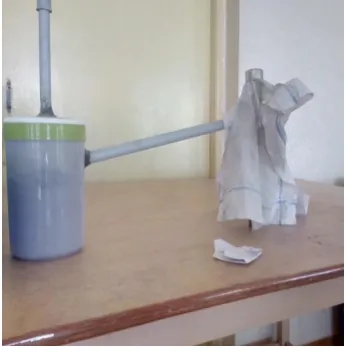
Fig. 1, AL6063 Sample
A. Cyclonic Separation
Cyclonic separation is a method of separating particulates from an air, gas or liquid stream, without the use of filters, through vortex separation. This is a very easy method for the separation of the fine sand particles. In this setup one container is filled with bore sand and it is connected to compressor to provide high pressure gas .Another closed empty container is connected to the container that having bore sand. When compressor is switched on the high pressure gas will carry the light weight sand particles to the second container and therefore we obtain very fine particles on the second container. This fine particle that obtained finally is used for the preparation of the metal matrix composites.
Fig. 2, Cyclonic separation
B. Stir Casting
Stir casting process is mainly used for manufacturing of particulate reinforced metal matrix composite (PMMC). Manufacturing of Stir casting process is mainly used for manufacturing of particulate reinforced metal matrix composite (PMMC). Manufacturing of aluminium alloy based
casting composite by stir casting is one of the most economical methods of processing MMC. Properties of these materials depend upon many processing parameters and selection of matrix and reinforcement. In a stir casting process, the reinforcing phases are distributed into molten matrix by mechanical stirring. The cast composites are sometimes further extruded to reduce porosity, refine the microstructure, and homogenize the distribution of the reinforcement.
A major concern associated with the stir casting process is the segregation of reinforcing particles which is caused by the surfacing or settling of the reinforcement particles during the melting and casting processes. The final distribution of the particles in the solid depends on material properties and process parameters such as the wetting condition of the particles with the melt, strength of mixing, relative density, and rate of solidification .The distribution of the particles in the molten matrix depends on the geometry of the mechanical stirrer, stirring parameters, placement of the mechanical stirrer in the melt, melting temperature, and the characteristics of the particles added.
C. Electrical Discharge Machining (EDM)
II. MECHANICAL PROPERTIES AND TESTING. In order to study the mechanical properties of the prepared composites, hardness and tensile tests were conducted. Here table 1 shows the results of the hardness, yield strength, ultimate tensile strength, and elongation (%) of the samples taken for the investigation. From the test it is observed that average hardness of the sample prepared by 10wt% and 20wt% of bore sand are measured as 65 BHN and 75 BHN respectively. From this result we can understand that the hardness of the prepared sample is greater than that of Al6063 alloy. The hardness of the prepared composite increases with increase in the reinforcement content.
TABLE I. Properties of Prepared Composites
A. Wear Testing
Dry wear test is done by pin on disc apparatus. Firstly the wear test sample is polished by using fine grade sand paper and then followed by single disc polishing machine which contain a rotating disk in which aqueous solution alumina powder is powered in it, the sample is placed above that and by friction the rough surface will be cleared. This is done to ensure proper contact with counter face. The test was conducted at normal room temperature with the load ranging from 9.81, 19.62, and 29.43N at a sliding speed of 1.57, 3.14, and 4.71m/s and with a sliding distance of 1000, 2000, and 3000m. The Specimens were machined to pin size of 6 × 6 × 25mm. The wear loss was measured directly as the height loss of the specimen using Linear Variable Differential Transducer (LVDT). During the test the specimen was pressed against the rotating EN32 steel disc with hardness 65HRC by applying the load. The frictional force was also recorded during each test. The coefficient of friction was determined by dividing friction force with the normal load.
Fig.3, Pin on Disc Apparatus
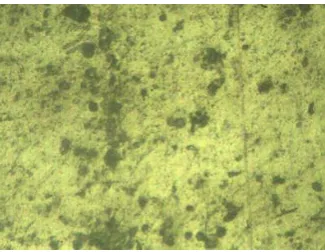
Fig. 4, Micro structural view of sample prepared by 10%wt of bore sand
Fig. 5, Micro structural view of sample prepared by 20%wt of bore sand
III.RESULTS AND DISCUSSIONS
In this project AMMC is being made by reinforcing bore sand particles the samples are created by using 10% wt and 20%wt of the bore sand particles. Dry wear test was conducted on the above samples with different combinations of wear load, sliding speed and sliding distance.
Sl. No
Material Hardne ss value (BHN)
Yield strength
(MPa) Yield strength
(MPa) Elonga
tion (%)
1 Sample-I
40 65 132 12
2 Sample-II
65 117 153 8.5
3 Sample-III
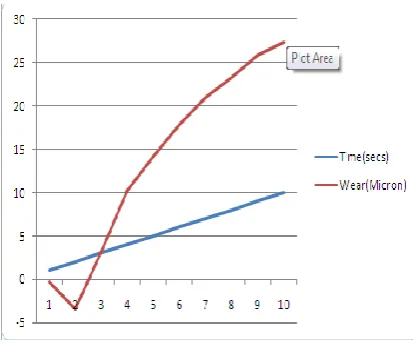
Fig. 6, Graph Comparing wear values with respect to time for sample 1
Fig. 7, Graph Comparing frictional force Vs co efficient of friction for sample 1
Fig. 8, Graph Comparing wear values with respect to time for sample 2
Fig. 9, Graph Comparing frictional force Vs co efficient of friction for sample 2
IV.CONCLUSIONS
The sample II and sample III that contains 10% wt and 20% wt of bore sand shows some considerable resistance to wear as compared to non reinforced Al6063 alloy. Increasing the reinforcement content from 10wt% to 20wt% increases the hardness and wear resistance of
the composites but reduces its ductility. It is observed that wear rate increase with
increase in speed for Al6063 alloy and prepared composites decrease with increase in sliding speed.
The coefficient of friction was found to reduce with increase in the applied load.
REFERENCES
[1]L .Francis Xavier and Paramasivam Suresh Wear Behavior of Aluminium Metal Matrix Waste Composite Prepared from Industrial waste.
[2] T. Corke, Design Of Aircraft, Singapore: Pearson Education Limited, pp.231-237, 2003.
[3] V. Daniel Jebin, D. Shivalingappa, and J. Jenix Rino, “Wear behavior of AL6063-alumina metal Matrix composite,” International Journal of Science and Research, vol. 2, no. 3, pp. 446–449, 2013.
[4] A. Habibolahzadeh, A. Hassani, E. Bagherpour, and M. Taheri, “Dry friction and wear behavior of in-situ Al/Al3Ti composite,” Journal of Composite Materials, vol. 48, no. 9, pp. 1049–1059, 2014.
[5] G. B. Veeresh Kumar, C. S. P. Rao, and N. Selvaraj, “Studies on mechanical and dry sliding wear of Al6061-SiC composites,” Composites Part B: Engineering, vol. 43, no. 3, pp. 1185–1191, 2012.
[7] E. Starke Jr and J. Staley, Application of modern aluminum alloys to aircraft, Prog. Aerosp. Sci., 32 (2-3), pp.131-172, 1996Advanced aerospace materials:
[8] J. Kaufman, Introduction to aluminum alloys and tempers, ASM International, ch.6, 2000.
[9] A. Heinz, A. Haszler, C. Keidel, S. Moldenhauer, R. Benedictus, and W. Miller, Recent development in aluminium alloys for aerospace applications, Mater. Sci. Eng. A, 280 (1), pp.102-107, 2000.
[10] S. Avner, Introduction to Physical Metallurgy, 2nd ed., New Delhi: Tata McGraw-Hill, pp.481-497, 1997.
[11] M.K. Surappa, P. K. Rohatgi, Preparation and properties of cast aluminium-ceramic particle composites, Journal of materials science, 16(1981), p 983-993.