R E V I E W
Open Access
Connectivity and complex systems:
learning from a multi-disciplinary
perspective
Laura Turnbull
1*, Marc-Thorsten Hütt
2, Andreas A. Ioannides
3, Stuart Kininmonth
4,5, Ronald Poeppl
6,
Klement Tockner
7,8,9, Louise J. Bracken
1, Saskia Keesstra
10, Lichan Liu
3, Rens Masselink
10and Anthony J. Parsons
11* Correspondence:Laura.Turnbull@ durham.ac.uk
1Durham University, Durham, UK
Full list of author information is available at the end of the article
Abstract
In recent years, parallel developments in disparate disciplines have focused on what has come to be termedconnectivity; a concept used in understanding and
describing complex systems. Conceptualisations and operationalisations of
connectivity have evolved largely within their disciplinary boundaries, yet similarities in this concept and its application among disciplines are evident. However, any implementation of the concept of connectivity carries with it both ontological and epistemological constraints, which leads us to ask if there is one type or set of approach(es) to connectivity that might be applied to all disciplines. In this review we explore four ontological and epistemological challenges in using connectivity to understand complex systems from the standpoint of widely different disciplines. These are: (i) defining the fundamental unit for the study of connectivity; (ii) separating structural connectivity from functional connectivity; (iii) understanding emergent behaviour; and (iv) measuring connectivity. We draw upon discipline-specific insights from Computational Neuroscience, Ecology, Geomorphology, Neuroscience, Social Network Science and Systems Biology to explore the use of connectivity among these disciplines. We evaluate how a connectivity-based approach has generated new understanding of structural-functional relationships that characterise complex systems and propose a‘common toolbox’underpinned by network-based approaches that can advance connectivity studies by overcoming existing constraints.
Keywords:Connectivity Studies, Fundamental Unit, Emergent Behaviour, Structural Connectivity, Functional Connectivity, Measuring Connectivity
Introduction
In recent years, parallel developments in disciplines as disparate as Systems Biology, Neuroscience, Geomorphology, Ecology and Social Network Science have focused on what has come to be termed connectivity. In its simplest form, connectivity is a de-scription of the level of connectedness within a system, and corresponds to a struc-tured set of relationships between spatially and/or temporally distinct entities (Kool et al.,2013). In these disciplines connectivity has been a transformative concept in under-standing and describing what are considered to be complex systems. Complex systems often exhibit non-linear relations between constantly changing components that to-gether form the behaviour of the whole (emergent behaviour) via dynamical relations
across multiple levels of organization and scale (Bar Yam, 1997; Cummings and Collier,
2005; Manson, 2001; Wu, 1999), in contrast with simple, non-complex systems, which tend to exhibit linear relations among components. There has been a wealth of research into complex systems in recent decades, perhaps spurred on by the discovery that ap-parently chaotic behaviour can be generated from simple‘rules’(e.g. May1976).
Whilst conceptualisations and operationalisations of connectivity have evolved largely within their disciplinary boundaries, similarities in the concept and its application among disciplines are also evident. Existing approaches to the study of connectivity used across different disciplines have been applied in different ways to understand sys-tem properties that lead to behaviours characteristics of complex syssys-tems. We therefore ask the question: Can the concept of connectivity provide insight into some of those simple rules governing complex systems? We explore how approaches used to study connectivity and system dynamics can be used to understand the ‘simple rules’ govern-ing complex systems, and if a common set of approaches can be usefully applied to all disciplines.
To address this question we drew together experts from Systems Biology, Neurosci-ence, Computation NeurosciNeurosci-ence, Geomorphology, Ecology and Social Network Sci-ence in a face-to-face-workshop to discuss relationships between these disciplines and connectivity studies, and how we can go about using and sharing connectivity tools among disciplines. In this workshop we identified four common ontological and epis-temological challenges in using connectivity to understand complex systems. These challenges form the subject of this review (Table1).
Four key challenges in using connectivity to understand complex systems Defining the Fundamental Unit
A fundamental unit can be either a physical object or a concept that sustains its iden-tity and participates in the interactions within a system for a sufficiently long time and in sufficiently important ways to merit quantification. Explicit definition of the funda-mental unit is required when studying connectivity. In cases where the fundafunda-mental unit is defined based on a concept, a way of operationalising that concept is required.A key challenge is defining the appropriate fundamental unit for a specific application, and often depends on the [natural] scales at which it is conceptually robust to work for a specific application. Hierarchical organization is a common feature of complex sys-tems, and typically this refers to a nested, module-within-module structure. Each hier-archical level may, in principle, enable us to make meaningful choices about the fundamental unit for a given application. Each level of such a hierarchical structure could be used to define the fundamental unit. For example, in neuroscience the funda-mental unit could be an individual neuron, or a cortical area. However, within some disciplines the scalar boundaries are often fuzzy and identification of clear hierarchical structures is difficult.
Separating Structural Connectivity and Functional Connectivity
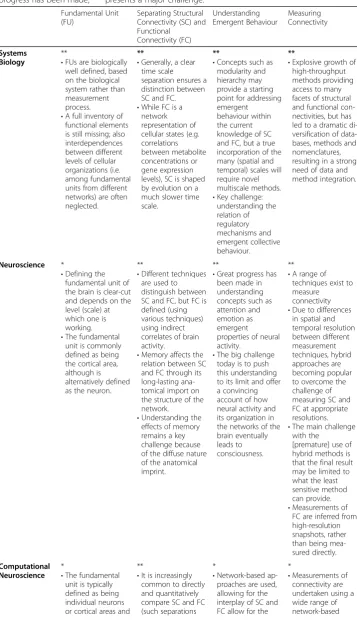
Table 1Summary of connectivity challenges across different disciplines. Extent to which connectivity challenges are an issue: * do not present a challenge; ** presents a challenge but progress has been made; *** presents a major challenge.
Fundamental Unit (FU)
Separating Structural Connectivity (SC) and Functional Connectivity (FC) Understanding Emergent Behaviour Measuring Connectivity Systems Biology **
•FUs are biologically well defined, based on the biological system rather than measurement process.
•A full inventory of functional elements is still missing; also interdependences between different levels of cellular organizations (i.e. among fundamental units from different networks) are often neglected.
**
•Generally, a clear time scale separation ensures a distinction between SC and FC.
•While FC is a network representation of cellular states (e.g. correlations between metabolite concentrations or gene expression levels), SC is shaped by evolution on a much slower time scale.
**
•Concepts such as modularity and hierarchy may provide a starting point for addressing emergent behaviour within the current knowledge of SC and FC, but a true incorporation of the many (spatial and temporal) scales will require novel multiscale methods.
•Key challenge: understanding the relation of regulatory mechanisms and emergent collective behaviour. **
•Explosive growth of high-throughput methods providing access to many facets of structural and functional con-nectivities, but has led to a dramatic di-versification of data-bases, methods and nomenclatures, resulting in a strong need of data and method integration.
Neuroscience *
•Defining the fundamental unit of the brain is clear-cut and depends on the level (scale) at which one is working.
•The fundamental unit is commonly defined as being the cortical area, although is alternatively defined as the neuron.
**
•Different techniques are used to distinguish between SC and FC, but FC is defined (using various techniques) using indirect correlates of brain activity.
•Memory affects the relation between SC and FC through its long-lasting ana-tomical import on the structure of the network.
•Understanding the effects of memory remains a key challenge because of the diffuse nature of the anatomical imprint.
**
•Great progress has been made in understanding concepts such as attention and emotion as emergent properties of neural activity.
•The big challenge today is to push this understanding to its limit and offer a convincing account of how neural activity and its organization in the networks of the brain eventually leads to consciousness.
**
•A range of techniques exist to measure connectivity
•Due to differences in spatial and temporal resolution between different measurement techniques, hybrid approaches are becoming popular to overcome the challenge of measuring SC and FC at appropriate resolutions.
•The main challenge with the
[premature] use of hybrid methods is that the final result may be limited to what the least sensitive method can provide.
•Measurements of FC are inferred from high-resolution snapshots, rather than being mea-sured directly.
Computational Neuroscience
*
•The fundamental unit is typically defined as being individual neurons or cortical areas and
**
•It is increasingly common to directly and quantitatively compare SC and FC (such separations
*
•Network-based ap-proaches are used, allowing for the interplay of SC and FC allow for the
*
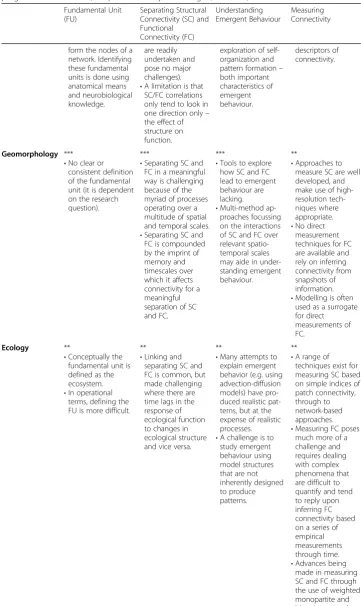
Table 1Summary of connectivity challenges across different disciplines. Extent to which connectivity challenges are an issue: * do not present a challenge; ** presents a challenge but progress has been made; *** presents a major challenge.(Continued)
Fundamental Unit (FU)
Separating Structural Connectivity (SC) and Functional Connectivity (FC) Understanding Emergent Behaviour Measuring Connectivity
form the nodes of a network. Identifying these fundamental units is done using anatomical means and neurobiological knowledge.
are readily undertaken and pose no major challenges).
•A limitation is that SC/FC correlations only tend to look in one direction only– the effect of structure on function.
exploration of self-organization and pattern formation– both important characteristics of emergent behaviour. descriptors of connectivity. Geomorphology ***
•No clear or consistent definition of the fundamental unit (it is dependent on the research question).
***
•Separating SC and FC in a meaningful way is challenging because of the myriad of processes operating over a multitude of spatial and temporal scales.
•Separating SC and FC is compounded by the imprint of memory and timescales over which it affects connectivity for a meaningful separation of SC and FC.
***
•Tools to explore how SC and FC lead to emergent behaviour are lacking.
•Multi-method ap-proaches focussing on the interactions of SC and FC over relevant spatio-temporal scales may aide in under-standing emergent behaviour.
**
•Approaches to measure SC are well developed, and make use of high-resolution tech-niques where appropriate.
•No direct measurement techniques for FC are available and rely on inferring connectivity from snapshots of information.
•Modelling is often used as a surrogate for direct measurements of FC.
Ecology **
•Conceptually the fundamental unit is defined as the ecosystem.
•In operational terms, defining the FU is more difficult.
**
•Linking and separating SC and FC is common, but made challenging where there are time lags in the response of ecological function to changes in ecological structure and vice versa.
**
•Many attempts to explain emergent behavior (e.g. using advection-diffusion models) have pro-duced realistic pat-terns, but at the expense of realistic processes.
•A challenge is to study emergent behaviour using model structures that are not inherently designed to produce patterns.
**
•A range of techniques exist for measuring SC based on simple indices of patch connectivity, through to network-based approaches.
•Measuring FC poses much more of a challenge and requires dealing with complex phenomena that are difficult to quantify and tend to reply upon inferring FC connectivity based on a series of empirical measurements through time.
configuration or arrangement of a network, whilst the functional connectivity (FC) of a system describes dynamical processes operating within a structurally connected net-work. SC thus derives from the system’s anatomy, whereas FC is inferred from the system’s process dynamics which are represented by fluxes and transformations of energy, matter or information between structural units. Structure always affects function (Strogatz,2001), and often (but not always) function affects structure, although the timescales of the reciprocity/ feedback may differ. Many connectivity-based approaches separate SC and FC in order to simplify their study. However, this separation is challenging because the degree of connect-ivity and feedbacks between SC and FC will depend on the spatial and/or temporal scale(s) at which the system is studied: as spatial scale increases connectivity becomes an internal process that cannot be represented or quantified explicitly. For example, in Ecology con-nectivity amongst different patches cannot be explicitly represented when studying the sys-tem at a higher level or organization. In many (if not most) syssys-tems, SC evolves over time. For example, in Neuroscience, although the structure of the child’s brain appears similar to that of the adult brain, its size, orientation within the cranium and details of the anatomical connectivity changes appreciably over the next few years and some areas of the brain, espe-cially in the frontal lobe, only mature after adolescence. Capturing this evolution is a funda-mental advance provided by complexity-based approaches compared to more traditional systems-based concepts. At different timescales the relation between SC and FC may look very different. Thus, a key issue when separating SC and FC is determining the timescale at which a change in SC becomes dynamic (i.e., functional), and this in turn may depend on the fundamental unit. System memory –the imprint that function leaves on the structure of a system or network –also affects the interplay of SC and FC, and therefore a further consideration is how to incorporate memory into quantitative descriptions of the structural-functional evolution of connectivity. The separation of SC from FC is artificial Table 1Summary of connectivity challenges across different disciplines. Extent to which
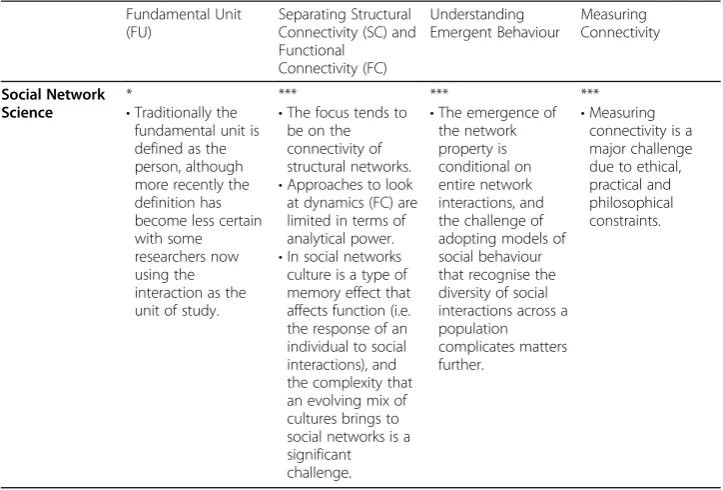
connectivity challenges are an issue: * do not present a challenge; ** presents a challenge but progress has been made; *** presents a major challenge.(Continued)
Fundamental Unit (FU)
Separating Structural Connectivity (SC) and Functional Connectivity (FC) Understanding Emergent Behaviour Measuring Connectivity Social Network Science *
•Traditionally the fundamental unit is defined as the person, although more recently the definition has become less certain with some researchers now using the interaction as the unit of study.
***
•The focus tends to be on the connectivity of structural networks.
•Approaches to look at dynamics (FC) are limited in terms of analytical power.
•In social networks culture is a type of memory effect that affects function (i.e. the response of an individual to social interactions), and the complexity that an evolving mix of cultures brings to social networks is a significant challenge.
***
•The emergence of the network property is conditional on entire network interactions, and the challenge of adopting models of social behaviour that recognise the diversity of social interactions across a population complicates matters further.
***
and is thus subjective.A key challenge in separating SC and FC is weighing up the gains that can be made by making these separations, versus the losses in our potential understanding of the system that arise due to these separations.These gains and losses depend on the time-scale of interest compared to the rate of evolution of system structure.
Understanding emergent behaviour
The structural-functional evolution of a system via structural-functional connectivity may lead to emergent behaviour whereby local interactions lead to self-organised phe-nomena observable at larger spatial scales that cannot be predicted (or at least they are not obvious at the local level: what Bedau (1997) calls“weak emergence”). Emergent behaviour is an important characteristic of complex systems that leads to the formation of patterns; simple and complex patterns at the larger scale can be formed by very sim-ple interactions at the local level. These simsim-ple interactions depend on the local con-nectivity of entities within a system. However, deriving quantitative descriptions of emergent behaviour is challenging. Theoretical tools to relate emergent behaviour to structure and function are lacking, and by separating SC from FC we make it even more difficult to analyse emergent behaviour. A key challenge is how to best use con-cepts and operalizations of connectivity to develop quantitative descriptions of emer-gence that will enable us to understand emergent behaviour better, and overcome the aforementioned barriers to this goal.
Measuring connectivity
To apply the concept of connectivity to understand the behaviour of real-world com-plex systems, it is necessary to quantify connectivity, yet this poses several challenges. The level of connectivity observed within a system depends on the lens through which one observes it. Due to the inability of existing tools to measure connectivity directly, it is often necessary to infer connectivity from an alternative set of indirect measure-ments. Indirect measurements can lead to subjectivity and uncertainty in our under-standing of connectivity and dynamical feedbacks operating within a system, and furthermore, can impede appropriate operational definitions of the fundamental unit. There is also a timescale issue: at finer timescales measurements of connectivity may tend towards descriptors of SC rather than FC. FC is more than just inferring what is happening between snap-shots, but trying to determine the actual processes operating to produce fluxes (Bracken et al., 2013). How many snapshots do we need of a system, and how close in time do they need to be before we can be confident to capture the “dynamic or functional”aspect of connectivity? A variety of tools for studying connect-ivity exist: the challenge here is both to recognise the limitations that these tools place on our understanding of connectivity, and to develop new tools where those limitations significantly constrain our understanding.
Disciplinary perspectives
networks can be used to represent hierarchical organization over multiple scales (Clau-set et al., 2008). The representation of a system as a network provides the opportunity –using network-based tools–to disentangle noise and stochasticity from non-random patterns and mechanisms, in order to gain a better understanding of how these systems function and evolve (Menichetti et al.,2014). Here, the network-based approach under-pins our conceptual framework for connectivity studies due to its ubiquity.
The simplest network-based abstraction of a system is a graph consisting of nodes and links. More detailed abstractions can be achieved through the use of weighted links and directional links. In an unweighted network, links are binary entities, where they are either present or not. In a weighted network links have associated weights that rec-ord their strengths relative to one another (Newman, 2004a). In a directional network, the flow of information or material is in one direction, from one node to another, whereas in an undirected network, flow is in either direction between two nodes. A sys-tem can also be represented as a bipartite network, in which two different classes of nodes can be represented, and links between nodes are allowed across but not within two classes (Daminelli et al., 2015), thus allowing identification of interactions between distinct groups of nodes. Furthermore, whilst some disciplines can be represented using non-spatial networks, space is critical in others.
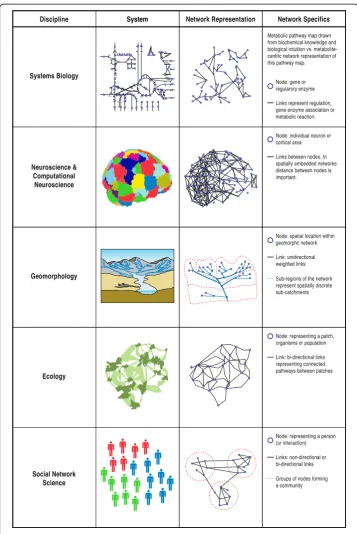
A wide range of different types of systems can be represented as a network (Fig. 1), which raises the possibility for a set of common tools and opportunity for the more general, trans-disciplinary study of SC and FC using network-based approaches.
Systems Biology
Systems Biology strives to understand biological entities as complex systems through analysis of the interdependencies of the components of these systems; i.e., via a system’s connectivity. Over the past two decades, new high-throughput technologies have en-abled mathematical modelling, statistical analysis and numerical simulation of bio-logical systems with unprecedented detail for each level of description. At the core of systems thinking in Biology is the concept of networks (see, e.g., Barabasi and Oltvai,2004; Barabasi et al.,2011; Cowen et al.,2017; Hütt,2014). Together with Statistical Physics (e.g., Albert and Barabasi, 2002), Systems Biology has been one of the principal drivers behind the development of a theory of complex networks and a rich set of methods for network analysis (Barabasi and Oltvai,2004).
Defining the Fundamental Unit
statistical properties of metabolic networks (Ma and Zeng, 2003). Similarly regarding gene regulatory networks, there is a multitude of other regulatory mechanisms in addition to transcription factors. Thus, even in the comparatively simple case of bacter-ial gene regulation, we cannot assume the transcriptional regulatory network to be a
complete representation of the regulatory apparatus (see for example the debate in Marr et al., 2008; Sobetzko et al., 2012). Even though the networks compiled at the gene-regulatory, metabolic or protein interaction level can be thought of as vast compi-lations of biological information, it should be noted that the underlying databases will drift with time: more biological knowledge is accumulated, but also the biological cat-egories used to derive suitable network representations of the system will be refined and altered. As a consequence, the network properties will drift as well (Beber et al.,
2016). Additionally, the diversity of databases, data formats, models and computational tools and the lack of standards on these levels is currently an enormous barrier to pro-gress in the field (Chavan et al., 2011). Thus, when adopting a network representation many details are necessarily omitted, and decisions about these details can have a se-vere effect on network structures.
Separating SC and FC
With the availability of high-throughput (often called‘omics’) data, attention in the life sciences has shifted from individual components (single molecules, proteins or genes) to system-level descriptions. The challenge for Systems Biology is to derive and inter-pret detailed ‘multi-omics’representations of biological systems (Bauer et al.,2016). A key strategy in addressing this challenge is to separate the interdependencies of system components (i.e. SC) from correlations among dynamical observations such as gene ac-tivities or metabolite concentrations (i.e. FC). For a wide range of organisms in all do-mains of life, the genome (i.e., the DNA sequence of one or several representatives of a species) is now available. Typical examples of omics data are transcriptome profiles (the simultaneous measurements of the expression levels of many genes in a cell), proteome profiles (the simultaneous measurements of many/all proteins in a cell), metabolomics profile (the measurement of many metabolite concentrations in a cell) or epigenetic patterns (a genome-wide assessment of methylations and/or histone modifi-cations, which are the most common forms of epigenetic signals).
The richness of biology in terms of molecular components and interactions has for a long time prevented the development of systems-level descriptions. For a long time the detailed mathematical modelling of small subsystems (e.g., metabolic pathways or the interaction of a small number of genes) has been the method of choice for the step from components to (small) systems. This is the defining feature of Theoretical Biology. The abstraction of biological systems in terms of nodes and links has paved the way for more qualitative approaches, which, however, allow us to address the scale of a whole cell. These network approaches have become one of the cornerstones of Systems Biology.
Comparisons of SC and FC provide relationships either between network representa-tions of global biological knowledge and high throughput’omics’data or between differ-ent categories of ’omics’data, each represented by a network. A rich set of relationships between SC and FC has been established in Systems Biology. Examples include the pre-dictive power of elementary flux modes in metabolism (Stelling et al.,2002), the relation-ship between hierarchy level and gene essentiality in gene regulatory networks (Yu and Gerstein, 2006), the relationship between node degree and essentiality in protein inter-action networks (Jeong et al., 2001), the power law distribution of metabolic fluxes (Almaas et al.,2004, see also above), the network interpretation of gene-enzyme scaling relationships (Maslov et al., 2009), the importance of a spatial embedding of regulatory networks in bacterial gene regulation (Hacker et al.,2017; Marr et al.,2008), the interplay of gene regulation and metabolism as an example of interdependent networks (Klosik et al., 2017; Sonnenschein et al., 2011) and the predictability of likely environments from metabolic networks (Borenstein et al.,2008).
As mentioned above, the independence of data resources behind SC and FC are of high relevance to the success of network approaches in Systems Biology. Never-theless, the possibility of predicting a link (i.e., an element contributing to SC) from (dynamical) data (and hence from information associated with FC) has also been pursued in diverse ways in Systems Biology. Examples of such link prediction or network inference approaches include the inference of gene regulatory networks from gene expression patterns (Marbach et al., 2012) and the inference of micro-bial interaction networks from species abundances, particularly in the context of (human) microbiomes (Faust and Raes, 2012; Claussen et al., 2017). In the litera-ture on network inference, e.g., in the context of gene expression, methods fall into the following categories (e.g., Le Novere 2015): correlation analysis, methods from information theory, Bayesian inference, and explicit modelling (e.g., using differen-tial equations). In Claussen et al. (2017) an example of an information-theoretical approach is described, where interactions are defined via the entropy shift, when combining binarized abundance vectors using Boolean operations. One should also emphasise that all these methods have been designed for data-rich situations and do not necessarily yield convincing results (see, e.g., the detailed comparison in Marbach et al. (2012) for the case of gene regulatory networks).
In Systems Biology, memory effects in the classical sense of learning and adaptive networks are highly reduced, because the relevant time scales of dynamical behav-iour and network adaptation (i.e., cellular function and evolution) are clearly sepa-rated. Still, we can expect the networks to be shaped by evolution to optimize or enhance certain functional properties. The precise ’objective function’, however, is not known in detail. In a broader sense, memory effects can be viewed as the pres-ence of slow and fast time scales in a system’s dynamics. Network architecture can facilitate the spread of time scales contributing to a certain biological function, which is seen on the scale of few nodes (e.g., interlinked feedback loops, (Brand-man et al., 2005; Brandman and Meyer, 2008)), as well as in the ubiquity of hier-archical and modular network architectures on the metabolic and gene regulatory level (see, e.g., Ravasz et al., 2002; Guimera and Amaral, 2005; Yu and Gerstein,
Understanding emergent behaviour
Emergent behaviour is a key concept from the theory of complex systems. In his defin-ing paper on Computational Systems Biology, Hiroaki Kitano emphasized that:
“A popular notion of complex systems is of very large numbers of simple and identi-cal elements interacting to produce’complex’behaviours. [In Biology] large numbers of functionally diverse, and frequently multifunctional, sets of elements interact selectively and nonlinearly to produce coherent rather than complex behaviours”(Kitano,2002).
With this remark, Kitano emphasizes the danger of building up Systems Biology directly from the toolbox of complex systems (see also the more general remark by Keller,2007). Nevertheless, many examples of self-organised patterns–and thus of emergent behaviour –come from biology, both on the intracellular level (e.g., calcium waves (Falcke,2004) or the interplay of Min proteins in the E. coli cell division (Loose et al.,2008)) and on the multicellular level (e.g., spiral waves and aggregation streams inDictyostelium discoideum (Kessler and Levine,1993; Palsson et al.,1997)). Networks can play an important role on this level as well. A prominent example is the food foraging network formed by the slime mould Physarum polycephalum, which connects spatially distributed food sources in an efficient network layout (Tero et al., 2010). This example points to an important differ-ence between patterns in Physics and Chemistry on the one hand and patterns in Biology on the other. In Physics and Chemistry, patterns are often a by-product of the nonlinear interactions of system components. In Biology patterns often have undergone a clear evo-lutionary tuning and this might serve a system-level function (such as the network con-necting food sources in the case of Physarum, the aggregation of cells as a step to a multicellular organism in the case ofDictyosteliumor the spatial organization of cell div-ision inE. coli). The regulatory components must therefore have evolved to yield stable functional patterns and we can thus expect a deep relationship between regulatory com-ponents and properties of spatiotemporal patterns. An example is strong and non-monotonous dependence of the density of spiral waves (which regulates the size of the later-stage multicellular aggregates) on the intracellular feedback loop regulating the production of the main signalling substance, cAMP (Sawai et al., 2005). Understanding the relationship of regulatory mechanisms and emergent, collective behaviours is an im-portant future challenge in Systems Biology (Grace and Hütt,2015).
Measuring connectivity
Generally speaking, in Systems Biology the (structural) networks come from two main sources: (1) they are obtained from repositories of accumulated biological information; (2) they are derived from high-throughput data. In the first case, the networks are de-fined via‘knowledge accumulation’, rather than by‘measuring’connectivity.
proteins) has originally become a fundamental unit due to its accessibility via high-throughput measurements. The biological relevance of such protein-protein inter-actions is not the defining criterion. In fact, a link between two proteins might be part of the network, even though the two proteins are located in different cellular compart-ments and therefore will never actually have a chance of interacting.
Functional connectivity, which is a representation of the current state of, for example, a biological cell, is typically measured via the high-throughput technologies discussed above. Such as state can be an activity pattern of all genes or a list of concentrations of metabolites available in the cell at a certain moment in time. Correlations between states and‘effective networks’(subnetworks derived from structural networks by only considering active/high--concentration components and their connections) are a typical method for deriving FC from high-throughput data.
Neuroscience
Neuroscience is the study of the nervous system and is centred on the brain. Connect-ivity in neuroscience is mainly studied using networks, with a range of networks being studied, depending on what is adopted as the network components. The techniques used by neuroscientists range from molecular and cellular studies of individual nerve cells to imaging of sensory and motor tasks in the brain. These techniques have enabled researchers to investigate the nervous system more fully, including how it is struc-tured, how it works, how it develops, how it malfunctions, and how it can be changed. For the sake of brevity, here we focus on an intermediate level descrip-tion where the nodes of the network are well circumscribed areas that are bounded by borders that are sharply defined by changes in both structure (anatomically de-finable changes in the local architecture) and function (e.g. the way some property in the mapping of the external visual field varies smoothly within it and sharply changes as the boundary is crossed).
Defining the Fundamental Unit
al., 2002), simply denoted as cytoarchitectonic areas of the brain. For the purposes of the following discussion, the cytoarchitectonic areas are the fundamental unit for neuroscience, at least at the level of nodes for the networks focused on here.
Separating SC and FC
The investigation of structural and functional networks of the brain is at the heart of many initiatives in neuroscience; it is an essential component of the Human Brain Project (https://www.humanbrainproject.eu/en/) and it is the primary goal of the Human Connectome Project (http://www.humanconnectomeproject.org/). Func-tional connectivity per se is defined in terms of quantitative measures of linked ac-tivity, computed from time series of regional brain activations. Indirect correlates of brain activity are mediated by metabolic changes as these can be traced from the regional consumption of radioactively labelled glucose in Positron Emission Tomography (PET) or the Blood Oxygenated level Dependent (BOLD) functional Magnetic Resonance Imaging (fMRI). Both methods provide indirect correlates of brain activity with time constants of many minutes for PET and a few seconds for fMRI. These changes are slow – orders of magnitude slower than the few millisec-ond transit time for the activity between areas. With improvements in the accuracy of these methods, it has become clearer that the foci of brain activity coincides with the cytoarchitectonic areas, with initial demonstrations emphasizing responses to well defined stimuli as these excite the early cytoarchitectonic areas in each sen-sory hierarchy.
Understanding emergent behaviour
Detailed analysis of connectivity patterns of the network can be used to identify sub-networks that correspond to individual sensory and other networks. These sub-networks can be derived from the anatomical structure and the SC (e.g. derived from cytoarchitectonic areas, cortical thickness, receptor density for the delineation of areas and anatomical tracing or white matter density quantification from diffusion ten-sor imaging for the SC). Large-scale organization also emerges from a decomposition of the full network derived from the FC of resting state fMRI (van den Heuvel et al.,
2010), electroencephalography (EEG) (Boersma et al.,2011) and magnetoencephalogra-phy (MEG) (de Pascquale et al., 2010) data. Analyses of these data reveal a natural de-composition of the full network into distinct sub-networks. The role of each sub-network is evident from the known specialization of its component nodes. The de-composition based on the resting activity reveals sub-networks for each sensory modal-ity; networks that are known to be critical for the implementation of supramodal cognitive functions including attention, working memory and the default mode network (a network that becomes more active when the subject is not occupied with a specific task or monitoring the external environment). It therefore appears that properties of the mind are correlated with emergent behaviour of the functional networks, and are consistent with the properties of the physical brain, as these were determined by wet brain anatomy and electrophysiology.
At this point in time neuroscience has achieved a fair understanding of how elements necessary for complex purposeful behaviour such as attention and memory are imple-mented, yet it remains a mystery how these are combined to give rise to consciousness which can be considered as the most significant emergent property of all. Understand-ing how consciousness emerges, from the activity of neurons and the organization and function of the networks they form, constitutes the Holy Grail of modern neuroscience and perhaps of science of the 21st century. A recent synthesis of results from many neuroimaging studies provides a tentative step in this direction within a unified framework that explains how memory and attention are managed in awake state and sleep states and how they help maintain what appears to be a neural represen-tation of self (Ioannides 2018).
Measuring connectivity
Anatomical connectivity relates to the number of connections linking two anatomical nodes, i.e. the whole or specific parts of two cytoarchitectonic areas. Quantifying FC re-quires methods that can separate the contributions from individual cytoarchitectonic areas at temporal resolutions that are typical of the processing time within and the transfer between areas. The distance between neighbouring cytoarchitectonic areas is typically a few millimetres and the typical transfer time between two areas is of the order of 10 milliseconds.
matter density and patterns), functional properties of the underlying networks can be deduced, including predictions about the FC patterns (Honey et al.,2009).
Direct measures of brain activity rely on electrophysiology. The EEG records the elec-trical potential (difference) on the scalp and the MEG records the magnetic field just outside the head. They are both generated by electrical activity in a very large number of neurons that are activated synchronously and they are arranged in a similar way in space, so that the resulting effect summates constructively. The functional networks of the brain can be constructed from the regional brain activations extracted from the EEG and especially MEG data using similar mathematical processes as the ones used for PET and fMRI. While in principle the EEG and MEG records carry similar informa-tion, the analysis of MEG signals requires less detailed modelling of the conductivity profile of the head to identify the generators accurately compared with the EEG ana-lysis. The main difference between the networks derived from metabolic and electro-physiological measures is in the timing: minutes or many seconds for PET and fMRI and milliseconds for MEG and EEG.
It is widely believed that techniques relying on slow blood flow have the required spatial resolution but fail on the temporal resolution, while MEG and EEG follow changes in brain activity fast enough but do not have the required spatial resolution. Hybrid approaches are becoming popular in an attempt to bring together the higher temporal resolution of electrophysiology with the perceived more robust localization ability of hemodynamic methods (Babiloni et al.,2004). These hybrid methods rely on simultaneous recording of fMRI and EEG and use EEG to identify periods of specific types of activity and use this to label the corresponding fMRI periods. However, prema-ture integration across different methods and modalities can not only fail to add new information to what the best methods can offer, but can very easily destroy information by limiting the final result to what the least sensitive method can provide. The final de-scription may miss detail (or even fundamental aspects of the organization) that may be available when one or few modalities are pushed to their limits. Magnetic field tom-ography (Ioannides et al., 1990; Taylor et al., 1999) is a computationally intensive method for extracting accurate estimates of brain activity from MEG data that has been consistently used to push MEG to finer temporal and spatial resolution (Moradi et al.,
2003; Poghosyan and Ioannides2007) so that regional activity (Ioannides2006) can be studied in great detail and with spatial resolution that allows activity from different cytoarchitectonic areas to be separated. The capability of delineating contributions within distinct cytoarchitectonic areas leads to more refined analysis as in the example shown in Fig.2 from the first demonstration that spatial attention first influences cor-tical processing with the first entry of the stimulus induced activity in the primary vis-ual cortex (Poghosyan and Ioannides2008).
together the pair-wise links into a more global network. Specific problems can be tack-led using a subset of the entire network through judicious choice of what cytoarchitec-tonic area to include and careful design of experiments.
Computational Neuroscience
While empirical Neuroscience (section Neuroscience) deals with measuring and func-tionally interpreting connectivity on many scales, the aspects of Computational Neuro-science, which we address here, deal with structure-function relationships on a more abstract, aggregated level. Generic models of network topology, as well as simple ab-stract models of the dynamical units, play an important role. In Computational Neuro-science the idea of relating network architecture with dynamics and, consequently, function has long been explored (e.g., Bullmore and Sporns2009,2012; Damicelli et al.,
2017; Deco et al.,2011). On the level of network architecture, a particularly fruitful ap-proach has been to compare empirically observed networks with random graphs. The field of statistical graph theory where properties of random graphs are explored, is funda-mentally linked to the Erdös-Rényi model of the late 1950s (Erdös and Rényi,1959). The field was revolutionized in the late 1990s by the publication of two further models of ran-dom graphs: a model of small-world graphs (Watts and Strogatz,1998) (uniting high local clustering with short average distances between nodes) and a model of random graphs with a broad (power-law shaped) degree distribution (Barabasi and Albert,1999).
Defining the FU
Within Computational Neuroscience, the fundamental unit is typically defined as being individual neurons (Vladimirov et al., 2012) or on the level of cortical areas (Honey et al., 2009). The discussion below focusses on the latter case. In contrast to the
discussion in (section Neuroscience) the fundamental unit is not necessarily identified with the cortical areas, but is more flexible, allowing aggregates of cortical areas or even abstract ones derived from the raw data (from fMRI) to be the fundamental units that constitute the nodes of a network. Such cortical areas can also be defined by anatomical means and neurobiological knowledge (as for example in the cortical areas of the cor-tical areas network of the cat or the macaque; see Hilgetag et al. (2000)) or as parcella-tions in terms of ‘regions of interest’(as for example for the human connectome, see Hagmann et al. (2008)).
Separating SC and FC
In Computational Neuroscience, SC refers to brain network connectivity derived from anatomical (and other) data, at the level of the fundamental unit. The large-scale archi-tectural properties (the ‘topology’) of a network resulting from SC may determine im-portant dynamical and functional features of the system. FC refers to relationships among nodes inferred from the dynamics. Typical observables for FC are co-activations or sequential activations of nodes.
A striking example of network topology (SC) shaping dynamics (FC) is the following model (discussed in Müller-Linow et al. (2006)) which considers excitations propagat-ing on a graph. A node can be excited (active), refractory (restpropagat-ing) and susceptible, waiting for an excitation in the neighbourhood. Upon the presence of such a neigh-bouring excitation, a susceptible node changes to the active state for a single time step, then goes into the refractory state, from which it moves to the susceptible state with a probabilitypat each time step. Furthermore, spontaneous excitations are possible with a small probability f. Running these dynamics on a graph with hubs and sparsely con-nected nodes (like the graphs from Barabasi and Albert (1999)), self-organised waves of excitations can be identified around the hubs (Müller-Linow et al., 2008). A broader perspective on such global, collective patterns formed by dynamics on graphs is pro-vided in Hütt et al. (2014).
Within Computational Neuroscience, an important rather novel trend is to compare directly and quantitatively the relationship between SC and FC (SC/FC correlations). Here, correlations of structural brain connectivity with FC derived from the BOLD sig-nal in fMRI studies show high correlation values in the range of 0.6–0.8 in simulations and around 0.3 in experimental data ( Honey et al. (2009); Garcia et al. (2012); Goni et al. (2014); Messé et al. (2015)). Such SC/FC correlations compare structural and FC only in one direction: network structure serves as a’template’for the self-organization of dynamical processes, resulting in a set of patterns characterised as FC. A more global perspective includes learning, i.e. the change of SC under the persistent action of FC. In its simplest form, such a co-evolution of structural and FC is given by Hebbian learning rules (Hebb, 1949), where –qualitatively speaking –frequently used network links persist, while rarely used links are degraded.
Understanding emergent behaviour
pattern formation capacities. This concept is called self-organised criticality and goes back to the pioneering work by Bak et al. (1987) (e.g., Chialvo, 2010; Moretti and Munoz, 2013; Hilgetag and Hütt,2014). Phase transition points of a dynamical system are choices of parameters, which position the system precisely at the boundary between two dynamical regimes (e.g., steady states and oscillations). At such points a small change of the parameter value can induce drastic changes in system behaviour.
As already suggested with the example of waves around hubs, the concepts of self-organization and pattern formation may provide a useful theoretical framework for de-scribing the interplay of SC and FC. Self-organization means that a set of elements under the influence of local inter-actions (described by ’control parameters’) creates long-range and frequently very complex structures (’patterns’), which cannot be de-scribed by the degrees of freedom of the individual elements but need to be assessed on the scale of the entire system (see, Hütt (2006) for more details and further refer-ences). The fact that such patterns emerge spontaneously, when critical values of the control parameters are passed, deeply links the concept of self-organization to phase transitions in dynamical systems Distinguishing between contributions to FC, which can be understood (and compared to SC) on the level of individual links, and contribu-tions to FC, which are collective, global patterns on the graph (Hütt et al.2014; see also the strategy from Morone et al., 2017), is a current challenge in understanding emer-gent behaviour.
Measuring connectivity
Returning to network topology, a wide range of descriptors of connectivity is used in Computational Neuroscience (and other disciplines). The term ’connectivity’ typically refers to the density of links in a graph (i.e., the number of links divided by the number of all possible links). Another common quantifier of connectivity is the average degree (i.e., the number of links divided by the number of nodes). Beyond these simple quanti-fiers, the connection pattern in a graph can be characterized in a multitude of ways, for instance via clustering coefficients (Watts and Strogatz, 1998), centrality measures (Newman, 2005) and the matching index or topological overlap (Ravasz et al., 2002; Goni et al., 2014), which evaluates the number of common neighbours of each pair of nodes. More global characterizations refer to the graph’s modular organization (New-man, 2006), possible hierarchies (Ravasz et al., 2002) and its composition of small sub-graphs (network’motifs’; Alon,2007).
Geomorphology
Geomorphologists study the origin and evolution of landforms. Geomorphic surface processes comprise the action of different geomorphic agents or transporting media, such as water, wind and ice which move sediment from one part of the landscape to another thereby changing the shape of the Earth. Therefore, looking at potential sedi-ment pathways (connections) and transport processes has always been one of the core tasks in Geomorphology. “Connectivity thinking”and related concepts have a long his-tory in Geomorphology (e.g. Chorley and Kennedy, 1971; Brunsden and Thornes,
connectivity to understand better the complexity of geomorphic systems and system re-sponse to change. It is widely recognised that investigating connectivity in geomorphic sys-tems provides an important opportunity to improve our understanding of how physical linkages govern geomorphic processes (Van Oost et al.,2000; Wainwright et al.,2011). Con-nectivity further reflects the feedbacks and interactions within the different system compo-nents under changing conditions (Beuselinck et al.,2000) and determines the propagation of the effects of change as flow pathways are modified and the structure of the landscape is transformed (Harvey,2007; Lexartza-Artza and Wainwright,2011). However, to date most -if not all - of the existing connectivity concepts in geomorphology represent a palimpsest of traditional system thinking based on general systems theory (e.g. von Bertalanffy1968) ra-ther than applying complex systems theory and related approaches that potentially provide the appropriate toolbox to study geomorphic system complexity.
Defining the FU
Landforms are the product of a myriad of processes operating at different spatial and tem-poral scales: defining a fundamental unit for the study of connectivity is therefore particu-larly difficult. Geomorphologists have traditionally drawn structural boundaries between the units of study which are often obvious by visible sharp gradients in the landscape, for ex-ample channel-hillslope or field boundaries. This imposition of structural boundaries has led to the separate consideration of these landscape compartments, rather than looking at the interlinkages between them, which results in an incomplete picture when it comes to explain large-scale geomorphic landscape evolution. Bracken et al. (2015) proposed a frame-work for understanding sediment transfer at multiple scales considering sediment connect-ivity as being “[…] the integrated transfer of sediment across all possible sources to all potential sinks over the continuum of detachment, transport and deposition […]”(Bracken et al.,2015; p. 179). However, this framework provides no insight into how the fundamental unit may be defined. Its size and demarcation is highly dependent on (i) the processes in-volved and (ii) the spatial and temporal scale of study (i.e. the timescale that constitutes a relevant event (cf. Bracken et al.,2015)). If, for example, the temporal scale of analysis is considerably greater than the frequency of key processes (i.e. a timescale that is sufficiently long to encompass sediment cascades in which all components of a catchment will be con-nected) then sediment connectivity will be perceived to be exceptionally high. Alternatively, if the temporal scale over which sediment connectivity is evaluated is less than the fre-quency at which key sediment-transport-related processes within the study domain operate, then sediment connectivity will be perceived to be lower (Bracken et al.,2015). The size of a fundamental unit in Geomorphology is thus dependent on the underlying research question and may range from plot- (e.g. single erosion rills) to mega-scale (e.g. landscape belts) (Slay-maker et al., 2009). However, geomorphic processes tend to vary between spatial scales, which leads to one of the key problems in geomorphology, i.e. scaling up processes mea-sured at small spatial and temporal scales to explain large-scale geomorphic patterns and processes (cf. Bracken et al.,2015), for example, how to understand catchment-scale evolu-tion from plot-scale erosion measurements.
unit is the “land element”, variously defined but always incorporating the notion of an area where the climate, parent material, topography, soil and vegetation are uniform within the limits significant for a particular application (for a more comprehensive overview see Mabbutt (1968) or Poeppl and Parsons (2017)). Most recently, based on the “land element” concept and by further integrating analogies from cell biology, Poeppl and Parsons (2017) defined so-called geomorphic cells as the fundamental unit of study in geomorphic connectivity studies. They conceptualise a geomorphic cell as being a three-dimensional body of the geomorphosphere, which is delimited from neighbouring cells and neighbouring spheres by different types of boundary, and types of connection called “connecteins”. Vertically, the upper boundary of a geo-morphic cell is defined by the atmosphere, while the lower boundary is generally formed by the bedrock layer of the lithosphere. Laterally, geomorphic cells are delimited from neighbouring cells with a change in environmental characteristics that determine hydro-geomorphic boundary conditions (e.g. geology, soils, topog-raphy and/or vegetation).
Separating SC and FC
In Geomorphology, SC describes the extent to which landscape units (however defined) are physically linked to one another (With et al., 1997; Tischendorf and Fahrig,2000a,
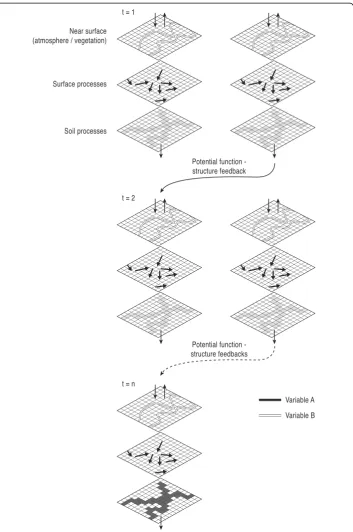
b; Turnbull et al., 2008; Wainwright et al., 2011) whereas FC accounts for the way in which interactions between multiple structural characteristics affect the flow of material (Turnbull et al.,2008; Wainwright et al.,2011; Bracken et al.2015). An early consider-ation of functional interlinkages between system compartments (i.e. hillslopes and river channels) was introduced by Brunsden and Thornes (1979) within their“landscape sen-sitivity”concept. However, besides a general notion of the importance of coupling be-tween system components for landscape evolution the authors did not provide any further information on how to define and quantify these relationships. In Geomorph-ology it is becoming increasingly accepted that SC and FC cannot be separated from each other in a meaningful way due to inherent feedbacks between them (Fig.3) (Turn-bull et al., 2008; Wainwright et al.,2011; Bracken et al.2015), and a conceptualization focussing on the linkages between process and (land)form has profound implications for the philosophy and methodology in Geomorphology.
connectivity in geomorphic systems is thus how to incorporate memory effects. Fur-thermore, when distinguishing between SC and FC, the challenge is to achieve the bal-ance between scientific gains and losses, further depending on the spatio-temporal scale of interest and the applied methodology.
Understanding emergent behaviour
The conceptualization of landforms as the outcome of the interactions of structure, function and memory implies that landscapes are organised in a hierarchical manner as they are seen as complex macroscopic features that emerge from myriad (microscopic) factors (processes) which form them at different spatio-temporal scales (Harrison,
2001). For example, river meander development (e.g. Church,1996) or dune formation (e.g. Baas, 2002) can be seen as emergent properties of geomorphic systems that are governed by manifold microscale processes (e.g. microscale sediment transport events). In Geomorphology, emergence thus becomes the basis on which qualitative structures (landforms) arise from the (self-)organisation of quantitative phenomena (processes) (Harrison, 2001) operating at a range of different spatial and temporal scales. Due to conceptual and methodical constraints prediction and/or reconstruction of large-scale and long-term landscape evolution is difficult (i.e. the problem of up- and downscaling in geomorphology). In order to get a grasp on emergent behaviour of geomorphic sys-tems recent advances in Geomorphology are based on chaos theory and quantitative tools of complex systems research (e.g. modelling approaches: e.g. Coco and Murray,
2007; combined approaches: e.g. D’Alpaos et al., 2007). Combining numerical models with new data-collection strategies and other techniques (as also discussed in 3.4.4), are assumed to represent a viable strategy to cope with the challenges as addressed above (cf. Murray et al.,2007). Nevertheless, the central question that arises is:“How far (if at all) are connectivity concepts and related methods useful when it comes to better understand emergent system behaviour?” It is hypothesized that multi-methodical ap-proaches focussing on the interactions of SC and FC on different spatio-temporal scales might play a key role to understand better emergent behaviour of geo-morphic systems. However, to date this hypothesis remains untested and is being subject to further inquiry. Yet, the potential appears to exist that connectivity may help to understand how geospatial processes produce a range of fluxes that come together to produce landscape form.
Measuring connectivity
In Geomorphology, it is only possible to measure (i) the morphology of the landscape itself from which SC is quantified or (ii) fluxes of material that are a result of FC and event magnitude. Few standard methods exist to quantify FC directly (Bracken et al.
scales. Furthermore, data comparability is often constrained by the measurement design (including the types of technical equipment involved).
Changes in SC can be quantified at high spatial and temporal resolutions using sev-eral novel methods that have been developed or improved over the past years. Structure-from-Motion (SfM) photogrammetry and laser scanning are techniques that create high-resolution, three-dimensional digital representations of the landscape. Sedi-ment transport processes (FC) are traditionally measured using erosion plots for small-scale measurements to water sampling for suspended sediment and bedload traps in streams and rivers for large-scale measurements (e.g. Cerdà, 1997; García-Fayos,
1997; Wainwright et al.,2000; Boix-Fayos et al.,2006).
Recently, new techniques have been developed to trace and track sediment with higher spatial and temporal resolution. Sediment tracers, which can either occur naturally in the soil or be applied to the soil, have been increasingly used to quantify erosion and depos-ition of sediments. With these tracers, erosion and deposdepos-ition can be determined at high spatial resolution at reasonably high accuracy (Guzmán et al.,2013; Parsons et al.,2014). Furthermore, laboratory experiments allow sediment tracking in high detail by using a combination of multiple high-speed cameras, trajectories and velocities of individual sand particles under varying conditions (Long et al.,2014). However, it is highly questionable if measuring water and sediment fluxes provides sufficient information to infer adequately FC, since these data solely represent snapshots of fluxes instead of reflecting system dy-namics (incl. structure-function relationships) over long time scales.
Besides measuring landscape structure and sediment fluxes to infer connectivity, dif-ferent types of indices and models are used. Connectivity indices mainly use a combin-ation of topography and vegetcombin-ation characteristics to determine connectivity (Borselli et al.,2008; Cavalli et al.,2013). These indices are static representations of SC, which are useful for determining areas of high and low SC within the study areas. Because indices are static, they do not provide information about fluxes. Different types of models (e.g. e.g. cellular automata: Baartman et al., 2013; Masselink et al., 2016a; process-based modelling: Mueller et al., 2007; statistical models: Poeppl et al.,2012; GIS approaches based on network theory: Heckmann and Schwanghart, 2013; Masselink et al.,2016b), on the other hand, do provide information on (potential) fluxes and can be powerful tools in determining how SC relates to sediment transport.
Ecology
dynamics (Koelle and Vandermeer,2005) and nutrient and organic matter cycling (Lau-don et al. 2011). For example, in marine ecology, identifying and quantifying the scale of connectivity of larval dispersal among local populations (i.e. the rate, scale, and spatial structure of successful exchange) is a fundamental challenge, since this drives population replenishment and therefore has profound implications for population dy-namics, diversity and evolution of marine organisms (Cowen et al., 2006). However, since its initial use, the term ‘connectivity’ has been inconsistently defined (Calabrese and Fagan, 2004), with metapopulation ecologists seeking a habitat patch-level defin-ition of connectivity, while landscape ecologists view connectivity as being a landscape-scale property (Merriam 1984; Taylor et al. 1993; Tischendorf and Fahrig
2000a, b; Moilanen and Hanski2001). Regardless of the scale at which connectivity is defined within Ecology, there is nonetheless consensus that connectivity affects most population, community, and ecosystem processes (Wiens 1997; Moilanen and Hanski
2001).
Defining the Fundamental Unit
In Ecology higher levels of organization incorporate and constrain behaviour at lower levels (O’Neill et al., 1989). Hierarchy theory provides a clear tool for dealing with spatial scale, and suggests that all scales are equally deserving of study (Cadenasso et al.,2006). It is therefore critical that the fundamental unit be defined clearly as well as relationships that cross scales (Ascher, 2001). The fundamental unit is typically defined as being the ecosystem – a complex of living organisms, their physical environment, and their interrelationships in a particular unit of space (Weathers et al. 2013). In this respect, an ecosystem can be a single gravel bar, a whole river section, or the entire catchment, or an ecosystem can be a plant, a vegetation patch, or a mosaic of patches, depending on the spatiotemporal context and the specific questions. Hence, the ecosys-tem concept offers a unique opportunity in bridging scales and sysecosys-tems (e.g. aquatic and terrestrial, above- and belowground systems). Notably, this definition of the funda-mental unit is scale-free; therefore identifying the fundafunda-mental unit will emerge natur-ally out of the ecosystem(s) in question. Whilst an appropriate definition of the fundamental unit is critical in Ecology, this does not present a challenge, as the ecosys-tem provides a clear-cut definition that is applied ubiquitously.
Separating SC and FC
(Schumaker 1996; Wiens1997; Tischendorf and Fahrig 2000b; Moilanen and Hanski
2001). Moreover, it is concerned with the degree and direction of movement of organ-isms or flow of matter through the landscape (Kadoya, 2009), describing the linkages between different landscape elements (Calabrese and Fagan,2004). In terms of animals, the FC of a depends on how an organism perceives and responds to landscape structure within a hierarchy of spatial scales (Belisle,2005), which will depend on their state and their motivation which in turn will dictate their needs and how much they are willing to risk to fulfil those needs (Belisle, 2005). Thus, the FC of a landscape is likely to be context and species-dependent (e.g. Pither and Taylor,1998).
Linking and separating SC and FC is challenging. For example terrestrial and aquatic ecosystems are structurally and functionally linked through coupled biogeochemical cy-cles, and also through mechanisms related to behaviour and/or complex life cycy-cles, as shown by many insect or amphibian species with life-history stages in both aquatic and terrestrial habitats. Furthermore, riverine assemblages are governed by a combination of local (e.g. habitat conditions) and regional (e.g. dispersal) processes. There is empirical evidence that the position within the river network (i.e. stream size) drives the compos-ition and diversity of riparian plants, aquatic invertebrates and fishes. For example, in looking at the interacting effects of habitat suitability (patch quality), dispersal ability of fishes, and migration barriers on the distribution of fish species within a river network, it has been found that whilst dispersal is most important in explaining species occurrence on short time scales, habitat suitability is fundamental over longer time-scales (Radinger and Wolter,2015). Hence, ignoring network geometry and the role of spatial connectivity may lead to major failure in conservation and restoration planning. Time lags may also persist in SC-FC relations, and may be due to ecological memory, or “legacy effects”, a term used in Ecology to describe the impacts of a species on abiotic or biotic features of a system that persist for a long time after the species has ceased activity, and which have an effect on other species (Cuddington,2011; Lindborg and Eriksson,2004; Volker and Van Allen, 2017). These legacy effects may consist of information (e.g. species life-history traits) or material (e.g. seeds or nutrients) (Johnstone et al.2016). These time lags in the functional response to changes in system structure can confound the ability to make meaningful separations between structure and function.
Understanding emergent behaviour
into the emergence of vegetation patterns. Based upon the argument that spatial pat-terns emerge in response to interactions between landscape structure and biophysical processes (e.g. Turnbull et al. 2008), Stewart et al. (2014) used local, detailed process information to drive a connectivity-based model for vegetation patterns in the Ameri-can Southwest.
Evolutionary impacts of past processes, such as glaciations also shape emergent be-haviour in Ecology, through separations and reconnection of larger areas (even conti-nents). Increases in physical connectivity of landscape patches also facilitate the invasion of non-native species which in turn may trigger long-term evolutionary pro-cesses for both native and non-native species (e.g. Mooney and Cleland, 2001). The challenge in Ecology is to overcome the highlighted methodological constrains to studying emergent behavior and develop approaches that truly allow for explorations of emergent behavior.
Measuring connectivity
Measuring SC tends to be based on simple indices of patch (or ecosystem) connectivity. Patch proximity indices are widely used (e.g. Bender et al., 2003), and are often calcu-lated using remotely sensed imagery or ground-based measurements. Other structural approaches to looking at ecological corridors include landscape genetics, telemetry, least-cost models, raster-, vector- and network-based models, among many other methods, which offer unique opportunities to quantify connectivity (see Cushmann et al. 2013). Most metacommunity and metaecosystem studies apply lattice-like grids as landscape approximations, where dispersal is random in direction, and distance varies with species. However, many natural systems, including river networks, mountain ranges or cave networks have a dentritic structure. These systems are not only hier-archically organised but topology and physical flow dictate distance and directionality of dispersal and movement (Altermatt 2013, references therein). Larsen et al. (2012) proposed a directional connectivity index, which is a graph-based, multi-scale metric generalizable to different SC and FC applications. In a graph-based approach, patches (or habitats or ecosystems) are considered as nodes, which link pathways between these nodes. Most work in Ecology has focused on unweighted, one-mode (monopartite) net-works (Dormann and Strauss,2014).
species (Cowen et al., 2006), and typically only for those species that have short larval durations (hours to days) and short distance dispersal (e.g. Sammarco and Andrews,
1989; Shanks et al.,2003).
An ongoing challenge associated with empirically-based studies for assessing FC in Ecology is that they provide only a snapshot of dispersal or migration, representing only one possible movement scenario. It is generally accepted that it is impossible to meas-ure empirically the full range of spatial and temporal variability in FC (Cowen et al.,
2006). Modelling approaches are being used increasingly to overcome the limitations of empirically-based approaches to measuring FC. However, these modelling approaches are still limited by a paucity of available empirical data to verify the results of modelling experiments. The limitations of patch-based or landscape-based approaches to studying connectivity, and the prevalence of ecological research being carried out at increasingly larger scales has driven research in the direction of using network-based approaches (e.g. Urban and Keitt, 2001), often drawing on the concept of modularity from Social Network Science, Physics and Biology, and using network-based tools from Statistical Physics that account for weighted (non-binary), directed network data (e.g. Fletcher et al., 2013). Progress has been made in developing network-based tools for analyzing weighted monopartite networks (e.g. Clauset et al.,2008), and more recently, weighted and two-mode (bipartite) networks have been used to study connectivity between dif-ferent species. In weighted networks, the links between two species may be quantified in terms of their functional connectivity; i.e. the number of interactions observed, or the strength of interactions between different species (but not within the same species) inferred from collected data (Newman, 2004b; Dormann and Strauss, 2014). For ex-ample, in pollinator-visitation networks, pollinators interact with flowers, but pollina-tors do not interact among themselves (Vazquez et al., 2009). A major challenge in using weighted bipartite networks in Ecology is that many of the analytical tools avail-able require one-mode projections of weighted bipartite networks (e.g. Martin Gonzalez et al., 2012), or unweighted (binary) bipartite networks (e.g. Guillaume and Latapy,
2004), meaning that potentially useful information of ecological connectivity is lost. However, tools are being developed to analyze weighted bipartite networks (e.g. Dor-mann and Strauss, 2014). Multi-layer networks are increasingly being used in Ecology with the advantage over simpler networks that they allow for analysis of inter-habitat connectivity of species and processes spanning multiple spatial and temporal scales, contributing to the FC of ecosystems (Timoteo et al.,2018). Advances are being made in the analysis of multi-layer ecological networks, with the recent developments in the analysis of modular structure of ecological networks (i.e. the extent to which a network is organised into cohesive groups (modules) of species that interact more strongly with each other than with other species Pilosof et al.,2017). A recent study, for the first time looked at modular structure (seed dispersal modules; i.e. communities of tightly inter-acting plants and their dispersers) across different habitats to look at the strength of connectivity between habitats (Timoteo et al., 2018). A strength of using multi-layer networks in the analysis of ecological systems is that it allows differentiation of intra-layer and inter-layer connectivity within the multi-layer network (Pilosof et al.,
an over-simplification of real ecological networks (Kivela et al., 2014; Pilosof et al.,
2017).
Social Network Science
Social network scientists study the social behaviour of society including the relation-ships among individuals and groups. There is a long history of social network theory which views social relationships in terms of individual actors (nodes) and relationships (links) which together constitute a network. This history dates back to the development of the sociogram describing the relations among people by Jacob Moreno (1934). Later work by Leavit (1950), White (2008), Freeman (1979), Everett (1982), Borgatti (2005), and Wasserman and Faust (1994) created a foundation of social theory frameworks based on network analysis. In many cases the theory that was developed in understand-ing social systems was subsequently applied in fields such as ecology. One famous case is the‘small world’phenomenon noted by Stanley Milgram (1967) which later was used to describe information transfer in insects (Watts and Strogatz 1998). Social scientists have continued to lead the development in key areas with the statistical analysis of mo-tifs (small building blocks found in networks) (Robinset al.2007) and the evaluation of networks within a philosophical framework such as structuralism (Assiter 1984). In re-cent times the incorporation of ecological and social theory to facilitate socio-ecological analysis has expanded the social networks to include ecological sys-tems (Janssen et al. 2006; Ekstrom and Young 2009). The focus on sustainability and resilience within these multifaceted networks continues to spawn novel solutions and advanced techniques (Bodin and Tengo,2012; Kininmonth et al.2015).
Defining the Fundamental Unit