THE CAUSES AND CONSEQUENCES OF REPRODUCTIVE
INTERFERENCE IN THE LYGAEIDAE
Emily Rose BurdfieldSteel
A Thesis Submitted for the Degree of PhD
at the
University of St Andrews
2014
Full metadata for this item is available in
Research@StAndrews:FullText
at:
http://research-repository.st-andrews.ac.uk/
Please use this identifier to cite or link to this item:
http://hdl.handle.net/10023/6549
1
The causes and consequences of reproductive interference
in the Lygaeidae
Emily Rose Burdfield-Steel
This thesis is submitted in partial fulfilment for the degree of
PhD
at the
University of St Andrews
2
Table of Contents
Declarations ... … ... 5
Candidate’s declarations ... ... 5
Supervisor’s declarations ... 5
Permission for electronic publications ... 5
Acknowledgements... 6
Co-authorship statement ... 7
Abstract ... 8
Chapter 1 – Introduction ... 9
1. Introduction to reproductive interference ...10
1.1 Types of reproductive interference ...10
1.2 Ecological and evolutionary consequences of RI ...15
1.3 Relationship between RI and sexual conflict ...16
1.4 Hybridisation ...17
1.5 Occurrence of RI ...19
2. Study system: The Lygaeidae ...21
2.1 Introduction ...21
2.2 Phylogenetic status and basic biology ...22
2.2.1 Sexual systems...23
2.2.2 Oviposition ...23
2.2.3 Development ...28
2.2.4 Diapause ...31
2.2.5 Feeding biology and economic impact ...31
2.2.6 Endosymbionts ...35
2.2.7 Social Interactions ...37
2.2.8 Predators and parasites ...40
2.3 Common study systems: a brief introduction ...40
2.4 Aposematism, predator defence and life history effects...42
2.5 Pheromones in Lygaeidae – aggregation and communication ...48
2.6 Population structure and ecology – Migration, diapause and genetic structuring ...52
2.7 Mating systems – Promiscuity, sperm competition and harassment ...55
2.8 Reproductive interference – ecological and evolutionary consequences ...63
3. Conclusion ...64
Chapter 2 – General Husbandry and development time in four species of Lygaeidae ... 67
1. General Husbandry ...68
2. Development times in the laboratory ...69
2.1 Introduction ...69
2.2 Methods ...70
2.3 Results ...71
3
Chapter 3 – Reproductive interference between Lygaeus equestris and four Lygaeidae species ... 79
1. Introduction ...80
2. Methods ...82
2.1 Experiment 1 ...82
2.2 Experiment 2 ...84
3. Results ...85
3.1 Experiment 1 ...85
3.2 Experiment 2 ...89
4. Discussion ...89
Chapter 4 – Cuticular hydrocarbons and the potential for sex- and species- discrimination in five species of Lygaeidae... 93
1. Introduction ...94
2. Methods ...96
2.1 CHC characterisation ...96
2.2 Species and sex differences ...97
2.3 Species and age differences ...98
2.4 CHC removal ...99
3. Results ...99
3.1 CHC characterisation and species and sex differences ...99
3.2 Species, sex and age differences ...100
3.3 CHC removal ...101
4. Discussion ...104
Chapter 5 – Variation in social and sexual behaviour in four species of aposematic seed bugs: the role of toxic and non-toxic food ... 111
1. Introduction ...112
2. Methods ...118
2.1 Experiment 1 – Nymph feeding preferences ...118
2.2 Experiment 2 – Nymph aggregation ...119
2.3 Experiment 3 – Body length ...120
2.4 Experiment 4 – Mating trials ...121
3. Results ...122
3.1 Experiment 1 – Nymph feeding preferences ...122
3.2 Experiment 2 – Nymph aggregation ...123
3.3 Experiment 3 – Body length ...123
3.4 Experiment 4 – Mating trials ...124
4. Discussion ...126
Chapter 6 – Mate-guarding in a polyandrous insect: species discrimination influences reproductive interference in seed bugs ... 134
4
2. Methods ...139
2.1 Experiment 1 ...140
2.2 Experiment 2 ...141
3. Results ...141
3.1 Experiment 1 ...141
3.2 Experiment 2 ...142
4. Discussion ...144
Chapter 7 – Do the benefits of polyandry scale with inbreeding? ... 150
1. Introduction ...151
2. Methods ...154
3. Results ...156
4. Discussion ...159
Chapter 8 –Discussion ... 164
1. General discussion ...165
2. The causes and consequences of RI ...165
2.1 The role of mating systems and sexual selection in RI...168
2.1.1 Cryptic female choice ...170
2.1.2 Male mating strategy ...172
2.2 Ecology and RI ...174
2.2.1 Population density and context dependence ...174
2.2.2 The role of predation and aposematism ...175
3. Conclusion ...176
Bibliography ...178
Appendix 1 ... 199
Appendix 2 ... 202
Appendix 3 ... 215
5
Declarations
1. Candidate’s declarations:
I Emily Burdfield-Steel hereby certify that this thesis, which is approximately 57,000 words in length, has been written by me, and that it is the record of work carried out by me, or principally by myself in collaboration with others as acknowledged, and that it has not been submitted in any previous application for a higher degree.
I was admitted as a research student in September 2010 and as a candidate for the degree of PhD in August 2011; the higher study for which this is a record was carried out in the University of St Andrews between 2010 and 2014.
Date 15/10/2014 signature of candidate ………
2. Supervisor’s declaration:
I hereby certify that the candidate has fulfilled the conditions of the Resolution and Regulations appropriate for the degree of PhD in the University of St Andrews and that the candidate is qualified to submit this thesis in application for that degree.
Date …… signature of supervisor ………
3. Permission for publication:
In submitting this thesis to the University of St Andrews I understand that I am giving permission for it to be made available for use in accordance with the regulations of the University Library for the time being in force, subject to any copyright vested in the work not being affected thereby. I also understand that the title and the abstract will be published, and that a copy of the work may be made and supplied to any bona fide library or research worker, that my thesis will be electronically accessible for personal or research use unless exempt by award of an embargo as requested below, and that the library has the right to migrate my thesis into new electronic forms as required to ensure continued access to the thesis. I have obtained any third-party copyright permissions that may be required in order to allow such access and migration, or have requested the appropriate embargo below.
The following is an agreed request by candidate and supervisor regarding the publication of this thesis:
No embargo on print or electronic copy
6
Acknowledgements
Thank you first of all to my supervisor David Shuker, for his continued guidance and support throughout my time in his lab. Thanks go as well to all my wonderful lab mates, Liam, Becky, Ginny, Claire, Nicky and Jade for their help with everything from egg counting to stats.
While they are too numerous to name here I’d like to thank all my office mates over the years, and all my fellow inhabitants of the HMB, both for their friendship and for putting up with my bi-weekly meltdowns. This has been the friendliest and most welcoming environment I’ve ever had the pleasure of working in, and all the free coffee doesn’t hurt either. Special thanks go to Darren, without whom I almost certainly wouldn’t have made it this far.
I am in debt to the staff at the Natural History Museum in London for letting me poke through their insect collections, and use their very expensive equipment to scan mating bugs. I’m also grateful to Terry Smith without whom chapter 4 would never have happened. This PhD thesis was supported by the Natural Environment Research Council (NERC), so thank you to them too.
7
Co-authorship statement
Chapter 1 is an independent interpretation of the current literature under the guidance of David Shuker. Mick Webb provided access to specimens in the Natural History Museum, London for the estimation of rates of aposematism in the Lygaeidae.
I conducted the experiments and data collection, performed the analysis and wrote the manuscripts for chapters 2, 3 and 6 under the guidance of David Shuker.
Chapter 4 was a collaboration between myself, Terry Smith, Ginny Greenway, Sam Auty and David Shuker. I collected and extracted the specimens. The analysis of the cuticular hydrocarbons was done in collaboration with Dr Terry Smith. The behavioural experiments were performed with the assistance of Ginny Greenway and Sam Auty. Paris Veltsos provided an R script for performing principle component analysis on CHC peaks which I then modified with the help of Darren Parker. Experimental work and data collection for chapter 5 was carried out in collaboration with Liam Dougherty, Lynsey Smith and Laura Collins. I performed the analysis under the guidance of David Shuker.The data described in this chapter has been published as Burdfield-Steel, Dougherty, Smith, Collins and Shuker, Variation in social and sexual behaviour in four species of aposematic seed bugs (Hemiptera: Lygaeidae): The role of toxic and non-toxic food in Behavioural Processes. See Appendix 3.
The data collection for chapter 7 was done with the assistance of Ginny Greenway and Sam Auty. I performed the analysis under the guidance of David Shuker.
8
Abstract
Reproductive interference occurs when individuals direct sexual behaviours towards other species and this causes a reduction in the fitness of one or both of the participants. While initially considered to be little more than an aberration, reproductive interference is increasingly recognised, not just as a factor in determining species co-existence and community dynamics, but also as an opportunity to further our understanding of sexual selection. In this thesis I investigate the causes and
consequences of reproductive interference between several species of true bugs (Order: Hemiptera) in the family Lygaeidae. These species have a polgynandrous mating system, in which both males and females mate multiple times. I found that the interspecific mating attempts often witnessed in these bugs is likely a consequence of this mating system, as potential cues for species discrimination, in the form of cuticular hydrocarbons, are available and can be utilised by the bugs in some contexts. This is further supported by the finding that pre-copulatory selection on factors such as diet and chemical protection are weak in these insects. Furthermore, my work highlights the context-dependant nature of both the fitness costs associated with reproductive interference, and also of the bugs’ intra-specific behaviour. When housed in groups, female Lygaeus equestris did not show consistent fitness losses in response to harassment by either conspecific or heterospecific males, despite previous evidence showing that such males inflict costs on both egg production and longevity when interacting one-to-one. This, combined with the finding that male L. equestris alter their mate-guarding behaviour in the presence of other males, highlights the potential of
9
Chapter 1
10
1. An Introduction to Reproductive Interference
Reproductive interference (henceforth referred to as RI) occurs when individuals of one species display reproductive behaviours towards individuals of a different species and these behaviours result in a loss of fitness for one or both species (Gröning and Hochkirch, 2008, Burdfield-Steel and Shuker, 2011; see also Appendix 1). These reproductive behaviours can take many forms, ranging from overlap in sexual signalling (Amezquita et al., 2006), through to heterospecific courtship (Fea et al., 2013) and mating attempts (Andrews et al., 1982, de Bruyn et al., 2008, Cothran et al., 2013, Kyogoku and Nishida, 2013). While such interactions will automatically lead to wasted reproductive effort, the ultimate costs (in terms of a reduction in an individual’s fitness) of RI are likely to vary based both on the form of RI occurring and the life history and mating system of the species
involved. It is thought that heterospecific mating attempts are likely to carry the highest costs due to gamete wastage, energetic expenditure and, potentially, physical damage. In addition, in species where hybridisation can occur, this may come with its own fitness consequences (Rhymer and Simberloff, 1996).
In order to clarify the behaviours that constitute RI in my study species, and their potential evolutionary significance, I will first introduce the forms of RI, and their potential consequences, before discussing the role of RI in shaping species’ ecology and evolution. Given that sexual conflict is known to occur in the Lygaeidae, and that two of my study species are capable of hybridisation, I will briefly cover the application of theory developed in the study of sexual conflict and hybridisation to RI. Finally, I will discuss the factors expected to influence the occurrence of reproductive
interference in the wild as these may differ from those detected in laboratory studies such as mine.
1.1 Types of reproductive interference
11
cases this may lead into another form of reproductive interference: heterospecific mating attempts (Cothran et al., 2013). It should be noted, however, that the one form is not required for the other as many species lack noticeable pre-mating courtship behaviours (for example, see section 2 and subsequent chapters for the lack of courtship in lygaeid bugs). In the event that successful mating is possible between the two species in question, a further form of interference may occur:
heterospecific mating and hybridization. Leaving aside the question of hybridisation for the time being, it is expected that, on average, such heterospecific matings will carry the highest immediate fitness costs. Not only will these matings produce no viable offspring, and hence pass no genes to the next generation, but they can also result in multiple indirect costs that will ultimately impact fitness. It has been well documented that mating behaviour can inflict penalties on female fecundity as well as survival in both sexes (Simmons, 2001, den Hollander and Gwynne, 2009, Shuker et al., 2006) even when undertaken with conspecific mates. Heterospecific matings carry not only these potential costs, but also the risk of physical damage from incompatible morphologies (Rönn et al., 2007) as well as threat of attack from the perceived “mate”. One extreme example occurs in the mantid Orthodera novaezealandiae from New Zealand. Males of this species are attracted to the pheromone of the females of an invasive species, Miomantis caffra,and attempt to copulate with them. As M. caffra females show high levels of sexual cannibalism, such attempts frequently end in the male’s death (Fea et al., 2013). A similar risk of cannibalism is experienced by the gift giving spider species Paratrechalea ornate (Costa-Schmidt and Machado, 2012). Even when mating does not occur, misdirected courtship can reduce both mating rate and future mating opportunities (Gröning et al., 2007). Male reptile ticks, Amblyomma albolimbatum, have been observed
12
courtship and mating attempts may also result in the loss of the nuptial gift (Costa-Schmidt and Machado, 2012), which often represents a significant expenditure for the male. While courtship gifts may increase the costs of RI for the sex that provides them, they may reduce the cost of inter-specific courtship or matings for the sex that receives the gift. Selection against RI is often thought to be stronger in females (Parker and Partridge, 1998: see section 1.3), however when females receive nutritional benefits from mating this may not be the case (Doherty and Howard, 1996).
Even when the fitness costs associated with mating itself are low, the ultimate consequences of such matings is expected to vary depending on the biology and reproductive strategy of the species involved. For example, in a species that mates only once such a mistake would be disastrous and reduce the fitness of the affected individual to zero. In contrast, in species that mate multiply, interspecific matings, while they may still waste both time and mating effort, are expected to enact a lesser cost on lifetime fitness. The species-specific nature of RI may explain why the fitness costs it inflicts often appear to be asymmetric (i.e. one species suffers more than another; Gröning et al., 2007).
13
Other recognized forms include erroneous (i.e. misdirected) female choice, where females prefer heterospecifics as mates, or potential mates, over conspecific males, as seen for example in pacific island geckos (Dame and Petren, 2006). When females show strong preferences for certain male traits, such as large body and territory size in cichlid fish, heterospecific males possessing these traits may be preferred over conspecific males that do not (Gerlai, 2007). Erroneous male choice has also been reported in a number of species including mantids (Fea et al., 2013) and crayfish (Butler and Stein, 1985). Both of these can exacerbate the effects of other forms of RI by increasing the frequency and intensity of intraspecific sexual interactions.
Another potentially common form of RI is so-called “signal jamming”, whereby the behaviour or ‘signals’ produced by one species in some way disrupt those necessary for successful reproduction in another species. (It should be noted that this is distinct from conspecific "signal-jamming" that can occur in response to intra-species mate competition and sexual conflict: Tobias and Seddon, 2009). An example of signal jamming would be the calls of one frog species interfering with the ability of a second species to locate mates. This could be the result of the conspecific calls simply masking those of heterospecifics, or it could be that the calls confuse individuals of the second species and cause them to approach conspecific callers rather than those of their own species. Evidence has been found in Amazonian frogs for decreased sensitivity in male Allobates femoralis to calls that fall within the range of Epipedobates trivittatus calls in areas where the two species co-occur. This sensory adaptation may represent a mechanism by which A. femoralis can avoid masking interference resulting from the overlapping frequency range of E. trivittatus calls (Amezquita et al., 2006). As these calls form the basis of male-male communication in these territorial frogs, responses to E. trivittatus calls by A. femoralis males would represent both ‘signal jamming’ and potentially also heterospecific rivalry. Signal jamming can also occur in other communication systems. Many
14
the case of the reptile ticks described previously, male mate searching was reduced when heterospecific females were present on the same host, presumably due to interference in long-range pheromones (Andrews et al., 1982). Multiple forms of RI can often occur simultaneously. Indeed, phenomena such as signal jamming and erroneous mate preferences frequently result in heterospecific mating attempts (Andrews et al., 1982).
Finally, one particular case that should also be mentioned when considering RI is the occurrence of gynogenetic species. Gynogenesis is a form of parthenogenesis that requires sperm to trigger embryonic development. Despite this dependence on sperm, embryos produced in this manner contain only maternal chromosomes. Thus, gynogenetic species are almost exclusively female and require matings with males of close-related species in order to reproduce. As the males that mate with these females pass no genes to the offspring produced, gynogenetic species can be thought of as “sexual parasites”. One classic example is the Amazon Molly (Poecilia formosa) (Hubbs and Hubbs, 1932). The result of hybridisation between Poecilia latipinna and Poecilia mexicana (Lampert et al., 2005), this species can only occur sympatrically with one of its “host” species (Monaco et al., 1984). Given that the males of these host species do not gain paternity from these encounters we would expect rapid evolution of male preference for females of their own species in areas where P. formosa occurs. Indeed, there is evidence of reproductive character displacement in male P. latipinna mate preferences in areas where they co-occur with P. formosa. Males from sympatric populations show a stronger preference for conspecific females (Gabor and Ryam, 2001).
15
of gynogenetic species, parthenogenetic species will only influence RI when they become a target for mis-directed mating interactions (for instance if there are closely related sexual and asexual species).
The above discussion considers examples of reproductive interference in the context of interactions between different animal species. However, RI is also known to occur in plants (and presumably also occurs in sexually reproducing fungi, where complementary mating types from different species may interfere with intra-specific mating competition; for an example of sexual selection in isogamous yeast see Rogers and Grieg 2009). Perhaps the most common form of RI in plants is pollen
interference, whereby pollen from one species is transported to or lands on the stigma of another species. Heterospecific pollen may either prevent the deposition of con-specific pollen, displace existing pollen, or even block pollen tube formation by con-specific pollen (for a recent review see Ashman and Arceo-Gomez 2013). For the most part however, I will consider RI amongst animal species.
1.2 Ecological and evolutionary consequences of RI
16
effects to influence their ecology, particularly habitat use (McLain and Pratt, 1999, McLain and Shure, 1987). Experiments with ground hoppers (Terigidae) suggest that RI can significantly reduce the fitness of both individuals and populations (Gröning et al., 2007). The authors suggest that RI can have comparable effects to competition and result in ‘sexual exclusion’ of one species from an area of habitat. They also observe that such effects are expected to be density dependent. Similarly, recent work on ladybirds suggests that asymmetric RI may select for specialisation, as specialised habitats may act as refugia (Noriyuki et al., 2012). The work of Pfennig and colleagues on the hybridization of spadefoot toads has found that selection to avoid hybridization can cause females to compromise on mate quality choice (Pfennig, 2000). The loss of the benefits associated with selecting high quality mates in this species may have consequences for the population as a whole as it weakens sexual selection and may lower its overall fitness. Thus RI may have complex effects on the biology and behaviour of the affected species. In particular, RI may influence mating strategy. For example, heterospecific rivalry may affect male mate-guarding behaviours or sperm allocation. In particular, this may cause over-investment in strategies to counteract apparent sperm
competition. While evidence for such processes in males remains scarce, there is mounting evidence that the presence of heterospecifics can significantly alter female reproductive behaviour,
particularly in the context of resource allocation (Miller et al., 2013) and sex allocation (Ivens et al., 2009). Thus RI has the potential to arise through more subtle processes as well as overt
heterospecific mating attempts.
1.3 Relationship between RI and sexual conflict
(intra-17
locus sexual conflict), or behavioural or physiological conflict between the sexes based on selection across many loci (inter-locus sexual conflict: Parker, 1979, Lessells, 1999, Chapman et al., 2003, Arnqvist and Rowe, 2005). Both forms can lead to sub-optimal outcomes for one or both sexes. The first form has been implicated in the reduced fitness often seen in hybrids. Such intra-locus conflict is often resolved via mechanisms that cause sex-limited expression and these may break down as a result of hybridisation (Parker and Partridge, 1998). It can also affect the chances of
inter-population, and potentially interspecies, matings during periods of secondary contact. The second form can result in many different behavioural and physiological arms races between the sexes (Arnqvist and Rowe, 2005) but for the purposes of this discussion I will focus on one example to illustrate its effects on RI, conflict over mating frequency (Parker, 1979). This usually involves males coercing females to mate at a rate above (or in some cases below (Chapman et al., 1995)) the female optima (Shuker et al., 2006, Shuker and Day, 2001, Shuker and Day, 2002). Conflict over mating can take many forms and may even continue after fertilization (Chapman et al., 1995, Wigby et al., 2009, Perry et al., 2013). The co-evolution of male coercion and female resistance can result in males having greater mating success with females from different populations, as these will lack the co-evolved resistance present in females of their own population. Furthermore, if, as has been suggested (Parker and Partridge, 1998, Parker, 1979), females are likely to show robust species discrimination, processes that manipulate or circumvent female choice may increase the likelihood of RI. It should be noted, however, that such models assume that hybridisation is possible between the populations, and so current models only include true reproductive interference at the limits of their parameter space.
1.4 Hybridisation
18
often show lower fitness than “pure-bred” offspring (but see Arnold, 1997). In addition to the
breakdown of sex-limited expression mentioned above, this reduction in fitness can occur for several reasons including (but not limited to): the disruption of co-adapted gene complexes (Burke and Arnold, 2001), and chromosomal rearrangements (Rhode and Cruzan, 2005, Rieseberg, 2001). The extent of this fitness loss will, to a great extent, determine the outcome of hybridisation. If the hybrids are able to mate or backcross to the parentals then processes such as reinforcement may occur (Butlin, 1987, Liou and Price, 1994). This is the evolution of prezygotic reproductive isolation in zones where species, or populations, overlap, in response to selection against hybrids (Howard, 1993).
It should be noted that not all hybrids show this reduction in fitness. Within the plant literature successful hybridisation is a well-recognised phenomenon, and many plant species may even have a hybrid origin (Seehausen, 2004). While adaptive hybridisation is rarer in animals a few examples do exist (Veen et al., 2001). One particularly striking example takes place between two species of spadefoot toads. Spea bombifrons and S. multiplicata occur sympatrically. Hybridisation between the two species is usually costly to long term fitness as the resulting offspring show reduced breeding ability and, as previously mentioned, S. multiplicata females will compromise on mate quality to ensure they do not mate with S. bombifrons (Pfennig, 2000). However, hybrid tadpoles from S. bombifrons females and S. multiplicata males have faster development times than pure S. bombifrons tadpoles. As the toads breed in ephemeral pools that often dry out as the season progresses, this faster development can lead to higher survival of these hybrids in smaller pools. Thus, in some contexts, it may be beneficial for S. bombifrons females to mate with S. multiplicata
19
1.5 Occurrence of RI
Much of the theory on the occurrence of hybridisation can be applied to the occurrence of RI more generally. For example, there is considerable evidence that hybridisation is more likely to occur in complex or disturbed environments. This is likely to be due to a combination of processes including impaired sexual communication, increased costs associated with mate-searching (for example greater energy expenditure or predation risk) (Willis et al., 2011, Willis et al., 2012) and scarcity of conspecifics (Rosenthal, 2013). Such observations, in combination with species discrimination theory, lead to several clear predictions about the occurrence of RI. Firstly, encounter rate should affect how animals behave towards heterospecifics. If encounters with a particular species are rare, the costs of investing in a recognition system (in the form of increased investment in neural
mechanisms at the expense of reproduction, or simply a delay in mating that reduces lifetime fitness) may not outweigh the benefits. Secondly, closely-related species may be harder to
distinguish due to similarity of cues used in discrimination, as well as insufficient evolutionary time to develop reliable discrimination mechanisms. Finally, the sex of the interacting individuals (Parker and Partridge, 1998), as well as the timing of the interaction, will affect the potential fitness costs and benefits of discrimination (Ord et al., 2011). Despite this, a meta-analysis by Ord et al in 2011 failed to find consistent effects of any of these factors on the response of individuals to
20
21
2. Study system: The Lygaeidae
2.1 Introduction
Insects of the family Lygaeidae (Insecta: Hemiptera: Heteroptera), commonly known as seed bugs, ground bugs or milkweed bugs, are found on every continent except Antarctica and are one of the three largest families (loosely defined; see below) within the Heteroptera. The Heteroptera is itself one of the most successful exopterygote sub-orders with approximately 40 000 species. Several Lygaeidae species are of economic importance due to their status as pests (Sweet, 2000, Summers et al., 2010), and the ease with which some species can be maintained in the laboratory has meant that a number of species have been utilized as laboratory animals in a range of contexts (Feir, 1974), particularly for studies of insect physiology (Feir, 1974, Jin et al., 2010). As a result, a variety of information on their biology is available, albeit spread across a number of disciplines and journals. A great deal of this work is the result of research carried out by a small number of authors in the 1970s and 80s. However, a steady stream of literature on Lygaeidae has continued to be produced,
22
2.2Phylogenetic status and basic biology
Recent studies have confirmed that the family Lygaeidae as traditionally defined is polyphyletic (Weirauch and Schuh, 2011), and here I consider “lygaeids” in terms of the super-family Lygaeoidea. The lineages that currently make up the Lygaeiodea exist within the infra-order Pentatomomorpha (with putative sister-taxa Coreoidea and Pyrrhocoroidea), with the Cimicomorpha as the most likely sister taxon (Figure 1). It should be noted however that further work on the families within the Lygaeoidea is required (Weirauch and Schuh, 2011) as the suggested number of families varies from five to 15 depending on the authority (Henry, 2009). Weirauch and Schuh recently proposed 11 families (including a family called Lygaeidae) (Weirauch and Schuh, 2011). For simplicity, here I use the terms “Lygaeidae” or “lygaeid(s)” when discussing the bugs, not least as most of the biology has been done on species placed within the family Lygaeidae sensu stricto (e.g. the genera Oncopeltus,
Spilostethus and Lygaeus; see below). The poor resolution of the phylogeny across the
Pentatomorpha is a clear constraint on comparative analyses that might wish to test evolutionary and ecological hypotheses, a constraint unfortunately shared with many other insect groups (e.g. Ross et al., 2012).
23
identification of key morphological features that characterise the Lygaeidae is problematic due to the polyphyletic nature of the family.
2.2.1 Sexual systems
Chromosomal number in the Lygaeidae appears to vary considerably and previous studies have reported male diploid chromosomal complements within the family ranging from six to 30 (Souza et al., 2007, Bressa et al., 2002). However, despite this extensive variation, chromosomal numbers of 2n=14 and 2n=16 are thought to be the most common (Kaur and Suman, 2009). Sex determination within the Lygaeidae shows a similar diversity. While the majority (approximately 74% of Lygaeidae species studied as of 2007) have XY/XX sex determination, some species have X0/XX or multiple sex chromosomes (approximately 15% and 10% respectively)(Souza et al., 2007). The evolutionary biology of these changes is currently unknown. As discussed below, parthenogenetic populations of
Nysius groenlandicus have also been recently discovered (Bocher and Nachman, 2011).
2.2.2 Oviposition
Female lygaeids generally lay eggs in clutches, which can range in size from 10 to over 100 eggs (Feir, 1974, McLain, 1991), and may lay many clutches in their lifetime. While parental care is widespread throughout the Heteroptera, with the most well-known example being the so-called “parent” bug
24
varies considerably within and between species and has been shown to be affected by temperature, food availability, photoperiod, population, female age and mating status (Table 1.).
Nymphs typically live in similar environments to their parents (Schuh and Slater, 1995) and are often gregarious (Aller and Caldwell, 1979). Importantly, sibling cannibalism is known to occur in Lygaeidae (Sweet, 2000), particularly during and shortly after hatching (pers obs.; Solbreck and Sillen-Tullberg, 1990). Indeed, the seemingly high frequencies of infertile eggs observed in laboratory populations of several lygaeid species suggests a potential role of provisioning for these eggs (so-called “trophic” or “nurse” eggs) as newly hatched nymphs will often eat un-hatched eggs (pers obs.; Root and Chaplin, 1976, Solbreck and Sillen-Tullberg, 1990). Indeed newly hatched Spilostethus pandurus nymphs prefer to attack un-fertilised eggs over unhatched fertilised eggs and consumption of a single egg by a newly hatched nymph doubled their survival time compared to a starved nymph (Anderson and Solbreck, 1992).This may be particularly important as S. pandurus frequently lay their eggs some distance from food sources (Anderson and Solbreck, 1992). In a recent review of trophic egg theory, Perry and Roitberg (2006) outline the key hypotheses and what experiments would be needed to test them. For instance, in many cases of apparent trophic egg production across insects, it is currently not clear whether unfertilised eggs are deliberately produced or are the result of other factors such as sperm-limitation (Perry and Roitberg, 2006). It is also not clear whether trophic eggs, if deliberate, are produced as a form of offspring provisioning or are instead produced to limit sibling cannibalism. In order for this to be the case, we would expect these “trophic” eggs to be less
25
26
Table 1. Recorded clutch sizes and lifetime egg production of several Lygaeidae species. Where these measures were unavailable other measures of egg production were substituted if available.
Species Number of eggs Factors that influence egg production
References
Lygaeus creticus Mean clutch size 20.7 ± 1.76 for once-mated females (at 29 °C), lifetime egg production unknown
- Burdfield-Steel (unpublished)
Lygaeus equestris
Clutch sizes range from 20 to 50 eggs. Lifetime egg production typically ranges from 300 to 500 eggs, however this can be exceed this with some females producing up to 1000 eggs.
Temperature, Population
Tullberg (1981), Sillén-Tullberg and Solbreck (1990a, 1990b), Solbreck et al (1989), Burdfield-Steel (unpublished)
Lygaeus simulans
Larger clutches exceed 60 eggs. Mean number of eggs laid per female in the laboratory was 150.2 after one successful mating and mean number of clutches was 5
Mating status Tadler (1999a and 1999b)
Neacoryphus bicrucis
Females lay clutches of approximately 20 eggs almost daily The mean number of eggs produced per female over a 6 week period is approximately 143. Older females produced more eggs that younger ones
Female age McLain (1991), McLain and Pratt (1999)
Nysius huttoni 200-600 eggs laid over the course of the females’ life. Dissected females contain 4-9 mature eggs
- Yang and Wang (2004), Wang and Davis (2006)
Oncopeltus cingulifer
The average clutch size was 29 at 27 °C and 17.3 at 25 °C. Lifetime egg
production was 222 at 25 °C
Diet Phelan and Frumhoff (1991), Root and Chaplin (1976)
Oncopeltus fasciatus
Typical clutch size is approximately 30 eggs though this appears to be highly variable (recorded clutch sizes range from 5 to more than 50). Lifetime egg production is similarly variable with some studies reporting between 200 and 2000 eggs produced by a female over her lifespan
Temperature, Population, Photoperiod
27
Oncopeltus unifasciatellus
Average clutch size 26.1 eggs (at 25 °C). Lifetime egg production
approximately 749 eggs
Diet Root and Chaplin (1976)
Ozophora baranowskii
Females had an oviposition rate of 4-6 eggs per day
- Rodriguez (1998)
Spilostethus pandurus
Mean clutch size 41.9 ± 3.16 for one-mated females (at 29 °C)
- Burdfield-Steel (unpublished)
Togo hemipterus Females lay 137.6 ± 10.9 (mean ± SE) eggs
throughout their lifetime at a rate of 3.4 ± 1.1 eggs per day for 45.8 ± 3.6 days
28
2.2.3 Development
As with all hemimetabolous insects, the Lygaeidae do not undergo complete metamorphosis during their life cycle but instead typically have five wingless nymphal instars before becoming
reproductive, and typically winged, adults (Cárdenas et al., 2001, Slater and Gagne, 1973). However, flexibility in the number of larval stages has been observed in the New Zealand species Nysius huttoni. In this species, the number of larval instars ranges from three to seven, though individuals with five instars still form the majority. In the laboratory, variation in the number of instars is affected by both temperature and photoperiod, with lower numbers of instars more frequent at lower temperatures (Wei, 2010). This suggests that flexibility in the number of larval instars may aid survival under changing environmental conditions (Wei, 2010). N. huttoni normally have three generations per year in their natural range and overwinter as adults, therefore a shorter nymphal stage could potentially be beneficial to enable individuals to reach adulthood during poor, shorter summers. So far this is the only species found to show this flexibility in nymphal instars within the Lygaeidae; however it is well documented in other insect groups (Esperk et al., 2007) and may well be far more common. Evidence for another form of developmental variation has been found in
Oncopeltus fasciatus in which maternal effects influence size and development time, particularly with respect to the age of the mother (Phelan and Frumhoff, 1991). This has also been linked to the seasonal variation experienced by some populations, and has been suggested as a mechanism by which mothers can maximise the survival potential of their offspring as the offspring of older mothers develop faster (Groeters and Dingle, 1987). The link between nymph size and speed of development is strengthened by evidence that the timing of adult moult is determined by nymph weight, and delayed moulting under low-nutritional conditions may be a result of failure to reach the critical weight to trigger the required hormonal changes (Blakley and Goodner, 1978a).
29
cingulifer experience naturally-occurring variation in host plant quality, which influences the growth and development of nymphs. On poorer quality food (i.e. vegetative plant parts rather than nutrient-rich seeds), nymphs take longer to reach a given size, leading to a lower probability of surviving to eclosion. On the other hand, insects that eclose into adults at a larger body size have a better chance of survival under conditions of food stress and perhaps are better able to disperse away to better quality food patches (for instance with flowering host plants; Blakley, 1981). This means that critical size at metamorphosis may be under conflicting selection pressures in juveniles and adults.
30
Figure 1. A schematic of the relationships among the infra-order Pentatomomorpha (after Li et al. 2005 and Henry 2009). Between 5 and 15 families are thought to comprise the Lygaeoidea, including the family Lygaeidae sensu stricto. Images taken from Tree of Life Web Project or DMS.
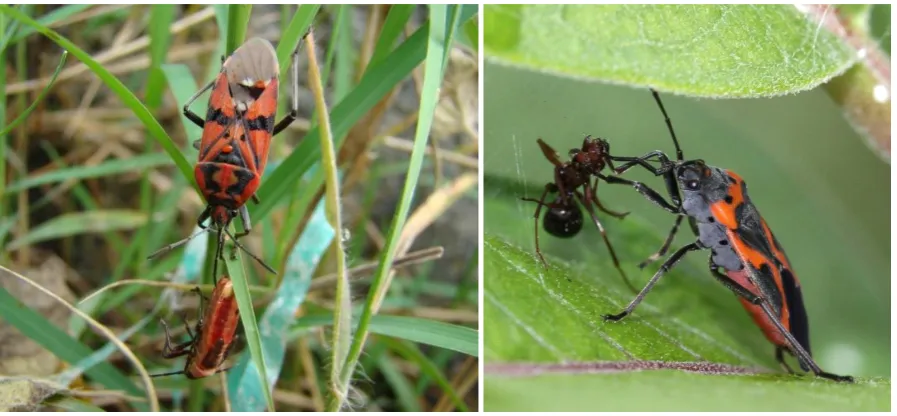
Figure 2. Left - An adult Spilostethus pandurus feeding on a Lygaeus creticus nymph. Sicily. Right – A
[image:31.595.76.525.393.601.2]31
2.2.4 Diapause
A number of species in temperate areas, including Lygaeus equestris and the closely related species
L. simulans, show reproductive diapause (i.e. diapause as adults) and migratory capabilities triggered by temperature and photoperiod (Dingle et al., 1980a, Solbreck and Sillen-Tullberg, 1981, Solbreck, 1979). These are thought to be adaptations to allow them to avoid or survive low temperatures during the winter months, as well as to migrate to follow seasonal patterns in host-plant abundance (Dingle et al., 1980a). Migration in L. equestris involves moving to overwintering sites, such as buildings or natural rock formations, rather than south to warmer climates (Solbreck et al., 1989, Sillen-Tullberg and Solbreck, 1990, Solbreck, 1976). Ovary development in the adult females does not start until after the spring migration flights from these overwintering areas to their breeding sites. As only adults can make the flights, typically the populations in northern Europe are univoltine, as only one generation can be produced per year. However occasionally, during particularly warm years, two generations have been recorded, and the degree of multi-voltinism increases with decreasing latitude. Additionally, in L. equestris copulation may determine the timing of diapause, as reproductively active females have been shown to be less likely to enter diapause (Sillen-Tullberg, 1984).
2.2.5 Feeding biology and economic impact
32
labium to the feeding substrate. In addition, a salivary sheath may be producedthat lines the puncture in the seed or plant through which the stylets are inserted (Sweet, 2000, Schuh and Slater, 1995). Lacerate-flush feeders on the other hand use the barbed apical portion of the proboscis to macerate the internal tissues of the host, be it plant or animal (Schuh and Slater, 1995). The tissues are then mixed with saliva, often containing digestive enzymes, and the resulting liquid is then sucked up through the food canal (Gullan and Cranston, 2005). Both feeding mechanisms require the production of saliva and at least in the laboratory access to water is crucial for successful rearing.
The majority of Lygaeidae are lacerate-flush feeders, the method commonly used by species that feed on portions of the plant that give a high nutrient return, such as seeds. However, an unnamed lygaeid species has been observed to secrete a feeding cone when using the lacerate-flush method and produce a stylet sheath when feeding on plant sap (Schuh and Slater, 1995). As sap feeding is widespread throughout the Lygaeidae, and many lygaeids do feed on sap in addition to seeds, it is likely that this behaviour may well apply to other species (Schuh and Slater, 1995). Moreover, the families Blissidae, Malcidae and Colobathristidae are predominantly sap feeders. The Blissidae, also known as chinch bugs, are arguably the most economically important group of lygaeids due to their status as pests (Samuels et al., 2002). For example, they are known to attack grasses including grain crops, sugar grasses and grasses used for lawns and playing fields (Sweet, 2000). Another lygaeid known to attack crops is the North American pest species the false chinch bug, Nysius raphanus. N. raphanus is multi-voltine, with adults overwintering on the ground underneath debris or rubbish (Demirel and Cranshaw, 2006). Populations can expand rapidly during favourable conditions and both adults and nymphs have been reported attacking a great variety of plants including tomatoes (Summers et al., 2010), cotton, tobacco, grapes and turf (Sweet, 2000), especially during the late spring when their preferred host plants begin to desiccate (Summers et al., 2010). The bugs
33
seeds (Horvath and Frank, 2002, Horváth et al., 2004). Interestingly, species of the family Geocoris
have been reported as predators of Nysius spp. (Sweet, 2000), suggesting they may be potential biological control agents of Nysius raphanus.
It is unclear what proportion of lygaeid species are food plant-specialists as opposed to generalists, as reliable data on habitat and feeding habits are available only for a few species (Solbreck et al., 1989, Ralph, 1976). Several species, such as Oncopeltus fasciatus, have been classified as “milkweed-specific” as they are restricted to milkweeds and other plants of the sub-family Asclepiadaceae
(Wheeler, 1983). However, other species such as Lygaeus equestris (Kugelberg, 1974, Kugelberg, 1973), L. kalmii (Wheeler, 1983), Spilostethus pandurus (Elbanna et al., 2009, Sweet, 2000)and
Neacoryphus bicrucis (Solbreck and Pehrson, 1979) have been found to feed on numerous plant families, even though asclepiads remain their preferred hosts (Wheeler, 1983). This host flexibility may account for many species’ sporadic role as pests. S. pandurus in particular often damages crops when its usual host plants are reduced by adverse weather or rendered insufficent by sudden
population growth (see the next section for more on the pest status of S. pandurus). Laukkanen et al. (2013) recently looked for evidence forgenetic trade-offs between the ability to grow on one or severalhost plants that might favour the specialisation of herbivores, using L. equestris and four plant species, including the preferred host plant Vincetoxicum hirundinaria. They found no evidence for trade-offs in survival, development time or mass, suggesting that trade-offs do not affect the ability of L. equestris to adapt to novel food plants.
However, there is some evidence for a trade-off between survival and reproduction in O. fasciatus
34
periods where their preferred food plants are scarce. During these periods females may invest less in reproduction so as to increase survival. Thus, lygaeids may offer an interesting set of model systems for the study of the evolution of life-histories under nutritional stress and in response to novel diet. Despite being primarily plant feeders, the Lygaeiodea contains one family, the Geocoridae, in which carnivory has become the most common feeding habit. Not surprisingly, some geocorids are therefore potentially important biocontrol agents (e.g. in the genus Geocoris (Carstens et al., 2008, Tillman, 2011, Lundgren, 2011) and their ecological interactions have received quite a lot of
attention, particularly in the context of intra-guild predation (Müller and Brodeur, 2002, Polis et al., 1989). Perhaps more surprisingly, a small rhypirochromine lygaeid tribe, the Cleradini, has evolved to feed on the blood of small rodents (Harrington, 1983), although a study on Clerada apicicornis
suggested that this species, whilst facultatively haematophagous, prefers to feed on other insects, including the blood-feeding reduviid bug Rhodnius prolixus (Torres et al., 2000). The observations of Torres et al. mean that the records of haematophagy in C. apicicornis obtained from museum specimens by Harrington (Harrington, 1990) might represent vertebrate blood meals obtained by feeing on other blood-feeders (so-called “cleptohaematophagy”) rather than from vertebrate hosts directly.
35
previously discussed, such cannibalism could select for mothers to promote hatching synchrony, and for offspring to try and hatch first, leading to within- and between-generational conflict over time spent as an embryo. Eggs are also cannibalised by later-instar nymphs and also adults (Solbreck and Sillen-Tullberg, 1990) which is an important consideration for laboratory studies. Currently there are only limited data testing kin discrimination of eggs/nymphs in terms of cannibalism, and much remains to be discovered.
2.2.6 Endosymbionts
Interestingly, from across the insects there is the hint of an apparent syndrome of aposematism, sibling cannibalism, and the presence of male-killing endosymbionts (Majerus, 2003). To date, only one population of Spilostethus hospes has been identified as harbouring an (unidentified) male-killer bacterium (Groeters, 1996), with circumstantial evidence from a population of Oncopeltus fasciatus
36
First, the lygaeid Kleidocerys resedae, or birch catkin bug, has been found to have an obligate endosymbiotic proteobacterium which lives in a specialised endocellular mycetome structure (Kuechler et al., 2010). This species also has alpha-proteobacteria of the genera Wolbachia and
Rickettsia. Second, the bulrush bug Chilacis typhae (Lygaeidae, sub-family Artheneinae) hosts an obligate intracellular gamma-proteobacterium in a set of enlarged midgut cells, arranged in a circular fashion around the mid-gut (called a "mycetocytic belt" by the authors: Kuechler et al., 2011). These authors suggest that this structure might be an intermediate structure between the mid-gut crypts or sacs of other Lygaeioids, Pentatomoids and Coreiods, and the more specialised bacteriome/mycetome of Kleidocerys (Kuechler et al., 2011).
Third, four species of Nysius (Nysius plebeius, N. expressus and two species not identified to species level) have been found to harbour the primary gamma-protobacterial endosymbiont Schneideria nysicola in a pair of bacteriome structures (Matsuura et al., 2012). These authors also identified
Wolbachia and a novel alpha-proteobacterium in these species, finding the latter in five other species across the super-family as well. The gammaproteobacterium in Nysius does not form a clade with the bacterium found in Kleidocerys, suggesting an independent evolutionary origin of this symbiosis, with strict host-symbiont coevolution within the four Nysius species (Matsuura et al., 2012).
Fourth, five species from the Blissidae (Ischnodemus sabuleti) and Lygaeidae (Arocatus longiceps,
37
level: Weeks et al., 2003) and from a range of Heteroptera including 14 out of 24 species of Japanese Lygaeiodea (comprising species from the Lygaeidae, Malcidae, and Berytidae; (Kikuchi and Fukatsu, 2003). All told, these surveys suggest that more symbionts, including obligate endosymbionts with specialised host structures, probably await discovery. Given the possible ecological and evolutionary consequences of these symbionts(Moran et al., 2008), and perhaps the opportunity to study a range of colonisation events and a diversity of host specialisations (from simple crypts to dedicated host tissues) in the same super-family, there should be much interest in exploring this aspect of lygaeid biology further.
2.2.7 Social interactions
38
to be true for other Lygaeids as other species of the Oncopeltus genus have been observed in aggregations containing both adults and nymphs (Root and Chaplin, 1976). I will also discuss
aggregation in the Lygaeidae further below when considering the importance of pheromones. Whilst groups are often considered to comprise kin, the extent of non-kin aggregations has yet to be investigated. As mentioned above, in some temperate species adults also aggregate for hibernation. This has been most extensively studied in the species Lygaeus equestris where hibernating adults typically enter reproductive diapause before aggregating at overwintering sites.
39
40
2.2.8 Predators and parasites
Despite the interest in the aposematic species of Lygaeidae (see below), there have been few detailed studies of predation in the wild. Generally, it is thought that lygaeids are preyed upon by a variety of predators including birds (Gamberale-Stille and Sillen-Tullberg, 1999, Svadova et al., 2010), rodents (Aldrich, 1988), and invertebrate predators such as mantids (Berenbaum and Miliczky, 1984), whilst most studies on warning coloration and chemical defences have used model predators such as chicks (Gamberale-Stille and Sillen-Tullberg, 1999, but see Berenbaum and Miliczky, 1984). In addition, seed bugs have been found in the stomach contents of invasive Anolis sagrei in Taiwan and ants have been observed preying upon eggs of L. equestris (Kugelberg, 1977). However, it seems likely that parasites rather than predators pose the greatest threat to wild Lygaeidae (e.g. Tachinid flies: Lampman and Fashing, 1978, Müller and Fritsche, 1993, and Trypanosomes: Tieszen et al., 1986, Thorpe and Harrington, 1979) especially egg parasites (Root and Chaplin, 1976, Lampman and Fashing, 1978, Anderson and Solbreck, 1992). The impact of parasites appears to vary considerably between populations, for example Solbreck et al, (1989) suggest there is no predation or parasitism in Swedish populations of L. equestris, compared to populations in Sicily which fall prey to Tachinid flies (Solbreck et al., 1989).
2.3 Common study systems: a brief introduction
While there are more than 4000 species spread across approximately 102 genera within the Lygaeiodea (Henry, 2009), previous study has focused on a select few species (most notably those that have proven to be suitable organisms for study in the laboratory, Figure 4). As much of what we know about Lygaeidae is based around these species, a brief introduction to each is provided.
41
Angelini et al., 2005), the effects of pollution (Feir and Hale, 1983), endocrinology (Lorenz et al., 2009, Chung and Bowers, 1996), and gene function (Adler and Woodruff, 2000, Angelini et al., 2005, Chesebro et al., 2009). This has, in turn, led to an increased interest in the biology of the species. O. fasciatus ranges from the USA down through Central America and into the Caribbean. It feeds on seeds of milkweed plants, in particular Asclepias, though the species host plant varies across its range and includes Nerium oleander (Miller and Dingle, 1982, Klausner et al., 1980).
Several species from the genus Lygaeus have also received some attention, particularly the closely related species Lygaeus equestris and Lygaeus simulans. These are found throughout Northern and Central Europe and feed on the seeds of plants such as Vincetoxicum hirundinaria and Nerium oleander. As with its New World relative Oncopeltus, the host plant of L. equestris varies with locality (Solbreck et al., 1989). Most of the work on Lygaeus has focused on reproductive behaviour,
aposematism and diapause.
The genus Spilostethus contains 24 species found throughout the Old World. The most studied of these is Spilostethus pandurus, which is widespread throughout the tropics, sub-tropics and up into the temperate zone. While this species has been shown to be a suitable lab animal, it is best known for its status as a pest species. S. pandurus is highly polyphagous, meaning it can switch from its preferred host plant, usually from the sub-family Asclepidaceae, to various crops. Thirty-three crops worldwide are reported to have been attacked by this species (Sweet, 2000). Despite being
42
The final species I would like to highlight is Neacoryphus bicrucis. This North American species is found from southern Canada down to Brazil (Solbreck, 1979). It has been reported on a number of herbaceous plants, particularly ragworts (Senecio spp.), and as a result is sometimes known as the ragwort bug (McLain, 1991). N. bicrucis shares much of its range with O. fasciatus but is often found at higher altitudes (Solbreck, 1979). Below I will consider this species primarily in terms of its interactions with other lygaeids, in particular reproductive interactions and the phenomenon of reproductive interference.
Much of the research into the evolutionary ecology of the Lygaeidae in general, and the above mention species in particular, can be broadly classified into several topics. The first of these is research into the aposematic signals that characterise the best-known species of this group. A related topic is chemical communication, which is central too much of our understanding of lygaeid behaviour. I will then cover what is known so far about the population structure of the better-characterised lygaeid species and how this may impact their ecology and evolution. Finally I will consider reproductive behaviour, with an emphasis on mating systems and sexual selection in these species, and also the growing area of reproductive interference. Firstly however, I will discuss aposematism.
2.4 Aposematism, predator defence and life history effects
43
aposematic colouration (Burdfield-Steel, unpublished data). Additionally, 65 (approximately 14%) of the 452 genera surveyed contained at least one aposematic species. Of course, aposematic signals may take forms other than colour, such as odour or behaviour. Any cue that conveys to the predator that the prey is unprofitable may be considered aposematic. These signals are most effective if they are easily detected (i.e. conspicuous) and memorable, as this facilitates predator detection and learning (Mappes et al., 2005). In the case of the Lygaeidae, this defence is chemical (Aldrich, 1988, Aldrich et al., 1997, Zhang and Aldrich, 2003). These chemicals are typically cardiac glycosides, also referred to as cardenolides, which are distasteful to most predators (Duffey and Scudder, 1972, Voneuw et al., 1971). The prevalence of aposematism within the subfamily Lygaeinae has been linked to their feeding habits. While many lygaeids feed on fallen seeds, members of the Lygaeinae also feed on developing seeds and thus expose themselves to visually oriented predators such as birds (Aldrich, 1988). It is hypothesised that this has contributed to the evolution of the bright warning colours so often seen in members of this subfamily (Aldrich et al., 1997).
44
both vertebrate predators such as birds (Gamberale-Stille and Sillen-Tullberg, 1999, Sillen-Tullberg et al., 1982) and invertebrates. For instance, two species of praying mantis (Tenodera ardifolia sinensis
and Mantis religiosa) have been shown to learn to avoid the bugs. The mantids frequently
regurgitated after feeding on milkweed-fed O. fasciatus adults and learned to avoid the bugs after only a few encounters (Berenbaum and Miliczky, 1984). Additionally, secretions from the scent glands of adult S. pandurus contain cardiac glycosides and have been shown to repel birds, cats and even scorpions (Sweet, 2000).
In species such as L. equestris, L. simulans, L. creticus, L. kalmii, O. fasciatus and S. pandurus, both adults and nymphs are aposematic and often aggregate, possibly in order to amplify their warning colour signals (Sauer and Feir, 1973, see Figure 5). In an experimental study, the attack rate of domestic chicks on nymphs was found to decrease when nymphs were presented in groups compared to when presented alone (Sillen-Tullberg et al., 2000), suggesting that aggregation may help present a stronger aposematic signal. This suggests a possible link between the evolution of aposematism in Lygaeidae and various life-history traits, as aggregation frequency is variable across different species within the (super-) family (Sillen-Tullberg et al., 2000). This would be in keeping with the finding that aposematism is associated with the evolution of gregariousness in butterfly larvae (Sillen-Tullberg, 1988). However, see chapter 5 for data that suggests that while aggregation and aposematism may be linked, the specific level of defence a given individual has may not influence aggregation behaviour. Thus, processes such as automimicry, where individuals perform aggregation behaviour despite considerable variation in their own level of chemical defence (Speed et al., 2012), may play a key role, especially in species that can feed on more than one host plant such that levels of defence are likely to fluctuate both within and between individuals.
45
colleagues have investigated the effect of diet on aposematic traits. In particular, they found that toxic defences are not always dependent on diet. While toxic defence was found to be food dependent in the polyphagous L. equestris, with individuals of the species showing, perhaps unsurprisingly, greater protection from predators (i.e. Gallus gallus domesticus chicks) when raised on the toxic Vincetoxicum hirundinaria than on the non-toxic Helianthus annuus, the naturally monophagous species Tropidothorax leucopterus showed no effect of host plant. Thus T. leucopterus
46
There is also evidence that chemical protection can be passed from parents to eggs. The eggs of many lygaeid species, such as L. equestris, S. pandurus and O. fasciatus, are brightly coloured, turning from pale yellow through to orange and red as they develop. Recent work in O. fasciatus has found that cardiac glycosides are transferred to eggs by both sexes though the maternal
contribution is considerably bigger than the paternal (Newcombe, 2013). Eggs were found to contain a greater concentration of cardiac glycosides and showed greater protection from a predator (the larvae of the green lacewing, Chrysopa carnea) when the mother had been fed on milkweed compared to those where the mother had been feed on sunflower seeds (Newcombe, 2013). It
is worth noting that these defences were only detected by the lacewing larvae after feeding on,
and thus destroying, an egg. Therefore, these defences may benefit close kin by deterring
predators from continuing to feed on a clutch.
In summary, the literature surrounding aposematism in insects makes it clear that a level of
gregariousness is often associated with aposematic signalling, although much remains to be done to understand how individual levels of defence influence aggregation behaviour, including the extent to which animals in the wild are typically (well) defended. For instance, if sequestering and maintaining toxic compounds in the body requires considerable energy expenditure, is there the potential for “cheats” to evolve that avoid toxic foods but benefit from the mimicry ring of which they are part? It would be interesting to compare oligo- and polyphagous species in this regard, as there may be greater scope for cheating in the latter. As the aposematic lygaeids are often also part of wider inter-specific Müllerian mimicry rings (Svadova et al., 2010), there is the potential for complex, spatially variable relationships between intra- and inter-specific mimicry, combining Batesian, Müllerian and automimicry. There are clear opportunities to extend our understanding of mimicry in both the laboratory and more importantly in the field with these species. However, now I will move on to focus on the role of chemical communication beyond aposematism, in terms of both the
47
Figure 4. Four extensively studies species of Lygaeidae. Top right Neacoryphus bicrucis (permission pending), bottom right Oncopeltus fasciatus (photo courtesy of Alison Bockoven), bottom left
Spilostethus pandurus (David Shuker) and top left Lygaeus equestris (Liam Dougherty).
Figure 5. Right – Laboratory raised second instar nymphs of the species Spilostethuspandurus
showing characteristic black and red colouration. Left – an aggregation of late-instar Lygaeus creticus
48
2.5 Pheromones in Lygaeidae – aggregation and communication.
One of the suggested mechanisms by which Lygaeidae aggregate is through the use of pheromones; the majority of Heteroptera possess scent glands and they have been found to produce a variety of pheromones(see table 2) (Aldrich, 1988) most of which appear to be for attracting conspecifics, although some may be for defence. For instance, it has been shown that aggregation in nymphs and young adults of O. fasciatus and L. kalmia is facilitated by the presence of a so-called aggregation pheromone found in acetone extracts taken from the insects (Aller and Caldwell, 1979).
Like other Heteroptera, lygaeids possess both metathoracic scent glands (MTG) and dorsal
abdominal scent glands (DAG)(Aldrich, 1988). As discussed above, the secretions of both have been found to contain cardenolides sequestered from the plants they feed on. These odours are thought to act as an additional aposematic signal in their own right to deter potential predators (Aldrich et al., 1997) as many Insectivora, which are important predators of litter-dwelling Lygaeidae, are colour-blind (Aldrich, 1988). Distinctive scents could therefore act in the same way as distinctive markings and colouration to ward off potential visual predators such as birds.
In several species the MTG is reduced in size (Aldrich, 1988), however the chemistry of the MTG is complex and has been found to be sexually dimorphic in Oncopeltus fasciatus (Aldrich, 1988) and
49
guide potential mates to the patch. In addition, conspecific males and nymphs were also attracted to such pheromones (Aldrich et al., 1999). As such, these signals may indicate the presence of food, and hence, suitable habitat. Finally, females of the predatory species Geocoris punctipes produce
pheromones that increase activity, specifically searching behaviour, in males (Millar, 2005). Clearly then, pheromonal signals must be considered when seeking to understand both migration dynamics and mate acquisition in these bugs.
We may expect signals such as pheromones to change over an individual’s lifetime (e.g. virgin versus mated, diapause versus reproductively active). Indeed, the cotton seed bug Oxycarenus
hyalinipennis changes the compounds synthesised by the MTG after the first day of adult life. It seems likely that the differences in scent glands often found between nymphs and adults (Schuh and Slater, 1995, Aller and Caldwell, 1979) may be reflective of the different roles pheromones play at these life stages, but data remain limited to date.
Another key chemical signalling system in insects is that associated with their cuticular hydrocarbon (CHC) repertoire. CHCs are long-chain fatty acids which are secreted onto the cuticle from
specialised epidermal cells. These waxy compounds function primarily as protection from desiccation (i.e. water-proofing). However, the inter-specific diversity of CHCs presented on the cuticle is also used by a wide variety of species for species-discrimination (Kather and Martin, 2012), and sex-specific differences in CHC blends are also used for sex-discrimination and in processes such as mate choice (Everaerts et al., 2010, Thomas and Simmons, 2010). Finally, there is growing
50
Table 2. Compounds detected in the pheromones of several species of Lygaeidae.
Species Compounds from Metathoracic scent gland
Defence substances
References
Lygaeus kalmia (E)-2-Hexenyl acetate, (E,E)-2,4-Hexadienyl acetate, (E)-2,5-Hexadienyl acetate, Heptenyl acetate, (E)-2-Octenyl acetate, (E)-2,7-Octadienyl acetate, (E)-2-Hexenyl butyrate, (E,E)-2,4-Octadienyl acetate, 2-Hexen-1-ol, 2-Hexenal, (E)-2-Octenal,
(E)-4-oxo-2-Hexenal, (E)-4-oxo-2-Octenal,
Aldrich et al. (1999)
Oncopeltus cingulifer
(E)-2-Hexenyl acetate, (E,E)-2,4-Hexadienyl acetate, (E)-2,5-Hexadienyl acetate, Heptenyl acetate, (E)-2-Octenyl acetate, (E,Z)-2,6-Octadienyl acetate, (E,E)-2,6-Octadienyl acetate,
(Aldrich et al., 1999)
Oncopeltus fasciatus
(E)-2-Hexenyl acetate, (E,E)-2,4-Hexadienyl acetate, (E)-2,5-Hexadienyl acetate, Heptenyl acetate, (E)-2-Octenyl acetate, (E)-2,7-Octadienyl acetate, (E,Z)-2,6-Octadienyl acetate, (E,E)-2,6-Octadienyl acetate, (E)-2-Hexenal, (E,E)-2,4-Hexadienal, (E)-2-Octenal, (E)-2,7-Octadienal, (E,Z)-2,6-Octadienal, (E,E)-2,6-Octadienal, 2-Octenal 2-Isobutyl-3-methoxypyrazine
Aldrich et al. (1999), Aldrich et al. (1997), Games and Staddon (1973)
Oncopeltus unifasciatellus
(E)-2-Hexenyl acetate, (E,E)-2,4-Hexadienyl acetate, (E)-2,5-Hexadienyl acetate, Heptenyl acetate, (E)-2-Octenyl acetate, (E)-2,7-Octadienyl acetate, (E,Z)-2,6-Octadienyl acetate, (E,E)-2,6-Octadienyl acetate, (E)-2-Hexenal, (E,E)-2,4-Hexadienal, (E)-2-Octenal,
(E)-2,7-Octadienal, (E,Z)-2,6-Octadienal, (E,E)-2,6-Octadienal,
(Aldrich et al., 1999)
Spilostethus rivularis
Octenyl acetate, (E)-2-Hexenyl acetate,
Methylbutyl acetate, 3-Methyl-butenyl acetate,